Landsteiner
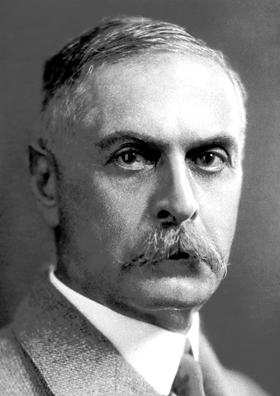
Name: Karl Landsteiner
Achievements: Advances in haematology that made blood transfusions possible
Born: June 14, 1868; Vienna, Austria
Died: June 26, 1943; New York, US (Aged 75)
Field & Discipline: Medicine; Immunology; Pathology.
Education: University of Vienna; University of Zurich; University of Wurzburg; University of Munich.
Major Work:"The Specificity of Serological Reactions" (1936)
Life & Times:
Landsteiner was the son of a well-known journalist and newspaper publisher. He left university in Vienna with a medical degree in 1891 and after studying chemistry in Germany and Switzerland, returned to Vienna in 1894 and spent two years getting practical experience in the university's medical clinics.In 1896 he joined the Institute of Hygiene where he became interested in immunology and serology.
In 1898 he moved to the Institute of Pathology and Anatomy where, in between conducting over three and a half thousand post-mortems, he was encouraged by the director of the Institute to continue his immunological researches. Landsteiner became intrigued by the fact that in most cases it was impossible to give one person's blood to another without side effects for the recipient. In 1900 he discovered that the side effects were caused because the recipient’s red cells had clotted.
A year later, he discovered why. He isolated three main types of human blood (which he labelled A,B, and C), each of which had a different sort of antigen attached to the plasma membrane which encloses the red cells. The antigens stimulate the production of antibodies, and the antibodies attack organisms that are foreign. So if blood type B is given to patients with blood type A, the patients' antigens will recognise the type B blood as foreign and will start fighting to reject the transfusion.
A year later, two of his researchers discovered a fourth blood type, containing both A and B antigens which they called AB. C was renamed O because it did not contain either A or B antigens (this made it a valuable type of blood that could be given to patients with either A or B blood type).
Combined with the work of the French surgeon [work related to] Carrel* on suturing blood vessels, Landsteiner's discovery meant that blood transfusions could be given safely. Thanks to the Red Cross organisation founded by [work related to] Dunant*, these advances meant that the lives of numerous soldiers during World War I were saved by blood transfusion.
Over the next two decades Landsteiner was involved in research in syphilis detection and into poliomyelitis and in both cases he worked with others to produce a valuable diagnostic test. He the first to state that polio was caused by a viral infection.
Austria was defeated in the war and conditions for research were poor so in 1919 Landsteiner accepted a job as professor of pathology at The Hague, Holland. In 1921 he discovered the existence of hapten in antigens, a significant step in the development of immunology. In 1922 Landsteiner moved to New York to work at the Rockefeller Institute.
He began to work on human blood again, undertaking a comparative study with monkeys apes and humans. In 1925 his research added weight to the claims of zoologists that humans are not descended from any existing species of primate, but that primates and humans are descended from a common ancestor.
Landsteiner was sure that the differences in human blood amounted to more than four blood groups and he looked for variation. He discovered the irregular antigens, and in 1927, with Philip Levine, also discovered a new group of very rare antigens.
In 1929 Landsteiner was elected President of the American Association of Immunologists.
In 1930 he was given the Nobel Prize for Medicine for his discovery of blood types, and in 1933 he was awarded the Dutch Red Cross medal.In 1936, he summed up his work on blood in "The Specificity of Serological Reactions", a book which became the standard work for immuno-chemistry.
In 1940 he and his co-workers published a paper on key discovery: a new rhesus factor in red blood cells. About 85% of people are rhesus positive, the rest are negative. If the two types of blood are mixed the result can be fatal for the patient. Their work led to the development of a life-saving treatment for children with a mixed rhesus parentage.
Asessment: Landsteiner's blood typing was a life-saving discovery which also allowed the establishment of blood storage which in turn made possible surgery involving a large blood loss. His work is also relevant to identification in legal cases, both paternity and criminal.
Oneliner: Karl Landsteiner, discoverer of blood types
Language: German; English
Father: Father: Leopold Landsteiner
Mother: Fanny Hess
Siblings: Unknown
Spouse: Helene Wlasto
Children: 1 son: Ernst Karl
Bibliography:
- American National Biography
- Dictionary of Scientific Biography.
- Encyclopedia Britannica.