Gillette
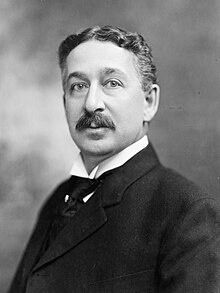
ACHIEVEMENT(S): Inventor and first manufacturer of the safety razor and blade
DATE AND PLACE OF BIRTH: January 5, 1855, Fond du Lac, WI.
DATE/PLACE OF DEATH/AGE AT DEATH: July 9, 1932, Los Angeles, CA. Aged 77
DISCIPLINE: Inventor/Social theorist
FIELD: Business
LANGUAGE: English
EDUCATION: High school, Chicago
MAJOR WORK: Gillette safety razor and blade
LIFE AND TIMES:
As a youth, Gillette worked in hardware stores in Chicago and New York, and then in his early 20s took a job as traveling salesman for a Kansas City hardware firm. He patented his first invention, a valve for industrial taps, in 1879, and later that year patented an electric cable conduit.
In 1891, he took a job as New York/New England sales representative for Painter*'s Baltimore Bottle Seal Co. Painter, who would make a fortune from his crimped tin bottle cap, was impressed with Gillette's initiative and advised him to invent something that would be used and thrown away, so the customer would have to keep coming back. Gillette kept Painter's advice in the back of his mind, but decided to pursue another interest: social reform. Drawing on his own experiences and on the utopian and populist literature of the day, he published in 1894 "The Human Drift", a work of utopian socialism which blamed all social, economic, and political ills on competition. Gillette believed that the competitive system wasted 90 per cent of human productive efforts, and fostered the greed which caused industrial and international strife.
The solution, according to Gillette, was a publicly-owned worldwide corporation, which would own and manage all means of production. Maximum production would be assured by concentrating population and production near Niagara Falls, which could supply all the necessary hydroelectric power. His plan proposed that the entire population of the United States live in apartment blocks with great central kitchens (in order to minimize domestic drudgery) at Niagara Falls, while agricultural work would be done by battalions of laborers moving from field to field.
While some of Gillette's ideas (such as air-conditioning and government-subsidized work for the unemployed) were realized, the plan as a whole was totally unrealistic. But his ideas found favor with the editors and readers of the radical magazine "Twentieth Century," who urged Gillette to lead a grassroots reform movement. He took them up on the idea about 15 years later. A year after his book was published, and shortly after he moved to Boston, Gillette's life took a radical turn. While honing a permanent, straight-edged razor one day, he came up with the idea of making a thin, double-edged disposable razor blade and clamping it in a holder that would keep it rigid.
Although experts assured him it would be impossible to sharpen thin steel blades and salesmen and advertisers assured him that consumers wanted only blades of high-quality steel that would last a lifetime, Gillette was determined to make his project work. He got in touch with William Nickerson, a leading engineer who had developed a machine that would hold ribbons of steel rigid enough for sharpening.
Gillette and Nickerson established the American Safety Razor Co. in 1901.
By the end of the first year, the company was in debt, with no sales, and was bailed out by a friend, John Joyce. Starting again, the pair changed the name to the Gillette Safety Razor Co. and by the end of 1902 were not much further ahead, although they had sold 51 razors and 168 blades. Unwilling to give up, Gillette and Nickerson tried aggressive marketing, and by the end of 1904, had sold 90,000 razors and 12.4 million blades from a factory in Boston. Gillette resigned from Painter's company, (which was now called the Crown Cork Co.) and by 1907, had established eight other plants around the world, including in France and Britain.
Gillette amassed a fortune, but insisted that much of the profit be reinvested in advertising. A quarter of every dollar earned by the razors went to promotion, and from 1905 the proportion was increased to half. Blades were given away with tea and coffee, overalls, shaving cream, pocket knives, celluloid collars, and chewing gum, while some banks gave them to new account-holders. Gillette used his profits to subsidize two books outlining the economic theories he never abandoned, despite his commercial success. The books, "Gillette's Social Redemption" (1907) and "Gillette's Industrial Solution" (1908), were written by a friend Melvin L. Severy.
In 1910, Gillette formed the "World Corporation" to promote his goal of global consolidation. Theodore Roosevelt*, after his term as U.S. president, refused a fee of $1m and a guaranteed four-year term as company president. In 1913, Gillette retired from active management, although he remained president of his firm until 1931. He moved to Southern California and spent much of his time investing in real estate and travel.
In 1924, he wrote "The People's Corporation", with the editorial assistance of social novelist Sinclair*.
By the time he died in 1932, Gillette had been virtually wiped out by the stock market crash of 1929 and by a collapsing California real estate market.
ASSESSMENT: With the invention of the safety razor, transformed the developed world's shaving habits and created a hugely profitable industry .
EXTRA CONNECTIONS: Sinclair introduced him to Henry Ford
ONELINER: King Camp Gillette, inventor of the safety razor and blade
BIBLIOGRAPHY:
EB
Adams, Russell B., “Gillette, King Camp,” in American Dictionary of National Biography, New York & Oxford: OUP, 1999.
PARENTS: George Wolcott Gillette; Fanny Lemira Camp
SIBLINGS: 2 brothers, 2 sisters
SPOUSE: Alanta Ella Gaines
CHILDREN: King G. Gillette