Addison, Thomas Dr.
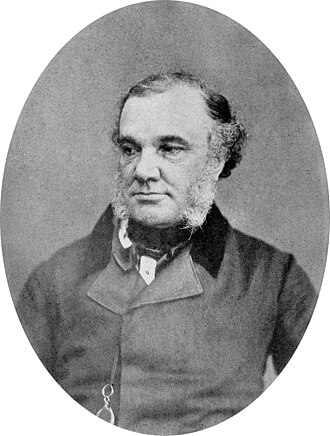
ACHIEVEMENT(S): Addison’s disease (brain)
NICKNAME/ALIAS: None
DATE/PLACE OF BIRTH: c. April 1793, at Longbenton, Northumberland, England
DATE/PLACE/AGE AT DEATH: 29 June 1860, at Brighton, Sussex, England. Aged 67
DISCIPLINE: Physician
FIELD: Medicine
EDUCATION: Newcastle Grammar School; University of Edinburgh, 1812-15
MAJOR WORK: 'On the Constitutional and Local Effects of Disease of the
Supra-Renal Capsules', 1855
LIFE AND TIMES:
Thomas Addison graduated M.D. in 1815, at the age of
22, with his dissertation: "Concerning Syphilis and Mercury." He then moved to London, where he was appointed a surgeon at the Lock Hospital, and studied dermatology under Dr. Thomas Bateman.
In about 1820, Addison entered Guy's Hospital as a student, despite being a fully qualified physician, and remained there in various positions for the rest of his life. He was appointed assistant physician at Guy's in January 1824, and became a lecturer in materia medica three years later. In 1829 he
published, with John Morgan, his first important work: 'An Essay on the Operation of Poisonous Agents Upon the Living Body,' the first book on this subject to be published in English.
From 1835 Addison, whose lectures at Guy's proved extremely popular, became joint lecturer with Richard Bright*, and in 1837 he was appointed full physician. During these years he was working in close collaboration with
Bright on a textbook for students entitled 'Elements of the Practice of Medicine', the first volume of which appeared in 1839. In this Addison gave the first full description of appendicitis.
During the 1830s, Addison earned a brilliant reputation as a teacher and researcher. He published numerous important clinical studies over the next thirty years, including works on the clinical signs of a fatty liver (1836), pneumonia (1837 and 1843), pulmonary phthisis (1845), tuberculosis (1849), and the skin disease xanthoma (flat, soft spots that appear on the skin, usually on the eyelids,
1851).
In 1849, at a meeting of the South London Medical Society, Addison gave a preliminary account of the two conditions later named after him in a paper entitled "On anemia: disease of the suprarenal capsules". Although this paper triggered little reaction, Addison later expanded it into his most
important work: 'On the Constitutional and Local Effects of Disease of the Supra-Renal Capsules' (1855), in which he gave a full description of what is now known as “Addison's disease” (characterized by abnormal darkening of the
skin, progressive anaemia, weakness, low blood pressure, intestinal disturbances and weight loss) and differentiated it from Addison's (or pernicious) anaemia (characterized by anaemia, intestinal disturbances, weakness, and tingling and numbness of the extremities).
He also showed that Addison's disease is caused by atrophy of the suprarenal capsules (later called the adrenal glands), laying the foundation for modern endocrinology. It is now known that in Addison's disease the blood sodium and chloride are lowered, potassium and nitrogen are increased, and there is a lowering of blood volume; the condition of the patient is greatly
improved by an intravenous administration of a physiologic solution of sodium chloride.
Addison's mental health deteriorated during the late 1850s, and he committed suicide in 1860 in Brighton, Sussex, soon after his retirement from Guy's Hospital.
ASSESSMENT: The first to correlate a collection of symptoms with pathological changes in an endocrine gland.
EXTRA CONNECTIONS: He knew Benjamin Richardson*
ONELINER: Thomas Addison, physician and identifier of Addison’s disease
BIBLIOGRAPHY:
DSB, DNB, EB
LANGUAGE: English
PARENTS: Joseph Addison and Sarah ?
SIBLINGS: John (b. 1794)
SPOUSE: Elizabeth Catherine Hauxwell, married 1847
CHILDREN: None