Fabry
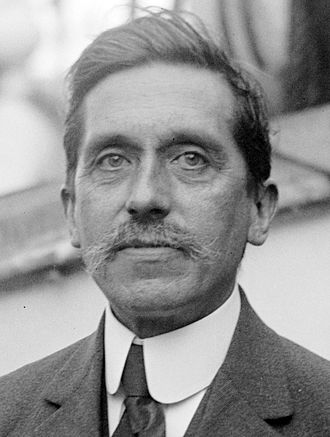
ACHIEVEMENT(S): Invented the Fabry-Perot interferometer for measuring wavelengths of light. Discovered the ozone layer in the upper atmosphere.
NICKNAME/ALIAS: born Marie Paul Auguste Charles Fabry.
DATE/PLACE OF BIRTH: 11th June 1867, in Marseilles, France.
DATE/PLACE/AGE AT DEATH: 11th December 1945, in Paris, France. Aged 78.
DISCIPLINE: Physicist.
FIELD: Optics.
LANGUAGE: French.
PARENTS: Auguste Fabry (1796-1877) and Marie Estrangin.
SIBLINGS: Auguste, Eugene (mathematician, 1856-1944) and Louis (astronomer,
1862-1939).
SPOUSE: ?
CHILDREN: ?
EDUCATION: Lycee Marseilles; Ecole Polytechnique, Paris, 1885-89; University
of Paris, 1889-92.
MAJOR WORK: 'Les Applications des Interférences Lumineuses' ('The
Applications of Optical Interference'), 1923.
LIFE AND TIMES:
In 1892, Fabry presented his thesis, ‘Theorie de la Visibilite et de l'Orientation des Franges d'Interference’ (‘The Appearance and Orientation of Interference Fringes’) at Paris University and was awarded his Doctorate in Physics. He then taught in secondary schools around France: in Pau, Nevers, Bordeaux, Marseilles and S. Louis a Paris. In 1894, he went to the University of Marseilles, to teach and research, and stayed there until 1920.
In Marseilles, he carried on his work on the precise measurement of optical interference effects and joined the laboratory of Mace de Lepinary, where this branch of physics was an important subject of research.
From 1894, Fabry worked with physicist <collaborated with> Perot* and, two years later, they completed the development of the first Fabry-Perot interferometer, an instrument for making precise measurements of light beams, quantifying factors such as length, surface irregularities, and index of refraction.
In 1897, they produced their ‘variable gap’ interferometer. This development allowed them to measure the interference factor of light. It was based on the fact that light was made up of a number of beams that travel unequal paths. When the beams were reunited, their intensities interfered with each other and appeared as a pattern of light and dark bands, known as interference fringes.
The Fabry-Perot interferometer consisted of highly reflective mirrors on two parallel planes, and together called an etalon. Because of the high reflectivity of the plates of the etalon, the successive multiple reflections of light waves diminish very slowly in intensity, to form very narrow, sharp fringes.
These fringes can then be measured and used to reveal hyperfine structures in line spectra and to evaluate the widths of narrow spectral lines. The Fabry-Perot interferometer, although not the first of its kind, was notable because it produced sharper fringes than the instrument developed in 1881 by the American physicist Albert Michelson (who used his to disprove the existence of the ‘ether’).
Until 1901, Fabry and Perot used their instrument for spectroscopy and metrology, during which time they established a series of standard wavelengths. After that, Perot continued his work on solar spectra and spent many years analysing the small shifts in wavelength that are produced by a variety of effects, including pressure, convection currents and the Doppler effect.
In 1913 Fabry and a colleague, Buisson demonstrated that the sun’s ultraviolet radiation was filtered out in the earth's upper atmosphere by a layer of ozone, a gas identified in 1840 by the German chemist <measured ozone discovered by> Schonbein*. They proved that the amount of ozone in a vertical column of the atmosphere could be accurately measured.
A year later, Fabry and Buisson developed a simple laboratory method to confirm the Doppler effect for light. The Doppler measurement had previously only been made
using stellar sources and showed that the observed frequency of light waves was affected by the relative motion of the source and the detector.
The Fabry-Buisson technique involved the illumination of a horizontal rotating white disk, so that opposite points on the diameter constituted equal sources of light moving in opposite directions. If the disk was then viewed at an oblique angle, using an interferometer, the difference in position of the sets of rings produced by the light from the two ends of the diameter could be detected.
Fabry became interested in astronomy when his elder brothers were studying the subject. He began to use the interferometer to study the light spectra of the sun and stars, as well as to improve photometric techniques to measure the brightness of the night sky.
In 1921, Fabry took the job of Professor of Physics at the Sorbonne in Paris and became the first director of the Institut d'Optique. He lectured at the Ecole Polytechnique and in 1927 was elected to the Academie des Sciences.
He was a member of the International Committee on Weights and Measures and the Bureau of Longitudes and was awarded medals by the Royal Society, the Franklin Institute and the National Academy of Sciences.
Fabry had a particular interest in popularizing science and taught a public course in electro-technology, as well as writing popular scientific works, including 'Optique' in 1926 and 'Physique et Astrophysique' in 1935.
ASSESSMENT: Best known for the invention, in collaboration with Alfred Perot, of the Fabry-Perot interferometer.
EXTRA CONNECTIONS: The work influenced <influenced> Townes*
ONELINER: Charles Fabry, inventor of Fabry-Perot interferometer
BIBLIOGRAPHY:
EB, DSB
Dictionnaire Biographique Francais.
atmosphere.