Tiselius, A
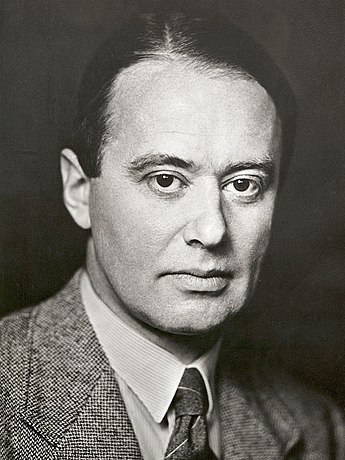
NAME: Tiselius, Arne
ACHIEVEMENT(S): Electrophoresis
NICKNAME/ALIAS: in full, Arne Wilhelm Kaurin Tiselius
DATE/PLACE OF BIRTH: 10 August 1902, at Stockholm, Sweden
DATE/PLACE/AGE AT DEATH: 29 October 1971, at Uppsala, Sweden. Aged 69
DISCIPLINE: Biochemist
FIELD: Physical biochemistry
LANGUAGE: Swedish
PARENTS: Hans Abraham J. Tiselius and Rosa Kaurin
SIBLINGS: One sister
SPOUSE: Ingrid Margareta Dalen, married 1930
CHILDREN: One son (Per) and one daughter (Eva)
EDUCATION: Goteborg Grammar School; University of Uppsala, 1921-30
MAJOR WORK: 'Purity and Purification of Chemical Substances', 1958
LIFE AND TIMES:
With his master's degree in chemistry, physics and mathematics in 1924, Tiselius continued at the university as Theodor Svedberg's research assistant in physical chemistry, and began working on electrophoresis (the movement of electrically charged molecules in a solution to which an electric field has been applied), and in particular the electrophoretic properties of proteins.
At that time, Svedberg was developing the first high-speed ultracentrifuge, and Tiselius used this new machine to study the sizes and shapes of protein molecules, which he then subjected to electrophoresis.
As virtually all large molecules carry an electrical charge when they are in solution, and since molecules usually have different rates of movement (or migration) depending on their size, shape, and electrical charge, electrophoresis in theory makes it possible to separate the molecular constituents of a solution.
However, Svedberg had already found that in practice a variety of factors like convection currents make it difficult to obtain useful results by this method. Tiselius found that by rigorously controlling temperature and electrical current, he could minimize the convection currents and still obtain migration.
Developing improved methods of tracing the migration of protein molecules, he showed that many substances which appeared to be homogeneous in the ultracentrifuge could be separated by electrophoresis, and in particular, serum proteins. In 1927, he published, jointly with Svedberg, his first paper on electrophoresis, and in November 1930 presented his doctoral dissertation, "The Moving Boundary Method of Studying the Electrophoresis of Proteins", which long stood as a standard in the field of electrophoresis.
During the early 1930s Tiselius switched to the measurement of the diffusion of water and other molecules in zeolite, a translucent mineral which has a unique capacity to exchange its water of crystallization for other substances, the crystal structure remaining intact even after the water has been removed under vacuum.
Using chromatographic analysis (in which light of a specific frequency is passed through a substance to see the "chromatic signature" of a particular sample), Tiselius studied the optical changes that occur when the dried crystals were rehydrated. While working at the Frick Chemical Laboratory of the Institute for Advanced Study at Princeton University from 1934 to 1935, Tiselius succeeded in measuring the diffusion of water molecules in zeolite crystals. He also during this work came to realize the huge number of discoveries in biochemistry awaiting the development of a method accurate enough to help separate and identify compounds.
Thus, when Tiselius returned to Uppsala in 1935, he systematically investigated the factors controlling electrophoresis, and built a new and more sensitive electrophoresis apparatus. In 1936 he included a U-shaped tube filled with chemical solvents, to which he added a solution containing the sample to be analyzed, and then applied a charge to one end.
As the elements migrated, they reached the solvents at different lengths along the tube, and the tube was so constructed that test samples could be taken at various points along the path of migration and then analyzed in order to see which of the original species had reached that point. It was by using this technique that Tiselius was able to separate the proteins in horse serum and demonstrate that blood plasma contained a complex mix of different elements.
Tiselius achieved this by tracking the movement of boundaries between the different proteins optically using a technique invented by <used technique of> Toepler*:- the 'schlieren' method, which showed the proteins as separate bands in the tube.
He was the first to show that the serum protein known as globulin actually consists of three types, which he successfully isolated and named alpha, beta and gamma globulin, important in many of the body's functions, while in the fourth band, located between those of beta and gamma, he discovered antibodies.
ASSESSMENT: Arne Tiselius was a Swedish physical biochemist who discovered the complex nature of proteins in blood serum and developed electrophoresis.
EXTRA CONNECTIONS: <made possible work of> Jeffreys* - developed the technique of genetic fingerprinting (1984), based on work of Tiselius.
Biochemist Arne Tiselius won the Nobel Prize in Chemistry in 1948 "for his research on electrophoresis and adsorption analysis, especially for his discoveries concerning the complex nature of the serum proteins."[9]
Electrophoresis is used in laboratories to separate macromolecules based on charge. The technique applies a negative charge so proteins move towards a positive charge. It is used extensively in DNA, RNA and protein analysis.[10]
Tiselius knew <a pal of> Hasselblad*
ONELINER: Arne Tiselius, who developed electrophoresis
BIBLIOGRAPHY:
DSB, EB
Wasson, Tyler (ed.), Nobel Prize Winners, New York: The H.W. Wilson Company, 1987
Williamson, Nicholas, "Arne Tiselius", in Notable Twentieth-Century Scientists.