Hasselblad
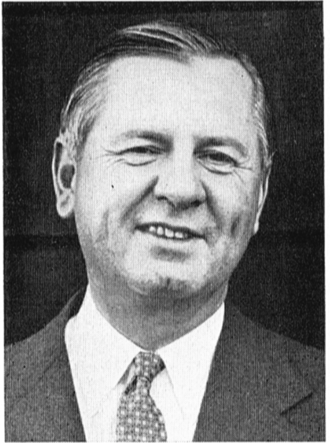
NAME: Hasselblad, (Fritz) Victor
ACHIEVEMENT(S): Camera
NICKNAME/ALIAS: None
DATE/PLACE OF BIRTH: 8 March 1906, at Goteborg, Sweden
DATE/PLACE/AGE AT DEATH: 5 August 1978
DISCIPLINE: Photographic engineer and ornithologist
FIELD: Aerial photography
LANGUAGE: Swedish and English
EDUCATION: Primary and secondary schools in Goteborg
MAJOR WORK: 'The Migratory Routes of Birds', 1935
LIFE AND TIMES:
In 1924, at the age of 18, Hasselblad left school and became an apprentice in the camera industry. During the late 1920s and early 1930s he worked for Kodak Pathe in Paris, Zeiss in Germany and then Eastman Kodak in the US, while all the time taking photographs, investigating and experimenting.
During this period he also became fluent in several foreign languages, and established an extensive network of contacts.
In 1932-35 he supported himself with various jobs in the industry, while also continuing to spend much of his free time bird-watching, becoming one of the finest bird photographers of his day. In 1935 he published: 'The Migratory Routes of Birds' well-received by ornithologists and zoologists.
World War II broke out in 1939, and on 9 April 1940, following the German invasions of Denmark and Norway, Sweden mobilized, and in the same month brought down a German observation plane with its aerial camera still intact.
Keen to improve their own aerial reconnaissance, the Royal Swedish Air Force took the camera to Hasselblad and asked if he could make one like it. Working in a shed next to his garage and conveniently close to a scrap yard, Hasselblad used rough sketches rather than blueprints and supplemented Air Force supplies with odds and ends from the scrap yard, and in early 1941, with the help of two mechanics, he produced the first HK7 camera.
This won him the contract to design and produce aerial cameras for the Swedish Air Force, and within a few months he had set up Victor Hasselblad Ltd (VHAB), with 20 workers engaged on the series production of the Flyghandkamera HK7. The camera format was 7 x 9 cm using 80mm perforated film and had two interchangeable lenses, the first a Zeiss Biotessar F2.8/13.5cm and the second either a Meyer Tele-Megor F5.5/25cm or a Schneider Tele-Xenar F4.5/24cm.
Hasselblad intended the hand-held HK7 to be used in addition to the much bigger 13 x 18cm aerial cameras then in use. In addition the smaller and lighter HK7 was suitable for lighter aircraft like the two-seater dive-bomber SAAB B-17, the fast shutter speeds and ease of focus making it possible to take photographs in previously impossible conditions. The Swedish Air Force as delighted with the camera and 240 HK7 cameras were made between 1941 and 1943.
In 1941 Hasselblad was also asked to make an aerial camera with a larger film format to be mounted in observation planes. He came up with the Flygseriekamera type SKa4, which had several unique features that would prove important for Hasselblad's post-war production, including interchangeable film magazines. (SKa4 features were later to appear on the Hasselblad 500EL/M). Hasselblad also supplied about thirty surveying cameras with 18 x 24cm film format.
In October 1948, at a press conference in New York, Hasselblad launched the first civilian Hasselblad Camera, regarded as a sensation by the photographic press. This was the Hasselblad 1600F, the first medium-format single-lens reflex camera with 6 x 6 cm film format and interchangeable lenses, film magazines and viewfinders, designed to allow members of the public to take photographs of exceptional quality, and it soon made Hasselblad a household name.
During the 1950s the company expanded and prospered, and in 1957 Hasselblad introduced the 500C camera.
Then, in 1962, the astronaut Wally Schirra walked into a camera shop and bought a 500C Hasselblad, a modified version of which was then used by Schirra on the NASA Gemini 7 Mission. Their space photographs aroused tremendous worldwide interest.
It was a Hasselblad 500EL/70 that took the first pictures of a man on the moon during the American moon landing of 1969, and there have been Hasselblad cameras on every NASA mission since.
Hasselblad kept his interest in ornithology until the end of his life, a passion he shared with his good friend the Swedish biochemist <a pal of> Tiselius*.
ASSESSMENT: None
EXTRA CONNECTIONS: None
ONELINER: Victor Hasselblad, of the camera
BIBLIOGRAPHY:
EB
Internet, various
PARENTS: Victor Hasselblad (d. 1942) and ?
SIBLINGS: Two sisters and a brother
SPOUSE: Erna Nathorst (d. 1893)
CHILDREN: None