Arnauld, A
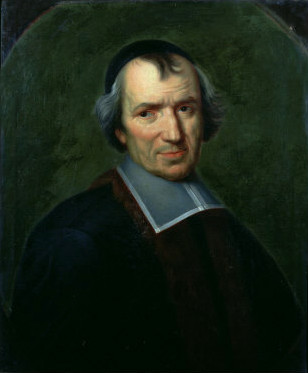
Nickname/Alias: The Great Arnauld
Achievements: Leading defender of the persecuted Jansenists.
Born: February 6, 1612; Paris, France
Died: August 8, 1694; Lieges, Belgium. Aged 82
Field & Discipline: Religion; Theology; Theologian
Language: French
Father: Antoine Arnauld
Mother: Catherine Marion de Druy
Siblings: 10
Spouse: None
Children: None
Education: University of Sorbonne, Paris
Major Work:
"On Frequent Communion" (1643)
Life & Times:
Arnauld's father was a well-known lawyer who acted for the University of Paris against the Jesuits in 1594. When Arnauld was eight his eldest brother, Robert, met Jean Duvergier de Hauranne, who was the close friend of the theologian [family friend of] Jansen* and a follower of Jansenism. Duvergier became a friend and spiritual adviser to the Arnauld family. He persuaded Arnauld to give up the idea of a legal career for one in the church.
Arnauld studied theology at the Sorbonne and after teaching philosophy for two years at the College de Mans he was ordained in 1641. In the same year he wrote a paper supporting Duvergier against the Jesuits. (Duvergier had argued that only if an individual was truly repentant should he receive absolution from a priest).
[opposed by] Richlieu*, an enemy of Jansenism, opposed Arnauld's admission to the faculty of the Sorbonne but after the cardinal's death in 1643 Arnauld was admitted. He immediately came up against the authorities when he decided to support the Jansenists, and he gave up a lucrative ecclesiastical appointment in order to devote his energies to the cause of Jansenism.
In 1643 he kicked off by publishing a treatise entitled: "On Frequent Communion" in which he suggested that to attend weekly communion as advocated by the Jesuits was an indulgence for a sinner and that if the sinful deprived themselves of communion this would be a more effective punishment.
This was the most important of Arnauld's religious works and in it he restated the Jansenist view of harsh discipline. In the same year he also attacked the Jesuits in "Moral Theology of the Jesuits."
In 1655 Arnauld wrote two works defending the views of Jansen. Their publication triggered a controversy that ended with Arnauld being expelled from the Sorbonne when he refused to sign a document agreeing with the pope's condemnation of five principles attributed to Jansenism.
For both the Jesuits and the civil authorities, Jansenism represented a threat to the stability of the established order. As a consequence, over the next decade Jansenism was persecuted and many of its followers were required to renounce their beliefs on pain of imprisonment. Robert Arnauld had already given up his career and entered the Jansenist community of Port Royal, founded by one of his nephews, where five of his daughters eventually became nuns.
Another of Arnauld's brothers, Henri, gave up his diplomatic career for the church and he also supported the Jansenists. Two of Arnauld's sister became abesses at the Port Royal convent.
The philosopher [supported by] Blaise Pascal* had been living at Port Royal and he came to Arnauld's defence by writing a series of letters known as "Lettres Provinciales" (1656-7). Arnauld and Pascal (Pascal’s sister [supported by] Jacqueline Pascal* was also Arnauld’s supporter) had to go into hiding and the Jansenist community at Port Royal was continually harassed.
In 1669 there was a respite when Pope Clement IX and Louis XIV agreed the Peace of the Church. Arnauld came out of hiding and was received by the king and the nuns of Port Royal abbey were allowed to take communion again. Over the next ten years, Arnauld wrote against the Calvinist doctrine and on matters of debate between Roman Catholics and Protestants.
He became widely acclaimed as a theologian and Pope Innocent XI is said to have thought of making him a cardinal. In 1679 the Peace broke down and Arnauld was forced to flee from Paris. He went to Netherlands and lived in Mons, Ghent and Brussels before settling in Liege. He wrote prolifically, completing a six-volume attack on the Jesuits and engaging in debate with other theologians.
Extra Connections: He critiqued a work by [critiqued] Descartes*
He was opposed by [opposed by] Mazarin*
Assessment:Arnauld was the leading defender of Jansenism during its persecution in
France in the second half of the seventeenth century.
Oneliner: Antoine Arnaud, leading Jansenist theologian
Bibliography:
- Nadler, Steven, Arnauld and the Cartesian philosophy of ideas, Manchester University Press, 1989.