law firms bak
broke main w/ bad nation mag code
SEE LAW FIRM BAD CORP
this is a newish category: see also legal
also lobbyist
tort, slapp, foia
fedsoc
judges
---
---
AN 10 25
A New York Timessurveyof 50 members of the Washington legal establishment show deep pessimism on how President Donald Trump has taken a "wrecking ball" to the legal system.
"What’s happening is anathema to everything we’ve ever stood for in the Department of Justice,” said a former official who served in both Democratic and Republican administrations, including Trump’s first term.
And although 42 of those surveyed—former attorneys general, solicitors general, former U.S. attorneys and retired federal judges from across the country—were previously surveyed before Trump took office for his second term, many did not want to speak on record, because, theTimesexplains, "they’re worried about retribution, for their law firms or their family members, if they draw Trump’s ire."
The new survey, the Times says, "channeled their collectively grim state of mind. All but one of the respondents rated Trump’s second term as a greater or muchgreaterthreat to the rule of law than his first term."
Respondents say this second term is "far worse than they imagined," and all agreed that "Trump and his attorney general, Pam Bondi, have used the Justice Department to go after the president’s political and personal enemies and provide favors to his allies."
Contrasting Trump's first term, during which time safeguards were held because "there were lawyers in the room;" this time is different, the Times reports.
I still think we get through it,” a former official who served in several administrations said, “but I’m less certain of that each passing day.”
Trump'sbullying of law firms has raised deep concern among the group as well, with one former Republican-appointed judge saying, “Whatever happened to the bedrock principle that everyone deserves the best lawyer they can find? My firm is scared to death.”
The firing of the Jan. 6 prosecutors, the resignations over Trump's dismissal of corruption charges against New York Mayor Eric Adams, the conduct of Trump's U.S Pardon Attorney Ed Martin, who promised to smear the reputations of any targets he couldn’t indict, and the indictment of former FBI Director James Comey"corroded the Justice Department in the eyes of our respondents," the Times says.
“It’s all about dismantling the institution,” said the former official who served in multiple administrations. “And the message to everyone in the department is that if you speak up, something could happen that has never happened before. Maybe you’ll only be demoted or fired. But maybe it will be worse. Either way, you’d better bow to the emperor.”
---
2x
an 6 25
Since returning to office, Donald Trump has often called the US legal system into question. He has criticised judges as activists, challenged the role of the courts and insisted some firms do free legal work in support of his administration’s causes to make up for working for some of his political opponents.
Meanwhile, Vice-President J.D. Vance has advised US Supreme Court chief justice John Roberts that he ought to be “checking the excesses” of the lower courts.
And Stephen Miller, deputy White House chief of staff, said: “We are living under a judicial tyranny,” after the US Court of International Trade ruled the president didn’t have the power to impose international trade tariffs. Meanwhile, judges are asking for more security to protect them from threats.
Trump’s federal investigations and volley of executive orders (presidential directives that don’t require legislative approval by Congress) have also put enormous pressure on law firms. And a recent report shows that both trust in law firms’ independence, and even the rule of law itself, is perceived as under threat in the US. But what does this mean, and why is it important?
The president has taken action against law firms in two prominent ways:
First, by federal investigation. Specifically, letters to a group of 20 law firms from the Equal Employment Opportunity Commission. These demanded information about their diversity, equality and inclusion (DEI) policies, based on the proposition that any sort of treatment of underrepresented groups that appeared preferential to them in policy, or practice, was unequal treatment for other groups, and, consequently, discriminatory.
Second, the president has passed numerous executive orders introducing punitive measures on specific law firms that previously represented clients opposing his administration, or employed attorneys involved in past investigations against him. His administration has also revoked government contracts and suspended security clearance from buildings. In practice, the orders would prevent attorneys from accessing from where they work, such as courthouses and federal agencies.
In response, some prominent law firms have sought to mitigate the fallout with the Trump administration by entering into agreements with it. These have included pledging US$1 billion (£730,000,000) in pro bono (free) legal services supporting causes aligned with Trump’s agenda.
For example, support for veterans, representing police officers, and antisemitism prevention. Noteworthy is that law firm Paul, Weiss, Rifkind, Wharton & Garrison have now agreed to discontinue certain DEI policies, in addition to committing US$40 million (£29.4 million) in pro bono work for the president’s causes. In response the Trump administration has now lifted restrictions against them. Judges say they are under threat.
More broadly, it has been reported that 70% of the US Justice Department civil rights division’s attorneys are leaving their posts. The mass exodus is believed to be part of attempts to reshape the division into one focused on enforcing executive orders.
The consequences of these developments are that the president’s actions have led to a significant realignment in the legal professions. Some US attorneys have reported that law firms are now more hesitant to engage in pro bono workthat could be viewed as opposing the administration’s policies.
By contrast, some lawyers are now trying to establish independent firms aimed at defending civil servants and challenging federal overreach, ensuring at least some, albeit less resourced, support for underrepresented groups. Trump criticizes judges and legal activists.
Other lawyers have sought legal action against the orders as unconstitutional interference. Some of these have led to success. For example, Perkins Coie challenged theirs and got it struck down. The concern here centred around their representation of Democratic presidential candidate Hillary Clinton. In arriving at the decision, the district judge ruled the president’s actions to be an “overt attempt to suppress and punish certain viewpoints”.
Why this matters
These developments call into question the balance between governmental influence and the independence of lawyers in upholding the rule of law. Lawyers must be impartial in representing their clients in order to effectively represent their interests, and allow the judiciary to fulfil their duty of checks and balances on the government’s decisions.
When unfettered power is wielded by the government, and the law is undermined, scope for monitoring the constitutionality of decision making is compromised.
The rule of law is a foundational principle of western democracies. It means that everyone is subject to the law, including governments. Laws must be applied equally, fairly and consistently, and no one is above them.
In essence, laws govern the nation, not arbitrary decisions by individuals in power. In that sense, following the rule of law helps prevent tyranny, protect people’s rights and liberties, and ensures a stable and predictable society.
In order to deliver these objectives, an independent legal sector is needed. Trump’s actions are a threat to achieving this cornerstone US constitutional principle. Some have gone as far as to suggest that by entering into agreements with Trump, law firms have become subsidiaries of his administration.
A recent study on trust in the rule of law found that Americans’ trust in lawyers was already undermined, even before the second Trump administration.
The results, based on public attitudes in 2024, compared public perceptions in Germany, the Netherlands, Spain, Italy, Norway, the UK and the US. Norway and the UK ranked highest in respect of trust in the rule of law (81% and 74% respectively), and Spain and Italy were least trusted (49% and 43%).
The results for the US are interesting. Around 71% of American respondents stated that they had a high level of trust in the rule of law. Yet the country came third from the bottom under the metric “you feel like you are in good hands in US courts”.
The reasons for this are implied in the responses to the other questions in the survey. The US performed second worst (just behind Spain) in respect of belief that judges could be biased. The US also performed worst of all in the category where the public were asked if lawyers were impartial (just 41% agreed).
In interpreting these results it is important to note that the survey was conducted in 2024, prior to Trump’s second term. But anti-elite and anti-judge rhetoric pointing to arguments for more presidential power and less judicial oversight had already been prominent in the first Trump term, and the 2024 campaign.
The results expose the already fragile nature of trust in the legal sector in the US, and underline how this could be ramped up further after the announcements in recent weeks.
Stephen Clear, Lecturer in Constitutional and Administrative Law, and Public Procurement, *Bangor University
This article is republished from The Conversation under a Creative Commons license. Read the original article.
---
---
AN 5 25
The Big Law firms that capitulated to President Donald Trump’s unconstitutional demands thought they were buying peace with his administration, preserving their client relationships, and protecting their bottom lines.
Recent developments illustrate the growing magnitude of their mistake.
Fighters Are Winning
On May 2, U.S. District Court Judge Beryl Howell became the first court to issue a final ruling that Trump’s executive orders targeting Big Law firms violated the First, Fifth, and Sixth Amendments to the U.S. Constitution. In a 102-page opinion, the court shredded Trump’s edict with a straightforward analysis that other courts are likely to follow:
“In a cringe-worthy twist on the theatrical phrase ‘Let’s kill allthe lawyers,’ [Trump’s Executive Order] takes the approach of “Let’s kill the lawyers I don’t like,” sending the clear message: lawyers must stick to the party line, or else.
“Using the powers of the federal government to target lawyers for their representation of clients and avowed progressive employment policies in an overt attempt to suppress and punish certain viewpoints, however, is contrary to the Constitution,…. Simply put, government officials ‘cannot . . . use the power of the State to punish or suppress disfavored expression.’
“That, however, is exactly what is happening here.”
For those keeping score, Trump’s Justice Department has now lost every courtroom fight on the subject. Jenner & Block, WilmerHale, and Susman Godfrey obtained immediate temporary relief from his executive orders, as did Perkins Coie, which has now won a permanent injunction from Judge Howell.
Meanwhile, how are the firms that caved to Trump doing?
The Other Shoe Drops: #1
After providing Trump with a war chest totaling almost $1 billion in free legal services, the settling firms are now learning how he plans to use it. Previously, Trump had mused about using Big Law attorneys on coal leasing and tariff deals, but on April 28 things got real.
Trump issued an executive order titled, “STRENGTHENING AND UNLEASHING AMERICA’S LAW ENFORCEMENT TO PURSUE CRIMINALS AND PROTECT INNOCENT CITIZENS.”
The order emphasized the need to “protect and defend law enforcement officers wrongly accused and abused by State or local officials.” It directed Attorney General Pam Bondi to provide the legal resources necessary to defend those officers, including “private-sector pro bono assistance.”[emphasis supplied]
Stated simply, police officers accused of brutality and other misconduct will get Big Law attorneys to defend them – free of charge.
Meanwhile, traditional pro bonocauses, including defending immigrants’ rights, are suffering from the deterrent effect of Trump’s attack. Fearing his wrath, they are declining work that challenges his policies.
Settling firms were already getting blowback from their partners and associates as many have left their firms. Trump’s newly-added page to their pro bonocatalog won’t help recruiting or retention. And as with all things Trump, there’s no limiting principle. Appeasement never produces finality.
The Other Shoe Drops: #2
The firms’ stated reason for capitulating to Trump was concern that clients would leave any firm that was not in Trump’s good graces. That premise is not aging well either.
On April 11, Simpson, Thacher & Bartlett agreed to provide $125 million in pro bonowork “and other free legal services” to Trump-designated causes.
On April 22, the firm informed the Delaware Chancery Court that it would no longer be representing Microsoft in a case related to its 2023 acquisition of Activision. The same day, Jenner & Block replaced Simpson Thacher as Microsoft’s counsel.
Losing a client to another firm is not uncommon, and none of the players has commented on Microsoft’s switch. But capitulation to Trump has not been a panacea for preserving client relationships. A firm that challenges an unconstitutional order threatening its existence is a firm that many clients want fighting for them.
The Other Shoe Drops: #3
On April 24, 16 House members sent letters to nine firms that settled with Trump. Asking about their motivations and urging them to disavow the deals, lawmakers suggested that the agreements may violate federal and state criminal and civil laws while creating “potentially irresolvable violations of applicable Rules of Professional Conduct.” Previously, Sen. Richard Blumenthal (D-Conn.) and Rep. Jamie Raskin (D-Md.) sent requests for information from several firms and White House counsel on April 6 and April 18.
The Other Show Drops: #4
Firms assumed that capitulation would occupy a single news cycle and then disappear. But their public relations nightmares aren’t going away. Apart from the widespread and ongoing condemnation of the legal community, the story continues to have legs as a fateful moment for the rule of law in the United States.
The May 4 edition of CBS’s 60 Minutes ran a damning segment on Big Law firms that settled with Trump. None was willing to appear and defend itself or its deal. The legal term for such continuing cowardice is res ipsa loquitur– the thing speaks for itself. In this case, the firms didn’t speak at all.
On May 9, an article that later appeared in the New York TimesSunday print edition ran with this headline and subhead:
*Can Elite Lawyers Be Persuaded to ‘Wake Up and Stand Up’?
When the law firm Paul Weiss cut a deal with the Trump administration, a new kind of activist emerged.
Some of the settling firms, including Kirkland & Ellis and at least one other, have an escape hatch: Their “handshake deals” with Trump are not in writing. They can do what Trump does when he no longer likes his own prior agreement: Walk away.
In fact, even firms with a written agreement can walk away too. Whatever their form, the deals are probably not enforceable. But that was never Trump’s main objective. It was always about intimidation and deterrence. When firms bent the knee to him, he won and scored an invaluable public relations victory.
And his accompanying billion-dollar windfall didn’t hurt.
NOW READ:The single stupidest statement about Trump ever made
---
AN 5 25
U.S. President Donald Trump directed Attorney General Pam Bondi “to seek sanctions against attorneys and law firms who engage in frivolous, unreasonable, and vexatious litigation,” including legal filings for improper purposes and statements that are not based on evidence.
Bondi should start with the White House attorneys who drafted Trump’s executive orders targeting Big Law firms—and her Justice Department lawyers trying to defend them.
Did Real Lawyers Write These Orders?
Cloaked in empty rhetoric about “conduct detrimental to critical American interests,” retribution is at the core of Trump’s edicts.
For example, the only detailed rationale for Trump’s Jenner & Block order was the firm’s association with Andrew Weissmann, who returned to the firm in 2020 after completing his work for Special Counsel Robert Mueller on the Trump-Russia investigation. Other than the Weissmann diatribe, Trump’s order merely recited vague and unsupported assertions about alleged “partisan ‘lawfare,’” “abuse of its pro bono practice,” and “racial discrimination.”
But on that basis, Trump directed all federal agencies to: 1) limit the entire firm’sengagement with federal employees; 2) limit the entire firm’s access to federal buildings; 3) suspend the entire firm’s security clearances; 4) terminate the firm’s government contracts; and 5) require all government contractors to disclose any business that they do with Jenner—with an eye toward terminating those contracts as well.
Zealous advocacy on behalf of any client—even the president of the United States—has limits.
Four law firms have challenged Trump’s similar orders. In stark language, four separate federal courts have granted immediate relief:
- “Disturbing”
- “It sends little chills down my spine.”
- “It threatens to significantly undermine our entire legal system and the ability of all people to access justice.”
- “There is no doubt this retaliatory action chills speech and legal advocacy, or that it qualifies as a constitutional harm.”
- “The framers of our Constitution would see this as a shocking abuse of power.”
In three recent hearings, Deputy Associate Attorney General Richard Lawson—Bondi’s longtime Florida colleague and Trump loyalist—struggled to answer judges’ basic questions about the orders targeting Perkins Coie, WilmerHale, and Jenner & Block:
- Do law firms have to make deals with Trump to avoid executive orders?
- “I can’t speak to that.”
- Are the deals in writing?
- “I have not been privy to this.”
- Has Trump achieved $1 billion in deals yet?
- “I do not know.”
When Lawson argued that Trump could target Jenner because it “discriminates against its employees based on race,” U.S. District Court Judge John Bates, an appointee of President George W. Bush, snapped back, “Give me a break.”
In fairness to Lawson, Trump and his White House attorneys who wrote the orders hadn’t given him much to work with.
Jenner: A Case Study
Take a closer look at Jenner’s claims, followed by selected highlights of the government’s 37-page response:
The First Amendment:
- Prohibits retaliatory actions for protected speech and viewpoint discrimination;
- Bars government interference with a client’s right to associate; and
- Prevents the government from imposing unconstitutional conditions on access to government services and benefits.
The government says that Trump was just exercising his free speech rights. It asserts that Jenner’s lawsuit “carries with it a dangerous risk of muzzling the Executive.” The government also argues that Jenner’s speech is not protected insofar as it “consists of employment practices involving racial discrimination [favoring women and minorities].”*
The Fifth and Sixth Amendmentsguarantee a litigant the unfettered right to the effective assistance of counsel of his or her choice.
The government says that: 1) clients (not law firms) have to assert such claims; 2) any impact of barring Jenner from federal buildings or its clients from federal contracts is speculative; and 3) Trump’s order does not violate those rights in any event.*
Due Processis required before the government can deprive a person of liberty or property interests. It requires notice of the claims, clarity about their meaning, and the opportunity to be heard before the deprivation occurs. None of that occurred. The resulting harm, including damage to the firm’s reputation, was immediate and ongoing.
The government says that: 1) the order is sufficiently clear; 2) it has not yet harmed the firm; and 3) the firm will receive any required notice before the order actually injures it.*
Equal Protectionrequires the government to treat similarly-situated entities similarly or, at a minimum, have a rational basis for failing to do so.
The government insists that Jenner is not being singled out for unfair treatment.*
The Constitution’s Separation of Powersprohibits Trump from acting as accuser, prosecutor, judge, jury, and executioner. But he wore all of those hats in his executive order.
The government says that Trump’s order is an appropriate exercise of presidential power.*
Attention All Trump Lawyers: It’s Time for a Gut Check
Zealous advocacy on behalf of any client—even the president of the United States—has limits. Upon admission to the bar, every attorney swears an oath to defend the U.S. Constitution and to uphold the rule of law. A code of professional ethics requires any legal argument to be “warranted by existing law or by a nonfrivolous argument” for changing it. Attorneys must ensure that their statements about facts are “reasonably based” on evidentiary support.
Trump’s retaliatory orders seek to intimidate lawyers and law firms into submission and thereby undermine the legal system. His own conduct refutes his lawyers’ contrary arguments. As other firms have capitulated, pledged “political neutrality,” and collectively committed to provide almost $1 billion in free legal services to Trump-designated causes, his executive orders’ stated concerns about those firms’ “conduct detrimental to critical American interests” miraculously disappeared.
Trump even boasted, “And I agree they’ve done nothing wrong. But what the hell—they give me a lot of money, considering.”
In one of the many amicus briefs supporting Jenner’s challenge, more than 800 law firms—including Deputy Associate Attorney General Lawson’s former firm, Manatt, Phelps, & Phillips—urged that Trump’s executive order “should be permanently enjoined as a violation of core First, Fifth, and Sixth Amendment guarantees, as well as bedrock separation-of-powers principles.”
“But something even more fundamental is at stake… [Trump’s] Orders pose a grave threat to our system of constitutional governance and to the rule of law itself.”
I don’t know what Trump’s lawyers see when they look into a mirror. But I know this: History will not be kind to them.
---
AN 4 25
During his second term, President Donald Trump is aggressively attacking major law firms for representing his political foes. Trump's tactic is to remove security clearances for firms he considers adversarial, thus making it harder for them to do their work on behalf of clients.
Some major firms are fighting Trump in the courts, including Perkins Coie. Others are making concessions to Trump, including Paul, Weiss, Rifkind, Wharton & Garrison and Skadden, Arps, Slate, Meagher & Flom. Full disclosure: this journalist's mother was employed by Skadden, Arps during the 1980s.
CNN's Michael Smerconish, who practiced law in Philadelphia before becoming a prominent conservative/libertarian media figure, discussed this trend during a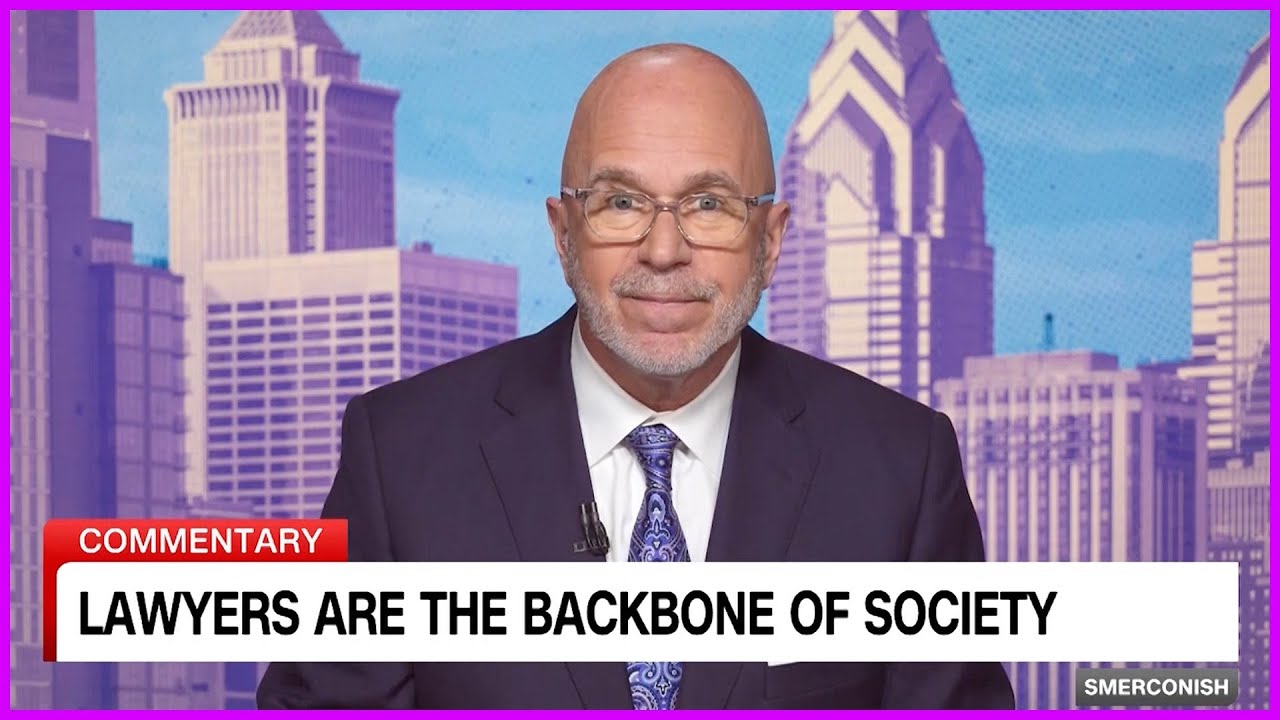 . And he finds it troubling that Trump is being allowed to "dictate" who major law firms do or don't represent.
READ MORE: 'Message was clear': DC insider rips Trump for 'terrifying the legal profession into submission'
"Trump knows that his only true opposition could come from the bar, and that's why he's used executive orders — sometimes as threat, sometimes as actuality — against several top firms,"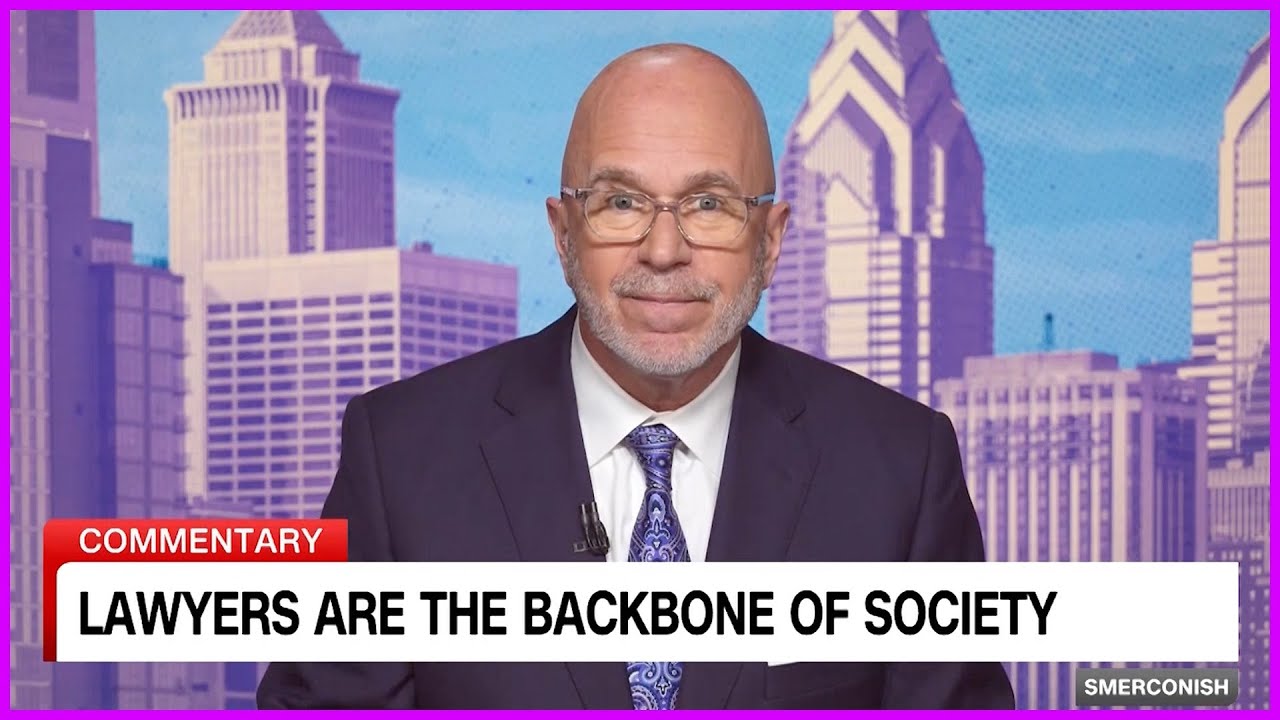 . "Financially devastating orders that would say the government won't contract with businesses represented by these firms. And it bars access to federal buildings, which apparently means lawyers couldn't go into federal courthouses or have meetings with government lawyers."
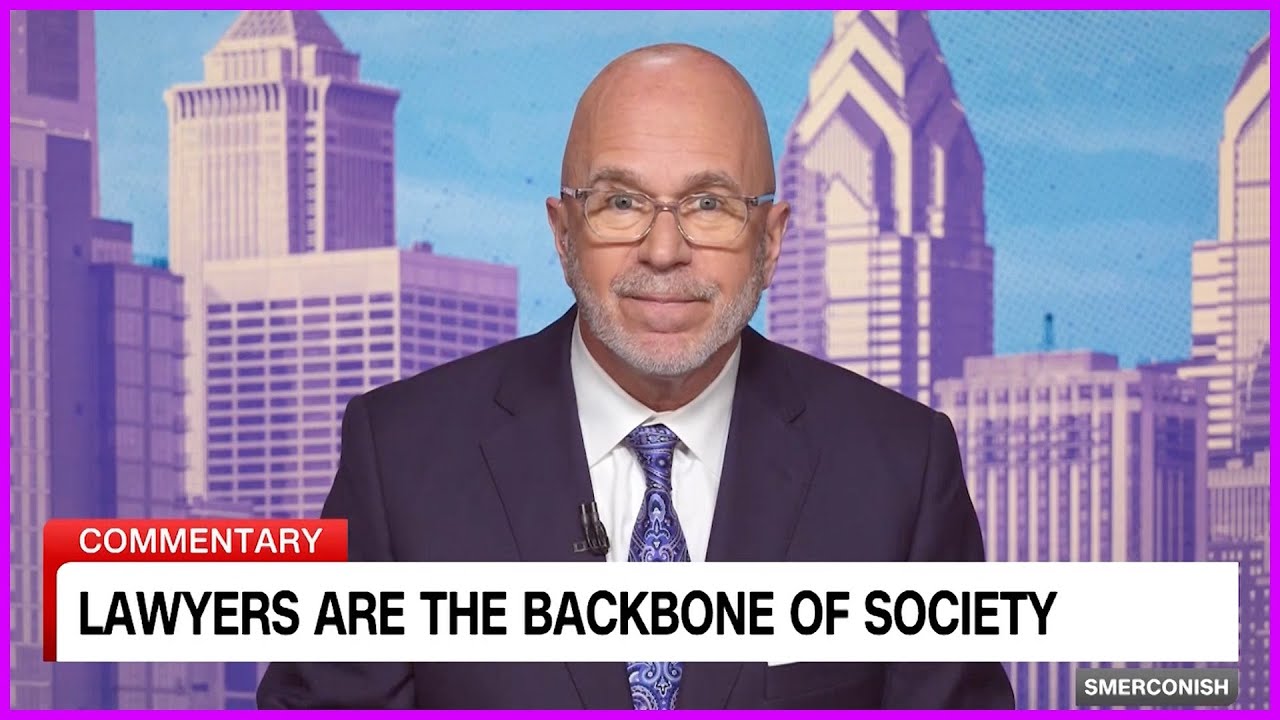 , "This is a core legal principle: lawyers aren't to be punished for their clients or their zealous advocacy. They're protected by the First Amendment, which the executive orders seem to contravene. Think about that: It's akin to denying a surgeon an operating room, or telling a pilot they can't board the airplane."
The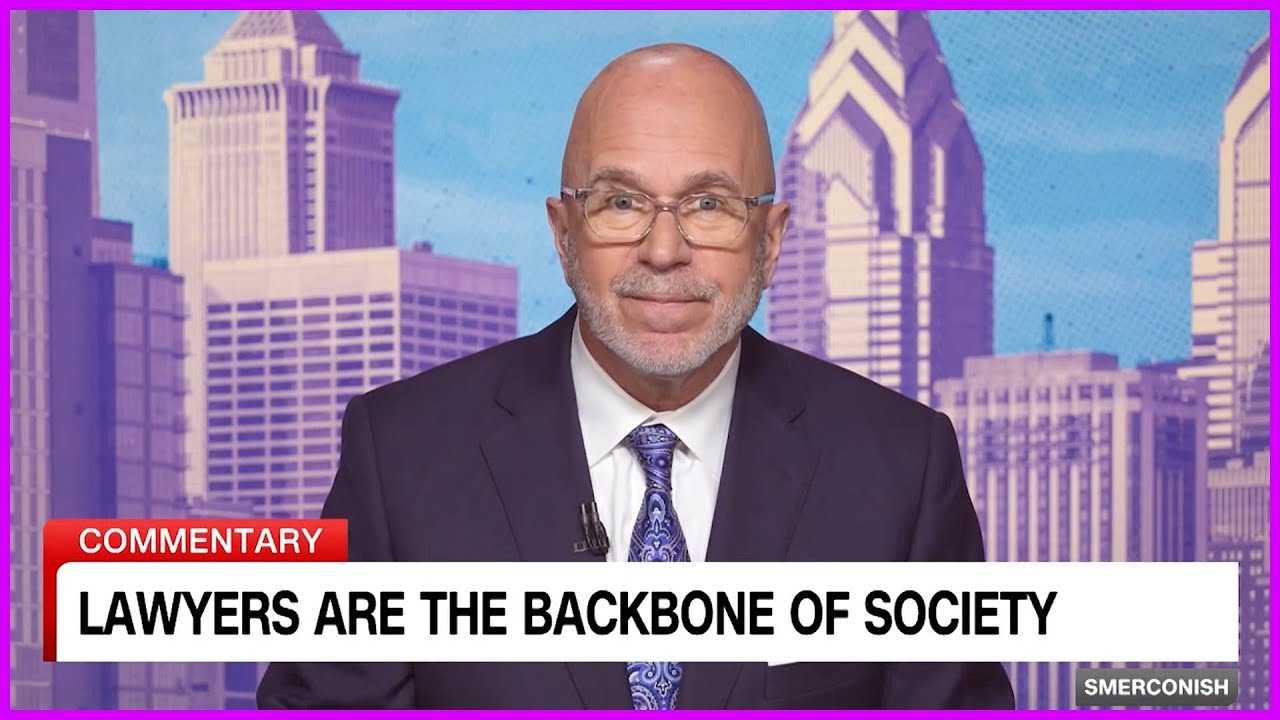 Perkins Coie "worked with Hillary Clinton's presidential campaign" in 2016 and is now fighting back against Trump, while others are making concessions to Trump. And those concessions, Smerconish said, are not good for the legal profession.
"The message unsaid but implied is that these firms are not going to take on work against the Trump Administration,"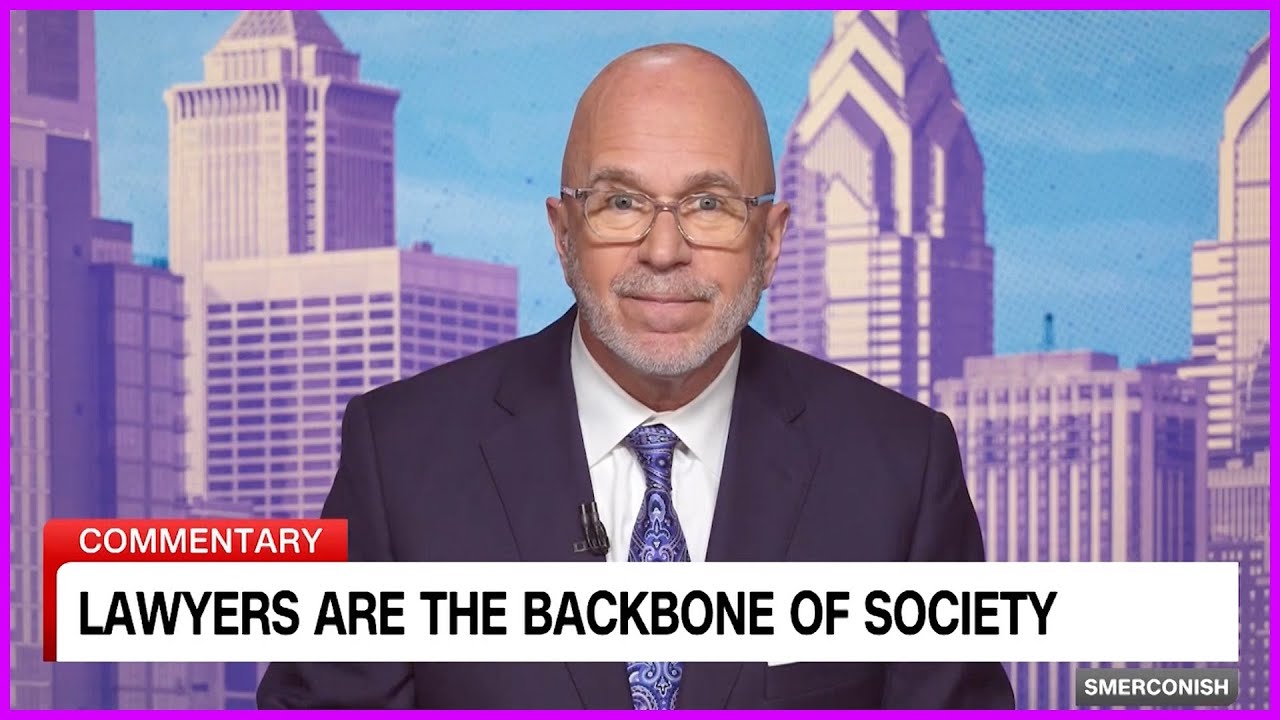 . "Thus, it appears these firms are letting the president dictate who they'll represent. And now that they're knuckled under once, why wouldn't the president make them do it again?.... So, it's all a gut-check — a true character check for the legal profession. Stand up for yourself, your colleagues, the Constitution, the rule of law — or surrender your role and subordinate your role to the preferences of the president. "
READ MORE:Experts 'watch in horror' as Trump wages 'full frontal attack on the legal profession'
https://www.eenews.net/articles/meet-the-lawyers-teeing-up-the-supreme-court-climate-showdown/
1/22
as arguments approach in the most significant Supreme Court environment battle of the decade, teams of lawyers are already making their case for how the justices should view EPA’s climate authority.
When the justices take the bench on Feb. 28 to hear arguments in West Virginia v. EPA,they will arrive armed with information from reams of briefs prepared by some of the nation’s leading environmental lawyers.
Those attorneys’ arguments will lay the groundwork in a high-stakes case that has the potential to upend EPA’s ability to regulate greenhouse gases from power plants — one of the nation’s largest sources of carbon dioxide emissions.
the challenge — brought by Republican-led states and coal companies — asks the Supreme Court to overturn a ruling by the U.S. Court of Appeals for the District of Columbia Circuit that struck down a Trump-era EPA rule gutting the Obama-era Clean Power Plan.
The 2015 Obama rule invoked EPA’s authority under the Clean Air Act to set systemwide requirements for power plant emissions reductions.
After the D.C. Circuit ruling, President Biden’s EPA had a clean slate to craft its own rule. The agency had said it would not return to the Clean Power Plan, whose goals have already been met by the power sector, even though the regulation never took effect.
The justices then took the unusual step of agreeing to hear a dispute over a regulation that does not technically exist.
Their ruling in the case, which is expected by next summer, could not only constrain EPA from issuing a comprehensive new carbon rule but also prevent Congress from handing off broad regulatory authority to federal agencies.
Here are some of the lawyers to know in this year’s high court climate slugfest:
Lindsay See
Leading the briefs for West Virginia is Lindsay See, the state’s solicitor general.
The coal-rich state, joined by 18 others, filed the first plea for the Supreme Court to weigh in on EPA’s climate authority. It was followed by three other petitions, which are now consolidated in one massive case.
See has served as West Virginia’s leading litigator since 2017 and previously worked as an associate atGibson, Dunn & Crutcher LLP, a firm with a prominent Supreme Court practice.
She has appeared once before the nation’s highest bench, in a 2018 case related to a discrimination challenge against an exemption in West Virginia tax law that protected state and local — but not federal — employees from having their pension benefits taxed. West Virginia lost the case.
West Virginia Attorney General Patrick Morrisey (R) and other state lawyers said the D.C. Circuit should not have allowed EPA to regulate power plant emissions under a “rarely used, ancillary provision of the Clean Air Act.” They referred to Section 111(d) of the statute, which served as the basis for the carbon rule.
“Save for a few general factors EPA was to take into account, the lower court told EPA it has ‘no limits’ on the emission-related measures it can impose — on any economic sector or almost any actor,” says the states’ most recent brief, which was signed off on by See.
See is a Harvard Law School graduate and clerked for former D.C. Circuit Judge Thomas Griffith.
Paul Seby
One other state has echoed West Virginia’s arguments in a petition and brief led by a lawyer who has been involved in the EPA carbon rule battle since the Clean Power Plan days.
Paul Seby, a shareholder at the firm Greenberg Traurig LLP and special assistant to North Dakota Attorney General Wayne Stenehjem (R), signed off on a brief that said the D.C. Circuit ruling “undermines the cooperative federalism framework carefully crafted by Congress” by finding that EPA — rather than states — can set power plant performance standards.
North Dakota v. EPA is one of the four petitions in the consolidated Supreme Court case.
Seby has argued against EPA carbon regulations before, back when the Clean Power Plan was before the D.C. Circuit. The court held a marathon argument over the regulation in 2016 but never reached a ruling.
Earlier that year, the Supreme Court had blocked the rule from taking effect, which allowed the Trump administration to dismantle it.
Seby holds a bachelor’s degree from the University of San Diego and a law degree from Lewis & Clark College.
Andrew Grossman
One of the other lead petitioners in the climate case, Westmoreland Mining Holdings LLC, hired Andrew Grossman to make its case to the high court.
Grossman leads BakerHostetler’s appellate practice and is a frequent conservative commentator on wide range of administrative and constitutional issues.
Grossman is an adjunct scholar at the libertarian Cato Institute and a former legal analyst at the Heritage Foundation. He’s also a familiar face on Capitol Hill, having testified several times before the House and Senate Judiciary committees.
In Westmoreland’s petition, Grossman raised what some environmental advocates referred to as a killer question: whether EPA may use Section 111(d) to create performance standards for existing stationary sources under the provision’s “hazardous air pollutants” program.
The justices granted the petition alongside others, but they said they would only consider the second question posed by Westmoreland’s petition: whether EPA’s carbon rule violated the major questions doctrine, which restricts federal agencies from deciding issues of “vast economic and political significance.”
Grossman attended Dartmouth College and theGeorge Mason University’s SCALIA School of Law.
Yaakow Roth
The fourth petition in the consolidated case comes from North American Coal Corp., represented byJones Daypartner Yaakov Roth.
Like the other challengers, the coal company argues that EPA and the D.C. Circuit have taken far too broad a view of federal climate authority under the Clean Air Act.
Roth comes to the EPA climate case with lots of experience before the Supreme Court. He was the brainchild behind an argument that led the Supreme Court to overturn convictions in the New Jersey “Bridgegate” scandal.
He has also fought to preserve restrictive voting laws in Arizona and to dismantle the Obama-era Affordable Care Act.
Roth has clerked for the late Supreme Court Justice Antonin Scalia and a federal appeals court judge.
He is a graduate of Harvard University and York University.
Elizabeth Prelogar
Before the Supreme Court agreed to hear West Virginia v. EPA, Elizabeth Prelogar had argued on behalf of the federal agency that it was too early for the justices to get involved.
The solicitor general noted in a brief filed in August that Biden’s EPA has not yet written a new carbon rule and has no plans to revive the Obama plan.
EPA instead intends to issue a new rule “after taking into account all relevant considerations, including changes to the electricity sector that have occurred during the last several years,” she wrote.
Prelogar, who was confirmed in late October, has already made several appearances before the Supreme Court, including in one case in which she argued on behalf of the federal government against abortion laws in Mississippi and Texas.
Since her appointment as acting solicitor general in January, Prelogar has also led Supreme Court briefs in several environmental cases, including one in which the Biden administration backed efforts by the developer of the PennEast natural gas pipeline to acquire state-owned land in New Jersey (Energywire, March 10, 2021). The pipeline company won its case, but the project was eventually canceled.
Prelogar, a Harvard Law School graduate, has previously served as assistant to the solicitor general and has worked in private practice. During a prior stint at the Justice Department, she served on the special counsel’s investigation into Russian meddling in the 2016 election.
She clerked for Attorney General Merrick Garland when he was a judge on the U.S. Court of Appeals for the District of Columbia Circuit and for Supreme Court Justices Ruth Bader Ginsburg and Elena Kagan.
Prelogar is the second woman to be confirmed as solicitor general. Kagan was the first.
Sean Donahue
Environmental groups that support broad EPA regulatory authority have turned to an experienced Supreme Court litigator to represent them in the case: Sean Donahue.
Donahue has been a go-to lawyer for environmental groups and public health advocates in some of the most high-profile litigation of the last decade, including Clean Air Act and climate cases.
He’s also represented environmentalists in key cases on the social cost of carbon for fuel economy and vehicle emissions standards.
Donahue and his team, including the Environmental Defense Fund’s Vickie Patton, will have a challenging task ahead of them. Several conservative justices have signaled skepticism of doctrines requiring them to defer to agency expertise, and the current case appears to be a coordinated effort to curtail EPA’s regulatory authority broadly.
In an interview, Donahue said once again it may be an environmental case that set an important precedent for administrative law.
"Statutes like the Clean Air Act," he said, "necessarily depend upon expert agencies to apply Congress’ health and environmental directives to complex factual records, developing technologies, about particular industries and pollutants."
Donahue, who works for Donahue, Goldberg & Littleton, clerked for former Supreme Court Justices Ginsburg and John Paul Stevens. He’s also a veteran of the Justice Department. He attended Columbia University and University of Chicago’s Law School.
Beth Brinkmann
Another attorney with Supreme Court experience is making the case for electric utilities that want to preserve the D.C. Circuit decision striking down the Trump-era carbon rule.
Before the justices granted the case, Covington & Burling LLP partner Beth Brinkmann led a brief on behalf of Consolidated Edison Inc. and other companies that said Supreme Court review of a nonexistent regulation would run the risk of a “ruling untethered to actual circumstances.”
Moreover, she wrote, the red states and coal companies are seeking relief from the justices even as the power industry has achieved the Clean Power Plan’s 2030 emissions reductions targets more than a decade in advance —even though the rule never officially took effect.
“Those changes, which include reductions in the cost of emission-reduction technologies and increasing consumer preferences for clean power, have only accelerated since adoption of the ACE Rule,” she wrote.
Brinkmann has argued more than two dozen times before the Supreme Court. As former deputy assistant attorney general at the Justice Department’s civil rights division, for example, she defended the Obama administration’s Affordable Care Act.
She has also worked in the appellate practice at the firm Morrison & Foerster and as an assistant federal public defender representing indigent criminal defendants.
Brinkmann is a graduate of the University of California, Berkeley, and Yale Law School. She clerked for the late Supreme Court Justice Harry Blackmun.
Elbert Lin
A utility industry group that opposes EPA’s ability to craft rules like the Clean Power Plan has staffed its legal team with an attorney who, at only 43 years old, has already made a significant impact on environmental law at the Supreme Court.
Elbert Lin was the lawyer who secured the unprecedented stay of President Obama’s climate regulatory regime, the Clean Power Plan, in 2016 while he was West Virginia’s solicitor general.
Lin said in an interview that his interest in environmental and administrative law was born out of necessity when he was West Virginia’s solicitor general. It was during Obama’s second term, and the administration was promulgating many major environmental rules, including the Clean Power Plan.
"Environmental regulations were of significant importance of the state," he said.
Now in private practice at the firm Hunton Andrews Kurth LLP, Lin is back in the EPA carbon rule litigation, representing America’s Power, a trade association of companies that produce electricity from coal.
Lin, who is the son of Taiwanese immigrants, has also argued key Clean Water Act cases at the high court. He argued on behalf of Maui, Hawaii, in a case over whether a federal permit is required for pollution that is pumped underground but eventually reaches the ocean.
The Supreme Court delivered a new test for determining whether a permit was needed, and a federal judge in Hawaii later sided with environmental groups arguing that Maui should have secured a Clean Water Act approval (Greenwire, Oct. 21, 2021). Legal experts say they are watching to see how other courts apply the Supreme Court’s test.
Lin attended Yale for undergrad and law school, and heclerked for a federal appeals court judge and Supreme Court Justice Clarence Thomas.
Reporters Lesley Clark and Niina H. Farah contributed.
200 stop steal BS
https://unamericanbar.com/voter-suppression-attorneys
Un-American Bar
Lawyers working to steal your vote
Stop the count! Donald Trump wasn't able to try and steal an election on his own, he needed lawyers willing to do his dirty work.
Viewing lawyers working on stealing votes in:
Name Firm State
C. Robert Barker III Law Offices of Robert Baker, P.C. GA
Brian W. Barnes Cooper & Kirk, PLLC DC
Thomas Basile Statecraft Law PLLC AZ
Tiffany H. Bates Consovoy McCarthy PLLC VA
Sue Becker Public Interest Legal Foundation MO
Josh Belinfante Robbins Firm GA
Jesse R. Binnall Harvey & Binnall, PLLC VA
Bryan Blehm Kolodin Law Group PLLC AZ
William Bock III Kroger, Gardis & Regas, LLP IN
James Bopp, Jr. The Bopp Law Firm, PCI IN
Gineen Bresso Holtzman VogelJosefiak Torchinsky PLLC MD
Thomas E. Breth Dillon McCandless King Coulter & Graham LLP PA
Christine Dial Buckler Caldwell, Propst & DeLoach, LLP GA
R. George Burnett Conway, Olejniczak & Jerry, S.C. WI
Brian C. Caffrey Scaringi & Scaringi PC PA
Alex K. Calaway Marquis Aurbach Coffing NV
Donald J. Campbell Campbell & Williams NV
Mark J. Caruso N/A NM
Kenneth J. Chesebro N/A TX
Rob Citak The Bopp Law Firm, PCI KY
Crystal H. Clark Pennsylvania Senate Republicans PA
Justin Clark Election Law LLC DC
Richard E. Coleson The Bopp Law Firm, PCI IN
William S. Consovoy Consovoy McCarthy PLLC VA
Jonathan Crumly Sr. Taylor English Duma LLP GA
Richard Cullen McGuire Woods LLP VA
Robert J. Cynkar McSweeney, Cynkar & Kachouroff, PLLC VA
Stephen S. Davis True North Law MO
Todd A. Dawson Baker & Hostetler LLP OH
Michael D. Dean Michael D. Dean LLC WI
Daniel J. Eastman N/A WI
John C. Eastman N/A CA
Ronald T. Elliott Dillon McCandless King Coulter & Graham LLP PA
Gregory M. Erickson Mohrman, Kaardal & Erickson, PA. MN
Peter N. Farley McGuire WoodsLLP GA
Kenneth Ferris N/A PA
Danyll W. Foix Baker & Hostetler LLP MN
Michael Francisco McGuire Woods LLP CO
Kathleen A. Gallagher Porter Wright PA
Jeffrey P. Gallant The Bopp Law Firm, PCI VA
Russell D. Giancola Porter Wright PA
Benjamin J. Gibson Shutts & Bowen LLP FL
Susan E. Gillespie Marquis Aurbach Coffing NV
Rudy Giuliani N/A NY
Kurt A. Goehre Conway, Olejniczak & Jerry, S.C. WI
Jonathan S. Goldstein Goldstein Law Partners PA
Phillip M. Gordon Holtzman Vogel Josefiak Torchinsky PLLC DC
John M. Gore Jones Day DC
James G. Gorman Kleinbard LLC PA
Maxwell Goss Maxwell Goss, PLLC MI
Tyler R. Green Consovoy McCarthy PLLC UT
Edward D. Greim Graves Garrett, LLC MO
Andrew M. Grossman N/A DC
David F. Guldenschuh David F. Guldenschuh, P.C. GA
Scott Hagerstrom N/A MI
Julia Z. Haller N/A DC
Nathan M. Hansen N/A MN
Joel F. Hansen Hansen & Hansen, LLC NV
Joel F. Hansen N/A NV
Todd A. Harding Maddox & Harding, LLC GA
Brian R. Hardy Marquis Aurbach Coffing NV
Matthew H. Haverstick Kleinbard LLC PA
Mark F. (Thor) Hearne, II True North Law MO
Britain Henry Goldstein Law Partners PA
Ronald L. Hicks Jr. Porter Wright PA
Kurt R. Hilbert The Hilbert Law Firm, LLC GA
Bryan Hughes N/A TX
Bryan F. Jacoutot Taylor English Duma LLP GA
Brandon Johnson N/A DC
Brett W. Johnson Snell & Wilmer LLP AZ
Jack C. Jordan Great Lakes Justice Center MI
Lawrence J. Joseph N/A DC
Stefanie Lynn Junttila N/A MI
Erick G. Kaardal Mohrman, Kaardal & Erickson, PA. MN
Christopher I. Kachouroff McSweeney, Cynkar & Kachouroff, PLLC VA
Stephen P. Kallman Great Lakes Justice Center MI
David A. Kallman Great Lakes Justice Center MI
Linda A. Kerns N/A PA
Bradley A. King King Legal Group, LLC PA
Thomas W. King III Dillon McCandless King Coulter & Graham LLP PA
Matthew Z. Kirkpatrick Kirkpatrick Law Office, LLC MN
Howard Kleinhendler Howard Kleinhendler Esquire NY
James A. Knauer Kroger, Gardis & Regas, LLP IN
Alexander Kolodin Kolodin Law Group PLLC AZ
Kevin D. Koons Kroger, Gardis & Regas, LLP IN
Kory Langhofer Statecraft Law PLLC AZ
R. Reid LeBeau, II Jacobson, Magnuson, Anderson & Halloran P.C. MN
Jonathan P. Lienhard Holtzman Vogel Josefiak Torchinsky PLLC VA
Richard Limburg Obermayer Rebmann Maxwell & Hippel PA
Harry W. MacDougald Caldwell, Propst & DeLoach, LLP GA
Jerome M. Marcus N/A PA
Bruce S. Marks Marks & Sokolov, LLC PA
Thomas R. McCarthy Consovoy McCarthy PLLC VA
Carolyn B McGee Porter Wright PA
Patrick M. McSweeney McSweeney, Cynkar & Kachouroff, PLLC VA
Jeremy A. Mercer Porter Wright PA
George N. Meros, Jr. Shutts & Bowen LLP FL
Erin E. Mersino Great Lakes Justice Center MI
Anita Y. Milanovich Milanovich Law, PLLC MT
Courtney Turner Milbank The Bopp Law Firm, PCI IN
Carey A. Miller Robbins Firm GA
Lee Miller Wilenchik & Bartness PC AZ
Cleta Mitchell Foley & Lardner, LLP DC
William F. Mohrman Mohrman, Kaardal & Erickson, PA. MN
Matthew E. Morgan Election Law LLC DC
Nicki J. Moss Cooper & Kirk, PLLC NC
Karen L. Mueller Amos Center for Justice and Liberty WI
Craig A. Mueller Craig Mueller & Associates NV
Robert J. Muise American Freedom Law Center MI
Emily P. Newman N/A VA
Cameron T. Norris Consovoy McCarthyPLLC VA
Ian A. Northon Rhoades McKee PC MI
David O'Mara O'Mara Law Firm NV
Benjamin N. Pachito Jacobson, Magnuson, Anderson & Halloran P.C. MN
Loree Anne Paradise Taylor English Duma LLP GA
Stefan C Passantino N/A GA
Peter A. Patterson Cooper & Kirk, PLLC DC
Joseph W. Pizzo Joseph Pizzo & Associates, LLC PA
Dennis W. Polio Holtzman Vogel Josefiak Torchinsky PLLC VA
Mark C. Post Mark Post Law, LLC GA
Alex Potapov Jones Day DC
Sidney Powell Sidney Powell PC TX
Richard B. Raile N/A DC
John M. Reeves Reeves Law LLC MO
David B. Rivkin Jr. N/A DC
Gregory J. Rohl The Law Offices of Gregory J. Rohl, P.C. MI
Stuart J. Roth N/A DC
Vincent R. Russo Robbins Firm GA
Marc A. Scaringi N/A PA
John B Scott N/A TX
Jay Alan Sekulow N/A DC
Jordan Sekulow N/A DC
William Lewis Sessions N/A TX
Mathieu J. Shapiro Obermayer Rebmann Maxwell & Hippel PA
Shawn T. Sheehy Holtzman Vogel Josefiak Torchinsky PLLC VA
Brandon M. Shields Gabriel & Shields PA
Jordan P. Shuber Dillon McCandless King Coulter & Graham LLP PA
Melena S. Siebert The Bopp Law Firm, PCI IN
Michael Smith N/A DC
Susan Shogren Smith Shogren Smith Law MN
Ray Smith, III Smith & Liss, LLC GA
Michael A. Snover N/A PA
Brooks H. Spears McGuire Woods LLP DC
Eric H. Spencer Snell & WilmerLLP AZ
David W. Spilsbury Spilsbury Law, PLLC AZ
Patrick Strawbridge Consovoy McCarthy PLLC MA
Lawrence J. Tabas Obermayer Rebmann Maxwell & Hippel PA
Andrew Teitelman N/A PA
George J. Terwilliger McGuire Woods LLP DC
Gregory H. Teufel OGC Law, LLC PA
David H. Thompson Cooper & Kirk, PLLC DC
John W. Tienken N/A DC
Gregory G. Timmer Rhoades McKee PC MI
Jason B. Torchinsky Holtzman Vogel Josefiak Torchinsky PLLC VA
James R. Troupis N/A WI
Bryan P. Tyson N/A GA
Shohin H. Vance Kleinbard LLC PA
Nicholas A. Varone N/A DC
Johnny Vines Johnny Vines PC GA
Christopher Viskovic Kolodin Law Group PLLC AZ
Jane L. Volz Volz Law Firm, Ltd. MN
Joshua J. Voss Kleinbard LLC PA
Shana D. Weir Weir Law Group, LLC NV
Dennis I. Wilenchick Wilenchik & Bartness PC AZ
John "Jack" D. Wilenchik Wilenchik & Bartness PC AZ
J. Colby Williams Campbell & Williams NV
Devin A. Winklosky Porter Wright PA
L. Lin Wood L. Lin Wood, P.C. GA
Jeffrey S. York Shutts & Bowen LLP GA
Leah J. Zammit Shutts & Bowen LLP GA
Samantha G. Zimmer Kleinbard LLC PA
Walter S. Zimolong, III Zimolong, LLC PA
Contact us @UnamericanBar
passantino
site expired?
Election Law LLC lawyers involved with voter suppression
Election Law LLC worked on these lawsuits
| Name | Filed On | Court | Finalized | Result |
|---|---|---|---|---|
| Donald J. Trump for President, Inc. v. Boockvar (Vote By Mail Intervention) | 06/29/20 | Federal | Yes | Trump Lost |
People are saying
"In [its] briefing, [the Trump campaign] relied on hypotheticals, rather than actual events." - Judge J. Nicholas Ranjan
"Based on this evidentiary record, construed in [Trump]'s favor, the Court cannot conclude that there exists 'patent and fundamental unfairness.'" - Judge J. Nicholas Ranjan
"The problem with [Trump's] theory is that there does not appear to be any law to support it." - Judge J. Nicholas Ranjan
"There is nothing in the record to establish that potential voter fraud and dilution [through mail-in voting and use of drop boxes] will impact Republicans more than Democrats." - Judge J. Nicholas Ranjan
https://news.bloomberglaw.com/business-and-practice/u-s-oil-industry-trade-group-changes-lawyers-as-gas-prices-soar
march 17, 2022,
Ryan Meyers replaces Paul Afonso at American Petroleum Institute
Trade group copes with fallout from the Russia-Ukraine conflagration
The American Petroleum Institute, the largest lobbying group for the U.S. oil and gas industry, has promoted from within to replace its former legal chief, Paul Afonso.
Ryan Meyers takes over as the new senior vice president and general counsel, the organization announced Wednesday. Meyers has been vice president and deputy general counsel for the Washington-based association.
A bounce-back message from Afonso’s work email address stated that he’s “no longer with API.” Media representatives for the organization didn’t respond to a request for comment about his departure. Afonso, hired by API in late 2019, also didn’t respond to an inquiry sent to his personal email.
The institute has been grappling with rising U.S. gas prices as it battles the Biden administration over calls to ramp up production to offset shortfalls caused in part by a ban on Russian oil. The group’s chief executive officer, Mike Sommers, criticized the administration this month over oil permits.
API wants the U.S. government embrace shale as a means of easing production woes. Oil industry executives and U.S. officials met this month to discuss the growing energy crisis against the backdrop of Russia’s invasion of Ukraine.
Changing of the Guard
Meyers, a former counsel to now retired Sen. Jon Kyl (R-Ariz.), was a longtime deputy general counsel at the U.S. Chamber of Commerce before joining API in 2020.
He started his career as an associate at Gibson, Dunn & Crutcher in Washington before going on to serve as general counsel to former Sen. Elizabeth Dole (R-N.C.). Meyers also spent time at the Commerce Department and Treasury Department during the second administration of President George W. Bush.
“Ryan has become a trusted adviser to me and many others,” Sommers said in a statement. “Ryan’s broad experience in Washington and across government will serve API well.”
...Meyers didn’t respond to a request for comment, nor did assistant general counsel John Wagner, who was elevated to succeed him as API’s deputy general counsel.
In the organization’s statement, Meyers said he’s looking forward to helping “advance America’s energy leadership.”
API hired Sommers, a one-time chief of staff to former House Speaker John Boehner (R-Ohio), to be its leader in 2018.
The organization has numerous lawyers on its payroll, including former Bracewell partner Frank Macchiarola and Kevin O’Scannlain, a former of counsel at DLA Piper and senior counsel at Chevron Corp. who served in the Trump administration.
O’Scannlain, the brother of former Labor Department solicitor Kate O’Scannlain, joined API last year as a vice president of upstream policy. Macchiarola was hired in 2016 and is now senior vice president of policy, economics, and regulatory affairs.
Legal Expenditures
API’s most recent federal tax filing shows that Afonso was paid nearly $394,000 in 2019 after being hired in November of that year to succeed former general counsel and corporate secretary Stacy Linden, who received $678,500 from the trade group.
Linden spent a dozen years at API before :{joining:(style="background-color:#f2f2f2;"):}::{ Stoel Rives:(style="background-color:#ffff66;"):}: as a partner in mid-2019. She left that law firm the following year to become a senior director for ethics and compliance at global drug giant AstraZeneca PLC.
Afonso joined the organization after serving as a partner at Brown Rudnick in Boston, where he co-chaired the firm’s energy and utility group and government law and strategies group. At API, his title was chief legal officer and corporate secretary.
API’s 2019 tax filing shows that the registered nonprofit paid nearly $2.2 million in legal fees that year to Covington & Burling, which currently employs Kyl as a senior adviser in Washington. Covington has had a role on more than 25% of cases involving API in U.S. federal courts since 2007, according to Bloomberg Law data.
In recent years, API has found itself caught up in climate change litigation filed by municipalities against major oil industry players for allegedly making misleading statements about the potential harmful environmental effects caused by greenhouse gas emissions from the fossil-fuel industry.
To contact the reporter on this story: Brian Baxter in New York at bbaxter@bloomberglaw.com
To contact the editors responsible for this story: Chris Opfer at copfer@bloomberglaw.com; John Hughes at jhughes@bloombergindustry.com
https://www.thenation.com/article/activism/law-firms-climate-change/
For too long, law firms have been given carte blanche for their contributions to the climate crisis: They lobby on behalf of the fossil fuel industry, file the paperwork necessary for carbon-emitting projects, and litigate cases against indigenous and frontline communities. With over 1,500 lawyers in offices around the world, Gibson, Dunn, & Crutcher LLP is regarded as one of the top law firms in the United States. Like many of its peers, Gibson Dunn profits from squashing class action lawsuits and labor organizing drives, keeping shareholders from reforming corporate practices and debtors from getting their day in court, and shielding US companies from accountability for their actions overseas and from regulation at home. Even by the standards of the legal industry, however, Gibson Dunn’s behavior is notorious. In 2007, the Montana Supreme Court rebuked the firm for engaging in “actual malice” and “legal thuggery,” and a Delaware judge recently described its pretrial practices as constituting “fraud.”
But Gibson Dunn’s behavior goes even further. It spent more than a decade defending Chevron in a lawsuit brought by indigenous communities whose homeland was poisoned by an oil spill in Ecuador. When Ecuadorian courts awarded those indigenous communities a $9.5 billion judgment, Gibson Dunn was involved in overturning that ruling in a corporate-friendly US court, leading to the prosecution of Steven Donziger, a human rights attorney who represented the Ecuadorian plaintiffs. Gibson Dunn’s involvement in the Chevron case is a chilling example of the lengths the firm is willing to go to represent the fossil fuel industry and silence anyone in the way.
And Gibson Dunn’s record on climate change is unapologetically awful. Law Students for Climate Accountability (LSCA), an organization that scores law firms based on their environmental activities, gave the firm an F this year, the lowest score possible. In addition to its involvement in dozens of climate change cases, Gibson Dunn has lobbied for Koch Industries and represented the corporation behind the Dakota Access Pipeline, a project that would violate indigenous rights. (In another affront to native sovereignty, Gibson Dunn has also represented those seeking to overturn the Indian Child Welfare Act). Over the last decade, the firm has brought in nearly $27 billion in fossil fuel and energy revenue, with no sign of slowing down even as the need to halt and reverse carbon emissions becomes all the more urgent.
In April 2021, dozens of law student organizations signed a letter from LSCA calling on Gibson Dunn to change its contracting standards. Following Gibson Dunn’s refusal to engage with this petition, in December 2021, LSCA announced a boycott so that individual students too can announce that they are #DoneWithDunn. Meanwhile, Gibson Dunn strives to maintain a liberal, even progressive image: One of the firm’s star litigators is vocally anti-Trump, even as he heartily defends oil and gas companies. Indebted law students are enticed by high pay, diversity initiatives and pro bono opportunities, but may not be aware that their first work assignments may include overturning Covid eviction moratoriums or defeating suits for toxic exposure. In increasing numbers, however, young workers are demanding that their would-be employers disentangle from work furthering environmental and social catastrophe.
When it comes to the climate crisis, business as usual won’t cut it, and nowhere is that more true than in the legal profession. Gibson Dunn is but one of many law firms with a terrible track record on climate, yet this boycott from LSCA is a crucial step in forcing Big Law to take responsibility for how it normalizes, entrenches, and exacerbates Big Carbon work that imperils our planet and its people. By doing so, we join a movement already changing norms at ad agencies, financial institutions, and tech companies, all of which are the sites for organizing to end profiteering from carbon extraction.
Reshaping the economic and social incentives for individual workers, their companies, and indeed entire industries is no small order. But this is exactly what is asked of our generation. Law firms are not leading the way on a just transition toward renewable energy; the only way they will is if we hold their feet to the very fires they are fanning.
Leehi YonaLeehi Yona is a PhD student in environment and resources and a Knight-Hennessy Scholar at Stanford University. Her research is on climate change science, policy, and justice.
David CreminsDavid Cremins is a JD candidate at Stanford Law School.
recovered word doc hp
law firms play many roles: incubators, Pac Leg/WLF, BUFFER, attack critics, defend orgs and ppl (eg james o'keefe pro bono)
**https://www.thenation.com/article/activism/law-firms-climate-change/**
For too long, law firms have been given carte blanche for their contributions to the climate crisis: They lobby on behalf of the fossil fuel industry, file the paperwork necessary for carbon-emitting projects, and litigate cases against indigenous and frontline communities. With over 1,500 lawyers in offices around the world, Gibson, Dunn, & Crutcher LLP is regarded as one of the top law firms in the United States. Like many of its peers, Gibson Dunn profits from squashing class action lawsuits and labor organizing drives, keeping shareholders from reforming corporate practices and debtors from getting their day in court, and shielding US companies from accountability for their actions overseas and from regulation at home. Even by the standards of the legal industry, however, Gibson Dunn’s behavior is notorious. In 2007, the :{Montana Supreme Court rebuked:(style="border:1pt none windowtext;padding:0in"):}: the firm for engaging in “actual malice” and “legal thuggery,” and a Delaware judge :{recently described:(style="border:1pt none windowtext;padding:0in"):}: its pretrial practices as constituting “fraud.”
But Gibson Dunn’s behavior goes even further. It spent :{more than a decade:(style="border:1pt none windowtext;padding:0in"):}: defending Chevron in a lawsuit brought by indigenous communities whose homeland was poisoned by an oil spill in Ecuador. When Ecuadorian courts awarded those indigenous communities a :{$9.5 billion judgment:(style="border:1pt none windowtext;padding:0in"):}:, Gibson Dunn was involved in :{overturning:(style="border:1pt none windowtext;padding:0in"):}: that ruling in a corporate-friendly US court, leading to the :{prosecution of Steven Donziger:(style="border:1pt none windowtext;padding:0in"):}:, a human rights attorney who represented the Ecuadorian plaintiffs. Gibson Dunn’s involvement in the Chevron case is a chilling example of the lengths the firm is willing to go to represent the fossil fuel industry and silence anyone in the way.
And Gibson Dunn’s record on climate change is unapologetically awful. Law Students for Climate Accountability (LSCA), an organization that scores law firms based on their environmental activities, gave the firm an F this year, the lowest score possible. In addition to its involvement in dozens of climate change cases, Gibson Dunn has lobbied for Koch Industries and represented the corporation behind the :{Dakota Access Pipeline:(style="border:1pt none windowtext;padding:0in"):}:, a project that would violate indigenous rights. (In another affront to native sovereignty, Gibson Dunn has also :{represented:(style="border:1pt none windowtext;padding:0in"):}: those seeking to overturn the :{Indian Child Welfare Act:(style="border:1pt none windowtext;padding:0in"):}:). Over the last decade, the firm has brought in nearly $27 billion in fossil fuel and energy revenue, with no sign of slowing down even as the need to halt and reverse carbon emissions becomes all the more urgent.
In April 2021, dozens of law student organizations signed a :{letter:(style="border:1pt none windowtext;padding:0in"):}: from LSCA calling on Gibson Dunn to change its contracting standards. Following Gibson Dunn’s refusal to engage with this petition, in December 2021, LSCA announced a :{boycott:(style="border:1pt none windowtext;padding:0in"):}: so that individual students too can announce that they are #DoneWithDunn. Meanwhile, Gibson Dunn strives to maintain a liberal, even progressive image: One of the firm’s star litigators is vocally anti-Trump, even as he heartily defends oil and gas companies. Indebted law students are enticed by high pay, diversity initiatives and pro bono opportunities, but may not be aware that their first work assignments may include overturning Covid eviction moratoriums or defeating suits for toxic exposure. In increasing numbers, however, young workers are demanding that their would-be employers disentangle from work furthering environmental and social catastrophe.
When it comes to the climate crisis, business as usual won’t cut it, and nowhere is that more true than in the legal profession. Gibson Dunn is but one of :{many law firms:(style="border:1pt none windowtext;padding:0in"):}: with a terrible track record on climate, yet this boycott from LSCA is a crucial step in forcing Big Law to take responsibility for how it normalizes, entrenches, and exacerbates Big Carbon work that imperils our planet and its people. By doing so, we join a movement already changing norms at ad agencies, financial institutions, and tech companies, all of which are the sites for organizing to end profiteering from carbon extraction.
Reshaping the economic and social incentives for individual workers, their companies, and indeed entire industries is no small order. But this is exactly what is asked of our generation. Law firms are not leading the way on a just transition toward renewable energy; the only way they will is if we hold their feet to the very fires they are fanning.
Leehi YonaLeehi Yona is a PhD student in environment and resources and a Knight-Hennessy Scholar at Stanford University. Her research is on climate change science, policy, and justice.
David Cremins David Cremins is a JD candidate at Stanford Law School.
an 12 21 shock horror
shortly after the deadly insurrection on the U.S. Capitol, some of the United States' biggest law firms and corporations vowed to stop donating to Republican lawmakers who supported Trump's "Big Lie" about the presidential election; a dangerous claim that subsequently led to a mob of angry Trump supporters storming the federal building.
Now, according to Rolling Stone, new reports suggest that commitment did not last a year because some of the law firms have already begun donating to those same Republicans who supported again.
A detailed review of campaign finance records was reportedly conducted by Rolling Stone and government watchdog groups Protect Democracy and Citizens for Responsibility and Ethics in Washington (CREW). The shift began with large corporations and now some of the country's largest law firms are also following suit.
According to records, law firms including Hogan Lovells, McGuireWoods, Holland and Knight, and Cozen O’Connor donated thousands of dollars to Republican party committees after distancing from the political party following the Capitol riots.
The review indicates that "more than two-dozen major law firms have donated nearly $500,000 to members of the so-called Sedition Caucus, referring to the 147 Republican officeholders who **voted to overturn** Joe Biden’s 2020 election victory, or to party committees that take large donations and spend those funds solely to reelect Republican politicians."
Campaign finance experts have weighed in on the donations explaining how they are "a reflection of a broken and money-rotted political system, in which companies and law firms with business before the government use campaign donations to buy access to policymakers."
Robert Maguire, CREW's research director, also offered his perspective on the law firms' donations.
“Law firms, especially these big high-powered firms in and around D.C., play a critical role in the fundraising system here,” Maguire said. “It seems from the outside that these firms feel like they can’t stop giving, in the same way some of the companies themselves feel like they can’t stop giving, because it’s what gives them a seat at the table. And if you’re not at the table, you’re on the menu.”
In a statement to Rolling Stone, Ivan Zapien, head of government relations and public affairs for Hogan Lovells, addressed the claims and the law firm's decision to resume with donations.
“While we paused PAC donations earlier this year, as a bi-partisan firm, we have resumed PAC donations to party committees on both sides of the aisle to represent the collective needs of our clients,” Zapien said in his statement.
note: "Big Law"
**https://www.alternet.org/2021/06/trumps-lawyers/**
aldous pennyfarthing kos
BREAKING NEWS: Saruman's orcs are having a hard time finding jobs in the new post-Mordor economy. Several Uruk-hai have applied for au pair positions in the Shire and been flatly refused. Who knows why? Might have something to do with their brazen attempt to sack Gondor, but it could be anything, really.
Won't someone think of the orcs? They need to eat, too!
By all rights, having worked for the Trump administration should essentially bar you from any kind of work—with the possible exception of squeegeeing the ex-pr*sident's kingly moobs once a fortnight ... or whenever he orders a 12-piece Chicken McNugget with extra sauces. And while that's certainly more than a one-person job, unfortunately it's not going to help the dozens of traitors who stuck with this doofus through thousands of lies, two impeachments, dozens of outrages, and one full-blown insurrection against the legitimate government of the United States.
According to a recent Bloomberg story, lawyers who served in the Trump administration are facing higher hurdles than members of past administrations when it comes to securing employment.
Trump lawyers have been more difficult to place than those who served in previous administrations, particularly if they were closely connected to his most controversial policies or if they lacked the experience past alumni had, said Lauren Drake, a partner at search firm Macrae.
Several companies and law firms **:{distanced themselves:(style="background:whitesmoke"):}:** from Trump after the Jan. 6 riot at the U.S. Capitol. Corporate law firm Crowell & Moring called for Trump's removal from office and urged others to make the same demand. Law firms Morgan, Lewis & Bockius and Seyfarth Shaw dropped Trump and his businesses as clients.
"I don't think anyone coming out of the George W. Bush administration was told, 'We can't hire this person,'" [former Trump administration Homeland Security attorney Ken] Cuccinelli said. "I'm sure Jan. 6 made it that much worse than it ever would have been."
Gee, ya think? Jan. 6 made it much worse? You'd think lawyers for the Trump administration would have about as much chance of being hired elsewhere as Capt. Hazelwood did of getting another oil tanker gig, but that's an unfair comparison ... because the **Exxon Valdez spill** was a fucking accident.
Cuccinelli, the deputy secretary of Homeland Security from late 2019 to early 2021, has personally discovered just how radioactive Trump was and is. After being considered for one particular corporate job, and being turned down, Cuccinelli told Bloomberg, "They just decided they didn't want Trump people. It was just flat out—you can call it Trump discrimination."
Sure, you can call it Trump discrimination. You could also call it common decency. The latter rings more true to me.
Of course, there are competing theories as to why major law firms are showing such a reluctance to soil their pantaloons in public.
Reed D. Rubinstein, who worked for the Trump Education Department, said the lack of interest in Trump's henchmen has to do with "the extent to which Big Law has been captured by the political left."
"To protect the middle and working class, we directly challenged the control, legitimacy, and power of the credentialed managerial class and their corporate institutions," Rubinstein told Bloomberg. "So it's not a surprise to me that they are hostile to Trump administration alumni."
Sure, Reed. Whatever helps you sleep, my man.
Of course, this dynamic could change as Republicans proceed in their campaign to flush Jan. 6 down the memory hole. But for now, I'll relish this limited—and perhaps temporary—comeuppance.
As far as I'm concerned, most Trump lackeys should be shunned from polite society altogether. Or impolite society, for that matter. Send them to **Snake Island**. They'd fit in better there anyway.
Some of the country's biggest law firms have recently penned “client alert” memoranda, suggesting to their clients that they closely monitor the ongoing Attorneys General investigations occurring in states nationwide on the potentially fraudulent behavior of ExxonMobil.
DeSmog tracked down alerts written by three different firms: Crowell & Moring, Pillsbury Winthrop ShawPittman, as well as King & Spalding. All of them have maintained fossil fuel industry clients as well as tobacco industry clients, a DeSmog review has revealed.
:{A **previous DeSmog investigation** pointed out that Exxon has hired Ted Wells, who represented Philip Morris in Big Tobacco's racketeering lawsuit filed against it by the U.S. Department of Justice, to its legal defense team for the ongoing state AGs' probe.
The AGs' investigation centers around **what Exxon knew about climate change** and its potential impacts over the past several decades. That's juxtaposed with what the oil giant did about it: funding climate denial to the tune of at least **$31 million between 1998-2015**.}:
Two of the alerts came out in recent weeks, published in the aftermath of a press conference in New York City in which many new states announced they would join New York Attorney General **Eric Schneiderman's Exxon investigation**, launching the “**AG****s United for Clean Power**” coalition.
All of the attorneys whose names are listed on the client alerts denied requests for on-the-record comment when contacted by DeSmog.
Crowell & Moring
Crowell's three-page alert came out just five days after Schneiderman's office subpoenaed ExxonMobil.
The memo, titled “The Widening Circles of the Exxon Mobil Climate Disclosure Investigation and Its Implications for Energy Companies,” took note of both the **Los Angeles Times** and **InsideClimate News** investigations that put “**Exxon Knew**” as a meme on the map. It pointed to them as evidence that the investigation has already gotten off to a head start, given the breadth and depth of the journalism.
“The Exxon Mobil investigation could prove even more complex, and the results more far-reaching, because of the long history of the company's own research into climate-related issues and its own public disclosures (including SEC filings) on the topic,” reads the alert.
“[I]n addition to the information likely to be yielded by the scope of the [New York AG] subpoenas, the Exxon Mobil public record has already been enhanced by two widely reported independent private investigations by news organizations, including a joint Los Angeles Times/Columbia University School of Journalism study, which describes in detail Exxon's climate research in the Arctic and the company's corresponding statements to, and omissions from, the investing public about the perceived business threat from climate change.”
Former Crowell attorney **Victor Schwartz** — now with Shook, Hardy & Bacon and a **member** of the **American Legislative Exchange Council**'s board of scholars — **formerly represented tobacco giant Philip Morris** on behalf of the firm. Crowell has maintained Shell, Chevron, Koch Industries subsidiary Georgia-Pacific, Duke Energy, Alpha Natural Resources, Peabody Energy, General Electric, American Petroleum Institute, Arch Coal, Schlumberger and others as **legal clients**.
A Koch-funded front group, the Competitive Enterprise Institute, has **already received a subpoena** from the Attorney General of the Virgin Islands. And the American Petroleum Institute serves as one of the subjects of an InsideClimate News investigative piece, having **studied the impacts** of industry-created carbon dioxide in the atmosphere beginning back in the late-1970's only to proceed with funding climate denial in the following decades.
King & Spalding
On April 18, King & Spalding published its four-page client alert.
One of King's clients is Chevron, which it **represented** in the still-ongoing pollution case in Ecuador. It also has **represented** Shell Oil, ConocoPhillips, Georgia-Pacific, Halliburton, General Electric, Anadarko Petroleum, Peabody Energy, Occidental Petroleum, Marathon Oil, Motiva Enterprises, **BP** and **Big Tobacco companies**.
King & Spalding opened up the alert by stating that the “growing focus by state AGs on climate change could present significant challenges for energy companies going forward.”
“These new investigations are a striking reminder of the increasingly aggressive role that state AGs play in the government investigations arena,” King went on to write. “In recent years, state AGs have become increasingly involved in high-profile policy issues like climate change that are part of ongoing national debates. In some situations, these investigations look more like prospective policymaking than retrospective enforcement action.”
In the alert, King & Spalding also touted its “strategic partnership” with former Wisconsin Republican Attorney General J.B. Van Hollen, **launched in October 2015**, and its past attorney-client relationship with Brown and Williamson Tobacco Company (which has since merged into R.J. Reynolds Tobacco Company).
Pillsbury Winthrop Shaw Pittman
Pilsbury, like the others, told its clients that although Exxon has come first in this investigation, there's a chance they could fall next in line. Not only that, the firm recommended deferring the legal costs of such an investigation to their insurance companies.
“Although the details of future enforcement activity are not clear, it is reasonable to expect increasing government scrutiny of climate change-related disclosures,” wrote the firm to its clients.
“Our White Collar and Insurance Recovery and Advisory attorneys routinely evaluate CIDs and subpoenas and help clients not only to develop strategies to respond, but to maximize the potential that our clients’ insurance companies pay for that response. In most cases, we are able to review and evaluate specific situations for relatively low cost or fixed fee arrangements, which enable us to assist our clients to proactively improve our clients’ position and minimize their risk.”
The **firm's client list** has included the likes of Chevron, British American Tobacco, Schlumberger, as well as **Duke Energy**.
Contemplating Similar Fate?
A recent report published by the Center for International Environmental Law (CIEL), based on documents put up on the website **SmokeAndFumes.org**, moved back the time clock of what the fossil fuel industry knew and when it knew it with regards to carbon dioxide pollution and global warming. The report concluded that knowledge dated back at least to the 1950's, which coincided with the industry proceeding to create a disinformation campaign to confuse the public about the impacts of emitting carbon dioxide into the atmosphere.
CIEL president Carroll Muffett described DeSmog's findings as important on a number of levels.
“These notices to clients demonstrate that, even as Exxon and its allies attempt to minimize and dismiss the AG investigations in the media, the fossil fuel industry recognizes their significance for individual companies and for the industry as a whole,” Muffett told DeSmog.
“That oil companies are turning to the same firms that represented tobacco is telling: once it began, tobacco litigation continued for decades and ultimately ensnared the entire industry. Fossil fuel producers are now clearly–and legitimately–contemplating a similar fate,” Muffett said.
==
~CPP
**http://littlesis.org/maps/872-lawyers-suing-the-epa-over-clean-power-plan**
Lawyers from coal-dependent states, led by West Virginia, are **challenging President Obama’s Clean Power Plan**. Joining their effort is an army of industry-funded law firms that specialize in fighting the Environmental Protection Agency (EPA). Together, they will argue that the EPA does not have any authority under Section 111(d) of the Clean Air Act to issue the carbon regulations; they will also contest the legality of the **“fence line**” used to set state emission targets. Yet, buried in coverage of the litigation is the fact that the coalition suing the EPA is connected to some of the largest electric utility companies in the country – and many have purposefully kept themselves at arms’ length so that their customers never know they are funding lawyers who are working to stop one of President Obama’s main pillars to fight climate change. Policymakers, regulators, and customers should know what electricity companies are secretly working together with coal companies to sue the EPA.
Above is a network map built using the LittleSis free database. It details connections between powerful people and organizations; the data is derived from government filings, news articles, and other reputable sources. This map illustrates the links between the handful of lawyers involved in the litigation against the Clean Power Plan and the companies paying their firms.
The National Mining Association (NMA), shown in the middle of the LittleSis network map, **filed a stay with the EPA** to stop the plan from going into effect earlier this month. This is in addition to a stay filed on August 5 by the coal-dependent states that has recently resulted in the **attorneys general** **filing an emergency petition** in the U.S. Court of Appeals for the District of Columbia Circuit asking for federal judges to postpone the rule’s deadlines.
NMA was **represented by Troutman Sanders** in ***Michigan et al. vs. EPA***, which was the case decided in June regarding the mercury and air toxics standard (MATS). NMA is also a **member in the Utility Air Regulatory Group** (UARG), run by attorneys at Hunton & Williams. Clicking on NMA in the network map will highlight the connections and reveal the manner in which the trade association is linked to the companies and/or lawyers.
After the Clean Power Plan was released, The New York Times **reported** that Peter Glaser, an attorney at Troutman Sanders, has been holding meetings with **Roger Martella Jr. of****:{ Sidley Austin:(style="background:#ffff66;"):}:** to devise the legal strategy to throw out EPA’s regulation via the courts. Additionally, the American Coalition for Clean Coal Electricity (ACCCE), another trade association that is also a **member of the Utility Air Regulatory Group** and includes **Southern Company as a member**, **said**, “It’s illegal and we will not stop opposing it until it is withdrawn completely.” ACCCE is shown above NMA in the network map and is linked to other companies besides Southern.
The Electric Reliability Coordinating Council, a group of power and coal companies **run out of**Bracewell & Giuliani that also pays Hunton & Williams, **said** the that final plan still intrudes into state affairs and that it contains issues that could expose it to significant legal challenges.
And when the EPA was formally published in the Federal Register, Paul Monies of The Oklahoman **reported** Baker & Hostetler LLP is representing Oklahoma Attorney General Pruitt in the lawsuit. Attorney David Rivkin said, "They're really trying to hurt coal on every possible regulatory means."
Here are some of the companies that fund law firms known to be working against the Clean Power Plan:
Bracewell & Giuliani’s**Electric Reliability Coordinating Council**:
Hunton & Williams’**Utility Air Regulatory Group**:
• **Edison Electric Institute**
Troutman Sanders:
• **National Mining Association**
Sidley Austin:
In 2011, the U.S. Supreme Court ruled in ***American Electric Power v. Connecticut***that corporations cannot be sued for greenhouse gas emissions under federal common law, because the Clean Air Act delegates the management of carbon dioxide emissions to the EPA. Peter Keisler, a partner at Sidley Austin, **argued on behalf of the petitioners**:
• American Electric Power
• Cinergy Company
• Southern Company
• Xcel Energy
Earlier this year, Keisler, along with Roger Martella Jr. also argued on behalf of the Pacific Legal Foundation in a case led by Murray Energy seeking to preemptively throw out the Clean Power Plan. The original **plaintiffs before the court** were **Murray Energy** and West Virginia. **Peabody Energy,** the **Utility Air Regulatory Group**, **Pacific Legal Foundation**, **National Mining Association**, the **American Coalition for Clean Coal Electricity**, and 13 additional states joined the plaintiffs’ cause. In June, the federal appeals court in Washington DC dismissed that lawsuit as premature.
This LittleSis network map will be updated as polluters fund more attorneys in the fight against the Clean Power Plan. Others with new information are encouraged to build off of this map and connect more companies to the law firms. Not only is it important for people to see these connections, but many will remember that in 2009, **Duke Energy was pressured to leave ACCCE** after it was caught playing both sides of the Waxman-Markey debate: it publically supported the bill but also was a paying member of ACCCE, which was working to kill the legislation. Duke Energy also quit the National Association of Manufacturers for similar reasons. If utility companies voice support for the Clean Power Plan, it’s crucial to put pressure on them to leave front groups or trade associations working to fight the EPA.
Pacific Legal Foundation Background
Ronald Zumbrun and Ramond Momboise, former advisors to California Gov. Ronald Reagan, **founded the Pacific Legal Foundation**. The founding results from Lewis F. Powell’s **secret memo** to a friend at the U.S. Chamber of Commerce titled "Attack on the American Free Enterprise System.” Powell wanted the business community to create non-for-profit law firms; thus, the**Pacific Legal Foundation was created**. It’s website **says** it exists to fight “tyranny” engendered by “overzealous bureaucracies and government red tape” and that it is a foe of “government regulators and environmental extremists.” Powell would go on to become a Supreme Court justice.
Patric Morrisey Background
Patrick Morrisey is the Attorney General in West Virginia. Besides leading the states to sue the EPA earlier this year, he recently joined with 15 other states to ask the EPA for an immediate stay of its Clean Power Plan pending the outcome of an impending legal challenge to the rule. From 2004 to 2010, Morrisey was a partner at Sidley Austin LLP. In his campaign to become Attorney General American Electric Power, Alpha Natural Resources, Arch Coal, and Consol Energy, just to name a few, donated to his campaign.
Baker & Hosteler Background
In Michigan v. EPA in which the U.S. Supreme Court in 5-4 vote struck down the EPA's carefully crafted rules to limit the emission of mercury and other toxic pollutants from oil and coal power plants, **David B. Rivkin Jr.** of Baker & Hostetler represented the Cato Institute, which in turn has **received millions** from energy interests including the David H. Koch Foundation and ExxonMobil. Rivkin worked in the Reagan Justice Department and was the associate general counsel at the Department of Energy under George H. W. Bush. More recently, he has been part of the legal effort to strike down Obamacare and also has **defeated lawsuits** aimed at holding former Secretary of Defense Donald Rumsfeld personally liable for alleged torture in Iraq.
Rivkin also argued the cause for petitioner State of Texas in Texas v. EPA, which was decided in July 2013. The U.S. Court of Appeals slapped down Texas’ attempt to block the EPA from controlling the state’s system for issuing permits to power plants.
==
wiki
Rank Name Revenue Office Reach Headquarters
1 Increase Baker & McKenzie $2,419.0m[1] International United States USA (Chicago, IL)
2 Increase Skadden, Arps, Slate, Meagher & Flom $2,320.0m[2] International United States USA (New York, NY)
3Increase Norton Rose Fulbright $2,090.0m[3] International United Kingdom UK
3 Increase Linklaters $1,940.0m[4] International United Kingdom UK (London)
5 Steady Freshfields Bruckhaus Deringer $1,930.0m[4] International United Kingdom UK (London)
5 Increase Allen & Overy $1,930.0m[4] International United Kingdom UK (London)
6 Decrease Clifford Chance $1,874.5m International United Kingdom UK (London)
7 Decrease Latham & Watkins $1,821.0m International United States USA (Los Angeles, CA)
8 Steady Jones Day $1,520.0m International United States USA (Cleveland, OH)
9 Increase Kirkland & Ellis $1,428.0m International United States USA (Chicago)
10 Decrease Sidley Austin $1,357.0m International United States USA (Chicago)
11 Decrease White & Case $1,307.0m International United States USA (New York)
12 Increase Weil, Gotshal & Manges $1,233.0m International United States USA (New York)
13 Increase Greenberg Traurig $1,173.0m International United States USA (Miami, FL)
14 Decrease Mayer Brown $1,118.0m International United States USA (Chicago)
15 Increase Morgan, Lewis & Bockius $1,068.5m International United States USA (Philadelphia, PA)
16 Increase K&L Gates $1,034.5m International United States USA (Pittsburgh, PA)
17 Decrease DLA Piper USA[5] $1,014.5m National... United States USA (Chicago)
18 Increase Gibson Dunn $995.0m International United States USA (Los Angeles)
18 Increase Sullivan & Cromwell $995.0m International United States USA (New York)
20 Increase Cleary Gottlieb Steen & Hamilton $965.0m International United States USA (New York)
21 Increase Reed Smith $942.0m International United States USA (Pittsburgh)
22 Increase WilmerHale $1,073.0m [6] International United States USA (Boston, MA and Washington, DC)
23 Decrease Dewey & LeBoeuf $941.0m International United States USA (New York)
24 Decrease DLA Piper International[5] $910.0m International United Kingdom UK (London)
25 Increase Ashurst $889.5m International United Kingdom UK
26 Decrease Paul, Hastings, Janofsky & Walker $889.0m International United States USA (Los Angeles)
27 Increase Morrison & Foerster $884.0m International United States USA (San Francisco)
28 Decrease Simpson Thacher & Bartlett $870.5m International United States USA (New York)
29 Steady Hogan & Hartson[7] $864.5m National United States USA (Washington, DC)
30 Increase Bingham McCutchen $860.0m International United States USA (Boston)
31 Decrease Lovells[7] $849.0m International United Kingdom UK (London)
32 Increase Orrick, Herrington & Sutcliffe $847.5m International United States USA (San Francisco)
33 Increase Davis Polk & Wardwell $846.0m International United States USA (New York)
34 Decrease McDermott Will & Emery $829.0m International United States USA (Chicago)
35 Decrease O'Melveny & Myers $826.5m International United States USA (Los Angeles)
36 Decrease Shearman & Sterling $801.0m International United States USA (New York)
37 Increase Ropes & Gray $789.5m International United States USA (Boston)
38 Increase Quinn Emanuel Urquhart & Sullivan $723.4m International United States USA
39 Increase Akin Gump Strauss Hauer & Feld $719.0m International United States USA (Washington, DC)
40 Decrease Dechert $713.0m International United States USA (Philadelphia)
41 Increase Winston & Strawn $705.0m International United States USA (Chicago)
42 Decrease Herbert Smith $704.5m International United Kingdom UK (London)
43 Increase King & Spalding $677.5m International United States USA (Atlanta, GA)
44 Decrease Debevoise & Plimpton $668.0m International United States USA (New York)
45 Steady Foley & Lardner $667.0m International United States USA (Milwaukee, WI)
46 Increase Paul Weiss $665.5m International United States USA (New York)
47 Increase Goodwin Procter $658.0m International United States USA (Boston)
48 Increase Proskauer Rose $643.0m International United States USA (New York)
50 Decrease Slaughter and May $628.5m International United Kingdom UK (London)
1. **Bernstein Litowitz Berger & Grossmann LLP**
2. **Cohen Milstein Sellers & Toll PLLC** – “In February the firm inked a $275 million settlement with the Royal Bank of Scotland Group PLC over its RMBS deals, one of the top-five class action accords for soured MBS transactions.”
3. **Gibbs & Bruns LLP** – “In January, a New York state judge finalized an $8.5 billion cash settlement the firm struck with Bank of America to end claims tied to 530 troubled residential mortgage-backed securities trusts packaged and sold by BofA subsidiary Countrywide Financial Corp.”
4. **Grant & Eisenhofer PA** – “In September 2013, the firm, serving as co-counsel to a Michigan pension fund in a derivative suit, reached an agreement with Oracle Corp.’s billionaire founder and chief executive Larry Ellison, who agreed to fork over roughly $440 million he and his associates made from a transaction in which Oracle bought another company Ellison owned.”
6. The **Lanier Law Firm PLLC**
7. **Lieff Cabraser Heimann & Bernstein LLP**
8. **Robbins Geller Rudman & Dowd LLP** – “The firm won the largest judgment following a securities class action trial, when in October 2013 an Illinois federal judge imposed a nearly $2.5 billion order against Household International Inc. and three former executives.”