acosta, alex lbr
---
dingdong resigned w/ djt next to him, for the good of admin // van jones?
MIKE ROMAN?
PENSION IS FUCKING NEWSMAX!
epstein being retried, and law enfOrcement in fla? sez acosta rationale BS
He clerked for future Supreme Court justice Samuel Alito,
:{===
REF 2 OMG
Age Verification | United States Department of Justice
10 2020
LA
ACOSTA TOLD EPS IS ALLIED INTEL AGY; DERS AND EPS TALK --> MOSSAD WD CALL FOR DEBRIEF; EPS CLOSE TO BARAK AND TRAINED AS SPY UNDER HIM; BARAK THOT BB CRIM; EPS CO-OPTED MOSSAD AGENT;
DRUKOVA DAY ONE VENTURES STEAL TECH
CHABAD PUTIN JEW OLIG; RABBI SCHEERSOM; KSH STAKE IN CADRE NOT DISCL; JK MOVED RUSS $; CHABAD LAUNDER
CRAIG HOROWITZ ARTL 2004; KEN KURSON KNOWS;
KISSENGER CHS KUSH INTRO TO CUI TUANAKAI CHIN AMB; ANBANG NEGOT 666 5TH AVE
M COHEN BEV HILL HSE UNDER MKT
RENDA REX TILLERSON NY POST SMEARS // STATE DEPT
LEON BLACK BWTR ARMS HU TRFFICK; CEO APOLLO 50M TO EPS 184M LOAN TO JK // 666
ELLIOT BROIDY PLED LANDER; PLAYBOY MODEL; JOEL MOWBRAY --> JEW; REP ED ROYCE, WIFE LOBBYIST;
GAWKER DISINFO 2016? --> ZERO HEDGE
---
https://www.alternet.org/2019/02/rachel-maddow-details-the-disturbing-new-ruling-against-trumps-labor-secretary-in-the-case-of-an-alleged-billionaire-child-molester/}:
==
see Schlozman
---
While the nation pays attention to some of the most obviously outrageous things President Donald Trump does — his grotesque behavior, the Muslim ban, the policy of family separations, the neglect of Puerto Rico — some of his most pernicious actions pass by without much discussion.}:
One of those actions was the rolling back of the Department of Labor's fiduciary rule under Secretary of Alex Acosta. The rule had been initiated under President Barack Obama, but the Trump administration put a stop to it.
Essentially, the rule was designed to require anyone providing financial advising services to be a fiduciary, someone who works in their clients' interests. Without this rule in place, advisers have more leeway to upsell clients on certain financial services that might earn the adviser a hefty commission — even if it's not what would be best for the client.
As a new report in the Wall Street Journal revealed, under Trump, the market for these types of sketchy services is roaring back. One way to tell is the strong surge in annuity sales, a financial instrument designed to provide payouts for elderly people at the cost of a huge lump sum. While this can be appealing for some seniors, the products often come with hidden fees — not to mention ample payouts for financial advisers who make the sales.
"The boom shows how Washington’s push to roll back financial regulations is giving new life to products that industry watchdogs say aren’t always good for investors," wrote reporters Ben Eisen and Lisa Beilfuss. "The annuities resurrection stems from the demise of the Labor Department’s fiduciary rule, an Obama-era proposal that would have required brokers who oversee retirement savings to act in their clients’ best interests."
“The door has opened for bad brokers to have more free rein with these things,” attorney Michael Lynch told the Journal.
Many people in the market for smart investment opportunities may find themselves buying products that they don't fully understand. And they may mistakenly believe that the financial adviser has their best interests in mind even if, in reality, the adviser is essentially working for someone else.
"The fiduciary rule wouldn’t have prevented all unscrupulous sales practices," the reporters note. "But it could have forced brokers to be more transparent about their commissions and constrained them from putting customers in high-fee annuities if similar low-fee products were available."
Trump campaigned as if he would govern in opposition to these types of practices, "draining the swamp" and fighting against financial titans who exploit the average American. Instead — as was always the predictable outcome — he has ruled as a plutocrat dishing out favors to his friends in the moneyed classes.
:{:{===}:
11 25
Rene Alexander Acosta (born January 16, 1969)[1] is an American attorney and politician.
A member of the Republican Party, he was appointed by President George W. Bush to the National Labor Relations Board, and later served as the assistant attorney general for civil rights and the U.S. attorney for the Southern District of Florida. He is a former dean of Florida International University College of Law.
In 2005, police in Palm Beach, Florida, began investigating Jeffrey Epstein after a parent reported that he had sexually abused her 14-year-old daughter. In 2008, Acosta approved a controversial plea deal granting immunity from all federal criminal charges to Epstein.
As part of the plea deal, Jeffrey Epstein served 13 months in a minimum-security county jail ^[2]. He was also allowed to leave the facility several hours a day[2].
From 2017 to 2019, Alexander Acosta served as the 27th United States secretary of labor. President Donald Trump nominated Acosta to be Labor Secretary on February 16, 2017, and he was confirmed by the U.S. Senate on April 27, 2017.
After Epstein's arrest in July 2019 on sex trafficking charges, Acosta faced intense criticism for his role in the 2008 non-prosecution agreement. He resigned from the Trump administration on July 19 and was replaced by Eugene Scalia.
Since March of 2025, Acosta has been a member of the board of directors of Newsmax and serves as its Audit Committee chair.[3]
Early life
Acosta is the only son of Cuban immigrants.[4][5] He is a native of Miami, Florida, where he attended the Gulliver Schools. Acosta received a Bachelor of Arts degree in economics from Harvard College in 1990, and received a Juris Doctor degree cum laude from Harvard Law School 1994.[6] He is the first member of his family to graduate from college.[5]
Early career (1994–2001)
Following law school, Acosta served as a law clerk to Samuel Alito, then a judge on the United States Court of Appeals for the Third Circuit, from 1994 to 1995.[7] Acosta then worked at the office of the law firm Kirkland & Ellis in Washington, D.C., where he specialized in employment and labor issues.[8] While in Washington, Acosta taught classes on employment law, disability-based discrimination law, and civil rights law at the George Mason University School of Law.[9]
Acosta was a member of the Board of Trustees of Gulliver Schools, where he served a past term as board chairman.[10]
George W. Bush administration (2001–2005)
Acosta served in four presidentially appointed, U.S. Senate-confirmed positions in the George W. Bush administration. From December 2001 to December 2002, he served as Principal Deputy Assistant Attorney General in the Civil Rights Division of the U.S. Department of Justice.[11]
From December 2002 to August 2003, he was a member of the National Labor Relations Board for which he participated in or authored more than 125 opinions.[12]
Then, he became Assistant Attorney General for the Civil Rights Division on August 22, 2003,[13] where he was known for increasing federal prosecutions against human trafficking.[14] Acosta authorized Federal intervention in an Oklahoma religious liberties case to help assure the right to wear hijab in public school,[15] and worked with Mississippi authorities to reopen the investigation of the 1955 murder of Emmett Till, a 14-year-old black youth whose abduction and murder helped spark the civil rights movement.[16][17] He was the first Hispanic to serve as Assistant Attorney General.[18]
While leading the Civil Rights Division, Acosta allowed his predecessor, Bradley Schlozman, to continue to make decisions on hiring.[19] A report by the inspector general and the Office of Professional Responsibility later found that Schlozman illegally gave preferential treatment to conservatives and made false statements to the Senate Judiciary Committee. Those findings were relayed to the office of the United States Attorney for the District of Columbia,[11] but Schlozman was not prosecuted.[19] While it put the primary responsibility on Schlozman, the report also concluded that Acosta "did not sufficiently supervise Schlozman" and that "in light of indications [he and Principal Deputy Assistant Attorney General Sheldon Bradshaw] had about Schlozman's conduct and judgment, they failed to ensure that Schlozman's hiring and personnel decisions were based on proper considerations."[11][19]
U.S. attorney for Southern District of Florida (2005–2009)
In 2005, Acosta was appointed as the U.S. attorney for Southern District of Florida, where his office successfully prosecuted the lobbyist Jack Abramoff, the terrorism suspect José Padilla, the founders of the Cali Cartel, and Charles McArther Emmanuel, the son of Liberia's former leader.[11][20]
The district also targeted white collar crime, prosecuting several bank-related cases, including one against Swiss bank UBS. The case resulted in UBS paying $780 million in fines, and for the first time in history, the bank provided the United States with the names of individuals who were using secret Swiss bank accounts to avoid U.S. federal income taxes.[21]
Other notable cases during his tenure include the corruption prosecution of Palm Beach County Commission chairman Tony Masilotti, Palm Beach County commissioner Warren Newell, Palm Beach County commissioner Mary McCarty,[22] and Broward sheriff Ken Jenne; the conviction of Cali Cartel founders Miguel and Gilberto Rodríguez Orejuela, for the importation of 200,000 kilos of cocaine, which resulted in a $2.1 billion forfeiture; and the white-collar crime prosecutions of executives connected to Hamilton Bank.[23]
Acosta also emphasized health care fraud prosecutions. Under Acosta's leadership the district prosecuted more than 700 individuals, responsible for a total of more than $2 billion in Medicare fraud.[24]
Jeffrey Epstein case
In August 2007, Acosta's office entered into negotiations with Jeffrey Epstein about a plea agreement.[25] On September 24, 2007, Epstein signed a non-prosecution agreement, a day before the prosecutor in the case was prepared to indict him.[26] Over the subsequent months, Epstein sought to negotiate the terms of the agreement and pressured Acosta to remove Marie Villafaña, the prosecutor on the case.[26] In 2008, as U.S. attorney, Acosta approved a federal non-prosecution agreement[27] with Jeffrey Epstein. That secret agreement, conducted without consulting the victims, was later ruled illegal by U.S. District Judge Kenneth Marra in Jane Doe #1 and Jane Doe #2 v US for violating the Crime Victims' Rights Act.[28][29] The Eleventh Circuit affirmed Marra's decision, but then sitting en banc revisited that decision and ruled otherwise, in "Doe No. 1 v. United States, 749 F. 3d 999 (11th Cir. 2014)"[30][31] and in February 2022 the Roberts Supreme Court decided to let that judgment rest.[32]
At the 2021 trial of Ghislaine Maxwell, prosecutors with the United States attorney for the Southern District of New York proved, in abeyance of Epstein's sweetheart plea deal with Acosta, that she was guilty on five counts related to sex trafficking.[33] On 17 September 2024, three judges at the Second US Circuit Court of Appeals upheld Maxwell's five convictions and sentence. In response, her lawyer said in September 2024 that she would appeal to the US Supreme Court.[34][35] Its decision, in docket number 24-1073,[36] which was renewed by her lawyer David Oscar Markus on 28 July 2025,[37] is expected after 29 September 2025.[38] The petition tests whether an agreement by one federal prosecutor (to wit, Acosta) binds his colleagues across the country.[39]
Source of controversy
In March 2005, the Palm Beach Police Department began a 13-month undercover investigation of Epstein, including a search of his home, based on reports that he was involved with sex trafficking of minors.[40][41] Federal Bureau of Investigation (FBI) investigation resulted in a 53-page indictment in June 2007.[40]
Acosta, then the U.S. attorney for the Southern District of Florida, agreed to a plea deal,[42] to grant immunity from all federal criminal charges to Epstein, along with four named co-conspirators and any unnamed "potential co-conspirators". That agreement "essentially shut down an ongoing FBI probe into whether there were more victims and other powerful people who took part in Epstein's sex crimes". At the time, this halted the investigation and sealed the indictment.[43][44]
Renewed interest
In 2017, Acosta was nominated for Secretary of Labor by Donald Trump. His handling of the Epstein case was discussed as part of his confirmation hearing.
On November 28, 2018, as rumors circulated that Acosta was being considered as a possible successor to Attorney General Jeff Sessions, the Miami Herald published an investigation detailing Acosta's role in the Epstein case.[40] That story revealed the extent of collaboration between federal prosecutors and Epstein's attorneys in their efforts to keep victims from learning of the plea deal.
The Miami Herald describes an email from Epstein's attorney after his off-site meeting with Acosta: "'Thank you for the commitment you made to me during our Oct. 12 meeting,' Lefkowitz wrote in a letter to Acosta after their breakfast meeting in West Palm Beach. He added that he was hopeful that Acosta would abide by a promise to keep the deal confidential. 'You ... assured me that your office would not ... contact any of the identified individuals, potential witnesses or potential civil claimants and the respective counsel in this matter,' Lefkowitz wrote."
The Miami Herald article stated that certain aspects of Acosta's non-prosecution agreement violated federal law. "As part of the arrangement, Acosta agreed, despite a federal law to the contrary, that the deal would be kept from the victims. As a result, the non-prosecution agreement was sealed until after it was approved by the judge, thereby averting any chance that the girls — or anyone else — might show up in court and try to derail it." Victims, former prosecutors, and the retired Palm Beach police chief were among those quoted criticizing the agreement and Acosta's role in it.[45]
Victims' rights violation
After a lawsuit was filed in federal court, in 2019, a court ruled that the non-prosecution agreement was invalid and that prosecutors had violated the victim's rights with their non-prosecution agreement.
:{On February 21, 2019, a ruling in federal court returned Acosta's role in the Epstein case to the headlines.[46] The decision to keep the deal with Epstein secret until after it was finalized was found to be a violation of the Crime Victims' Rights Act of 2004 (CVRA), which requires notifying victims of the progress of federal criminal cases. The CVRA was new and relatively untested at the time of the Epstein non-prosecution agreement. In 2008, representatives for two of Epstein's victims filed a lawsuit in federal court aiming to vacate the federal non-prosecution agreement on the grounds that it violated the CVRA.[45] For more than a decade, the U.S. Attorney's office denied that it acted in violation of victims' rights laws and argued that the CVRA did not apply in the Epstein case.[47]
The government's contention that the CVRA did not apply was based on questions of timing (whether or not CVRA applied prior to filing of federal charges), relevance (whether the CVRA applied to non-prosecution agreements), and jurisdiction (whether the case should be considered a federal case or a state case under the CVRA). The court rejected those arguments in the February 21, 2019 ruling, finding that the CVRA did in fact apply and that victims should have been notified of the Epstein non-prosecution agreement in advance of its signing, to afford them the opportunity to influence its terms. At the conclusion of his ruling, the federal judge in the case noted that he was "not ruling that the decision not to prosecute was improper", but was "simply ruling that, under the facts of this case, there was a violation of the victims rights [for reasonable, accurate, and timely notice] under the CVRA."[48]}:
:{Because the CVRA does not specify penalties for failure to meet victims notification requirements, the judge offered both parties opportunities to suggest remedies—Epstein's victims who were party to the suit asked for rescission of the federal non-prosecution agreement with Epstein, while the government suggested other approaches, maintaining that other victims were against rescinding the agreement due to privacy concerns and possible impacts to restitution paid under the agreement.[49]
Following the Herald investigation and related news coverage, A group of 15 Democratic members of Congress submitted a formal request to the U.S. Department of Justice for review of Acosta's role in the Epstein deal,[50] and several editorials called for Acosta's resignation or termination from his then-current position as U.S. Labor Secretary.[51][52] In February 2019, the Justice Department's Office of Professional Responsibility notified Senator Ben Sasse that it had opened an investigation into Epstein's prosecution.[53][54]}:
Epstein's arrest, Acosta's resignation and OPR review
On July 6, 2019, Epstein was arrested by the FBI-NYPD Crimes Against Children Task Force on sex trafficking charges stemming from activities alleged to have occurred in 2002–2005.[55]
Amid criticism of his mishandling of the Epstein case, Acosta resigned his role as Secretary of Labor effective July 19, 2019, after a public outcry.[56] An anonymous source claimed that when Acosta was vetted for his cabinet post in the Trump administration, he stated “I was told Epstein ‘belonged to intelligence’ and to leave it alone.”[57]
According to an internal review conducted by the Department of Justice's Office of Professional Responsibility (OPR), which was released in November 2020, Acosta showed "poor judgment" in granting Epstein a non-prosecution agreement and failing to notify Epstein's alleged victims about this agreement.[58][59] In the report, Acosta denied that Epstein was an intelligence asset. The OPR report also stated that it found no evidence that Epstein was a cooperating witness or an intelligence asset.[60]
James Hill of ABC News remarks that in "an appendix to the report, OPR revealed there was an 11-month gap in Acosta’s incoming emails that coincided with the time frame of the Epstein investigation and negotiations over the deal... After being informed of the “data gap” at a briefing for victims and their attorneys last week, Cassell [Paul Cassell, a representative for Epstein's accusers] said he was stunned, because he and his co-counsel Edwards have been seeking those emails for several years in their litigation on behalf of the victims, and they had never been told about the issue." According to Hill Cassell also questioned why they had not been told years earlier.[61]
2025 congressional testimony subpoena
On 25 August 2025 the House Oversight Committee issued a subpoena to Acosta requesting his testimony in the Epstein file. His name was not in the initial batch of subpoenas the committee sent out in August, which included Bill Clinton and Hillary Clinton. His testimony was on September 19.[62]
During his September 2025 testimony, Acosta said he did not recall any discussions of "potential financial crimes" in the Epstein investigation. In October 2025, Bloomberg News uncovered email correspondence that showed that Acosta's office did discuss financial crimes and that Acosta was copied on correspondence about it. Records related to the financial crimes investigation were stored in a folder titled, "Money Laundering."[26]
Law school dean and bank chairman (2009–2017)
On July 1, 2009, Acosta became the second dean of Florida International University College of Law.[63] He spearheaded the effort to establish the Master of Studies in Law in banking compliance, Bank Secrecy Act and anti-money-laundering at FIU Law.[18]
On December 31, 2013, Acosta became the new chairman of U.S. Century Bank,[64] the largest domestically owned Hispanic community bank in Florida and one of the 15 largest Hispanic community banks in the country. During his tenure as chairman, U.S. Century Bank had its first year-end profit since the start of the Great Recession.[4]
Secretary of Labor (2017–2019)
Nomination, recognition and confirmation
[ ](https://en.wikipedia.org/wiki/File:Alexander_Acosta_meets_with_Apprentices_from_Mercuria_Energy_L-17-06-14-A-026_%2835305689955%29.jpg)Acosta meeting with apprentice program participants as the secretary of labor.
President Donald Trump announced in a press conference on February 16, 2017, that he would nominate Acosta to fill the position of Secretary of Labor after the nomination of Andrew Puzder was withdrawn.[65][66][67][68][69] Acosta was recommended by White House counsel Don McGahn.[70]
Acosta has twice been named one of the nation's 50 most influential Hispanics by Hispanic Business Magazine. He serves or served on the Florida Innocence Commission,[71] on the Florida Supreme Court's Commission on Professionalism,[72] Florida Supreme Court's Access to Justice Commission,[18] and on the Commission for Hispanic Rights and Responsibilities.[73] In 2008, Acosta was named as one of the 100 most influential people in business ethics by the Ethisphere Institute.[74]
The Senate Committee on Health, Education, Labor and Pensions held confirmation hearings on March 22, 2017, and Acosta's nomination was reported out of the committee on March 30, 2017. ^[75]
On April 27, 2017, Acosta was confirmed as Secretary of Labor by the U.S. Senate in a 60–38 vote. He received the support of eight Democratic Senators and all Republican senators except Senator Pat Toomey, who did not participate in the vote.[76] On April 28, 2017, Acosta was sworn in by Vice President Mike Pence.[77]
Tenure
In 2019, Acosta proposed cutting the funding of his department's International Labor Affairs Bureau from $68 million in 2018 to under $20 million in 2020. That agency combats human trafficking (including child sex trafficking), child labor and forced labor internationally.[78][79]
During Acosta's confirmation hearing, he discussed the need and his support of apprenticeship as a workforce development tool to close the skills gap.[80] On June 15, 2017, President Trump signed Executive Order 13801, "Presidential Executive Order Expanding Apprenticeships in America", establishing the Task Force on Apprenticeship Expansion with Acosta serving as the chair.[81][82] The task force held five public meetings and issued their final report to President Trump on May 10, 2018.[83][82]
Following the task force final report, the U.S. Department of Labor announced the following initiatives to expand and promote apprenticeship opportunities:
- Create a new industry-recognized apprenticeship program system to complement the registered apprenticeship system.[84]
- Launch Apprenticeship.gov as a "one-stop source for all things apprenticeship."[85][86]
Acosta announced that the Trump administration maintained a goal of one million new apprentices.[87]
Acosta resigned as Labor Secretary, effective July 19, 2019, following criticism of his role in the Epstein case.[88]
Later career
Since March of 2025, Alexander Acosta has been a member of the board of directors of Newsmax, a cable company based in Boca Raton, Florida. He serves as its Audit Committee chair.[3]
References...
---
GGL 11 25
[### Rep. Dave Min on Alex Acosta: “Completely Non-Credible”

Representative Dave Min | (.gov)
http://min.house.gov › media › press-releases › watch-re...](http://min.house.gov/media/press-releases/watch-rep-dave-min-alex-acosta-completely-non-credible)
Sep 23, 2025 — And I'll tell you, after the first hour of sitting with Alex Acosta, I found him to be completely non-credible as a witness.
[### Secretary Alexander Acosta (@secretaryacosta)

Instagram · secretaryacosta
3K+ followers](https://www.instagram.com/secretaryacosta/?hl=en)
3K+ followers · 10 following · 90 posts · @secretaryacosta: “The archived posts of Alexander Acosta, 27th Secretary of Labor, from April 27, 2017 to July 19 ...
[### Assistant Attorney General R. Alexander Acosta

George W. Bush White House Archives (.gov)
https://georgewbush-whitehouse.archives.gov › racosta-bio](https://georgewbush-whitehouse.archives.gov/government/racosta-bio.html)
R. Alexander Acosta was selected by President Bush to serve as Assistant Attorney General for the Civil Rights Division of the United States Department of ...
[### Trump's former labor secretary Alex Acosta defends ...

CNN
https://www.cnn.com › 2025/10/17 › politics › acosta-i...](https://www.cnn.com/2025/10/17/politics/acosta-interview-epstein-house-oversight)
Oct 17, 2025 — The former US attorney who negotiated a controversial 2008 plea deal with Jeffrey Epstein defended that agreement in a closed-door interview ...
[### Alex Acosta cleared Trump of wrongdoing in the Epstein ...

Politico
https://www.politico.com › news › 2025/10/17 › alex-a...](https://www.politico.com/news/2025/10/17/alex-acosta-cleared-trump-of-wrongdoing-in-the-epstein-case-gop-says-00614541)
Oct 17, 2025 — “Because of the deal Alex Acosta gave Epstein, he was able to continue assaulting and raping young women and girls for another decade. No matter ...
:{:{===:}:
https://www.exposedbycmd.org/2018/09/26/alec-flaunts-trump-ties-while-celebrateing-its-45th-anniversary-potuss-dc-hotel}:
dave a
The American Legislative Exchange Council (ALEC) will celebrate its 45th anniversary at Trump International Hotel tonight, fitting as the Trump administration maintains close ties to the corporate bill mill.
Tickets for the event are a whopping $500 a piece, about the same rate for one night at the hotel. Alternatively, state delegations can get a lobbyist to sponsor a table for $10,000.
The Wall Street Journal‘s Kimberley Strassel will serve as the “Mistress of Ceremonies,” but the rest of the program has not been announced. With the Trump International Hotel being just over a mile away from the White House, it is likely one of the many with ALEC ties in the administration will be there.
Lisa Nelson, CEO of ALEC, was giddy after Trump was elected, telling members and funders that the Trump administration, “does have the potential to be an ALEC administration. It is full of the people and ideas we’ve advanced since 1973… Now is our time. And ALEC is ready.”
And ALEC has been helpful to Trump. ALEC member legislators led the fight on eliminating the state and local tax deduction (SALT), a key component of Trump’s massive tax break for the wealthy and corporations. More recently, 308 state legislators, in partnership with ALEC, sent a letter of support for Judge Brett Kavanaugh to Senators, calling him “the single most qualified person in the country to serve on the Supreme Court.”
While some ALEC alumni — most prominently former EPA Administrator Scott Pruitt — have been dropped from Team Trump, many others have hung on.
The ALEC Vice President
“I can say I was for ALEC before it was cool,” Vice President Mike Pence once at an ALEC meeting. And just after Trump nominated him to be his VP, Pence made another speech at an ALEC meeting.
As Governor of Indiana, Pence lobbied for ALEC to state legislators:
As a governor, I cannot say enough how important ALEC is in my state and across the nation. Indiana is fortunate to have many of our legislators as members of ALEC.
I am writing today to ask you to consider membership in one of the nation’s leading policy organizations, the American Legislative Exchange Council (ALEC).
The ALEC Administration
Many who have remained with Trump since he was elected have ties to ALEC.
Ambassador to the United Nations Nikki Haley is an ALEC alumna. She pushed many ALEC model bills as Governor of South Carolina and state representative, including voter ID laws and school vouchers.
Secretary of Energy Rick Perry made passing ALEC model bills a priority when Governor of Texas, marking some as “emergency” legislation, and has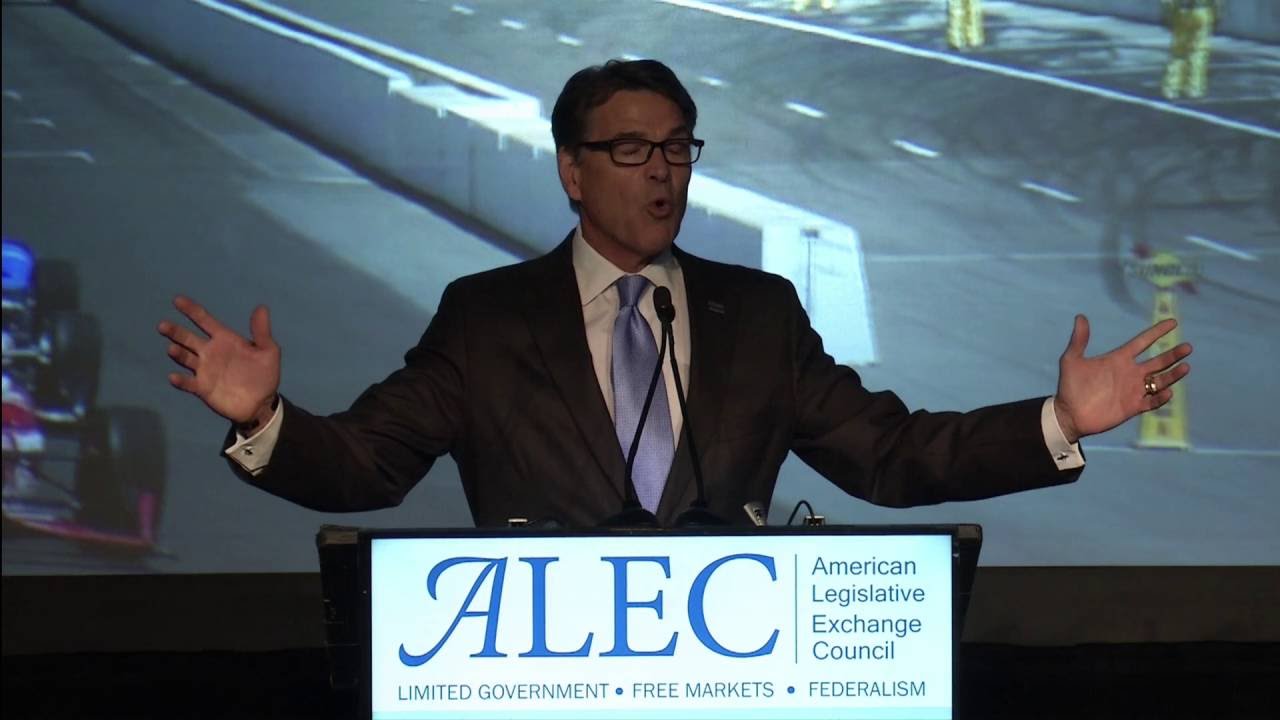 at ALEC meetings. ALEC has a profile of Perry up on its website. This morning, Perry welcomed ALEC to the White House and spoke to the ALEC delegation about “American energy dominance.”
Secretary of Education Betsy DeVos is a long time funder of ALEC and shares its goal of privatizing education. DeVos headlined the 2017 ALEC Annual Meeting and stated in a speech that, “The President has said that this administration will reduce the federal footprint in education, and he signed an executive order this past April instructing our Department to review every regulation that might obstruct parents, teachers, communities and states from best-serving their students.”
Secretary of Agriculture Sonny Perdue has long been a friend of ALEC. As Governor of Georgia, he passed the nation’s second voter ID law based on an ALEC model bill. Perdue also rolled out one of the most expansive school privatization programs at the time in 2008. ALEC also praised Perdue for challenging the Affordable Care Act.
Others in the Trump administration have spoken at ALEC meetings as well, including Secretary of Housing and Urban Development , Counselor to the President
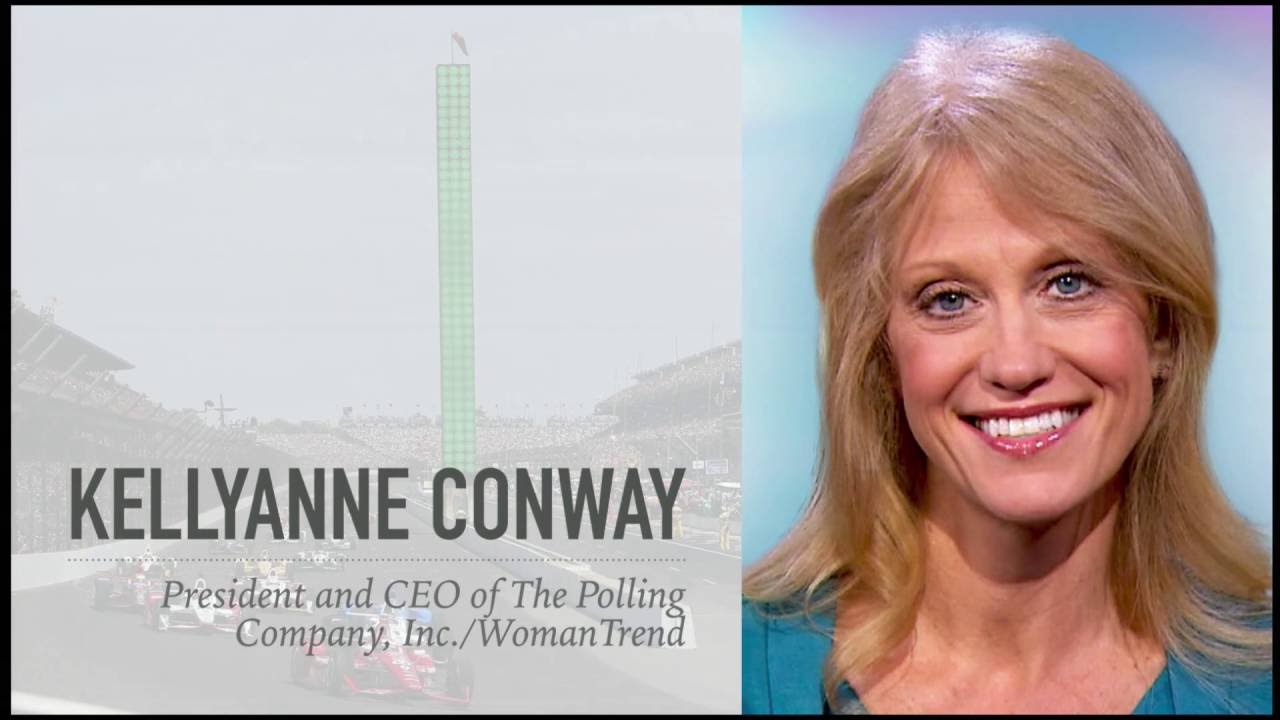 , Secretary of Labor Alex Acosta in 2017, Health and Human Services Secretary Alex Azar in 2018, and Department of Transportation Secretary Elaine Chao in 2018.
==
==
https://www.thenation.com/article/trumps-labor-pick-has-a-history-of-attacking-voting-rights/
The essential battleground state of the 2004 presidential campaign was Ohio, and as the election approached, supporters of embattled President George W. Bush announced an exceptionally controversial scheme to station citizen “challengers” at polling places. As a Brennan Center for Justice report explained, “Only a few weeks before Election Day, the Ohio Republican Party announced its plan to deploy thousands of citizen challengers across the state, mostly in African-American voting precincts. The announcement led to multiple voting rights lawsuits and sparked a media firestorm.”
The firestorm ultimately led Ohio Republicans to abandon their initial plan. But, as the Brennan Center analysts noted, “the ensuing controversy shined a national spotlight on the disruptions that partisan and discriminatory challenge efforts can cause.”
It also shined a light on Alexander Acosta, President Trump’s latest nominee to serve as secretary of labor, and the first Latino to be tapped by the president as a cabinet pick. Acosta is an experienced government hand, who has a long history of working the conservative Republican side of the aisle. After finishing Harvard Law School, he clerked for future Supreme Court justice Samuel Alito, who was then serving as a judge on the United States Court of Appeals for the Third Circuit, and as a senior fellow with the right-leaning Ethics and Public Policy Center. Acosta served briefly as a Bush appointee to the National Labor Relations Board, and then was appointed by Bush as the assistant attorney general with responsibility for leading the US Department of Justice’s Civil Rights Division.
It was in that latter role that Acosta intervened in a pair of lawsuits brought by Ohio civil-rights activists who objected that the Ohio law that permitted the challenging of the right of voters to cast their ballots was unconstitutional.
Former Justice Department officials say the Ohio letter amounted to “cheerleading for the Republican defendants.”
So-called “challenge statutes” have long been a subject of controversy. A 2012 Demos study referred to “bullies at the ballot box” measures, arguing that “There is a real danger that voters will face overzealous volunteers who take the law into their own hands to target voters they deem suspect. But there is no place for bullies at the ballot box.” The Brennan Center has warned that “When challenges are used improperly, they can have the effect of intimidating voters or suppress voter participation.”
One lawsuit filed by Donald and Marian Spencer, a pair of veteran civil-rights activists from the Cincinnati area, argued that Ohio’s 1886 “challenge statute” was “a vestige of ‘Jim Crow’ laws and created the possibility of disenfranchising a voter without due process of law.”
Acosta cannot have been unfamiliar with these concerns. Yet the assistant attorney general dispatched what the Los Angeles Times referred to as “an unusual letter brief supporting the statute.”Acosta’s letter urged the judge to uphold the “challenge statute” in order to maintain “the balance between ballot access and ballot integrity.” “Challenge statutes, such as those at issue in Ohio, are part of this balance,” claimed Acosta. “They are intended to allow citizens and election officials, who have information pertinent to the crucial determination of whether an individual possesses all of the necessary qualifiers to being able to vote, to place that information before the officials charged with making such determinations.”
The Acosta’s letter also argued that “nothing in the Voting Rights Act facially condemns challenge statutes” because “a challenge statute permitting objections based on United States citizenship, residency, precinct residency, and legal voting age like those at issue here are not subject to facial challenge… under the Act because these qualifications are not tied to race.”
In fact, as the LA Times noted, “David Maume, a sociologist at the University of Cincinnati, testified that demographic data demonstrated that a disproportionate number of Republican challengers would be placed in precincts that were predominantly African American. Maume told the judge that his analysis found that 77 percent of black voters in Hamilton County, where Cincinnati is the largest city, could face a Republican challenger on Election Day, while only 25% of white voters could encounter a challenger.”
Alphonse Gerhardstein, the civil-rights lawyer who represented Donald and Marian Spencer, described the letter as “highly irregular” and noted that “The Justice Department is not a party to the case. They have not filed a motion to intervene in the case or filed an amicus brief…. They volunteered information that goes beyond any federal interest. It’s startling to say that challengers can bring information to [the official] poll watchers. That presumes they will bring in outside information. If you are a poll watcher, how are you going to evaluate that information on the spot?”
“Acosta led the Civil Rights Division at a time that was marked by stark politicization...”
In 2007, the former chief of the Voting Section of the Department of Justice’s Civil Rights Division, Joseph Rich, referred to the 2004 moves by the Ohio Republicans as a “vote caging” scheme. (The Brennan Center has described voter caging as “a notoriously unreliable means of calling the voter rolls into question [that] can lead to unwarranted purges or challenges of eligible citizens. When it is targeted at minority voters [as it often is, unfortunately], it is also illegal.”)
Robert Kengle, the deputy chief of the Voting Section, said he left his position because of the extreme politicization of the department during the time of Acosta’s leadership. Kengle said the controversial letter brief in the Ohio case amounted to “cheerleading for the Republican defendants.” “It was doubly outrageous because the allegation in the litigation was that these were overwhelmingly African-American voters that were on the challenge list,” he explained to the McClatchy Newspapers DC bureau, which reported in 2007 that “Former Justice Department civil rights officials and election watchdog groups charge that [Acosta’s] letter sided with Republicans engaging in an illegal, racially motivated tactic known as ‘vote-caging’ in a state that would be pivotal in delivering President Bush a second term in the White House.”
McClatchy reported that “Acosta’s letter is among a host of allegedly partisan Justice Department voting rights positions.”
The issues raised by “challenge statutes” and “voter caging” remain a profound concern, and the subject of legal debates, as does Acosta’s tenure with the Department of Justice’s Civil Rights Division.
Minutes after Trump announced Acosta’s nomination to serve as Labor Secretary, Wade Henderson, the president and CEO of The Leadership Conference on Civil and Human Rights, said “it is incumbent upon the Senate to conduct a thorough review of Alexander Acosta’s record.”...
---
https://www.theatlantic.com/politics/archive/2017/02/trump-labor-nominee-presided-over-politicized-hiring-scandal-at-justice/517002/
R. Alexander Acosta, President Trump’s pick to run the Labor Department following the withdrawal of Andrew Puzder’s nomination, was the head of the civil-rights division of the Department of Justice in the Bush administration during a period in which his subordinates became embroiled in a scandal over politicized hiring. That scandal raises questions about Acosta’s ability to effectively manage a much larger federal agency in an administration that has already shown a tendency to skirt ethics rules.
“That period, all hell broke in the civil rights division,” said William Yeomans, a professor of law at American University and a former deputy section chief in the division under Acosta. “That was all under Acosta, he presided over the politicization of the civil-rights division.”
At the time of his nomination to run the civil-rights division, Acosta had substantial bipartisan support––he was approved by voice vote in the Senate, and had the backing of Latino rights groups like the National Council of La Raza. Acosta is of Cuban descent and would be the first Hispanic American in Trump’s cabinet. But at the Justice Department, his subordinates skirted the law, seeking to purge liberal attorneys from the division and replace them with conservatives. Acosta told investigators he was unaware of what was occurring.
Yeomans, however, said he found that implausible. Yeomans recalled Acosta telling him that Acosta believed that he had been denied a position as a line attorney in the civil-rights division earlier in his career because he was conservative.
“It's not as if Alex didn't know what was going on,” Yeomans said. “I'm confident that he approved, it was part of the political goals of the political appointees to purge the civil-rights division of what they thought were a bunch of leftists.”
According to a 2008 joint report from the Department of Justice Inspector General and Office of Professional Responsibility, in 2003, while leading the division, Acosta delegated hiring authority to a subordinate, Sheldon Bradshaw, who in turn placed Bradley Schlozman in charge of hiring decisions for the division. The report concluded that Schlozman had broken civil-service laws by considering political affiliation in hiring, and that he had lied to the Senate Judiciary Committee about his activities. He was never prosecuted.
The report states that Schlozman used terms like “real Americans,” “right thinking,” “solid,” and “on the team” to describe conservative attorneys—the ones he wanted to hire—and that Bradshaw was aware of the meaning of those terms. Schlozman, deploying a colorful metaphor, stated in an email that “My tentative plans are to gerrymander all of those crazy libs rights out of the [voting] section.”
The report did not implicate Acosta in that process, but it did conclude that he and others in the division had “sufficient information about Schlozman’s conduct to have raised red flags warranting closer supervision of him.” However, “despite the warnings,” Acosta and others “took no action to investigate, bring the matter to the attention of their supervisors, or change Schlozman’s role in hiring for the Division.”
In particular, Acosta was made aware of an incident in which Schlozman approvingly forwarded a racist joke by another political appointee, voting-section chief John Tanner, in which he stated that he liked his coffee “black and bitter” like “Mary Frances Berry,” the then-chair of the U.S. Commission on Civil Rights. Acosta told investigators that he had made Schlozman apologize over email. Investigators were unable to find such an email among Schlozman’s recovered correspondence––but they also did not have access to Acosta’s emails, because he had left the division years earlier to be a U.S. Attorney in Florida.
A career attorney in the division also claimed that she had warned Acosta that the people Schlozman was hiring were unqualified, but Acosta claimed that “no one complained to him that inappropriate hiring practices were taking place.”
Joe Rich of the Lawyer’s Committee for Civil Rights who was in the division during Acosta’s tenure, said “I assumed he must have known what was going on, but I can't say that from personal knowledge.
"He was in charge at the time that Schlozman was doing his thing, and did nothing to really stop that,” said Rich. “There were a few occasions when I tried to appeal decisions that Schlozman made to him, and I got short shrift in those appeals and got no where.”
The report concludes that Acosta and later civil-rights division head Wan Kim “did not sufficiently supervise Schlozman,” and that “in light of indications they had about Schlozman’s conduct and judgment, they failed to ensure that Schlozman’s hiring and personnel decisions were based on proper considerations.”
Yoemans said that Acosta’s management of the civil-rights division raises questions about his nomination as labor secretary. “His history of allowing the processes of the civil-rights division to be politicized doesn’t bode well for his running an entire federal agency,” said Yeomans.
---
...
Adams is a long-time GOP activist
Kelly: A source "close to the case" said "Christian Adams is a conservative who has made willful misstatements in this interview." After airing a portion of herinterview with Adams on the June 30 edition of America Live, Kelly reported the Justice Department's reaction to Adams' allegations and then noted, "Another source close to the case telling one of our producers that Christian Adams is a conservative who has made willful misstatements in this interview."
Adams reportedly filed ethics complaint against Hugh Rodham that was dismissed.In a February 26, 2001, Washington Timescolumn (accessed via Nexis) John McCaslin cited a formal ethics complaint filed by Adams against Hugh Rodham, brother of then-Sen. Hillary Clinton. On February 24, 2001, The Washington Timeshad reported (accessed via Nexis) that "Adams said Mr. Rodham put his Florida law license 'in jeopardy' with an admission that he accepted a contingency fee in obtaining the commutation for Carlos Vignali, the convicted drug dealer released from prison after serving six years of a 15-year sentence." A July 22, 2001, New York Timesarticle (accessed via Nexis) reported, "The Florida bar has cleared Hugh Rodham of violating legal ethics."
Adams reportedly volunteered with GOP group that "trains lawyers to fight on the front lines of often racially tinged battles over voting rights." A December 2, 2009, article on the legal news website Main Justice reported:
Before coming to the Justice Department, Adams volunteered with the National Republican Lawyers Association, an offshoot of the Republican National Committee that trains lawyers to fight on the front lines of often racially tinged battles over voting rights.
Adams reportedly was a Bush campaign poll watcher in Florida.The December 2, 2009, Main Justice article further reported: "In 2004, Adams served as a Bush campaign poll watcher in Florida, where he was critical of a black couple for not accepting a provisional ballot in early voting after officials said they had no record of the couple's change of address forms, according to Bloomberg News. Democratic poll watchers had advised voters not to accept provisional ballots because of the risk they could be discounted under Florida law, Bloomberg reported."
Adams likened Obama to appeasers who caused "carnage" of WWII. In an October 30, 2009, American Spectator piece, Adams wrote: "President Obama's received his Peace Prize, according to the Nobel Committee, for his 'efforts to strengthen international diplomacy and cooperation between nations.' Norman Angell's Nobel was awarded for similar reasons." Adams went on to blame Angell's ideas for World War II:
The 1933 Peace Prize winner profoundly influenced British policy in ways that led directly to German tanks rolling into Poland in September 1939. War did not break out because nations ignored Angell's advice; instead, the ensuing carnage in Europe happened because European democracies made Angell's ideas government policy.
Adams concluded: "Churchill, responding directly to Angell, asked 'who is the man vain enough to suppose that the long antagonisms of history and of time can in all circumstances be adjusted by the smooth and superficial conventions of politicians and ambassadors?' The Nobel Committee may have answered Sir Winston's query for the 21st century."
Adams is deeply tied to Bush-era politicization of DOJ
Former Voting Rights section chief: Adams is "exhibit A of the type of people hired by Schlozman."A July 6 article on Main Justice reported that Joseph Rich, former head of the Justice Department's Civil Rights Division Voting Section, said that Adams "was hired in the Civil Rights Division Voting Section under a process the DOJ Inspector General later determined was improperly influenced by politics," by Schlozman. Main Justice further reported:
Rich said Schlozman asked him to attend an interview with J. Christian Adams, a solo practitioner from Alexandria, Va., who had worked for the Secretary of State in South Carolina. Adams had also volunteered for the Republican National Lawyers Association, a GOP-funded group that sought to draw attention to voting fraud.
Adams did not have an extensive background in civil rights, Rich said, but may have had limited voting rights experience from his time in South Carolina. "He is exhibit A of the type of people hired by Schlozman," Rich said.
Rich said he sat in on the interview, but Schlozman asked most of the questions. There was no discussion of Adams' political background at the meeting, according to Rich. Adams was offered the position shortly thereafter, and Rich said he doesn't believe anyone else was interviewed for the job.
"I was invited to the interview but was never asked for a recommendation," Rich said. "This was an example of the way things were being done. There's no evidence that this was a normal hiring process." As a supervisor, Rich said, he normally would have been involved in hiring decisions.
Schlozman's politicization wrought havoc on Civil Rights Division
DOJ IG "found that Schlozman considered political and ideological affiliations when hiring and taking other personnel actions relating to career attorneys, in violation of Department policy and federal law." A July 2008 report from the Department of Justice Inspector General's Office and the Office of Professional Responsibility concluded that Schlozman "considered political and ideological affiliations when hiring and taking other personnel actions relating to career attorneys in violation of Department policy and federal law." The report concluded:
The evidence in our investigation showed that Schlozman, first as a Deputy Assistant Attorney General and subsequently as Principal Deputy Assistant Attorney General and Acting Assistant Attorney General, considered political and ideological affiliations in hiring career attorneys and in other personnel actions affecting career attorneys in the Civil Rights Division. In doing so, he violated federal law -- the Civil Service Reform Act -- and Department policy that prohibit discrimination in federal employment based on political and ideological affiliations, and committed misconduct. The evidence also showed that Division managers failed to exercise sufficient oversight to ensure that Schlozman did not engage in inappropriate hiring and personnel practices. Moreover, Schlozman made false statements about whether he considered political and ideological affiliations when he gave sworn testimony to the Senate Judiciary Committee and in his written responses to supplemental questions from the Committee.
Schlozman is said to have picked attorneys who "lacked relevant experience" and "rarely expressed any interest in civil rights enforcement."The IG/OPR reportstated that Special Litigation Section Chief Shanetta Cutlar "said that the applicants whose résumés she reviewed after they had been culled from the applicant pool by Schlozman or others in the front office typically reflected membership in conservative organizations. She also said the most striking thing she noticed about the résumés was that the applicants generally lacked relevant experience. She said Schlozman minimized the importance of prior civil rights or human rights work experience." In addition, the report states:
Former Criminal Section Chief [Albert] Moskowitz also said the candidates for career positions chosen by Schlozman had conservative political or ideological affiliations and rarely had any civil rights background, rarely expressed any interest in civil rights enforcement, and had very little or no federal criminal experience.
Schlozman testified that he "probably ha[d]" boasted about hiring Republicans or conservatives.From a June 5, 2007, Senate Judiciary Committee hearing on politicized hiring and firing in the DOJ (from the Nexis database):
SEN. CHARLES SCHUMER: Did you ever boast to anyone that you hired a certain number of Republicans or conservatives for any division or section at the Justice Department?
MR. SCHLOZMAN: I mean, I probably have made statements like that.
In addition, the IG/OPR report cited a January 2004 email in which Schlozman wrote to an attorney he had hired: "Just between you and me, we hired another member of 'the team' yesterday. And still another ideological comrade will be starting in one month. So we are making progress."
IG/OPR documented Schlozman discussing the removal of "disloyal" "liberals" and hiring of conservative "real Americans." The same report outlined statements from Justice Department officials who said that Schlozman attempted to remove Democrats and liberals and hire "real Americans" or "right-thinking Americans," which the report determined to mean conservatives. From the report:
Several attorneys in the Division also told us that Schlozman was open about his disdain for and lack of trust in the attorney staff of the Division. Appellate Section Chief Diana Flynn told us that in conversations with her, Schlozman alternately referred to the Appellate Section lawyers hired during prior administrations as "Democrats" and "liberals," and said they were "disloyal," could not be trusted, and were not "on the team." Flynn said Schlozman pledged to move as many of them out of the Division as he could to make room for the "real Americans" and "right-thinking Americans" he wanted to hire.
Accounts from numerous other Division employees and officials, including former AAG Wan Kim and Section Chiefs Cutlar and Flynn, as well as the context of Schlozman's e-mails, indicate that his use of terms such as "real American," "right-thinking American," being "on the team," and similar terms were Schlozman's way of referring to politically conservative applicants and attorneys. For example, an e-mail dated July 17, 2006, from Schlozman to Monica Goodling, who at the time was Senior Counsel to the Attorney General and White House Liaison, sheds light on the meaning of Schlozman's terms. In that e-mail, Schlozman recommended a friend who had interviewed with Goodling for a political position. Schlozman wrote, "I can assure you that [the applicant] is a good American. [The applicant] and Sheldon Bradshaw and I (and [one] other person) made up a four-member Vast Right-Wing Conspiracy at my former law firm." In another e-mail sent to Goodling on December 4, 2006, in which Schlozman recommended a different friend for an Immigration Judge position, Schlozman wrote, "[D]on't be dissuaded by his ACLU work on voting matters from years ago. This is a very different man, and particularly on immigration issues, he is a true member of the team."
A May 9, 2003, e-mail provides additional evidence of the meaning of Schlozman's phrases. Luis Reyes, then Counsel to the AAG for the Civil Division, sent an e-mail to Schlozman in connection with a legal matter, endorsing an attorney in the Department's Office of Legal Policy as a "right thinking american [sic] to say the least." In an e-mail response, Schlozman wrote that he "just spoke with [the attorney] to verify his political leanings and it is clear he is a member of the team."
IG/OPR: Schlozman cut section managers out of the hiring process.As explained in the IG/OPR report, a memorandum on hiring procedures sent out by Ralph F. Boyd Jr., then the Civil Rights Division assistant attorney general, indicated that section chiefs were supposed to interview and provide hiring recommendations. However, the report states that Schlozman "prevented many career section chiefs from reviewing résumés of the complete applicant pool, and he only provided to them résumés of applicants he interviewed. Five of the six section chiefs whom Schlozman supervised while [deputy assistant attorney general], from May 2003 to June 2005, told us that Schlozman further minimized their roles in the hiring process by providing little advance notice of applicant interviews, discouraging their asking questions during the interviews, and ignoring their assessments and recommendations regarding attorney applicants." In sections of the Civil Rights Division where Schlozman was not responsible for hiring, by contrast, "[c]areer section managers and attorneys in these sections had greater roles in the process for hiring experienced attorneys."
IG/OPR: Schlozman forwarded "inappropriate jokes," such as calling former Civil Rights Commission chairwoman "black and bitter." According to the IG/OPR report, Assistant Attorney General R. Alexander Acosta said that Schlozman was "very loose with his language" and made "inappropriate jokes" during his tenure at the Justice Department. In an example provided to the inspector general, Acosta described as inappropriate an email Schlozman forwarded around the office:
In that incident in August 2004, Voting Section Chief John Tanner sent an e-mail to Schlozman asking Schlozman to bring coffee for him to a meeting both were scheduled to attend. Schlozman replied asking Tanner how he liked his coffee. Tanner's response was, "Mary Frances Berry style -- black and bitter." Berry is an African-American who was the Chairperson of the U.S. Commission on Civil Rights from November 1993 until late 2004. Schlozman forwarded the e-mail chain to several Department officials (including Principal DAAG Bradshaw) but not Acosta, with the comment, "Y'all will appreciate Tanner's response." Acosta said that when he was made aware of the incident, he required Schlozman to make a written apology to him for his role in forwarding the e-mail and that Schlozman did so. Acosta said that he believed Schlozman wrote him the apology in an e-mail, but we were unable to retrieve Acosta's e-mails and did not find such an e-mail among Schlozman's recovered e-mail messages.
Adams admits he lacks first-hand knowledge to support his accusations
Adams: "I don't know. I wasn't there."During the June 30 edition of America Live, Kelly hyped what she called Adams' "explosive new allegations." But during the interview, Adams relied on hearsay and things that others said to support his allegations. For example, after claiming that a Justice Department attorney "threw [a] memo at" another attorney, Kelly asked, "What was the response? I mean, that's an extraordinary story," and Adams replied, "I don't know. I wasn't there."
Adams admits he did not talk to the attorneys he said made the decision not to pursue additional charges.During the interview, Kelly asked Adams, "So, what happened at the Department of Justice to get you to the point where you literally snatched defeat from the jaws of victory?" Adams said: "[W]hat happened was -- and it's been -- there's been testimony -- we were ordered to dismiss the case. We were told, 'Drop the charges against the New Black Panther Party.' " Kelly asked, "Who told you that?" Adams responded, "Well, the testimony's been that Steve Rosenbaum and Loretta King, two political officers at the department, ordered the dismissal of the case [emphasis added]." Kelly then asked Adams, "Did you, personally, speak with Mr. Rosenbaum and Ms. King about the dismissal of this case?" Adams responded: "No. Chris Coates and Bob Popper did. Two other attorneys."
Adams: "[T]here are some things I'm not going to reveal as far as who they are. They know who they are." During the interview, Adams suggested his allegations about the decisions surrounding the case were evidence of "a pervasive hostility to bringing these sorts of civil rights cases." Kelly asked Adams whether the DOJ has "a policy now of not pursuing cases if the defendant is black and the victim is white." At one point, Kelly also asked, "Who specifically has issued that mandate?" Adams responded, "[T]here are some things I'm not going to reveal as far as who they are. They know who they are."
Republican Civil Rights commissioner: Adams "doesn't know why the decision was made."Abigail Thernstrom, the Republican vice chairwoman of the Civil Rights Commission, said during an April 23 hearing into the case:
I know Chris Adams very well, and he doesn't know why the decision was made, which was the question before -- that we were supposed to be addressing at this Commission.
Decision not to pursue criminal charges was made by Bush DOJ, not Obama
Bush DOJ, not Obama, made decision not to pursue criminal charges.Before President Bush left office, the Department of Justice filed a civil complaint asking for an injunction against the New Black Panther Party and some of its members. In his May 14 testimony before the Commission on Civil Rights, Assistant Attorney General Thomas Perez explained that the Bush administration's Justice Department "determined that the facts did not constitute a prosecutable violation of the criminal statutes" but did "file a civil action on January 7th, 2009." From Perez's testimony:
PEREZ: Moving to the matter at hand, the events occurred on November 4th, 2008. The Department became aware of these events on Election Day and decided to conduct further inquiry.
After reviewing the matter, the Civil Rights Division determined that the facts did not constitute a prosecutable violation of the criminal statutes. The Department did, however, file a civil action on January 7th, 2009, seeking injunctive and declaratory relief under 11(b) against four defendants.
Obama DOJ actually obtained judgment against individual carrying weapon at polling place
May 2009: DOJ obtained default judgment against Shabazz for carrying weapon outside polling station.On May 18, 2009, the United States District Court for the Eastern District of Pennsylvania entered default judgment against Samir Shabazz. In his May 14 testimony before the Commission on Civil Rights, Perez stated that the Justice Department had obtained "sufficient evidence to sustain the charge" of voter intimidation against Shabazz, identified by Perez as "the defendant who had the nightstick," and that "the default judgment was sought and obtained as it related to him." Perez testified:
PEREZ: Based on the careful review of the evidence, the Department concluded that the evidence collected supported the allegations in the complaint against Minister King Samir Shabazz. The Department, therefore, obtained an injunction against defendant King Samir Shabazz, prohibiting him from displaying a weapon within 100 feet of an open polling place on any Election Day in the City of Philadelphia or from otherwise violating Section 11(b).
The Department considers this injunction to be tailored appropriately to the scope of the violation and the constitutional requirements and will fully enforce the injunction's terms.
No voter has alleged intimidation stemming from incident
Civil Rights commissioner: "[N]o citizen has even alleged that he or she was intimidated from voting."In an April 23 hearing on the DOJ's decision in the case, Civil Rights Commissioner Arlan Melendez stated that "no citizen has even alleged that he or she was intimidated from voting," which "was clear to the Justice Department last spring, which is why they took the course of action that they did." From the April 23 Civil Rights Commission hearing:
MELENDEZ: My remarks are going to be brief because I think far too much of our time has been consumed on this seemingly unnecessary investigation. Citizens should be able to vote without intimidation, and it is our Commission's duty to investigate complaints from citizens that their voting rights have been infringed.
In this case, however, no citizen has even alleged that he or she was intimidated from voting at the Fairmount Avenue Polling Station in 2008. This absence of voter intimidation was clear to the Justice Department last spring, which is why they took the course of action that they did.
This absence of voter intimidation was clear to the members of this Commission as well, or at least it should've been. Our investigation has been going on now for the better part of a year. We have wasted a good deal of our staff's time, and the taxpayers' money.
Main Justice: "[N]o voters at all in the Philadelphia precinct have come forward to allege intimidation."A July 2 Main Justice article reported that "no voters at all in the Philadelphia precinct have come forward to allege intimidation," adding, "The complaints have come from white Republican poll watchers, who have given no evidence they were registered to vote in the majority black precinct."
Bush-era DOJ chose not to pursue similar allegations against Minutemen -- one of whom carried a gun
DOJ did not pursue allegations that Minutemen intimidated Hispanic voters with a gun in 2006. Perez testified that in 2006, the Justice Department "declined to bring any action for alleged voter intimidation" "when three well-known anti-immigrant advocates affiliated with the Minutemen, one of whom was carrying a gun, allegedly intimidated Latino voters at a polling place by approaching several persons, filming them, and advocating and printing voting materials in Spanish." U.S. Commission on Civil Rights, [5/14/10]
Anti-immigrant activist in 2006 case reportedly had "9mm Glock strapped to his side" at polling place.A November 8, 2006, Austin American-Statesmanarticle reported (from the Nexis database): "In Arizona, Roy Warden, an anti-immigration activist with the Minutemen, and a handful of supporters staked out a Tucson precinct and questioned Hispanic voters at the polls to determine whether they spoke English." The article continued:
Armed with a 9mm Glock automatic strapped to his side, Warden said he planned to photograph Hispanic voters entering polls in an effort to identify illegal immigrants and felons.
Arizona Daily Star: "[A]nti-immigrant activist" "stood by with a firearm in a holster."A November 8, 2006, Arizona Daily Star article reported (from Nexis):
A crew of anti-immigrant activists, meanwhile, visited several South Side polling places in what one poll-watch group called a blatant attempt to intimidate Hispanic voters.
Anti-immigrant crusader Russ Dove circulated an English-only petition, while a cameraman filmed the voters he approached and Roy Warden stood by with a firearm in a holster.
Diego Bernal, a staff attorney with the Mexican American Legal Defense and Education Fund (MALDEF), said the trio was trying to intimidate Hispanic voters. "A gun, a camera, a clipboard before you even get to the polls -- if that's not voter intimidation, what is?" he asked.
Bernal said his group encountered the men at the Precinct 49 polling place at South 12th Avenue and West Michigan Street and began documenting the scene with their cameras. "There was an interesting period where they were taking pictures of us taking pictures of them."
Tucson Citizen: Incident "reported to the FBI." A November 8, 2006, Tucson Citizen article (from Nexis) reported that Bernal "said he reported the incident to the FBI." The article also reported that Pima County elections director Brad Nelson said: "If intimidation or coercion was going on out there, even though it might have been outside the 75-foot limit, it's something we take very seriously, and we'll be looking into it."
Conservative Civil Rights Commission vice chairwoman ridicules investigation
Thernsrtom reportedly said Civil Rights Commission's conservatives trying to use New Black Panther case "to topple" Obama admin. A July 16 Politico articlereported that Abigail Thernstrom, a Republican who serves as co-chairwoman of the Civil Rights Commission and who is an adjunct scholar at the American Enterprise Institute, "has made a dramatic break from her usual allies" on the Civil Rights Commission. Politico reported, "'This doesn't have to do with the Black Panthers, this has to do with their fantasies about how they could use this issue to topple the [Obama] administration,' said Thernstrom, who said members of the commission voiced their political aims 'in the initial discussions' of the Panther case last year. 'My fellow conservatives on the commission had this wild notion they could bring Eric Holder down and really damage the president,' Thernstrom said in an interview with POLITICO."
Thernstrom: "Forget about the New Black Panther Party case."Thernstrom wrote a July 6 National Review Online blog post criticizing the "overheated rhetoric filled with insinuations and unsubstantiated charges" surrounding the case. Thernstrom wrote, "Forget about the New Black Panther Party case; it is very small potatoes."
Thernstrom: Perez "makes a perfectly plausible argument" for DOJ's decision not to pursue additional charges.Thernstrom also wrote: "Thomas Perez, the assistant attorney general for civil rights, makes a perfectly plausible argument: Different lawyers read this barely litigated statutory provision differently. It happens all the time, especially when administrations change in the middle of litigation."
Thernstrom: "I do not think that this inquiry has served the interests of the Commission."During an April 23 hearing into the DOJ's decision, Thernstrom also said, "I do not think that this inquiry has served the interests of the Commission as being a bipartisan watchdog for important civil rights violations, and I do not believe it has served well the party to which I belong."
U.S. Commission on Civil Rights is dominated by conservative activists
- "Independent" commissioner Gail Heriot is a long-time GOP activist and member of the conservative Federalist Society who became an independent seven months before her appointment. Heriot was an alternative delegate to the 2000 Republican National Convention, previously served as counsel to GOP Sen. Orrin Hatch, and has been an activist for statewide initiatives to outlaw affirmative action.
- "Independent" commissioner Todd Gaziano is director for the Center for Legal & Judicial Studies at the right-wing Heritage Foundation. He has called "so-called hate crimes laws" "counterproductive," and once compared Bill Clinton and federal civil rights officials to segregationists.
- Chairman Gerald A. Reynolds was appointed by President Bush in 2004. His appointment was said to mark "the end of the commission as an independent voice for the protection of civil and human rights," and he has acknowledged that conservatives "game[d] the system" by stacking the Civil Rights Commission with conservatives.
- Commissioner Ashley J. Taylor Jr., was appointed by Bush in 2004. He served as counsel to John McCain's 2008 presidential campaign and was a delegate to the 2004 Republican National Convention.
- Commissioner Peter N. Kirsanow is a National Review Online contributor who has promoted false right-wing attacks on progressives.
Adams testifies he had no "indication" higher-ups were involved in decision
...
==