YouTube g g l
lost header
see influencer utube 2 for newer
genetic term for online video, including livestreaming
see vlogger
see VIDEO for older, eg trackers/ambush
see also livestream vid 3/19
https://www.buzzfeednews.com/article/josephbernstein/youtubes-newest-far-right-foul-mouthed-red-pilling-star-is
What does a 14-year-old girl dressed in a chador have to say on YouTube to amass more than 800,000 followers?
How about this: “I’ve become a devout follower of the Prophet Muhammad. Suffice to say, I’ve been having a fuck ton of fun. Of course, I get raped by my 40-year-old husband every so often and I have to worship a black cube to indirectly please an ancient Canaanite god — but at least I get to go to San Fran and stone the shit out of some gays, and the cops can’t do anything about it because California is a crypto-caliphate.”
Or how about, simply, “Kill yourself, faggot.”
Yes, if you want a vision of the future YouTube is midwifing, imagine a cherubic white girl mocking Islamic dress while lecturing her hundreds of thousands of followers about Muslim “rape gangs,” social justice “homos,” and the evils wrought by George Soros — under the thin guise of edgy internet comedy, forever.
Actually, don’t imagine it. Watch it. It’s already here.
The video is called “Be Not Afraid,” and it may be the clearest manifestation yet of the culture the executives of Alphabet’s video monster are delivering to millions of kids around the world, now via children incubated in that selfsame culture. To understand just how bad things have gotten on the platform, .
Users — and more importantly to YouTube, advertisers — have over the past year started to hold the platform accountable for enabling the exploitation of children and exposing them to disturbing content. But this video reveals an entirely different way the platform is harming kids: by letting them express extreme views in front of the entire world. This is what indoctrination looks like when it’s reflected back by the indoctrinated.
A 20-minute, unbroken, and hyperarticulate tirade ostensibly about ignoring criticism online, “Be Not Afraid” stars a high school freshman from the Bay Area who goes by the name Soph on YouTube. (She edits as well as scores the videos, which she says are comedic.) Through videos like these, she’s become a rising star — with more than 800,000 followers — in the universe of conspiracy theorists, racists, and demagogues that owes its big bang to YouTube.
The video platform for years has incentivized such content through algorithms favoring sensational videos, and, as recent reporting has revealed, has deliberately ignored toxic content as a growth strategy.
Soph’s scripts, which she says she writes with a collaborator, are familiar: a mix of hatred toward Muslims, ,
 ,
 , and reflexive misanthropy that could have been copied and pasted from a thousand different 4chan posts. Of course, it’s all presented in the terminally ironic style popularized by boundary-pushing comedy groups like the influential Million Dollar Extreme and adopted of late by white supremacist mass shooters in Christchurch and San Diego.
(Soph is even more explicitly hateful on Discord, the gaming chat app, where admitted to writing under the username “lutenant faggot” that she hoped for“A Hitler for Muslims” to “gas them all.”)
By now, we’re used to this stuff coming from grown men — some of whom have even used the platform as a launching pad for political aspirations. But Soph is a child. Despite the vitriol of her words and her confidence in delivering them, she’s still just a 14-year-old kid. And hearing this language lisped through braces, with the odd word mispronounced as if read but never before said, is clarifying.
Think of Jonathan Krohn, the conservative child prodigy who addressed the Conservative Political Action Conference in 2009, at age 13. Today he’s a freelance journalist who writes about extremism for liberal magazines, and has disowned his past views. Or think of Lynx and Lamb Gaede, who became media sensations as 11-year-old white nationalist twin pop singers in the mid-aughts. Today they’ve renounced racism and taken up marijuana legalization activism. Part of being a young person, maybe especially for a rhetorically gifted one, is testing out ideas and identities — even ones we later find anathema. That’s not to excuse anything Soph says; but it is to say children often don’t understand the weight of the words they use. (Neither Soph nor her father responded to requests for comment.)
Interviews with Soph and asides in her videos reveal a young person whose identity is obviously still being formed. She didn’t start as a politics caster but, predictably, as a profane 9-year-old (9!) game streamer called LtCorbis. Influential YouTubers Pyrocynical and Keemstar promoted her early work, which ripped on YouTube culture and the indignities of being a fifth-grader instead of people of color and liberals. (A 2016 Daily Dot story about her bore the unintentionally profound headline “This sweary, savvy, 11-year-old gamer girl is the future of YouTube.”) In more recent videos, Soph discloses a health issue that kept her out of class for long stretches. She confesses to being unhappy in school. She talks about a move from New York to California. She identifies by turns as “right-wing” and “anarcho-capitalist.” She’s 14, precocious, isolated, and pissed off, a combination that has produced a lot of bad behavior over the years, but not all of it monetized through preroll ads and a Patreon, and not all of it streamed to millions.
YouTube’s kid problem is well-known. From disturbing auto-generated cartoons to parents who playact violence with their children for clicks to a network of users exploiting videos of children for sexual content, the company has consistently failed at protecting the young users who are its most valuable assets. But Soph’s popularity raises another, perhaps more difficult question, about whether YouTube has an obligation to protect such users from themselves — and one another.
Of course, that’s partially the job of parents, a fact Soph pointed out in a recent video while addressing people alarmed by her content.
“I’m wondering why they’re concerned with what I say instead of being concerned with the parents who let their kids watch me,” she said.
It’s unclear how much Soph’s own parents know about her videos. Internet sleuths have figured out details about her parents' lives, one of whom Soph has claimed voted for Hillary Clinton. In a recent interview, Soph said that her parents have never had a serious conversation with her about the politics of her videos, though she did respond angrily when a reporter attempted to contact her dad.
But the powers of parents over children who live online are limited. And YouTube has taken no ownership over what is happening to kids who grow up inhaling its trademark stench of bigotry, conspiracy, and nihilism. Now the kids, or the smart ones anyway, seem to know it. Indeed, YouTube’s own incompetence and lack of quality is one of Soph’s recurring themes; she acknowledges owing her fame to them.
“The fact that I was 11 and could easily follow the commentary formula should have been a sign that the standards for the genre were terribly low,” she said in the same interview.
Last month, after YouTube deactivated comments on her videos — the platform disabled comments on all videos with children in response to an outcry over the aforementioned network of exploitation — Soph uploaded a 12-minute video in which she seemed to be daring the platform to suspend her, knowing full well that it wouldn’t.
“Susan, I’ve known your address since last summer,” Soph said, directly addressing YouTube CEO Susan Wojcicki. “I’ve got a Luger and a mitochondrial disease. I don’t care if I live. Why should I care if you live or your children? I just called an Uber. You’ve got about seven minutes to draft up a will. ... I’m coming for you, and it ain’t gonna be pretty.”
A far-right child comedian threatening to murder the executive of the video site that has made her famous, for trying to protect her from pedophiles: the state of YouTube in 2019.
After being contacted about the story, YouTube reviewed Soph's channel. It removed the video containing the death threat against Wojcicki, but not "Be Not Afraid" or any others. The company also issued Soph a strike, which prevents her from uploading videos for a week. According to YouTube, as per its terms of service, the platform is for children 13 and older, and it deletes accounts belonging to children under that age as it is made aware of them. Soph created her account at age 9 and received significant publicity for her videos before turning 13.
Indeed, one of Soph’s messages seems to be that in a world where the adults who have grown rich through technology took the implications of that technology seriously, she wouldn’t exist. She’s a problem, she seems to be saying, of YouTube’s own making.
“You could beg me kicking and screaming to stop disseminating the ideas I believe in, and it wouldn’t make a fucking difference,” Soph says at the end of “Be Not Afraid," in a passage in which she seems to drop her shtick, if only for a moment. “Not only am I inoculated to that bullshit, most of Gen Z is too. Millennials grew up with MTV and nowadays watch Colbert. We, on the other hand, grew up with the internet, so we have no centralized source of information that controls what we think. We filter out the truth for ourselves; we’re not lazy. No one is brainwashing kids. Kids are simply learning from having free access to information, and there’s nothing you can do about it.”
The ultimate target of “Be Not Afraid” is, finally, adults: people who just don’t get why social justice discourse is meaningless and co-optable, why school can’t compare to YouTube, why mass murder can be funny. People who have enough experience to know better. She’s sure that adults are selfish and stupid, that the people with the most power over her life are making it up as they go along, just like she is. When you look at the adults who have gotten rich off the platform that created Soph, she isn’t completely wrong. She's been publishing on YouTube for years with no consequence other than becoming famous.
trump re?-tweets
daily caller fox news 43 sec video her interspersed with 911 images with quote out of context
https://www.alternet.org/2019/04/rep-ilhan-omar-has-seen-an-increase-in-direct-threats-on-my-life-since-trumps-attack/
==
==
“A lot of Jones’s programming is impromptu, where he’s doing emergency broadcasts drunk in his house at 1 AM,” Carusone said. “Without YouTube’s push notifications or algorithms, there’s no way anyone would be watching that.”
==
Alex Jones has a secondary YouTube channel where he claims the New Zealand mosque shootings were a false flag
==
pro pub
In his 74-page manifesto, Brenton Tarrant, the alleged gunman responsible for the massacres at two mosques in Christchurch, New Zealand, lays out a hyper-extreme worldview animated by racist and fascist thought.
While the authorities say Tarrant posted his treatise on 8chan — a relatively obscure web forum that attracts trolls, hackers and hardcore white supremacists — the ideas in the document are also circulating on many of the world’s most popular social media platforms.
Over the past four months, for instance, a YouTube user known as Third Positionistposted over 100 videos espousing extremist ideas that closely resemble what the authorities have identified as Tarrant’s writings. The user’s videos — full of racist, anti-Semitic and Islamophobic views — have attracted more than a half-million views.
YouTube said on Friday that it had terminated the Third Positionist account after being alerted to it by ProPublica and HuffPost. It said it had found no evidence that the account belonged to the accused New Zealand gunman.
Social media giants have long struggled to moderate extremist content, and most have waged periodic crackdowns. But in recent months, YouTube has emerged as something of a flourishing option for white supremacist and neo-Nazi videos.
The material posted by the user named Third Positionist — mirroring much of the hateful content subscribed to and promoted by the gunman in New Zealand — is but one example. Third Positionism is a variant of fascism that blends elements of the extreme right and left.
Tarrant’s online writings praised Sir Oswald Mosley, a mid-20th-century British fascist leader who supported Adolf Hitler and fiercely opposed immigration. At least two speeches by Mosley are featured in Third Positionist videos. The symbol used as the logo for Third Positionist’s YouTube channel — nine interlocking crosses — was also drawn on one of the gunman’s rifles. The graphic on the front page of Tarrant’s treatise also appears repeatedly in Third Positionist videos, albeit in a slightly altered form.
A recent video posted to the Third Positionist channel featured a discussion about the merits of Nazi Germany and the need to remove all Jews from “positions of power. Another, uploaded late last year, argued that the U.S. fought on the wrong side during World War II. On March 11, 2019, the channel posted an interview with Thomas Rousseau, one of the organizers of the 2017 white power rally in Charlottesville, Virginia, and leader of Patriot Front, a right-wing extremist group that uses the Nazi slogan “Blood and Soil.” Rousseau said the group is focused on “reclaiming America” for white men.
White supremacist YouTube channels have been online for years, but many appear to have launched — or relaunched — in the past few months. Banned videos seem to reappear regularly, sometimes with new titles, confounding the efforts of content moderators.
“It’s a war of attrition against those who keep coming back, keep coming back and posting,” said Oren Segal, director of the Center on Extremism at the Anti-Defamation League. White supremacist content “is a huge challenge” for social media platforms. “They don’t have the technology to assure that once you’re banned you can’t come back.”
Much of the material on the Third Positionist channel is drawn from podcasts and livestreams originally posted by Mike “Enoch” Peinovich, a New York City-based white nationalist and anti-Semite.
Peinovich, who helms a racist media micro-empire called The Right Stuff, maintains a YouTube channel, as well. “The muslims are in the process of conquering Europe through migration and birth rates,” wrote one commenter on the TRS Radio page. “Something needs to be done about this above all else.” Another added: “It’s time to become Vikings and wipe these people out.”
A media organization calling itself Vanguard Streaming Networkis typical of the recent activity on YouTube. The network has created an array of channels on YouTube over the past year, many of them featuring the same content in an apparent attempt to elude censors. The network is quite open about its beliefs: Its logo features the SS insignia used by the Nazis, and one of the hosts calls himself Goebbels.
One Vanguard video features a cross-Atlantic conversation between Richard Spencer, the American white nationalist, and Mark Collett, a longtime racial extremist in England. Some of the videos include links to Streamlabs, a streaming service that white nationalists have been using to collect donations. Streamlabs has taken some action against racist material, recently shutting down two Vanguard channels.
Carla Hill, a senior investigative researcher at the Anti-Defamation League, said she’d heard of the Vanguard Streaming Network through Augustus Sol Invictus, a far-right attorney who attended the “Unite the Right” rally in Charlottesville and defends white supremacists. “He is collectively working with these other individuals to form these media outlets for podcasting, which is the new way for white supremacists to get their messages out,” she said.
Invictus, which is his legal name, didn’t respond to a request for comment.
One relatively new show on the Vanguard Streaming Network is called “Goy Talk” co-hosted by a masked man calling himself “Dino.” Prominent white supremacist and neo-Nazi figures have appeared on the show, includingChristopher Cantwell and former Ku Klux Klan leader David Duke.
As reported by the anti-racist blog Angry White Men, in November, a “Goy Talk” host wore a large rubber nose and pretended to be a Jewish man named “Finky Heebstein,” talking in a nasal voice about the “caravan of love” moving through Mexico. The skit was meant to promote the anti-Semitic conspiracy theory that Jews are hastening immigration to the U.S. as a way to replace white people. It’s the same conspiracy theory that prosecutors say motivated Robert Bowers to massacre 11 people at a synagogue in Pittsburgh in October, only a few weeks before the episode of “Goy Talk” aired.
Both the Third Positionist and Vanguard Streaming channels share followers with The Red Elephants, a channel that predominantly features controversial political commentary from the channel’s owner, Vincent James, and livestreams of anti-Muslim and pro-Trump rallies and protests. At times, James has been a vocal supporter of the Rise Above Movement, a white power gang.
See the Project
Documenting Hate
Tracking Hate Crimes and Bias Incidents
James livestreamed an event billed as the “March Against Sharia” in San Bernardino, California, in June 2017. In his video, streamed to his Facebook page and later published on the Red Elephants YouTube channel, James bantered with Rise Above Movement leader Robert Rundo. On camera, James asked Rundo to “say the 14 words,” a reference to a neo-Nazi slogan about preserving the white race. Rundo responded by saying, “I’m a big fan of the 14 words.”
Later in the video, James filmed Rundo and fellow RAM member Ben Daley running through the crowd, boasting that they had “physically removed” counterprotesters. Rundo added, “We chased ’em down the block, smashed up their car.”
Late last year, Rundo, Daley and six other members or associates of RAM were jailed on federal rioting charges. Rundo and Daley have pleaded not guilty and are currently incarcerated while awaiting trial. Two of their co-defendants have already admitted their guilt and taken plea deals.
Segal, of the Anti-Defamation League, credited YouTube and other major platforms with having become more aggressive about policing white supremacist content. Still, he noted, “It’s pretty easy still to find anti-Semitic and white supremacist videos online.”
Becca Lewis, of Data and Society, a New York-based research center, said YouTube has historically taken a “hands-off, laissez faire” approach to white supremacist content, focusing mostly on eradicating “explicit slurs or threats to violence” from the platform. But white supremacists, she said, have become “extremely adept at masking use of slurs and the inherent violence in their discourse.”
“There are certain white supremacist channels that have been running for upwards of 10 years on YouTube,” said Lewis, an affiliate researcher with the center.
YouTube did not respond to a request for comment on its efforts over the years to deal hateful content. It did promise to investigate the channels brought to its attention by ProPublica and HuffPost.
The killings in Christchurch are part of an international pattern of attacks on Muslims, which seem to have increased over the past two years. In January 2017, a man entered a mosque in Quebec City and shot and killed six people. He was sentenced to at least 40 years in prison this year. The killer followed white supremacists, conspiracy theorists and right-wing commentators online, and he was fixated on Muslims and immigrants. He was a fan of President Donald Trump and his Muslim ban.
Since 2016, at least three U.S. mosques have been set afire, and at least three other Islamic institutions across the country have targeted for terrorist attacks.
https://www.propublica.org/article/despite-crackdowns-white-supremacist-and-neo-nazi-videos-take-stubborn-root-on-youtube
https://www.mediamatters.org/video/2019/03/15/New-Zealand-mass-shooting-illustrates-failure-of-tech-companies-to-prevent-radicalization-/223153
Discussing the shooting at two New Zealand mosques that left at least 49 dead at the hands of an anti-Muslim extremist, NBC reporter Ben Collins noted that the alleged shooter showed signs of “getting radicalized by these same algorithms” on tech platforms such as YouTube that previously influenced other mass shooters.
YouTube has a serious radicalization problem because its algorithm sometimes pushes far-right content via recommendations, which Collins noted can cause people to “go down rabbit holes” and “maybe they start as racists and they end up as extremists,” leading to harassment, racist violence, and terrorism. Collins also compared the alleged Christchurch shooter’s reported announcement of the attack on far-right message board 8chan to the alleged Pittsburgh, PA, shooter’sannouncement of his attack on Gab, a social media platform that is a hotbed for white nationalists.
The alleged New Zealand mosque shooter livestreamed the attack on Facebook, and it was also shared on YouTube and Twitter, but the social media platforms have struggled to remove the video. Tech companies have been ill-equipped to proactively deal with this kind of content, in some ways leaving the task of combating it to the most affected communities.
...
==
https://www.mediamatters.org/blog/2019/03/11/infowars-paul-joseph-watson-launching-new-project-generate-next-generation-youtubers/223087
far-right conspiracy theorist and Infowars personality Paul Joseph Watson announced the launch “probably within the next two weeks” of a new project that aims to “generate the next generation of YouTubers, of young political commentators.”
While appearing on Infowars program The Alex Jones Showon March 5, Watson said that his project will still involve “working together” with Infowars and that the two entities are “still going to be affiliated.” While host Alex Jones and many of his primary Infowars channels are banned from YouTube, Watson currently maintains a YouTube page with more than 1.5 million subscribers.
during Watson’s appearance, Jones said that he had been working with Watson for 18-19 years and that he was “excited” about the new project, saying, “That’s what successful operations do is they spawn new things, and I think in time you will also spawn apprentices as well.” Attempting to dismiss speculation of infightingbetween Jones and Watson, Jones said that the project was “pretty much my idea.”
Watson described his project as “an exciting new operation, it’s going to be where all my material is housed, and hopefully longer term we’re going to get more writers on board and organically grow it into a larger news org,” adding that he is “hoping to, you know, generate the next generation of YouTubers, of young political commentators.”
While for a time Watson was best known for being a conspiracy theorist and source of sometimes hilariously incorrect information, his commentary has taken a darker turn in recent years. In a 2018 interview with The Daily Beast, Alex Jones’ ex-wife Kelly Jones said of Infowars, “They’ve transmogrified into little white supremacists which is alarming crap,” and “Paul’s white supremacy is growing -- I know it’s a difficult issue, this refugee crisis -- but they are actively encouraging white supremacy.” Indeed, months before the deadly 2017 white nationalist rally in Charlottesville, VA, Watson interviewed the event’s organizer, Jason Kessler, about “anti-white racism."
Watson’s new project appears to be the latest effort of Infowars to get its brand of toxic commentary before a younger audience on a platform where the outlet is largely banned. On February 27, Jones made a nearly five-hour appearance on Joe Rogan’s show The Joe Rogan Experience during which he ranted and pushed outlandish conspiracy theories. The appearance has drawn more than 10 million views and Rogan’s channel is monetized, meaning YouTube is profiting off of the video through ad revenue sharing. Likewise, newly hired Infowars personality Kaitlin Bennett made a February 25 appearance on massive YouTube star Logan Paul’s podcast. Like Rogan’s show, Paul’s podcast is monetized. Recapping her appearance with Jones on his program, Bennett gloated about sharing with Paul’s audience a “perspective on gun rights and the Second Amendment that they probably didn’t think they were ever going to watch.” Jones said he was “glad” Bennett appeared on the show because of its large audience and because it’s hosted by the “college kids that the tweenies and 13-year-olds look up to.” Jones also said he would like to appear on the show himself.
==
mma
YouTube removed the channels of Infowars, leaving conspiracy theorist Alex Jones unable to post videos on the platform. But Jones has a new strategy to reach people on YouTube: He wants to be a guest on the most popular channels, including channels that reach children. Many of these programs are monetized through YouTube.
On February 27, Jones appeared for nearly five hours on Joe Rogan’s show The Joe Rogan Experience. Jones made a number of wildly raciststatements during the appearance. So far, the episode has been viewed over 7 million times.
Infowars personality Kaitlin Bennett -- aka the “Kent State Gun Girl” -- also made a lengthy appearance on the massively popular Impaulsive Podcast on February 25. The channel has nearly 1.3 million subscribers on YouTube, and Logan Paul, the primary personality, has nearly 19 million subscribers on his personal channel.
Jones praised Bennett's appearance, saying it is “important” for Infowars to reach young people. Jones said that he wants to do even more of that: “I would love to invite Logan Paul on the show. I would also love to go on that broadcast because I’d like to be able to speak to my oldest daughter’s audience and tell my daughter, ‘Now, be good, and don’t vape like the other girls.’”
It's imperative that YouTube not incentivize other channels giving Jones hours of airtime. One easy step is that YouTube could choose to demonetize videos that Jones appears on. So far they've chosen not to.
Also: A new study finds that recommendations on YouTube for 'alt-right' videos have dropped dramatically. Advertiser issues have also forced YouTube to finally deal with its child predator problem.
==
https://www.desmogblog.com/2019/02/24/youtube-video-serious-climate-science-denial-problem
“What are we in for next?” asks the narrator on the YouTube video.
“Will the temperature resume an upward trend? Will it remain flat for a lengthy period? Or will it begin to drop? No one knows, not even the biggest, fastest computers.”
The video — with the clickbait title “What They Haven’t Told You about Climate Change” — has been watched more than 2.5 million times on the Google-owned video platform.
Produced by the conservative group PragerU, the video sees Canadian lobbyist and fossil fuels advocate Patrick Moore run through a long-debunked argument that because the world’s climate has changed before, there’s no problem with burning record amounts of fossil fuels.
Moore claims, for example, there has been “no significant warming trend” in the 21st century — not mentioning that nine of the 10 warmest years on record have occurred since 2005, or that the world’s oceans have been heating rapidly.
Despite the clear errors, the video has gathered more views than any other climate science denial clip on YouTube. All up, PragerU claims the video has been watched 4.4 million times across all platforms.
A search on YouTube for the most viewed “climate change” videos has Moore’s effort ranked 13th — searching for “global warming” has it ranked 19th.
But where the problems really start, are when YouTube’s “up next” algorithm takes a guess at what you might want to watch next after seeing Moore’s video.
[prager u vid]
Recommending Denial
When I viewed YouTube without signing in, almost all the videos suggested by the algorithm would sit firmly in the climate science denial folder.There’s so much of this material on YouTube that it’s not hard to find once the algorithm opens the door.
There’s a Nobel Laureate who apparently “Smashes the Global Warming Hoax” — just don’t mention the 76 other laureatesasking for “rapid progress towards lowering current and future greenhouse gas emissions.”
Then there are two other videos, both titled “The Truth About Global Warming,” and both delivering the opposite to what its title claims.
Before you know it, you’re in a world of “climate cults,” “global warming hysteria,” and claims of failed predictions and Al Gore getting “slammed.”
For an unsuspecting viewer, watching just one video can lead you quickly into an alternate universe where facts, physics, and real-world experiences are replaced by conspiracies, cherry-picking, and fossil fuel–backed propaganda.
All of this exists after YouTube declared in January 2019 that it had been working on its recommendations algorithm and making “hundreds of changes to improve the quality of recommendations for users on YouTube.”
Google White Paper
But could YouTube and its parent company Google finally be getting to grips with misinformation to marginalize, rather than ban, counter-factual content?
YouTube says it’s making changes with an eye on content that “comes close to — but doesn’t quite cross the line of — violating our Community Guidelines.”
“To that end,” the official blog post explained, “we’ll begin reducing recommendations of borderline content and content that could misinform users in harmful ways — such as videos promoting a phony miracle cure for a serious illness, claiming the earth is flat, or making blatantly false claims about historic events like 9/11.”
At a conference in Munich on February 16, 2019, YouTube's owner Google released a “white paper” in which it defended its record in tackling disinformation on the video site, listing a series of steps it was taking to weed out disinformation. “We aim to provide content that lets users dive into topics they care about, broaden their perspective, and connect them to the current zeitgeist,” the paper said.
But when it comes to factual claims, Google said: “But as we describe in our Search section, in verticals where veracity and credibility are key, including news, politics, medical, and scientific domains, we work hard to ensure our search and recommendation systems provide content from more authoritative sources.”
This included “information panels that contain additional contextual information and links to authoritative third-party sites” on topical content “that tends to be accompanied by disinformation online.”...
no pix linx
Can YouTube Solve Its Serious Climate Science Denial Problem?
Read time: 6 mins
By Graham Readfearn • Sunday, February 24, 2019 - 03:32
Climate denier video clips on YouTube
“What are we in for next?” asks the narrator on the YouTube video.
“Will the temperature resume an upward trend? Will it remain flat for a lengthy period? Or will it begin to drop? No one knows, not even the biggest, fastest computers.”
The video — with the clickbait title “What They Haven’t Told You about Climate Change” — has been watched more than 2.5 million times on the Google-owned video platform.
Produced by the conservative group PragerU, the video sees Canadian lobbyist and fossil fuels advocate Patrick Moore run through a long-debunked argument that because the world’s climate has changed before, there’s no problem with burning record amounts of fossil fuels.
Moore claims, for example, there has been “no significant warming trend” in the 21st century — not mentioning that nine of the 10 warmest years on record have occurred since 2005, or that the world’s oceans have been heating rapidly.
Despite the clear errors, the video has gathered more views than any other climate science denial clip on YouTube. All up, PragerU claims the video has been watched 4.4 million times across all platforms.
A search on YouTube for the most viewed “climate change” videos has Moore’s effort ranked 13th — searching for “global warming” has it ranked 19th.
But where the problems really start, are when YouTube’s “up next” algorithm takes a guess at what you might want to watch next after seeing Moore’s video.
YouTube PragerU climate science denial video screen shot
PragerU video on climate models.
Recommending Denial
When I viewed YouTube without signing in, almost all the videos suggested by the algorithm would sit firmly in the climate science denial folder. There’s so much of this material on YouTube that it’s not hard to find once the algorithm opens the door.
There’s a Nobel Laureate who apparently “Smashes the Global Warming Hoax” — just don’t mention the 76 other laureates asking for “rapid progress towards lowering current and future greenhouse gas emissions.”
Then there are two other videos, both titled “The Truth About Global Warming,” and both delivering the opposite to what its title claims.
Before you know it, you’re in a world of “climate cults,” “global warming hysteria,” and claims of failed predictions and Al Gore getting “slammed.”
For an unsuspecting viewer, watching just one video can lead you quickly into an alternate universe where facts, physics, and real-world experiences are replaced by conspiracies, cherry-picking, and fossil fuel–backed propaganda.
All of this exists after YouTube declared in January 2019 that it had been working on its recommendations algorithm and making “hundreds of changes to improve the quality of recommendations for users on YouTube.”
Google White Paper
But could YouTube and its parent company Google finally be getting to grips with misinformation to marginalize, rather than ban, counter-factual content?
YouTube says it’s making changes with an eye on content that “comes close to — but doesn’t quite cross the line of — violating our Community Guidelines.”
“To that end,” the official blog post explained, “we’ll begin reducing recommendations of borderline content and content that could misinform users in harmful ways — such as videos promoting a phony miracle cure for a serious illness, claiming the earth is flat, or making blatantly false claims about historic events like 9/11.”
At a conference in Munich on February 16, 2019, YouTube's owner Google released a “white paper” in which it defended its record in tackling disinformation on the video site, listing a series of steps it was taking to weed out disinformation. “We aim to provide content that lets users dive into topics they care about, broaden their perspective, and connect them to the current zeitgeist,” the paper said.
But when it comes to factual claims, Google said: “But as we describe in our Search section, in verticals where veracity and credibility are key, including news, politics, medical, and scientific domains, we work hard to ensure our search and recommendation systems provide content from more authoritative sources.”
This included “information panels that contain additional contextual information and links to authoritative third-party sites” on topical content “that tends to be accompanied by disinformation online.”
Screen shot of YouTube's link to the Wikipedia entry on 'global warming' above a search for 'climate change']
Some YouTube users in the U.S. may see a link to the Wikipedia entry on “global warming” when searching for related videos.
Given that climate denial videos take positions contradicted by every major scientific academy in the world, many scientists would surely hope that YouTube takes “blatantly false claims” about climate change as seriously as it does flat earthers or 9/11 truthers.
:{
}:
Using machine learning and a team of humans, YouTube has said it is rolling out changes just in the U.S., and this would affect only a “small set of videos in the United States.”
:{
}:
In 2018, YouTube started adding pop-up links to Wikipedia, with brief factual descriptions, to some climate change videos. As reported by BuzzFeed, this angered some producers, including PragerU.
:{
}:
Craig Strazzeri, PragerU’s chief marketing officer, told BuzzFeed: “Despite claiming to be a public forum and a platform open to all, YouTube is clearly a left-wing organization.”
:{
}:
“This is just another mistake in a long line of giant missteps that erodes America’s trust in Big Tech, much like what has already happened with the mainstream news media.”
Clearly, for PragerU, it is more important to politicize YouTube’s mild attempts to correct misinformation with a tiny pop-up message than to get its facts straight.
Echo Chambers
“YouTube and other social media platforms have exacerbated the misinformation problem in a number of ways — whether it's creating echo chambers for science denial, making it easy for misinformers to micro-target audiences, or funneling its users to extremist content,” says Dr. John Cook of George Mason University’s Center for Climate Change Communication.
“In the case of YouTube, their algorithms result in extremist content like climate denial receiving millions of views. However, YouTube's response has been entirely inadequate. Adding a generic link to Wikipedia under denialist videos is like slapping a tiny bandaid on a large, open wound.”
While at the University of Queensland in Australia, Cook led a study showing that 97 percent of climate scientists agreed that global warming was caused by human activity. Cook also led the production of a free Massive Online Open Course, through the university, to explain the science of climate denial, producing many debunking videos that also appear on YouTube.
“It's a challenging problem,” says Cook. “Interventions like adding a ‘fake news’ warning on online misinformation can actually backfire and promote the myth.”
“Nevertheless, there is a great deal of research into how to inoculate the public against misinformation without triggering adverse effects.”
He says platforms like YouTube should be working with misinformation researchers to develop strategies that “reduce the negative impact on society” of climate denial videos.
For now though, YouTube has a serious climate science denial problem.
https://www.alternet.org/2019/02/vindictive-anti-marijuana-maryland-congressman-presses-felony-charges-against-activist-for-live-streaming-meeting-with-staffer/
omg 2x!
Drug Reporter, a project of the Independent Media Institute.
U.S. Rep. Andy Harris (R-MD), representing Maryland’s Eastern Shore, has quite a reputation among marijuana reform activists—and not a good one. For years, Harris has done everything he can to block progressive reforms and has hamstrung the District of Columbia’s efforts to bring full pot legalization—meaning taxed and regulated sales, not just the legalization of possession and cultivation—to the nation’s capital.
But his latest nasty stunt only solidifies his reputation as not only a foe of marijuana law reform but as a first-class vindictive jerk. After a contentious protest last October led by local marijuana activists fed up with Harris’ interference in D.C. home rule, staffers and activists set up a meeting at Harris’ congressional office.
Among those attending was Salisbury University student activist Jake Burdett. Burdett briefly live-streamed part of the meeting without seeking anyone’s permission—a violation of Maryland’s “all-party consent” law requiring that any recordings only take place with the knowledge of the individuals involved.
According to Maryland Marijuana Justice (MDMJ), the activist group of which Burdett is a member, the student was not aware of the state law regarding recordings, and when he was made aware of it after the meeting, he apologized to the staffer involved and deleted the live stream the next day.
Harris could have accepted Burdett’s moves to atone for his innocent misdeed. Instead, he pressed felony charges against him—for revealing to the public what a public servant was saying in a government office on government time.
...
==
see sandmann
VirtualShield, a company that sells virtual private network (VPN) software, is being promoted most prominently by YouTube creators who produce content that features conspiracy theories and far-right political commentary, in addition to programming hosted by at least one open white nationalist.
As a 2017 blog post pointed out, the ownership of VirtualShield is virtually unknown. The business was established using a method that allowed the founders to conceal their ownership and VirtualShield’s listed business location is the office of a company that sells businesses a virtual office address for $45.
VirtualShield runs an ambassador program in which websites and creators can make referral bonuses for directing their fans to VirtualShield products.
[img]
(Screenshot / VirtualShield)
However, the use of conspiracy theory rhetoric in its own in-house advertising suggests that VirtualShield may be making a direct effort to target right-wing audiences whose members are convinced that they are being surveilled because of their political beliefs.
One advertisement, featured on VirtualShield’s website, warns viewers about “the men in black suits” who are said to use the internet to orchestrate the spread of political propaganda and the “controlling of your mind”—rhetoric similar to that spread by Alex Jones and his Infowars media operation. To help fuel their paranoid narrative, they rely on legitimate concerns about data collection by big tech platforms, and the possibility of that data being hacked. But then they add an even more ominous, if mysterious, note.
“I guarantee you have a 100 percent chance that someone, a government agency, internet service provider, or an online hacker, is not only watching what you watch—they’re recording what you watch and they’re selling that information to people who pummel you with target-specific ads. And that’s not the half of it,” a narrator reads during one ad posted on VirtualShield’s YouTube channel.
[vid?]
Some of the YouTube creators advertising VirtualShield and producing far-right content and right-wing conspiracy theory content include:
Conspiracy Theorists
- Jordan Sather, a conspiracy theorist YouTuber who has dedicated his channel in recent months to the byzantine “QAnon” conspiracy theory and
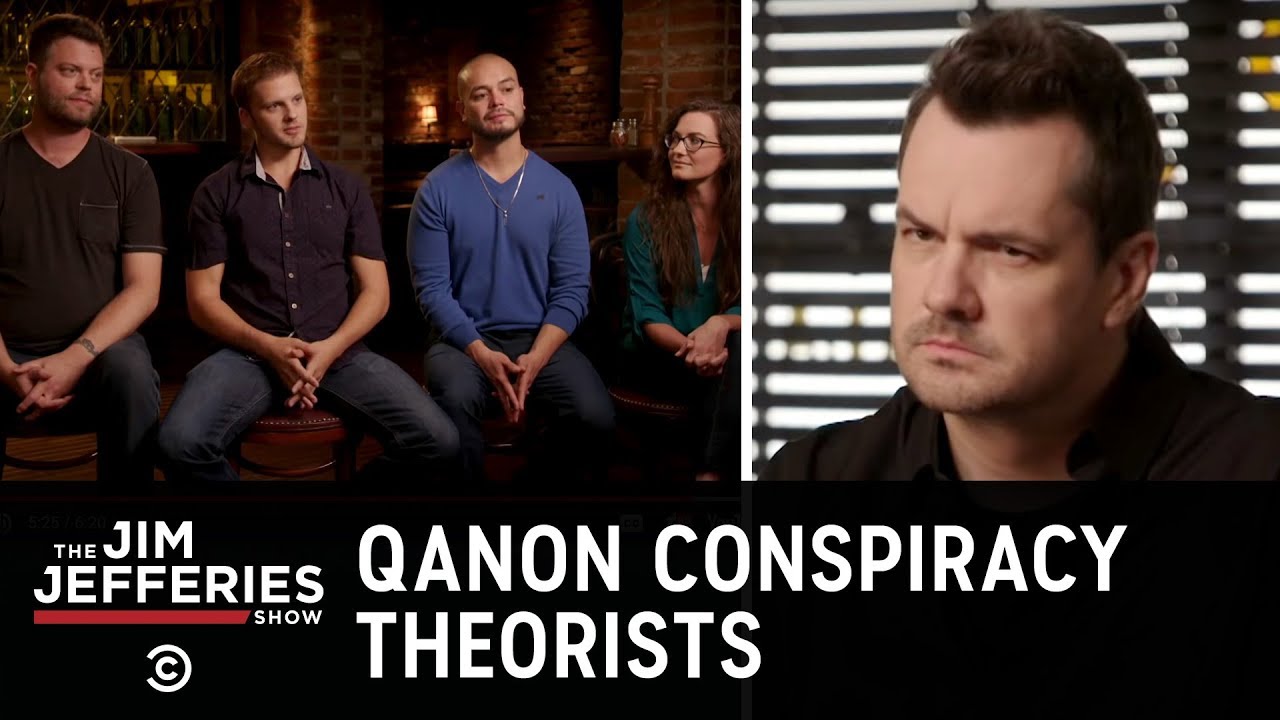 on Comedy Central’s “The Jim Jefferies Show” last year to vouch for the QAnon conspiracy theory;
- Paul Begley, a right-wing pastor who declared his perceived foes to be part of a demonic Illuminati secret society,warned that the “deep state” seeks to put Christians in internment camps, and claimed that Melania Trump ordered the White House undergo an exorcism;
- Lisa Haven, a conspiracy theorist who gives her viewers warnings about government mind-control programs and plots to exterminate human life, in addition to theories about the “deep state”;
- Rex Bear’s Leak Project, which shares, among other things, esoteric theories about chemtrails, the Illuminati, sasquatch sightings, and aliens.
Far-Right Creators
- Andy “Warski” Pires, a right-wing reactionary YouTube creator who piloted a “YouTube bloodsports”series last year that acted as a platform for far-right and white nationalist pundits;
- James Allsup, a white nationalist YouTube pundit who flaunts his involvement in the white nationalist group Identity Evropa and held an elected position in his local GOP before he was ousted from that post;
- Lauren Southern, a right-wing pundit and former Rebel Media star who has produced white nationalist agitprop and praised a whites-only town in South Africa for its low crime rate;
- Brooks Heatherly, a.k.a. “NoBullshit,” a YouTube creator who upholds “race realism,” defended the alt-right Unite the Right rally against criticism, and has expressed anti-Semitic sentiments on numerous occasions.
We attempted to reach VirtualShield for this article but did not receive a response. A customer service representative directed us to the company’s support email address. We emailed the support form, received confirmation that our message had been received, and received no further contact.
Tags: Andy WarskiJames AllsupJordan SatherLauren SouthernLisa HavenPaul BegleyRex Bearconspiracy theoriestech companiesYouTube
==
https://www.thedailybeast.com/drudge-falls-for-fake-racist-pro-trump-stunt
On Monday, YouTube “star” Joey Salads claimed he had damning evidence that the “black community is very violent toward [Republican presidential nominee] Donald Trump and his supporters.”
:{
}:
By Tuesday, YouTube “star” Joey Salads, a 22-year-old whose real name is Joseph Saladino, was asking for forgiveness for staging anti-Trump violence in a “black neighborhood.”
On October 17, Salads accrued more than a million views on his most newsworthy “social experiment” yet: “Trump Car DESTROYED in Black Neighborhood (Social Experiment).”
In the video, he explains how his “social experiment” will show how black people behave violently toward Donald Trump.
“You may have seen on the internet and through the polls that a lot of black people don’t like Trump,” he says in the video. “And they don’t even like his supporters in some cases. So what I did was, I got a car, put some Trump apparel on it, and we’re gonna park it in a black neighborhood and see what happens."
[vid]
After the intro, 30 minutes pass, according to the video. Then, captured by what appears to be hidden-camera footage, a black man with his face blurred walks up to the car. He calls up friends, and within 15 minutes the man is joined by four other black men.
After opening the doors and trunk of the inexplicably unlocked car, the group spends about 30 seconds attacking the car with a metal pipe and a rock, smashing the car’s windows while ripping off some of the Trump signs attached to the car. Then, as quickly as they arrived, they run away.
“As you can see from this video, the black community is very violent toward Trump and his supporters,” Salads says earnestly at the end of the video.
Within hours of its posting to Salads’ more than 1.4 million YouTube subscribers, the video went viral, racking up more than a million views. It was even featured at the top of The Drudge Report.
The only problem? The entire video was staged.
...
==
rww
no lnx pix twit
YouTube’s Biggest Personality Promoted an Anti-Semite
By Jared Holt | December 10, 2018 2:53 pm
Felix Kjellberg, best known online by his account name “PewDiePie,” is the world's most popular YouTube creator. (Screenshot / YouTube.com)
Felix Kjellberg, a Swedish YouTube personality best known online by his account name “PewDiePie,” promoted, in one of his video offerings, another YouTube account that has posted white nationalist and anti-Semitic content. At the time of this article, Kjellberg has more than 75 million subscribers on YouTube, making his channel the most popular on the gargantuan video platform, and broadcasts to an audience that skews younger in age.
Right Wing Watch reached out to Kjellberg via email but has not received a response.
At the end of a video published on December 9, Kjellberg included a YouTube channel operating under the name “E;R” in his list of recommended channels. The shout-out was noticed by members of the progressive YouTube community, who sounded an alarm.
“We also have E;R, who does great video essays about—he did one on Death Note, which I really, really enjoyed,” Kjellberg said. He also linked to the E;R channel in the video description, which has received 15,000 additional subscribers and more than 70,000 new video views since Kjellberg’s plug.
Embedded video
E;R
@EsemicolonR
Subscribe to @pewdiepie for baste and redpilled content. (T-thanks, senpai. ??)
2,213
12:12 PM - Dec 9, 2018
445 people are talking about this
Twitter Ads info and privacy
In the video description of the Death Note video essay Kjellberg promoted, E;R posts: “The truth about why this took so long is because I thought it was so funny to call Black L “Niglet” throughout all my recordings (obviously because it’s an ingenious pun on Lawliet [pronounced Law-let]). I eventually got it through my thick fucking skull that YouTube’s looking for A N Y reason, so I redid all the audio to erase my speech crime, but then I got bored and put the project on pause.”
In the same video, the user jokes about the murder of Heather Heyer, who died after a neo-Nazi protester at the Unite the Right white supremacist gathering in Charlottesville, Virginia, in 2017, plowed his car into a group of protesters, reiterating the white nationalist myth that Heyer actually died of a heart attack.
On their YouTube channel, the user posting as E;R has uploaded anti-Semitic content, and on Gab the user has openly discussed the “Jewish Question” conspiracy theory popular in white nationalist circles. In January, the user bragged about seeing footage from one of their videos in a Kjellberg post.
(Screenshot / YouTube.com)
In one video, uploaded June 11, 2016, cartoon footage from the Cartoon Network show Steven Universe precedes a slideshow of various social media and corporate media company executives believed to be Jewish and the anti-Semitic “echoes” meme popularized by white nationalist media personalities. The video ends with a play on the white supremacist “14 Words” slogan, reading “We must secure our existence and a future for human children.” The channel also features a video from March 3, 2016, that contains uninterrupted footage of an Adolf Hitler speech overlaid with anti-Semitic cartoons.
On Twitter, the “E;R” account has posted referring to Jews as “them”—common usage in white nationalist circles—and re-posted jokes about Hitler.
On Gab, “E;R” gave someone advice on “the best way to red pill people on the (((Jewish Question))).” They wrote, “Pretend to joke about it until the punchline /really/ lands.”
The Young Turks’ Hasan Piker confronted Kjellberg’s shout-out on Twitch:
Watch PewdiePie’s Latest Vid Shouted out a Nazi’s Youtube Channel from HasanAbi on www.twitch.tv
Piker said that Kjellberg’s shout out seemed like a “big problem, especially if the majority of his fans are like 14-year-old kids who are going to go over to this fucking channel and start watching this guy’s cartoon videos, this guy’s anime videos.”
“Do you not find an issue with that? Do you not think that’s insanely irresponsible?” Piker said.
Tags: Alt-Right Anti-Semitism white nationalism YouTube
==
ggl gamed SEO (data void, suggested searches)
excellent for pushing conspiracy theory
data & soc danah__
...Proselytizing Conspiracy Theories
It's not clear who first asked whether or not themassacre at Sandy Hook was a hoax,but that notion was circulating on talk radio among well-established conspiracy theorists within days of the mass shooting. The conspiracy connected multiple well-trodden frames, most notably the presence of a deep state that wanted to limit access to guns and the idea that the news media was operating on behalf of the Obama administration. As conspiratorial thinkers and other digital actors obsessed over the story, they devised a term to dismiss the people who appeared on TV. They called these people "crisis actors."
This concept is linked to an earlier phenomenon that Whitney Phillips documented: RIP trolling. In various message boards, people lamented what they called "grief tourism," referring to the tendency of well-meaning people to post messages on someone's page after they died even when they didn't know that person. In response, trolls used cruel commentary, sick jokes, and harassment to attack anyone who added to the media spectacle surrounding a person's death. RIP trolling was a form of harassment, but it was also a way of mocking how social media and news media created spectacle around death.
By labeling those who had witnessed terroristic gun violence "crisis actors," conspiracy theorists didn't simply seek to undermine those who were sharing their stories. They wanted to troll the news media. Some had a political agenda; others simply wanted to mock the media for its "grief tourism."But collectively, they wanted to seed doubt in the public about the honesty of the media's reporting.
Phrases like "crisis actor" don't spread naturally through word-of-mouth networks, even on social media. To get them into the public lexicon, media manipulators must convince major media amplifiers to work on their behalf.Over the last six years, networks of online antagonists have jumped on every mass tragedy to manipulate the media and propel this term into the mainstream. They use fake accounts on social media to talk with journalists, to ask journalists if there is any truth to the idea that witnesses are really crisis actors. They deface Wikipedia entries. They try to manipulate trending topics and autocomplete on search. But algorithmic systems aren't their target. Journalists are the real target of their digital shenanigans.
Manipulators aren't trying to get journalists to say that witnesses to gun violence and terrorism are actually crisis actors. Their goal is to get the news media to negate that frame?-?and negate the conspirators who are propagating that frame. This may be counter-intuitive, but when news media negates a conspiratorial frame, the people who are most open to such a conspiracy will want to self-investigate precisely because they don't trust the news media. As a result, negation enables a boomerang effect.
Algorithmic systems aren't their target. Journalists are the real target of their digital shenanigans.
Propelling the term into public lexicon is only the first step. Sure, it's fun to celebrate an effort to manipulate major newscasters. But a secondary goal is to get people to search for a term that they've never considered before. Once news media starts negating the concept of a crisis actor, searches for that term spiked. What did they find when they did that search? For example, in the first days after Parkland, they found blog posts and online conversations staged to mock the news media and gaslight the public.
For example, a video from the aforementioned conspiracy theorist focused on crisis actors opens with: "Are we saying the shooting didn't happen? Are we saying they're all actors and that they're faking that something happened? No. The media is saying that. What we're saying is [that] 'School Shooting Survivor Turned Activist dad, Hogg's Father in FBI appears to have been coached.'" This particular video then continues on to imply Anderson Cooper is a well-known CIA operative and describes how CNN fakes things… all to build the case that David Hogg is fundamentally a Democratic Party operative. Viewers may not believe everything, but they are initiated into frames that they've never considered. And that's the point of triggering people to search.
Using search to your advantage relies on what Michael Golebiewski at Bing calls a "data void." When people search for a phrase that does not have natural informative results, it's easy for manipulators to control the results. Take, for example, "did the Holocaust exist?" If no one produces content to combat that frame, what people get when they search for that phrase is conspiratorial. Media manipulators design and exploit data voids. They galvanize around phrases, create digital content around that phrase, and then work to push those phrases into the mainstream lexicon by using news media's instinct to cover something new. When it came to "crisis actors," they knew what search results would appear at the top, especially on YouTube.
Google and Bing rely heavily on legitimate news content to cover up data voids about breaking topics. But YouTube is a disaster. First, there's a lot less content on YouTube, which means that problematic content surfaces to the top faster. Second, YouTube isn't simply a search engine; it's also a recommendation engine that encourages people to view more videos and go on a journey. This is great for music discovery, but not so great when manipulators game the recommendation system to create pathways to extremist content. Third, while newsrooms and text creators have gotten smart about SEO on Google and Bing, they're weak with YouTube, even though it's the primary search engine for the under-25s.
My colleague Becca Lewis is about to release a report that shows how media manipulators have leveraged data voids, recommendation processes of YouTube, and potential recruits' interest in self-investigation to walk people from quasi-mainstream debates to extremism. Through the use of comments, linking, and strategic cross-participation, those who are curious to self-investigate follow breadcrumbs that were designed to promote conspiracy and hate. Unfortunately,most media making organizations don't think about the networked nature of videoor the importance of creating high quality, easily findable content on YouTube.
...
==
mma
Also: YouTube recently removed Alex Jones. But white supremacist content is thriving on the platform. One channel that serves as a gateway into white supremacy is flourishing.
Finally: Extremist networks are also prospering on Facebook. Far-right networks with a collective following in the hundreds of millions push false news and bigoted talking points. Facebook, in turn, barely moderates these networks, even as there are implicit calls to violence that regularly go viral. The reason behind Facebook's blind eye is simple: These posts keep a large group of people engaged on the platform, where Facebook can sell them ads.
==
==
monetized, HQ attack b/c woman thot blocked, rt has used better/1st? echo/escalator?
alt rt uses effectively see RAM and red elephant
ref
https://qz.com/1322131/andrew-wheeler-coal-lobbyist-replaces-scott-pruitt-as-head-of-epa/
Environmental Protection Agency secretary Scott Pruitt, known for his lavish expenditures and misuse of power, resigned today. In a letter addressed to Donald Trump, Pruitt cited “unrelenting” and “unprecedented” attacks on him and his family.
Pruitt was publicly asked to resign this week by a schoolteacher in a DC restaurant, an exchange that was videotaped and has been viewed over 500,000 times on Facebook. “We deserve to have somebody at the EPA who actually does protect our environment, somebody who believes in climate change and takes it seriously for the benefit of all of us, including our children,” Kristin Mink told Pruitt as he was having lunch at a downtown restaurant. “I would urge you to resign before your scandals push you out.”
Recent reports allege Pruitt asked his young staffers to pay for his hotel stays and then didn’t reimburse them, and to find a $200,000 job for his wife. He has also been accused of using his security detail to track downfancy hand lotion. Pruitt spent hundreds of thousands of dollars of taxpayer money on special security features and private flights.
Replaced by Andrew Wheeler
Pruitt’s replacement, Andrew Wheeler, is a former coal industry lobbyist with Faegre Baker Daniels who spent nearly a decade trying to get Congress to pass industry friendly laws. He also served as the vice president of the Washington Coal Club, a group of businessmen who meets monthly on Capitol Hill. Previously, Wheeler served as an aide to Republican senator James Inhofe from Oklahoma, who once on the Senate floor in an attempt to prove that climate change was a hoax.
Wheeler was confirmed as the EPA’s deputy secretaryin mid-April. He will become acting head of the agency on July 9, Trump tweeted.
Pruitt made no mention of the scandals riddling his tenure in his resignation letter, which was made public Thursday afternoon. Pruitt, who was a member of the White House’s evangelical Christian bible study group, said in his farewell that he believes Trump is president “today because of God’s providence,” and that he believes the same “providence brought me into your service.”
“My desire in service to you has always been to bless you as you make important decisions for the American people,” he wrote.
Pruitt may have been the worst EPA chief ever, some believe. “Scott Pruitt will go down in history as a disgrace to the office of EPA administrator,” said Ken Cook, the head of the Environmental Working Group, a consumer advocacy group. “He will forever be associated with extraordinary ethical corruption and the abuse of power for petty personal enrichments.”
==
https://www.buzzfeed.com/josephbernstein/youtube-has-become-the-content-engine-of-the-internets-dark
buzzfeed
... Seaman is the Pizzagate King of the Internet.
On Twitter, Seaman posts dozens of messages a dayto his 66,000 followers, often about the secret cabal — including Rothschilds, Satanists, and the other nabobs of the New World Order — behind the nation’s best-known, super-duper-secret child sex ring under a DC pizza parlor.
But it’s on YouTube where he really goes to work. Since Nov. 4, four days before the election, Seaman has uploaded 136 videos, more than one a day. Of those, at least 42 are about Pizzagate. The videos, which tend to run about eight to fifteen minutes, typically consist of Seaman, a young, brown-haired man with glasses and a short beard, speaking directly into a camera in front of a white wall. He doesn’t equivocate: Recent videos are titled “Pizzagate Will Dominate 2017, Because It Is Real” and “#PizzaGate New Info 12/6/16: Link To Pagan God of Pedophilia/Rape.”
Seaman has more than 150,000 subscribers. His videos, usually preceded by preroll ads for major brands like Quaker Oats and Uber, have been watched almost 18 million times, which is roughly the number of people who tuned in to last year’s season finale of NCIS, the most popular show on television.
His biography reads, in part, “I report the truth.”
In the aftermath of the 2016 presidential election, the major social platforms, most notably Twitter, Facebook, and Reddit, have been forced to undergo painful, often public reckonings with the role they play in spreading bad information. How do services that have become windows onto the world for hundreds of millions of people square their desire to grow with the damage that viral false information, “alternative facts,” and filter bubbles do to a democracy?
And yet there is a mammoth social platform, a cornerstone of the modern internet with more than a billion active users every month, which hosts and even pays for a fathomless stock of bad information, including viral fake news, conspiracy theories, and hate speech of every kind — and it’s been held up to virtually no scrutiny: YouTube.
The entire contemporary conspiracy-industrial complex of internet investigation and social media promulgation, which has become a defining feature of media and politics in the Trump era, would be a very small fraction of itself without YouTube. Yes, the site most people associate with “Gangnam Style,” pirated music, and compilations of dachshunds sneezing is also the central content engine of the unruliest segments of the ascendant right-wing internet, and sometimes its enabler.
To wit, the conspiracy-news internet’s biggest stars, some of whom now enjoy *New Yorker*profiles and presidential influence, largely live on YouTube — some of them on the site's news channel. Infowars — whose founder and host, Alex Jones, claims Sandy Hook didn’t happen, Michelle Obama is a man, and 9/11 was an inside job — broadcasts to 2 million subscribers on YouTube. So does Michael “Gorilla Mindset” Cernovich. So too do a whole genre of lesser-known but still wildly popular YouTubers, people like Seaman and Stefan Molyneux (an Irishman closely
“The internet provides people with access to more points of view than ever before," YouTube wrote in a statement. "When it comes to news, we have thousands of news publishers that present a variety of viewpoints available on our news house channel, http://www.youtube.com/news. The videos here are featured using criteria informed by, among other things, Google News. We're always taking feedback so we can continue to improve and present as many perspectives at a given moment in time as possible.”
...[eg]
all this is a far cry from the platform’s halcyon days of 2006 and George Allen’s infamous “Macaca” gaffe. Back then, it felt reasonable to hope the site would change politics by bypassing a rose-tinted broadcast media filter to hold politicians accountable. As recently as 2012, Mother Jones posted to YouTube hidden footage of Mitt Romney discussing the “47%” of the electorate who would never vote for him, a video that may have swung the election. But by the time the 2016 campaign hit its stride, and a series of widely broadcast, ugly comments by then-candidate Trump didn’t keep him out of office, YouTube’s relationship to politics had changed.
Today, it fills the enormous trough of right-leaning conspiracy and revisionist historical content into which the vast, ravening right-wing social internet lowers its jaws to drink.Shared widely everywhere from white supremacist message boards to chans to Facebook groups, these videos constitute a kind of crowdsourced, predigested ideological education, offering the “Truth” about everything from (760,000 views!) to

Frequently, the videos consist of little more than screenshots of a Reddit “investigation” laid out chronologically, set to ominous music.Other times, they’re very simple, featuring a man in a sparse room speaking directly into his webcam, or a very fast monotone narration over a series of photographs with effects straight out of iMovie.There’s a financial incentive for vloggers to make as many videos as cheaply they can; the more videos you make, the more likely one is to go viral. David Seaman’s videos typically garner more than 50,000 views and often exceed 100,000. Many of Seaman’s videos adjoin ads for major brands. A preroll ad for Asana, the productivity software, precedes a video entitled “WIKILEAKS: Illuminati Rothschild Influence & Simulation Theory”; before “Pizzagate: Do We Know the Full Scope Yet?!” it’s an ad for Uber, and before “HILLARY CLINTON'S HORROR SHOW,” one for a new Fox comedy. (Most YouTubers have no direct control over which brands' ads run next to their videos, and vice versa.)
This trough isn’t just wide, it’s deep. A YouTube search for the term “The Truth About the Holocaust” returns half a million results. The top 10 are all Holocaust-denying or Holocaust-skeptical. (Sample titles: “The Greatest Lie Ever Told,” which has 500,000 views; “The Great Jewish Lie”; “The Sick Lies of a Holocaust™ 'Survivor.'”) Say the half million videos average about 10 minutes. That works out to 5 million minutes, or about 10 years, of “Truth About the Holocaust.”
Meanwhile, “The Truth About Pizzagate” returns a quarter of a million results, including “PizzaGate Definitive Factcheck: Oh My God” (620,000 views and counting) and “The Men Who Knew Too Much About PizzaGate” (who, per a teaser image, include retired Gen. Michael Flynn and Andrew Breitbart).
Sometimes, these videos gohugely viral.“With Open Gates: The Forced Collective Suicide of European Nations” — an alarming 20-minute video about Muslim immigration to Europe featuring deceptive editing and debunked footage — received some 4 million views in late 2015 before being taken down by YouTube over a copyright claim. (Infowars: “YouTube Scrambles to Censor Viral Video Exposing Migrant Invasion.”) That’s roughly as many people as watched the Game of Thrones Season 3 premiere. It’s since been scrubbed of the copyrighted music and reuploaded dozens of times.
First circulated by white supremacist blogs and chans, “With Gates Wide Open” gained social steam until it was picked up by Breitbart, at which point it exploded, blazing the viral trail by which conspiracy-right “Truth” videos now travel. Last week, President Trump incensed the nation of Sweden by falsely implying that it had recently suffered a terrorist attack. Later, he clarified in a tweet that he was referring to a Fox News segment. That segment featured footage from a viral YouTube documentary, Stockholm Syndrome, about the dangers of Muslim immigration into Europe. Sources featured in the documentary have since accused its director, Ami Horowitz, of “bad journalism” for taking their answers out of context.
So what responsibility, if any, does YouTube bear for the universe of often conspiratorial, sometimes bigoted, frequently incorrect information that it pays its creators to host, and that is now being filtered up to the most powerful person in the world? Legally, per the Digital Millennium Copyright Act, which absolves service providers of liability for content they host, none. But morally and ethically, shouldn’t YouTube be asking itself the same hard questions as Facebook and Twitter about the role it plays in a representative democracy? How do those questions change because YouTube is literally paying people to upload bad information?
And practically, if YouTube decided to crack down, could it really do anything?
YouTube does**“demonitize” videos that it deems “not advertiser-friendly,**” and last week, following a report in the Wall Street Journal that Disney had nixed a sponsorship deal with the YouTube superstar PewDiePie over anti-Semitic content in his videos, YouTube pulled his channel from its premium ad network. But such steps have tended to follow public pressure and have only affected extremely famous YouTubers. And it’s not like PewDiePie will go hungry; he can still run ads on his videos, which regularly do millions of views.
Ultimately, the platform may be so huge as to be ungovernable: Users upload 400 hours of video to YouTube every minute. One possibility is drawing a firmer line between content the company officially designates as news and everything else; YouTube has a dedicated News vertical that pulls in videos from publishers approved by Google News.
Even there, though, YouTube has its work cut out for it. On a recent evening, the first result I saw under the “Live Now - News” subsection of youtube.com/news was the Infowars “Defense of Liberty 13 Hour Special Broadcast.” Alex Jones was staring into the camera
==
==
salon end
One of the disadvantages the left has, and it’s a reason why they don't have as big audiences, is that the left does not have one of those ideologies out there that they're willing to pick up,” Exley said in a phone interview. “They're not going back to 20th-century communism the way the right is going back to 20th-century national socialism. And I’m not saying they should. But people want an explanation to everything. Instead, most of the left-wing YouTubers are just making videos explaining this concept or that concept. But it's not in the context of a wholistic worldview about things like how Americans will make a living in this era of deindustrialization. That question's just not interesting to the left.”
Some have:{hypothesized:(style="box-sizing:border-box;-webkit-font-smoothing:antialiased"):}:that the reason for the left’s lacking presence on YouTube is that left-wingers instead congregate on Twitter.“Twitter is the natural home of the left because Twitter — participatory; open; capable of presenting multiple viewpoints to the reader simultaneously — is well-suited to the expression of left-wing views, which are (to draw however loose a family resemblance between often disparate warring factions) typically somehow egalitarian,” wroteVice’s Tom Whyman. “Contemporary right-wing politics, by contrast, is driven largely by the unexamined prejudices and anxieties of (primarily) white men. Any white man who wants to hold on to their prejudices and anxieties is going to have a tough time of it on Twitter — but they're going to have a grand old time standing in front of their wall, alone, ranting.”
Whyman’s is a clever theory but it misrepresents how these platforms are used. Tweeting and vlogging are not mutually exclusive. Whereas vlogging can become a profession, Twitter is a supplementary medium. Vloggers, like other members of the media, tweet on the side to promote their work or to engage in a conversation. The same is not true in the inverse. There are not professional tweeters who vlog to promote their Twitter feeds.
A more likely analog to the right’s YouTube presence is the left’s podcast presence. The two mediums require a similar skillset (talking) and a similar equipment (a microphone, a computer and basic software), and each is a form of new media embraced by:{millennials:(style="box-sizing:border-box;-webkit-font-smoothing:antialiased"):}:. The political podcast landscape also happens to look something like the political YouTube landscape, only inverted. The Ben Shapiro Show, which is conservative, is currently the second-most-popular podcast on iTunes — political or otherwise. But once you get past Shapiro’s show, and the shows of a few of his Daily Wire colleagues, liberal-leaning podcasts (from providers like Crooked Media, Vox, MSNBC, the Atlantic, NPR, the New Yorker, Slate and Buzzfeed) dominate the medium.
The reason why the left and right dominate different mediums may have something to do with demand. Perhaps YouTube’s visual aspect is attractive to young conservatives where the mobility of podcasts is attractive to young liberals. Or, as The Young Turks' Cenk Uygur surmised in a phone conversation, the split may come down to creators’ perceptions of the different mediums.
“A lot of progressives that come from money have an establishment way of thinking, so they're trying to be ‘legitimate,’” Uygur said. “More establishment-minded folks can wrap their heads around podcasts. They go, ‘Oh, I get it. That's like a radio show. That's legitimate.’ Why don't you just take a whole bunch of former Obama officials and start a podcast? YouTube seems to those guys like it's still the Wild Wild West and like something that isn't legitimate or credible.”
The aesthetics of the two mediums may have something to do with that perception. Liberal or conservative, there’s something about broadcasting video outside of a traditional studio and without a suit and tie that screams, He might go off on a tangent about what REALLY happened with 9/11. (It might be that so many of these broadcasters look directly into the camera when they talk.) If you mute Jimmy Dore, a progressive host on The Young Turks Network, you might mistake him for an InfoWars host. The spectrum of podcast production value, on the other hand, is less stark. With the right sound equipment, a DIY podcast can sound as professional as a given radio show — and with a bit of editing, it can often sound more professional.
...but the two mediums are not necessarily equally effective modes of communicating a political message. YouTube not only has many more users than podcasts, political YouTubers have the advantage of YouTube’s algorithm, which recommends videos similar to the ones that a user has watched. That means that if you watch a few Black Pigeon Speaks videos, you will likely be recommended videos by other white nationalists. Especially because YouTube videos are incredibly evergreen. Uygur said that half of The Young Turks’ views come from videos that are 30 days old or older.
“They're kind of like classes,” Exley said of the right’s YouTube videos. “Their audiences treat them like you might treat MIT courses online, where you go watch a whole bunch of them and learn something about physics. I think there are a lot of people going back and watching all of Black Pigeon Speaks' videos to learn all that he is teaching.”
The same doesn’t seem true of podcasts — or any other form of media, for that matter. And the difference was visible this week when James Damore’s Google memo and his subsequent firing made the news. Where the YouTube right used the saga to confirm its ideology, the left was, for the most part, left responding.
==
salon
left, right and mainstream do not agree on much. But this much seems to be consensus: The left is being dished out a “**monumental ass-whupping**” on YouTube. The phraseology comes from a tweet that InfoWars editor Paul Joseph Watsonposted in March. Since then,:{Vice:(style="box-sizing:border-box;-webkit-font-smoothing:antialiased"):}: has theorized as to why the right dominates the platform; Zack Exley, a political organizer and a fellow at the Shorenstein Center on Media, Politics and Public Policy, has:{published a report:(style="box-sizing:border-box;-webkit-font-smoothing:antialiased"):}: analyzing the content of the right’s YouTube channels; and John Herrman,:{in the New York Times Magazine:(style="box-sizing:border-box;-webkit-font-smoothing:antialiased"):}:, hasmade the case that YouTube is for a new generation of right-wingers what talk radio was for past generations.
Indeed, in the last few years YouTube has seen an influx of right-wing channels that have attracted significant and passionate followings. But the presupposition that the right dominates the medium isn’t totally right. It tends to overlook that the News & Politics YouTube channel with the most subscribersis a progressive one. The Young Turks,Cenk Uygur’s network of ad-libbing progressive voices, attracts more subscribers (3.4 million) than most of the insurgent right-wing channels combined. The network, which began broadcasting on YouTube in 2005, is the world’s longest-running daily web livestream, and it is still growing, having recently:{ :(style="background-color:#ffff66;"):}::{:{raised $20 million in investments:(style="background-color:#ffff66;"):}::(style="box-sizing:border-box;-webkit-font-smoothing:antialiased"):}:
http://techrepublican.com/free-tagging/web-2-0
Google said last month it had found no evidence of a Russian propaganda campaign. But the Washington Post reported on 9 October that an internal investigation had in fact found Russian operatives spread disinformation across Google’s many products, which include YouTube, as well as advertising associated with Google search and Gmail.