PRUITT 3
==
see API
fastest growing node? // djt?
STILL SHOWING UP 5/20
xian wacko? drollenger
SEE EPA 4 TRUMP
11/17 villain omfg SAB
HIMMELSTEIN MOFO
prutt tag
sci and press suppress
corrupt, see albert kelly bankster
joined at hip with inhofe [tossed under bus 6/18?]
see crony capitalism, furies
see 1&2 for earlier, record on #?
wants session job (both doing most to implement trump agenda
---
pension plan?
bs
https://www.marketwatch.com/story/scott-pruitts-lavish-corporate-perks-are-a-cautionary-tale-for-everyone-else-2018-02-15
---
Politico
https://www.politico.com › story › 2018/07/03 › utah-o...
Jul 3, 2018 — Utah oil and gas producers tried for years to get the EPA to exempt them from smog rules meant to prevent ailments like asthma. They finally got their relief.Read more
Updated: 07/03/2018
Utah oil and gas producers tried for years to get the EPA to exempt them from smog rules meant to prevent ailments like asthma.
They finally got their relief after Scott Pruitt took charge of the agency, newly released emails show.
To groups opposed to President Donald Trump’s policies, the records are yet another sign that Pruitt has transformed an agency created to protect the environment into a tool for granting favors to industry. They say that’s troubling even if it falls short of the overt collusion his critics have accused him of amid revelations about his ties to lobbyists who helped him arrange housing and travel.
“The public is being shut out of the decisions that affect the air we all breathe while polluters have Pruitt at their beck and call whenever they ask to throw out a life-saving protection,” said Matt Gravatt, the associate legislative director at the Sierra Club, which obtained the emails in a lawsuit over a public records request.
EPA’s aid for the oil and gas companies in Utah came after an industry lobbyist, Marc Himmelstein, a former American Petroleum Institute executive with longstanding connections to top GOP fundraisers, enlisted help from another like-minded Republican, House Natural Resources Chairman Rob Bishop (R-Utah), who has pushed legislation to promote oil and gas development and ease permitting requirements.
Himmelstein coordinated a July 2017 phone call between the Utah lawmakers and Pruitt, offering specific talking points for Bishop to use, according to the records obtained in a lawsuit by the Sierra Club.
EPA was set to declare that the tribal land in the Uinta Basin in Utah was not meeting standards for smog, or ozone pollution. Once that happened, oil and gas producers wouldn’t be able to use a streamlined permitting process and would instead have to seek approval for each of the thousands of wells they aim to drill there.
“We ask the Agency to develop a streamlined permitting solution for future development of the Basin,” Himmelstein’s talking points for Bishop said.
In April, EPAproposed just that.
Himmelstein had also sent Pruitt’s chief of staff, Ryan Jackson, marked-up regulatory text that he shared with Bishop to propose. And he said EPA would receive a letter from the office of Republican Gov. Gary Herbert. Herbert, who is aiming to increase energy production in Utah, had been focused on the issue already and did convey the industry concerns to Pruitt in a letter last summer, his office confirmed.
The governor’s letter of July 18, 2017, provided to POLITICO late Tuesday, nearly exactly matches the talking points and suggested regulatory text that the lobbyist gave Bishop and Jackson.
Himmelstein is a longtime Washington lobbyist and president of the energy lobbying firm National Environmental Strategies, which was previously caught in an ethics controversy over its ties to a former Interior Department official. He told Jackson he was working with QEP Resources Inc. and Newfield Exploration Co., two of the biggest drillers in the region that includes the companies’ leases in the Uintah and Ouray Indian reservations.
Himmelstein is also treasurer of the Conservative Leadership Alliance, a 501(c)(4) that spent $1.4 million on federal elections this year, according to OpenSecrets. And he is a lobbyist for FirstEnergy Solutions, which has been influential with the Trump administration in its bid to keep coal and nuclear plants online.
Pruitt’s critics have long complained the former Oklahoma attorney general was too closely tied to the oil and gas industry. Email records show senior staffers at EPA also exchange scores of messages with top lobbyists for the fossil fuel, agriculture and chemicals industries, and the newly released messages show the consideration top agency staffers gave to energy companies, who often complained that the Obama administration ignored their concerns.
Oil and gas development has been blamed for contributing to northeastern Utah’s ozone pollution, which can affect people suffering from bronchitis, emphysema, and asthma. A 2013 study of the area found that at least 98 percent of volatile organic compounds and 61 percent of nitrogen oxides — building blocks of ozone — come from oil and gas.
Himmelstein and representatives for the two companies did not respond to requests for comment. But Jackson told POLITICO that EPA was eager to help them because the Obama-era requirements would have unfairly limited oil and gas production on the tribal lands compared with other nearby operations.
Jackson said the stricter permitting process for oil and gas companies in Utah would have been “entirely unnecessary and entirely unfair.” EPA is likely to pursue a broader rewrite of the rule, in addition to the carve-out for the Uinta Basin, he added.
“Why are we disadvantaging Indian country?” he said, “That makes no sense.”
But Jackson has it backward, said Jon Goldstein, director of regulatory and legislative affairs for the Environmental Defense Fund.
“What’s unfair is asking people to continue to breathe unhealthy air that has consequences,” Goldstein said.
While Himmelstein wanted EPA to remove the stipulation that drillers in any tribal areas that failed to meet ozone requirements must apply for source-by-source permits, EPA instead drafted an amendment specific to the Uinta basin.
The amendment would provide a “permanent mechanism for streamlining construction authorizations” on the reservation, including in areas not meeting ozone standards, EPA’s fact sheet explains. It notes that EPA is also working on a rule for the reservation to reduce ozone-forming emissions “while allowing continued development of its oil and natural gas resources.”
Himmelstein, who has long been acquainted with Jackson and met socially on several occasions with him last year, first emailed the EPA chief of staff and then-White House special assistant on energy Mike Catanzaro in June 2017 about setting up a meeting with the two companies.
“We need your help,” Himmelstein wrote. “The Uinta Basin in Northeast Utah (Rob Bishop’s district) is going to be listed as an ozone non-attainment area later this year. It is a prolific oil and gas producing area that encompasses state, tribal and federal lands.”
Pruitt had agreed to meet with QEP when he spoke at the American Exploration and Production Council in late May, Himmelstein reminded in another exchange.
Bishop’s spokesperson said the lawmaker’s phone call to Pruitt was part the Natural Resources Committee chairman’s efforts to press for changes in permitting and air quality rules in the Uinta Basin.
“This is an issue that dates back many years. The Chairman had numerous similar conversations with Pruitt’s predecessor, Gina McCarthy. The issue has not been resolved and Chairman Bishop continues to advocate for reasonable regulatory reforms that will protect and enhance the lives of the people of Utah’s first congressional district,” Bishop’s spokesperson said.
Anthony Adragna contributed to this report.
Filed Under:
White House
EPA
Oil
Oil and gas
Donald Trump
Utah
Sierra Club
Scott Pruitt
Regulate third-party litigation funding: Scott Pruitt
tulsa
---
Scott Pruitt wants to come back to D.C. Will Trump help?

E&E News by POLITICO
https://www.eenews.net › Articles](https://www.eenews.net/articles/scott-pruitt-wants-to-come-back-to-d-c-will-trump-help/)
Apr 18, 2022 — The former EPA administrator faces headwinds as he is running to replace Sen. Jim Inhofe (R-Okla.).
[### Ex-EPA head Scott Pruitt to run for US Senate in Oklahoma

AP News
https://apnews.com › article › 2022-midterm-elections-...](https://apnews.com/article/2022-midterm-elections-donald-trump-jim-inhofe-oklahoma-scott-pruitt-3a581101a1a4eff8041feee878b11943)
Apr 15, 2022 — Republican Scott Pruitt, the scandal-ridden former head of the Environmental Protection Agency, filed Friday to run for Oklahoma's open US Senate seat.
---
https://en.wikipedia.org/wiki/Scott_Pruitt
---
NRDC v. E. Scott Pruitt et al. (Neonic Pesticides)
---
heated pod
...A Courtside View of Scott Pruitt’s Cozy Ties With a Billionaire Coal Baron](https://substack.com/redirect/4ef29ed1-401a-4051-b41a-d3757c978a0f?j=eyJ1IjoiMW42ZTYifQ.vyvZ_z0oLghKX6Zag1WJ71bIfqAlxqUD_SD6A_ZPsUM). The New York Times, June 2018.}:
Mr. Pruitt’s attendance at the game … followed a year of regulatory victories for Mr. Craft, who maintains close ties to Mr. Pruitt even as he has lobbied the E.P.A. on issues important to his company, Alliance Resource Partners. And unlike other executives with whom Mr. Pruitt is known to have close ties — like the oilman Harold Hamm or the coal mogul Robert E. Murray — Mr. Craft has stayed relatively under the radar.
---
drollinger cab prayer
04/03/2018
by
Ralph Drollinger, the man who leads weekly Bible study meetings for members of Congress and Trump’s Cabinet—including embattled Environmental Protection Agency head Scott Pruitt—distributed on Monday a Bible study warning that America is in the process of shifting from Christianity to the “false religion of Radical Environmentalism.” Pruitt told CBN last year that it was "wonderful" to participate in the Cabinet Bible studies.
Drollinger’s weekly written Bible studies (also available online in print and audio versions) are distributed to public officials by Capitol Ministries, which is expanding in the U.S. and globally. Drollinger, who sometimes describes them as a kind of a homework supplement to the in-person Bible study meetings, told a reporter last year that Trump reads the studies and sends him positive hand-written notes about them.
The study posted on Monday, “Coming to Grips with the Religion of Environmentalism,” appears to be an updated version of a previous written study with the same title. It draws heavily on a passage in the biblical book of Genesis in which God grants mankind dominion over the Earth and all its creatures and instructs man to rule and subdue creation.
Drollinger argues that it is unbiblical to believe that mankind’s actions could destroy the Earth:
To think that man can alter the Earth’s ecosystem—when God remains omniscient, omnipresent and omnipotent in the current affairs of mankind—is to more than subtly espouse an ultra-hubristic, secular worldview relative to the supremacy and importance of man.
Here’s another bit of policy-related teaching that Drollinger has shared with Pruitt and his colleagues in the Cabinet:
To allow fish to govern the construction of dams, endangered species to govern power plants, flies to govern hospitals, or kangaroo rats, homes, is to miss the clear proclamation of God in Genesis.
Because of biblical promises that God would not again destroy the Earth in a great flood, and would continue to send rain, says Drollinger, “we can all rest assured and wholly rely on God’s aforementioned promises pertaining to His ability and willingness to sustain our world’s ecosystem.”
Drollinger, who is from California and recently held a fundraiser with Agriculture Secretary Sonny Perdue during the World Ag Expo in the heart of California’s agriculture industry, decries efforts in California to limit household water usage, saying there is “more than enough to go around” and that environmentalists’ efforts to restrict water usage reflects a secular worldview that says the environment is more important than people.
“The biblically informed public servant,” says Drollinger, must “order his thinking in light of God’s revealed hierarchy in creation.”
Drollinger says it’s good politics to side against “Radical Environmentalists,” in part because they have fewer children than those who believe “in the biblical truth of multiplying and filling the earth.” His Bible study says that Bible-believers have “outperformed” environmentalist parents “by six million children since the advent of Radical Environmentalism in America,” adding:
Those six million children are just now reaching voting status. Said another way, young Americans raised with a Christian worldview will soon outnumber the children of Radical Environmentalists by at least six million voters in the coming elections. Indeed the scriptural truth that your sins will find you outwill soon be realized across the country. Hopefully the religion of Radical Environmentalism will soon be relegated to fringe minority status in American society. Amen.
Drollinger may have unique access to Cabinet members like Pruitt, and members of the House and Senate, but his anti-environmentalist theology is not unique. For years, Religious Right leaders have attacked the environmental movement—which some have called the Green Dragon. Right-wing “historian” David Barton is among those who signed the 2009 Evangelical Declaration on Global Warming, which denounced efforts to reduce carbon dioxide emissions and said that God had made the Earth and its ecosystems “robust, resilient, self-regulating, and self-correcting, admirably suited for human flourishing, and displaying His glory.”
E&E News examined the impact of Pruitt’s faith on his approach to policy-making in a July 2017 profile, noting that Pruitt served on the board of trustees of Southern Baptist Theological Seminary in Louisville. It also pointed to a 2016 interview, when Pruitt was Oklahoma’s attorney general battling a state Supreme Court ruling about the Ten Commandments, where he said, “A Christian worldview means that God has answers to our problems.” He added, “And part of our responsibility is to convey to those in society that the answers that he has, as represented in Scripture, are important and should be followed, because they lead to freedom and liberty.” Pruitt accused the “political left, the liberals, and those that are anti-faith” of misinterpreting the First Amendment as “a mandate for the government to eradicate all vestiges of religion in the public square.”
---
SAB
who made up list? how many made it? how many still there?
The skeptics who could snag science adviser slots
Scott Waldman, E&E News reporter
Climatewire: Thursday, September 14, 2017
Climate skeptics may soon join a key science advisory panel at U.S. EPA.
A number of people who reject the findings of mainstream climate science are being considered by the Trump administration for spots on EPA's Science Advisory Board, a voluntary but influential panel that reviews science used in environmental regulations.
At least one nominee hopes to use a position on the board to challenge the science undergirding many environmental regulations. One has said in a statement that the world must "abandon this suicidal Global Warming crusade." Another compared people concerned about climate change to "Aztecs who believed they could make rain by cutting out beating hearts."
EPA has submitted 132 names for public comment as possible members of the panel. About a dozen of them have made comments rejecting mainstream climate science. Many have connections to the fossil fuel industry or conservative think tanks, and some have received funding to attack the findings of mainstream scientists that humans are warming the globe at an unprecedented pace through the burning of fossil fuels.
The selection of any of those researchers would be the beginning of a very different advisory board that would bear the hallmark of the Trump administration's position on climate change, said Steve Milloy, an attorney and longtime EPA foe who worked on President Trump's transition team for the agency.
"Had some other Republican won the presidency and a swamp creature taken over the EPA, this would not be happening," he said, "but thank God for Scott Pruitt that he's got the courage to do this."
The Heartland Institute — a Chicago-based free-market think tank that pushes alternative climate science — nominated many of the current prospects.
Heartland Institute spokesman Jim Lakely said in an email: "We applaud any effort by Administrator Pruitt to bring qualified non-alarmist scientists onto the EPA's advisory boards. There is a vigorous debate over the causes and consequences of climate change, and it's vital that EPA acknowledge that fact and have a more balanced approach to the agency's rule-making."
The long list of nominees — identified by EPA staff members who oversee the advisory board — also includes mainstream climate scientists who have extensive experience working with the United Nations and EPA on climate change. Former top Obama EPA science official Paul Anastas made the list.
The deadline for public comment is set to expire Sept. 28. After that, EPA boss Pruitt will have final approval on the candidates. The board has 48 member slots, 15 of which expire at the end of the month. It's not clear how many positions will be filled.
The SAB, created in 1978, is tasked with "independent advice and peer review on the scientific and technical aspects of environmental issues to the EPA's Administrator." An EPA spokesman has said the agency wants industry to have a greater role than it has had previously in evaluating the science used by EPA to craft regulations.
Traditionally, most of the SAB members are from academia, though some have also come from industry and environmental groups.
The SAB is essential to the functioning of EPA because it is chartered by law to ensure the agency is using the best available science for regulations, said Peter Thorne, the board's current chairman and director of the Environmental Health Sciences Research Center at the University of Iowa. He said the SAB has a wide range of tasks that touch on almost every aspect of EPA's functioning. He said it's not just EPA that draws on its work — it's also state governments, nongovernmental organizations and private companies.
"The EPA Science Advisory Board needs to have people who are well-versed in the science that underlies the decisions that EPA makes, so if there are people who end up on the board who have views that are not grounded in solid science, then that is a problem," Thorne said.
Pruitt's prospects
Here are some of the skeptical nominees under consideration:
Joseph D'Aleo, a certified consultant meteorologist and co-founder of the Weather Channel: He has run climate skeptic websites and has appeared as a speaker at Heartland conferences. D'Aleo said his priority on the board would be attacking the endangerment finding, the legally binding document that holds that carbon dioxide and other greenhouse gases harm human health and must be regulated by the executive branch. He said he wants to challenge the finding because it could otherwise be used later to build back Obama-era environmental regulations.
Edwin Berry. edberry.com
"We're going to push for reconsideration, start from scratch and put together the best science," he said. "If CO2 is not a serious pollutant, let's focus the attention of the EPA on other issues."
Edwin Berry, a meteorologist and atmospheric scientist: He has funded his own climate research and says human carbon dioxide emissions do not cause climate change. He has compared those who believe in human-caused climate change to "Aztecs who believed they could make rain by cutting out beating hearts and rolling decapitated heads down temple steps." On his Twitter account, he has called Islam "a death cult" and has encouraged motorists to drive into protesters.
Berry, in an email to E&E News today, described his tweet as a joke and said he does not advocate violence.
"Clearly, my tween says to slowly drive to not hurt anyone," Berry said in the email, misspelling "tweet."
brn
Kevin Dayaratna. Heritage Foundation
Berry, who confirmed that he and a number of other skeptics were nominated by Heartland, said he wants to use his position on the board to show that humans barely contribute to atmospheric carbon dioxide levels, which he claimed are mostly driven by natural factors.
"Let's get over this whole thing about climate change being an important thing, because in fact we humans have a negligible impact on climate," he said. "And if we had the Paris Agreement and everything else, it wouldn't do any good anyway."
Alan Carlin, a retired EPA employee who is affiliated with Heartland: He fought the agency's crafting of the endangerment finding. Carlin, an economist, was at the center of a political firestorm under Obama after he produced a widely criticized 93-page report comprising cherry-picked scientific data and blog entries concluding that regulating carbon dioxide was "the worst mistake that EPA has ever made."
Kevin Dayaratna, a statistician at the conservative Heritage Foundation: His report was cited by Trump as a reason to withdraw from the Paris climate accord. It claimed that the agreement could shrink U.S. gross domestic product by $2.5 trillion within two decades (though Trump stated the impact as coming within a decade). The report was criticized by some as being misleading, because that amount is less than 1 percent of the aggregate GDP over that period and the report did not account for the cost of taking no climate change action. Dayaratna was invited to attend Trump's withdrawal announcement in June in the White House Rose Garden.
Craig Idso, a senior fellow at the Heartland Institute: He has researched the benefits of atmospheric carbon dioxide. His work has centered on highlighting how increased carbon dioxide will benefit plants.
Paul Driessen, a senior policy adviser at the Committee for a Constructive Tomorrow, a libertarian environmental think tank: His organization handed out leaflets at a climate protest this year in Washington, D.C., that said, "CO2 is not the 'control knob' of the climate." He also co-founded Climate Exit, or "Clexit," which criticized the science behind the Paris climate agreement and holds that spiking levels of atmospheric carbon dioxide benefit the Earth. "The world must abandon this suicidal Global Warming crusade," the group stated in its founding statement. "Man does not and cannot control the climate."
Gordon Fulks, a physicist and adviser to the Cascade Policy Institute, an Oregon-based libertarian think tank: He has denied that net sea ice melt is occurring and that the Earth is warming. He has said those who express concern about climate change are like a "societal pathogen that virulently spreads misinformation in tiny packages like a virus."
Anthony Lupo, another founding member of Clexit: He has received support from the Heartland Institute and helped in the unsuccessful fight against the endangerment finding in court.
Leighton Steward, a former energy company executive and a founder of groups that promote the rise of carbon dioxide as a benefit: He has also encouraged the United States to drop out of the Paris climate accord and says that natural warming is raising the temperature of the Earth.
David Legates, a professor of climatology at the University of Delaware: He has denied that human-caused climate change could have catastrophic consequences and has co-authored climate research claiming polar bears are not harmed by human-caused climate change that was quietly funded, at least in part, by Koch Industries Inc.
Critics want to boot EPA 'cronies'...
---
https://newrepublic.com/article/159943/scott-pruitt-epa-whistleblower
NO LNX MANY
Natasha Geiling/ October 26, 2020
Scott Pruitt Was Even More Selfish and Vengeful Than We Thought
A new lawsuit sheds light on whistleblower retaliation at the Environmental Protection Agency.
Scott Pruitt speaks at the Faith and Freedom Coalition Road to Majority Policy Conference.]
When former Environmental Protection Agency Administrator Scott Pruitt resigned in July 2018 amid a flurry of ethics scandals, he had already weathered months of inquiries into inappropriate use of the office for personal gain. He had spent over $100,000 of taxpayer money on first-class flights to Italy and Morocco. He had installed a $43,000 private phone booth in EPA headquarters. He ordered the locks in EPA headquarters to be replaced with biometric locks, even though he couldn’t explain to a member of Congress what biometric locks are. And all the while, he paid $50 a night for a condo on Capitol Hill owned by the wife of a lobbyist—a lobbyist whose clients are regulated by the EPA.
Even amid Pruitt’s nonstop public relations nightmares, he maintained President Trump’s support, which made it feel like Pruitt could get away with everything. In the end, there wasn’t a single scandal, or final straw, that precipitated his downfall—it was the endless parade of them. In his resignation letter, Pruitt said that he and his family were victims of “unrelenting attacks.” Trump, for his part, said that Pruitt told him he didn’t want to be a “distraction” for the administration.
The subtext, of course, was that if Pruitt had managed to keep his lavish spending and cozy relationship with lobbyists quiet, he could have stayed atop the EPA indefinitely. Which explains why, days after Pruitt’s resignation, one of the EPA officials who blew the whistle on Pruitt’s behavior took credit for his departure.
“I hate to take a credit for a man losing his job, but I guess I’d have to say that I take the credit,” Kevin Chmielewski, a former EPA employee, told The Hill in July 2018. Chmielewski, who served as deputy chief of staff for operations at the agency throughout most of Pruitt’s tenure, took issue with what he saw as Pruitt’s “chronic abuse of taxpayer dollars.” Chmielewski took concerns about Pruitt directly to the White House and, eventually, to congressional Democrats. In response, Chmielewski was placed on administrative leave without pay. He was one of four EPA officials who were reassigned or demoted or who left the agency because they flagged Pruitt’s ethical and financial misconduct.
Now comes the long-awaited postscript in this chaotic saga. In a new lawsuit filed in federal court on October 20, Chmielewski paints an even harsher picture of administrative retribution. According to the lawsuit, on February 12, 2018—the day after The Washington Post broke the story about Pruitt’s first-class travel habits—Chmielewski came to work only to find that he had been locked out of his office. He was subsequently escorted from the building and told that if he did not resign, he would be fired from the EPA. Chmielewski did not resign, but a few months later, he was informed in a letter that he was considered to have resigned from the EPA effective March 17, 2018.
Chmielewski’s lawsuit seems to confirm the toxic work environment previously reported at the EPA under Pruitt’s leadership. But the lawsuit also highlights, more specifically, the extent to which Pruitt’s tenure was driven by selfishness. The EPA’s mission is to protect human health and the environment; Scott Pruitt’s mission was to protect himself and his cronies.
“Our job is to enforce the law,” Pruitt told Time in October 2017, railing against the previous administration, which he said had “taken those statutes and stretched them so far.” But when it came time actually to enforce the law, Pruitt supported cutting funds to the EPA’s enforcement office.In the first two years of the Trump administration—the two years in which Pruitt was at the helm of the EPA—prosecutions of environmental crimes, which are investigated by the EPA and pursued by the Department of Justice, dropped precipitously. According to a recent study from the University of Michigan, prosecutions under the country’s two landmark environmental laws, the Clean Air Act and the Clean Water Act, declined by 50 percent and 70 percent, respectively.
Instead, when Pruitt took action, it was always to protect himself and the industry-connected donors who had fueled his political rise. According to a since-deleted tweet Pruitt sent in January 2018, Trump’s deregulatory agenda, carried out at the EPA by Pruitt, saved industry $300 million in regulatory costs. That the repealed regulations would have prevented thousands of premature deaths, heart attacks, and asthma attacks received no mention in Pruitt’s tweet.
When Pruitt tried to defend his first-class plane trips, he blamed “a very toxic environment, politically.” His concern over toxicity apparently did not extend to children and farmworkers sickened by pesticides. In March 2017, in one of his first acts as EPA administrator, Pruitt rejected the recommendation of EPA scientists to ban the pesticide chlorpyrifos on farms. Scientists cited studies connecting use of chlorpyrifos to declines in cognitive health, particularly among young children. Pruitt cited the need for “regulatory certainty.” He did not mention that, 20 days earlier, he had met with the CEO of Dow Chemical, who had also contributed $1 million to Trump’s inauguration.
When viewed in light of Pruitt’s history at the EPA, the allegations in Chmielewski’s lawsuit reveal a familiar pattern of a man far more concerned with self-preservation than ethical considerations. In an EPA typified by deregulation and delay, Chmielewski claims he was elbowed out a day after The Washington Post broke the story about Pruitt’s first-class travel. But it makes sense that retribution would come swiftly for someone who broke Pruitt’s cardinal rule: Never put other people before yourself.
Natasha Geiling @ngeiling
Natasha Geiling is an environmental writer living in Berkeley, California.
RS
https://www.rollingstone.com/politics/politics-features/trump-whistleblower-scott-pruitt-epa-justice-1239197/
NO LNX
when Kevin Chmielewski emerged from the FBI’s fortress of a headquarters in downtown Washington, D.C., his head was spinning. It was the fall of 2017. He’d just left a classified briefing about a matter of national security. As he walked back to his office at the Environmental Protection Agency, Chmielewski knew what he had to do next: He had to tell his boss, EPA Administrator Scott Pruitt, to get over to the bureau and receive his own briefing as soon as possible. After all, it was Pruitt the FBI needed to speak with about a matter so urgent.
Chmielewski (pronounced shim-uh-LESS-ski) had gone to work at the EPA at the urging of his friends in the Trump White House, who wanted someone they trusted to keep an eye on Pruitt. Chmielewski had worked the 2016 campaign as an advance man for Donald Trump, one of the men and women in suits and earpieces who map out every trip, drive the candidate from event to event, and protect him as he walks through a crowd. Chmielewski liked to describe advance staffers as the Navy SEALs of politics: If they did their jobs well, no one would notice their presence or remember their name. “My whole career has been no one knows and no one cares who Kevin Chmielewski is,” he says.
[RELATED STORIES
Trump Is Big Mad That Joe Rogan Apologized for Repeatedly Saying the N-Word
Trump Busted for Hoarding Kim Jong-un 'Love Letters' at Mar-a-Lago]
Chmielewski looked the part of a SEAL — square-jawed, crew cut, with a surfer’s build, and tattoos sleeving his arms — but as an advance man he had none of the stability of a military job. He bounced from one campaign to the next every cycle, working mostly for prominent Republican candidates. Each time, he hoped that his boss’s victory would lead to a government job and a steady paycheck. Instead, he woke up out of work the day after the election — McCain in 2008, Romney in 2012. He packed up his car and headed back home to Maryland’s Eastern Shore, working odd jobs until the next candidate came calling.
In the time he worked for the Trump campaign, he fended off a protester who had rushed the stage in Dayton, Ohio, and guided Trump’s motorcade through a violent crowd in Fresno, California. He’d grown close with Trump’s kids. “I don’t stick up for Trump or the Trumps that much,” he says. “But Ivanka, to the staff, was incredible. Jared was helpful and pleasant, would never ask for anything. They were very easy to work for.”
With Trump, Chmielewski was finally on a winning team. He says he had his pick of jobs in the administration and, coming from a law-enforcement family, chose the Department of Homeland Security.But within months, Chmielewski says, the White House asked him to consider moving to the EPA. Officially, he would be the director of scheduling and advance. Unofficially, he would keep an eye on the new administrator, Scott Pruitt, the former Oklahoma attorney general whose questionable behavior was raising alarms. Pruitt was “a knucklehead,” Chmielewski remembers Trump telling him. “He’s doing a lot of stuff we don’t agree with,” a White House official told him. “We need one of our guys” to rein him in.
Chmielewski never forgot what Pruitt’s chief of staff, Ryan Jackson, told him when he arrived at the EPA: “The nightmare is now yours.” Even though he’d been in office for a few months, Pruitt had infuriated environmentalists and Democrats with his anti-science, industry-friendly stance, stripping any mention of climate change from EPA websites, rolling back regulations, and cozying up to the leaders of major fossil-fuel companies. Internally, though, Pruitt’s personal behavior was the problem Jackson spoke of. Excessive travel, first-class flights, decorating his office with paintings from the Smithsonian, an around-the-clock security detail, and requests for an armored car: Pruitt was one leak away from embarrassing the administration with any one of his indiscretions.
But after his classified FBI briefing, Chmielewski’s primary concern was getting Pruitt’s attention. What he’d learned from the bureau was the kind of information that kept you up at night, something Chmielewski believed a Cabinet secretary should know and act on immediately. “It was a massive deal,” he says. “Quite frankly I don’t sleep well.”
Jackson, Pruitt’s chief of staff, didn’t have a security clearance, so Chmielewski tried to convey the urgency of the situation without spilling any classified details, telling Jackson the FBI needed to speak with Pruitt.
“Kevin, stop,” Jackson said, according to Chmielewski’s recollection of events. “Do not say another word to Scott Pruitt about this.” Why? Chmielewski asked. “Plausible deniability,” Jackson replied.
Plausible deniability? Chmielewski was stunned. Was he trying to shield Pruitt from a matter of national security without even knowing what it was? (Jackson didn’t respond to requests for comment.) Undeterred, Chmielewski sought out Pruitt himself and found the administrator surrounded by a gaggle of aides. “Sir, I just met with the FBI,” he said. “They really didn’t want to meet with me. They wanted to meet with you.”
When Pruitt brushed him off, Chmielewski pressed harder. “Sir, I don’t think you understand,” he said. “Kevin,” Pruitt shot back, “I don’t think you understand.” Whatever it was, Pruitt didn’t want to know about it. End of story. (Pruitt didn’t respond to requests for comment by email and phone.)
Chmielewski — who told this story for the first time in interviews with Rolling Stone — says he realized then that Pruitt was more than just self-absorbed or brazen: By refusing to be briefed on a matter of national security, he was dangerous. Chmielewski had already told others in the administration about some of Pruitt’s behavior, and his resolve now hardened. Over a span of months, he made dozens of disclosures to officials in the EPA, the White House, and other parts of the administration about Pruitt’s secrecy, spending habits, and abuses of power. Chmielewski didn’t realize it at the time, but he had become a whistleblower. “I had no idea really what a whistleblower was, what their rights were, when all this stuff was happening,” he says now. “It’s still weird to say I’m a whistleblower. It feels like it’s a dirty word.”
What happened next still feels like a blur to him. After sounding the alarm internally, Chmielewski’s name leaked to Congress and the media. He got inundated with hundreds of requests for interviews as well as an invitation to testify on Capitol Hill. Chmielewski’s whistleblowing played a key role in exposing Pruitt’s wrongdoing and pressuring the administration to force Pruitt out.
“Whether [Chmielewski’s] policies were aligned with ours or not, clearly he had that moral compass to recognize what was going on was deeply unethical and deeply problematic,” says Adam Beitman of the Sierra Club. “We needed that at the time, and it’s a shame that there were so few people who did what he did.”
But while Pruitt remains a lawyer in good standing, and, for a time, a registered lobbyist in the state of Indiana, Chmielewski has watched his life fall apart. He was removed from the EPA building by an armed security guard. His friends from the Trump White House won’t return his calls and texts. No Republican campaign will hire him, he says. When he sought protection under a federal whistleblower statute, he learned that as a political appointee he fell into a legal loophole. He then sued the EPA, saying the agency had violated his First Amendment free-speech rights as a citizen whistleblower. The lawyers for the Trump administration fought his case, only for the Biden administration to pick up where the Trump-era lawyers left off.
“I live paycheck to paycheck,” he says. “I’ve sold everything and am just making ends meet. These are the repercussions of doing the right thing.”
The drive from Washington, D.C., to Chmielewski’s home on Maryland’s Eastern Shore takes three hours, but the distance feels that much farther when you understand where Chmielewski is now compared with his years on the campaign trail or serving in the Trump administration. He works as a manager at a small golf-course restaurant called the Hideaway, a few miles inland from the boardwalk-lined beaches of Ocean City. He says he earns about $40,000 a year, less than a third of what he made at the EPA, and drives Uber and Lyft to make extra cash during the tourism offseason. His wife, Brianne, who had worked full-time raising their two children, drives the beer cart at the golf course. Since losing his EPA job, he’s drained his bank accounts and retirement funds to pay the bills and support his family. “I’m on the verge of bankruptcy,” he tells me, seated at a corner table in the restaurant one day this summer.
Spread out on the table is a collection of photos, letters, and other memorabilia from Chmielewski’s career as an advance man. Hand-signed thank-you letters from George W. Bush and Dick Cheney. A personalized plaque from the 2016 Trump campaign. He shows them to me almost as proof of the life he’d once had.
Seated alongside his legal team, Chmielewski talks like a man who still hasn’t quite fathomed how he ended up where he is today. The words tumble out of him in a breathless rush, one story dissolving into the next, and when he feels like he’s not doing the story justice, he reaches for his cellphone, which doubles as an audiovisual archive of his life in politics. He searches for a clip from a Trump campaign rally and plays it for me.
A deafening roar fills a packed gymnasium. It’s April 20th, 2016. The venue is Chmielewski’s old high school, a few miles from where we’re sitting, in the town of Berlin, Maryland. Midway through the rally, Trump asks, “Where the hell is Kevin? He’s a star. Where is Kevin? Get Kevin up here.” Chants of “Kevin! Kevin! Kevin!” ring out as Chmielewski reluctantly appears onstage. “I haven’t paid for a drink in town since,” he says.
It was quite the homecoming for a guy who had barely graduated and had so little money growing up that he couldn’t afford his own high-school yearbook. His parents were divorced; his mother raised him while working as a bartender, and his father was an electrician. He dreamed of working in the Secret Service, and spent two years in the Coast Guard to get the military service that would help him meet that dream, but he was honorably discharged to help care for his disabled brother. He met Rick Ahern, one of the most famous advance staffers in history. Ahern had staffed President Reagan when Reagan was shot outside the Washington Hilton. Ahern gave Chmielewski his first break, working advance on a trip for then-Vice President Dick Cheney. Grunt-level jobs for George W. Bush and other GOP bigwigs followed; one year, he says he donned a bunny suit for the annual White House Easter-egg-roll celebration. With each gig, Chmielewski found his place in the small fraternity of professional advance staffers.
Chmielewski spent so much time in close quarters with the people he worked for, carrying their confidences and ensuring their safety, that it was hard not to feel a familial kinship. When Mitt and Ann Romney, whom Chmielewski staffed during the 2012 presidential race, learned that he and his girlfriend had been together for more than a decade but hadn’t married, he says the Romneys insisted he propose before the campaign was over. As he tells this story to me, he pulls out his phone again and shows me a photo of him down on one knee, proposing to Brianne, the Romneys standing in the background, looking on like proud parents. On election night, Chmielewski recalls, Romney, who’d just delivered his concession speech, said to the group: “Guys, we didn’t lose. We’re getting Kevin married.”
It was while working for Romney that Chmielewski met Trump. According to Chmielewski, Trump turned to Corey Lewandowski a few months before launching his own presidential bid in 2015 and asked, “Who was that Polack that used to work for Romney? He was a good guy.” Trump called Chmielewski, offered him a job, and Chmielewski spent the next 18 months at Trump’s side. He says he planned Trump’s trips, safeguarded his cellphone, fetched his McDonald’s (two Big Macs and two Fish Filets with fries), and delivered the voice-of-God announcement that signaled Trump’s entrance at campaign rallies: “Please welcome the next president of the United States, Donald J. Trump!”
Chmielewski didn’t agree with everything Trump campaigned on, but he liked Trump’s vow to drain the swamp and end the country’s forever wars.Mostly, as he looked out on the massive crowds flocking to Trump’s rallies, he felt like he’d boarded a rocket ship just before liftoff, and intended to ride it all the way to the end. After Trump won, Chmielewski was told he would have his pick of jobs. He would finally get to make some real money working in the federal government instead of slinking back home to Maryland again.
When the White House asked him to leave his first choice at DHS after a few months and move to the EPA, the decision was a “no-brainer,” he tells me. The EPA job paid more than DHS. He had grown up on the water and thought of himself as a conservationist, a surfer, and a waterman (“wutterman,” in his Eastern Shore accent), someone who cared about protecting the natural landscape. The EPA also had a lower profile than DHS, and, as best he could tell, no one knew who Scott Pruitt, the new administrator, was. “I work less and make more money,” he says. “I just found the perfect boring job.”
Chmielewski felt beyond exhausted when his flight landed at Reagan National airport in early February 2018. He’d spent the past 16 hours on planes returning home from an assignment on the other side of the world. Dressed in sweatpants and flip-flops, so tired he could hardly see straight, he called a cab to take him to EPA headquarters, and from there, he’d head home to the Eastern Shore to be with his wife and kids, whom he hadn’t seen in weeks.
He flashed his badge at the security guard posted at the EPA’s main entrance and walked to his car. When he got there, two agents were waiting for him, according to a whistleblower complaint he later filed. They said they’d been sent by Nino Perrotta, the head of Pruitt’s security detail, to retrieve Chmielewski’s EPA badge, work phone, and parking pass. Chmielewski knew something was wrong. But he wasn’t about to hand over his work credentials. He says he politely declined, and the two agents went on their way.
FORCED OUT: Pruitt’s corruption became the stuff of lore, including spending $43,000 on an illegal phone booth and decorating his office with priceless paintings from the Smithsonian.
Soon afterward, Chmielewski got a call from Perrotta’s deputy. Turn around right now and come back to the office, he was told. “I’m going home,” Chmielewski said, and kept driving. A few minutes after that, he got another call, this time from Perrotta himself. “Get the fuck back here right now,” Chmielewski recalls Perrotta telling him.
“Excuse me?” Chmielewski responded. “Nino, have you lost your mind?”
“Get the fuck back here right now or I’m coming to your house.” (Perrotta says he called Chmielewski and asked for his credentials at this behest of his superiors, but says he never swore and that Chmielewski’s account of the conversation is “completely inaccurate.”)
Chmielewski was two months shy of his one-year anniversary at the EPA. It had been anything but a boring experience from the day he had arrived. Chmielewski was a key liaison between the EPA and the White House, and also between Pruitt’s office and the law-enforcement community, from the local cops who helped protect Pruitt on field visits, to the FBI and the EPA’s in-house intelligence bureau. He was also in charge of practically all logistics not only for Pruitt, he says, but also for Pruitt’s family.
As Chmielewski would later tell congressional investigators, he sensed trouble with Pruitt right away. Under the pretext of needing additional security measures to ensure Pruitt’s safety, the EPA acquired hulking, blacked-out SUVs. Habitually late, Pruitt had his security detail use lights and sirens to clear traffic as he tore through Washington, D.C., en route to dinner or a meeting. Pruitt insisted on flying first-class and when possible on Delta, because he was a frequent Delta customer, even though Delta was rarely the cheapest option and government regulations mandated that public servants spend as little as possible on travel. When the career employees at the EPA alerted Chmielewski to these issues, he dismissed them as Democrats bitter about a new Republican administrator. But the more he learned, the more he realized they were right. “It took me a very short time to realize they’re telling the truth.”
There were so many ethical problems created by Pruitt that it was hard to keep track of them all. Pruitt had one of his assistants look into potential real estate and a subscription to the private-plane service NetJets. He asked to rent and hang priceless paintings from the Smithsonian for his office. He sought to expand his security detail from a half-dozen agents to 20, and received round-the-clock protection, costing $3.5 million in his first year, nearly double what Pruitt’s predecessors paid. He placed good friends from Oklahoma in EPA advisory jobs while forcing out career scientists. Some of Pruitt’s abuses were so cartoonishly corrupt that they would later become the stuff of lore: asking aides to procure a mattress from the Trump hotel in Washington; making his detail drive him to multiple Ritz-Carlton hotels to find a hand lotion he liked; spending $43,000 on a secure phone booth in his office suite.
Pruitt had installed Perrotta as the head of his security detail after forcing out an official who had pushed back on Pruitt’s requests. Suddenly, the security presence around Pruitt grew dramatically, and career employees saw their access to Pruitt scaled back. Pruitt pushed to install a bulletproof desk in the administrator’s office. Paranoid about leaks and potential spying by his enemies, Pruitt asked for a security firm to sweep his office, and Perrotta recommended a contractor who also happened to work at the private-security firm Perrotta ran on the side. “Nino made it sound like this guy was going to be assassinated every 30 seconds,” Chmielewski recalls. (“Completely false,” Perrotta says.)
For a time, Chmielewski did as he was told, including participating in the firing of a junior employee who had allegedly refused to delete sensitive entries from Pruitt’s calendar. But he says he grew appalled by what he saw. He also recognized that, by virtue of his proximity to Pruitt, he was one of the few people privy to all of Pruitt’s wrongdoing. He started telling people he knew in the White House and in Trump’s orbit — the same people he’d grown close with while working on the presidential campaign — about what Pruitt was up to.
He says he told trusted Trump advisers Lewandowski and David Bossie, the head of the White House personnel office, and two senior aides to Vice President Pence; senior EPA officials; and the EPA’s inspector general. He didn’t realize that by making these disclosures he’d made himself a whistleblower. All he knew was that Pruitt was out of control and he didn’t want anything to do with what Pruitt was doing. He’d been sent to the EPA to keep watch on Pruitt, but now it felt like his White House contacts and other Trump pals weren’t all that interested in the issues he was raising. Maybe his disclosures got lost in the day-to-day chaos of the Trump administration; maybe the White House really didn’t want to know about Pruitt’s wrongdoing. Plausible deniability.
Offered to work advance on a handful of overseas trips for the White House in late 2017 and early 2018, Chmielewski leapt at the chance to take a break from Pruitt and the mess at the EPA. Still, he continued to warn the White House about what he’d seen, even if it was just telling Pence’s chief of staff, Nick Ayers, over beers and pizza during an official trip to Israel. It was during these trips, Chmielewski says, that Pruitt learned about his whistleblowing and embarked on a campaign to discredit him and force him out of the EPA. An anonymous complaint was filed — Chmielewski believes Pruitt was behind it — with the EPA’s inspector general, saying Chmielewski didn’t have a security clearance but did have a criminal record; the IG investigated the complaint and found it to be baseless.
Chmielewski had just returned from one of his trips assisting the vice president’s office when the two agents confronted him in the EPA parking lot. When Chmielewski returned to the office the following Monday, February 12th, 2018, his key no longer worked and his nameplate was gone. Charles Munoz, the official White House liaison at the EPA, called Chmielewski into his office and handed him a resignation letter to sign. When he refused, he was escorted out of the building.
He found himself in a legal limbo. He hadn’t been fired, yet hadn’t resigned, either. For weeks he continued to collect a paycheck even though he wasn’t working. Officials in the White House pleaded with him to just resign.“We’re in a pinch here,” he remembers being told. “Do us a favor and we’ll try to get you to another agency. You need to resign.” Again, he refused. He’d done nothing wrong, he argued. He also thought about his young kids. “Right is right and wrong is wrong,” he says. “Especially at that time, being a new father and realizing 20 years down the road, when my kids asked me about it, I wanted to be on the right side of this.”
He refused to resign and accepted an invitation to appear in private before the House oversight committee. The committee’s Democratic staff members couldn’t have been more polite, he says, even putting him in touch with lawyers who could represent him as a whistleblower if he needed legal help. The tenor on the Republican side was different. “The entire conversation was, ‘You sure you want to do this?’ ” Chmielewski recalls. “Not ‘Hey, what happened?’ but ‘Why don’t you just leave this alone?’ ”
Once the media caught wind of his whistleblowing and testimony, Chmielewski was flooded with interview requests. He agreed to a few of them, with TV producers he knew and trusted from the campaign trail, then laid low at home, essentially unemployed and uncertain of his employment status at the EPA, until the furor subsided. The Government Accountability Project, a nonpartisan legal-defense group, agreed to represent him, and his lawyer there, Samantha Feinstein, peppered the EPA with inquiries about Chmielewski’s employment status. According to one of Chmielewski’s whistleblower complaints, his lawyers eventually obtained resignation documents in which Munoz had signed “Charles Munoz for Kevin Chmielewski” in the place where Chmielewski’s signature should have been. Munoz would later admit to the EPA’s inspector general that Chmielewski had never resigned.
Chmielewski and his daughter had gone to see the movie Incredibles 2 when Pruitt’s resignation was announced. With Pruitt out of the picture, he hoped he might find a way into the administration again. In early 2020, according to one of Chmielewski’s whistleblower complaints, Johnny McEntee, an old friend from the campaign who had taken charge of the White House’s personnel office, vowed to help him. McEntee found a position for him at the Department of Energy, which said it planned to hire him. But when McEntee tried to finalize Chmielewski’s paperwork, someone blocked it. Chmielewski suspects advisers close to Trump had blacklisted him. “There’s nothing I can do,” Chmielewski says McEntee told him. “My hands are tied because the job has been rescinded.”
Chmielewski now spends his days in a legal no man’s land. With the help of his lawyers, he challenged his termination with the Office of Special Counsel, which deals with whistleblower issues, and another administration office, called the Merit Systems Protection Board. Both offices said Chmielewski had no standing to appeal his firing, because as a senior political appointee, he had no statutory protections as a whistleblower. The law that protected career civil servants didn’t apply to him, even though he was one of the only people at the EPA who had the firsthand knowledge to expose Pruitt’s abuses.
Liz Hempowicz, the director of public policy at the Project on Government Oversight, says so-called senior-executive service positions — political appointees who serve at the pleasure of the president — come with more flexibility to pay higher salaries, but also with more leeway for an administration to remove appointees. But Hempowicz says cases like Chmielewski’s illustrate the need for even basic whistleblower protections for those appointees, so that they’re not hung out to dry if they speak up about potential wrongdoing. “It leaves an accountability gap that should be very concerning,” she says, “especially when you talk about people like Scott Pruitt, who are distrustful of civil servants and won’t let them in the room.”
Chmielewski’s legal team is pushing Congress to close the loophole for political appointees with a piece of legislation called the Whistleblower Protection Improvement Act. At the same time, Chmielewski is waging several legal battles, alleging that the EPA and Energy Department illegally retaliated against him. He wants to be reinstated in his EPA job or given the position that had been rescinded at Energy.
He also filed a lawsuit in D.C. federal court, saying his First Amendment rights had been infringed upon. In both cases, the change of administration from Trump to Biden has made little difference in the position taken by the government. The Biden Justice Department has refused to consider a settlement in Chmielewski’s case, and instead argued that he has no whistleblower protections as a political appointee. “Many taxpayer dollars are being spent by the Biden administration fighting Kevin Chmielewski’s case,” says Feinstein, his lawyer at the Government Accountability Project. “This is someone who did the right thing and has suffered for it. The government benefited from his information and the public benefited from his information.” But the Biden Justice Department, she adds, has “literally zero to offer.”
Chmielewski has been cast out of the small, close-knit group of professional advance staffers. “If I was in their shoes, which I used to be, I wouldn’t hire me either,” he says. He’s tried to find work at a defense contractor or other government-related job, but he fears one Google search renders him unemployable. Over lunch one day at the restaurant, I ask him if he would do it all again knowing what he knows now. He tells me he doesn’t regret blowing the whistle. He’s long since grown disillusioned with Trump and his cronies: “We made the swamp bigger and put bigger creatures in there. I wasn’t going to be one of those creatures.”
The question that keeps him up at night, he says, is this one: “Where does this story end? Five years from now, 10 years, 20, 50?” He looks pained as he asks these questions. “Is that Kevin homeless? Or is that Kevin thriving and doing well?”
In This Article: Donald Trump, EPA, Scott Pruitt, Whistleblower
see fact data for intro
https://highline.huffingtonpost.com/article/disappearing-data/#science
...
STOPPED COLLECTING CRUCIAL METHANE EMISSIONS DATA FROM OIL AND GAS COMPANIES
02.01
One of the Obama administration’s most ambitious environmental policies was an unprecedented drive to reduce emissions of methane, the main component in natural gas and a major contributor to climate change. Two days after Donald Trump was elected president, Barack Obama's Environmental Protection Agency began the process of gathering wide-ranging data from about 15,000 owners and operators of oil and natural gas facilities. Earlier that year, the EPA had introduced regulations on methane emissions at new or modified oil and gas operations. This data was intended to provide the basis for regulating emissions at existing operations, which produce far more methane.
In March, new EPA AdministratorScott Pruittwithdrew the requests—a move that came as no surprise. As attorney general of Oklahoma, Pruitt had joined a group of state AGs to sue the EPA in 2016 over the first round of rules on methane emissions. (The EPA weakened those regulations in August.) Pruitt’s decision to cancel the data collection signaled that, under Trump, the EPA would axe the plans to regulate existing facilities.
Methane dissipates much more rapidly than carbon dioxide, but the gas is at least 86 times more potent during its first 20 years in the atmosphere. The EPA estimates that the oil and natural gas industry is responsible for nearly 30 percent of U.S. methane emissions. A 2018 study found that the EPA may underestimate the industry's methane emissions by as much as 60 percent. Trump’s EPA has launched its own programs to collect information from the industry, but companies are not required to participate, and if they do, they only need to report successful efforts to reduce methane emissions.
JUNE 2017 PAN etc
Objections to March 29, 2017
Order Denying PAN/NRDC
Petition to Revoke All Tolerances
and Cancel All Registrations for
the Pesticide Chlorpyrifos
https://earthjustice.org/sites/default/files/files/EPA_Objections%206%205%2017.pdf
...1. The Science Underlying EPA’s Findings that Chlorpyrifos is Unsafe is Well-Settled
In putting off action on the 2007 Petition and its proposal to revoke chlorpyrifos tolerances, the Pruitt Order alludes generally to scientific uncertainties, ignoring how much progress has been made in assessing the mounting scientific evidence of neurodevelopmental harm from chlorpyrifos exposures and the weight of the scientific evidence. EPA and the SAP have consistently found that chlorpyrifos causes damage to children’s developing brains and that this damage has resulted from exposures that are far lower than EPA’s regulatory endpoint. The 31 chlorpyrifos tolerances currently in place do not protect against these adverse brain impacts. On this point, assertions of scientific uncertainty ring hollow given the overwhelming scientific evidence and the unbroken EPA and SAP findings.
When EPA convened its SAP in 2008 to review post-re-registration science, the SAP found that prenatal and early postnatal chlorpyrifos exposures can produce long-lasting cognitive and motor impairments. 2008 SAP Report at 11-12. The SAP also found that the exposures associated with this serious harm were below EPA’s regulatory endpoint. Id. at 43-44. In 2012, the SAP again found, based on more extensive scientific review, that chlorpyrifos is associated with abnormal reflexes, mental deficiencies, and attention and behavioral problems from exposures lower than those associated with cholinesterase inhibition, EPA’s regulatory endpoint. 2012 SAP at 17, 19. Even the 2016 SAP, which disagreed with EPA’s first attempt to quantify exposures correlated with such brain damage, agreed that chlorpyrifos harms children’s brains at exposures far below EPA’s regulatory endpoint and that EPA needs to be more protective than its 2014 risk assessment.2016 SAP 18, 52-53.
EPA’s risk assessments have, since 2011, similarly found correlations between low-level chlorpyrifos exposures and long-lasting harm to children’s brains. The 2011 PHHRA found that chlorpyrifos played a role in causing such neurodevelopmental harm. 2011 PHHRA at 8. The 2014 RHHRA made even stronger findings from multiple lines of evidence that chlorpyrifos results in neurodevelopmental harms to children, such as reduced IQ, delays in mental development, and attention disorders, and that the exposures associated with these brain impairments were too low to produce cholinesterase inhibition. 2014 RHHRA at 41-43, 46. There may be scientific uncertainty on other issues, but not as to these uncontestable findings. And these findings alone revealed in the 2014 RHHRA that chlorpyrifos is unsafe due to drinking water contamination. Id. at 48-49, 95-96.
Scientific uncertainty remains as to the mode of action by which chlorpyrifos damages children’s brains and the exact dose at which such effects occur. EPA does not need to know the precise mode of action to know that harm is occurring and that the statutory safety standard is being violated. See id. at 48. Nor does EPA need to know the precise dose at which neurodevelopmental harm occurs, given that such harm is occurring at exposures so far below the regulatory endpoint supporting the current chlorpyrifos tolerances that EPA cannot identify a safe exposure level. As explained below, Congress has prescribed how EPA must deal with such uncertainties in protecting the safety of our food supply and preventing harm to children. 2. Congress Directed EPA to Revoke Tolerances if Scientific Uncertainty Precludes Finding the Pesticide Safe. Congress has established a statutory standard that precludes delaying protection, particularly to children, due to scientific uncertainty when there is evidence of harm. This direction manifests itself in three ways.
...
C. Widespread Use of Chlorpyrifos in Agriculture is Legally Irrelevant Because Congress Made Protecting Food Safety and Preventing Neurodevelopmental Harm to Children Paramount. The Pruitt Order states: Although not a legal consideration, it is important to recognize that for many decades chlorpyrifos has been and remains one of the most widely used pesticides in the United States, making any decision to retain or remove this pesticide from the market an extremely significant policy choice. 82 Fed. Reg. at 16,590; see also id. at 16,584 (“chlorpyrifos is currently the only cost-effective choice for control of certain insect pests.”). The Pruitt Order then cites the significance of the decision as a reason for further study of the risks before taking final regulatory action. Id.
EPA issued a press release on the Pruitt Order noting that chlorpyrifos is “one of the most widely used pesticides in the world” and quoting EPA Administrator Scott Pruitt as saying, “We need to provide regulatory certainty to the thousands of American farms that rely on 58 Meeting minutes, report, and background material is available in Docket EPA-HQ-OPP-2010-0588 and on the SAP meetings website at: http://www.epa.gov/scipoly/sap/meetings/2011/021511meeting.html. 37 chlorpyrifos.” The EPA press release included a statement from Sheryl Kunickis, director of the Office of Pest Management Policy at the U.S. Department of Agriculture (“USDA”), endorsing the Pruitt Order because it “frees American farmers from significant trade disruptions that could have been caused by an unnecessary, unilateral revocation of chlorpyrifos tolerances in the United States.”59 EPA released another press statement on April 5, 2017, compiling statements from USDA and various agricultural associations praising EPA’s decision not to ban chlorpyrifos.60 As the Pruitt Order acknowledges, however, EPA must make food tolerance decisions based on safety and in particular whether EPA can find that there is a reasonable certainty of no harm from the pesticide. Congress decided long ago that the safety of our food cannot be sacrificed, and in 1996, it expanded that mandate to aggregate exposures to a pesticide in food, drinking water, and pesticide drift. EPA cannot leave tolerances in place in the absence of a finding of safety, no matter how widely used the pesticide is.61 Indeed, widespread use of chlorpyrifos cuts the other way because its use exposes children and communities throughout the country to poisoning and brain damage risks, making the Administrator’s decision to delay protections even more egregious....
CONCLUSION For these reasons, EPA must reverse the Pruitt Order and revoke all chlorpyrifos tolerances. This misguided Order and the delay it has spurred threaten to expose countless children and communities to chlorpyrifos well into the future. People will needlessly suffer from poisonings from chlorpyrifos drift. Parents will watch their children struggle with attention disorders and impaired brain functioning that hinders their ability to learn and play, and the children will experience lifelong deficits that make it harder for them to achieve their full potential and dreams. Prolonging revocation of chlorpyrifos tolerances, as required by the law and science, is not only unlawful, but also callous and heartless. EPA should rule on these objections within 60 days and expedite revocation of all chlorpyrifos tolerance.
https://yyy.theguardian.com/us-news/2017/dec/12/big-oil-lobby-get-what-it-wants-epa-trump-pruitt
This article is more than 3 years old
'No shame': how the Trump administration granted big oil's wishlist
This article is more than 3 years old
The EPA has fulfilled almost all major demands made by the American Petroleum Institute within its first year under Trump
Demonstrators in California protest against Donald Trump’s executive order fast-tracking the Keystone XL and Dakota Access oil pipelines.
Tue 12 Dec 2017
The Trump administration’s zeal for environmental rollbacks has enabled it to fulfill almost all of the top priorities in a “wishlist” drawn up by the American Petroleum Institute (API), the leading lobby group for US oil and gas companies.
[API White house
How big oil is tightening its grip on Donald Trump's White House
Read more]
In a document called “comments on specific regulations” sent to the Environmental Protection Agency (EPA) in May, API highlighted eight key changes it wanted to ease the regulation of air and water pollution. An analysis shows that theEPA has now so far either partially or wholly delivered on six out of these eight key demands within the first year of the Trump administration,which solicited input on government rules from a number of trade groups.
This comes as the Guardian and the Center for Public Integrity publish an investigation into the way the oil lobby has worked for decades to influence US government policy – and is tightening its hold.
Earlier this year a letter penned by Howard Feldman, senior director of regulatory affairs at API, accompanied the lobby group’s wish list for government, and it stated that fossil fuel companies are thriving “despite the unprecedented level of federal regulatory actions targeting our industry”.
Timeline
Big oil and the US government]
Feldman called for the federal government to alter regulations in a way that “promotes access to domestic oil and natural gas resources, streamlined permitting and cost-effective regulations”.
The letter is addressed to Samantha Dravis, an EPA associate administratorwho previously held a senior role at the Republican Attorneys General Association and was counsel to Freedom Partners, one of the groups in the Koch brothers network.
Donald Trump displays one of five executive orders he signed related to the oil pipeline industry on 24 January 2017.]
The 25-page list of API’s suggested regulatory changes places particular emphasis on eight key demands that peel away standards primarily imposed under Barack Obama’s administration.The EPA’s administrator, Scott Pruitt, previously a harsh critic of the agency who has pledged to rein in its “out of control, anti-energy agenda”, has overseen the delay or repeal moves in line with six of API’s eight highest priorities.
“There’s no question that energy lobbyists are calling the shots in this administration, which has been all too willing to roll back public health protections,” said Jeremy Symons, vice-president of Environmental Defense Fund. “Anyone who doubts that can just look at their record.”
Pruitt and his team have made it clear that oil, gas and coal industries trump science
Liz Purchia Gannon, former EPA communications head]
:{
}:
On March 22, Pruitt met with API executives at the Trump International Hotel in Washington DC.Less than a month later, Pruitt wrote to Feldman, as well as three other oil and gas industry representatives, to tell them he was temporarily suspending regulations that curb leaks from drilling operations while the EPA reconsiders the rule.
In June, the EPA proposed a two-year pause to the rule, which was drawn up under the Obama administration in 2016 and aimed to reduce “fugitive” emissions such as methane, a potent greenhouse gas. In July, a federal court blocked the attempted suspension of the rule.
The EPA has fared better in fulfilling other top API priorities. In June, Pruitt signed a two-year delay to regulations designed to improve the safety of chemical facilities. API argued that the rule, which followed several disastrous incidents at chemical plants, would be burdensome and do little to improve safety.
API said the EPA “should reverse” a separate regulation requiring power plants to follow air pollution rules when they are starting up, shutting down or undergoing maintenance. Pruitt, who previously sued the EPA to halt the rule, is now reassessing it.
Implementation of new standards to reduce ozone, a pollutant that helps form smog, was delayed by a year at Pruitt’s behest in June, a month after the API called for the EPA to reconsider the rule. Several states and health groups have launched legal action against the EPA after it missed a deadline to designate which areas of the country are failing to meet the tightened standards on smog.
:{
}:
API also secured an early victory in February, when Donald Trump issued an executive order to scrap the “waters of the United States” rule, which was put in place under the Obama administration to protect streams and rivers that provide drinking water to around a third of Americans. The regulation has been opposed by some farmers and owners of golf courses and industrial plants as being too stringent.
[Donald Trump has ditched the world in favor of big oil's titans
Jill Abramson
Read more]
Several of API’s lower priority proposals have also been fulfilled, with Pruitt introducing new rules for members of the EPA’s scientific boardswhich open the way for more industry involvement and, separately, deciding to not introduce new financial responsibility requirements that API feared may have impacted the petroleum industry.
“Pruitt and his team have no shame,”said Liz Purchia Gannon, former head of communications at the EPA under the Obama administration. “They have made it clear from the start that oil, gas and coal industries trump science, the American people and public health and environmental organizations.
“What we can see from his schedule is an alarming pattern of meeting with special interest groups before making policy decisions favoring their bottom line at the expense of Americans’ health and the environment.”
When contacted for comment, the API said it was happy for its previous statements to speak for themselves. The EPA did not respond to a request for comment.
Inside Pruitt's calendar - POLITICOhttps://www.politico.com › newsletters › 2018/03/16 › i...
Mar 16, 2018 — INSIDE PRUITT'S CALENDAR: EPA Administrator Scott Pruitt met last year ... TRUMP MEETS WITH API, CEOs: The president's White House meeting ...
Recordings Show Oil Executives Love Having So Much ...https://www.rollingstone.com › politics › politics-news
Mar 23, 2019 — Last week we were talking to [EPA] Secretary [Scott] Pruitt, and in about two weeks we have a meeting with [Interior] Secretary Zinke.
Missing: api | Must include: api
Secretary Zinke Statement in Support of President Trump's ...https://www.doi.gov › pressreleases › secretary-zinke-st...
Mar 28, 2017 — Trump, Secretary of the Interior Ryan Zinke, Administrator of the Environmental Protection Agency (EPA) Scott Pruitt, and Secretary of Energy ...
Missing: api | Must include: api
Trump administration officials on energy and the environmenthttps://ballotpedia.org › Trump_administration_officials...
Trump administration officials on energy and the environment · Contents · Donald Trump · Mike Pence · Rex Tillerson · Scott Pruitt · Ryan Zinke · Rick Perry · Recent ...
Tate Bennett, First Interim Production, Sierra Club v. EPAhttps://www.epa.gov › sites › files › documents › t...PDF
Dec 21, 2018 — The Florida Petroleum Council is a division of API, ... Administrator Scott Pruitt on "President Trump's Deregulatory Agenda at EPA - Year 1.
222 pages
Methane Promises Are No Substitute for Rules | NRDChttps://www.nrdc.org › experts › briana-mordick › metha...
Dec 6, 2017 — And given that API is supporting the Trump administration's efforts to delay ... for example, providing EPA Administrator Scott Pruitt with ...
EPA Chief Scott Pruitt Encouraged Oil Executives To Apply ...https://www.buzzfeednews.com › article › zahrahirji › s...
Jun 25, 2018 — Although neither went to the EPA, the emails give yet another example of the Trump administration offering jobs to industry officials and ...
Missing: zinke | Must include: zinke
Oil and Gas Ties Run Deep in the Trump Administrationhttps://psmag.com › Environment
Jan 5, 2018 — Zinke himself is something of a cheerleader for the oil and gas ... Environmental Protection Agency chief Scott Pruitt isn't much better.
Missing: api | Must include: api
Redefining EPA | Page 217 | InsideEPA.comhttps://insideepa.com › topics › redefining-epa
Continuing coverage of the Trump administration's environmental policy moves ... counsel who joins the agency from the American Petroleum Institute (API).
https://www.desmogblog.com/2020/05/01/epa-wheeler-fossil-fuels-clean-power-plan-senators-court
The Environmental Protection Agency (EPA) under the Trump administration is run by fossil fuel allies determined to do polluters’ bidding, U.S. senators are telling the DC Circuit Court of Appeals. The group of Democratic senators calls out this extensive fossil fuel industry influence in a recent friend-of-the-court brief filed in a lawsuit challenging the Trump EPA’s replacement of the Clean Power Plan meant to regulate carbon emissions from power plants.
Trump’s EPA replaced the Obama-era Clean Power Plan with what it calls the Affordable Clean Energy (ACE) rule,which requires only minimal emissions reductions by individual power plants rather than a systemic approach to cleaning up climate pollution from the power sector. The American Lung Association, which recently reported nearly half of Americans are breathing unhealthy air, is leading the legal challenge to the rule, with support from a coalition of states and cities, environmental and public health organizations, and over 70 Democratic members of Congress
Five Democratic senators — Sheldon Whitehouse of Rhode Island, Ed Markey of Massachusetts, Jeff Merkley of Oregon, Brian Schatz of Hawaii, and Kirsten Gillibrand of New York — submitted a legal brief that specifically points to the fossil fuel industry’s role in infiltrating the EPA and dictating the agency’s policymaking. The senators describe top EPA officials’ ties to the industry it is tasked with regulating and explain how fossil fuel interests have captured the agency. Within this context, the senators argue that no court could possibly conclude that EPA is engaged in reasoned, unbiased decision-making.
“With former fossil-fuel industry lobbyists and lawyers at the helm, EPA has decided to do nothing about [greenhouse gas] emissions,” the senators write. “The ACE Rule is not the product of reasoned decision-making by EPA that in any serious way grapples with the evidence of harms from climate change.”
Fossil Fuel Ties at EPA
The senators’ brief points out how former EPA Administrator Scott Pruitt, former top EPA official Bill Wehrum, and current EPA Administrator Andrew Wheeler are all closely connected to the fossil fuel industry.
Before he was head of the EPA (Feb. 2017 — July 2018), Pruitt was the attorney general for Oklahoma, a state heavily dependent on the oil and gas industry. “Pruitt’s political career was largely underwritten by the fossil-fuel industry,” the senators’ brief notes — the fossil fuel sector poured over $1.25 million in donations to his political campaigns.[twt doc]
as Oklahoma attorney general, Pruitt took up fossil fuel companies’ campaigns against environmental regulations and sued the EPA, the agency he would later lead, 14 times, which included suing to stop the Clean Power Plan. In nearly all of these lawsuits there was at least one industry co-litigator that contributed to Pruitt’s campaign or political action committee (PAC).
In addition to suing EPA, Pruitt sent barely edited form letters to federal regulators that came to him directly from oil and gas lobbyists. The senators’ brief mentions one example where a lobbyist from Devon Energy drafted a letter saying EPA was overestimating air pollution caused by natural gas drilling and sent it to Pruitt, who then copy and pasted it verbatim onto official letterhead and sent it to Washington.
Before coming to EPA, Pruitt also served as chair of the Republican Attorneys General Association (RAGA). Fossil fuel interests contributed more than $5 million to RAGA’s political arm during the 2014 and 2016 election cycles, the senators’ brief notes. And as DeSmog previously reported, Republican attorneys general fighting the Clean Power Plan (including Pruitt) took in over $2.4 million from polluting interests in those election cycles. Republican attorneys general even met privately with fossil fuel companies like Murray Energy and Southern Company at a 2015 RAGA summit, just one week before 27 Republican attorneys general filed a lawsuit against the Clean Power Plan.
The process of repealing and replacing the Clean Power Plan began under Pruitt’s leadership at EPA, and continued with his successor Andrew Wheeler.Wheeler was a top lobbyist for dirty energy interests, including coal company Murray Energy. In lobbying for Murray, Wheeler earned nearly $3 million for his lobbying firm. Repealing the Clean Power Plan was at the top of Murray CEO Bob Murray’s wish list that he circulated among the new Trump administration.
Another chief architect of the Clean Power Plan replacement was Bill Wehrum, former head of EPA’s Office of Air and Radiation. He resigned in June 2019 amid a congressional investigation into his contact with former industry clients. Prior to assuming his EPA position, Wehrum was an attorney representing fossil fuel companies and trade groups. His clients included big names like ExxonMobil, Chevron, Koch Industries, the American Petroleum Institute, American Fuel and Petrochemical Manufacturers, Duke Energy, Dominion Resources, and Utility Air Regulatory Group (UARG). “Wehrum met with UARG and several electric utilities to discuss replacing the [Clean Power Plan] just weeks after he assumed his duties as Assistant Administrator,” the senators’ brief points out.
Furthermore, the brief notes that Pruitt, Wheeler, and Wehrum have all questioned the well-accepted influence of human activity on climate, a view that aligns with the interests of the fossil fuel industry.
'Rampant cronyism, conflicts of interest, and corruption'?
The senators argue that the ACE rule is “arbitrary and capricious” as EPA “rejected well-established scientific and economic research” and “instead embraced self-serving proposals from the fossil fuel industry that will not significantly reduce emissions.” EPA’s obligation to regulate greenhouse gas emissions stems from a 2007 Supreme Court ruling and subsequent 2009 “endangerment finding” where the agency itself concluded (based on thorough scientific input) that these greenhouse gas emissions endanger human health and welfare.
The ACE rule likely illegally ignores this endangerment finding. “Given its 2009 endangerment finding, the agency needs to explain how a rule that results in essentially zero [greenhouse gas] emission reductions comports with the direction given to it by Congress,” the senators write.
They also argue that EPA is essentially “captured” or run by fossil fuel interests, meaning the agency has “effectively delegated its authority to the fossil fuel industry.”
EPA declined to comment. “EPA does not comment on pending litigation,” an agency spokesperson said.
The senators conclude by questioning EPA’s ability to make unbiased decisions when polluting interests are involved: “The record of this case, and of other regulatory matters of which this Court may take notice, indeed raise the question whether this EPA is even capable of fair decision-making in matters involving the interests of the fossil fuel industry, or whether rampant cronyism, conflicts of interest, and corruption leave EPA under present leadership unable to conform itself to the strictures of [federal administrative law].”
==
guk --> desmog 5/20
...fossil fuel companies have taken at least $50 million in taxpayer money they probably won’t have to pay back,according to a review of coronavirus aid meant for struggling small businesses by the investigative research group Documented and the Guardian.
A total of $28 million is going to three coal mining companies, all with ties to Trump officials, bolstering a dying American industry and a fuel that scientists insist world leaders must shift away from to avoid the worst of the climate crisis.
The other $22 million is being paid out to oil and gas services and equipment providers and other firms that work with drillers and coal miners.
Melinda Pierce, the legislative director for the Sierra Club, said: “The federal money Congress appropriated should be going to help small businesses and frontline workers struggling as a result of the pandemic, not the corporate polluters whose struggles are a result of failing business practices and existed long before COVID-19 entered the public lexicon.”
More than 40 Democratic lawmakers have argued that fossil fuel companies should not get any assistance under the coronavirus aid package.
Some Democrats have also warned the forgivable loans being made under Congress’ Paycheck Protection Program could be a transparency disaster.
Banks and lending institutions are distributing the money, so the government says it cannot track recipients in real time. The loans revealed have been made public only through news reports and securities filings by publicly traded companies, although the Federal Reserve has committed to issuing monthly reports.
So far, it’s clear the program is not working as intended. The funds are aimed at helping small businesses to keep paying their employees and covering other recurring expenses during the economic downturn. But they have been exploited by large companies forced to return the money amid a public outcry, including the Los Angeles Lakers, Shake Shack, and Ruth’s Chris Steak House.
The industry aid comes as the Trump administration is reportedly considering a broader bailout for oil and gas corporations, which were already under pressure before the coronavirus and have watched oil prices nosedive because of a global price war and low demand for gasoline. The U.S. government could make loans to oil and gas companies, essentially making taxpayers investors in the industry.
The Federal Reserve on Thursday also announced changes to its lending rules that could help indebted petroleum firms.
“The idea that oil workers are getting a paycheck is great,” said Jamie Henn, a spokesman for the Stop the Money Pipeline campaign who co-founded the environment group 350.org. “The worry is that the money’s going to the top and not going to filter down.”
The $50 million already paid to fossil fuel companies is a small fraction of the the $2.1 trillion Coronavirus Aid, Relief, and Economic Security Act, known as the Cares Act. But the total assistance to the industry is likely much larger than can currently be tallied and will continue to grow.
Environmental advocates and oversight experts tracking the funds say it’s impossible to count how much of the money will assist fossil fuels, including because some firms provide services across multiple industries.
“All of this is voluntary disclosures by the companies,” said Jesse Coleman, a senior researcher with Documented. “No matter what, it’s going to be an incomplete picture of what’s going on.”
Coleman said in many cases the fossil fuel companies getting aid have made bad investments and “now they’re going to come crawling hat in hand and say: look at what the coronavirus did to us.”
Among the coronavirus aid recipients is Hallador Coal, an Indiana-based coal mining company that hired Donald Trump’s former environment chief Scott Pruitt as a lobbyist. The company’s former government relations director now works at the energy department. Hallador is taking $10 million to fund two months of payroll and other expenses.
Coal mining company Rhino Resources, which was formerly run by Trump’s Mine Safety and Health Administration head, David Zatezalo, is receiving $10 million.
Coal firm Ramaco Resources, whose CEO, Randy Atkins, is on the energy department’s National Coal Council, is getting $8.4 million.
The U.S. coal industry has been in steep decline, driven out of the market by cheap natural gas and environmental concerns. Trump campaigned on putting coal miners back to work, and his agencies have unsuccessfully explored ways to bail out coal companies, which are seeing their lowest employment levels in modern history. The Trump administration has also rescinded nearly all of the environment and climate protections the fossil fuel industry has opposed.
Fossil fuel companies can also take advantage of tax benefits under the coronavirus legislation, including deferring payment of social security and medicare taxes.
The Missouri-based Peabody Energy coal company has said it will speed up collecting an alternative minimum tax refund of $24 million to 2020 and defer $18 million of owed taxes.
U.S. taxpayers already subsidize the fossil fuel industry at roughly $20 billion a year, according to conservative estimates.
The Center for International Environmental Law has accused the oil, gas, and plastics industries of “exploiting the crisis by aggressively lobbying for massive bailouts and special privileges in a desperate attempt to revive an oil and gas industry already in decline.”
The Institute for Energy Economics and Financial Analysis argues that federal lending to the oil and gas sector would be “a complete waste of money,” because it wouldn’t fix the industry’s underlying financial problems.
Oil industry lobbyists have pushed for changes at the Federal Reserve to let companies with large amounts of debt use its Main Street Lending Program and borrow to pay off existing loans.
In an April 15 letter to the Federal Reserve, the oil trade group the Independent Petroleum Association of America asked for the new provisions, saying “oil and natural gas producers are not looking for a government handout; they are seeking a bridge to help survive this economic disruption.”
Environmental advocates say the move would disproportionately benefit small and mid-sized oil and gas companies, such as Occidental Petroleum, which has nearly $80 billion in liabilities on its balance sheet.
Graham Steele, who directs the corporations and society initiative at Stanford Graduate School of Business, called the situation the “classic disaster scenario where an opportunistic administration and industry is taking advantage of a crisis.”
“And by the way, these are industries driving climate change. It’s both a bad financial proposition of the Fed and for taxpayers and a bad situation for the planet.”
==
zombie:
https://www.ecowatch.com/epa-limits-science-public-health-2645395622.html
The U.S. Environmental Protection Agency (EPA) used the cover of Super Tuesday to put out an update to its plans to limit scientific research in its decision-making on Tuesday evening, as the mass media world had its eyes focused on the election results trickling in.
The proposal, called Strengthening Transparency in Regulatory Science, is part of the agency's ongoing push to rewrite "the foundation on which public health and environmental rules are crafted," as E&E News reported.
As Common Dreams reported, the timing of the release was curious. In a tweet, Rebecca Leber from Mother Jones wrote, "an incredible news dump by EPA this evening. After delays, EPA just moved forward its most controversial proposal of the Trump administration, limiting science and medical data that can be used by the agency. Still far from a final rule but inching closer."
Experts say the move, which would restrict the type of research that can be considered in public health and environmental regulations, is one of the government's most far-reaching restrictions on science, according to The New York Times.
The proposal, which was first put forth in April 2018 by former EPA administrator Scott Pruitt, looked to exclude research where all the underlying data was not publicly available, even if that meant data was not shared because it would have violated medical privacy laws.The so-called "secret science" proposal received more than 600,000 comments during the public comment period. Most of them were critical of a proposal that would stop the agency from considering landmark public health research, according to The Hill. For example, under the proposal, the EPA would downplay studies that "definitively linked air pollution to premature deaths but relied on the personal health information of thousands of study subjects who had been guaranteed confidentiality," according to The New York Times.
"They're putting in nonscientific criteria to decide what science the agency can use," said Andrew Rosenberg, director of the Center for Science and Democracy at the Union of Concerned Scientists, as The New York Times reported. "Now the most important thing is whether the data is public, not the strength of the scientific evidence."
The new proposal makes a slight alteration. It would not flatly reject studies without publicly available information. Instead, it would create a tiered-system and give lower priority to studies where some of the data, even sensitive medical data, is not made public, according to The New York Times.
"In the midst of a public health crisis, Americans deserve a government that relies on the best available science to protect everyone against harm. This proposal does the opposite," said Gina McCarthy, former EPA administrator and now president and CEO of the Natural Resources Defense Council, in a statement.
"Now is not the time to play games with critical medical research that underpins every rule designed to protect us from harmful pollution in our air and in our water," McCarthyadded. "This move is even more egregious than the last proposal, which the administration's own hand-picked scientists criticized."
The proposal seems to be in lockstep with the administration's systematic efforts to dismantle environmental regulations and to finalize the rollbacks before this year's election. The effort to dilute scientific-research is particularly beneficial to the fossil fuel industry, which is often hampered by studies about the climate crisis, air pollution or the safety of drinking water, as The New York Times reported.
"These additions and clarifications to the proposed rule will ensure that the science supporting the agency's decisions is transparent and available for independent validation while still maintaining protection of confidential and personally identifiable information," said Andrew Wheeler, the EPA's administrator, as E&E News reported.
However, observers have a much different take on the intent of the rule.
"It's increasing the damage of the proposed rule," said Betsy Southerland, former director of EPA's Office of Science and Technology and a member of the Environmental Protection Network, as E&E News reported.
"Number 1, it expands the scope of the rule, and number 2, by no means does it demonstrate they have a legal authority to do this rulemaking.
==
aha, hmn spark wfb support pruitt (wheeler, bernhardt, zinke) [watt]
https://www.vox.com/energy-and-environment/2017/11/9/16619988/scott-pruitt-epa-dysfunction-staff
11/17 2x?
Environmental Protection Agency Administrator Scott Pruitt doesn’t hide his contempt for how the agency has been run, but he does profess to care about one of its key programs: Superfund, which oversees the cleanup of the nation’s worst toxic waste sites. In April, he toured a site in East Chicago, Indiana, contaminated with lead and arsenic, and told residents, “We are going to get this right.”
The following month, Pruitt — Oklahoma’s attorney general before he joined the EPA — tapped one of his former donors, banker Albert “Kell” Kelly, to find ways to accelerate and improve Superfund cleanups. Kelly started by consulting career staff members — often knowledgeable officials who work at the agency regardless of who holds the White House. But then Kelly closed off the process, conferring with Pruitt to produce a final plan that altered or excluded many of the staffers’ suggestions. Gone, for example, was the idea that EPA officials be identified early on to lead discussions with communities on how contaminated land should be used after cleanup.
“We’re missing a huge opportunity to do something new and different with Superfund,” said one of two EPA employees who described the process to the Center for Public Integrity on the condition of anonymity.
What happened with Superfund is hardly an anomaly. Today’s EPA is wracked with internal conflict and industry influence and is struggling to fulfill its mission, according to more than two dozen current and former agency employees.
A few dozen political appointees brought in under the Trump administration are driving policy. At least 16 of the 45 appointees worked for industries such as oil, coal and chemicals, as this CIP graphic shows.
Four of these people — and another 21 — worked for, or donated to, politicians who have questioned established climate science, such as Pruitt and Sen. James Inhofe (R-OK).
Career staff members — lawyers, scientists, analysts — are largely being frozen out of decision-making, current and former agency employees say. These staffers rarely get face time with Pruitt and frequently receive top-down orders from political appointees with little room for debate. They must sometimes force their way into conversations about subjects in which they have expertise.
RELATED
Meet the fossil fuel all-stars Trump has appointed to his administration
And that is a big mistake, said one of Pruitt’s predecessors.
Career employees are “very dedicated to protecting human health and the environment, and they will change their ways of how they do that if they’re convinced you really want to accomplish that aim,” said Christine Todd Whitman, EPA administrator under President George W. Bush.
One such employee agreed. “I think it’s the fact that we’re not following regular procedures; we’re not sure of what the legal justification is for some of the things they’re asking us to do. We’re just kind of being told, ‘Do the opposite thing you did 18 months ago.’ That’s hard to swallow.”
The EPA staffers who spoke to the center say the isolation of Pruitt’s top staff from the rest of the agency limits the perspectives the administrator is exposed to before making decisions.
Two appointment calendars, covering a six-month period beginning in March, show that Pruitt hears overwhelmingly from industry. He was scheduled to meet 154 times during the period with officials from companies such as Exxon Mobil and trade associations such as the American Petroleum Institute, the oil industry’s biggest lobby group. API was among at least 17 donors to Pruitt when he ran for state or federal office or led the Republican Attorneys General Association that have met with him as EPA administrator. Those same calendars indicate he saw only three groups representing environmental or public health interests, though an EPA press release says he met with two others.
EPA spokesperson Liz Bowman disputed claims that the roughly 15,000-person agency is riven with discord. Career employees are “vital” to the EPA’s work and meet regularly with political appointees and the administrator, she said, citing ongoing deliberations on a water pollution rule as an example. (Two career employees who spoke to the center at Bowman’s request confirmed that they routinely work with political appointees and did so on the water rule.)
“We talk to people throughout the regions, the states, the career staff, and a variety of different perspectives prior to making decisions,” Bowman said, adding in an email that “we follow the Administrative Procedure Act in our regulatory process, meaning taking into consideration comments submitted by ALL commenters, including environmental NGOs, the public, and other commenters.”
For the public, much is at stake. Under Pruitt, who sued the EPA 14 times as Oklahoma’s attorney general, the agency has already declined to ban a pesticide linked to neurological damage in children, frozen requirements to reduce water pollution from coal-fired power plants, and opened the door to loosening limits on toxic coal waste. The EPA most recently proposed eliminating the Clean Power Plan, an Obama administration rule aimed at reducing carbon emissions in the power sector.
“These rules [being rolled back] aren’t perfect by any stretch of the imagination. There are ways to improve things,” said Gordon Binder, who served as chief of staff for then-EPA Administrator William Reilly under President George H.W. Bush. "But Pruitt’s come in with a fly swatter and is slapping them down instead of laying out the problems with a rule and saying, ‘How can we fix it?’”
Who’s running the EPA?
There’s a striking absence of high-level leadership at the EPA. Only one of 13 positions requiring Senate confirmation — Pruitt’s — is filled. These positions — higher-ranking than those held by the 45 political appointees — include leaders of key agency offices that oversee air, water, and other programs. Six people have been nominated for the 12 open slots and are awaiting confirmation (although two of them have joined the EPA in the meantime as senior advisers).
Most major decisions are made on the third floor of the William Jefferson Clinton South Building on Pennsylvania Avenue, where Pruitt and his handful of confidants have their offices. Among those who most prominently have Pruitt’s ear: EPA Chief of Staff Ryan Jackson, who previously held the same position with Inhofe, and Samantha Dravis, who worked with Pruitt at the Republican Attorneys General Association and now leads the EPA’s Office of Policy.
Dravis, widely seen as Pruitt’s closest adviser, came to the agency with a background in law and politics but little environmental experience. That’s a departure from her two immediate predecessors, who were already at the EPA when they were tapped to lead the policy office.
RELATED
The EPA is taking unprecedented steps to oust scientists who receive its grants
Jackson helped Inhofe negotiate major bipartisan deals in the Senate, such as the passage of federal chemical policy reform. Still, emails released under the Freedom of Information Act to the New York Times show that Jackson directed career staff to deny a petition seeking to ban chlorpyrifos, a pesticide suspected of harming children’s brains, directly contradicting the recommendations of EPA scientists.
Bowman said in an email that career staff were “instrumental” in drafting the denial. The former acting head of the EPA’s chemicals office, a career employee who left the agency last month, told the Times she opposed the decision, even as she followed Jackson’s instructions.
Other influential political appointees include Sarah Greenwalt, senior adviser to the Office of the Administrator, who worked for Pruitt when he was Oklahoma’s attorney general; Bowman, head of public affairs, who came from the American Chemistry Council, a chemical industry trade group; and Mandy Gunasekara, a senior policy adviser who worked on the Republican staff of the Senate Environment and Public Works Committee.
Nine career staff members told the center their opinions seem to hold little weight. They are excluded from meetings, they say, and their advice on agency operations is often disregarded. Some believe this is because of the flurry of leaks that have come from inside the agency since Pruitt took office. Political appointees have lashed out at suspected leakers and relieved them of work assignments, even in the absence of proof, career employees said.
RELATED
Why the head of the EPA built himself a secret phone booth
“They are terrified of career staff leaking,” one said. “And once they get an idea in their head [about] someone, they won’t change it.”
Bowman said, “Those concerns have not been brought to our attention. And if they are, we will do everything we can to address them.”
Pruitt has broken with tradition by forgoing many introductory briefings with career staff designed to help new administrators set priorities, several current and former employees said. Instead, he’s worked to roll back EPA rules, an effort that also diverges from common practice.
Political appointees are taking more of a hands-on role in tasks career employees previously would have handled. Take, for example, a recent notice announcing that the EPA plans to reconsider whether certain vehicle emission standards for greenhouse gases were too strict. Career staff had drafted a concise version of the notice, but appointees expanded the number of vehicles affected by the review and made the Department of Transportation the lead agency on the decision, despite the EPA’s legal obligations to control planet-warming emissions under the Clean Air Act.
“This was a much more major rewrite” than would have happened under previous administrations, said an EPA employee familiar with the matter. “At least one plausible outcome of this process,” the employee said, “is that the EPA would unilaterally abdicate its [legal] responsibility.”
“It looked like he was kind of checking the box to meet with us”
On the rare occasions when career employees are asked to brief Pruitt, he seems unwilling to change his anti-regulatory posture on major industry priorities, according to some career employees. Betsy Southerland, who headed an office within the EPA’s water program until August, said her team met with Pruitt twice about a rule designed to limit wastewater discharges from power plants as he considered weakening parts of it.
The team told Pruitt that industry arguments against the rule had already been considered and were found to be inaccurate. They offered more nuanced actions the administrator could take to address concerns expressed by the Small Business Administration, a separate federal agency; and the Utility Water Act Group, a lobbying organization. Pruitt was unmoved, she said. In August, the EPA announced it would reconsider key parts of the rule.
“You get the feeling that his mind was made up before we started the briefing process,” Southerland said. “It looked like he was kind of checking the box to meet with us.” The Times found similar behavior by Pruitt when the EPA declined to ban chlorpyrifos. Pruitt didn’t follow agency scientists’ advice, having “promised farming industry executives who wanted to keep using the pesticide that it is ‘a new day and a new future,’” the Times reported.
These episodes could simply reflect inexperience — appointees struggling to figure out the agency they lead. They also could reflect pressure placed on the EPA by executive orders and presidential memoranda to act quickly on big-ticket issues like the Clean Power Plan.
But Pruitt’s pro-industry bent has convinced some current and former employees that he and his like-minded advisers are aiming to destroy the EPA from the inside.
“Look, I think he does not support what the agency has been trying to do for 40 years,” said William Ruckelshaus, EPA administrator under Presidents Richard Nixon and Ronald Reagan. “He wants to dismantle — not improve or reform — the regulatory system for protecting public health and the environment.”
Rachel Leven is a reporter on the environment and workers' rights team at the Center for Public Integrity, a nonprofit investigative news organization in Washington, DC.
IN THIS STREAM
Scott Pruitt resigns as EPA administrator
- The Senate just confirmed a former coal lobbyist to lead the EPA
- “Do the opposite thing you did 18 months ago”: EPA staffers on the agency in the Trump era
- The EPA is taking unprecedented steps to oust scientists who receive its grants
==
https://www.eenews.net/stories/1060690411
Where in the world is Scott Pruitt?
Kevin Bogardus, E&E News reporter Greenwire: Wednesday,July 3, 2019
A year ago this week, Scott Pruitt was spotted on the White House lawn for Fourth of July celebrations. By the following day, the then-EPA administrator was on his way out.
On July 5, 2018, President Trump announced on Twitter that he had accepted Pruitt's resignation. That was the culmination of months of headline-grabbing ethics scandals, forcing Pruitt from office and subsequently the public spotlight.
As the anniversary of his exit from EPA approaches, Pruitt — a longtime public figure in Oklahoma as state senator, attorney general and minor league baseball team co-owner — has taken on a more withdrawn persona.
The ex-EPA chief's past champions in Washington, D.C., have not been in touch with him.
Sen. Jim Inhofe (R-Okla.) said in an interview last week that he hasn't spoken with Pruitt since around the time of his resignation from EPA.
"My answer to your question is I haven't talked to him since that time," Inhofe said.
For the past year, EPA observers have played a game of "Where's Waldo?" — replacing the bespectacled children's book hero with Pruitt.
Last fall, the former administrator was spotted at a Kentucky Coal Association meeting. In March, he spoke at the Dallas County Republican Party's annual Reagan Day Dinner in Texas. This April, he registered as a lobbyist in Indiana on behalf of a Hallador Energy Co. subsidiary in an effort to save coal power plants. And he has been consulting for coal CEO Joseph Craft, The Washington Post reported.
One reporter even tweeted that Pruitt was seen on a treadmill in a Tulsa, Okla., gym.
"He just sort of disappeared after he resigned," said Myron Ebell, director of the Competitive Enterprise Institute's Center for Energy and Environment, who said he last talked to Pruitt before he resigned. "He is doing what he is doing. He is keeping a low profile."
Pruitt resigned from EPA last July facing allegations that he had abused his public office. Andrew Wheeler, his deputy administrator, took over and was later confirmed by the Senate this February as head of the agency.
Sen. Tom Carper (D-Del.),ranking member on the Senate Environment and Public Works Committee, was a vocal critic of the former administrator.
"I fought his nomination as hard as I fought any nomination, and every now and then, I feel vindicated," Carper said about Pruitt.
Pruitt didn't respond to voicemails from E&E News for this story. An automatic reply from his email account — signed with a "blessings to you" valediction — said he is transitioning it to receive messages only from friends and family.
Cleta Mitchell, a partner at Foley & Lardner LLP and counsel to Pruitt, also didn't respond to questions.
Pruitt has seemingly sought to put the EPA chapter of his life behind him.
"Scott and Marlyn are doing well and moving forward with their lives," said Nick Garland, senior pastor of First Baptist Church Broken Arrow, in an email, referring also to Pruitt's wife. Pruitt and his family have attended the church for decades.
Garland was responding to an E&E News interview request for this story, which he declined.
==
abc
for months into the Trump administration, Environmental Protection Agency Administrator Scott Pruitt's allies from Oklahoma contacted Pruitt and his chief of staff trying to get jobs for family friends and a chemical industry lobbyist – and Pruitt himself tried to recruit from the oil and gas industry, according to internal EPA emails.
One of the allies was Oklahoma lawyer Gentner Drummond, who is vying to take Pruitt's former position as state attorney general in the GOP primary runoff in August. The emails were obtained by the Sierra Club through a public records request and provided to ABC News.
"I am aware that you have visited with [redacted] regarding a position within the EPA. I have known [redacted] for most of [redacted] life, and would love to see another Oklahoman at the Agency," Drummond wrote in a June 29, 2017 email to EPA Chief of Staff Ryan Jackson, who is also from Pruitt’s home state of Oklahoma. "I am pleased to call or email Scott. What is your recommendation? The last cell number that I have for Scott is [redacted]."
Although the name of the person being recommended is redacted in the body of the email, the subject of the email reads "RE: Katherine English." Drummond told ABC News that English is a niece of one of his former law partners, and that she had asked him to recommend her for the EPA job.
The exterior of the headquarters of the United States Environmental Protection Agency (EPA) in downtown Washington, D.C., April 2, 2017.
English’s name was hardly unfamiliar at the EPA. For nearly a decade, she had lobbied the EPA and Congress on behalf of chemical corporations. Most recently, she was the director of government affairs at Dow Chemical, and one of the company's leading lobbyists.
In less than an hour, Jackson replied in an email, "Thank you. I know [redacted] really well and that would be fine. Thanks and hope all is well."
Jackson and English go back more than 10 years, when Jackson was chief of staff at the Senate Committee on Environment and Public Works in Washington and English was a counsel at the committee. They are both alums of the University of Oklahoma as well.
Drummond told ABC News that he didn't know which position English was seeking at the EPA, but said that he just knew that English was a qualified lawyer who had worked in Washington for a long time dealing with environmental matters. Drummond said he had not personally interacted with Pruitt, but knew of him as his capacity as a former state attorney general.
A couple of weeks later, Drummond emailed Jackson again: "I have left Scott a voice message and a text but have not heard back, which is understandable given his ever-expanding role. What are your thoughts on a position for [redacted] within the Agency?"
Drummond said he never heard back from Jackson after that last email.
English was not reachable for an immediate comment.
The emails show that Drummond was just one of many of Pruitt's old allies asking about positions at the EPA.
For example, the emails reveal details about contacts between Jackson and lobbyist J. Steven Hart, a longtime Pruitt supporter. Pruitt rented a Capitol Hill condofrom Hart’s wife Vicki Hart – also a Washington lobbyist – for a below market rate. In the emails, Hart invited Jackson out to dinner and often asked him for favors – including trying to get jobs at the EPA for Hart's friends. Both Hart and Pruitt have denied Hart tried to guide and influence EPA decisions.
Hart sent an email to Jackson in April 2017 about a family friend who had applied for a job at the EPA. Jimmy Guiliano was seeking a policy position at the agency when Hart wrote to Jackson that his wife, Pruitt's landlord, spoke to Pruitt directly and he was following up on the matter.
"He [Pruitt] told Vicki to talk to you about how to handle this," Hart wrote Jackson.
Jackson responded "on it" after Hart wrote that Guliano was "important to us." In a statement to ABC News, EPA spokesman Jahan Wilcox said "the Agency accepts career recommendations from a number of acquaintances. Ultimately, Mr. Guiliano was not hired."
According to the emails, Hart also recommended candidates for the Science Advisory Board on behalf of a client, Dennis Treacy, currently a board member of the Smithfield Foundation – the charitable arm of Smithfield Foods. The EPA also sought recommendations for the advisory board from major Trump donor Doug Deason and a former advisory board member Bryan Shaw.
The emails also appear to indicate that the EPA has been recruiting agency employees from the oil and gas industry, which has backed Pruitt since his time as attorney general in Oklahoma.
According to an email from ConocoPhillips lobbyist Kevin Avery, Pruitt "made a plea for candidates to fill some of the regional director positions within the agency" when he met with the American Petroleum Institute executives in March last year. ConocoPhillips was one of the oil companies that met up with Pruitt at the meeting.
On March 27, just a week after the meeting, Avery reached out to one ofPruitt's closest aides, Samantha Dravis,with recommendations from the company.
"As the communique indicates API member companies were asked to consider providing names of candidates who may be interested in government service," ConocoPhillips spokesperson Daren Beaudo said in a statement to ABC News. "We submitted two candidates for consideration at the EPA’s request. We were not involved in any other aspect of the process, and neither was ultimately appointed."
Meanwhile, Henry Darwin, a former state of Arizona Chief of Operations who joined the EPA as the assistant deputy secretary in July last year, also got his wife a job at the agency.
While negotiating his potential job offer at the EPA in May 2017, Darwin expressed concerns about the potential salary to Jackson, and asked if his wife, who is a "legitimate environmental professional" can also have a job at the EPA.
"It would help our financial decision immensely," Darwin wrote to Jackson. "If not out of the question, I would be happy to forward her resume and references (which I would suggest you check - everyone loves her almost as much as I do)."
Henry Darwin's wife, Veronica Darwin, eventually got a job at the EPA as a senior adviser to the administrator for Land and Emergency Management.
“Veronica Darwin has spent more than 18 years working extensively on environmental waste issues that included roles as a compliance officer with EPA’s Region 9 office and as deputy division director for the Arizona Department of Environmental Quality’s Waste Divisions Program," EPA spokesperson Kelsi Daniell said in a statement to ABC News. "As EPA was looking to bolster its Superfund program and OLEM team, Ms. Darwin was an ideal fit for her current role."
An anti-nepotism statute to a presidential appointment in the executive branch, a public official may not "advocate for appointment, employment, promotion, or advancement, in or to a civilian position in the agency in which he is serving or over which he exercises jurisdiction or control any individual who is a relative of the public official."
It is unclear whether there is a statute that prohibits a candidate for a politically appointed position from recommending a family member for a job at the same agency.
==
https://www.nytimes.com/2018/09/12/climate/pruitt-coal-consulting.html
:{
}:
no lnx
wASHINGTON — Scott Pruitt, the former head of the Environmental Protection Agency who championed deregulation of the fossil fuel industry, is in discussions to work as a consultant to the Kentucky coal mining tycoon Joseph W. Craft III.
Mr. Pruitt has remained largely out of the public eye since parting ways with the Trump administration in July under a cloud of ethics investigations into matters including his ties to fossil fuel industry executives with business before the agency.
Mr. Craft, the chief executive of Alliance Resource Partners and a major Republican donor, enjoyed a close relationship with the E.P.A. during Mr. Pruitt’s tenure. Mr. Craft met with Mr. Pruitt at least seven times in Mr. Pruitt’s first 14 months at the agency and in December provided him with courtside seats at a University of Kentucky basketball game, a school where Mr. Craft is a prominent supporter.
The former E.P.A. chief laid out his plans to develop a new consulting firm in one-on-one discussions with several executives during a Kentucky Coal Association meeting last week, according to industry officials familiar with Mr. Pruitt’s appearance and activities there. An executive with Mr. Craft’s company, Alliance Resources, confirmed the discussions in a statement Wednesday.
“Any discussions that occurred between Mr. Craft and Mr. Pruitt are preliminary, and do not involve him becoming an employee of Alliance Resource Partners,” said Heath Lovell, vice president for public affairs at Alliance, in the statement. “Obviously, any discussions would not involve lobbying the federal government.”
Under an ethics pledge imposed by President Trump, Mr. Pruitt would be barred from directly lobbying the E.P.A. for five years in any new role, but he would not be restricted from working as a private consultant advising the company on E.P.A. related matters or working on the state level to influence regulatory policy.
One of the two executives familiar with Mr. Pruitt’s plans said that he would not be lobbying the federal government and would “not do anything inconsistent with his legal and ethical requirements.”
Mr. Pruitt, whose tenure at E.P.A. was marked by secrecy and security, did not publicize his speech to the Kentucky Coal Association, and the trade organization did not list him on its website among its featured speakers. Tyler White, the president of the association, acknowledged Mr. Pruitt’s presence at the event after it was pointed out that he was photographed sitting with Gov. Matt Bevin of Kentucky.
The association invited Mr. Pruitt “because we strive to provide our membership with high quality speakers who have unique experience, knowledge or expertise on issues impacting our industry,” Mr. White said in a statement. “Also, as a native Kentuckian, we were especially proud to have him speak,” he said. Mr. White said Mr. Pruitt had not been paid to address the meeting.
His remarks there were among the first public comments Mr. Pruitt has made since leaving the Trump administration. Coal industry officials as well as some Oklahoma political leaders said they welcomed his re-entry into the regulatory arena.
“It makes sense,” said Dewey F. Bartlett Jr., an oil executive and former mayor of Tulsa. “I know Joe Craft and the coal industry feel that they’ve been unfairly targeted by the E.P.A. and the various regulators, either state or federal, that oversee the coal mining industry. So working with a person like Scott Pruitt — who has given them, from their perspective, a fairer regulatory environment than the previous administration — would be a good fit.”
Democrats and environmentalists criticized Mr. Pruitt’s new role, while saying they weren’t surprised.
“Scott Pruitt has always been doing the dirty work for coal millionaires,” said Michael Brune, executive director of the Sierra Club. “The only difference is now he’ll be paid by them directly rather than ripping off the taxpayer.”
Cleta Mitchell, an attorney who represented Mr. Pruitt while he was at the E.P.A., did not return emails or phone calls seeking comment.
Both Mr. Craft and Mr. Pruitt are originally from Kentucky and later moved to Oklahoma, where Mr. Pruitt served in the state legislature and then as the state attorney general before he was nominated to take over the E.P.A. Alliance Resources is based in Tulsa, Okla.
As attorney general, Mr. Pruitt sought to protect the coal industry and coal-burning power plants from federal regulation. Mr. Craft was a financial supporter of Mr. Pruitt’s political causes. After Mr. Pruitt joined the E.P.A., he continued to advance policies that benefited the coal industry.
Separately on Wednesday, the E.P.A. made public a long-delayed financial disclosure report for Mr. Pruitt covering 2017. That period includes the time when Mr. Pruitt was living in a Capitol Hill condominium that he was renting from the spouse of an energy lobbyist for $50 a night, an arrangement that triggered one of several investigations into his actions and oversight at the agency.
The 2017 financial disclosure form does not list the Capitol Hill condo as a gift, a step that some suggested Mr. Pruitt might take, based on the widely held view that he was paying below market value for the unit. (Previously, Mr. Pruitt has denied that it was a below-market-value arrangement.)
At the time of the rental, Mr. Pruitt was the target of lobbying by the spouse of the condo’s co-owner, J. Steven Hart. Until earlier this year, Mr. Hart was the chairman of the Williams & Jensen lobbying firm.
The form does appear to address the condo question indirectly. The document states that Mr. Pruitt was aware of allegations that “certain actions or activities during 2017” may constitute gifts that require inclusion in the disclosure report. “To the extent that I am aware of specific allegations, I dispute the facts asserted and, accordingly, am not aware of reportable gifts,” the document says. “In the event that there are any future findings to the contrary, I will address the issue at that time and amend this report as directed and/or as necessary.”
Mr. Pruitt could not be reached for comment and Ms. Mitchell did not respond to questions about the former administrator’s financial report.
The 2017 financial disclosure report (which covers only last year, not the part of 2018 when Mr. Pruitt still led the E.P.A.) also shows that Mr. Pruitt’s wife, Marlyn Pruitt, earned between $15,000 and $50,000 over that time working as a consultant. During his time at the agency, Mr. Pruitt had asked senior aides to help his wife find employment as a consultant, which they did, helping her secure paid work for a conservative judicial group and New York nonprofit organization.
Mr. Pruitt’s requests to staff members to help his wife find work are the subject of investigations into his management of the E.P.A.; asking federal government aides to help with personal financial matters may be a violation of federal rules.
The 2017 financial disclosure also lists as much as $300,000 in legal fees from two law firms, debts Mr. Pruitt did not have previously, and that likely reflect his need to hire legal assistance after he became the subject of investigations into his oversight and actions at the E.P.A.
Mr. Pruitt in the past has denied allegations of any wrongdoing. In his resignation letter to Mr. Trump he wrote, “the unrelenting attacks on me personally, my family, are unprecedented and have taken a sizable toll on all of us.”
The former E.P.A. administrator’s next career steps have been the source of interest particularly in Oklahoma, where he is seen as a potential candidate for the United States Senate or to be governor.
EPA’s Pruitt Hears From Bible Study Leader That ‘Radical Environmentalism’ Is A ‘False Religion’
MARCH 21, 2018 5:32 PM
http://www.rightwingwatch.org/post/epas-pruitt-hears-from-bible-study-leader-that-radical-environmentalism-is-a-false-religion/
Drollinger, the man who leads weekly Bible study meetings for members of Congress and Trump’s Cabinet—including embattled Environmental Protection Agency head Scott Pruitt—distributed on Monday a Bible study warning that America is in the process of shifting from Christianity to the “false religion of Radical Environmentalism.” Pruitt told CBN last year that it was “wonderful” to participate in the Cabinet Bible studies.
Drollinger’s weekly written Bible studies (also available online in print and audio versions) are distributed to public officials by Capitol Ministries, which is expanding in the U.S. and globally. Drollinger, who sometimes describes them as a kind of a homework supplement to the in-person Bible study meetings, told a reporter last year that Trump reads the studies and sends him positive hand-written notes about them.
The study posted on Monday, “Coming to Grips with the Religion of Environmentalism,” appears to be an updated version of a previous written study with the same title. It draws heavily on a passage in the biblical book of Genesis in which God grants mankind dominion over the Earth and all its creatures and instructs man to rule and subdue creation.
Drollinger argues that it is unbiblical to believe that mankind’s actions could destroy the Earth:
To think that man can alter the Earth’s ecosystem—when God remains omniscient, omnipresent and omnipotent in the current affairs of mankind—is to more than subtly espouse an ultra-hubristic, secular worldview relative to the supremacy and importance of man.
Here’s another bit of policy-related teaching that Drollinger has shared with Pruitt and his colleagues in the Cabinet:
To allow fish to govern the construction of dams, endangered species to govern power plants, flies to govern hospitals, or kangaroo rats, homes, is to miss the clear proclamation of God in Genesis.
Because of biblical promises that God would not again destroy the Earth in a great flood, and would continue to send rain, says Drollinger, “we can all rest assured and wholly rely on God’s aforementioned promises pertaining to His ability and willingness to sustain our world’s ecosystem.”
Drollinger, who is from California and recently held a fundraiser with Agriculture Secretary Sonny Perdue during the World Ag Expo in the heart of California’s agriculture industry, decries efforts in California to limit household water usage, saying there is “more than enough to go around” and that environmentalists’ efforts to restrict water usage reflects asecular worldview that says the environment is more important than people.
“The biblically informed public servant,” says Drollinger, must “order his thinking in light of God’s revealed hierarchy in creation.”
Drollinger says it’s good politics to side against “Radical Environmentalists,” in part because they have fewer children than those who believe “in the biblical truth of multiplying and filling the earth.” His Bible study says thatBible-believers have “outperformed” environmentalist parents “by six million children since the advent of Radical Environmentalism in America,” adding:
Those six million children are just now reaching voting status. Said another way, young Americans raised with a Christian worldview will soon outnumber the children of Radical Environmentalists by at least six million voters in the coming elections. Indeed the scriptural truth that your sins will find you outwill soon be realized across the country. Hopefully the religion of Radical Environmentalism will soon be relegated to fringe minority status in American society. Amen.
Drollinger may have unique access to Cabinet members like Pruitt, and members of the House and Senate, but his anti-environmentalist theology is not unique. For years, Religious Right leaders have attacked the environmental movement—which some have called the Green Dragon. Right-wing “historian” David Barton is among those who signed the 2009 Evangelical Declaration on Global Warming, which denounced efforts to reduce carbon dioxide emissions and said that God had made the Earth and its ecosystems “robust, resilient, self-regulating, and self-correcting, admirably suited for human flourishing, and displaying His glory.”
E&E News examined the impact of Pruitt’s faith on his approach to policy-making in a July 2017 profile, noting that Pruitt served on the board of trustees of Southern Baptist Theological Seminary in Louisville. It also pointed to a 2016 interview, when Pruitt was Oklahoma’s attorney general battling a state Supreme Court ruling about the Ten Commandments, where he said, “A Christian worldview means that God has answers to our problems.” He added, “And part of our responsibility is to convey to those in society that the answers that he has, as represented in Scripture, are important and should be followed, because they lead to freedom and liberty.” Pruitt accused the “political left, the liberals, and those that are anti-faith” of misinterpreting the First Amendment as “a mandate for the government to eradicate all vestiges of religion in the public square.”
Tags: Ralph DrollingerScott PruittChurch-StateEnvironmentTrump AdministrationCapitol Ministries
kochs claim win on:
https://www.eenews.net/stories/1060066359
11/17
Nearly 60 former U.S. EPA lawyers are urging Administrator Scott Pruitt to rethink his recent directive aimed at curbing the "sue and settle" practice by which groups take the agency to court to force regulations.
In a letter today, the 57 former counsels called the Oct. 16 directive "patently biased" and a violation of the separation of powers contained in the Constitution. They warned that it will lead to longer litigation and rushed rulemaking by creating unworkable requirements for entering into settlement agreements.
"With some minor exceptions, it is unfair, unrealistic, and ultimately counterproductive," the former agency lawyers wrote, adding that, "We strongly urge you to revise your Directive and explanation so that it truly promotes fair, transparent, and efficient settlement of well-founded suits against the agency."
Signing the letter were former lawyers from EPA's Office of General Counsel and regional agency offices around the country. The list includes attorneys with decades of experience at EPA during both Democratic and Republican administrations.
"Administrator Pruitt's directive and explanation make many unfounded allegations and serious mistakes, and skew the settlement process heavily toward industry. We had to speak out," said John Hannon, a former assistant general counsel who worked at EPA during the Clinton, George W. Bush and Obama administrations until his retirement in 2014.
Pruitt's directive ordered the Office of General Counsel to put in place a number of provisions aimed at making the EPA litigation process more transparent, including posting complaints against the agency online and creating an online database of settlement agreements with outstanding obligations.
It required EPA lawyers to "seek concurrence" with regulated entities on proposed agreements with environmentalists. The agency should also "seek to exclude" attorneys' fees or costs to any petitioner or plaintiff, Pruitt ordered.
Pruitt said the directive was necessary because, in the past, EPA negotiated closed-door deals with special interest groups in order to set a regulatory agenda. Critics have dubbed the practice "sue and settle," though the Government Accountability Office has twice found that it is not occurring at EPA (*Greenwire*, Oct. 16).
Environmentalists have roundly opposed Pruitt's directive, saying it appears aimed at curtailing their efforts to hold EPA to mandatory duties contained in environmental statutes.
An EPA union also recently sent a letter to Pruitt outlining "deep concerns" and complaining that the administrator "falsely" accused agency lawyers of engaging in unlawful and unethical behavior (*Greenwire*, Nov. 7).
'Foolhardy and a waste'
In their letter today, the former EPA lawyers said that the agency already gives states and other entities the opportunity to comment on most proposed settlements. The new requirements are "foolhardy and a waste of limited EPA resources."
Further, the letter calls the directive "a novel and dangerous conception of executive power" that upends the Constitution's effort to balance the three branches of government.
The attorneys say they worry the directive's "unworkable" concurrence provisions would allow any regulated entity to effectively have veto power over a proposed settlement agreement.
The directive is an attempt "to give regulated parties a special and powerful seat at the table with no corresponding role for other members of the public," the letter to Pruitt says.
Pebble deal
The former lawyers also noted that EPA recently settled a suit filed during the Obama administration by a company that proposed to mine the Pebble deposit in Alaska's Bristol Bay region. That settlement did not abide by the transparency measures included in the directive.
"To the extent you exercise your discretion under the directive, you should do so fairly and even-handedly," the lawyers write, "and not only to promote and fashion settlements in cases brought against the agency by regulated entities."
Practically, Pruitt's directive will lead to prolonged litigation and more unreasonable time frames for EPA to issue regulations, the letter warns.
Environmentalists and their state allies often bring suits over the agency missing statutory deadlines for action. In such cases, courts typically set tighter timelines for EPA to comply. Settlement negotiations often provide the agency with more flexibility.
"It is EPA's failure to comply with legal requirements that is the problem, not the people who sue EPA, the courts that hear the suits, or the EPA and [Department of Justice] staff who faithfully negotiate settlements," the letter says.
The directive, the former EPA attorneys wrote, dooms "EPA and taxpayers to fewer settlements and more litigation, costing more money and resulting in more court-ordered timetables for agency action."
EPA did not respond to a request for comment today on the new letter. Pruitt last week defended the directive against the increasing criticism.
"EPA's dedicated attorneys are among the best in the country, so those who say that being more transparent and increasing participation will make settlements impossible or result in losses in the courtroom have not met my legal team," Pruitt said in a statement.
==
Aides to former EPA Administrator Scott Pruitt held a newly purchased office desk in storage to air out for days, after raising concerns that it contained formaldehyde. That’s according to Politico, which obtained an email showing staffers sought to shield Pruitt from the toxic chemical after he purchased the desk as part of a $9,500 redecoration of his office. Politico reports that just months later, the same aides blocked the release of a report on the health dangers of formaldehyde.
https://theconversation.com/why-a-minor-change-to-how-epa-makes-rules-could-radically-reduce-environmental-protection-98042
Why a minor change to how EPA makes rules could radically reduce environmental protection
Since the Reagan administration, federal agencies have been required to produce cost-benefit analyses of their major regulations. These assessments are designed to ensure that regulators are pursuing actions that make society better off.
:{
}:
[Executive Order 12291--Federal regulation
Source: The provisions of Executive Order 12291 of Feb. 17, 1981, appear at 46 FR 13193, 3 CFR, 1981 Comp., p. 127, unless otherwise noted.
By the authority vested in me as President by the Constitution and laws of the United States of America, and in order to reduce the burdens of existing and future regulations, increase agency accountability for regulatory actions, provide for presidential oversight of the regulatory process, minimize duplication and conflict of regulations, and insure well-reasoned regulations, it is hereby ordered as follows:]
In my experience working on the White House economic team in the Clinton and Obama administrations, I found cost-benefit analysis provides a solid foundation for understanding the impacts of regulatory proposals. It also generates thoughtful discussion of ways to design rules to maximize net benefits to the public.
On June 7, Environmental Protection Agency Administrator Scott Pruitt proposed changing the agency’s approach to this process in ways that sound sensible, but in fact are a radical departure from how government agencies have operated for decades.
As the agency frames it, the goal is to provide “clarity and real-world accuracy with respect to the impact of the Agency’s decisions on the economy and the regulated community.” But I see Pruitt’s proposals as an opaque effort to undermine cost-benefit analysis of environmental rules, and thus to justify rolling back regulations.

"Many have complained that the previous administration inflated the benefits and underestimated the costs of its regulations through questionable cost-benefit analysis," said EPA Administrator Scott Pruitt. "This action is the next step toward providing clarity and real-world accuracy with respect to the impact of the Agency's decisions on the economy and the regulated community."
Multiple EPA-related statutes refer to the calculation of costs and benefits, but implementation has been inconsistent. As a result, EPA has created a risk of uncertainty and confusion for states, local communities, and industry. EPA is now considering ways to codify common-sense, best practices for cost-benefit analysis in rulemaking.
Through the ANPRM, EPA will seek comments and input for the Agency to consider in developing any subsequent proposed rule. EPA will take comments on the ANPRM for 30 days after publication in the Federal Register.
Background:
Under the leadership of President Trump, EPA has taken steps to improve EPA’s cost-benefit calculations. Consistent with the President’s Executive Order 13783, EPA updated the social cost of carbon to reflect prior and best practices. While the Obama EPA estimated the social cost of carbon to be an average of $36 per ton of carbon dioxide emitted, this EPA calculated an average of $5 per ton.
EPA has also proposed a different approach to analyzing co-benefits – benefits from reduced emissions of a pollutant that is not the actual target pollutant of a regulation. Particulate matter was the co-benefit most cited by the Obama EPA. In fact, particulate matter co-benefits accounted for more than 80% of the purported benefits of all of Obama’s air rules. The Clean Power Plan (CPP), a rule aimed at carbon dioxide reductions, derived most of its benefits from a reduction in particulate matter. When EPA issued its proposed repeal of CPP, it provided a transparent account of the impact of the rule on the “targeted pollutant” – carbon dioxide.
Earlier this morning, the Wall Street Journal published an editorial on Administrator Pruitt's efforts to "stop the EPA's numerical shenanigans" and reform cost-benefit analysis at the Agency
https://www.wsj.com/articles/cost-benefit-reform-at-the-epa-1528326402 no name
:{ :(style="white-space:pre-wrap"):}::{]:(style="white-space:pre-wrap"):}:
==
nat rev eds
https://www.nationalreview.com/2018/06/scott-pruitt-should-resign/
==
epa whistleblower was trump guy
vox no lnx
Pruitt, administrator of the US Environmental Protection Agency, has resigned after his alleged ethical breaches — among them a $43,000 phone booth, a Trump mattress, and exclusive moisturizer — and violations of the law became too much for President Trump to bear.
The highest-ranking environmental official in the Trump administration submitted his resignation letter Thursday afternoon. President Trump said that Pruitt’s deputy, former coal lobbyist Andrew Wheeler, will take over the agency on Monday.
I have accepted the resignation of Scott Pruitt as the Administrator of the Environmental Protection Agency. Within the Agency Scott has done an outstanding job, and I will always be thankful to him for this. The Senate confirmed Deputy at EPA, Andrew Wheeler, will...
— Donald J. Trump (@realDonaldTrump) July 5, 2018
The resignation came in an especially brutal week of revelations about his improprieties.
We found out that Pruitt asked aides to book hotels for him on their own personal credit cards and didn’t reimburse the expense in at least one instance. The Washington Post also reported that Pruitt pressured aides to find a job for his wife with a salary of at least $200,000.
EPA whistleblower Kevin Chmielewski, a former deputy chief of staff, told CNN that Pruitt borrowed the mafia tactic of keeping two sets of books. The administrator deleted controversial meetings and appointments from his public calendar that were listed in the agency’s internal calendar.
“We had at one point three different schedules. One of them was one that no one else saw except three or four of us,” Chmielewski told CNN. “It was a secret ... and they would decide what to nix from the public calendar.”
Reports also emerged this week that Pruitt threw Attorney General Jeff Sessions under the bus,telling Trump to fire Sessions and hire Pruitt for the post instead. Politico reported that Pruitt hired a former political fundraiser, Elizabeth Beacham White, to oversee public record requests. According to environmental activists, she has helped slow-walk the release of incriminating documents.
Pruitt was then confronted by a Washington, DC, schoolteacher who told him to resign while he was having lunch with his chief of staff, Ryan Jackson:...
==
TP
no lnx many
Here’s what Trump thinks of the ex-EPA staffer who blew the whistle on Scott Pruitt
The former EPA deputy chief of staff spoke up against Pruitt's “inappropriate and unethical spending.”
KYLA MANDEL
APR 13, 2018, 2:59 PM
Donald Trump brought Kevin Chmielewski onstage during a 2016 campaign rally. Credit: Youtube Screenshot.
DONALD TRUMP BROUGHT KEVIN CHMIELEWSKI ONSTAGE DURING A 2016 CAMPAIGN RALLY. CREDIT: YOUTUBE SCREENSHOT.
Kevin Chmielewski has been a surprising figure at the center of the latest revelations regarding Environmental Protection Agency (EPA) Administrator Scott Pruitt’s ethics scandals.
In a pair of stunning letters sent Thursday to Pruitt and President Donald Trump, Chmielewski — a Trump political appointee and former EPA deputy chief of staff — alleges that he was “marginalized, removed from his senior position and placed on administrative leave” for speaking up about Pruitt’s “inappropriate and unethical spending.”
Top Democratic lawmakers told Pruitt in their letter that if the information provided by Chmielewski proves to be accurate, it “leaves us certain that your leadership at EPA has been fraught with numerous and repeated unethical and potentially illegal actions on a wide range of consequential matters.”
But part of understanding the weight of Chmielewski’s allegations requires acknowledging who he is: a lifelong Republican and Trump supporter.
Chmielewski, 38, joined the EPA in May 2017 as the director of scheduling and advance before becoming the agency’s deputy chief of staff of operations. According to ProPublica’s Trump Town database, in this position he was earning a senior executive salary of $140,000.
Before this, he served in the U.S. Coast Guard and Merchant Marines. He also worked on several campaigns for top Republicans, including John McCain, former Texas Gov. Rick Perry — now head of the Department of Energy — and former Massachusetts Gov. Mitt Romney. And in 2016, he was a personal assistant, or “body man,” for Trump on the presidential campaign.
During one rally in Berlin, Maryland, Trump encouraged Chmielewski to come onstage, calling him a “star” and a “champ.”
The rally was held at Stephen Decatur High School; Chmielewski graduated from the school in 1998. In the middle of Trump’s 45-minute speech, Chmielewski was reluctantly summoned to the podium. “Where the hell is Kevin?” Trump said to the crowd. “He’s a star, where is Kevin?”
“I don’t know what they produce at this school, but this guy’s a champ. He’s tough as hell. Whenever there’s a problem, he runs right in, like full blast, runs in. He is a wild man.”
In a rare interview with The Dispatch at the time, Chmielewski described Trump as “one of the best people I’ve ever met.”
“I am not a public speaker at all,” he said, “but I think him inviting me up on stage is a true testament to the type of guy Mr. Trump is. He’s one of the most genuine human beings I know and that moment was a dream come true for me.”
In the interview, Chmielewski also discussed his childhood. He says he was “one of those knucklehead kids” who got “straight C’s and D’s” in school. He also described living on welfare and not attending college. He got his lucky break in politics through his brother, “who does production work in Washington” and introduced Chmielewski to “some White House advance guys who gave him a shot in 2003 to help manage a trip for then-Vice President Dick Cheney,” The Dispatch wrote.
Describing working on campaigns, Chmielewski said, somewhat presciently, “it’s a tough job, and it can end at the drop of a hat. When McCain lost, I was out of a job, and the same thing happened with Romney. My life is one big gamble.”
Perhaps the biggest gamble Chmielewski took was challenging Pruitt’s demands.
This includes preventing the agency from entering into a $100,000 per month contract to rent a private jet for the administrator’s travel. Chmielewski also pushed back against a proposal to spend $70,000 to replace two of Pruitt’s desks in his office.
After repeatedly raising concerns about Pruitt’s travel expenses, the Democrats’ letter claims Chmielewski received a text from Pruitt saying “his presence was no longer welcome” at travel scheduling meetings.
Separately, Chmielewski has been identified in media reports as an alleged source behind other leaks of information about Pruitt’s ethics scandals, according to the New York Times. (A former Trump aide, Rob Porter, is another alleged source of some of the leaks.)
On March 18, 2018, Chmielewski was fired from the EPA. There are mixed accounts regarding why he lost his job. According to the New York Times, officials at the agency blamed his “unresponsiveness” while on trips as the main reason for his dismissal.
Democrats call for more information about unethical spending of taxpayer money by EPA Administration Scott Pruitt. (Credit: Jason Andrew/Getty Images)
Trump political appointee details stunning allegations against Scott Pruitt
But as the letters sent Thursday by top democrats state, Chmielewski alleges he was fired shortly after he refused to retroactively approve a first-class return flight for Samantha Dravis — former EPA senior counsel and associate administrator in the Office of Policy — who flew to Morocco in December with Pruitt. Chmielewski believes this to have been the “final straw.”
Chmielewski was placed on administrative leave in February without pay, and claims to have only learned about his dismissal through media reports.
Throughout his time working in the Trump administration, he is reported to have maintained a close relationship with both the president and Vice President Mike Pence, with whom he sometimes traveled on official trips.
Trump has repeatedly affirmed his support for Pruitt in the face of his numerous ethics scandals. The president has not commented on Chmielewski’s allegations.
Both the White House and the EPA did not respond to ThinkProgress’ request for comment, and Chmielewski could not be reached for comment.
There is still a lot that isn’t known about Chmielewski. For instance, according to ProPublica, he never filed a financial disclosure form during his time in the Trump administration. These financial disclosure forms are required to ensure transparency and determine whether there are any financial conflicts of interest.
Not filing such a form — one he is still obligated to provide even though he has now left the agency — is a “rare and potentially serious offense that in other cases has resulted in a criminal charge by the Justice Department,” according to ProPublica.
He’s not alone: ProPublica identified three other individuals who have since left the agency and have received complaints from ethics officials for either not responding to outstanding questions or for filing their forms late, despite repeated reminders.
And Chmielewski is not the only staffer to have been demoted, fired, or reassigned as a result of Pruitt’s efforts to quash opposition within the EPA — at least four other EPA employees were demoted or reassigned for questioning Pruitt’s unreasonable demands, the New York Times reported last week.
The new allegations by Chmielewski against Pruitt detailed in the Democrats’ letter this week provide further insight into the way the EPA head has run the agency.
As Chmielewski claims, after he returned from a trip to Asia in February, Pruitt’s head of security, Nino Perrotta, tried to have Chmielewski’s EPA credentials confiscated. During one call, Chmielewski described Perrotta saying he would go to Chmielewski’s home and forcibly retrieve his EPA parking pass, saying that he “didn’t give a f–k who is on this call.”
Pruitt also tried to justify first-class travel “under the guise of security,” the letter states. A member of Pruitt’s security detail, Reginald Allen, was reportedly removed from the team and has his gun and badge removed after raising concerns about Pruitt’s behavior.
“He was very unpopular because he was telling them what they needed to do to just keep it legal,” a former EPA employee told E&E News.
When speaking with the Democrats earlier this week, Chmielewski repeatedly reaffirmed his loyalty to Trump. However, according to the letter addressed to the president, he explained his decision to speak out against Pruitt as, “regardless of political party, ‘right is right, and wrong is wrong.'”
According to Buzzfeed, Chmielewksi met with staffers on the Republican-led House Committee on Oversight and Reform on Thursday afternoon where he confirmed many of the details contained in the Democrats’ letter. Committee spokeswoman Amanda Gonzalez told Buzzfeed they are “still in the middle of assessing next steps.”
==
AN coda
..."No final straw," he said aboard Air Force One. "I think Scott saw that he was, he was, uh – look, Scott is a terrific guy. And he came to me and he said 'I have such great confidence in the administration. I don’t want to be a distraction.' And I think Scott felt that he was a distraction.”
But Jacobs and Dlouhy found that there was, in fact, a final straw.
Recent reports found that Pruitt had doctored his schedule to conceal certain meetings from the public — a potential violation of federal records law. With the seriousness of the allegations against Pruitt increasing, the report notes, Trump realized his time was up.
Even in his comments after the resignation, however, Trump expressed real fondness for Pruitt.
“He’ll go on to great things and he’s going to have a wonderful life, I hope," Trump said. "He was very much an early Trump supporter.He was with us on the campaign.He is a very environmental person. He’s abig believer,[in god?] and he’s going to do a fantastic job.” at what? pension plan?
==
dingdong!
icn
...Pruitt's critics expressed exasperation that his resignation came only after months of mounting evidence of misuse of his office.
"That this took so long shows how high the Trump administration's tolerance is for corruption and sleaze," said Sen. Sheldon Whitehouse (D-R.I.). "The sad part is that it was the cascade of little sleazy acts that brought Pruitt down, not his overarching corruption by fossil fuel interests."
Pruitt's Shaky Policy Record
Pruitt faced more than a dozen investigations for his actions within the agency, including misuse of taxpayer funds for security and first-class travel, detailing EPA personnel to find him housing and search for employment for his wife, and re-assigning or demoting staffers who questioned him.
If judged by the standard of whether he achieved Trump's agenda to dramatically roll back the agency's mission, and in particular to retreat from action on climate change, Pruitt leaves behind a shaky record:
- EPA's 2009 finding that greenhouse gases are a danger to human health and the environment, the basis for the agency's regulation of carbon emissions, still stands.
- Federal courts have clamped down on Pruitt's efforts to take deregulatory short-cuts, most notably by blocking his effort to fast-track repeal of methane rules for oil and gas facilities.
- Pruitt's own science advisers have called for a formal review of a number of his actions, including the agency's new lowball estimates on the social cost of carbon and a proposal to restrict EPA use of science, including human health studies, in its decision making.
- And although Trump, as candidate, vowed to reduce the EPA to "little tidbits" and proposed budgets that would force the layoff of thousands of agency staff, Pruitt was ineffective in persuading Congress, which has maintained level fundingfor the agency.
Pruitt can point to one major milestone on his way out the door. The EPA has finished its drafting of a replacement for the Obama administration's Clean Power Plan, The New York Times reported, and has sent it to the White House for review.
But the fact that EPA is proposing replacement—not total repeal—of the rules is a tacit admission of the agency's legal obligation to regulate carbon dioxide emissions from coal-fired power plants.
Pruitt, facing opposition from White House staff, never was able to launch his vaunted "red team, blue team" exercise to question mainstream climate science. He also angered farm state lawmakers by easing requirements on the use of ethanol by refineries.
Former Murray Coal Lobbyist Takes Over
The job of carrying out Trump's environmental agenda will now pass to Wheeler, the deputy EPA administrator, who prior to his work for the nation's largest underground coal mining company, Murray Energy, was a top aide to one of Congress's most prominent climate science deniers, Sen. James Inhofe (R-Okla.).
Wheeler, who as a Senate staffer worked on legislation that had bipartisan support, such as the energy bills of 2005 and 2007, garnered support from three conservative Democrats and all Republicans in his confirmation in the Senate last April.
...
==
good sum/status:
https://insideclimatenews.org/news/07072018/epa-andrew-wheeler-trump-climate-policy-coal-lobbyist-auto-emissions-methane-science-clean-power-plan-pruitt
With Scott Pruitt's resignation, responsibility for leading President Donald Trump's retreat from climate action passes from an ideological fighter to a Washington political pro.
But it remains to be seen whether former coal industry lobbyist and Congressional staffer Andrew Wheeler a will ease up at all or double down on Pruitt's ambitious deregulatory agenda when he moves from deputy to the helm of the Environmental Protection Agency on Monday.
Two things are certain: The bulk of EPA's work lies ahead for carrying out Trump's fossil fuel ambitions, and Wheeler is taking on the job amid unprecedented scrutiny generated by Pruitt's ethics scandals. Even those who expect the worst from Wheeler—in terms of climate and environmental protection—expect him to tread more cautiously and quietly than his predecessor.
"Pruitt just had utter contempt for government—that's why he kept getting overturned," said Daniel Becker, director of the Safe Climate Campaign, a nonprofit advocacy group, referring to at least a half-dozen reversals of Pruitt's actions by federal judges. "Wheeler has been part of government, he has been a lobbyist, he is 'of the swamp.' I think he's going to be more careful and not as inflammatory."
"He'll be Pruitt without the nasty smirk and the edge," Becker said. Supporters of Trump's regulatory rollback plans hope so, too. Sen. John Barrasso (R-Wyo.), chairman of the Senate Committee on Environment and Public Works, said he was confident that Wheeler would carry out changes that were increasingly difficult for Pruitt to implement while facing more than a dozen investigations into misuse of his office.
"President Trump made the right decision to accept [Pruitt's] resignation," Barrasso said in a prepared statement. "I know Assistant Administrator Andrew Wheeler is well prepared to continue the progress already made under President Trump."
But for the most part, Pruitt did not get further than telegraphing the blows he hoped to land against the Obama administration's climate legacy. Amid all of the deregulatory actions by the EPA over the past year, here are the most important moves on greenhouse gas emissions begun by Pruitt that could be reshaped by Wheeler's follow-through.
Repeal of the Clean Power Plan
On the eve of Pruitt's resignation, the EPA finished drafting a replacement for President Barack Obama's signature climate initiative, the Clean Power Plan, and sent it to the White House for review, The New York Times reported. The rules, designed to rein in carbon emissions from electric power plants, were a key target of an executive order Trump signed within weeks of his inauguration.
The Clean Power Plan has yet to go into effect; it was stayed by the Supreme Court in 2016 pending litigation over the EPA's authority. Pruittrepeatedly sought delaysin that litigation while the agency decided how to proceed, but in June, two of the judges overseeing the case indicated they were not inclined to grant further delays—meaning Wheeler will be under pressure to finalize the proposal.
Instead of outright repeal of the Clean Power Plan regulations, Pruitt's EPA crafted a replacement with less stringent requirements. In doing so, the agency chose not to challenge its legal obligation to regulate greenhouse gas emissions. Pruitt never moved forward on the idea that the EPA do away with its 2009 finding that greenhouse gases are a danger to human health and the environment, the scientific and legal basis for all of its climate regulations.
Although Wheeler as a lobbyist supported repeal of the endangerment finding, few expect him to take on that battle, since most of the fossil fuel industry does not want to revisit it. In his first interview since being named to take the helm of the agency, Wheeler told the Washington Post he considered the endangerment finding settled law. "There would have to be a major, compelling reason to try to ever reopen that," he said.
Wheeler said the agenda was Trump's, not his. He said that he believed climate change was real, and that human beings had a role, but that Congress had given the EPA little legal authority to act.
"I think that the statutory directives are very small," he told the Post. "As we move forward on a potential replacement for the Clean Power Plan, you're going to see us taking a hard look at what the [Clean Air Act] says and the authorities the act gives us, and we'll put something forward that follows the law."
Future of Fuel Economy Standards
The White House also is reviewing the Pruitt EPA's draft of a new set of regulations on greenhouse gas emissions from cars and light trucks. The draft proposes freezing the emissions standards that the Obama administration crafted in an historic deal with automakers in the wake of their federal government bailout in 2009.
On this proposal, Wheeler could well decide to take a less confrontational path than Pruitt, who indicated he was prepared to challenge California's authority—enshrined in law since the 1970s—to set its own, stricter air pollution rules. Automakers have repeatedly urged the Trump administration to try to reach an agreement with California.
"The automakers are saying, 'Don't start a war with California that we will have to conduct, and get the whole thing rejected by the courts, and leave us with the blame,'" Becker said.[lobbied for aqmd?]
In a blog post published after a contentious meeting between auto executives and Trump at the White House, Ford's executive chairman, Bill Ford, and CEO, Jim Hackett, wrote that their company acknowledged the need to address climate change due to carbon emissions. "We support increasing clean car standards through 2025 and are not asking for a rollback," they wrote. "We want one set of standards nationally, along with additional flexibility to help us provide more affordable options for our customers."
Becker said that translates into a roadmap that Wheeler may be inclined to follow: "Lots of loopholes—the same rollback, but where the public can't really see it."
Legal Battles Over Methane
Wheeler inherits a legal battle over methane, a potent greenhouse gas that is leaking from oil and gas field operations, pipelines and other facilities at rates far higher than the EPA has estimated.
Last year, a federal court rebuffed Pruitt's effort to place a two-year hold on methane regulations finalized in 2016 for new oil and gas facilities. The agency's alternative proposal has been under review at the White House since May.
Pruitt also sought to forestall EPA regulations over the larger problem of methane leaking from existing oil and gas operations. He cancelled the industry's obligation to provide the agency with the information it needed to proceed with the rulemaking, but the EPA now faces a lawsuit from 14 states and two cities over the issue.
As long as EPA's legal obligation to address greenhouse gas emissions stands, it is hard to see how Wheeler's agency will be able to put off addressing methane.
A comprehensive study last month led by scientists from the environmental group EDF estimated that methane equivalent to 2.3 percent of all natural gas produced in the nation is leaking in production, transportation and processing—an amount that would have roughly the same climate impact in the short term as emissions from all U.S. coal-fired power plants.
Pruitt's 'Secret Science' Plans
One of the most controversial and potentially consequential initiatives started by Pruitt was his effort to curb the EPA's use of scientific studies.
Pruitt proposed rules that would bar the agency from using studies that relied on non-public data, a move that targets human health studies in which participants were promised confidentiality. That includes some of the most important research linking fossil fuel soot pollution to increased mortality.
The Obama administration's air pollution rules affecting the fossil fuel industry—including the Clean Power Plan and mercury and smog standards—relied on such studies.
The proposal was met with an onslaught of opposition from the scientific and public health community, forcing the EPA to extend its initial 30-day comment period until Aug. 16, and to schedule a public hearing on the plan for July 17.
With the agency still gathering public feedback on the proposal, Wheeler will now have a significant opportunity to reshape the plan.
Thumb on the Scale of Cost-Benefit Analyses?
Another sweeping change that Pruitt initiated was a proposal to overhaulthe way the agency weighs the costs and benefits of regulations.
In doing away with calculations of the "co-benefits" of regulations—when control of one form of pollution also reduces another—the changes would tip the scales more frequently in industry's favor, critics say. Two days before Pruitt's resignation, the EPA agreed to extend the public comment period on this plan until Aug. 13, putting follow-through in Wheeler's hands.
Pruitt already had revised the way the EPA calculates what economists call the "social cost of carbon," an attempt to measure in today's dollars the costs imposed on future generations by carbon emissions. The agency's lowball estimates were the underpinning of EPA's efforts to roll back climate change rules under Pruitt.
Allowing Science Advisory Board Reviews
Another item on Wheeler's plate: He will have to decide whether to accept the recommendation of EPA's Science Advisory Board—including most of Pruitt's hand-picked panel members—for a full board review of each of these policies to roll back regulation.
The board said it had received insufficient science from EPA on all of Pruitt's most important deregulatory moves—from the Clean Power Plan, fuel economy standard and methane rule repeals to the pending science transparency policy and the changes in the agency's social cost of carbon calculations.
The scientific review would give Wheeler an opportunity to revisit the policies, if Wheeler chose to.
For Pruitt's opponents, any joy at his departure is muted by uncertainty over what course his successor will pursue.
"We now face the stark reality of a coal lobbyist, Andrew Wheeler, running the agency that is supposed to protect our air, water, and climate," Fred Krupp, president of the Environmental Defense Fund, said in a statement. "Changing name plates is not enough—we need new, honest leadership that puts the health of American families first."
==
https://www.alternet.org/here-are-8-ways-outgoing-epa-chief-scott-pruitt-suppressed-science
no lnx
Here Are 8 Ways Outgoing EPA Chief Scott Pruitt Suppressed Science
EPA Administrator Scott Pruitt leaves a legacy of suppressing the role of science at the agency
By Elizabeth Shogren / Center for Investigative Reporting July 7, 2018,
Environmental Protection Agency Administrator Scott Pruitt, who announced yesterday that he is resigning, leaves a legacy of suppressing the role of science at the agency.
Blocking science in the name of transparency
In March, Pruitt proposed a new “science transparency policy.” Under the proposed rule, when the EPA designs pollution standards and rules, it would use only studies in which the underlying data is public. Pruitt said his policy would prevent the EPA from using “secret science” that cannot be tested by other researchers. But scientists say important findings could be excluded.
One example isresearch by Harvard University that linked fine particle pollution in U.S. cities with an increase in deaths from lung and heart diseases. The data for the 1993 study was key to the EPA’s setting of health standards that regulate air pollution. But the study’s underlying data is not public because researcherspromised confidentiality to their subjects, 8,000 adults and 14,000 children in six cities.
Firing academic science advisers
Pruitt fired Science Advisory Board members who receive EPA grants for their research, saying they cannot remain objective if they accept agency money. In replacing them, Pruitt transformed the board from a panel of the nation’s top environmental experts to one dominated by industry-funded scientists and state government officials who have fought federal regulations.
Ben Foster
Pruitt removed 21 members of the advisory board, mostly academics, and replaced them with 16 experts with ties to industries regulated by the agency and two with no industry ties. Fourteen of the new members consulted or worked for the fossil fuel or chemical industries, which gave Pruitt nearly $320,000 for his campaigns in Oklahoma as a state senator and attorney general. Eleven new members of the EPA’s board have a history of downplaying the health risks of secondhand smoke, air pollution and other hazards, including two who have spun science for tobacco companies, according to an investigation by Reveal from The Center for Investigative Reporting.
Misrepresenting climate change science
Pruitt repeatedly cast doubt on the scientific consensus that human activities are the primary cause of climate change. For instance, in a 2017 interview on CNBC’s “Squawk Box,” Pruitt said: “I think that measuring with precision human activity on the climate is something very challenging to do, and there’s tremendous disagreement about the degree of impact, so no, I would not agree that it’s (carbon dioxide) a primary contributor to the global warming that we see.”
Along the same lines, HuffPost in March published leaked talking points from the EPA’s public affairs office. The memorandum seemed designed to downplay humans’ role in climate change.
This contradicts the overwhelming science that people are causing climate change.
The Intergovernmental Panel on Climate Change in its2013 summary for policymakers found that it is “extremely likely that more than half of the observed increase in global average surface temperature from 1951 to 2010 was caused by the anthropogenic increase in greenhouse gas concentrations,” or human activity. By “extremely likely,” the group of international scientists means a probability of 95 to 100 percent.
Ignoring science to reduce protections for waterways
Pruitt took steps toward repealing Obama-era protections for waterways and wetlands to fulfill a Trump executive order toroll back the reach of the Clean Water Act. That rollback would strip federal protection from seasonal streambeds, isolated pools and other transitory wetlands, exposing them to damage, pollution or destruction from housing developments, energy companies and farms.
In June, Pruitt sent his proposal to redefine which waters are protected to the Office of Management and Budget, which is the final step before it is made public. Trump had ordered Pruitt toincorporate a definition put forth by late Supreme Court Justice Antonin Scalia, which defines protected waters as relatively permanent and continuously connected by surface water to navigable bays, rivers or lakes. If that definition is incorporated, it could allow damage to waterways that provide drinking water for more than 117 million Americans.
EPA brain drain
Pruitt’s hostility toward science fueled a brain drain at the EPA. The New York Times reported that out of 700 employees who left the agency in 2017, more than 200, or 27 percent, were scientists.
Among those leaving were 34 biologists and microbiologists, 19 chemists, 81 environmental engineers and environmental scientists, and more than a dozen toxicologists, life scientists and geologists. Few of these scientists have been replaced. According to the report, seven of the 129 people hired by the agency in 2017 were scientists.
Website goes light on science
After first removing the EPA’s Climate and Energy Resources for State, Local, and Tribal Governments web page, the agency relaunched it with a new name: Energy Resources for State, Local, and Tribal Governments. The new web page omits many links to EPA information that was designed to help local officials prepare for climate change and reduce climate change emissions, according to an Octoberstudyby the Environmental Data and Governance Initiative.
Dirty power plants
Pruitt took steps to repeal the Clean Power Plan, the Obama-era regulation intended to reduce greenhouse gas emissions from power plants 32 percent by 2030 compared with 2005.
Pruitt also was revamping an earlier Obama administration rule that required that all new power plants meet greenhouse gas standards that roughly equate to emissions from modern natural gas plants.
Budget cuts to tribes
Pruitt proposed deepcuts in the EPA’s budget that could slow the cleanup of the Navajo Nation’s uranium mines. So far, Congress has resisted much of the cuts. But Pruittkept proposing them. For instance, the $2.9 billion he proposed in state and tribal assistance grants for fiscal 2019 would provide $574 million less than the current budget.
Navajo Nation President Russell Begaye worries that such cuts could derail the EPA’s efforts to identify the companies responsible for cleaning up old mines and supervise the projects.
Elizabeth Shogren can be reached at eshogren@revealnews.org
==
https://www.alternet.org/news-amp-politics/heres-ridiculous-spin-conservatives-want-you-believe-about-scott-pruitts
ere's the Ridiculous Spin Conservatives Want You to Believe About Scott Pruitt's Scandalous Resignation
The scandalous EPA administrator is the subject of more than a dozen investigations.
By Cody Fenwick / AlterNet July 5, 2018, 12:50 PM GMT
As conservative darling and EPA administrator Scott Pruitt collapsed under the weight of his own mountain of corruption and scandals Thursday, conservative media figures were already working to spin the Cabinet member's long-overdue resignation as some kind of nefarious liberal plot.
"Well funded and media coordinated #bootpruitt movement finally gets its scalp," tweeted Mollie Hemmingway, an editor at The Federalist. "Would have taken hours, not months, in a typical GOP admin but now that it has had its success, expect it to be repeated with other Trump cabinet officials."
Kimberley Strassel, the relentless defender of President Donald Trump at the Wall Street Journal, wrote: "Lesson to other Trump officials from Pruitt resignation: Give the left/media/organized greens any molehill and they will turn it into K2. Most of the accusations were overwrought, but the barrage was overwhelming. Let's hope an equally reformist successor denies them a repeat."
Conservative radio host Hugh Hewitt agreed with Strassel.
"Scott Pruitt is a good friend and a very good man, caricatured by left and MSM. I hope he sets to work on a memoir ASAP and deals out a tenth of what he took. He’s a man of great faith and perseverance so he probably won’t, but the attacks on his family were unconscionable," he wrote.
The spin was preposterous. News agencies did what they're supposed to do: uncover wrongdoing by people in power. When they investigated Pruitt, they found a lot — so much that he's the subject of at least 12 different investigations.
Trump and White House press secretary Sarah Sanders, who are typically vociferous critics of the media, never actually called the reports of his abuses and corruption "fake news." Sanders repeatedly said that the White House was looking into the charges against Pruitt.
When even Trump and Sanders think the accusations against a Cabinet member are credible, we know it's bad.
==
BUT...
https://www.alternet.org/news-amp-politics/its-good-day-agency-epa-staff-reportedly-cheer-scott-pruitts-resignation-shame
...It’s a good day for the agency,” one employee, who wanted to remain anonymous, told the Post. Another staffer smiled and took a picture outside the agency building with a man wearing a papier-mache head designed to look like Pruitt, the report says. When a Postreporter tried to speak to her, though, she ran away.
“I am happy,” another employee told the Post. “He was never accepted. If you are going to be the environment chief, the environment has to be your passion.”
The site *Climate Wire* found a similar reaction among employees, describing them as "quietly smiling" as they left work on Thursday.
They have good reason for joy. As *Politico* reported Friday morning, the administration has been suppressing an EPA report on the cancer-causing effects of formaldehyde vapor — just one of many industry-friendly moves the agency has taken at the expense of human health under Pruitt's leadership.
But the agency is also unlikely to improve. The man wearing the papier-mache head was Lukas Ross, a senior policy analyst for the activist organization Friends of the Earth, and he warned Post reporter Dan Zak that Pruitt's replacement will not be any better.
“The only person more dangerous than Scott Pruitt,” he said, “is Andrew Wheeler.”
==
https://www.alternet.org/news-amp-politics/scott-pruitts-really-creepy-resignation-letter-praises-trump-and-has-bizarre
Pruitt's Really Creepy Resignation Letter Praises Trump — And Has Bizarre Religious Overtones
There is a whole lot of blessing going on in Pruitt’s final homework assignment.
By Mark Sumner / Daily Kos July 5, 2018, 12:55 PM GMT
Photo Credit: TIME (via YouTube)
Fox News has been gifted with a copy of Scott Pruitt’s resignation letter. Or is that blessed? Because there is a whole lot of blessing going on in Pruitt’s final homework assignment.
Please find appropriate sad violin music before beginning to read this note.
It is extremely difficult for me to cease serving you in this role, first because I count it a blessing to be serving you in any capacity, but also because of the transformative work that is occurring.
That transformative work includes allowing coal mines to dump waste into streams and rivers, relieving oil and gas companies of the pesky business of letting anyone know when they leak huge plumes of methane into the air, allowing factory farms to flood streams with animal waste without even having to report on water or air quality. All of which is truly transformative for people who live downwind or downstream. And there are the pesticides that Pruitt saved from cruel regulation, the power plants now free to produce both more acid rain and bring the blessing of holy mercury to the nation’s diet. Yea, verily, these are blessings which are expected to leave 88,000 Americans transformed to the state of holy deadness over the next decade and leave millions more with the gift of asthma or nerve damage.
My desire in service to you has always been to bless you as you make important decisions for the American people. I belive you are serving as president today because of God’s providence. I believe the same providence brought me into your service.
Scott Pruitt didn’t just spend millions on first-class travel to spread the gospel of how to turn the planet into a soot-stained outhouse, it was a holy calling. That wasn’t a private army he built, it was soldiers of the lord-what-a-load.
If you were wondering why Pruitt lasted so long in a White House where the average tsetse fly exceeds the lifespan of a cabinet officer, take a look at that note again. That’s some serious shiny-knees knob polishing. It’s that level of suck-up-i-tude that allowed Pruitt to weather almost any storm. Because you can imagine just how much Donald Trump loves hearing this crap.
Other cabinet officers should keep this around as a handy reference.
==
viral video:
https://qz.com/1322131/andrew-wheeler-coal-lobbyist-replaces-scott-pruitt-as-head-of-epa/
Environmental Protection Agency secretary Scott Pruitt, known for his lavish expenditures and misuse of power, resigned today. In a letter addressed to Donald Trump, Pruitt cited “unrelenting” and “unprecedented” attacks on him and his family.
Pruitt was publicly asked to resign this week by a schoolteacher in a DC restaurant, an exchange that was videotaped and has been viewed over 500,000 times on Facebook. “We deserve to have somebody at the EPA who actually does protect our environment, somebody who believes in climate change and takes it seriously for the benefit of all of us, including our children,” Kristin Mink told Pruitt as he was having lunch at a downtown restaurant. “I would urge you to resign before your scandals push you out.”
Recent reports allege Pruitt asked his young staffers to pay for his hotel stays and then didn’t reimburse them, and to find a $200,000 job for his wife. He has also been accused of using his security detail to track downfancy hand lotion. Pruitt spent hundreds of thousands of dollars of taxpayer money on special security features and private flights.
Replaced by Andrew Wheeler
Pruitt’s replacement, Andrew Wheeler, is a former coal industry lobbyist with Faegre Baker Daniels who spent nearly a decade trying to get Congress to pass industry friendly laws. He also served as the vice president of the Washington Coal Club, a group of businessmen who meets monthly on Capitol Hill. Previously, Wheeler served as an aide to Republican senator James Inhofe from Oklahoma, who once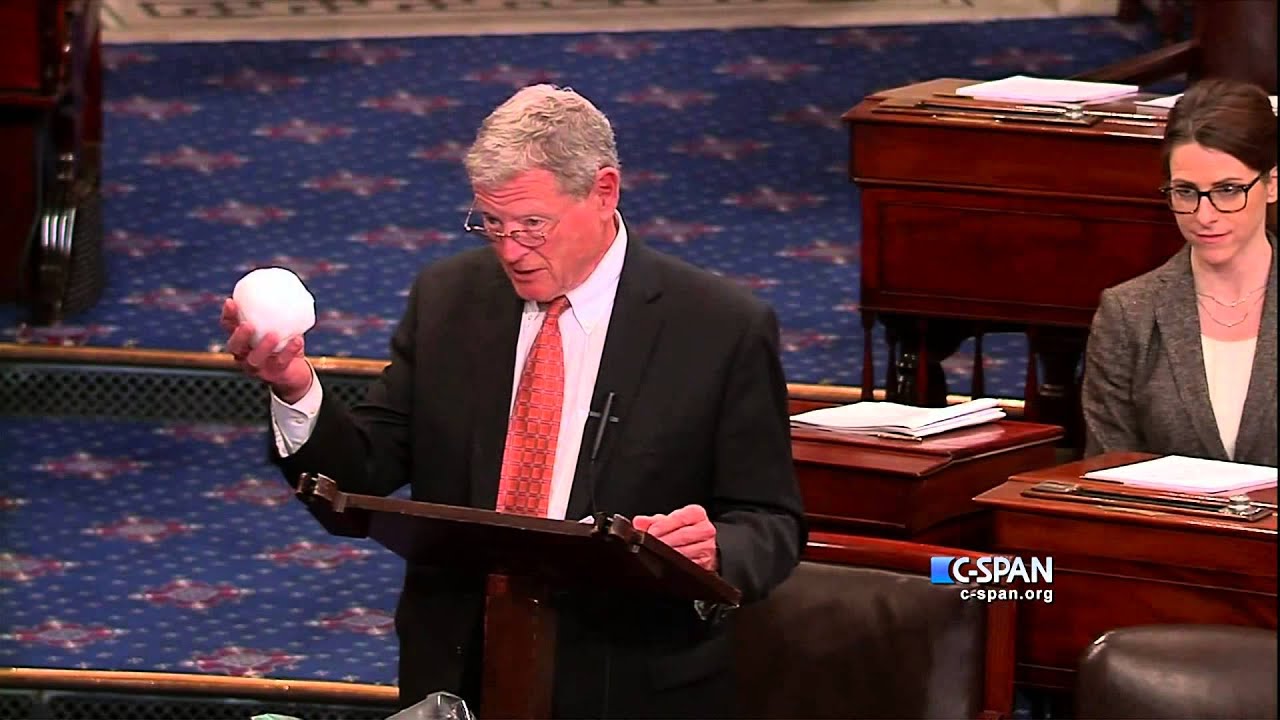 on the Senate floor in an attempt to prove that climate change was a hoax.
Wheeler was confirmed as the EPA’s deputy secretaryin mid-April. He will become acting head of the agency on July 9, Trump tweeted.
Pruitt made no mention of the scandals riddling his tenure in his resignation letter, which was made public Thursday afternoon. Pruitt, who was a member of the White House’s evangelical Christian bible study group, said in his farewell that he believes Trump is president “today because of God’s providence,” and that he believes the same “providence brought me into your service.”
“My desire in service to you has always been to bless you as you make important decisions for the American people,” he wrote.
Pruitt may have been the worst EPA chief ever, some believe. “Scott Pruitt will go down in history as a disgrace to the office of EPA administrator,” said Ken Cook, the head of the Environmental Working Group, a consumer advocacy group. “He will forever be associated with extraordinary ethical corruption and the abuse of power for petty personal enrichments.”
==
==
https://www.democracynow.org/2018/7/6/as_scott_pruitt_resigns_former_epa
...we’re joined in Washington, D.C., by two former EPA officials who have left the agency under Pruitt. Mustafa Ali is the former head of the environmental justice program at the Environmental Protection Agency. And Chris Zarba is a career EPA employee, who retired in February after leading the agency’s Scientific Advisory Boards. Also joining us from Washington, D.C., is Kristin Mink, the mother and teacher in Washington, D.C., who confronted Pruitt earlier this week at a restaurant, calling on him to resign. Also with us, Emily Atkin, staff writer at The New Republic whose latest piece is headlined “Scott Pruitt Is Gone. His Assault on the Environment Continues.”
We welcome you all to Democracy Now! Let’s begin with Mustafa Ali. You were one of the first to quit the EPA when Scott Pruitt became its chief. Talk about your response. What do you think brought him down?
MUSTAFA ALI: Well, I think it was a number of things, Amy, that brought him down. Folks should definitely be focused on the policy and how the choices that were being made were placing our country and our citizens in much greater harm. So I think that that’s the first place that we should always start, because that actually affects public health and the environment. You know, the scandals that he was a part of also were just the extra added incentive for him to need to leave. I think that he actually didn’t understand what the job description was, which was to protect public health and the environment. So, if he couldn’t do that, he should have never accepted the position.
AMY GOODMAN: And what was the spark for you to leave, Mustafa Ali? And when was that? It was almost at the very beginning of his term.
MUSTAFA ALI: Yeah, I left on March the 8th of 2017. And, you know, I took a look at some of the decisions that were being proposed and actions that were being moved forward on. And I knew that the vulnerable communities that I had worked for—communities of color, low-income communities and indigenous populations—would sort of be placed in a much more dangerous situation by the things that they were proposing. So I knew that I could not be a part of that, and I decided to walk away.
AMY GOODMAN: Chris Zarba, you left in February. Talk about the reasons you left. You’re ex-director of the EPA’s Science Advisory Board.
CHRIS ZARBA: Actually, I was planning on retiring a year before I really retired. And I had identified a number of excellent candidates that I would recommend for people to take my position when I retired. After the election, those people who were interested in the position backed down. And I actually decided to stay an additional year, because I truly believed in the agency and the mission of the Science Advisory Board, and I thought if I stayed another year, I could be helpful in helping the organization get through a very difficult time.
AMY GOODMAN: And what was your reaction yesterday when President Trump tweeted that Scott Pruitt was out?
CHRIS ZARBA: Well, my immediate reaction was—I mean, I think there’s 12 or 14 individual investigations on his ethical behavior. And while I think they all should continue, they really are quite trivial compared to some of the other things that Scott Pruitt was pushing for. And that’s why I’m here. And at the top of that list is the bill that he has proposed that’s called transparency in regulatory science. And the implications are huge to the health of the American public. And it’s important that that message get out there and people be aware of what’s happening.
AMY GOODMAN: Talk about the EPA Science Advisory Board and what was happening to it, Chris Zarba.
CHRIS ZARBA: So, the Science Advisory Board—anything that EPA does that is based on science of consequence, it really requires—sometimes it’s by law, and sometimes you just have to do it—an independent science review. So the Science Advisory Board consists of—and the panels and the standing committees underneath it—200 to 300 nationally recognized scientists. They’re all cleared for ethics conflicts of interest. They come from industry, academia, state and local government. They conduct independent reviews, and they write reports that summarize the strengths and limitations of the science that the EPA is going to be using.
What happened in the past year, the rules of governing the Science Advisory Board changed quite substantially as a result of an October 31st directive from Scott Pruitt. And there were a variety of changes, but some of the key ones were that the term limit for SAB members went from six years to three. So each year we went from an 18 percent turnover rate to over a 36 percent turnover rate. The second thing was, is that any SAB member that had an active EPA grant needed to be terminated. So I had to pick up the phone and fire quite a few of these nationally recognized scientists. And at the same time, if these scientists had a grant from industry, there was no issue with that. It was only if you had an EPA grant. And the third and most concerning thing that we had to do is that in considering new members of the SAB, we couldn’t consider anyone that had an active EPA grant, which meant that a huge portion of some of the most qualified scientists in the nation could not even be considered for these positions. And when you put all those three things together, it certainly leads to the perception that the Science Advisory Board could be compromised, and it would make people question the reports that will be coming out in the coming months.
AMY GOODMAN: Can you tell us who Steven Milloy is, the architect of the tobacco industry’s defense of the dangers of cigarette smoke?
CHRIS ZARBA: Yeah. So, in the past several years, Congress has tried to pass a bill called the HONEST Act. And it was an act that would apply just to EPA, and it would limit the kind of data that we could use to set policy. It never passed. But it then was proposed by Scott Pruitt, and it’s called the transparency in—transparency in regulatory science. And what that does is it prevents EPA from using any data where all the information is not made publicly available.
So, much of the data EPA uses is human subject data, where people, let’s say, in a community were accidentally exposed to contaminated drinking water. They were—got sick, had problems with that. It was found out, unfortunately, and then scientists would come in and study what happened and what exposures people had and what the consequences were. Well, while that was a terrible—those things are terrible, they do provide a unique opportunity for scientists to get real data on what’s safe—what the safe level is or dangerous level is for different contaminants. In getting the public to agree to let the scientists use their data, they frequently sign confidentiality agreements, which means that we, the scientists, cannot share the person’s name or phone number or address, so that they have that anonymity. And basically, this act is proposing that if all of that data isn’t made publicly available, scientists and EPAcan’t use it to set regulations, which means that the vast majority of science that EPA has to set clean levels for different contaminants and classes of contaminants in the environment goes away, and all of those rules go away.
There was a recent study done by a group called the Environment Protection Network, and they calculated thatif this law had passed 20 years ago, approximately 50,000 Americans would have died each year in the past 20 years. So, if you add that up, it comes out to about a million Americans could have died prematurely as the result of that bill. So, when I said earlier that the ethical issues with Scott Pruitt are trivial compared to some of these bigger issues, this is what I’m referring to. A million Americans is important.
AMY GOODMAN: We’re talking with Chris Zarba, ex-director of the EPA’s Science Advisory Board—he left the EPA in February—and Mustafa Ali, one of the first to resign last year after EPA chief Scott Pruitt started. Well, yesterday, it was announced Scott Pruitt is out. When we come back, we’ll speak to the mother who confronted Scott Pruitt this week in a restaurant, demanding he resign.
...
==
see okla gas &e:
utilities, one fight epa, one comply, be backs fight but "Pruitt's "making us worse off in terms of health and the environment, and at higher cost," Cohan said. "That is my concern nationally. We weaken pollution standards without benefiting the economy."
Critics say the case illustrates Pruitt's cozy relationship with industry interests. The Oklahoma attorney general has accepted nearly $37,000 in campaign contributions from OG&E and its employees, according to the watchdog FollowTheMoney.org.
PSO and its employees contributed $1,600 to the attorney general's campaigns.
https://insideclimatenews.org/news/27062018/hfcs-global-warming-climate-pollution-lawsuit-trump-epa-regulations-kigali-amendment
Eleven states and the District of Columbia sued the Trump administration on Wednesday, demanding enforcement of regulations on super-polluting greenhouse gases in air conditioners and refrigerators.
A similar lawsuit was filed by environmentalists on Tuesday. Both challenge an attempt by Environmental Protection Agency Administrator Scott Pruitt to roll back federal regulations on the class of chemicals known as hydrofluorocarbons, or HFCs.
The HFC lawsuits are the latest in a string of legal challenges to the Trump administration's far-reaching agenda of rolling back environmental regulations, especially those relating to climate change. Instead of launching a new formal rulemaking procedure to rescind or replace the HFCs rule, Pruitt announced in Aprilthat the agency would no longer enforce the Obama-era rule, which a federal court had partially struck down in a case brought by two foreign HFCs manufacturers.
The court had struck down only part of the HFCs rule, leaving some elements in place, yet Pruitt's move essentially eliminated the rule entirely. By using "guidance" to do that rather than going through the formal rulemaking process, Pruitt violated administrative law, the NRDC's Lissa Lynch wrote in a blog post explaining her group's lawsuit over the move.
"Throwing out these commonsense restrictions on this potent pollutant is contrary to the law and science, and it is disruptive to the manufacturers that have invested in alternatives," Massachusetts Attorney General Maura Healey said in announcing the states' lawsuit. "We are suing to protect the health of our residents and the planet."
An EPA spokesperson, asked about the lawsuits, said the agency does not comment on pending litigation.
Thousands of Times More Potent Than CO2
HFCs have become the world's fastest growing greenhouse gases as use of refrigeration and cooling spreads in a warming and more populous world. In the short term, they are thousands of times more potent as global warming gases than carbon dioxide, and while they don't last as long in the atmosphere, the short-lived climate pollutants have a rapid global impact.
The Obama administration finalized a rule in 2015 to phase out the chemicals. By then, U.S. manufacturers were already producing less damaging alternatives, and many companies supported the phase-down.
An analysis by Lawrence Berkeley National Laboratory estimated the rule would have provided about 4 percent of the cuts in greenhouse gas emissions the U.S. needed to meet its obligations under the Paris climate agreement.
What About the Kigali Amendment?
Another move to phase out HFCs has been developing at theinternational level, and the Trump administration at one point indicated it supported it.
In 2016, nations agreed to an update to the Montreal Protocol called the Kigali Amendment that requires all countries to slash production and consumption of HFCs by at least 80 percent over the next 30 years. It has the backing of a wide array of U.S. businesses, many of which manufacture safer alternatives to HFCs. But the Trump administration has yet to send it to the Senate for ratification.
Thirteen Republican senators, led by John Kennedy of Louisiana and Susan Collins of Maine, have urged the White House to move forward with the treaty, saying the amendment would help domestic companies by leveling the playing field worldwide and giving them long-term certainty on what chemicals to use going forward.
In the meantime, Pruitt's deregulatory moves, if they survive court challenges, would undercut U.S. progress toward meeting the Kigali goals.
Connections to an Ethics Scandal
HFCs have come up in the ethics allegations swirling around Pruitt, as well, the Washington Post reportedthis week. Emails obtained by the Sierra Club under the Freedom of Information Act show that J. Steven Hart, a lobbyist whose wife rented Pruitt a condo on Capitol Hill last year, had contacted Pruitt's chief of staff in 2017 seeking to discuss the HFCs rule and issues it might cause for companies. The agency has maintained that Hart did not lobby the agency on environmental issues. The matter is under investigation by both the EPA's inspector general and the House oversight committee.
The attorneys general who sued over HFCs represent New York, California, Delaware, Illinois, Minnesota, New Jersey, Oregon, Vermont, Washington and the District of Columbia, and they were joined by the Pennsylvania Department of Environmental Protection. Earlier this year, Californiaregulators adopted their own state prohibition on HFCs in new air-conditioning and refrigeration.
"The Trump EPA is seeking to gut critical climate protection rules through the backdoor—once again endangering New Yorkers while thumbing their nose at the law," New York Attorney General Barbara Underwood said.
PUBLISHED UNDER:
SHORT-LIVED CLIMATE POLLUTANTS
==
==
told api he was looking to hire sr ppl DN 6/26
vicky hart hubby hire?
==
==
https://www.washingtonpost.com/news/energy-environment/wp/2018/06/24/lobbyist-tied-to-pruitts-condo-rental-pushed-for-epa-to-hire-family-friend-emails-show
no linx
lobbyist tied to Pruitt’s condo rental pushed for EPA to hire family friend, emails show
By Juliet Eilperin and Brady Dennis
June 24
EPA Administrator Scott Pruitt testifies before a Senate subcommittee hearing on Capitol Hill on May 16. (Al Drago/Reuters)
The lobbyist whose wife rented Environmental Protection Agency Administrator Scott Pruitt a room in a Capitol Hill condo at a discounted rate lobbied Pruitt’s chief of staff to hire a family friend, according to recently released agency emails.
The exchange is among several previously undisclosed interactions that show how J. Steven Hart, who served as chairman of the law firm Williams & Jensen until earlier this year, sought to exert influence over decisions at the agency even as his spouse was renting Pruitt a $50-a-night room in an upscale condo blocks from the Capitol. The communications, released as part of a public records lawsuit filed by the Sierra Club, an environmental advocacy group, also appear to undermine initial arguments that Hart had not lobbied the EPA during Pruitt’s tenure.
The emails show both Hart and his wife, Vicki — who rented Pruitt the condo under an agreement that he pay only for the nights he stayed there — pushed for the EPA to hire Jimmy Guilliano, a recent college graduate.
“I seldom talk to Scott but Vicki does,” Hart wrote to Pruitt’s chief of staff Ryan Jackson on April 14, 2017. “She has talked to Scott about this kid who is important to us. He told Vicki to talk to you about how to handle this. I am not sure personally that this is a good idea for Jimmy unless he is working near you. Sticking him down in the bowels is death at EPA. His family is all Naval Academy by the way.”
https://www.ecowatch.com/pruitt-epa-hiring-oil-gas-2581508218.html
Pruitt reached out to the oil and gas industry for help in filling vacant positions in the agency, according to emails obtained by the Sierra Club and shared with Buzzfeed News.
"I understand that Administrator Pruitt met with [American Petroleum Institute] executives last week and he made a plea for candidates to fill some of the regional director positions within the agency," a manager at oil and gas giant ConocoPhillips wrote to former Pruitt aide Samantha Dravis last March, before asking where he could send a resume from an interested former employee.
While none of the three candidates the ConocoPhillips manager suggested for EPA were hired by the agency, former EPA officials expressed surprise at the emails. "It would be highly unusual to go to a specific industry to try to recruit," former George W. Bush EPA head Christine Todd Whitman told Buzzfeed. "We did not go out and recruit. There was more applying to us and our sorting through them."
As reported by Buzzfeed:
"Former EPA regional director Judith Enck was shocked to hear about Pruitt's recruiting. 'I think it's troubling the head of the EPA is asking the fossil fuel industry for staff recommendations for chief positions,' Enck told BuzzFeed News.
Michael Brune, Sierra Club's executive director, was also dismayed. 'This is Scott Pruitt trying to outsource the job to protect our air and water to the exact people responsible for polluting them,' Brune said in a statement emailed to BuzzFeed News."
===
https://www.ecowatch.com/pruitt-epa-water-regulations-2582110942.html
:{
}:
no lnx
:{
ruitt Proposes Weakening EPA's Power Over Water Polluters
Environmental Protection Agency (EPA) head Scott Pruitt on Wednesday proposed another way to weaken U.S. environmental regulations protecting the nation's waterways from pollution.
In a memo dated June 26 but released June 27, Pruitt asked the EPA's Office of Water and Regional Administrators to draft a proposal that would restrict the agency's ability to revoke permits issued by the U.S. Army Corps of Engineers (USACE) allowing projects to dispose of dredged or fill material in rivers, streams and other waterways, The Hill reported.
"Today, I am directing the Office of Water to take another step toward returning the agency to its core mission and providing regulatory certainty," Pruitt wrote in the full text of the memo.
If the new proposal becomes policy, it would be the biggest change to how the EPA handles the dredging and filling of streams and waterways under the Clean Water Act in 40 years, according to The Hill.
Specifically, the proposal would block the EPA from preemptively blocking a permit to discharge materials in waterways before the USACE has issued one or revoking a permit issued by the USACE after the fact. It would also require that regional administrators get approval from EPA headquarters before vetoing a permit and that they listen to comments from the public before doing so.
Once a formal draft is ready, the public will have a chance to comment on Pruitt's proposed change, and opponents can attempt to block it in court, according to The Hill.
Former EPA staffer of the nonprofit Public Employees for Environmental Responsibility Kyla Bennett told The Associated Press that the move would rob the EPA of one of its few means of protecting waterways from mining and other industry.
Instead of protecting waterways, Pruitt's policy change would help those "he's always concerned with: oil and gas and mining," Bennett said. "His buddies who make money."
Indeed, Pruitt justified the change as simplifying the permit process for businesses.
"This long-overdue update to the regulations has the promise of increasing certainty for landowners, investors, businesses and entrepreneurs to make investment decisions while preserving the EPA's authority to restrict discharges of dredge or fill material that will have an unacceptable adverse effect on water supplies, recreation, fisheries and wildlife," Pruitt wrote.
In practice, the EPA has rarely vetoed permits either retroactively or preemptively, though Republicans and industry have argued against their ability to do so. That ability was affirmed in a 2014 decision by the U.S. Court of Appeals for the District of Columbia Circuit.
Pruitt's memo cited a case in which the EPA suggested it would use its veto power, under Obama, to preemptively block a permit for the pending Pebble Mine in Alaska after concerns from conservationists and Native American groups that it would harm salmon fisheries and wetlands, according to The Associated Press.
Pruitt started a process to reverse that preemptive decision, but in a surprise move, kept it in place following public outcry.
zik perry
Pruitt, Zinke and Perry Target Clean Air and Water Rules to Curb 'Burdens' on Energy Sector :{http://:(style="position:absolute !important;overflow:hidden !important;width:1px !important;height:1px !important;padding:0px !important;border:0px !important;clip:rect(1px, 1px, 1px, 1px) !important"):}:ow.ly/RLi230g9rcL:{ :(style="position:absolute !important;overflow:hidden !important;width:1px !important;height:1px !important;padding:0px !important;border:0px !important;clip:rect(1px, 1px, 1px, 1px) !important"):}: :{@:(style="text-decoration-line:none;outline:0px"):}::{OpenSecretsDC:(style="text-decoration-line:none;outline:0px"):}:
oct 17
https://www.ecowatch.com/epa-energy-sector-2501855523.html
}:
:{
}:
===
==
gop and wh wants him gone, embarass,inhofe! baby jail shift attn?
==
CNN
Pruitt reimbursed himself $65,000 from Oklahoma attorney general campaign
Gregory Wallace ProfileSara Ganim-Profile-Image
By Gregory Wallace and Sara Ganim, CNN
Updated 7:56 AM ET, Thu May 10, 2018
Pruitt target of at least 11 federal probes
Pruitt target of at least 11 federal probes 02:40
(CNN)A CNN analysis has found that embattled Environmental Protection Agency Administrator Scott Pruitt paid himself nearly $65,000 in reimbursements from his two campaigns for Oklahoma attorney general, a move at least one election watchdog has sharply criticized as being recorded so vaguely that there was no way to tell if such payments were lawful.
The reimbursement method, which Pruitt used in his 2010 and 2014 campaigns, effectively scuttled two key pillars of campaign finance: transparency about how campaign funds are spent and ensuring campaign funds are not used for personal purchases, according to a former top elections attorney and a CNN review of the documents.
Some of the reporting may also violate Oklahoma campaign finance rules, according to research done by the Campaign Legal Center, a nonprofit and nonpartisan group.
At EPA, Pruitt is under scrutiny for questionable spending and ethical decisions that have landed him in hot water with investigators and on Capitol Hill. Ethics watchdogs, federal auditors and congressional committees are conducting nearly a dozen inquiries into Pruitt's actions at the agency.
During his attorney general bids, records show Pruitt made purchases and then received reimbursement from his campaign -- sometimes thousands of dollars apiece -- rather than having the campaign pay directly for expenses like renting a vehicle or purchasing a meal. When purchases are made directly, the campaign filings would show more details about who received the payments.
Instead, dozens of entries on Pruitt's 2010 and 2014 campaign finance filings show payments to him but don't have the same level of detail, making it difficult to tell if the purchases were legitimate.
The reimbursements are vaguely stated as being for meals, travel, office supplies, phone service, internet access and office decorations, and in some cases do not list the the vendors.
A spokesman for Pruitt, Jahan Wilcox, described the payments to CNN as "standard reimbursements."
Top EPA public affairs official departs
Top EPA public affairs official departs
"This is useless reporting," said Larry Noble, the former general counsel at the Federal Election Commission. He is now at the Campaign Legal Center and is a CNN contributor. "There's no way of telling if this is a personal expense. ... You couldn't do this on the federal (level) -- it's illegal."
Noble said Oklahoma rules require campaigns to "show the ultimate vendor and an adequate description so you know what the item was for." Because some of the payments to Pruitt do not do that, "It was not at all clear that these were all lawful," Noble said.
Noble noted that the campaigns, however, still made direct payments of more than $1.6 million.
"So he's not running the campaign through his credit card," Noble said.
All of the payments were made when Pruitt was a candidate for attorney general or after he had been first elected to the office in 2010. The records do not show any payments since Pruitt became administrator of the EPA last year.
As EPA chief, Pruitt has faced allegations he took advantage of increased security and made travel arrangements for his own benefit -- demanding to fly Delta in order to get frequent-flyer points and staying at posh hotels more expensive than government limits for reimbursement (which also placed an undue burden on his staff who have to pay out of pocket). He's also been accused of excessive spending on his office, like an ornate restored desk and a soundproof booth. In some cases, he blamed the expenditures on his staff.
The reimbursements to Pruitt when he was AG totaled $29,204.87 from the 2010 campaign account and $35,665.73 from his 2014 re-election account, according to the filings.
Dems say Pruitt aide asked EPA to consider opening office in Pruitt's hometown
The filings show Pruitt was frequently reimbursed for dining expenses at The Beacon Club, which was described by a local newspaper as "Oklahoma City's oldest private downtown dining" establishment when it closed last year. "The Beacon Club was where deals got done," The Oklahoman newspaper reported.
Some of Pruitt's reimbursements were for "officeholder expenses" -- meaning items needed for his role as attorney general -- after he was elected in 2010 and re-elected in 2014.
More than $5,000 is for items that appear to be office supplies and decorations. Around $3,600 is described as "Artwork/Decorations" from retailers like Pier 1 Imports, an Oklahoma florist and a local picture framing shop. Records also show Pruitt purchased a $1,400 Apple computer.
Because of the limited information and lack of transparency, it's impossible to determine whether the purchases were appropriate and for official purposes, Noble said.
"Do we know how the campaign spent its money? No," Noble said. "How do you enforce a personal use prohibition unless you know how the money is being used? ... This is not any way you want to have a campaign finance log."
The office purchases were made a mere 10 days after the Bank of America skyscraper in downtown Tulsa agreed to lease office space to the attorney general's office, headed by Pruitt. The move expanded the Tulsa AG's offices and placed them in the same building as Pruitt's campaign offices, raising the rent from about $3,000 per month to $12,000 per month.
The office of current Attorney General Mike Hunter told CNN that around the same time, the AG's office was required to expand and hire more staff.
Pruitt backtracks on explanation of privacy booth
Pruitt backtracks on explanation of privacy booth
One Republican source said Pruitt would sometimes leave the AG's office to work from the campaign office in the same building.
His move to Tulsa was seen publicly as a convenience, since he lived in Tulsa and not Oklahoma City, where the AG is headquartered.
Wilcox, the Pruitt spokesman, did not address detailed questions from CNN about the expenditures and decision to relocate his government offices to the same building as his campaign office.
This week, Democratic lawmakers requested more information about a similar request Pruitt made of the EPA. A letter from three members of the House alleged that Pruitt, through his chief of staff, asked the agency to find a secure facility in Tulsa, where Pruitt lives when not in Washington, where he could work and make phone calls. The EPA says that didn't end up happening
==
http://oklahomawatch.org/2015/11/30/pacs-tied-to-pruitt-reach-out-nationally-for-donors/
In an apparent move to bolster his future election prospects, campaign workers for Oklahoma Attorney General Scott Pruitt have formed two PACs to raise money nationally for other politicians seeking election to federal offices in 2016.
The political action committees were registered in February with the Federal Election Commission and are housed in Pruitt’s state campaign headquarters in downtown Tulsa. The groups raised nearly $228,000 combined from March through June, primarily from corporate executives, corporations and PACs representing companies, FEC records show. The two groups have since raised additional funds, which are due to be reported to the FEC in January.
One of the groups, Oklahoma Strong Leadership PAC, is classified as a multi-candidate political action committee, which means it can accept limited contributions and donate to multiple candidates.
The other group, Liberty 2.0, is a ‘Super PAC,’ meaning it can raise unlimited contributions and spend money on advertising that supports or opposes candidates, although it cannot coordinate with or contribute directly to a candidate’s campaign.
Pruitt, a Republican, ran unopposed last year and cannot run for re-election in 2018. He is considered to be a possible candidate for governor or another office.
Elected officials seeking higher office will often establish multi-candidate PACs to help fundraise for other political candidates, said Lawrence Noble, general counsel for the Campaign Legal Center in Washington, D.C. That helps raise their national profile and create a larger network of fundraisers for themselves in the future.
“I have heard of (state) elected officials with federal ambitions trying to set up PACs to gain political credits,” Noble said. “I guess one of the questions is, does he (the politician) have ambitions for the future?”
Pruitt’s name does not appear on any of the documents establishing either PAC. However, not only are the PACs located in his campaign office, but the primary consultant and fundraiser for his state campaign, Tamara Cornell, is the main consultant, incorporator, record-keeper, vice-treasurer and a board member for both Oklahoma Strong and Liberty 2.0.
Oklahoma Ethics Commission records show Cornell has not been employed by any other state campaign except Pruitt’s. Cornell declined comment on the two PACs.
Other documents confirm Pruitt’s ties to the Oklahoma Strong PAC. In disclosing donations to the PAC, a lobbying group and a corporate PAC both listed Pruitt as the “candidate” being supported by Oklahoma Strong.
Pruitt declined requests for an interview. However, Millan Hupp, who is on the governing boards of Liberty 2.0 and Oklahoma Strong Leadership and is listed as a paid consultant for both groups, issued a statement authorized by Pruitt.
Hupp said that Pruitt serves as “honorary chair” of Oklahoma Strong but does not have a leadership role in Liberty 2.0.
“Liberty 2.0 is an independent expenditure committee formed by individuals who share AG Pruitt’s priorities,” the statement reads.
Hupp did not address questions about whether the groups were formed at the behest of Pruitt or he had a fundraising role in them. Under her name on the statement, Hupp lists her title as “Team Pruitt,” a phrase used by Pruitt’s campaign workers.
Noble said federal election laws probably allow a sitting attorney general to form a federal multi-candidate PAC or a Super PAC to assist other candidates, but it is rare for any sitting politician to set up a Super PAC.
“They won’t set up Super PACs generally, because they could be considered coordinating with them and anything they (Super PACS) do to support them (the politician) would be an illegal contribution,” Noble said. “I haven’t heard of anything like that directly.”
Super PACs are not allowed to coordinate with candidates who benefit from their activities, said Viveca Novak, editorial director at the Center for Responsive Politics, which promotes transparency in government.
When asked whether she had seen a state attorney general form such groups, Novak said she had not.
“I would say that’s pretty unusual,” Novak said.
Sources of Funding
From March to June, Oklahoma Strong Leadership raised $182,198.
Contributors included energy companies and executives, loan company executives, real estate developers, car dealership owners, attorneys and PACs representing drug company Pfizer, Walmart and Fox media company.
A report on political donations made public by the Pfizer PAC refers to Oklahoma Strong Leadership as being directly affiliated with Pruitt.
A Foreign Agents Registration Act statement filed with the U.S. Department of Justice by Dickstein ShapiroLLP, a law and lobbying firm that donated $1,000 to Oklahoma Strong in March, lists Pruitt as the “candidate” represented by the PAC.
Between March and June, Oklahoma Strong received $26,000 in donations from coal and power companies. The largest portion came from Alliance Coal in Tulsa, the company’s executives and their family members.
The Liberty 2.0 has raised $45,500 from six donors since March. The three largest contributors were Louisiana-based Woodvine Group LLC, which owns chemical and industrial equipment firms and made a $25,000 donation; American Energy Partners, which is headed by former Chesapeake Energy Corp. CEO Aubrey McClendon and made a $10,000 donation, and Ada-based Legal Shield, formerly known as Prepaid Legal Services.
Noble, of the Campaign Legal Center, said the appearance of conflicts of interest with sitting politicians is a concern when corporations and other interests donate to PACs or campaigns.
“If it is interests who want something from him (the politician), then it does raise appearance issues,” he said.
As attorney general, Pruitt has taken various actions and been given expanded authority in areas related to interests that have donated to the PACs.
In energy, Pruitt has filed several lawsuits against the Environmental Protection Agency, including one in July asking the court to stop federal plans to reduce carbon emissions from coal-fired power plants. The suit was later dismissed.
In December, the New York Times reported that Pruitt had sent a letter to the EPA, drafted by Devon Energy lawyers, stating that federal regulators were overestimating the air pollution caused by energy companies drilling new wells in Oklahoma.
In July, Gov. Mary Fallin, acting on a recommendation from Pruitt, issued an executive order requiring many state regulatory boards to submit licensing and prohibition actions to the Attorney General for review before taking action. The order was aimed at keeping the boards exempt from antitrust lawsuits.
Since then, the Oklahoma Board of Nursing, the Real Estate Appraiser Board, the Motor Vehicle Commission and the Board of Medical Licensure and Supervision and other boards have submitted dozens of actions to Pruitt’s office for approval, state records show.
Donations to Others
Both Oklahoma Strong and Liberty 2.0 have, as yet, made few donations this early in the election cycle, with the majority of their expenditures going toward business expenses and fundraising, FEC records show.
Liberty 2.0, which can’t donate to candidates’ campaigns, has not yet purchased advertising, according to the records.
Oklahoma Strong has made two donations to politicians. In March, the PAC made a $1,000 donation to West Virginia Attorney General Patrick Morrisey. On Sept. 30, the day after presidential candidate Jeb Bush visited Oklahoma for a fundraiser and tapped Pruitt to head his campaign’s Restoring Federalism Task Force, Bush’s campaign received a $2,700 donation from Oklahoma Strong.
Oklahoma Strong also paid registration fees at the Conference of Western Attorneys General and the Southern Republican Leadership Conference, as well as a $500 donation to the Republican Party of Tulsa County, records show.
The finances of the two organizations are separate from those of Pruitt’s own Attorney General campaign fund.
Since its formation, Pruitt’s 2014 Attorney General campaign committee has raised $712,489 and spent $573,432, despite Pruitt not having an opponent in the primary or general election, The Oklahomanreported in November.
By contrast, Republican State Treasurer Ken Miller, who also ran unopposed in 2014 and is expected to run for governor in 2018, raised $200,000 and spent only $2,679 from his re-election fund.
Oklahoma Ethics Commission records show that contributions going to Pruitt’s state campaign began to drop off early this year, around the time the two new groups were formed.
In explaining the fundraising, Hupp said in her statement that “smart campaigns take nothing for granted.” She added Pruitt is often encouraged to run for office in the future.
“While General Pruitt has made no decisions about seeking office in the future, he is maintaining core campaign functions, including fundraising and organizational activities, to ensure that he is in a position to aggressively pursue such an opportunity.”
Donors to Oklahoma Strong Leadership PAC
From March through June 2015, Oklahoma Strong Leadership PAC received $182,198 in contributions, including the 21 shown below at the maximum amount of $5,000.
Show 10222550100 entries
Search:
| Contributor | State | Date | Amount |
|---|---|---|---|
| Joseph W. Craft III (Alliance Resources) | OK | 3/2/15 | $5,000 |
| Josephine Freede (Homemaker) | OK | 3/2/15 | $5,000 |
| David M. Green (Hobby Lobby) | OK | 3/2/15 | $5,000 |
| Larry Nichols (Devon Energy) | OK | 3/2/15 | $5,000 |
| Lew Ward (Ward Petroleum) | OK | 3/4/2015 - 4/3/2015 | $5,000 |
| Mike Case (Case Properties) | OK | 3/13/15 | $5,000 |
| Bill Bartman (Center for Consumer Recovery) | OK | 3/20/15 | $5,000 |
| John A. Henry III (JAH Realty) | TX | 3/20/15 | $5,000 |
| William Stuart Price (Kanbar Properties) | OK | 4/17/15 | $5,000 |
| Lauren Craft (homemaker) | CO | 4/22/15 | $5,000 |
| Ryan Craft (grouptweet.com) | CO | 4/22/15 | $5,000 |
| Joseph W. Craft IV (Alliance Resources) | OK | 4/24/15 | $5,000 |
| Mollie Craft (homemaker) | OK | 4/24/15 | $5,000 |
| Howard Rich (real estate, CATO Institute) | PA | 4/24/15 | $5,000 |
| Gary Smith (Dealers Auto Auction) | OK | 4/24/15 | $5,000 |
| Mario Max Fairchild (Automax Auto Group) | OK | 5/1/15 | $5,000 |
| James Norton (Jim Norton Toyota) | OK | 5/1/15 | $5,000 |
| Maurice Kanbar (Kanbar Properties) | OK | 6/12/15 | $5,000 |
| James Glover (Jim Glover Chevrolet) | OK | 6/19/15 | $5,000 |
| Alliance Coal PAC | OK | 3/4/15 | $5,000 |
| Pinnacle West PAC | AZ | 3/13/15 | $5,000 |
Showing 1 to 21 of 21 entries
PreviousNext
Donors to Liberty 2.0 PAC
Between March and June 2015, six companies donated to Liberty 2.0, a "Super Pac" that can spend money on advertising in campaigns but can't donate directly to candidates.
Show 102550100 entries
Search:
| Contributor | State | Date | Amount |
|---|---|---|---|
| Woodvine Group LLC | LA | 6/26/15 | $25,000 |
| American Energy Partners LP | OK | 6/26/15 | $10,000 |
| Legal Shield | OK | 5/19/15 | $5,000 |
| Saxum Strategic Communications LLC | OK | 5/19/15 | $2,500 |
| Ebay Inc. | CA | 3/20/15 | $1,000 |
| Century Strategies LLC (Ralph Reed) | GA | 5/19/15 | $1,000 |
| Grand Health & Raquet Club | OK | 5/29/15 | $1,000 |
==
https://www.desmogblog.com/2018/04/18/finances-great-american-fracking-bubble
2008, Aubrey McClendon was the highest paid Fortune 500 CEO in America, a title he earned taking home $112 million for running Chesapeake Energy. Later dubbed “The Shale King,” he was at the forefront of the oil and gas industry's next boom, made possible by advances in fracking, which broke open fossil fuels from shale formations around the U.S.
What was McClendon’s secret? Instead of running a company that aimed to sell oil and gas, he was essentially flipping real estate: acquiring leases to drill on land and then reselling them for five to 10 times more, something McClendon explained was a lot more profitable than “trying to produce gas.” But his story may serve as a cautionary tale for an industry that keeps making big promises on borrowed dimes — while its investors begin losing patience, a trend DeSmog will be investigating in an in-depth series over the coming weeks.
From 2008 to 2009, Chesapeake Energy’s stock swung from $64 a share under McClendon to around $17. Today, it's worth just $3 a share — the same price it was in 2000. A visionary when it came to fracking, McClendon perfected the formula of borrowing money to drive the revolution that reshaped American energy markets.
An Industry Built on Debt
Roughly a decade after McClendon's rise, the Wall Street Journal reported that “energy companies [since 2007] have spent $280 billion more than they generated from operations on shale investments, according to advisory firm Evercore ISI.”
As a whole, the American fracking experiment has been a financial disasterfor many of its investors, who have been plagued by the industry's heavy borrowing, low returns, and bankruptcies, and the path to becoming profitable is lined with significant potential hurdles. Up to this point, the industry has been drilling the “sweet spots”in the country's major shale formations, reaching the easiest and most valuable oil first.
But at the same time energy companies are borrowing more money to drill more wells, the sweet spots are drying up, creating a Catch-22 as more drilling drives more debt.
“You have to keep drilling,” David Hughes, a geoscientist and fellow specializing in shale gas and oil production at the Post Carbon Institute, told DeSmog. But he also noted that with most of the sweet spots already drilled, producers are forced to move to less productive areas.
The result? “Productivity goes down and the costs remain the same,” he explained.
While Hughes understands the industry's rationale for continuing to drill new wells at a loss, he doubts the sustainability of the practice.
“I don't think in the long-term they can drill their way out of this,” Hughes told DeSmog.
While politicians and the mainstream media tout an American energy “revolution,” it is becoming clear that — like the housing bubble just a few years earlier — the American oil and gas boom spurred by fracking innovations may be one of the largest money-losing endeavors in the nation's history. And it caught up with McClendon.
In 2016, the shale king was indicted for rigging bids at drilling lease auctions. He died the very next day in a single car crash, leading to speculation McClendon committed suicide, a rumor impossible to confirm. However, the police chief on the scene noted: “There was plenty of opportunity for him to correct and get back on the roadway and that didn't occur.”
The same could be said of the current shale industry. There is plenty of opportunity for these energy companies to correct their path — for example, by linking CEO pay to company profits rather than oil production volumes — but instead they are plowing full-speed aheadwith a business model that seems poised for a crash.
But Hope Springs Eternal
==
foia
breaking: Sierra Club Demands Pruitt’s Emails After Only 1 Disclosed by EPA
As part of ongoing litigation, the Sierra Club has demanded that the U.S. Environmental Protection Agency (EPA) search Scott Pruitt's personal email accounts for work-related emails, or certify clearly and definitively that the administrator has never used personal email for work purposes. The demand comes on the heels of a successfully litigated Freedom of Information Act (FOIA) request for all of EPA Administrator Scott Pruitt's email and other communications with all persons and parties outside the executive branch. These facts were first reported in Politico early this morning.
EPA is under a court order to produce all of Pruitt's external work communications. EPA certified to the Sierra Club that it has done so with regard to emails, as of May 30th, 2018. Pruitt has at least four known EPA email accounts. However, as of today, the Sierra Club has received only a single email sent by EPA Administrator Scott Pruitt to an external party over the 10-month period covered by the FOIA response.
Despite the disclosure of more than 40,000 pages of documents—including tens of thousands of emails and other communications from top aides to Scott Pruitt, including his Chief of Staff Ryan Jackson, former Director of the Office of Policy Samantha Dravis, and former schedulers Millan and Sydney Hupp, among others—the EPA provided just a single Pruitt email.
"The idea that Scott Pruitt sent a single work-related external email during nearly a year leading EPA is absurd on its face. That's why the Sierra Club is demanding that EPA search Pruitt's personal email accounts for work-related communications, or certify definitively that he does not use personal email or secretive messaging applications like WhatsApp and Signal to circumvent records retention laws," said Justine Thompson Cowan, a veteran litigator who has led the Sierra Club's litigation pro bono in this FOIA case, alongside Sierra Club in-house counsel.
The Sierra Club put its demands in a formal communication to EPA counsel.
"With Pruitt's well-established record of ethical violations, corrupt behavior, and tight relationships with corporate polluters, it is beyond suspicious that he claims his external communications over the course of ten months are limited to a single solitary email. Are we really supposed to believe that Pruitt does not use email himself? The public deserves answers now about whether Pruitt is evading records retention laws, or if there is inappropriate political interference at some stage of the FOIA production process. It is clear that Scott Pruitt's secrecy, corruption, and total contempt for the public cannot withstand the light of day," said Sierra Club Executive Director Michael Brune.
"It's not unprecedented for high-ranking government officials to shun email, but Pruitt has in the past used his private email for official business when he served as Oklahoma's attorney general.
…
Pruitt has used his private email to conduct government work in the past, the Oklahoma attorney general's office has confirmed. The Oklahoma Bar Association is investigating an ethics complaint alleging that he misled the U.S. Senate when he wrote in response to lawmakers' written confirmation questions that he had not used his personal email for state business during his seven years as the state's AG."
More details and questions are raised here.
According to email analytics firm The Radicati Group, the average American email user sends about 30 emails per day.
==
https://www.ecowatch.com/coal-ash-oklahoma-pruitt-2579396022.html
Pruitt Grants Oklahoma Leniency to Dispose of Toxic Coal Ash Without Federal Oversight
On Monday, Oklahoma became the first state to be granted a permit from the Environmental Protection Agency (EPA) to dispose of its own coal ash, The Associated Press reported.
The move displaces the federal government as the body responsible for coal ash disposal in EPA head Scott Pruitt's home state. Coal ash is the residue left over from burning coal for power that often contaminates groundwater. It is a change that industry has lobbied for and environmental groups have opposed.
States have demonstrated that "they don't care about the health and safety of communities near coal ash dumps," Earthjustice attorney Lisa Evans told The Associated Press.
About 100 million tons of coal ash is produced by U.S. plants every year, often left in disposal ponds that leak into groundwater, contaminating it with pollutants like arsenic and radium. Tests ordered by the EPA this spring of groundwater around plants in various states found elevated pollution levels, according to The Associated Press.
Despite this, "industry has asked for leniency, less stringency. That's the direction they're going," Evans said.
According to documents obtained under the Freedom of Information Act, switching coal ash oversight to states was part of an "action plan" proposed by coal industry executive Robert Murray this spring to Pruitt and other officials in the Trump administration.
Pruitt defended the decision, saying in a statement that the move empowered "those who are best positioned to oversee coal ash management—the officials who have intimate knowledge of the facilities and the environment in their state."
Pruitt also moved to weaken Obama-era coal ash disposal regulations in March, but the rule change allowing states to control coal ash disposal was actually passed by Congress and signed by former President Barack Obama in 2016, according to NPR. The law said that state rules had to be "as protective as" federal guidelines.
"I am pleased that Oklahoma is the first state in the nation to receive approval of its Coal Combustion Residuals permit program. We actually incorporated the federal rule into our state permitting rules program over a year ago," Oklahoma Department of Environmental Quality (DEQ) Executive Director Scott Thompson said in an EPA press release about the decision.
But at a hearing in February, Oklahoma environmental groups said the DEQ was not prepared to adequately regulate coal ash.
"The DEQ rules are weaker than the EPA rules," Oklahoma Grand Riverkeeper and activist Earl Hatley told NPR in February. "This is just a boon for industry to do what they want."
Waterkeeper Alliance senior attorney Kelly Foster further expressed concerns that the DEQ plan did not provide enough information on how companies would be made to comply with regulations and how the DEQ would take on new responsibilities with existing resources.
Georgia and Texas are following Oklahoma in taking steps to control coal ash disposal, The Associated Press reported.
...
==
https://www.alternet.org/scott-pruitt-burying-his-radical-pro-polluter-agenda-under-oceans-boring-legalese
Despite being weighed down by increasingly ridiculous corruption scandals, EPA head Scott Pruitt has never slowed down in his efforts to cripple the actual work of the agency Donald Trump handed over to him to destroy. Last week, as most of the media focused on admittedly hilarious scandals regarding Pruitt using government resources to get nice mattresses, fancy lotions and gourmet meals, Pruitt quietly moved to start redefining how the EPA handles the cost-benefit calculations the agency uses to determine what kinds of regulations it imposes on polluting industries.
"Many have complained that the previous administration inflated the benefits and underestimated the costs of its regulations through questionable cost-benefit analysis," Pruitt said in a press release. This failed to note that Pruitt himself was one of the main complainers, during his repeated efforts to sue the EPA while serving as Oklahoma's attorney general.
The agency announced an advance notice of proposed rule-making on Thursday, which is the first step towards rewriting standards the agency has used to determine the value of new regulations for years. The advance notice is written in dry legalese, the sort of thing that doesn't play as well as a story about moisturizer-hunting. But hidden inside all that dense language is the prospect of seriously gutting the EPA's ability to do the work necessary to protect public health
"It’s clearly a precursor to scaling back the way EPA quantifies and monetizes the benefits of its rules and safeguards," John Walke, director of federal clean air, climate, and energy programs at the Natural Resources Defense Council, told Salon.
"How EPA weighs and calculates the costs and benefits of any particular action has significant regulatory implications," explained Melanie Benesh, the legislative attorney for Environmental Working Group. “To the extent that you’re changing that the way the agency has to do that, and if you’re increasing the burden on the agency to justify actions they’re taking to protect the environment and public health, that’s potentially very significant.”
While the concept of "cost-benefit" can be complex in its details, the general concept is simple enough: EPA weighs the costs of a regulation to the industry versus the health and environmental protective benefits to the public. The latter is generally measured in lives saved and reductions in negative effects from pollution, including emergency-room visits, missed work days and other such costs.
As such, the calculus really should be understood more as a question of industry costs vs. public costs,and Pruitt's evident interest in moving as much cost as possible from industry to the shoulders of the taxpayers.
"Those costs are going to occur one way or another," Walke said. "Either industry is going to get away with not cleaning up its own pollution and forcing those costs upon the public in the most hazardous and dangerous ways possible to human health, or the costs are going to be internalized by the company.”
As Oklahoma attorney general, Pruitt sued to block the**mercury**rule, arguing, in part, that these kinds of ancillary benefits should not count towards the benefit bottom line. He lost that challenge, as he typically did with these actions against the Obama-era EPA. Now he's trying to get his bogus legal challenge turned into an EPA regulation of its own.Currently, the EPA's definition of "benefits" includes not just the most direct benefits of a regulation, but also what are considered indirect or ancillary benefits. For instance, one recent regulation, which the advance notice directly cites, directly addressed measures to reduce mercury emissions from power plants. Since the devices that plants must install to reduce mercury emissions also reduce other forms of pollution that cause health problems and deaths, the EPA included those reductions in the benefits column as well when calculating the worth of the regulation.
Walke suspects Pruitt might have even grander plans for reducing what the EPA is allowed to consider a public health benefit, by making it difficult for EPA officials to include. what's called the "social cost of carbon" — i.e., the damage done by global warming to human health and wellbeing.
“Carbon pollution is a different sort of beast," Walke explained. "It’s not like particulate matter is causing direct lung harm when CO2 is emitted.”
Instead, EPA officials currently measure the benefits of carbon reduction through indirect methods. For instance, reducing carbon emissions by a certain amount is assumed to slow global warming, leading to fewer floods, droughts and other catastrophic weather events related to climate change. But industry apologists and conservative pundits have insisted that this sort of broad assessment of the damage of pollution is cheating and want the EPA to be stingier in what it considers a benefit, even if the so-called secondary effects of pollution and environmental degradation cause real damage to real people.
As Vivek Wadhwa and Mark Muro argued in the Washington Post in December 2016, "Far from being a prohibitive drag on economic growth, decarbonization, or making the way that we get energy less dependent on burning fossil fuels that release carbon emissions, has gone hand-in-hand with output growth in most of the United States, according to research by the Brookings Institution."What makes this entire situation even more distressing is that many experts believe the current cost-benefit analysis of the EPA, even under Obama, was already exaggerating the economic costs of regulation.
Other expert analyses show similar results. While there are certainly industry costs to environmental regulation, they are not merely offset by public health benefits. Its even true that regulation often leads to job creation and economic innovation that helps stimulate the economy.
By putting even more emphasis on direct industry costs and minimizing the agency's ability to look at the big picture, Benesh said, Pruitt is "taking an existing problem and making it worse."
"We hear a lot about the everyday things, like there’s a new scandal, but those will go away," she added. But these kinds of "fundamental shifts" in how the EPA does its work "could take years to undo, if they’re undone at all
==
https://www.alternet.org/scott-pruitts-corruption-bad-his-planetary-sabotage-worse
so corrupt that he spent $1,560 on 12 customized fountain pens? Or that he spent another $43,000 on a soundproof phone booth in violation of government spending laws?
Pruitt’s big spending on the taxpayer dime has earned him well-deserved scrutiny and outrage. But what’s really outrageous is what he’s doing with the EPA.
While Pruitt was getting headlines for having taxpayer-funded aides do his private business, his EPA just gutted an Obama-era law to protect Americans from toxic chemicals. For four decades, the Toxic Substances Control Act of 1976 did little to require that all new chemicals (or untested old ones) were properly vetted for safety before allowed onto the market. Even the chemical industry said it was flawed.
In 2016, the Republican-led Congress passed an update that would help keep Americans safer from toxic chemicals.
Under Pruitt, the new law won’t apply to any chemicals in the air, ground, or water. So what does it apply to? Only direct contact.
While spending over $1,500 on pens is a disgusting misuse of government resources, the ultimate harm it does to the American public pales in comparison to allowing toxic chemicals into consumer products and our environment.
Gutting protections against toxic chemicals is just one way in which Pruitt has assaulted the environment while in office. He’s also a climate denier and a good friend to the fossil fuel industry.
...
==
==
https://www.alternet.org/environment/3-ways-epa-chief-scott-pruitt-protects-polluters-not-people
Pruitt certainly calls into question his fitness to serve our country. Far more dangerous, though, is his utter fealty to polluters, which drive policies that present devastating threats to the air we breathe and the water we drink. The consequences of his disastrous decisions jeopardize the health and welfare of current and future generations.
The three examples below represent just a few of Pruitt's gifts to industrial polluters for which he should be removed from office immediately.
1. Eliminating Regulations on Coal Ash: water pollution from coal-fired power plants—and particularly their coal ash dumps—is the single largest source of toxic water pollution in the United States; coal plants dump more toxics into our waters than the other top nine polluting industries combined.
There are more than 1,400 coal ash dumps, containing millions of tons of toxic waste, at power plants throughout the United States. Roughly half of them have no liners and 70 percent are situated in low-income communities. Waterkeeper Alliance has investigated dozens of coal ash dumps all over the country and found toxic pollutants like chromium, cadmium, arsenic, mercury and lead discharging out of more than 90 percent of them into waterways used by citizens for drinking, swimming and fishing.
These toxins increase risks of multiple types of cancer, heart disease and organ failure.
In 2015, the EPA—for the first time—set standards for how power plants store and dispose of their coal ash. Despite the clear threat that coal ash presents to public health, Pruitt's EPA now wants to eliminate even these bare minimum standards. Pruitt claims that regulations are killing the coal industry. To the contrary, renewables and market forces are putting coal out of business—despite his attempts to keep the industry on life support.
Under the guise of providing flexibility to states, Pruitt wants to roll back rules that help protect our drinking water from coal ash. His proposed rollbacks project to save the coal industry between $31 million and $100 million in compliance costs. But what about the financial and emotional costs imposed on communities suffering from leaking coal ash dumps in their communities? For every day that Pruitt props up the coal industry, Americans suffer loss to their health and property.
Upon taking office, one of Pruitt’s first actions was to take aim at the definition of "Waters of the United States," which identifies the waterways that are protected from pollution under the Clean Water Act (CWA). Pruitt is looking to significantly narrow the definition presumably in order to enrich his polluter pals.
2. Narrowing the Definition of "Waters of the United States"
The CWA's definition of "waters of the United States" is essential for protecting human health; the well-being of communities; the success of local, state and national economies; and the functioning of our nation's vast, interconnected aquatic ecosystems; as well as the many threatened and endangered species that depend on those resources.
Opening up a creek or wetland to indiscriminate pollution can negatively affect a community's drinking water supply and property values. Pruitt's disdain for the CWA and the waters it protects reflects both a complete ignorance of how an ecosystem works and his role as a puppet to industry.
3. Adding a Groundwater Loophole
Picture a scenario where an industrial polluter releases pollutants from a pipe just short of a surface waterway. The pollutants do not discharge directly into the waterway, but rather seep into the ground, travel a short distance via groundwater, and then contaminate surface waters.The EPA currently is considering adding a gaping loophole to the CWA; the agency is accepting comments on whether the CWA should apply to pollutants discharged to groundwater which then directly travel a short distance to pollute surface waters.
Under changes being considered by the EPA, and contrary to long-standing agency and judicial interpretations, the CWA would not apply to these discharges, allowing the polluter to legally dump unlimited amounts of pollutants and stifling citizens’ ability to protect their communities’ waterways. This potential gift to polluters was not remotely contemplated by Congress when it passed the CWA.
These three examples—among many others proposed by the Trump/Pruitt EPA—demonstrate Pruitt's pattern of protecting polluters instead of people. Regardless of politics and all of his alleged ethical lapses, the EPA Administrator's biggest scandal is making decisions that favor the wallets of industry barons at the expense of Americans' health and welfare.
Fortunately, his ineptitude has led to hasty and sloppy rulemakings and rollbacks that we plan to defeat in court. Nevertheless, the Administration needs to remove Pruitt from office now.
inhofe rolls on pru
Chair of Senate Environment Panel to Call Scott Pruitt to Testify on Scandals
The Republican chairman of the Senate committee with oversight of the U.S. Environmental Protection Agency (EPA) plans to call the agency's embattled chief Scott Pruitt to testify, specifically in response to multiple scandals and investigations surrounding the administrator.
Through a spokesperson, Sen. John Barrasso, R-Wyo., informed Reuters of his decision to compel Pruitt to come before the Environment and Public Works Committee to answer questions about his alleged abuse of his office.
...
==
https://insideclimatenews.org/news/13062018/trump-epa-air-pollution-data-clean-water-regulations-public-health-environmental-laws-harvard-study
Using the U.S. Environmental Protection Agency's own numbers, two Harvard scientists have calculated that 80,000 more lives will be lost per decade if President Donald Trump's administration fulfills its plans to roll back clean air and water protections.
The researchers, terming their tally "an extremely conservative estimate," also estimated that the repeal of regulations will lead to respiratory problems for more than 1 million people. Their essay was published Tuesday in the authoritative Journal of the American Medical Association.
"We felt it was important to take a comprehensive view," said Francesca Dominici, a biostatistician and co-director of the Data Science Initiative at the Harvard T.H. Chan School of Public Health. "Some people, when looking at one specific repealing of a rule, might not think it's important. We wanted to put some numbers on the whole systematic repeal of rule after rule."
She and David Cutler, an economist at Harvard's Kennedy School of Government, drew their calculation from the health risk assessments that the EPA conducted during the Obama administration when determining the impact of rules it proposed. Last week, the Trump administration signaled it plans to overhaul the way that those cost-benefit studies are conducted. The agency is taking commentsfor the next 30 days on its plan, which has the potential to reduce the weight given to human health and climate benefits.
Dominici and Cutler decried creating greater risks to the public's health for the benefit of "a relatively few well-connected companies."
"The effects of the Trump administration's policies seem clear, even through the haze they will create," they wrote.
Pruitt's EPA Challenging the Assessments
The EPA dismissed the article because it was not peer-reviewed but appeared instead in the JAMA Forum, where researchers offer perspectives. "This is not a scientific article, it's a political article," the EPA said in response to InsideClimate News' request for comment.
But Dominici noted that she and Cutler pulled the numbers directly from the EPA risk assessments that had been developed for each of the rules they analyzed. "The EPA numbers themselves all rely on peer-reviewed science," Dominici said.
The EPA numbers, in fact, are being challenged and in some cases scaled back by the Trump administration as it seeks to revoke or replace Obama-era rules. But these moves face numerous legal challenges, and the agency will have to show that it has not acted arbitrarily or capriciously to pass muster in the courts.
It's hard to argue against the ample evidence that if air quality standards are relaxed, the health of those who breathe the air will suffer. The same goes for standards for water, pesticides, toxic waste and so on. Runaway climate change, too, would present a wide range of public health risks.
One Rollback, Majority of Respiratory Illnesses
The largest and most immediate health consequences are likely to come through erosion of air quality, Cutler and Domenici wrote. They included in their calculation the repeal of President Barack Obama's signature climate change initiative, the Clean Power Plan, as well as the rollback of vehicle fuel economy standards and Trump's tariffs on solar power components from abroad.
About 90 percent of the increase in respiratory ailments can be attributed to one deregulatory move—the effort to re-open a loopholethat allowed trucks that don't comply with pollution rules to remain on the road, the authors found.
Public health scientists have been raising increasing alarms as EPA Administrator Scott Pruitt has advanced Trump's deregulatory agenda. They have protestedPruitt's move to bar government-funded scientists from sitting on the agency's Science Advisory Board, and nearly 1,000 scientists signed a letter opposing Pruitt's plan to place restrictions on the EPA's use of science.
Pruitt's 'Secret Science' Plan Targets Health Data
In their JAMA essay, Dominici and Cutler singled out the move to curb agency use of science as one of the most potentially consequential, because Pruitt is targeting epidemiological studies of human subjects. Although Pruitt calls this a move for greater "transparency," Dominici said it would in fact bar EPA consideration of precisely the kinds of studies that formed the basis of the calculations that she and Cutler did.
"They are attacking the science because the science is what is putting the number of deaths where they are," she said. "It's a tactic to discredit the science, so that health impact analysis will not be able to be done any more."
The EPA, which received more than 150,000 public comments in 30 days on its proposal to restrict agency science, has extended the comment periodon that proposal through August. The agency also has set a July 17 hearing in Washington, D.C., on the plan.
PUBLISHED UNDER:
==
==
https://www.washingtonpost.com/national/health-science/epa-chief-scott-pruitt-tapped-aide-donors-to-help-wife-land-job-at-conservative-group/2018/06/13/f54c87fa-6db1-11e8-afd5-778aca903bbe_story.html?noredirect=on&utm_term=.a01ae836a6a3
Scott Pruitt last year had a top aide help contact Republican donors who might offer his wife a job, eventually securing her a position at a conservative political group that has backed him for years, according to multiple individuals familiar with the matter.
The job hunt included Pruitt’s approaching wealthy party supporters and conservative figures with ties to the Trump administration. The individuals said he enlisted Samantha Dravis, then serving as associate administrator for the EPA’s Office of Policy, to line up work for his wife.
And when one donor, Doug Deason, said he could not hire Marlyn Pruitt because of a conflict of interest, Pruitt continued to solicit his help in trying to find other possibilities.
A spokesman for the Judicial Crisis Network confirmed Tuesday that it employed the onetime school nurse “temporarily as an independent contractor,” but it did not disclose via email how long she worked there or what she was paid. The spokesman said the position came about after the group received her résumé from Leonard Leo, executive vice president of the Federalist Society. The two organizations have financial ties.
Leo is a prominent Pruitt backer and longtime friend who was involved in arrangements for the administrator’s visit to Italy last year. Taxpayers spent more than $100,000 on the trip, which included private tours of the Vatican and meals at some of Rome’s finest restaurants.
Marlyn Pruitt left the JCN earlier this year, the spokesman said, adding that the group was pleased with her work. But the search and hiring raises more ethics questions about Scott Pruitt’s use of EPA staff as well as his contacts with GOP contributors and outside allies for his personal benefit. Federal ethics rules prohibit public officials from using their posts for private gain or receiving free services or other gifts from their subordinates
...
https://theconversation.com/epa-staff-say-the-trump-administration-is-changing-their-mission-from-protecting-human-health-and-the-environment-to-protecting-industry-96256
reg capture
Environmental Protection Agency made news recently for excluding reporters from a “summit” meeting on chemical contamination in drinking water. Episodes like this are symptoms of a larger problem: an ongoing, broad-scale takeover of the agency by industries it regulates.
We are social scientists with interests in environmental health, environmental justice and inequality and democracy. We recently published a study, conducted under the auspices of the Environmental Data and Governance Initiative and based on interviews with 45 current and retired EPA employees, which concludes that EPA Administrator Scott Pruitt and the Trump administration have steered the agency to the verge of what scholars call “regulatory capture.”
By this we mean that they are aggressively reorganizing the EPA to promote interests of regulated industries, at the expense of its official mission to “protect human health and the environment.”
ew
https://www.ecowatch.com/scott-pruitt-scandall-foia-2577200099.html
Pruitt Ordered Staff to Delay FOIA Requests, Top House Dem Says
U.S. Environmental Protection Agency (EPA) administrator Scott Pruitt directed staff to delay or withhold the release of requested public records relating to his scandal-ridden tenure at the agency, according to the top Democrat on the House Committee on Oversight and Government Reform.
"Your actions are particularly troubling in light of multiple reports that you have retaliated against EPA staff who disclose waste, fraud and abuse," Rep. Elijah E. Cummings of Maryland wrote in letter to Pruitt Monday.
In the letter, Pruitt's former aides told Cummings' staff that the EPA boss appeared to be intentionally slowing down Freedom of Information Act (FOIA) responses for records related to the administrator, and directed staff not to respond until requests from the Obama administration had been completed.
Cummings also alleged that Pruitt instituted a new review process requiring political appointees to review FOIA responses before they are released.
"Under your tenure, EPA's front office is now responding more slowly, withholding more information, and rejecting more requests, according to EPA's own data and independent sources," Cummings wrote. "Combined with your refusal to produce documents requested by Congress, your actions in delaying records under FOIA raise concerns about a fundamental lack of transparency at EPA."
The congressman said Pruitt's actions violate EPA and Department of Justice rules, in which simple requests should be processed more quickly than complex requests.
"The orders you apparently gave to delay producing documents relating to your tenure appear to directly contradict EPA's own FOIA regulations, as well as guidance issued by the Department of Justice," he wrote.
FOIA rules require government organizations to respond to a FOIA request with a denial or grant of access within 20 business days, although the agency may exceed that time limit if it needs to request more information in order to process the request.
Cummings then cited a report from the Project on Government Oversight, which found that only 16.6 percent of FOIA requests to the administrator's office were closed from Jan. 20, 2017 to Dec. 29, 2017, compared to a closure rate of 78.76 percent for all EPA requests during that same period.
In response to the letter, EPA spokesperson Kelsi Daniell told Reuters in a statement that Pruitt's office has seen a 200 percent increase in FOIA requests and "is working to release them in a timely manner."
"We will respond through the proper channels," Daniell said. "When Administrator Pruitt arrived at EPA he inherited a backlog of FOIA requests, some dating back to 2008, and over the last year and a half, EPA has worked tirelessly to clear this backlog." Pruitt has been at the center of mounting controversy ever since he took office. The Sierra Club's own FOIA requests uncovered droves of information about Pruitt's questionable behavior in just the last few weeks:
- Reports that Pruitt spent over $1,500 in taxpayer dollars on 12 pens.
- Reports that Pruitt had his taxpayer-funded aides hunt for apartments for him.
- Reports that Pruitt abused his position at EPA in an attempt to secure a Chick-fil-a franchise for his wife.
- Reports that a major Trump donor helped Pruitt pick his Science Advisory Board.
"Scott Pruitt will do everything possibly to operate in the shadows because every time his veil of secrecy is pulled back, we find more reasons he should resign," said Sierra Club executive director Michael Brune in a statement. "Documents obtained by the Sierra Club's FOIA litigation have revealed even more about Pruitt's unethical and potentially illegal behavior, so it's no wonder he'd try and obstruct the process. It's essential that the EPA be completely transparent and forthright when it's comes to releasing public information under FOIA."
Environmental Working Group president Ken Cook had similar sentiments.
"From his $43,000 secure phone booth to his failure to keep records of decision-making, Scott Pruitt has taken astonishing steps to shield his activities from the public," Cook said in a statement. "Meddling with the long-established FOIA process is the latest indication he clearly has a lot to hide."
"Who can blame Pruitt for taking steps to keep the public in the dark?" he asked. "Every time the EPA releases documents through a FOIA request, more revelations come to light showing he's not only the worst EPA administrator in history, but also the most corrupt cabinet secretary in modern times."
==
tip pt?
Administrator Scott Pruitt has faced extensive criticism across the board for his excessive spending and apparent corruption, but a new line of criticism came from a surprising place.
In a tweet from Fox News Research, the network's information and analysis team, the outlet laid out a list of the scandals and Pruitt has faced thus far and the prices associated with them.
To top it off, it dubbed the EPA the "Expensive Pruitt Agency"
https://www.alternet.org/news-amp-politics/even-fox-news-now-trolling-trumps-most-corrupt-cabinet-member
==
girly man
https://boingboing.net/2018/06/08/scott-pruitt-had-his-security.html
==
https://www.cnn.com/2018/06/06/politics/two-epa-aides-resign/index.html
2 of Environmental Protection Agency Administrator Scott Pruitt's closest aides at the agency resigned on Wednesday, an EPA official confirms to CNN.
Sarah Greenwalt, a senior counselor to Pruitt, and Millan Hupp, who worked as Pruitt's scheduling director, both resigned on Wednesday, the official told CNN. Their resignations are set to take effect late this week and early next week, the source said.
Hupp recently testified before the House oversight committee that she did many personal tasks for Pruitt, including house-hunting and inquiring about obtaining a used Trump hotel mattress.
Their resignations leave Pruitt increasingly isolated at the EPA, where he has lost the confidence of most of the agency's career staff and many conservative political appointees who feel that Pruitt's ethical lapses have done a disservice to the President's agenda.
Still, Pruitt earned President Donald Trump's praise earlier Wednesday.
"EPA is doing really, really well. And you know, somebody has to say that about you a little bit," Trump said. "EPA is doing so well...I think people are very happy with the job that's being done at the EPA."
Hupp and Greenwalt were also the two aides who were set to receive Pruitt-approved pay raises despite the White House's refusal to sign off on the raises.
The Atlantic first reportedHupp resigned. Greenwalt's resignation was first reported by The New York Times.
CNN has reached out to the EPA for comment and has not yet received a response.
In congressional testimony last month, Pruitt described Hupp as "a longtime friend of my wife and myself," but denied the raise was related to their friendship.
She spearheaded his apartment search when his lobbyist landlords soured on his continued presence in their Capitol Hill condo; booked his personal travel; and inquired with President Donald Trump's DC hotel -- located across the street from EPA -- about purchasing a used mattress Pruitt had heard was available.
Her personal work for Pruitt raised red flags among ethics experts. Federal employees are subject to specific rules designed to prevent officials from using their office for personal gain or taking advantage of subordinates.
The majority of Hupp's professional career has been at Pruitt's side. Since her 2014 graduation from the University of Oklahoma, she has worked for his various political operations, including a PAC and super PAC.
Greenwalt is an attorney who worked for Pruitt when he was attorney general. Her resume says she "provided legal counsel to the Attorney General."
==
https://www.ecowatch.com/epa-documents-scott-pruitt-2575964044.html
==
https://www.democracynow.org/2018/6/6/headlines/epa_head_scott_pruitt_faces_new_ethics_scandals
EPA Administrator Scott Pruitt is again facing controversy over a slew of new political scandals. The Washington Post reports Pruitt had his former scheduler contact the chief executive of Chick-fil-A, seeking to set up a personal meeting about the possibility of Pruitt’s wife, Marlyn, opening a franchise of the fast-food chain. The revelation is based on emails obtained by a Freedom of Information Act request filed by the Sierra Club. Meanwhile, The New York Times reports that Pruitt attended a University of Kentucky basketball game last December in seats belonging to Joseph W. Craft III, a billionaire coal executive who is aggressively fighting to reverse Obama-era rules limiting coal pollution. Pruitt is also facing criticism after congressional transcripts surfaced showing he had one of his aides go apartment hunting for him, in violation of federal ethics standards that prohibit personal assistance by a subordinate. The aide was also instructed to try to get Pruitt a used mattress from the Trump International Hotel. Interestingly, back in 2015, the mattress company Serta dumped Trump’s mattress line when Trump first announced his presidential race by calling Mexicans rapist
==
cult corrup window --> smash and grab?
https://www.ecowatch.com/scott-pruitt-epa-industry-2575035190.html
see below
New Reports Highlight Industry Influence on EPA Head Pruitt
New evidence emerged Friday and Saturday revealing how U.S. Environmental Protection Agency (EPA) Administrator Scott Pruitt's close relationships with industry leaders and lobbyists might impact his environmental decisions.
On Friday, the lobbying firm Williams & Jensen disclosed evidence that its former chairman J. Steven Hart, whose wife rented a Washington, DC condo to Pruitt, did in fact lobby the EPA on behalf of three clients during Pruitt's tenure despite his denials, The Hill reported. Then, on Saturday, The New York Times broke the news that Pruitt had attended a University of Kentucky basketball game in December in special, front-and-center seats belonging to coal billionaire Joseph W. Craft III, whose close relationship with Pruitt had not been previously examined.
Hart, who stepped down from Williams & Jensen in April, told E&E news in March that he did not lobby the EPA in 2017 or 2018. But lobbying disclosures released hours after his departure revealed he did contact the EPA to lobby for Smithfield Foods during that period.
In Friday's disclosures to the Senate, the firm revealed further that Hart did more for Smithfield Foods that previously believed and also contacted the EPA on behalf of Coca-Cola and the Financial Oversight and Management Control Board of Puerto Rico.
The new information turned up after Williams & Jensen hired Jan Baran atWiley Rein to review Hart's schedule and communications, as well as the firm's disclosure filings, from 2017 and the first three months of 2018, to make sure the firm was accurately disclosing Hart's activity.
Hart and others lobbied the EPA for Coca-Cola on "environmental issues impacting the beverage industry; clean water supply and water conservation," according to the updated disclosures.
The EPA told The Hill that the inclusion of Coca-Cola was an error.
"This meeting involving Coca-Cola and their clean water steward did not occur," EPA spokesman Jahan Wilcox said in a statement. "The request was submitted and it went unfilled."
The disclosures said that lobbying by Hart and others for Coca-Cola to the EPA and other government agencies and Capital Hill also included "general market access issues in foreign countries; Commerce 232 investigations, including re: aluminum" and "[e]nvironmental issues impacting the beverage industry, including hydroflourocarbon replacement; commodity pricing legislation."
In 2017, Hart also lobbied the EPA for more potable water for Puerto Rico following Hurricane Maria, on behalf of the Financial Oversight and Management Control Board of Puerto Rico.
Even if he wasn't an official lobbyist, coal executive Craft's close ties to Pruitt suggest fossil-fuel industry influence on key deregulatory moves such as October's repeal of the Obama-era Clean Power Plan,which Pruitt announced in Craft's hometown of Hazard, Kentucky with Craft in the audience. Craft also served on the board of an industry group that urged the EPA to postpone enforcement of a rule preventing coal plants from dumping toxic metals into rivers, a request Pruitt honored in September, The New York Times reported.
The New York Times further uncovered the fact that Pruitt had met with Craft at least seven times during the first 14 months of his tenure at the EPA, more than he met with any environmental advocate. The two are close enough to be on texting basis, and their relationship has deep roots: Craft was a major donor to Pruitt's state government campaigns in Oklahoma.
Heath Lovell, vice president for public affairs at Craft's company Alliance Resource Partners, told The New York Times that Pruitt paid "market value" for the basketball tickets.
The game was not included on Pruitt's official calendar, but was videotaped and mentioned in university communications requested by The New York Times through public records requests. According to those communications, Kentucky state police provided additional security for Pruitt during the trip, backing up his own detail.
https://talkingpointsmemo.com/livewire/superfund-task-force-led-lawyer-spills
==
AP) — A lawyer tapped to lead a task force at the Environmental Protection Agency overseeing cleanups at the nation’s most polluted places worked until recently for a top chemical and plastics manufacturer with a troubled legacy of creating some of those toxic sites.
Steven D. Cook has been named as the new chair of the Superfund Task Force, which EPA Administrator Scott Pruitt created last year to revamp how the agency oversees cleanups at the more than 1,300 toxic sites.
Before beginning work in February as deputy assistant administrator for EPA’s Office of Land and Emergency Management, Cook served more than 20 years as in-house corporate counsel for LyondellBasell Industries — one of the world’s largest plastics, chemicals and refining companies.
EPA records show that LyondellBasell and its subsidiaries are listed as being potentially responsible for at least three dozen Superfund polluted sites.
An analysis by The Associated Press shows that nearly half the political appointees hired at EPA under President Donald Trump have industry ties. Of more than 60 EPA hires tracked by the AP over the last year, about one-third worked as registered lobbyists or lawyers for chemical manufacturers, fossil fuel producers or other EPA-regulated companies.
Trump promised as a presidential candidate to drain the swamp in Washington. An executive order signed two weeks after his inauguration bars former lobbyists and corporate lawyers from participating in any matter they worked on for private clients within two years of going to work for the government.
Following a request by AP, EPA provided a copy of an April 20 memo Cook signed recusing himself from participating in regulatory matters involving LyondellBasell. However, as stated in the letter, Cook can participate in matters affecting his former employer as long as his actions would also impact at least five similarly situated companies.
“All EPA employees receive ethics briefings when they start and continually work with our ethics office regarding any potential conflicts they may encounter while employed here,” said Lincoln Ferguson, an EPA spokesman. “Steven Cook is no different.”
It was not immediately clear whether Cook would be allowed to participate in decisions involving LyondellBasell, anyway. AP reported in March that White House counsel Don McGahn has issued at least 37 ethics waivers to key administration officials, including three working at EPA, that allow them to help regulate the very industries from which they previously collected paychecks even after signing recusals. It was not clear whether Cook was granted a waiver, and Ferguson did not respond to AP’s inquiries on the subject.
Lyondell Chemical Co., a Houston-based subsidiary of LyondellBasell, agreed to pay $250 million in 2010 to settle environmental claims and provide cleanup funds for 15 properties across the country as part of bankruptcy proceedings.
Another subsidiary of the Dutch chemicals conglomerate, Equistar Chemicals, agreed in 2007 to spend more than $125 million on pollution controls and cleanup costs to address a myriad of air, water and hazardous waste violations at seven petrochemical plants in Texas, Illinois, Iowa and Louisiana. Court filings made as part of the company’s legal settlement with the Justice Department, and EPA listed Cook as the primary contact for Equistar.
LyondellBasell subsidiaries are identified as a responsible party on dozens of Superfund sites. The companies set aside funds for cleanups before emerging from bankruptcy.
“LyondellBasell resolved its Superfund obligations nearly a decade ago,” said Pattie Shieh-Lance, a corporate spokeswoman in Houston. “The company does not currently have any such obligations.”
Cook is taking over as chair of the Superfund Task Force following the resignation of Albert “Kell” Kelly, a longtime friend and business associate of Pruitt’s. AP reported in August that federal banking regulators had banned Kelly, who previously the chairman of Oklahoma-based SpiritBank, from banking for life. Members of Congress had been pressing for details about what led to the banking sanctions against Kelly when he quit his EPA job.
Cook’s appointment to lead the task force was first reported by Bloomberg.
He is currently the top political appointee at EPA’s Land and Emergency Management office, which oversees the agency’s response to chemical spills and oversees management of the Superfund program.
Trump has nominated Peter C. Wright to serve as assistant administrator for Land and Emergency Management, but he has not yet been confirmed to the post by the U.S. Senate. Wright has worked as a corporate lawyer at Dow Chemical Co. since 1999.
==
https://www.ecowatch.com/epa-climate-denial-groups-2573273596.html
cf AP
Emails Show EPA's Cozy Alliance With Major Climate Denial Group
Newly released emails show that the U.S. Environmental Protection Agency (EPA) under Scott Pruitt has routinely been in contact with one of the most prominent climate denier groups, the AP reported this weekend.
The emails, obtained under a Freedom of Information Act request by the Environmental Defense Fund and the Southern Environmental Law Center, show that John Konkus, a deputy public affairs official, routinely reached out to senior staffers at the Heartland Institute to collaborate on denier invitee lists for a proposed public hearing on climate science last May.
Konkus and EPA spokeswoman Liz Bowman also regularly commiserated with Heartland officials on negative press coverage of the agency, and collaborated on ways to amplify positive messages. Then-Heartland president Joseph Bast celebrated the retirement of New York Times climate reporter Justin Gillis in an email shared with EPA staffers last fall, writing that he is "still waiting for Chris Mooney and Juliet Eilperin at the WaPo and Seth Borenstein at AP to flame out."
As reported by the Associated Press:
"The emails underscore how Pruitt and senior agency officials have sought to surround themselves with people who share their vision of curbing environmental regulation and enforcement, leading to complaints from environmentalists that he is ignoring the conclusions of the majority of scientists in and out of his agency especially when it comes to climate-changing carbon emissions."
==
Revealed to Spend Almost $3.5 Million on Pruitt Security
Environmental Protection Agency chief Scott Pruitt can’t seem to stop himself from abusing taxpayers’ money.
CNN reported today that the bill for Pruitt’s personal security has nearly reached $3.5 million for the last year.
We have public data on the past nine EPA chief’s expenditures. Pruitt has outspent every last one of them.
==
https://www.salon.com/2018/05/19/long-before-scott-pruitt-epa-colluded-with-industry
When Scott Pruitt took the helm of the Environmental Protection Agency in 2017, public health activists, environmentalists and ordinary citizens expressed outrage. How could a politician with close ties to the Koch-backed American Legislative Exchange Council (ALEC) be counted on to champion the Agency’s mandate? Why turn the EPA over to a lawyer who was involved in multiple lawsuits against it, and, who, as attorney general of Oklahoma, disbanded that state’s Environmental Protection Unit? Less than two years later, Pruitt's record as EPA head has only reinforced his detractors’ worst fears.
While Scott Pruitt’s tenure provokes almost daily controversy, what remains less known is that the EPA has long been a compromised institution. In fact, decades before Pruitt arrived with his transparently anti-legislation agenda, the EPA colluded with industry in ways that endangered public health and undermined its own mission.I know this because in late 2017 my organization, the Bioscience Resource Project, collaborated with the Center for Media and Democracy to rescue and digitize the Poison Papers. These documents come mainly from the barn of longtime pesticide campaigner Carol Van Strum, whose homesteading family and their neighbors were repeatedly sprayed in the 1970s by what turned out to be Agent Orange.
Aimed at Oregon forest weeds, these aerial sprayings instead killed her animals and sickened her children. So, Van Strum and her husband embarked on a decades-long investigation to uncover who knew what about Agent Orange, and when they knew it. Their inquiry eventually broadened beyond Agent Orange and they ultimately amassed two and a half tons of eye-opening internal documents from the Agency and other sources. Collectively, the Poison Papers constitute an alarming portrait. Virtually from its inception in 1970, the EPA has proactively overridden scientific evidence and sacrificed public safety for the benefit of the chemical industry.
Permethrin: A case study in collusion
Permethrin, often marketed as Nix, is a staple among insecticides. Approved by the EPA in 1982, it is widely applied in agriculture and by homeowners. It is added to many consumer products, from carpets to clothing. Permethrin is also sold as an insect repellent for personal use. Given this ubiquity, no one would suspect that permethrin was approved for sale despite an internal EPA calculation that at legally allowable levels it would cause cancer in as much as 10 percent of the human population (p. 96 of the linked document).
In a memo (p. 45) from the Poison Papers dated May 7, 1982, one of the EPA’s most senior scientists, Adrian Gross, wrote bluntly to John Melone, acting director of EPA’s Hazards Evaluation Division, that: “the evidence is overwhelming that permethrin has a marked tumor-inducing or carcinogenic activity which is expressed in many different forms.”
Gross drew his conclusion from the seven long-term rat and mouse carcinogenicity studies on permethrin that were available to the EPA at the time. Five of the seven were audited by the Agency and all showed clear evidence of scientific misconduct that disguised evidence of harm:
...
==
https://www.ecowatch.com/epa-pruitt-corruption-2569729762.html
epa
Chief Pruitt Admits to Breaking Law in Senate Hearing, Democrats Say
Scandal-ridden Environmental Protection Agency (EPA) Administrator Scott Pruitt faced his third congressional hearing in less than a month Wednesday, admitting to an act that Democrats say broke federal law, The New York Times reported.
In the hearing, which was supposed to be a routine budget hearing conducted by the Senate Appropriations subcommittee on the environment, Pruitt admitted that one of his employees, Millan Hupp, had worked for free searching for a place for him to live in Washington, DC. The leading Democrat on the subcommittee, New Mexico Senator Tom Udall, said the free labor constituted a gift. Federal officials are prohibited by law from receiving gifts of more than $10 from employees.
Pruitt also admitted to establishing a legal defense fund to pay for 12 federal investigations into his management of and spending practices at the EPA.
Further, he made a claim that directly contradicted an email cited by Udall, CNN reported.
In the 2017 email, released Wednesday by Democratic Senators Tom Carper (DE) and Sheldon Whitehouse (RI), former EPA security chief Pasquale "Nino" Perrotta wrote agency staffers that Pruitt preferred his motorcade use lights and sirens for non-emergency drives.
Pruitt insisted after being pressed by Udall that the use of lights and sirens was not his personal preference but rather agency policy.
When asked if he requested the use of lights and sirens, he responded, "No, I don't recall that happening," CNN reported.
Like Pruitt's previous testimonies, Wednesday's questions focused more on Pruitt's spending decisions and less on the actual deregulatory policies he has implemented as EPA head.
This shift in focus was pointed out by subcommittee chair Senator Lisa Murkowski of Alaska.
"I'm being asked, really constantly asked, to comment on housing and security and travel," she said, according to The New York Times. "Instead of seeing articles about efforts to return your agency to its core mission, I'm reading articles about your interactions with the industries that you regulate."
Udall did issue criticisms hinting that Pruitt's ethical missteps—such as renting a condo from energy lobbyists at below-market rates—and pro-industry policy decisions were connected.
"You have used your office to enrich yourself at the expense of the American taxpayer and public health and such abuses have led to several investigations," Udall said, as CNN reported.
After Murkowski's opening criticism, Republican senators did not push back on Pruitt's answers.
Pruitt vaguely acknowledged that he "would not make the same decisions again," but shifted blame for some of his spending missteps, such as the installation of a $43,000 soundproof phone booth, onto EPA rules that he said did not adequately control for spending abuses. He has since instituted a policy that any expenditure over $5,000 will be reviewed by the EPA's chief of staff and chief financial officer, The New York Times reported...
==
bloomberg 2x?
pleas began almost as soon as Scott Pruitt became Environmental Protection Agencyadministrator: requests from oil executives, coal miners and energy lobbyists desperate to nab time with the newly confirmed regulator.
There were coal producers -- including Arch Coal Inc., Cloud Peak Energy Inc. and Contura Energy Inc. -- eager to talk to Pruitt about what one petitioner termed his "regulatory reform efforts" at the agency. Oil executives lined up too -- including Marathon Petroleum Corp. Chief Executive Officer Gary Heminger, Shell Oil Co. President Bruce Culpepper and John Watson, then the chief executive of Chevron Corp. And no fewer than five state-based oil and gas associations solicited Pruitt’s appearance at conferences and meetings.
The requests were revealed in more than 20,000 pages of email correspondence between top Pruitt aides and outside officials released in response to an open records request by the Sierra Club. Many of the requests are laced with praise or full of congratulations for Pruitt’s work to revise Obama administration pollution regulations.
The EPA chief, under fire for frequent travel, an unorthodox condo rental from a lobbyist and questionable agency spending decisions, has been the one of the most enthusiastic crusaders in President Donald Trump’s campaign against regulations.
Enthusiastic Thank-Yous
Industry leaders were not shy about expressing their gratitude. Renee Zentz, chief executive officer of the Housing and Building Association of Colorado Springs, which invited Pruitt to speak in Colorado, suggested a small private dinner with representatives from the energy industry and other sectors. "Our appreciation for Administrator Pruitt’s commitment to remove or reduce barriers to business cannot be fully expressed," Zentz said. "The idea of hosting a small private dinner or reception is only an effort to say thank you and maximize his trip to Colorado Springs.”
When Kinder Morgan Inc. Public Affairs Vice President Dave Conoverasked about a meeting between Pruitt and two other company vice presidents last October, he took pains to highlight the pipeline operator’s ties to Tulsa, Oklahoma, the administrator’s home town. According to an email from Conover, the Kinder Morgan executives wanted to talk to Pruitt about pollution control requirements, the Superfund program, protections for the endangered American Burying Beetle and EPA’s participation in natural gas pipeline permitting.
Marathon Petroleum Corp. lobbyist Michael Birsic leveraged a relationship with one of Pruitt’s deputies to try to arrange a meeting for Heminger, his CEO, to talk about the U.S. biofuel mandate and air regulations.
To ensure Pruitt had direct access to executives at an April 18, 2017, event, Oklahoma Oil and Gas Association staff promised to "remove themselves from the meeting once it begins," according to an April 17 email. Among the planned attendees: Enbridge Inc. Vice President Brad Shamla, BP Lower 48 Senior Vice President Kyle Koontz, Halliburton Co. executive Eric Williams and Devon Energy Corp. Vice President Allen Wright.
Although industry interests dominate the correspondence, documents show state air regulators and environmentalists won some of Pruitt’s time too.
After Glenn Prickett, the co-chief external affairs officer of The Nature Conservancy, met with Pruitt during an Earth Day Texas event in 2017, he followed up with his thanks for being able to share the group’s views “on natural infrastructure, climate change and federal funding levels for conservation and the environment.”
Friendly Audiences
Many of Pruitt’s meetings with and speeches to industry representatives were carefully coordinated, with the apparent goal of ensuring a friendly audience and limiting surprises for Pruitt.
For instance, when he spoke to the American Petroleum Institute’s board of directors at the Trump International Hotel in March 2017,he was directed to use a private entrance on 12th Street.
Before an August 2017 meeting with Pruitt, coal miner Cloud Peak Energy representatives highlighted a “secure entry” as “a definite plus” that would “help facilitate a more honest conversation without the potential outside distractions of a public building.”
And staffers exchanged more than two dozen emails lining up details for Pruitt’s Oct. 19, 2017 address to a Texas Oil and Gas Association’s energy forum near Houston, with the association specifically identifying reporters who were slated to attend. EPA aides volunteered six questions for an on-stage Q&A touching on Pruitt priorities, his definition of “true environmentalism” and the role of EPA regulations in blocking new refinery construction.
https://www.bloomberg.com/news/articles/2018-05-08/oil-and-coal-executives-clamored-for-epa-chief-records-show
==
https://www.politico.com/story/2018/05/04/epa-political-aide-to-depart-568601
EPA Administrator Scott Pruitt's inner circle continued to shrink Friday with the departure of yet another political aide — the fourth staffer to exit the agency this week amid the ongoing investigations into Pruitt's expensive travel and security spending and his tight relations with lobbyists.
Sources close to EPA expect more political appointees to join the exodus soon.
The news comes just a day after EPA’s top spokeswoman, Liz Bowman, announced she was heading to a job on Capitol Hill. On Tuesday, Pruitt’s lead security agent and Superfund task force head both quit. Policy chief Samantha Dravis left last month, and before that agriculture adviser Jeff Sands departed.John Konkus, the second-in-command on the public affairs team, is leaving for a top communications job at the Small Business Administration. He has worked with Pruitt since helping prepare him for his Senate confirmation last year.
The raft of departures comes just a week after Pruitt sat through a day of grilling in front of two House subcommittees in which he blamed staff for many of the controversies surrounding his penchant for first-class travel, his spending on a round-the-clock security detail and a $43,000 soundproof phone booth and the $50-a-night Capitol Hill condo lease he secured last year from the wife of an energy lobbyist.
Pruitt is due back in the Capitol on May 16, when he's expected to testify before a Senate Appropriations subpanel, a Republican aide said Friday.
Sen. Lisa Murkowski (R-Alaska), who chairs the subcommittee, has previously described the growing oversight efforts on Pruitt as "absolutely appropriate."
EPA praised Konkus on Friday in confirming his departure.
"From transition, working side by side with John as one of the ‘sherpas’ for Administrator Pruitt’s nomination, through his work on the beachhead early at EPA, and as Deputy Associate Administrator, John has been a valuable member of the EPA communications team," Ryan Jackson, Pruitt's chief of staff said in a statement. "Administrator Pruitt is grateful for John’s service and wishes him well as he continues to serve the Trump administration leading communications at the Small Business Administration.”
Konkus also had ethics approval to moonlight as a media consultant, although EPA records show he never did any work for prospective clients.
“John has an amazing attitude. He’s a really good person, honest and a loyal supporter of President Trump,” one source said.
Three congressional committees are investigating Pruitt, and two of them are poring over documents about his travels and expenses. The head of his security detail, Pasquale “Nino” Perrotta, who sources say encouraged Pruitt’s lavish spending on security, sat with House Oversight Committee staff for several hours as part of that panel's probe.
Pruitt has spent at least $105,000 on first class flights, arguing his security team worried about his personal safety. He increased his security to a round-the-clock team of bodyguards, costing millions of dollars, and he got a bargain deal on a Capitol Hill condo rental from the wife of a lobbyist who aimed to influence EPA business, records reveal, including making recommendations for agency science boards on behalf of a client.
And late Thursday, two senior Democrats on the Senate Environment and Public Works Committee sent a letter to Pruitt asking for all records related to a trip to Israel that was later shelved and pertaining to the agency’s actions around a water technology company with strong ties to GOP mega-donor Sheldon Adelson. Sens. Tom Carper (D-Del.) and Sheldon Whitehouse (D-R.I.) said current and former EPA employees raised “scientific, legal and procedural concerns” about the agency’s intended support for the Israeli company, Water-Gen.
The Washington Post first reported Thursday night on the senators' letter, saying Adelson played a larger-than-expected role in helping set the agenda for Pruitt's aborted Israel trip.
POLITICO reported in March that Pruitt met last year with the company, which touts a technology for pulling water from the atmosphere, “as a request of Sheldon Adelson,” according to copies of Pruitt's calendar that were released after activists filed a lawsuit. EPA this year signed a research agreement with Water-Gen in which the agency will study the company's technology.
Alan Dershowitz, the prominent American attorney and a member of Water-Gen’s board of directors, also at last year’s gathering of the American Israel Public Affairs Committee, as POLITICO has reported. Israeli Prime Minister Benjamin Netanyahu touted the technology during his own AIPAC speech this year, and Israeli media reported that company executives met with President Donald Trump at Mar-a-Lago earlier this year.
==
5 lies Scott Pruitt has told about his mounting scandals," Vox,05-16-2018
"EPA Hid Scott Pruitt’s Dinner With Climate Denier Accused Of Child Sex Abuse," Huffington Post, 05-11-2018
“White House Aides are Urging President Trump to Fire Scott Pruitt, the E.P.A Chief,” The New York Times,05-07-2018
"Pruitt loses his fourth EPA aide this week — and more might be on the way," Politico, 05-04-2018
“Oil and Coal Executives Clamored for Time With Pruitt, Records Show,” Bloomberg, 05-04-2018
https://www.ecowatch.com/epa-fracking-wastewater-2568743255.html
How
Trump’s EPA Is Moving to Undo Fracking Wastewater Protections
By Sharon Kelly
Back in 2008, residents of Pittsburgh, Pennsylvania, and surrounding areas received a notice in the mail advising them to drink bottled water instead of tap water—a move that U.S. Environmental Protection Agency (EPA) internal memos at the time described as "one of the largest failures in U.S. history to supply clean drinking water to the public."
The culprit: wastewater from oil and gas drilling and coal mines. This included fracking wastewater that state officials had allowed to be dumped at local sewer plants—facilities incapable of removing the complex mix of chemicals, corrosive salts and radioactive materials from that kind of industrial waste before they piped the "treated"water back into Pennsylvania's rivers.
The levels of corrosive salt in some of the oil and gas wastewater was so high that at some sewage plants, it was suspected of killing off the "good bacteria" that removes fecal coliform and other dangerous bacteria from raw sewage.
State and federal regulators responded with a mix of voluntary requests and, eventually, rules designed to stop drillers from bringing their wastewater to ill-equipped water treatment plants.
Eight years after the Pittsburgh incident, in 2016, the EPA finished writing the rules that would stop that kind of failure from reoccurring, specifically forbidding sewage treatment plans from accepting untreated wastewater from fracked wells.
A few months earlier, the EPA had announced its long-awaited national study of the risks that fracking-related pollution posed to American drinking water supplies. That study specifically examined the impacts of using sewage plants and commercial wastewater plants to handle fracking waste. It made special note of the dangers of toxic chemicals called trihalomethanes that were created during the treatment process, as well as the likelihood that "radium, metals, and organic compounds can also be discharged."
Changing the Rules Again?
Now, the Trump administration's EPA is announcing that it wants to study the industry's wastewater all over again. The Trump-era study will examine oil and gas wastewater, asking, in the administration's words, "whether any potential federal regulations that may allow for broader discharge of treated produced water to surface waters are supported."
In other words, Trump's EPA is questioning whether the rules should be changed, allowing wastewater from oil and gas wells, including fracked wells, to make its way into America's rivers, streams, lakes and reservoirs after some treatment....
==
https://insideclimatenews.org/news/10052018/epa-clean-air-act-standards-health-data-smog-science-scott-pruitt-american-lung-association-naaqs
Administrator Scott Pruitt said Thursday he wants to radically revise how basic, health-based national air quality standards are set, giving more weight to the economic costs of achieving them and taking into account their impacts on energy development.
Under the law, the standards, setting uniform goals for breathable air, are supposed to be reviewed periodically asking only one question: whether they are protective enough to ensure the health of even the most vulnerable people, based on the best available science.
A foundational feature of the landmark Clean Air Act, the setting of these standards based on health, and not cost or feasibility, was defended adamantly on the Senate floorin 1970 by the bill's main author, Sen. Edmund Muskie of Maine, who declared: "That concept and that philosophy are behind every page of the proposed legislation."
It has withstood legal and political tests for a generation.
Pruitt's proposal would jettison it. >With other pollutants, including carbon dioxide that causes global warming and toxins such as mercury, the government may weigh costs and benefits from the outset. For these six, however, public health rises above all other considerations, which are relegated to a secondary role when the states make implementation plans.
Clean air advocates say Pruitt's policy is a brazen attempt to weaken the standards and contains several changes that have long been sought by major polluters—foremost the coal, oil and gas industry—to allow more flexibility in deciding what levels of pollutants are safe to breathe.
"This has been the dream of the polluter since the '90s," said Paul Billings, senior vice president of advocacy for the American Lung Association, "and it's the nightmare particularly of parents of kids who have asthma or other chronic lung disease."
Pruitt's Latest Attempt to Silence Science
Pruitt's memo comes after several other attempts to change the role that scientific evidence plays in the EPA's decision-making. Last year, Pruitt said he would bar any scientist who had received agency funding from serving on any of its advisory committees, like the one that recommends the air quality standards.
In April, he formally proposed a policy that would prohibit the agency from using scientific studies that rely on private data, including personal health records. Those types of studies have provided some of the strongest evidence of the health effects of air pollution and are a key basis for the air quality regulations.
"This is all an attempt to create a process that limits the science that can be considered and include external factors that aren't relevant, with a goal of ripping out the heart and lungs of the Clean Air Act," Billings said.
The memo applies to periodic reviews of goals for carbon monoxide, lead, sulfur dioxide, particulate matter, ozone and nitrogen dioxide. If levels of these rise above the standards in a given area, the EPA can require states to implement plans to reduce them.
Many of these are emitted together with carbon dioxide whenever fossil fuels of any kind are burned.
"It is without a doubt the driving force for cleaner air in this country," said Frank O'Donnell, president of Clean Air Watch, an advocacy group.
'Solely on Protecting Public Health and Welfare'
The EPA website says the standards, which it is supposed to review every five years, are to be based "solely on protecting public health and welfare."
A committee of advisers reviews recent science and makes recommendations to the EPA administrator, who has the ultimate decision for where to set them. A 2001 U.S. Supreme Court opinion, written by conservative Justice Antonin Scalia, affirmed that the agency cannot consider the cost of implementation when setting the standards.
Pruitt's memo says that from now on, the agency will ask its advisers to address several specific issues, including "any adverse public health, welfare, social, economic, or energy effects." The memo notes that doing so, "may elicit information which is not relevant to the standard-setting process, but provides important policy context for the public, co-regulators, and EPA."
Sen. Tom Carper of Delaware, the top Democrat on the Environment and Public Works Committee, issued a statement calling the move a "thinly veiled effort to inject politics" into the process.
"Congress's clear intent was for the NAAQS requirements to use the best science available to protect public health," he said, "and Mr. Pruitt's decision today to undermine that science-based process fails to live up to the letter of the law."
It also directs the advisers to address the role of natural sources of pollution, like forest fires or dust-storms. Currently, the EPA can consider these events when it determines whether an area is complying with the rules—a town downwind of a major forest fire might not be deemed out of compliance even if particulate levels from the fire push it above a limit.
But Billings said such a consideration should play no role in determining what levels are safe. "It doesn't matter the source," he said, "because your lungs don't care."
The memo also says the agency should establish "a clearer distinction between the purely scientific findings" contained in its scientific assessments "and the wider range of policy concerns that the Administrator must consider in making judgments about requisite standards."
In a statement, EPA spokeswoman Molly Block said the directives in the memo are consistent with the Clean Air Act and the Supreme Court ruling. She pointed to the memo itself to explain its reasoning.
Expect Legal Challenges
But it is bound to be tested in new litigation. Any standard set under the Pruitt protocol would be certain to face challenges by environmentalists.
The memo followed a directive issued by Trump in April for the EPA to reduce the burden of air quality regulations on manufacturers.
In 2015, the Obama administration lowered the standard for ozone to 70 parts per billion, which was the upper range of what the science committee had advised. The memo says it will complete a review of that standard by October 2020.
"This is a fundamental challenge to the health premise of the Clean Air Act," Billings said. "The public should be very concerned about what this will mean for air pollution cleanup in their communities across the country."
no many lnx
https://www.nytimes.com/2018/05/01/climate/epa-kelly-perrotta-resignations.html
Two top aides to Scott Pruitt, the Environmental Protection Agency chief who is facing an array of investigations related to his spending and management practices, have resigned amid widening scrutiny of their roles at the agency.
The departures include Pasquale Perrotta, who served as Mr. Pruitt’s chief of security and helped facilitate the costly and unusual team of bodyguards and other protective measures provided to Mr. Pruitt — measures that critics have called unnecessary.
Also departing was Albert Kelly, a longtime friend of Mr. Pruitt’s and a former banker who received a lifetime ban from the finance industry last year following a banking violation. Mr. Kelly ran the agency’s Superfund program, which oversees the cleanup of hazardous waste sites.
:{
}:
The resignations of Mr. Kelly and Mr. Perrotta follow a string of reports of Mr. Pruitt’s lavish spending and alleged conflicts of interest, including his office’s illegal purchase of a secure telephone booth, his condominium-rental agreement with the wife of an energy lobbyist, and accusations that he demoted or sidelined E.P.A. employees who questioned his actions.
Mr. Pruitt, who is the subject of 11 federal investigations, is now seeking to establish a legal defense fund, according to four people familiar with his plans, who spoke on condition of anonymity because they were not directly involved with setting up the fund. These people said they expect Mr. Pruitt to operate the fund privately, with no E.P.A. affiliation.
When asked about the fund, Jahan Wilcox, an E.P.A. spokesman, said, “E.P.A. does not set up a legal expense fund for any employee.”
The people familiar with Mr. Pruitt’s legal defense fund said they did not know what legal or financial form the fund would take.
The practice among administration officials of setting up some form of outside fund or account to help defray the cost of legal expenses dates back to at least the Nixon administration, said Robert Rizzi, a tax attorney who specializes in government ethics with the firm Steptoe. Mr. Rizzi noted that Mr. Pruitt would hardly be the first member of the Trump administration to set up such a fund. “This has come up more often in this administration than in previous administrations,” he said.
Mr. Rizzi also said the creation of such a fund could cause further headaches for Mr. Pruitt should energy companies or other industries regulated by the E.P.A. contribute to it. “These funds raise a lot of uncertainties in the tax area and the ethical area,” he said.
Also on Tuesday, new details emerged about the lobbying of the E.P.A. by J. Steven Hart,the lobbyist whose wife had last year rented a $50-a-night condo to Mr. Pruitt. Congressional investigators on Tuesday provided The New York Times with an email in which Mr. Hart asked Mr. Pruitt for help in getting three people appointed to the E.P.A.’s prestigious Science Advisory Board. They had been recommended by Smithfield Foods, a company that was a client of Mr. Hart’s lobbying firm?, and its Smithfield Foundation, a charitable subsidiary.
The email was sent in August 2017, a few weeks after Mr. Pruitt had moved out of the apartment, but at a time when he still owed money to Mr. Hart’s wife.
Representative Frank Pallone Jr. of New Jersey, ?the leading Democrat on the House committee that helps oversee E.P.A. operations, ?called the email “further proof that Administrator Pruitt has consistently misled Congress and the public about the extent to which the special interests providing him with gifts have sought specific favors from E.P.A. in return.”
The E.P.A. press office did not respond to a request for comment. A spokesman for Williams & Jensen, the lobbying firm that Mr. Hart left last month, did not respond to a request for comment.
https://www.desmogblog.com/2018/04/05/climate-denying-think-tanks-spring-epa-chief-pruitt-s-defense-ethics-concerns-mount
Calls for Trump's climate-science denying Environmental Protection Agency (EPA) chief Scott Pruitt to resign are mounting, as the New York Times on Thursday published a detailed look at four high-ranking EPA staffers who were forced out of their jobs after objecting to Pruitt's spending habits and management of the agency.
Inside EPA, Pruitt lost the support of many long-time Trump associates, like Kevin Chmielewski, who pushed back against Pruitt's attempt to use taxpayer money on unlimited access to a private jet at a stunning $100,000 a month and $70,000 for two desks for Pruitt and his security team, one of which was to be “bulletproof.” Chmielewski was placed on unpaid administrative leave after objecting to Pruitt's plans for that luxury spending spree on the taxpayer's dime.
Self-described global warming skeptic and Trump EPA transition team member David Schnare also abandoned Pruitt, resigning from his EPA post last summer over Pruitt's “mismanagement” of the agency, The Times reported in August.
“He wanted to be treated like he was the president,” Schnare told The Times, describing Pruitt's request for a bullet-proof SUV, a motorcade with sirens (used once to speed the EPA chief through Washington, D.C., traffic to a fancy French dinner), and Pruitt's 20-member security detail.
Pruitt has also alienated his chief of staff, Ryan Jackson, a former staffer for Oklahoma Sen. James Inhofe (the long-time friendto the oil and gas industry who once brought a snowball onto the Senate floor in an effort to support his doubt that the climate is changing). Jackson, The Times reported, is considering leaving his EPA job after growing frustrated by Pruitt's out-of-control spending on personal luxuries.
On Friday, the Times reported that Trump's Chief of Staff John F. Kellyhas joined the ranks of those calling for Pruitt's firing or resignation, telling the President a week ago that he should ditch Pruitt over his ethical and spending scandals.
But in some circles, Pruitt still enjoys strong support.These individuals, undeterred by Pruitt's long – and growing – résumé of misdeeds, exorbitant spending of taxpayer money, and ethical scandals that have been exposed by the press and Pruitt's current and former colleagues, have turned up in full force to defend Pruitt.
Many of them have one thing in common: They work for think tanks that built their reputations on rejecting climate science and attacking the EPA, like the Heartland Institute, the Heritage Foundation, and the Competitive Enterprise Institute.
If you ask the Heartland Institute, Pruitt's problem isn't that he, for example, pulled EPA's criminal enforcement agents (the folks who should be busy doing things like guarding American drinking water supplies against intentional toxic chemical dumping) off their jobs, turning them into his own private security detail. It's his political affiliation.
“Funny what happens when a Republican wins the White House,” The Heartland Institute's Julie Kelly wrote in a piece published Tuesday. “The media mob suddenly develops an interest in transparency and fiscal responsibility.”
But Chmielewski, Schnare and Jackson are hardly members of the “media mob.” The Times itself offered a pithy and devastating rebuttal to that line of criticism: “The revelations about his staff turnover, which have not been previously reported, demonstrate that concerns about his spending and leadership resonated within his own team well before they became the subject of media reports and investigations by the EPA inspector general and the White House.”
The Heritage Foundation has blamed Pruitt's troubles on a vaguely defined “left” (and more conspiratorially, simply an undefined “them”) in a commentary published April 4, arguing that Pruitt is being persecuted simply because “he doesn’t believe we should be creating useless regulations that eliminate jobs and make families pay more for energy just so Al Gore and most of Hollywood can feel good about themselves.”
To be sure, many on the left have objected to Pruitt's policies – but not because they say they want to make Hollywood “feel good.” Instead, environmental and community groups cite the real environmental harm that comes along with Pruitt's neglect of EPA's obligation to enforce the nation's keystone environmental laws – a dereliction of duty that exacerbates long-standing pollution problems. Those failures carry a high cost.
“Last week, while the EPA was embroiled in Scott Pruitt’s escalating ethics controversies, the agency quietly posted its latest report showing that our water systems will require nearly half a trillion dollars over the coming 20 years,” Food & Water Watch's Executive Director Wenonah Hauter said in a statement Thursday. “This is a stunning development amid a backdrop of worsening water infrastructure crises across the country.”
Nonetheless, Pruitt still enjoys the support of the man who played a key role in appointing him, Competitive Enterprise Institute director and chief of Trump's EPA transition team Myron Ebell. “We're getting the word out that Administrator Pruitt is doing a good job in implementing the president's agenda and Administrator Pruitt is a key part of that agenda,” Ebell told E&E News in an interview published Tuesday, calling the long list of Pruitt's scandals “little messes.”
Those “little messes” now also include Pruitt's suspiciously cheap $50-a-night stays at a Capitol Hill apartment owned by the wife of a D.C. lobbyist representing Enbridge, which sought approval to build a pipeline (approved by the EPA while Pruitt was still routinely staying in that apartment), making an end-run around the White House to offer his favored staffers huge pay hikes, using taxpayer funds for a sound-proof booth in his office, and even running months late paying the rent at that $50-a-night luxury apartment.
Huffington Post collected a list of 23 ethics scandals dogging Pruitt.
And while Pruitt's scandals have become so severe that a Fox News reporter asked him point blank Wednesday, “Is draining the swamp renting an apartment from the wife of a Washington lobbyist?” science-denying Junkscience publisher Steve Milloy penned an editorial on Fox News defending Pruitt shortly after The New York Times piece appeared.
“The pro-Pruitt message is also being amplified by CRC Public Relations, a Virginia-based firm with a roster of conservative clients that’s headed by a former Pat Buchanan communications director,” Bloomberg reported on Thursday. CRC Public Relations lists its clients as including oil giant Chevron and numerous Koch-backed groups like the Institute for Energy Research and Americans for Prosperity.
Calls for Pruitt to resign have mounted this week.
“Mr. Pruitt, please, give us a break and go home to Oklahoma,” former EPA Director of Civil Enforcement Eric Schaeffer, now Environmental Integrity Project Executive Director, said in a Tuesday statement. “You’ll save the taxpayers millions of dollars a year, and we’ll all breathe easier.”
Pruitt has even started losing support from House Republicans. Florida Republican Carlos Curbelo posted a call for Pruitt's resignation or firing on Twitter Tuesday, writing: “Major policy differences aside, @EPAScottPruitt‘s corruption scandals are an embarrassment to the Administration, and his conduct is grossly disrespectful to American taxpayers.” Rep. Curbelo was seconded by Florida Rep. Ileana Ros-Lehtinen, who made her comments in an interview with CNN, and New York Republican Elise Stefanik, who announced her opposition Thursday.
In contrast, Senators Rand Paul andTed Cruz emphasized their support for Pruitton Twitter, tweeting out messages that were picked up by The Daily Caller, calling Pruitt “the bravest” (per Rand Paul) and claiming that Trump is “too cagey to be duped and bullied” while citing a pro-Pruitt blog (Ted Cruz). Adding another repetition to the echo chamber, FreedomWorks then promoted the Daily Caller piece to its more than quarter-million Twitter followers while pushing a #StandWithScottPruitt hashtag.
As of Thursday evening, Pruitt's supporters apparently still include not only professional climate science deniers and Senators Paul and Cruz, but also thePresident. “I think he’s done a fantastic job,” Trump told reporters aboard Air Force One on Thursday, Politico reported. “I think he’s done an incredible job.”
On Friday, Trump seemed to double down on that message, but muddied the waters by mixing in a reference to reports he was considering promoting Pruitt to Attorney General, a move that Pruitt, a former Republican Attorney Generals Association member, is said to be lobbying the president to make. “Do you believe that the Fake News Media is pushing hard on a story that I am going to replace A.G. Jeff Sessions with EPA Chief Scott Pruitt,” Trump tweeted, “who is doing a great job but is TOTALLY under siege?”
==
https://www.desmogblog.com/2018/04/24/pruitt-s-transparency-rule-would-use-big-tobacco-plan-gut-epa-science-protecting-public
orwellian transparency, no press allowed?
secert ssci bs:
:On April 24, U.S. Environmental Protection Agency (EPA) Administrator Scott Pruitt released a proposed rule that would restrict which scientific studies EPA could use in creating new regulations. The move — already controversial when it was first revealed over a month ago — would prevent EPA from considering studies in which the data is not available to the public, including the private health information of individuals in medical studies, and which is based on one-time events, such as the 2010 BP oil spill in the Gulf of Mexico.
Prominent climate science deniers were in attendance at the EPA announcement, including Marc Morano, Steve Milloy, and Will Happer.
...
twit:"era of secret science @EPA is coming to an end. The ability to test, authenticate, & reproduce scientific findings is vital for integrity of rulemaking process. Americans deserve to assess legitimacy of the science underpinning Agency decisions"
March 16, E&E reported that EPA Admin Scott Pruitt is brewing more plans to further hobble how the EPA uses (or in this case, doesn’t use) science to protect the public. According to E&E, the effort will be similar to the Orwellian-esque HONEST Act that Lamar Smith sponsored a year ago but is stalled in the Senate. Pruitt’s idea is to apply a blanket set of new criteria to studies the EPA can cite. The “sound science” recommendations are designed to sound reasonable, but in practice would render lots of high quality, relevant research off-limits.
Sharon Lerner at The Intercept wrote last summer that that this “sound science” concept — demanding all science used to inform regulations be made publicly accessible — comes straight from a 1996 memo from lobbyist/lawyer Chris Horner to tobacco giant R.J. Reynolds. Horner advised the tobacco company that because the EPA was probably going to be looking further into the health impacts of smoking, the agency should “construct explicit procedural hurdles [it] must follow in issuing scientific reports.”
Horner’s memo gives specific attention to the fact that these efforts should target “extra-judicial” documents, meaning those that can’t be ruled on by the courts. In particular, the 1996 memo referenced the agency’s Science Advisory Board reviews, underpin regulations but aren’t legally bound by the Administrative Procedures Act. He suggested the tobacco industry should be “initiating reforms by playing a strong role in molding and guiding Congress’s oversight of EPA’s latest Clean Air Act initiative (on PM 2.5/ozone.)”
Lerner explains that along with Chris Horner (whose career has gone from strategizing for tobacco to evade regulation to working on behalf of coal companies to harass climate scientists), another major advocate of this push to identify “extra-judicial” approaches is Steve Milloy. Like Horner, Milloy has worked on behalf of both coal and tobacco and is now affiliated with the Energy and Environment Legal Institute.
Milloy was present at Heritage for Pruitt’s announcement earlier this week, per E&E, and told them this will happen “sooner rather than later.” Remember that Milloy successfully pushed to have PM2.5-skeptical industry-friendly researchers installed on the Science Advisory Boards.
Pruitt’s scheme — which is, of course, strongly opposed by scientists and scientific organizations — appears to be twenty years in the making. The '90s really are back: Pruitt stands ready to turn Big Tobacco’s 1996 dream into yet another one of 2018’s nightmares.
While Pruitt’s financial connections to the fossil fuel industry have been well-reported, there doesn’t seem to be any clear ties between him and his organizations to big tobacco. But we did find that as Oklahoma Attorney General, Pruitt decided not to join a bipartisan group of AGs calling for retailers to stop selling tobacco products.
There’s really no telling if the industry is giving money to Pruitt-affiliated groups like the fossil fuel industry has.
But where there’s smoke, there’s fire, and be it from a cigarette or a coal plant, it’s not good for public health.
==
Record Number of Lawmakers Sign Resolution Calling for Pruitt's Resignation
A group of 39 senators and 131 representatives signed a resolution calling for the "immediate resignation" of Scott Pruitt, the scandal-plagued U.S. Environmental Protection Agency (EPA) administrator.
The document represents a record number of senators to formally demand a cabinet official to step down.
The resolution comes in the wake of Pruitt's growing list of controversies: his request for a $43,000 sound-proof phone booth violated federal law; his $50-a-night stay at a Capitol Hill condo owned by the wife of an energy lobbyist; his questionable use of taxpayer money for first-class and charter flights, as well as a 'round-the-clock security detail; and reports that he gave large pay raises to his closest aides.
That's not to mention Pruitt's continued efforts to dismantle the legacy of the very agency he heads.
Per the resolution, "The Agency is hemorrhaging staff and experts needed to protect the health, safety, and livelihood of millions of people of the United States, with more than 700 employees of the Agency having left or been forced out of the Agency during his tenure as Administrator."
"By delaying the effective date of regulations, easing enforcement of existing regulations, and delaying implementation of new regulations, Administrator Pruitt is helping polluters at the expense of the health, safety, and livelihood of millions of people of the United States," it adds.
No Republicans added their name to the document, even though Republican Reps. Elise Stefanik (NY), Carlos Curbelo (FL) and Illeana Ros-Lehtinen (FL.) have previously called for Pruitt's resignation or firing.
The effort was led by Senator Tom Udall (D-NM) and Representative Kathy Castor (D-FL).
"During his time in office, Pruitt has waged all-out war on the bedrock protections that keep our air and water clean, prevent toxic chemicals from contaminating our communities, and safeguard the health of our kids and families," Udall said. "He has done lasting damage to public health and safety—gutting the EPA's core mission—all to benefit his campaign donors and grease the wheels for his big polluter friends."
It's not just politicians who are calling for Pruitt's ouster. More than 30 environmental and civil rights organizations, including the NAACP, the Sierra Club and Friends of the Earth, took out full-page newspaper ads on Wednesday in The New York Times, the New York Post and Pruitt's home-state paper, The Oklahoman, The Hill reported.
Meanwhile, President Donald Trump has praised Pruitt—who has carried out the administration's deregulatory agenda—for "doing a great job."
Trump is reportedly fond of his EPA chief, even though John F. Kelly, the White House chief of staff, has urged the president to let Pruitt go.
"No one other than the president has the authority to hire and fire," White House press secretary Sarah Huckabee Sanders said earlier this month. "The president feels that the administrator has done a good job at EPA."
She said the White House is conducting an internal investigation into Pruitt's conduc
...
lcv sum
- Repealing the Clean Power Plan, which limits carbon emissions from dirty power plants. He's putting our communities at serious risk AND blocking one of the biggest steps our country has ever taken in the fight against climate change.
- Allowing agribusinesses to spray dangerous pesticides on our food. Pruitt, against the advice of EPA's own scientists, decided against banning a dangerous pesticide, chlorpyrifos, and is allowing it to still be sprayed on farms nationwide, putting our families at serious risk.
- Gambling with the drinking water of 117 million people. He recently announced a two-year delay of the Clean Water Rule – effectively blocking critical protections for the drinking water of 1 in 3 people in the U.S.
https://www.ecowatch.com/pruitt-epa-news-2559031130.html
...
A a senior official in the executive branch, he has an obligation to work on behalf of the people. Instead, he's setting the public interest aside, putting special interests first, and making the public pay the price.
And in his role overseeing the work of some 15,000 professional staffers, he has a duty to set an example of good judgment and ethical conduct. Instead, he's become the administration's poster boy for repeated lapses in both.
There's his sweetheart condo deal with the wife of a fossil fuel lobbyist. And his insistence on flying first class when the taxpayers are buying the ticket, citing security concerns that somehow vanish when Pruitt pays the fare for personal flights home to Oklahoma. On Tuesday we learned that an inquiry by the EPA's own Homeland Security office could find no evidence of any security threat that might justify the estimated $3 million in taxpayer money spent so far on Pruitt's security detail.
Small wonder he's become a late-night punchline. There's nothing funny, though, about the damage he's trying to do to the EPA and its capacity to protect the public from the real threats of toxic pollution and industrial ruin.
Pruitt's greatest affront to the country is his single-minded effort to weaken, delay or do away with the EPA standards and rules that defend our air and water, protect us from toxic pesticides and chemicals, and enable us to fight the growing dangers of climate change.
Those commonsense safeguards are grounded in sound science, the public interest, and the rule of law, as Pruitt is finding out in our courts. That hasn't stopped him from trying to gut those protections, and this is more than reason enough to fire him.
The way Pruitt conducts himself in office, though, warrants termination on ethical grounds. On Monday evidence emerged that Pruitt can't be taken at his word, when two EPA staffers told The Atlanticof an email showing that Pruitt personally authorized a $56,765 raise for a favored aide after the White House rejected the increase as inappropriate. Pruitt last week blamed the incident on "my staff," claimed he did not know who was responsible, and told Fox News that "the officials that were involved in that process should not have done what they did."
In response to the contradictory email, EPA chief of staff Ryan Jackson put out a carefully worded statement,saying "Administrator Pruitt had zero knowledge of the amount of the raises, nor the process by which they transpired. These kind of personnel actions are handled by EPA's HR officials, Presidential Personnel Office and me."
The issue here, of course, isn't process. It's integrity. We're being asked to imagine Pruitt was somehow unaware that one of his closest aides was getting a ludicrous raise over White House objections. Even in Washington, that's not how it works.
The email controversy broke just hours after it was reported that the senior ethics official in the U.S. government―appointed by President Trump―had sent a scathing letterto his EPA counterpart, demanding to know whether Pruitt's long trail of ethical controversies had compromised his ability to serve with "impartiality" and whether Pruitt "is using his public office for private gain."
In the letter, David J. Apol, acting director and general counsel of the U.S. Office of Government Ethics, cited what he called "extremely concerning reports" that at least five EPA staffers who objected to Pruitt's imperious requests for lavish spending and special privilege were later demoted or reassigned or sought different jobs.
EPA deputy chief of staff Kevin Chmielewski was placed on leave without pay for pushing back on Pruitt's requests for spending on things like a $100,000-a-month fee to share a private jet or $70,000 for office furniture, including a bulletproof desk for the armed security agent stationed at all times within Pruitt's office suite.
Eric Weese was demoted from his position as head of Pruitt's security detail after refusing Pruitt's demand that he turn on emergency lights and a siren on a government-owned SUV to whisk the administrator to the airport and to dinner at his favorite French restaurant.
"If true," wrote the ethics chief, "it is hard to imagine any action that could more effectively undermine an agency's integrity than punishing or marginalizing employees who strive to ensure compliance with the laws and regulations that safeguard that integrity."
For Pruitt, destroying the integrity of the EPA has been job one since day one.
Pruitt came to office with zero credibility as an environmental advocate. Indeed, he built a career taking the EPA to court in an effort to hobble the agency on behalf of oil, gas, and coal companies. Now he's an embarrassment―if not to Trump, then to the entire country.
In his letter, Apol may have put it best. "The success of our Government," he wrote, "depends on maintaining the trust of the people we serve."
Scott Pruitt has betrayed that trust. He cannot earn it back. It's time we bought him one last ticket home to Oklahoma―in coach.
RELATED ARTICLES AROUND THE WEB
==
https://www.ecowatch.com/scott-pruitt-epa-scandals-2556957592.html
Pruitt Demoted Staffers Who Raised Concerns About His Conduct
Several U.S. Environmental Protection Agency (EPA) employees who raised concerns about Scott Pruitt's leadership tactics, including his spending habits, were reassigned or demoted, according to a New York Times report.
The five officials in question, including one Trump administration political appointee and one member of Pruitt's security detail, were a key part of the approval process for certain requests, and directly raised concerns over demands for items like a $70,000 desk upgrade, expanded security detail and the use of sirens and flashing lights on occasions when Pruitt was running late for dinner.
The Times report capped off another day of Pruitt-related scandals, including a report from the Washington Post that he endorsed raises for his aides despite denying knowledge of the pay changes earlier this week. One of Pruitt's top aides, Samantha Dravis, handed in her resignation Wednesday.
In a scathing op-ed published in The Hill, Rep. Gerry Connolly (D-VA) said Pruitt "has done more to damage the economy, our environment, public safety and American global competitiveness than any Trump Cabinet member.
"Since taking office, Mr. Pruitt has questioned man-made climate change, scrubbed the EPA website of references to climate change, disputed settled scientific findings, and removed scientific experts from advisory boards, replacing them with industry representatives. He has withdrawn and reversed important environmental protections, including the Clean Power Plan and coal ash disposal requirements. Lest we forget, it was Mr. Pruitt who was the loudest cheerleader for pulling out of the Paris Climate Agreement. The administrator has even advocated slashing his agency's budget by a third. All of these decisions jeopardize the American public.
Under the Obama administration, we were making investments in the 21st century clean energy economy and leading the global community in taking historic action on climate change. Mr. Pruitt, however, seems hell-bent on reversing that progress, and would rather pretend climate change doesn't exist. Knowing he speaks to an audience of one, he has calculated that pushing these backward policies may be enough to protect his job."
For a deeper dive:
Employees: New York Times, CNN. Traffic: CBS, Raises: Washington Post. Pruitt in crisis: New York Times, Axios, Huffington Post, LA Times, Politico. Dravis: CNN. Commentary: Washington Post, Philip Bump analysis, Washington Post, Aaron Blake analysis, The Hill, Rep. Gerry Connolly op-ed, The Hill, Mike Carr op-ed, GQ, Jack Holmes analysis, Wall Street Journal editorial, Fox, Steve Milloy op-ed
For more climate change and clean energy news, you can follow Climate Nexus on Twitter and Facebook, and sign up for daily Hot News.
RELATED ARTICLES AROUND THE WEB
https://www.exposedbycmd.org/2018/04/05/scott-pruitt-trumps-embattled-epa-chief-involved-shady-2011-real-estate-deal
...
RCM then sued Rex for fraud under the Uniform Fraudulent Transfer Act, seeking $4.7 million in damages, claiming that Lyon had fraudulently transferred the properties and other assets worth $7.5 million to Rex for no monetary payment.
One of those properties was at 1801 Forrest Drive in Tulsa, which was transferred to the Rooks Trust, an entity solely controlled by Pamela Rex. Pruitt bought the property from the Rooks Trust on Aug. 16, 2011 — just 10 days before the federal court judgment against Lyons — for $415,000.
Four months later, on Dec. 22, 2011, Pruitt sold the property for $485,000 — a $70,000 profit — to a previously unknown company called KNJ Construction, LLC. That entity was set up by Kevin Hern two days before the sale and has been inactive ever since.
Evidence suggests that Pruitt planned the quick turnaround on the property in advance. On Sept. 1, 2011, about two weeks after the purchase, Pruitt and his wife took out a short-term, 15-month mortgage from Security Bank in Tulsa. Hern built a luxury house on the property after purchasing it from Pruitt, and sold it 18 months later for $1.7 million.
While this transaction raises numerous questions, there is nothing on the face of these documents that is clearly illegal. If any of the parties involved knowingly arranged for a preferential transfer to avoid a court judgment, however, that would imply significant legal issues. The same would be true of any pre-arranged deal to flip the property in a way intended to provide Pruitt, who was then Oklahoma’s top law enforcement official, with a quick windfall profit.
==
https://www.dailykos.com/stories/2018/4/7/1755199/-Crony-Capitalism-Corporate-raider-Carl-Ichan-sits-at-the-center-of-the-Scott-Pruitt-scandals
no lnx
Crony Capitalism: Corporate raider Carl Ichan sits at the center of the Scott Pruitt EPA scandals.
Frank Vyan Walton
Community
Saturday April 07, 2018 · 10:05 AM PDT
As documented this week by Rachel Maddow it appears that Scott Pruitt was actually vetted and chosen for his position as EPA chief by billionaire corporate raider Carl Ichan and that besides systematically destroying environmental protections he’s also been going out of his way to shovel cargo ship bushel’s of money directly into Ichan’s pockets.
Before hiring Pruitt he met with Trump at Trump Tower where he was told to “go two blocks down the street to talk to Carl” which he did and once he received Ichan’s endorsement he was hired.
Once you understand Ichan’s links to Pruitt many of his subsequent actions begin to make much more sense.
Ichan was brought into the Trump administration as a regulation czar in 2017, but left rather quickly and unceremoniously when it discovered he was using his position to make $100 Millions for himself on the stock market.
Carl Icahn resigned from his post as special advisor on regulation to Donald Trump ahead of a critical magazine article detailing his potential conflicts of interest and questioning whether he had acted illegally.
CNBC originally published an investigation on the matter in December.
The new New Yorker piece centered on how the billionaire investor, who announced his departure from the role on Friday, had been pushing to change part of a rule that has a negative impact on one of his energy investments.
Icahn said that he resigned from the role to avoid "partisan bickering" about his position. The billionaire investor said he did not want that scrutiny to affect the Trump administration's work on regulatory reform.
...
Still, former White House ethics lawyers had told CNBC that Icahn's appointment to the informal role, given his stake in refiner CVR Energy, represented a conflict of interest and could have put him at risk of violating conflicts laws.
The rule in question requires refiners to blend ethanol, a renewable fuel, into gasoline. In an interview on CNBC's "Fast Money: Halftime Report,"Icahn said the Environmental Protection Agency should immediately revoke part of the rule that requires refiners that cannot blend ethanol into gasoline to buy credits instead.
If Icahn's advice in his capacity as special advisor on regulation contributed to such a repeal, he would have inherently aided in removing a disadvantage for CVR Energy. Repeal of the regulation could have potentially boosted CVR's stock price and enrich Icahn.
The markets were anticipating Icahn would help shape rules that would benefit CVR: Shares of the company rose 11.5 percent after Trump named him to the role. Icahn Associates held 82 percent of CVR Energy's outstanding shares at the time, according to FactSet data.
There’s also the story of the odd trip the Pruitt took to Morocco along with 7 members of his staff and also his full security details— who apparently missed a connecting flight in Paris and had to stay there for the weekend — and eventually met to pitch the idea of having Morocco import liquified natural gas from the U.S., a task which has absolutely nothing to do with his job as head of the E.P.A.
On the five-day trip that the EPA has said cost taxpayers around $40,000, Pruitt only worked one full day and had one-hour meetings the days before and after.
The main purpose of Pruitt’s trip was to tout American liquefied natural gas (LNG) exports, a purpose that Democrats say is not within the EPA’s mission.
And in the time leading up to the Morocco trip, Pruitt met with numerous representatives of associations and companies with interests in LNG exports, including a Kinder Morgan meeting two days before the trip. That company is developing two LNG export terminals.
“If these were the individuals who advised you about your trip before you departed, it would suggest the purpose had little to do with EPA's mission and more to do with interests from your time in Oklahoma,” wrote Whitehouse, a senior member of the Senate Environment and Public Works Committee.
But then again it does have something to do with the fact the only company with the capability to export natural gas happening to be Chenier Energy, which is a company owned by Carl Ichan.
The chief executive of Cheniere Energy is standing down just days after Carl Icahn, the billionaire activist investor, increased his stake in the company, which will soon be the first to begin large-scale exports of liquefied natural gas from the US.Charif Souki has been replaced on an interim basis by Neal Shear, a Cheniere board member who was once co-head of Morgan Stanley’s commodities business, the Houston-based company said on Sunday.
And also happens to employ the lobbying firm of Steve Hart, the landlord for Pruitt’s sweetheart condo deal as I’ve previously noted.
According to Bloomberg Politics, EPA Director Scott Pruitt has been paying $50 a night for one bedroom in the townhouse owned through a limited liability corporation by Vicki Hart, a lobbyist who specializes in health care. Her husband J. Steven Hart is also a lobbyist with clients such as Oklahoma Gas & Electric Co. and Cheniere Energy Inc, he’s also outside counsel for the NRA and had released the statement that they had only taken money from one Russian which, of course, was Alexander Torshin who is being investigated by the FBI to see if his NRA contributions were illegal.
Torshin happens to be one of the 17 Russian Government officials who the Trump administration finally sanctioned this week. And not only does he have links to the NRA, he also has links to John Bolton who in turn has links to Cambridge Analytica through his SuperPAC.
And there’s more — lots more.
Daily Beast reports that Pruitt’s condo SugarDaddy Steven Hart and his lobbying firm have several clients with business before the EPA, including MillerCoors, Rocky Mountain Bottling Co, Cheniere Energy, Black and Decker, Stanley Oil and Gas, Smithfield foods, Coca Cola, American Airlines, Chrysler, General Motors and Ford.
AP reports that Pruitt’s condo lease agreement had originally had Steven Hart’s name as the landlord on it, but his name was scratched out by hand and his wife Vicky’s name was written in — while Steven is an energy lobbyist who might have conflicts being the landlord for the EPA administrator Vicky is a healthcare lobbyist who wouldn’t have that problem.
The Atlantic reports that Scott Pruitt overrode WH objections to give two of his long time cronies raises of up to $60k for Sarah Greenwalt and Millian Hupp. And if that isn’t bad enough EPA is also weakening Obama era Fuel standards and looking at blocking California from setting it’s own higher standard.
Thinkprogress reports that Scott Pruitt signed off on a pipeline deal for a client of his condo landlords lobbying firm.
Reports surface that Pruitt’s landlord had considered him an endless house guest like Kato Kaelin because the lease was only for a few weeks and Pruitt had stayed for months, Eventually they had to change the locks to get him out. Former Ethics Czar Walter Schaub points out that $50-a-night for one room was found to be a fair Air BNB style rate — but Pruitt’s daughter was also staying in the second bedroom for free which would amount to a potentially illegal gift.
So in addition to lobbying Morocco to buy LNG which would be profitable for Ichan and his landlord Steven Hart — who eventually had to lock him out of his room to get him to leave it — Pruitt also setup several other sweatheart deals for Chenier, Hart and Ichan.
And then there’s the curious story of Samantha Dravis.
Politico and others report Pruitt aide Samantha Dravis, the senior counsel and associate administrator of the EPA’s office of policy, submitted her resignation last week.
It turns out that Dravis hadn’t been coming into work at the EPA for 3 solid months, but was till getting paid.
Samantha Dravis — the top policy adviser to Scott Pruitt, the chief of the Environmental Protection Agency — is said to be resigning. Senator Thomas Carper, Democrat of Delaware, raised questions about her work history in this letter to the E.P.A.’s inspector general.
I write to request that the Of?ce of Inspector General conduct an immediate review of EnvironmentalProtection Agency?s (EPA) efforts to prevent ??aud related to employee time and attendance, including an investigation of potential fraud committed by Administrator Pruitt?s political staff. Speci?cally, I have been informed that Ms. Samantha Dravis, Associate Administrator of Office of Policy, did not attend work or perform her duties for much if not all of the months of November 2017-January 2018. I am additionally informed that Ms. Dravis was likely compensated as a full-time employee throughout that time.This is not the ?rst time that reports of time and attendance problems have plagued the agency.
In 2013,EPA learned that John Beale, a senior career of?cial, had defrauded the agency for years by claiming that his months-long absences from work were attributable to his undercover work for the CIA. He was sentenced to 32 months in prison] and the case was the subject of considerable Congressional2interest} This matter also led to several reports, written by and by yous, recommending improvements in oversight of- employee time and attendance practices.
Yet somehow, even though she wasn’t showing up for work but was still getting paid she managed to go along on the Morocco trip.
Pruitt’s scandals of personal ethics where he’s shoveling federal money into his own pocket and taking advantages of perks, from trying to buy a bullet proof desk to the cone of silence in this office and over $3 Million for his person security detail.
The Environmental Protection Agency reportedly incurred $3 million in taxpayer-funded expenses for administrator Scott Pruitt's security detail and travel arrangements, according to news reports published on Friday.
Pruitt's security detail reportedly comprised of 20 full-time members — three times the size of former EPA administrator Gina McCarthy's part-time security staff.
Eric Weese, the former head of Pruitt's protective detail, voiced concern over Pruitt's expenses, which included taxpayer-funded first-class flights for short trips from Washington, DC, to New York City, according to The New York Times. Weese was eventually replaced with Pasquale Perrotta, a former Secret Service agent who operates a private security company
...
Pruitt's security detail accrued enough overtime to reach their annual maximum salary of around $160,000.
During his first three months as EPA chief, Pruitt's security detail cost over $832,000.
Weekly schedules revealed that over 36 people were assigned to Pruitt's security detail in a span of six weeks.
Pruitt was provided security during family trips and sporting events. Former EPA administrator McCarthy had roughly a half-dozen people on her security staff, and was not provided protection during off-hours.
During a trip to Italy, Perrotta hired private Italian security guards that arranged a motorcade for Pruitt. Members of the Italian security detail were reportedly personal friends of Perrotta and accompanied Pruitt to a posh restaurant for hours.
The agency spent around $9,000 in 2017 for increased security measures, such as biometric locks for his doors, and for hiring a private contractor to sweep Pruitt's office for hidden listening devices.
$43,000 was spent to install a soundproof phone booth at Pruitt's office.
A request for a $100,000-per-month private jet membership, a bulletproof vehicle, and $70,000 for furniture that included a bulletproof desk for an armed security guard was made. The requests were denied.
These efforts are not different from his official actions as head of the EPA where he is shoveling money into the pockets of his corporate buddies and pals like Ichan and others.
This is all about fleecing the American people and the Treasury and literally lighting that money on fire like the Health Ledger’s Joker in the The Dark Knight.
And that’s exactly why Trump won’t fire Pruitt.
He's doing exactly what Trump wants, burning it all down. They don’t care what happens to the environment in the process, they don’t care what happens to people as they try to drink water that’s been contaminated by coal ash and heavy metals they don’t care about us “little people”. They living high on the hog and they’re going to take every advantage, every sliver of fun and joy, and leave the rest of us all with the dregs.
WASHINGTON ? The Environmental Protection Agency announced plans Thursday to scrap Obama-era rules tightening restrictions on disposal of coal ash, the toxic byproduct from coal-fired power plants that has caused major water contamination problems across the country.
EPA Administrator Scott Pruitt billed the new proposal as a bid to give states more independence over coal ash disposal, though he moved to reconsider the 2015 regulation in September at the request of fossil fuel utilities.
The EPA’s announcement makes no mention of the risks coal ash poses to human health and the environment. Rather, the agency justified its move by noting it is expected to save the utility sector between $31 and $100 million annually.
“Today’s coal ash proposal embodies EPA’s commitment to our state partners by providing them with the ability to incorporate flexibilities into their coal ash permit programs based on the needs of their states,” Pruitt said in a statement.
Coal-fired power plants in the United States produce roughly 140 million tons of coal ash per year, containing toxic heavy metals such as arsenic, lead, selenium and other carcinogenic substances. The waste product is typically stored in wet ponds, nearly 46 percent of which operated without liners to prevent hazardous chemicals from seeping into groundwater, according to 2012 data released by the EPA.
Living within a mile of a wet coal ash storage pond poses a greater health threat than smoking a pack of cigarettes a day, raising the risk of cancer to one in 50, an EPA study from 2010 found. Children are particularly at risk of learning disabilities, birth defects, asthma and cancer, with 1.54 million living near such storage sites, according to EPA data cited by the Sierra Club.
That’s what a corporate raider does, enriches himself no matter what it costs others. Gordon Gecko is their hero.
That’s who they are.
==
https://insideclimatenews.org/news/02042018/climate-change-car-fuel-efficiency-cafe-standards-epa-pruitt-auto-pollution-gas-mileage-california-global-warming
By hitting the brakes on the decades-long drive to reduce automotive carbon emissions, President Donald Trump's administration has taken its most consequential step yet toward undoing his predecessor's legacy on climate change.
Scott Pruitt, the embattled chief of the Environmental Protection Agency, announced the reversal on Monday in a "final determination" that President Obama's plan for the 2022-2025 model years went too far and would be revised.
Pruitt did not yet announce a replacement for the Corporate Average Fuel Economy (CAFE) standards, which dictate fuel efficiency and therefore emissions. And even after he does—after more consultations and debate—it's likely to be challenged in court.
So would another aspect of his plan: his threat to refuse a waiver to California, which is intent on setting its own tough standards.
==
Gowdy has been under mounting pressure to step up his investigation into Pruitt, who’s faced a barrage of negative headlines in recent weeks related to his living arrangements and spending on private jets, office furniture and a security detail.
Pruitt has maintained the lease followed ethics requirements and that his spending is not excessive.
In February, Gowdy began investigating Pruitt over numerous first-class flights funded by taxpayers. But so far, the retiring GOP chairman has not acted on calls by his Democratic counterpart, Rep. Elijah Cummings of Maryland, to bring Pruitt before his committee to personally answer lawmakers’ questions.
Dozens of Democrats on Friday called for Pruitt to resign or be fired. Three House Republicans -- Reps. Ileana Ros-Lehtinen (R-Fla.), Carlos Curbelo (R-Fla.) and Elise Stefanik (R-N.Y.) -- also have called for Pruitt's ouster.
President Trump has indicated support for Pruitt, but noted this week he would be looking into the mounting accusations against him.
==
...
Pruitt has recently come under fire for a number of scandals, including a decision to significantly raise the salaries of two close EPA political appointees. The salaries of Sarah Greenwalt and Millan Hupp — who had both come to Washington with Pruitt from Oklahoma — were raised from $107,435 to $164,200, and from $86,460 to $114,590, respectively, The Atlantic reported.
Pruitt denied knowledge of the raises in an interview with Fox News on Wednesday, and said the appropriate person who had signed off on the raises would be dealt with.
The EPA head has also weathered a storm of controversy involving his living arrangements, as well as a number of questionable decisions he has made at the agency.
Last week, ABC News first reported that Pruitt rented a two-bedroom condo on Capitol Hill for $50 each night he slept there. Pruitt’s daughter also lived for a period of time in the condo, which was owned by the wife of a prominent energy lobbyist. On Monday, The Washington Post reported that the EPA considered leasing a private jet for Pruitt for $100,000 a month....
==
https://www.commondreams.org/news/2018/04/03/pipeline-backed-pruitts-oil-lobbyist-landlord-approved-while-epa-chief-was-receiving
many linx
Pipeline Backed by Pruitt's Oil Lobbyist Landlord Approved While EPA Chief Was Receiving Sweetheart Rent
"This is what happens when you put an oil industry shill in charge of the Environmental Protection Agency."
by Jake Johnson, staff writer
Environmental Protection Agency administrator Scott Pruitt answers reporters' questions during a briefing at the White House June 2, 2017 in Washington, D.C. (Photo: Chip Somodevilla/Getty Images)
As EPA chief and reigning number one seed in the "worst Trump cabinet member" bracket Scott Pruitt attempts to beat back accusations that he violated ethics rules by renting a room from the wife of powerful energy lobbyist J. Steven Hart, the New York Times revealed late Monday that Pruitt approved a massive pipeline project supported by Hart's firm at the same time he had access to what critics argue was an unusually low-priced rental.
"A giant pipeline that rips up a vast swath of America and wrecks the climate in exchange for a cheap condo. Seems the perfect emblem of the Trump years."
—Bill McKibben, 350.org"A giant pipeline that rips up a vast swath of America and wrecks the climate in exchange for a cheap condo," 350.org founder Bill McKibben tweeted in response to the new report. "Seems the perfect emblem of the Trump years."
While EPA officials immediately pushed back against the notion that Pruitt approved the project as a favor in exchange for the cheap condo, government ethics experts argued that the pipeline approval at the very least gives off the appearance of a conflict of interest.
"Entering into this arrangement causes a reasonable person to question the integrity of the EPA decision," Don Fox, who served as general counsel of the Office of Government Ethics during the Obama and George W. Bush administrations, told the Times.
During an appearance on MSNBC on Monday, former White House ethics official and vice-chairman at Citizens for Ethics and Responsibility in Washington (CREW) Richard Painter called Pruitt's room rental "disgusting" and argued it is a clear "violation of the gift rule."
:{
}:
Pruitt's decision to sign off on the project—an expansion of Enbridge's Alberta Clipper pipeline, which runs from Alberta, Canada to Wisconsin—came in March of last year, when his lease with the Washington, D.C. condo was still in effect.
"The signoff by the EPA came even though the agency, at the end of the Obama administration, had moved to fine Enbridge $61 million in connection with a 2010 pipeline episode that sent hundreds of thousands of gallons of crude oil into the Kalamazoo River in Michigan and other waterways," the Times reported. "The fine was the second-largest in the history of the Clean Water Act, behind the penalty imposed after the Deepwater Horizon spill in the Gulf of Mexico."
In response to the new revelations, government watchdogs immediately demanded a probe into the project's approval process.
The Times report comes as Pruitt is currently under investigation by the White House over what critics have denounced as a "sweetheart" living arrangement. Pruitt, like other members of President Donald Trump's cabinet, has also come under fire for his expensive first-class flying habits.
"This is what happens when you put an oil industry shill in charge of the Environmental Protection Agency."
—Josh Nelson, CREDO ActionAccording to a Politico report late Monday, White House chief of staff John Kelly has floated the possibility of firing Pruitt in the coming months.
One possible reason Kelly hasn't followed through, some White House officials and lobbyists told Politico, is because Pruitt has been extremely effective in carrying out Trump's aggressive anti-environment agenda.
"I think he's an A student....He's always working. He's always focused on the agenda. He's always trying to figure out ways to make the boss look good," energy lobbyist Mike McKenna said in an interview with Politico on Monday.
An example of Pruitt's dedication to dismantling even the most basic planetary protections came Monday afternoon, when the EPA chief officially announced that he is rolling back Obama-era fuel efficiency standards.
"This is what happens when you put an oil industry shill in charge of the Environmental Protection Agency," CREDO Action co-director Josh Nelson said in a statement on Monday. "No one should be surprised that Scott Pruitt, who literally rented his condo from an energy industry lobbyist, habitually puts corporate polluters ahead of the American people."
==
mojo
coalition of 10 progressive and environmental groups are launching a campaign Wednesday saying President Donald Trump’s EPA Administrator Scott Pruitt needs to go. The campaign, which is spearheaded by the Sierra Club, the Natural Resources Defense Council, Green Latinos, Defend Our Future, Hip Hop Caucus, and others, includes many of the groups that have been out front protesting Pruitt and the Trump administration. Now they will collectively target Pruitt by launching ads, a petition, a website (BootPruitt.com), op-eds, and other actions, as part of the first coordinated effort to oust the administrator since he was confirmed by the Senate more than a year ago.
...
https://www.motherjones.com/environment/2018/03/leaked-memo-epa-gives-its-employees-talking-points-on-how-to-downplay-climate-science/
The Environmental Protection Agency on Tuesday evening sent employees a list of eight approved talking points on climate change from its Office of Public Affairs―guidelines that promote a message of uncertainty about climate science and gloss over proposed cuts to key adaptation programs.
An internal email obtained byHuffPost―forwarded to employees by Joel Scheraga, a career staffer who served under President Barack Obama―directs communications directors and regional office public affairs directors to note that the EPA “promotes science that helps inform states, municipalities and tribes on how to plan for and respond to extreme events and environmental emergencies” and “works with state, local, and tribal government to improve infrastructure to protect against the consequences of climate change and natural disasters.”
But beyond those benign statements acknowledging the threats climate change poses are talking points boiled down from the sort of climate misinformation EPA Administrator Scott Pruitt has long trumpeted.
“Human activity impacts our changing climate in some manner,” one point reads. “The ability to measure with precision the degree and extent of that impact, and what to do about it, are subject to continuing debate and dialogue.”
The other states: “While there has been extensive research and a host of published reports on climate change, clear gaps remain including our understanding of the role of human activity and what we can do about it.”
The email was sent under the subject line: “Consistent Messages on Climate Adaptation.”
In a statement to HuffPost, the EPA confirmed the memo and said the agency’s “work on climate adaptation continues under the leadership of Dr. Scheraga.”
The delivery of the talking points comes a week after Pruitt announced plans to restrict the agency’s use of science in writing environmental rules, barring the use of research unless the raw data can be made public for other scientists and industry to scrutinize. That directive would disqualify huge amounts of public health research conducted on the condition that subjects’ personal information will remain private. Two former top EPA officials called the move an “attack on science” in a New York Times op-ed published Monday.
Last year, the EPA reassigned the four staffers in the policy office who worked on climate adaptation, shuttered its program on climate adaptation and proposed eliminating funding for programs that deal with rising seas and warming temperatures.
Pruitt personally oversaw efforts to scrub climate change from EPA websites, and staunchly defended President Donald Trump’s decision last June to withdraw the United States from the Paris climate accord. In October, Pruitt proposed repealing the Clean Power Plan, the only major federal policy to reduce greenhouse gas emissions.
The agency had also suggested zero
...
==
https://www.alternet.org/environment/thanks-scott-pruitt-30-million-pounds-brain-damaging-pesticide-will-be-sprayed-crops
==
The Environmental Protection Agency's chief, a science skeptic with a taste for luxury goods, entered office hellbent on slashing government red tape — but slowly became embroiled in scandal over alleged mishandling of government funds amid extraordinary efforts to keep the activities of a public agency secret.
Not Scott Pruitt, the Trump administration's current EPA chief: Anne Gorsuch Burford, who ran the EPA under Reagan from 1981 to 1983, and resigned after being cited for contempt of Congress following a scandal involving document shredding, secrecy, and the Superfund.
A year into Pruitt's tenure at EPA, some of the parallels between the two are striking.
Burford (mother of Neil Gorsuch, the Trump-appointed Supreme Court justice) came into office in the early 1980s a fierce critic of government regulation, openly antagonistic to environmental laws and the EPA's core mission, bragging that she'd slash clean water regulations down from a six-inch stack to one just a half-inch tall. During her time at EPA, its budget dropped nearly a quarter and, as The New York Times once wrote, she “caused a hemorrhage of its best professional staff.”
Pruitt similarly is known for his hostility to the EPA long before he took office. In January, he touted cutting EPA's staffing to “Reagan-era” levels and hung posters around EPA celebrating plans to scrap the Clean Power Plan (Mother Jones compiled a long list of Pruitt's regulatory rollbacks in areas including: pollution from the oil, gas, and chemical industries; greenhouse gases; pesticides; and smog).
They both slowed the EPA's efforts to enforce America's environmental laws. During Burford's first year, enforcement actions fell 60 percent. For his part, Pruitt has overseen a halving of civil penalties and fines for polluters during his first year, and once inflation is accounted for, penalties on Pruitt's watch have been up to 68 percent lower than under previous administrations.
While Pruitt's science skepticism extends to both climate change and evolution, Burford is best remembered for her rejection of the science on tobacco, once famously smoking Marlboro cigarettes during a meeting with environmentalists on carcinogens. Burford, who died of cancer at age 62, was a two-pack-a-day smoker when she ran Reagan's EPA.
Pruitt's climate skepticism took on a similar indifference to risks when he recently questioned whether climate change is “necessarily a bad thing.” In a February 6 television interview, he asked: “Do we know what the ideal surface temperature should be in the year 2100 or the year 2018? It’s fairly arrogant for us to think we know exactly what it should be in 2100.”
(For the record, scientists predict that climate change will bring with it sea level rise that could leave cities and entire nations underwater, severe storms, drought, wildfires, wildlife extinctions, and a long list of other harms).
Burford's taste for luxury goods remains a memorable part of her public image — she's often described as favoring fur coats; for Pruitt, it's first-class travel (the difference being that Pruitt's airborne extravagances are on the taxpayers' dime).
Keeping the Public Out
Both Burford and Pruitt have made headlines for their approach to secrecy at the EPA. Burford famously refused to hand over Superfund records to Congress, at the direction of President Reagan. The agency later admitted it had shredded documents in a scandal that ultimately cost Burford her job.
She remained brazenly unrepentant. In 1982, immediately after being cited for contempt and facing the possibility of up to a year in jail, Burford told reporters: ''What happened tonight, if pursued to its conclusion, wouldn't do anything. It would not produce the documents, it would not decide the issue of separation of powers. It would only send me to jail for a much-needed rest.''
While Pruitt isn't accused of shredding documents or potentially criminal activity, his approach to government transparency ranges from simply hostile to downright bizarre.
Federal law requires EPA to allow the public to access many EPA records — but Pruitt's EPA has left 94 percent of Freedom of Information Act (FOIA) requests still waiting for processing, an analysis by the Project on Government Oversight revealedlast month.
“The FOIA process isn’t optional,” Sen. Tom Carper wrote in an email to Politico, responding to those findings. “The American people are entitled to know what government officials, including Mr. Pruitt, are doing with their time and taxpayer money.”
A record number of lawsuits have been filed against Pruitt's EPA over its response (or non-response) to FOIA requests, with 46 lawsuits launched in 2017, more than double the previous record. While the EPA has blamed a backlog left by the Obama administration for delays, watchdogs say that Pruitt's EPA has refused to make public information that's normally readily available, like the Administrator's schedule and travel records, forcing journalists to file FOIA requests to access basic information.
Watchdog groups are also pursuing a lawsuit against Pruitt's EPA for failing to keep records required by law. In one case, EPAsaid it had kept no notes on its deliberations as it wrote a roughly 36-page report on recommendations for the Superfund program, which the groups argue violates public record-keeping laws.
Pruitt's personal secrecy and security measures are even more unusual. In September, the Washington Post reported that Pruitt spent $25,000 in taxpayer money on a “secure, soundproof communications booth.” He dropped another $15,780 on high-tech locks and alarms for his office (prior agency chiefs say they kept their doors unlocked). But it's his personal security detail and his first-class flights that have run up the costliest tab for American taxpayers.
Pruitt took members of EPA's law enforcement team — formerly chasing criminal polluters — and turned them into his own personal round-the-clock security detail. He brings them with him on his travels both domestic and international. Other recent EPA chiefs have used security details when they traveled, but the 24-hour team is a first. Pruitt has argued that his first-class flights are for unspecified “security” reasons (Time headlined its coverage: “EPA Head Says He Needs to Fly First Class Because People Are Mean to Him in Coach”).
It's not just the airfare that's expensive for taxpayers. An E&E investigation found that Pruitt's security detail ran up a tab of $832,735.40 in salary and travel costs — in just three months.
His security expenses have also raised ethics concerns. On Tuesday, Senators Sheldon Whitehouse (D-RI) and Tom Carper (D-DE) wrote to the EPA, demanding documents related to a contractor hired to sweep Pruitt's office for electronic surveillance and describing their concern that the $3,000 contract may have breached federal conflict of interest rules.
Superfund
Government secrecy isn't only worrisome because, at least in theory, a democracy should be answerable to the people — the information that U.S. agencies hold can be extremely valuable.
In February, Ryan Zinke's Interior Department lost two senior U.S. Geological Survey officials after they resigned, citing a request by Zinke for confidential and commercially valuable oil and gas data before it was publicly available. “These assessments have the potential to move markets in a big way,” Kate Kelly, a former Interior Department official, toldMother Jones.
Which brings us back to the Superfund program, which is tasked with cleaning up America's most polluted sites and last year had a budget of $1.1 billion in appropriations. The program also has been hit with a series of scandals on Pruitt's watch.
In January, an Associated Press investigation found that Pruitt's EPA had been lauding cleanups at seven contaminated sites as Trump-era successes — but that the actual work at those sites had been “completed years before Pruitt was confirmed as the agency's chief.” The program is run by Albert “Kells” Kelly, a close friend of Pruitt and, as The Intercept reported in December, a banker who was banned for life from the banking industry. Kelly came under fire last month over his investments in fossil fuel companies, including Phillips 66, which is partly responsible for cleanup of Superfund sites in Oregon and Louisiana.
Under Burford, Superfund became one of EPA's most controversial programs for very different reasons. Democrats suspected that her EPA was only funding clean-up work in districts where Republicans were up for re-election. With Reagan's backing, Burford refused to hand over Superfund documents to Congress, claiming executive privilege and touching off a major battle between the branches of government.
A look back at history highlights the importance of the House of Representatives in preventing public corruption by agency heads. In late 1982, Burford became the first cabinet-level official ever cited for contempt of Congress, after she refused to turn over Superfund documents that the House had demanded. She resigned roughly three months later (an event followed by more scandal over whether Reagan's Justice Department had improperly refused to pursue jail time or a fine against its former EPA chief).
This week, an effort by House Democrats to bar Pruitt from flying first class was blocked by Congressional Republicans. But if control of the House shifts following mid-term elections, it's likely Pruitt would face a less friendly Congress as his second year at the EPA concludes.
Burford's legacy at EPA not only included a Colorado Superfund site that likely was prevented from receiving funding for cleanup due to political reasons, but also a mass resignation of roughly 20 EPA officials caught up in the scandals. One of her subordinates wound up serving a six month sentence for perjury.
It's still too early to know whether any parallels between Pruitt and Burford will continue — it's entirely possible that Pruitt could be cleared in the ongoing investigations and prevail in the lawsuits against his agency. The Trump administration also brings a level of unpredictability unmatched in the Reagan era.
But if Pruitt continues along the path Burford blazed, he may not like where that trail leads.
TAGS:
US Environmental Protection Agency
==
https://thinkprogress.org/scott-pruitt-rented-apartment-linked-to-energy-lobbyist-680c77e61ba2/
no link
Scott Pruitt’s housing arrangement raises concerns about favorable treatment from industry lobbyist
When he wasn't wining and dining with industry, EPA chief went home to lobbyist's luxury townhouse.
MARK HAND
MAR 30, 2018, 11:01 AM
Environmental Protection Agency Administrator Scott Pruitt is under scrutiny for renting an apartment in Washington, D.C. from a lobbyist. CREDIT: Aaron P. Bernstein/Getty Images
ENVIRONMENTAL PROTECTION AGENCY ADMINISTRATOR SCOTT PRUITT IS UNDER SCRUTINY FOR RENTING AN APARTMENT IN WASHINGTON, D.C. FROM A LOBBYIST. CREDIT: AARON P. BERNSTEIN/GETTY IMAGES
Environmental Protection Agency (EPA) Administrator Scott Pruitt rented a luxury apartment in Washington, D.C. from a lobbyist friend for $50 a night in a pricey Capitol Hill neighborhood, amounting to $6,100 over a six-month period in 2017.
Many one-bedroom apartments in the same Capitol Hill neighborhood rent for twice as much as Pruitt would pay for his apartment if he rented it for an entire month, according to a ThinkProgress analysis of rental sites.
Norm Eisen, a senior fellow in governance studies at the Washington think tank Brookings Institution and chairman of the government watchdog group Citizens for Responsibility and Ethics in Washington (CREW) said the $50-per-day rate is “way below market” rate.
The apartment’s co-owner is a health care lobbyist named Vicki Hart. Her husband, Steven Hart, is chairman and CEO of Williams and Jensen PLLC, a lobbying firm with several energy industry clients regulated by the EPA. The firm’s clients include ExxonMobil and Oklahoma Gas & Electric Co., which paid the firm $400,000 in 2017, according to data compiled by Bloomberg that was provided by the Environmental Integrity Project, a nonprofit watchdog group.
Government ethics officials will have to decide whether the renting of the apartment at a likely below-market rate constitutes a gift.
Government ethics rules generally prohibit executive branch employees from accepting gifts from outside the government if the gifts are given because of their official positions or by prohibited sources. Prohibited sources include those who seek official action by the employees’ agencies, do business or seek to do business with their agencies, or conduct activities regulated by their agencies.
In the case of Steven Hart, his energy industry lobbying clients are clearly impacted by rules and regulations issued by the EPA. One of his other major fossil fuel clients is Cheniere Energy, a developer of liquefied natural gas (LNG) export terminals in the United States. Cheniere built the first LNG export terminal in the continental United States. Each of the LNG export shipments in 2017 from the U.S. originated from Cheniere’s Sabine Pass terminal in Louisiana.
In December, Pruitt and members of his staff spent about $40,000 in taxpayer funds to fly to Morocco to urge the North African country to import LNG from the United States.
Citizens for Ethics
?
@CREWcrew
Scott Pruitt spent almost a year living in a townhouse co-owned by the wife of a top lobbyist. Could it constitute an improper gift? We have an ongoing FOIA request concerning Pruitt’s ethics advice. http://abcnews.go.com/Politics/exclusive-cabinet-trouble-trump-epa-chief-lived-condo/story?id=54095310 …
7:00 PM - Mar 29, 2018
Trump's EPA chief lived in condo tied to lobbyist 'power couple'
For much of his first year in Washington, President Trump’s EPA Administrator Scott Pruitt occupied prime real estate in a townhouse near the U.S. Capitol that is co-owned by the wife of a top energy...
abcnews.go.com
1,860
1,109 people are talking about this
Twitter Ads info and privacy
Steven Hart also serves as an outside counsel for the National Rifle Association.
CREW on Thursday questioned whether Pruitt’s living arrangements at the lobbyist’s townhouse could constitute an improper gift. The watchdog group said in a tweet that is has “an ongoing FOIA request concerning Pruitt’s ethics advice.”
Rep. Don Beyer (D-VA) said Friday that Pruitt “must immediately make clear the terms of his housing agreement with energy lobbyist Steven Hart, clarify whether he received any favorable treatment, and publish all correspondence with Hart or his associates related to Pruitt’s work at the EPA.”
Rep. Don Beyer
?
@RepDonBeyer
.@EPAScottPruitt must immediately make clear the terms of his housing agreement with energy lobbyist Steven Hart, clarify whether he received any favorable treatment, and publish all correspondence with Hart or his associates related to Pruitt's work at the EPA. https://twitter.com/RepDonBeyer/status/979711103826579456 …
6:26 AM - Mar 30, 2018
50
42 people are talking about this
Twitter Ads info and privacy
The EPA had not responded to a request for comment from ThinkProgress about whether Pruitt plans to release more information about the housing arrangement.
Pruitt’s family does not live with him in Washington. His wife, Marlyn Pruitt, lives in Tulsa, Oklahoma. Pruitt’s daughter McKenna Pruitt, attends law school at the University of Virginia. His son, Cade Pruitt, graduated from Cascia Hall High School in Tulsa in 2017.
Pruitt’s tenure as EPA administrator has been marked by controversy and questionable ethics. He’s made no secret that one of his primary goals as EPA chief is to create fewer regulatory roadblocks for the nation’s top polluters. During his first year as administrator, Pruitt gave dozens of speeches to industry groups whose members are regulated by the EPA.
see clean water 2
https://www.ecowatch.com/epa-water-pollution-rules-2548452318.html
==
https://www.ecowatch.com/pruitt-scientific-data-2550831155.html
Pruitt to Restrict Use of Scientific Data in EPA Policymaking
In the coming weeks, U.S. Environmental Protection Agency (EPA) Administrator Scott Pruitt is expected to announce a proposal that would limit the type of scientific studies and data the agency can use in crafting public health and environmental regulations.
The planned policy shift, first reported by E&E News, would require the EPA to only use scientific findings whose data and methodologies are made public and can be replicated.
The idea has long been championed by House Science, Space and Technology Chairman Lamar Smith (R-Texas). The prominent climate change denier proposed a bill last year called the Honest and Open New EPA Science Treatment (HONEST) Act, formerly known as The Secret Science Reform Act, that prohibits any future regulations from taking effect unless the underlying scientific data is public.
Smith's legislation, which is widely criticized by scientific organizations, passed in the House last March but hasn't left the Senate Environment And Public Works Committee.
Pruitt indicated at a closed-door meeting at the conservative Heritage Foundation last week that he would adopt elements of Smith's stalled bill, E&E News reported.
Also, in a recent interview with The Daily Caller, the EPA boss said his latest proposal was a transparency measure against what he and his Republican colleagues consider "secret science."
"We need to make sure their data and methodology are published as part of the record," Pruitt told the conservative news site. "Otherwise, it's not transparent. It's not objectively measured, and that's important."
Last year, the EPA head controversially announced a policy that would limit the presence of researchers who have received EPA research grants on the agency's Scientific Advisory Board.
Those in opposition to Pruitt's latest policy move say it would undermine the essential mission of the EPA.
Andrew Rosenberg, director of the Center for Science and Democracy at the Union of Concerned Scientists, pointed out that the proposed changes would prohibit the use of personal health data such as private medial records, and confidential business information from even being considered in EPA policymaking.
"Companies could evade accountability for the pollution they create by declaring information about that pollution a 'trade secret,'" Rosenberg said.
"Fortunately, this nonsensical and dangerous proposal has never been able to make it out of Congress, but Pruitt seems intent on imposing it anyway."
Sierra Club Associate Director of Federal & Administrative Advocacy Matthew Gravatt said, "By limiting what studies can be used to help keep our air and water clean, our climate safe, and our homes free of toxic chemicals, Pruitt is trying to make it harder for the EPA to protect the health and safety of American families."
On Tuesday, the Environmental Defense Fund (EDF) announced it filed a Freedom of Information Act requestseeking documents that outline the details of this new policy and its development.
"By limiting what studies can be used to help keep us safe, this reported policy would make it harder for EPA to protect American families from pollution, toxic chemicals, and other threats. The result would be more serious health impacts—from asthma to cancer—for communities across the country," said EDF Senior Attorney Martha Roberts.
RELATED ARTICLES AROUND THE WEB
==
Trump Administration Seeks to Gut Water Pollution Safeguards, Putting Communities at Risk
By Mary Anne Hitt
A Hollywood scriptwriter couldn't make this up. One day after new data revealed widespread toxic water contamination near coal ash disposal sites, U.S. Environmental Protection Agency (EPA) head Scott Pruitt announced a proposal to repeal the very 2015 EPA safeguards that had required this data to be tracked and released in the first place. Clean water is a basic human right that should never be treated as collateral damage on a corporate balance sheet, but that is exactly what is happening.
This proposal clears the way for polluters, and polluter-funded politicians, to write weak standards for groundwater monitoring and coal ash cleanups, and attacks several core health and environmental protections included in the standard that was enacted in 2015. This comes as the first round of water testing, carried out under the new EPA standard, revealed some shocking results. As the New Republic reported:
"At more than 70 sites across the country, toxins like arsenic, mercury, and radium are leaching into groundwater from pond-like storage pits filled with the sludgy leftovers of coal burning. That's the most alarming takeaway from reports that the coal industry was required to submit to the Environmental Protection Agency this month, part of the first-ever federal regulations of the waste product known as coal ash ... So far, the reports have shown coal ash leaking into groundwater at storage sites in Iowa, Nebraska, Arkansas, Georgia, Montana, Washington, Michigan and Florida."
Coal ash is the toxic waste left over from coal-burning power plants and contains some of some of the deadliest known toxic chemicals, including heavy metals like arsenic, lead, mercury, and chromium. For decades, coal ash disposal was subject to no EPA oversight, and this waste was dumped into giant unlined pits, where toxic chemicals then seeped into water and soil and blew into the air in many communities nationwide. Exposure to these toxics raise the risk for cancer, heart disease, and stroke, and can inflict permanent brain damage on children.
Pruitt's latest proposal would replace science-based federal requirements that would fairly and consistently address water quality issues nationwide with a patchwork of state-by-state requirements that can easily be influenced by polluter interests. And yet federal requirements were put in place because state regulators had not implemented adequate water protections against coal ash! In reality, state oversight failed families for decades, resulting in catastrophic spills like those in Kingston, Tennessee, and the Dan River in North Carolina, as well as slow-motion disasters still unfolding in dozens of communities nationwide. My colleague Connie Wilbert in Wyoming is worried about exactly that, as she expressed in this article:
"We aren't seeing the state take a strong position on any number of issues related to fossil fuels in general," said Wilbert, director of Sierra Club Wyoming. "This proposed revision introduces a level of flexibility that we're pretty uncomfortable with."
I recently spent time with families in North Carolina that have been living on bottled water for over 1,000 days due to coal ash pollution, rallying outside the headquarters of Duke Energy and calling on the company to clean up their mess. The stories of these families were heartbreaking, and they aren't alone. Today, more than 1,400 coal ash waste dumps are spread across the nation, and in at least 200 cases, the toxic waste is known to have contaminated water sources. More than 1.5 million children live near coal ash storage sites. Seventy percent of all coal ash impoundments disproportionately impact low-income communities.
The EPA's 2015 coal ash protections were basic common sense—they required utilities to test the water near their coal ash dumps to make sure hazardous chemicals were not leaking into drinking water sources. Requirements to monitor the water around dump sites—and to clean it up, if poisoned—went into effect at all coal ash dumps in 2018, and as noted above, the first round of findings from these reports was horrifying.
Further proving the point of just how terrible this idea is, the first state to take back the reins of managing its own coal ash is Pruitt's home state of Oklahoma, which has an abysmal and notorious track record that ThinkProgress described this way:
"In the eastern part of Oklahoma, near the Arkansas border, sits a small town named Bokoshe. Along with a population of just 512, Bokoshe also happens to be home to several old coal mines, which have been turned into landfills for another sort of coal product: coal ash, the toxic byproduct that results from burning coal ... For more than 20 years, residents of the town, plagued by high rates of asthma and cancer, have appealed to state and federal regulators for help. And for years those pleas have gone largely unheard, thanks to the complex web of regulations that address—or more often, fail to properly address—coal ash."
This is the legacy Pruitt's proposal will leave for dozens more communities. We will fight it in the streets and in the courts, to prevent it from being finalized. He and the Trump administration are trying to pull the wool over the American people's eyes about the dangers of gutting our clean water protections against coal ash, so that rich coal magnates will not have to pay to properly dispose of their toxic byproduct.
Weakening protections against coal ash is a betrayal of all the families across this country who have been living on bottled water for years, or have lost their health and property, due to coal ash pollution. Families are looking to EPA to solve the coal ash problem—not abandon them.
The EPA will take comments on this proposal until April 30 and will hold a hearing on these rollbacks in the Washington, DC area on April 24. Please join us in letting Scott Pruitt know that the American people won't stand for this polluter power grab.
Mary Anne Hitt is the director of the Sierra Club Beyond Coal Campaign.
RELATED ARTICLES AROUND THE WEB
https://www.ecowatch.com/epa-sued-correspondence-heartland-institute-2548433710.html
EPA Sued Over Failure to Release Correspondence With Heartland Institute
The U.S. Environmental Protection Agency (EPA) is being sued for its "unlawful and unreasonable delay" in responding to requests for information about the agency's communications with the Heartland Institute, according to a complaint by the Southern Environmental Law Center (SELC) and the Environmental Defense Fund (EDF).
The Heartland Institute is an Illinois-based think tank that rejects the science of man-made climate change and has received funding from the Koch brothers and the fossil fuel industry.
The lawsuit centers around the EDF and SELC's Freedom of Information Act (FOIA) requests for communications between the EPA and the Heartland Institute in August and October of 2017, respectively.
The requests were made after Heartland Institute Communications Director Jim Lakely said last July, "The White House and the Environmental Protection Agency have reached out to the Heartland Institute to help identify scientists who could constitute a red team, and we've been happy to oblige."
EPA Administrator Scott Pruitt, a climate change denier who has close ties to the fossil fuel industry, has long insisted on a nationally publicized "red team-blue team" debate that would pit climate skeptics against scientists who accept the facts about global warming. However, news emerged this week that White House Chief of Staff John F. Kelly has reportedly put a stop to Pruitt's plan.
According to the complaint, filed Thursday in the U.S. District Court for the Western District of Virginia, the EPA acknowledged both requests and asked for some initial clarification, but has subsequently stopped communicating with SELC and provided vague responses to EDF's outreach that do not indicate any expectation of near-term progress on EDF's FOIA request.
There certainly appears to be some—and even extensive—contact between the EPA and the Heartland Institute. As seen below, the complaint states that the EPA's own search for correspondence between agency employees and Heartland yielded between 200 and 600 records.
==
https://www.desmogblog.com/2018/03/09/scott-pruitt-trump-reagan-epa-gorsuch-burford-superfund-scandals
The Environmental Protection Agency's chief, a science skeptic with a taste for luxury goods, entered office hellbent on slashing government red tape — but slowly became embroiled in scandal over alleged mishandling of government funds amid extraordinary efforts to keep the activities of a public agency secret.
Not Scott Pruitt, the Trump administration's current EPA chief: Anne Gorsuch Burford, who ran the EPA under Reagan from 1981 to 1983, and resigned after being cited for contempt of Congress following a scandal involving document shredding, secrecy, and the Superfund.
A year into Pruitt's tenure at EPA, some of the parallels between the two are striking.
Burford (mother of Neil Gorsuch, the Trump-appointed Supreme Court justice) came into office in the early 1980s a fierce critic of government regulation, openly antagonistic to environmental laws and the EPA's core mission, bragging that she'd slash clean water regulations down from a six-inch stack to one just a half-inch tall. During her time at EPA, its budget dropped nearly a quarter and, as The New York Times once wrote, she “caused a hemorrhage of its best professional staff.”
Pruitt similarly is known for his hostility to the EPA long before he took office. In January, he touted cutting EPA's staffing to “Reagan-era” levels and hung posters around EPA celebrating plans to scrap the Clean Power Plan (Mother Jones compiled a long list of Pruitt's regulatory rollbacks in areas including: pollution from the oil, gas, and chemical industries; greenhouse gases; pesticides; and smog).
They both slowed the EPA's efforts to enforce America's environmental laws. During Burford's first year, enforcement actions fell 60 percent. For his part, Pruitt has overseen a halving of civil penalties and fines for polluters during his first year, and once inflation is accounted for, penalties on Pruitt's watch have been up to 68 percent lower than under previous administrations.
While Pruitt's science skepticism extends to both climate change and evolution, Burford is best remembered for her rejection of the science on tobacco, once famously smoking Marlboro cigarettes during a meeting with environmentalists on carcinogens. Burford, who died of cancer at age 62, was a two-pack-a-day smoker when she ran Reagan's EPA.
Pruitt's climate skepticism took on a similar indifference to risks when he recently questioned whether climate change is “necessarily a bad thing.” In a February 6 television interview, he asked: “Do we know what the ideal surface temperature should be in the year 2100 or the year 2018? It’s fairly arrogant for us to think we know exactly what it should be in 2100.”
(For the record, scientists predict that climate change will bring with it sea level rise that could leave cities and entire nations underwater, severe storms, drought, wildfires, wildlife extinctions, and a long list of other harms).
Burford's taste for luxury goods remains a memorable part of her public image — she's often described as favoring fur coats; for Pruitt, it's first-class travel (the difference being that Pruitt's airborne extravagances are on the taxpayers' dime).
Keeping the Public Out
Both Burford and Pruitt have made headlines for their approach to secrecy at the EPA. Burford famously refused to hand over Superfund records to Congress, at the direction of President Reagan. The agency later admitted it had shredded documents in a scandal that ultimately cost Burford her job.
She remained brazenly unrepentant. In 1982, immediately after being cited for contempt and facing the possibility of up to a year in jail, Burford told reporters: ''What happened tonight, if pursued to its conclusion, wouldn't do anything. It would not produce the documents, it would not decide the issue of separation of powers. It would only send me to jail for a much-needed rest.''
While Pruitt isn't accused of shredding documents or potentially criminal activity, his approach to government transparency ranges from simply hostile to downright bizarre.
Federal law requires EPA to allow the public to access many EPA records — but Pruitt's EPA has left 94 percent of Freedom of Information Act (FOIA) requests still waiting for processing, an analysis by the Project on Government Oversight revealedlast month.
“The FOIA process isn’t optional,” Sen. Tom Carper wrote in an email to Politico, responding to those findings. “The American people are entitled to know what government officials, including Mr. Pruitt, are doing with their time and taxpayer money.”
A record number of lawsuits have been filed against Pruitt's EPA over its response (or non-response) to FOIA requests, with 46 lawsuits launched in 2017, more than double the previous record. While the EPA has blamed a backlog left by the Obama administration for delays, watchdogs say that Pruitt's EPA has refused to make public information that's normally readily available, like the Administrator's schedule and travel records, forcing journalists to file FOIA requests to access basic information.
Watchdog groups are also pursuing a lawsuit against Pruitt's EPA for failing to keep records required by law. In one case, EPAsaid it had kept no notes on its deliberations as it wrote a roughly 36-page report on recommendations for the Superfund program, which the groups argue violates public record-keeping laws.
Pruitt's personal secrecy and security measures are even more unusual. In September, the Washington Post reported that Pruitt spent $25,000 in taxpayer money on a “secure, soundproof communications booth.” He dropped another $15,780 on high-tech locks and alarms for his office (prior agency chiefs say they kept their doors unlocked). But it's his personal security detail and his first-class flights that have run up the costliest tab for American taxpayers.
Pruitt took members of EPA's law enforcement team — formerly chasing criminal polluters — and turned them into his own personal round-the-clock security detail. He brings them with him on his travels both domestic and international. Other recent EPA chiefs have used security details when they traveled, but the 24-hour team is a first. Pruitt has argued that his first-class flights are for unspecified “security” reasons (Time headlined its coverage: “EPA Head Says He Needs to Fly First Class Because People Are Mean to Him in Coach”).
It's not just the airfare that's expensive for taxpayers. An E&E investigation found that Pruitt's security detail ran up a tab of $832,735.40 in salary and travel costs — in just three months.
His security expenses have also raised ethics concerns. On Tuesday, Senators Sheldon Whitehouse (D-RI) and Tom Carper (D-DE) wrote to the EPA, demanding documents related to a contractor hired to sweep Pruitt's office for electronic surveillance and describing their concern that the $3,000 contract may have breached federal conflict of interest rules.
Superfund
Government secrecy isn't only worrisome because, at least in theory, a democracy should be answerable to the people — the information that U.S. agencies hold can be extremely valuable.
In February, Ryan Zinke's Interior Department lost two senior U.S. Geological Survey officials after they resigned, citing a request by Zinke for confidential and commercially valuable oil and gas data before it was publicly available. “These assessments have the potential to move markets in a big way,” Kate Kelly, a former Interior Department official, toldMother Jones.
Which brings us back to the Superfund program, which is tasked with cleaning up America's most polluted sites and last year had a budget of $1.1 billion in appropriations. The program also has been hit with a series of scandals on Pruitt's watch.
In January, an Associated Press investigation found that Pruitt's EPA had been lauding cleanups at seven contaminated sites as Trump-era successes — but that the actual work at those sites had been “completed years before Pruitt was confirmed as the agency's chief.” The program is run by Albert “Kells” Kelly, a close friend of Pruitt and, as The Intercept reported in December, a banker who was banned for life from the banking industry. Kelly came under fire last month over his investments in fossil fuel companies, including Phillips 66, which is partly responsible for cleanup of Superfund sites in Oregon and Louisiana.
Under Burford, Superfund became one of EPA's most controversial programs for very different reasons. Democrats suspected that her EPA was only funding clean-up work in districts where Republicans were up for re-election. With Reagan's backing, Burford refused to hand over Superfund documents to Congress, claiming executive privilege and touching off a major battle between the branches of government.
A look back at history highlights the importance of the House of Representatives in preventing public corruption by agency heads. In late 1982, Burford became the first cabinet-level official ever cited for contempt of Congress, after she refused to turn over Superfund documents that the House had demanded. She resigned roughly three months later (an event followed by more scandal over whether Reagan's Justice Department had improperly refused to pursue jail time or a fine against its former EPA chief).
This week, an effort by House Democrats to bar Pruitt from flying first class was blocked by Congressional Republicans. But if control of the House shifts following mid-term elections, it's likely Pruitt would face a less friendly Congress as his second year at the EPA concludes.
Burford's legacy at EPA not only included a Colorado Superfund site that likely was prevented from receiving funding for cleanup due to political reasons, but also a mass resignation of roughly 20 EPA officials caught up in the scandals. One of her subordinates wound up serving a six month sentence for perjury.
It's still too early to know whether any parallels between Pruitt and Burford will continue — it's entirely possible that Pruitt could be cleared in the ongoing investigations and prevail in the lawsuits against his agency. The Trump administration also brings a level of unpredictability unmatched in the Reagan era.
But if Pruitt continues along the path Burford blazed, he may not like where that trail leads.
==
omg
https://thinkprogress.org/epa-eliminates-key-research-office-074f12d18393/
The Environmental Protection Agency (EPA) plans to eliminate its National Center for Environmental Research (NCER), a department that funds research into environmental impacts on communities.
The center, tasked with distributing “grants to test the effects of chemical exposure on adults and children,” will be shuttered amid a reorganization at the agency as part of EPA Administrator Scott Pruitt’s goal of creating more efficiency at the agency.
Most of the EPA’s grants come out of the NCER, a division of the agency’s Office of Research and Development. Last October, Pruitt ordered that scientists who have received EPA grants from the NCER and other programs at the agency won’t be allowed to serve on the agency’s advisory boards. Critics of the policy change denounced the move as a poorly disguised attempt to push out experts at odds with industry.
The NCER’s most prominent program is called Science to Achieve Results, or STAR, which was created in 1995. The STAR program has distributed grants to the Children’s Environmental Health and Disease Prevention Research Centers. The two centers have been “successful in advancing our scientific understanding and ability do address the ways that environmental chemicals can impact children’s health,” a former EPA senior scientist told The Hill.
A recent report issued by the National Academies of Sciences concluded that through the STAR program, EPA has created a vehicle that fosters collaboration and knowledge-sharing in a way that “may reduce the cost of regulations, protect public health, and save lives.” About eight years after STAR’s creation, a National Research Council committee reviewed the program and strongly endorsed it as an integral part of EPA’s research program.
The Trump administration, however, has singled out the STAR program for elimination in its budget proposals.The STAR program’s budget allocation has varied over the years, peaking at around $138 million in 2001 and 2002 and reaching its lowest point in 2016 at about $39 million. Between 2001 and 2015, the program awarded nearly 1,500 grants and fellowships in total, according to the National Academies of Sciences report.
The EPA said Tuesday it will be holding numerous “town halls” with staff to discuss the proposed changes to ensure it is developing the best organization possible. Under the first phase of the reorganization, the grants managed by the NCER will fall under the Office of Resource Management, a new office created through the merger of the NCER, the Office of Administrative & Research Support, and the Office of Program Accountability and Resource Management.
Freedom of Information Act requests, records management, and budget formulation functions from other EPA organizations will also be moved into the new office.
“This potential reorganization would not affect anyone’s employment or status and the management of research grants will continue. [Office of Research and Development] leadership is currently holding listening sessions with staff across the country to discuss this proposal, so everyone can work together to develop the best organization possible,” EPA spokesperson Liz Bowman said Tuesday in a statement emailed to ThinkProgress.
No EPA staffers will be losing their jobs, the agency said
[twit] One of the NCER’s major successes was its funding of pollution-focused initiatives at the Particulate Matter Centers, Clean Air Research Centers, and Air, Climate, and Energy Centers, The Washington Post reported last June. Research produced by these centers demonstrated that air pollution can decrease human life expectancy, helping to support the establishment of more stringent nationwide air quality standards.
Environmental and public health groups worry about the impacts of the Trump administration’s deregulatory agenda.
Since Pruitt took over the top job at the agency in March, more than 700 employees have either retired, taken voluntary buyouts, or quit, signaling the second-highest exodus of employees from the agency in nearly a decade. According to agency documents and federal employment statistics, 770 EPA employees departed the agency between April and December, leaving employment levels close to Reagan-era levels of staffing.
Environmental groups are interpreting the elimination of the center as another example of the Trump administration siding with the chemical industry. Last year, Pruitt also rejected a ban on chlorpyrifos, a pesticide linked to reduced IQ, developmental delay, and increased risk of learning disabilities in children.
“By shutting the door on the research operation that keeps our kids safe from toxic chemicals all while making dangerous policy decisions that pump more chemicals into our air and water, Scott Pruitt is taking the health and safety of our families as seriously as playground games,” Melinda Pierce, federal lobby and advocacy director for the Sierra Club, said Tuesday in a statement.
==
nice map]
https://www.ecowatch.com/league-of-conservation-voters-scorecard-2540884519.html
Republicans in Congress Flunk Environment and Public Health Report Card With Average Grade of 1%
Congressional Republican lawmakers have set record lows on the 2017 League of Conservation Voters (LCV) scorecard, released Tuesday.
The LCV, which has been scoring lawmakers' actions on environment, public health and climate issues for nearly 50 years, awarded Senate Republicans a record low average 1 percent score, with 46 Senators receiving a score of zero—meaning "they voted against the environment and public health at every opportunity" in 2017.
House Republicans earned an average of five percent, with the lauded GOP ClimateSolutions Caucus earning a scant 16 percent average.
"There's no getting around it: at the federal level, 2017 was an unmitigated disaster for the environment and public health with President Trump and his Cabinet quickly becoming the most anti-environmental administration in our nation's history," the report said.
As reported by Mother Jones:
"'We've seen the parties have gotten further and further apart,' says Tiernan Sittenfeld, LCV's senior vice president for government affairs, 'and more Democrats have recognized that good climate politics is good politics.'
... The exception is Rep. Brian Fitzpatrick (R-Pa.), who earned the highest of any Republican with 71 percent—a solid C-minus.
'It's unfortunately that 71 percent is now such an outlier,' Sittenfeld notes, 'because it used to be that a number of Republicans voted pro environment.'"
ThinkProgress pointed out that the administration's attacks on the environment and public health have continued incessantly in 2018:
"By all accounts, the Trump administration's deregulatory agenda shows no signs of slowing down in 2018. EPA Administrator Scott Pruittrecently announced plans to reorganize the agency and shutter a program that funds research into how chemicals impact human health, while Secretary of the Interior Ryan Zinke recently reiterated plans to open a historic amount of the United States' coast to offshore drilling."
https://www.ecowatch.com/epa-pollution-fines-2017-2532716998.html
Fines Against Polluters Drop Sharply Under Trump EPA
The U.S. Environmental Protection Agency (EPA) announced Thursday its annual enforcement and compliance report that boasted $1.6 billion in administrative and civil judicial fines against polluters.
"A strong enforcement program is essential to achieving positive health and environmental outcomes," Susan Bodine, head of the agency's enforcement division said in a statement.
However, analyses show that the penalties against polluters are significantly lower under President Trump's EPA. According to The Hill, that $1.6 billion figure is roughly a fifth of the $5.7 billion in penalties collected the year before under President Obama's EPA.
In addition to that, the Scott Pruitt-led agency is also taking credit for the previous administration's enforcement efforts. The EPA 2017 enforcement report covers the federal fiscal year from Oct. 1, 2016 to Sept. 30, 2017, meaning the final tally covers three and half months of the Obama administration, "when some of the E.P.A.'s biggest cases were settled," as the New York Times observed.
The largest chunk came from Volkswagen's $1.45 billion to resolve civil claims for its "dieselgate" emissions scandal, which was announced on Jan. 11—before Trump was even sworn in.
Steven Chester, the deputy assistant administrator in EPA's compliance office from 2011 to 2014 told The Hill that he is concerned about the drop in litigation and enforcement and its consequences for the environment.
"My big concern is that if there isn't a viable threat of litigation and enforcement, if there aren't an appropriate number of lawsuits or complaints brought, that you lose that deterrent effect—and if you rely too heavily on compliance assistance you are going to end up with more non-compliance," he said.
Chester said that the most noticeable change in the 2017 enforcement report was the drop in the EPA's recommendations to the Justice Department (DOJ) to prosecute polluters, from 152 the year before to 110 now.
"Those numbers tell you what's in the pipeline and what's going to be in the pipeline in future years," Chester said. "Those might not look like big numbers but these are huge numbers because these are cases referred to DOJ, these are cases that DOJ is going to fine."
...
==
==
odd rare win?
https://www.ecowatch.com/trump-suspends-pebble-mine-2529694490.html
...The unexpected move from President Trump's pro-business administration was a blow to Pebble Limited Partnership, a subsidiary of Canadian mining company Northern Dynasty Minerals. The mine developer is proposing to extract one of the world's largest copper and gold deposits from the pristine watershed. Shares fell as much as 26 percent on Monday following the EPA's surprise decision.
The Obama EPA in 2014 proposed to block the project under the Clean Water Act but the plan was never finalized after a federal court put a hold on the process.
Last year, the EPA started a process to reverse the decision, and Pebble submitted its first permit application to build the mine last month. But the EPA received more than one million comments from interested stakeholders, most that were fiercely opposed to withdrawing the earlier proposed protections. More than 65 percent of Alaskans, 80 percent of Bristol Bay residents and Native communities, and 85 percent of commercial fishermen oppose the mine.
Joel Reynolds, the western director and senior attorney the Natural Resources Defense Council noted, "The Bristol Bay fishery is the economic and cultural heart and soul of the region, producing last summer alone some 60 million wild salmon. Every year it generates an estimated $1.5 billion in revenue, supporting some 14,000 jobs in a region that depends on that economic engine for its very survival. According to EPA's own comprehensive assessment of risk, the Pebble Mine's impact on the region could be 'catastrophic.'"
EPA administrator Scott Pruitt said Friday, "We have restored process, reviewed comments, and heard from a variety of stakeholders on whether to withdraw the proposed restrictions in the Bristol Bay watershed."
"Based on that review, it is my judgment at this time that any mining projects in the region likely pose a risk to the abundant natural resources that exist there. Until we know the full extent of that risk, those natural resources and world-class fisheries deserve the utmost protection."
...
==
https://insideclimatenews.org/news/29012018/scott-pruitt-epa-climate-websites-erased-emails-reveal-close-involvement-clean-power-plan
Shortly after arriving at the Environmental Protection Agency, Administrator Scott Pruitt took a personal interest in and closely monitored the removal of extensive information from his agency's website that explained to the public the federal effort to cut greenhouse gas emissions under the Clean Power Plan, according to newly released EPA documents.
The scrubbing of the information from EPA's website on April 28, 2017, preceded by six months Pruitt's formal proposal to rescind the rule, which had been issued by the Obama administration. The Clean Power Plan (CPP) information from the previous administration is in an archived EPA website.
Pruitt was an ardent opponent of the CPP, which aimed to reduce greenhouse gas emissions from power plants, and the newly released memos reflect his enthusiasm for steps that would thwart it.
Environmental advocates say the decision to strip CPP information from the website reduced transparency as the agency, the courts, the public and warring state, industry and advocacy groups argue over the next steps.
On Monday, the Environmental Defense Fund and 11 other environmental and legal groups called for Pruitt to recuse himself from the final decision on the CPP on the grounds that his comments and actions in office indicated that he had already decided to scrap the rule, regardless of what the public would say.
The EPA is currently collecting public comment until April 26 about the repeal of CPP, which is effectively in limbo. The removal of the data and research that underpin the rule from the current EPA website makes it more difficult for people to get the information they need to weigh in on the repeal, said Ben Levitan, an attorney with the Environmental Defense Fund, which got the documents describing Pruitt's involvement as part of a Freedom of Information Act request it filed last year.
"People should be able to go to the EPA website and look for the Clean Power Plan and for EPA's own information about it, and most people wouldn't realize the extent of what has been removed," Levitan said. "This regulation is still on the books, and the agency is simultaneously soliciting public comment on its repeal and obscuring the information people would need to make informed comments."
EPA spokesman Jahan Wilcox did not comment specifically on Pruitt's involvement in the removal of information but said, "we are constantly updating our website to reflect new initiatives and projects of the Agency. Of course the site will be reflective of the current administration's priorities—with that said, all the content from the previous administration is still easily accessible and publicly available—through the banner across the top of our website: www.epa.gov."
The banner tells people that if they cannot find the information they need at the regular website, they can go to an archive or a "snapshot."
Pruitt Wanted Changes 'ASAP'
The deletion of the Clean Power Plan information is part of widespread effort within the Trump administration to ignore or erase discussions of climate change and its effects. On the EPA.gov home page, for instance, the dropdown menu under "Environmental Topics" no longer includes climate change. The EPA has also removed more than 200 climate webpages that would help state, local and tribal communities mitigate or adapt to climate change, according to the Environmental Data & Governance Initiative, a watchdog group.
The newly released internal documents consist of emails among EPA's communications team, including staff and contractors responsible for the website.
On April 5, 2017, Lincoln Ferguson, Pruitt's senior advisor for public affairs, wrote to staff at the public affairs office asking when the Clean Power Plan changes to the website would go live.
At 12:15 p.m. on April 5, Ferguson wrote, "The Administrator would like it to go up ASAP. He has made several other changes that need to take place."
Four hours later, Ferguson again wrote, "Just asking because he is asking ..."
An 'Unalterably Closed Mind'?
The emails also reveal how EPA worked to make sure that any searches for the Clean Power Plan at EPA.gov took people to a Trump executive ordercalling for its repeal.
The emails also show that the EPA also removed all information in Spanish about climate change and its Student Guide to Global Climate Change and other material for children. It's unclear how many people used the Spanish-language resources, but the emails show that resources for young people got about one million page views a month in early 2017.
In the comments filed Monday regarding the repeal of the Clean Power Plan, the Environmental Defense Fund and 11 other groups called for Pruitt to recuse himself from the CPP decision. They wrote that Pruitt had shown he "has a fixed position on the repeal of the rule, making his participation inconsistent with the Due Process Clause, which protects the public from rulemakings that are empty formalities because they are presided over by officials with an 'unalterably closed mind'."
Pruitt is scheduled to testify before the Senate Environment and Public Works Committee at 10 a.m. Eastern Time on Tuesday, Jan. 30, his first appearance before the committee since his confirmation in 2017. He testified before a House Energy and Commerce subcommittee in December and was pressed about the growing influence within the EPA of the industries the agency is tasked with regulating.
PUBLISHED UNDER:
==
https://www.ecowatch.com/pruitt-clean-power-plan-2529918305.html
Environmental Defense Fund (EDF) has obtained emails indicating U.S. Environmental Protection Agency (EPA) Administrator Scott Pruitt's personal involvement in efforts to remove information about climate changefrom EPA's website.
EDF obtained the emails from EPA in response to a Freedom of Information Act (FOIA) request. We have posted the files for easy public access.
The emails center on a website purge at EPA in April 2017. Along with webpages about climate change and climate science, the purge removed the webpage about the Clean Power Plan—the most significant action that the U.S. has ever taken to address climate change, and one that Pruitt is now attempting to repeal.
The website purge undermined access to information about the Clean Power Plan's immense benefits for climate and public health, as well as supporting materials about the rule's legal and technical underpinnings. The public comment period for Pruitt's proposal to repeal the Clean Power Plan is ongoing.
"The disappearance of these key web pages makes it harder for the public to access vital information about climate change and public health, including information about the Clean Power Plan," said EDF attorney Ben Levitan. "Obscuring information thwarts meaningful public participation in EPA's work to protect Americans' health and safety. It reinforces serious concerns that Pruitt has predetermined that he will repeal the Clean Power Plan, and that the current rulemaking process is a sham."
Since the website purge, the URL for the Clean Power Plan webpage redirects visitors to this webpage featuring President Trump's "Energy Independence" executive order.
The newly released emails indicate that Pruitt was personally engaged in the website changes.
In early April 2017, Lincoln Ferguson, a senior adviser to Pruitt, asked in an email:
"How close are we to launching this on the website? The Administrator would like it to go up ASAP. He also has several other changes that need to take place." (File 2, p. 23)
J.P. Freire, then serving as Pruitt's Associate Administrator for Public Affairs, responded:
"You can tell him we … are just finishing up." (File 2, p. 23)
:{
Ferguson later wrote back:
}:
"Can it happen today?" (File 2, p. 26)
Ferguson also followed up to emphasize Pruitt's personal involvement:
"Just asking because he is asking …" (File 2 p. 23)
Freire was emphatic that all Clean Power Plan references should link to the new page about Trump's executive order. In a discussion about the new page, he wrote:
"This looks great, and should be on the page for the Clean Power Plan. Any reference to the Clean Power Plan, any link to it, should redirect here." (File 2, p. 23)
The emails also suggest EPA staff were directed to manipulate search results. Website visitors searching for information about the Clean Power Plan would be diverted to the page promoting Trump's executive order—instead of what they were actually looking for.
In one conversation, an EPA staff member stated, "I've been asked about search results for the term 'Clean Power Plan.'" A colleague responded:
"We can make the Energy Independence homepage a 'Best Bet' and thus the first result for Clean Power Plan for our EPA Search engine if you request it." (File 1, p. 84)
A separate conversation among EPA staff demonstrated just how determined J.P. Freire was to undermine access to the Clean Power Plan webpage.
An EPA staff member recounted a discussion with a colleague about Clean Power Plan search results:
"[S]he said JP wanted to know if ALL of those pages could be redirected." (File 1, p. 298)
The changes are particularly harmful considering the ongoing public comment period on Pruitt's proposed repeal of the Clean Power Plan. The website purge has obscured the public's access to information about the rule's purpose and its tremendous benefits for public health and climate security, impeding commenters' ability to consider and incorporate this important information. The selective restriction of information availability further increases concerns about Pruitt's objectivity when determining the fate of the Clean Power Plan.
The removed webpages are still accessible through various EPA archives, but the archives are a poor substitute. They do not appear in a search of the EPA website. They are harder to find with certain search engines, including Google. And they are no longer being updated, which is especially problematic for cutting-edge pages like EPA's overview of climate science.
The website purge fits Pruitt's troubling pattern of ruling EPA under a cloak of secrecy, which is no way to run an agency entrusted with protecting the public health and environment. As part of EDF's commitment to shining a light on EPA actions, we are making these records easily available to the public. Members of the public may contact EDF with any observations after viewing the records.[img]
RELATED ARTICLES AROUND THE WEB
... tout record eg ~ cpp
Only one of the five items on Pruitt's list sounds like an achievement on behalf of the environment and human health: "Cleaning up contaminated sites."
He's referring to EPA's Superfund program. Despite his rhetoric, Pruitt showed his true commitment to cleaning up the most polluted communities in the nation when he picked his friend and former banker, Albert "Kell" Kelly, to run the Superfund Task Force. Kelly has zero experience in the areas of environmental cleanups, policy, science or law and federal banking regulators have banned him for life from working in the banking industry.
Among Pruitt's other "achievements" are gutting a critical program to curb industrial and agricultural pollution in streams, which an EWG analysis found could imperil the drinking water for up to 117 million Americans.
"On behalf my colleagues in the environmental community, I express my sympathy to the dedicated EPA staffers who have to walk by Pruitt's banners every day," said Cook. "I guess he didn't want to fall behind Interior Sec. Ryan Zinke in the self-aggrandizing flag competition."
EWG has come up with its own list of the most significant "achievements" of Pruitt's first year.
- Blocking an expected ban of a pesticide so toxic it causes brain damage in kids.
- At the behest of the dying coal industry, rolling back the Clean Power Plan, which would have helped dramatically reduce asthma attacks among American children.
- Spending $25,000 of taxpayer money on a phone booth.
- Convincing President Trump to pull the U.S. out of the Paris climate accord.
- Removing wholesale sections of the EPA's website about climate change.
- Giving a right-wing opposition research firm $120,000 of taxpayer money to monitor journalists and FOIA emails of EPA staff.
- Delaying action to regulate a highly toxic paint stripper chemical that kills people on contact.
- Spending more than $58,000 in taxpayer dollars on private and military flights, and more than $832,000 taxpayer dollars for just three months of his 24/7 security detail.
- Boasting that he's proud of his efforts to cut EPA's staff by 50 percent.
- Falsely claiming to be partnering with Toyota to evaluate EPA management practices.
RELATED ARTICLES AROUND THE WEB
genl
https://www.ecowatch.com/scott-pruitt-epa-2522698573.html
https://www.ecowatch.com/trump-deregulation-2519132059.html
Trump Vows to Kill 50 Years of Federal Health and Safety Protections
By Elliott Negin
President Trump wants to set the regulatory clock back to 1960, and last week he acted it out for the cameras.
Wielding a pair of golden scissors at a White House photo op, he cut red tape strung around two stacks of paper. One was a small pile of some 20,000 pages representing the amount of regulations in 1960; the other a mound of more than 185,000 pages representing those of today.
"We're getting back below the 1960 level," Trump declared, "and we'll be there fairly quickly."
There's only one problem. That mountain of paper Trump used as a prop symbolizes hard-won measures that protect us.
To refresh the president's memory, back in the 1960s, smog in major U.S. cities was so thick it blocked the sun. Rivers ran brown with raw sewage and toxic chemicals. Cleveland's Cuyahoga River and at least two other urban waterways were so polluted they caught on fire. Lead-laced paint and gasoline poisoned children, damaging their brains and nervous systems. Cars without seatbelts, air bags or safety glass were unsafe at any speed. And hazardous working conditions killed an average of 14,000 workers annually, nearly three times the number today.
In response, Congress enacted the Clean Air Act, Clean Water Act, Safe Drinking Water Act and other landmark pieces of legislation to protect public health and safety. Some of those laws also created the Consumer Product Safety Commission, U.S. Environmental Protection Agency (EPA), National Highway Traffic Safety Commission, Occupational Safety and Health Administration, and other federal agencies to write and enforce safeguards.
None of those laws, or the regulations they spawned, existed in 1960.
Trump Grew Up on Dirty Air
Trump should remember quite well what it was like in the 1960s. After all, he lived in New York, at the time one of the dirtiest cities in the country. Garbage incinerators routinely rained ash on city streets, while coal- and oil-fired power plants spewed a noxious mix of sulfur dioxide, nitrogen oxide and toxic metals. John V. Lindsay, the city's mayor from 1966 to 1973, famously quipped, "I never trust air I can't see," but it was no laughing matter. On Thanksgiving weekend the year Lindsay took office, the smog was so bad it killed some 200 people.
The waterways coursing around the city's boroughs, especially the Hudson River, were just as filthy. In 1965, then-New York Gov. Nelson Rockefeller accurately called the Hudson "one great septic tank." Indeed, 170 million gallons of raw sewage fouled the river daily while factories along its banks treated it as a waste pit. A General Motors plant in Sleepy Hollow, 27 miles north of New York City, poured its paint sludge directly into the river. Even worse, General Electric manufacturing plants in Fort Edwards and Hudson Falls dumped about 1.3 million pounds of polychlorinated biphenyls (PCBs), a probable human carcinogen, into the river over a 30-year period ending in 1977. Since 1984, a 200-mile stretch of the river from Hudson Falls to Manhattan's southern tip has been on the EPA's Superfund program list of the country's most hazardous waste sites.
Protections Prevent Disease and Save Lives
Fast forward to today. By and large, the environmental laws Congress began passing in the 1970s have been remarkably successful.
Thanks to the Clean Water Act, for example, tens of billions of pounds of sewage, chemicals and trash have been kept out of U.S. waterways since it was enacted 45 years ago. In New York City, harbor water quality has improved so much that humpback whales have returned for the first time in a century.
Thanks to the Clean Air Act, nationwide emissions of six common pollutants—carbon monoxide, lead, nitrogen dioxide, ozone, particulate matter (soot) and sulfur dioxide—plunged 70 percent on average between 1970 and 2015.
New Yorkers are breathing easier, too. On Earth Day last April, the city's health department released a reportannouncing that air pollution in the Big Apple is at the lowest level ever recorded. Between 2008 and 2015, nitrogen dioxide and particulate matter declined 23 percent and 18 percent, respectively, while sulfur dioxide levels plummeted 84 percent after the city and state tightened heating oil rules.
That's all good news for public health. In 2010 alone, according to an EPA study, Clean Air Act programs that reduced levels of fine particulate matter and ground-level ozone prevented an estimated 160,000 premature deaths, 130,000 heart attacks, and 1.7 million asthma attacks across the country.
These accomplishments, however, do not mean it's time to eliminate or weaken environmental safeguards. There is still much left to do. Consider that in just one year—2015—polluters dumped more than 190 million tonsof toxic chemicals into waterways nationwide; at least 5,000 community drinking water systems violated federal lead regulations; and some 116 million Americans lived in counties with harmful levels of ozone or particulate matter pollution, which have been linked to lung cancer, asthma, cardiovascular damage, reproductive problems and premature death.
If You Can't Kill 'Em, Just Don't Enforce 'Em
Fortunately, it will be very difficult for the Trump administration to roll back 50 years' worth of congressionally mandated rules protecting the public from industrial poisons, harmful drugs, adulterated food and defective products. Trump's regulation czar conceded the point immediately after the December 14 White House photo op.
"I think returning to 1960s levels would likely require legislation. It's hard for me to know what that looks like," said Neomi Rao, director of the Office of Information and Regulatory Affairs at the Office of Management and Budget. "Deregulation also takes time. If we're doing something consistent with the law, it takes time to reduce rules."
In the meantime, the Trump administration is resorting to the next best—or worst—thing, depending on your perspective: It has cut back dramatically on enforcing environmental laws.
A recent New York Times investigative report compared the number of enforcement actions filed in the first nine months of the Trump EPA with what the two previous administrations did over the same time period. Under Scott Pruitt, the EPA initiated about 1,900 cases, about a third fewer than under Lisa Jackson, President Obama's first EPA administrator, and about a quarter fewer than under Christine Todd Whitman, who directed the agency under President George W. Bush and was not known for aggressive enforcement.
The Times also found that the Trump EPA is reluctant to seek civil penalties. In its first nine months, the agency tagged polluters for about $50.4 million for violations. Adjusted for inflation, that amounts to roughly 70 percent of what the Bush EPA levied and only about 39 percent of what the Obama EPA sought over the same time frame.
To make matters worse, Pruitt is threatening to cut off funding for the Justice Department's Environment and Natural Resources Division, which files lawsuits on behalf of the EPA's Superfund program to force polluters to cover the cost of cleaning up contaminated sites. In recent years, the EPA has reimbursed the division more than $20 million annually.
In an apparent attempt to blunt criticism, Trump acknowledged at last week's photo op that purging a half century of protections could have an adverse impact, and he assured Americans that he would not let that happen.
"We know that some of the rules contained in these pages have been beneficial to our nation, and we're going to keep them," he said. "We want to protect our workers, our safety, our health, and we want to protect our water, we want to protect our air, and our country's natural beauty."
Somehow, I'm not convinced. Given the president's penchant for lying, his administration's abysmal track record, and now his avowed intention to kill nearly 90 percent of federal regulations, the smoke Trump is blowing is as thick as 1960s New York smog.
Elliott Negin is a senior writer at the Union of Concerned Scientists.
RELATED ARTICLES AROUND THE WEB
-
==
https://www.ecowatch.com/epa-employees-leaving-2519323571.html
700+ Employees Have Left the EPA Under Trump: Loss of Scientists, Staffers Undermines Agency's Purpose
Hundreds of people have quit, retired or taken buyouts from the U.S. Environmental Protection Agency (EPA) ever since President Trump and his EPA head Scott Pruitttook office.
That figure includes more than 200 scientists and 96 are environmental protection specialists that investigate important issues such as pollution levels, according to a new report from the New York Times and ProPublica. Others that have left include nine department directors and dozens of attorneys and program managers.
“There has been a drop of employees of 770 between April and December. While several hundred of those are buyouts, the rest of those are either people that are retiring or quitting in disgust," Kyla Bennett, director of New England Public Employees for Environmental Responsibility, told ThinkProgress earlier this month. “Is that number higher than it would normally be? I think it is."
Most of these positions will not be replaced, leaving the agency depleted of vital knowledge about protecting our environment and ultimately public health.
"Rolling back enforcement is very troubling—it essentially means that people are going to breathe dirtier air and drink dirtier water," Judith Enck, who served as Regional Director for EPA Region 2 during the Obama administration, explained to ThinkProgress.
The EPA had employed about 15,000 people at the end of President Obama's term.
But President Trump has proposed a drastic 31 percent cut to the EPA's budget—the largest cut to any federal agency. In June, the EPA unveiled a buyout program in an overall effort to remove 3,200 positions from the EPA, roughly 20 percent of its workforce.
“We're proud to report that we're reducing the size of government, protecting taxpayer dollars and staying true to our core mission of protecting the environment and American jobs," Pruitt said about the staff reduction program.
Pruitt has been criticized by environmentalists for leading an agency he was actively trying to undermine as Oklahoma's former attorney general. The known climate change denier has close ties to the fossil fuel industry and has sued the EPA more than a dozen times over safeguards designed to protect the the country's air and water.
Under his watch, the words climate" and "climate change" have been removed across several EPA websites. Pruitt has also issued rules that block anyone who receives an EPA grant from serving on science panels.
This mass exit of staffers comes amid a New York Times report that Republican campaign operatives were using the Freedom of Information Act to investigate agency employees critical of the Trump administration.
RELATED ARTICLES AROUND THE WEB
#
==
http://www.motherjones.com/politics/2017/12/the-epa-hired-a-major-republican-opposition-research-firm-to-track-press-activity/
Using taxpayer dollars, the Environmental Protection Agency has hired a cutting-edge Republican PR firm that specializes in digging up opposition research to help Administrator Scott Pruitt’s office track and shape press coverage of the agency.
According to federal contracting records, earlier this month Pruitt’s officeinked a no-bid $120,000 contract with Definers Corp., a Virginia-based public relations firm founded by Matt Rhoades, who managed Mitt Romney’s 2012 presidential campaign. Following Romney’s defeat, Rhoades established America Rising, an ostensibly independent political action committee that works closely with the Republican National Committee and Republican candidates to mine damning information on opponents. Other higher-ups at Definers include former RNC research director Joe Pounder, who’s been described as “a master of opposition research,” and senior vice president Colin Reed, an oppo-research guru billed as “among the leaders of the war on [Sen. Elizabeth] Warren.”
This for-profit consulting firm offers a variety of public relations services such as digital strategy, political consulting, and media relations. According to its website, Definers’ clients include Fortune 500 corporations, political groups, and nonprofits. In the past, both Marco Rubio and John McCain used their services, and since the 2016 election so has Rep. Diane Black (R-Tenn.). The client list for America Rising includes the RNC, Republican candidates such as Sen. Pat Toomey (R-Penn.), and super-PACs such as the Mitch McConnell-linked Senate Leadership Fund and Karl Rove’s American Crossroads.
The company also specializes in using the press and social media to “validate your narrative.” According to the company’s website, one of the tools to help do this is its “Definers Console” media-tracking technology. Reed said his firm contracted with Pruitt’s office at the EPA, which is the first governmental client to pay for the Definers Console. The technology promises “war room”-style media monitoring, analysis, and advice, according to marketing materials. A brochure for the Console assures users that they will be able to “monitor for potential crises, as well as to track their message dissemination, relevant responses to their messaging, and what competitors’ actions have been.”
“Definers has been contracted to provide media monitoring services through our Console by the EPA,” Reed says. “We provide the same service to a number of corporate and non-profit organizations.” Besides monitoring media, users will get analysis and input from their employees whose experience in political campaigns and the business world helps create a unique approach “to intelligence gathering and opposition work. This experience informs the way we gather, synthesize, and disseminate information.”
In response to Mother Jones’ questions about the Definers contract, EPA spokesperson Nancy Granthamsaid, “The Definers contract is for media monitoring/newsclip compilation.” To a question on how the contract came about, she said, “The contract award was handled through the EPA Office of Acquisition Management.”
USASpending.gov, a website that tracks federal spending, shows that in early 2016 the EPA signed a $207,000 contractwith a firm called Bulletin Intelligence, requesting similar services. Bulletin is owned by public relations giant Cision, a well-known international PR firm. According to OpenSecrets.org’s expenditure data, Bulletin is not political and has not done any recent work for any candidates or PACs. The contract expired in February.
Definers also recently launched a new venture with the global law firm Dentons, which describes itself as combining “political intelligence, legal advisors, campaign-style tactics, lobbying, governmental affairs, research, and communications into one unique offering” to help clients.
The career of at least one of Pruitt’s staffers has overlapped with the Republican operatives at Definers. Jahan Wilcox, who previously worked for Marco Rubio’s presidential campaign and in rapid response for the Republican National Committee, is now a spokesperson for the EPA.
Wilcox, along with other political staff in Pruitt’s EPA press shop, has had some contentious interactions with the press. In one case, when Eric Lipton from the New York Timeswas confirming facts for an investigation into the EPA’s industry-friendly approach to chemical regulation, EPA spokesperson Liz Bowman diverted the discussion to other outlets’ reporting rather than confirming his questions. Wilcox added, “If you want to steal work from other outlets and pretend like it’s your own reporting that is your decision.”
On another occasion, shortly after the Associated Press reported on the Superfund sites affected by Hurricane Harvey, the EPA went after one of the bylined reporters in a statement, and an unnamed official later admitted to removing one of the bylined AP reporters from the agency’s press list, saying, “We don’t think he’s a trustworthy reporter.” When Pruitt has faced criticism, the EPA highlights friendlier stories from conservative outlets—including *Breitbart.*
Pruitt has come under fire for a general lack of transparency at the EPA. The latest example is his trip promoting natural gas in Morocco. The public learned of his travels when his office posted a media release, causing confusion over why the EPA would not notify reporters ahead of time. This means that information on Pruitt’s activities in Morocco will be restricted to the EPA’s own spin.
The EPA’s work with groups affiliated with Pounder predate this contract. On a handful of occasions, the EPA has promoted positive coverage of Pruitt’s actions from the news-aggregation website Need To Know Network.Earlier this year, the websitewrote a series of stories designed to shed positive light on the controversial administrator. In one story, the site describes Pruitt as “busy racking up accomplishments that both protect Americans and save millions in taxpayer dollars.” Another congratulated Pruitt for moving ahead with plans to open Alaska’s Bristol Bay to mining, writing it was “a move that will prove to be a massive job creator for President Trump and Pruitt.”
The Need to Know Network was started by Pounder and other operatives connected to America Rising and Definers Corp.
==
https://www.exposedbycmd.org/featured-documents/pruitt-meeting-prospective-raga-members/
Ashley Highlander ahighlander@republicanags.comAG Pruitt in DC
September 22, 2016 at 9:53 AM
Ashley Montenegro amontenegro@republicanags.comAshley Highlander ahighlander@republicanags.com

Gree$ngs!

I’m reaching out to let you know that AG Sco: Prui: (OK) will be in DC next Wednesday 9/28 andhas $me available to meet with prospec$ve members of RAGA. If you would be interested in
mee$ng with the AG, let me know!

Republican A-orneys General Associa3on Finance AssistantFeel free to circulate with your colleagues. Look forward to hearing from you!


Ashley Highlander
1747 Pennsylvania Avenue, Suite 800, Washington, DC 20006
Office: 202.296.5911 Cell: 859.797.3593
==
https://insideclimatenews.org/news/07122017/scott-pruitt-epa-testimony-congress-hearing-climate-clean-power-plan-red-team-fossil-fuel-lobby
For the first time since taking office, EPA Administrator Scott Pruitt sat before a Congressional committee on Thursday to field questions about his controversial handling of the agency.
Within the first hour, Pruitt told lawmakers he plans to replace the Clean Power Plan—the Obama administration's core legislation to cut carbon emissions—rather than just repeal it.
Pruitt also said he would conduct a critique of a key finding that underpins climate change law using a "red team, blue team" exercise as soon as January.
"Beginning part of next year at the latest," Pruitt told the House Energy and Commerce Subcommittee on Environment during the hearing. "That would be a process that would be focused on an objective, transparent, public review of questions and answers around the issues around carbon dioxide," he said.
This exercise would take aim at the EPA's 2009 "endangerment finding," which determined that carbon dioxide is a harmful pollutant and provides the scientific basis for federal regulation of greenhouse gases and the Clean Power Plan. Pruitt has long opposed the finding, arguing in court that the work of the Intergovernmental Panel on Climate Change, which brings together thousands of scientists from around the world to synthesize the latest science on climate change, is flawed.
The endangerment finding has been in the crosshairs of certain fossil fuel interests, including the conservative think tank Heartland Institute and Bob Murray, CEO of the largest private coal company in the United States, which have pushed Pruitt to review it. Pruitt has mentioned the "red team, blue team" exercise before, but this was the first time he publicly announced a timeframe.
'Signs of an Agency Captured by Industry'
At the top of the hearing, members of the Republican majority thanked Pruitt for what they called his efforts to engage with state regulators and to roll back regulations.
Democrats pointedly questioned Pruitt about growing influence within the EPA of industries the agency regulates, especially a recent directive that ushered industry-backed scientists onto influential scientific advisory panels.
"Rules across the agency are being undone capriciously,"said Rep. Paul Tonko, (D-N.Y.) the subcommittee's ranking member. "I believe the EPA has all the signs of an agency captured by industry."
Over the past several months, critics have pointed out that the peer-review process that underpins the science is already a much more rigorous "red team, blue team" process.
"Scott Pruitt's call for a 'red team, blue team' debate on climate change is a farce and a distraction," Peter Frumhoff, director of science policy for the Union of Concerned Sciences, said in an email. " If he has questions about climate science, he should turn to the U.S. National Academy of Sciences, not hacks from the Heartland Institute."
'Why All This Secrecy?'
Rep. Frank Pallone (D-N.J), the ranking member on the Energy and Commerce Committee, blasted Pruitt for attempting to scrap the Clean Power Plan and for urging Trump to withdraw from the 2015 Paris climate agreement. He also noted Pruitt's lavish expenditures, including the installation of a $25,000 "secret phone booth."
"Why all this secrecy? One has to wonder," Pallone said, adding, "Even today, after finally agreeing to appear before his authorizing committee after 10 months, Mr. Pruitt is planning to leave after only one hour."
The initial part of the hearing lasted only one hour so Pruitt could meet with President Donald Trump at the White House. It resumed in the afternoon, and Democrats pressed him on his travel and phone booth expenditures.
Rep. Diana Degette (D-Colo.) wanted to know how often he uses the secure phone booth installed this year and for what.
Pruitt's reply: "It's used for secure communication that needs to take place at the office."
Travel Expenses Amid Agency Cuts
Rep. Tony Cardenas (D-Calif.) asked Pruitt about his frequent visits to Oklahoma, his home state—43 times in 92 days in March, April and May—as well as nearly $60,000 spent on private air travel since February. The agency's Inspector General is investigating the expenses.
"Every trip that I've taken to Oklahoma with respect to taxpayer expenses has been business related," Pruitt said. "When I travel back to the state for personal reasons, I paid for that, and that will bear out in this process."
Cardenas said the "costs are especially offensive given the severe cuts" the administration has proposed to the agency, including eliminating the office of environmental justice. "Are the American people supposed to believe that we cannot afford $2 million to help our most vulnerable communities, but we can afford tens of thousands of dollars for you to fly on private jets?" he asked.
Pruitt responded that he had recently met with environmental justice employees within the agency. "Environmental justice is an important issue," he said.
Meetings with Energy Companies
In one of the more contentious exchanges, Rep. Kathy Castor (D-Fla.) repeatedly asked Pruitt if he would recuse himself from agency proceedings involving his allies in the energy industry. She noted that Pruitt, as Oklahoma attorney general, had sued the agency 14 times, and in eight of those cases, Murray Energy was a co-plaintiff.
"Given your extensive history of suing the agency you now oversee and the vast amounts of money you've raised from the fossil fuel industry, offering to recuse yourself from only active cases or only cases where Oklahoma is a party is grossly inadequate," Castor said. "So will you commit to recusing yourself from cases involving your past co-litigants and donors?"
Pruitt pointed out that his associations and lawsuits were deemed not to violate ethics rules by the agency's ethics reviewer. "I will follow the advice of counsel," he said.
Earlier this week, the EPA's Office of Inspector General said it would investigate a meeting Pruitt held in April with the National Mining Association about the Paris Agreement.
Castor also asked how many times Pruitt had met with representatives from energy companies, including Peabody Energy and the utility Southern Company. Pruitt responded that he didn't know.
When Castor asked again if he would recuse himself from some of the agency's proceedings, Pruitt would not give a definitive yes or no. Castor told him: "If you cannot do that, you will cement your legacy as one who serves the powerful special interests and not the public interest."
Pruitt started to elaborate, but the subcommittee chair, John Shimkus (R-Ill.) cut him off, saying Castor's allotted time had elapsed.
oops
https://www.ecowatch.com/clean-power-plan-hearing-2513800344.html
Overwhelming Number Turn Out to Support Clean Power Plan at Coal Country Hearing
The U.S. Environmental Protection Agency's (EPA's) only public hearing on the proposed repeal of the Clean Power Plan (CPP) featured many more people speaking in favor of the Obama-era effort to slash emissions from power plants.
Even though EPA Administrator Scott Pruitt purposely held the meeting in Charleston "in the heart of coal country," West Virginia to allow more coal stakeholders to testify in person, the vast majority of the 250 speakers at the two-day meeting at the West Virginia Capitol Complex actually approve of the CPP, VICE News reported. Only 30 or so speakers voiced their support for the repeal.
Representatives from environmental and social justice groups such as the NAACP naturally spoke in favor of the plan, which would avert dangerous climate change and save billions of dollars due to the public health benefits of cutting polluting emissions.
But perhaps to the surprise of CPP opponents, many residents of West Virginia and even a former coal miner also spoke of how they wanted to save the Obama initiative.
Cynthia Ellis of Putnam County, West Virginia—who said she contracted asthma due to exposure from coal plant emissions—testified about how her 10-year-old extended family member, Emma, "coached me on how to use my inhaler," VICE reported.
Stanley Sturgill, 72, a retired coal miner diagnosed with black lung and chronic obstructive pulmonary disease due to years of working in the field, pleaded to the EPA panel: “We're still dying—we're still literally dying—for you to help us."
"Just how many people must pay the supreme price of death for a few rich, greedy people to bank a few dollars?" Sturgill continued, as quoted by Huffington Post.
The Clean Power Plan, Obama's signature climate strategy, limits carbon emissions from coal-fired plants. But the CPP never took effect due to extensive legislation from states opposed to it. In October, the EPA proposed to repeal the CPP in accord with President Donald Trump's Energy Independence Executive Order.
Sturgill, who lives in Harlan County, Kentucky, drove for three hours to get to the meeting. "Do I really think that this administration cares what this old, worn-out coal miner has to say? Well, I don't know. I really doubt it. But I had to be here," he later told HuffPo, "as long as I can draw breath."
Trump and Administrator Pruitt have called the CPP a "war on coal" and vow to bring back coal jobs. But experts say that coal's return is unlikely as demand has dropped steadily due to cheap natural gas, new wind and solar projects, energy efficiency initiatives and other market forces.
"The majority of the profits go to executives and shareholders out of state" Jim Waggy of Charleston, West Virginia, also said at the hearing. "These are primary reasons why West Virginia remains one of the poorest states in the nation despite the presence of coal."
But will the EPA listen to what these voices have to say? As VICE pointed out, even though they were clearly outnumbered by CPP supporters, coal barons such as Robert Murray and other industry voices were given top billing at the hearing. Their testimonies were heard first and presented at the only room of three at the hearing that was consistently aired online....
http://prospect.org/article/scott-pruitt%E2%80%99s-dirty-war-clean-water
This week, the Supreme Court hears oral arguments in a case that will determine how far the federal government can go in safeguarding American waterways. At issue are challenges to the Clean Water Rule that began working its way up to the high court two years ago.
Yet no matter what the Court decides, the Clean Water Rule’s days are almost certainly numbered as the Environmental Protection Agency finalizes a plan to kill the rule outright this fall. The agency has come under fire from scientists, environmental advocates, and state officials for moves related to its repeal crusade, including cutting back on public input, an ominous sign that flies in the face of past EPA practice.
Scott Pruitt, the head of the EPA, has a personal stake in this battle royale: He helped lead the multi-state legal assault against the rule during his tenure as Oklahoma’s attorney general, which culminated in *National Association of Manufacturers v. Department of Defense*, the case currently before the high court. The case hinges on whether a federal appeals court had the authority to stay the rule in 2015.
As Oklahoma’s top law enforcement officer, Pruitt repeatedly blocked Obama’s environmental agenda with multi-state lawsuits. Characterizing the water-protection rule as a federal land grab, Pruitt and another opponent, Republican Senator Rand Paul of Kentucky, once smeared it as “the greatest threat to private property rights the modern era has ever seen.” The men went on to pledge a concerted campaign to kill the rule. “Failure is not an option,” they wrote.
Since becoming President Trump’s top environmental official, Pruitt has taken dead aim at the Clean Water Rule.
Since becoming President Trump’s top environmental official, Pruitt has taken dead aim at the Clean Water Rule.Whether or not Pruitt can finally kill the rule, his assault on the EPA’s rulemaking process and its ability to enforce basic environmental standards is unlikely to slow down. At risk are not just clean water protections, but the ability of citizens influence how regulations are crafted and enforced, threats that do not bode well for American democracy.
“The degree of aggressiveness in the [Clean Water Rule] repeal effort is unprecedented,” says Jon Devine, senior attorney for the Natural Resources Defense Council’s Water Program. “It’s hard to identify an action that the previous administration took that this new administration isn’t trying to dismantle.”
First passed in 1972, the Clean Water Act’s authority was intentionally broad. The act originally covered all water bodies with a “significant nexus,” or connection, to “navigable waters.” But during the George W. Bush years, a series of court cases dramatically curtailed that authority and left much of the act’s enforcement in legal limbo.
The Clean Water Rule clarified which bodies of water fell under Clean Water Act protections and which did not. First proposed in 2014, the rule was designed to expand federal protections across 20 million acres of lakes, wetlands, and streams, along with drinking water for more than 117 million Americans. It would also help protect drinking water against contaminants like algal blooms, which last year posed a threat to water sources in more than 20 states.
“There’s been a lot of confusion and inconsistency over what’s protected and what’s not,” says Jennifer Peters, water programs director at Clean Water Action. “The Clean Water Rule itself doesn’t require any new regulations. It just more clearly defines what’s protected.”
Public input was a top priority when the EPA first proposed the new rule. While the rule was in the works, the agency gave state and local officials, environmental advocates, and private citizens 180 days to comment. Of the one million–plus comments the agency received, nearly 90 percent supported the policy.
But the EPA under Trump has taken a very different approach to its responsibilities to the public. While most major regulatory proposals give people 60 days to contact the agency with comments, the Trump EPA allotted just 30 days for the Clean Water Rule repeal. That move prompted 22 Democratic senators to demand the EPA give the public 90 days to send in their views on the rule. Clean Water Action, the League of Conservation Voters, the Sierra Club, and other national and state advocacy groups also protested the new cutoff. The outcry produced a modest victory: The EPA finally agreed on a 60-day comment window.
Yet Trump’s EPA has scheduled only ten hearings on the Clean Water Rule, with only one of them open to the public, and did not include environmental advocates at all. In a July “outreach” session in Orangeburg, South Carolina, Pruitt held a closed-door meeting with a group of farmers, developers, and utility company officials—the people who are enthusiastic about repeal. Pruitt told reporters after the meeting, “What we’re doing is hearing from folks in the states … not associations in Washington, D.C., not 501c(3)s and … other organizations which exist just to engage in advocacy.”
If this conduct seems extreme, Pruitt’s allies in Congress were willing to go much further. In July, House lawmakers, including South Carolina Representative Joe Wilson, who attended the Orangeburg meeting, offered a proposal that would allow the agency to ignore public comments entirely and bar environmental groups from challenging the repeal in court. The plan did not get far, but it may signal a new Trump strategy in the push for deregulation. “It would be a remarkable action to remove the public from democratic decision-making,” says Michael Gerrard, a Columbia University environmental law professor.
Unlike their Trump counterparts, Obama environmental officials made a concerted effort to engage farmers, business owners, and developers as well as scientists and environmental advocates about the Clean Water Rule. The EPA conducted hundreds of public meetings across the country and visited farms in nine states. Feedback from these meetings prompted officials to redefine which tributaries would be impacted by the rule and to clarify protections around floodplains and covered waterways.
“Under the previous administration, we would have been invited to a meeting like [Orangeburg],” says Peters. “Clearly, we’re not the stakeholder group they’re interested in engaging with.”
Perhaps that’s because environmental groups are particularly effective in organizing public opposition to dubious undertakings that pose environmental risks. People power played a critical role in the campaign to halt the Keystone XL pipeline project: Organizations like 350.org, Bold Nebraska, and the Sierra Club helped galvanize grassroots opposition. After federal officials conducted dozens of hearings and plowed through more than five million public comments, President Obama killed the pipeline in 2015. (The Trump administration later moved to revive the project.)
“There are not many mechanisms by which the public can have input that affects rulemaking,” says Gerrard. Without public comments and hearings, “only the lobbyists and others wired into the process know what’s happening and can express their views.”
During his tenure at Gardere & Wynne, a Tulsa law firm, in the 1990s, Page tried several cases for Pruitt. He claims that Pruitt, who was fresh out of law school and did not have much litigation experience, relied on him and others to try cases in court. Most of their work focused on patent law and product liability, and Page recalls that Pruitt didn’t have much interest in environmental law or regulation.
NOT SURPRISINGLY, PRUITT HAS NEVER had much interest in protecting the health of waterways or ecosystems—or listening to the people who do. “Scott has no expertise in environmental matters,” says David Page, an environmental attorney with Leach & Sullivan in Duncan, Oklahoma, “other than what he learned from corporate donors.”
That worldview shifted when Pruitt entered politics in 1998. As a state senator in Oklahoma, he chaired the Civil Justice Task Force of the Koch-connected American Legislative Exchange Council. He also relied heavily on campaign contributions from fossil fuel companies like Devon Energy, Chesapeake Energy, and Koch Industries.
“Some big states like California or Florida have similar units, but for a smaller state like Oklahoma it was very unique and it was very powerful,” says Page. “When you have a company as big as Tyson or Cargill, a typical city or county can’t stand up to a powerful entity like that.”Pruitt launched a full-fledged anti-environmental crusade when he became Oklahoma attorney general in 2010. He dismantled the Environmental Protection Unit, which defended state environmental laws. The move was a major blow for families and towns that were often at the mercy of the large agricultural and fossil fuel companies that dominate Oklahoma politics and pollute local communities.
Under Pruitt, pending environmental cases ground to a halt, including a lawsuit against Tyson Foods and other large poultry companies over toxic pollution in Oklahoma’s Illinois River, a watershed designated as highly vulnerable to groundwater contamination. For years, hundreds of thousands of tons of chicken waste had been seeping into the watershed. To stop the pollution, the state sued the companies in federal district court in 2005.
Page, then working for the state’s Environmental Protection Unit, spent five years preparing the case. When Pruitt took office, he made it clear he wouldn’t push for a resolution. Today, the case remains in legal limbo. Much like his Clean Water rule repeal effort, Pruitt’s slow-going in the Tyson case allowed him to sidestep the case’s legal and environmental merits, as well as his responsibility to enforce the law. “If you delay enforcement, it no longer has the opportunity to get back into the regulatory process,” Page explains. “That seemed to be a tactic, and it looks like he’s doing it in the same way now.”
In July 2015, backed by corporate allies like the U.S. Chamber of Commerce, the National Association of Home Builders, and the National Mining Association, Pruitt filed a lawsuit against the Clean Water Rule—one of 14 suits he filed against the EPA. According to the Center for Responsive Politics, each of these co-litigators in the Clean Water Rule lawsuit has been a major donor to the Republican Attorneys General Association. In 2016 alone, the Chamber of Commerce donated more than $1.3 million, making it the group’s second-largest benefactor.
Repealing the Clean Water Rule has also been a major priority for the Business Roundtable, a conservative group of CEOs representing nearly two-dozen of America’s largest corporations. Within weeks of Trump’s inauguration, the group sent the administration a letter, calling on the new administration to rescind a number of Obama-era programs, including the Clean Water Rule. Tellingly, the Business Roundtable includes Exxon Mobil, JPMorgan, and AT&T—all major donors to Pruitt, according to the National Institute on Money in State Politics.
Pruitt’s lawsuit was part of a broader assault called the Rule of Law campaign, an alliance of conservative attorneys general that Pruitt helped found when he chaired the Republican Attorneys General Association. Likened to a “large national law firm,” the alliance filed lawsuits against a range of Obama-era initiatives including the Affordable Care Act and DACA. Though the Rule of Law campaign, Pruitt took dead aim at the EPA’s regulatory processes on everything from how agency experts review scientific data to how they estimate the costs of new regulations. The campaign depends heavily on dark-money sponsors like the Judicial Crisis Network and the Koch-connected Freedom Partners Chamber of Commerce for as much as 40 percent of its budget.
A federal district judge stayed the Clean Water Rule just hours before it was to go into effect in August 2015, and a federal appeals court expanded the stay nationwide. The end result? Pruitt’s lawsuit had ensured that the Clean Water Rule was never fully enforced.
Meanwhile, the Oklahoman’s aggressive record of undermining federal rulemaking prompted 13 former state environmental protection agency heads to publicly oppose his nomination as EPA administrator. “His record, particularly as a litigator against many EPA rules, causes us to question whether he … appropriately respects science-based decision making,” the former officials warned. “We fear that an EPA under Mr. Pruitt would undermine the rules that help to make sure that our state regulations are successful.” The Senate confirmed Pruitt in February.
The warning proved prescient.In less than seven months, Pruitt has moved to delay or reverse not only the Clean Water Rule but more than 30 other environmental regulations on everything from landfill pollution limits to ozone smog standards to pesticide worker safety protections—a deregulatory assault unprecedented in the agency’s history. The EPA head has also reportedly shifted decision-making away from the EPA’s career staff in favor of political appointees and outside lawyers, along with his former colleagues at the Republican Attorneys General Association.
“Even under Bush, you didn’t see this aggressive attacking and rolling back of regulations,” says Peters. “This is new territory.”
The irony is that this assault has created exactly the type of “regulatory uncertainty” Pruitt and his anti-government allies love to rail against. In attacking Obama-era regulations so aggressively, and with such flimsy legal authority, the EPA has made the regulatory environment too unpredictable. “Industry really has no idea what they can rely on in this atmosphere,” says Meleah Geertsma, a senior attorney at the Natural Resources Defense Council. “It seems to be hurting the people that Pruitt is trying to help. Industry lawyers have not been happy.”
But even if the rule survives, it is still vulnerable to the severe budget cutbacks that the White House and Congress are hammering out. In May, the Trump administration proposed slashing the EPA’s 2018 funding by 31 percent, a cutback one Democratic lawmaker called “downright offensive.” While the House budget plan does not go quite that far, the proposal would reduce the agency’s funding to its lowest level in more than a decade.The Trump administration is headed into murky legal waters as the Supreme Court considers the Clean Water Rule.If the court reverses the nationwide stay when it delivers its opinion next year and the rule goes into effect, environmental advocates say that the decision would demonstrate that the rule is not the great threat to private property and states’ rights that Pruitt and his allies have made it out to be. “They’re trying to push repeal through as fast as possible,” says Peters. “Clearly they’re on shaky ground.”
Trump officials have promised to return the agency to what they view as its primary mission: protecting “clean water, clean air, and other core responsibilities rather than activities that are not required by law.” Yet major budget cuts would directly affect the EPA’s ability to implement the regulations it is legally required to enforce. “The budget would be yet another major obstacle to effectively enforcing the Clean Water Act,” says Devine of the Natural Resources Defense Council. “It would be devastating.”
Pruitt’s multi-pronged assault on the EPA not only threatens core environmental protections, but also the ability of citizens to impact how those protections are crafted and enforced. Whether or not the Clean Water Rule can survive, Pruitt’s destructive campaign against the EPA’s regulatory process ensures that the public is increasingly shut out.
https://www.dcreport.org/2017/11/21/we-dont-need-no-stinking-science/
‘We Don’t Need No Stinking Science!’
Pesticide Makers Seek to Bar Scientists from Assessing How Their Poisons Affect Endangered Species
By Sarah Okeson
EPA Administrator Scott Pruitt overruled his own scientists to prevent an agriculture ban of a DowDuPont pesticide that causes brain damage in children, and now pesticide manufacturers have their sights set on undermining federal protections for endangered animals like the whooping crane.
A draftbill being shopped around by the pesticide industry would bar expert wildlife scientists from assessing what harm pesticides can do to about 1,800 endangered species unless the makers of those pesticides ask for their input, according to the Center for Biological Diversity and other conservation groups.
“If Pruitt won’t protect our children and farmworkers from the overuse of highly poisonous insecticides, then he certainly can’t be trusted to protect our endangered species from them,” said Peter Jenkins, counsel for theCenter for Food Safety. “Beautiful species like
 and even ourmajestic whooping cranes may all disappear if we are forced to trust Mr. Pruitt—but this bill removes all the checks on him.”
ACTION BOX/What You Can Do About It
Tell Pruitt your thoughts via his Facebook and Twitter sites. His email is Pruitt.scott@Epa.gov. His phone number is 202-564-4700.
Write him at USEPA Headquarters / William Jefferson Clinton Building / 1200 Pennsylvania Ave. NW / Mail Code:1101A / Washington, D.C. 20460.
The Center for Food Safety can be reached at office@centerforfoodsafety.org or at 202-547-9359.
Under current law, the Environmental Protection Agency must consult with the Fish and Wildlife Service and the National Marine Fisheries Service to minimize harm to endangered species from pesticides that are approved by the EPA.
EPA spokesman Robert Daguillard was unable to provide a response Monday to questions from DCReport.org.
DowDuPont has close ties to the Trump administration. Dow Chemical, which merged with DuPont in August, contributed $1 million to help pay for Trump’s inauguration, and DowDuPont Executive Chairman Andrew Liveris led a White House manufacturing working group that has been disbanded.
A Dow spokesman did not respond Monday to questions from DCReport.org.
In January, just before former President Barack Obama left office, the EPA released its first nationwide biological evaluation of three commonly used pesticides–chlorpyrifos, malathion and diazinon. The report said the three, which are all organophosphates, were harmful to almost all our country’s endangered species, including whooping cranes,gray wolves, Miami blue butterflies and killer whales.
Organophosphates work by targeting the neuronal pathways in insects and pests, much the way that a nerve gas would attack humans. Organophosphates are also harmful to mammals, including humans.
In April, lawyers representing Dow Chemical and two other pesticide manufacturers sent letters to Pruitt and the heads of two other Cabinet agencies asking them “to set aside” the findings of the government studies which the pesticide companies say are flawed.
Commerce Secretary Wilbur Ross, who oversees the National Marine Fisheries Service, and Interior Secretary Ryan Zinke,who oversees the Fish and Wildlife Service, also received letters. The two other companies were FMC Corp., which sells malathion, and diazinon maker Makhteshim Agan of North America Inc., which does business under the name Adama.
FMC Corp. said withdrawing the government studies would allow time for the “best available” scientific data to be compiled.
==
wheeler:
Finalist to be Pruitt’s deputy, not yet confirmed, EPA
Formerly: fossil fuel lobbyist and a former Inhofe chief of staff
==
- #### Ryan Jackson
Pruitt's chief of staff, EPA
Formerly: former chief of staff for Sen. Jim Inhofe
| George | Sugiyama | Environmental Protection Agency | Deputy Associate Administrator for Policy | Senator JamesInhofe(R-OK), Troutman Sanders | At Troutman Sanders, Sugiyama lobbied for the National Mining Association. | coal; Inhofe; fossil fuel; Former lobbyist |
- ####
==
sample:
==
https://www.nrdc.org/trump-watch/pruitt-packing-epa-fellow-climate-deniers
:{
If you thought bringing fossil fuel lobbyist Samantha Davis and science denier David Schnare on board at the U.S. Environmental Protection Agency was bad, Administrator Scott Pruitt’s pro-polluter posse has gotten even bigger. As reported by the *New York Times*, Pruitt is filling his new agency with staff drawn heavily from the offices of his friend, Senator James Inhofe, one Congress’s most infamous science illiterates and snowball throwers. Amanda Gunasekara, the person who handed Inhofe that infamous snowball, will now be advising Pruitt on air and climate issues. Aside from being an outspoken critic of the Obama administration's Clean Power Plan, Gunasekara has also publicly :{vowed:(style="box-sizing:inherit"):}: that Republicans would “pick apart” the Paris climate agreement after President Obama signed it. Ryan Jackson, once Inhofe’s chief of staff, will now be Pruitt’s chief of staff. Byron Brown, who led multiple investigations against the EPA for Inhofe, will serve as Jackson’s deputy. Meanwhile, Andrew Wheeler, a fossil fuel lobbyist who is also a former Inhofe chief of staff, is a finalist to be Pruitt’s deputy. Wheeler played a key role in helping Inhofe defeat climate legislation in the Senate in 2008.
Others slated to slide into senior positions are a pair of Trump campaigners from Washington State: Don Benton, a former state senator who will be the agency’s senior liaison to the White House, and current senator Douglas Ericksen, who has fought against legislation to reduce climate-killing pollution in his state. Ericksen, by the way, is in line to be the regional administrator of the EPA’s Pacific Northwest office. Wait, there’s more. David Kreutzer is yet another Trump transition official likely headed to the EPA soon. Kreutzer is a senior fellow at the polluter-funded Heritage Foundation who favors more Arctic drilling and claims that increasing carbon dioxide in the atmosphere is good for the planet. (It’s not.) With friends of Pruitt like these, this agency has all the enemies it needs.
}:
RELATED
Scott Pruitt Wants to Take Us Back to the ’50s
Story
By
January 13, 2017
Pruitt Reveals Views on Climate Change: NRDC Files FOIA
Blog Post
By
March 13, 2017
Why We Need the EPA
Story
By
February 14, 2017
Environment Under Attack as Trump Addresses Congress
==
The Trump administration has recruited officials to fill its top energy and environmental staff positions from fossil fuel lobbying groups, Koch brothers-funded think tanks, and climate-denying lawmakers’ offices, according to a new database from the Center for American Progress Action Fund.
Launched Monday, the project tracks political appointments to energy and environment positions and their past affiliations. Of the more than 100 political staff working on energy and environmental issues, close to one-third have ties to the fossil fuel industry and petrochemical billionaires Charles and David Koch, according to the tracker.
Their industry ties often put them at odds with the stated missions of their agencies, especially for appointees working to address air and water pollution and protect federal lands, raising questions about the policy goals of their bosses?—?Energy Secretary Rick Perry, Interior Secretary Ryan Zinke, and Environmental Protection Agency Administrator Scott Pruitt.
Influx of anti-regulation political appointees turns EPA’s mission on its head
Trump’s EPA viewed as most anti-environment in a generation.
“These staffers are tasked with making decisions about the air we breathe and water we drink, yet many of them have worked for industries and organizations that have been fighting for years to undo environmental protections and prolong the life of dirty energy,” Erin Auel, research associate for the Center for American Progress Action Fund, said in a statement. ThinkProgress is an editorially independent news site housed within the Center for American Progress Action Fund.
The website, DirtyDeputies.org, will maintain a running list of political appointees for energy and environment and their previous employers. It will allow users to sort the political appointees by their special interest affiliations. The public is invited to submit tips on any of the appointees or new staff who have been hired.
“It’s not surprising that the Trump administration is the next stop on the career paths of old hands in the big oil, Koch, and climate denial networks,” Kevin Connor, director of the Public Accountability Initiative, a nonprofit group that researches business and government corruption, said in an email to ThinkProgress. “This kind of capture of the federal regulatory apparatus is something they’ve been preparing for, and something that will have real consequences for public health and the environment, as we’ve seen play out on the state level.”
“This kind of capture of the federal regulatory apparatus… will have real consequences.”
Given the backgrounds of the officials filling these high-level positions, “we should be prepared for them to be particularly extreme in their abdication of responsibility to the public, in favor of their masters in polluting industries,” Connor warned.
David Bernhardt,one of political appointees listed in the Dirty Deputies tracker, is awaiting confirmation by the full Senate to become the second-highest ranking official at the Department of the Interior. Bernhardt, who runs the natural resources department at lobbying and law firm Brownstein Hyatt Farber Schreck, has spent the last several years working on behalf of oil and gas companies and large agribusiness to weaken environmental protections.
“A vote for Bernhardt is a vote for the Koch brothers and big industry and a vote against public lands, people and health,” Randi Spivak, public lands program director for the Center for Biological Diversity, said in a statement.
Doug Matheney now works as a top assistant to Perry after previously serving as the state coordinator for the Count on Coal initiative. He also worked as a coordinator for the Koch-funded Americans for Prosperity.
The database also lists Mandy Gunasekara, who joined Pruitt’s staff at the EPA in March as a top adviser. Gunasekara worked as the National Association of Chemical Distributors’ senior director of legislative affairs where she lobbied for reforming the Toxic Substances Control Act. She also previously worked as a staffer for Sen. James Inhofe (R-OK), a position in which she handed a snowball to Inhofe on the Senate floor. The Republican senator argued the existence of the snowball in winter disproved global warming.
Matt Kasper, research director at the Energy & Policy Institute, emphasized that the Trump administration’s appointed staffers now represent the mainstream of Republican ideology. “The Republican Party has adopted positions that deny the science behind climate change, wants to gut the EPA in order to prevent it from carrying out its mission, and prevent further air and water safeguards,” Kasper told ThinkProgress.
According to the Center for American Progress Action Fund, the tracker will help increase transparency of the political appointees who are “pulling the strings on Trump’s dirty energy agenda.”
==
In March, according to records obtained by the Associated Press, Pruitt met with Liveris for about 30 minutes at a Houston hotel. Later that month, Pruitt announced that he would no longer pursue a ban on chlorpyrifos from being used on food, ignoring his agency's own review that even small amounts of the pesticide could impact fetus and infant brain development.
==
https://www.alternet.org/environment/scott-pruitt-declares-war-wind-and-solar-energy-while-fossil-fuels-get-billions
negin
E:{PA Administrator Scott Pruitt recently proposed eliminating federal tax credits for wind and solar power, } :{ that they should “stand on their own and compete against coal and natural gas and other sources” as opposed to “being propped up by tax incentives and other types of credits....”}:
Stand on their own?
Pruitt surely must be aware that fossil fuels have been feasting at the government trough for at least 100 years. Renewables, by comparison, have received support only since the mid-1990s and, until recently, have had to subsist on scraps.
Perhaps a review of the facts can set Administrator Pruitt straight. There’s a strong case to be made that Congress should terminate subsidies for fossil fuels and extend them for renewables, not the other way around.
A Century (or Two) of Subsidies
To promote domestic energy production, the federal government has been serving the oil and gas industry a smorgasbord of subsidies since the early days of the 20th Century. Companies can deduct the cost of drilling wells, for example, as well as the cost of exploring for and developing oil shale deposits. They even get a domestic manufacturing deduction, which is intended to keep U.S. industries from moving abroad, even though—by the very nature of their business—they can’t move overseas. All told, from 1918 through 2009, the industry’s tax breaks and other subsidies amounted to an average of $4.86 billion annually (in 2010 dollars), according to a 2011 study by DBL Investors, a venture capital firm. Accounting for inflation, that would be $5.53 billion a year today.
The DBL study didn’t include coal due to the lack of data for subsidies going back to the early 1800s, but the federal government has lavished considerably more on the coal industry than on renewables. In 2008 alone, coal received between $3.2 billion and $5.4 billion in subsidies, according to a 2011 Harvard Medical School study in the Annals of the New York Academy of Sciences.
Meanwhile, wind and other renewable energy technologies, DBL found, averaged only $370 million a year in subsidies between 1994 and 2009, the equivalent of $421 million a year today. The 2009 economic stimulus package did provide $21 billion for renewables, but that support barely began to level the playing field that has tilted in favor of oil and gas for 100 years and coal for more than 200.
A 2009 study by the Environmental Law Institute looked at U.S. energy subsidies since the turn of this century. It found that between 2002 and 2008, the federal government gave fossil fuels six times more than what it gave solar, wind and other renewables. Coal, natural gas and oil benefited from $72.5 billion in subsidies (in 2007 dollars) over that seven-year period, while “traditional” renewable energy sources—mainly wind and solar—received only $12.2 billion. A pie chart from the report shows that 71 percent of federal subsidies went to coal, natural gas and oil, 17 percent—$16.8 billion—went to corn ethanol, and the remaining 12 percent went to traditional renewables.
A new study by Oil Change International brings us up-to-date. Published earlier this month, it found that federal subsidies in 2015 and 2016 averaged $10.9 billion a year for the oil and gas industry and $3.8 billion for the coal industry. By contrast, the wind industry’s so-called production tax credit, renewed by Congress in December 2015, amounted to $3.3 billion last year, according to a Congress Joint Committee on Taxation (JCT) estimate. Unlike the fossil fuel industry’s permanent subsidies, Congress has allowed the wind tax credit to expire six times in the last 20 years, and it is now set to decline incrementally until ending in 2020. Similarly, Congress fixed the solar industry’s investment tax credit at 30 percent of a project’s cost through 2019, but reduced it to 10 percent for commercial projects and zeroed it out for residences by the end of 2021. The JCT estimates that the solar credit amounted to a $2.4-billion tax break last year. Totaling it up, fossil fuels — at $14.7 billion — still received two-and-a-half times more in federal support than solar and wind in 2016.
The Costs of Pollution
Subsidy numbers tell only part of the story. Besides a century or two of support, the federal government has allowed fossil fuel companies and electric utilities to “externalize” their costs of production and foist them on the public.
Although coal now only generates 30 percent of U.S. electricity, down from 50 percent in 2008, it is still responsible for two-thirds of the electric utility sector’s carbon emissions and is a leading source of toxic pollutants linked to cancer; cardiovascular, respiratory and neurological diseases; and premature death. The 2011 Harvard Medical School study cited above estimatedcoal’s “life cycle” cost to the country—including its impact on miners, public health, the environment and the climate—at $345 billion a year.
But that was last year. Since taking office, the Trump administration has been working overtime to bolster coal, which can no longer competeeconomically with natural gas or renewables. Earlier this year, it rescinded a rule that would have protected waterways from mining waste, and a few months ago it filed a repeal of another Obama-era measure that would have increased mineral royalties on federal lands. More recently, Energy Secretary Rick Perry asked the Federal Energy Regulatory Commission to ensure that coal plants can recover all of their costs, whether those plants are needed or not.In July 2016, the federal government finally began regulating the more than 1,400 coal ash ponds across the country containing billions of gallons of heavy metals and other byproducts from burning coal. Coal ash, which has been leaching and spilling into local groundwater, wetlands, creeks and rivers, can cause cancer, heart and lung disease, birth defects and neurological damage in humans, and can devastate bird, fish and frog populations.
Natural gas burns more cleanly than coal, but its drilling sites, processing plants and pipelines leak methane, and its production technique—hydraulic fracturing—can contaminate water supplies and trigger earthquakes. Currently the fuel is responsible for nearly a third of the electric utility sector’s carbon emissions. Meanwhile, the U.S. transportation —whose oil-powered engine exhaust exacerbates asthma and likely causes other respiratory problems and heart disease—is now the nation’s largest carbon polluter, edging out the electric utility sector last year for the first time since the late 1970s.
Like the coal industry, the oil and gas industry has friends in high places.Thanks to friendly lawmakers and administrations, natural gas developers are exempt from key provisions of seven major environmental lawsthat protect air and water from toxic chemicals. Permitting them to flout these critical safeguards forces taxpayers to shoulder the cost of monitoring, remediation and cleanup—if they happen at all.
The Benefits of Clean Energy
Unlike fossil fuels, wind and solar energy do not emit toxic pollutants or greenhouse gases. They also are not subject to price volatility: wind gusts and solar rays are free, so more renewables would help stabilize energy prices. And they are becoming less expensive, more productive, and more reliable every year. According to a recent Department of Energy (DOE) report, power from new wind farms last year cost a third of wind’s price in 2010 and was cheaper than electricity from natural gas plants.
Perhaps the biggest bonus of transitioning to a clean energy system, however, is the fact that the benefits of improved air quality and climate change mitigation far outweigh the cost of implementation,according to a January 2016 DOE study. Conducted by researchers at the DOE’s Lawrence Berkeley National Laboratory and National Renewable Energy Laboratory, the study assessed the impact of standards in 29 states and the District of Columbia that require utilities to increase their use of renewables by a certain percentage by a specific year. Called renewable electricity (or portfolio) standards, they range from California and New York’s ambitious goals of 50 percent by 2030 to Wisconsin’s modest target of 10 percent by 2015.
It turns out that it cost utilities nationwide approximately $1 billion a year between 2010 and 2013—generally the equivalent of less than 2 percent of average statewide retail electricity rates—to comply with the state standards. On the benefit side of the equation, however, standards-spawned renewable technologies in 2013 alone generated $7.4 billion in public health and other societal benefits by reducing carbon dioxide, sulfur dioxide, nitrogen oxide and particulate matter emissions. They also saved consumers as much as $1.2 billion by lowering wholesale electricity prices and as much as $3.7 billion by reducing natural gas prices, because more renewable energy on the grid cuts demand—and lowers the price—of natural gas and other power sources that have higher operating costs.
Take Fossil Fuels Off the Dole
If the initial rationale for subsidizing fossil fuels was to encourage their growth, that time has long since passed. The Center for American Progress (CAP), a liberal think tank, published a fact sheet in May 2016 identifying nine unnecessary oil and gas tax breaks that should be terminated. Repealing the subsidies, according to CAP, would save the U.S. Treasury a minimum of $37.7 billion over the next 10 years.
An August 2016 report for the Council on Foreign Relations by Gilbert Metcalf, an economics professor at Tufts University, concluded that eliminating the three major federal tax incentives for oil and gas production would have a relatively small impact on production and consumption. The three provisions—deductions for “intangible” drilling costs, deductions for oil and gas deposit depletion, and deductions for domestic manufacturing—account for 90 percent of the cost of the subsidies. Ending these tax breaks, Metcalf says, would save the Treasury roughly $4 billion a year and would not appreciably raise oil and gas prices.
At the same time, the relatively new, burgeoning clean energy sector deserves federal support as it gains a foothold in the marketplace. Steve Clemmer, energy research director at the Union of Concerned Scientists, made the case in testimony before a House subcommittee last March that Congress should preserve wind and solar tax incentives beyond 2020.
“Until we can transition to national policies that provide more stable, long-term support for clean, low-carbon energy,” he said, “Congress should extend federal tax credits by at least five more years to maintain the sustained orderly growth of the industry and provide more parity and predictability for renewables in the tax code.” Clemmer also recommended new tax credits for investments in low- and zero-carbon technologies and energy storage technologies.
Despite the steady barrage of through-the-looking-glass statements by Trump administration officials, scientific and economic facts still matter. Administrator Pruitt would do well to examine them. Congress should, too, when it considers its tax overhaul bill, which is now being drafted behind closed doors. If they did, perhaps they would recognize that—economically and environmentally—it would be far better for the future of the planet to phase out fossil fuel subsidies and provide more incentives for clean energy.
https://www.washingtonpost.com/news/energy-environment/wp/2017/10/30/in-unprecedented-shift-epa-to-prohibit-scientists-who-receive-agency-funding-from-serving-as-advisers
no link
In unprecedented move, EPA to block scientists who get agency funding from serving as advisers
By Juliet Eilperin, Brady Dennis and Chris Mooney October 30
Environmental Protection Agency Administrator Scott Pruitt is altering the makeup of the agency’s outside scientific advisers. (Pablo Martinez Monsivais/AP)
Scott Pruitt, the head of the Environmental Protection Agency, is poised to make wholesale changes to the agency’s key advisory group by jettisoning scientists who have received grants from the EPA and replacing them with industry experts and state government officials.
The move represents a fundamental shift, one that could change the scientific and technical advice that historically has guided the agency as it crafts environmental regulations. The decision to bar any researcher who receives EPA grant money from serving as an adviser appears to be unprecedented.
A list of expected appointees to the EPA’s Science Advisory Board, obtained by The Washington Post from multiple individuals familiar with the appointments, include several categories of experts — voices from regulated industries, academics and environmental regulators from conservative states, and researchers who have a history of critiquing the science and economics underpinning tighter environmental regulations. They would replace a number of scientists who currently have agency grants and whose terms are expiring.
With cyberattacks on the rise, learn how businesses, governments and leading innovators can work to keep operational technology systems safe and secure.
Read More
The formal list of appointees is scheduled to be announced Tuesday.
Terry F. Yosie, who was the advisory board’s director during the Reagan administration, said the changes “represent a major purge of independent scientists and a decision to sideline the SAB from major EPA decision-making in the future.”
The EPA could not immediately be reached for comment, but Pruitt suggested in a speech this month at the Heritage Foundation that he planned to rid the agency’s scientific advisory boards of researchers with EPA funding. He argued that the current structure raises questions about their independence, though he did not voice similar objections to industry-funded scientists.
“What’s most important at the agency is to have scientific advisers that are objective, independent-minded, providing transparent recommendations,” Pruitt said at the time. “If we have individuals who are on those boards, sometimes receiving money from the agency . . . that to me causes questions on the independence and the veracity and the transparency of those recommendations that are coming our way.”
Among the likely appointees are sharp proponents of deregulation who have argued both in academic circles and while serving in government that federal regulators need to raise the bar before imposing new burdens on the private sector.
John D. Graham, who now serves as dean of Indiana University’s School of Public and Environmental Affairs, launched a major deregulatory push while head of the Office of Management and Budget’s Office of Information and Regulatory Affairs under George W. Bush. He repeatedly informed agencies that they had not sufficiently justified the rules they wanted to enact, establishing a process under the Data Quality Act that allowed petitioners to ask agencies to withdraw information that did not meet OMB standards for “quality, objectivity, utility and integrity.”
In an interview with The Post in 2004, Graham said regulations are “a form of unfunded mandate that the federal government imposes on the private sector or on state or local governments.”
Anne Smith, who serves as managing director of NERA Economic Consulting and co-heads its environmental practice, belongs to a firm that has done extensive work for groups that fought the Obama administration’s regulatory agenda. In June, President Trump cited a report NERA produced for the American Council for Capital Formation and the U.S. Chamber of Commerce when announcing his decision to exit the international Paris climate agreement. The report projected that meeting America’s commitment under the accord would mean “as much as 2.7 million lost jobs by 2025.”
That study was based on several assumptions, including the idea that the United States would meet its emissions targets not by maximizing energy efficiency or other low-cost approaches but by forcing the industrial sector to cut emissions by 40 percent between 2005 and 2025. The report did “not take into account potential benefits” from cutting greenhouse gas emissions or technological advances that could make cutting carbon emissions cheaper.
After Trump’s use of these statistics drew criticism, NERA issued a statement saying that the 2016 report “study was not a cost-benefit analysis of the Paris agreement, nor does it purport to be one.”
At least three of the listed appointees have backgrounds working for large corporations whose activities are or could potentially be regulated by the EPA, including the French oil giant Total, Phillips 66 and Southern Co., one the largest U.S. utilities.
One of them, Larry Monroe, was previously chief environmental officer at Southern, which has millions of customers in the Southeast. Monroe has particular expertise in how the EPA regulated emissions from coal-fired power plants and criticized the Obama administration’s Clean Power Plan, which Pruitt is trying to roll back. Monroe argued that the plan, which was intended to reduce carbon emissions, was “unworkable and would increase electricity prices to customers while hurting reliability.”
In addition, the group of new appointees include those who have, like Pruitt, battled the EPA in the past. They include Michael Honeycutt, head of the Texas Commission on Environmental Quality’s toxicology division; he has suggested that the health risks associated with smog are overstated. Another expected appointee is Donald van der Vaart, the former secretary of the North Carolina Department of Environmental Quality, who has called Obama-era efforts to slash carbon dioxide emissions from power plants and to regulate water quality in the nation’s rivers and wetlands “glaring examples of federal overreach.”
The move to prohibit anyone receiving EPA grant money from serving on the board has prompted questions and criticism from independent researchers and from some of the agency’s current advisers, who noted that they follow strict ethics procedures to avoid conflicts of interest.
Robyn Wilson, an Ohio State University professor and an advisory board member who specializes in risk analysis, said in an interview Monday that she received a grant this year to work on a project evaluating the extent to which federal funds spent on restoring the Great Lakes have made an impact. The agency approved a roughly $750,000 grant that will be divided among about 10 researchers at three different institutions; about $150,000 would go to Ohio State.
“You want people there with expertise, who have experience with the issues EPA is dealing with,” Wilson said, adding that with each assignment board members must “go through a pretty elaborate conflict of interest process” to make clear that they don’t have a stake in the outcome.
“I just study how farmers make decisions,” she added. “Whether EPA regulates something or not, that doesn’t play into what I do.”
Angela Nugent, who previously worked for the EPA as the designated federal officer for the board, said that the determination regarding EPA grants would differ from how the agency used to determine when a conflict of interest had occurred.
“It would be a major departure from current policy” to assume that board members have a conflict of interest based on their grants without looking at the actual situation in which they are being asked to do their work and how those grants might affect it, she said.
In the past, Nugent said, the board has required financial disclosures from members in relation to each particular study or project on which they were advising. Determinations of conflict of interest were then made relating to the specifics of the subject matter conflicts, rather than a blanket bar because an individual had an EPA grant.
Current advisory members reached out to Pruitt on Sept. 13, formally asking him to meet with them so they could discuss his agenda and their role in advising the agency.
“Such a meeting would afford you the opportunity to highlight EPA activities and priorities and would allow for a dialogue on how best the SAB can work to ensure the highest quality science supports Agency’s policies and decisions,” wrote board chair Peter Thorne, a professor of occupational and environmental health at the University of Iowa. “The SAB stands ready to serve and encourages you to take full advantage of the vital resource we can provide.”
Pruitt has not met with the group.
Scott Pruitt suggests he will restrict scientists who get EPA grants from advising the agency
‘Let us do our job’: Anger erupts over EPA’s apparent muzzling of scientists
EPA just gave notice to dozens of scientific advisory board members that their time is up
Pollution kills 9 million people each year, new study finds
newsweek
http://www.newsweek.com/under-trump-epa-more-about-politics-science-659578
A former Trump campaign aide is now vetting hundreds of millions of dollars in grant money the EPA gives out to worthy environmental science and projects each year. It could mean that thousands of science projects are in jeopardy under the Trump administration.
John Konkus—a public relations expert who chaired Trump’s 2016 campaign in Florida’s Leon County—has told agency staff he’s scrubbing climate change “the double C-word” from projects the EPA funds, according to The Washington Post.
In late August the energy and environment website E&E News revealed a directive from EPA Administrator Scott Pruitt instructing all grants to be routed to Konkus. If Konkus “has any concerns, comments, or questions on the solicitation,” it reads, he will intervene in the grant process.
Konkus’ title at the agency is deputy associate administrator for public affairs, placing him in the EPA’s communications department. From 2013 to December 2016 he served as executive vice president at the political consultancy Jamestown Associates. Konkus joined the EPA in early February after acting as Pruitt’s “sherpa” during his confirmation hearings.
President Donald Trump, Pruitt has questioned the very existence of climate change and whether it is man made. President Donald Trump outlined his plan to cut $2.4 billion from the EPA’s budget in 2018 last March. About half of the agency’s annual $8 billion budget goes to grants.
Konkus is now making decisions about which scientific projects are worthy of funding. So far he has cancelled nearly $2 million for university and nonprofit organization projects.
An EPA spokeswoman pointed out to The Post that the figure represents just 1 percent of grants that have been given since Pruitt took office.
Read more: Are government agencies taking their lead from Trump and going after journalists?
The new policy is a break with tradition and shows a politicization of the grant process. Public relations are not usually involved in funding decisions.
Yet Konkus is not the only political appointee at the agency. Pruitt is staffing the upper ranks of the agency, which regulates America’s energy and oil and gas industry, with climate change deniers.
At the end of August former secretary of the Wisconsin Department of Natural Resources (DNR) Cathy Stepp was appointed to head one of the EPA’s regional offices. “Her qualifications?” a release from the Natural Resources Defense Council (NRDC) asked, “Stepp doubts human activity is the primary cause of climate change.”
While Stepp was serving in Wisconsin the EPA had to step in twice to spur her to deal with issues such as manure-contaminated drinking water. She also told her department to remove information from their website talking about how carbon emissions impact climate change. Fines for violating environmental rules shrank during the six-years Stepp headed Wisconsin’s DNR.
Over the weekend the EPA took a page from President Trump’s playbook and began attacking journalists from the Associated Press who reported that the EPA had not yet visited toxic dumps in and around Houston, Texas, after Hurricane Harvey made landfall August 25.
A majority of the sites, AP reporters found, were accessible by foot or vehicle. The EPA accused the newswire of ‘fake news.’
Since Trump’s inauguration the EPA’s news releases have taken a decidedly pro-energy industry turn, New Yorker magazine fact checker Talia Lavin pointed out in a series of tweets Saturday. The press releases, Lavin said, show an EPA “that has near utterly abdicated its duty to regulate” that industry.
In calling the AP’s reporting false and targeting Biesecker, the agency “is engaging in political smearing of the press and critics,” she said.
In late August a group of Democratic Senators accused Pruitt in a letter of taking “deliberate steps to thwart transparency” at the agency, including forbidding “staff from taking notes during meetings, so that they do not create records of your questions or directions.”
When questions about Konkus’ qualifications to evaluate scientific and other environmental projects applying for grants were put to the EPA by E&E News, a spokesperson said, the “grants are being reviewed to ensure they adhere to the Trump administration's goals and policies and the EPA's back-to-basics agend