deepfake videos
main zombied by images notes? 7 25
---
no pix lnx
Racist AI-generated videos are the newest slop garnering millions of views on TikTok
Google’s Veo AI video generator is seemingly being used to generate videos depicting racist and antisemitic tropes
Written by Abbie Richards
:{Published 07/01/25
Content warning: This article contains racist and antisemitic imagery, videos, and language.
Racist and antisemitic AI-generated videos are getting millions of views on TikTok.
These videos — seemingly created with Google’s Veo 3, a publicly accessible text-to-video generator — traffic in racist tropes, such as depicting Black people as monkeys and criminals and featuring imagery of Black people with watermelons and fried chicken.
Users are also posting misleading AI-generated videos of immigrants and protesters, including videos in which protesters are run over by cars. And in an especially dystopian nightmare, AI-generated videos are reenacting marginalized groups’ historical traumas, depicting concentration camps and Ku Klux Klan attacks on Black Americans.
TikTok’s community guidelines prohibit videos dehumanizing racial and ethnic groups as well as “threatening or expressing a desire to cause physical injury to a person or a group.” The platform has a long history of struggling to contain hate speech, violent content, and misleading AI-generated content, and the dehumanizing and sometimes violent videos that Media Matters has now identified are seemingly spreading unchecked on the social media platform.
Google’s new Veo 3 is apparently being used as a tool for creating hateful content
Veo 3 — Google’s text-to-video generative AI model — was released on May 20. The publicly available AI generator currently has a limit of 8-second videos, and Google reportedly plans to integrate the video generator into YouTube Shorts.
The videos that Media Matters has identified on TikTok all ran a maximum of 8 seconds long (or were composed of multiple clips each lasting no more than 8 seconds). They also had a “Veo” label in the corner; used hashtags or captions, or had usernames, related to Veo 3 or AI; and/or had clear signs of AI generation (such as gibberish text, distortions, or continuity errors that defy the laws of physics).
TikTok users are using AI-generated videos to spread racist and other hateful stereotypes
Much of the racist AI-generated content that Media Matters identified is explicitly anti-Black, using images of monkeys to promote stereotypes about Black people.
For instance, one video reads “Average Waffle House in Atlanta” and shows a restaurant filled with monkeys. A car crashes into the front door of the restaurant and five monkeys leap from the vehicle holding KFC-style fried chicken buckets filled with watermelon. Then the video shows monkeys running wild through the restaurant, throwing watermelon and carrying buckets of fried chicken. This video has over 600,000 views. (The video above includes viewing numbers from an earlier date, so they don't match the final figures in this piece.)
TikTok users clearly understand the racist message of this video. One viewer commented, “all their mannerisms…to the T…,” while another said, “And Walmart, and any other stores and restaurants this demographic frequents.”
Another video reads, “i asked ai: ‘average spirit airlines experience,’” and shows monkeys climbing all over a plane while a smoke alarm chirps. It has 835,300 views.
Again it’s evident that viewers understand and endorse this racist propaganda. A comment with over 2,000 likes reads, “Bro even AI has black fatigue.” Another user wrote, “AI got here 5 minutes ago and it already has black fatigue.”
"Bro even AI has black fatigue"
This dehumanizing content also paints Black Americans as criminals. In one video, a monkey wearing a pink wig, long pink acrylic nails, and pink eyelashes says, “So my probation officer called. Good news — I ain’t gotta do no more community service. Bad news — that’s cause there's a new warrant out for my arrest.” This video has 4 million views.
“So my probation officer called. Good news — I ain’t gotta do no more community service. Bad news — that’s cause there's a new warrant out for my arrest.”
Several other videos depicted AI-generated monkeys committing crimes and labeled them as “usual suspects.” For instance, a video with 5.3 million views depicts a police car chase in which a car chased by a police cruiser crashes into a pole and a monkey runs out of the driver's seat. It says, “ai getting out of hand bro.”
Another video, with 1 million views, depicts a white man saying, “Yup. It’s the usual suspects at it again,” followed by a shot of chimpanzees wearing gold chains running from a car while a police siren wails in the background.
Not all of the videos we found that depict Black people as criminals relied on animal imagery to push their hateful agenda. For instance, Media Matters found a video of a Black man wearing a balaclava carrying a TV out of a looted store with broken windows and saying, “Just doing my mostly peaceful shopping today.”
These AI-generated videos leaned into other racist stereotypes as well, such as “fatherlessness,” the false narrative that Black fathers are absent from their children’s lives.
A video with 373,900 views depicts a white woman crying and saying, “Tequavius, I have something to tell you. I’m pregnant.” A monkey in a backwards hat is then seen running away into a car. Text reads, “what is AI tryna say.”
In another video, with 351,000 views, a Black woman complains to a barista about not having enough milk in her coffee. The white barista says, “Maybe your baby daddy is coming back with the milk even though it’s been years already. I can get you watermelon and fried chicken instead.”
Fried chicken and watermelon consumption — a longstanding anti-Black racist stereotype — was a repeated theme in this content.
One video with 147,600 views depicted a Black man saying, “I can’t breathe. I can’t breathe. Watermelon, please. I need watermelon.”
Another video, with 350,900 views, depicted a monkey named “Lequarius” wearing a gold chain and holding a bucket of fried chicken.
These videos also repeatedly contained themes of police violence against Black people.
One particularly viral video — with 14.2 million views — depicts two white police officers eating donuts. Then one of them says, “Look! A Black one!” and fires his gun multiple times.
In another video, with 2.1 million views, a white police officer holds a fishing rod with a watermelon as bait and says, “My numbers are low this week. A man’s gotta do what a man’s gotta do,” as a Black woman crawls over to him on her hands and knees.
Another video, with 383,300 views, shows a white police officer outside of a KFC who says he is “spawn camping these motherfuckers.” (Spawn camping is a gaming term that refers to waiting near specific spawning locations in order to kill players immediately after they spawn.) When a Black man emerges from the KFC, the white police officer says, “Bingo,” and points his gun at him.
While most of the AI videos Media Matters identified targeted Black people, other racial and ethnic groups were targeted as well.
One video with over 206,900 views reads, “Average Panda Express be like,” and depicts an Asian man telling customers to “come try our sesame orange bark bark and meow meow today” as images of cats and dogs appear on the screen.
Several videos depicted South Asian-appearing people as dirty.
In one video, with 1.2 million views, a South Asian man is chased by a shower head and soap as he screams “No! No!”
In another video, South Asian men prepare food using their feet and serve bowls of mud alongside rats.
Another video depicts a crowd of Orthodox Jewish men rolling down a hill in pursuit of a piece of gold.
AI-generated videos are targeting immigrants and depicting violence against protesters
AI-generated videos are also targeting immigrants and protesters in the U.S. These videos were made in both Spanish and English languages.
For instance, one video with 45,500 views shows a man walking through a riot while waving a Mexican flag and saying, “I’m flying the flag of the place I don’t want to be sent back to while I’m destroying the place I don’t want to leave.”
Another video, with 25,400 views, shows a series of AI-generated Spanish speakers purporting to be from various Latin American countries, several of whom suggested their desire to use the U.S.’s resources. The first protester says in Spanish, “Hi my name is Jose Rojas from Venezuela and I don’t want to work. I only want to be supported by the government of the U.S.”
Media Matters also identified a concerning trend of AI-generated videos that seemed to fantasize about enacting violence on immigrants or on protesters defending immigrants.
In one video, an AI-generated Big Foot in a Border Patrol vest says, “I’m here to show y’all how to catch a border jumper,” and then proceeds to wrestle a man to the ground. Big Foot then puts the man in the back of his truck and says, “Taking this one to cut my grass before I deport him.”
Other videos endorsed hitting protesters with cars.
In a video with 90,000 views, drivers of a truck plow through a crowd of people. As the car drives away there’s a smacking sound implying the car ran over a person as the driver says, “I love these new speed bumps. Thump, thump.”
In a different video, with 61,400 views, Big Foot and a similar creature are driving a car surrounded by protesters and Big Foot says, “Well, Gov. Sanchez said run them over,” and the car drives into a sea of people.
“Well, Gov. Sanchez said run them over,”
AI-generated videos depict concentration camps and the Ku Klux Klan
While AI-generated historical depictions aren’t new to TikTok, we are now seeing their use to reenact historical trauma.
One video we found depicts a man narrating his day in a Nazi concentration camp as though he is vlogging. He stands in front of a crematorium chimney and says, “It’s a bit smoky, but something smells really nice out here.” He points to a pile of shoes and says, “I wonder if there’s any Air Jordans in there,” and ends the video by saying he’s “heading for a shower now.” It has a million views.
Another video depicts Big Foot on horseback dressed in a Ku Klux Klan robe and hood chasing a Black man.
Big Foot in KKK robe and hood chasing a Black man
The AI propaganda revolution
Conversations around AI and disinformation frequently focus on the AI-generated content’s believability – that is, how realistic it looks. But hateful messages don’t need to look real in order for them to further engrain racist beliefs into viewers’ minds. In the U.S., there is a long history of using cartoons to convey hateful anti-Black propaganda.
As the race to create generative AI tools continues, the conversation should consider the harms it can cause – with realistic and unrealistic imagery alike.
//
03/07/24 1:12 PM EST
09/17/24 4:11 PM EDT
02/08/24
===
AI?
an 1 25
Podcasting is the medium of choice for millions of listeners looking for the latest commentary on almost any topic. In Australia, it’s estimated about 48% of people tune in to a podcast each month.
However, the rise of podcasts has also led to a new trend of “fake podcasts”. In some cases, these are a trivial marketing strategy. In others, they are a deceptive form of misinformation.
So what are fake podcasts?
Fake podcasts are short video clips designed to appear like snippets from real podcasts published on short-form content platforms such as TikTok.
These clips centre on one or sometimes two speakers, positioned behind high-quality broadcasting microphones, directing their conversation off camera. However, in reality no broader discussion is taking place.
These videos began gaining attention in late 2022 when social media users realised several viral clips showing commentators on seemingly high-profile podcasts were in fact “fake”. These clips weren’t from any real podcast episodes. In some instances the microphones hadn’t even been turned on.
The most noteworthy example came from fitness influencer and YouTuber Vincent Sant. To market his online brand, Sant created a video suggesting he had appeared on the Joe Rogan Experience.
Although the video showed him using the same microphone, headphones and red velvet curtain backdrop as Rogan, viewers quickly pointed out Sant had never appeared on the show. He removed the clip shortly after.
Since then, fake podcast clips have become a recognised marketing strategy employed by a range of brands. Some professional actors produce this content regularly, earning up to US$16,000 per month.
There are even explicit guides on LinkedIn for marketers wanting to produce their own fake podcasts, with the practice described as “the future of video marketing”.
Some fakes are more harmful than others
There are three main types of fake podcast, each one deceiving viewers to a different extent.
The first is the explicit ad. In this case, the podcast format is used to present an obvious sales pitch for a specific product. Examples include this ad from Junkee and Bank Australia:
While the ad uses a podcast format, it’s unlikely to fool many viewers, not least due to the “paid partnership” disclaimer.
The second category of fake podcasts uses the podcast aesthetic to market a personal brand, rather than a specific product. Several influencers including online entrepreneur Sebastian Ghiorghiu and Pearl Davis (the so-called “female Andrew Tate”), have garnered millions of followers through such clips, which intentionally leave the broader context ambiguous. They produce clips from both real and fake podcasts, with no means of differentiating the two.
These kinds of fake podcasts have three main purposes. The first is to gain consistent viewers. The second is to legitimise the creator’s, at times, conspiratorial political perspectives. And the third is to sell products.
The final and most intentionally deceptive form of fake podcast is what I call the “deep” fake podcast. These clips combine elements of the first two categories alongside manipulated audio and video – usually produced with the help of AI tools.
The purpose here is usually to convince viewers a certain prominent podcaster or personality has made certain claims and/or endorsed certain products. One recent example purports to show Joe Rogan and neuroscientist Andrew Huberman endorsing a “libido-boosting” supplement. This is the most deceptive form of the practice.
The psychology behind fake podcasts
Out of all the mediums to fake, why fake a podcast? Are online audiences so susceptible that they immediately associate anyone talking off camera into a microphone with expertise? Not quite.
Podcasting reflects what media researcher Henry Jenkins calls “convergence culture”. In this space, the distinctions between traditional, alternative and social media are increasingly blurred, as are the lines between producers, consumers, technical experts and “popular experts”.
Social media users usually recognise podcasters as popular experts. These individuals may not have recognised qualifications, yet they are often just as knowledgeable about a particular area of popular culture as a technical expert due to their experience and/or passion. Karen Kilgariff and Georgia Hardstark, hosts of the top podcast My Favourite Murder, are a good example, as is former YouTuber MatPat, whose channel The Game Theorists has close to 20 million subscribers.
Convergence culture has increasingly foregrounded popular experts in online spaces, helping to legitimise their blend of amateur and professional communication.
How to spot them
According to the Pew Research Centre, US adults who hear “news” discussed on podcasts are likely to view this information as more reliable than news gleaned from other sources such as social media. At the same time, podcasts are much easier and cheaper to fake than other forms of traditional media.
Spotting fake podcast clips may not always be easy, especially if you haven’t come across one before. If you see a suspicious clip, a good rule of thumb is to look for a clear link to the original video and recording. If this original is easily accessible, verifiable and lasts longer than sixty seconds, the clip itself is probably real.
Another way is to cross-reference the clip with other official channels. For instance, the next time you see a 20 second video of a renowned health expert spruiking a new supplement on Amazon, check that expert’s official social media page before clicking the purchase link.
Finley Watson, PhD Candidate, Politics, La Trobe University
This article is republished from The Conversation under a Creative Commons license. Read the original article.
===
---
https://theconversation.com/detecting-deepfakes-by-looking-closely-reveals-a-way-to-protect-against-them-119218
==
https://yyytheguardian.com/technology/ng-interactive/2019/jun/22/the-rise-of-the-deepfake-and-the-threat-to-democracy
no lnx
On 4 May 2016, Jimmy Fallon, the host of NBC’s The Tonight Show, appeared in a sketch dressed as Donald Trump, then the Republican presidential nominee. Wearing a blond wig and three coats of bronzer, he pretended to phone Barack Obama – played by Dion Flynn – to brag about his latest primary win in Indiana. Both men appeared side by side in split screen, facing the camera. Flynn’s straight-man impression of Obama, particularly his soothing, expectant voice, was convincing, while Fallon played the exaggerated caricature that all of Trump’s mimics – and the man himself – settle into.
Three years later, on 5 March 2019, footage of the sketch was posted on the YouTube channel derpfakes under the title The Presidents. The first half of the clip shows the opening 10 seconds or so of the sketch as it originally aired. Then the footage is replayed, except the faces of Fallon and Flynn have been transformed into, seemingly, the real Trump and Obama, delivering the same lines in the same voices, but with features rendered almost indistinguishable from those of the presidents.
The video, uploaded to YouTube by the founder of derpfakes, a 28-year-old Englishman called James (he asked us not to use his surname), is a forgery created by a neural network, a type of “deep” machine-learning model that analyses video footage until it is able algorithmically to transpose the “skin” of one human face on to the movements of another – as if applying a latex mask. The result is known as a deepfake.
DerpFakes
1,000,000,000
A deepfake Donald Trump (right) based on talkshow host Jimmy Fallon’s impression of the president (left)
James’s video wasn’t intended to fool anyone – it was, he says, created “purely for laughs”. But the lifelike rendering of the presidents, along with thousands of similar deepfakes posted on the internet in the past two years, has alarmed many observers, who believe the technology could be used to disgrace politicians and even swing elections. Democracies appear to be gravely threatened by the speed at which disinformation can be created and spread via social media, where the incentive to share the most sensationalist content outweighs the incentive to perform the tiresome work of verification.
The Star Wars clip helped to kickstart a community of meme-creating film fans around the world, who use deepfake technology to place actors in films in which they never appeared, often to comic or meaningful effect. A popular subgenre of deepfakes places Nicolas Cage into films such as Terminator 2 and The Sound Of Music, or recasts him as every character in Friends. One deepfake convincingly transposes Heath Ledger’s The Joker into the actor’s role in A Knight’s Tale. In February, a video grafting the face of one of China’s best-known actors, Yang Mi, into a 25-year-old Hong Kong television drama, The Legend Of The Condor Heroes, went viral, picking up an estimated 240m views before it was removed by Chinese authorities. Its creator wrote on the video-sharing platform Bilibili that he had made the video as a warning.
Since then, deepfake technology has continued to gain momentum. In May, researchers at Samsung’s AI lab in Moscow published “footage” of Marilyn Monroe, Salvador Dalí and the Mona Lisa, each clip generated from one still image. While it is still fairly easy to discern a deepfake from genuine footage, foolproof fabrications appear to be disconcertingly close. Recent electoral upsets have demonstrated the unprecedented power of political entities to microtarget individuals with news and content that confirms their biases. The incentive to use deepfakes to injure political opponents is great.
Samsung Ai
1,000,000,000
'Footage' of Salvador Dalí and the Mona Lisa, each clip generated, from one still image, by Samsung’s AI lab in Moscow
There is only one confirmed attempt by a political party to use a deepfake video to influence an election (although a deepfake may also have played a role in a political crisis in Gabon in December). In May 2018, a Flemish socialist party called sp.a posted a deepfake video to its Twitter and Facebook pages showing Trump appearing to taunt Belgium for remaining in the Paris climate agreement. The video, which remains on the party’s social media, is a poor forgery: Trump’s hair is curiously soft-focus, while his mouth moves with a Muppet-like elasticity. Indeed, the video concludes with Trump saying: “We all know that climate change is fake, just like this video,” although this sentence alone is not subtitled in Flemish. (The party declined to comment, but a spokesperson previously told the site Politico that it commissioned the video to “draw attention to the necessity to act on climate change”.)
But James believes forgeries may have gone undetected. “The idea that deepfakes have already been used politically isn’t so farfetched,” he says. “It could be the case that deepfakes have already been widely used for propaganda.”
At a US Senate intelligence committee hearing in May last year, the Republican senator Marco Rubio warned that deepfakes would be used in “the next wave of attacks against America and western democracies”. Rubio imagined a scenario in which a provocative clip could go viral on the eve of an election, before analysts were able to determine it was a fake. A report in the Washington Times in December claimed that policy insiders and Democratic and Republican senators believe “the Russian president or other actors hostile to the US will rely on deepfakes to throw the 2020 presidential election cycle into chaos”.
Some question the scale of this threat. Russell Brandom, policy editor at the Verge, the US tech news site, argued recently that deepfake propaganda is “a crisis that doesn’t exist”, while the New York Times has called deepfakes “emerging, long-range threats” that “pale in comparison” with established peddlers of political falsity, such as Fox News. But many experts disagree. Eileen Donahoe, the director of the Transatlantic Commission on Election Integrity (TCEI) and an adjunct professor at Stanford University, has been studying the deepfake threat to democracy for the past year. “There is little to no doubt that Russia’s digital disinformation conglomerate has people working on deepfakes,” she says. So far, the TCEI has not seen evidence that the Russians have tried to deploy deepfakes in a political context. “But that doesn’t mean it’s not coming, or that Russia-generated deepfakes haven’t already been tried elsewhere.”
'Those who seek to undermine democracy won’t be deterred by the law'
Ivan is a 33-year-old Russian programmer who, having earned a fortune in the video-game industry, is enjoying an extended sabbatical spent cycling, running and camping near where he lives, on the banks of the Volga. He is the creator of DeepFaceLab, one of the most popular pieces of software used by the public to create forged videos. Ivan, who claims to be an “ordinary programmer” and not a political activist, discovered the technology on Reddit in 2017. The software he used to create his first deepfake left a watermark on his video, which irritated him. After the creator of the software rejected a number of changes Ivan suggested, he decided to create his own program.
In the past 12 months, DeepFaceLab’s popularity has brought Ivan numerous offers of work, including regular approaches from Chinese TV companies. “This is not interesting to me,” he says, via email. For Ivan, creating deepfake software is like solving an intellectual puzzle. Currently, DeepFaceLab can only replace the target’s face below the forehead. Ivan is working to get to the stage where an entire head can be grafted from one body to another. This will allow deepfake makers to assume “full control of another person”, he says, an evolutionary step that “all politicians fear like fire”. But while such technology exists behind closed doors, there is no source code in the public domain. (Ivan cites a 2018 presentation, Deep Video Portraits, delivered at a conference by Stanford researchers, as the gold standard towards which he is working.)
The most sophisticated deepfakes require advanced machine-learning skills and their development is computationally intensive and expensive. One expert estimates the cost to be about £1,000 a day. For an amateur creating fake celebrity pornography, this is a major barrier to entry. But for a government or a well-funded political organisation, the cost is insignificant – and falling every month. Ivan flipflops in his assessment of the threat. “I do not think that so many stupid rulers… are capable of such complicated schemes as deepfakes,” he says. Then, when asked if politicians and journalists have overestimated the risk of deepfake propaganda, he says: “Did the gods overestimate the risk of giving people fire?”
deepFaceLab: Training preview
Close this
[s]:save [enter]:exit Preview: “SAE” [1/2]
DeepFaceLab, one of the most popular pieces of software used to create forged videos. Nicolas Cage is a popular choice for fan fakes.
Close this
Close this
Close this
Close this
Close this
Close this
Close this
Close this
Close this
Close this
Close this
Close this
Close this
Close this
Close this
James, founder of derpfake, uses Ivan’s software to create his fakes. He says it is only a matter of time before “truly convincing” forgeries are created by amateurs, but he believes public awareness of the technology will prevent such footage from being able to “significantly disrupt or interfere” politically. “If I show you the latest Transformers film, you fully understand the world isn’t being attacked by robot aliens and that [the film] has been created using computers,” he says. “But show the same footage to a person from 1900 and the reaction would likely be very different.”
Not everyone shares James’s optimism. In December, the Republican senator Ben Sasse introduced the US’s first bill to criminalise the malicious creation and distribution of deepfakes, describing the threat as “something that keeps our intelligence community up at night”. A similar bill is being debated in New York state, while last month a Chinese law to regulate the use of deepfakes reached its second review before the country’s legislative body. For James, however, legislation cannot halt the rising tide: “Those who seek to undermine democracy or the rights of others won’t be deterred by the laws in another country, or even their own.”
'There will always be an arms race between detection and generation'
Just north of Oxford Circus in central London, 80-odd data analysts work in a four-storey mansion, the lofty rooms of which each contain a blackboard, giving it the feel of a Victorian schoolhouse. Unlike most of London’s tech startups, Faculty chose an office in Marylebone, rather than the industry hub of Shoreditch, due to its proximity to University College London, where many of the company’s employees studied.
For the past year, one of Faculty’s teams has focused exclusively on generating thousands of deepfakes, of varying quality, using all the main deepfake algorithms in the market. The idea is not to sow disinformation, but to compile a library that will help train systems to distinguish real video or audio from fakes. While politicians scrabble to write laws that may protect societies from weaponised deepfakes, startups such as Faculty, whose clients including the Home Office and numerous police forces, hope to inoculate the internet-going public to their effects.
The theory is that a machine-learning detective will adapt quickly as new deepfake technology emerges, whereas human forensics experts will take much longer to get up to speed. The results of Faculty’s deepfake experiments are improving at a pace that has startled the company’s co-founder and CEO, Marc Warner. Earlier this year, the company created an AI-generated audio deepfake, trained on clips of Trump’s speeches, that sounded more like him than some of the best human impersonators. The company’s latest version, Warner says, is almost impossible to distinguish from Trump. “We’re trying to work on this before it’s a large problem, to ensure that we’re prepared,” says Warner, who has tousled hair, tortoiseshell glasses, a dusting of startup founder’s stubble and a PhD in quantum computing. If anything, he argues, the danger posed by this new form of lying has been underestimated. “It’s an extremely challenging problem and it’s likely there will always be an arms race between detection and generation.”
Faculty, which is working with the TCEI, is not the only tech company aiming to fight fire with fire. In May 2018, the Pentagon’s Defense Advanced Research Projects Agency awarded three contracts to a nonprofit group called SRI International to work on its “media forensics” research programme. Then there is Amber, a company in New York with an even bolder vision for cleaning up the internet: the creation of a ubiquitous “truth layer” – software embedded in smartphone cameras to act as a kind of watermark, used to verify a video’s authenticity in perpetuity. The technology works by creating a fingerprint at the moment of a film’s recording. It then compares any “playback” of the footage with the original fingerprint to check for a match and provides the viewer with a score that indicates the likelihood of tampering.
Amber’s CEO, Shamir Allibhai, is driven by a moral belief in the importance of his work. “Society is increasingly in an unfair fight against bad actors wielding powerful AI tools for ill intent,” he says. “A postfact world could undo much of the last century’s progress toward peace, stability and prosperity, driven in part by a belief in evidence-based conclusions.” Without detection tools powerful enough to match the deepfakes, Allibhai believes society will be forced to become more cynical. But that cynicism presents an additional risk, enabling powerful people to discredit authentic video – dismissing potentially damaging footage as fakery.
...
==
https://www.alternet.org/news-amp-politics/how-detect-fake-online-videos-politicians-one-simple-tell
new form of misinformation is poised to spread through online communities as the 2018 midterm election campaigns heat up. Called “deepfakes” after the pseudonymous online account that popularized the technique – which may have chosen its name because the process uses a technical method called “deep learning” – these fake videos look very realistic.
So far, people have used deepfake videos in pornography and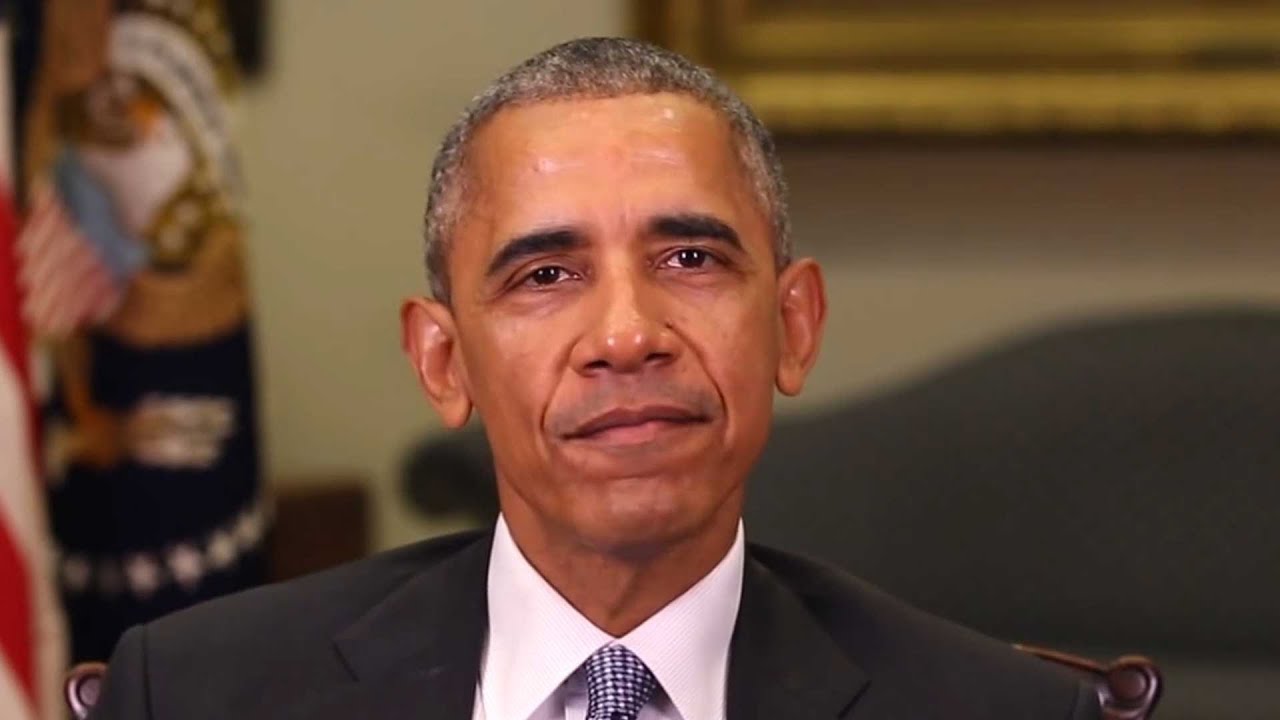 to make it appear that famous people are doing things they wouldn’t normally. But it’s almost certain deepfakes will appear during the campaign season, purporting to depict candidates saying things or going places the real candidate wouldn’t.
It’s Barack Obama – or is it?
Because these techniques are so new, people are having trouble telling the difference between real videos and the deepfake videos. My work, with my colleague Ming-Ching Chang and our Ph.D. student Yuezun Li, has found a way to reliably tell real videos from deepfake videos. It’s not a permanent solution, because technology will improve. But it’s a start, and offers hope that computers will be able to help people tell truth from fiction.
SPONSORED
What’s a ‘deepfake,’ anyway?
Making a deepfake video is a lot like translating between languages. Services like Google Translate use machine learning – computer analysis of tens of thousands of texts in multiple languages – to detect word-use patterns that they use to create the translation.
Deepfake algorithms work the same way: They use a type of machine learning system called a deep neural network to examine the facial movements of one person. Then they synthesize images of another person’s face making analogous movements. Doing so effectively creates a video of the target person appearing to do or say the things the source person did
. [vid] How deepfake videos are made.
Before they can work properly, deep neural networks need a lot of source information, such as photos of the persons being the source or target of impersonation. The more images used to train a deepfake algorithm, the more realistic the digital impersonation will be.
Detecting blinking
There are still flaws in this new type of algorithm. One of them has to do with how the simulated faces blink – or don’t. Healthy adult humans blink somewhere between every 2 and 10 seconds, and a single blink takes between one-tenth and four-tenths of a second. That’s what would be normal to see in a video of a person talking. But it’s not what happens in many deepfake videos.
A real person blinks while talking.A simulated face doesn’t blink the way a real person does.
When a deepfake algorithm is trained on face images of a person, it’s dependent on the photos that are available on the internet that can be used as training data. Even for people who are photographed often, few images are available online showing their eyes closed. Not only are photos like that rare – because people’s eyes are open most of the time – but photographers don’t usually publish images where the main subjects’ eyes are shut.
Without training images of people blinking, deepfake algorithms are less likely to create faces that blink normally. When we calculate the overall rate of blinking, and compares that with the natural range, we found that characters in deepfake videos blink a lot less frequent in comparison with real people. Our research uses machine learning to examine eye opening and closing in videos.
This gives us an inspiration to detect deepfake videos. Subsequently, we develop a method to detect when the person in the video blinks. To be more specific, it scans each frame of a video in question, detects the faces in it and then locates the eyes automatically. It then utilizes another deep neural network to determine if the detected eye is open or close, using the eye’ appearance, geometric features and movement.
We know that our work is taking advantage of a flaw in the sort of data available to train deepfake algorithms. To avoid falling prey to a similar flaw, we have trained our system on a large library of images of both open and closed eyes. This method seems to work well, and as a result, we’ve achieved an over 95 percent detection rate.
This isn’t the final word on detecting deepfakes, of course. The technology is improving rapidly, and the competition between generating and detecting fake videos is analogous to a chess game. In particular, blinking can be added to deepfake videos by including face images with closed eyes or using video sequences for training. People who want to confuse the public will get better at making false videos – and we and others in the technology community will need to continue to find ways to detect them.
Siwei Lyu, Associate Professor of Computer Science; Director, Computer Vision and Machine Learning Lab, University at Albany, State University of New York
This article was originally published on The Conversation. Read the original article.
---