breakthru energy coalition
maybe related orgs?
AN
This year's letter from Bill and Melinda Gates focused on nine things that surprised them. For the Microsoft-cofounder, one thing he was surprised to learn was the massive amount of new buildings the planet should expect in the coming decades due to urban population growth.
"The number of buildings in the world is going to double by 2060. It's like we're going to build a new New York City every month for the next 40 years," he .
Construction materials such as steel, cement wood "requires lots of energy from fossil fuels," as Gates noted in the letter, "and the processes involved release carbon as a byproduct."
"We need to find a way to make it all without worsening climate change," he wrote.
The "larger point," the billionaire philanthropist said, is that battling climate change requires much more than just solar panels and wind turbines. It requires "breakthrough inventions" across every polluting sector—buildings, agriculture, electricity, manufacturing and transportation.
Those five industries are the biggest contributors to global greenhouse gas emissions, or as Gates calls them, the five "grand challenges in climate change."
"Solar panels are great, but we should be hearing about trucks, cement, and cow farts too," he wrote.
For instance, electricity counts for only a quarter of the emissions, Gates said in a promo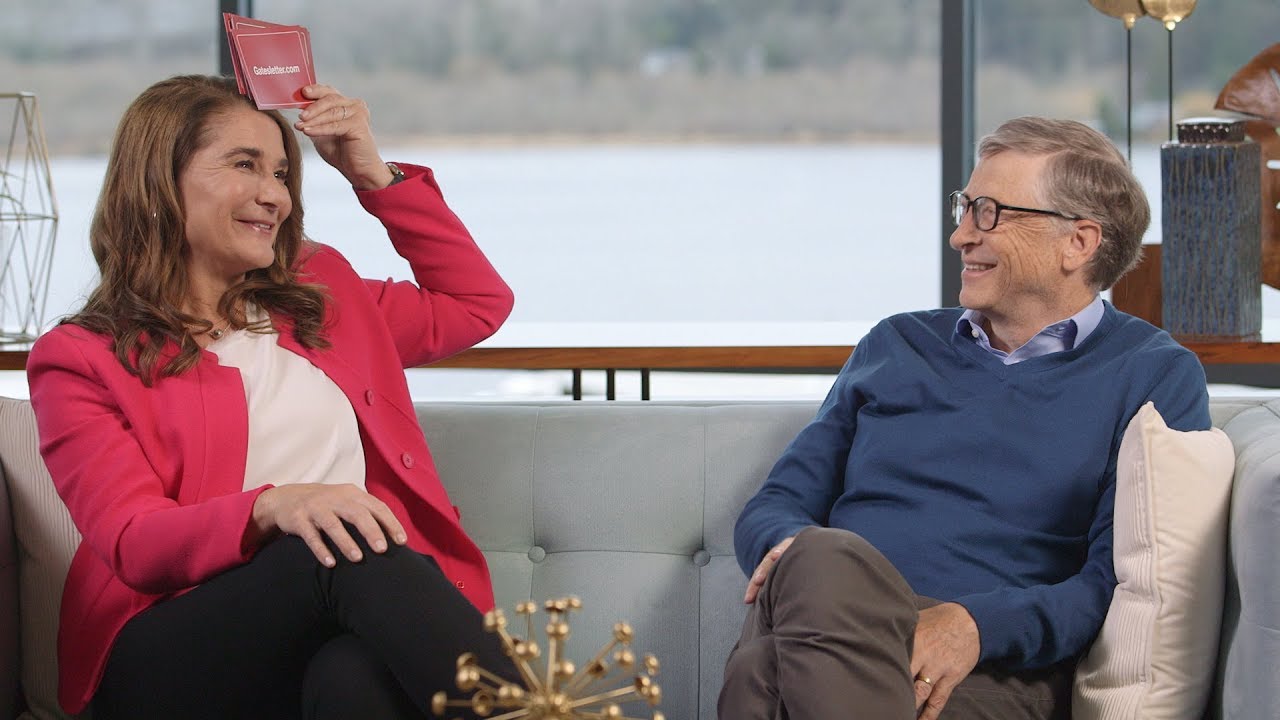 with Melinda for their annual letter. "Things like cement, steel, meat—there's a lot of other activities that are generating 75 percent of it," he said.
[vid]
Meanwhile, agriculture accounts for another 24 percent of greenhouse gases. Gates quipped: "That includes cattle, which give off methane when they belch and pass gas. (A personal surprise for me: I never thought I'd be writing seriously about bovine flatulence.)"
On that note, Gates was happy to report that the European Commission recently committed to invest in research and development on the five challenge areas, and Breakthrough Energy Ventures, the $1 billion fund he helped launch, will be using the five areas to as a guide for their future investments in clean-energy companies.
Breakthrough Energy Ventures counts a number of wealthy and influential billionaires as investors and board members, including Amazon chief Jeff Bezos, Virgin Group's Richard Branson, Alibaba founder Jack Ma and more.
"Part of the solution is to invest in innovation in all five sectors so we can do these things without destroying the climate," Gates concluded. "We need breakthrough inventions in each of the grand challenges."
...
==
http://www.sfgate.com/bayarea/article/UC-joins-Bill-Gates-clean-energy-investment-6663896.php
The University of California has joined an international coalition led by Bill Gates to invest in clean energy technology, it announced Sunday.
UC will be the sole institutional investor in the Breakthrough Energy Coalition, according to the university. The coalition has 28 investors from 10 countries, including Amazon founder Jeff Bezos and LinkedIn founder Reid Hoffman.
The coalition’s goal is to invest in projects and ideas that have the potential to deliver carbon-free power and bring them to the market.
==
http://www.latimes.com/world/la-fg-paris-climate-research-20151129-story.html
United States and 18 other nations will pledge Monday to double their investment in renewable energy technology by 2020, joining a separate private sector effort led by Bill Gates that aims to help catalyze a major international climate agreement at a United Nations climate summit here.
President Obama will join French President Francois Hollande to announce the so-called Mission Innovation initiative, which the White House says will be a critical step toward limiting global warming to 2 degrees Celsius.
According to the White House, the participating nations – which will include major carbon emitters like the United States as well as China and India -- currently invest $10 billion in research and development for new technologies. The U.S. accounts for half of that sum through various programs across the government, many centered at the Department of Energy.
The new financial commitment will be supplemented by an initiative led by Gates called the Breakthrough Energy Coalition that aims to commit the private sector to help spread clean energy technologies, particularly through the developing world.
The private sector coalition includes major tech industry figures like Facebook’s Mark Zuckerberg and Amazon's Jeffrey Bezos, as well as former California gubernatorial hopeful Meg Whitman, now chair of Hewlett Packard, and Democratic donor and environmental activist Tom Steyer.
==
big sticking point at the climate talks will be money _ how much rich countries should invest help poor countries cope with climate change, how much should be invested in renewable energy, and how much traditional oil and gas producers stand to lose if countries agree to forever reduce emissions.
The new initiative is twofold: a public-private project called Mission Innovation, led by governments, and the Gates-led investor group called the Breakthrough Energy Initiative.
The governments pledge to double their spending on low or no-carbon energy over the next five years, according to Brian Deese, senior adviser to Obama on climate and energy issues. They include leading energy producers and consumers, such as the U.S. China, India, Brazil, Saudi Arabia, Australia, Canada, France and Norway. They currently invest about $10 billion a year total, about half of which comes from the U.S., Deese told reporters in Washington.
Gates committed $1 billion of his money and was the “intellectual architect” behind the effort to get investors involved, U.S. Energy Secretary Ernest Moniz said. The business leaders are making their pledges conditional on governments also pledging more money, said a former U.S. government official who is familiar with the plan.
==
University of California announced today (Nov. 29) that it has joined the Breakthrough Energy Coalition, an influential group of investors led by Bill Gates that is committed to investing in technology that can help solve the urgent energy and climate challenges facing the planet.
UC and its Office of the Chief Investment Officer, which manages the university’s endowment and pension funds, is the sole institutional investor among the 28 coalition members from 10 countries. The coalition is a counterpart to Mission Innovation, an initiative of 19 countries committed to dramatically increasing research and development funding for early-stage clean energy innovation over the next five years.
Both initiatives were announced today at the COP21 in Paris, the United Nations Climate Change Conference.
“The University of California, with its 10 campuses and three national energy labs, is home to some of the best climate scientists in the world and as a public research institution we take the imperative to solve global climate change very seriously,” said UC President Janet Napolitano. “With access to the private capital represented by investors in the Breakthrough Energy Coalition we can more effectively integrate our public research pipeline to deliver new technology and insights that will revolutionize the way the world thinks about and uses energy.”
...
Said Jagdeep Singh Bachher, UC’s chief investment officer: “Investing in our new energy future alongside visionaries like Bill Gates and the other influential investors and philanthropists represents a historic opportunity for the University of California, the state of California and the world.”
In addition to committing to the coalition’s statement of investment principles, UC and its Office of the Chief Investment Officer will:
- Serve in a leadership role with other endowments and pension funds to explore how they can productively participate in these early-stage investments
- Invest alongside other members of the coalition in vehicles created to facilitate the statement of principles, which includes the imperatives to invest early, broadly, boldly, wisely and together
- Work with the coalition and the investment vehicles it creates to share information and source deals that emerge from UC’s 10 campuses and three national energy labs
- Collaborate with public institutions in other Mission Innovation countries to share approaches to developing research for private sector investment.
In November 2013, Napolitano announced UC’s Carbon Neutrality Initiative, which commits the university to becoming carbon neutral by 2025, which would make UC the first major university in the United States to reach this achievement. The ambitious target builds on UC’s pioneering work on climate research – as evidenced by its report on 10 scalable solutions announced last month – and furthers its leadership on sustainable business practices. UC is improving its energy efficiency, developing new sources of renewable energy and enacting a range of related strategies to cut carbon emissions.
UC’s Office of the Chief Investment Officer has committed $1 billion of its investment capital for early-stage and scale-up investments in clean energy innovation over the next five years, as well as an additional $250 million to fund innovative, early-stage ideas emerging from the UC ecosystem. It also has created an aligned intermediary, which will help large-scale, long-term investors channel significant amounts of institutional capital into resource innovation investments – including energy, waste and water – across the planet.
The University of California, home to 61 Nobel laureates, 86 winners of the MacArthur Foundation’s “genius” grants and 67 recipients of the Medal of Science, is widely considered to be the world’s premier public research university system.