In-Q-Tel
poster for?
this is darpa for intel/cia
see palantir
jsb
https://frontiertechvc.substack.com/p/in-q-tel-imitating-intelligence-and
...5] Gilman Louie: The Visionary CEO
The final piece of the puzzle was finding the right leader to execute this audacious vision. The board, advised by John Seely Brown, wanted someone unconventional, someone who understood the language of Silicon Valley, someone who could move quickly and embrace risk.
They found their man in Gilman Louie, a computer game entrepreneur who had created his first company while still in college. Louie was not a typical candidate for a government job. He was a Democrat, a fourth-generation Chinese-American, and a veteran of the tech world, with no prior experience in the intelligence community (and no connection to the Defence or Aerospace domain unless you count his company, Spectrum Holobyte, developing the F-16 Falcon Simulator as being enough to merit such inclusion).
But he was also a visionary, someone who understood the power of technology to transform industries and even nations. He was intrigued by the CIA's willingness to change and saw an opportunity to use his skills to make a real difference. The board was captivated by his intellect, his passion, and his deep connections in the Valley. Louie became the public face of In-Q-Tel, the charismatic leader who could bridge the cultural divide between the CIA and the tech world.
[6] The All-Star Board: The “Plus Eleven”
Augustine's "killer board" was a constellation of brilliance, each member bringing a unique set of skills and experiences.
There was Lee Ault**, chairman of the board and a veteran of the financial industry, providing stability and oversight. John Seely Brown**, the former director of Xerox's famed Palo Alto Research Center (PARC), brought an understanding of how to foster innovation within a large organization. He also suggested bringing on a computer gamer as CEO (which would later turn out to be Gilman Louie), knowing the ingenuity inherent in that space. Howard Cox**, a general partner at Greylock and chairman of the National Venture Capital Association, offered invaluable insights into the world of venture capital. Michael Crow**, an academic leader with a deep understanding of the interplay between universities, industry, and government, provided a broader perspective on innovation ecosystems. Stephen Friedman**, a senior principal at Marsh & McLennan Capital Inc. and former chairman of Goldman Sachs, brought financial expertise and a global perspective. Paul Kaminski**, a technology expert and former Undersecretary of Defense for Acquisition and Technology, offered insights into the Pentagon's needs and challenges. Jeong Kim**, a former executive at Lucent Technologies and founder of Yurie Systems, brought telecommunications expertise and an entrepreneurial spirit. John McMahon**, a former president and CEO of Lockheed Missiles and Space Co. and former deputy director of central intelligence, provided a crucial link between the intelligence community and the private sector. Alex Mandl**, a former chairman and CEO of Teligent and former president and CEO of AT&T, brought experience in the rapidly evolving telecommunications industry. And finally, William Perry**, the former Secretary of Defense, offered a deep understanding of national security and the importance of technological superiority.
This diverse board, carefully curated by Augustine, was instrumental in shaping In-Q-Tel's unique structure and guiding its early steps. Each member brought their own unique expertise to create an organization unlike anything that had existed before.
Together, these individuals, each a leader in their own right, formed a unique team that was perfectly positioned to create and launch In-Q-Tel. They were the architects of a new model for government innovation, a model that has since been studied and emulated around the world. They dared to challenge the status quo, to embrace risk, and to forge a new path forward. Their story is a testament to the power of vision, collaboration, and a willingness to break the mold. Their legacy is In-Q-Tel, a testament to their foresight and a vital asset in America's ongoing quest to maintain its technological edge.
B. Business Model
https://theintercept.com/2022/09/28/cia-extinction-woolly-mammoth-dna/
aS A RAPIDLY ADVANCING climate emergency turns the planet ever hotter, the Dallas-based biotechnology company Colossal Biosciences has a vision: “To see the Woolly Mammoth thunder upon the tundra once again.” Founders George Church and Ben Lamm have already racked up an impressive list of high-profile funders and investors, includingPeter Thiel, Tony Robbins, Paris Hilton, Winklevoss Capital — and, according to the public portfolio its venture capital arm released this month, the CIA.
Colossal says it hopes to use advanced genetic sequencing to resurrect two extinct mammals — not just the giant, ice age mammoth, but also a mid-sized marsupial known as the thylacine, or Tasmanian tiger, that died out less than a century ago. On its website, the company vows: “Combining the science of genetics with the business of discovery, we endeavor to jumpstart nature’s ancestral heartbeat.”
In-Q-Tel, its new investor, is registered as a nonprofit venture capital firm funded by the CIA. On its surface, the group funds technology startups with the potential to safeguard national security. In addition to its long-standing pursuit of intelligence and weapons technologies, the CIA outfit has lately displayed an increased interest in biotechnology and particularly DNA sequencing.
“Why the interest in a company like Colossal, which was founded with a mission to “de-extinct” the wooly mammoth and other species?” reads an In-Q-Tel blog post published on September 22. “Strategically, it’s less about the mammoths and more about the capability.”
“Biotechnology and the broader bioeconomy are critical for humanity to further develop. It is important for all facets of our government to develop them and have an understanding of what is possible,” Colossal co-founder Ben Lamm wrote in an email to The Intercept. (A spokesperson for Lamm stressed that while Thiel provided Church with $100,000 in funding to launch the woolly mammoth project that became Colossal, he is not a stakeholder like Robbins, Hilton, Winklevoss Capital, and In-Q-Tel.)
Colossal uses CRISPR gene editing, a method of genetic engineering based on a naturally occurring type of DNA sequence. CRISPR sequences present on their own in some bacterial cells and act as an immune defense system, allowing the cell to detect and excise viral material that tries to invade. The eponymous gene editing technique was developed to function the same way, allowing users to snip unwanted genes and program a more ideal version of the genetic code.
“CRISPR is the use of genetic scissors,” Robert Klitzman, a bioethicist at Columbia University and a prominent voice of caution on genetic engineering, told The Intercept. “You’re going into DNA, which is a 3-billion-molecule-long chain, and clipping some of it out and replacing it. You can clip out bad mutations and put in good genes, but these editing scissors can also take out too much.”
The embrace of this technology, according to In-Q-Tel’s blog post, will help allow U.S. government agencies to read, write, and edit genetic material, and, importantly, to steer global biological phenomena that impact “nation-to-nation competition” while enabling the United States “to help set the ethical, as well as the technological, standards” for its use.
In-Q-Tel did not respond to The Intercept’s requests for comment
https://www.cybersecurityintelligence.com/blog/the-cia-invests-in-firms-that-mine-social-media-1258.html
intercept repost w/
DocumnetCloud: http://bit.ly/214d99D
==
https://theintercept.com/2016/04/14/in-undisclosed-cia-investments-social-media-mining-looms-large/
SOFT ROBOTS THAT can grasp delicate objects, computer algorithms designed to spot an “insider threat,” and artificial intelligence that will sift through large data sets — these are just a few of the technologies being pursued by companies with investment from In-Q-Tel, the CIA’s venture capital firm, according to a document obtained by The Intercept.
Yet among the 38 previously undisclosed companies receiving In-Q-Tel funding, the research focus that stands out issocial media mining and surveillance; the portfolio document lists several tech companies pursuing work in this area, including Dataminr, Geofeedia, PATHAR, and TransVoyant.

In-Q-Tel’s investment process.
Screen grab from In-Q-Tel’s website.
Those four firms, which provide unique tools to mine data from platforms such as Twitter, presented at a February “CEO Summit” in San Jose sponsored by the fund,along with other In-Q-Tel portfolio companies.
The investments appear to reflect the CIA’s increasing focus on monitoring social media. Last September, David Cohen, the CIA’s second-highest ranking official, spoke at length at Cornell University about a litany of challenges stemming from the new media landscape. The Islamic State’s “sophisticated use of Twitter and other social media platforms is a perfect example of the malign use of these technologies,” he said.
Social media also offers a wealth of potential intelligence; Cohen noted that Twitter messages from the Islamic State, sometimes called ISIL, have provided useful information. “ISIL’s tweets and other social media messages publicizing their activities often produce information that, especially in the aggregate, provides real intelligence value,” he said.
The latest round of In-Q-Tel investments comes as the CIA has revamped its outreach to Silicon Valley, establishing a new wing, the Directorate of Digital Innovation, which is tasked with developing and deploying cutting-edge solutions by directly engaging the private sector. The directorate is working closely with In-Q-Tel to integrate the latest technology into agency-wide intelligence capabilities.
...
TransVoyant, founded by former Lockheed Martin Vice President Dennis Groseclose, provides a similar service by analyzing multiple data points for so-called decision-makers. The firm touts its ability to monitor Twitter to spot “gang incidents” and threats to journalists. A team from TransVoyant has worked with the U.S. military in Afghanistan to integrate data from satellites, radar, reconnaissance aircraft, and drones.
Dataminr, Geofeedia, and PATHAR did not respond to repeated requests for comment. Heather Crotty, the director of marketing at TransVoyant, acknowledged an investment from In-Q-Tel, but could not discuss the scope of the relationship. In-Q-Tel:{ “does not disclose the financial terms of its investments,” Crotty said.
}:
Carrie A. Sessine, the vice president for external affairs at In-Q-Tel, also declined an interview because the fund “does not participate in media interviews or opportunities.”
Over the last decade, In-Q-Tel has made a number of public investments in companies that specialize in scanning large sets of online data. In 2009, the fund partnered with Visible Technologies, which specializes in reputation management over the internet by identifying the influence of “positive” and “negative” authors on a range of platforms for a given subject. And six years ago, In-Q-Tel formed partnerships with NetBase, another social media analysis firm that touts its ability to scan “billions of sources in public and private online information,” and Recorded Future, a firm that monitors the web to predict events in the future.
Unpublicized In-Q-Tel Portfolio Companies
| Company | Description | Contract |
|---|---|---|
| Aquifi | 3D vision software solutions | |
| Beartooth | Decentralized mobile network | |
| CliQr | Hybrid cloud management platform | Contract |
| CloudPassage | On-demand, automated infrastructure security | |
| Databricks | Cloud-hosted big data analytics and processing platform | |
| Dataminr | Situational awareness and analysis at the speed of social media | Contract |
| Docker | Open platform to build, ship, and run distributed applications | Contract |
| Echodyne | Next-generation electronically scanning radar systems | Contract |
| Epiq Solutions | Software-defined radio platforms and applications | Contract |
| Geofeedia | Location-based social media monitoring platform | Contract |
| goTenna | Alternate network for off-grid smartphone communications | Contract |
| Headspin | Network-focused approach to improving mobile application performance | Contract |
| Interset | Inside threat detection using analytics, machine learning, and big data | |
| Keyssa | Fast, simple, and secure contactless data transfer | |
| Kymeta | Antenna technology for broadband satellite communications | |
| Lookout | Cloud-based mobile cybersecurity | |
| Mapbox | Design and publish visual, data-rich maps | Contract |
| Mesosphere | Next-generation scale, efficiency, and automation in a physical or cloud-based data center | Contract |
| Nervana | Next-generation machine learning platform | |
| Orbital Insight | Satellite imagery processing and data science at scale | |
| Orion Labs | Wearable device and real-time voice communications platform | |
| Parallel Wireless | LTE radio access nodes and software stack for small cell deployment | |
| PATHAR | Channel-specific social media analytics platform | Contract |
| Pneubotics | Mobile material handling solutions to automate tasks | |
| PsiKick | Redefined ultra-low power wireless sensor solutions | Contract |
| PubNub | Build and scale real-time apps | |
| Rocket Lab | Launch provider for small satellites | Contract |
| Skincential Sciences | Novel materials for biological sample collection | |
| Soft Robotics | Soft robotics actuators and systems | |
| Sonatype | Software supply chain automation and security | Contract |
| Spaceflight Industries | Small satellite launch, network, and imagery provider | Contract |
| Threatstream | Leading enterprise-class threat intelligence platform | |
| Timbr.io | Accessible code-driven analysis platform | |
| Transient Electronics | Dissolvable semiconductor technology | Contract |
| TransVoyant | Live predictive intelligence platform | |
| TRX Systems | 3D indoor location and mapping solutions | |
| Voltaiq | SaaS platform for advanced battery analysis | |
| **Zoomdata** | Big data exploration, visualization, and analytics platform | Contract |
Bruce Lund, a senior member of In-Q-Tel’s technical staff, noted in a 2012 paper that“monitoring social media” is increasingly essential for government agencies seeking to keep track of “erupting political movements, crises, epidemics, and disasters, not to mention general global trends.”
The recent wave of investments in social media-related companies suggests the CIA has accelerated the drive to make collection of user-generated online data a priority. Alongside its investments in start-ups, In-Q-Tel has also developed a special technology laboratory in Silicon Valley, called Lab41, to provide tools for the intelligence community to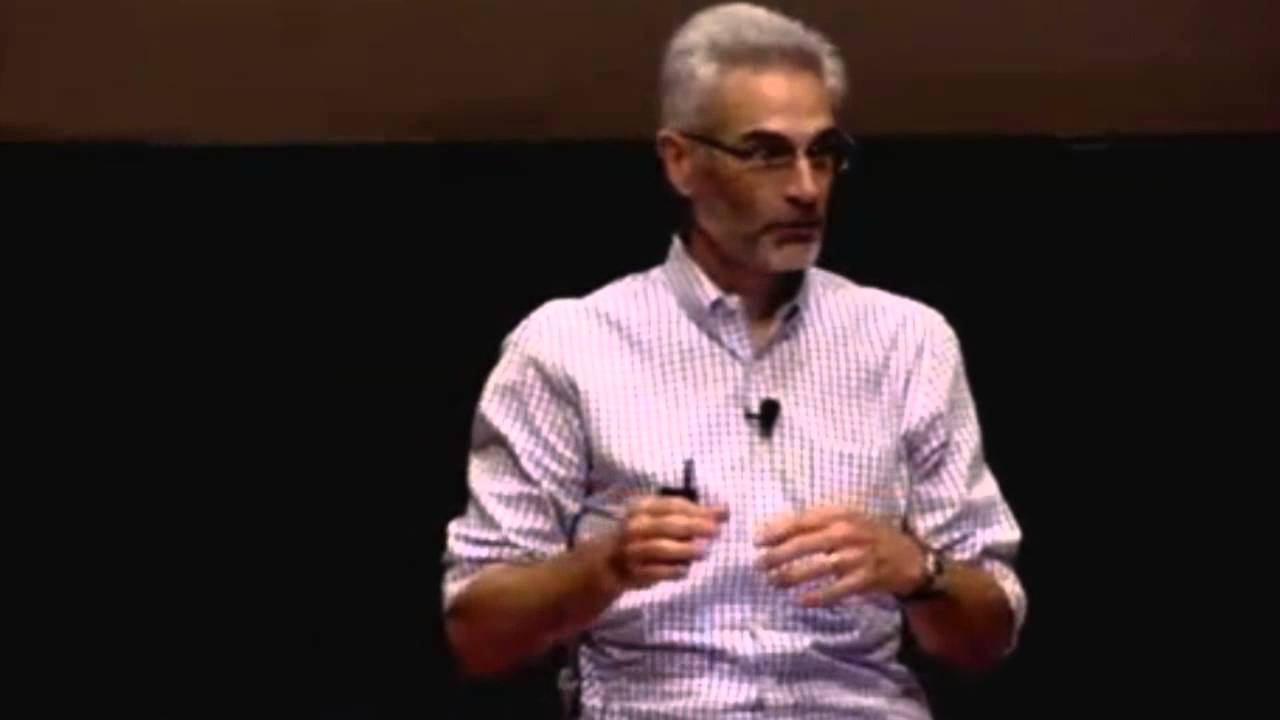 in large sets of data.
In February, Lab41 published an article exploring the ways in which a Twitter user’s location could be predicted with a degree of certainty through the location of the user’s friends. On Github, an open source website for developers, Lab41 currently has a project to ascertain the “feasibility of using architectures such as Convolutional and Recurrent Neural Networks to classify the positive, negative, or neutral sentiment of Twitter messages towards a specific topic.”
Collecting intelligence on foreign adversaries has potential benefits for counterterrorism, but such CIA-supported surveillance technology is also used for domestic law enforcement and by the private sector to spy on activist groups.
Palantir, one of In-Q-Tel’s earliest investments in the social media analytics realm, was exposed in 2011 by the hacker group LulzSec to be in negotiation for a proposal to track labor union activists and other critics of the U.S. Chamber of Commerce, the largest business lobbying group in Washington. The company, now celebrated as a “tech unicorn” — a term for start-ups that reach over $1 billion in valuation — distanced itself from the plan after it was exposed in a cache of leaked emails from the now-defunct firm HBGary Federal.
:{
Lee Guthman, an executive at Geofeedia,}:told reporter John Knefel that his company could predict the potential for violence [omidyar fund for schools?] at Black Lives Matter protests just by using the location and sentiment of tweets. Guthman said the technology could gauge sentiment by attaching “positive and negative points” to certain phrases, while measuring “proximity of words to certain words.”Yet other In-Q-Tel-backed companies are now openly embracing the practice. Geofeedia, for instance, promotes its research into Greenpeace activists, student demonstrations, minimum wage advocates, and other political movements. Police departments in Oakland, Chicago, Detroit, and other major municipalities have contracted with Geofeedia, as well as private firms such as the Mall of America and McDonald’s.
Privacy advocates, however, have expressed concern about these sorts of automated judgments.
“When you have private companies deciding which algorithms get you a so-called threat score, or make you a person of interest, there’s obviously room for targeting people based on viewpoints or even unlawfully targeting people based on race or religion,” said Lee Rowland, a senior staff attorney with the American Civil Liberties Union.
She added that there is a dangerous trend toward government relying on tech companies to “build massive dossiers on people” using “nothing but constitutionally protected speech.”
Related:
CIA’s Venture Capital Arm Is Funding Skin Care Products That Collect DNA
https://theintercept.com/2016/04/08/cia-skincare-startup/
fang
SKINCENTIAL SCIENCES, a company with an innovative line of cosmetic products marketed as a way to erase blemishes and soften skin, has caught the attention of
 on YouTube, Oprah’s lifestyle magazine, and celebrity skin care professionals. Documents obtained by The Intercept reveal that the firm has also attracted interest and funding from In-Q-Tel, the venture capital arm of the Central Intelligence Agency.

The previously undisclosed relationship with the CIA might come as some surprise to a visitor to the website of Clearista, the main product line of Skincential Sciences, which boasts of a “formula so you can feel confident and beautiful in your skin’s most natural state.”
Though the public-facing side of the company touts a range of skin care products,Skincential Sciences developed a patented technology that removes a thin outer layer of the skin, revealing unique biomarkers that can be used for a variety of diagnostic tests, including DNA collection.
Skincential Science’s noninvasive procedure, described on the Clearista website as “painless,” is said to require only water, a special detergent, and a few brushes against the skin, making it a convenient option for restoring the glow of a youthful complexion — and a novel technique for gathering information about a person’s biochemistry.[img]
In-Q-Tel, founded in 1999 by then-CIA Director George Tenet, identifies cutting-edge technology to support the mission of the CIA and other intelligence agencies, and provides venture funding to help grow tech firms to develop those solutions.
“Our company is an outlier for In-Q-Tel,” Russ Lebovitz, the chief executive of Skincential Sciences, said during an interview with The Intercept. He conceded that the relationship might make for “an unusual and interesting story,” but said, “I:{f there’s something beneath the surface, that’s not part of our relationship and I’m not directly aware. :{They’re interested here in something that can get easy access to biomarkers.”}:
}::{
Still, Lebovitz claimed he has limited knowledge of why In-Q-Tel selected his firm.}:
“I can’t tell you how everyone works with In-Q-Tel, but they are very interested in doing things that are pure science,” Lebovitz said. The CIA fund approached his company, telling him the fund shares an interest in looking at DNA extraction using the method pioneered by Skincential Sciences, according to Lebovitz.
:{:{
Perhaps law enforcement could use the biomarker extraction technique for crime scene identification or could conduct drug tests, Lebovitz suggested.}:Beyond that, Lebovitz said he was unsure of the intent of the CIA’s use of the technology, but the fund was “}:specifically interested in the diagnostics, detecting DNA from normal skin.” He added, “There’s no better identifier than DNA, and we know we can pull out DNA.”
Carrie A. Sessine, the vice president for external affairs at In-Q-Tel, declined a media interview because “IQT does not participate in media interviews or opportunities.”
(Officials at the venture capital firm have, in fact, given interviews in the past.)
Though In-Q-Tel operates in the open, it has often kept key details of its activities out of public view, beyond required annual reports. After a SecureDrop source told The Intercept about a gathering in San Jose for In-Q-Tel executives and start-up companies backed by the fund,The Interceptattempted to attend, but was denied access.
Skincential Sciences was among several presenting companies.
The shroud of secrecy around In-Q-Tel belies a 17-year effort to build ties between the CIA and the biggest names in Silicon Valley. Gilman Louie, a video game executive known for publishing best-sellers such as Tetris, Falcon, and Civilization II, was brought on as the first chief executive of In-Q-Tel. The popular mapping tool Google Earth was created around technology developed by Keyhole Corp., an In-Q-Tel-backed company that was later acquired by Google.
[img]
Still, little is publicly revealed about the use of In-Q-Tel-backed ventures and their relevance to the goals of intelligence agencies. Many of the fund’s investments are not publicly revealed. The fund is reviewed by the CIA’s inspector general and reports directly to the Senate Select Committee on Intelligence, which frequently conducts business through classified briefings.
David Petraeus, while serving as the director of the CIA in 2012, remarked, “Our partnership with In-Q-Tel is essential to helping identify and deliver groundbreaking technologies with mission-critical applications to the CIA and to our partner agencies.”
Despite the association with computer and satellite technology, In-Q-Tel also maintains a long-running interest in developing advanced genetic analysis, biological technologies for detection and diagnostics, as well as research into what is known as physiological intelligence, which, in a 2010 article, the fund described as “actionable information about human identity and experience that have always been of interest to the Intelligence Community.”
The article, which is no longer available on the fund’s website but is preserved by a cache hosted by the Internet Archive, argues that advances in medical research into biomarkers can be leveraged by intelligence agencies for a variety of uses, from airport security to next-generation identification tools.
A diagram in the article calls human skin the body’s largest organ and a “unique, underutilized source for sample collection.” The author, Dr. Kevin O’Connell, then a “senior solutions architect” with In-Q-Tel, notes, “The DNA contained in microorganisms in a person’s gut or on a person’s skin may contain sequences that indicate a particular geographical origin.”
[img]
In-Q-Tel has invested in several companies working in this realm, in addition to Skincential Sciences. In 2013, In-Q-Tel publicly announced a strategic partnership with Bio-NEMS, a firm that developed a semiconductor device used to analyze DNA for a variety of diagnostic and human identification applications. Claremont BioSolutions, a diagnostics firm, and Biomatrica, a firm that specializes in preparing biological samples for DNA testing, are also backed by In-Q-Tel.
Skincential Sciences did not start out as a beauty company. The firm was founded in 2010 as DX Biosciences, which was developed around a patent by a team of scientists including Dr. Samir Mitragotri of the University of California, Santa Barbara. Mitragotri has published research into the use of biomarkers as a “window to body’s health.”
The company gained early backing from Frontier, a venture capital company, among other investors.
While the technology has potential for a variety of medical diagnostics, including early melanoma detection, Lebovitz said the company quickly realized it had immediate value as a cosmetic. The application of the detergent developed by the firm could be used easily to diminish blemishes and dark patches on the skin. And unlike similar treatments at aesthetic spas, the technology developed by Dr. Mitragotri and his colleagues did not require acid or any discomfort.
In 2013, the firm relaunched and recapitalized as Skincential Sciences, with Clearista as its primary brand of beauty products.
Lebovitz says he intends to continue developing the technology so that it may be medically relevant, but he is also focusing on breaking into the multibillion-dollar skin care market. While Skincential has won measured success for its Clearista brand products by landing coverage on and through social media, the company has not yet been able to compete with mainstream skin care companies.
Jamie Walsh, a blogger who runs Glam Latte, a beauty website, endorsed a Clearista product on her YouTube, noting that with only one application of the cream, her skin improved and was “glowing.” Walsh said Skincential Sciences sent her the product for a testimonial, and noted that like many independent brands, she did not know about the company’s funding.
Skincential hopes to license its product with a major distributor, or even one day become acquired by a larger beauty company. “We’ll take any of those,” said Lebovitz.
The chief executive noted that he is proud of the In-Q-Tel support, calling the fund “great partners.”
At the gathering in February for In-Q-Tel portfolio companies, Lebovitz joined a crowd that included a number of In-Q-Tel executives, along with senior members of the intelligence community. Presenting speakers included Federal Bureau of Investigation Director James Comey, Deputy Secretary of Defense Robert Work, and John Maeda, design partner of Kleiner Perkins Caufield & Byers, a leading Silicon Valley investment firm.
“Not only was I the odd man out,” Lebovitz said, “but almost every woman at the conference wanted to come up to me to talk about skin care.”
==
wiki
--
In-Q-Tel (IQT), formerly Peleus and known as In-Q-It, is an American not-for-profit venture capital firm based in Arlington, Virginia. It invests in high-tech companies for the sole purpose of keeping the Central Intelligence Agency, and other intelligence agencies, equipped with the latest in information technology in support of United States intelligence capability.[4] The name, "In-Q-Tel" is an intentional reference to Q, the fictional inventor who supplies technology to James Bond.[5]
The firm is seen as a trend-setter in the information technology industry, with the average dollar invested by In-Q-Tel in 2012 attracting nine dollars of investment from other companies.[5]
^...^
Originally named Peleus and known as In-Q-It, In-Q-Tel was founded by Norm Augustine, a former CEO of Lockheed Martin and by Gilman Louie, who was In-Q-Tel's first CEO.[4][5][6] In-Q-Tel’s mission is to identify and invest in companies developing cutting-edge technologies that serve United States national security interests. Origins of the corporation can be traced to Dr. Ruth A. David, who headed the Central Intelligence Agency Directorate of Science & Technology in the 1990s and promoted the importance of rapidly advancing information technology for the CIA.[5] In-Q-Tel now engages with entrepreneurs, growth companies, researchers, and venture capitalists to deliver technologies that provide superior capabilities for the CIA, DIA, NGA, and the wider intelligence community.[7] In-Q-Tel concentrates on three broad commercial technology areas: software, infrastructure and materials sciences.
Former CIA director George Tenet says,
We [the CIA] decided to use our limited dollars to leverage technology developed elsewhere. In 1999 we chartered ... In-Q-Tel. ... While we pay the bills, In-Q-Tel is independent of CIA. CIA identifies pressing problems, and In-Q-Tel provides the technology to address them. The In-Q-Tel alliance has put the Agency back at the leading edge of technology ... This ... collaboration ... enabled CIA to take advantage of the technology that Las Vegas uses to identify corrupt card players and apply it to link analysis for terrorists cf. the parallel [data-mining effort by the SOCOM-DIA operation Able Danger ], and to adapt the technology that online booksellers use and convert it to scour millions of pages of documents looking for unexpected results.[8]
In-Q-Tel sold 5,636 shares of Google, worth over $2.2 million, on November 15, 2005.[9] The stocks were a result of Google’s acquisition of Keyhole, the CIA funded satellite mapping software now known as Google Earth.
As of August 2006,[dated info] In-Q-Tel had reviewed more than 5,800 business plans, invested some $150 million in more than 90 companies, and delivered more than 130 technology solutions to the intelligence community.[4][10] In 2005 it was said to be funded with about $37 million a year from the CIA.[11][dated info]
--
In-Q-Tel of [Arlington, Virginia, [DC suburb where lots of spooks live] United States](http://en.wikipedia.org/wiki/Arlington,_Virginia "Arlington, Virginia") is a not-for-profit venture capital firm that invests in high-tech companies for the sole purpose of keeping the Central Intelligence Agency, and other intelligence agencies, equipped with the latest in information technology in support of United States intelligence capability.[4]
History
Originally named Peleus and known as In-Q-It, In-Q-Tel was launched in 1999 under the direction of Gilman Louie.[4] In-Q-Tel’s mission is to identify and invest in companies developing cutting-edge technologies that serve United States national security interests. Originally associated with the Central Intelligence Agency Directorate of Science & Technology, In-Q-Tel now engages with entrepreneurs, growth companies, researchers, and venture capitalists to deliver technologies that provide superior capabilities for the CIA, DIA, NGA, and the wider intelligence community. In-Q-Tel concentrates on three broad commercial technology areas: software, infrastructure and materials sciences.
Former CIA director George Tenet says,
We [the CIA] decided to use our limited dollars to leverage technology developed elsewhere. In 1999 we chartered ... In-Q-Tel. ... While we pay the bills, In-Q-Tel is independent of CIA. CIA identifies pressing problems, and In-Q-Tel provides the technology to address them. The In-Q-Tel alliance has put the Agency back at the leading edge of technology ... This ... collaboration ... enabled CIA to take advantage of the technology that Las Vegas uses to identify corrupt card players and apply it to link analysis for terrorists cf. the parallel [data-mining effort by the SOCOM-DIA operation Able Danger ], and to adapt the technology that online booksellers use and convert it to scour millions of pages of documents looking for unexpected results.[5]
In-Q-Tel sold 5,636 shares of Google, worth over $2.2 million, on Nov 15, 2005.[6] The stocks were a result of Google’s acquisition of Keyhole, the CIAfunded satellite mapping software now known as Google Earth.
As of August 2006,[dated info] In-Q-Tel had reviewed more than 5,800 business plans, invested some $150 million in more than 90 companies, and delivered more than 130 technology solutions to the intelligence community.[4][7] In 2005 it was said to be funded with about $37 million a year from the CIA.[8][dated info]
Former board members include Norman Augustine, William Perry, Anita K. Jones and Gilman Louie.[citation needed]
Governance
 | This section does not cite any references or sources. Please help improve this section by adding citations to reliable sources. Unsourced material may be challenged and removed. (December 2012) |
In-Q-Tel is a Virginia-registered corporation, legally independent of the CIA or any other government agency. The corporation is bound by its Charter agreement and annual contract with the CIA, which set out the relationship between the two organizations. In-Q-Tel's mission to support the Intelligence Community's technical needs is promoted by the In-Q-Tel Interface Center (QIC), an office within the CIA that facilitates communication and relationships between In-Q-Tel and government intelligence organizations. While In-Q-Tel is a nonprofit corporation, it differs from IARPA and other models in that its employees can profit from its investments. According to public records, In-Q-Tel's current[when?] principals include:
- Christopher A. R. Darby, President/CEO
- Bruce Adams, Secretary
- Michael M. Crow, Chairman
- Paul G. Kaminski, Director
- Jeong H. Kim, Director
Investments
Many companies listed on In-Q-Tel's investment website page[9] are secret. In-Q-Tel functions partially in public, however what products it has and how they are used is strictly secret.[8] According to the Washington Post, "virtually any U.S. entrepreneur, inventor or research scientist working on ways to analyze data has probably received a phone call from In-Q-Tel or at least been Googled by its staff of technology-watchers."[8]
Software
| This list of companies does not cite any references or sources. Please help improve this article byadding citations to reliable sources. Unsourced material may be challenged and removed. (December 2012) |
- Huddle - cloud-based content collaboration software
- Oculis Labs - visual cyber security solutions
- Destineer -games FPS training simulation
- GeoIQ FortiusOne -visualization on maps
- Forterra - virtual worlds for training
- Quantum4D - visualization technology
- Visual Sciences - real-time visual analysis
- Spotfire - visualisation data analytics
- Palantir Technologies - data integration, search and discovery, knowledge management, and secure collaboration
- PiXlogic - visual search
- Agent Logic - event detection and response software -Webspector webpage change software
- ArcSight - secure software
- Zaplet - email
- Authentica -secure messaging and secure document sharing
- Teradici Corporation - desktop virtualization
- Connectify -Wifi & VPN
- SafeWeb PrivacyMatrix - browsing (closed in Nov. 2001)
- Visible Technologies - social media monitoring
- Silver Tail Systems - website fraud prevention
- InnoCentive - crowdsourcing websites
- Fetch Technologies -Internet Data Management -bots & RSS
- SRA OrionMagic - cms software
- Recorded Future - web intelligence and predictive analytics
- Traction Software - web 2.0[vague]
- Basis Technology - translation software
- Language Weaver - automatic language translation
- Lingotek - translatation
- Cassatt - desktop software
- Tacit Knowledge Systems - internal software[vague]
- FMS -analysis, visualization, and knowledgebase to the Federal Intelligence Community
- Initiate Systems -real-time multiple database software
- TerraGo - location intelligence applications and software GeoPDF
- Geosemble - unstructured data analytics and geospatial software
- NovoDynamics - Arabic character recognition
- Adapx - Microsoft Office & GIS
- Digital Reasoning - Synthesys v3.0 -review facts and associations at a glance
- CallMiner - phone speech analytics software
- Carnegie Speech -speech recognition
- AzTE PRISM - handwriting recognition
- A4Vision - 3D facial imaging
- oculis labs - computer vision, facial recognition and detection with webcam
- SRD - identity resolution software
- Inktomi Corp - network infrastructure software
- Mohomine mohoClassifier - organises mass data
- Stratify - organizes mass data
- Endeca - search data repositories
- Inxight - search engine
- Convera RetrievalWare - search engine
- MetaCarta - search engine
- Attensity - search engine
- NetBase - search engine
- Platfora - big data analytics and visualization
- Intelliseek - search engine
- FireEye - malware protection
- ReversingLabs - malware detection and analysis
Material science
| This list of companies does not cite any references or sources. Please help improve this article byadding citations to reliable sources. Unsourced material may be challenged and removed. (December 2012) |
Biotech
- Biomatrica - biolab tech anhydrobiosis storage
- SpectraFluidics - detection of trace airborne chemicals
- Arcxis Biotechnologies - sample processing and pathogen detection
- febit group - DNA
- Boreal Genomics - DNA fingerprints
- T2 Biosystems - medical diagnostic devices, miniaturized magnetic resonance (MR)
- OpGen -microbial genome analysis
- Infobionics - biotech cellular database
- Microchip Biotechnologies -analysis instrumentation for biodefense
- Cambrios Technologies - biomaterials for solid-state electronic devices
- Seahawk Biosystems - diagnosis biosensor products
- Sionex -chemical and biological sensors
- Polychromix -material analysis and chemical sensing
- IatroQuest - detect biological and chemical agents
- IntegenX - NanoBioProcessor & molecular diagnostics
- Seventh Sense Biosystems - health monitoring and medical diagnostics
- Sonitus Medical - transmits sound via the teeth
- MedShape - orthopedic devices from shape memory materials
Electricity
- Electro Energy - nickel-metal hydride batteries for satellites & aircraft
- Qynergy Corporation - Long-lived batteries, Micro-Electro-Mechanical Systems
- Infinite Power Solutions -micro-batteries
- Skybuilt Power - solar, wind, fuel cells, batteries, fossil fuels, telecommunications -Mobile Power Station(MPS) 3.5 kW to 150 kW
- Semprius - solar energy
- AdaptivEnergy - miniature piezo generators
- Power Assure - managing power consumption
- MiserWare - reduces energy
Electronics
- Nanosys - nanotech components
- Alfalight - high-power lasers & torches
- IDELIX Software - pliable display technology
- Perceptive Pixel - multi-touch displays
- WiSpry - radio components
- Nextreme Thermal Solutions - circuit-board thermoelectric components
- Digital Solid State Propulsion - electronic controls for solid rocket motors
- Infinite Z - virtual-holographic monitors
Video
- 3VR Security - DVR archiving
- MotionDSP - digital video
- Pixim - video cameras
- COPAN - data storage
- iMove - immersive video
- Pelican Imaging - better camera phones
- LensVector -optical autofocus
- InView Technology - cameras and hyper-spectral imagers
- Rhevision - tunable camera lens
- Signal Innovations Group - signal, image, and video analytics
- Elemental Technologies -video processing
- KZO Innovations - streaming video software
- VSee - video conferencing
Infrastructure
| This list of companies does not cite any references or sources. Please help improve this article byadding citations to reliable sources. Unsourced material may be challenged and removed. (December 2012) |
Hardware
- Genia Photonics - fiber-optics products
- Advanced Photonix, Inc. -fiber optics
- SitScape -Command & Control room hardware
- SpotterRF - micro surveillance radar
- QD Vision -monitors, displays and lighting
- GATR Technologies -inflatable satellite dishes
- CoreStreet - door access control systems
- Etherstack - radios
- Paratek microwave - smart scanning antennas
- D-Wave Systems - quantum computers
Sensor networks
- ThingMagic - RFID
- Dust Networks - low-power wireless mesh networking systems
- Ember Corporation - ZigBee- wireless semiconductor
- Gainspan - low power Wi-Fi
- Tendril Networks - software for wireless sensor and control networks
- TenXsys -telemetry systems for remote monitoring, NASA
- StreamBase -real-time data in government/military, RFID/sensor networks
- Thetus - software for remote sensing instruments
- Soflinx defender -a Wireless Sensor Network for fences
- PlateScan -automatic license plate recognition (ALPR) sensor network
Data centers
- Bay Microsystems - packet processing and data traffic
- Cleversafe - data storage clouds and massive digital archives
- Cloudera - data storage and analysis
- Asankya - Hypermesh data streams
- CopperEye - data retention
- Systems Research and Development - real-time data warehousing
- Network Appliance - Decru (networked data storage)
Security testing
- RedSeal Systems - security testing
- Network Chemistry - RFprotect, WiFi security
- Veracode - application security testing
Other related personnel
| This section does not cite any references or sources. Please help improve this section by adding citations to reliable sources. Unsourced material may be challenged and removed. (December 2012) |
Numerous noteworthy business and intelligence community professionals have been involved with In-Q-Tel at various times, including the following:[citation needed]
- Dan Geer (2008 - current) Chief Information Security Officer [10]
- Michael D. Griffin – former President; later Administrator of NASA.
- Norman R. Augustine
- Gilman Louie
- Amit Yoran
- **John Seely Brown**
- Stephen Friedman
- Paul McMahon
- William Perry
- Alex J. Mandl
- Craig Goss
- Rob Painter – former Director for Technology Assessment; left to become Senior Federal Sales Manager at Google.
- Christopher K. Tucker, first chief strategic officer
References
- ^ A new partnership between the CIA and the private sector
- ^ Careers at In-Q-Tel (address)
- ^ List of the Board of Trustees
- ^ a(http://en.wikipedia.org/wiki/In-Q-Tel#cite_ref-Hoover.27s_4-0) b(http://en.wikipedia.org/wiki/In-Q-Tel#cite_ref-Hoover.27s_4-1) c(http://en.wikipedia.org/wiki/In-Q-Tel#cite_ref-Hoover.27s_4-2) "In-Q-Tel, Inc. Company Information". Hoover's. Retrieved March 26, 2013.
- ^ George Tenet (1997), At The Center Of The Storm: My Years at the CIA, Harper Press, p. 26
- ^ "CIA sells Google shares". November 15, 2005.
- ^ In-Q-Tel website: Investing in our National Security. Obtained August 2006.
- ^ a(http://en.wikipedia.org/wiki/In-Q-Tel#cite_ref-In_8-0) b(http://en.wikipedia.org/wiki/In-Q-Tel#cite_ref-In_8-1) c(http://en.wikipedia.org/wiki/In-Q-Tel#cite_ref-In_8-2) n-Q-Tel, CIA's Venture Arm, Invests in Secrets
- ^ In-Q-Tel website. In-Q-Tel — Investments.
- ^ Dan Geer leaves Verdasys for In-Q-Tel, by Ryan Naraine, ZDNet, May 28, 2008. Accessed 2008-07-09.
External links
- Official website
- Fact sheet from the company's website
- White Paper on the In-Q-Tel concept from the CIA's website
- In-Q-Tel from Federal Computer Week
- In-Q-Tel from govexec.com
- The Report of the Independent Panel on the CIA In-Q-Tel Venture from Business Executives for National Security (bens.org)
- Press releases from cryptome.org