Lonsdale Joe Palantir
---
NTBCW KARP
KOCH
---
GGL 626
AI Overview
Joe Lonsdale, through the Abundance Institute and in partnership with Stand Together, champions an "Inclusive Abundance" economic framework. This movement actively pushes for regulatory reforms and technological acceleration across AI, biotech, and government administration to unlock human potential. [1, 2, 3, 4, 5]
Key Initiatives & Stances
- FDA Overhaul: Lonsdale raised millions to fund an "AI-native strike team" of software engineers and data scientists to place inside the FDA, aiming to cut red tape and accelerate clinical development. [1, 2, 3]
- Abundance Agenda: Both organizations support an innovation-driven economy, emphasizing that society can grow by solving big problems rather than operating on a zero-sum mentality. [1, 2]
- Tech Advocacy: Lonsdale regularly advocates for American competitiveness, supporting policies that foster fast and inclusive growth across technology sectors. [1, 2, 3]
Related Platforms & Perspectives
- To learn more about this philosophy, read the Inclusive Abundance Primer or explore the Stand Together Economy Issues page.
- Read Lonsdale’s original op-eds on pushing for these changes on his Joe Lonsdale Substack.
- Hear ongoing discussions about these and other technology policies directly on the American Optimist Podcast. [1, 2, 3]
===
NO MERRI
AUSTIN U BSA16 ANDREESSON YASS BARI WEISS
THIEL DIALOG LEON BEN BLACK EPSTEIN
NETWORK CITY PVTIZATION
REID HOFFMAN
leon black epstein rApist bAnkster son ben USAID CFR
LEO?
DARK MONEY
DOGE BROLIARCHY LIBTARD EDGELORD
---
- Wikipedia
https://en.wikipedia.org › wiki › OpenGov
OpenGov - Wikipedia
OpenGov, which is headquartered in San Francisco, [3] was founded in 2012 by Nate Levine, Dakin Sloss, Joe Lonsdale, and Zachary Bookman in response to the 2008 financial crisis. [4] The company's founders and several advisors met while working with California Common Sense, a non-profit non-partisan organization, which advocates for open data and open government principles. The group founded ...
6 26 FLAG FLUFF
OpenGov Inc. is a private technology company headquartered in San Francisco. In February 2024, minority owner Cox Enterprises agreed to acquire the company.
insert
Cox Enterprises, Inc. is an American privately held global conglomerate headquartered in Atlanta, Georgia, United States, with approximately 55,000 employees and $21 billion in total revenue. Its major operating subsidiaries are Cox Media Group, Cox Communications, and Cox Automotive. The company's major national brands include AutoTrader, Kelley Blue Book, Manheim Auctions and more.
Through Cox Automotive, the company's international operations stretch across Asia, Australia, Europe and Latin America. Cox Enterprises is currently led by Alexander C. Taylor, a fourth-generation Cox family member and great-grandson of founder James M. Cox. James M. Cox's grandson, James C. Kennedy, and other members of the Cox family are on the company's board of directors.[4]
On March 2, 2020, the sale of Cox Media Group's Ohio newspapers was finalized back to Cox Enterprises, and subsequently formed Cox First Media.[5][6] This move was to ensure that the publications would remain daily newspapers serving the southwest Ohio region.
endit
History
OpenGov, which is headquartered in San Francisco,[3] was founded in 2012 by Nate Levine, Dakin Sloss, Joe Lonsdale, and Zachary Bookman in response to the 2008 financial crisis.[4] The company's founders and several advisors met while working with California Common Sense, a non-profit non-partisan organization, which advocates for open data and open government principles. The group founded OpenGov with the long-term goal of bringing a modern cloud enterprise resource planning (ERP) to local and state governments.
In April 2016, OpenGov acquired Ontodia, a leading developer of open data platform CKAN, allowing OpenGov to expand its reporting and transparency suite.[5]
In February 2017, OpenGov said that it saw an increase in interest from clients and job applicants related to desire for increased government accountability after the election of President Donald Trump.[6] The Wall Street Journal reported that OpenGov, a government technology start-up whose CEO attended a tech summit at the White House in June 2017, is part owned by Thrive Capital — a venture firm run by Jared Kushner's brother, Joshua.[7] OpenGov's CEO, Bookman, was the only chief executive of a small firm among the 18 tech leaders to get a seat at the table with the president.[7] According to the Wall Street Journal, a staff member suggested OpenGov participate after learning about the company in previous congressional roles.[7]
In October 2017, OpenGov acquired government-serving tech company, Peak Democracy of Berkeley, California,[8][9] to expand its public engagement, communication, and feedback tools. In September 2019, OpenGov acquired ViewPoint Cloud, a platform used by city and state governments to manage community development operations, such as permitting, licensing, inspections, and code enforcement.[10]
In March 2020, OpenGov and GTY Technology Holdings settled lawsuits related to a past effort at a merger.[11]
In April 2020, OpenGov launched the first fully-integrated cloud enterprise resource planning (ERP) system designed specifically for local government.[12] In October 2020, OpenGov acquired ClearRec, a Texas-based company, to incorporate its step-by-step bank reconciliation process technology into the OpenGov ERP Cloud.[13]
In June 2021, OpenGov acquired ProcureNow to enable its customers to run budgeting, procurement and financial operations through the same vendor.[14] In July 2022, OpenGov acquired Cartegraph, a public cloud software developer, with funding from Cox Enterprises.[15]
In February 2024, minority owner Cox Enterprises agreed to acquire OpenGov, valuing the company at $1.8 billion.[3][2]
Bookman stepped down as CEO in April 2026, replaced by Thiago Sá Freire, who was previously OpenGov's president, chief operating officer, and president of field operations.[1]
Customers
As of February 2024, OpenGov serves 1,900 government entities,[2] including state agencies, city governments, school districts, and other special districts. They offer subscriptions to these entities based on the number of products used and the number of employees who need access.[2]
The city of Palo Alto was OpenGov's first customer,[16] following a collaboration between the city and employees from nonprofit California Common Sense to launch a comprehensive open data platform.[17]
Following a chain of cyberattacks and scandals, the city of Scranton, Pennsylvania, partnered with OpenGov to use its cloud based ERP to restore public trust, improve safety, and accelerate the city's operations. The city's Business Administrator, Karl Deeley, stated that Scranton's operations had not undergone any major changes since the 1980s, so its partnership with OpenGov will enable the city to decrease reliance on its old infrastructure.[18]
In May 2021, Curry County, Oregon, stopped using OpenGov due to "glitches" in the software.[19]
In September 2021, the municipality of Durango, Colorado, announced its partnership with OpenGov to increase transparency with its citizens by allowing them to view the city's finances, as well as the spending of other government entities, real time. The effort to increase transparency came after Durango's former finance director, Julie Brown, was caught embezzling over $700,000 across 11 years. Durango also lost millions of dollars through clerical errors in 2019, which OpenGov's software could reduce and prevent down the road.[20]
As of February 2024, OpenGov is being used by the city of Los Angeles to prepare for the 2028 Summer Olympics.[3]
Funding
OpenGov has raised $128 million from venture capital and angel investors.[citation ^needed] A $3 million Series A round in 2012 included venture funds 8VC, Founder Collective, Valiant Capital, and "a number of high-profile angel investors."[21] In 2013, the company raised $4 million in further investment from 8VC and new investor Thrive Capital.[21]
On May 15, 2014, OpenGov announced a new $15 million Series B round of funding including investments from Andreessen Horowitz, 8VC, and Thrive Capital.[22]
An additional $25 million Series B round in October 2015 included additional investments from Andreessen Horowitz, 8VC, Thrive Capital, and Sway Ventures, as well as new investors Glynn Capital, Scott Cook, and Ashton Kutcher and Guy Oseary’s Sound Ventures.[23] Marc Andreessen was also added to the board during the October 2015 round.[23]
In May 2017, the company raised $30 million in a Series C founding round[24] and in September 2019, the startup picked up an additional $51 million in a Series D round led by Weatherford Capital and 8VC (Lonsdale's investment firm), with participation from existing investor Andreessen Horowitz.[25]
In mid-August 2021, Weatherford Capital, a private investment firm in Florida, closed nearly $355 million in its first round of investments for the government technology space, with OpenGov being one of the multiple civic technology companies that received a portion of the investments.[26]
See also
---

The Cicero Institute
https://ciceroinstitute.org › people › joe-lonsdale
Joe Lonsdale - Cicero Institute
Joe Lonsdale is an American entrepreneur and technology investor; he founded Palantir, Addepar, OpenGov and other companies, and is a Partner at 8VC, his venture capital firm. Along with friends and colleagues, he is building the Cicero Institute to help policymakers and entrepreneurs work together on
---
mpu 6 26 mpu
Peter Thiel's Plan To Replace Democracy (And Profit Off What Comes Next)
milton grandson 
lonsdale
gil duran: 9
In 1997, there was a book that came out called “The Sovereign Individual.”
3:03
It argued that in the 21st century, two technologies would result basically in the overthrow of democracy
3:11
and the demise of nations like the United States.
3:14
Cyber currency, which we would call crypto today.
3:17
And the other one was advanced automation that would create a world without jobs,
3:21
and that wealthy individuals who were savvy investors could profit from this coming doom
3:27
and prepare for it by making the right investments.
3:30
This book had a major impact on Peter Thiel.
3:33
And of course, it influenced the people Thiel was paying.
3:37
Joe Lansdale got to work.
3:39
He started a nonprofit, California Common Sense , allegedly dedicated to transparency and government
3:44
spending, so that voters could make a difference if they found things they were unhappy with.
3:48
On the surface, that sounds great, but two founders of that nonprofit started a for-profit:
3:53
OpenGOV.
3:54
OpenGOV is a software service for government agencies to manage data.
3:57
The idea of replacing democratic processes in the hands of all of us
GHIS MAXWELL!
4:29
But the think tanks would herald a few successful versions of their privatization plan.
4:34
Like Sandy Springs, Georgia, famously the first city in America
4:38
to privatize nearly all government services.
4:41
It was the darling of the libertarian press.
4:43
Everything for-profit, nothing public.
4:46
And a consulting firm making a little cash off the taxpayers at every juncture.
4:49
Those extra taxes for corporate profit started adding up, though.
4:54
Eventually, Sandy Springs unprivatized
4:56
saving taxpayers millions of dollars a year.
4:59
There were also nascent communities focused on Christian values
5:03
that the network state media heralds.
5:05
Battle Ground, Washington,
5:06
where a data center billionaire is buying up all the property to own the town,
5:11
the mayor is on his payroll,
5:12
and Highland Rim, a series of developments in Appalachia
5:16
run by the investment firm New Founding.
5:18
And that's not even including the California Forever Project,
5:21
a proposed tech city in Solano County
5:24
funded by Marc Andreessen, Reid Hoffman, Sam Altman and other billionaires.
5:29
But what if this was never really about these little mini governments?
5:33
Here's Peter Thiel saying the quiet part out loud in 2010.
5:37
[Thiel] Technology is this incredible alternative to politics.
...
7:13
You could pass laws, know, Cicero's in 15 states, we're getting dozens of laws passed.
7:17
And then we're going to teach people that and go to the national level.
7:20
[Gil] Riling people up is definitely part of their game plan.
7:22
That's what we saw in the San Francisco recalls.
7:24
San Francisco had a spike in crime during the pandemic,
7:28
but so did almost every big city in the United States.
7:30
Only in San Francisco,
7:32
which has extremely low crime rates compared to most cities in red states,
7:37
did they create this massive panic using social media and doom influencers
7:43
to convince everybody that everything was worse than it ever been.
7:47
And as Lonsdale got into nonprofits and think tanks,
7:49
Patri Friedman – remember him?
7:51
Milton Friedman's grandson?
7:53
Started his own VC firm with backing from Peter Thiel
7:56
called Pronomos Capital, existing entirely for investing in privatized governments.
8:01
In Honduras, Pronomos invested in the first government
8:04
run entirely by a for-profit corporation: Prospera.
8:08
[Gil] Prospera is this little enclave on the island of Roatan in Honduras
8:13
That claims to be its own little charter city
8:16
that was funded by American venture capitalists and has been touted
8:20
as the flagship project of the network state movement.
...
lonsdale
8:24
But the real flagship project is something bigger:
8:27
the entire United States government.
8:30
It shows in policy.
8:32
Remember the whole thing about taking over Greenland?
8:35
That idea emerged and was celebrated by the people we've been talking about.
8:38
I think having a frontier is very healthy.
8:40
I think part of America being great is that it's is growing and creating more wealth for everyone.
8:44
If the people in Greenland want to be part of us, if we can use those resources
8:48
better and make sure Russia and China don't get advantages in the Arctic.
8:51
The Freedom City as a name didn't really gain momentum,
8:54
but the idea is there, and the influence in the administration is clear.
8:58
Joe Lansdale helped staff up the Trump administration
9:01
and just recently accompanied administration officials to the Philippines
9:04
to christen a new regulatory zone.
9:07
Just last week, we signed a historic deal with the Philippines, 4000 acres
9:11
right next to Subic Bay, where we're going to build a
9:14
first-of-its-kind, AI-native industrial park.
9:17
I was there for a day in the Philippines with everyone.
9:20
They’re, they’re excited, what you guys are doing.
9:22
That sounds a lot like a startup city....
9:37
that this stuff could travel to the White House.
9:42
[Gil] In September 2024, there was a conference at Fort Mason
9:46
in San Francisco called Reboot 2024,
9:49
and its website announced that we are now in a new reality.
9:53
And that Silicon Valley was waking up and about to become this powerful force in politics.
9:58
And the guest speaker was Kevin Roberts of the Heritage Foundation
10:02
who was the guy who had shepherded Project 2025.
10:05
So here you had tech VCs in San Francisco...
kishner
10:20
for maritime prosperity zones,
10:23
districts on American soil with fewer regulations
10:26
for corporations to build ships and reinvigorate the industrial base.
10:30
Then there's the New American Industrial Alliance,
10:33
a tech industry interest group pushing for unrestricted data center growth.
10:37
They were listed as co-sponsors of the Blueprint for America,
10:41
lobbying for prosperity zones on American soil.
10:44
A plan to sell federal and public land to private companies
10:48
to build low regulation, low tax havens for progress.
10:52
Their co-sponsor on the Blueprint was the company behind Prospera in Honduras,
10:56
whose lobbying disclosures show they spent hundreds of thousands of dollars
11:00
pushing for prosperity zones.
11:02
But they also spent big on begging the American government for handouts of your money.
11:08
They've lobbied on refunding the US International Development Financial Corporation,
11:12
a government organization run by Epstein associate Ben Black
11:15
that uses tax dollars to invest in American companies abroad.
11:20
That's privatized foreign aid.
11:22
And they might finally get their way.
11:24
Black went to Honduras and promised investment in real estate and technology there,
11:28
including an investment in La Ceiba, which is slated to be absorbed by Prospera.
11:34
But it's more than just government handouts.
11:37
It's war crimes.
11:38
So we did a master plan.
11:39
And we've developed ways to redevelop Gaza.
11:41
Gaza is President Trump's and saying has amazing potential.
11:44
And this is for the people of Gaza.
11:45
We've developed it into zones.
11:47
[Gil] It was sort of insane to see it all come together in this way.
...11:55
there's always the idea of a new city that they're proposing.
11:59
And it's not clear why we need these new cities.
12:01
You know, Gaza should be rebuilt for for the Palestinians.
12:05
But these guys see it as an opportunity to take the land.
12:09
And so that shows you the degree to which this thinking is starting to imbue everything that they do.
12:15
[Sean] Look at how the people in this fringe movement
12:18
reacted to other invasions.
12:20
In 2019, Mark Lutter, leader of a Peter Thiel funded new city think tank, said that
12:25
overthrowing the Venezuelan government would be an opportunity for these projects.
12:30
And when the invasion did happen, Lutter suggested America
12:33
establish a Florida or Texas style government there.
12:36
He cites America paying for a wholesale development plan after regime change.
12:41
Which is exactly what we're doing in Iran today,
12:44
to the tune of $300 billion.
12:47
Palmer Luckey, Lonsdale and Thiel associate, and founder of AI defense contractor Anduril,
12:52
pictured here in cosplay,
12:54
suggested a privatized city on Guantanamo Bay in Cuba,
12:57
which President Trump also threatened with invasion.
13:01
Again, nobody wants this.
13:02
They know that.
13:03
That's why they hate populism.
13:05
That's why they hate democratic representation
13:07
despite all of this being couched in freedom.
13:10
What they're asking for is to exit entirely from any government structure.
13:14
But that's just not how it works,
13:16
especially when most of these guys are government contractors, and are still wanting
13:20
to have the benefits of our society without having the responsibilities of our society.
13:26
These are people who don't like being told “no.”
13:28
They're angry at the pushback against data centers, that we don't want AI to take over everything,
gil
13:33
that no one supports annihilating a civilization to replace it with one they can profit from.
13:38
People need to understand that the billionaires have become radicalized against democracy,
13:42
and they're in the process of using everything they have to try to destroy it.
13:45
And that's the battle of our moment.
13:47
That's the battle of our time.
...
13:49
It's not too late to push back.
13:51
Public response to data centers works.
13:53
Many of the governance as a service startups are starting their work
13:56
in towns and states where you can still have a voice to stop them.
14:01
The billionaire class wants to turn your home into their playland,
14:05
completely change how everything is run to funnel more wealth to themselves,
14:09
create chaos,
14:11
and then when everything is all f*cked up,
14:13
walk away with their winnings to their own private enclaves,
14:16
all under the guise of fixing a broken government.
14:20
A government that they broke.
14:21
And yeah, sure, the government is broken,
14:24
but it's not because of democracy or lack of corporate privatization.
14:28
It's because of corporate power.
14:30
We need more democracy and less corporate control.
---
6 26 wow no talk
Joseph Lonsdale (born 1982 or 1983)[1] is an American entrepreneur and venture capitalist. He co-founded Palantir Technologies, Addepar, and OpenGov, and co-founded and works as the managing partner at the technology investment firm 8VC.
Lonsdale began his career as an intern at PayPal, then worked as an early executive at Clarium Capital, a hedge fund run by Lonsdale's mentor, Peter Thiel. In 2004, he, Thiel, and three others co-founded Palantir. Lonsdale left Palantir in 2009.
In 2009, he co-founded Addepar, a wealth management technology company. In 2011, Lonsdale co-founded the venture capital firm Formation 8, and in 2015, he founded the technology investment firm 8VC.
Lonsdale has been outspoken about politics, and is an active Republican donor and fundraiser. He founded the conservative Cicero Institute think tank and co-founded the private University of Austin.
Early life and education
Lonsdale grew up in Fremont, California, with two brothers.[2][1] His father was Irish Catholic, and he was raised Jewish by his mother.[2] He has described his family as "very, very competitive".[1]
Lonsdale graduated from Stanford University in 2004 with a degree in computer science.[2] From 2002 to 2003, he served as editor-in-chief of The Stanford Review, a student-run newspaper with a predominantly libertarian and conservative editorial perspective.[3][4] The Stanford Review was co-founded in 1987 by Peter Thiel, who would eventually become a mentor to Lonsdale.[3][5]
Career
Early career
Lonsdale interned at the financial technology firm PayPal while at Stanford. Although he was never a founder or executive at the company, he's sometimes described as a part of the "PayPal Mafia" due to his close connections with members of that group, which includes Thiel, Max Levchin, Reid Hoffman, and David O. Sacks.[1][6][7] Although Lonsdale did not know Peter Thiel well during his time at PayPal, his internship led to a position as an early executive at Thiel's hedge fund, Clarium Capital.[8]
Entrepreneurship
In 2004, Lonsdale began working on a prototype for the data mining and defense technology company Palantir Technologies, which he cofounded along with Thiel, Alex Karp, Stephen Cohen, and Nathan Gettings. The company aimed to apply the types of big data and data analytics techniques used for fraud detection at PayPal to national security, military, and law enforcement problems.[9][10] Palantir received early investment from the CIA via its In-Q-Tel venture fund, and many of its first customers were intelligence agencies. Since then, Palantir has sold access to its large shared databases and to its analysis and prediction software to government agencies, militaries, police departments, financial firms, healthcare and pharmaceutical companies, and others.[11][8]
Lonsdale made much of his fortune at Palantir,[2] which was valued at $1 billion by 2010.[12] Lonsdale left Palantir in 2009, though he continued to hold an advisory role and a stake in the company.[2][8]
Lonsdale co-founded Addepar, a wealth management and data analytics platform, in 2009 with Jason Mirra.[13] The software is targeted towards financial advisers and the ultra-wealthy, and is intended to provide a clear view into complex financial portfolios, predict future risks, and help with reporting and transfers.[8][13][14] Early investors in the company included Thiel and PayPal veteran David O. Sacks.[13] In 2013, Lonsdale became chairman and left his role as CEO.[15]
Lonsdale and Zachary Bookman co-founded OpenGov, a company which offers cloud-based software for government budgeting, in 2012.[16] He was chairman of the board until 2024, when the company was acquired by Cox Enterprises.[17] He also co-founded and serves on the boards of Affinity, Anduin, Epirus, Esper, Hearth, LIT, Resilience Bio, and Swiftscale Bio.[18][19]
Investment
In 2011, Lonsdale, Brian Koo, and Jim Kim co-founded the San Francisco-based venture capital firm Formation 8, which focused on investing in technology companies based in Asia.[20] Its first fund raised almost $450 million, and the firm was described by Fortune as "the hottest new VC firm since Andreessen Horowitz".[21] The company went on to raise a second, $500 million fund in December 2014.[22] Formation 8's portfolio included Color Genomics, Oculus VR, Oscar Health, Plated, RelateIQ, Wish, and Yello Mobile.[20][23][24]
Formation 8 shut down in November 2015, citing differences in investment strategies among its founders. Subsequent reports linked the closure to personal conflicts between Joe Lonsdale and Brian Koo, including tensions related to a public sexual assault allegation and lawsuit involving Lonsdale, as well as a failed investment by Koo.[20][25] Koo was reportedly upset that Lonsdale had not informed him of the allegation before the lawsuit became public, and was concerned about the potential impact on his family's reputation; Koo's family is affiliated with the LG and LS chaebols in South Korea.[20][23] These concerns were reportedly shared by Koo's father, John Koo, who chaired Formation 8's strategic advisory board and had pledged $50 million in early investment to the firm. Lonsdale, in turn, had raised concerns about Koo's investments in Asia, including an unsuccessful effort to establish a Korean branch of Wish, which was later viewed by Wish's CEO as a competing venture.[20]
8VC
Main article: 8VC
In 2015, shortly after the breakup of Formation 8, Lonsdale co-founded 8VC (originally called "8 Partners")[26] with 15 of the 25 employees from Formation 8.[22][24] 8VC has invested in Anduril, Hyperloop One, Synthego, and UBiome.[24][27] Originally based in San Francisco, Lonsdale relocated the firm's headquarters to Austin, Texas in 2020, shortly after moving there with his family.[27] The fund employs Jack Moshkovich, a Stanford University graduate who is the son of Vadim Moshkovich, and Denis Aven, a graduate of Yale University with an MBA from Harvard who is the son of Petr Aven. Lonsdale posted about these employees on X, saying, "I'm lucky to live in the greatest country in the world, and it will remain as such if we can keep working with the top talent of all backgrounds, including, yes, Chinese and Russians and Israelis et al, without demonizing people for imagined things they didn't do. We haven't taken any money from their fathers or their fathers' friends, and don't need it."[28]
Lonsdale has also been an angel investor.[1] He was included in Forbes' "30 Under 30" list in 2012, "Richest Entrepreneurs Under 40" in 2016, and "Midas List" in 2021 (later dropping off the list in 2022).[29]
Political views
Lonsdale is an active Republican political donor and fundraiser,[30][31] and has been involved with the Koch network.[32] He is a member of the board of trustees of the Ronald Reagan Presidential Foundation & Institute. In 2024, Lonsdale joined Douglas Leone, David O. Sacks, and other venture capitalists and tech executives in supporting Elon Musk's America PAC, a super PAC backing Donald Trump's 2024 presidential campaign. Lonsdale has been described as a friend and "political confidant" of Musk's.[33][34] According to The New York Times, Lonsdale is among the leaders of the super PAC, and was a major fundraiser for the committee in addition to making his own $1 million contribution.[34]. He also appears in the directory of Peter Thiel's Dialog organization.[35]
In 2016, Lonsdale founded the Cicero Institute conservative think tank, and runs it along with his wife, Tayler.[36][37][38] The group has pushed for criminalizing homelessness and rejecting Housing First policies.[36][31][39] The group publishes a template for state legislation that includes fines of up to $5,000 for repeatedly violating encampment bans and language to facilitate involuntary psychiatric commitments. As of August 2024, bills based on the template have been introduced in fifteen states and passed in eight. According to Rolling Stone, the Cicero Institute "helped transform homelessness policing from a niche fixation of a segment of Silicon Valley into a rallying cry in the culture war".[31]
In 2017, Business Insider described Lonsdale as "lean[ing] right" and a "politically conservative contrarian". In his college-years at Stanford, he joined other right- and libertarian-leaning students at the Stanford Review. Speaking later about this decision, he said: "It's not as much about the politics as it was about being contrarian. Hopefully, I'm slightly more mature now, but I've always relished standing out from the crowd, standing up and disagreeing with everyone. If I had grown up in Arkansas, I would have joined up with the left-wing club."[1]
In November 2020, Lonsdale announced that he was moving his family, 8VC, and the Cicero Institute from the Bay Area to Austin, Texas.[27][30] In an opinion editorial published in The Wall Street Journal, he cited California's "bad policies [that] discourage business and innovation", worsening public safety, high taxes, and a deteriorating quality of life as the primary factors in his decision.[40] In the editorial and subsequent interviews, Lonsdale argued that the "intolerant far left" that ran California's government and were the loudest voices in Silicon Valley companies were the root cause of these problems.[41]
In 2021, The Guardian described Lonsdale as "a regular critic of 'woke' politics". He criticized men for taking paternity leave.[42]
In 2023, Lonsdale, writer Bari Weiss, and others co-founded the University of Austin. Lonsdale and his collaborators described the school as dedicated to freedom of thought and discussion, and criticized academia for treating faculty "like thought criminals" and suppressing open inquiry among students.[43][44] When asked why he created the university, Lonsdale expressed his view that Ivy League universities and Stanford had been "conquered" by "radical, far-left ideologues", and that people could no longer become professors or Ph.D. students at such institutions unless they acquiesced to the "woke mind virus".[45] The University of Austin promised "Forbidden Courses" involving topics including science, religion, race, gender politics, and conservatism, with lecturers including prominent tech founders and venture capitalists like Marc Andreessen, Antonio García Martínez, and others.[43][44] The school raised $150 million, much of it from venture capitalists and those in the tech industry.[43]
Early in 2025, Lonsdale announced he was working to embed a team of engineers inside the Food and Drug Administration to "accelerate the FDA's latest AI initiatives," a claim the Department of Health and Human Services later said was "not true."[46]
In April 2025, Lonsdale convened a closed-door meeting of University of Austin faculty and staff in which, according to Politico, he articulated a sharply partisan vision for the institution, asserting that staff and faculty should adhere to a set of ideological principles and warned that those uncomfortable with his views should consider leaving. Faculty accounts characterized his remarks as a significant departure from the university’s public branding as a politically open, free-speech-oriented institution.[47] Critics accused Lonsdale and the University of ideological double standards, for engaging in the same "cancel culture" the institution was established to fight.[48]
During the 2026 U.S. immigration enforcement protests, in Minneapolis, Lonsdale decried the protesters as being an "organized illegal insurgency" and compared it to being a rebellion.[49] Lonsdale has advocated for publicly hanging criminals to demonstrate "masculine leadership."[50][51] He has also promoted the opinions and lectures of Peter Thiel about the Antichrist.[52]
In 2026, following the capture of Venezuelan president Nicolás Maduro, Lonsdale reposted another person's tweet that "Commies... should be blown up", writing, "Exactly. What did you think founding Palantir was supposed to be about?"[53][54] His comments have led to public criticism for endorsing extreme political rhetoric[55] and promoting fringe ideological views.[51][52]
Sexual assault allegations
In May 2013, Lonsdale's ex-girlfriend, Elise "Ellie" Clougherty, reported to Stanford University that Lonsdale had sexually assaulted and harassed her while she was an undergraduate, while he was her mentor in a technology entrepreneurship class. The two had begun a consensual relationship in 2012, while the class was underway, but Clougherty alleged that he had been sexually abusive throughout. In June, Stanford found that he had broken the rule prohibiting relationships between mentors and mentees, and banned him from mentoring undergraduates at the university for ten years.[2]
Clougherty later underwent negotiations with Stanford and Lonsdale. She reached a settlement with Stanford for an undisclosed amount, and Stanford banned Lonsdale from campus for ten years after reopening their previous investigation. Lonsdale also reportedly offered Clougherty a settlement, but she refused it after objecting to a blanket non-disclosure agreement. Lonsdale denied ever offering a settlement.[2]
In January 2015, Clougherty sued Lonsdale over the alleged sexual assault. Lonsdale denied the allegations against him, and created a website containing a denial statement and excerpts of their correspondence. Lonsdale countersued Clougherty for defamation.[2] In November 2015, Clougherty dropped her lawsuit, and Lonsdale dropped his countersuit. Stanford lifted its campus ban, with a spokesperson stating that "new evidence that came to light during litigation" had caused them to decide he had not violated campus policy.[56]
Julie Bort later wrote in Business Insider that the reporting on the allegations, which largely "vilified" him, had damaged his reputation. She also wrote that he had been "helped by the press" in the matter, by a longform article by Emily Bazelon for The New York Times "that depicted his ex as an emotionally fragile woman, him as an awkward bro-type, and their relationship as something that wasn't particularly good for either of them."[1]
Personal life
In September 2016, Lonsdale married Tayler Cox.[57] Tayler, like Lonsdale, edited the Stanford Review while attending Stanford, and later worked at Palantir.[3] They have four daughters and a son together.[58][59][needs ^update] They moved from the Bay Area in California to Austin, Texas, in 2020.[41]
References
:
koch network 32
ron-desantis-joe-lonsdale-2024-beauty-pageant
Theodore Schleifer](https://puck.news/author/theodore-schleifer/)
March 28, 2023
The Republican shadow primary is now in full swing among Silicon Valley megadonors. I have recently learned that Joe Lonsdale, the outspoken investor and Palantir co-founder, is preparing to introduce Ron DeSantis to his network next month in Austin, his adopted hometown. About 200 of Lonsdale’s business and political contacts are expected to attend, including some who are flying in specifically for the event and the chance to meet the Florida governor. paywall
---
ggl 6 26
AI Overview
Venture capitalist Joe Lonsdale is an active Republican donor and a key ally of the Koch Network. As a high-profile figure in tech—co-founding Palantir and 8VC—Lonsdale collaborates with Charles Koch on various free-market policy, political, and academic initiatives. [1, 2, 3, 4, 5, 6]
Key intersections between Lonsdale and the Koch network include:
Policy and Think Tank Backing
- Cicero Institute: Lonsdale founded this public policy think tank in Austin, Texas, which has received significant funding (e.g., $250,000) from the Koch network’s Stand Together Trust and the Charles Koch Foundation. [1, 2, 3, 4]
- Academic & Legal Advocacy: Lonsdale frequently aligns with Koch-backed libertarian organizations to promote free-market policies, deregulation, and judicial reform. [1, 2, 3, 4]
Shared Ideology and Initiatives
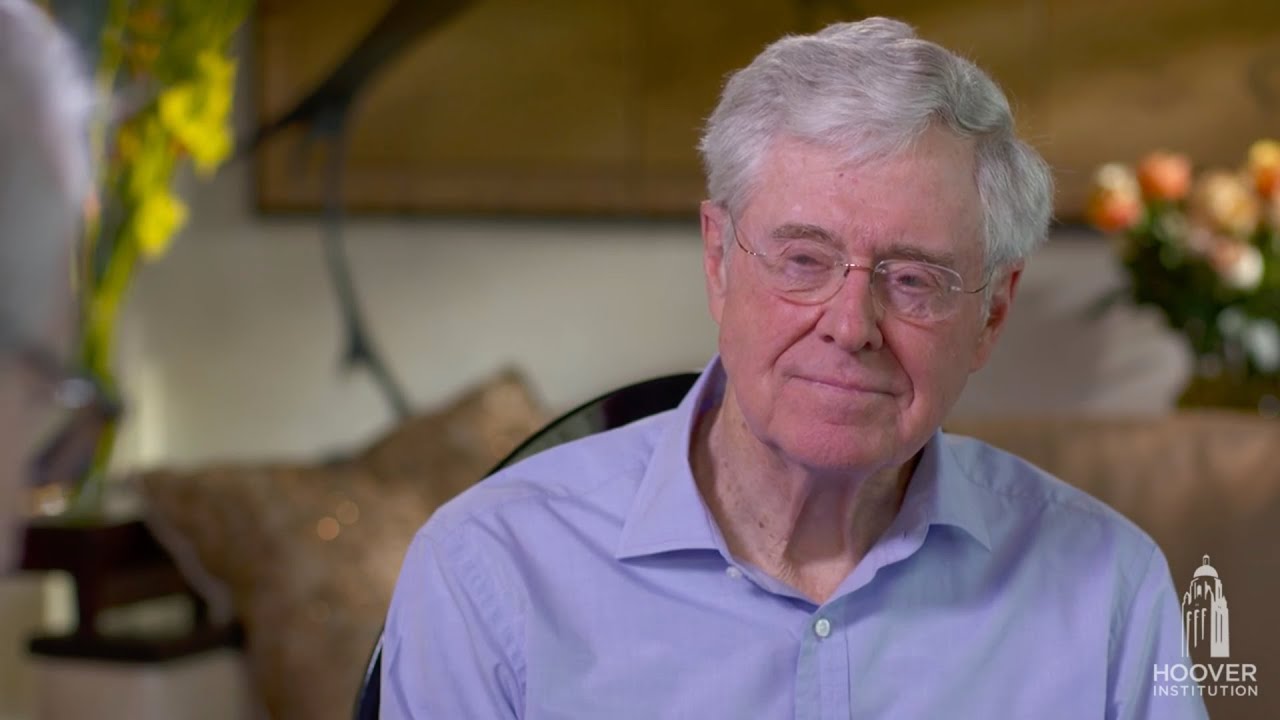
- Mutual Endorsements: Lonsdale has participated in major Koch donor summits and engaged in public discussions with Charles Koch about applying specific business and mutual-benefit principles to society.
 , 2, 3]
- Privatized Initiatives: Lonsdale’s projects, including initiatives aimed at reforming regulatory structures like the FDA, have received funding from partners within the broader Koch orbit. [1, 2, 3, 4]
sludge
Billionaire Pharma Investors Fund Privatized 'Strike Team' at the FDA
By David Moore
Published on Jul 9, 2025
Venture capitalist Joe Lonsdale, a close ally of Elon Musk who announced the project, and his Koch network funding partner each have extensive investments in healthcare startups subject to FDA regulations.
On Monday, venture capitalist Joe Lonsdale, a prominent Trump supporter and Elon Musk confidante who has extensive investments in health care startups, announced that he is funding an initiative inside the Food and Drug Administration that he says will “upend America's health bureaucracy” and enable faster approval of cures. His announcement comes after the Trump administration cut thousands of FDA jobs this year, as Musk’s DOGE team slashed capacity at federal agencies under a Trump executive order.
While Lonsdale describes the project’s mission as ensuring the U.S. does not fall behind China in biotech advances and patient outcomes, his portfolio is set up to profit from an overhaul at the FDA. The initiative he unveiled will embed personnel who he funds to “sit desk‑to‑desk with reviewers” at the FDA—with more significant funding from libertarian billionaire Charles Koch.
Lonsdale’s firm 8VC lists investments in dozens of life sciences and biotech companies, including startups developing personalized treatments, products in areas like microbiomes, and gene therapies using the CRISPR technology. Many of the companies have business before the FDA and could benefit from being advanced by friendly reviewers. For example, the 8VC portfolio company Cellino Bio recently announced it had received an FDA designation as an Advanced Manufacturing Technology, and portfolio company Synthego published a post in April discussing FDA guidance documents.
Lonsdale’s blog post said that the Utah-based Abundance Institute, a new nonprofit closely tied to a Charles Koch-funded academic center, will partner with the Koch network’s gigantic “dark money” group Stand Together to raise $4 million for the project. Koch Disruptive Technologies, the venture capital arm of Koch Industries, also lists more than a dozen healthcare startups in its portfolio developing AI-powered cell research, gene therapies, and other machine-learning data plays.
The money will be used “to place a strike team of 15-20 AI-native software engineers, data scientists, and product leaders inside the FDA to accelerate the FDA's latest AI initiatives and bring outsider perspectives on new areas to iterate on fast,” Lonsdale wrote. The new personnel will “wire modern data pipes into legacy silos,” among other things. Lonsdale wrote on X that he and his friends, whom he left unnamed, were donating to launch the project and that he will personally be sponsoring one of its engineers.
SOUNDS DOGE-Y
---
---
FT
:{:{Palantir’s ‘revolving door’ with government spurs huge growth Peter Thiel-chaired group has Washington and Westminster network that helped secure around $3bn in official contracts (L-R) Palantir chief executive Alex Karp, Palantir chair Peter Thiel, US President Donald Trump and US vice-president JD Vance © FT montage/Bloomberg/Getty Images for The Cambridge Union Palantir’s ‘revolving door’ with government spurs huge growth on x (opens in a new window) Palantir’s ‘revolving door’ with government spurs huge growth on facebook (opens in a new window) Palantir’s ‘revolving door’ with government spurs huge growth on linkedin (opens in a new window) Save current progress 0%}:
Tabby Kinder in San Francisco and Cynthia O’Murchu in London PublishedFEB 7 2025
Palantir is profiting from a “revolving door” of executives and officials passing between the $264bn data intelligence company and high level positions in Washington and Westminster, creating an influence network who have guided its extraordinary growth. }:
The US group, whose billionaire chair Peter Thiel has been a key backer of Donald Trump, has enjoyed an astonishing stock price rally on the back of strong rise of sales from government contracts and deals with the world’s largest corporations. Detailed findings by the Tech Transparency Project (TTP), which analysed transparency disclosures and dozens of job moves, as well as US and UK public records obtained by the Financial Times, show how Palantir has hired extensively from government agencies critical to its sales. The analysis reveals the US group’s sprawling influence network which includes: deep ties with largest client, the Department of Defense; a six-fold increase in lobbying spending in the US in the past decade; and creating a non-profit foundation to fund academic research and shape policy discussions. Palantir has won more than $2.7bn in US contracts since 2009, including over $1.3bn in Pentagon contracts, according to federal records. In the UK, Palantir has been awarded more than £376mn in contracts, according to Tussell, a data provider.
Palantir declined to comment. The company’s executives “have their fingerprints all over the Trump transition and administration”, said Bill Hartung, senior research fellow at the Quincy Institute for Responsible Statecraft. “Silicon Valley used to say ‘we don’t have to lobby because we have a superior product’, but now it is all in on politics.” Palantir argues its data analysis products are in demand from clients including BP and Hertz due to their market-leading ability to analyse complex sets of information. Its technology is credited with helping kill al-Qaeda leader Osama bin Laden, distributing Covid-19 vaccines and convicting financier Bernard Madoff. Palantir chief Alex Karp — an outspoken Democratic donor who backed Trump’s opponent Kamala Harris — said it would gain further windfalls from the new president’s expected focus on budget efficiency as well as higher spending on national security.
:{:{Its shares rose 340 per cent over the course of 2024, when it was the top performer in the S&P 500. Palantir’s top executives, Thiel and Karp, have earned over $1bn in share sales since Trump’s November election victory. “This is a revolution. Some people will get their heads cut off,” said Karp announcing stellar quarterly earnings on Monday that sent it stock to new highs. “We’re expecting to see really unexpected things and to win.”}:
The revolving door
While Elon Musk has emerged as Trump’s biggest Silicon Valley booster, Thiel was the tech sector’s champion of the president during his first campaign in 2016. The investor also played a crucial role in the ascendancy of JD Vance, launching the new vice-president’s venture capital career before becoming the largest donor to his campaign for US senate in 2022. }:
Thiel threw a celebration party for Trump’s inauguration at his DC home last month, attended by Vance as well as Silicon Valley leaders like Meta’s Mark Zuckerberg and OpenAI’s Sam Altman. After the US election in November, Trump began tapping Palantir executives for key government roles. Jacob Helberg, senior adviser to Karp, was nominated as under secretary of state for economic growth, energy and the environment, which would make him the top economic policy and trade official at the State Department. Meanwhile, Gregory Barbaccia, who worked at Palantir for a decade until 2020, was named federal chief information officer at the executive office of the President, overseeing the country’s $70bn IT budget. Palantir has also assembled former lawmakers and government officials from both Republican and Democrat backgrounds. In August, it recruited Mike Gallagher, an ex-Republican congressman who led the House Select Committee on China, to help identify contract opportunities.
He resigned from the House in April 2024 and under federal policy is banned from lobbying Congress for one year. In 2023, Palantir hired Geof Kahn, a former CIA veteran who worked on Trump’s 2016 transition team, and Jamie Fly, former foreign and national security adviser to Florida senator Marco Rubio, Trump’s secretary of state. Since 2019, it has hired former senior defence and legal officials, such as Trump administration appointees Matthew Turpin and Alexander Alden, Obama-era staffer Wendy Anderson and ex-Biden assistant Funmi Olorunnipa Badejo. At least six individuals have moved between Palantir and the Pentagon’s Chief Digital and Artificial Intelligence Office (CDAO), an office that oversees the defence department’s adoption of data, analytics and AI, according to the TTP. Meanwhile, Joe Lonsdale, a venture capitalist and Palantir co-founder, has played a central role in setting up and staffing Musk’s Department of Government Efficiency, a new advisory group seeking to cut swaths of the federal budget. A close ally of the Tesla chief, Lonsdale also helped establish and finance the pro-Trump America PAC, which became the vehicle through which Musk donated over $239mn to Trump’s campaign.
These sorts of moves allow companies like Palantir to gain “credibility on Capitol Hill,” said Jeff Hauser, executive director of the Revolving Door Project, and help them “exert both direct and indirect influence on contracting and appropriations”. Hauser added: “Palantir is doing it because it has been proven over decades that the revolving door can help companies win more contracts.” Ramping up lobbying In October, Palantir hired the firm of one of Washington’s most prominent corporate lobbyists, Miller Strategies, to lobby on defence policy and appropriations, according to federal disclosures. The firm’s head, Jeff Miller, had established himself as the go-to lobbyist for influencing the Trump administration during the president’s first term in office. His other tech clients include SpaceX, Amazon and Apple.
:{:{Recommended News in-depth}:
Palantir Technologies Inc
Palantir becomes a ‘Trump trade’ as investors bet on higher defence spending
:{:{ Overall, Palantir ramped up spending on lobbying last year to $5.8mn, up from around $1mn in 2015, according to federal disclosures. However, that compares to $12.3mn by Google, and $12.4mn and $8.8mn by traditional defence companies Lockheed Martin and Northrop Grumman respectively. Palantir has also backed the creation of a lobby trade group, the New American Industrial Alliance, which is advised by former Trump administration officials and aims to overhaul the Pentagon’s work with defence contractors.}:
It is also backed by Lonsdale’s 8VC venture firm. In 2023, it launched the Palantir Foundation for Defense Policy and International Affairs, which gained non-profit tax exempt status. The group said it is a “non-partisan organisation dedicated to advancing national security”, and was set up to influence policy discussions by funding academic research and hosting conferences. It publishes a journal called The Republic, with its first issue featuring an essay titled, ‘Don’t let copyright kill American AI’. Palantir has used a similar playbook in the UK. Its British business is overseen by Louis Mosley, a former activist in the Conservative party, while head of UK corporate affairs Ben Mascall was previously an adviser at the Ministry of Defence and the head of strategic communications at Downing Street. }:}:
:{:{Ahead of winning a contract worth up to £330mn with the NHS in November 2023 to help manage patient data, Palantir recruited two senior NHS officials specialising in AI and data, a move which raised concerns about the company’s growing ties to the health service. Palantir has also hired civil servants from departments including the UK’s Ministry of Defence and the Home Office, and forged other links with British government officials. It has used former high-level civil servants, such as former MI6 chief Sir John Sawers, to broker introductions to the UK government. }:
:{:{Recommended Aerospace & Defence}:
Palantir’s relentless rise
The company has been a client of Global Counsel, the lobbying firm founded by Labour peer Peter Mandelson — the incoming British ambassador to the US. Lobbying expenditure data is not publicly available in the UK. Palantir attended at least 13 ministerial-level meetings between 2022 and 2023, but also extended hospitality such as drinks and dinners to senior officials such as Caroline Bellamy, the chief data officer at the Ministry of Defence where Palantir has a $75mn contract. }:}:
In January 2024, Thiel personally met Lord Dominic Johnson, then investment minister, to “develop a relationship”, according to documents released to the FT under transparency laws. Johnson planned to address concerns about the lack of access to the European marketplace by Palantir’s defence arm and pitch the UK as a “world-leading destination and incubator for venture philanthropy”, the documents show. According to heavily redacted meeting notes provided to the FT, Thiel expressed pessimism about the UK economy citing high taxes, low growth and “the fact that growth is driven by real estate rather than innovation like tech”.
---
AN
COMM DR 12 25
Venture capitalist Joe Lonsdale, a co-founder of data platform company Palantir, is calling for the return of public hangings as part of a broader push to restore what he describes as “masculine leadership” to the US.
In a statement posted on X Friday, Lonsdale said that he supported changing the so-called “three strikes” anti-crime law to ensure that anyone who is convicted of three violent crimes gets publicly executed, rather than simply sent to prison for life.
“If I’m in charge later, we won’t just have a three strikes law,” he wrote. “We will quickly try and hang men after three violent crimes. And yes, we will do it in public to deter others.”
Lonsdale then added that “our society needs balance,” and said that “it’s time to bring back masculine leadership to protect our most vulnerable.”
Lonsdale’s views on public hangings being necessary to restore “masculine leadership” drew swift criticism.
Gil Durán, a journalist who documents the increasingly authoritarian politics of Silicon Valley in his newsletter “The Nerd Reich,” argued in a Saturday post that Lonsdale’s call for public hangings showed that US tech elites are “entering a more dangerous and desperate phase of radicalization.”
“For months, Peter Thiel guru Curtis Yarvin has been squawking about the need for more severe measures to cement Trump’s authoritarian rule,” Durán explained. “Peter Thiel is ranting about the Antichrist in a global tour. And now Lonsdale—a Thiel protégé—is fantasizing about a future in which he will have the power to unleash state violence at mass scale.”
Taulby Edmondson, an adjunct professor of history, religion, and culture at Virginia Tech, wrote in a post on Bluesky that the rhetoric Lonsdale uses to justify the return of public hangings has even darker intonations than calls for state-backed violence.
“A point of nuance here: ‘masculine leadership to protect our most vulnerable’ is how lynch mobs are described, not state-sanctioned executions,” he observed.
Theoretical physicist Sean Carroll argued that Lonsdale’s remarks were symbolic of a kind of performative masculinity that has infected US culture.
“Immaturity masquerading as strength is the defining personal characteristic of our age,” he wrote.
Tech entrepreneur Anil Dash warned Lonsdale that his call for public hangings could have unintended consequences for members of the Silicon Valley elite.
“Well, Joe, Mark Zuckerberg has sole control over Facebook, which directly enabled the Rohingya genocide,” he wrote. “So let’s have the conversation.”
And Columbia Journalism School professor Bill Grueskin noted that Lonsdale has been a major backer of the University of Austin, an unaccredited liberal arts college that has been pitched as an alternative to left-wing university education with the goal of preparing “thoughtful and ethical innovators, builders, leaders, public servants and citizens through open inquiry and civil discourse.”
---
GIZMODO
#Palantir Co-Founder Starts Anti-Woke University With Clown Car of Intellectual Dark Web Dweebs
So far, the University of Austin's accreditations consist solely of gathering a group of the nation's loudest contrarians.
By Tom McKayPublished November 8, 2021
A screenshot from the University of Austin’s website. Screenshot: The University of Austin (Fair Use)
A sampling of the nation’s most intolerable contrarian columnists, right-wing pundits, and other stuffed shirts is launching their own university in a bid to challenge the supposedly woke academic status quo—courtesy of funding from an obscure libertarian nonprofit linked to Palantir co-founder Joe Lonsdale.
The University of Austin or UATX, which is absolutely not to be confused with the University of Texas at Austin, a real school, aims to offer “forbidden courses” that will spark students to ask “provocative questions that often lead to censorship or self-censorship in many universities.” It boasts a bevy of headache-inducing personalities on its Board of Advisors, which consists largely of the type of people who have branded themselves as the last defenders of liberalism (against the tide of woke liberals).
Those personalities include Bari Weiss, a former New York Times opinion editor who has spent most of her professional energy yelping about left-wing Twitter mobs; conservative British historian Niall Ferguson, who left Stanford after leaked emails showed him encouraging campus Republicans to do “opposition research” on a left-wing student; former Treasury Secretary Larry Summers, who has somehow tried to make the “wokeness” of central bankers a culture-war issue; amateur race scientist and self-declared ethnic penis size expert Andrew Sullivan; scorched-earth culture warrior Sohrab Ahmari; and cognitive psychologist Steven Pinker, an identity politics alarmist who is popular with the neoliberal crowd. One of its “founding faculty fellows” is Ayaan Hirsi Ali, a Hoover Institution scholar who believes Islam is inherently violent and has more recently begun parroting the line that “wokeism” is just like white supremacy.
The effort will be headed up by inaugural president Pano Kanelos, the former president of St. John’s College (Annapolis) who is also another culture-war obsessive who believes academic freedom is being derailed by leftists. Alongside them will be fellow traveler and venture capitalist Lonsdale, one of the tech billionaires known for complaining about the supposedly stifling political culture of Silicon Valley.
UATX—which as of right now, is not accredited in anything but giving people aneurysms—says on its website it is “fiscally sponsored” by Cicero Research, which is affiliated with Lonsdale’s libertarian Cicero Institute. Lonsdale is best known for partnering with right-wing venture capitalist Peter Thiel to found Palantir, the big data analysis firm infamous for courting contracts with federal immigration agencies and the military. (Disclosure: Thiel bankrolled a lawsuit that bankrupted Gizmodo’s former parent company, Gawker Media.) Lonsdale and his firm 8VC moved to Austin from San Francisco last year, citing the location as conveniently closer to companies he backs across the country and a way to escape California tax rates—Texas has no income tax.
According to the Daily Beast, public filings show Lonsdale listed as a member of Cicero Research. Beyond potentially being UATX’s financial benefactor and a member of its board of advisers, it’s not clear how big a role Lonsdale will play in the project: a spokesperson for the school told the Beast only that “We’re very proud to have Joe Lonsdale both on our board and as one of our financial supporters.” The Beast noted that UATX says it already has seed funding and is looking for $250 million more in investment.
UATX does not yet offer degrees but is seeking accreditation from the Texas Higher Education Board and initial accreditation through the Higher Learning Commission to offer master’s degrees in fall 2022 and undergraduate degrees in 2024. In an FAQ, it explains the choice of location in Austin with “If it’s good enough for Elon Musk and Joe Rogan, it’s good enough for us,” adding that the city is experiencing a “historic boom in talent and capital.”
For a taste of Lonsdale’s political leanings, refer to a recent tweet in which he responded to a tweet about Transportation Secretary Pete Buttigieg by claiming that men who take half a year of paternity leave are “losers” failing to take “the correct masculine response” of the “old days”. That remark didn’t go down particularly well with Initialized Capital founders Alexis Ohanian and Garry Tan, who shot back that their company offers four months of paid paternity leave. Buttigieg’s spouse, Chasten Buttigieg, subsequently stated that their baby had serious health issues and spent three weeks in the hospital, including a “terrifying week” on a ventilator. Lonsdale also totally denies accusations of rape from a female Stanford student he mentored.
As New York Mag argued, the concept behind UATX isn’t exactly new: conservatives have tried to build their own academic safe spaces free from dissenting voices for decades, like Jerry Falwell’s evangelical Liberty University, Republican candidate factory Patrick Henry College, and MAGA-friendly Hillsdale College. The magazine also noted that many of the individuals associated with UATX aren’t exactly known for their embrace of the spirit of open debate, like Bari Weiss, who as a student at Columbia University developed a reputation for targeting Arab professors as Israel-haters, or the anti-trans scholar Kathleen Stock, who quit the University of Sussex after students protested her transphobic views. If history is any example, UATX will be more of a cancel culture-obsessed hivemind than a beacon of debate.
UATX didn’t immediately respond to Gizmodo’s request for comment on this story, but we’ll update if we hear back.
---
---
AM PROS
FOur and a half years ago, Department of Government Efficiency co-czar Brad Smith stumbled on a counterintuitive revelation: The most effective way to slash federal health care spending involved drastically raising Medicare and Medicaid reimbursement rates for hospital care.
:{At the time, Smith was running something called the Center for Medicare and Medicaid Innovation, an obscure off-the-books laboratory created by the Affordable Care Act for experimenting with “alternative payment models”—neoliberal for “larger sums with less accountability.” In its ten years of operation, CMMI had spent more than $10 billion testing various methods of tweaking reimbursement standards in (theoretical) hopes of improving health care outcomes for lower costs:{. They had worked with UnitedHealth, Aetna, Molina,}: and other insurers in 13 states to reward primary care physicians who administered more preventative care and collected more specific data on their patients.
They’d worked with more than 100 hospitals and mega-practices to bundle payments for complex patients, in hopes of lowering the ultimate cost of treating chronic illnesses. CMMI had spent some $10 billion testing out dozens more schemes, nearly all of which subscribed to an ideology called “value-based care,” in which the central flaw of American health care is “volume-based” fee-for-service compensation schemes that incentivize “overutilization” of the health care system, and so the natural “solution” involves the government paying health care providers and various intermediaries to take steps designed to decrease said “utilization.”}:
Value-based care grew especially important during the Obama years, because the ACA mandated that insurance companies spend a minimum of 85 percent of patients’ premium dollars on “care,” wiping out profit drivers like the mandatory insurance policies UnitedHealth sold to college students that often boasted medical loss ratios as low as 10 percent. Insurers in turn began to focus their energies around their highest-revenue patients: seniors with a lot of complex health issues who were enrolled in the private Medicare offerings known as Medicare Advantage. They would soon buy up the medical practices, home health agencies, and surgery centers that treated these patients, in a move that enabled them to at once “align incentives” (i.e., control more of the medical decisions they were paying for), park the excess profit margins they weren’t allowed to report on their insurance sides, and find more Medicare patients to convert to MA plans.
Brad Smith was a value-based guy. He’d gotten in on the ground floor of the craze during the first term of the Obama administration, while helming the education reform foundation of former Senate Majority Leader Bill Frist (R-TN), whose billionaire brother Tom Frist founded the hospital behemoth HCA, whose long history of unnecessary overtreatment of Medicare patients perhaps ironically gave birth to the value-based revolution. Together, the two had built a home health care business with more than 650 employees that they had just sold for $440 million to health insurer Anthem.
Smith had been working as the chief operating officer of Anthem’s value-based business when he’d been tapped for the CMMI gig by one Adam Boehler, another value-based evangelist who often talked about how he wanted to “blow up” the “volume-based” ancien régime. Still, doctors, especially the types of doctors who complained about Obamacare and voted for Trump, hated value-based care, because it required spending way too much money on software and far more hours doing paperwork than the incentive payments could justify. Smith’s boss, Centers for Medicare & Medicaid Services (CMS) head Seema Verma, was value-based skeptical, and wanted to know whether CMMI’s programs were actually working as “intended.” So Smith ordered his staff to conduct a financial analysis of all 54 programs CMMI had bankrolled to test out the new approach to health care.
Smith and a 24-year-old deputy from his Nashville VC firm are said to be building the vision of what will replace everything that DOGE has eradicated.
The verdict was unambiguous: Value-based care was a bust. For two of its biggest programs, CMMI had spent $7 billion more than it had saved, just from compensating all the various intermediaries that had administered the trials. The reasons for this were twofold, say two individuals who worked on value-based care policy for the Obama administration: One, CMMI and CMS invariably outsourced the management of the trials to “venture capital or private equity firms or nonprofits where the CEO is making millions of dollars” that typically alienated and underpaid the clinicians they were ostensibly seeking to incentivize; and two, most of the policymakers involved were too preoccupied with “how they were going to monetize their expertise” to design programs that might actually save CMS money.
Lending credibility to that analysis, the shining star of the small agency’s roster of reform measures was the “Maryland All-Payer Model,” a state-operated system originally devised in the early 1970s by which an independent commission fixed flat hospital prices for the state that every payer—from Blue Cross to Medicaid—is expected to pay. The Maryland Model, which was modified in 2014 and discarded in favor of a more complex, almost European-style “global budgeting” system in 2018, is a rabbit hole with its own unique advantages and disadvantages, but it is decisively notvalue-based care, and sources familiar with CMMI said its affiliation with the initiative was something of a fluke, especially given that Medicare conclusively pays far higher rates for medical care in Maryland than anywhere else (though yearly per capita expenditures are higher in Florida). And yet the Maryland system saved CMS $1 billion over just five years tracked by CMMI, likely in large part by lacking the administrative middlemen and arbitrageurs in the system and the waste and fraud that tend to accompany them.
This analysis might have made for an embarrassing news cycle for CMMI and all the affiliated grifters who had cashed in on the value-based boom, like Smith’s predecessor Boehler, a college roommate of Jared Kushner’s who would soon sell his home health agency for $3.5 billion to UnitedHealth, or CMMI founding director Patrick Conway, who’d left the agency a few years earlier to become the richly remunerated CEO of Blue Cross in North Carolina, where he had rolled out a mandatory value-based care regime in conjunction with the CMMI-friendly healthtech Aledade, and recently been charged with driving under the influence after crashing his car with his two elementary school–aged daughters inside.
Instead, they were all saved by the pandemic, during which Smith was detailed to the Trump inner circle for assistance with various pandemic response efforts, and ended up becoming close to Kushner himself, according to The New York Times. By the time he returned to CMMI to write up the results of his staff’s analysis in The New England Journal of Medicine, CMS had rained down hundreds of billions of bailout dollars on the health care system, and no one even bothered making hay of the news that the agency had wasted $10 billion testing out cost-cutting ideas that didn’t pan out.
In one of his last acts at the agency, Smith introduced a new program called the Geographic Direct Contracting Model, or “Geo,” by which all remaining traditional Medicare beneficiaries were slated to be automatically assigned on the basis of their residence to a value-based care organization to which CMS would pay a flat annual fee to assume their health care “risk.” Geo contractors would be virtually unregulated, though they would be held to a medical loss ratio minimum requiring them to spend at least 60 percent of their revenues on care. The Biden administration scrapped Geo in early 2021, but kept a slightly less radical Smith plan with a similar goal of stealth total privatization after renaming it ACO REACH, for “Accountable Care Organization Realizing Equity, Access, and Community Health.”
Smith moved back to Nashville and took the helm at two new value-based care upstarts, a Medicaid home health intermediary called CareBridge and a rural Medicare Advantage play called Main Street Health. In late October, he sold the former to Elevance, the new name of the insurer to whom he’d sold his first home health company, Aspire. This time, the head count was lower—fewer than 500 employees—but the price tag was much, much bigger, at $2.7 billion.
A putative class action lawsuit filed last month in Florida by a “clinical assessor” for CareBridge alleges that she and other low-level employees were required to work 45 hours a week for only 40 hours’ pay, and dozens of negative reviews on job sites suggest assessors work as many as 20 extra hours without pay. Worse, employees say the job mostly consists of “managers … demanding that you drastically cut caregiver hours for people who desperately need someone in their home.”
“This is a greed-driven company that is preying on our nation’s most vulnerable and poorest people. If you can sleep at night and live with yourself while harming the poor and disabled during the day, this job is for you,” reads one review on Glassdoor. “If CareBridge is the future of healthcare then we heading to a sad state of affairs,” reads another.
Just months after the CareBridge deal, Smith was reported to be hanging around Mar-a-Lago with Steve Davis, the longtime Elon Musk loyalist who ran the hostile takeover of Twitter. Underneath Musk and Vivek Ramaswamy, who would soon depart, Smith and Davis are said to be the real operating leaders of DOGE, with the latter playing the bad cop masterminding the scorched-earth shutdowns and cuts, while Smith and a 24-year-old deputy from his Nashville VC firm are said to be building the vision of what will replace everything that DOGE has eradicated, according to a source familiar with his recruiting efforts. CMMI, a highly unusual agency with a ten-year, self-renewing budget outside the appropriations process and an extraordinary ability to grant waivers from the statutes governing CMS, including fraud and kickback statutes, is said to be a model for how Musk wants DOGE to reimagine the federal government.
As further evidence of that, Smith’s predecessor as CMMI director, Boehler, whose brand-new venture capital firm Rubicon Founders last spring raised more than a billion dollars for its latest fund and also groomed Trump’s newest CMMI director, 33 year-old Abe Sutton, is currently working as Trump’s special presidential envoy for hostage affairs. Boehler got his start in the health care business as a medical debt collector, first at a firm called MedeFinance and then with a shadowy empire called Accretive, which was banned from the state of Minnesota in 2012 after an employee left a laptop in a taxi that revealed the company had essentially seized the operations of a Minneapolis nonprofit hospital system and was using confidential health records, collected under the guise of value-based care modeling, to manipulate patients into coughing up large cash payments for hospital services to “embedded” collection agents, sometimes while under the influence of powerful anesthesia.
The obscure agency Boehler launched after leaving CMMI, the U.S. International Development Finance Corporation—best known for its failures to do much of anything with its nine-figure budget for bolstering supply chains during the pandemic after an ill-fated $765 million loan it made to Eastman Kodak was shelved after revelations of insider trading—was reported on Wednesday to be DOGE’s designated “replacement” for the U.S. Agency for International Development, under the leadership of venture capitalist Joe Lonsdale and Ben Black. The latter is the son of disgraced billionaire Leon Black, an accused sexual predator who was forced to leave the private equity juggernaut after revelations that he had wired nearly $200 million to Jeffrey Epstein, whom he considered his best friend, in the years before Epstein’s death. A January Substack post by Lonsdale and Black on their plans for “disrupting” the $43 billion USAID budget is light on specifics but advocates defunding nongovernmental organizations to pursue an “investment-driven model focused on strategic project finance initiatives.”
Foreign aid, of course, is a rounding error compared to the multitrillion-dollar health care budget, in which the *Prospect estimates a team of forensic accountants might easily find as much as a half-trillion dollars in waste annually, roughly $100 billion of that in Medicare Advantage overpayments alone. (Obama had the chance to clamp down on the obvious MA grift, but abruptly reversed course in 2014.) In a 2021 Zoom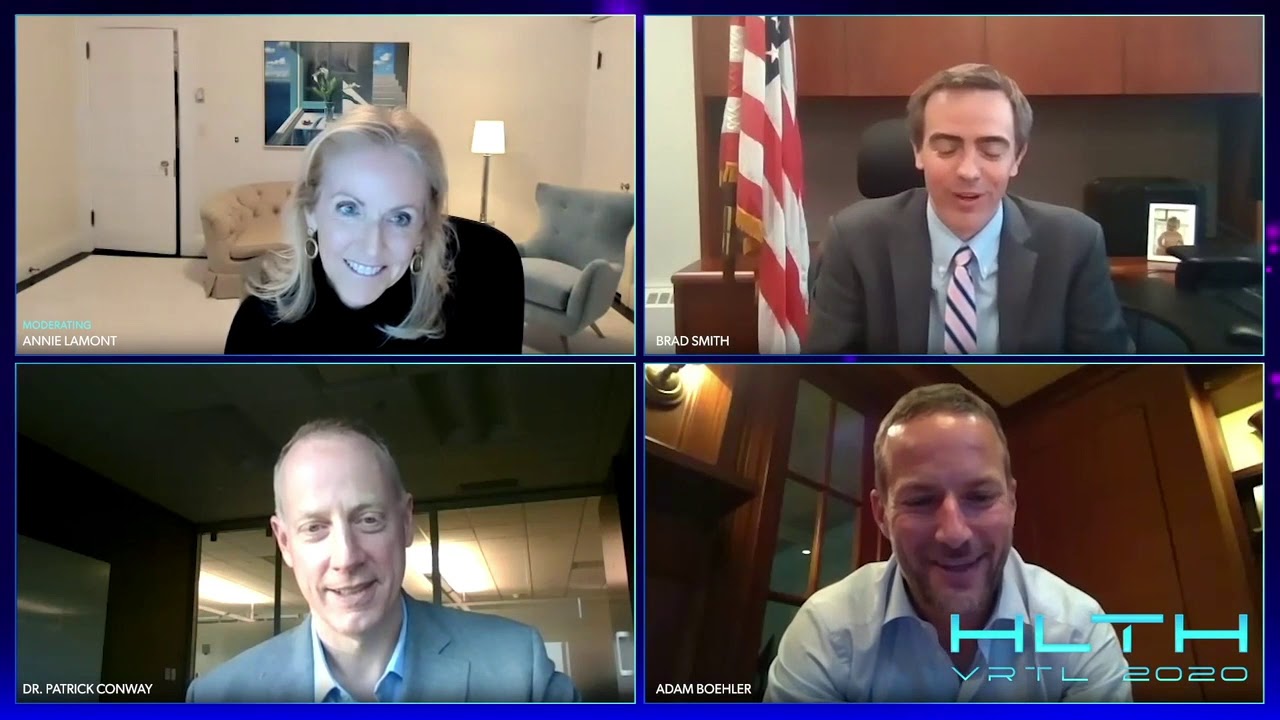 on the tenth anniversary of the agency and the future of “value-based care” moderated by ubiquitous value-based care venture capitalist Ann Lamont, Smith, Boehler, and CMMI founder Conway, now the CEO of UnitedHealth’s OptumRx division, held forth almost giddily on the rosy “future of value-based care,” with Boehler jokingly describing Conway as the agency’s “Adam Neumann,” the self-aggrandizing WeWork founder who burned some $20 billion in venture capital funding. At one point, Smith brought up his analysis, commending the agency for making “value-based care” such an inescapable industry buzzword but acknowledging that only five of the group’s 54 experiments had delivered any cost savings whatsoever. Lamont quickly changed the subject. “Imagine in a few years, we receive 90 percent of payments in value-based commitments. How do we get there?”
This probably wasn’t how any of them imagined it going down, but with Smith running the rogue operation that is apparently running the country, it seems likely we’ll get there.
Tags
Health & Social Policy CMS Medicare health insurance Affordable Care Act Obama Administration privatization federal government DOGE Elon Musk Donald Trump Trump transition
Maureen Tkacik is investigations editor at the Prospect and a senior fellow at the American Economic Liberties Project.
---
---
7 24
republicans-think-elon-musk-is-total-flake-report
Elon Musk recently came out with a public endorsement of Donald Trump for president, but Republicans haven’t fully embraced him, according to a report from The New York Times.
The tech billionaire CEO of Twitter, Tesla, and SpaceX has been highly sought after by GOP fundraisers and Trump associates for years, who see him both as a meal ticket and a potential inspiration for the party. But Musk doesn’t have a solid record for political involvement.
For example, he has promised to spend money on “free speech” lawsuits to support conservatives who claim that they are the victims of social media censorship but hasn’t followed through. Musk has also been a no-show at public appearances, such as a 2023 event to support Kevin McCarthy, then the newly elected speaker of the House. In San Francisco, he promised to donate $100,000 to the centrist group GrowSF to defeat progressives, but again didn’t follow through.
“Some conservative activists said they wished that Mr. Musk had followed through more on promises,” the Times reported.
Musk’s public endorsement of Trump only came after a gunman tried to assassinate the former president and convicted felon on Saturday. Previously, the tech magnate, while privately urging friends not to vote for Biden, was waiting until the president had secured the Democratic nomination, according to the Times.
Musk’s confidants in the tech world, such as Joe Lonsdale, a co-founder of data analytics firm Palantir, reportedly discuss politics with him and have urged him to play a more active role. Lonsdale founded AmericaPAC to help Trump return to the White House, with Musk reportedly pledging a monthly donation of $45 million, according to The Wall Street Journal. Musk denied the report, leaving those involved with the PAC to wonder how much he plans to donate, or if he will at all.
Alongside fellow tech CEOs Peter Thiel and David Sacks, Musk is a member of the “PayPal mafia,” the group of early supporters and founders of the payment service. All three have embraced conservative ideas and supported J.D. Vance as Trump’s running mate, with Musk and Sacks openly lobbying Trump on behalf of the Ohio senator. If Trump wins in November, the trio will have an administration friendly to their whims and those of Silicon Valley’s right wing.
Unfortunately More on Elon:
Why Elon Musk and Jeff Bezos Want Women to Stay Barefoot and Pregnant
---
The Verge
Elon Musk and tech elite back a pro-Trump super PAC
/ Joe Lonsdale, David Sacks, and the Winklevoss twins have helped America PAC raise millions for former President Donald Trump.
By Gaby Del Valle, a policy reporter. Her past work has focused on immigration politics, border surveillance technologies, and the rise of the New Right.
Jul 16, 2024, 15 Comments15 New
Several close friends of Elon Musk, including Palantir cofounder Joe Lonsdale, venture capitalist Doug Leone, and investor and podcast host David Sacks, have donated lavishly to a super PAC backing former President Donald Trump — and The Wall Street Journal reports that Musk plans on donating as much as $45 million a month to America PAC. In a post on X, Musk replied to the Journal’s article with a meme claiming it was “fake gnus” (fake news), though Bloomberg reported this weekend that he had already contributed an undisclosed amount to the super PAC.
Musk endorsed Trump on Saturday following the assassination attempt at a campaign rally in Pennsylvania and praised Trump’s selection of Ohio Senator J.D. Vance as his running mate. Several of Musk’s friends and business associates have contributed to the PAC, and others have reportedly said they’d do so. Multiple America PAC donors attended a $50,000-a-head fundraiser hosted by Sacks — the host of the All-In podcast, who decried “Democrat rule” in San Francisco in a Monday speech at the Republican National Convention — according to The Washington Post.
Recent financial disclosures show America PAC has raised more than $8.7 million since June. Founded in May by prominent Republican campaign finance lawyer Chris Gober, the PAC is focused on registering voters and encouraging early and mail-in voting in swing states, one source told the Journal. America PAC has reportedly hired hundreds of employees. In June, The New York Times reported that the PAC spent more than $6.6 million on behalf of Trump in a two-week period, most of which went toward “canvassing/field operations.”
“We believe that four more years of Joe Biden is a grave threat to the financial and physical safety of the United States,” an unnamed America PAC spokesperson said in a statement to The New York Times.
Other donors include Sequoia partner Shaun Maguire, Tyler and Cameron Winklevoss, early PayPal executive Ken Howery, and Valor Equity Partners founder Antonio Gracias, a former member of Tesla’s board of directors. Keith Rabois, a managing director at Khosla Ventures, told the Financial Times he would donate $1 million to the PAC. Marc Andreessen and Ben Horowitz told employees of their eponymous investment firm that they planned on donating to the PAC, The Information says. Andreessen and Horowitz reportedly told employees that they expect Trump to be more lax on industries like cryptocurrency.
---
an 3 24
in August of 2023, Politico reported that right-wing billionaire Leonard Leo is "best known as Donald Trump's White House 'court whisperer," having "played a behind-the-scenes role in the nominations of all three of the former president's Supreme Court justices and promoted them through his multi-billion-dollar network of nonprofits."
Caroline Ciccone, president of the watchdog Accountable.US, told Politico "Leo spent years stacking the court with ideological kindred spirits. Now he's funding a dark web of special interest groups to push an extreme agenda."
According to a Monday, March 18 report published by Rolling Stone, the billionaire — "long averse to media attention" — in a recent podcast interview first reported by Accountable.US "spoke about his $1.6 billion dark money fund, called the Marble Freedom Trust, explaining: 'We’re trying to really institute a lot of legal and social change through philanthropy.'"
The conservative activist, according to Rolling Stone, "also offered his thoughts on how billionaires can help conservatives limit regulations, take over corporate C-suites, reshape America’s education system, and influence our culture," and as a "devout Catholic, additionally discussed his interest in reforming religious institutions."
Speaking "with Joe Lonsdale, the co-founder of surveillance company Palantir and the University of Austin, a conservative alternative college he started with journalist Bari Weiss," Rolling Stone notes, Leo said, "It’s really important that we flood the zone with cases that challenge misuse of the Constitution by the administrative state and by Congress," urging "the ultra-wealthy to support these litigation efforts."
Referring to the conservative-majority high court, he emphasized, "We have a great Overton window in the next couple of decades to really try to create a free society. And I think we should take full advantage of it."
Additionally, as a proponent of the effort to establish a publicly funded religious school in Oklahoma, Leo also "talked about the need to reform the clergy," during the interview, saying, "This is one that I just started thinking about, there’s the whole issue of clergy, and this is a tough one to crack. This may not be for everybody, but my own perspective is: God made us to know him, to love him, and to serve him. And I think our religious leaders need to center more on that, and less on knowing, loving, and serving ourselves, and whatever personal desires or affections we may have."
Furthermore on the subject of education, the billionaire added, "We need to create talent pipelines for K-12 education and for higher ed, something like you’re doing with the University of Austin, so that we remind people that the purpose of higher ed, for example, is to basically build a citizenry that’s committed to the Constitution as it was originally written."
Rolling Stone reports "Leo explained this means recruiting teachers and working to influence education board races, 'so that we can begin to have some sanity and local education.'"
READ MORE:Leonard Leo allies lead effort to establish publicly funded religious school
*Rolling Stone's full report is availableat this link (subscription required)
---
---