canary mission islm
doxxed ozturk
gov’t ? admits she did no anti-sem, no advoc hamas/ terror, just signed ltr that tufts shd live up to its stds?
===
flipbd 9 24
how-supporting-palestine-became-a-career-killer-for-gen-z
reckon
basseema Abouassaad thought they had finally landed their dream job. Fresh out of college, Abouassaad, who uses all pronouns, was hired in April by an environmental conservation organization. It seemed like the perfect start to their career – a stable position aligned with their values. But their elation was short-lived.
By June, Abouassaad found themselves unemployed, caught in the crossfire of one of the most contentious global conflicts of our time. The reason? An article surfaced, listing Abouassaad as providing off-site legal support for pro-Palestine protesters. Abouassaad requested that their name be removed from the article for their safety, but the measure came too late.
“Two days later I was fired,” recounted Abouassaad, already widely recognized as co-founder of Red Star Texas, a mutual aid group that provides food, anti-overdose medication, and contraceptives. “They said it was so that I could ‘engage in my passions’ without any issues or barriers.”
The irony wasn’t lost on Abouassaad. The environmental organization, funded by Valero, an oil company producing ethanol, petroleum, and “green diesel,” seemed more concerned about Abouassaad’s political stance than the studies showcasing the “massive” carbon emissions resulting from Israel’s military actions since Oct. 7, 2023.
Abouassaad’s story is not unique. Across the United States, young activists are discovering that their support for Palestinian rights is clashing with the status quo, and it’s costing them job opportunities. In the wake of Israel’s military actions in Gaza, which have sparked nationwide protests, a disturbing pattern has emerged: many companies are punishing Gen Z organizers for fighting for what they believe in.
From Yale to Gallaudet University, the only U.S. higher education institution specifically for the deaf and hard of hearing, student protests have returned to decry the violence, which UN officials say there are “reasonable grounds” to believe constitutes genocide. Many students have organized through the National Students for Justice in Palestine collective. The resulting backlash has been severe.
“I think right now we are seeing a resurgence of repression on campuses that we haven’t seen since the late 1960s,” said Risa Lieberwitz, a Cornell University professor of labor and employment law who serves as general counsel for the AAUP, told the Associated Press.
Several universities have defended the crackdown on students, citing campus safety concerns or older policies that prohibit the occupation of an admin building or the obstruction of pathways.
The Council on American-Islamic Relations (CAIR), the U.S.’s largest Muslim civil liberties organization, has documented instances of Islamophobia on campus, including the destruction of Quranic artwork, harassment and threats, and even a “doxxing truck” on Harvard’s campus. Doxxing—the non-consensual publication of someone’s private information like phone numbers or home addresses—can have devastating consequences, especially for marginalized activists. Doxxing can often lead to a flood of threatening phone calls, emails, letters, physical harassment at home, and even the doxxing of loved ones.
A recent study by Intelligent paints a stark picture: nearly 30% of students who participated in pro-Palestine protests reported having job offers rescinded. Even more alarmingly, 70% faced questions about their activism during job interviews, a practice that skirts the edge of employment discrimination laws.
“Companies have taken a particular way of getting rid of people,” said Mahir Nisar, principal attorney at Nisar Law Group. “It’s necessary to raise the concern that this is not okay. They actually may be engaging in unlawful activity.”
Personal accounts highlight the severity of the situation. Ridikkuluz, a Palestinian-Jordanian student in Berlin, was fired from a finance job for refusing to write a pro-Israel statement.
“I knew that wasn’t the case,” they said, noting the immediate shunning by coworkers. Financial hardship now looms. “I would sell my work about Palestine but that wouldn’t sit right with me,” Ridikkuluz said.
“There is a level of ‘you did something wrong for this to be happening to you, you did commit some kind of crime and you are deserving of this happening to you,’” a Harvard student protester told ABC News in October.
Legal experts are raising concerns about the potential illegality of such hiring practices. Nisar, whose law firm specializes in employee discrimination, argues that pro-Palestinian activism does not pose a “legitimate business concern” to employers. “The laws basically protect people from discrimination based upon their identity,” Nisar added. “When somebody is speaking up on this particular issue, that [person] is protected against being discriminated against if you are speaking up on behalf of Palestinians or Muslims being slaughtered at this time.”
Tracing anti-Muslim bias from universities to the job market
CAIR’s Research and Advocacy Director Corey Saylor highlights the majority of university administrations for enabling this anti-Arab and anti-Muslim violence, which has ranged from withholding degrees to deploying aggressive police responses against peaceful protesters.
Saylor cited George Washington University as an example after they canceled a trauma support program for Palestinian students within 24 hours of its launch. “After the raid of the encampment, we were sent pictures of Islamic prayer mats being thrown in the trash,” Saylor recalled. “I’ve had several people report Qurans being trashed.”
The anti-Arab and anti-Muslim violence and punishment towards pro-Palestine advocates on campus isn’t confined to university grounds, but also extends to the job market.
Experts suggest that this repeated cycle of anti-Palestinian discrimination, both in academia and the job market, persists due to outdated legal frameworks in the United States. The law has failed to keep pace with evolving understandings of Islamophobia and its impacts on Palestinian, Arab and Muslim Americans.
“The law does not possess the language we desperately need to accurately capture the totality of Palestinian subjugation,” Palestinian American human rights lawyer Rabea Eghbariah writes in his article “Toward Nakba As A Legal Concept,” which was published, removed, and later reinstated at the Columbia Law Review. “There is a dire need for a new approach.”
Palestine Legal, which supports the Palestine solidarity movement, saw a 400% increase in requests for legal aid between Oct. 7 and Dec. 31, 2023.
CAIR also reported a 56% increase in anti-Muslim bias incidents nationwide in April 2024, with 44% of those occurring in the last three months of 2023. And from January to June 2024, there was a 69% jump in reported incidents compared to the same time period the prior year.
Legal strategies to hold employers and universities accountable
As campus protests have returned, backlash continues towards pro-Palestine students, faculty, and staff. While some administrations have reached tentative deals for divestment, several others have revised their protest policies. Indiana University forbids protests after 11pm. Emory University prohibited protests from midnight to 7am and enacted a total ban on encampments and building occupation. Police violently dispersed a die-in at the University of Michigan in August. In a public statement, the institution said “we are prohibited from interfering with lawful speech and are also required to intervene when anyone attempts to substantially disrupt or interfere with the lawful speech of others.”
“There’s also very reasonable concern about schools overreacting,” said Saylor. “With arrests and schools asking for prosecutions and pursuing disciplinary measures.”
In response to the escalating discrimination, legal advocates have taken rigorous action to protect students’ job prospects and hold universities accountable. Palestine Legal and CAIR have filed a series of Title VI civil rights complaints, alleging racial discrimination against pro-Palestine students. These legal efforts have prompted the Department of Education to launch federal investigations into high-profile institutions like Columbia, Emory, and Northwestern.
The catalyst for these probes was the universities’ authorization of forceful police crackdowns on student protesters. At these schools, campus security arrested peaceful demonstrators, only for the situations to devolve into violent chaos due to the outsized law enforcement response.
In the workforce, some states already carry a legal framework protecting pro-Palestine employees. Federally, all employees are protected by the First Amendment, therefore any firing can result in legal consequences to the employer. Several states also have varying laws protecting workers specifically from political discrimination, such as California, North Dakota, New Mexico, New York, Washington, and Washington D.C.
In 2021, Palestine Legal wrote a letter to Google regarding retaliation towards workers protesting Project Nimbus, a $1.2 billion digital cloud deal with Amazon and the Israeli Defense Forces. Palestine Legal wrote that such treatment of employees violates Section 7 of the National Labor Relations Act, which “gives applicable employees the right to “engage in . . . concerted activities for the purpose of mutual aid or protection.”
Political affiliation is not a protected class under Title VII, but as advocates suggest that identity on the basis of race, gender, sexual orientation, etc., may be used as a strategy in the workforce. Nisar, who provides legal education on his TikTok account, stressed the importance of documenting everything for everyone. “Always develop a paper trail,” he said. “Make sure that it’s done in a written fashion. Specify that it discriminates upon your identity. You want to do it via email. You are always making sure that when you’re speaking up you’re raising your identity [in relationship] to discrimination towards Palestinians or Muslims. This requires that you preserve evidence.”
Nisar also emphasized that one be careful to not engage in anything that could constitute discriminatory practice as well. “Whenever they’re speaking up it’s important that they don’t engage in discrimination of their own. A lot of people get caught up in these situations. You can’t fight hate with hate. You have to remember that you’re fighting for a greater principle.”
While filing a lawsuit in these states or situations may seem logical, processing the ongoing conflict alongside legal battle can prove emotionally and financially taxing for many. Some might lack the resources to hire a lawyer. Others, like Abouassaad, opt for severance packages instead of lengthy legal battles. “One way to advocate for myself is continuing to be able to survive,” they said. “I accepted that money because f*ck them, pay me.”
For others like Abouassaad, the bigger picture matters more than personal grievances. “There’s a genocide happening,” they said. “I’m not at the capacity to deal with an entire lawsuit…. It still doesn’t address the overall issue of censorship against Palestinians and the ways corporations can use their access to capital to enforce their world views on other people.”
While the federal probes mark an important accountability milestone, legal experts emphasize that addressing the deeper systemic issues will be a protracted battle. They say updating anti-discrimination laws to better reflect modern understandings of Islamophobia remains a pressing imperative.
To guide students facing discrimination, CAIR has released an employee rights guide. Recommendations include setting social media accounts to private, avoiding publicly identifying employers, thoroughly documenting any problematic interactions, and demanding written explanations from HR about policy violations.
Despite ongoing repression, Saylor believes that the organizing skills and advocacy experience these young people are developing will serve them well for long-term careers.
“As this generation graduates, and hopefully come into the advocacy space, they’re going to deliver some really powerful stuff,” said Saylor.
Across the pro-Palestinian community, the legal recognition of the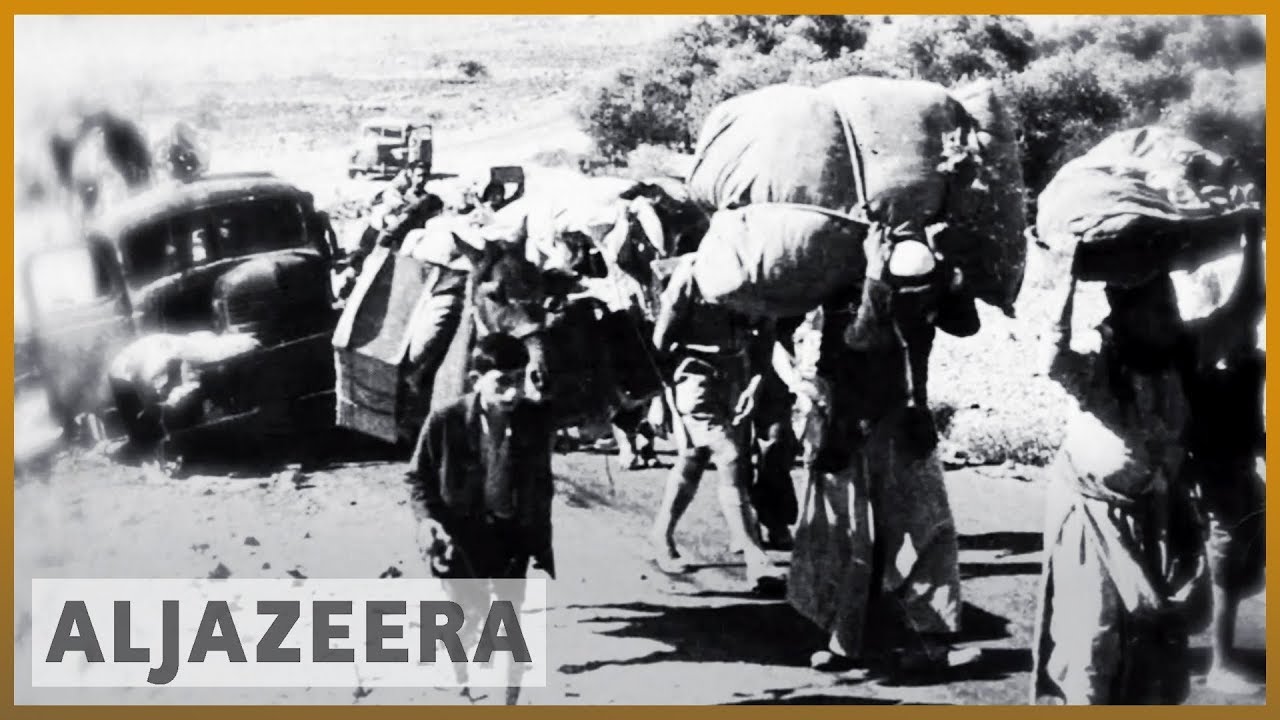 —the violent displacement of some 750,000 Palestinians for the creation of Israel instituted by Britain and the U.S.—is seen as critical to accountability. Eghbariah wrote, “Recognition of Nakba as a universal concept, one acknowledged and prohibited by international norms, is therefore the first step toward a just and lasting solution in Palestine.”
This could prove not only a first step towards just global accountability, but also a subsequent end to the anti-war protests and thus work discrimination. “The U.S. can totally stop sending weapons,” Abouassaad said. “After that, everything else will follow.”
Rohan Zhou-Lee (They/Siya/祂(Tā)/Elle) is a queer/nonbinary Black Asian dancer, writer, and organizer. A 2023 Open City Fellow at the Asian American Writers’ Workshop, they have written forNewsweek, Prism Reports, NextShark, and more. Siya is also the founder of theaward-winning Blasian March, a Black-Asian-Blasian grassroots solidarity organization, and for their work has been featured onCNN,NBC Chicago,USA Today,WNYC, andmore. Zhou-Lee hasspoken on organizing, human rights, and other subjects at New York University, The University of Tokyo, the 2022 Unite and Enough Festivals in Zürich, Switzerland, Harvard University, and more.www.diaryofafirebird.com
Former Associated Press reporter Emily Wilder was fired from the international media company late Thursday following a pressure campaign by right-wing media, including publications such as The Federalist and The Washington Free Beacon working in tandem with the Standford College Republicans. Wilder was "canceled," if you will, for pro-Palestinian activism during her years in college — not at the AP.
The campaign to have Wilder fired started on Monday with the Stanford College Republicans taking to Twitter to bill the reporter's past pro-Palestine demonstrating as controversial, coming to the verdict that she would never be able to be impartial while covering national news.[twt pix]
"Recently, we discovered that theAssociated Press has hired former Stanford anti-Israel agitator, Emily Wilder, who referred to the late Sheldon Adelson as a 'naked mole rat' as one of their 'journalists,'" the college Republican organization tweeted. The series of tweets from the Standford Republican chapter went onto claim that the reporter, who is Jewish, during her college years belonged to a "Students for Justice in Palestine," on-campus group. The college Republicans — who appear to have their own questionable Twitter activity — also took offense to Wilder calling right-wing provocateur Ben Shapiro a "little turd" and Sheldon Adelson a "naked mole-rat."
From there, the right-wing outrage machine got ahold of the story, including The Federalist, The Washington Free Beacon, and Fox News, which billed the reporter as being "anti-Israel." Notably, the Free Beacon ran their hit-piece with no attached byline and didn't return Salon's request for comment as to why.
On Thursday, an all-staff email from AP News director Peter Prengaman to employees read: "A note to say that news associate Emily Wilder is no longer with the AP[twt pix]
but the Associated Press claims it wasn't her activism in college. "While AP generally refrains from commenting on personnel matters, we can confirm Emily Wilder's comments on Thursday thatshe was dismissed for violations of AP's social media policy during her time at AP," an AP spokesperson told The Wrap.
"Amazing how quickly a talented young reporter's career can be snuffed out by a Twitter mob that decided to feign outrage over some college tweets. And if @vv1lder somehow violated @AP's social media rules, the solution is to offer guidance, not termination, to a new reporter," TheWashington Post's Glenn Kesslerwrote on Twitter following the ouster.
[twt pix] responding to her firing, Wilder told SFGATE that her firing was nothing more than a right-wing outrage mob that reportedly disdains "cancel culture," doing what they claim to resent.
"There's no question I was just canceled," told SFGATE reporter Eric Ting on Thursday following the news of her firing. "This is exactly the issue with the rhetoric around 'cancel culture.' To Republicans, cancel culture is usually seen as teens or young people online advocating that people be held accountable over accusations of racism or whatever it may be, but when it comes down to who actually has to deal with the lifelong ramifications of the selective enforcement of cancel culture — specifically over the issue of Israel and Palestine — it's always the same side."
in her interview with SFGATE, Wilder noted an "onslaught of absolutely vile messages" she received after right-wing media began running with the story. Wilder didn't immediately return a request for comment from Salon.
While The Associated Press might have folded to the demands of the right-wing mob, many journalists on Twitter voiced their support for the young journalist. "Shame on @AP @peterprengaman. I stand with Emily. Her reporting at our newspaper was excellent. Reverse your decision NOW," The Arizona Republic's reporter Rebekah Sanders wrote. The Washington Post's Dave Weigel responded: "'Hire @vv1lder' is something more and more people are saying."
"Every journalist should be outraged about @AP firing [Wilder] over college activism in favor of freedom for Palestinians. The industry is rife with clear double-standards on this," Los Angeles Times investigative reporter Adam Elmahrek commented on the firing. The Daily Beast's senior politics reporter Will Sommer replied, "It's crazy that editors are still falling for these bad-faith campaigns from right-wing media."
The decision to out Wilder comes on the heels ofright-wing pundits cheering the Israeli airstrike that leveled a building in Gaza on Saturday, housing several international news outlets, including The Associated Press.
FROM YOUR SITE ARTICLES
- 'Criminal complicity': Outrage as Biden pushes $735 million ... ›
- The Associated Press says it can't declare a winner in Iowa as ... ›
- Fox News confirms shocking story on Trump's contempt for ... ›
https://theintercept.com/2020/10/04/israel-palestine-blacklists-canary-mission/
this JULY, a group of over 150 artists and intellectuals issued a public letter in Harper’s Magazine warning of what they called a growing atmosphere of coerced ideological conformity in the U.S. Decrying an “intolerance of opposing views” and “a vogue for public shaming and ostracism,” the letter went on to add that “restriction of debate, whether by a repressive government or an intolerant society, invariably hurts those who lack power and makes everyone less capable of democratic participation.”
One of the people who found themselves agreeing with these noble sentiments was Hammam Farah. A Palestinian Canadian born in the Gaza Strip and raised between the United Arab Emirates and Canada, Farah spent years studying to become licensed as a therapist in Toronto. The letter resonated with him because he has had very intimate experience with what it feels like to have one’s free speech stifled: attacks on his student pro-Palestinian activism have dogged Farah into adulthood, leading to recurring problems in his professional life.
“People are against cancel culture, and that’s great. I’m also very against it,” Farah said. “But the most outrageous cases of people getting canceled are Palestinians and those who stand in solidarity with us. When it comes to Palestinians standing up for our own rights, it’s very difficult. Our free speech and freedom of expression has been attacked over and over.”
Amid the heated debate about free speech and censorship in the United States, the attacks against pro-Palestine activism stand as a less remarked upon yet much more ruthless type of silencing. Few of the high-profile public intellectuals who have staked claims on the militantly free speech side of the national debate have highlighted the incredible degree of suppression on speech supportive of Palestinian rights — particularly among ordinary people lacking access to elite platforms. It’s a blind spot not lost on people like Farah, who have experienced blacklists and other forms of suppression firsthand.
“We have to be consistent,” he said. “We have to recognize that there is a clear double standard here. And that is not right.”
Firings and censorship relating to the Israel-Palestine conflict long ago became common in both academia and politics. Just this month, a prominent academic, Valentina Azarova, had a job offer rescinded by the University of Toronto Faculty of Law after a major donor reportedly “expressed concerns in private over Azarova’s past work on the issue of Israel’s human rights abuses in Palestine.”
Instead of taking up a defense of pro-Palestine speech, the debate among journalists and intellectuals has mostly focused on their own discomfort as a class. Yet, when it comes to this blind spot, the suppression of free speech targeting ordinary people has been fierce: threats to immigration status, personal lives, careers, restrictions on foreign travel, and more. And, unlike high-profile public figures able to call on magazines and newspapers for support when they feel silenced, Farah and other ordinary people targeted for their speech generally lack the ability to get their stories told. Lacking powerful platforms, they generally suffer their “cancellations” in mute anonymity.
“It’s the first thing that comes up when you Google my name, the claim that I’m a terrorist supporter and an extremist,” said A.H., a former activist working on Palestinian issues, who asked to remain anonymous for fear of suffering further consequences from speaking out.
Related
“It’s Killing the Student Movement”: Canary Mission’s Blacklist of Pro-Palestine Activists Is Taking a Toll
Speaking nervously by phone, A.H. told me she had been peripherally involved in pro-Palestinian activism, including commenting online and attending protests. Her relatively low-level involvement in the cause had still gotten her listed on Canary Mission, a site maintained by anonymous pro-Israel activists to track activists, scholars, and students supportive of Palestinian nationalism. Canary Mission is difficult to describe as anything other than a blacklist. As with Farah and others, A.H.’s profile on the site became the most prominent online trace of her life. It had taken a toll not just on her career but on her personal life and mental health.
While some conservatives warn that a “soft-totalitarianism” of progressive intolerance is growing in the U.S., when it comes to Israel-Palestine, full-blown authoritarian coercion, like the blacklisting carried out by Canary Mission, is already well entrenched.
Even after ceasing all of her pro-Palestinian activism — no longer so much as posting on social media about the Middle East conflict, for instance — A.H. remains haunted by her place on the list.
“I’m afraid to apply for a new job or even update my LinkedIn to show where I’m working now,” she said. “Sometimes I meet people and then later they just disappear. I’m always left wondering if it’s because of what they saw when they searched my name online."
"AT FIRST we can kind of joked about being listed on Canary Mission as a good way to see who you can date or be friends with by describing them as having good politics,” said Sumaya Awad, a former student activist at Columbia University. Awad, too, is listed on the Canary Mission site. She has also been involved in attempts to push back against it, including by helping found the website Against Canary Mission to raise awareness about the blacklist.
Though the site’s operators remain cloaked in anonymity, previous investigations into Canary Mission have pointed to a network of wealthy backers, including Israeli American real estate investor Adam Milstein. Unlike the version of “cancel culture” presently being debated by U.S. intellectuals, the version supported by Canary Mission is more dangerous for influencing government actions. The site is believed to be employed by Israeli government authorities for intelligence-gathering purposes. Chillingly, for the question of free speech in America, the blacklist has reportedly also been used by the FBI to question individuals over their activism. (Canary Mission did not respond to a request for comment.)
Related
Right-Wing Donor Adam Milstein Has Spent Millions of Dollars to Stifle the BDS Movement and Attack Critics of Israeli Policy
The percolation of Canary Mission’s content into official files is a massive cause of concern for those listed on its pages. Awad, a Palestinian from Jordan who lives in the U.S., worries that her immigration status puts her at particular risk from the type of blacklisting practiced by the site. Like many other Palestinians, being listed on the site can allow the Israeli military, which controls access to the Palestinian Territories, to physically bar entry to the territories — even for innocuous reasons like family visits. In 2018, the Israeli daily newspaper Haaretz reported that Israeli authorities had internally cited Canary Mission profiles when making the decision to reject people for entry into Israel and, by extension, the Palestinian territories.
In Awad’s case, the concerns aren’t only centered on Israeli-controlled borders: She has also become concerned about the potential impact of being blacklisted even on her own ongoing U.S. immigration process. For many people from minority backgrounds already harshly scrutinized by law enforcement, or who do not have U.S. citizenship, inclusion on the blacklist can be a terrifying threat to their ability to live in the United States.
“Later on, when I was applying for immigration, I noticed that this page about me on Canary Mission — using these scare-words that had nothing to do with me like ‘terrorist-sympathizer’, ‘Hamas,’ and ‘anti-Semitism’ — was the first thing that came up when you Googled me,” Awad said. “I became really anxious about the blacklist after that and was scared if they’d reject my immigration status at some point without even telling me that that was the reason.”
Nothing on Awad’s profile, which includes accusations of supporting the Palestinian-led movement to boycott, divest from, and sanction Israel and “demonizing Israel,” indicates that she has ever engaged in illegal activity or even espoused views that could be considered violent, extremist, or anti-Semitic. (The same holds for the several other people The Intercept spoke to for this story who had Canary Mission profiles.) Yet the site uses an astounding guilt-by-association logic that attempts to tie her to international terrorist groups.
To be removed from the list, individuals have to submit to a process with Canary Mission, whereby they write a testimonial apologizing for and disowning their previous activism. A number of these anonymous testimonies are included on the site on a page listing so-called ex-Canaries. The Intercept viewed an email chain showing the negotiation of one such confessional with Canary Mission site administrators, in which the prospective ex-Canary was forced to go back and delete several years of “anti-Israel” social media posts before submitting a genuflecting statement disowning their former views and promising to never engage in pro-Palestinian activism again.
Despite her concerns about being blacklisted, Awad has not taken up this unsettling offer. Her Canary Mission profile remains online.
In addition to its effects on her, the fear of blacklisting, she said, has had a significant impact in silencing the speech of those around her.
“The Canary Mission blacklist has been very powerful in silencing people and making them think free speech is not their right,” she said. “It instills a powerful sense of fear and paranoia: You’re always left wondering if it’s going to be the reason a job doesn’t call back, a landlord declines you, or you have trouble going through airport security.”
HAMMAM FARAH has faced years of difficulty thanks to his profile on Canary Mission’s website. In large part, these problems have emerged because of a moral imperative he had felt to become an activist.
During family visits to the occupied Palestinian territories in his youth, Farah developed an emotional attachment to the cause of Palestinian nationalism after witnessing the suffering of friends and family living under Israeli military occupation. “My grandparents passed away in Gaza, and I was not able to go back and see them beforehand because of the Israeli blockade,” Farah told me. “That had a big impact on me emotionally as a young man, as did seeing how painful life was for people living in Palestine during family visits.”
Feeling a duty to speak out for them, he became involved in campus activism related to Israel-Palestine as a university student in Toronto. That was what landed him on the notorious Canary Mission blacklist. Farah is now listed on a site with a profile that attempts to connect him to terrorist groups, anti-Semitism, and violence — effectively “canceling” him and encouraging others to do so as well.
The listing and other attacks on his character caused him serious problems as a student. But even after his graduation, it has continued to dog him in his professional career as a therapist. On numerous occasions, Farah has had regulatory applications related to his work delayed or prospective patients raise concerns about allegations made in his Canary Mission profile that he supported terrorism.
This summer, the same week the now-famous Harper’s letter was issued, Farah was informed that his application for licensing from the College of Registered Psychotherapy of Ontario had been held up after his presence on the Canary Mission blacklist was discovered during a Google search. After he reached out for support, an organization called the USA-Palestine Mental Health Network, issued a letter on Farah’s behalf stating that he had been “the victim of malicious targeting by a political organization devoted to blacklisting persons with whom it does not agree.”
After that intervention, Farah’s licensing application was pushed through. As a well-connected activist able to draw on a network of supporters, he considers himself one of the lucky ones. But the anxiety that future problems related to his blacklisting may come up always lingers. “There’s a fear, every time that there’s a delay processing something, every time that something is flagged in connection to my name, this listing is the first thing that comes to my mind,” he said.
As someone who has personally felt the cold fear that comes from being targeted for their political speech, Farah said that he also feels genuine sympathy for those from different backgrounds, like the signatories of the Harper’s letter, now expressing similar sentiments. Yet, as he noted, for years, and up to the present day, he and others have been viciously “canceled” without benefiting from an outcry by liberal civil society on their behalf.
Farah added that the same sort of language many of the Harper’s letter’s signatories object to — like the invocation of “safe spaces” at the expense of freewheeling and open debate — have also been used against advocates of Palestine. “There have been cases where arguments that were used to shut down right-wing campus speech were then used by pro-Israel advocates to shut down speech on Palestine,” Farah told me, adding that pro-Israel campus organizations had often claimed to university administrators that they “felt unsafe” due to the work of Palestinian activist organizations on campus.
“I agreed with the letter,” Farah told me of the Harper’s missive, “and had this view for many years, since I saw and experienced censorship and reprisal against Palestinian rights advocacy.” He just wishes some of the intellectuals behind the free-speech push might also take a look at the chilling threats to free speech that ordinary people like him have faced for years.
islamophobe horwitz canary mission
https://kpfa.org/episode/letters-and-politics-march-20-2019/
==
==
A new website is targeting pro-Palestinian college activists by seeking to deny them jobs after they graduate. Dubbed "Canary Mission," the site profiles dozens of students and graduates involved in the Palestinian cause, in the hopes employers won’t hire them. In a promotional video, a narrator asks for help in ensuring that "today’s radicals are not tomorrow’s employees."
http://www.democracynow.org/2015/6/1/headlines
Canary Mission ad: "These individuals are applying for jobs within your company. There is no record of their membership of radical organizations. No one remembers their yelling profanities on campus or attending Jew-hating conference and anti-American rallies. All evidence has been eradicated, and soon they will be part of your team. Canary Mission’s simple interface allows you to easily explore profiles of radical individuals and organizations. BDS News will keep you up-to-date with the latest developments. And follow our blog for an in-depth analysis of radical campus activity. Join us to combat this wave of hatred, protect freedom and make campus life safe for everyone. It is your duty to ensure that today’s radicals are not tomorrow’s employees."
The targeted students include members of Students for Justice in Palestine, which is active on campuses nationwide. Although the students’ names, photographs and biographical information are extensively shown, the Canary Mission keeps its own backers and staffers completely secret.
==
==
https://theintercept.com/**2018/11**/22/israel-boycott-canary-mission-blacklist/
s.a. WAS A high school sophomore when she had her first personal encounter with the post-9/11 surveillance state. It was 2010, and the federal government’s security apparatus had taken a particular interest in New York Muslims like herself. One of her classmates called the FBI to report that S.A. was a threat.
Federal agents responded to the call and questioned S.A about terrorism, after which she grew paranoid about government surveillance and deleted her Facebook. Still, a year later, she felt comfortable enough to get back online.
That comfort didn’t last. Her paranoia and anxiety blew up again in 2015. At the time, she was the head of a campus Students for Justice in Palestine group and advocated for boycotting Israel. S.A. was placed on the website Canary Mission, which compiles dossiers on Palestinian rights advocates and labels them racists, anti-Semites, and supporters of terrorism.
Being placed on Canary Mission led her to close all her social media pages to the public. She stopped posting on Tumblr. She hasn’t created a LinkedIn, even though that could hinder future job searches.And when she contemplates her future, S.A.’s anxiety flares up again because of her profile on Canary Mission, which focused on, among other things, her criticism of her school system’s support for Israel and her participation in protests condemning Israel’s use of force on Palestinians.
“My anxiety is so bad I literally have put off applying to grad school for the past two years because I’m afraid that this will be part of the reason I’m rejected,” she told The Intercept. “[Canary Mission] updates the page, so I know there’s someone who looks for me online and updates every few months, which just feels incredibly scary.”
Canary Mission’s growth coincides with the increasing strength of the Palestinian rights movement in the United States, and S.A. is one of more than 1,000 students, professors, and activists that the website has placed in its crosshairs.
Since it first splashed on the web three years ago, the blacklist has taken a remarkable toll on activists’ mental health and ability to engage in free speech and public advocacy on Palestine. A survey of over 60 people profiled on Canary Mission, conducted by the group Against Canary Mission, found that 43 percent of respondents said they toned down their activism because of the blacklist, while 42 percent said they suffered acute anxiety from being placed on the website.
But the puncturing of Canary Mission’s anonymity has done little to slow it down. The website continues to add information on Palestinian rights advocates, and has continued to single out activists on Twitter, which in turn leads Canary Mission’s followers to harass those activists. (Canary Mission has been suspended from Twitter twice, but its account was reinstated both times.)
The Intercept spoke with 13 people, all of them current or former students, who are profiled on Canary Mission. The majority of them, like S.A., requested anonymity because they were afraid that speaking out about the blacklist would result in additional harassment. Their shared experiences include feelings of anxiety and paranoia, and in some cases, stepping back from Palestinian rights activism — mirroring the results of the Against Canary Mission survey.Some reported receiving death threats online when Canary Mission tweets about them, and others said they believe they have had a tough time finding a job because of their inclusion on the list.
The blacklist has become especially frightening, some activists said, because it’s being used by law enforcement in Israel and the United States. Palestinian rights advocates have been interrogated and deported from Israel because of their Canary Mission profiles. Others have been interrogated by the FBI, as The Intercept reported in June.
Canary Mission has grown alongside the explosion of a nationwide panic over campus free speech manufactured by right-wing activists and supported by some leading liberal writers. But in the face of Canary Mission’s actual threat to free speech and activism on college campuses, those supposedly concerned with the silencing of dissenting voices have largely remained mum on how the website deters speech and activism.
While Canary Mission promotes itself as a group working against anti-Semitism, the blacklist’s effective goal is to clamp down on growing support for Palestine in the United States by intimidating and tarnishing Palestinian rights advocates with the brush of bigotry. Many students were added after they got involved in campaigns led by Students for Justice in Palestine to get their universities to divest from corporations that support the Israeli occupation of Palestine.
Some profiles on Canary Mission do highlight actual bigotry, but critics of the blacklist say the profiles are often based on quotes ripped out of context, and wrongly conflate support for Palestinian human rights with support for violence or anti-Semitism. (Canary Mission is a reference to the phrase “canary in the coal mine,” which the group sees as a “metaphor for the persecution of a minority that subsequently spreads to the general populace.”)
“Targets of Canary Mission have been denied entry to Palestine, fired from jobs, interrogated by employers and university administrators, and targeted with death threats and racial, homophobic misogynist harassment from Canary Mission followers,” said Liz Jackson, a founding staff attorney for Palestine Legal, a group that has interviewed over 200 people targeted by Canary Mission. “We know one person who was denied a bank account. People have reported their relationships with parents and business relationships being damaged. And that doesn’t begin to describe the self-censorship and psychological warfare effects.”
CANARY MISSION PERFECTLY articulated its vision and strategy in its April 2015 debut . The two-minute clip features images of Jews with yellow stars on their clothes followed by images of hijab-clad women waving Palestinian flags. The video’s female narrator closes by saying, “It is your duty to ensure that today’s radicals are not tomorrow’s employees.”
Along with the ominous video, Canary Mission’s website went live with dozens of profiles of students and academics who were critical of Israel. The profiles feature students’ names, professions, photos, screenshots of social media posts that included critiques of Israel, and allegations that Students for Justice in Palestine intimidates and assaults Jewish students. Many allegations of anti-Semitism are based on declarations of support for Palestine and the boycott, divestment, and sanctions movement that targets Israel over human rights abuses.
The website was anonymously run, making it even more creepy. But in the three years since Canary Mission went online, journalists — most notably Josh Nathan-Kazis of The Forward — have slowly peeled back the careful veneer of anonymity the site constructed.
Earlier this year, The Forward uncovered two sources of fundingfor the website. The Helen Diller Family Foundation, a charity controlled by the Jewish Community Federation of San Francisco, gave the website $100,000 in late 2016 or early 2017, while the Jewish Community Foundation of Los Angeles, between November 2016 and September 2017, sent $250,000 to an Israeli nonprofit thought to operate the website. (Both charities said they would no longer be funding the blacklist.) The Forward also reported that the Israeli nonprofit linked to the site, Megamot Shalom, is run by former employees of Aish HaTorah, a right-wing Orthodox Jewish organization. (Requests for comment sent to Jonathan Bash, an ex-Aish HaTorah employee who The Forward identified as the operator of the website, and Canary Mission were not returned.)
A clip from Al Jazeera’s undercover investigation into the Israel lobby in the United States showed a pro-Israel advocate pointing to another funder of Canary Mission: Adam Milstein, an Israeli-American real estate magnate who funds an alphabet soup of pro-Israel organizations. No hard proof has emerged that Milstein is in fact a funder, though Milstein, who denied he gave the website cash, has praised the blacklist.
In its dossiers, Canary Mission also links to the Facebook profiles of the activists it targets. R.G., a member of SJP at the University of California, Los Angeles, said that after Canary Mission added him to its blacklist, he started receiving threatening messages to his Facebook account.
“My first quarter at UCLA, someone said they were going to come to UCLA and kill me. And I had to move out of my dorm,” he told The Intercept.
The harassment happens in the offline world, too. D.G., the president of an SJP chapter at an Illinois university, is a resident adviser in a dorm. She says that two of her fellow resident advisers found her profile on Canary Mission, printed out a dossier on her based on her Canary Mission profile, and gave it to her boss in an unsuccessful effort to get her fired.
Many of those on the blacklist say it has harmed their mental health.
“I had a dissociative panic attack when I was added,” said K.G., a Chicago-based activist who was involved in Palestine solidarity work while in college. “It seemed like my world had changed because all of these hateful and violent things attached with my picture had just been lobbed into the public sphere.”
That Canary Mission mostly goes after people of color, who are often already at a disadvantage in a job market rife with discrimination, makes the blacklist even more harmful. Moreover, Palestinians and Arabs listed on the site say that it reinforces pernicious stereotypes.
“When you’re Arab and you’re on it, you’re automatically guilty. There’s no question that you’re an anti-Semite, or whatever it is they want to accuse you of,” said one woman blacklisted by Canary Mission. She noted that the uniqueness of Arabic names makes it more likely that Arabs on the list will be impacted by the dossiers. “If my name was Mark Smith, you could Google me all you want, you’re not going to find anything on it,” she said. “But for me, when it first happened, it was the first hit when you Google my name.”
Canary Mission has also led people to quiet their support of Palestinian rights. One organizer of a national Students for Justice in Palestine conference held in mid-November said many students decided not to attend because of fear of the blacklist.
“It’s killing the student movement,” said Rani al-Hindi, who was a member of Palestine activist groups at Hunter College in New York. “We’re not able to organize any big actions, have any big events, organize for the divestment campaign that has launched. There is a lot of intimidation.”
Still, some who are listed on the Canary Mission website, particularly those who are more established in their workplace or school program, have not backed down from their advocacy.
:{
ONLINE BLACKLISTS OF}: advocates for Palestine have existed for more than 15 years. The most notable precursor to Canary Mission was Campus Watch,a website run by Daniel Pipes, an academic known for his hawkish foreign policy views and antipathy to Arabs and Muslims. Pipes’s blacklist, launched in 2002, targeted professors who were critical of Israel and U.S. foreign policy, and encouraged students to report their professors to Campus Watch. While Campus Watch took the original dossiers on professors down, the website still lists “professors to avoid” because of their politics.“In my mind, I had to keep going just as strong as and stronger than before,” said Omar Zahzah, who said he was one of the first people placed on the website while organizing with University of California, Los Angeles’s SJP. “From a historic perspective, resistance has to continue no matter how dire the material manifestations are. That kind of spirit, of needing to continue in the struggle no matter what, is my guiding inspiration.”
But Canary Mission, born in an era of ubiquitous social media use, is of a different breed.
It lists many more people than Campus Watch did at any time.It targets students, rather than well-known professors, and it often appears as the first Google result for a search of a student’s name. It has also leveraged the power of social media, tweeting its dossiers and giving Israel’s most vociferous online warriors a list of targets to harass.
“It is the most significant and effective of pro-Israel groups at intimidating activists,” said Bill Mullen, a professor of American studies at Purdue University and a creator of Against Canary Mission. “This is because it is omnipresent, on the web, 24/7, virile, and constantly reproducing and updating its results.”
#1 ggl result 9/19
https://canarymission.org/individual/Naeemah_Islam
"b/c the world shd know"
Naeemah Islam has tweeted anti-Jewish and anti-LGBT messages. She is a student at American University (American), studying Political Science.
Anti-Jewish Tweets
On July 24, 2015, 404 919] Islam tweeted: "@kidrauhlontop see i bought french toast crunch for you but since youre marrying a jew idk you anymore, run along and play."
On October 12, 2015, Islam tweeted: “all yahood [Jews] look the same ¯(ツ)/¯"
On October 13, 2015, Islam tweeted: “You guys know that [2016 presidential candidate] Bernie [Sanders] is a yahood right?"
This was followed by a tweet saying: "@asmakatabra obviously, but I'd never vote for someone directly connected to it [a yahood]" and another tweetsaying: “@asmakatabra I wish someone had the balls to say it."
On October 13, 2015, Islam participated in another Twitter conversation in which she stated, regarding Bernie Sanders: “@garfunkeI69 bc hes trying to buy the black vote by shoutin ‘black lives matter, black lives matter’ but really not givin a damn about them"
When asked "how would u know tho", Islam replied: “@garfunkeI69 how would I know that a yahoodi [Jewish] presidential candidate whose desperate for the seat and would say anything to get it? Hmmmm."
On March 7, 2013, Islam tweeted: "@ComedyCentral: Why do Jews play football? So they can get the quarterback! #TheBenShow’ @ImanS97"
Demonizing Israel
On May 3, 2016, Islam tweeted a photo of a pool in Tel Aviv and commented: “location is actually, ‘stolen land from Palestine’ you were close though."
On September 13, 2015, Islam tweeted: "when a yahoodi calls it ‘Israel’ by accident when its actually called Palestine" On May 1, 2016, Islam tweeted: “yahood (Jew) says "the 'dabke' is actually Israeli" lol you can't claim something for a fictional country lmao."
On March 21, 2016, Islam tweeted: “This [American Israel Public Affairs Committee] AIPAC convention makes me want to throw up."
On October 4, 2015, Islam tweeted a tweet by former Governor of Florida Jeb Bush, who said “Prayers for more Israeli victims of Palestinian terror. Israel has a right to defend itself from these attacks and we should stand with them."
She then commented on his tweet, saying: "...@JebBush Israeli victims to Palestinian terror when its [sic.] actually the other way around smh [shake my head]"
October 2015 saw an upsurge in violence across Israel incited by Palestinian and
 leaders. The wave of stabbings, known as the “Knife Intifada," saw young Palestinians across Israel
 and attempting to stab scores of Israeli civilians.
Homophobia
On July 9, 2015, Islam tweeted: "If my kid told me he was gay...lemme tell you all how I would ctrl alt delete that existence."
On August 31, 2013, Islam tweeted: “You hate gay people too? Thank god. I f**king hate gays! F**king faggots... — im not sayin anything."
SJP
Students for Justice in Palestine
SJP was co-founded in 2001 at the University of California at Berkeley (UC Berkeley) by Professors Hatem Bazianand Snehal Shingavi. Bazian served as president of the General Union of Palestinian Students (GUPS) while studying at San Francisco State University (SFSU) and headed the Muslim Students Association (MSA) while earning his M.A. at UC Berkeley. In 2004, while the second intifada was already winding down in Israel, he called for an intifada in the United States.
Shingavi, an activist tied to the International Socialist Organization (ISO), has been criticized for using his literature course as a vehicle for promoting anti-Israel propaganda. SJP has grown to become the primary student movement advancing the Palestinian national agenda on North American campuses and is the primary force behind BDS campaigns at most schools.
SJP activists frequently intimidate and harass Jewish and pro-Israel students. SJP members have physically assaulted Jewish students, aggressively disrupted pro-Israel events and possibly vandalized communal property. SJP rallies regularly include hate-speech and chants such as "Long Live The Intifada" and "From the River to the Sea Palestine will be Free" — calls for violence and for the destruction of the Jewish state.
SJP chapters frequently run inflammatory campaigns against Israel, including BDS resolutions, rallies,Israel-Apartheid initiatives, propaganda comparingIsrael to Nazi Germany,mock checkpoints and "die-ins."
SJP chapters regularly host speakers who use language considered anti-Semitic by the U.S. State Department and individuals linked to terrorist activity.
BDS
The BDS movement was founded in 2005 by Omar Barghouti and asserts that it "works to end international support for Israel's oppression of Palestinians and pressure Israel to comply with international law."
BDS initiatives include compelling institutions and individuals to divest from Israeli-affiliated companies, academic boycotts, anti-Israel rallies an .
The movement's most notable achievement has been the infiltration of university campuses through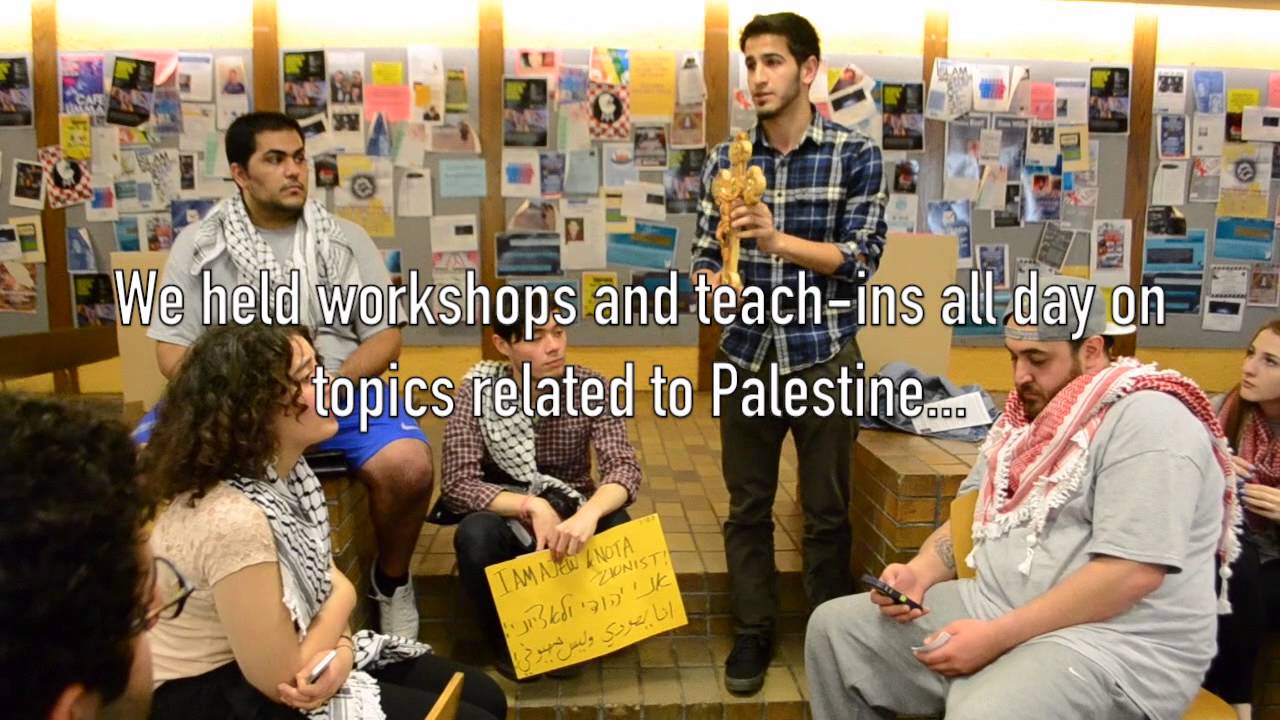 for "BDS resolutions." In these cases, backed by university anti-Israel affiliates, student governments have
 to vote on some form of boycott of — or divestment from — Israel and Israeli-affiliated entities. These resolutions, although non-binding, have been passed by student governments on numerous North American campuses.
BDS activity is often aggressive and . It has been noted that universities that pass BDS resolutions see a marked increase in anti-Semitic incidents on campus. In 2013, when the student government of the University of California Santa Barbara (UCSB) debated a BDS resolution, reports emerged of violent threatsand the spitting on a student wearing a Star of David necklace. As a result, the student government chose to vote via a "secret ballot" in order to ensure its members' safety.
PYM
In 2012, the Palestinian Youth Movement (PYM USA) released a statement saying: “Our liberation...will be gained with the path that was written with the blood of our martyrs. We reaffirm that the only path that we are concerned with is the path that explicitly heads towards the liberation of our land and the return of our people to Palestine."
PYM organized rallies demonizing Israel where it displays propaganda posters supporting the terrorist organization Popular Front for the Liberation of Palestine (PFLP) and compared Israel to Nazi Germany.
On October 25, 2015, PYM called to support “intifada" during a period when Palestinian radicals across Israel and to death scores of Israeli civilians. PYM declared that “Al-Aqsa Mosque has been the target of particularly brutal assaults" and fraudulently claimed that “... arbitrary killings are committed daily by the Zionist military and settlers."
On November 10, 2015, the PYM Facebook page displayed a photo of masked Palestinian radicals throwing rocks and firing rocks from slingshots. That photo was used to promote at least 25 anti-Israel rallies across the globe on or around November 29, 2015 under the banner of “Transnational mobilization for Palestinian resistance."
On November 30, 2015, PYM displayed a photo on Facebook from one of the rallies showing a sign in support of PFLP member Khalida Jarrar, who was sentenced as part of a plea deal after she confessed to inciting violence and calling for terrorists to abduct Israel Defense Forces (IDF) soldiers.
Another sign showed support for PFLP Secretary-General Ahmad Sadat who is currently held in Israeli prison. Sadat and four other PFLP members were convicted for the 2001 assassinationof Israeli Tourism Minister Rehavam Ze'evi.
Social Media and Web Links
Facebook: https://www.facebook.com/nemo.islam
Twitter: https://twitter.com/finding_naeemah
Instagram https://www.instagram.com/finding_naeemah/ [Private]
==
no lnx 919
REPUBLICAN LAWMAKER SEEKS TO MUZZLE STUDENTS CRITICAL OF ISRAEL
Josh Ruebner
9 August 2019
Misleadingly-named Anti-Semitism Awareness Act introduced in US House of Representatives just before summer recess.
REPUBLICAN LAWMAKER SEEKS TO MUZZLE STUDENTS CRITICAL OF ISRAEL
https://electronicintifada.net/blogs/josh-ruebner/republican-lawmaker-seeks-muzzle-students-critical-israel
The misleadingly-named Anti-Semitism Awareness Act of 2019 has been introduced to the US House of Representatives shortly before its summer recess.
Republican lawmaker Doug Collins, who proposed the bill, is portraying it as “an effective tool for investigating whether prohibited discriminatory actions have become a barrier to learning” in universities.
As the legislation notes, however, the Department of Education already is empowered to investigate incidents of anti-Semitism as a form of discrimination.
A careful reading of its text suggests that its real intent is to muzzle students and teachers who oppose Israel’s oppression of the Palestinians.
The bill had earlier this year been introduced in the US Senate by Tim Scott, another Republican lawmaker.
It embraces the working definition of anti-Semitism approved in 2016 by the International Holocaust Remembrance Alliance (IHRA), a body bringing together 33 governments.
That definition is accompanied by several “examples” of anti-Semitism. They include claims that Israel’s foundation was a “racist endeavor” and “applying double standards” to Israel by requiring from it “behavior not expected or demanded of any other democratic nation.”
These examples affect political speech clearly protected by the First Amendment of the US constitution.
For example, students could run afoul of these examples by advocating for a one-state solution in Palestine, by hosting a speaker addressing Israel’s separate-and-unequal policies which discriminate between Jews and non-Jews, and running campus campaigns to boycott Israeli products or divest university funds from corporations profiting from Israel’s oppression of the Palestinian people.
If the new bill were to become law, then the US Department of Education would be required to “take into consideration” these types of examples when assessing if an incident reported on US campuses was “motivated by anti-Semitic intent.”
A university which does not take action against students or teachers accused of anti-Semitism – based on their advocacy for Palestinian rights – could potentially lose federal funding.
New power to stifle activism
With passage of this bill, the US Congress would provide the Trump administration with powerful new statutory authority to further police and crack down on campus speech for Palestinian rights, a process well underway already.
When Donald Trump was running for president ahead of the 2016 election, his campaign team pledged to stifle campus activism for Palestinian rights. Jason Greenblatt and David Friedman, who at the time served as the co-chairs of Trump’s Israel Advisory Committee committed the future Trump administration to “ask the Justice Department to investigate coordinated attempts on college campuses to intimidate students who support Israel.”
Greenblatt now serves as Trump’s special representative for international negotiations, while Friedman is the US ambassador to Israel.
The Trump administration has delivered on its threat. Last year The Intercept published an exposé on the FBI’s use of the Canary Mission – a shadowy pro-Israel group – to question college students advocating for Palestinian rights.
The Trump administration also has attempted to crack down on Palestine activism on campus by nominating Kenneth Marcus as the assistant secretary for civil rights for the Department of Education.
Previously, Marcus was president of the Louis D. Brandeis Center for Human Rights Under Law.
In that capacity, he filed or otherwise supported complaints against Palestinian rights campaigners by alleging that their activities violated Title VI of the 1964 Civil Rights Act. That provision bans discrimination based on race and national origin in all bodies receiving federal funding.
Last year, Marcus wrote a letter to the Zionist Organization of America announcing that the Office of Civil Rights was now using the controversial IHRA definition and examples of anti-Semitism to guide its investigations. He had not given any prior notice of that decision to the public.
The organization Palestine Legal argued at the time that Marcus was “sending a clear signal that attacking free speech for Palestinian rights is at the top of his agenda.”
The so-called Anti-Semitism Awareness Act is a dangerous attempt by Congress to retroactively provide Marcus with the legal authority to justify his use of this controversial definition to further muzzle campus criticism of Israel.
- Doug Collins
- International Holocaust Remembrance Alliance
- Tim Scott
- Donald Trump
- Jason Greenblatt
- David Friedman
- FBI
- Canary Mission
- Kenneth Marcus
- Louis D. Brandeis Center for Human Rights
- Zionist Organization of America
- Palestine Legal
HEAD OF ISRAEL LOBBY GROUP EXPOSED BY UNDERCOVER FILM RESIGNS
Asa Winstanley
3 July 2019
The Israel Project’s CEO Josh Block blames “polarized political climate.” READ MOREABOUT HEAD OF ISRAEL LOBBY GROUP EXPOSED BY UNDERCOVER FILM RESIGNS
About six people stand with signs calling to end Israeli violence against Palestinians
EX-MOSSAD AGENTS HARASS US STUDENTS, BDS ACTIVISTS
Kristian Davis Bailey
9 March 2019
“You don’t kill them but you do have to deal with them in other ways.” READ MOREABOUT EX-MOSSAD AGENTS HARASS US STUDENTS, BDS ACTIVISTS
A woman stands smiling and there is a child and a man next to her
TOP ISRAEL SUPPORTER LAUNCHES BIGOTED ATTACKS ON RASHIDA TLAIB
Michael F. Brown
7 January 2019
Palestinian American congresswoman faces smears from left and right. READ MOREABOUT TOP ISRAEL SUPPORTER LAUNCHES BIGOTED ATTACKS ON RASHIDA TLAIB
WATCH FINAL EPISODES OF AL JAZEERA FILM ON US ISRAEL LOBBY
6 November 2018
Israel lobbyist: “The foundation that AIPAC sat on is rotting.” READ MOREABOUT WATCH FINAL EPISODES OF AL JAZEERA FILM ON US ISRAEL LOBBY
WATCH THE FILM THE ISRAEL LOBBY DIDN'T WANT YOU TO SEE
2 November 2018
Censored Al Jazeera film is now online. READ MOREABOUT WATCH THE FILM THE ISRAEL LOBBY DIDN'T WANT YOU TO SEE
LISTEN: MICHIGAN PROFESSOR PUNISHED FOR SUPPORTING BOYCOTT
Nora Barrows-Friedman
16 October 2018
Jewish Community Federation funds right-wing, anti-Muslim and homophobic groups in order to promote Israel’s interests. READ MOREABOUT LISTEN: MICHIGAN PROFESSOR PUNISHED FOR SUPPORTING BOYCOTT
IS LARA ALQASEM UNDERMINING PALESTINIAN BOYCOTT CAMPAIGN?
Ali Abunimah
10 October 2018
International students should not enroll in Israeli institutions, campaigners say. READ MOREABOUT IS LARA ALQASEM UNDERMINING PALESTINIAN BOYCOTT CAMPAIGN?
JEWISH COMMUNITY FEDERATION ADMITS IT SECRETLY FUNDED CANARY MISSION
Nora Barrows-Friedman
5 October 2018
Documents prove that Israel’s Ministry of Strategic Affairs uses blacklisting website to deny entry to Americans. READ MOREABOUT JEWISH COMMUNITY FEDERATION ADMITS IT SECRETLY FUNDED CANARY MISSION
CENSORED ISRAEL LOBBY FILM STARTS LEAKING
Asa Winstanley
5 September 2018
Undercover documentary The Lobby – USA has been viewed in full by at least one journalist outside Al Jazeera. READ MOREABOUT CENSORED ISRAEL LOBBY FILM STARTS LEAKING
Page 1 next ›
electronicIntifada.netAbout EI Contact Submit to EI
==
https://972mag.com/not-just-canary-mission-sf-jewish-federation-bankrolls-these-hate-groups/138102/
Published October 10,2018
Not just Canary Mission: SF Jewish Federation bankrolls these hate groups
The Federation’s tax filings reveal a litany of radical-right and anti-Muslim groups that have received its support for years. The Federation says its review process has recently been strengthened but refuses to account for its funding of notorious Islamophobic hate groups.
File photo of an advertisement on a San Francisco public bus accusing the city of enforcing Sharia law, paid for by the American Freedom Defense Initiative, which received funding from the SF Jewish Federation. (Steve Rhodes/CC 2.0)
File photo of an advertisement on a San Francisco public bus accusing the city of enforcing Sharia law, paid for by the American Freedom Defense Initiative, which received funding from the SF Jewish Federation. (Steve Rhodes/CC 2.0)
Following the revelation last week in The Forward that the San Francisco Jewish Federation gave $100,000 to Canary Mission, the shadowy website that blacklists and intimidates students and professors who criticize Israel,the Federation assured its constituents that it was a “one-time grant” that would never happen again. But Canary Mission is just the tip of the iceberg.
[Related stories
Over 100 academics, Jewish leaders demand Israel release U.S. student By Edo Konrad | October 8, 2018
The lie at the heart of the Jewish American consensus By Edo Konrad | June 30, 2017
Can America avoid falling into the Israel trap? By Noa Yachot | February 9, 2017
A new era of anti-occupation Judaism By Leanne Gale | April 20, 2016]
An extensive review by +972 of the Federation’s tax filings shows that the Jewish Community Federation of San Francisco and the Helen Diller Family Foundation, which the former controls and which it used to fund Canary Mission, have bankrolled an extensive list of extremist, far-right, anti-Muslim organizations in recent years.
The systematic pattern of financially supporting hate groups appears to also violate the SF Federation’s own guidelines, which specify that it will not fund organizations that “endorse or promote anti-Semitism, other forms of bigotry, violence or other extremist views.”
Among the extremist, radical right-wing, and anti-Muslim groups that received funds from the SF Federation, both directly and through the Diller Foundation,and some of which have received substantial and repeated grants over the years, include:Project Veritas, The AMCHA Initiative, The American Freedom Law Center, the American Freedom Defense Initiative, The DavidHorowitzFreedom Center, and the work of Islamophobic Dutch politician Geert Wilders (through the International Freedom Alliance Foundation). Others include the Clarion Fund, the Center for Security Policy (FrankGaffney), the Middle East Forum (Daniel Pipes), the Tea Party Patriots Foundation, and the Foundation for the Defense of Democracies.
Project Veritas, which the Federation gave $100,000 in 2016, is responsible for falsifying sexual misconduct allegations against Roy Moore last year to The Washington Post in hopes of entrapping the liberal mainstream media
The AMCHA Initiative, which received hundreds of thousands of dollars from the SF Federation and the Diller Foundation in recent years, operates similarly to Canary Mission, except that it primarily goes after faculty, not students.
The David Horowitz Freedom Center, which has received hundreds of thousands of dollars in recent years, has been condemned by the Southern Poverty Law Center as promoting anti-Muslim and anti-immigrant attitudes.
The American Freedom Law Center and Pamela Geller’s American Freedom Defense Initiative both target Islam as a threat to Western civilization. The former advances “anti-Sharia” legislation and filed an amicus brief in support of Trump’s Muslim ban. The latter, which has been described by the Southern Poverty Law Center as an anti-Muslim hate group, was responsible for Islamophobic bus campaigns in several cities, and has been represented by the American Freedom Law Center.
+972 Magazine asked the San Francisco Jewish Community Federation about these grants and others that appear to violate its own guidelines against promoting bigotry, violence, and extremist views. The SF Federation’s senior director of communications, Kerry Philp, responded by email:
We review each grant recommendation at the time that it is submitted to the Federation, to determine if the organization adheres to the Federation’s granting guidelines. This applies to organizations across the political spectrum. We aim to make the best decisions with the information that we have at the time. Because organizations are dynamic, an organization that previously received a grant from the Federation may not be in compliance with the Federation’s grantmaking guidelines today, and vice versa. Also, per our statement, we strengthened the implementation of our review process in 2017 and continue to be committed to executing our grant review with a standard of care in regard to our guidelines.
Philp added that the Federation does indeed deny grants when they violate its guidelines but would not address any of the grants to the organizations listed in this article or why they were approved.
The San Francisco Jewish Community Federation is one of the largest Jewish charities in the United States with a budget of nearly a quarter of a billion dollars. Furthermore, it is located in, and presumably represents, one of the most progressive cities and communities in the United States. Whether the SF Federation’s financial support of radical, right-wing, Islamophobic, bigoted, and McCarthyite groups aligns with that community’s values is ultimately up to its members....
+972 Magazine is owned by our bloggers and journalists, who are driven by passion and dedication to the causes we cover. But we still need to pay for editing, photography, translation, web design and servers, legal services, and more.
==
off bs
wow long list https://canarymission.org/all_individuals
orgs
CANARY MISSION
HOME ABOUT ETHICS POLICY EX-CANARY BLOG CONTACT US
BECAUSE THE WORLD SHOULD KNOW
email@example.com
Search Canary Mission
INDIVIDUALS
PROFESSORS
ORGANIZATIONS
Hamas
Mondoweiss
Palestine Legal
American Muslims for Palestine
(AMP)
Boycott, Divestment, Sanctions
(BDS)
Council on American Islamic Relations
(CAIR)
CODEPINK
(CODEPINK)
Electronic Intifada
(EI)
General Union of Palestinian Students
(GUPS)
Identity Evropa
(IE)
IfNotNow
(INN)
International Solidarity Movement
(ISM)
Jewish Voice For Peace
(JVP)
Muslim Association for Social Change
(MASC)
Muslim Brotherhood
(MB)
Muslim Student Association
(MSA)
Popular Front for the Liberation of Palestine
(PFLP)
Palestine Solidarity Committee
(PSC)
Students Against Israeli Apartheid
(SAIA)
Students for Justice in Palestine
(SJP)
Solidarity for Palestinian Human Rights
(SPHR)
Students United for Palestinian Equal Rights
(SUPER)
U.S. Campaign for Palestinian Rights
(USCPR)
Search Canary Mission
INDIVIDUALS
PROFESSORS
ORGANIZATIONS
Home
About
Ethics Policy
Individuals (text only)
Professors (text only)
Ex-Canary
Blog
Contact Us
PROFESSORS
ORGANIZATIONS
omg defectors kanarymission.org/ex-canary/
List of all professors on Canary Mission
Rabab Abdulhadi Mohammed Abed Osama Abi-Mershed Rula Abisaab Thomas Abowd Ervand Abrahamian Thea Abu El-Haj Nayrouz Abu Hatoum Ziad Abu Rish Nadia Abu-El-Haj Lila Abu-Lughod Bashir Abu-Manneh As'ad Abukhalil Fida Adely Jean-Christophe Agnew Peggy Ahwesh Nora Akawi Susan Akram Muhsin Al Musawi Dina Al-Kassim Abbas Al_Tonsi M. Shahid Alam Samer Alatout Greg Albo Ammiel Alcalay Alexander Alekseenko Anthony Alessandrini Mike Alewitz Conrad Alexandrowicz Ece Algan Hamid Algar Diana Allan Hanna Alshaikh Evelyn Alsultany Zalman Amit Yali Amit Kevin Anderson Gil Anidjar Ovamir Anjum Ibrahim Aoude Sofya Aptekar Talal Asad Barbara Aswad Sa'ed Atshan Jeanie Attie Elsa Auerbach Kathryn Babayan Riad Bahhur Zainab Bahrani Heather Bain Houston Baker Raymond Baker Ian Balfour Joanne Barker Ian Barnard Jessica Barnes Beth Baron Crystal Bartolovich Golbarg Bashi Asef Bayat Hatem Bazian Adam Becker Joel Beinin Nagwa Bekir Jonathan Beller Naor Ben-Yehoyada Dan Berger Sherna Berger Gluck Elizabeth Bernstein Tithi Bhattacharya Himika Bhattacharya David Biale Cyrus Bina Amahl Bishara George Bisharat Doris Bittar Thomas Blom Hansen Ashley Bohrer John Borneman Daniel Boyarin Brian Boyd Francis Boyle Naomi Braine Denise Brennan Renate Bridenthal Kaye Briegel Stephen Brier Laura Briggs Karen Brodkin David Bromwich Jonathan Brown Carole Browner Edmund Burke Richard Burt Judith ButlerCharles Butterworth Diana Buttu Arthur Butz Eduardo Cadava Ana Cristina Cadavid Mary Baine Campbell Valentina Capurri Sheila Carapico Julie Carlson Taylor Carman Jessica Carr Berenice Carroll Steven Caton Wendy Chapkis Partha Chatterjee Zahid Chaudhary Claudia Chaufan Amy Chazkel Iymen Chehade John Cheney-Lippold Eric Cheyfitz Michael Chikindas Samir Chopra Aziz Choudry Dana Cloud Marjorie Cohn Juan ColeAndrew Cole Merrill Cole Elliott Colla Peter Collas John Collins John Collins Rebecca Comay Solomon Comissiong Brian Connolly Miriam Cooke Michael Cooperson Eric Covey Robert Crews Paul Croce Zoe Crossland Kenneth Cuno Edward Curtis Hamid Dabashi Patricia Dailey Ahmad Dallal Valentine Daniel Linda Darling Sohail Daulatzai Ashley Dawson Colin Dayan Victoria De Grazia Wendy DeSouza Lara Deeb Gina Dent Dennis Deslippe Sandra Deutsch Paula DiMarco Roger Dittmann Rabia Djellouli Donald Donham Simon Doubleday Dany Doueiri Ann Douglas Beshara Doumani Jonathan Dresner Lisa Duggan N. Bruce Duthu Carolyn Eisenberg Hester Eisenstein Zein El-Amine Omnia El-Shakry Nada Elia Andrew Bard Epstein Narges Erami John Esposito Carol Fadda Conrey Richard Falk Randa Farah Leila Farsakh Sasan Fayazmanesh Andrew Feffer Ilana Feldman James Ferguson Margaret Ferguson Johanna Fernandez Jason Ferreira Les Field Thomas Field Gary Fields Ellen Fleischmann Jerise Fogel Claudio Fogu Aranye Fradenburg Bassam Frangieh Katherine Franke Sid Frankel Cynthia Franklin Poshek Fu Richard Fung Grover Furr Nancy Gallagher Jack Gegenberg Irene Gendzier Behrooz Ghamari-Tabrizi Jess Ghannam Sara Giordano Carmen Gitre Nina Glick-Schiller Nat Godley Tula Goenka Tami Gold Roberto Gonzalez Avery Gordon Linda Gordon Dayo Gore Van Gosse Manu Goswami Marc Goulding Stathis Gourgouris Karen Graubart Jonathan Graubart Cecilia Green Molly Greene Steven Gregory Zareena Grewal John Greyson Farah Griffin Anna Guevarra Joshua Guild Akhil Gupta Andrew Paul Gutierrez Yvonne Haddad Bassam Haddad Elaine Hagopian Steven Hahn Lisa Hajjar Sarah Haley Anthony Hall Roger Hallas Ross Hamilton Abdellah Hammoudi Nathalie Handal Lenora Hanson Jens Hanssen Ken Harper Michael Harris Frances Harrison Michelle Hartman Nader Hashemi Salah Hassan Mervat Hatem Ron Hayduk David Heap Elizabeth Heineman Glenn Hendler Edward Herman Marianne Hirsch Walter Hixson Engseng Ho Gil Hochberg Jim Holstun Gerald Horne Nubar Hovsepian Jean Howard Matthew Huber Amin Husain Elizabeth Hutchison Christopher Isett Claudia Issa Baba Abdul Jabbar Lynette Jackson Matthew Jacobson Pranav Jani Colleen Jankovic Randa Jarrar Sut Jhally Rebecca Jordan-Young Suad Joseph Lisa Kahaleole Hall Amy Kallander Lauren Kaminsky Rhoda Kanaaneh Ahmed Kanna Amy Kaplan Marion Kaplan Temma Kaplan Joy Karega Persis Karim Rebecca Karl Kimberly Katz J. Kehaulani Kauanui Hasan Kayali Robin D.G. Kelley Mary Kelley Duncan Kennedy Noel Kent Jeffrey Kerr Ritchie Rashid Khalidi Osamah Khalil Muqtedar Khan Dina Khoury Ann Kibbey Sang Hea Kil David Klein Dennis Kortheuer Mike Krebs Stefan Krieger Rose Marie Kuhn Deepa Kumar Michael Laffan Mark Lance Robert Lange Lara Langer Cohen Smadar Lavie Kiese Laymon Marisol LeBron Mark LeVine Karen Leong Joseph Levine Jacques Lezra Darryl Li Abby Lippman Jason Livingston David Lloyd Zachary Lockman Ania Loomba Miriam Lowi Alex Lubin Andrew Lugg Ian Lustick Rick Luttmann Michael Lynk Marcelo López-Dinardi Banafsheh Madaninejad Daniel Maguire Saba Mahmood Lilith Mahmud Sunaina Maira Neepa Majumdar Saree Makdisi Ussama Makdisi Taina Maki-Chahal Sheena Malhotra Harriet Malinowitz Mahmood Mamdani Martin Manalansan Charles Manekin Christine Manganaro Gregory Mann Ze'ev Maoz Peter Marcuse Curtis Marez Gina Masequesmay Joseph Massad William Matchin Afshin Matin-Asgari J. Lorand Matory Kieko Matteson Todd May Adi Mazen Melani McAlister Erik McDuffie Ian McIntosh Markar Melkonian Victor Mendoza Michael Meranze Brinkley Messick William Messing Zia Mian Maya Mikdashi Erika Milam Alaa Milbes Timothy Mitchell WJT Mitchell Minoo Moallem D.Max Moerman Chandra Talpade Mohanty Linda Mokdad Eric Montgomery Gloria Monti Ellen Moodie Courtney Morris Rosalind Morris David Moshman Fred Moten Andrea Muehlebach Aamir Mufti Ahlam Muhtaseb Roopali Mukherjee Bill Mullen Naomi Murakawa Donna Murch Nadine Naber Premilla Nadasen Jamal Nassar Nick Nesbitt Frederick Neuhouser Steven Niva Anne Norton Gabriela Nouzeilles Isis Nusair Chika Okeke-Agulu Dana Olwan Jackie Orr Serguei Oushakine Roger Owen Elizabeth Paluck David Palumbo-Liu Ilan Pappé Leo Parascondola Janice Peck Sirena Pellarolo Michael Perez Tom Perreault Imani Perry Noam Perry Julie Peteet Dawn Peterson Gregory Pflugfelder Peter Phillips Pablo Piccato Jemima Pierre Adrienne Pine Julio Pino Edie Pistolesi Gabriel Piterberg Ismail Poonawala Elizabeth Povinelli Mike Powelson Gyan Prakash David Price Wayne Proudfoot Jasbir Puar Sara Pursley Yasir Qadhi Jean Quataert James Quesada Nasser Rabbat Noha Radwan Julie Rak Junaid Rana Radha Ranganathan Barbara Ransby Anupama Rao Kamran Rastegar Kasturi Ray Chandan Reddy Rush Rehm Timothy Reiss Jacob Remes Russell Rickford Robin Riley Monica Ringer Bruce Robbins Corey Robin Shira Robinson Ian Rocksborough-Smith Jauana Maria Rodriguez Lisa Rofel Sonya Rose Mary Rosen Sonia Rosen Bruce Rosenstock Marguerite Rosenthal Andrew Ross Doug Rossinow Marty Roth Ruben Roth Nadim Rouhana Jonah Rubin Edward Rubin Leila Rupp Adam Sabra Omid Safi Ken Sakatani Christa Salamandra Gayle Salamon Josefina Saldana-Portillo George Saliba Dirk Salomons Rosaura Sanchez Mara Sapon_Shevin David Sartorius Saskia Sassen Sara Scalenghe James Schamus Cyrus Schayegh Kim Scheppele Naomi Schiller Sigrid Schmalzer Ellen Schrecker Joshua Schreier Malini Schueller Sarah Schulman Leslie Schwalm Louis-Georges Schwartz David Scott Andrew Seal Daniel Segal Louis Seidman Sherene Seikaly May Seikaly Jennifer Selwyn Elyse Semerdjian Bharath Sethuraman Sima Shakhsari Aradhana Sharma Simona Sharoni Naoko Shibusawa Magid Shihade Snehal Shingavi Noenoe Silva Irene Silverblatt David Simpson Audra Simpson Nikhil Pal Singh Mrinalini Sinha David Skrbina Herbert Sloan Susan Slyomovics George Smith Melissa Smyth Jacqueline Solway Kathryn Sorrells Jon Soske Antonio Sotomayor Dean Spade Eve Spangler Robyn Spencer Leo Spitzer Gayatri Spivak Joshua Stacher Suzanne Stetkevych Ann Stoler Christopher Stone Ajantha Subramanian Denis Sullivan Kenneth Surin Judith Surkis Raja Swamy Alireza Tabatabaeenejad Neferti Tadiar Abdel_Razzaq Takriti Laura Tanenbaum Nina Tannenwald Michael Taussig Baki Tezcan Michael Thaddeus Vidar Thorsteinsson Robert Tignor Virginia Tilley Faedah Totah Judith Tucker Blake Turner Gauri Viswanathan Robert Vitalis Neha Vora Susan Wadley Alan Wallach Joan Wallach Scott Camille Walsh Stephen Walt John Waterbury Devra Weber Barbara Weinstein Max Weiss Kristen Weld Cornel West Paige West Josh Whitford Erica Williams Craig Willse Howard Winant Jessica Winegar Judith Wittner Diane Wolf Brandon Wolfe-Hunnicutt John Womack Michael Wood Susan Yohn Damon Young Amer Zahr Souhad Zendah Kwame Zulu Shabazz Stephen Zunes Benjamin deLee Ivonne del_Valle Tamer el-Leithy Kaya Sahin
Search Canary Mission
https://canarymission.org/
==
off bs
...
So far “terror kites” have caused over 1000 fires across southern Israel, burning up more than 7000 acres of forest and emitting tons of carbon dioxide into the atmosphere. After review by UCLA, a cease and desistletter was sent to the group,asking SJP to stop “unauthorized use of the “UCLA” name and mascot to imply endorsement.” SJP removed the word UCLA, stillutilized the bear and kept the kite. | So far “terror kites” have caused over 1000 fires across southern Israel, burning up more than 7000 acres of forest and emitting tons of carbon dioxide into the atmosphere. After review by UCLA, a cease and desistletter was sent to the group,asking SJP to stop “unauthorized use of the “UCLA” name and mascot to imply endorsement.” SJP removed the word UCLA, stillutilized the bear and kept the kite. | So far “terror kites” have caused over 1000 fires across southern Israel, burning up more than 7000 acres of forest and emitting tons of carbon dioxide into the atmosphere. After review by UCLA, a cease and desistletter was sent to the group,asking SJP to stop “unauthorized use of the “UCLA” name and mascot to imply endorsement.” SJP removed the word UCLA, stillutilized the bear and kept the kite. | So far “terror kites” have caused over 1000 fires across southern Israel, burning up more than 7000 acres of forest and emitting tons of carbon dioxide into the atmosphere. After review by UCLA, a cease and desistletter was sent to the group,asking SJP to stop “unauthorized use of the “UCLA” name and mascot to imply endorsement.” SJP removed the word UCLA, stillutilized the bear and kept the kite. | So far “terror kites” have caused over 1000 fires across southern Israel, burning up more than 7000 acres of forest and emitting tons of carbon dioxide into the atmosphere. After review by UCLA, a cease and desistletter was sent to the group,asking SJP to stop “unauthorized use of the “UCLA” name and mascot to imply endorsement.” SJP removed the word UCLA, stillutilized the bear and kept the kite. | So far “terror kites” have caused over 1000 fires across southern Israel, burning up more than 7000 acres of forest and emitting tons of carbon dioxide into the atmosphere. After review by UCLA, a cease and desistletter was sent to the group,asking SJP to stop “unauthorized use of the “UCLA” name and mascot to imply endorsement.” SJP removed the word UCLA, stillutilized the bear and kept the kite. | So far “terror kites” have caused over 1000 fires across southern Israel, burning up more than 7000 acres of forest and emitting tons of carbon dioxide into the atmosphere. After review by UCLA, a cease and desistletter was sent to the group,asking SJP to stop “unauthorized use of the “UCLA” name and mascot to imply endorsement.” SJP removed the word UCLA, stillutilized the bear and kept the kite. | So far “terror kites” have caused over 1000 fires across southern Israel, burning up more than 7000 acres of forest and emitting tons of carbon dioxide into the atmosphere. After review by UCLA, a cease and desistletter was sent to the group,asking SJP to stop “unauthorized use of the “UCLA” name and mascot to imply endorsement.” SJP removed the word UCLA, stillutilized the bear and kept the kite. | So far “terror kites” have caused over 1000 fires across southern Israel, burning up more than 7000 acres of forest and emitting tons of carbon dioxide into the atmosphere. After review by UCLA, a cease and desistletter was sent to the group,asking SJP to stop “unauthorized use of the “UCLA” name and mascot to imply endorsement.” SJP removed the word UCLA, stillutilized the bear and kept the kite. |
|---|---|---|---|---|---|---|---|---|
NATIONAL SJP CONFERENCE CLOSED TO THE PUBLIC The 2018 National SJP conference is strictly closed to the public. It goes without saying that the UCLA administration has a duty to safeguard against private parlor meetings antithetical to the university’s principles. As UCLA is a public university, it should even the more so ensure that an open forum for public debate is upheld for contentious issues. As of now, there will be no open debate, no chance for non-SJP members to engage in speech with members of National SJP. There will, however, be the exchange of ideas between individuals intent on making campus life uncomfortable for Jewish students. | NATIONAL SJP CONFERENCE CLOSED TO THE PUBLIC The 2018 National SJP conference is strictly closed to the public. It goes without saying that the UCLA administration has a duty to safeguard against private parlor meetings antithetical to the university’s principles. As UCLA is a public university, it should even the more so ensure that an open forum for public debate is upheld for contentious issues. As of now, there will be no open debate, no chance for non-SJP members to engage in speech with members of National SJP. There will, however, be the exchange of ideas between individuals intent on making campus life uncomfortable for Jewish students. | NATIONAL SJP CONFERENCE CLOSED TO THE PUBLIC The 2018 National SJP conference is strictly closed to the public. It goes without saying that the UCLA administration has a duty to safeguard against private parlor meetings antithetical to the university’s principles. As UCLA is a public university, it should even the more so ensure that an open forum for public debate is upheld for contentious issues. As of now, there will be no open debate, no chance for non-SJP members to engage in speech with members of National SJP. There will, however, be the exchange of ideas between individuals intent on making campus life uncomfortable for Jewish students. | NATIONAL SJP CONFERENCE CLOSED TO THE PUBLIC The 2018 National SJP conference is strictly closed to the public. It goes without saying that the UCLA administration has a duty to safeguard against private parlor meetings antithetical to the university’s principles. As UCLA is a public university, it should even the more so ensure that an open forum for public debate is upheld for contentious issues. As of now, there will be no open debate, no chance for non-SJP members to engage in speech with members of National SJP. There will, however, be the exchange of ideas between individuals intent on making campus life uncomfortable for Jewish students. | NATIONAL SJP CONFERENCE CLOSED TO THE PUBLIC The 2018 National SJP conference is strictly closed to the public. It goes without saying that the UCLA administration has a duty to safeguard against private parlor meetings antithetical to the university’s principles. As UCLA is a public university, it should even the more so ensure that an open forum for public debate is upheld for contentious issues. As of now, there will be no open debate, no chance for non-SJP members to engage in speech with members of National SJP. There will, however, be the exchange of ideas between individuals intent on making campus life uncomfortable for Jewish students. | NATIONAL SJP CONFERENCE CLOSED TO THE PUBLIC The 2018 National SJP conference is strictly closed to the public. It goes without saying that the UCLA administration has a duty to safeguard against private parlor meetings antithetical to the university’s principles. As UCLA is a public university, it should even the more so ensure that an open forum for public debate is upheld for contentious issues. As of now, there will be no open debate, no chance for non-SJP members to engage in speech with members of National SJP. There will, however, be the exchange of ideas between individuals intent on making campus life uncomfortable for Jewish students. | NATIONAL SJP CONFERENCE CLOSED TO THE PUBLIC The 2018 National SJP conference is strictly closed to the public. It goes without saying that the UCLA administration has a duty to safeguard against private parlor meetings antithetical to the university’s principles. As UCLA is a public university, it should even the more so ensure that an open forum for public debate is upheld for contentious issues. As of now, there will be no open debate, no chance for non-SJP members to engage in speech with members of National SJP. There will, however, be the exchange of ideas between individuals intent on making campus life uncomfortable for Jewish students. | NATIONAL SJP CONFERENCE CLOSED TO THE PUBLIC The 2018 National SJP conference is strictly closed to the public. It goes without saying that the UCLA administration has a duty to safeguard against private parlor meetings antithetical to the university’s principles. As UCLA is a public university, it should even the more so ensure that an open forum for public debate is upheld for contentious issues. As of now, there will be no open debate, no chance for non-SJP members to engage in speech with members of National SJP. There will, however, be the exchange of ideas between individuals intent on making campus life uncomfortable for Jewish students. | NATIONAL SJP CONFERENCE CLOSED TO THE PUBLIC The 2018 National SJP conference is strictly closed to the public. It goes without saying that the UCLA administration has a duty to safeguard against private parlor meetings antithetical to the university’s principles. As UCLA is a public university, it should even the more so ensure that an open forum for public debate is upheld for contentious issues. As of now, there will be no open debate, no chance for non-SJP members to engage in speech with members of National SJP. There will, however, be the exchange of ideas between individuals intent on making campus life uncomfortable for Jewish students. |
UCLA CHANCELLOR’S STATEMENT Despite the controversy over National SJP’s new logo and UCLA’s Cease and Desist letter, on November 12, 2018, UCLA Chancellor, Gene D. Block, publishedan explanation of his decision to allow the National SJP conference to go ahead as planned. In his statement, Chancellor Block invoked UC’s Principles Against Intoleranceto defend the decision. Upon closer analysis, his use of the principles proves exactly why the National SJP conference should at least be open to the public: | UCLA CHANCELLOR’S STATEMENT Despite the controversy over National SJP’s new logo and UCLA’s Cease and Desist letter, on November 12, 2018, UCLA Chancellor, Gene D. Block, publishedan explanation of his decision to allow the National SJP conference to go ahead as planned. In his statement, Chancellor Block invoked UC’s Principles Against Intoleranceto defend the decision. Upon closer analysis, his use of the principles proves exactly why the National SJP conference should at least be open to the public: | UCLA CHANCELLOR’S STATEMENT Despite the controversy over National SJP’s new logo and UCLA’s Cease and Desist letter, on November 12, 2018, UCLA Chancellor, Gene D. Block, publishedan explanation of his decision to allow the National SJP conference to go ahead as planned. In his statement, Chancellor Block invoked UC’s Principles Against Intoleranceto defend the decision. Upon closer analysis, his use of the principles proves exactly why the National SJP conference should at least be open to the public: | UCLA CHANCELLOR’S STATEMENT Despite the controversy over National SJP’s new logo and UCLA’s Cease and Desist letter, on November 12, 2018, UCLA Chancellor, Gene D. Block, publishedan explanation of his decision to allow the National SJP conference to go ahead as planned. In his statement, Chancellor Block invoked UC’s Principles Against Intoleranceto defend the decision. Upon closer analysis, his use of the principles proves exactly why the National SJP conference should at least be open to the public: | UCLA CHANCELLOR’S STATEMENT Despite the controversy over National SJP’s new logo and UCLA’s Cease and Desist letter, on November 12, 2018, UCLA Chancellor, Gene D. Block, publishedan explanation of his decision to allow the National SJP conference to go ahead as planned. In his statement, Chancellor Block invoked UC’s Principles Against Intoleranceto defend the decision. Upon closer analysis, his use of the principles proves exactly why the National SJP conference should at least be open to the public: | UCLA CHANCELLOR’S STATEMENT Despite the controversy over National SJP’s new logo and UCLA’s Cease and Desist letter, on November 12, 2018, UCLA Chancellor, Gene D. Block, publishedan explanation of his decision to allow the National SJP conference to go ahead as planned. In his statement, Chancellor Block invoked UC’s Principles Against Intoleranceto defend the decision. Upon closer analysis, his use of the principles proves exactly why the National SJP conference should at least be open to the public: | UCLA CHANCELLOR’S STATEMENT Despite the controversy over National SJP’s new logo and UCLA’s Cease and Desist letter, on November 12, 2018, UCLA Chancellor, Gene D. Block, publishedan explanation of his decision to allow the National SJP conference to go ahead as planned. In his statement, Chancellor Block invoked UC’s Principles Against Intoleranceto defend the decision. Upon closer analysis, his use of the principles proves exactly why the National SJP conference should at least be open to the public: | UCLA CHANCELLOR’S STATEMENT Despite the controversy over National SJP’s new logo and UCLA’s Cease and Desist letter, on November 12, 2018, UCLA Chancellor, Gene D. Block, publishedan explanation of his decision to allow the National SJP conference to go ahead as planned. In his statement, Chancellor Block invoked UC’s Principles Against Intoleranceto defend the decision. Upon closer analysis, his use of the principles proves exactly why the National SJP conference should at least be open to the public: | UCLA CHANCELLOR’S STATEMENT Despite the controversy over National SJP’s new logo and UCLA’s Cease and Desist letter, on November 12, 2018, UCLA Chancellor, Gene D. Block, publishedan explanation of his decision to allow the National SJP conference to go ahead as planned. In his statement, Chancellor Block invoked UC’s Principles Against Intoleranceto defend the decision. Upon closer analysis, his use of the principles proves exactly why the National SJP conference should at least be open to the public: |
| "Those values underpin the University of California’s “Principles Against Intolerance,” adopted in 2016. Even though our nation’s laws protect speech tainted by bias, stereotypes, prejudice and intolerance, the principles stress the need for mutual respect during debate in order to advance UC’s mission. The principles also warn about the dangers of anti-Semitic forms of anti-Zionism, in which criticism of Israel morphs into hostility against Jewish people." | ||||||||
Since the National SJP conference will be closed to the public, rather than being a space for “mutual respect during debate,” the completely private event will instead be a two-day safe space on the UCLA campus for “anti-Semitic forms of anti-Zionism” and criticism of Israel that “morphs into hostility against Jewish people;” exactly what the principles warn against. Chancellor Block’s conclusion rounds this point off, ending with the claim that the conference should be allowed under “democracy’s commitment to open debate:” | Since the National SJP conference will be closed to the public, rather than being a space for “mutual respect during debate,” the completely private event will instead be a two-day safe space on the UCLA campus for “anti-Semitic forms of anti-Zionism” and criticism of Israel that “morphs into hostility against Jewish people;” exactly what the principles warn against. Chancellor Block’s conclusion rounds this point off, ending with the claim that the conference should be allowed under “democracy’s commitment to open debate:” | Since the National SJP conference will be closed to the public, rather than being a space for “mutual respect during debate,” the completely private event will instead be a two-day safe space on the UCLA campus for “anti-Semitic forms of anti-Zionism” and criticism of Israel that “morphs into hostility against Jewish people;” exactly what the principles warn against. Chancellor Block’s conclusion rounds this point off, ending with the claim that the conference should be allowed under “democracy’s commitment to open debate:” | Since the National SJP conference will be closed to the public, rather than being a space for “mutual respect during debate,” the completely private event will instead be a two-day safe space on the UCLA campus for “anti-Semitic forms of anti-Zionism” and criticism of Israel that “morphs into hostility against Jewish people;” exactly what the principles warn against. Chancellor Block’s conclusion rounds this point off, ending with the claim that the conference should be allowed under “democracy’s commitment to open debate:” | Since the National SJP conference will be closed to the public, rather than being a space for “mutual respect during debate,” the completely private event will instead be a two-day safe space on the UCLA campus for “anti-Semitic forms of anti-Zionism” and criticism of Israel that “morphs into hostility against Jewish people;” exactly what the principles warn against. Chancellor Block’s conclusion rounds this point off, ending with the claim that the conference should be allowed under “democracy’s commitment to open debate:” | Since the National SJP conference will be closed to the public, rather than being a space for “mutual respect during debate,” the completely private event will instead be a two-day safe space on the UCLA campus for “anti-Semitic forms of anti-Zionism” and criticism of Israel that “morphs into hostility against Jewish people;” exactly what the principles warn against. Chancellor Block’s conclusion rounds this point off, ending with the claim that the conference should be allowed under “democracy’s commitment to open debate:” | Since the National SJP conference will be closed to the public, rather than being a space for “mutual respect during debate,” the completely private event will instead be a two-day safe space on the UCLA campus for “anti-Semitic forms of anti-Zionism” and criticism of Israel that “morphs into hostility against Jewish people;” exactly what the principles warn against. Chancellor Block’s conclusion rounds this point off, ending with the claim that the conference should be allowed under “democracy’s commitment to open debate:” | Since the National SJP conference will be closed to the public, rather than being a space for “mutual respect during debate,” the completely private event will instead be a two-day safe space on the UCLA campus for “anti-Semitic forms of anti-Zionism” and criticism of Israel that “morphs into hostility against Jewish people;” exactly what the principles warn against. Chancellor Block’s conclusion rounds this point off, ending with the claim that the conference should be allowed under “democracy’s commitment to open debate:” | Since the National SJP conference will be closed to the public, rather than being a space for “mutual respect during debate,” the completely private event will instead be a two-day safe space on the UCLA campus for “anti-Semitic forms of anti-Zionism” and criticism of Israel that “morphs into hostility against Jewish people;” exactly what the principles warn against. Chancellor Block’s conclusion rounds this point off, ending with the claim that the conference should be allowed under “democracy’s commitment to open debate:” |
| "It remains an awkward reality that our constitutional system, and democracy’s commitment to open debate, demand that Americans a"llow speech we may oppose." | ||||||||
THE WHITE SUPREMACY TEST Now imagine Chancellor Block was not faced with SJP, but by a closed event led by David Duke, Richard Spencer or White Nationalist campus group Identity Evropa. How would UCLA have responded? We likely know the answer... UCLA has in the past displayedscrutiny of far-right hate groups. So why the lack of that scrutiny with SJP? They spread similar hatred of Jews on campus. There is a clear double standard.Don’t believe that SJP spreads the same hatred? See for yourself, in the words of SJP activists: | VIDEO: SJP Activists Deny and Mock the Holocaust VIDEO: SJP Activists Call for Terrorism and Violence Against Jews VISIT: CanaryMission.org/SJP VISIT: CanaryMission.org/UCLA | If Chancellor Block took UC’s Principles of Intolerance seriously, and wished to safeguard UCLA against anti-Semitic forms of anti-Zionism, then he should at the very least insist that the National SJP conference be immediately opened to the general public. ... | If Chancellor Block took UC’s Principles of Intolerance seriously, and wished to safeguard UCLA against anti-Semitic forms of anti-Zionism, then he should at the very least insist that the National SJP conference be immediately opened to the general public. ... | If Chancellor Block took UC’s Principles of Intolerance seriously, and wished to safeguard UCLA against anti-Semitic forms of anti-Zionism, then he should at the very least insist that the National SJP conference be immediately opened to the general public. ... | If Chancellor Block took UC’s Principles of Intolerance seriously, and wished to safeguard UCLA against anti-Semitic forms of anti-Zionism, then he should at the very least insist that the National SJP conference be immediately opened to the general public. ... | If Chancellor Block took UC’s Principles of Intolerance seriously, and wished to safeguard UCLA against anti-Semitic forms of anti-Zionism, then he should at the very least insist that the National SJP conference be immediately opened to the general public. ... |
==
bs
ADL smears Canary Mission as “Islamophobic” for exposing Islamic anti-Semitism
APR 29, 2018 3:30 PM BY ROBERT SPENCER
Canary Mission, an estimable group, is not the first supporter of Israel to be smeared by the Anti-Defamation League. The ADL has likewise defamed Pamela Geller and me for standing against jihad terror and Sharia oppression. The ADL has also libeled the preeminent lawyer and orthodox Jew David Yerushalmi as an “extremist,” an “anti-Muslim bigot” […]
https://www.jihadwatch.org/tag/canary-mission