Freeh, L fbi
https://www.alixpartners.com/services/investigations-disputes-risk/investigations-compliance/
off bs
Louie advises senior leaders of global companies and governments on complex investigative, governance, compliance, and regulatory matters. Since leaving government service, Louie has been appointed by courts, corporate boards and governments to help the world’s largest companies navigate legal and compliance issues related to the FCPA and similar anti-corruption regulations. Louie’s firsthand experience with U.S. judicial, law enforcement and regulatory agencies, national governments, and leaders of global businesses allows him to assist organizations in navigating crisis situations and complex, multi-jurisdictional matters quickly and strategically. His expertise and leadership qualities advise and support Boards, governments and CEO’s on a range of sensitive undertakings including investigations and enhanced due diligence, litigation strategy, compliance monitoring and assessments, and liaison with regulatory authorities. Louie was founder and chairman of Freeh Sporkin and Sullivan, and Freeh Group International Solutions from 2007 -2020.Prior to that, he was FBI director and a former federal judge.
:{
}:
:{
}:
OUR PEOPLE
When you need wisdom to drive action
HOME OUR PROFESSIONALS
OUR MANAGING DIRECTORS
AND DIRECTORS
OUR LEADERSHIP
We lead by example. Our leadership team represents decades of experience working in the industries we serve and as AlixPartners consultants. Together, we turn wisdom into action for our clients and for our firm.
SIMON FREAKLEY
Chief Executive Officer
New York
EMAILBIO
STEFANO AVERSA
Managing Director
Vice Chairman
London
EMAILBIO
MICHAEL BAUR
Managing Director
Munich
EMAILBIO
LISA CARNOY
Managing Director
Chief Financial Officer
New York
EMAILBIO
STEVE DEEDY
Managing Director
Head of Partnership Matters
New York
EMAILBIO
LISA DONAHUE
Managing Director
Global Co-Leader—Turnaround & Restructuring
New York
EMAILBIO
LOUIS DUDNEY
Managing Director
Global Leader—Investigations, Disputes & Risk
Chicago
EMAILBIO
ANDY EVERSBUSCH
Managing Director
Global Leader—Performance Improvement
New York
EMAILBIO
LOUIS FREEH
Managing Director
Vice Chairman
New York
BIO
MASAHIKO FUKASAWA
Managing Director
Tokyo
EMAILBIO
DAVID GARFIELD
Managing Director
Americas Region Leader
Chicago
EMAILBIO
JOHN HOFFECKER
Managing Director
Vice Chairman
Detroit
EMAILBIO
ROB HORNBY
Managing Director
EMEA Region Leader | Global Co-Leader, Technology & Digital
London
EMAILBIO
KATHY KOORENNY
General Counsel
New York
EMAILBIO
BILL KRIVOSHIK
Managing Director
Chief Technology Officer
New York
EMAILBIO
JOFF MITCHELL
Managing Director
Global Co-Leader—Turnaround & Restructuring
New York
EMAILBIO
TOM NODA
Managing Director
Asia Region Co-Leader
Tokyo
EMAILBIO
DON SCHNEIDER
Managing Director
Chief People Officer
New York
EMAILBIO
SHIV SHIVARAMAN
Managing Director
Asia Region Co-Leader
Hong Kong
EMAILBIO
NARRY SINGH
Managing Director
Global Co-Leader—Technology & Digital
London
EMAILBIO
https://www.opensecrets.org/news/2020/12/pharma-lobby-poured-millions-into-darkmoney-groups/
pharmaceutical companies’ top lobbying group funneled millions of dollars to prominent “dark money” groups that pushed industry friendly messages to lawmakers and 2020 voters.
The Pharmaceutical Research and Manufacturers of America raised nearly $527 million last year and spent roughly $506 million, new tax returns obtained by OpenSecrets reveal. That’s a record haul for the organization, which is funded by the world’s most powerful pharmaceutical companies.
The trade association made its largest political donation of 2019 — $4.5 million — to the American Action Network, a dark money group that backs House Republicans. The conservative nonprofit and its pharmaceutical industry donor share disdain for proposals to regulate the price of prescription drugs.
The same year it received PhRMA’s donation, theAmerican Action Networklaunched several multi-million dollar ad campaigns opposing President Donald Trump’s proposal to let Medicare negotiate drug prices. This year, the group launched multi-million dollar ad campaigns opposing House Democrats’ bill to lower drug prices and ads boosting vulnerable Republicans who supported an alternative bill considered much friendlier to drugmakers.
The alliance between drugmakers and GOP groups isn’t new. PhRMA has given $14.6 million to the American Action Network since 2016. In that time, the American Action Network became a major contributor to GOP causes. During the 2020 election cycle, it gave $26.4 million to the Congressional Leadership Fund, the House Republicans’ top super PAC that helped unseat several freshman Democrats.
In several key 2020 races, the American Action Network battled with a Democratic group that also received funding from drugmakers. PhRMA gave nearly $1.6 million to Center Forward, a dark money group aligned with moderate Blue Dog Democrats, last year. That nonprofit provided most of the funding for an allied super PAC that spent $3.3 million supporting House Democrats. The pharma-backed GOP and Democratic groups went head-to-head in several key House races, including a tightly contested New York race that has come down to a handful of votes.
Late last year, as Congress debated drug pricing bills, Center Forward flew House staffers to San Francisco to meet with drug company executives. The nonprofit’s board members have also lobbied for pharmaceutical interests. Republicans in Congress are the most vocal opponents of efforts to have the government regulate drug prices — a measure that would damage drugmakers’ profits — but Blue Dog Democrats also pushed back on more aggressive proposals to lower drug prices.
Drugmakers bankroll groups pushing industry talking points to Trump
Prominent drugmakers have spent much of 2020 developing vaccines to fight COVID-19, and the threat of drug pricing legislation in Congress has died down amid the pandemic. But Trump has continued to push forward with executive actions on prescription drugs opposed by the pharmaceutical industry.
PhRMA deployed creative tactics in an attempt to persuade Trump against following through on his campaign promise to aggressively lower drug prices. During the Trump era, the trade association has bankrolled conservative groups that have access to the president.
The American Conservative Union, which hosts the annual Conservative Political Action Conference, received $150,000 from PhRMA in 2019. Led by Trump ally and corporate lobbyist Matt Schlapp, the conservative nonprofit launched the Coalition Against Socialized Medicine late last year to oppose efforts to regulate drug prices and enact single-payer health care proposals.
Nearly all of the coalition’s members received funding from drugmakers within the last two years. Big pharma’s trade group gave $505,000 to American Commitment, $78,500 to Americans for a Balanced Budget and $60,000 to the Taxpayers Protection Alliancelast year alone, according to new tax returns. The Taxpayers Protection Alliance launched a six-figure ad campaign last month aimed at killing “surprise” medical billing legislation and calling it a “handout” to big insurance companies.
New tax returns also show that pharmaceutical manufacturers’ trade group gave $200,000 to the National Sheriffs Association, a nonprofit representing thousands of law enforcement officials. The group launched a six-figure ad campaign last year warning against Trump’s proposal to import drugs from foreign countries, a measure bitterly opposed by drugmakers. Those ads specifically targeted Trump, airing in Washington, D.C., on his favorite Fox News programs.
Trump ultimately approved a plan to import drugs from Canada in September, but its scope was limited. He also moved ahead with a rule that would allow Medicare to negotiate the cost of drugs based on the price foreign governments pay, another measure strongly opposed by drugmakers.
Still, while Trump has moved ahead with industry-opposed measures, his GOP allies in Congress have not made drug pricing legislation a priority. Republican lawmakers and their aides are consistently fed opinion pieces and ad campaigns from conservative groups urging them to reject “socialist price controls.”
Republicans ran political ads in 2020 that mirrored talking points from major healthcare industry players. Super PACs aligned with Senate Majority Leader Mitch McConnell (R-Ky.) attacked Democrats’ over their support for a public health insurance option, a proposal that could hurt drugmakers’ profits. Those ads cited a study from the Partnership For America’s Health Care Future, a conglomerate of insurers, hospitals and pharmaceutical companies that received $300,000 from PhRMA last year.
Longtime pharmaceutical ally gets seven-figure gift in retirement
One of PhRMA’s largest 2019 gifts was a $2 million donation to the Orrin Hatch Foundation, athink tank and research library launched by former Sen. Orrin Hatch (R-Utah). The trade group gave $140,000 to the foundation between 2017 and 2018.
Hatch, who retired in January 2019, was known as the pharmaceutical industry’s “man on the Hill” by the end of his 42-year tenure. Hatch helped shape current laws that regulate generic drugs and opposed measures to limit drugmakers’ monopoly protections. As chairman of the Senate Finance Committee, Hatch was considered the major roadblock to drug pricing changes proposed by Democrats and Trump.
the pharmaceuticals and health products industry gave $2.8 million to Hatch’s campaign committee since 1998, more than any member of Congress who didn’t run for president.When Hatch faced a primary challenge in 2012, PhRMAgave $750,000 to a super PAC boosting his reelection campaign.
During Hatch’s final years in office, his allies reportedly asked pharmaceutical companies and K Street lobbyists for donations to fund the Orrin Hatch Foundation. In 2018, the foundation invited major corporations, including pharmaceutical giant Merck, to a luxury mountain resort for a fundraiser.
While the foundation will serve as a library to catalogue Hatch’s government service and provide civic education, it has also put out policy reports on pressing issues. Its most recent report delves into how lawmakers can craft “sensible solutions to both foster innovative biologics and curb skyrocketing drug prices.”
https://www.opensecrets.org/news/2019/07/sheriffs-target-trump-w-ads-stop-prescription-drugs/
ref
bringing in prescription drugs from other countries to reduce prices is an idea that has gained traction across the political spectrum, from Sen. Bernie Sanders to President Donald Trump.
But the proposal, generally criticized by pharmaceutical companies, has faced additional opposition on the airwaves in recent weeks from a different kind of group: the National Sheriffs’ Association.
The association, a 501(c)(4) group representing thousands of law enforcement officials, has spent more than $500,000 in the past few weeks to air TV ads opposing the importation of prescription drugs, according to FCC filings compiled from OpenSecrets’ political ad database.
The ads, which mostly target adults over the age of 55, have aired in the Washington, D.C., metro area on the local CBS and NBC affiliates, as well as on cable channels including ESPN, HGTV and Fox News. The ad buy included more than 600 spots, including dozens on shows that the president is known to watch, such as Hannity, Fox & Friends and Tucker Carlson Tonight.
“We protect our communities fromillegal imported fentanyl and counterfeit pills that often come from other countries,”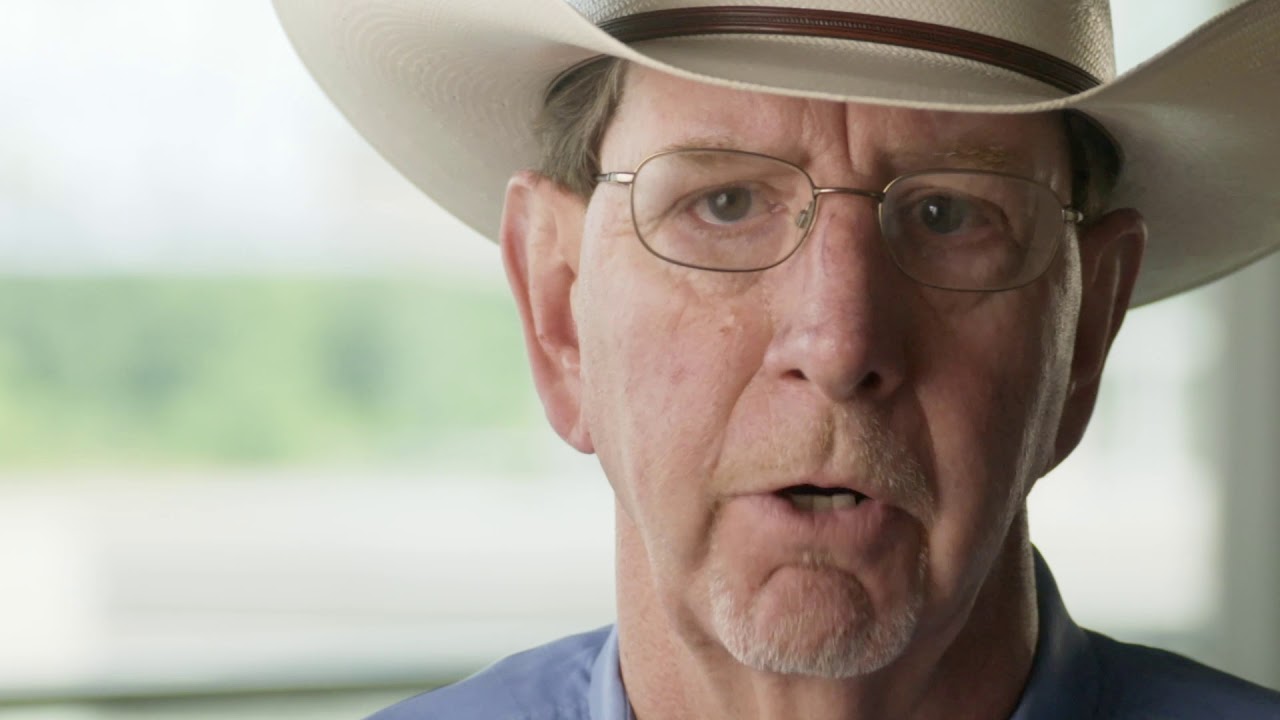 says. “Opening our borders to foreign drug importation will only increase the threat of counterfeits and escalate this crisis.”
The association has previously cited research sponsored in part by pharmaceutical companies to support these statements. It has also, as recently as at least 2016, received grants from these companies to support some of its operations.
In a in front of the House Appropriations Committee earlier this year, former FDA commissioner Scott Gottlieb said he had little worry about consumers buying drugs from Canada, but that the agency remained concerned about online pharmacies that purported to be from America’s northern neighbor.
Research on counterfeit drugs from economist Roger Bate, visiting scholar at the American Enterprise Institute, has found that foreign online pharmacies that are credentialed consistently export safe drugs.
Importing prescription drugs from abroad is illegal in most cases, although surveys suggest that millions of Americans do it anyway. States are allowed to import cheaper drugs from foreign countries, but only if the Department of Health and Human Services verifies their safety.
Trump pledged to lower drug prices during his 2016 presidential campaign and has sought to fulfill this promise during his presidency, though prices have remained mostly the same. On Thursday, the White House backed off a proposal that had been at the centerpiece of its efforts to reduce prices and would have eliminated industry rebates, encouraging drug makers to pass discounts to patients instead.
The president has endorsed importing drugs from countries such as Canada on several occasions, but such a program has yet to be developed at a national level.
The National Sheriffs’ Association adopted a resolution opposing drug importation legislation in July 2017. When the Trump administration proposed a working group to explore safe ways to import drugs in August 2018, the association sent the president a letter outlining its members’ concerns. It argued that allowing imported prescription drugs would likely increase the flow of false or dangerous drugs into the United States and worsen the opioid epidemic.
“Already overburdened law enforcement and regulatory capacity would be unable to ensure a safe prescription drug supply under importation,” the letter said.
The association issued another statement reiterating these concerns this past January, after members of Congress on both sides of the aisle introduced bills that would allow patients and pharmacists to import drugs from Canada and other major countries.
To explain the dangers posed by importation, both the letter from last August and the statement from January cited a study published in June 2017 by the Freeh Group, an international risk management firm. That study was commissioned by the Partnership for Safe Medicines, a 501(c)(6) organization with more than 60 members, according to its website. Those members include both 501(c)(3) nonprofits and other 501(c)(6) groups, such as the Pharmaceutical Research and Manufacturers of America, the premier trade association of pharmaceutical companies and the industry’s largest lobbying group.
The National Sheriffs’ Association, meanwhile, is a 501(c)(4) social welfare organization, so it is not required to disclose its donors and does not do so voluntarily. According to IRS filings, it raised $7.1 million in revenue from October 2016 through September 2017.
In the past, the association has partnered with pharmaceutical companies for other purposes. In 2016, it received a $350,000 grant from Purdue Pharma to train sheriffs to use naloxone, the opioid-overdose reversal drug, and a grant of an undisclosed amount from biopharmaceutical company Alkermes, Inc. to raise awareness about the opioid epidemic among law enforcement officers.
the association did not return requests for comment as to whether the recent anti-import ad campaign was part of a partnership.
Such 501(c)(4) groups are allowed to engage in political activity, so long as politics do not become their primary activity — a guideline that has been interpreted to mean that up to 49.9 percent of their funds can be spent on politics.
The ads in the sheriffs’ association campaign are classified as issue advocacy ads, since they are political in nature but do not expressly advocate for a candidate. FCC filings list prescription medication as the issue of national importance in each ad.
https://www.alternet.org/2019/10/tip-of-the-iceberg-prosecutors-allege-vast-criminal-conspiracy-by-giuliani-associates-to-funnel-foreign-cash-to-trump-and-gop-2/
sum
==
https://www.alternet.org/2019/10/the-people-rudy-giuliani-pals-around-with/
no lnx
The people Rudy Giuliani pals around with
Written by Nancy LeTourneau / Washington Monthly October 11, 2019
16
When we left this story, I had explained that two men, Lev Parnas and Igor Fruman, were conduits for the conspiracy theories Rudy Giuliani has been spreading about Joe Biden and his son Hunter. On Thursday, we learned that both men were arrested at Dulles airport while trying to flee the country. Here’s the report from the Washington Post.
According to the indictment unsealed in New York, Parnas, Fruman and other defendants “conspired to circumvent the federal laws against foreign influence by engaging in a scheme to funnel foreign money to candidates for federal and state office so that the defendants could buy potential influence with the candidates, campaigns, and the candidates’ governments.”
I previously noted that a company owned by Parnas and Fruman had received a payment of $1.26 million from the client trust account of a lawyer specializing in real estate and foreign investments. Two days later, they donated $325,000 to a Trump super PAC. Perhaps the pending charges will motivate these two men to spill the beans on the source of those funds.
Meanwhile, Giuliani is getting ready to shift gears by suggesting that we should keep an eye on Romania.
TPM Livewire
@TPMLiveWire
Rudy GIuliani to Sean Hannity: "I want you to keep your eye on Romania. Just watch Romania."
Embedded video
What we’ll be hearing soon from Giuliani is that Hunter Biden advised a Romanian businessman, Gabriel “Puiu” Popoviciu, who was sentenced to seven years in jail for fraud and corruption. But what Giuliani won’t tell us is that he used his position as Trump’s personal lawyer to lobby the Romanian government on Popoviciu’s behalf.
Back in July of 2016, Popoviciu hired the law firm of former FBI Director Louis Freeh to represent him. Then in August 2018, Politico reported that Giuliani had written a letter to the Romanian government criticizing their anti-corruption efforts.
Giuliani’s letter to Romanian President Klaus Iohannis appears to take sides in a fight at the top of the Romanian government over how to rein in high-level corruption.
The former New York mayor’s letter criticizes the “excesses” of Romania’s National Anticorruption Directorate (DNA), contrary to U.S. State Department policy, which has been supportive of the agency’s efforts. Although the missive does not claim to have been sent on President Trump’s authority, Romanian politicians seeking to blunt the power of the DNA have already used it to sow doubt about the U.S. government’s position…
Giuliani calls for an amnesty to be extended “to those who have been prosecuted and convicted through the excesses of the DNA.”
In the letter, Giuliani failed to disclose that he was acting on behalf of a client. But in an attempt to combat the charges that he was using his position as Trump’s lawyer to lobby the Romanian government, he said that he was working for the very law firm that had been hired by Popoviciu.
Giuliani — who regularly appears in the media as a public representative of Trump — told POLITICO Tuesday that his letter “was based on a report I reviewed” by former FBI Director Louis Freeh, who runs a global consulting firm called Freeh Group International Solutions. “They are paying my fee,” Giuliani said of the Freeh Group.
A sane person would know that pointing the finger at Hunter Biden’s work for Popoviciu would open up this whole can of worms for Giuliani, adding to the story of how he pals around with some pretty nefarious characters and completely undermining Trump’s talking point about working against government corruption. That’s why it is tempting to question the man’s sanity. But Giuliani’s apparent obsession with the former vice president might have sprung from that moment in the 2008 Democratic primary debate when Biden cleaned his clock.
Regardless of what is motivating Giuliani, it is clear that he continues to bury Trump by doing more harm than good to the president’s case. To borrow Obama’s best debate put-down of Mitt Romney, all I can say is, “Please proceed, Mayor.”
Nancy LeTourneau is a contributing writer for the Washington Monthly. Follow her on Twitter @Smartypants60.
3 222 wiki
louis Joseph Freeh (born January 6, 1950) is an American attorney and former judge who served as the fifth Director of the Federal Bureau of Investigation from September 1993 to June 2001.
Graduated from Rutgers University and New York University School of Law, Freeh began his career as a special agent in the FBI, and was later an Assistant United States Attorney and United States District Judge of the United States District Court for the Southern District of New York. A Republican, he was later appointed as FBI director by President Bill Clinton.[1][2] He is now a lawyer and consultant in the private sector.
- :{:(style="display:table-cell;padding-left:0px;padding-right:0.5em"):}::{Early life and career:(style="display:table-cell"):}:
- :{2:(style="display:table-cell;padding-left:0px;padding-right:0.5em"):}::{Federal judicial service:(style="display:table-cell"):}:
- :{3:(style="display:table-cell;padding-left:0px;padding-right:0.5em"):}::{Director of the Federal Bureau of Investigation (1993–2001):(style="display:table-cell"):}:
- :{3.1:(style="display:table-cell;padding-left:0px;padding-right:0.5em"):}::{Civil liberties:(style="display:table-cell"):}:
- :{3.2:(style="display:table-cell;padding-left:0px;padding-right:0.5em"):}::{Ruby Ridge:(style="display:table-cell"):}:
- :{3.3:(style="display:table-cell;padding-left:0px;padding-right:0.5em"):}::{Waco:(style="display:table-cell"):}:
- :{3.4:(style="display:table-cell;padding-left:0px;padding-right:0.5em"):}::{Khobar Towers bombing:(style="display:table-cell"):}:
- :{3.5:(style="display:table-cell;padding-left:0px;padding-right:0.5em"):}::{TWA Flight 800:(style="display:table-cell"):}:
- :{3.6:(style="display:table-cell;padding-left:0px;padding-right:0.5em"):}::{Centennial Olympic Park bombing:(style="display:table-cell"):}:
- :{3.7:(style="display:table-cell;padding-left:0px;padding-right:0.5em"):}::{Montana Freemen:(style="display:table-cell"):}:
- :{3.8:(style="display:table-cell;padding-left:0px;padding-right:0.5em"):}::{Unabomber:(style="display:table-cell"):}:
- :{3.9:(style="display:table-cell;padding-left:0px;padding-right:0.5em"):}::{Robert Hanssen:(style="display:table-cell"):}:
- :{3.10:(style="display:table-cell;padding-left:0px;padding-right:0.5em"):}::{Wen Ho Lee:(style="display:table-cell"):}:
- :{3.11:(style="display:table-cell;padding-left:0px;padding-right:0.5em"):}::{Chinese political and campaign fundraising controversies:(style="display:table-cell"):}:
- :{3.12:(style="display:table-cell;padding-left:0px;padding-right:0.5em"):}::{Other cases:(style="display:table-cell"):}:
- :{3.13:(style="display:table-cell;padding-left:0px;padding-right:0.5em"):}::{Criticism:(style="display:table-cell"):}:
- :{3.14:(style="display:table-cell;padding-left:0px;padding-right:0.5em"):}::{Resignation:(style="display:table-cell"):}:
- :{4:(style="display:table-cell;padding-left:0px;padding-right:0.5em"):}::{Post-FBI career:(style="display:table-cell"):}:
- :{4.1:(style="display:table-cell;padding-left:0px;padding-right:0.5em"):}::{Nasser Kazeminy:(style="display:table-cell"):}:
- :{4.2:(style="display:table-cell;padding-left:0px;padding-right:0.5em"):}::{Penn State:(style="display:table-cell"):}:
- :{4.3:(style="display:table-cell;padding-left:0px;padding-right:0.5em"):}::{Israeli Lobbying:(style="display:table-cell"):}:
- :{4.4:(style="display:table-cell;padding-left:0px;padding-right:0.5em"):}::{Other:(style="display:table-cell"):}:
- :{4.5:(style="display:table-cell;padding-left:0px;padding-right:0.5em"):}::{Book and editorials:(style="display:table-cell"):}:
- :{5:(style="display:table-cell;padding-left:0px;padding-right:0.5em"):}::{Personal life:(style="display:table-cell"):}:
- :{6:(style="display:table-cell;padding-left:0px;padding-right:0.5em"):}::{See also:(style="display:table-cell"):}:
-
early life and career
Freeh was born January 6, 1950, in Jersey City, New Jersey, the son of Italian-American parents Bernice (née Chinchiolo), a former bookkeeper, and William Freeh, Sr., a real estate broker.[3][4][5] Freeh, a native of North Bergen,[6] graduated from St. Joseph's High School in West New York, NJ in 1967, where he was taught by Christian Brothers.[7] He then graduated Phi Beta Kappa from Rutgers University–New Brunswick with a Bachelor of Arts degree in 1971, and received a Juris Doctor degree from Rutgers School of Law–Newark in 1974 and a Master of Laws degree in criminal law from New York University School of Law in 1984. Freeh was an FBI Special Agent from 1975 to 1981 in the New York City field office and at FBI Headquarters in Washington, D.C. In 1981, he joined the U.S. Attorney's Office for the Southern District of New York as an Assistant United States Attorney. Subsequently, he held positions there as Chief of the Organized Crime Unit, Deputy United States Attorney, and Associate United States Attorney. He was also a first lieutenant in the United States Army Reserve.[8][9]
As a youth, Freeh became an Eagle Scout in 1963 and in 1995 was awarded the Distinguished Eagle Scout Award by the Boy Scouts of America.[10][11]
"Pizza Connection" case
A notable case Freeh was associated with was the "Pizza Connection" investigation, in which he was lead prosecutor. The case, prosecuted in the mid-1980s, involved a drug trafficking operation in the United States by Sicilian organized crime members who used pizza parlors as fronts. After a 16-month trial, 17 of 19 defendants were convicted, of which 16 were sentenced.[12] The "Pizza Connection" case was, at the time, the most complex criminal investigation ever undertaken by the U.S. government.[8]
Walter Moody Trial
Another notable case Freeh was associated with was the murder trial of Walter Moody, accused of the pipe bomb assassination of federal judge Robert Smith Vance in Birmingham, Alabama and attorney Robert E. Robinson in Savannah, Georgia. Freeh was appointed Special Prosecutor in the case alongside Howard Shapiro.
Vance was assassinated on December 16, 1989 at his home in Mountain Brook, Alabama, when he opened a package containing a mail bomb sent by serial bomber Walter Moody. Vance was killed instantly and his wife Helen, was seriously injured and hospitalized.[13] Moody had mistakenly thought Judge Vance had denied his appeal of another case.
The Department of Justice charged Moody with the murders of Judge Vance and of Robinson, a black civil-rights attorney who had been killed in a separate explosion at his office. "Roy" Moody was also charged with mailing bombs that were defused at the Eleventh Circuit's headquarters in Atlanta and at the Jacksonville office of the National Association for the Advancement of Colored People (NAACP).
In 1991, Moody was sentenced to seven federal life terms, plus 400 years. He was subsequently tried by the state in 1996 for the murders and was executed by the state of Alabama in 2018 when he was 83 years old.[14]
Federal judicial service
Freeh was nominated by President George H. W. Bush on April 9, 1991, to a seat on the United States District Court for the Southern District of New York vacated by Judge Richard J. Daronco. He was confirmed by the United States Senate on May 24, 1991, and received commission on May 30, 1991. His service terminated on August 31, 1993, due to resignation.[9]
Director of the Federal Bureau of Investigation (1993–2001)
Shortly before and during Freeh's tenure, the FBI was involved in a number of high-profile incidents and internal investigations. Writing about Freeh in 2011, Reuters wrote that Freeh "faced widespread criticism for a series of high-profile blunders" during his tenure as FBI Director.[15]
Civil liberties
Among other Justice Department officials (including Attorney General Reno), Freeh was named a co-defendant in Zieper v. Metzinger, a 1999 federal court case. The American Civil Liberties Union assisted the plaintiffs who sued due to the FBI's conduct in investigating "Military Takeover of New York City", a short (fictional) film made in October 1999 that discussed riots and a military takeover of Times Square on New Year's Eve, 1999.[16]
In May 2000, he reached an agreement with Rep. José Serrano, then Puerto Rican Independence Party senator Manuel Rodríguez Orellana and then Puerto Rico Senate Committee on Federal Affairs chairman Kenneth McClintock, the islands' current Senate President, to release FBI files on Puerto Rican political activists. Nearly 100,000 pages have been released and are being catalogued by the Office of Legislative Services of Puerto Rico.[17]
In testimony to the Senate Judiciary Committee, Freeh said that the widespread use of effective encryption "is one of the most difficult problems for law enforcement as the next century approaches".[18] He considered the loss of wiretapping to law enforcement as a result of encryption to be dangerous and said that the "country [would] be unable to protect itself" against terrorism and serious crimes.[19]
Ruby Ridge
Main article: Ruby Ridge
An investigation of the August 1992 incident at Ruby Ridge, Idaho, in which an FBI sharpshooter killed the wife of Randy Weaver, was ongoing when Freeh became director. An FBI unit, the Hostage Rescue Team, was present at the incident; Freeh later said that had he been director, he would not have involved the HRT. FBI sniper Lon Horiuchi was later charged with manslaughter; Freeh said that he was "deeply disappointed" at the charges, filed by a county prosecutor and later dropped.[20][21][22]
Freeh was not censured for alleged managerial failures in the investigation of the incident, although a Justice Department inquiry had made such a recommendation.[23][24]
Waco
Main article: Waco Siege
An investigation of the events of April 19, 1993, when Bureau of Alcohol, Tobacco, and Firearms (ATF) special agents served a warrant on the Branch Davidian compound at Waco, Texas was ongoing during Freeh's tenure. While the event had taken place before he became Director, a highly controversial investigation ensued, including allegations of a cover-up by the FBI, and tensions developed between Freeh and Janet Reno, then-Attorney General. Reno, who had herself been blamed for mishandling of the confrontation and investigation, sent United States Marshals to FBI headquarters to seize Waco-related evidence.[25] Freeh took a neutral position during the investigations to distance himself from the tide of criticism.[26]
Khobar Towers bombing
Main article: Khobar Towers
Shortly before 10 a.m. on June 25, 1996, members of a terrorist group detonated a truck bomb outside building 131 (also known as Khobar Towers) of the King Abdul Aziz Air Base.
Inside the building were almost exclusively members of the US Air Force who were there to patrol the southern Iraqi no-fly zone enacted after the Gulf War.
In the attack, 19 US military personnel and a Saudi local were killed and 372 were wounded, making it the most deadly terrorist attack on Americans abroad since the 1983 Beirut barracks bombing.
Louis Freeh said in his book My FBI that he felt the deepest about the Khobar Towers investigation, and it was not until his last day in office, June 21, 2001, a federal grand jury in Alexandria, Virginia returned a 46-count indictment against 14 defendants charged with the Khobar Towers attack.[27] The indictments came just before some of the counts would have expired due to a five-year statute of limitations.
In his book, Freeh maintains that he was obstructed by the Clinton Administration for political reasons in investigating the bombing and bringing the terrorists to justice.
TWA Flight 800
Main article: TWA Flight 800
On July 17, 1996, TWA Flight 800 exploded and crashed into the Atlantic Ocean, killing all 230 persons on board. The following day, the FBI commenced a parallel investigation in spite of the National Transportation Safety Board having "priority over any investigation by another department, agency, or instrumentality of the United States Government", as stated in 49 U.S.C. § 1131.
Subsequently, FBI agents blocked attempts by the NTSB to interview witnesses, according to a copy of a safety board report obtained by Aviation Week & Space Technology. One month after the explosion, chemists at the FBI crime laboratory in Washington found traces of PETN, an explosive component of bombs and surface-to-air missiles.[28]
Nevertheless, on November 18, 1997, the FBI closed its investigation by announcing that "no evidence has been found which would indicate that a criminal act was the cause of the tragedy of TWA flight 800."
Almost three years later, in August 2000, the NTSB published its final report which stated that "the probable cause of the TWA flight 800 accident was an explosion of the center wing fuel tank (CWT), resulting from ignition of the flammable fuel/air mixture in the tank."[29]
Centennial Olympic Park bombing
Main article: Centennial Olympic Park bombing
The U.S. Senate Subcommittee on Terrorism, Technology and Government Information heard testimony from Freeh regarding the leaking of Richard Jewell's name to the media in connection with the bombing at the 1996 Olympic Games. Freeh testified that he did not know how the name of Jewell, who had been falsely accused in the bombings, had been leaked to the media.[30]
Montana Freemen
Main article: Montana Freemen
In March 1996, Freeh and the FBI were praised for the handling of the 81-day standoff between law enforcement agents and the Montana Freemen, a fringe political group. Director Abraham Foxman of the Anti-Defamation League, which had issued reports critical of the Freemen and encouraged their prosecution, commended the "peaceful conclusion" to the standoff.[31]
Unabomber
Main article: Unabomber
Theodore Kaczynski, the "Unabomber," was apprehended in 1996 after his manifesto, Industrial Society and its Future, was published in the New York Times and Washington Post. Freeh and Attorney General Reno recommended publication, acceding to Kaczynski's offer to "renounce terrorism" if it was published. A tip from the bomber's brother David, who recognized the writing style, assisted the FBI in his capture.[32][33]
Robert Hanssen
Main article: Robert Hanssen
Robert Hanssen, a 25-year veteran of the FBI, was arrested in 2001 and charged with spying for the Soviet Union and Russia, beginning in 1985. Hanssen had attended Mass at the same church as Freeh.[34] Freeh called the security breach "exceptionally grave" and appointed a panel, led by former FBI and Central Intelligence Agency head William Webster, to review the damage done by Hanssen's espionage.[35]
Wen Ho Lee
Main article: Wen Ho Lee
In 1999, Los Alamos National Laboratory scientist Wen Ho Lee was fired from his job, arrested, and held without trial for 278 days while his handling of sensitive nuclear information was investigated. Freeh accused him of downloading a "portable, personal trove" of US nuclear secrets.
Ultimately, Lee pled guilty to one of the fifty-nine counts brought against him, after which, he was freed from jail.[36]
At Lee's sentencing hearing, District Judge James A. Parker scolded the US government for its treatment of Lee, saying that the top decision makers in the case "have embarrassed this entire nation and each of us who is a citizen of it" and that they had been "led astray" by US government officials.
Parker apologized to Lee, saying, "Dr. Lee, you were terribly wronged by being held in pretrial custody in demeaning and unnecessarily punitive conditions. I am truly sorry."[37]
A Justice Department report of the investigation of Lee said that Director Freeh was not fully informed about the investigation until over a year after it began, and that the FBI as a whole "bungled" the case.[38]
Chinese political and campaign fundraising controversies
Main articles: 1996 United States campaign finance controversy and Timeline of Cox Report controversy
In February 1997, the media announced that Freeh personally blocked the sharing of intelligence information regarding China's alleged plot to influence US elections with the White House.[39][40]
The following month, Freeh testified before Congress that his investigation into campaign finance irregularities of the 1996 U.S. presidential and Congressional campaigns was not focusing on individual criminal acts, but on a possible conspiracy involving China.[41]
Later that year, Freeh wrote a memorandum to Attorney General Janet Reno calling for an Independent Counsel to investigate the fundraising scandal. In his memo he wrote: "It is difficult to imagine a more compelling situation for appointing an Independent Counsel".[42] Reno rejected his request.
Other cases
Other cases handled by the FBI during Freeh's tenure included the death of White House counsel Vince Foster (in 1993), allegations of incompetence at the FBI crime laboratory, investigation of the Oklahoma City bombing (1995) and the capture and prosecution of Timothy McVeigh.
Criticism
In 2000, the editorial staff of Business Week called for the resignation of Freeh, citing the Carnivore communications-monitoring system, the alleged Waco cover-up, and insubordination to Attorney General Reno as reasons.[43]
Freeh was accused of malpractice several times during his time at the FBI. In the case of the Oklahoma City bombing, Freeh failed to hand over 3,000 pages of evidence to Timothy McVeigh's lawyers.[44] Freeh also received backlash for not looking into whether Moscow had recruited someone in the FBI, despite being warned by senior investigator Thomas Kimmel. It would later come out 2 years later in 2001 that Robert Hanssen had been recruited by the Russians to be a spy for them.[45] In 1994 after it was discovered that Aldrich Ames was a spy for the Russians, Freeh was advised to require routine polygraph tests for FBI agents; no action was taken by him.[46]
In 1997 FBI agent Frederic Whitehurst was suspended by Freeh not long after making allegations that FBI lab techniques resulted in contaminated evidence. Just days after Whitehurst was put on administrative leave, a report was delivered to the FBI that supported Whitehurst's claims that evidence in cases may have been contaminated.[47][48] On March 5, Freeh was called before Congress, he said that he suspended Whitehurst on recommendations from Inspector general Michael Bromwich. But Bromwich said that he never made such a recommendation. Freeh admitted that his testimony was incomplete, but denied he deliberately misled congress.[49] Whitehurst would later accuse Freeh of covering up mistakes made by forensic analysts.[50]
Attorney general Janet Reno testified that information that could have prevented the September 11 attacks was mishandled by the FBI at the time Freeh was the director of the FBI.[51]
Resignation
In June 2001, he resigned amid criticism that the FBI needed stronger leadership, particularly after allegations of spying by Robert Hanssen. Upon his resignation, he was praised by Attorney General John Ashcroft, who called him "a model law enforcement officer".[52] He was replaced by Thomas J. Pickard, who served as acting FBI Director for 71 days until being replaced by Robert Mueller.
Post-FBI career
Freeh approached acting New Jersey Governor Donald DiFrancesco, and offered to serve, without salary, as the state's anti-terrorism "czar". Di Francesco approached both major-party candidates for governor to secure their approval; Bret Schundler, the Republican candidate, agreed "in principle". However, Democrat Jim McGreevey, who won the gubernatorial election, turned down Freeh in favor of Golan Cipel. It was later discovered that McGreevey and Cipel had been involved in a sexual relationship.[53][54] McGreevey was heavily criticized for giving the post to Cipel rather than Freeh or another experienced individual.[55]
Former FBI Director Louis J. Freeh at a press conference in the Estonian Ministry of Finance, Tallinn, 3 July 2020.
In September 2001, Freeh was appointed to the board of directors of credit card issuer MBNA; he also served as the bank's general counsel, as well as corporate secretary and ethics officer. Likewise, Bristol-Myers Squibb elected him to its board of directors.[56]
Freeh is also a member of the board of consultants of the Gavel Consulting Group, formed by current and former federal judges and high-ranking government officials to provide advice and counseling to the private sector.[57][58]
Beginning in 2004 Freeh began teaching as an adjunct law professor for Widener University School of Law. Drawing on his years of experience, he has taught White Collar Crime.
In 2007, Freeh formed Freeh Group International Solutions,[59] a consulting and investigative firm headquartered in Wilmington, Delaware with regional offices in Washington DC and New York. Affiliated firms include Freeh Group Europe and the law firm Freeh, Sporkin & Sullivan, LLP. The latter firm includes Eugene R. Sullivan, a retired Federal Judge in Washington D.C. and Eugene R. Sullivan II amongst partners and Stanley Sporkin as senior counsel. Sporkin is a retired Federal judge who earlier served as head of the Securities and Exchange Commission's Division of Enforcement and as general counsel to the Central Intelligence Agency.[60]
Nasser Kazeminy
Freeh was hired by Nasser Kazeminy to conduct an independent investigation into alleged financial improprieties in the relationship between Kazeminy and former Senator Norm Coleman that surfaced during the final week of the 2008 Minnesota Senate race.[61] At the time, Freeh was serving on the board of the National Ethnic Coalition of Organizations (NECO), whose chairman was Kazeminy.[62] Although Coleman had received roughly $100,000 in gifts from Kazeminy over the years, Freeh's investigation cleared both Coleman and Kazeminy of any wrongdoing in 2011.[61][63] The Intercept, questioning Freeh's impartiality, reported that nine days after Freeh's investigation cleared Kazeminy of wrongdoing, Freeh's wife received a one half ownership stake from Kazeminy in a Palm Beach property valued at $3 million.[64]
In 2009, Louis Freeh was hired by Saudi Arabian Prince Bandar bin Sultan as his legal representative on issues surrounding the Al-Yamamah arms deal, appearing April 7, 2009, on the PBS series Frontline's episode "Black Money".[65]
In late May 2011, Freeh was retained as an independent investigator by the FIFA Ethics Committee in the bribery scandal centering on Mohammed bin Hammam and Jack Warner.[66] However, the Court of Arbitration of Sports subsequently rejected Freeh's report as consisting of little more than speculation.[67]
Penn State
In November 2011, Pennsylvania State University announced that Freeh would lead an internal investigation into the Penn State child sex abuse scandal involving Jerry Sandusky and several high-ranking university officials.[68] He announced that the team assisting him in his investigation would include former FBI agents and federal prosecutors.[69] As the Sandusky trial proceeded toward conviction in June 2012, the university said Freeh would report in the summer and the report would "be released to the trustees and the public simultaneously without being reviewed by the school's general counsel's office".[70] The report was released on July 12, 2012.[71] The 267-page report from Freeh's law firm was characterized as deeply critical of the administration of former university president Graham Spanier, athletic director Tim Curley, late coach Joe Paterno and former university vice president Gary Schultz. A commentary at Sports Illustrated's website characterized the report's accusations against Paterno as "damning and sweeping" and the findings about Spanier, including a 2001 e-mail in the wake of the 2001 shower incident purportedly witnessed by graduate assistant Mike McQueary, as "most damning".[72] A number of sources [73] have questioned if not outright disputed the accuracy of Freeh's findings, pointing to the lack of hard evidence to support his "reasonable conclusions." A year after the report's issuance, the chairman of the Penn State Board of Trustees, which had originally commissioned the report, said that Freeh's conclusions amounted to "speculation."[74] In a January 2015 interview with the Associated Press, Penn State President Eric Barron said, "I have to say, I'm not a fan of the report. There's no doubt in my mind, Freeh steered everything as if he were a prosecutor trying to convince a court to take the case."[75]
On February 10, 2013, a report authored by former United States Attorney General and former Governor of Pennsylvania Dick Thornburgh, whom the Paterno family retained to conduct its own investigation, concluded that the Freeh report was "seriously flawed, both with respect to the process of [its] investigation and its findings related to Mr. Paterno".[76] Graham Spanier is suing Freeh for defamation and tortious interference and Penn State University for breach of contract.[77]
The Freeh Report had far-reaching outcomes for Penn State. The NCAA used the Freeh Report in lieu of its own investigation to impose sanctions on the Penn State football program. On July 23, 2012, the NCAA imposed a $60 million fine, four-year postseason ban, scholarship reductions, and vacated all victories from 1998 to 2011.[78] These sanctions were considered to be among the most severe ever imposed on an NCAA member school. NCAA President Mark Emmert stated that the sanctions were levied "not to be just punitive, but to make sure the university establishes an athletic culture and daily mindset in which football will never again be placed ahead of educating, nurturing and protecting young people."[79][80] The Big Ten Conference subsequently imposed an additional $13 million fine.[81]
An investigation led by former U.S. Attorney General Richard Thornburgh, who was retained by the Paterno family to review the Freeh report,[82] concluded that the report that placed so much blame on Penn State and Paterno was a "rush to injustice" that could not be relied upon.[83] He found that not only did the evidence "fall far short" of showing Paterno attempted to conceal the Sandusky scandal, but rather that "the contrary is true".[82] In January 2013, State senator Jake Corman and state treasurer Rob McCord launched a lawsuit against the NCAA to overturn the sanctions on Penn State on the basis that Freeh had been actively collaborating with the NCAA and that due process had not been followed. In November 2014, State senator Corman released emails showing "regular and substantive" contact between NCAA officials and Freeh's investigators, suggesting that the Freeh conclusions were orchestrated.[84] As part of the settlement, the NCAA reversed its decision on January 16, 2015, and restored the 111 wins to Paterno's record.[85][80]
Israeli Lobbying
In 2019 Freeh and his friend Alan Dershowitz lobbied the U.S. government of behalf of Israeli billionaire Dan Gertler. Gertler was accused of corruption by the U.S. government and was facing sanctions by the Trump administration for his business deals with the Dominican Republic.[86] In the last days of Trump's presidency, the sanctions were lifted.[87][88]
Other
In November 2011, Freeh was named trustee for the MF Global bankruptcy case,[89] the largest Wall Street bankruptcy since Lehman Brothers' in September 2008.[90] He was appointed by U.S. Trustee Tracy Hope Davis working under the authority of U.S. Bankruptcy Court Judge Martin Glenn.[89]
On February 5, 2013, Freeh was named Chair of the law firm Pepper Hamilton LLP.[91] He resigned the chairmanship earlier than slated, in October 2014.[92]
In August 2018, Freeh hired attorney Rudy Giuliani to lobby the Romanian government calling for amnesty for Freeh's clients in a corruption probe.[93]
Book and editorials
An editorial by Louis Freeh critical of the 9/11 Commission appeared in the November 17, 2005, edition of the Wall Street Journal.[94]
In 2005, Freeh (with Howard Means) published a book about his career in the FBI entitled My FBI: Bringing Down the Mafia, Investigating Bill Clinton, and Fighting the War on Terror.[95] It is highly critical of both President Clinton and former counter-terrorism advisor Richard A. Clarke. On October 19, 2005, Freeh made an appearance on The Daily Show to promote the book.[96][97] A New York Times review called it "A strangely shallow offering by a man who is anything but...".[98]
Personal life
Freeh and his wife, Marilyn, who at the time was employed as a clerk at the FBI headquarters,[99] have six sons. Freeh is a devout Roman Catholic. Contrary to rumors, he is not a member of the Opus Dei prelature.[100][101] According to The Bureau and the Mole,[102] a book by David A. Vise, one of Freeh's sons was enrolled at The Heights School in Potomac, Maryland, which Vise describes as "an Opus Dei academy".[103] Several of his sons graduated from Archmere Academy, a Catholic school in Claymont, Delaware. One of his sons attended Georgetown University, a Jesuit university in Washington, D.C.
Freeh acquired Italian citizenship on October 23, 2009.[104]
SUV crash and hospitalization
Shortly after noon on August 25, 2014, Freeh was headed south on Vermont 12, in his 2010 GMC Yukon, when he drove off the east side of the road. The vehicle struck a mailbox at 2762 Vermont 12, Barnard, Vermont, and a row of shrubs, before stopping against a tree, police said. Freeh told police he fell asleep at the wheel.[64] The Wilmington, Delaware, resident was flown from Barnard to Dartmouth-Hitchcock Medical Center in Lebanon, New Hampshire, where he was admitted under armed guard.[105]
See also
References
...