NSA2 bak nat sheriff
3 26 GENERIC FOR RW SHERIFF
oops see champagne
see pharma
leverage on trump b/c tough guys, border BS
SEE VOTER SUPPRESS
===
mofo 220 bak
general category
see tigerswan, EMAC
just added constit sheriff see arpaio and clarke
===
---
===
A loyal supporter of President Donald Trump has been convicted on nine counts of election fraud, the *San Francisco Chronicle* reported Monday.
Gaea Powell, a Moms for Liberty activist, ran for a county clerk-recorder spot in a small California town, promising that she could improve "election integrity." As the Chronicle reported, "it turns out this conservative candidate wasn’t following election laws herself."
A county jury found Powell guilty of nine felony counts, including lying about her residence, unlawfully registering to vote and fraudulently voting.
It comes from both the 2022 and 2024 elections, when Powell ran for mayor of Arroyo Grande. She claims that she didn't know or attempt to commit fraud.
“I respect the jury’s role. But I am deeply disappointed by today’s verdict,” Powell’s statement said. “I have maintained from the beginning, and I maintain today, that I did not knowingly deceive anyone and did not act with fraudulent intent.”
Powell represented herself in court rather than hire a lawyer. She claimed that there was evidence that could have vindicated her, but that it was "excluded during the trial," the report said.
She claims she'll appeal.
As the report explained, it isn't the first time a conservative candidate who pledged to create strict voting laws has also been found guilty of breaking existing laws.
Trump supporter Tina Peters, a former Colorado clerk, tampered with voting machines and then claimed fraud in the 2020 election. She was commended by President Donald Trump.
Another is Chad Bianco from Riverside County, who was the sheriff at the time and was running for governor when he claimed voter fraud was a huge problem. He then seized hundreds of thousands of ballots. The case went all the way to the California Supreme Court, which ultimately ruled he broke the law.
The justices even went so far as to write that Bianco exposed the ballots to “alteration or tampering” when he illegally seized them.
The heavily Republican senior community in Florida, The Villages, had a small group of four residents caught voting twice in 2020. They voted in Florida in person and in a previous state by absentee ballot.
The Villages conspiracy made the cases politically notable because reports of their activity came as Trump claimed that Democrats had committed widespread fraud to steal the 2020 election.
In 2020, Republican Donald “Kirk” Hartle voted twice in Nevada: once for himself and again under his late wife's ballot.
A 64-year-old Republican woman even went so far as to use the "everybody does it," excuse when she cast a ballot in her deceased mother’s name in 2020. Reporting said she did so because she believed Democrats were committing widespread fraud.
-=-=
---
AN 3 26
In Riverside County, California, Sheriff Chad Bianco — a Donald Trump supporter and former Oath Keepers member who is running for governor of California as a Republican — recently announced that his department had seized 650,000 voting ballots cast in a 2025 election. Bianco, at a, told reporters, "This investigation is simple: Physically count the ballots and compare that result with the total votes reported.""
MS NOW's Steve Benen, in an opinion column published on March 24, argues that Bianco is conducting an "investigation that appears entirely baseless" and could be used as a "template" for MAGA Republicans to challenge election results they don't like.
"For those inclined to be charitable," Benen explains, "there is a relatively benign interpretation of these developments. It's possible, for example, that Bianco is simply trying to generate attention for his longshot gubernatorial candidacy. Relatedly, the sheriff likely realizes that ballot seizures will please the White House, which in turn, may lead to greater institutional support from his party in the coming months. The move, in other words, may very well be little more than an elaborate campaign stunt that will have little practical impact and will be largely forgotten after Bianco loses. But then, there are the less benign interpretations of what transpired."
The "Rachel Maddow Show" producer notes that Bianco's investigation "comes on the heels of Trump sending the FBI to seize election materials in Georgia in response to other assorted conspiratorial complaints."
"The broader concern is that a template is taking shape, offering precedents for law enforcement to start making plans to seize ballots in areas nationwide — after or even during official counts," Benen warns. "What's more, the more frequently this happens, the more Americans may be led to believe it's normal and routine for law enforcement officials to seize and impound ballots — despite the fact that this is neither normal nor routine."
---
9 24
===
no lnx many pix
Inside the bizarre Las Vegas conference where Trump-loving sheriffs, felons and conspiracy theorists vowed to form militias to patrol polling places and seize voting machines to stop Biden
A recent CSPOA conference in Las Vegas drew attention for its controversial mix of attendees, including felons, disgraced politicians and sheriffs
The event aimed to address extremism allegations within the group and outline plans for upcoming elections, such as investigating alleged voter fraud
Critics raised concerns about potential election interference and misinformation
By JAMES GORDON FOR DAILYMAIL.COM
PUBLISHED:, 21 April 2024
View comments
A right-wing sheriffs' group that challenges federal law held a bizarre rally in Las Vegas last week featuring felons and conspiracy theorists as the country's presidential election is just months away.
The Constitutional Sheriffs and Peace Officers Association, founded in 2011 by former Arizona sheriff Richard Mack, held its annual conference in Las Vegas last week at the Ahern Luxury Boutique Hotel conference center.
The group, known as CSPOA, teaches that elected sheriffs must 'protect their citizens from the overreach of an out-of-control federal government' by refusing to enforce any law they deem unconstitutional or 'unjust.'
The right-wing 'constitutional sheriffs,' claim legal power in their jurisdictions that exceeds U.S. federal government and state authorities.
In particular, this time around, the organization is urging its members to seize voting machines while investigating claims of 'rampant voter fraud' that during the 2020 election proved to be baseless.
Last week's Constitutional Sheriffs and Peace Officers Association conference in Las Vegas drew attention for its controversial mix of attendees, including felons, disgraced politicians and sheriffs. It's founder Richard Mack is seen speaking on the stand
+
10
View gallery
Last week's Constitutional Sheriffs and Peace Officers Association conference in Las Vegas drew attention for its controversial mix of attendees, including felons, disgraced politicians and sheriffs. It's founder Richard Mack is seen speaking on the stand
Michael Flynn, the former national security adviser and retired three-star general who pleaded guilty to lying to the FBI but was pardoned by then-President Donald Trump, was a speaker at the conference
+
10
View gallery
Michael Flynn, the former national security adviser and retired three-star general who pleaded guilty to lying to the FBI but was pardoned by then-President Donald Trump, was a speaker at the conference
Trump's friend and MyPillow founder Mike Lindell also spoke as he pushed his election denial theories
+
10
View gallery
Trump's friend and MyPillow founder Mike Lindell also spoke as he pushed his election denial theories
TRENDING
America's best public high school is revealed
20k viewing now
Marjorie Taylor Greene says Democrats plan to have Trump 'murdered'
5.4k viewing now
Drunk driver appears in court with a cast after killing two kids
3.6k viewing now
This time around, the group want to form a group that will patrol polling places and have the power to seize voting machines while investigating Democrats and other countries that are sending immigrants to the the U.S. in order to vote illegally, they claim and reported by NBC News.
In 2022, the group continued to promote baseless conspiracy theories that the last presidential election was stolen from Trump are have recently been pushing a dubious theory that county sheriffs can access voting machines and intervene in how elections are run - and also have virtually unchecked power in their counties.
Voting-rights advocates and election experts said any attempts by law enforcement to interfere in elections would be alarming and an extension of the threat posed by the continued circulation of Trump's claims about the 2020 election.
'The safest way to actually achieve that is to have local law enforcement understand that they have no obligation to enforce such laws,' Mack said during a recent interview. 'They're not laws at all anyway. If they're unjust laws, they are laws of tyranny.'
Mike Gannuscio (left) is running to be a sheriff in Mohave County, Nevada
+
10
View gallery
Mike Gannuscio (left) is running to be a sheriff in Mohave County, Nevada
In 2022, the group continued to promote baseless conspiracy theories that the last presidential election was stolen from Trump are have recently been pushing a dubious theory that county sheriffs can access voting machines and intervene in how elections are run. Zapata County, Texas, Sheriff Raymundo Del Bosque holds his hat over his heart during the national anthem
+
10
View gallery
In 2022, the group continued to promote baseless conspiracy theories that the last presidential election was stolen from Trump are have recently been pushing a dubious theory that county sheriffs can access voting machines and intervene in how elections are run. Zapata County, Texas, Sheriff Raymundo Del Bosque holds his hat over his heart during the national anthem
'The sheriff is supposed to be protecting the public from evil,' Dar Leaf, the chief law enforcement officer for Barry County, Michigan, said during last year's conference. 'When your government is evil or out of line, that's what the sheriff is there for, protecting them from that.'
The sheriffs' group has railed against gun control laws, COVID-19 mask mandates and public health restrictions, as well as the alleged election fraud.
It has also quietly spread its ideology across the country, seeking to become more mainstream in part by securing state approval for taxpayer-funded law enforcement training.
The public-facing image of the sheriffs group, prominently features the American flag and the experiences of black civil rights icons who pushed back against unjust laws.
But details of its operations are closely held, and its finances are shielded from public scrutiny.
It was briefly registered as a nonprofit in Arizona, but internal records indicate it is now a private company.
The group does not release its list of dues-paying members, nor does it publicize information about where or how it conducts trainings.
The sympathies of the group's leaders for right-wing, white-nationalist extremist causes, however, are well documented.
The CSPOA is also unequivocal about gun rights and supports the right of criminals and the mentally ill to carry firearms, opposing gun registration or background checks.
About 100 people attended the day-long conference in Las Vegas last Wednesday
+
10
View gallery
About 100 people attended the day-long conference in Las Vegas last Wednesday
Attendees of the conference milled around and mingled with one another in the lobby
+
10
View gallery
Attendees of the conference milled around and mingled with one another in the lobby
Various speakers from the 'law enforcement' community were on the stand and able to speak
+
10
View gallery
Various speakers from the 'law enforcement' community were on the stand and able to speak
Mack was an early board member of the Oath Keepers, the group involved in the January 6 attack on the U.S. Capitol. Although he said he split with the group several years ago when it became a militia, Mack still speaks at Oath Keeper-affiliated rallies.
Leaf was investigated, but not charged, in connection with the Michigan attorney general's investigation into the alleged illegal seizure and breach of vote-counting machines in 2020.
He also appeared at an election-denier rally with two men later charged in the conspiracy to kidnap Michigan's Democratic Governor Gretchen Whitmer.
Over the last six years, the group has hosted trainings, rallies, speeches and meetings in at least 30 states for law enforcement officers, political figures, private organizations and members of the public.
The group has held formal trainings on its 'constitutional' curriculum for law enforcement officers in at least 13 of those states. In six states, the training was approved for officers´ continuing education credits.
The group also has supporters who sit on three state boards in charge of law enforcement training standards.
Legal experts warn that such training - especially when it's approved for state credit - can undermine the democratic processes enshrined in the U.S. Constitution and is part of what Mary McCord, a former federal prosecutor and executive director of the Institute for Constitutional Advocacy and Protection at Georgetown University, called a 'broader insurrectionist ideology' that has gripped the nation since the 2020 presidential election.
'They have no authority, not under their state constitutions or implementing statutes to decide what's constitutional and what's not constitutional. That's what courts have the authority to do, not sheriffs,' McCord said.
'There's another sort of evil lurking there,' McCord added, 'because CSPOA is now essentially part of a broader movement in the United States to think it's OK to use political violence if we disagree with some sort of government policy.'
Mach, who founded was an early board member of the Oath Keepers, the group involved in the January 6 attack on the U.S. Capitol, pictured above
+
10
View gallery
Mach, who founded was an early board member of the Oath Keepers, the group involved in the January 6 attack on the U.S. Capitol, pictured above
Mack, seen here, said he split with the Oath Keepers group several years ago when it became a militia, although he still speaks at Oath Keeper-affiliated rallies
+
10
View gallery
Mack, seen here, said he split with the Oath Keepers group several years ago when it became a militia, although he still speaks at Oath Keeper-affiliated rallies
At least one state, Texas, canceled credit for the sheriffs´ training after determining the course content - which it said included a reference to 'this is a war' - was more political than educational. But other states, such as Tennessee, have approved the training, in part because it was hosted by a local law enforcement agency.
Unlike other law enforcement continuing education, such as firearms training, the sheriffs' curriculum is largely focused on the alleged constitutional underpinnings of sheriffs' absolute authority to both interpret and refuse to enforce certain laws.
One brochure advertising the group's seminars states: 'The County Sheriff is the one who can say to the feds, `Beyond these bounds you shall not pass.´'
Nationwide, there are some 3,000 sheriffs, whose salaries are funded by taxpayers. Mack has claimed about 10 per cent of those are members of CSPOA together with a further 10,000 regular citizens. About 100 people attended the Vegas conference.
They sheriffs serve as the chief law enforcement officers in their counties and are the only elected peace officers in the country.
They appoint deputy sheriffs and jailers and service the courts in their jurisdictions.
Especially in rural areas, sheriffs hold immense sway over what happens in their county.
Amy Cooter, research director at the Middlebury Institute Center on Terrorism, Extremism and Counterterrorism, said many sheriffs join the group from 'a misinformed but well-meaning perspective.' But, she added, it also allows some sheriffs to 'potentially engage in extremism by not enforcing legal, lawful, legitimate orders.'
Some states have pushed back against the group's training efforts, and not all sheriffs subscribe to the group´s ideology.
Many at the National Sheriffs' Association conference distanced themselves from the constitutional sheriffs or claimed not to know what they were about.
'When I took an oath 17 years ago as sheriff, I took the oath to uphold the Constitution, not overstep it,' said Troy Wellman, sheriff of Moody County, South Dakota, and a vice president of the National Sheriffs' Association.
And there has been public pushback in some counties led by 'constitutional sheriffs.' In Klickitat County, Washington, residents alleged Sheriff Bob Songer, a board member of the sheriffs group, engaged in fearmongering and intimidation.
He was the target of a formal complaint in 2022 that the state's law enforcement standards agency ultimately dismissed for lack of jurisdiction.
Michael Peroutka, another sheriffs group board member and former candidate for Maryland's attorney general, was once affiliated with the League of the South, which supports 'a free and independent Southern republic.'
At a 2019 sheriffs´ training event, he said, 'There is a creator God. Our rights come from him. The purpose of civil government is to secure and defend God-given rights.'
Jon Lewis, a research fellow at George Washington University's Program on Extremism, described the sheriffs group as 'insidious' and said it had become 'mainstream standard-bearers for entrance into more violent forms of extremism.'
'Just because it's not as overt in their subversion of the democratic system, just because it's quieter about how it does it and what it's calling for, doesn't make the ideas any less dangerous,' said Lewis.
===
===
https://www.opensecrets.org/news/2020/12/pharma-lobby-poured-millions-into-darkmoney-groups/
pharmaceutical companies’ top lobbying group funneled millions of dollars to prominent “dark money” groups that pushed industry friendly messages to lawmakers and 2020 voters.
The Pharmaceutical Research and Manufacturers of America raised nearly $527 million last year and spent roughly $506 million, new tax returns obtained by OpenSecrets reveal. That’s a record haul for the organization, which is funded by the world’s most powerful pharmaceutical companies.
The trade association made its largest political donation of 2019 — $4.5 million — to the American Action Network, a dark money group that backs House Republicans. The conservative nonprofit and its pharmaceutical industry donor share disdain for proposals to regulate the price of prescription drugs.
The same year it received PhRMA’s donation, theAmerican Action Networklaunched several multi-million dollar ad campaigns opposing President Donald Trump’s proposal to let Medicare negotiate drug prices. This year, the group launched multi-million dollar ad campaigns opposing House Democrats’ bill to lower drug prices and ads boosting vulnerable Republicans who supported an alternative bill considered much friendlier to drugmakers.
The alliance between drugmakers and GOP groups isn’t new. PhRMA has given $14.6 million to the American Action Network since 2016. In that time, the American Action Network became a major contributor to GOP causes. During the 2020 election cycle, it gave $26.4 million to the Congressional Leadership Fund, the House Republicans’ top super PAC that helped unseat several freshman Democrats.
In several key 2020 races, the American Action Network battled with a Democratic group that also received funding from drugmakers. PhRMA gave nearly $1.6 million to Center Forward, a dark money group aligned with moderate Blue Dog Democrats, last year. That nonprofit provided most of the funding for an allied super PAC that spent $3.3 million supporting House Democrats. The pharma-backed GOP and Democratic groups went head-to-head in several key House races, including a tightly contested New York race that has come down to a handful of votes.
Late last year, as Congress debated drug pricing bills, Center Forward flew House staffers to San Francisco to meet with drug company executives. The nonprofit’s board members have also lobbied for pharmaceutical interests. Republicans in Congress are the most vocal opponents of efforts to have the government regulate drug prices — a measure that would damage drugmakers’ profits — but Blue Dog Democrats also pushed back on more aggressive proposals to lower drug prices.
Drugmakers bankroll groups pushing industry talking points to Trump
Prominent drugmakers have spent much of 2020 developing vaccines to fight COVID-19, and the threat of drug pricing legislation in Congress has died down amid the pandemic. But Trump has continued to push forward with executive actions on prescription drugs opposed by the pharmaceutical industry.
PhRMA deployed creative tactics in an attempt to persuade Trump against following through on his campaign promise to aggressively lower drug prices. During the Trump era, the trade association has bankrolled conservative groups that have access to the president.
The American Conservative Union, which hosts the annual Conservative Political Action Conference, received $150,000 from PhRMA in 2019. Led by Trump ally and corporate lobbyist Matt Schlapp, the conservative nonprofit launched the Coalition Against Socialized Medicine late last year to oppose efforts to regulate drug prices and enact single-payer health care proposals.
Nearly all of the coalition’s members received funding from drugmakers within the last two years. Big pharma’s trade group gave $505,000 to American Commitment, $78,500 to Americans for a Balanced Budget and $60,000 to the Taxpayers Protection Alliancelast year alone, according to new tax returns. The Taxpayers Protection Alliance launched a six-figure ad campaign last month aimed at killing “surprise” medical billing legislation and calling it a “handout” to big insurance companies.
New tax returns also show that pharmaceutical manufacturers’ trade group gave $200,000 to the National Sheriffs Association, a nonprofit representing thousands of law enforcement officials. The group launched a six-figure ad campaign last year warning against Trump’s proposal to import drugs from foreign countries, a measure bitterly opposed by drugmakers. Those ads specifically targeted Trump, airing in Washington, D.C., on his favorite Fox News programs.
Trump ultimately approved a plan to import drugs from Canada in September, but its scope was limited. He also moved ahead with a rule that would allow Medicare to negotiate the cost of drugs based on the price foreign governments pay, another measure strongly opposed by drugmakers.
Still, while Trump has moved ahead with industry-opposed measures, his GOP allies in Congress have not made drug pricing legislation a priority. Republican lawmakers and their aides are consistently fed opinion pieces and ad campaigns from conservative groups urging them to reject “socialist price controls.”
Republicans ran political ads in 2020 that mirrored talking points from major healthcare industry players. Super PACs aligned with Senate Majority Leader Mitch McConnell (R-Ky.) attacked Democrats’ over their support for a public health insurance option, a proposal that could hurt drugmakers’ profits. Those ads cited a study from the Partnership For America’s Health Care Future, a conglomerate of insurers, hospitals and pharmaceutical companies that received $300,000 from PhRMA last year.
Longtime pharmaceutical ally gets seven-figure gift in retirement
One of PhRMA’s largest 2019 gifts was a $2 million donation to the Orrin Hatch Foundation, athink tank and research library launched by former Sen. Orrin Hatch (R-Utah). The trade group gave $140,000 to the foundation between 2017 and 2018.
Hatch, who retired in January 2019, was known as the pharmaceutical industry’s “man on the Hill” by the end of his 42-year tenure. Hatch helped shape current laws that regulate generic drugs and opposed measures to limit drugmakers’ monopoly protections. As chairman of the Senate Finance Committee, Hatch was considered the major roadblock to drug pricing changes proposed by Democrats and Trump.
the pharmaceuticals and health products industry gave $2.8 million to Hatch’s campaign committee since 1998, more than any member of Congress who didn’t run for president.When Hatch faced a primary challenge in 2012, PhRMAgave $750,000 to a super PAC boosting his reelection campaign.
During Hatch’s final years in office, his allies reportedly asked pharmaceutical companies and K Street lobbyists for donations to fund the Orrin Hatch Foundation. In 2018, the foundation invited major corporations, including pharmaceutical giant Merck, to a luxury mountain resort for a fundraiser.
While the foundation will serve as a library to catalogue Hatch’s government service and provide civic education, it has also put out policy reports on pressing issues. Its most recent report delves into how lawmakers can craft “sensible solutions to both foster innovative biologics and curb skyrocketing drug prices.”
===
https://www.opensecrets.org/news/2019/07/sheriffs-target-trump-w-ads-stop-prescription-drugs/
ref
bringing in prescription drugs from other countries to reduce prices is an idea that has gained traction across the political spectrum, from Sen. Bernie Sanders to President Donald Trump.
But the proposal, generally criticized by pharmaceutical companies, has faced additional opposition on the airwaves in recent weeks from a different kind of group: the National Sheriffs’ Association.
The association, a 501(c)(4) group representing thousands of law enforcement officials, has spent more than $500,000 in the past few weeks to air TV ads opposing the importation of prescription drugs, according to FCC filings compiled from OpenSecrets’ political ad database.
The ads, which mostly target adults over the age of 55, have aired in the Washington, D.C., metro area on the local CBS and NBC affiliates, as well as on cable channels including ESPN, HGTV and Fox News. The ad buy included more than 600 spots, including dozens on shows that the president is known to watch, such as Hannity, Fox & Friends and Tucker Carlson Tonight.
“We protect our communities fromillegal imported fentanyl and counterfeit pills that often come from other countries,” says. “Opening our borders to foreign drug importation will only increase the threat of counterfeits and escalate this crisis.”
The association has previously cited research sponsored in part by pharmaceutical companies to support these statements. It has also, as recently as at least 2016, received grants from these companies to support some of its operations.
In a in front of the House Appropriations Committee earlier this year, former FDA commissioner Scott Gottlieb said he had little worry about consumers buying drugs from Canada, but that the agency remained concerned about online pharmacies that purported to be from America’s northern neighbor.
Research on counterfeit drugs from economist Roger Bate, visiting scholar at the American Enterprise Institute, has found that foreign online pharmacies that are credentialed consistently export safe drugs.
Importing prescription drugs from abroad is illegal in most cases, although surveys suggest that millions of Americans do it anyway. States are allowed to import cheaper drugs from foreign countries, but only if the Department of Health and Human Services verifies their safety.
Trump pledged to lower drug prices during his 2016 presidential campaign and has sought to fulfill this promise during his presidency, though prices have remained mostly the same. On Thursday, the White House backed off a proposal that had been at the centerpiece of its efforts to reduce prices and would have eliminated industry rebates, encouraging drug makers to pass discounts to patients instead.
The president has endorsed importing drugs from countries such as Canada on several occasions, but such a program has yet to be developed at a national level.
The National Sheriffs’ Association adopted a resolution opposing drug importation legislation in July 2017. When the Trump administration proposed a working group to explore safe ways to import drugs in August 2018, the association sent the president a letter outlining its members’ concerns. It argued that allowing imported prescription drugs would likely increase the flow of false or dangerous drugs into the United States and worsen the opioid epidemic.
“Already overburdened law enforcement and regulatory capacity would be unable to ensure a safe prescription drug supply under importation,” the letter said.
The association issued another statement reiterating these concerns this past January, after members of Congress on both sides of the aisle introduced bills that would allow patients and pharmacists to import drugs from Canada and other major countries.
To explain the dangers posed by importation, both the letter from last August and the statement from January cited a study published in June 2017 by the Freeh Group, an international risk management firm. That study was commissioned by the Partnership for Safe Medicines, a 501(c)(6) organization with more than 60 members, according to its website. Those members include both 501(c)(3) nonprofits and other 501(c)(6) groups, such as the Pharmaceutical Research and Manufacturers of America, the premier trade association of pharmaceutical companies and the industry’s largest lobbying group.
The National Sheriffs’ Association, meanwhile, is a 501(c)(4) social welfare organization, so it is not required to disclose its donors and does not do so voluntarily. According to IRS filings, it raised $7.1 million in revenue from October 2016 through September 2017.
In the past, the association has partnered with pharmaceutical companies for other purposes. In 2016, it received a $350,000 grant from Purdue Pharma to train sheriffs to use naloxone, the opioid-overdose reversal drug, and a grant of an undisclosed amount from biopharmaceutical company Alkermes, Inc. to raise awareness about the opioid epidemic among law enforcement officers.
the association did not return requests for comment as to whether the recent anti-import ad campaign was part of a partnership.
Such 501(c)(4) groups are allowed to engage in political activity, so long as politics do not become their primary activity — a guideline that has been interpreted to mean that up to 49.9 percent of their funds can be spent on politics.
The ads in the sheriffs’ association campaign are classified as issue advocacy ads, since they are political in nature but do not expressly advocate for a candidate. FCC filings list prescription medication as the issue of national importance in each ad.
===
===
https://www.opensecrets.org/news/2020/12/pharma-lobby-poured-millions-into-darkmoney-groups/
pharmaceutical companies’ top lobbying group funneled millions of dollars to prominent “dark money” groups that pushed industry friendly messages to lawmakers and 2020 voters.
The Pharmaceutical Research and Manufacturers of America raised nearly $527 million last year and spent roughly $506 million, new tax returns obtained by OpenSecrets reveal. That’s a record haul for the organization, which is funded by the world’s most powerful pharmaceutical companies.
The trade association made its largest political donation of 2019 — $4.5 million — to the American Action Network, a dark money group that backs House Republicans. The conservative nonprofit and its pharmaceutical industry donor share disdain for proposals to regulate the price of prescription drugs.
The same year it received PhRMA’s donation, theAmerican Action Networklaunched several multi-million dollar ad campaigns opposing President Donald Trump’s proposal to let Medicare negotiate drug prices. This year, the group launched multi-million dollar ad campaigns opposing House Democrats’ bill to lower drug prices and ads boosting vulnerable Republicans who supported an alternative bill considered much friendlier to drugmakers.
The alliance between drugmakers and GOP groups isn’t new. PhRMA has given $14.6 million to the American Action Network since 2016. In that time, the American Action Network became a major contributor to GOP causes. During the 2020 election cycle, it gave $26.4 million to the Congressional Leadership Fund, the House Republicans’ top super PAC that helped unseat several freshman Democrats.
In several key 2020 races, the American Action Network battled with a Democratic group that also received funding from drugmakers. PhRMA gave nearly $1.6 million to Center Forward, a dark money group aligned with moderate Blue Dog Democrats, last year. That nonprofit provided most of the funding for an allied super PAC that spent $3.3 million supporting House Democrats. The pharma-backed GOP and Democratic groups went head-to-head in several key House races, including a tightly contested New York race that has come down to a handful of votes.
Late last year, as Congress debated drug pricing bills, Center Forward flew House staffers to San Francisco to meet with drug company executives. The nonprofit’s board members have also lobbied for pharmaceutical interests. Republicans in Congress are the most vocal opponents of efforts to have the government regulate drug prices — a measure that would damage drugmakers’ profits — but Blue Dog Democrats also pushed back on more aggressive proposals to lower drug prices.
Drugmakers bankroll groups pushing industry talking points to Trump
Prominent drugmakers have spent much of 2020 developing vaccines to fight COVID-19, and the threat of drug pricing legislation in Congress has died down amid the pandemic. But Trump has continued to push forward with executive actions on prescription drugs opposed by the pharmaceutical industry.
PhRMA deployed creative tactics in an attempt to persuade Trump against following through on his campaign promise to aggressively lower drug prices. During the Trump era, the trade association has bankrolled conservative groups that have access to the president.
The American Conservative Union, which hosts the annual Conservative Political Action Conference, received $150,000 from PhRMA in 2019. Led by Trump ally and corporate lobbyist Matt Schlapp, the conservative nonprofit launched the Coalition Against Socialized Medicine late last year to oppose efforts to regulate drug prices and enact single-payer health care proposals.
Nearly all of the coalition’s members received funding from drugmakers within the last two years. Big pharma’s trade group gave $505,000 to American Commitment, $78,500 to Americans for a Balanced Budget and $60,000 to the Taxpayers Protection Alliancelast year alone, according to new tax returns. The Taxpayers Protection Alliance launched a six-figure ad campaign last month aimed at killing “surprise” medical billing legislation and calling it a “handout” to big insurance companies.
New tax returns also show that pharmaceutical manufacturers’ trade group gave $200,000 to the National Sheriffs Association, a nonprofit representing thousands of law enforcement officials. The group launched a six-figure ad campaign last year warning against Trump’s proposal to import drugs from foreign countries, a measure bitterly opposed by drugmakers. Those ads specifically targeted Trump, airing in Washington, D.C., on his favorite Fox News programs.
Trump ultimately approved a plan to import drugs from Canada in September, but its scope was limited. He also moved ahead with a rule that would allow Medicare to negotiate the cost of drugs based on the price foreign governments pay, another measure strongly opposed by drugmakers.
Still, while Trump has moved ahead with industry-opposed measures, his GOP allies in Congress have not made drug pricing legislation a priority. Republican lawmakers and their aides are consistently fed opinion pieces and ad campaigns from conservative groups urging them to reject “socialist price controls.”
Republicans ran political ads in 2020 that mirrored talking points from major healthcare industry players. Super PACs aligned with Senate Majority Leader Mitch McConnell (R-Ky.) attacked Democrats’ over their support for a public health insurance option, a proposal that could hurt drugmakers’ profits. Those ads cited a study from the Partnership For America’s Health Care Future, a conglomerate of insurers, hospitals and pharmaceutical companies that received $300,000 from PhRMA last year.
Longtime pharmaceutical ally gets seven-figure gift in retirement
One of PhRMA’s largest 2019 gifts was a $2 million donation to the Orrin Hatch Foundation, athink tank and research library launched by former Sen. Orrin Hatch (R-Utah). The trade group gave $140,000 to the foundation between 2017 and 2018.
Hatch, who retired in January 2019, was known as the pharmaceutical industry’s “man on the Hill” by the end of his 42-year tenure. Hatch helped shape current laws that regulate generic drugs and opposed measures to limit drugmakers’ monopoly protections. As chairman of the Senate Finance Committee, Hatch was considered the major roadblock to drug pricing changes proposed by Democrats and Trump.
the pharmaceuticals and health products industry gave $2.8 million to Hatch’s campaign committee since 1998, more than any member of Congress who didn’t run for president.When Hatch faced a primary challenge in 2012, PhRMAgave $750,000 to a super PAC boosting his reelection campaign.
During Hatch’s final years in office, his allies reportedly asked pharmaceutical companies and K Street lobbyists for donations to fund the Orrin Hatch Foundation. In 2018, the foundation invited major corporations, including pharmaceutical giant Merck, to a luxury mountain resort for a fundraiser.
While the foundation will serve as a library to catalogue Hatch’s government service and provide civic education, it has also put out policy reports on pressing issues. Its most recent report delves into how lawmakers can craft “sensible solutions to both foster innovative biologics and curb skyrocketing drug prices.”
===
==
so which side do const sheriff and anti-gubmint soverignty wacko militia types break? in disputed election? boogaloo?
https://historynewsnetwork.org/article/177013
Trump’s Claim He’ll Send Sheriffs to Polling Places is Revealing in a Lot of Unintended Ways
tags: Republican Party, voting rights, Donald Trump, Vote Suppression, voter intimidation
“Are you going to have poll watchers?” Hannity asked his friend during an interview clearly aimed at pulling viewers away from simultaneous coverage of the Democratic convention. “Are you going to have an ability to monitor, to avoid fraud and cross check whether or not these are registered voters? Whether or not there’s been identification to know that it’s a real vote from a real American?”
“We’re going to have everything,” Trump replied. “We’re going to have sheriffs,and we’re going to have law enforcement, and we’re going to have hopefully, U.S. attorneys, and we’re going to have everybody, and attorney generals. But it’s very hard.”
This, understandably, raised eyebrows. The president would send law enforcement to police polling stations? It’s a scenario that seems analogous to elections conducted by Eastern European strongmen, not by an elected official in the United States.
There are a few things to keep in mind about this claim, though.
The first is that, like so many of Trump’s wild assertions, he has made it before. In August 2016, he gave a speech in Altoona, Pa., in which he pledged to combat what he presented as endemic fraud in the state.
“We have to call up law enforcement. And we have to have the sheriffs and the police chiefs and everybody watching,” he said then, later adding another familiar refrain, that “the only way they can beat [me] in my opinion — and I mean this 100 percent — is if in certain sections of the state they cheat, okay?”
When he made the claim at the time, though, there was a significant roadblock to the plan. The Republican Party had been restricted from dispatching poll watchers to precincts for more than 30 years, the result of a lawsuit filed by the Democrats in 1981. Why? Because the Republican National Committee was using “poll watchers” in an effort to intimidate non-White voters....
==
===
https://theintercept.com/2020/02/12/jordan-cove-oregon-pembina-pipeline/
at a CASINO in the small coastal town of North Bend, Oregon, dozens of law enforcement officers and corporate security personnel gathered for a two-day training on how to wage propaganda battles against protesters. The November 2018 event was organized by the National Sheriffs’ Association, one of the country’s largest law enforcement organizations, and hosted by the Coos County Sheriff’s Office, which has spent years monitoring opposition to the Jordan Cove Energy Project — a proposed liquid natural gas pipeline and export terminal that the Trump administration has named one of its highest-priority infrastructure projects.
:{:{}:
}:
The cost of the event, however — totaling $26,250 — was paid by Pembina Pipeline Corp., the Canadian fossil fuel company that owns the Jordan Cove project.
In fact, for nearly four years, Pembina was the sole funding source of a unit in the sheriff’s office dedicated to handling security concerns related to Jordan Cove — despite the fact that there is not yet any physical infrastructure in place to keep secure. The pipeline and terminal cannot begin construction without approval from theFederal Energy Regulatory Commission,which is scheduled to vote on whether to license the project in February. Yet between 2016 and 2020, the department’s liquid natural gas division, known as a “combined services unit,” spent at least $2 million of Pembina’s money. The energy company put the funding on hold in April 2019 but left open the possibility that the arrangement could be revived in the future. Pembina and the sheriff’s department are currently discussing how they may continue to work together, and Coos County Sheriff Craig Zanni said he expects the partnership to be renewed.
In addition to hosting the law enforcement training, the unit used Pembina’s funds to purchase riot control equipment, monitor the activities of Jordan Cove opponents, and coordinate intelligence-gathering operations with private security companies that also worked for Pembina.Local residents, environmental activists, and tribal members have staged rallies and sit-ins and participated in public hearings in opposition to the project, which they say would exacerbate the global climate crisis, damage vital waterways, and violate Indigenous sovereignty. Dozens of property owners could see their land seized via eminent domain.
Law enforcement agencies often receive funding for equipment via corporate-backed professional associations and private foundations — a practice that civil liberties groups have criticized as enabling private influence with little oversight. The arrangement between Pembina and the Coos County Sheriff’s Office was unusual, however, given the department’s scrutiny of activists engaged in First Amendment-protected speech in opposition to its corporate benefactor.
“It’s stunning. It’s the complete opposite of how the police have presented themselves in recent history — that they are neutral parties positioned above the political fray,” said Jeff Monaghan, a criminology professor at Canada’s Carleton University who studies police surveillance. “This is a public police force that has essentially opened up a private, corporately funded wing and, in doing so, is entrenching itself on one side of a very complicated political debate."
The Coos County partnership is an extreme example of a trend in policing that has gained momentum across the United States — particularly since thousands of protesters from around the world gathered at the Standing Rock Sioux Reservation in North Dakota in 2016 and 2017in an effort to halt construction of the Dakota Access pipeline. Corporations are developing creative means to funnel millions of dollars to local law enforcement groups, and this funding has often been paired with increasingly elaborate private security and propaganda operations.
An investigation by The Intercept and Type Investigations, based on more than 15,000 pages of documents obtained via open records requests from the Coos County Sheriff’s Office and the city of Portland, sheds light on the fusion of public and private interests working to monitor and stymie opposition to the Jordan Cove Energy Project. The documents also reveal new details about a network of private actors profiting off the suppression of protest movements nationwide, among them veterans of the Dakota Access pipeline campaign who have since contributed to the policing efforts around Jordan Cove.
The global consulting firm Teneo led Jordan Cove-related communications and intelligence operations on behalf of Pembina,producing regular reports on the activities of opponents and helping coordinate the efforts of federal, state, and local law enforcement, including the FBI, the Department of Homeland Security, and county sheriff’s offices, the records show.
At the November 2018 training paid for by Pembina, one workshop was led by employees of Delve, a Washington, D.C.-based opposition research firm affiliated with the national Republican Party that worked alongside police during the Dakota Access pipeline protests.
Another was led by former consultants for TigerSwan, the defense firm hired to oversee security of the Dakota Access pipeline that came under fire for its militaristic approach to protesters. The two former consultants enlisted to train Oregon law enforcement had previously attempted to organize pro-pipeline counterprotests, according to leaked audio recordings, encouraging dangerous tactics and at one point dangling the prospect of anonymous donations from oil companies.
“Pembina and other corporations are trying to build out the infrastructure now to lock us, as a planet, into using big reserves of fossil fuel,” said Brendan McQuade, assistant professor of criminology at the University of Southern Maine and author of a recently released book on police fusion centers. “The most distressing element of these documents is that they show the police both locally and nationally lining up, in a rigid way, behind corporations carrying out fossil fuel extraction.”
Purchasing Police Power
First proposed in 2005, the Jordan Cove Energy Project has become one of the longest-running battles in the country between the fossil fuel industry and opponents of new hydrocarbon energy infrastructure. If built, the project would transport 438 billion cubic feet of natural gas per year from the Jonah Field in Wyoming, the Piceance Basin in Colorado, and the Uinta Basin in northern Utah. The 233-mile Pacific Connector gas pipeline would snake beneath five major rivers as it pumps natural gas to a new export terminal at Coos Bay, where the gas would be chilled and liquefied before being carried to Asian markets on massive tankers.
[map]
In 2016, landowners in the pipeline’s proposed path successfully lobbied the Federal Energy Regulatory Commission, which provides permits for the construction of natural gas infrastructure, to deny an application to build the project. The agency asserted that developers had not proven the need for it. Pembina reapplied a year later, in the wake of Donald Trump’s election.
Since then, Trump has appointed individuals to the five-member commission who are more in favor of fossil fuel projects than their predecessors, including Neil Chatterjee, who previously served as energy policy adviser to Senate Majority Leader Mitch McConnell. A decision by the FERC is expected on February 13.
In the meantime, grassroots environmental groups have helped rally tens of thousands of people to submit comments opposing Jordan Cove to state and federal permitting agencies. The Karuk, Yurok, Klamath, Tolowa Dee-ni’, Siletz, and Round Valley tribes have all passed resolutions opposing the project.
On a misty morning in August, Larry Mangan, a retired Bureau of Land Management biologist, stood on the shores of Coos Bay overlooking the proposed site of the Jordan Cove export terminal. The land on which he and his wife, Sylvia, have lived for more than 30 years is in one of the proposed paths of the Pacific Connector pipeline, and a portion of it is threatened with eminent domain.
“This project would be a disaster not just for us, but for our entire area,” Maghan said. “It’s almost unthinkable that our local police force would be so invested in it.”
The LNG division of the Coos County Sheriff’s Office was established in December 2015. At the time, the Jordan Cove project was owned by the energy infrastructure company Veresen, which Pembina acquired in 2017. Coos County Sheriff Zanni said the department expected Jordan Cove to create an array of security needs. Coos Bay is popular with anglers, crabbers, and recreational boaters who would share the space with giant LNG carriers, and he believed the terminal could become a target for terrorism.
According to county expenditure records, the Pembina-funded sheriff’s unit spent at least $1.2 million on salaries, benefits, and overtime between 2016 and 2020. The sheriff’s office also used money from Pembina to acquire equipment and technology that would allow deputies to monitor environmental activists and respond forcefully to potential protests. Last year, the department spent $48,250 of Pembina funds on an acoustic sound cannon and paid for repairs to a Mine-Resistant Ambush-Protected tactical vehicle — a type of armored vehicle first developed for the battlefields of Iraq and Afghanistan that police have also used in the streets of Ferguson and at Standing Rock. The department also purchased social media archiving software and a drone.
The sound cannon was a response to what happened at Standing Rock, according to Zanni, who said he wanted a “more humane way” to deal with protesters that would avoid physical confrontation. As for the MRAP, the armored vehicle the department had obtained via the federal government’s surplus military property program was in a state of disrepair. Zanni said the vehicle had “technically nothing” to do with Jordan Cove. “It’s called leveraging for the better of the community,” he added.
Zanni described the sheriff’s office as “severely underfunded.” The department used to rely on proceeds from timber harvests on federal land to pay its bills, but that funding dropped dramatically in recent decades.
When Pembina discontinued funding in April, the sheriff’s office had enough remaining money for the unit to finish out the year. In December, the department was forced to absorb four deputies whose salaries had been paid for by the company (a fifth deputy retired). Pembina did not respond to requests for comment, but a spokesperson for the company told local press that it had adjusted its spending while awaiting permits to build.
The sheriff’s department met with the company in January to review the unit’s expenses and discuss a future agreement. A follow-up meeting has been scheduled for the coming weeks. “We’re going to move forward, basically,” Zanni said.
He pointed to the 2005 Energy Policy Act as justification for the unit.The federal law requires fossil fuel companies to come up with a cost-sharing plan with public agencies that have “responsibility for security and safety” at LNG export terminal sites. Zanni shrugged off the fact that the export terminal has not been approved or built yet. “As businesspeople, they’re pretty confident they’re going to get permission to do that,” he said of Pembina. “My argument is I need the resources before it’s going to be built.”
But, if the agreement is renewed, it may be invalid under Oregon law. In 1998, the 9th Circuit Court of Appeals ruled against a similar arrangement in Klamath County, Oregon, where the sheriff’s department had entered into an agreement with the timber corporation Weyerhaeuser to provide security services on the company’s land.
“Providing specialized law enforcement services to Weyerhaeuser has no logical relationship to a sheriff’s statutory responsibility to ‘Defend the county against those who, by riot or otherwise, endanger the public peace or safety,’” the court ruled. “We are persuaded that a sheriff lacks the express or implied authority under Oregon law to enter into an agreement to provide security services for private entities.”
“The court was pretty clear in saying that Oregon law sets out the general authority for governing bodies, and these types of contracts between corporations and police agencies don’t fit into that general authority,” said Kelly Simon, a staff attorney at the Oregon chapter of the American Civil Liberties Union. “Contracts like this that are biased and create special-interest groups in government bodies — they are not authorized because the police’s authority is to protect the public fairly and equally.”
Zanni said the Coos County Sheriff’s Office has had contracts with federal agencies like the Bureau of Land Management as well as private timberland owners that occupy areas that the office otherwise wouldn’t have the resources to patrol. “Our contracts specifically say if there’s a law enforcement public safety need for that officer, we don’t care what you’re paying us for, he’s going to go handle that,” Zanni said.
Public-Private Surveillance
Given that the Jordan Cove pipeline and export terminal haven’t been approved or built yet, the Pembina-funded unit of the Coos County Sheriff’s Office spent a considerable portion of its time and resources monitoring opponents of the energy project, according to email exchanges between law enforcement officers and Pembina employees.
Coos County Sheriff’s Deputy Bryan Valencia, whose work was funded by Pembina, operated the email list of the Southwestern Oregon Joint Task Force, an intelligence-sharing group that included officers from the FBI and Bureau of Land Management, as well as state and local law enforcement. The task force, which was set up to monitor “the extremist agenda in southern Oregon,” according to Zanni, circulated posts from activists’ social media accounts and campaign emails sent by grassroots environmental groups such as Southern Oregon Rising Tide, Rogue Climate, and 350 Eugene.
In January 2019, Valencia distributed information to the email list about pipeline opponents who had indicated on Facebook that they would attend a demonstration and permitting hearing in North Bend.
“As of this afternoon there are 98 people RSVP’d to attend the rally and Department of State Lands Meeting,” Valencia wrote. “There are another 384 showing ‘interested.’ Most of the names are recognized as residents spread across the other three pipeline counties. There are a few recognized local names associated with previous rallies.”
“There is no criminal nexus at this time,” Valencia acknowledged.
Indeed, the heightened law enforcement scrutiny occurred even though project opponents have mostly refrained from disruptive protests in favor of lobbying, public comment hearings, and peaceful demonstrations.
The most dramatic action came on November 21, when dozens of people occupied Oregon Gov. Kate Brown’s office in Salem, demanding that she make a statement opposing Jordan Cove. Brown spoke to the protesters but declined to issue a statement. “I’m not putting my finger on the scale one way or another,” Brown said. After more than nine hours, state police arrested 21 people, but the district attorney declined to file any charges.
Jordan Cove opponents said the surveillance was disturbing but unsurprising. “This should clarify for anyone who still doubts which side the cops are really on and who they are invested in serving,” said Holly Mills of Southern Oregon Rising Tide.
“We want to know what’s going on, what’s being planned, and if there’s potential for someone to jump in and create a problem,” Zanni responded. “There are radicals on the protest side;there are also radicals on the other side. Extremists of any sort are dangerous.” As an example, he pointed to protests and counterprotests 200 miles away in Portland involving left-wing anti-fascists and the right-wing hate group the Proud Boys.
Overall, however, he acknowledged that extremists are “not a big element of Jordan Cove’s opposition” and underlined that he is not for or against the project.
But whether or not Zanni took a side, the Pembina funding supported surveillance of pipeline opponents. Valencia spent about 10 percent of his time monitoring social media while he was part of the LNG unit, Zanni said. After the Pembina funds ran dry, the deputy was transferred to the corrections division and his intelligence-gathering ceased along with the department’s work with the extremism task force.
Throughout its collaboration with Pembina, the Coos County Sheriff’s Office was also receiving a steady stream of intelligence from Teneo. The security and public relations firm founded by former aides to Bill and Hillary Clinton helped orchestrate public relations for Pembina while also employing its “risk advisory” division — led by former New York City Police Commissioner William Bratton — to keep tabs on Jordan Cove opponents, according to emails, intelligence reports, and notes from agency planning meetings.
Teneo personnel provided daily and weekly reports to Pembina on pipeline opponents’ activities, which the energy company’s in-house security officer routinely shared with the sheriff’s office. A January 2019 intelligence report, for example, featured screenshots of activists’ social media feeds and cited a “flood” of letters to the editor and op-eds opposing the project. “These compelling storylines will facilitate local groups’ fundraising and outreach efforts to national groups, bolstering the resources at their disposal while also risking the inclusion of national groups willing to pursue more dangerous tactics that would threaten JCP and Pembina,” the memo stated, encouraging “active communication efforts to counter their narrative.
Teneo representatives also met directly with members of the sheriff’s office “to compare notes on monitoring activists” and informed the department that they would begin having “eyes on the ground” at local events pertaining to Jordan Cove.
The company appears to have become integrated into law enforcement operations.In February 2019, Teneo helped organize a meeting featuring representatives of theNational Sheriffs’ Association, the Oregon State Sheriffs’ Association, and local sheriffs from counties the pipeline would pass through to coordinate their operations. The next month, at a multiagency planning meeting regarding Jordan Cove organized by the FBI’s Portland division, Teneo delivered an intelligence briefing to the officers and agents in the audience.
“It’s become very normal for private corporations to be on the same team as law enforcement entities and feeding information,” Carleton University’s Jeff Monaghan said. “But in this case, the private entity is actually the one coordinating the fusion of different law enforcement entities. I’ve never seen anything like it.”
In one instance, Teneo Managing Director Jonathan Wackrow asked Coos County Staff Sgt. Doug Strain to classify information the sheriff’s office gathered related to Jordan Cove as “protected critical infrastructure information” bysharing it with the Department of Homeland Security and the Oregon TITAN Fusion Center — part of a national counterterrorism intelligence-sharing network. Doing so would prevent public disclosure of the sheriff’s intelligence-gathering activities based on the 2002 Homeland Security Act,Wackrow wrote.
“We need to formalize this information and ensure that all of the information is labeled as [protected information],” wrote Wackrow, who is also afrequent law enforcement commentator on CNN.
Monaghan expressed alarm that a statute passed in the wake of September 11, ostensibly to protect U.S. infrastructure against attacks by groups like Al Qaeda, would be repurposed this way. “The utilization of that statute is being directed by aprivate corporation working for a resource company,which is actively directing surveillance activities of a public police agency,” he said. “Clearly, this is not about terrorism, it’s not about national security — it’s about domestic policing.”
According to Zanni, Teneo overstepped its role, and the sheriff’s office eventually stopped working with the security firm. He said Teneo attempted to direct the department’s activities. “They wanted us to be subservient to them and they were going to show us how to do security for them,” he said. “Not in my county.”
Teneo did not respond to requests for comment.
“Paid Protesters” and Propagandists
In setting up the November 2018 training for Oregon law enforcement, Strain, the Coos County staff sergeant, reached out to the National Sheriffs’ Association for help. “It is quite likely that we’re going to have Extreme protest here in Coos County and I am hoping to get ahead of the game on the educational media that we could put out,” he wrote. “I would appreciate contact information so we could discuss Options.”
The association’s executive director put Strain in touch with Mark Pfeifle, a former national security official in the George W. Bush administration who worked closely with law enforcement on a campaign to discredit activists during the Standing Rock uprising. Pfeifle introduced Strain to Nate Johnson (who also goes by the name Nick Johnson), one of the former TigerSwan consultants. “We worked with his team to produce videos — documentaries and vignettes — highlighting the challenges at DAPL,” Pfeifle wrote. The National Sheriffs’ Association enlisted Johnson andRobert Rice, another former TigerSwan consultant, to lead a workshop on “how to engage with the public, track protest leaders and groups, and what to not do on social media to take charge of the message early on,” according to a training proposal.
During the Dakota Access pipeline fight, Johnson and Rice had created Facebook pages, videos, and websites aimed at inciting local anger against demonstrators — all without revealing their ties to TigerSwan, the security firm working for Dakota Access parent company Energy Transfer. But newly obtained audio recordings show that the consultants’ work on behalf of energy interests went beyond online agitating — they also encouraged community members to take action against pipeline opponents on the ground.
It’s a tactic that would raise serious questions of constitutionality if police were to deploy it, according to the ACLU’s Simon, since organizing a countercampaign to suppress a political protest would undermine free speech rights. But private companies typically don’t have the same obligation to uphold First Amendment protections.
In August 2017, Rice and Johnson met with a group of North Dakota residents who had spoken out against protesters in support of local police. Audio of the meeting was provided to The Intercept and Type Investigations under the condition that the names of attendees not be disclosed.The Standing Rock camps had been forcibly evicted more than five months earlier, but Rice sought to convince the group that there was still more work to be done.
“It is not outside the realm of possibility to, like, start a nonprofit. We came up with an acronym a couple weeks ago — it was Moms Against Violent Activists,” Rice said. “I’m sure a lot of companies would throw money at this.”
He had an idea of who might fund such an endeavor. “I’m completely speculating, but you could probably, if you did it right, you could probably get anonymous donations from interested parties. Cough — oil — cough,” Rice said. “You’d be famous, and you’d be like, ‘Wow, we started the Moms Against Angry Violent Activists and Fuck Antifa.’ And Fox News will be like, ‘Oh, we want to talk to you!’”
At one point during Rice’s presentation, one of the attendees interjected. “Can I ask: Do you have a vested interest?”
“I don’t have a vested interest other than enjoying the shenanigans,” Rice replied.
The attendee asked more explicitly. “Do y’all work for TigerSwan?”
“That’s a fair question, to which my answer will be, as it was from day one, I am not employed by TigerSwan. I have not ever been employed by TigerSwan,” Rice said. However, he added, “I do have a relationship with TigerSwan.” Rice explained that he had acted as a technology and social media adviser to TigerSwan and had a company email address. “If you were to call TigerSwan and ask whoever answers the phone, ‘Does Robert work there?’ They’d probably say no, but they’ll know who I am, because I do go over there.”
The community members came away unimpressed. “It was almost like he wanted us to go agitate the protesters,” one person who attended, who declined to be named because they did not want to be associated with Rice, told The Intercept and Type Investigations.The attendee said Rice spent a few hundred dollars on beer and pizza for the group, which only made the encounter feel more “sketchy.” “All of us that met with him were really confused and just didn’t want any part of it.”
An internal TigerSwan document from September 2016 states that Rice was developing an “information operation” to confront pipeline opponents, and three former TigerSwan contractors confirmed that Rice had worked for the security firm during their time there. Rice had his own office in TigerSwan’s building and was there several days a week, according to two of the sources. “He had a significant presence at TigerSwan for a guy that didn’t work for TigerSwan,” one of the contractors said, adding that Rice routinely attended meetings with senior staff. One of the contractors said Johnson worked with Rice in the TigerSwan office at times. Johnson is also credited as “camera and editor” on a documentary criticizing the Standing Rock movement, which was produced by a pro-Dakota Access pipeline organization Rice founded.
Neither Rice nor Johnson responded to requests for comment. TigerSwan and Energy Transfer also declined to respond.
The same month that Johnson and Rice gave their presentation in North Dakota, a Facebook page called PA Progress began posting about opponents of Energy Transfer’s Mariner East 2 pipeline in Huntingdon County, Pennsylvania, portraying them as cynical profiteers with a penchant for violence. In particular, the page sought to “expose” the Gerhart family, who had invited activists to camp out in trees on their property in the pipeline’s path to slow down construction. A video posted by PA Progress spliced together chaotic footage of unrelated riots, while an actor posing as a local community member noted that the Gerharts were “actively recruiting other anarchists to the area.”
[video posted on the PA Progress Facebook page on August 8, 2017, featured an individual identified as “Josh Baker” criticizing anti-pipeline organizers in Pennsylvania. Video: PA Progress]
Bothered by the tenor of the Facebook posts, Grant Stewart, a local resident, arranged a phone call with the page’s administrator, “Nate.” Stewart had seen online conversations about disrupting the tree-sit, and someone had posted a photo from the Gerharts’ driveway. He wondered what kinds of actions PA Progress was promoting. Stewart took careful notes on the exchange, which he shared with The Intercept and Type Investigations.
Nate encouraged Stewart to drive past the Gerharts’ home and capture video footage, which he promised to post on the Facebook page. Anything that could be reported to police, he assured, could help bring an end to the tree-sit. According to Stewart, when he asked what Nate thought about shining headlights on the protesters to intimidate them, Nate replied that a more effective tactic would be to make noise by setting off fireworks or M-80s — or firing gunshots.
A week later, Paste magazine published an article linking Nate Johnson to the PA Progress page. Nate “fell off the face of the earth,” as Stewart put it, and the Facebook page came down soon after. But the posts on PA Progress had already prompted threats of gun violence against Elise Gerhart and her family. “It’s outrageous that police themselves would hire someone who is responsible for the kinds of dangerous online hit pieces that targeted me and my family, simply because we stood up for ourselves and our land against a dangerous pipeline,” Gerhart said in an interview.
Law enforcement officers from across Oregon attended the November 2018 training that Johnson and Rice conducted in North Bend, a roster acquired via open records request shows. Security personnel for Pembina and the Oregon-based timber corporation Roseburg Forest Products were also on hand. The new details about Rice’s and Johnson’s previous operations raise questions about the kinds of tactics that public safety officers consider appropriate and are learning to deploy. The National Sheriffs’ Association, which organized the event, didn’t respond to requests for comment.
Opposing Jordan Cove
If the Federal Energy Regulatory Commission approves the project, Pembina could begin preliminary construction — including tree felling along the pipeline route — this spring. To complete construction of the pipeline, however, the company will have to obtain a number of permits from Oregon state agencies.
In May, the Oregon Department of Environmental Quality ruled against granting Jordan Cove a Clean Water Act permit, dealing the project a major setback. Last month, Pembina abruptly withdrew an application to remove sediment from Coos Bay to make way for the terminal after the Oregon Department of State Lands denied its request for a deadline extension. Although some project opponents celebrated,other analysts have speculated that the company may be hoping federal approvals will provide leverage to convince the state to get on board.
The Trump administration is already seeking changes that would allow the federal government to override state permits. In April, Trump signed two executive orders designed to speed up oil and gas pipeline projects. One of the orders instructed the Environmental Protection Agency to review a section of the Clean Water Act that requires corporations to obtain the approval of state governments for pipeline construction. In effect, the order could eliminate the authority of state environmental agencies to decide the fate of projects like Jordan Cove.
“Too often badly needed energy infrastructure is being held back by special-interest groups, entrenched bureaucracies, and radical activists,” Trump stated in announcing the order. The EPA’s review is still pending.
Meanwhile, Jordan Cove opponents will likely step up their efforts to pressure Brown and other members of her administration to use their authority to force the project’s cancelation. Owen Walker, a member of Southern Oregon Rising Tide, said the occupation of the governor’s office grew out of mounting frustration with her unwillingness to live up to her rhetoric on the urgency of the climate crisis.
If Governor Brown cares about climate change as much as she claims to, there’s no reason she shouldn’t oppose Jordan Cove LNG today. Governors in New York and Washington have come out publicly against similar fracked gas projects,” Walker said. “It’s time for Governor Brown to be a climate leader by opposing this project.”
Another participant in the demonstration at Brown’s office, Thomas Joseph II of the Hoopa Valley Tribe, was among those who protested the Dakota Access pipeline. He and others from the Klamath River basin in California and Oregon camped near Standing Rock for six months, running a free kitchen and participating in direct actions. “Part of our stand was to learn by firsthand experience how to defend your community against a pipeline,” he said. The Pacific Connecter pipeline is slated to pass under the Klamath River, the lifeline of a number of West Coast Indigenous nations, including the Hoopa.
Joseph said the alignment of public and private security forces against Jordan Cove opponents does not intimidate him. “We know their tactics. We know their thought process,” he said. Fossil fuel companies and law enforcement agencies may be sharing resources and information gleaned from past protests. But he suggested that, at the end of the day, protesters are learning from their previous struggles as well. “If they think we’re going to do the same thing we did at Standing Rock,” Joseph said, “that is their fault.”
===
===
not nec nsa but interesting to check:
https://www.alternet.org/2019/12/how-some-alabama-county-sheriffs-force-their-inmates-into-medical-debt
no lnx
How some Alabama county sheriffs force their inmates into medical debt
Written by ProPublica December 26, 2019
This article was produced in partnership with AL.com, which is a member of the ProPublica Local Reporting Network.
In Alabama, the county in which you’re arrested could be the deciding factor in who will be financially responsible for your medical bills behind bars.
:{:{}:
}:
In Baldwin County, known for its white-sand Gulf Coast beaches and waterfront communities, the sheriff’s office ensures that inmates in the county jail do not have to pay anything more than a $15 copayment for medical care.
:{:{}:
}:
“Inmates are not billed for the full cost of any medical care either inside or outside” the jail, Sheriff Hoss Mack said in an email. “Alabama Code Title 14 assigns financial responsibility of inmates’ medical treatment to the department where they are being held.”
:{:{}:
}:
Just across the bay in Mobile County, home to one of the busiest ports in the U.S. and the eponymous city of nearly 200,000 people built around it, Sheriff Sam Cochran takes a different tack: Some of his inmates are personally on the hook for the full cost of medically necessary care they receive from outside doctors while incarcerated, even if they are awaiting trial.
The difference between the two sheriffs’ approaches demonstrates the unique power Alabama sheriffs have to set their own rules and answer only to voters.Legal experts and civil rights advocates say sheriffs like Cochran are likely violating both state law and the Eighth Amendment of the U.S. Constitution, which prohibits cruel and unusual punishment and excessive fines.
It’s not just happening in Mobile County. In multiple instances confirmed by AL.com and ProPublica, inmates have had medical bills sent to collections while they were still behind bars, damaging their credit and putting pressure on their family members to pay up to ensure the care continued.
Brandon DeLaFosse is among them. He was arrested on domestic violence, burglary and robbery charges and booked into the Mobile County Metro Jail in November 2018, three months after he underwent surgery on his inner ear. Since then, he has received bills totaling thousands of dollars for necessary follow-up appointments and tests, some of which have gone to collections while he remains behind bars.
“He keeps getting bills in the mail,” said Alicia DeLaFosse, Brandon’s mother, who has paid hundreds of dollars for care he has received while in custody. “It’s all money he owes from going back and forth to the doctor.”
Like many inmates, DeLaFosse doesn’t have significant income or access to public or private insurance in jail.
Alabama law is clear: If an “inmate develops a medical condition which requires immediate treatment at a medical-care facility outside the county jail, the department shall be financially responsible for the cost of the treatment of the inmate.”
:{:{}:
}:
But Cochran said when the jail’s doctors determine inmates need care that goes beyond what in-house medical staff and contracted outpatient providers can handle, they are often taken to private medical professionals who do not have contracts with the jail. And he allows those medical providers to bill at least some of those inmates directly.
“When that person is taken out to that private medical facility or something like that, then, yeah, they’re going to bill him for that treatment,” Cochran said during an interview in his office last month. “It’s a more than reasonable thing to do.”
Asked later about the details of Brandon DeLaFosse’s case and how the practice squares with state and federal law, Cochran provided an email written by Trey Oliver, warden of the Mobile County Metro Jail.
Oliver wrote that inmates are required to pay “when they have a follow-up procedure or visit from a surgery conducted prior to being booked.”
As for DeLaFosse, Oliver wrote, “There was a follow up visit or two and his mother agreed to pay it beforehand.”
Most jails and prisons across Alabama and the U.S. either have doctors and nurses on staff or contract with outside companies to provide medical care in their lockups. It’s not uncommon for inmates to be charged low copays — typically less than $20 — for medications and medical services.
But requiring inmates to foot the bill for their health care takes that practice to another level.
That’s “like charging them for their own food,” said John Lentine, a Birmingham criminal defense attorney and adjunct law professor at Samford University’s Cumberland School of Law and the Birmingham School of Law. “To me it’s a basic human rights kind of thing.”
Michele Deitch, a senior lecturer at the University of Texas at Austin’s School of Law and Lyndon B. Johnson School of Public Affairs, said the practice is “absolutely” unconstitutional.
“There is a constitutional obligation to provide health care that meets the serious medical needs of people who are incarcerated,” said Deitch, who co-wrote the American Bar Association’s Standards on Treatment of Prisoners. “That’s not negotiable.”
The tactic is another way in which sheriffs across Alabama are avoiding financial responsibility for inmate medical care. AL.com and ProPublica reported in September that many sheriffs in Alabama and across the country are finding ways to release inmates from jail just before they incur expensive hospital bills, a tactic known as “medical bond.”
In several recent cases, incarcerated people around the country have successfully challenged policies restricting their access to free medical care in prison.
Last year, a federal court ruled that transgender inmates in Missouri’s state prisons have a right to receive hormone therapy free of charge while incarcerated, regardless of whether they were already receiving the treatments when they were taken into custody. And this year, prisoners in Minnesota reached a settlement with the state’s Department of Corrections that requires the prison system to provide prisoners who have Hepatitis C with expensive drugs that often cure the infection.
AL.com and ProPublica attempted to contact the sheriffs of all 67 counties in Alabama via email or phone to ask whether they allow inmates to be billed for care they receive while incarcerated. Of those, 13 sheriffs and one chief deputy responded. The sheriff of Mobile County and chief deputy of Jackson County each said they allow providers to bill inmates for necessary care in certain situations. Ten sheriffs said they do not allow inmates to be billed. Two others declined to comment.
“I’m Still Getting Bills”
Days after Thanksgiving last year, Brandon DeLaFosse was arrested in Mississippi on outstanding warrants stemming from an incident earlier that month in Mobile County, Alabama.
The then-28-year-old was driven back to Mobile, where he stayed in the county jail until Feb. 28, when he was sentenced to three years in prison.
DeLaFosse’s health problems continued behind bars. Since his ear surgery last year, he has suffered from persistent ear infections and severe hearing loss.
And his bills are piling up.
In between Marlboro Lights and peanut butter-and-syrup sandwiches at her Irvington home last month, DeLaFosse’s mother, Alicia, said she spends many hours each week making calls, sending emails and conducting research to advocate on behalf of her son.
She said a steady stream of medical bills addressed to her son has arrived at her house since his arrest. Billing records show that she has spent more than $600 on his care since his arrest, and more than $1,000 in outstanding bills have gone to debt collection.
On Dec. 6, 2018, while he was in the Mobile County Metro Jail, Brandon DeLaFosse was taken to see an ear, nose and throat specialist at Providence Hospital in Mobile for a surgery follow-up visit recommended by the doctor. But first, his mother said, jail staff required her to make a payment to the doctor’s office. After the appointment, the hospital’s billing department sent a bill for $729 for tests he underwent that day to Alicia DeLaFosse’s house.
“The way the nurse at the jail explained it to me is because it was something that didn’t happen at the jail, it’s preexisting. … I had to go pay for it myself,” she said. “For the jail to allow him to go see the doctor, I had to go to the doctor’s office and pay $125 first.”
A registered nurse at the jail in Mobile noted in Brandon DeLaFosse’s medical record that his mother made a payment and that the nurse had scheduled a follow-up visit for later that month. In January 2019, a nurse practitioner at the jail wrote a note in his file stating she would request another follow-up appointment with his doctor “with the expectation that it is handled in the usual fashion with his mother arranging for payment.”
“I don’t think it’s fair. They’re responsible for my medical care, so why should it be coming out of my pockets or my family’s pockets?” Brandon DeLaFosse said in a jailhouse phone call.
Cochran, the Mobile County sheriff, said via email that he views the situation as a “legal dispute between [Brandon DeLaFosse], us and our contracted provider. I know of no complaint or claim made against us.”
“The mom agreed to pay [the] bill. Looks like she reneged,” Cochran wrote. “Otherwise if it would have been medically necessary our contracted folks would have handled.”
Alicia DeLaFosse said she “didn’t renege” and paid for all of the medical costs she knew about in advance.
Brandon DeLaFosse continued to be billed for outside medical care after he was moved to state prison. On July 23, nearly five months after his sentence began, he saw a doctor and underwent tests at Providence Hospital. He was sent a bill for $224.70 for outpatient diagnostics administered that day, plus $71.98 for the doctor visit.
That shouldn’t have happened, a spokeswoman for the Alabama Department of Corrections said in a statement.
“By ADOC’S policy, all inmates in the care, custody, and control of any ADOC correctional facility are not charged or responsible for community-based medical care or mental health services,” the spokeswoman, Samantha Banks, said.
Any state prisoners “incorrectly” billed for outpatient medical care should notify the provider that they were incarcerated at the time, the statement explained. “The medical provider should submit to the Department the appropriate paperwork and any outstanding inmate medical bills will be directed to the appropriate payer.”
State prisoners in Arizona have reported similar issues with providers billing them directly for medical care they received while incarcerated, as KJZZ radio reported this year. Like in Alabama, the Arizona Department of Corrections has said the bills were sent out in error and that the department or its medical contractor would pay the inmates’ bills.
But that’s a vastly different situation than the one facing inmates in some Alabama counties, where sheriff’s offices are not chalking up such bills to error and are in fact deliberately choosing to avoid paying medical bills for inmates in their charge.
Constitutional Question
Though the public often has little sympathy for inmates, incarcerated people do have clear rights, particularly when it comes to health care behind bars.
Alabama law states that “necessary clothing and bedding must be furnished by the sheriff or jailer, at the expense of the county, to those prisoners who are unable to provide them for themselves, and also necessary medicines and medical attention to those who are sick or injured, when they are unable to provide them for themselves.”
In another section of the state code, a definition of a county inmate includes an explicit reference to their health care being provided for: “any person being held in a public institution under the administrative control and responsibility of the county sheriff and for whom the county is responsible for the provision of medical care.”
Brandon Blankenship, an assistant professor of law and ethics at the University of Alabama at Birmingham, said that allowing inmates to be billed for care that they receive while incarcerated amounts to cruel and unusual punishment and that the bills are excessive fines.
“I don’t think it’s ever been challenged in court in Alabama, but from where I’m sitting, the answer to me is that, no, it’s certainly not constitutional under the Eighth Amendment.”
The tactics of some Alabama sheriffs stand in sharp contrast to what’s going on elsewhere in the country. This year, California and Illinois banned the practice of charging inmates copays, and a number of other states have taken, or are considering, steps to rein in the practice.
“They usually cannot afford even a $5 copay, so the idea that they could pay thousands of dollars for these services is laughable from a practical perspective and it’s downright evil on many different levels,” said Deitch, the University of Texas at Austin professor.
In 1983, the U.S. Supreme Court decided a seminal case, City of Revere v. Massachusetts General Hospital, involving a person who was hurt during an arrest and taken to a hospital. The court ruled that “as long as the governmental entity ensures that the medical care needed is in fact provided, the Constitution does not dictate how the cost of that care should be allocated as between the entity and the provider of the care. That is a matter of state law.”
But that ruling did not answer the question of whether inmates can be stuck with the bill.
“We don’t have any clear Supreme Court ruling,” said Fred Cohen, a professor emeritus at the University at Albany’s School of Criminal Justice who has decades of experience in corrections law and serves as executive editor of Correctional Law Reporter.
Cohen said he believes there is a good case to be made that the practice of allowing inmates to be billed for medical care violates their constitutional rights.
“I don’t think it’s an open policy question in that inmates should not be required to pay,” he said. “I think it could be held unconstitutional by the right court.”
Different Systems
...
===
PHARMA money laundering?!
===
https://www.opensecrets.org/news/2019/11/big-pharma-bankrolled-conservative-groups-tax-returns-show
big Pharma bankrolled conservative groups that pushed industry message to Trump, tax returns show
Pharmaceutical Research and Manufacturers of America, the pharmaceutical industry’s largest trade association, gave millions of dollars in grants to a number of conservative groups that pushed industry-friendly policies to the Trump administration and congressional lawmakers, new tax returns reveal. Read More
pharmaceutical industry’s largest trade association gave millions of dollars in grants to a number of conservative groups that pushed industry-friendly policies to the Trump administration and congressional lawmakers, new tax returns obtained by OpenSecrets reveal.
The influential Pharmaceutical Research and Manufacturers of America, which represents the most powerful drug companies in the country, is already one of the top lobbying spenders. But the group also extends its reach to influential conservative groups that are aligned with drugmakers against controls on drug prices.
Among its top recipients was the American Action Network, which received $2.5 million last year. The conservative “dark money” group, which took in $10 million from PhRMA since 2016, has consistently advocated policies favored by drugmakers.
In August, the American Action Network announced a $2.5 million ad campaign to fight “socialist” price controls in Medicare Part D, a proposal strongly opposed by the pharmaceutical industry. In June, the group announced a $3 million ad campaign to support President Donald Trump’s proposed drug rebate rule that favored pharmaceutical companies over insurers and pharmacy benefit managers. The Trump administration pulled the proposal in July.
Among other conservative groups PhRMA gave to last year are Consumer Action for a Strong Economy ($170,000), FreedomWorks ($100,000), Taxpayers Protection Alliance ($65,000), Institute for Policy Innovation ($35,000) and the Competitive Enterprise Institute ($25,000). Each of those groups signed on to a November 2018 letter opposing the Trump administration’s proposed rule to create price controls for drugs administered under Medicare Part B.
Numerous conservative groups that received funding from the pharmaceutical industry ran ads urging Trump not to embrace “socialist” price controls. FreedomWorks has run digital ads urging the rejection of “the socialist rate-setting scheme” and is fighting for PhRMA-favored provisions in Trump’s proposed trade deal. The conservative Heritage Action for America, which received $37,500 from PhRMA last year, ran ads urging members of Congress to reject the price control measure, also adopting the “socialist” branding.
The Coalition for Affordable Health Coverage, which received $725,000 from PhRMA between 2017 and 2018, took part in a July meeting with White House officials to push back on drug price controls.
PhRMA has consistently lobbied against price controls on drugs, a proposal that would deal serious damage to major drugmakers’ profits. The Trump administration insists it wants to lower drug prices, but its plans face strong opposition from conservative groups and Republican allies in Congress.
During a July Senate Finance Committee hearing on drug pricing bills, all but one Republican voted for an amendment that would prohibit the Trump administration from implementing one of its key goals, an international price index to set drug costs. Sen. Bill Cassidy (R-La.), once a supporter of a similar price control model, voted for the amendment and told reporters the pharmaceutical industry had “better ideas.”
In a statement provided with the group’s tax returns, PhRMA spokeswoman Holly Campbell said the industry faced “a number of challenging issues with significant ramifications for the future of biopharmaceutical innovation” in 2018.
“PhRMA used its resources to advance practical policy solutions that will lower medicine costs for patients,” Campbell said, adding that the group “worked to oppose harmful proposals that threaten patient access to treatment and hinder the development of new medicines.”
The trade group’s strategy of funding conservative forces isn’t new. In 2017, PhRMA gave millions to conservative groups, including $2.5 million to pro-Trump “dark money” group America First Policies, OpenSecrets reported.
The American Conservative Union, which received $150,000 from PhRMA in 2017, has also come out against industry-opposed measures, urging lawmakers not to adopt “socalist policies” that would cap the price of some drugs.
These conservative groups are naturally aligned with the pharmaceutical industry on such issues. But PhRMA has also given to influential organizations that might not have the same incentives to back drugmakers.
This summer, the National Sheriff’s Association, which represents thousands of elected sheriffs, ran a six-figure television ad campaign urging Trump to reject proposals opposed by the pharmaceutical industry, OpenSecrets reported. Specifically, the group tried to argue that allowing the importation of generic prescription drugs from Canada presented a safety risk.
Bloomberg later revealed that the cash-strapped trade group received at least $900,000 in grants from the Partnership for Safe Medicines, a nonprofit funded by PhRMA.
PhRMA’s 2018 tax returns reveal that it gave more than $8.5 million to the Addiction Policy Forum and an affiliated group, organizations that aim to fight the opioid epidemic. The group announced last year it would accept funding from PhRMA, which drew controversy from addiction advocates. The group gave nearly $14.5 million to the RX Abuse Leadership Initiative, which is working with law enforcement to fight the opioid epidemic.
The group chipped in $175,000 to RetireSafe, a GOP-linked seniors group that opposes House Democrats’ drug pricing package.
In addition to giving to conservative groups, PhRMA gave more than $1.4 million to Center Forward and $50,000 to Third Way Foundation, organizations that push center-left policies, underscoring the drug industry’s widespread attempts to influence policy.
PhRMA brought in a record $459 million in revenue last year, up slightly from its 2017 haul. Drugmakers are facing tremendous pressure from Washington lawmakers as they fight drug pricing proposals from congressional Democrats and the Trump administration. That’s while also pushing for an industry-friendly trade deal, handling the ramifications of the opioid crisis, combating state-level efforts to reduce drug prices and preparing for Democratic presidential candidates’ proposals to take on the pharmaceutical industry.
===
==
https://www.politicalresearch.org/2019/06/06/the-national-sheriffs-association-strengthens-the-deportation-machine/
Immigration and Customs Enforcement (ICE) announced a new effort in May 2019 to expand the reach of its deportation machine. ICE’s new Warrant Service Officer (WSO) program allows local police officers to effectively become federal immigration enforcement agents and, in some cases, directly circumvent sanctuary policies adopted by local lawmakers. It is the latest in a series of developments by ICE to deputize local police to place even more immigrants in detention and on the path to deportation proceedings.
:{:{}:
}:
The growing reach of immigration enforcement
The 287(g) program and related efforts are the primary way in which the administration, the National Sheriffs’ Association (NSA), and the anti-immigrant movement are seeking to expand immigration enforcement’s already substantial presence in communities. The 1996 immigration bill, which was drafted by the anti-immigrant movement and signed into law by President Clinton, created the287(g) program. (Its name refers to Section 287(g) of the Immigration and Nationality Act.) The law allows ICE to enter into agreements with local law enforcement agencies, and deputize them to enforce federal immigration law. The law allows ICE to enter into agreements with local law enforcement agencies, and deputize them to enforce federal immigration law. Such agreements divert local resources away from the public good and towards the enforcement of federal immigration laws. 287(g) and other cooperation agreements with ICE effectively subsidize a federal agency whose Enforcement and Removal Operations Office has already nearly tripled since 2003, at the expense of local communities.
287(g) agreements are a crucial instrument to advance a broader “attrition through enforcement” strategy. First popularized by Mark Krikorian of the anti-immigrant Center for Immigration Studies in 2005, the attrition strategy seeks to increase the marginalization of immigrants, to the point where they would—as 2012 presidential candidate Mitt Romney put—“self-deport.” Compounded with other policies, whether local efforts like Arizona’s notorious and unconstitutional SB 1070 or other discriminatory federal programs like Countering Violent Extremism, 287(g) agreements bolster a security state that explicitly targets immigrants and communities of color.
In its first week in power, the Trump administration sought to expand the 287(g) program as part of its broader draconian agenda. An executive order signed by the president on January 25, 2017, ordered DHS to “immediately” begin outreach to state and local officials for the purposes of entering 287(g) agreements. The number of agreements ballooned 135% after the executive order and ICE currently has agreementswith 80 law enforcement agencies in 21 states.
This expansive growth has not satisfied ICE. A year into the rapid spread of 287(g), ICE announced a series of Basic Ordering Agreements (BOA) with 17 Florida counties. The BOAs incentivize sheriff’s departments to honor unconstitutional detention requests from ICE, known as “detainers.” ICE detainer requests have been found by courts to violate the Fourth Amendment, yet ICE continues developing ways to bypass constitutional protections. States and jurisdictions across the country have sought to defend their immigrant neighbors and protect public resources by adopting sanctuary policies and limiting local law enforcement’s cooperation with ICE. These policies protect communities and public resources from potential legal liabilities stemming from honoring ICE detainers. Predictably, the Trump administration and the anti-immigrant movement has targeted these policies in multiple ways. BOAs are one such way and ICE announced another on May 6, the Warrant Service Officer (WSO) program.
The WSO program is “intended for local law-enforcement that wish to honor immigration detainers but are prohibited due to state and local policies that limit cooperation with the agency,” according to the announcement. ICE also developed WSO with “rural jurisdictions that lack the budget and personnel resources to become 287(g) partners” in mind. According to its announcement, ICE created the WSO program following requests from the National Sheriffs’ Association.
The National Sheriffs’ Association: Drumming up support for mass deportation
The National Sheriffs’ Association is granting Pinellas County, Florida, Sheriff Bob Gualtieri the Sheriff of the Year award at the group’s national conference in Louisville, KY next week. Gualtieri, a former practicing lawyer, has reportedly led on immigration issues within the NSA in recent years, including the WSO, and designed the BOA program. The NSA’s decision to honor Gualtieri’s efforts to expand ICE’s already overzealous presence in communities reflects the association’s broader embrace of the anti-immigrant movement’s draconian agenda.
As Congress considered comprehensive immigration reform legislation in 2013, the NSA approved a position paper stating it opposed granting citizenship to undocumented people residing in the U.S. The proposal in Congress, which bolstered interior enforcement and border militarization efforts in conjunction with allowing some undocumented immigrants to regularize their status, ultimately failed. However, the NSA’s immigration stance became more strident.
A 2017 report published by the Center for New Community detailed ways in which the NSA has increasingly worked with the anti-immigrant movement. Among others the NSA:
- Endorsed a December 2014 event in Washington, D.C., organized by Massachusetts Sheriff Thomas Hodgson and anti-immigrant group Federation for American Immigration Reform(FAIR). Richard Mack, of the Patriot movement-aligned Constitutional Sheriffs and Peace Officers Association was also in attendance.
- NSA Executive Director Jonathan Thompson spoke at a 2015 event in McAllen, Texas, organized by FAIR. Richard Mack was also a speaker.
- Louisiana Sheriff Greg Champagne, who was also NSA President at the time, appeared in a
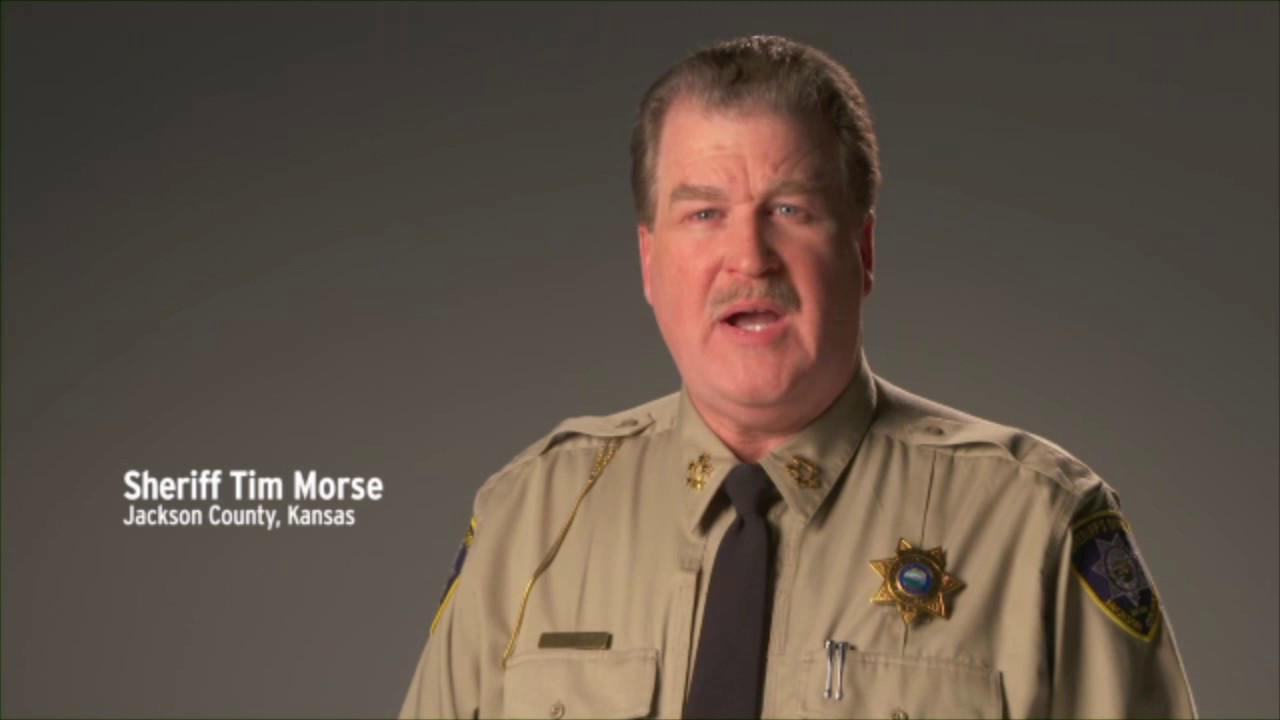 produced by FAIR. The ad is one of two FAIR ads NSA still displays on its website.
- NSA signed on to amicus brief drafted by FAIR’s legal arm.
- FAIR had an exhibition booth at several NSA conferences. FAIR will also have a presence at the NSA conference in Louisville.
It is also likely FAIR worked directly with the NSA and Florida Sheriff Gualtieri to develop the WSO program and other sanctuary workarounds. In March 2017, FAIR Executive Director Bob Dane wrote to NSA Executive Director Jonathan Thompson offering “a full pro-bono consultation” on detainer issues1. “We’ve developed an unofficial ‘task force’ here specifically to lend support and advice to you,” Dane wrote. “I’d like to suggest/offer that our team come over to the NSA next week and meet with you. By that point, more info will be evident from the field work you and the sheriffs are doing this week.” Thompson responded, accepting Dane’s offer. “The important player is not me but folks copied herein,” Thompson responded, cc’ing Gualtieri and others. “These are sheriffs and lawyers that know this stuff cold.” According to its 2017 annual report, FAIR met with NSA leadership the following month to discuss detainers.
The NSA’s anti-immigrant advocacy and work with FAIR continues beyond its involvement in enforcement programs like BOA and WSO in Florida. Last year, the NSA sponsored Massachusetts Sheriff Hodgson’s crowdfunding effort to build a border wall. NSA leadership have visited the White House multiple times in the last two years, including a bizarre appearance in September 2018 where dozens of sheriffs stood silently on risers behind the President as he ranted about a New York Times op-ed to assembled press. The September White House appearance was part of a three-day visit sponsored by FAIR. FAIR’s former law enforcement relations manager, the late Robert Najmulski,stood alongside the sheriffs during photo opportunities and the president’s remarks.
The NSA willfully supports the administration’s demagoguery and the anti-immigrant movement’s attrition agenda. Sheriffs, who are democratically elected, are facilitating the growth of ICE’s enforcement dragnet in their communities with significant institutional support from the NSA, ICE, and elsewhere. The NSA is not just complicit, they are actively bolstering an unjust and far-reaching enforcement regime that continues to wreak havoc on immigrants, their families, and broader communities.
ICE’s current memorandum of agreement with 287(g) jurisdictions expires on June 30. The upcoming expiration provides a unique opportunity for movements to pressure officials to cancel 287(g) agreements without engaging directly in electoral campaigns. Future cancellations or failures to renew 287(g) agreements would build on recent victories for immigrant communities fighting against the growing immigration enforcement apparatus. In places including North Carolina, Maryland, and Minnesota, officials were recently elected, in part, for their commitment to ending 287(g) agreements or cooperation with ICE in their jurisdictions.
These victories are the result of inspiring grassroots organizing efforts showing the strength and resilience of communities. Sheriffs have been encouraged by the administration, its anti-immigrant advisors, and the NSA to betray the communities they supposedly serve, by siphoning resources away from the public good and towards federal enforcement efforts. This trend can and must be reversed. Grassroots efforts show such fights are winnable—they just require contestation and support from movements for justice.
---
1 Wednesday, March 29, 2017 Email to Gualtieri,Robert; Champagne Greg; Faigin, Robert; Richard Stanek, on file at PRA
This entry was posted inEyes Right Blog by Political Research Associates. Bookmark the permalink.
==
OMFG
may 2017
Ruth Hopkins, Indian Country Today Media Network
https://truthout.org/articles/footing-the-15-million-bill-for-the-dakota-access-pipeline-s-private-army/
Last fall, the eyes of the world were fixated on Standing Rock.
Among the images burned into the brains of so many abroad were those of Morton County sheriff’s department, joined by law enforcement officers from across the country, bedecked in military gear and armed to the teeth, brutalizing defenseless water protectors for expressing their first amendment rights and freedom of religion. Eyes were opened when mercs sicced vicious attack dogs on women and children guarding sacred burial grounds with their lives. Folks thousands of miles away watched in horror as they witnessed concussion grenades being thrown into crowds and elders being maced in the midst of sweat lodge raids. People will never forget live stream video picked up by mainstream media, showing hundreds of civilians being shot with water cannons in subzero temperatures by a corporate police state army.Some photos of injuries were judged too graphic to post by social media, as they revealed a young woman with a near severed limb and another who’d been blinded in one eye.
This was not Iraq or Afghanistan. There was no foreign enemy invading our shores. These events occurred in the middle of the United States, on Lakota treaty lands; and the only thing these innocent people had done was dare to stand in the way of the Dakota Access Pipeline, the same one Bismarck, North Dakota residents rejected due to fears it would contaminate their water supply. This war zone created by Dakota Access and Morton County was meant to subdue Standing Rock residents and water protectors and force them to accept an unwarranted risk to their fresh water and the desecration of ancestral graves, under the barrel of a gun.
Here in the states, hundreds of Native Nations and the American public sided with Standing Rock. Scores came to camp along the shores of the Mni Sosa (Missouri River). Others rallied in the local cities, signed petitions, and called the White House. Millions were outraged by the injustice.
Yet who is paying for the corporate police state brutality I just mentioned? You are.
Senator John Hoeven (R-ND), who accepted money from Energy Transfer Partners (the company behind the Dakota Access Pipeline) and has been vocal in his support of both the Dakota Access Pipeline as well as the Keystone XL pipeline, has announced that North Dakota will receive $15 million in federal funds to reimburse the state for costs incurred as a result of militarizing Barney Fife and company while they pushed the pipeline through for ETP and engaged in the violent, forced removal of water protectors. Hoeven slid said monies into the Department of Justice’s budget as part of Fiscal 2017 funding legislation.
By the way, Hoeven sits on the Senate Appropriations Committee and is now the chairman of the Senate Committee on Indian Affairs.Welcome to Custer’s wet dream.
The distinguished Senator from North Dakota would have us believe his state was alone in its mission to extinguish #NoDAPL. Nothing could be further from the truth.
When Morton County requested backup, law enforcement officials from across the nation came to North Dakota via the Emergency Management Assistance Compact (EMAC). The Sheriff’s Association also showed up in full force.
New York Daily News writer Shaun King obtained audio where Energy Transfer Partners freely admitted that they worked closely with the Sheriff’s Association, and wow, did they ever. They became one and the same.
Water protectors who lived at camp can attest to ETP and law enforcement’s collusion and fraternization, but the record speaks for itself.
The Sheriffs’ Association has a $3.46 million budget, according to tax forms. Some of this funding comes from corporate sources, like TigerSwan. TigerSwan maintains offices in Iraq and Afghanistan. TigerSwan’s CEO is a former adviser to the multinational private security firm, Blackwater. Blackwater was founded by Erik Prince, a Trump campaign donor and the brother of Betsy DeVos, the US Secretary of Education. Besides funding the Sheriff’s Association, TigerSwan is in charge of Dakota Access intelligence and supervising overall security for the company. Tigerswan works for Dakota Access, while funding and partnering with the Sheriffs’ Association.
The Sheriff’s Association purchased military gear from the US Department’s Defense Logistics Agency thanks to the Defense Department’s 1033 program.Think corporate welfare for the defense industry.
Wait, there’s more. Energy Transfer Partners CEO Kelcy Warren offered to reimburse North Dakota and Morton County for costs due to defending the Dakota Access Pipeline.
So why are US taxpayers forking over $15 million to North Dakota?
Despite the fossil fuel industry’s wishes, America is not an oil company with an army. We should not be bankrolling our own oppression.
Incidentally, the Dakota Access Pipeline is not even operational yet, and it’s already sprung a leak in South Dakota, just southwest of the Lake Traverse Reservation. End this foolishness.
==
==
https://www.alternet.org/2019/04/colorado-sheriffs-say-theyll-go-to-jail-rather-than-enforce-controversial-red-flag-gun-control-law/
==
https://www.desmogblog.com/2018/12/28/st-charles-parish-louisiana-sheriff-pipeline-records-standing-rock
On December 27, a state* appeals court ordered a Louisiana’s sheriff’s department and its sheriff to release information about its officers’ trip to North Dakota during the heated protests against the Dakota Access pipeline in 2016. The extended, indigenous-led protests near the Standing Rock Sioux Reservation drew a highly militarized response from public and private law enforcement. Out-of-state cops, including those from Louisiana’s St. Charles Parish, flooded North Dakota to support it via an interstate agreement.
The latest move reversed a decision by a district court, which denied a public records request made by the Center for Constitutional Rights (CCR), a human rights law firm which has worked on behalf of environmental groups* in Louisiana, after parish law enforcement spoke out against Dakota Access pipeline opponents and endorsed the Bayou Bridge pipeline, a similar oil pipeline in Louisiana.
“We saw a dangerous blurring of the lines between law enforcement and private corporations at Standing Rock,” Pamela Spees, a senior staff attorney with CCR, stated when first filing suit for the public records in December 2017.
Spees, who was raised in Lake Charles, one of the communities that will be affected by the Bayou Bridge pipeline, is leading a lawsuit by Louisiana environmental groups seeking public records fromSt. Charles Parish Sheriff Greg Champagne. She was also an attorney in a lawsuit against Bayou Bridge Pipeline, LLC, which so far has unsuccessfully challenged the company's right to use eminent domain to confiscate land to build the pipeline, which is nearly operational.
The Dakota Access pipeline is owned by Energy Transfer (formerly known as Energy Transfer Partners), the principal owner of the also-contested Bayou Bridge pipeline, a 163-mile-long pipeline that cuts across southern Louisiana from St. Charles, near the Texas border, to St. James, on the Mississippi River. Despite ongoing legal battles in federal and state courts, the Bayou Bridge pipeline has been nearly completed.
Louisiana Sheriffs, a Pipeline Company, and a Private Security Firm
According to a CCR press release, the center’s request “also seeks to investigate larger connections among SCPSO [St. Charles Parish Sheriff’s Office], Sheriff Champagne, Energy Transfer Partners (ETP), and TigerSwan LLC, in light of ETP’s proposed Bayou Bridge Pipeline project in Louisiana.”
TigerSwan, a private security firm involved in the Dakota Access response but denied a license to operate in Louisiana, is a corporate donor to the National Sheriffs’ Association’s $3.46 million budget, according to the association’s most recent tax forms. Under Sheriff Champagne’s leadership, the association lobbied Congress for surplus military gear and other undisclosed issues related to the Dakota Access pipeline, according to a review of federal lobbying disclosure forms by Steve Horn for DeSmog.
The center’s public records request, filed September 18, 2017, was made after St. Charles Parish’s Sheriff Greg Champagne and others connected to law enforcement, including Joseph Lopinto, the newly elected sheriff of Jefferson Parish who spoke on behalf of the National Sheriffs’ Association at a Bayou Bridge permit hearing, publicly criticized pipeline opponents.
At the time of his October 2016 visit to Standing Rock, Sheriff Champagne was also the president of the National Sheriffs’ Association and made largely unsubstantiated claims about the Dakota Access protests against the pipeline. In a Facebook postChampagne wrote: “Despite the statements coming from the media and protesters that they were completely peaceful and prayerful, it has been a fact that more militant protestors [sic] (terrorists) have destroyed property and physically beaten employees of the company in recent weeks."
[lopinto vid]
February 2017 Sheriff Lopinto voiced support for the Bayou Bridge pipeline at a permit hearing in which he claimed that Dakota Access protesters shot at law enforcement officers. “We don’t want the same thing occurring in Louisiana,” he said.
Were North Dakota Trip Photos and Videos Destroyed?
The records Spees is seeking include receipts for all travel expenses, which reportedly add up to nearly $36,000, and video and photos taken by St. Charles Parish deputies during their trip to North Dakota.
Though the appeals court ruling makes clear photos and video taken in North Dakota by Captain Patrick Yoes, commander of the St. Charles Parish Special Services Division, should be released, Spees worries those may never surface because it is unclear whether the department retained the materials.
Captain Yoes testified that “the files from the devices were loaded on a hard drive, and he provided all of the files relating to the EMAC [Emergency Management Assistance Compact] to the [North Dakota Morton] county’s sheriff and the public information officer.” However, Yoes said the original camera memory cards which he returned to Louisiana with may not have been preserved and it is unclear if the data on to the hard drives left in North Dakota have been preserved.
Spees doesn't see anything controversial about the records request and considers its initial denial unfortunate, because it compelled the center to litigate on behalf of opponents of the Bayou Bridge pipeline.
Champagne could appeal the federal court’s decision with the Louisiana Supreme Court. I reached out to Champagne’s communications officer but did not receive a response.
*Update 12/29/18: This story has been updated to reflect that a state, not federal, appeals court reversed the decision and that CCR filed the public records request and lawsuit, which was not filed on behalf of environmental groups.
==
https://www.alternet.org/2019/01/heres-the-truth-behind-the-national-police-association-and-its-shady-ideology/
Last month the National Police Association (NPA) filed an ethics complaintagainst Rachael Rollins, the new district attorney for Suffolk County, Massachusetts (who recently outlined her progressive policies to Filter).
“National police group knocks incoming DA,” stated the headline of a December 28 Boston Herald report. It described how the NPA accused Rollins of a “reckless disregard” for Massachusetts laws because of her “platform of generally declining to prosecute shoplifting, drug dealing, trespassing, resisting arrest and making threats.” These policies, the NPA claims, will create a “clear and immediate danger.” The NPA’s chief financial officer and president were quoted expressing their desire to exert pressure on Rollins to “change her mind” to prevent “risk and danger to law-abiding citizens.”
“The National Police Association Is Throwing a Fit Over Prosecutorial Discretion,” commented Slate on January 4, citing as “just one example of the complaint’s ridiculousness” Rollins’ alleged violation—simply by stating her policies while standing as a DA candidate—of a rule against prosecutors making comments that might prejudice a particular case.
DA Rollins tweeted a response to the complaint:
My statement regarding the National Police Association's complaint:...
