PHARMA 3 DRUG PRICE
---
916 see Two for older
no merri
420 phrma tag becoming to be proxy for high rx costs
SEE MEDICARE NEGOT DRUG PRICE TAX DODGER
SEE INSULIN
SEE RFK FDA
SEE BIO-TECH INNOVATION R&D
see opioid
see sanofi
see pfizer
GSK covid
MERCK VIOXX BALLROOM INAUG DSAC FUSION CTR
see price gouge mylar epipen
KOCH LAW AND ECON, SCALI law school, AEI ALEC HEARTLAND TPPF
BUY ELECTION NEG ADS
DISASTER CAPLISM CLASS ACTION
---
an 5 26
Since his second term started, President Donald Trump has announced, negotiated, or floated a flurry of initiatives aimed at taming the excesses of the pharmaceutical industry.
No surprise. About 60% of American adults are “worried about being able to afford prescription drug costs for themselves or their families,” a recent KFF nationwide poll showed. More than 80% consider the price of prescription drugs “unreasonable,” and most support increased regulation to lower costs. Americans pay about three times as much as people in other countries for the same prescription drugs.
Last July, Trump sent letters to 17 drugmakers, demanding they voluntarily lower drug prices. Then the president said he’d negotiated with more than a dozen pharmaceutical executives one by one at the White House. In December, he announced that he had compelled them to agree to “most favored nation” pricing on Medicaid, the government coverage for low-income Americans.
Then came the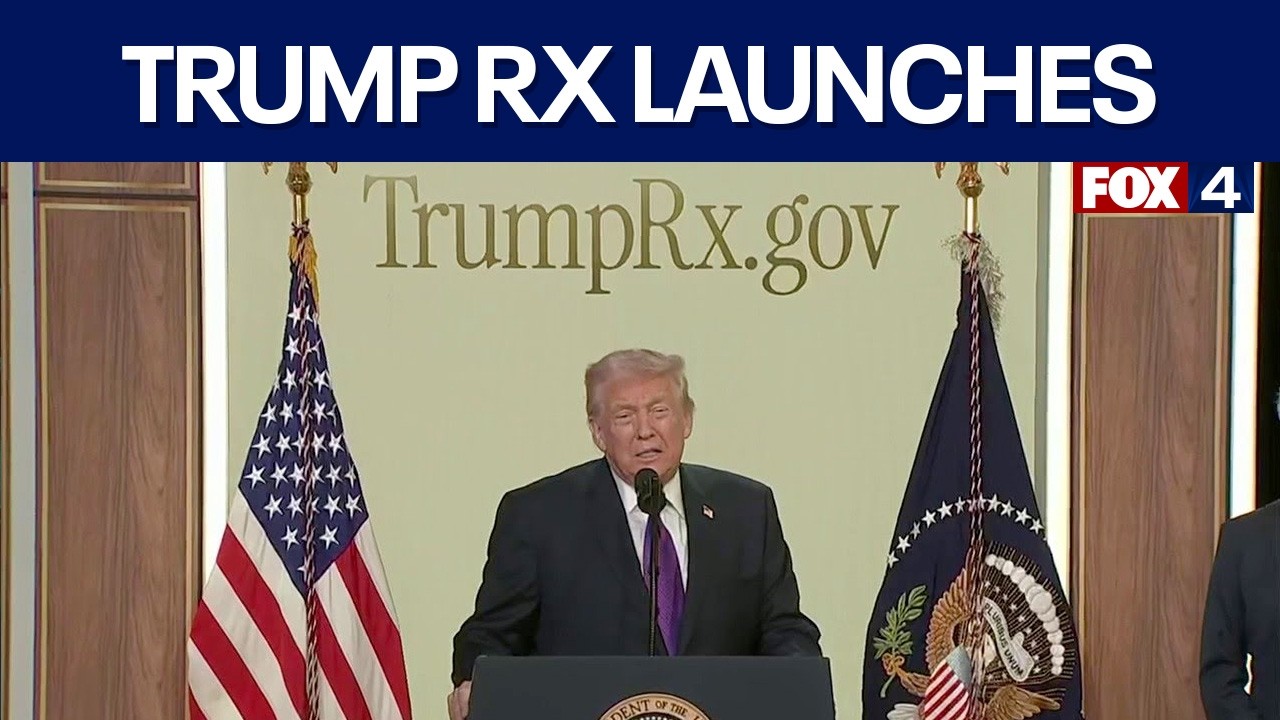 , a site where cash-paying patients could find discounted medicines, and a promise to speed biosimilar products — generic versions of certain high-priced specialty drugs — by cutting through FDA red tape.
The scope of these grand gestures remains uncertain. But it’s certainly less than what the announcement promised, partly because many details of the negotiations, even which drugs are covered, are hazy.
White House spokesperson Kush Desai did not answer queries about TrumpRx.
Medicaid already buys drugs at deep discounts. And other patients may well have better options through commercial drug discount programs, which offer far more products, or through their insurance and associated drug company copayment cards.
So, for all Trump’s showmanship, the share of Americans likely to benefit from these options remains slim, even if some people do come out ahead.
“If it makes a difference to any patient, it’s a win,” said Mark Cuban, a billionaire investor on his own mission to bring down drug prices. He pointed to discounted pricing on TrumpRx for branded fertility drugs and GLP-1 weight loss drugs for people without insurance or whose plans don’t include coverage. Cuban launched the Mark Cuban Cost Plus Drug Co., known as Cost Plus Drugs, in 2022 to sell drugs cheaply by eliminating middlemen — buying from factories and selling directly to consumers. Most of the drugs he sells are generics.
Aaron Kesselheim, a professor of medicine at Harvard Medical School whose research focuses on drug prices, said the Trump announcements are “one-off agreements made for publicity purposes. They don’t change anything about the way drugs are priced.”
He added: “The agreements are opaque and unenforceable.”
It was unclear, for example, which drugs would be sold at “most favored nation” prices or how exactly that was defined. But, clearly, not all were.
Doing the Math
46brooklyn, a consulting firm and data project that tracks brand-name drug prices, found that close to 1,000 brand drugs went up in price in January 2026. What’s more, 2025 had the highest number of list price increases ever. “This is not a material change, it’s business as usual,” said Antonio Ciaccia, the company’s co-founder.
In the first week of 2026, Pfizer raised the list prices of 71 drugs by an average of 5% and lowered the price of only one, by 9.8%, the data project found.
The biggest win for patients has likely been the Trump administration’s quiet continuation of a Biden administration program: Medicare drug price negotiation for expensive drugs. The negotiated discounts on the initial 10 drugs — from blood thinners to insulins to medicines for inflammatory disorders — went into effect Jan. 1. With reductions in price of well over 50% on some products, the estimated $6 billion in annual savings allowed the program to cap Medicare patients’ out-of-pocket spending on Part D prescription drugs at $2,000 for 2025 and beyond.
An additional 15 high-priced drugs — including popular weight loss and cancer drugs — were subject to negotiation in 2025, with discounted Medicare prices taking effect next year. And 15 more high-priced drugs are set for negotiation this year. All told, the 40 negotiated drug prices are expected to save Medicare well over $20 billion a year.
Even as these discounts take effect, drug industry lobbyists have been working to limit the impact, with some success. For example, the One Big Beautiful Bill Act exempts drugs for rare diseases from negotiations.
Still, “this is historic because it’s the first time the United States has negotiated prices, like every other developed country,” Kesselheim said. “And guess what? Innovation didn’t stop.”
Of course, these discounts benefit only Medicare enrollees. The newer Trump administration initiatives help some other patients, but they are limited and require knowledge of how to access the discounts.
Trump’s One-on-Ones
The president’s televised appearances with the heads of major drug companies resulted in deals, but few, if any, will mean much to patients. For example, after Trump met with Albert Bourla, CEO of Pfizer, the company announced discounts on 30-plus drugs. Bourla called the deal “a win for American patients, a win for American leadership, and a win for Pfizer.”
The discounts are offered via TrumpRx, which, in turn, offer coupons co-branded on GoodRx.com, which already offers discount coupons for many hundreds of medicines.
Pfizer made hay of the deal, announcing it was part of Pfizer’s broader, landmark most favored nation, or MFN, agreement with the U.S. government, enabling patients to pay lower prices for their prescription medicines “while strengthening America’s role as the global leader in biopharmaceutical innovation.”
Pfizer spokesperson Steven Danehy cited a press release from September noting that the TrumpRx site offers patients savings that "range as high as 85%."
Most of the list features brand-name drugs, competing with far cheaper generic versions from other manufacturers, such as the cholesterol-lowering drug Colestid, which TrumpRx lists for “50% off” at $127.91. Generic versions cost about $17 on the Cost Plus site.
This means the branded companies aren’t making a sacrifice by offering them at lower costs as reflected on Trump’s portal, said Sean Tu, a patent law expert at the University of Alabama. “That’s a sale they would not have made if not for TrumpRx.”
Others are very old drugs, such as Cortef, or hydrocortisone, whose 5-milligram branded Pfizer version is listed at $45 on TrumpRx, half its list price of $91.80. It sells for far less on Cuban’s Cost Plus site. Still others, such as the $607.20 HIV treatment Viracept, are useful only in combination with other drugs that are not discounted.
Last week, TrumpRx added Amgen’s Humira, for years the world’s best-selling drug, at $950 a dose, down from a list price of nearly $7,000. But Humira lost its patent protection in 2023, and biosimilars — essentially generic equivalents — have since come to market. More to the point, two of those biosimilars are listed on TrumpRx for as little as $207.60 a dose.
Since most of the TrumpRx products are available only to customers without insurance who pay cash, the arthritis drug Xeljanz’s drop from $2,277 to $1,518 a month would still leave it unaffordable.
A Few Notable Deals
The much-touted TrumpRx site, launched Feb. 6, consists largely of Pfizer’s 30 drugs (30 of roughly 85) with a smattering of discounts likely to generate headlines.
These include three fertility drugs from EMD Serono, a subsidiary of the pharmaceutical giant Merck KGaA, the most expensive of which, Gonal-F, has a list price of $966 but is only $168 per IVF cycle using a TrumpRx coupon.
They will save women thousands of dollars — although the overall cost of fertility treatment will continue to put them beyond the reach of many, since drugs represent only a portion of the payment.
The TrumpRx discounts could reduce the $15,000-to-$25,000 cost of a single fertility treatment cycle — women typically need two or three cycles to become pregnant — by about 10%, said Sean Tipton, spokesperson for the American Society for Reproductive Medicine. In some European countries, each cycle costs about $3,000.
In exchange for lowering those prices, EMD Serono got tariffs lifted on its mostly overseas-produced medications. It also won the right to a sped-up FDA approval process for a fertility drug it’s been marketing heavily in Europe.
Another newsworthy offering on the site resulted from a deal with Novo Nordisk for Wegovy, its GLP-1 drug for weight loss and diabetes, with the price reduced to as little as $199 a month for the pen. (Many insurers cover such drugs only for diabetes, leaving those who are interested in losing weight paying out-of-pocket. Zepbound, Wegovy’s Lilly & Co. competitor, is also on the list, at $299.)
Pressure has been building on Novo and Lilly to lower the U.S. price of their GLP-1 drugs. The compounds have lost patent protection in India, and pressure from customers buying overseas will likely increase when generic Wegovy goes on sale in Canada, for as low as $73 a month, possibly this year.
In the United States, meanwhile, dozens of patents should keep Wegovy generics off the market until 2039, said professor Robin Feldman, a patent expert at the University of California Law-San Francisco. A recent report from the research group I-Mak delved into several ways patent manipulation keeps generics off the U.S. market long after they are available in European countries and Canada.
And while the Trump administration has vowed to approve biosimilars more rapidly to ensure more competition and lower prices, that may not have much impact. The big hurdle in getting generics and biosimilars to market is often not FDA approval, but the time it takes to override the thickets of patents that U.S. law allows manufacturers to deploy to protect their intellectual property.
For example, in 2021, the FDA approved a generic of Otezla, a popular drug for psoriatic arthritis, but it will not hit the market until 2028. Its entry would require drugmakers to pay rebates to Medicare if they charged the program more than other developed countries for “single source” drugs and biologics. That would essentially allow the Medicare program to piggyback on other countries that negotiate the prices of some of the most expensive medicines. Those programs are still going through the rulemaking process and, again, would benefit only those covered by the Medicare program and only indirectly.
The average patient-consumer, if willing to pay cash, may find some bargains. But getting the best deal could take a lot of mixing and matching, forcing patients to become choosy shoppers, eyeing deals for essential medicines as they would for a carton of milk or eggs.
*Data reporter Maia Rosenfeld contributed to this article.
---
AN 2 26
Led by Senate Finance Committee Chair Ron Wyden, four Democratic senators on Wednesday outlined plans to reduce the costs of prescription drugs after President Donald Trump claimed he would do so—only to allow Big Pharma companies to delay negotiating lower prices and secure “zero commitments” from top executives on making lifesaving medications more affordable for millions of Americans.
“There is no greater fraud than Donald J. Trump when it comes to lower drug prices,” Wyden (D-Ore.) said. “Our doors are wide open to anybody who wants to take the bold next step forward on lowering drug costs for Americans.”
Along with a “flash report” on Trump’s “broken promises” regarding his pledge to bring drug prices down “to levels nobody ever thought was possible,” Wyden sent a Dear Colleague letter to Democratic senators regarding his committee’s plans to follow through with lowering costs.
“Finance Committee minority staff will dedicate substantial time and effort this year to developing the next generation of healthcare solutions that lower costs for American families,” Wyden wrote. “These solutions will rein in Big Pharma’s outrageous price increases, lower costs for consumers, guarantee predictability for patients, and reduce wasteful government spending that pads the profits of big corporations. Alongside the co-signers of this letter, I invite you to be a part of this bold vision.”
The letter, co-signed by Sens. Catherine Cortez Masto (D-Nev.), Peter Welch (D-Vt.), and Ruben Gallego (D-Ariz.), notes that “the only concrete drug pricing policy Trump enacted within the past year was a price hike for the biggest blockbuster cancer drugs on Earth, giving an $8.8 billion windfall to the pharmaceutical industry.”
In contrast, the senators wrote, the Senate Finance Committee will develop policies to incorporate international pricing models into the Medicare drug price negotiation framework, including by allowing Health and Human Services Secretary Robert F. Kennedy Jr. to consider international prices as a factor or penalize drugmakers when pricing for US customers exceeds international benchmarks.
“Democrats are determined to bring prices down, and we’re willing to work with anyone to find concrete ways to do it.”
The committee will also work to end Republican “blockbuster drug bailouts from negotiation,” like the ones included in the One Big Beautiful Bill Act that shielded several high-priced drugs—including the cancer drug Keytruda—from Medicare price negotiations.
“The Republican budget bill contained a nearly $9 billion sweetheart deal that benefits the biggest drug companies by delaying or exempting some lifesaving medications from negotiation,” reads the Democrats’ flash report.
Gallego said that “when Big Pharma gets richer off the back of a grandmother struggling to pay for cancer medication, the system is broken.”
“That’s what this is all about: Big Pharma execs sitting in their fancy corner offices profiting off of sick, working-class Americans,” the senator said. “We are not going to accept an America where millions of families live in fear of getting sick and needing to fill a prescription. We are going to fight and fight hard for a healthcare system that does what Donald Trump never did: actually lower costs for working families.”
The lawmakers emphasized that even if manufacturers are forced to lower drug prices, patients are not currently guaranteed to directly benefit, because as much as 45% of the $5.4 trillion the US spends on healthcare annually is “absorbed by middlemen such as insurers, pharmacy benefit managers (PBMs), and drug distributors.”
“Healthcare middlemen profit when drug costs are high because they make money off of drug margin or payments that are linked to the price of a drug, ripping off patients who pay more than they should. Medicare Part D and the patients it serves should stop footing the bill for inflated drug prices and instead pay for drugs in a more transparent manner that reduces middleman margin,” wrote the senators.
The Finance Committee will develop policies to eliminate abuses in the prescription drug supply chain including “egregious drug price markups,” and to ensure that patient cost-sharing on drugs more closely aligns with the costs to plans and PBMs.
Finally, the Democrats said they would work to fix the “unmitigated disaster” that Trump and Kennedy have been “for innovation and drug development,” as the administration has proposed slashing the National Institutes of Health budget by 40% and has cut off access to treatment for an estimated 74,000 patients who were enrolled in NIH clinical trials.
The Finance Committee, they said, plans to create new incentives for innovation and drug development, including through the tax code.
In their flash report, the Democrats wrote that while failing to force Big Pharma to the negotiating table to save money for Americans, Trump “has been parading Big Pharma executives through the White House, claiming to be cutting cost-saving deals with these corporations.”
“One look under the hood reveals the truth: Trump is giving them a pass on tariffs, while receiving zero commitments about how they will lower costs for taxpayers and patients,” they wrote. “Donald Trump is getting fleeced by Big Pharma CEOs, and Americans are going to foot the bill.”
Welch said that the president “loves to talk a big game and make promises to working families about lowering prescription drug prices. But in reality, his administration is handling this like a PR problem: They’ve got to keep moving and talking about it, but then do nothing to really address the crisis.”
“Democrats are determined to bring prices down, and we’re willing to work with anyone to find concrete ways to do it,” said Welch. “We’re going to lower healthcare costs and ensure everyone can access affordable, lifesaving, and pain-relieving medication.”
---
---
AN 12 25
After President Donald Trump returned to the White House on January 20, his administration aggressively downsized a long list of federal government agencies with the help of the Department of Government Efficiency (DOGE) and its then-leader, Tesla/SpaceX/X.com head Elon Musk. Trump claimed that his goal was reducing "waste, fraud and abuse," but critics of the Trump Administration/DOGE cuts argued that they were robbing the agencies of crucial personnel they need in order to function properly — from the U.S. Social Security Administration (SSA) to the National Weather Service (NWS) to the Internal Revenue Service (IRS).
Another agency that has been suffering chaos during Trump's second presidency is the U.S. Food and Drug Administration (FDA).
In an article published on December 4, Axios' Pete Sullivan describes the FDA departures that are contributing to instability at the agency.
"Another abrupt departure of a high-ranking Food and Drug Administration official is raising alarm about a brain drain that could mean new drugs take longer to reach the public," Sullivan reports. "Why it matters: Biotech and pharmaceutical companies rely on the FDA for dependable guidance as they spend huge sums developing new treatments. The American public needs the agency to ensure treatments are safe and effective…. Driving the news: The latest uproar surrounds the unexpected departure of Richard Pazdur, a respected oncologist who just three weeks ago became the fourth person to direct the FDA's drug center this year."
Sullivan adds, "Pazdur's appointment had helped calm nerves to some degree within industry after months of turmoil. But now, executives and even former FDA commissioners are publicly questioning the agency's direction."
One of the people who is sounding the alarm about the FDA is Biotechnology Innovation Organization CEO John Crowley.
Crowley told Axios, "This constant turmoil is undermining America's leadership in biotechnology, creating unprecedented regulatory instability and unpredictability, and risks ceding this critical sector to China."
According to Sullivan, "morale" has "plummeted" at the FDA.
A former FDA staffer, interviewed on condition of anonymity, told Axios, "They don't talk to each other. They go to the bathroom, they come (back), they shut their door."
*Read Peter Sullivan's full article for Axios is available at this link.
---
an 52 5
U.S. Rep. Jim Jordan of Ohio wanted to slip a sweeping measure into a spending bill that would gut the Federal Trade Commission. Critics say it’s no coincidence that the FTC is suing mammoth health care conglomerates and tech giants like Amazon.
Jordan is chairman of the powerful House Judiciary Committee. Last week, it released a version of a bill that included tax cuts, federal spending cuts and more spending at the border.
It also contained provisions that would give Trump sweeping new powers to gut government regulations. It would also transfer funds and personnel currently controlled by the FTC to the Antitrust Division of the Justice Department — without the FTC’s unique enforcement authority going with them.
The measure was abruptly nixed, but it would have effectively killed antitrust powers Congress created more than a century ago.
The FTC history
Amid abuses to consumers by big corporations, the Federal Trade Commission Act was passed in 1914. Antitrust enforcement by the Department of Justice dates back further, to 1903.
But the Justice Department is overseen by the attorney general, a presidential appointee. Attorneys general traditionally have had a high degree of independence, but Trump is said to be politicizing the Justice Department at a breakneck pace.
The FTC was created in part to be more independent. It’s governed by commissioners from both parties who are appointed to fixed terms that can be renewed.
Earlier this year, Trump tried to fire the two Democratic commissioners, but they say the move was illegal, and they’re fighting it in court. Antitrust advocates said Trump was doing that as a favor to his billionaire supporters such as Elon Musk.
The two Democratic commissioners, Alvaro Bedoya and Rebecca Slaughter, acted to block the Kroger-Albertson’s mega-merger, and they voted to sue Amazon, saying it is “illegally maintaining monopoly power.”
Under Jordan’s leadership, the Judiciary Committee in 2023 attacked the FTC on behalf of Musk. He’s the world’s richest man, whom Trump is allowing to make deep cuts to federal programs for the elderly, veterans, the poor, and agencies that promote science and health.
“THE WEAPONIZATION OF THE FEDERAL TRADE COMMISSION: AN AGENCY’S OVERREACH TO HARASS ELON MUSK’S TWITTER,” read the all-caps title of the Jordan-led committee’s report.
A year earlier, the FTC had charged Twitter with using deceptively gathered data from users to target ads at them. If true, it would be added to the fact that an unofficial, Musk-run entity is now collecting much more sensitive government data. It’s raised concerns among several federal judges who said such collections invite abuse and likely violate the law.
“One of Elon Musk’s Department of Government Efficiency lieutenants working in the Social Security Administration has been pushing dubious claims about noncitizens voting, apparently using access to data that court records suggest (the so-called Department of Government Efficiency) isn’t supposed to have,” NPR reported earlier this month.
The proposal from Jordan to gut the FTC could have halted major initiatives to regulate giant health conglomerates that own powerful pharmacy middlemen, said Bedoya, one of the commissioners Trump is trying to fire.
Jordan’s office didn’t respond to a request for comment on this story.
PBMs
Each of the three conglomerates — UnitedHealth Group, CVS Health and Cigna-Express Scripts — is among the 15 largest corporations in the United States. Each owns a top-ten health insurer and each owns a pharmacy middleman known as a pharmacy benefit manager, or PBM.
Combined, the PBMs control nearly 80% of the insured drug transactions in the United States. They decide which drugs are covered and use that power toextractrebates from drugmakers. They also determine varying reimbursements to pharmacies — including ones owned by their parent companies as well as the pharmacies with which they compete. Critics — including four-fifths of state attorneys general — say they have a conflict of interest under the arrangement, and that they abuse it.
Last October, the FTC sued the conglomerates, saying they used their dominance in multiple parts of the marketplace to illegally jack up the price of insulin — a drug millions of diabetics need to survive.
The lawsuit comes after the agency in 2022 undertook a major investigation of the health conglomerates. In January, it released an interim report accusing the PBMs of using their dominance to instigate wild price hikes and possibly steer business to affiliated pharmacies.
Politico recently reported that Jordan said his move to consolidate the FTC into the Justice Department was meant to “address the cost of over-regulation.”
“Part of our jurisdiction in Judiciary deals with regulatory concerns and so we are looking at … spending and costs associated with certain regulations. That’s why that language is written the way it was,” Politico reported him as saying.
Many businesses facing regulation — and their advocates in government — have long focused only on the costs. But government regulation can also protect health, safety, the environment, economic stability and competition. Some researchers have said regulation can always be smarter, but its benefits far outweigh the costs.
In a social media post last week, Bedoya, the FTC commissioner, said Jordan’s proposed changes to the agency served another agenda.
“This will gut the FTC,” Bedoya wrote. “FTC is trying to finish a study that already showed how pharmacy middlemen mark up cancer drugs by up to 4,000%. It’s also suing them for allegedly competing to raise insulin prices. If this passes I have no idea what’ll happen to that study and lawsuit.”
Bedoya added, “Take the lawsuit. The draft bill purports to transfer FTC lawyers and lawsuits to DOJ — but it doesn’t transfer the laws that FTC enforces, or authority to enforce those laws. Look (at) page 98 — employees, assets, funding — but no authorities.”
Bedoya also said that when it created the FTC, Congress meant to augment the government’s antitrust powers. Jordan’s changes would remove the government’s ability to police “unfair methods of competition,” Bedoya said, implying that Jordan was trying to slash the government’s power to police wealthy corporations in an era when the political influence of the mega-rich is exploding and the wealth gap is yawning.
“The purpose behind the FTC’s creation in 1914 was to supplement the existing enforcement mechanism (and enforcement gap created by) the Department of Justice,” Bedoya said on X. “When FTC was created in 1914, it alone was authorized to stop something called ‘unfair methods of competition.’ DOJ did not get this” under Jordan’s proposal.
YOU MAKE OUR WORK POSSIBLE. SUPPORT
Ohio Capital Journal is part of States Newsroom, a nonprofit news network supported by grants and a coalition of donors as a 501c(3) public charity. Ohio Capital Journal maintains editorial independence. Contact Editor David Dewitt for questions: info@ohiocapitaljournal.com.
==
===
an 11 24
Nearly a year after the Biden administration gave Florida the green light to become the first state to import lower-cost prescription drugs from Canada — a longtime goal of politicians across the political spectrum, including President-elect Donald Trump — the program has yet to begin.
Florida Gov. Ron DeSantis hailed the FDA’s approval of his plan in January, calling it a victory over the drug industry, which opposes importation on the grounds that it would lead to a surge in counterfeit medications.
A Florida health official familiar with the importation program told KFF Health News there was no planned date yet for the state to begin importing drugs. The official asked not to be identified because they weren’t authorized to speak publicly about the program.
Florida applied to create an importation program in November 2020, just months after the Trump administration gave states the option. DeSantis, a Republican, complained publicly for years about the pace of the federal approval process under the Biden administration and in 2022 filed suit against the FDA for what he called a “reckless delay.”
Trump touted his administration’s move to bring medicines over the border in a preelection interview published last month by AARP, the advocacy group for older Americans, which supports allowing Americans to buy drugs from Canada. He vowed to “continue my efforts to protect Americans from unaffordable drug prices” in a second term.
It’s not clear whether his second administration will or can do more to help Florida and other states set up programs, because it’s ultimately up to the states to act. Colorado is the only other state that has an importation plan pending with the FDA.
FDA spokesperson Cherie Duvall-Jones said she could not answer whether Florida had submitted documents the agency requires before the state can start importing medicines. She referred all questions to the state.
After this article was published — and 14 weeks after KFF Health News first contacted Florida officials for comment — Alecia Collins, deputy chief of staff for the Florida Agency for Health Care Administration, said the state is “awaiting feedback from the FDA on the last of the [pharmaceutical] labels so we can move forward with the next steps for launching the program.” The FDA did not immediately respond to a follow-up request for comment.DeSantis press secretary Jeremy Redfern said he had been “slammed” since the first week of November and could not answer questions.
Drug companies typically sell medications for far less in Canada than in the United States, as a result of Canadian government price controls. But because of safety and efficacy concerns, federal law prohibits consumers from buying drugs from outside U.S. borders except in rare cases.
Politicians ranging from conservatives such as DeSantis to liberals such as Sen. Bernie Sanders of Vermont have long pushed for importing lower-cost prescription drugs from Canada.
In 2000, Congress passed a law allowing states to import prescription drugs from north of the border, with the caveat that it could go forward only if the secretary of the Department of Health and Human Services affirmed it was safe. That didn’t happen until 2020, when Trump’s HHS secretary, Alex Azar, made such a declaration.
Since 2022, Azar has been chairman of the board at LifeScience Logistics, a Dallas-based company that Florida is paying millions of dollars to set up its drug importation program, including warehousing its medicines.
Azar on Nov. 13 refused to answer questions from KFF Health News about drug importation, saying he wasn’t authorized to speak on the matter.
Florida’s program would not directly assist consumers at the pharmacy. It’s instead aimed at lowering costs for the state Medicaid program and for the corrections and health departments.
Matthew Baxter, a senior director at Ontario-based Methapharm Specialty Pharmaceuticals, which has contracted with LifeScience to export drugs, would not say whether Methapharm has sent any medicines over the border.
The pharmaceutical industry and the Canadian government oppose U.S. drug importation. Drug companies say importation would increase the risk of counterfeit drugs appearing on U.S. pharmacy shelves, while the government in Ottawa has warned it won’t allow medicines to be exported if Canadians could experience shortages as a result.
Florida’s predicted savings would also be relatively minor. DeSantis estimated the program would save state agencies up to $180 million in its first year. Florida’s annual Medicaid budget tops $30 billion.
Florida identified 14 drugs, including for cancer and AIDS, that it would attempt to import from Canada for its state agencies.
Camm Epstein, a health policy analyst in Saratoga Springs, New York, said drug importation is a seemingly simple concept that resonates with the public, which is why DeSantis and others have turned to the idea as a response to rising drug prices. “It riles up the crowd,” he said. “Who doesn’t want to pay lower drug costs?”
But bringing drugs over the border is complicated because of the FDA’s many requirements, including finding companies to work with — a Canadian exporter and a U.S. importer — and following a process that ensures the drugs are authentic, Epstein said.
“This was, at best, a boondoggle,” he said.
Florida has spent tens of millions of dollars to stand up its drug importation program. The state has already paid LifeScience Logistics $50 million to set up a warehouse to store the medicines. DeSantis noted the costs in his 2022 lawsuit against the FDA.
“Plaintiffs have paid their retained importer and distributor over $24 million thus far — and increasing at the rate of $1.2 million every month — even though not a single prescription pill has been imported, relabeled, or distributed, solely because of the FDA’s idleness,” the state said in its suit.
Florida’s delay may be due to operational challenges, Epstein said. “Predictably, even if they turned on the spigot there would be no flow, because Canada was not going to permit for the supply,” he said.
Colorado and Florida are among at least nine states that have passed laws allowing for Canadian drug importation. Colorado’s 2022 application to the FDA is still pending. In December 2023, Colorado officials released a report noting the state was unable to find a drugmaker willing to sell it medicines from Canada.
*KFF Health News is a national newsroom that produces in-depth journalism about health issues and is one of the core operating programs at KFF—an independent source of health policy research, polling, and journalism. Learn more about KFF.
===
===
In 2023, Pfizer *made more than $27 billion in revenue and paid zero federal income tax
freddy brewster
while jacking up drug prices, Pfizer recently reported more than $27 billion in revenue from its US sales in 2023. But the Big Pharma titan owes nothing in federal income taxes, despite being one of the most profitable pharmaceutical companies in the world. That’s largely thanks to existing loopholes and a 2017 tax law signed by former president Donald Trump.
Pfizer is not the only giant corporation raking in huge profits but paying less taxes than the typical American household: more than one hundred of the country’s most profitable corporations paid zero federal income taxes in at least one year since the Trump tax cuts were enacted.
Pfizer’s tax dodge illustrates how those corporations — in particular pharmaceutical and tech giants — are able to enjoy astonishingly low tax rates by using a system of lucrative tax loopholes. While legislation to halt such tax schemes has stalled in Congress, corporate giants often stash intellectual property rights for their drugs and other products in offshore tax havens and force their US-based operations to “buy” the rights to manufacture and sell those drugs and products here in the United States.
Pfizer, which is headquartered in New York and received billions of dollars from the federal government for its COVID-19 vaccine, reported an overall 2023 loss of $4.4 billion domestically, bringing its effective corporate income tax rate to -105.4 percent, the company reported in a recent regulatory filing.
Conversely, Pfizer reported more than $31 billion in revenue from international market sales, netting more than $5.4 billion of income for 2023. Pfizer has more than three hundred subsidiaries in more than sixty different countries, with ninety-eight subsidiaries based in known tax havens such as Ireland, Switzerland, the Netherlands, the British Virgin Islands, Singapore, and Puerto Rico, according to a Lever review of Pfizer’s recent 10-K filing.
The 2017 tax law championed by Trump cut the federal corporate income tax rate from 35 percent to 21 percent, but many corporations offshore profits and exploit other loopholes to pay even less.
From 2018 to 2022, the Trump tax cuts allowed 342 of the largest US-based corporations to pay just $562 billion in taxes on nearly $4 trillion in profits, an effective average rate of 14.1 percent, according to a recent study from the Institute on Taxation and Economic Policy, a nonpartisan tax policy organization.
Pharmaceutical companies comprise a significant portion of the companies engaged in tax avoidance. In 2022, major US pharmaceutical companies reported more than $214 billion in revenue and only $10 billion in profits in the United States. Those same companies reported more than $171 billion in foreign revenue and more than $90 billion in profits overseas, despite the fact that Americans pay the highest pharmaceutical costs in the world, said Brad Setser, a senior fellow at the Council on Foreign Relations.
“A large number of American pharmaceuticals report getting the bulk of their revenue from the US, earning no income in the US, and earning very substantial sums outside the US,” Setser told The Lever. “And that same set of companies typically tends to report the bulk of their profits that they earn globally are in some combination of Ireland, Switzerland, Singapore, and Puerto Rico.”
While such tax avoidance is not illegal, the Inflation Reduction Act of 2022 tried to crack down on the practice by implementing a 15 percent tax on worldwide profits for companies making more than $1 billion in annual profit. But many of the loopholes and tax breaks were left in place — including some championed by Sen. Kyrsten Sinema (I-AZ).
“Tax avoidance by American pharmaceutical companies is a very real problem,” Setser said last year in Senate testimony, adding that Pfizer is one of the companies aggressively shifting profits out of the United States. “Straightforward changes to the US tax code would encourage American and global pharmaceutical companies to produce more patent-protected pharmaceuticals in the United States, and to onshore rather than offshore their global profit.”
Pfizer did not respond to a request for comment.
Billions in Offshore Earnings
Pfizer reported a total international tax bill of $490 million for its $5.4 billion in international taxable income, according to the company’s 10-K filing. Pfizer routinely reports making profits overseas and losses in the United States, Setser said.
“If you look at Pfizer historically, you will find it is fairly typical to report losing money in the US and making gobs of money abroad,” he added. “In some cases [Pfizer is] paying all of [its] income tax abroad.”
Sixteen of Pfizer’s 300-plus subsidiaries are based in Ireland, a known tax haven that is home to Apple, Microsoft, and other large corporations’ subsidiaries. In 2020, a European Union–funded report found the country had an effective corporate tax rate of just 7 percent.
According to a 2021 article by the *Currency*, an Irish investigative news outlet, Pfizer’s Irish operations are worth $100 billion, making it one of the largest companies operating in the country.
More than one hundred of the country’s most profitable corporations paid zero federal income taxes in at least one year since the Trump tax cuts were enacted.
Ireland is a “leading manufacturing base for Pfizer globally,” and part of Pfizer’s “Worldwide Research and Development” is based in the country, the drug company states on its website. But the pharmaceutical company is tight-lipped about the specifics of its operations there.
“None of [Pfizer’s] 25 current or recently liquidated Irish subsidiaries publish financial data,” the Currencyreported in 2021. “Instead, they are consolidated into CP Pharmaceuticals International CV, which is the central holding entity for the group’s non-US activities.”
CP Pharmaceuticals is based in the Netherlands and is not subjected to corporate taxes, which allows the company to provide “a blanket guarantee for the liabilities of Pfizer’s Irish subsidiaries, for the specific purpose of exempting them from filing accounts in Ireland,” the outlet wrote.
Ireland and the Netherlands are not the only tax havens where Pfizer operates. According to its regulatory filing, Pfizer also has subsidiaries in Switzerland, the British Virgin Islands, and Singapore, among other locales with low tax rates.
The use of offshore subsidiaries can allow companies to dodge tax bills in their home countries, according to a recent study by the Institute on Taxation and Economic Policy.
“Corporations can use convoluted accounting schemes to make the profits they earn in the United States appear to be earned in countries like Ireland, which has a very low corporate tax rate, or countries like Bermuda and the Cayman Islands, which have no corporate tax,” the study notes.
Pfizer claims that it is “continuing to leverage a global supply chain and manufacturing network that spans four continents and includes more than 20 facilities.”
In its regulatory filing, Pfizer said it has thirty-seven plants across the world that “manufacture products for our commercial divisions, including in Belgium, Germany, India, Ireland, Italy, Japan, Singapore, and the US.”
One of the main arguments used for the 2017 Trump tax cuts was that dropping the tax rate from 35 percent to 21 percent would incentivize corporations to bring some of their global profits and earnings back to the United States.
“The argument was there are all these unused offshore dollars that could be put to work investing in the US if we just provided a tax holiday,” said Setser with the Council on Foreign Relations.
After the Trump tax cuts were passed in 2017, Pfizer reported a $11 billion earnings boost related to the tax cuts in January 2018. That same month, Pfizer promised to begin paying $15 billion in “repatriation taxes” over the succeeding eight years, thereby shifting some of its overseas profits back to the United States.
According to its recent regulatory filing, six years into its promise, Pfizer still has $6 billion left to pay in repatriation taxes. In total, this $15 billion is just a fraction of what Pfizer has in offshore earnings — and the drug company said it has no plans to bring any of it back to the United States.
“As of December 31, 2023, we have not made a US tax provision on $49.0 billion of unremitted earnings of our international subsidiaries,” the drug company wrote in their 10-K filing. “As these earnings are intended to be indefinitely reinvested overseas, the determination of a hypothetical unrecognized deferred tax liability as of December 31, 2023 is not practicable.”
One way countries could start to rein in corporate tax dodging is the Organization for Economic Co-operation and Development (OECD) agreement — a global minimum corporate tax agreement among more than 130 nations.
Established in 2021, the “groundbreaking” OECD deal would allow countries to institute a standard 15 percent global tax on companies making more than $21 billion dollars globally that are headquartered within their jurisdictions. If the deal is fully implemented, it would affect more than 90 percent of the world’s economic output.
If the United States decides not to enter into the OECD agreement, lawmakers will ‘basically be leaving money on the table.’
If a corporation’s home country decides not to tax the corporation at least 15 percent, then countries that are home to the corporation’s subsidiaries have the right to boost taxes to meet the 15 percent requirement, Setser said.
“The idea is there’s no incentive to have profits in [tax havens], because you’re going to be forced to pay 15 percent either in your headquarters’ jurisdiction, or in some other location where you have an operating subsidiary,” he added.
Pfizer admits in its regulatory filing that a change in US tax laws or “the adoption of global minimum taxation requirements outside the US” could pose a potential financial risk to the company’s bottom line. The drug company spent $81.7 million since 2017 lobbying on issues related to intellectual property rights, the 2017 Trump tax cuts, an international global minimum tax, drug pricing, and other topics, disclosures show.
While the United States has entered the OECD agreement, fully enacting it remains a hurdle. In order for the United States to enter into the agreement, two-thirds of the Senate would have to approve, and the deal is facing stiff opposition from some Republicans.
A group of fourteen Republican Senators said the deal “may ultimately put US businesses at risk” and could “jeopardize US competitiveness.” Additionally, Rep. Jason Smith (R-MO) introduced legislation that would impose retaliatory taxes on “any foreign country that imposes unfair taxes on US businesses and workers under the [OECD]’s global tax deal,” noted a press release from the House Ways and Means Committee.
Pfizer has donated $43,000 to Smith’s campaign efforts since 2015, according to Federal Election Commission data.
If the United States decides not to enter into the OECD agreement, lawmakers will “basically be leaving money on the table,” said Matthew Gardner, a senior fellow at the Institute on Taxation and Economic Policy.
Some senators are trying to crack down on corporate tax dodging by introducing legislation that would institute a $0.07 tax on “book income” over $100 million. The legislation, called the Real Corporate Profits Tax Act, would generate nearly $700 billion in revenue over a ten-year period, according to a press release from Sen. Elizabeth Warren (D-MA), cosponsor of the bill.
“Companies cannot be allowed to continue reporting billions in profits to shareholders and then turn around and pay nothing in taxes to the IRS,” she wrote.
How to Dodge the Taxman
For years, the Institute on Taxation and Economic Policy has been tracking how the 2017 Trump tax cuts have affected corporate income taxes.
Their latest study, published in February, found that the 342 most profitable corporations based in the US are paying an average corporate tax rate of 14 percent, far less than the 21 percent rate instituted in the Trump tax bill.
“What appears to be happening is a straightforward use of tax breaks that Congress, either recently or in decades past, has chosen to enact,” said Gardner, one of the study’s lead authors. “It’s not that [corporations] are cheating, it’s just that they’re using the tax breaks that they’ve lobbied for.”
Many corporations dodge US taxes through a combination of four different avenues. Along with offshore profit shifting, the loopholes include exploiting research and development tax breaks, paying executives in stocks, and taking advantage of “accelerated depreciation” — a policy put in place in the 2017 tax law that allows corporations to immediately write off equipment costs rather than writing off the costs as the equipment breaks down over time.
“Lawmakers often justify these provisions as necessary to achieve some important goal, such as encouraging investment or research,” the study states. “But they seem to accomplish little beyond reducing tax revenue that could pay for public investments.”
Corporations can earn tax breaks for several reasons, but the most exploited loophole is the research and development tax break, note the study’s authors. The tax break has been exploited by some companies to research seemingly trivial subjects, such as Nike conducting research on how to make more comfortable shoes and Chipotle exploring “ways to modify their foods,” the researchers state. The authors added that it is difficult to determine how much corporations benefit from this tax break, because most do not disclose how much they save through it.
Utilities, gas, and electric corporations are the worst offenders of corporate tax avoidance, followed by oil and gas pipeline companies and then motor vehicle industries.
By paying executives in stocks rather than dollars, corporations are also able to write off the pay for tax purposes. The Institute on Taxation and Economic Policy report notes that the tech sector overwhelmingly uses this loophole, with Apple and Microsoft reporting more than $6 billion in stock option tax benefits from 2018 to 2022.
The accelerated depreciation loophole allows corporations to write off equipment costs faster than the equipment breaks down, which can incentivize corporations to buy unnecessary equipment and then write it off. This policy has been in place for quite some time, the study notes, but the Trump tax cuts implemented the “most extreme version” of the loophole and allowed corporations to write off the costs immediately, which are essentially “interest-free loans from the IRS.”
“In theory, accelerated depreciation is merely a shift in the timing of tax payments,” the study’s authors note. “Tax deductions that would otherwise be taken later are taken now, and taxes that would otherwise be paid now are paid later.”
The study found that utilities, gas, and electric corporations are the worst offenders of corporate tax avoidance, followed by oil and gas pipeline companies and then motor vehicle industries.
“Carry Forward Losses Indefinitely”
According to its regulatory filing, Pfizer attributes much of its 2023 losses to “significant declines in revenues” of Comirnaty, its COVID-19 vaccine, and Paxlovid, an antiviral medication used to treat COVID-19.
Pfizer’s reported loss of $4.4 billion dollars allows the company to achieve lower tax rates in future years, said Gardner with the Institute on Taxation and Economic Policy.
“The idea that governs our corporate taxes is that losses should be able to [be carried] forward,” he added. “And right now the way it works is that you can carry forward losses indefinitely, there’s no limit on how long you can take to use them [for tax reductions].”
Pfizer’s top five products include Comirnaty, a blood thinner called Eliquis, the Prevnar vaccines used to protect against pneumococcal bacteria, the breast cancer drug Ibrance, and Vyndaqel, which treats nerve damage. These five products have raked in billions of dollars for the drug company, and it charges Americans exponentially more for many of these drugs than it charges in other countries — even though the development of some of these medicines, like nearly all US drugs, was heavily subsidized by taxpayers.
Eliquis, Prevnar, Ibrance, and Vyndaqel all reported increases in year-to-year sales and earned Pfizer more than $21 billion last year combined.
Eliquis, a drug meant to reduce the risk of stroke, is coproduced and sold by Pfizer and Bristol-Myers Squibb. The annual list price for Eliquis is $7,100 in the United States, compared to just $760 in the UK and $650 in France.
Ibrance, the breast cancer drug, costs Americans $12,811 for twenty-one pills, while the same dosage costs $2,905, $4,325 and $3,176 in Australia, Canada, and France, respectively, according to a 2021 Government Accountability Office report.
Pfizer acknowledges that US-based sales contribute a significant portion of its yearly revenue.
“The US was the only country to contribute more than 10% of all Pfizer revenue in 2023, 2022, and 2021,” the company wrote in a regulatory filing.
In its filing, Pfizer attributes its low tax rate, -105.4 percent, to research and development tax breaks, state and local tax deductions, charitable donations, and other reasons.
“The reduction in our effective tax rate is a result of the jurisdictional location of earnings and is largely due to lower tax rates in certain jurisdictions, as well as manufacturing and other incentives for our subsidiaries in Singapore and, to a lesser extent, in Puerto Rico,” Pfizer wrote.
Pfizer also noted that it is regularly audited by the Internal Revenue Service, and that its 2016–2018 taxes are currently under audit.
Until Congress reins in tax avoidance by Pfizer and other corporations, the American economy will pay the consequences, said Setser with the Council on Foreign Relations.
“The United States now stands out by allowing many of its major companies to achieve effective tax rates of 10 percent by moving both production and profits out of the United States — a giveaway to the shareholders of the pharmaceutical companies that comes at substantial cost to both the US Treasury and the US economy,” he said.
===
---
3 24 biden sotu said beat big pharma, insulin cap
moore off BS
this weekend at the CPAC conference one of your Hotline editors, Steve Moore, called AARP an “evil organization” for its nefarious relationships with the Biden administration and one of the country’s largest health insurance conglomerates, UnitedHealth.
The Biden campaign lashed out in a social media blast asserting the old chestnut that Repubs want to cut Social Security and Medicare:

Here’s a reality check: AARP doesn’t really represent the interests of seniors anymore – if it ever did. AARP is a functionary of one of the nation’s largest health insurer behemoths – United Health.
AARP now collects $1 BILLION a year (not $1 million) in royalties from UnitedHealth – a gargantuan insurer with a $500 billion market cap.
This sweetheart arrangement with UnitedHealth explains why AARP sold seniors down the river by supporting ObamaCare despite calls from their own members running 14-to-1 against it.
UnitedHealth and AARP also supported the Biden Inflation Acceleration Act, which imposed price controls on drug companies in a way that is not lowering drug prices but is slowing R&D funding for new drugs to combat Alzheimer’s, Parkinson’s, ALS, and cancer. The last time we checked seniors are the strongest advocates for winning the race for the cure.
AARP signed on to this bill even though it raided over $250 billion from Medicare drug spending to pay for supersized Obamacare subsidies and green energy giveaways.
AARP has opposed many of the most modest debt reduction plans to save America’s future while supporting higher taxes on our kids and grandkids.
If you’re a member of AARP, maybe you should reconsider. We urge our members to check out AMAC or 60+, which are organizations that truly support the interests of older Americans.
---
---
ro k says spent 130m$ lobbying to beat?
https://www.alternet.org/biden-prices/ pharma PO'd
---
---
an ah 1 23
Friday, January 6, 2023 marks the second anniversary of what historian Michael Beschloss has described as one of the darkest days in United States history: the January 6, 2021 insurrection. That day, a violent mob of MAGA Republicans and Donald Trump supporters attacked the U.S. Capitol Building in the hope of preventing the certification of now-President Joe Biden’s Electoral College victory.
As violent as that attack was, Beschloss has emphasized that it could have been much worse and escalated into “assassinations and/or hostage-taking” if the insurrectionists had been able to get to either members of Congress or then-Vice President Mike Pence. Some of the insurrectionists were calling for Pence’s murder that day, chanting, “Hang Mike Pence, hang Mike Pence.” And a hangman’s gallows was set up outside the Capitol.
Two years ago, Corporate America was quick to condemn the Capitol insurrection. But in an in-depth report published by Mother Jones on January 5, journalist Tim Murphy laments that some companies have since made campaign contributions to “Stop the Steal” Republicans who tried to overturn the 2020 presidential election results.
READ MORE: Law professor’s Jan. 6 takeaway: the 'threat of political violence' is 'far from over'
“Two years after President Donald Trump incited a mob to storm the U.S. Capitol and halt the certification of the Electoral College results, the January 6 insurrection is still a live wire in American politics,” Murphy explains. “Oath Keepers founder Stewart Rhodes was convicted of seditious conspiracy last month for his role in the riot. Advocates of Trump’s election lies received such an intense electoral rebuke in the midterm election that Democrats actually expanded their majority in the Senate…. But many of America’s largest companies have long since moved on.”
Murphy adds, “In the first national election since a sitting president tried to overturn the popular will, some of the country’s biggest brands showered election deniers with millions of dollars in donations via their political action committees.”
The Mother Jones reporter goes on to cite specific examples of companies that condemned “Stop the Steal” Republicans and election denialists two years ago but have since given them donations.
“In the days after the insurrection,” Murphy recalls, “dozens of companies told Popular Information and other outlets that they were pausing or reconsidering their political donations.Hallmark, which had donated to Sen. Josh Hawley (R-Mo.) in the past, singled him out by name in its statement condemning the attack. Big-pocketed corporations such as Pfizer, Eli Lilly, Comcast, PricewaterhouseCoopers and AT&T promised to suspend all contributions to members of Congress who voted against certifying the results either temporarily or for the entire 2022 cycle.”
READ MORE:January 6th 'fake elector scheme' offers a clear 'path to prosecuting Trump': attorney
Murphy continues, “But not only did each of those six companies eventually turn the spigot back on, they all ended up writing checks to help reelectRep. Mike Kelly (R-Pa.) —a leading opponent of certification whose own chief of staff attempted to distribute a fake slate of electors on the day of the insurrection, according to the January 6 Committee. Kelly, a member of the powerful House Ways and Means Committee from a heavily Republican district, was a major recipient of corporate cash. Other contributors included PACs belonging toIntel and Verizon, both of which had told Popular Information they were suspending donations to the election-rejecters; Aflac, which had said it would be pausing all its political donations for an unspecified amount of time;Johnson & Johnson; FedEx; and the spirits-producing Sazerac Company.”
The Mother Jones reporter points out that during the “2022 cycle,” Anheuser-Busch “gave $139,500 to election-denying members of Congress” in addition to giving a “maximum contribution” to the National Republican Congressional Committee (NRCC).
“Among the dozens of recipients: Rep. Billy Long (R-Mo.), who tweeted that the election was ‘RIGGED’ for Biden in the run-up to January 6 and afterwards shared misinformation alleging that ‘Antifa thugs’ were responsible for the riot,” Murphy reports. “Airlines were major supporters of Stop the Steal candidates. Delta Airlines gave $225,000 to election-denying members of Congress, according to ProPublica‘s searchable database. Southwest Airlines’ ‘Freedom Fund’ gave $39,500 to election-rejecting candidates, including Rep. Pete Sessions (R-Texas), who tweeted on January 3, 2021 that he’d just met ‘with folks from Stop the Steal’ at our nation’s Capitol’ and ‘encouraged them to keep fighting.’”
Murphy adds, “American Airlines, which told Popular Information that it was pausing all political contributions for three months, eventually funneled $165,000 to dozens of Republicans who voted not to certify the election results, including Rep. Scott Perry (R-Pa.), who asked Trump for a pardon after helping to organize congressional opposition to certification.”
READ MORE:Highlights from the latest batch of January 6th Select Committee transcripts
---
---
an 12 22
MAGA Republicans, claiming that President Joe Biden and other Democrats have promoted an “open borders” policy, often blame them for the United States’ opioid problem. That problem, they claim, is aggravated by the Biden Administration being weak on border security — a claim that is contradicted by the fact that U.S. Customs and Border Protection (CBP) have, during the Biden era, been very aggressive about trying to prevent people from entering the country illegally.
Another factor missing in Republican claims that an “open borders” policy is aggravating the opioid crisis is the role that Big Pharma has played in the crisis.
On Thursday, December 29, the U.S. Department of Justice (DOJ) filed a lawsuit against drug manufacturer AmerisourceBergen Corp. for, according to Politico, failing to report “at least hundreds of thousands” of suspicious opioid orders to the Drug Enforcement Agency (DEA).
Politico’s Kelly Garrity reports, “Under the Controlled Substances Act, pharmaceutical distributors must monitor the orders they receive for controlled substances, and are required to flag any they deem suspicious to the DEA. According to the filing, AmerisourceBergen repeatedly failed to do so since 2014, despite being made aware of significant ‘red flags’ at pharmacies across the country.”
Associate U.S. Attorney General Vanita Gupta, during a phone conversation with reporters on December 29, explained, “In the midst of a catastrophic opioid epidemic, AmerisourceBergen allegedly altered its internal systems in a way that reduced the number of orders that would be flagged as suspicious. And even up to the orders that AmerisourceBergen identified as suspicious, the company routinely failed to report those suspicious orders.In short, the government’s complaint alleges that for years, AmerisourceBergen prioritized profits over its legal obligations and over Americans’ wellbeing.”
Philip Sellinger, a federal prosecutor for the District of New Jersey, told reporters that AmerisourceBergen knew that drugs sent to pharmacies in West Virginia and Florida “were likely being sold in parking lots for cash.”
Garrity reports, “In New Jersey, the company knowingly sent drugs to a pharmacy that has pleaded guilty to ‘unlawfully selling controlled substances,’ as well as one where the pharmacist in charge has been indicted on charges of drug diversion, according to prosecutors. And in Colorado, AmerisourceBergen supplied a pharmacy where it had identified 11 patients as potential ‘drug addicts’ with illegitimate prescriptions; two of those patients later died of overdoses, according to the Justice Department. AmerisourceBergen contends that the suit focuses too heavily on these five pharmacies, which it alleges were ‘cherry picked” out of tens of thousands it works with.”
READ MORE:Fox News wants Halloween canceled over fentanyl
---
---
an 11 22
Since early 2021, corporations that have played a major role in pushing inflation to a four-decade high in the United States have swarmed Capitol Hill with lobbyists to prevent Congress from passing legislation aimed at curbing companies' ability to price gouge consumers at will.
That's according to a report published Thursday by Public Citizen and the Groundwork Collaborative, which scoured federal lobbying disclosures to examine how trade groups and individual corporations have worked to shield their pricing power at the expense of the consumers.
The new report focuses specifically on 27 anti-price gouging and profiteering bills, none of which have fully passed and many of which failed to reach the floor for a vote after powerful corporate lobbying organizations—such as the drug industry's PhRMA and the Chamber of Commerce—"blanketed" the nation's capital with influence peddlers.
According to the Public Citizen and Groundwork's findings, "Corporations opposed to anti-price gouging and profiteering bills were responsible for more than 2,600 lobbyist engagements on Capitol Hill, while supporters of such legislation had fewer than 300: a 9-to-1 advantage for big business."
"H.R. 3, the Elijah E. Cummings' Lower Drug Costs Now Act (the signature drug pricing reform bill of the Democrats in the House) resulted in 1,157 lobbyist engagements, the most of any bill in this analysis," the report notes."Ninety-six percent of the engagements (1,110) came from corporations, trade groups, and non-profits opposed to the bill, giving the opposition a 24-to-1 advantage."
Though congressional Democrats ultimately passed scaled-back drug pricing reforms as part of their broader Inflation Reduction Act, Big Pharma has continued raising prices on lifesaving products and treatments after industry-backed lawmakers blocked bolder action. By one measure, the pharmaceutical industry has spent at least $147 million to obstruct efforts to bring down drug prices during the coronavirus pandemic.
"Corporate America deployed its overwhelming lobbying power to stop anti-price gouging and profiteering legislation to protect their record profits. It's all about money for them,"Mike Tanglis, a research director for Public Citizenand report co-author, said in a statement. "But for millions of Americans, it's about a lot more than just money. For those struggling to pay for prescription drugs, Big Pharma's price gouging can be a matter of life and death."
Corporate lobbyists have also targeted the Consumer Fuel Price Gouging Prevention Act, a bill that proposes giving the president the authority to prohibit oil and gas giants from increasing fuel prices to "unconscionably excessive" levels. The measure was fervently opposed by the Chamber of Commerce and the American Petroleum Institute, whose member list includes ExxonMobil and Chevron—fossil fuel behemoths that both reported sky-high profits last week.
The Consumer Fuel Price Gouging Prevention Act, which passed the Democratic-controlled House without any GOP support but stalled in the evenly divided Senate, has drawn 83 total lobbying engagements, nearly three-quarters of them from opponents of the bill, according to Public Citizen and Groundwork. Oil giants have also lobbied against a proposed windfall profits tax measure that has thus far failed to advance as prices at the pump remain elevated.
"This report highlights how the corporations fighting these bills have been the very ones responsible for jacking up prices on consumers and whose bottom line would be impacted the most if these bills were signed into law," said Michael Mitchell, Groundwork's director of policy and research and a co-author of the report. "Congress must rein in the unchecked and outsized power these megacorporations hold over our economy."
The report was released hours after the Federal Reserve announced yet another large interest rate hike despite growing warnings that its approach won't tackle the primary drivers of inflation, including ongoing supply chain issues and corporate profiteering. Fed Chair Jerome Powell didn't mention the latter factor during his statement to the press on Wednesday, and reporters neglected to ask him a single question about it.
Josh Bivens of the Economic Policy Institute estimated in September that "rising profit margins have accounted for roughly 40% of the rise in prices" since the second quarter of 2020.
In their new analysis, Public Citizen and Groundwork note that "booming corporate profits and fatter profit margins have not gone unnoticed."
"Consumers and policymakers alike have become increasingly aware that corporations are taking advantage of the moment and, in response, lawmakers have proposed various bills designed to hold corporations accountable and address rampant price gouging," the groups observe. "This report demonstrates that many of the same companies enjoying record profits— including household names such as Chevron, Johnson and Johnson, and Pfizer—are also deploying lobbyists to block these very proposals."
While welcoming recent passage of the Inflation Reduction Act as a step in the right direction, the report argues Congress must go much further to "address corporate concentration and rein in the unchecked power that these megacorporations exert on prices and our democracy."
"Policymakers should also consider enacting an excess profits tax to reduce the incentive for companies to engage in profiteering behavior," the report states. "To accomplish this, elected officials must push back against the lobbying onslaught by corporations very much invested in maintaining the status quo."
---
[[===
no lnx twt
Ron Johnson challenger says senator is 'bought and paid for' by Big Pharma
Elizabeth Preza August 17, 2022
The campaign of Wisconsin Lt. Gov. Mandela Barnes, who is running to unseat U.S. Sen. Ron Johnson, declared Tuesday that the Republican incumbent "is bought and paid for by Big Pharma."
:{:{}:
}:
That charge came in response to Johnson's Monday comments about Medicare negotiating the cost of certain prescription drugs, which is included in the Inflation Reduction Act that U.S. President Joe Biden signed into law Tuesday afternoon.
:{:{}:
}:
Appearing on "The Brian Kilmeade Show," Johnson told the Fox News host that "when you start punishing the pharmaceutical industry, you're gonna have less innovation; you're gonna have fewer lifesaving drugs. That's not a good thing."
:{:{}:
}:
Barnes—who won the Democratic primary last week—said Tuesday that "while Ron Johnson is worried about protecting the bottom lines of big pharmaceutical companies, I'm worried about working families across Wisconsin who are forced to choose between putting food on the table or affording the medication they need."
"For over a decade, Ron Johnson has put big corporations and his wealthy donors before the working people he was elected to represent," he asserted. "In the Senate, I'll hold Big Pharma accountable and ensure every Wisconsinite has a fair shot."
The progressive Democrat's campaign also highlighted recent reporting by The Cap Times that Johnson, while chairing the Senate Committee on Homeland Security and Governmental Affairs in 2018, "declined to subpoena Teva Pharmaceuticals as part of a Democrat-led investigation of the drugmaker's role in the opioid epidemic." In the months that followed, the company donated to both Johnson's campaign and an affiliated political action committee (PAC).
Johnson spokesperson Alexa Henning told the Madison-based newspaper that the "senator appreciates the support that people offer, but he doesn't personally track who gives what, and donations never impact his views on issues or how he votes." She added that asking about Teva's contributions "is another politically motivated hit job by the corporate media and cheered on by their allies in the Democrat Party."
Barnes' campaign, meanwhile, said Tuesday:
Ron Johnson has a long history of selling out Wisconsinites in favor of his large corporate donors. Earlier this year, Johnson justified sending 1,000 good-paying, family-sustaining jobs out of Wisconsin by claiming, "It's not like we don't have enough jobs here in Wisconsin." Reporting later showed the company shipping jobs out of state, Oshkosh Corp., "ranks seventh among Johnson's top career contributors."
Johnson, a businessman, was elected to the Senate in 2010 and won a second term in 2016.
In his bid to replace Johnson, Barnes has secured the support of various progressives groups across Wisconsin and the nation along with local, state, and federal elected officials, including Sens. Bernie Sanders (I-Vt.) and Elizabeth Warren (D-Mass.).
On the healthcare front, Barnes backs not only drug pricing reforms like those in the new law but also putting the United States on a path to universal healthcare by passing Medicare for All legislation at the federal level.
"In the richest nation in the world," the candidate says in a campaign video, "no one should be going bankrupt because of their medical bills."
Massive Lawsuit Says Big Pharma Is Price-Fixing Drugs
FEATURING PETER MAYBARDUK - The state of Connecticut is leading a nation-wide lawsuit against the world's biggest generic drug manufacturer Teva Pharmaceuticals and a number of other drug makers alleging a
]]
---
ref lobbying blitz
https://www.salon.com/2021/09/23/big-pharma-firms-donated-750k-to-kyrsten-sinema--then-she-opposed-bill/
no lnx many
Big Pharma, medical firms donated $750K to Kyrsten Sinema — then she opposed drug bill
Democrats who now oppose the plan to lower prescription drug costs accused of "carrying water for Big Pharma"
By IGOR DERYSH
PUBLISHED SEPTEMBER 23, 2021
Sen. Kyrsten Sinema, the controversial Arizona Democrat who threatens to derail President Biden's legislative agenda, received more than $750,000 in donations from the pharmaceutical and medical device industries. After that, she announced her opposition to a Democratic plan to lower prescription drug costs.
Sinema told White House officials that she opposes House and Senate bills that would allow Medicare to negotiate drug costs, sources told Politico this week. Democrats estimate these bills would save $450 billion over the next decade and thereby pay for a large portion of President Joe Biden's $3.5 trillion spending plan. The budget bill would expand child care, health care and paid family leave and would fund programs to combat climate change, among other measures. Three House Democrats have also balked at the plan, although they have offered a "centrist" alternative that would drastically limit which drugs are subject to Medicare negotiation. Sinema reportedly opposes that proposal as well. During her successful 2018 Senate campaign, Sinema repeatedly vowed to lower prescription drug prices and drug costs for seniors.
Sinema is a longtime favorite of the pharmaceutical industry and now appears ready to undermine Biden's entire agenda as Big Pharma wages a lobbying blitz in hopes of torpedoing the bill, which nearly 90% of voters support. Sinema and several House Democrats who oppose the drug pricing plan have received major financial support from the industry. Given a 50-50 Senate and a narrow House majority of 220 to 212 (with three seats currently vacant), their opposition could sink the proposal or even the entire budget bill.
Sinema has received $519,988 from PACs and individuals in the pharmaceutical industry throughout her political career, according to data from the Center for Responsive Politics. She brought in more than $120,000 in pharma contributions between 2019 and 2020 even though she is not up for re-election until 2024. Sinema has also received $190,161 from donors in the pharmaceutical manufacturing space and $62,797 from the medical supplies industry.
Sinema's office is led by a former lobbyist whose firm worked on behalf of pharmaceutical companies. The senator's chief of staff, Meg Joseph, was a registered lobbyist andprincipal at Clark & Weinstock, where her clients included the health insurer Health Net. During her tenure, the company also lobbied on behalf of numerous pharmaceutical companies, including Pfizer, drug distributor AmerisourceBergen Corp., and the biotech firm Genzyme Corp. It also lobbied on behalf of Pharmaceutical Research & Manufacturers of America (PhRMA) and AdvaMed, two major industry trade groups.
Sinema did not respond to questions from Salon. Her spokesman Josh LaBombard told Politico that she is committed to "working directly in good faith with her colleagues and President Biden on the proposed budget reconciliation package."
He continued, "Given the size and scope of the proposal, while those discussions are ongoing we are not offering detailed comment on any one proposed piece of the package."
Sinema got major backing from the industry before her threat to derail the Democrats' drug bill. Center Forward, a Washington nonprofit that has received at least $4.5 million from PhRMA, has run TV and digital ads praising Sinema for the past two weeks, according to The Daily Poster, andsent out pro-Sinema mailers urging recipients to thank the senator for "fighting as an independent voice." The group's board includes at least two PhRMA lobbyists who work on drug pricing issues and represent numerous pharmaceutical companies.
Senate Budget Chairman Bernie Sanders, I-Vt., called out Big Pharma's campaign to defeat the drug pricing legislation during a speech on Tuesday in front of PhRMA's headquarters in Washington.
"The overriding motivation of the pharmaceutical industry is greed," he said. "Their overriding goal is to make as much money as they can by squeezing as much as they possibly can out of the sick, out of the elderly and out of the desperate."
Sinema isn't the only Democrat who vowed to fight for lower drug costs before rejecting a plan that would do just that. Rep. Scott Peters, D-Calif., in 2019 praised the drug pricing plan but after receiving nearly $230,000 in the 2020 election cycle from the industry, as Salon's Jon Skolnik reported, had an otherwise-unexplained change of heart. Earlier this year, he led a group of 10 House Democrats in opposing the bill in a letter to House Speaker Nancy Pelosi. "If you institute it, you won't have cures because you'll dry up all the private investment that does that research," he told Roll Call after the reversal.
"That's absolutely not true," David Mitchell, founder of the independent nonprofit Patients for Affordable Drugs Now, said in an interview with Salon.
The claim that the bill would hinder development is a Big Pharma "lie" and "scare tactic," said Mitchell, who suffers from multiple myeloma, a blood cancer treated with a combination of drugs that he said carry a price tag of more than $900,000 per year. "For me, as a patient with incurable cancer, it sounds very much like extortion, like the gun is at your head, 'pay whatever we tell you, Mr. Mitchell, or you are going to die,'" he said. "It's bullshit."
Large pharmaceutical companies see profit margins that are much higher than other industries. A recent analysis by the nonprofit West Health Policy Center and Johns Hopkins Bloomberg School of Public Health found that Big Pharma firms could lose $1 trillion in sales over the next decade and still maintain their current research investments. A recent analysis by the Congressional Budget Office estimated that the Democrats' bill would reduce the number of new drugs developed by about two per year over the next two decades.
"You're talking about a tiny impact on new drug development," Mitchell said. "We can compensate for that by sending more money" to the National Institutes of Health, he continued, "because NIH is the engine of innovative new drug development. It's the single largest biomedical research agency in the world. All 356 drugs approved by the FDA from 2010 to 2019 are based on research, basic science from the NIH."
:{
}:
Peters was one of three Democrats on the House Energy and Commerce Committee to vote against the Democrats' drug pricing bill, along with Reps. Kurt Schrader of Oregon and Kathleen Rice of New York. A different committee later advanced the bill but the opposition appears to have enough votes to sink the measure — and the entire spending plan with it.
"I get that the pharmaceutical industry owns the Republican Party and that no Republican voted for this bill," Sanders tweeted after the vote, "but there is no excuse for every Democrat not supporting it."
Peters has received $860,465 from pharmaceutical PACs and employees, according to CRP data, the second most of any industry. He has already received $88,550 from the industry this election cycle, the most of any House member. On the day he sent the letter to Pelosi, Peters received big donations from the CEOs of Pfizer, Eli Lilly, Merck and Bristol Myers Squibb, as well as from lobbyists at PhRMA.
Schrader, who also signed Peters' letter, has also received extensive financial backing from the industry. He has received $24,500 from pharma PACs and employees this cycle, the second most of any industry, and got $144,252 in 2020, the most of any industry. Throughout his career, Schrader, whose grandfather was an executive at Pfizer, has received $614,830 from the industry, according to CRP data. His former aide left earlier this year and quickly began lobbying for PhRMA, according to The Daily Poster.
Peters and Schrader did not respond to questions from Salon but they have introduced a supposed centrist alternative that would drastically limit the number of drugs whose prices Medicare could negotiate.
"It's masquerading as a Medicare negotiation" bill," Mitchell said, noting that it would exclude Medicare Part D drugs, which make up 83% of Medicare drug spending. The bill would only allow the agency to negotiate a "tiny, tiny sliver" of drugs covered under Part B that are administered by doctors and hospitals, he said, but would exclude drugs that are still in their period of exclusivity, which can last up to 12 years. "To call it Medicare negotiation is a fraud," Mitchell said.
Kathleen Rice's opposition to the bill is less easily explained, since she has not been one of the industry's biggest recipients, collecting a relatively modest $84,000 in campaign contributions from Big Pharma sources, according to CRP data. Furthermore, Rice had twice previously voted for earlier versions of the plan and campaigned on lowering drug prices. In a letter to a constituent who expressed disappointment with her vote, Rice said that she supports "the goals" of the bill and "allowing Medicare to negotiate drug prices" but that she opposed the bill because it is being used "as a tool to offset the cost of a $3.5 trillion reconciliation bill."
:{
}:
Rice cited opposition from Sinema and Sen. Joe Manchin, D-W.Va., over the bill's price tag to justify her vote.
"That bill has no chance to become law, as Democrats in the Senate have stated that a bill with such a price tag will not have the votes to pass in their chamber," she said in the letter, which was obtained by the American Prospect. That's a strange and striking argument, considering that Rice voted for many other pieces of legislation that will go into a bill she says "has no chance to become law."
"Rep. Rice believes the House should produce a reconciliation bill that can realistically become law," Rice spokesman Stuart Malec said in a statement to Salon. "She supports Medicare negotiation, but the H.R. 3 drug pricing language in its current form does not have the support to pass the Senate. And Rep. Rice does not support advancing provisions that will jeopardize the bill's final passage in the Senate."
These large donations are only a portion of the pharmaceutical industry's political spending aimed at defeating drug pricing legislation. Pharmaceutical companies have spent more than any industry on federal lobbying this year, shelling out $171 million so far in 2021, according to CRP, more than twice as much as the next biggest spending industry.Pharmaceutical companies spent $309 million on lobbying last year, the most ever. PhRMA alone has spent more than $15 million on lobbying and last week launched a seven-figure ad campaign to oppose the drug pricing plan.
"They're pulling out all the stops to block this," Mitchell said. "What they're fighting to maintain is unilateral power to dictate the prices of brand name drugs to the people of the United States. They have the power to tell us what we're going to pay and we just have to say yes. For them, it's the ability to dictate the prices of drugs to patients like me."
Patient advocates like Mitchell and advocacy groups like the AARP, Protect Our Care and Social Security Works are pushing back through lobbying and ad campaigns of their own.
"Pharma thinks this is just like every other time they have bent D.C. to their will with money, but it isn't," Alex Lawson, executive director of Social Security Works, said in a statement to Salon, noting that grassroots groups have spent years building a broad coalition of support among voters of all political persuasions. "And as for the Dems carrying water for Big Pharma, we are showing them the consequences of that. Their phones are ringing off the hook, there's daily protests at their offices, and their local media is full of stories about their cozy relationships with Big Pharma."
Lawson expressed optimism that Biden and Pelosi can get the legislation passed, given the widespread public support for this issue.
"Big Pharma is used to winning," he said. "They've never gone up against a movement this powerful."
Patients for Affordable Drugs Now has also launched an ad campaign targeting Peters' and Rice's districts, highlighting members of Congress for "choosing Big Pharma over patients."
"We have the best opportunity that we've had in two decades to actually enact reforms that will meaningfully lower the prices of prescription drugs to the American people and stop subjecting us to the power of multinational corporations," Mitchell said. "It's an uphill fight all the way because we know who we're up against. I think we have a really good shot of getting it done."
IGOR DERYSH
Igor Derysh is Salon's Deputy News and Politics Editor. His work has also appeared in the Los Angeles Times, Chicago Tribune, Boston Herald and Baltimore Sun.
#1 lobbyist?!
American Action Network Has Been Funded By Corporate
Contributions Such As PhRMA
SUMMARY: American Action Network “has been one of the most prominent nonprofits for funneling dark
money.” While it is likewise unclear exactly who funds AAN, it is clear that AAN receives a significant amount
of money from special interests.
• Between 2009 and 2017, AAN received $12 million from Pharmaceutical Research & Manufacturers of
America (PhRMA), the top lobbying group for the pharmaceutical industry.
• Over the same timeframe, AAN received $3.3 million from the health insurer Aetna.
• In 2017 alone, AAN also received a combined $6.8 million between contributions from Business
Roundtable and the Retail Industry Leaders Association. AAN has also received considerable funding
from oil and gas industry groups such as American Natural Gas Alliance and American Petroleum
Institute, receiving hundreds of thousands of dollars from 2010-2012 alone.
• PhRMA was reported to have contributed $4.5 million to AAN in 2019, making it their top political
recipient.
• AAN has yet to release info on their 2020 spending to the FEC.
American Action Network Received Millions Of Dollars From Special
Interests
American Action Network Has Not Revealed Its Contributions For The 2020 Cycle
American Action Network Did Not Disclose Its 2020 Spending To The FEC. “AAN, a 501(c)(4) nonprofit
aligned with Republican House leadershipthat does not disclose its donors, did not disclose any of its
spending to the FEC during the 2020 election cycle.” [Open Secrets, 5/13/21]
Lack Of Disclosure Came As The Group Spent Over 49 Million Into Political Ads And Made $26 Million
In Contributions ToSuper PAC Congressional Leadership Fund.“American Action Network, Republican
House leadership’s 501(c)(4) nonprofit that has disclosed none of its donors or spending to the FEC, has
poured over $9 million into political advertising boosting GOP congressional candidates and more than $26
million into political contributions to the Congressional Leadership Fund, House Republicans’ super PAC that
shared staff and resources with American Action Network.” [Open Secrets, 10/30/20]
American Action Network Received Millions Of Dollars In Contributions From
PhRMA, Top Lobbying Group For Pharmaceutical Industry
2019: PhRMA (Pharmaceutical Research And Manufacturers Of America) Contributed $4.5 Million To
AAN In 2019, Making IT PhRMA’s Top Political Contributions
p2
PhRMA Contributed $4.5 Million To AAN In 2019, Making It Their Top Political Recipient. “The American
Action Network is pouring millions of dollars into a TV, digital advertising and phone campaign attacking House
Democrats’ proposal to lower prescription drug costs. […] The Pharmaceutical Research and Manufacturers
of America, the largest U.S. pharmaceutical trade association, gives millions of dollars to AAN annually and
donated $4.5 million in 2019 — PhRMA’s top political donation that year.” [Open Secrets, 5/13/21]
2009-2017: AAN Received $12 Million In Contributions From Pharmaceutical Research &
Manufacturers Of America
2009 To 2017: AAN Received $12 Million In Contributions From Pharmaceutical Research &
Manufacturers Of America. “AAN has never publicly disclosed who funds its operation but its tax filings and a
report by the nonpartisan organization Issue One gives clues as to how it goes about raking in the cash. The
tax document shows that the nonprofit often uses a firm called LPC 25 to help raise funds. […] An Issue One
investigation identified 23 donors that represent only 13% of its funding from 2009 to 2017, including $12
million from the Pharmaceutical Research and Manufacturers of America, $4 million from the Republican
Jewish Coalition and $3.3 million from health insurer Aetna. A list of AAN donors constructed by MapLight, a
nonpartisan research organization that tracks the influence of money in politics, shows that in 2017 the
Business Roundtable gave $6 million and the Retail Industry Leaders Association contributed $800,000.”
[CNBC, 5/23/19]
• Pharmaceutical Research & Manufacturers (PhRMA) Of America Were Top Pharmaceutical
Industry Lobbying Group. “In 2010, before the Affordable Care Act was passed by Congress, the
pharmaceutical industry’s top lobbying group was a very public supporter of the measure. It even
helped fund a multimillion-dollar TV ad campaign backing passage of the law. But last year, when
Republicans mounted an aggressive effort to repeal and replace the law, the group made a point of
staying outside the fray. ‘We’ve not taken a position,’ said Stephen Ubl, head of the organization, the
Pharmaceutical Research and Manufacturers of America, known as PhRMA, in a March 2017
interview.” [Washington Post, 7/30/18]
2016: American Action Network Received $6.1 Million From Pharmaceutical Research &
Manufacturers Of America, AAN’s Single Biggest Grant That Year
2016: PhRMA Contributed $6.1 Million To AAN. ““Urge him to repeal and replace the Affordable Care Act
now,” one ad running in early 2017 advised viewers to tell their congressman. That and similar material
(including robocalls) paid for by the American Action Network ran numerous times last year in 75 congressional
districts. […] PhRMA was one of AAN’s biggest donors the previous year, giving it $6.1 million, federal
regulatory filings show. And PhRMA had a substantial interest in the outcome of the repeal efforts. Among
other actions, the GOP-backed health bill would have eliminated a federal fee paid by pharmaceutical
companies, one estimated at $28 billion over a decade.” [Washington Post, 7/30/18]
• Washington Post: “PhRMA’s $6.1 Million, Unrestricted Donation To AAN Was Its Single-biggest
Grant In 2016, Dwarfing Its $130,000 Contribution To The Same Group The Year Before.”
“PhRMA’s $6.1 million, unrestricted donation to AAN was its single-biggest grant in 2016, dwarfing its
$130,000 contribution to the same group the year before. Closely associated with House Republicans
— AAN has a former Republican senator and two former Republican House members on its board —
the group backed the failed GOP health bill intended to replace the Affordable Care Act. It also
supported the successful Tax Cuts and Jobs Act of 2017, which reduced corporate taxes by hundreds
of billions of dollars over a decade.” [Washington Post, 7/30/18]
2010-2014: American Action Network Received $6,200,000 In Contributions From Pharmaceutical
Research & Manufacturers Of America
p3
2010: Pharmaceutical Research & Manufacturers Of America Contributed $4.5 Million To American
Action Network. [Opensecrets, Accessed 3/11/21]
2012: Pharmaceutical Research & Manufacturers Of America Contributed $1,575,000 To American
Action Network. [Opensecrets, Accessed 3/11/21]
2014: Pharmaceutical Research & Manufacturers Of America Contributed $125,000 To American Action
Network. [Opensecrets, Accessed 3/11/21]
2009-2017: AAN Received $3.3 Million From Health Insurer, Aetna
2009 To 2017: AAN Received $3.3 Million In Contributions From Health Insurer, Aetna. “AAN has never
publicly disclosed who funds its operation but its tax filings and a report by the nonpartisan organization Issue
One gives clues as to how it goes about raking in the cash. The tax document shows that the nonprofit often
uses a firm called LPC 25 to help raise funds. […] An Issue One investigation identified 23 donors that
represent only 13% of its funding from 2009 to 2017, including $12 million from the Pharmaceutical Research
and Manufacturers of America, $4 million from the Republican Jewish Coalition and $3.3 million from health
insurer Aetna. A list of AAN donors constructed by MapLight, a nonpartisan research organization that tracks
the influence of money in politics, shows that in 2017 the Business Roundtable gave $6 million and the Retail
Industry Leaders Association contributed $800,000.” [CNBC, 5/23/19]
2010-2012: American Action Network Received $285,000 In Contributions From Oil And Gas Industry
Organizations
2010: American Natural Gas Alliance Contributed $35,000 To American Action Network. [Opensecrets,
Accessed 3/11/21]
2012: American Petroleum Institute Contributed $250,000 To American Action Network. [Opensecrets,
Accessed 3/11/21]
2017: AAN Received A Combined $6.8 Million From Business Roundtable And Retail Industry
Leaders Association
2017: AAN Received $6 Million In Contributions From Business Roundtable. “AAN has never publicly
disclosed who funds its operation but its tax filings and a report by the nonpartisan organization Issue One
gives clues as to how it goes about raking in the cash. The tax document shows that the nonprofit often uses a
firm called LPC 25 to help raise funds. […] An Issue One investigation identified 23 donors that represent only
13% of its funding from 2009 to 2017, including $12 million from the Pharmaceutical Research and
Manufacturers of America, $4 million from the Republican Jewish Coalition and $3.3 million from health insurer
Aetna. A list of AAN donors constructed by MapLight, a nonpartisan research organization that tracks the
influence of money in politics, shows that in 2017 the Business Roundtable gave $6 million and the Retail
Industry Leaders Association contributed $800,000.” [CNBC, 5/23/19]
2017: AAN Received $800,000 In Contributions From Retail Industry Leaders Association. “AAN has
never publicly disclosed who funds its operation but its tax filings and a report by the nonpartisan organization
Issue One gives clues as to how it goes about raking in the cash. The tax document shows that the nonprofit
often uses a firm called LPC 25 to help raise funds. […] An Issue One investigation identified 23 donors that
represent only 13% of its funding from 2009 to 2017, including $12 million from the Pharmaceutical Research
and Manufacturers of America, $4 million from the Republican Jewish Coalition and $3.3 million from health
insurer Aetna. A list of AAN donors constructed by MapLight, a nonpartisan research organization that tracks
the influence of money in politics, shows that in 2017 the Business Roundtable gave $6 million and the Retail
Industry Leaders Association contributed $800,000.” [CNBC,
...
no lnx many twt
50K pharma 2021?
'How did you get elected?': Twitter hammers hypocritical GOP 'outrage clown' for opposing insulin price cap
Brandon Gage April 01, 2022
The United States House of Representatives on Thursday evening passed legislation that would cap the cost of insulin at $35 per month, ensuring that diabetic Americans are never denied access to the life-saving medication due to price. The stand-alone measure was originally included in President Joe Biden's Build Back Better Act, which died in the Senate earlier this year.
"Experts say it costs less than $10 a vial to manufacture, yet there are still American families with insurance paying hundreds of dollars per vial of insulin. Currently, costs for patients can range from $334 to $1,000 a month for insulin,according to a 2020 Kaiser Family Foundation report," ABC News reported.
"The bill caps cost-sharing for a month's supply of insulin starting in 2023 at whichever amount is lower: $35, or 25% of a plan's negotiated price, according to the bill's text," the outlet added. "The bill does not lower the overall price of insulin; it would likely shift more of the cost onto insurers and employers."
The vote was a bipartisan 232-193, with 12 Republicans joining a united Democratic majority. The bill now heads to the Senate.
Among the dissenters in the GOP's right-wing caucus was House Energy and Commerce Committee ranking member Cathy McMorris Rodgers, who represents Washington State's 5th Congressional District. Rodgers, a staunch social conservative, complained during a speech on the House floor that protecting patients by lowering their prescription drug costs is a bad thing. The 9th-term lawmaker also wondered what other essential consumer products could be on the government's watchlist.
"Today, it's the government fixing the price on insulin. What's next? Gas? Food? History tells us that price-fixing doesn't work," she said.
Watch below:
In addition to McMorris Rodgers' apparent aversion to preventing people from dying from lack of access to necessary treatments, Twitter pointed out that her hypocrisy on the topic of "price-fixing" was on full display.
As a member of Congress, McMorris Rodgers has exclusive access to the very best taxpayer-funded healthcare [disabled kid]. But her attitude toward her constituents is straight-up indifference.
Follow the money.[pharma and lobbyists]
https://www.opensecrets.org/news/2020/12/pharma-lobby-poured-millions-into-darkmoney-groups/
pharmaceutical companies’ top lobbying group funneled millions of dollars to prominent “dark money” groups that pushed industry friendly messages to lawmakers and 2020 voters.
The Pharmaceutical Research and Manufacturers of America raised nearly $527 million last year and spent roughly $506 million, new tax returns obtained by OpenSecrets reveal. That’s a record haul for the organization, which is funded by the world’s most powerful pharmaceutical companies.
The trade association made its largest political donation of 2019 — $4.5 million — to the American Action Network, a dark money group that backs House Republicans. The conservative nonprofit and its pharmaceutical industry donor share disdain for proposals to regulate the price of prescription drugs.
The same year it received PhRMA’s donation, theAmerican Action Networklaunched several multi-million dollar ad campaigns opposing President Donald Trump’s proposal to let Medicare negotiate drug prices. This year, the group launched multi-million dollar ad campaigns opposing House Democrats’ bill to lower drug prices and ads boosting vulnerable Republicans who supported an alternative bill considered much friendlier to drugmakers.
The alliance between drugmakers and GOP groups isn’t new. PhRMA has given $14.6 million to the American Action Network since 2016. In that time, the American Action Network became a major contributor to GOP causes. During the 2020 election cycle, it gave $26.4 million to the Congressional Leadership Fund, the House Republicans’ top super PAC that helped unseat several freshman Democrats.
In several key 2020 races, the American Action Network battled with a Democratic group that also received funding from drugmakers. PhRMA gave nearly $1.6 million to Center Forward, a dark money group aligned with moderate Blue Dog Democrats, last year. That nonprofit provided most of the funding for an allied super PAC that spent $3.3 million supporting House Democrats. The pharma-backed GOP and Democratic groups went head-to-head in several key House races, including a tightly contested New York race that has come down to a handful of votes.
Late last year, as Congress debated drug pricing bills, Center Forward flew House staffers to San Francisco to meet with drug company executives. The nonprofit’s board members have also lobbied for pharmaceutical interests. Republicans in Congress are the most vocal opponents of efforts to have the government regulate drug prices — a measure that would damage drugmakers’ profits — but Blue Dog Democrats also pushed back on more aggressive proposals to lower drug prices.
Drugmakers bankroll groups pushing industry talking points to Trump
Prominent drugmakers have spent much of 2020 developing vaccines to fight COVID-19, and the threat of drug pricing legislation in Congress has died down amid the pandemic. But Trump has continued to push forward with executive actions on prescription drugs opposed by the pharmaceutical industry.
PhRMA deployed creative tactics in an attempt to persuade Trump against following through on his campaign promise to aggressively lower drug prices. During the Trump era, the trade association has bankrolled conservative groups that have access to the president.
The American Conservative Union, which hosts the annual Conservative Political Action Conference, received $150,000 from PhRMA in 2019. Led by Trump ally and corporate lobbyist Matt Schlapp, the conservative nonprofit launched the Coalition Against Socialized Medicine late last year to oppose efforts to regulate drug prices and enact single-payer health care proposals.
Nearly all of the coalition’s members received funding from drugmakers within the last two years. Big pharma’s trade group gave $505,000 to American Commitment, $78,500 to Americans for a Balanced Budget and $60,000 to the Taxpayers Protection Alliancelast year alone, according to new tax returns. The Taxpayers Protection Alliance launched a six-figure ad campaign last month aimed at killing “surprise” medical billing legislation and calling it a “handout” to big insurance companies.
New tax returns also show that pharmaceutical manufacturers’ trade group gave $200,000 to the National Sheriffs Association, a nonprofit representing thousands of law enforcement officials. The group launched a six-figure ad campaign last year warning against Trump’s proposal to import drugs from foreign countries, a measure bitterly opposed by drugmakers. Those ads specifically targeted Trump, airing in Washington, D.C., on his favorite Fox News programs.
Trump ultimately approved a plan to import drugs from Canada in September, but its scope was limited. He also moved ahead with a rule that would allow Medicare to negotiate the cost of drugs based on the price foreign governments pay, another measure strongly opposed by drugmakers.
Still, while Trump has moved ahead with industry-opposed measures, his GOP allies in Congress have not made drug pricing legislation a priority. Republican lawmakers and their aides are consistently fed opinion pieces and ad campaigns from conservative groups urging them to reject “socialist price controls.”
Republicans ran political ads in 2020 that mirrored talking points from major healthcare industry players. Super PACs aligned with Senate Majority Leader Mitch McConnell (R-Ky.) attacked Democrats’ over their support for a public health insurance option, a proposal that could hurt drugmakers’ profits. Those ads cited a study from the Partnership For America’s Health Care Future, a conglomerate of insurers, hospitals and pharmaceutical companies that received $300,000 from PhRMA last year.
Longtime pharmaceutical ally gets seven-figure gift in retirement
One of PhRMA’s largest 2019 gifts was a $2 million donation to the Orrin Hatch Foundation, athink tank and research library launched by former Sen. Orrin Hatch (R-Utah). The trade group gave $140,000 to the foundation between 2017 and 2018.
Hatch, who retired in January 2019, was known as the pharmaceutical industry’s “man on the Hill” by the end of his 42-year tenure. Hatch helped shape current laws that regulate generic drugs and opposed measures to limit drugmakers’ monopoly protections. As chairman of the Senate Finance Committee, Hatch was considered the major roadblock to drug pricing changes proposed by Democrats and Trump.
the pharmaceuticals and health products industry gave $2.8 million to Hatch’s campaign committee since 1998, more than any member of Congress who didn’t run for president.When Hatch faced a primary challenge in 2012, PhRMAgave $750,000 to a super PAC boosting his reelection campaign.
During Hatch’s final years in office, his allies reportedly asked pharmaceutical companies and K Street lobbyists for donations to fund the Orrin Hatch Foundation. In 2018, the foundation invited major corporations, including pharmaceutical giant Merck, to a luxury mountain resort for a fundraiser.
While the foundation will serve as a library to catalogue Hatch’s government service and provide civic education, it has also put out policy reports on pressing issues. Its most recent report delves into how lawmakers can craft “sensible solutions to both foster innovative biologics and curb skyrocketing drug prices.”
GMU LEC boatloads of pharma cash b/c
Founded in 2012, the Center for the Protection of Intellectual Property (CPIP) is a catalyst for research on a “property rights” approach to intellectual property through a national network of scholars and the hosting of numerous programs and conferences. CPIP’s Executive Director is Professor Sean O’Connor who recently joined Scalia Law from the University of Washington School of Law where he was the Boeing International Professor of Law. Professor O'Connor comes to Scalia Law with a strong background in tech transfer and the business community.
==
https://www.alternet.org/2022/02/pfizer/
public R&D
profiteer, someone's mrna vacc reverse engr from open records? but still need license?!
https://www.alternet.org/2022/02/big-pharma/
Dozens of vulnerable House Democrats are worried that the party's stalled spending negotiations with Joe Manchin will cost them seats in the midterms — and hand Congress to the Republicans
Democrats planned to include legislation allowing Medicare to negotiate drug prices, fulfilling a campaign promise that helped them win control of the House in the "blue wave" of 2018, as part of President Joe Biden's Build Back Better legislation. The plan ran into an expensive lobbying blitz from the pharmaceutical industry, prompting Democrats to significantly water down the bill to limit the number of drugs Medicare could negotiate amid pushback from Sen. Kyrsten Sinema, D-Ariz., and other industry-aligned Democrats –– and that was before Manchin blew up the Build Back Better package entirely.
"We cannot overstate the paramount urgency of fulfilling the promise of lowering drug prices now for the American people," a group of 40 House Democrats, led by Rep. Susan Wild, D-Pa., said in a letter to party leaders on Monday.
The letter came after pharmaceutical companies hiked prices on hundreds of medications to start the year. A recent report from the patient advocacy group Patients for Affordable Drugs found that drug companies have increased prices on more than 550 drugs, including 183 drugs whose prices were raised by $100 or more, and 118 drugs that now cost more than $5,000. Pfizer alone raised prices on 125 drugs, more than any company, even as it shattered profit records thanks to $36 billion in sales from its widely-used COVID vaccine.
"Even as we enter the third year of a pandemic, Big Pharma continues its practice of targeting American patients and consumers with price increases, completely undeterred by the financial and health challenges facing American families," David Mitchell, the founder of Patients for Affordable Drugs, said in a statement.
"Drug corporations can do this because we let them — unlike other nations that use their purchasing power to get a better deal," said Mitchell, who suffers from an incurable blood cancer that is treated with a cocktail of drugs carrying a list price of more than $900,000 per year. The original drug-pricing agreement in the Build Back Better Act, he said, "would curb rising drug prices for millions of patients and halt abusive annual price hikes by limiting increases to the rate of inflation, which is projected to return to 2.3 percent in 2023."
Election forecasts generally suggest that Democrats will lose control of the House in the midterms, making the popular drug legislation a key priority, especially after Manchin and Sinema effectively killed off several other popular Democratic proposals, including a rollback of the Trump-era tax cuts, an extension of the expanded Child Tax Credit, and paid family leave.
A Data for Progress poll last fall found that likely voters support the Medicare legislation by a 55-point margin, including 83% of Democrats, 71% of independents, and 65% of Republicans.
"Taking action on prescription drugs is one of the most popular political issues Democrats can pursue — it's overwhelmingly supported by a bipartisan majority of voters," Sean McElwee, the founder and executive director of Data for Progress, said in an email. "Democrats need to take every opportunity to lower costs for voters and deliver popular legislation that visibly improves their lives this November."
Manchin, who walked away from Build Back Better negotiations in December after the White House called him out by name in a statement over the bill's delay, said on Tuesday that the Build Back Better bill is "dead" and any negotiations on potential spending programs would have to start from scratch. Biden has said that he hopes to include "chunks" of the original bill in a potential compromise package with Manchin.
Last year, Manchin said he supported the drug-price legislation, calling it the "one thing that should be done for sure." But the West Virginia senator appears to be prioritizing bipartisan negotiations to reform the Electoral Count Act over any would-be spending bill, leaving a key Democratic campaign promise in limbo.
"President Biden supports this plan. We support this plan," the House Democratic group said in their letter. "Every Democratic member of the U.S. Senate supports this plan. And most importantly, the American people support this plan. It is time to enact it into law. Already this year, drug corporations have raised prices on more than 400 drugs. Action can't happen soon enough to make medicines more affordable for the millions who need them."
The price increases came after the pharmaceutical lobby shattered its own record for lobbying spending as it rallied around the cause of defeating Biden's legislation. Democrats like Sinema and Rep. Scott Peters, D-Calif., two of the biggest recipients of Big Pharma donations, led an effort to cut the number of drugs that could be negotiated by Medicare. Even so, the compromise legislation would save taxpayers an estimated $80 billion while capping price increases on certain medications, capping out-of-pocket costs for seniors, and capping the cost of insulin at $35 for people on Medicare and on private plans.
Medicare is the only government agency that is barred from negotiating bulk pricing discounts — the result of an infamous scheme hatched by Big Pharma lobbyists and a Republican leader who rammed the provision into a bill that required Medicare to cover the cost of prescription drugs, shortly before he left Congress and became the top lobbyist for the industry. A three-year investigation by the House Oversight and Reform Committee last month found that pharmaceutical companies exploit the Medicare program to boost revenues, noting that taxpayers could have saved more than $25 billion over five years if Medicare was allowed to negotiate the cost of just seven popular drugs such as Humira and Lyrica.
The investigation also found that drug companies "aggressively raise prices" to hit revenue targets and incentives for executives and have targeted the U.S. market for higher prices while keeping costs lower overseas. The report also concluded that drug companies "abuse the patent system" to suppress competition and maintain monopoly pricing. Drug companies contend that their huge profits are necessary to fund research and development, but the investigation found that the 14 leading drug companies spent $577 billion on stock buybacks and dividends over just five years, $56 billion more than they spent on research and development over that same period.
The limited Medicare negotiation bill approved by the House last year would allow Medicare to negotiate the cost of 20 popular drugs and dozens of insulin products used by 8.5 million Medicare beneficiaries,according to a recent analysis by the Kaiser Family Foundation, although many of the drugs with the highest Medicare spending would be exempt.
The Congressional Progressive Caucus, which pushed for a more expansive bill that would have saved taxpayers an estimated $450 billion over 10 years but ultimately agreed to back the scaled-down version, set a target date of March 1 to pass the revised spending plan ahead of Biden's State of the Union address.
"This is both achievable and necessary,"CPC Chairwoman Pramila Jayapal, D-Wash., said in a statement, noting that in the weeks since negotiations had stalled out, "the case for this legislation has only become more urgent."
pat morrissey esq staffer ag west va
https://en.wikipedia.org/wiki/Medicare_Prescription_Drug,_Improvement,_and_Modernization_Act
hastert? dubya tozzi?
wiki
For several minutes, the vote total was stuck at 58-39, until Senators Lindsey Graham (R-SC), Trent Lott (R-MS), and Ron Wyden (D-OR) voted in quick succession in favor to pass the vote 61-39.[16] The bill itself was finally passed 54-44 on November 25, 2003, and was signed into law by the President on December 8.[17]
Costs[
Initially, the net cost of the program was projected at $400 billion for the ten-year period between 2004 and 2013. Administration official Thomas Scully instructed analyst Richard Foster not to tell Congress of Foster's finding that the cost would actually be over $500 billion. One month after passage, the administration estimated that the net cost of the program over the period between 2006 (the first year the program started paying benefits) and 2015 would be $534 billion.[18] As of February 2009, the projected net cost of the program over the 2006 to 2015 period was $549.2 billion.[19]
Bar to negotiation of prescription drug prices[
Since the enactment of Medicare Prescription Drug, Improvement, and Modernization Act in 2003, only insurance companies administering Medicare prescription drug program, not Medicare, have the legal right to negotiate drug prices directly from drug manufacturers. The Medicare Prescription Drug Act expressly prohibited Medicare from negotiating bulk prescription drug prices.[20] The "donut hole" provision of the Patient Protection and Affordable Care Act was an attempt to correct the issue.[21]
an 10 21
no lnx
Not just Sinema: This Democratic senator took $1M from pharma — and shoots down bill to lower drug costs
Igor Derysh and Salon October 25, 2021
Sen. Bob Menendez, D-N.J., one of the top recipients of campaign contributions from the pharmaceutical industry, said last week that he won't support a House plan to allow Medicare to negotiate lower drug costs as part of President Biden's Build Back Better plan.
Menendez told NBC News' Sahil Kapur last week that he is a "no" on H.R. 3, a longtime Democratic priority that was advanced earlier this year by the House Ways and Means Committee. The bill would save $456 billion over the next decade, according to the Congressional Budget Office, which Democrats hope to use to pay for other priorities in the bill like expanding Medicare coverage and health care access.
Menendez told Salon on Friday that the House bill "does not currently have a pathway to pass the House of Representatives," where Democrats hold a razor-thin majority. He did not rule out supporting legislation to allow Medicare to negotiate drug prices and is waiting to see the plan being drafted by Senate Finance Chairman Ron Wyden, D-Ore., who announced that he was working on a compromise solution earlier this year amid pushback from lawmakers in states with a heavy pharmaceutical industry presence. Rep. Lloyd Doggett, D-Texas, told Politico that the legislation had already been "eviscerated" in negotiations under pressure from Big Pharma-aligned Democrats.
"Sen. Wyden is working on the Senate proposal, the principles of which he laid out earlier this summer and they are not H.R. 3," Menendez said in a statement to Salon. "I continue to wait to see what proposal comes out of the Senate Finance Committee, which I expect will include language to allow Medicare to negotiate drug prices. I continue to believe the focus must be lowering patient costs, and that will drive my analysis of any proposal."
Menendez told NJ Advance Media earlier this week that allowing Medicare to negotiate prices would not guarantee that consumers would pay lower costs, saying that his goal was to "ensure that the consumer at the counter gets relief and not just simply the government."
The House proposal was introduced by Energy and Commerce Chairman Frank Pallone, D-N.J. In an official statement, the committee pushed back against Menendez's argument that the bill does not provide relief for consumers.
"H.R. 3 would lower prescription drug prices for both seniors on Medicare and Americans with private health insurance," a committee spokesperson told Salon. "It empowers the federal government to negotiate fair prices for Medicare and makes those prices available to private health insurance plans. As a result, consumers would finally pay lower prices at the pharmacy counter."
As the committee statement later emphasized, the CBO has estimated that H.R. 3 would lower both prescription drug prices and health insurance premiums, and that prices would decrease by nearly 55% for the first group of drugs negotiated by the federal government. "It's clear that negotiation is the most meaningful way to rein in out of control prescription drug prices in the United States," the statement concluded.
Rep. Peter Welch, D-Vt., a leading proponent of the drug pricing bill and chief deputy whip for the Democratic House majority, told Salon in an interview that the legislation would in all likelihood ultimately include private health plans, thanks to pressure from employers who shoulder a "significant burden" from the cost of prescription drugs. His goal, he said, was to "make certain that employers get premium reductions," but added that applying Medicare costs to private plans could run afoul of budgetary rules.
"I definitely want consumers to get relief, as well as taxpayers and employers," Welch said. "The goal that Sen. Menendez is outlining is one I share."
Welch said H.R. 3 would accomplish that goal but acknowledged that as things stand the bill did not have enough votes to pass both chambers of Congress.
"We're going to have to make some modifications and we're in the process," he said adding that the goal of "having this benefit consumers" was the most important ingredient.
The Senate framework for the final bill is expected to include some Medicare negotiation and a cap on out-of-pocket costs, David Mitchell, the founder of the patient advocacy group Patients for Affordable Drugs Now, told Salon.
But Politico reported last Friday that pressure from pharma-backed lawmakers, including Menendez, Sen. Kyrsten Sinema, D-Ariz., Sen. Tom Carper, D-Del., Rep. Scott Peters, D-Calif., and Rep. Kurt Schrader, D-Ore., is likely to force Democrats to make major concessions on the number of drugs that could be negotiated.
Welch told Salon that negotiators are trying to address concerns about innovation raised by lawmakers from districts with a large pharmaceutical presence, like Peters, who represents San Diego and some of its affluent suburbs.
Mitchell, however, dismissed those concerns as a Big Pharma talking point. "Pharma itself reports that it expects to spend $300 billion on marketing and advertising," he said. Of the $500 billion in corporate profits that even the most aggressive bill, H.R. 3, might have taken in revenue, pharmaceutical companies "could cover $300 billion of that by reducing marketing and advertising expenditures" and deploying them to research and development.
Lawmakers like Peters and Schrader have lobbied to exclude drugs from being negotiated during their period of exclusivity, which can last as long as 12 years, and to limit the negotiations to drugs listed in Medicare part while excluding Part D, which purchases four times as many drugs.
"This provision would not fulfill the Democrats' promise to help patients and all Americans by allowing Medicare to negotiate lower drug prices," Audrey Baker, a spokesperson for Patients for Affordable Drugs Now, told Salon. "It would rob Medicare-negotiation legislation of its impact and would leave patients continuing to suffer from high drug prices.
"To be abundantly clear, a bill that does not allow negotiation on drugs covered by both Medicare parts B and D and on drugs still in their period of exclusivity is not a negotiation bill, and will not deliver the relief patients need."
The final legislation is also likely to drop a proposed excise tax on pharmaceutical companies that refuse to negotiate, according to Politico. Schrader told the outlet that the bill is expected to keep "just a little bit of negotiation."
Menendez and Sen. Bill Cassidy, R-La., previously introduced their own drug pricing plan. While H.R. 3 would cap seniors' out-of-pocket costs at $2,000, Menendez's bill would set a cap at $3,100, but would not allow Medicare to negotiate prices.
The pharmaceutical industry has supported legislation that would cap out-of-pocket costs but would not allow for any price negotiation, which Mitchell called the "pharma scam."
"Pharma and the Menendez-Cassidy bill both aim to do this thing where pharma wants to be able to charge whatever it wants, don't lower prices [and] someone else pays for it," he said. As a result, Mitchell said, consumers would never see how high the prices are, but "the fact is, I will wind up paying for them as a patient, either through higher premiums, higher taxes or less money in our paychecks."
Menendez, whose state is home to headquarters for 14 of the 20 largest pharmaceutical companies and more than 300,000 industry jobs, has been one of the top beneficiaries of Big Pharma's tsunami of campaign contributions over the last two years as the drug bill has moved closer to passing. Menendez has raised more than $1.1 million from the pharmaceutical industry over his career, and leads all senators in campaign contributions from the industry this election cycle, with more than $50,000 — even though he's not up for re-election until 2024.
This spring, as the bill made its way through Congress, Menendez received contributions of at least $1,000 each from the CEOs of eight top drug companies, including more than $5,000 from the heads of Pfizer and Merck, Stat News reported earlier this year. The pharmaceutical industry also spent more than $170 million on lobbying in the first six months of the year, more than any other industry, according to data from the Center for Responsive Politics.
"While it might be true that the Senator has received donations from the pharmaceutical industry, as many other Senators have, it's no secret that New Jersey is considered the 'Medicine Chest of the World,'" a spokesman for Menendez said in a statement to Salon.
"The work the pharmaceutical industry does in the state is vital for the innovation of lifesaving therapies in general and specifically for New Jersey's economy, employing over 300,000 people. In spite of this, the Senator's focus is clear and has repeatedly urged the pharmaceutical companies publicly and privately to be part of the solution when it comes to tackling the high cost of prescription drugs."
Menendez has joined Sinema in opposing the House bill, but while he has left open the possibility of supporting a provision for Medicare negotiation, other Democrats have said that Sinema does not yet favor "any proposal to deal with prescription drugs." Sen. Joe Manchin, D-W.Va., one of the driving forces in seeking to slash Biden's $3.5 trillion proposal, has said he supports the Medicare negotiation legislation, telling reporters earlier this month that it "makes no sense at all" that Medicare is not allowed to negotiate drug costs.
Peters and Schrader, two of the biggest recipients of Big Pharma cash in the House, voted against the bill in committee and are pushing their own alternative to drastically cut the number of drugs that Medicare could negotiate and the amount it could save. Sinema, who has raised over $750,000 from the pharmaceutical and medical device industries, has opposed that proposal as well, even though she campaigned for her seat in 2018 on a promise to lower prescription drug costs. "I'm trying to get her to come my way because I think frankly, I think it would just be good to put this issue to rest," Peters recently told Politico.
A spokesperson for Menendez sought to distance him from the other Democrats who are endangering Biden's proposal.
"Senator Menendez has never once said he will oppose allowing Medicare to negotiate drug prices in the reconciliation package," the spokesperson told Salon. "Throughout this process he's been clear on his priorities to address this issue in a way that benefits consumers at the pharmacy counter, not just providing savings for the government. He's certainly not one of the Democrats in the Senate threatening to derail the President's agenda and continues to work closely with his colleagues to advance multiple priorities in the reconciliation package to deliver results for New Jerseyans. He remains laser-focused on ensuring this package benefits all of New Jersey."
But pressure from Menendez and others to change the drug-pricing proposal likely means that Democrats will be unable to raise as much revenue as they had hoped to pay for other top priorities.
Doggett, who chairs a Ways and Means health subcommittee, questioned this week whether it was worth passing the legislation at all "if it's going to be some meaningless thing."
Welch said the final bill is also likely to cut revenue significantly for other Democratic priorities.
"The less savings we have, the more difficult it is for us to increase access to health care through lowering premiums and the ACA, expanding Medicaid in states that don't have it, expanding Medicare to include hearing, dental and vision," he told Salon. "The money we save by getting fair pricing in pharma would be immensely beneficial to our prospects of expanding health care."
FROM YOUR SITE ARTICLES
Big Pharma's Patents on Kratom Alkaloids Expose Real Reason ... ›
Kyrsten Sinema pads campaign coffers with even more Big Pharma ... ›
How Big Pharma Is Cashing in on Addiction to Alcohol and Illicit ... ›
RELATED ARTICLES AROUND THE WEB
How Big Pharma Grew Addicted to Big Profits - The New York Times ›
How Big Pharma Will Profit From the Coronavirus ›
https://www.alternet.org/2021/10/katie-porter/
no lnx
Rep Porter (D-Calif.) recently blasted Johnson & Johnson for moving to split its baby powder from the rest of the company amid a highly publicized class-action lawsuit from thousands of women.
Since the group of plaintiffs, some of whom have been diagnosed withovarian cancer, are alleging that the corporation's baby powder and other talc products were contaminated with asbestos, Porter is criticizing the company's push to treat its baby powder as a separate company, Business Insider reports.
On Tuesday, October 19, the Democratic lawmaker questioned the corporation's decision and criticized its attempt to shield assets from litigation.
"Johnson & Johnson filed in court last week to split its Baby Powder from the rest of the company," the congresswoman tweeted. "Why? J&J knew asbestos laced some bottles but kept it a secret for decades. Tens of thousands of women with ovarian cancer are suing, and the company wants to shield its assets."
"J&J sold the powder for 60 years, and now that it has to pay for these women's medical bills, it wants the courts to treat 'Johnson & Johnson Baby Powder' as a separate company," the California congresswoman continued.
Linda Lipsen, who works for the American Association for Justice, also released a statement criticizing the corporation's actions, according to ABC News.
"There are countless Americans suffering from cancer, or mourning the death of a loved one, because of the toxic baby powder that Johnson & Johnson put on the market that has made it one of the most profitable pharmaceutical corporations in the world," Lipsen said in the statement. "Their conduct and now bankruptcy gimmick is as despicable as it is brazen."
==
Entirely unsurprising': Merck slammed for 4,000% markup of taxpayer-funded Covid drug
The New Jersey-based pharmaceutical giant Merck is facing accusations of price gouging after it charged the U.S. over $700 per patient for a taxpayer-funded coronavirus treatment...
https://www.alternet.org/2021/09/corporate-scheme-biden-agenda/
common dr
Corporations threatened by the prospect of paying a slightly higher tax rate and exercising a little less power over working people are spending millions to sabotage a far-reaching Democratic reconciliation bill that would expand the social safety net and bolster climate action.
That's according to Behind the Curtain: The Corporate Plot to Upend Democracy, a new report released Wednesday by People's Action, a nationwide network of groups organizing for social justice, and Dēmos, a progressive think tank.
"While everyday people are calling on Congress to put people first and safeguard their basic rights to housing, healthcare, and a clean environment, corporations are prioritizing profits and working hard to preserve an inequitable status quo," Dēmos senior policy analyst Daniella Zessoules said in a statement. "As we've witnessed throughout the Covid-19 pandemic, this greed hits Black, brown, and low-income people hardest."
The report exposes how corporations are trying to ensure that the United States' wealthiest and most powerful entities "can reap obscene profits year after year at our expense" and "keep our elected officials from taking action to restore communities."
Just 20 corporations or industry groups—keen to preserve nearly $2.3 trillion in tax cuts the GOP passed in 2017and to make permanent billionaires' $1.8 trillion pandemic windfall—have spent more than $201 million in lobbying so far this year, the report finds. Much of that corporate cash has been aimed at derailing progressive provisions in the popular and potentially historic tax reform and spending package that would invest up to $3.5 trillion over a decade to strengthen the welfare state and decarbonize the economy.
Although the reconciliation bill encapsulates the agenda demanded by tens of millions of voters who elected President Joe Biden and put Democratic majorities in the House and Senate, an ongoing "power grab"—led by several corporations and trade associations that represent them, such as the Chamber of Commerce and the National Realtors Asscoaition, and supported by aligned right-wing lawmakers—has put its passage in jeopardy, the report notes.
"We pulled the curtain back on corporate America to find they were trying to put Congress in a headlock," People's Action campaign director Sondra Youdelman said in a statement. "Now, Congress needs to do its job, fight these bullies, and pass a budget package for the people."
While "corporate influence to stop progressive change is nothing new," the report states, "the concentration of wealth and monopoly powers in recent years has added fuel to the flame."
"Corporate America wants to keep profits high and taxes low forever," adds the report. "They simply don't want to pay their fair share. That's why they're throwing millions of dollars into lobbying, campaigns, and political advertising to divide us and get legislators to back their agenda of permanent inequality."
The report highlights anti-democratic corporate spending and opposition to the Build Back Better Act's proposed reforms in the following six key issue areas, all of which are backed by a majority in the U.S.: increasing taxes on corporations and the ultra-rich, lowering drug prices, providing affordable healthcare, investing in public and affordable housing, tackling climate change, and providing a pathway to citizenship for undocumented people.
For each issue area, the report explains measures included in the reconciliation package, shows polling results indicating popular support for the proposed investments and policies, and details what corporations are doing to obstruct the bill's passage.
According to the report:
- Over two-thirds of voters support raising taxes on the wealthy and corporations;
- Nearly 90% of adults want the government to negotiate lower drug prices;
- A majority of voters want the federal government to reduce healthcare costs and expand coverage;
- A majority of voters want the federal government to increase the supply of nonprofit and publicly owned homes;
- Two-thirds of adults think the federal government is not doing enough to mitigate the climate crisis; and
- Almost 70% of voters support a pathway to citizenship for undocumented immigrants.
And yet—even though the Build Back Better Act would take steps toward meeting the needs of millions of Americans who are facing rampant tax injustices, the world's highest prescription drug prices, skyrocketing healthcare costs and lack of insurance, evictions and foreclosures, extreme weather disasters, or the threat of deportation—corporations have vehemently fought against the reconciliation bill.
Leading offenders include Anthem, JPMorgan Chase, FedEx, Walmart, Exxon, Amazon, Pfizer, and Blue Cross Blue Shield, the report finds. Big Pharma and private health insurance companies have spent $171 million so far in 2021 on lobbying, the most of any industry.
As the report notes:
Rich corporations are fighting tooth and nail to prevent the American people from getting what they want: a government that works for everyone, not just a wealthy few. Their massive use of corporate power to frustrate the will of the people on an issue-by-issue basis is part of a larger anti-democracy effort backed by corporate America.
As corporations seek to undermine the Biden plan's much-needed tax provisions, historic investments in drug pricing reform, healthcare, housing, climate, and immigration reform, they are also attacking our freedom to vote. Many of the same companies combating elements of the Build Back Better proposal are also bankrolling voter suppression legislation.
"Now we know who the real villains are behind the curtain, who want to keep our communities from getting what we need and deserve," the report concludes. "Corporations and the wealthy few are undermining our democracy. They are lobbying hard to preserve an unequal status quo, using money to steer government rather than allow a real democracy to bring about what the people overwhelmingly want—a country that works for all of us."
The report's publication coincides with a National Day of Actionduring which People's Action members plan to hold rallies denouncing opponents of the Build Back Better Act for undermining the well-being of the nation's economy and democracy.
Following Tuesday's action against JPMorgan in New York, demonstrations against these organizations are planned for Wednesday:
- Greater Des Moines Partnership in Iowa;
- FedEx in West Virginia;
- Anthem in Indiana;
- Blue Cross Blue Shield Anthem in New Hampshire;
- Blue Cross Blue Shield in Illinois;
- Ajax Pavement Industries: Flint Asphalt Plant in Michigan;
- Amazon in Colorado;
- National Realtors Association in Delaware and New York; and
- PhRMA in Idaho. [vaxxers unite!]
"We can't call the U.S. the greatest democracy in the world if our legislators allow a handful of corporations to derail the critical and wildly popular provisions in the Build Back Better package," Lisa Tyson, director of the Long Island Progressive Coalition, said in a statement (pdf).
"These companies are lining politicians' pockets in hopes of securing a future of extreme inequality and climate catastrophe," Tyson added. "It's time for lawmakers to grow spines and show us who they work for: the people, not massive corporations."
Trump makes a lame attempt on drug prices by requiring wholesale prices (?) in TV ads, sued by merck, Lilly and Amgen on 1st amend .
https://www.alternet.org/2021/05/vaccine/
comm dr
While global health advocates applauded the Biden administration's recent decision to support waiving intellectual property protections for Covid-19 vaccines as "critical," "transformative," and "unquestionably the right thing to do," Big Pharma took a decidedly less optimistic view of the move and has been hard at work behind the scenes in a bid to thwart the policy, a report published Friday by The Intercept revealed.
In a bid to stymie U.S. support for a proposal by India and South Africa to enact a Trade-Related Aspects of Intellectual Property Rights (TRIPS) waiver at the World Trade Organization (WTO), the pharmaceutical industry is "distributing talking points, organizing opposition, and even collecting congressional signatures in an attempt to reverse President Joe Biden's support for worldwide access to generic Covid-19 vaccines," according to The Intercept's Lee Fang.
Fang obtained an email from Jared Michaud, a lobbyist with the Pharmaceutical Research and Manufacturers of America (PhRMA)—a trade group whose clients include vaccine developers AstraZeneca, Johnson & Johnson, and Pfizer—describing how Big Pharma and sympathetic U.S. legislators are pushing lawmakers to oppose a TRIPS waiver.
The email explains that Reps. Buddy Carter (R-Ga.) and Vern Buchanan (R-Fla.) are leading an unreleased letter to Biden—which currently has 29 co-signers—"expressing concerns with the administration's support for waiving IP protections related to Covid-19 vaccines under the WTO TRIPS waiver."
"We urge you to contact offices and ask them to sign onto this letter," said Michaud's email.
The letter additionally claims that the TRIPS waiver would cost U.S. jobs and be a boon for China, which would "profit from our innovation."
Michaud's email contains talking points that paint the IP waiver as a national security threat that would "irreversibly damage American innovators" and the U.S. government's "strategic engagement," while a separate document marked "confidential" claims that "waiving intellectual property will undermine the global response to the pandemic and compromise vaccine safety."
According to Fang, "The metadata for the document shows that the PDF document was created by Megan Van Etten, an international public affairs specialist for PhRMA."
Fang notes that PhRMA spent $24 million on lobbying at the federal level last year "and is one of the biggest corporate players in election spending."
According to OpenSecrets, PhRMA has spent $8.7 million on lobbying so far this year. This, as client Pfizer has raked in $3.5 billion in profits from the sale of its Covid-19 vaccine in just the first three months of 2021.
"The group has long shaped drug policy not only domestically but also in the international arena," writes Fang. "PhRMA led the pushin the late 1990s to pressure South African President Nelson Mandela to drop efforts to break patent laws and allow for the importation and manufacture of generic HIV/AIDS medications, which at the time cost an annual $10,000-$15,000 per patient."
Progressive U.S. lawmakers have taken Big Pharma and its lobbyists to task for their opposition to Covid-19 vaccine patent waivers.
"Amid a global pandemic, major pharmaceutical companies are lobbying to protect billions in profits," Sen. Bernie Sanders (I-Vt.) said in March following the U.S. Chamber of Commerce's dismissal of the proposed TRIPS waiver as "misguided."
FROM YOUR SITE ARTICLES
- Here's the truth about the COVID vaccine side effects - Alternet.org ›
- Republicans are trying to sabotage Biden's COVID vaccine plan ... ›
- Exposed: Big pharma's plot to twart US Covid-19 vaccine waiver ... ›
https://www.alternet.org/2021/02/big-pharma/
'Outrageous': Big Pharma using loophole to get taxpayers to fund billions in fines for fueling opioid crisis
Four pharmaceutical corporations that agreed to pay a combined $26 billion to settle lawsuits resulting from a deadly opioid crisis they helped create reportedly plan to recoup a portion of those costs by deducting roughly $4.6 billion of the payouts from their taxes—sparking intense condemnation.
Big Pharma is attempting to make the public cover some of the fines related to lawsuits filed by dozens of state and local governments highlighting the culpability of opioid manufacturers and distributors in the deaths of an estimated 70,000 people per year.
As Public Citizen president Robert Weissman put it in a statement released Friday, "The drug companies are settling with taxpayers (local government entities) and then demanding that taxpayers pay part of the cost (via a federal tax subsidy)."....
rich countries have locked down covid vax oxfam 920
https://www.alternet.org/2021/02/big-pharma/
===
https://www.alternet.org/2020/12/19-vaccines-were-made-possible-by-socialism-and-years-of-public-sector-funding-journalist/
:{
}:
alexh
:{
}:
The coronavirus pandemic has had its deadliest days yet in December 2020, but the arrival of COVID-19 vaccines from Pfizer, Moderna and others offer hope that life might start returning to some degree of normal in 2021. Journalist Leigh Phillips, in an article for the democratic socialist website Jacobin, praises the arrival of the vaccines but expresses strong concerns about the ways in which they will be distributed.
"A jaw-dropping marvel of science, economic planning and selfless, humanist cooperation by thousands of researchers around the globe, the development of this and other vaccines hot on Pfizer's heels has taken a mere nine months since the discovery of the disease, rather than the years or even decades such medical research and development (R&D) normally takes," Phillips explains. "They offer a glimpse of how much more an egalitarian, rationalist world could produce and achieve, freed from the fetters of profit."
Phillips argues that the COVID-19 vaccines from Pfizer and Moderna shouldn't be hailed as a "triumph for capitalism," as the companies relied heavily on "years of public-sector funding." The companies, Phillips notes, "relied on state shepherding and bankrolling of the vaccine development process."
Phillips adds that distribution of the vaccines will underscore the harsh inequalities in the U.S. and other countries.
"Before we get out the champagne and toast our genuinely heroic scientists and clinicians," Phillips writes, "we have to recognize that while these vaccines are indeed a light at the end of a very long tunnel, that same tunnel will be yet longer than it needs to be, thanks once again to the irrationality, inefficiency and injustice of capitalism. It will be especially unfair for those in the developing world — and even in many poorer, less populous parts of the developed West, there will be cruelties for those who live outside the metropolitan core, as there already have been throughout 2020 in the United States especially."
Phillips wraps up the article by stressing that the public sector will be crucial in fighting future pandemics.
"Looking beyond the horizon of COVID-19, the threat of future pandemics — and among them will be ones nowhere near as forgiving as this coronavirus — requires, at some point, a serious discussion of how global democracy can be constructed from the bottom up, and how in such a democracy, worldwide economic planning can tame the inefficiencies, irrationalities and injustices of markets," Phillips writes. "Because no one is safe until we are all safe."
FROM YOUR SITE ARTICLES
- This scientist paved the way for the Pfizer COVID-19 vaccine ... ›
- Experts express concern about mysterious shortage of promised ... ›
- GOP under fire for blocking necessary funds as COVID vaccine ... ›
RELATED ARTICLES AROUND THE WEB
- Get the facts about COVID-19 vaccines - Mayo Clinic ›
- Suspicions grow that nanoparticles in Pfizer's COVID-19 vaccine ... ›
:{
}:
===
losing sr cits bigly, trump done nothing on drug prices so far BS XO?
https://www.alternet.org/2020/10/trump-attempting-to-raid-medicare-trust-fund-in-shameless-stunt-to-pay-for-drug-discount-cards-report/
==
https://www.alternet.org/2020/10/rep-katie-porter-brilliantly-grills-a-pharma-ceo-and-exposes-his-horrifying-earnings/
https://www.alternet.org/2020/09/trump-administration-keeps-hiring-companies-with-histories-of-ripping-off-our-government/
phil m
you needed a plumber or a caterer, you would avoid a service provider who had in the past tried to bill you for work not performed or grossly overcharged for what was completed. The Trump Administration takes a different approach. In selecting contractors to provide the goods and services the federal government needs to deal with the pandemic, it has turned to dozens of corporations with a history of cheating Uncle Sam.
This finding emerges from a comparison of the recipients of coronavirus-related contracts to the data in Violation Tracker. The analysis focuses on a list of about 175 larger corporations and non-profits that account for nearly half of the roughly $12 billion in contracts awarded so far for laboratory services, medical equipment and much more.
These are not trivial matters. Twelve of the contractors paid total penalties of more than $100 million and the average per parent company was $27 million.
among this group,69 contractors, or more than one-third of the total, have paid fines and settlements during the past decade for healthcare fraud and other violations relating to the federal False Claims Act or related laws. They have been involved in 189 individual cases with total penalty payments of $4.7 billion.
These are not trivial matters. Twelve of the contractors paid total penalties of more than $100 million and the average per parent company was $27 million.
Overcharging Healthcare Programs
The company with the largest penalty total is pharmaceutical giant Pfizer, which received a $13 million contract from the Department of Health and Human Services and whose separate COVID-19 vaccine effort is being touted by the Trump Administration. Over the past decade, Pfizer has been penalized in 15 contracting cases, paying out a total of $987 million, most of it stemming from a 2016 lawsuit in which its subsidiary Wyeth had been accused of overcharging federal healthcare programs by misrepresenting its financial relationships with hospitals.
Drug wholesaler McKesson, which has been awarded contracts worth a total of $9 million, has paid penalties of $453 million to resolve allegations such as reporting inflated pricing information for a large number of products, causing Medicaid to overpay for those drugs.
Dispensing Unneeded Insulin Pens
The Walgreens pharmacy chain, which received a $72 million contract for COVID-19 testing services, has paid $367 million in contracting penalties, three-quarters of which stemmed from a 2019 case in which the company had been accused of billing federal healthcare programs for hundreds of thousands of insulin pens it knowingly dispensed to beneficiaries who did not need them and that it overcharged Medicaid by failing to disclose lower drug prices it offered the public through a discount program.
Smaller but still significant penalties have been paid by the companies receiving the largest COVID-19-related awards. The Dutch company Philips, recipient of $646 million in ventilator contracts, paid a penalty of $34 million through a subsidiary for giving illegal kickbacksto suppliers that purchased sleep apnea masks that were sold to Medicare beneficiaries. AstraZeneca, the recipient of $436 million in contracts, has paid $170 million in penalties for False Claims Act and related violations.
Business as Usual
The discovery that many COVID-19 federal contractors have a history of misconduct in their government business is consistent with the recent finding by Good Jobs First that thousands of companies receiving CARES Act grants and loans have similar track records, including more than 200 healthcare providers that have paid $5 billion in False Claims Act penalties over the past decade.
Some of those aid recipients are also COVID-19 contract recipients. Large companies such as Walgreens, Quest Diagnostics and Becton Dickinson are receiving money from the federal government through multiple channels despite having paid penalties in the past for contracting abuses.
The awarding of federal contracts to corporations with a history of misconduct dates back long before the pandemic or this administration, but maybe now is the time to begin doing something about this wrong-headed practice.
==
an 920
gOP senator received more than $20,000 in campaign contributions from Big Pharma after co-sponsoring a bill on drug prices: report
Alex HendersonSeptember 17, 2020
In late 2019, Sen. Thom Tillis of North Carolina co-sponsored a bill on prescription drug prices — and WBTV, the CBS affiliate in Charlotte, North Carolina, is reporting that Tillis…
==
==
Like the wolf saying he’ll guard the henhouse’: Big Pharma CEO insists industry can police itself on COVID-19 vaccine
Jake Johnson / Common Dreams September 2, 2020
Amid growing concerns that the Trump administration is moving to bypass normal and crucial safety protocols in a rush to approve a Covid-19 vaccine ahead of the November election, the CEO of…
==
https://www.alternet.org/2020/09/robert-reich-heres-how-big-money-corrupts-our-politics-and-how-to-fix-it/
corporate money is dominating our democracy.
It’s difficult to do anything—increase the minimum wage, reverse climate change, get Medicare for All, end police killings, fight systemic racism, shrink our bloated military—when big money controls our politics and dictates what policies are and aren’t enacted.
The pandemic has made that clearer than ever.The CARES Act, passed in late March as our pandemic response began, quietly provided huge benefits to wealthy Americans and big corporations. One provision doled out $135 billion in tax relief to people making at least half a million dollars, the richest 1% of American taxpayers.
This $135 billion is three times more than the measly $42 billion allocated in the CARES Act for safety-net programs like food and housing aid. It’s just shy of the $150 billion going to struggling state governments, and vastly more than the $100 billion being spent on overwhelmed hospitals and other crucial public health services.
as Americans are still suffering massive unemployment and the ravages of the pandemic, lobbyists are crawling all over Capitol Hill and the White House is seeking continued subsidies for the rich and for corporations—while demanding an end to supplemental assistance for average working people, the poor, and the unemployed.
It’s corruption in action, friends. And it’s undermining our democracy at every turn.
Ask yourself how, during a global pandemic, the total net worth of U.S. billionaires has climbed from $2.9 trillion to $3.5 trillion, when more than 45.5 million Americans filed for unemployment benefits.
Is it their skill? Their luck? Their insight? No. It’s their monopolies, enabled by their stranglehold on American democracy… monopolies like Amazon, Google, and Facebook, which have grown even larger during the pandemic.
It’s also their access to insider information so they can do well in the stock market, like Senator Richard Burr, chairman of the Senate intelligence committee, and Senator Kelly Loeffler, whose husband happens to be chairman of the New York Stock Exchange. Both were fully briefed on the likely effects of the coronavirus last February and promptly unloaded their shares of stock in companies that would be hit hardest.
And it’s the tax cuts and subsidies they’ve squeezed out of government.
You are paying for all of this—not just as taxpayers but as consumers.
When you follow the money, you can see clearly how every aspect of American life has been corrupted.
Take prescription drugs. We spend tens of billions of dollars on prescriptions every year, far more per person than citizens in any other developed country. Now that millions of Americans are unemployed and without insurance, they need affordable prescription drugs more than ever.
Yet even the prices of drugs needed by coronavirus patients are skyrocketing.
Big Pharma giant Gilead is charging a whopping $3,120 for its COVID drug, Remdesivir, even though the drug was developed with a $70,000,000 grant from the federal government paid for by American taxpayers.
Once again, Big Pharma is set to profit on the people’s dime. And they get away with it because our lawmakers depend on their campaign donations to remain in power.
As you watch this,Mitch McConnell is actively blocking a bill drafted by Senate Republicans to reduce drug prices—after taking more than $280,000 from pharmaceutical companies so far this election season.
Big Pharma is just one example. This vicious cycle is found in virtually every sector, and it’s why we continue to be met with politicians who don’t have our best interests at heart.
So how do we get big money out of our democracy?
A good starting point can be found in the sweeping reform package known asH.R. 1—the For the People Act. The bill closes loopholes that favor big corporations and the wealthy, makes it easier for all of us to vote, and strengthens the power of small donors through public financing of elections—a system which matches $6 of public funds for every $1 of small donations.
The For the People Act would also bar congresspeople from serving on corporate boards, require presidents to publicly disclose their tax returns, and make executive appointees recuse themselves in cases where there is a conflict of interest.
These are just a few examples of tangible solutions that already exist to rein in unprecedented corruption and stop America’s slide toward oligarchy—but there’s much more we can and should do.
The important thing to remember is that the big money takeover of our democracy prevents us from advancing all of the policies we need to overhaul our racist, oppressive system and create a society that works for the many, not the few
==
https://www.alternet.org/2020/08/big-pharma-gave-thousands-to-montana-sen-steve-daines-while-he-was-writing-a-law-to-award-them-federal-funds/
==
https://www.alternet.org/2020/08/trumps-vaccine-chief-picks-his-own-former-employer-for-2-1-billion-deal/
no lnx
trump’s vaccine chief picks his own former employer for $2.1 billion deal
Lt. Governor Rutherford Participates In GlaxoSmithKline Ribbon Cutting Ceremony by Anthony DePanise at 14200 Shady Grove Rd Rockville MD 20850, Image via.
Written by Eoin Higgins / Common Dreams August 2, 2020
The White House on Friday awarded a record-breaking $2.1 billion contract for development of a Covid-19 vaccine, raising questions about a former pharmaceutical executive’s involvement in the administration’s decision.
The deal is for 100 million doses of a vaccine manufactured by Sanofi, a French drug maker, and its British partner GlaxoSmithKline (GSK).
As Fortune reported:
The deal follows billions of dollars of U.S. commitments to other experimental vaccines—all still needing to show their effectiveness in testing—and may stoke concerns that other countries will be left behind. Vaccines are seen as the key to leading the world out of the pandemic that has killed about 675,000 people in a matter of months.
Dr. Moncef Slaoui, a former GSK executive, is head of the White House’s Operation Warp Speed, the administration’s program to develop and disburse an effective coronavirus vaccine. Slaoui’s connection to his former company has been the focus of concern from advocacy groups and politicians skeptical of his claims of neutrality.
According to the New York Times:
Dr. Slaoui is not a federal employee, instead working under a $1 contract that exempts him from federal rules that would require him to list his outside positions, stock holdings and other potential conflicts. Dr. Slaoui said in an interview in May that he was determined to avoid any conflicts of interest, but that his GSK stock represented his retirement from 29 years at the company, and that he had told federal officials he would not take the job if he had to sell it.
Sen. Elizabeth Warren (D-Mass.) raised concerns over Slaoui’s ties to GSK in May.
“It is a huge conflict of interest for the White House’s new vaccine czar to own $10 million of stock in a company receiving government funding to develop a Covid-19 vaccine,” Warren tweeted. “Dr. Slaoui should divest immediately.
As Common Dreams reported, the former executive’s refusal to relinquish his shares in the company made the process of awarding a contract a “sham,” in the words of former Office of Government Ethics director Walter Shaub.
“You can’t have a contractor supervising government officials,” said Shaub.
==
https://theintercept.com/2020/05/07/coronavirus-vaccine-drug-company-monopolies-brazil/
420 pro publ
One Thing the Pandemic Hasn’t Stopped: Aggressive Medical-Debt Collection
U.S. hospitals are in the spotlight for being on the frontline of fighting the pandemic. But in the shadows, debt collection operations continue, often by the same institutions treating coronavirus patients, all while unemployment and uncertainty soar.
by Alec MacGillis
| VIEW STORY |
==
https://theintercept.com/2020/04/14/one-nation-pfizer-lobbyist-drug-prices/
one NATION, ONE of the dark-money groups spending the most to back Republican candidates for Senate, added a former Pfizer lobbyist and U.S. Chamber of Commerce board member to its board of directors at the end of 2019. One Nation has spent $1.7 million already this year on ads praising the efforts of Republican senators, including the push for lower drug prices, a cause both Pfizer and the Chamber have lobbied against.
:{
}:
The group is part of the network of conservative fundraisers — under the “Crossroads” umbrella — launched by Karl Rove and Ed Gillespie after the Supreme Court’s 2010 decision in Citizens United. Former staffers for Crossroads GPS, the 501(c)(4) wing of Rove and Gillespie’s Super PAC, American Crossroads, started One Nation in 2015 after a yearslong fight with the Internal Revenue Service for tax-exempt status. Crossroads eventually received that status in 2016. Although the group has been relatively dormant since 2014, it maintains fundraising efforts and ended 2019 with $35.5 million cash on hand.
Ken W. Cole,who has long worked in government relations for companies like General Motors and Honeywell, as well as the pharmaceutical giant Pfizer, joined the board of One Nation last year. The group listed Cole as a director on its latest annual report, filed to the Virginia State Corporation Commission in March, but he’s not yet listed publicly on its website.
Cole lobbied on behalf of Pfizer as senior vice president of government relations from 2010 to February 2018, on issues including drug pricing and drug shortages. Pfizer has placed the blame for high drug prices on health care providers and insurers, while it has fought recent legislative efforts aimed at reducing drug prices. Since at least 2014, Cole has also served on the board for the Chamber of Commerce, which has similarly opposed legislative efforts to cut drug costs or allow the government to fine companies for inflating prices.
Pfizer and the Chamber of Commercehave collectively spent just under $1 billion on lobbying over the last decade, with Pfizer typically spending around $10 million each year, and the Chamber spending more than $60 million. In recent years, that included efforts to kill legislation aimed at lowering the cost of prescription drug prices, including a bipartisan prescription drug-pricing bill put forward last September by Iowa Republican Sen. Chuck Grassley and Oregon Democratic Sen. Ron Wyden. President Donald Trump has praised the bill and earlier this year called on Congress to pass legislation to address rising drug costs. The Senate bill, which Grassley has accused Senate Majority Leader Mitch McConnell of sabotaging, remains deadlocked, while a companion bill in the House, which Pfizer and the Chamber also lobbied against, passed last year. The Chamber, meanwhile, supported a separate drug-pricing bill from Idaho Republican Sen. Mike Crapo, saying that it “would help reduce drug prices without resorting to destructive price controls,” citing “inflation cap penalties” in the Grassley-Wyden bill and “government negotiation provisions” in the House bill.
Cole is currently the CEO and managing director of Cactus Consulting LLC, a firm registered in January 2019 in the District of Columbia, with principal offices based in Florida.
One Nation defended its board appointment of Cole, claiming that his work for Pfizer was not a conflict since he left the company early last year. “Ken has been a respected leader in a variety of different companies and industries. After he retired, we sought him out for his breadth of management experience and judgment,”One Nation President Steven Lawsaid in a statement to The Intercept. “Our boards provide guidance on macro issues like financial controls, budgets, compensation and management policies. They do not direct day-to-day activities.”
Law, the CEO of Crossroads GPS, American Crossroads, Senate Leadership Fund, and One Nation, is also a former chief of staff to McConnell and a former legal officer for the Chamber of Commerce.
AS A 501(C)(4) GROUP, One Nation is not required to disclose its donors, but voluntary disclosures from a number of interest groups shed light on its funds. The dark-money group received major contributions of $1 million in 2016 and 2017 from Andeavor, an oil company bought in 2018 by an Ohio petroleum conglomerate. In 2018, One Nation also received $50,000 from the American Petroleum Institute, and another $50,000 from the Real Estate Roundtable in 2017.
**One Nation**is the single largest group contributing to the Senate Leadership Fund, the McConnell-aligned Super PAC backing Republican Senate candidates. It’s the political action committee’s second-largest donor overall this cycle, after Blackstone CEO Stephen Schwarzman. It has also contributed to conservative groups working on policy issues like abortion and gun rights, like the National Rifle Association and the Susan B. Anthony List:{, an anti-abortion group. The group has spent more than$1 million already this year backing Maine Sen. Susan Collins, including } :{ in}:January:{, }:February:{, and }:March:{ highlighting “Collins’ effort to lower the price of insulin.” Democrats note that Collins — like almost every other Republican — }:voted repeatedly against:{ the }:Affordable Care Act:{ and closing the Medicare Part D coverage gap. Collins has taken }:$431,604:{ from the pharmaceutical industry throughout her career. }:
Collins, whose chances of securing a fifth term became less certain after her vote to confirm Supreme Court Justice Brett Kavanaugh in 2018 and increased criticism over her stance on abortion rights, is facing a challenge from Maine House Speaker Sara Gideon, backed by the Democratic Senatorial Campaign Committee, and Betsy Sweet, backed by Justice Democrats. In the wake of Collins’s vote to confirm Kavanaugh, activist Ady Barkan helped raise more than $4 million to support whoever wins the state’s Democratic primary in July.
In addition to Collins, One Nation is backing Iowa Sen. Joni Ernst:{and started running } :{ supporting her last year.}: On March 18, One Nation announced another $970,000:{ in television, radio, and digital ads praising Ernst as a champion for lower drug prices. Ernst said she supported, but did not sponsor, the Wyden-Grassley bill that Pfizer and the Chamber lobbied against, but voted against a 2017 }:bill:{ that would have allowed the U.S. to import cheaper drugs from Canada. }:
Ernst in 2018 co-sponsored a Republican-led bill as part of a party effort to assuage fears among its base after its successful repeal of parts of the Affordable Care Act. Republicans said the bill would protect people with preexisting conditions, but it would still have allowed insurers to discriminate against patients for other reasons, or sell policies that don’t cover other medical problems, HuffPost reported.
Critics say it’s unsettling, if not unsurprising, that a McConnell-aligned dark-money group would add a former pharmaceutical lobbyist to its board while running ads celebrating Republican senators for pushing lower drug prices, a cause McConnell himself has stymied in Congress.
“One Nation’s mission is to make sure that Republicans hold their majority in the Senate. They are going to craft their message around that,” said Robert Maguire, research director at Citizens for Responsibility and Ethics in Washington. “It does not mean that One Nation has staked out that policy. They think that voters in Maine want to hear that.”
==
https://www.mediamatters.org/coronavirus-covid-19/these-pharmaceutical-companies-are-funding-spread-covid-misinformation-fox
04/10/20 4:07 PM EDT
Many pharmaceutical companies that are conducting ongoing research into COVID-19 therapeutics and vaccines are among the top sponsors of the Fox News Channel,a cesspool of medical misinformation, racist fearmongering, and reckless speculation that put vulnerable populations in harm’s way. These companies, many of which are spending millions to research therapies and donate specialized resources that might alleviate the toll of the virus, are undermining their own work by advertising on Fox News, whose coverage of the pandemic has been described as a “genuine public health threat.”
Here’s a list of these pharmaceutical companies. You can let them know they must stop sponsoring the spread of deadly misinformation during a global pandemic.
GlaxoSmithKline (GSK)
GlaxoSmithKline is a U.K.-based global pharmaceutical and vaccine manufacturer and a leading Fox News advertiser. It has invested hundreds of millions of dollars into researching COVID-19 therapeutics and has partnered with the British government and AstraZeneca to set up a testing facility at the University of Cambridge.
The company has run over 3,000 ads on Fox News since January 2019 and recently advertised on shows that have misinformed viewers about COVID-19, including Fox & Friends and The Next Revolution with Steve Hilton.
Pfizer Inc.
Pfizer is an American biopharmaceutical company and a top Fox News advertiser. The company has spent hundreds of millions of dollars to scale up its manufacturing capacity to fight COVID-19 and is running multiple studies into potential therapeutics.
Pfizer has run over 2,600 ads on Fox News since January 2019.
Novartis
Novartis is a Swiss pharmaceutical manufacturer and a Fox News advertiser. The company makes hydroxychloroquine and has promised to donate its entire inventory “not already allocated to existing orders and customers” to combat COVID-19. It also recently established the COVID-19 Response Fund, pledging “$20 million in grants to support public health initiatives.”
The company has run nearly 1,900 ads on Fox News since January 2019. In 2020, it has advertised on shows hosted by COVID misinformers such as Maria Bartiromo and Laura Ingraham.
Sanofi
Sanofi is a multinational pharmaceutical company, a manufacturer of hydroxychloroquine, and a top advertiser on COVID misinformer Sean Hannity’s prime-time show.
In collaboration with Regeneron Pharmaceuticals, Sanofi is currently testing a prescription medication designed to treat rheumatoid arthritis among COVID patients in New York with the hope that the drug can alleviate fevers and aid patients with oxygen intake.
Since January 2019, Sanofi-owned brands have advertised on Fox News over 1,700 times. Besides being a top advertiser on Hannity, Sanofi has paid for programming on shows that have advocated for the premature end to social distancing guidelines, including The Ingraham Angle and Fox & Friends. Previously, Sanofi dropped Bill O’Reilly’s now-defunct prime-time show when he was accused of sexual harassment by multiple women. It remains to be seen if the company will do the same when even more is at stake.
Vanda Pharmaceuticals
Vanda Pharmaceuticals is a therapeutics manufacturer based in Washington, D.C. It is currently running a clinical study of potential COVID treatments. The company has run 269 advertisements on Fox News since January 2019, including following Sean Hannity’s interview with President Donald Trump in which Trump touted “potential cures” for coronavirus that might benefit Prime Minister Boris Johnson.
Bayer
Bayer is a multinational pharmaceutical manufacturer that also manufactures chloroquine phosphate, and it is a top advertiser on Hannity and Fox News overall. The company has made multiple pledges to donate resources to fight COVID-19 in the U.S. and Spain. It is also paying for the spread of medical misinformation by advertising on Fox News: the company has run over 3,900 ads since January 2019, including 493 since the beginning of 2020. Brands owned by Bayer that run advertisements on the network include Bayer Aspirin, Aleve, Claritin, Dr. Scholl’s and Alka-Seltzer, among many others.
Gilead Sciences
Gilead Sciences is a California-based pharmaceutical research and development company that has a forthcoming study of its drug Remdesivir and whether it has therapeutic properties to treat COVID-19. It has run 269 advertisements on Fox since January 2019. This year, the company advertised on shows hosted by coronavirus misinformers, including Sean Hannity and Jeanine Pirro.
AstraZeneca
AstraZeneca is a multinational biopharmaceutical company that frequently advertises on Fox News.The company is currently researching potential treatments for coronavirus using antibody therapeutics. It has also publicly committed to donating 9 million face masks to health care workers across the world. The company is also a major sponsor of programs spreading COVID-19 misinformation; since January 2019 it has run over 700 advertisements on Fox News, including on Fox & Friends, and The Five.
Takeda
Takeda is a global pharmaceutical company and a Fox News advertiser that recently announced it is partnering with plasma companies to develop an antibody therapeutic to treat complications associated with COVID-19.It has advertised on Fox 563 times since January 2019and recently ran ads on The Next Revolution with Steve Hilton, a show that has promoted an approach to COVID-19 that runs afoul of guidance from public health experts.
==
https://theintercept.com/2020/03/13/big-pharma-drug-pricing-coronavirus-profits/
banks Pressure Health Care Firms to Raise Prices on Critical Drugs, Medical Supplies for Coronavirus
Lee Fang
Investment bankers have been candid about the opportunity to raise drug prices on critical drugs and medical supplies.
==
==
corona
trump vp meet w/ pharma for foto op
==
===
an 220
Jake Johnson / Common DreamsFebruary 27, 2020
“This is what happens when you put a Big Pharma CEO who doubled the price of insulin in charge of regulating Big Pharma.”
==
(pelosi tears up sotu text, manifesto of misinformation; wore white; HR3 chant drug bill
trump uses National Prayer Breakfast to slam Pelosi for praying for him
President Donald Trump attacked House Speaker Nancy Pelosi and Sen. Mitt Romney for justifying their impeachment actions on religious grounds.
==
democrats chant in support of House drug pricing bill during ...
2 days ago - signature drug pricing bill during President Trump's State of the Union address Tuesday. ... WATCH: Democrats chant "HR 3," referencing bill on drug prices, in response to President Trump's call for legislation to lower ...
==
https://www.exposedbycmd.org/2020/01/13/ex-pharma-lobbyist-embedded-white-house-tanked-drug-pricing-bill
120 cmd
ex-Pharma Lobbyist Embedded in White House Tanked Drug Pricing Bill, While His Former Employer Helped From the Outside
by Alex Kotch | January 13th, 2020
Former Gilead Sciences lobbyist Joe Grogan pushed Trump to ditch his support for a House bill to lower drug prices while Gilead-linked groups advertised and lobbied against it.
==
Bernie predicted neg ads during debate and it happened
https://nowthisnews.com/videos/politics/bernie-sanders-predicts-health-care-industry-ads-during-debate
https://www.alternet.org/2020/01/how-big-pharma-twists-the-law-to-its-will-and-leaves-americans-worse-off
no lnx
How Big Pharma twists the law to its will and leaves Americans worse off
Written by Thom Hartmann/ Independent Media Institute January 10, 2020
Big Pharma spends a small fortune every year buying politicians to make sure we can’t import prescription drugs from Canada, but they’re more than happy to sell us contaminated medications from countries with weak manufacturing controls and exploitable labor that ensure high-profit margins.
A toxic compound that doesn’t belong anywhere near medicine known as NDMA was first discovered in some blood pressure medications in 2018, and the FDA issued an alert and wrote a complaint letter to the raw materials supplier to Big Pharma companies. It turns out the meds follow the very common pattern of being made in India with raw ingredients coming from China. And they are sold by big companies for obscenely high prices to U.S. consumers.
More recently, NDMA contamination provoked a nationwide recall of the popular anti-heartburn medication Zantac and all its generic versions.
And now the world’s most widely prescribed drug of all, which is used to treat and prevent Type 2 diabetes called metformin, is contaminated with NDMA.
NDMA (N-Nitrosodimethylamine) is, according to the World Health Organization, produced by “the degradation of dimethylhydrazine (a component of rocket fuel) as well as from several other industrial processes. It is also a contaminant of certain pesticides.”
And it’s one of the world’s most potent carcinogens, at least for humans and other mammals. Our livers produce an enzyme that converts it to methyldiazonium that then leads to O6-methylguanine, both of which alter a process at the cellular level called methylation that is a cancer turbocharger.
Because it’s such a potent biological agent, NDMA is also extremely poisonous; a Chinese medical student put a few drops in his roommate’s water and killed him. Ditto for a Canadian grad student, who injected it into a colleague’s apple pie.
It’s so poisonous that the FDA has set the “acceptable” amount for human daily intake at 96 nanograms, or 0.000096 of 1 milligram (a single grain of salt is about a milligram). In some of the generic brands of the blood pressure medication, just one tablet was found to have NDMA levels almost 20 times higher than the “acceptable” 96 nanograms, and nearly all were drugs that are taken daily.
Once it gets into groundwater, NDMA is wicked hard to get out, as citizens of numerous California cities found out in the late 1990s. Its “miscibility” (rapid solubility) with water is extreme, meaning that a few drops of it rapidly spreads through miles of underground aquifers or other water supplies in a matter of hours or days at most. Because of this, it’s nearly impossible to isolate the contamination once it happens, the only solution then being radical and expensive water treatment everywhere in the aquafer, principally using ultraviolet light.
Ever since 1987 when Congress and the Reagan administration cut a corrupt deal with Big Pharma to ban the retail import of pharmaceuticals into the U.S., Democrats have pushed to allow Americans to get their prescription drugs from other countries when they’re too expensive here (which is nearly always the case; we pay about twice as much for drugs as any other country in the world).
In 2000, Congress passed a law to allow imported retail drugs, but the Clinton administration, heavily funded by the health care industry, killed it administratively.
Nonetheless, progressive Democrats have pushed for years for the elimination of the ban. I first met Bernie Sanders when I lived in Montpelier, Vermont, around the turn of the century and he was organizing busloads of Vermont seniors to travel the two hours to Montreal to fill their prescriptions.
And now, in another popular policy position “borrowed” from progressive Democrats (who have also opposed neoliberal trade deals for decades), the Trump administration is talking about letting American consumers buy drugs from Canada or overseas.
The downside of this is that generic drugs sold in Canada are just as likely to be made in India and China, and thus just as contaminated, as drugs sold here. The upside is that because Canadian drugs will be cheaper, some of us can afford to buy the name-brand versions made in Germany, Switzerland or Ireland and sold in Canada, and not worry about getting cancer from NDMA in our generic drugs. (Yes, I mean this sarcastically.)
There was a time when virtually all drugs sold in the U.S. were manufactured here, including generics, or in Switzerland and Germany. Congress passed a special tax break for American drug manufacturers who’d move their factories to Puerto Rico, and for decades that was the hub of U.S. drug manufacturing. But in past decades neoliberalism has won out, and only a fraction of the pharma facilities in and around San Juan remain in operation.
Trump ran on the traditionally Democratic and progressive position of bringing manufacturing back to the U.S., a project that progressive senators including Sherrod Brown and Bernie Sanders have worked on their entire modern political careers.
It’s time to apply it to manufacturing pharmaceuticals or at least insist on global regulations that can protect everyone.
Thom Hartmann is a talk-show host and the author of The Hidden History of the War on Voting and more than 25 other books in print. His most recent project is a science podcast called The Science Revolution. He is a writing fellow at the Independent Media Institute.
This article was produced by Economy for All, a project of the Independent Media Institute.
USMC act
kpfa public citizen house vote 12/19/19
house dems forced fix of nafta, djt made it worse. generic drugs [// china? there is no deal yet]
Bob did not do right on environ and labor for right reasons, but b/c of US sovereignty;
==
Insulin prices doubled between 2012 and 2016CORY DOCTOROW
==
Trump once promised to back Medicare negotiating drug prices. Now he’s the one blocking it
Donald Trump is a liar. Shocking, I know. But I’m not talking about the thousands of lies—actually it’s now well over 10,000—he has told in the course of his time occupying the Oval Office.
==
an 1219
pelosi backs down on drug pricing bill after House progressives make move to ‘flex our muscles
==
an 1119
Pharma exec admits ‘no other rationale’ for rising drug price but profit-makingCommon Dreams
new an 1119
Inside Purdue Pharma’s media playbook: How it planted the opioid ‘anti-story’
Written by David Armstrong / ProPublica November 21, 2019
In 2004, Purdue Pharma was facing a threat to sales of its blockbuster opioid painkiller OxyContin, which were approaching $2 billion a year. With abuse of the drug on the rise, prosecutors were bringing criminal charges against some doctors for prescribing massive amounts of OxyContin.
That October, an essay ran across the top of The New York Times’ health section under the headline “Doctors Behind Bars: Treating Pain is Now Risky Business.” Its author, Sally Satel, a psychiatrist, argued that law enforcement was overzealous, and that some patients needed large doses of opioids to relieve pain. She described an unnamed colleague who had run a pain service at a university medical center and had a patient who could only get out of bed by taking “staggering” levels of oxycodone, the active ingredient in OxyContin. She also cited a study published in a medical journal showing that OxyContin is rarely the only drug found in autopsies of oxycodone-related deaths.
“When you scratch the surface of someone who is addicted to painkillers, you usually find a seasoned drug abuser with a previous habit involving pills, alcohol, heroin or cocaine,” Satel wrote. “Contrary to media portrayals, the typical OxyContin addict does not start out as a pain patient who fell unwittingly into a drug habit.”
The Times identified Satel as “a resident scholar at the American Enterprise Institute and an unpaid advisory board member for the Substance Abuse and Mental Health Services Administration.” But readers weren’t told about her involvement, and the American Enterprise Institute’s, with Purdue.
Among the connections revealed by emails and documents obtained by ProPublica: Purdue donated $50,000 annually to the institute, which is commonly known as AEI, from 2003 through this year, plus contributions for special events, for a total of more than $800,000.The unnamed doctor in Satel’s article was an employee of Purdue, according to an unpublished draft of the story. The study Satel cited was funded by Purdue and written by Purdue employees and consultants. And, a month before the piece was published, Satel sent a draft to Burt Rosen, Purdue’s Washington lobbyist and vice president of federal policy and legislative affairs, asking him if it “seems imbalanced.”
On the day of publication, Jason Bertsch, AEI’s vice president of development, alerted Rosen to “Sally’s very good piece.”
“Great piece,” Rosen responded.
Purdue’s hidden relationships with Satel and AEI illustrate how the company and its public relations consultants aggressively countered criticism that its prized painkiller helped cause the opioid epidemic. Since 1999, more than 200,000 people have died from overdoses related to prescription opioids. For almost two decades, and continuing as recently as a piece published last year in Slate, Satel has pushed back against restrictions on opioid prescribing in more than a dozen articles and radio and television appearances, without disclosing any connections to Purdue, according to a ProPublica review. Over the same period, Purdue was represented by Dezenhall Resources, a PR firm known for its pugnacious defense of beleaguered corporations. Purdue was paying Dezenhall this summer, and still owes it money, according to bankruptcy filings.
Purdue funded think tanks tapped by the media for expert commentary, facilitated publication of sympathetic articles in leading outlets where its role wasn’t disclosed, and deterred or challenged negative coverage, according to the documents and emails. Its efforts to influence public perception of the opioid crisis provide an inside look at how corporations blunt criticism of alleged wrongdoing. Purdue’s tactics are reminiscent of the oil and gas industry, which has been accused of promoting misleading science that downplays its impact on climate change, and of big tobacco, which sought to undermine evidence that nicotine is addictive and secondhand smoke is dangerous.
:{
Media spinning was just one prong of Purdue’s strategy to fend off limits on opioid prescribing. It contested hundreds of lawsuits, winning dismissals or settling the cases with a provision that documents remain secret. The company paid leading doctors in the pain field to assure patients that OxyContin was safe. It also funded groups, like the American Pain Foundation, that described themselves as advocates for pain patients. Several of those groups minimized the risk of addiction and fought against efforts to curb opioid use for chronic pain patients.}:
:{
Purdue’s campaign may have helped thwart more vigorous regulation of opioid prescribing, especially in the decade after the first widespread reports of OxyContin abuse and addiction began appearing in 2001. It may also have succeeded in delaying the eventual reckoning for Purdue and the billionaire Sackler family that owns the company. Although Purdue pleaded guilty in 2007 to a federal charge of understating the risk of addiction, and agreed to pay $600 million in fines and penalties, the Sacklers’ role in the opioid epidemic didn’t receive widespread coverage for another decade. As backlash against the family swelled, the company filed for Chapter 11 bankruptcy in September.}:
“Efforts to reverse the epidemic have had to counter widespread narratives that opioids are generally safe and that it is people who abuse them that are the problem,” said Caleb Alexander, co-director of the Center for Drug Safety and Effectiveness at the Johns Hopkins Bloomberg School of Public Health, who has served as a paid expert witness in litigation alleging that Purdue’s marketing of OxyContin misled doctors and the public. “These are very important narratives, and they have become the lens through which people view and understand the epidemic. They have proven to be potent means of hampering interventions to reduce the continued oversupply of opioids.”
Satel, in an email to ProPublica, said that she reached her conclusions independently. “I do not accept payment from industry for my work (articles, presentations, etc),” she wrote. “And I am open to meeting with anyone if they have a potentially interesting topic to tell me about. If I decide I am intrigued, I do my own research.”
As for Purdue’s funding of AEI, Satel said in an interview that she “had no idea” that the company was paying her employer and that she walls herself off from information regarding institute funders. “I never want to know,” she said. She didn’t disclose that the study she referred to was also funded by Purdue, she said, because “I cite peer-reviewed papers by title as they appear in the journal of publication.”
The sharing of drafts before publication with subjects of stories or other interested parties is prohibited or discouraged by many media outlets. Satel said she didn’t remember sharing the draft with Rosen and it was not her usual practice. “That’s very atypical,” she said. However, Satel shared a draft of another story with Purdue officials in 2016, according to emails she sent. In that case, Satel said, she was checking facts.
Satel said she didn’t remember why the doctor with a patient on high doses of painkillers wasn’t named in the Times story. The draft she sent to Purdue identified him as Sidney Schnoll, then the company’s executive medical director, who defended OxyContin at public meetings and in media stories. In an interview, Schnoll described Satel as an old friend and said her description of his patient was accurate. He left Purdue in 2005 and now works for a consulting company that has Purdue as a client, he said.
Purdue, in a statement, said it has held memberships in several Washington think tanks over the years. “These dues-paying memberships help the company better understand key issues affecting its business in a complex policy and regulatory environment,” it said. “Purdue has been contacted over the years by policy experts at a variety of think tanks who are seeking additional context on industry issues for their work. Our engagement has always been appropriate and aimed at providing a science-based perspective that the company felt was often overlooked in the larger policy conversation.” The company declined to discuss specific questions about internal documents and emails reviewed by ProPublica.
A spokeswoman for the Times, Danielle Rhoades Ha, said in an email that the company doesn’t know the details of how the Satel story was handled because the editors who worked on it are no longer employed there. She noted that the Times labeled the article as an “Essay” and cited Satel’s connection to AEI. Currently, she said, Times editors “generally advise reporters not to share full drafts of stories with sources in the course of fact-checking,” but there is no formal rule.
Purdue launched OxyContin in 1996, and it soon became one of the most widely prescribed opioid painkillers. By 2001, it was generating both enormous profits as well as growing concern about overdoses and addiction. That August, a column in the New York Post opinion section criticized media reports that OxyContin was being abused. The piece — headlined “Heroic Dopeheads?” — mocked a “new species of ‘victim,’ the ‘hillbilly heroin’ addict.” The real victims, the article contended, were pain patients who may lose access to a “prescription wonder drug.”
At 5:17 a.m. on the day the article was published, Eric Dezenhall, the founder of Washington, D.C., crisis management firm Dezenhall Resources, sent an email to Purdue executives, according to documents filed by the Oklahoma attorney general in a lawsuit against opioid makers.
“See today’s New York Post on OxyContin,” he wrote. “The anti-story begins.”
Purdue had hired Dezenhall Resources that summer. Dezenhall’s hard-nosed reputation fit the blame-the-victim strategy advocated by Purdue’s then-president, Richard Sackler. “We have to hammer on the abusers in every way possible,” Sackler wrote in a 2001 email quoted in a complaint by the state of Massachusetts against the company. “They are the culprits and the problem. They are reckless criminals.”
Purdue later followed this approach to fend off a New Jersey mother who was urging federal regulators to investigate the marketing of OxyContin. Her daughter had died while taking the drug for back pain. “We think she abused drugs,” a Purdue spokesman said without offering evidence. Purdue later apologized for the comment.
However, pain patients with legitimate prescriptions for OxyContin and similar painkillers can and do become addicted to the drugs. The Centers for Disease Control and Prevention warns that “anyone who takes prescription opioids can become addicted to them,” and that “as many as one in four patients receiving long-term opioid therapy in a primary care setting struggles with opioid addiction.” A review article in The New England Journal of Medicine reported rates of “carefully diagnosed addiction” in pain patients averaged just under 8% in studies, while misuse, abuse and addiction-related aberrant behaviors ranged from 15% to 26% of pain patients.
Although Dezenhall Resources was working for Purdue until recently, it rarely has been linked publicly to the company. Purdue paid Dezenhall a total of $309,272 in July and August of this year and owes it an additional $186,575, according to bankruptcy court filings. The total amount paid to Dezenhall since 2001 was not disclosed in records reviewed by ProPublica.
Dezenhall Resources has also defended Exxon Mobil against criticisms from environmental groups and former Enron CEO Jeffrey Skilling as he fought against fraud charges, according to a 2006 BusinessWeek profile of Eric Dezenhall that called him “The Pitbull of Public Relations.” (Skilling was later convicted.) It reported that Dezenhall arranged a pro-Exxon demonstration on Capitol Hill to distract attention from a nearby environmental protest, and that the company discussed a plan to pay newspaper op-ed writers to question the motives of an Enron whistleblower. “We believe a winning outcome can only be achieved by directly stopping your attackers,” Dezenhall Resources states on its website.
ProPublica reviewed emails to Purdue officials in which Dezenhall and his employees took credit for dissuading a national television news program from pursuing a story about OxyContin; helping to quash a documentary project on OxyContin abuse at a major cable network; forcing multiple outlets to issue corrections related to OxyContin coverage; and gaining coverage of sympathetic pain patients on a television news program and in newspaper columns.
:{
“Dezenhall has been instrumental in helping with the placement of pain patient advocacy stories over the last several years,” Dezenhall Executive Vice President Sheila Hershow wrote in a 2006 email.
Eric Dezenhall told ProPublica that he does not confirm or deny the identity of clients. While declining to answer questions about Purdue, or comment on the BusinessWeek article about him, he said that his company acts appropriately and seeks fair and truthful coverage.
“We regularly work with experts and journalists, including Pro Publica, to ensure accuracy in reporting and persuade and dissuade them regarding various storylines with facts and research,” he wrote. “Ultimately, these journalists and experts decide how to use the information provided.”}:
One of Dezenhall Resources’ first moves, after being hired by Purdue, was to cultivate Satel. In July 2001, Hershow reported to Purdue officials that she and Eric Dezenhall had lunch with Satel and the doctor was “eager to get started.” Hershow said Satel had read a “debunking package” and was “interested in doing an opinion piece on the medical needs of patients being sacrificed to protect drug abusers.”
Satel said that the meeting with Dezenhall was not unusual, and that “I often talk to people who have interesting stories.”
Satel was raised in Queens and has an Ivy League pedigree. She attended Cornell University as an undergraduate before going to medical school at Brown University. She was a psychiatry professor at Yale University for several years and then moved to Washington. For a little over a decade beginning in 1997, she was a staff psychiatrist at a methadone clinic in the city.
She has become an influential voice on opioids, addiction and pain treatment. Her writings have been published in The Wall Street Journal, USA Today, The Atlantic, Slate, Health Affairs, Forbes, Politico and elsewhere. She frequently appears on panels, television shows and in newspaper articles as an expert on the opioid crisis and pain prescribing guidelines. “We’ve entered a new era of opiophobia,” she recently told The Washington Post.
Satel has been a resident scholar at the American Enterprise Institute since 2000. Among the notable figures who have spent time at AEI are the late Supreme Court Justice Antonin Scalia and former Trump national security adviser John Bolton. Current fellow Scott Gottlieb returned to AEI this year after serving as commissioner of the U.S. Food and Drug Administration, which approves and regulates prescription drugs like OxyContin.
Purdue said its annual payments of $50,000 to AEI were part of the institute’s corporate program. That program offers corporations the opportunity to “gain access to the leading scholars in the most important policy areas for executive briefings and knowledge sharing,” according to the institute’s website. Corporations can choose between three levels of donations: At $50,000 a year, Purdue was in the middle level, the “Executive Circle.” Besides the annual payments, Purdue has also paid a total of $24,000 to attend two special events hosted by the institute, according to a company spokesman.
Internal emails show the main Purdue contact with AEI was Rosen, the drugmaker’s in-house lobbyist based in Washington. In one email, Rosen described the leaders of the think tank as “very good friends” and also noted that former FDA Commissioner Mark McClellan ascended to that job after a stint at AEI as a scholar. Rosen also organized a group of pain reliever manufacturers and industry funded groups into an organization called the Pain Care Forum. It met to share information on government efforts to restrict opioid prescribing, according to records produced in litigation against Purdue.
Veronique Rodman, a spokeswoman for AEI, said the institute does not publicly discuss donors. She said that the institute does not accept research contracts, and that its researchers come to their own conclusions. “It makes sense” that Satel would be unaware of AEI funders, she said.
Dezenhall’s courting of Satel soon paid off. A month after the lunch with Dezenhall and Hershow, Satel defended Purdue’s flagship drug in an article for the opinion page of The Boston Globe.
“Something must be done to keep OxyContin out of the wrong hands, but the true public health tragedy will be depriving patients who need it to survive in relative comfort day to day,” she wrote.
In February 2002, AEI held a panel discussion at its headquarters to answer the question, “Who is responsible for the abuse of OxyContin?” The panel of experts included Satel, a Purdue executive and a Purdue lawyer. Covering the event, Reuters Health reported that the panel “mostly agreed that Purdue Pharma should not be viewed as the culprit in the problem of the abuse of its long-acting painkiller OxyContin.”
Two months later, Purdue approved spending $2,000 to pay for Satel to speak to the staff of a New Orleans hospital about addiction, according to internal company records. Satel said she had “absolutely no memory of speaking at a hospital in New Orleans.” The physician who organized the planned event said he doesn’t recall if it took place, and the hospital no longer has records of medical staff talks from that period.
In 2003, a Dezenhall staffer recommended Satel as a guest to a producer for “The Diane Rehm Show” on NPR. The firm and Purdue executives, including Vice President David Haddox, helped prep Satel for the appearance. Haddox passed along what he called “interesting intel for Sally” that Rehm’s mother suffered from chronic headaches. “Thanks for helping us get her up to speed for the show,” Hershow replied.
A spokeswoman for WAMU, the NPR station in Washington that produced the Rehm show, said there was no policy to ask guests about funding of their organizations, or if there was a financial connection to the show’s topic. “For most segments, the producers would try to bring as many perspectives to the table as possible so that listeners would be better able to make their own informed judgment of the topic at hand,” wrote the spokeswoman, Julia Slattery.
ProPublica was unable to reach Haddox for comment.
Also that year, when conservative radio commentator Rush Limbaugh revealed that he was addicted to prescription painkillers, Purdue declined a request from CNN for a company representative to discuss the news on the air. Instead, Purdue recommended Satel, who assured viewers that OxyContin was a “very effective and actually safe drug, if taken as prescribed.” Dezenhall’s Hershow told Purdue executives in an email that she was “very glad Sally went on.” Hershow, a former investigative producer at ABC News, declined comment for this article.
In September 2004, Forbes magazine published a Satel article under the headline, “OxyContin doesn’t cause addiction. Its abusers are already addicts.”
“I am happy this morning!” Purdue’s then general counsel, Howard Udell, emailed other company executives and Eric Dezenhall with the subject line “RE: Forbes Article.” Three years later, Udell and two other Purdue executives would plead guilty in federal court to a misdemeanor criminal charge related to misleading patients and doctors about the addictive nature of OxyContin.
As part of that 2007 settlement, Purdue admitted to acting “with the intent to defraud or mislead” when it promoted OxyContin as less addictive and less subject to abuse than other painkillers. In an article for The Wall Street Journal headlined “Oxy Morons,” Satel defended the company. “The real public-health damage here comes from the pitched campaign conducted by zealous prosecutors and public-interest advocates to demonize the drug itself,” she wrote.
:{After Purdue and Dezenhall launched their “anti-story,” media reports of OxyContin addiction and abuse declined for several years. In 2001, there were 1,204 stories that included the words “OxyContin,” “abuse” and “Purdue” published in media outlets archived on the Nexis database. The number plummeted to 361 in 2002 and to 150 in 2006.
Purdue’s counterattack against an ambitious investigative series about OxyContin abuse may have contributed to that drop. An October 2003 series in the Orlando Sentinel, “OxyContin Under Fire,” found that Purdue’s aggressive marketing combined with weak regulation had contributed to “a wave of death and destruction.”}:
The series, however, was marred by several errors that were detailed in a front-page correction nearly four months later. The reporter resigned, and two editors on the series were reassigned. While acknowledging the mistakes, the newspaper did not retract the series, and its review upheld the conclusion that oxycodone was involved in a large number of the overdoses in Florida.
Dezenhall Resources, in an email, took credit for forcing the newspaper to issue the corrections. “Dezenhall’s efforts resulted in a complete front-page retraction of the erroneous 5-day, 19-part, front-page Orlando Sentinel series,” Hershow wrote in a 2006 email summarizing Dezenhall’s work for Purdue under the subject line “Success in Fighting Negative Coverage.”
Purdue officials and the company’s public relations agencies came up with a 13-point plan to generate media coverage of the errors. It included getting a doctor to talk about how the series “frightened and mislead (sic) the people of Florida” and having a pain patient write a newspaper opinion column on the subject. The Sentinel series, one Purdue official wrote to other company executives and Dezenhall’s Hershow, was an opportunity to let the country know about “all of the sensational reporting on OxyContin abuse over the past 4 years. The conclusion: this is the most overblown health story in the last decade!”
In the six years after Purdue challenged the Sentinel’s findings, the death rate from prescription drugs increased 84.2% in Florida. The biggest rise, 264.6%, came from deaths involving oxycodone. The state became a hotbed for inappropriate opioid prescribing as unscrupulous pain clinics attracted out of state drug seekers. The route traveled by many from small towns in Appalachia to the Florida clinics was nicknamed the “Oxycontin Express.”
In 2017, 14 years after the Sentinel series was published, the Columbia Journalism Review described it as “right too soon” and said it “eerily prefigured today’s opioid epidemic.”
Purdue couldn’t hold off restrictions on opioid prescribing forever. Since 2011, a growing number of states, insurers and federal health agencies have adopted policies that have led to annual declines in prescribing. Advocates for pain treatment have complained that this turnabout has gone too far, and the CDC recently advised doctors against suddenly discontinuing opioids. Still, the U.S. remains far and away the world leader in per capita opioid prescriptions.
Under increasing pressure, Purdue enlisted other public relations firms known for aggressively helping corporations in crisis. Burson-Marsteller, which after a merger last year is now known as BCW, signed an agreement in 2011 to provide Purdue “strategic counsel.” Burson-Marsteller represented Johnson & Johnson as it responded to the Tylenol poisoning case and Union Carbide after the deadly Bhopal explosion in India. According to documents, it helped Purdue identify and counter “potential threats,” such as congressional investigators and the group Physicians for Responsible Opioid Prescribing. A 2013 proposed work plan between the companies called on Burson to perform as much as $2.7 million of work for Purdue. BCW did not respond to requests for comment.
Purdue also employed the services of Purple Strategies, a Washington-area firm that reportedly represented BP after the Deepwater Horizon disaster. Purdue paid $621,653 to Purple Strategies in the 90 days prior to the drugmaker’s Sept. 15 bankruptcy filing and owes it an additional $207,625, according to court filings. Purple Strategies did not respond to requests for comment.
Purdue also added Stu Loeser to its stable. The head of an eponymous media strategy company, Loeser was press secretary for Michael Bloomberg when he was mayor of New York City, and he is now a spokesman for Bloomberg’s possible presidential bid.
Soon after Loeser began representing Purdue, Satel wrote in a 2018 piece for Politico headlined, “The Myth of What’s Driving the Opioid Crisis,” about “a false narrative” that the opioid epidemic “is driven by patients becoming addicted to doctor-prescribed opioids.”
Loeser told Purdue executives in an email that “we are going to work with AEI to ‘promote’ this so it comes across as what it is: their thoughtful response to other writing.” His team was working to target the Satel story “to land in social media feeds of people who have searched for opioid issues and potentially even people who have read specific stories online,” he added.
Loeser said in an interview that he didn’t end up working with AEI to promote the story. He said Purdue is no longer a client.
==
==
https://www.opensecrets.org/news/2019/11/big-pharma-bankrolled-conservative-groups-tax-returns-show
big Pharma bankrolled conservative groups that pushed industry message to Trump, tax returns show
Pharmaceutical Research and Manufacturers of America, the pharmaceutical industry’s largest trade association, gave millions of dollars in grants to a number of conservative groups that pushed industry-friendly policies to the Trump administration and congressional lawmakers, new tax returns reveal. Read More
pharmaceutical industry’s largest trade association gave millions of dollars in grants to a number of conservative groups that pushed industry-friendly policies to the Trump administration and congressional lawmakers, new tax returns obtained by OpenSecrets reveal.
The influential Pharmaceutical Research and Manufacturers of America, which represents the most powerful drug companies in the country, is already one of the top lobbying spenders. But the group also extends its reach to influential conservative groups that are aligned with drugmakers against controls on drug prices.
Among its top recipients was the American Action Network, which received $2.5 million last year. The conservative “dark money” group, which took in $10 million from PhRMA since 2016, has consistently advocated policies favored by drugmakers.
In August, the American Action Network announced a $2.5 million ad campaign to fight “socialist” price controls in Medicare Part D, a proposal strongly opposed by the pharmaceutical industry. In June, the group announced a $3 million ad campaign to support President Donald Trump’s proposed drug rebate rule that favored pharmaceutical companies over insurers and pharmacy benefit managers. The Trump administration pulled the proposal in July.
Among other conservative groups PhRMA gave to last year are Consumer Action for a Strong Economy ($170,000), FreedomWorks ($100,000), Taxpayers Protection Alliance ($65,000), Institute for Policy Innovation ($35,000) and the Competitive Enterprise Institute ($25,000). Each of those groups signed on to a November 2018 letter opposing the Trump administration’s proposed rule to create price controls for drugs administered under Medicare Part B.
Numerous conservative groups that received funding from the pharmaceutical industry ran ads urging Trump not to embrace “socialist” price controls. FreedomWorks has run digital ads urging the rejection of “the socialist rate-setting scheme” and is fighting for PhRMA-favored provisions in Trump’s proposed trade deal. The conservative Heritage Action for America, which received $37,500 from PhRMA last year, ran ads urging members of Congress to reject the price control measure, also adopting the “socialist” branding.
The Coalition for Affordable Health Coverage, which received $725,000 from PhRMA between 2017 and 2018, took part in a July meeting with White House officials to push back on drug price controls.
PhRMA has consistently lobbied against price controls on drugs, a proposal that would deal serious damage to major drugmakers’ profits. The Trump administration insists it wants to lower drug prices, but its plans face strong opposition from conservative groups and Republican allies in Congress.
During a July Senate Finance Committee hearing on drug pricing bills, all but one Republican voted for an amendment that would prohibit the Trump administration from implementing one of its key goals, an international price index to set drug costs. Sen. Bill Cassidy (R-La.), once a supporter of a similar price control model, voted for the amendment and told reporters the pharmaceutical industry had “better ideas.”
In a statement provided with the group’s tax returns, PhRMA spokeswoman Holly Campbell said the industry faced “a number of challenging issues with significant ramifications for the future of biopharmaceutical innovation” in 2018.
“PhRMA used its resources to advance practical policy solutions that will lower medicine costs for patients,” Campbell said, adding that the group “worked to oppose harmful proposals that threaten patient access to treatment and hinder the development of new medicines.”
The trade group’s strategy of funding conservative forces isn’t new. In 2017, PhRMA gave millions to conservative groups, including $2.5 million to pro-Trump “dark money” group America First Policies, OpenSecrets reported.
The American Conservative Union, which received $150,000 from PhRMA in 2017, has also come out against industry-opposed measures, urging lawmakers not to adopt “socalist policies” that would cap the price of some drugs.
These conservative groups are naturally aligned with the pharmaceutical industry on such issues. But PhRMA has also given to influential organizations that might not have the same incentives to back drugmakers.
This summer, the National Sheriff’s Association, which represents thousands of elected sheriffs, ran a six-figure television ad campaign urging Trump to reject proposals opposed by the pharmaceutical industry, OpenSecrets reported. Specifically, the group tried to argue that allowing the importation of generic prescription drugs from Canada presented a safety risk.
Bloomberg later revealed that the cash-strapped trade group received at least $900,000 in grants from the Partnership for Safe Medicines, a nonprofit funded by PhRMA.
PhRMA’s 2018 tax returns reveal that it gave more than $8.5 million to the Addiction Policy Forum and an affiliated group, organizations that aim to fight the opioid epidemic. The group announced last year it would accept funding from PhRMA, which drew controversy from addiction advocates. The group gave nearly $14.5 million to the RX Abuse Leadership Initiative, which is working with law enforcement to fight the opioid epidemic.
The group chipped in $175,000 to RetireSafe, a GOP-linked seniors group that opposes House Democrats’ drug pricing package.
In addition to giving to conservative groups, PhRMA gave more than $1.4 million to Center Forward and $50,000 to Third Way Foundation, organizations that push center-left policies, underscoring the drug industry’s widespread attempts to influence policy.
PhRMA brought in a record $459 million in revenue last year, up slightly from its 2017 haul. Drugmakers are facing tremendous pressure from Washington lawmakers as they fight drug pricing proposals from congressional Democrats and the Trump administration. That’s while also pushing for an industry-friendly trade deal, handling the ramifications of the opioid crisis, combating state-level efforts to reduce drug prices and preparing for Democratic presidential candidates’ proposals to take on the pharmaceutical industry.
https://boingboing.net/2019/08/11/price-of-progress.html
Between 2010 and 2016, the FDA approved 210 new medicines and every single one was produced at public expense, part of a $1T US government investment project in medical research. Despite this massive public subsidy, the pharma industry has only grown more concentrated and rapacious, raising prices and diverting the profits to their execs and investors, who now pocket 99% of industry profits: the industry made $500B in profits between 2006 and 2015, and during that time, the US government pumped $33b/year into pharma research.
The history of Big Pharma's big business is beautifully told in a long piece by Alexander Zaitchik in the New Republic. Zaitchik describes how the NIH changed its policies in 1968, ending the rule that forced publicly subsidized researchers to assign their patents to the federal government and allowing them instead to flog them on the open market. This created a new kind of academic research program, focused on using public money to develop patented products that would be exclusively assigned to pharma companies who'd be guaranteed monopolies over life-saving medicines.
That's when the Chicago School -- the origin node of neoliberalism and the worship of markets as self-correcting, self-optimizing systems that cannot and should not be regulated -- got involved, seeding a network of think-tanks and journal articles that decried competition as "wasteful duplication" and celebrated monopolies for their efficiency.
These articles created the fiction of mass private-sector investment in pharma, downplaying the taxpayer's role in subsidizing the industry and lionizing the few pennies that escaped the grasp of execs and shareholders. This mythology gave the pharma industry a rhetorical stick to beat dying customers with whenever they complained about skyrocketing prices, so the answer to these complaints was ever, "This is the price of progress." High prices may make access to medicine difficult, but without them, there'd be no medicine at all. In the early 2000s, pharma liked to talk about "the $800m pill" and today they talk about "the $2.6b pill."
It's only gotten worse under Trump, whose policies have been a bonanza for the shkreli-alike sociopaths who target monopolist pharma companies for private equity takeovers followed by mass price-hikes. When Trump allowed corporate America to repatriate the billions they'd stashed offshore at sweetheart tax rates, drug makers brought home $175b, which they primarily spent on stock buybacks and dividends that were primarily paid to hedge fund investors. Pfizer alone cashed out $10b in buybacks.
But despite this massive cash infusion, R&D spending has been flat.
Here's the hilarious part: most of this transfer of public research into private hands is undertaken through the provisions of the Bayh-Dole act. That same act imposes a duty on the US government to ensure that the "utilization and benefits" of that research should be "made available to the public on reasonable terms." In other words, the state is legally obliged to seize these drugs, price them at a reasonable level, and make them available to the public. What's a reasonable price? Well, during the Vietnam war, the Pentagon used this rule to seize key antibiotics and reimbursed the pharma companies involved at 2% of the retail price.
Today, pharma is overseen in America by Health and Human Services chief Alex Azar, who used to be CEO of Eli Lily. This swamp-gator has made a few promising noises about patent abuse, and he certainly knows where the bodies are buried, but literally betting the nation's lives on this dingo babysitter deciding not to eat the kids is pretty damned optimistic.
In 1972, Stigler organized a two-day event, “The Conference on the Regulation of the Introduction of New Pharmaceuticals.” Major drug makers like Pfizer and Upjohn pledged funds and sent delegates to the conference—a first and fateful point of contact between Pharma and the organized movement to undo the New Deal and radically remake the U.S. economy to serve an ideology of unfettered corporate power.
Born of this meeting was the echo chamber of ideas, studies, and surveys that the pharmaceutical industry has used to buffer an increasingly indefensible system against regular episodes of public outrage and political challenge. Organized and initially staffed by alumni of the Chicago conference, its hubs are the American Enterprise Institute’s Center for Health Policy Research, founded 1974, and the Center for the Study of Drug Development, founded in 1976 at the University of Rochester and later moved to Tufts. Their research has succeeded in producing and policing the boundaries of the drug pricing debate, most successfully propagating the myth that high drug prices are simply the “price of progress”—carrots that drug manufacturers need to entice them to sink hundreds of millions into research and development, because drugs cannot be developed or tested any other way. In the early 2000s, these think tanks gave us the deceptive meme of the “$800 Million Pill,” a dubious claim about the “real” cost of developing a single drug, which has provided cover for, among other things, George W. Bush to sign away the government’s right to negotiate drug prices in 2004. (The same think tanks now talk about the “$2.6 Billion Pill.”)
“The point of pharma’s echo chamber was never to get the public to support monopolistic pricing,” says Nik-Khah. “As with global warming denialism, which involves many of the same institutions, the goal is to forestall regulation, in this case by sowing confusion and casting doubt about the relationship among prices, profits, innovation and patents.”
How Big Pharma Was Captured by the One Percent [Alexander Zaitchik/New Republic]
(via Naked Capitalism)
/ / 3 COMMENTS
CHICAGO SCHOOL / CORPORATISM / HAYEK / HEALTH / LATE STAGE CAPITALISM / MEDICINE / MILTON FRIEDMAN IS MARTIN SHKRELI'S SPIRITUAL FATHER / MONOPOLISM / PHARMA / SOCIOPATHS / THE ENTREPRENEURIAL STATE
==
not new but important to remember
see also J&J:
Drug Corporation’s Free Speech “Rights” Trump FDA’s Approval Process
https://movetoamend.org/corporate-rule-examples-3
In early August 2015 a U.S. District Court judge in New York City held that the First Amendment protects a drug corporation’s right to market drugs to doctors for purposes not approved by the Food and Drug Administration (Amarin Pharma, Inc vs. U.S. FDA).
“This is huge,” said Jacob Sherkow, an associate professor at New York Law School. “… This is the first time that any federal court has held in such a clear, full-throated way that off-label marketing is protected by the First Amendment."^1
The decision technically applies only to the district in which it was made and will likely be appealed by the agency. The FDA has limited pharmaceutical corporations’ claims about its products to only the approved “intended use.” Any additional uses for the drug, known as “off label” uses, must undergo clinical trials before approval.^2
Amarin Pharma Inc. won this ruling in regard to its drug Vascepa used to treat high fat levels in the blood. Doctors are being advised by the company to prescribe it to patients with lower blood fat levels. The drug was neither tested nor approved for such use. The court said the “off label” promotion must rely on “truthful” information, a condition that critics believe is open to interpretation. Companies could cherry-pick the studies to put their product in a favorable light.3
Harvard Medical School professor, Jerry Avron found the decision very troubling. “It’s a big push onto… a very steep, slippery slope toward removing government’s authority to limit the claims that drug companies can make about the effectiveness of their products.”
First Amendment Rights for Corporations?
This ruling by a federal court is another example of corporations claiming their rights of legal “personhood”-- in this case, the right of protected speech, and commercial speech at that. It reminds us again how important it is for us natural persons to understand the consequences of our corporate creations, mere legal fictions, having been granted such powers.
How can we protect ourselves from risk-laden drug marketing schemes when we have no authority to prevent such corporate assaults at the doctor’s office or behind the prescription counter? The regulatory agency at issue is, once again, behind events not in charge of them.
What is the purpose of the First Amendment and to whom or what institutions does it apply? Is it meant for political speech? Should it reach to commercial speech?
Alexander Meiklejohn, a scholar of the First Amendment, wrote thatfreedom of speech “does not intend to guarantee men freedom to say what some private interest pays them to say for its own advantage. It intends only to make men free to say what, as citizens, they think, what they believe, about the general welfare.”^4
Clearly these are matters that call for people’s attention and engagement. In our commercial culture driven by corporate profit, an increasing number of people are contesting the growing power of private interests over public interests.
Move to Amend invites us to act against such private, corporate takings of people’s rightful authority and to join its work toward democratic possibility.
To learn more:
1.National Constitution Center - http://blog.constitutioncenter.org/2015/08/constitution-check-is-the-first-amendment-a-threat-to-the-safety-of-medicines/
2. The New York Times - http://www.nytimes.com/2015/08/11/business/dealbook/fdas-off-label-drug-policy-leads-to-free-speech-fight.html?_r=0
3. The New York Times - http://www.nytimes.com/2015/08/08/business/court-forbids-fda-from-blocking-truthful-promotion-of-drug.html?_r=0
4. Alexander Meiklejohn, Political Freedom: the Constitutional Powers of the People, New York: Harper and Brothers, 1960.
5. Exploring Constitutional conflicts -http://law2.umkc.edu/faculty/projects/ftrials/conlaw/commercial.htm
==
==
Harris Receives Donations From Big Pharma Executives Despite Claim She Rejects Them
Lee Fang
Campaign finance records show Harris has received thousands of dollars from executives at drug companies and distributors this year; most were not returned.
==
kos
Two of the Trump administrations efforts to do something not horrible on health care have hit big snags. Last week, Trump touted a big initiative to treat kidney disease more effectively, an initiative that will go away if Trump prevails in his lawsuit to overturn the Affordable Care Act. Oh, well.
Then his big push to make prescription drugs cheaper, an issue that rivals infrastructure in the frequency with which Trump makes big promises, fell through. Unlike infrastructure, his plan to lower drug prices actually got as far as a proposed rule, but it was yanked back last week. The idea behind it was to ban drug rebates that the drug companies give to insurance middlemen for negotiating prices in government programs like Medicare. The belief was that the rebates were inflating drug prices for the benefit of those rebate brokers, and by getting rid of them the savings would be passed on to consumers.
Analysis suggested that instead, the proposal would cost $180 billion over the next 10 years and drive up Medicaid premium costs, and the last thing the administration wants to do is raise Medicare premiums a year before an election. Because of course the drug companies weren’t going to pass savings on to consumers: they would far more likely pocket at least some of the rebate money.
So, don’t expect to have another week where Trump touts lowering drug prices. It’s about as likely to happen as infrastructure.
==
am pro
July 10, 2019 by Susie Fagan
A Trump administration-backed rule requiring pharmaceutical companies to disclose drug prices in TV ads was blocked in federal court. Among the arguments was drug companies’ claim that the rule would violate their First Amendment rights.
A new rule to require pharmaceutical companies to publish drug prices in their television advertising was blocked by a federal court a day before it was to take effect. President Donald Trump’s administration pushed for the rule as part of its effort to reduce prescription drug prices for U.S. consumers.
Three drugmakers—Merck, Eli Lilly and Amgen—filed the legal challenge along with the advertising trade group the Association of National Advertisers, arguing that the rule::{
}:
- Went beyond the authority of the U.S. Department of Health and Human Services because Congress did not authorize the requirement.
- Would confuse consumers by forcing them to disclose a price irrelevant to patients with insurance.
- Violated their free speech rights under the First Amendment of the U.S. Constitution.
That last argument leans on the U.S. Supreme Court ruling in the 2010 Citizens United v. FEC case. In that 5-4 decision, the court lifted restrictions on corporate political spending, calling the restrictions violations of corporations’ 1st Amendment free speech rights, enshrining constitutional rights for corporations and unleashing a wave of political spending from Super PACs and other outside groups.
A Hot Topic in Congress
A federal judge this week blocked a White House initiative on prescription drug costs, saying the Trump administration lacked the legal authority to require drugmakers to disclose their prices in television ads.
The rule, which would have required ads for any medicine with a list price over $35 a month to disclose the cost during the commercial, is just one of several recent attempts on both sides of the aisle to rein in drug prices.
Nearly a quarter of Americans say they have trouble affording the cost of their prescription drugs, according to a recent Kaiser Family Foundation poll, and nearly a third say they don’t take their medicines as prescribed because of high costs. A cross-partisan majority of Americans say drug companies should have to list prices in their ads, as proposed by the Trump administration and advocated for by consumer rights groups, and that regulations should be changed to speed access to generic drugs.
Drug prices are a hot topic during this session of Congress, with notable bipartisan support—yet initial efforts have stalled in the face of pharmaceutical industry lobbying, according to the Center for Responsive Politics. Lawmakers are considering several pieces of legislation designed to limit rising costs:
- The Affordable Prescriptions for Patients Act, introduced by Sens. John Cornyn (R-Texas) and Richard Blumenthal (D-Conn.), would classify certain patent practices as anticompetitive, making it easier for the Federal Trade Commission to bring lawsuits against drug companies that try to block generic alternatives. After backlash from the pharmaceutical industry, the bill is undergoing changes in what is being called “a major victory” for the drug industry.
- In late May, Sens. Lamar Alexander (R-Tenn.) and Patty Murray (D-Wash.) introduced a more comprehensive bill that targets drug prices as well as other health care issues such as surprise billing.
- In June, Reps. Hakeem Jeffries (D-N.Y.), Debbie Mucarsel-Powell (D-Fla.), Doug Collins (R-Ga.) and Ben Cline (R-Va.) introduced a bill that seeks to allow for more generic drugs by increasing the burden of proof for companies seeking additional patents on an existing medication.
The pharmaceutical industry has long ranked among the top industries for campaign donations, with the three drug companies that filed the lawsuit among among the industry’s top four political contributors for the 2017-2018 campaign cycle.
Overcoming Big Money
In ruling that corporate political spending was protected free speech in Citizens United, the Supreme Court based its decision on the assertion that corporations deserve these constitutional protections because they are assemblies of people. However, corporations typically don’t represent the opinions of all of the people who comprise them—and most Americans agree that corporations are not people.
The 28th Amendment will affirm the rights of people in our government—rather than corporations, unions, special interest groups and other big-money influences—by addressing reforms to political spending and other issues, including corporate rights, gerrymandering and term limits for Congress.
Through a constitutional amendment, Americans can strengthen our elections, prevent corruption, and ensure equal representation and political equality.
==
RUS
Massive Lawsuit Says Big Pharma Is Price-Fixing Drugs
FEATURING PETER MAYBARDUK - The state of Connecticut is leading a nation-wide lawsuit against the world's biggest generic drug manufacturer Teva Pharmaceuticals and a number of other drug makers alleging a
==
former drug company manager explains industry price-setting: ‘If grandma is on the table, no one will blink at the price’
“I’ve concluded that there are some drugs that simply do not belong in the hands of a for-profit company,” she says. “They are driven by motivations that have nothing to do with the health of patients.”
Why aren’t Democrats talking about ending patent-financed drug research?
Dean Baker / Independent Media Institute
Many of the leading Democratic candidates, especially Bernie Sanders and Elizabeth Warren, have been putting forward bold progressive plans in a wide variety of areas.
https://www.alternet.org/2019/07/warren-calls-for-immediate-resignation-of-trumps-former-fda-chief-after-he-quietly-joins-pfizer-board/
Warren, a Democrat from Massachusetts who is also running for her party’s nomination for president in 2020, released a letter (pdf) Tuesday morning calling on Gottlieb to step down from the board in the name of government ethics.
"You will be on the board of a company that has billions of dollars at stake in the decisions made by the agency you used to head and the employees you used to lead,” states Warren’s letter.
It’s a profitable venture for Gottlieb.
“According to Pfizer,” Warren notes, “board members in 2018 were paid $142,500 in cash retainers, plus received $192,500 worth of Pfizer stock.”
00:0200:33
Appointed by Trump, Gottlieb was the head of the FDA from 2017 until he resigned on April 5 of this year. After leaving the government, he took a job with right-wing think tank The American Enterprise Institute. The move to Pfizer, however, came later and was only announced on June 27.
In Warren’s letter, which Common Dreams obtained exclusively and is reproduced below, the senator refers favorably to Gottlieb’s work with the FDA before hitting him on joining Pfizer and tying that move to the behavior of other officials in President Donald Trump’s White House who have left the administration for big money payouts.
“You are the second high-level Trump Administration official in less than two months to join the board of a corporation soon after leaving government service,” reads the letter. “In May 2019, former Trump Administration DHS Secretary and Chief of Staff John Kelly joined the board of Caliburn, Inc., the parent company of the Comprehensive Health Services, which runs the notorious Homestead Temporary Shelter for Unaccompanied Children in Florida.”
“You should rectify your mistake and immediately resign from your position as a Pfizer board member,” Warren adds.
Warren’s letter cites her Anti-Corruption and Public Integrity Act as a possible solution to government officials behaving in this way in the future. As Common Dreamsreported in June, Warren and the legislation’s sponsor in the House, Rep. Pramila Jayapal (D-Wash.), see the problem as systemic to Washington’s public-private revolving door. Rep. John Sabarnes (D-Md.) is co-sponsoring Jayapal’s version of the law.
Gottlieb’s move to Pfizer was also noticed by Public Citizen Health Research Group co-founder Sidney Wolfe.
“This is classic and it’s not surprising,” Wolfe told health news site Stat. “Philosophically, he’s returning to the ecosystem where he’s most comfortable. And he’ll get paid very well for it, too.”
Read Warren’s letter:
Sen. Elizabeth Warren’s… by on Scribd
==
==
https://www.opensecrets.org/news/2019/06/efforts-to-reduce-drug-prices-stall-amid-pharmaceutical-lobbying/
Prescription drug prices are too high — there is a bipartisan consensus on that much in Washington, as recent estimates suggest that the average American spends about $1,200 on prescription drugs each year.
But ambitious legislation designed to curtail these rising costs is stalled as pharmaceutical companies spend tens of millions of dollars lobbying against the measures.
Drug manufacturers spent $52 million on lobbying in the first quarter of 2019 after spending $169 million on lobbying the previous year. A total of 116 companies and associations have lobbied on behalf of the industry so far in 2019, with 692 individual lobbyists.
The Pharmaceutical Research & Manufacturers of America, a trade group representing three dozen drug companies, was the third-largest lobbying client across all industries during the first quarter of 2019. The group spent $10 million to deploy 163 registered lobbyists, 70 percent of whom have been through the revolving door.
One target of pharmaceutical lobbying was a bill introduced by Sens. John Cornyn (R-Texas) and Richard Blumenthal (D-Conn.) in May. The Affordable Prescriptions for Patients Act would have classified certain patent practices as anticompetitive, making it easier for the Federal Trade Commission to bring lawsuits against drug companies that tried to block outgeneric alternatives.
An example often cited by proponents of stricter patent regulation is the drug Humira. The drug, which is used to treat several autoimmune diseases including rheumatoid arthritis, was approved for medical use in 2002, and its rights are controlled by the Chicago-based company AbbVie. According to testimony before the Senate Judiciary Committee in May, AbbVie obtained more than 50 new patents on Humira in 2015 and 2016, shortly before it was set to go on the market. The new patents meant that the drug will not face competition from generics in the U.S. until 2023.
“Drug companies have taken advantage of the patent system to maintain their monopoly on certain drugs and prevent generics from coming to market,” Cornyn said in a statement when his office announced the bill. “These tactics mean Americans are forced to pay more for the life-saving medications they need. This bill puts patients first and reforms the system to encourage the availability of cheaper generics.”
Drug manufacturers were particularly concerned about Cornyn and Blumenthal’s bill because of the potential for increased lawsuits, Bloomberg Government reported.
After backlash from the pharmaceutical industry, Cornyn said on Tuesday that the bill would see changes. Bloomberg Government reported that the Texas senator planned to modify the legislation to focus on the powers of the FDA, rather than the potentially stronger enforcement mechanisms of the FTC — a win for drug companies.
A spokeswoman for Cornyn said the changes would be minor.
“One section of the legislation is being modified to give the FDA authority to go after certain abusive behaviors and limit what drug companies can do to wrongfully keep competitors from coming to market,” the spokeswoman said. “There’s more than one way to skin this cat, and this approach will achieve the same goal of lowering prices by giving authority both to the FTC and the FDA. We’re optimistic we can better achieve bipartisan consensus and move the legislation forward in the Senate with this minor change.”
In addition to their vigorous lobbying efforts, drug manufacturers are major campaign donors to politicians on both sides of the aisle. The three biggest pharmaceutical PACs, Pfizer, Amgen and AbbVie, gave more than $2.6 million to federal candidates during the 2018 midterm cycle, including a combined $3,000 to Cornyn. Blumenthal received $7,000 from Pfizer and $1,000 from Amgen during the 2016 cycle, when he was up for reelection.
Pharmaceutical lobbying is likely to continue, as the Affordable Prescriptions for Patients Act was just one bill in a flurry of legislation designed to address high drug costs.
In late May, Sens. Lamar Alexander (R-Tenn.) and Patty Murray (D-Wash.) introduced a more comprehensive bill that targets drug prices as well as other healthcare issues such as surprise billing. Last week, Reps. Hakeem Jeffries (D-N.Y.), Debbie Mucarsel-Powell (D-Fla.), Doug Collins (R-Ga.) and Ben Cline (R-Va.) introduced a bill that seeks to allow for more generics by increasing the burden of proof for companies seeking additional patents on an existing medication.
One notable piece of legislation on drug prices passed in 2018, a bipartisan bill that removed gag clauses for pharmacists, allowing them to tell customers when it is cheaper to pay for prescriptions without using insurance.
capt bak 619
pharma619
TWO
PHARMA2 AGE OF TRUMP 2/18
PHARMA 3 619
tauzin rev door poster boy 2003 mod act
see main for older
see tag phrma
promoted to primary on 1st amendment, also size of industry, plus reliance on gaming fed gov't 8/16
BIG GOP FUNDER?
something like 101 of 103 drugs on mkt last 15 years were public r&d (NIH)
corp tax cuts went to share buyback mostly
all cycles
Party Split:
Dems:
Repubs:
Others: Dems: $101,541,879 $101,541,879
Repubs: $128,694,647 $128,694,647
Other: $954,643 $954,643
All Candidates: Total to All Candidates: $231,191,169 $231,191,169
Incumbents Only: Total to Members: $190,372,867 $190,372,867
House # of Members Average Contribution Total Contributions
Democrats 2,928 $16,744 $51,433,254
Republicans 3,027 $22,464 $73,868,334
Independents 8 $628 $12,570
TOTAL 5,963 $21,015 $125,314,158
Senate # of Members Average Contribution Total Contributions
Democrats 682 $43,959 $31,945,151
Republicans 718 $43,493 $32,103,606
Independents 11 $24,799 $479,116
TOTAL 1,411 $45,732 $64,527,873
https://www.opensecrets.org/industries/summary.php?ind=H04++
2018
House # of Members Average Contribution Total Contributions
Democrats 193 $36,139 $6,974,834
Republicans 223 $44,606 $9,947,340
Independents 0 $0 $0
TOTAL 416 $40,678 $16,922,174
The US House of Representatives has 435 members and 5 non-voting delegates.
Totals may exceed 440 due to mid-term replacements.
Senate # of Members Average Contribution Total Contributions
Democrats 48 $90,600 $4,348,833
Republicans 48 $54,581 $2,619,916
Independents 2 $21,763 $43,526
TOTAL 98 $71,554 $7,012,275
The US Senate has 100 members.
Totals may exceed 100 due to mid-term replacements.
==
new
https://news.littlesis.org/2019/05/29/these-are-the-millionaire-ceos-whose-corporations-fund-politicians-banning-abortions
Popular Information recently published an important article naming six major corporations that made substantial donations to the political leadership in the states that recently passed extreme abortions bans: Alabama, Georgia, Kentucky, Mississippi, Missouri, and Ohio.
The six corporations are: AT&T, Coca-Cola, Aetna, Walmart, Pfizer, and Eli Lilly.
==
https://www.alternet.org/2019/05/ocasio-cortez-bathes-in-republican-tears-gop-congressman-triggered-by-attack-on-big-pharma
After taking back the House in the November midterms, in large part because of health care, Democrats held their first hearing in January on the rising and often exorbitant cost of prescription drugs. This week, the House majority followed up with a package of legislation aimed at lowering the cost of prescription drugs and reversing the Trump administration’s efforts to dismantle the Affordable Care Act.
Essentially, Democrats dared Republicans to vote against lower drug prices because of their longstanding opposition to Obamacare. The gambit worked, with the trio of bills passing on Thursday with the support of five Republicans. Furthermore, this move made clear that some in the GOP are quicker to cry tears in defense of corporate profits than for the Americans dependent on lifesaving medicine that is many times more expensive in the U.S. than other developed nations.
At a House Oversight and Reform Committee hearing this week, Republicans howled in bitter protest after Democrats dared to question the massive profits claimed by leading pharmaceutical companies while millions can’t afford lifesaving medications.
Daniel O’Day, the chairman and CEO of Gilead, was grilled by Democratic lawmakers on Thursday. Although Gilead is the leading US manufacturer of HIV drugs, only about 18% of the 1.1 million people in the U.S. at risk for HIV infections are currently taking its prevention drug Truvada. Democrats contended that that means preventable infections are occurring every day because of Gilead’s business model.
Gilead charged $800 a month for Truvada when it was introduced in 2004. It now costs nearly $2000 a month and has earned Gilead about $36 billion since it was approved in 2004.
“How can Gilead do this?” Oversight Committee chair Elijah Cummings, D-Md., asked O’Day. “This treatment was developed as a result of investment made by the American taxpayers.” Cummings then answered his own question, saying that “the problem is that Gilead, the company that now sells the drug, charges astronomical prices.”
The Centers for Disease Control (CDC) originally filed a patent application for Truvada in 2006, after it discovered the drug’s ability to prevent HIV infection in a federal primate lab in Atlanta.
“How can our system allow a company to take a drug treatment that was developed with taxpayer funds and abuse its monopoly to charge such astronomical prices?” Cummings pressed O’Day.
Rep. Alexandra Ocasio-Cortez, D-N.Y., also piled on O’Day. “You’re the CEO of Gilead. Is it true that Gilead made $3 billion in profits from Truvada in 2018?” she asked.
“The current list price is $2,000 a month in the United States, correct?” she continued. “Why is it $8 in Australia?”
“There’s no reason this should be $2,000 a month,” Ocasio-Cortez insisted. “People are dying because of it and there’s no enforceable reason for it.”
O’Day argued that the astronomical price difference is due to government regulation, not corporate greed.
“Truvada still has patent protection in the United States and in the rest of the world it is generic,” he replied. “It will be generically available in the United States as of September 2020.”
“We the people developed this drug!” Ocasio-Cortez shot back.
After another freshman Democrat, Rep. Katie Hill of California, questioned the CEO about the company’s revenue, which she quoted at $22 billion in 2018, and the compensation of its highest-ranking executives, including O’Day’s recent $30 million signing bonus, Republicans lost it.
“I just cannot understand why we are spending time sitting here listening to people lecturing companies about making money. I hope you make a lot of money,” Rep. Chip Roy, R-Texas, said in a two-minute outburst.
“But to sit here and attack the capitalistic system that produces and distributes medicine that is saving lives around the world? I mean it is just offensive!”
Roy, a freshman Republican who won election last November by just 3 percentage points, continued with his sour-faced, hand-waving tirade: “I hope you make a lot of money! … How much cash on hand does Apple have? $245 billion. How much has Apple done to go cure health?”
He was later joined in indignation by the committee’s ranking Republican member Rep. Jim Jordan of Ohio.
“Rather than applaud Gilead for manufacturing this miracle drug, they wish to demonize the company for making a profit,” said Jordan, who complained in April in letters to the drug companies that he believed his committee’s investigation was a partisan attempt to influence stock prices. “I fear that my colleagues are using today’s hearing as a platform to strong-arm private companies making breakthrough discoveries, all because they are upset at how markets work. The reality is that while Gilead has made money on this drug there doesn’t seem to be genuine issues with access.”
Medical experts, however, appear to disagree.
“I believe that the root cause of low access is the high price of the medication,” testified Dr. Robert Grant, a professor at the University of California, San Francisco.
==
==
https://www.alternet.org/2019/04/siding-with-big-pharma-republicans-warn-ceos-not-to-cooperate-with-democrats-drug-price-probe
As Democrats on the House Oversight Committee attempt to investigate soaring drug prices in the U.S., Republicans are warning the CEOs of some of America’s largest pharmaceutical companies against cooperating with the probe.
Reps. Jim Jordan (R-Ohio) and Mark Meadows (R-N.C.), leaders of the far-right House Freedom Caucus, sent letters (pdf) to a dozen drug company CEOs “warning that information they provide to the committee could be leaked to the public by Democratic chair Elijah Cummings in an effort to tank their stock prices,” Buzzfeed reported Monday.
Cummings, a Democrat from Maryland, launched his investigation in January with a request for “information and communications on price increases, investments in research and development, and corporate strategies to preserve market share and pricing power” from pharmaceutical giants such as Pfizer, Novartis, Johnson & Johnson, and others.
In their letters to the same pharmaceutical companies, Jordan and Meadows suggested that Cummings is attempting to obtain information that “would likely harm the competitiveness of your company if disclosed publicly.”
“While we cannot speculate about Chairman Cummings’s motives, we believe the committee should not pursue an investigation to ‘impact… stock prices with regard to drugs’—especially when there is bipartisan interest in real oversight of rising prescription drug prices,” the Republicans wrote in their letters, dated April 5.
As Buzzfeed notes, Jordan and Meadows’ claims rest on an out-of-context quote from Cummings:
The [Republicans’] letter quotes Cummings as saying of his drug team: “If you follow the headlines, we have already seen the impact they have had… on stock prices with regard to drugs. I mean, it has been astronomical.” The letter omits the rest of the sentence: “saving the taxpayers money.”
In the edited quote, Cummings seems to be bragging about an “astronomical” impact on drug company stocks. In the context of his statements before and after, he seems to be saying the “astronomical” impact is on taxpayer savings, which justify giving his committee more resources. A minute later he says: “Whatever you all give us, we will give it back in savings by rooting out fraud, waste, and abuse.”
In a statement to Buzzfeed, Cummings said Jordan—the ranking member of the House Oversight Committee—”is on the absolute wrong side here.”
“He would rather protect drug company ‘stock prices’ than the interests of the American people,” Cummings added.
Economist and University of California, Berkeley professor Robert Reich expressed agreement with Cummings, tweeting of the two Republicans, “Once again, they’re siding with Big Pharma at the expense of the American people.”
https://www.alternet.org/2019/01/made-in-america-how-big-pharma-and-our-health-care-industry-conspired-to-forge-a-national-epidemic/
==
==
Pharmaceutical Research and Manufacturers of America (PhRMA) gave millions in grants to pro-GOP “dark money” groups last year, according to the most recent annual tax filings reviewed by the Center for Responsive Politics Friday.
Among the largest grants are $2.5 million to America First Policies — a nonprofit dedicated to promoting President Donald Trump’s agenda — and $1.5 million to the American Action Network, which gave $22 million to the conservative Congressional Leadership Fund this election cycle. Both groups spent millions on ads in support of Trump’s tax cuts.
American Conservative Union ($150,000) and Charles Koch’s Americans for Prosperity ($225,000) were also among conservative dark money nonprofits to receive significant funds from the largest pharmaceutical trade group.
PhRMA’s $1.19 million grant to Center Forward stands out, as the dark money nonprofit spent nearly $1.3 million to aid Democrats this election cycle. The group says it seeks bipartisan solutions on various issues and advocated to preserve a tax credit for rare-disease medicine research in the GOP tax bill, a position supported by PhRMA.
The group gave to both liberal and conservative causes, though the numbers tend to be higher for conservative groups. It gave $150,000 to the Democratic Legislative Campaign Committee and $350,000 to the Republican State Leadership Committee, as well as $325,000 to the Republican Governors Association and $305,000 to the Democratic Governors Association.
“PhRMA works with many organizations with which we have both agreements and disagreements on public policy issues, and believe this dialogue is essential to advancing solutions that are in the best interest for patients,” PhRMA spokesperson Holly Campbell said in a statement on the tax filing.
The group gave $1 million to the National Republican Redistricting Trust, founded primarily to help GOP candidates win House seats in gerrymandered Democrat-controlled states. Another conservative group, the Job Creators Network, received $500,000.
Another $500,000 went to the Coalition for Affordable Health Coverage, which aims to eliminate the public exchange healthcare model and replace it with a private system. The group also gave $1.75 million to the Healthcare Leadership Council, which similarly pushes for “increased competition” over price controls.
The trade group had much more money to spend than ever before last year, raising more than $455 million, up from $270 million in 2016. Thus, it gave out $31 million in grants to other groups in 2017, up from $26 million the year prior. The grants are not reported to the FEC as they not considered to be “political” in nature even if the recipient of the grant ultimately spends some of that money on political activities. Thus, the grants are not revealed until yearly IRS tax filings filed 10-and-a-half months after the end of PhRMA’s fiscal year.
RELATED TOPICS
America First Politics
American Action Network
American Conservative Union
Americans for Prosperity
Center Forward
Coalition for Affordable Health Coverage
dark money
Democratic Governors Association
Democratic Legislative Campaign Committee
Donald Trump
karl evers-hillstrom
National Republican Redistricting Trust
Pharmaceutical Research & Manufacturers of America
phrma
Republican Governors Association
Republican State Leadership Committee
==
quincy klugman 2 tv show got hatch to cave on blocking orphan drug, RR signed bill npr widow of woody guthrie (incentive to dev rx)
==
==
Johnson & Johnson is cheating women and girls out of the chance to beat poverty.
Turns out the pharmaceutical giant that has promised generations of children 'no more tears' is dodging its taxes.
And it’s not the only member of the big pharma club that systematically stashes its profits in overseas tax havens. According to a new report by Oxfam International, Pfizer, Merck & Co (MSD), and Abbott are at it too. In doing so, they’re cheating governments out of millions that could be invested in public services – healthcare, education, and infrastructure.
https://www.alternet.org/we-need-healthcare-champions-not-puppets-documents-expose-big-pharmas-scheme-turn-democratic
a growing number of political candidates facing November elections proclaim their support for single-payer healthcare—which the majority of Americans want to replace the nation's current for-profit system—the Democratic primary for Hawaii's 1st Congressional District is shedding light on the insurance and pharmaceutical industry forces working against a transition to Medicare for All.
At least three of the six candidates running to represent the "reliably" Democratic district in Hawaii "took time out from their schedules to talk to a consultant dispatched by the Healthcare Leadership Council, a lobbying group that seeks to advance the goals of the largest players in the private healthcare industry," according to a new report by The Intercept.
Although much of the report focuses on the Hawaii race, as The Intercept notes, the Healthcare Leadership Council—which is funded by Big Pharma companies such as Pfizer and Novartis—spends more than $5 million a year representing the interests of "insurers, hospitals, drugmakers, medical device manufacturers, pharmacies, health product distributors, and information technology companies" across the nation.
The lobbying group reached out to and met with former state Sen. Donna Mercado Kim, Hawaii Lt. Gov. Doug Chin, and Honolulu City Council Member Ernest Martin, then crafted dossiers that included "their photos, biographical sketches, contact information for their campaigns, and a checklist for determining their positions on certain issues of importance to the Healthcare Leadership Council," based in part upon the candidates' answers to a survey about specific policy proposals.
The Intercept, which obtained and published the dossiers, reports:
Of Kim, the former state senator, the group's profile says, "She is very pro-market, opposes any attempt at single-payer, does not support price controls on pharmaceuticals, and agrees that Medicaid and Medicare need to be managed by the private market."
Chin is a "moderate Democrat that has represented healthcare providers in Med-mal lawsuits," said the Healthcare Leadership Council's profile. Chin, the survey noted, "supports the market concept advocated by HLC and does not think a single-payer/Medicare for All approach would work in Hawaii."
"Martin supports a majority of HLC's positions," the profile on the Honolulu City Council member says. "He does not want single-payer." But, the dossier noted, Martin needed better education on health policy.
In some cases, what the candidates told the lobbyist appeared to differ from what they told voters.
"Democrats running in a primary election will say they support 'Medicare for All,' but what do they say to lobbyists behind the scenes?" responded fellow candidate Kaniela Ing, a vocal supporter of Medicare for All and other progressive policies who did not meet with the healthcare industry lobbyists.
"We need healthcare champions, not puppets," added Ing, a state lawmaker and democratic socialist whose recent campaign ad has drawn national attention to the race.
People for Bernie, a collective formed in response to the 2016 presidential run of Sen. Bernie Sanders (I-Vt.)—a longtime supporter of single-payer who introduced a Medicare for All bill in the Senate last September—turned to Twitter Thursday to share the report and urge progressives to help Ing get elected.
Of the other two candidates in the race, a spokesperson for Republican-turned-Democratic state legislator Beth Fukumoto told The Intercept that the Healthcare Leadership Council had not contacted her campaign, and Ed Case, a former congressman and "Blue Dog" Democrat, did not respond to request for comment.
==
==
https://www.alternet.org/trump-peddles-false-hope-terminally-ill-right-try-law
...
doctors and medical researchers were casting doubt on Trump’s claims. At best, the Right to Try law will help a few patients suffering from certain terminal illnesses for which there are promising treatments under review, but only if they are wealthy enough to pay for the treatments and the cost of treating any negative side effects, most likely without help from their insurance plan. For this reason alone, the new law is not expected to help nearly as many people as Trump claims.
At worst, critics say Right to Try is a stealth attempt by libertarian ideologues to undermine patients’ rights and chip away at the FDA’s regulatory authority over chemicals that have yet to be proven safe and effective. Medical experts point out that the FDA already has a program for allowing patients to try drugs that have not completed clinical trials, and the agency approves 99 percent of applications. The Right to Try legislation simply cuts government watchdogs charged with protecting consumer safety out of the process.
Of course, the experimental chemicals and devices patients now have the “right” to try must also be effective at treating serious illness without presenting intolerable side effects. According to Vinay Prasad, a doctor and professor of medicine at Oregon State University, this is a feat achieved by only 10 percent of drugs that initially enter clinical trials. Manufacturers must also agree to provide them in the first place.
“It isn’t accurate to call these drugs, though, because they are just chemicals, most of which don’t work,” Prasad said.In a series of tweets, Prasad said Right to Try advocates associated with conservative groups like Americans for Prosperity and the Goldwater Institute had created a “misleading narrative” about a large number of patients who had exhausted their options and wanted to try new drugs. (Right to Try advocates routinely campaigned with sick children to pass laws in a number of states, and a young boy battling muscular dystrophy joined Trump as he signed the bill into law.)
Vinay Prasad@VinayPrasadMD30 MayReplying to @VinayPrasadMD
This group & partners created a misleading narrative where many sick patients had exhausted proven options and wanted to try "drugs" that were still in clinical trials.
It isn't accurate to call these drugs, though, because they are just chemicals, most of which don't work.
Vinay Prasad@VinayPrasadMD
In fact, multiple studies show that most of these chemicals do not come to market FOR ANY PURPOSE.
~10% come to market FOR SOME USE, but maybe not the use you wanted to "try" it for (i.e. true % chance of benefit, even lower) pic.twitter.com/tSb5rrMJAC
7:51 PM - May 30, 2018
Companies can still deny requests to “try” their experimental treatments and have plenty of reasons to do so, including fear that a bad outcome could lead to lawsuits and delay or threaten a drug’s ultimate approval. In fact, Prasad and other experts say manufacturers, not the FDA, are the real barrier between terminally ill patients and emerging treatments.
Vinay Prasad@VinayPrasadMD30 MayReplying to @VinayPrasadMDThe legislation does protect health providers and pharmaceutical companies from legal liability if their experimental products do more harm than good, but manufacturers may not feel protected until that language is tested in court. Despite the “Right to Try” moniker, the law offers no new rights to patients besides the ability to seek treatments that have not been tested and approved by the FDA.
Also worth noting that the FDA is not holding back cures in cancer or other serious ailments
In fact, they are rubber-stamping the most toxic, and marginal products
The avg cancer drug approved adds 2 months of life!
in ideal settings
less in real world//www.nfrank.info/site/ckfinder/userfiles/pdf/Unitended%20Consequences%20of%20Expensive%20Cancer%20Therapeutics.pdf …pic.twitter.com/1Vk1eWK4oG
Vinay Prasad@VinayPrasadMD
I find it interesting to note what the Right to Try bill does not include
No "Right to Have Approved Drugs Be Affordable"
No "Right to Have Pharma make Better Drugs"
No "Right not to go bankrupt from paying for drugs you need"
No "Right to make companies GIVE the drug"
8:11 PM - May 30, 2018
For these reasons, medical experts argue that the Right to Try law will do little for most families facing a terminal illness, all while curtailing the FDA’s ability to control access to investigational drugs. That’s why more than 300 doctors and academics signed a letter in February urging members of Congress to ditch the legislation, despite pressure from Trump and Vice President Mike Pence.
“This legislation sells vulnerable patients and families false hope at the expense of weakening the FDA’s critical role in making sure that all Americans can have confidence in the safety and effectiveness of our medical products,” the authors wrote, adding that their view is shared by the American Lung Association, the Children’s Brain Tumor Foundation, the National Health Council and many other groups.
When it comes to policy, Trump has never been concerned with the fine print. That’s a job he leaves up to staffers and members of his cabinet, many of whom come directly from the world of big business or the far right of the Republican Party. The president promotes their policies with broad strokes and bold promises, just as he did on Wednesday as he signed the Right to Try bill and declared a victory during another week of damaging headlines. In politics, however, the devil is in the details, and what Trump wants you to see on TV is not always what you get.
master negotiator allow US gov to negot is no-brainer but no
... America’s trading partners “need to pay more because they’re using socialist price controls, market access controls, to get unfair pricing,” said Alex Azar, Trump’s Secretary of Health and Human Services, who, perhaps not incidentally, was a former top executive at the drug maker Eli Lilly and Company.
By this tortured logic, if other nations allow drug companies to charge whatever they want, U.S. drug companies will then lower prices in the United States.
This is nonsensical. It would just mean more profits for U.S. drug companies. (Revealingly, the stock prices of U.S. pharmaceutical companies rose after Trump announced his plan.)
While it’s true that Americans spend far more on medications per person than do citizens in any other rich country – even though Americans are no healthier – that’s not because other nations freeload on American drug companies’ research.
Big Pharma in America spends more on advertising and marketing than it does on research – often tens of millions to promote a single drug.
American drug companies also spend hundreds of millions lobbying the government. Last year alone, their lobbying tab came to $171.5 million, according to the Center for Responsive Politics.The U.S. government supplies much of the research Big Pharma relies on through the National Institutes of Health. This is a form of corporate welfare that no other industry receives.
That’s more than oil and gas, insurance, or any other American industry. It’s more than the formidable lobbying expenditures of America’s military contractors. Big Pharma spends tens of millions more on campaign expenditures.
They spend so much on politics in order to avoid price controls, as exist in most other nations, and other government attempts to constrain their formidable profits.
For example, in 2003, Big Pharma got a U.S. law prohibiting the government from using its considerable bargaining clout under Medicare and Medicaid to negotiate lower drug prices. Other nations with big healthcare plans routinely negotiate lower drug prices.
In reality, private health insurers don’t have anywhere near the clout of Medicare and Medicaid – which was the whole point of Big Pharma’s getting Congress to ban such negotiations in the first place.During his campaign Trump promised to reverse this law. But the plan he revealed Friday doesn’t touch it. Trump’s plan seeks only to make it easier for private health insurers to negotiate better deals for Medicare beneficiaries.
In the last few years, U.S. drug companies have also blocked Americans from getting low-cost prescription drug from Canada, using the absurd argument that Americans can’t rely on the safety of drugs coming from our northern neighbor – whose standards are at least as high as ours.
Trump’s new plan doesn’t change this, either.
To put all this another way, when Americans buy drugs in the United States, they really buy a package of advertising, marketing, and political influence-peddling. Consumers in other nations don’t pay these costs. Which explains a big part of why drug prices are lower abroad. Trump’s so-called plan to lower drug prices disregards this reality.
Trump’s plan nibbles at the monopoly power of U.S. pharmaceutical companies, but doesn’t deal with the central fact that their patents are supposed to run only twenty years but they’ve developed a host of strategies to keep patents going beyond then.
One is to make often insignificant changes in their patented drugs that are enough to trigger new patents and thereby prevent pharmacists from substituting cheaper generic versions.
Before its patent expired on Namenda, its widely used drug to treat Alzheimer’s, Forest Labs announced it would stop selling the existing tablet form of in favor of new extended-release capsules called Namenda XR [extra revenue?]. Even though Namenda XR was just a reformulated version of the tablet, the introduction prevented generic versions from being introduced.
Other nations don’t allow drug patents to be extended on such flimsy grounds. Trump’s plan doesn’t touch this ploy.
Another tactic used by U.S. drug companies has been to sue generics to prevent them from selling their cheaper versions, then settle the cases by paying the generics to delay introducing those cheaper versions.
Such “pay-for-delay” agreements are illegal in other nations, but antitrust enforcement hasn’t laid a finger on them in America – and Trump doesn’t mention them although they cost Americans an estimated $3.5 billiona year.
Even after their patents have expired, U.S. drug companies continue to aggressively advertise their brands so patients will ask their doctors for them instead of the generic versions. Many doctors comply.
Other nations don’t allow direct advertising of prescription drugs – another reason why prices are lower there and higher here. Trump’s plan is silent on this, too. (Trump suggests drug advertisers should be required to post the prices of their drugs, which they’re already expert at obscuring.)
If Trump were serious about lowering drug prices he’d have to take on the U.S. drug manufacturers.
But Trump doesn’t want to take on Big Pharma. As has been typical for him, rather than confronting the moneyed interests in America he chooses mainly to blame foreigners.
Robt r
https://www.alternet.org/trumps-new-drug-pricing-plan-just-another-nonsensical-scam-designed-blame-foreigners
https://en.wikipedia.org/wiki/Medicare_Prescription_Drug,_Improvement,_and_Modernization_Act
...
Legislative history
According to the New York Times December 17, 2004 editorial W.J."Billy" Tauzin, the Louisiana Republican who chaired the Energy and Commerce Committee from 2001 until February 4, 2004 was one of the chief architects of the new Medicare law.[6][7] In 2004 when Tauzin was appointed as chief lobbyist for the Pharmaceutical Research and Manufacturers of America (PhRMA), the trade association and lobby group for the drug industry with a "rumored salary of $2 million a year,"[6] drawing criticism from a Washington-based Public Citizen, the consumer advocacy group. They claimed that Tauzin "may have been negotiating for the lobbying job while writing the Medicare legislation."[7][8] Tauzin was responsible for including a provision that prohibited Medicare from negotiating prices with drug companies.[9]
"It's a sad commentary on politics in Washington that a member of Congress who pushed through a major piece of legislation benefiting the drug industry, gets the job leading that industry."
—?Public Citizen President Joan Claybrook 2004
House Democratic leader Nancy Pelosi said,[7]
"I think if seniors want to know why the pharmaceutical companies made out so well at their expense, all they have to do is look at this. This is an abuse of power. This is a conflict of interest."
—?House Democratic leader Nancy Pelosi 2004
The bill was debated and negotiated for nearly six months in Congress, and finally passed amid unusual circumstances. Several times in the legislative process the bill had appeared to have failed, but each time was saved when a couple of Congressmen and Senators switched positions on the bill.
The bill was introduced in the House of Representatives early on June 25, 2003 as H.R. 1, sponsored by Speaker Dennis Hastert. All that day and the next the bill was debated, and it was apparent that the bill would be very divisive. In the early morning of June 27, a floor vote was taken. After the initial electronic vote, the count stood at 214 yeas, 218 nays.
Three Republican representatives then changed their votes. One opponent of the bill, Ernest J. Istook, Jr. (R-OK-5), changed his vote to "present" upon being told that C.W. Bill Young (R-FL-10), who was absent due to a death in the family, would have voted "aye" if he had been present. Next, Republicans Butch Otter (ID-1) and Jo Ann Emerson (MO-8) switched their vote to "aye" under pressure from the party leadership. The bill passed by one vote, 216-215.
On June 26, the Senate passed its version of the bill, 76-21. The bills were unified in conference, and on November 21, the bill came back to the House for approval.
The bill came to a vote at 3 a.m. on November 22. After 45 minutes, the bill was losing, 219-215, with David Wu (D-OR-1) not voting. Speaker Dennis Hastert and Majority Leader Tom DeLay sought to convince some of dissenting Republicans to switch their votes, as they had in June. Istook, who had always been a wavering vote, consented quickly, producing a 218-216 tally. In a highly unusual move, the House leadership held the vote open for hours as they sought two more votes. Then-Representative Nick Smith (R-MI) claimed he was offered campaign funds for his son, who was running to replace him, in return for a change in his vote from "nay" to "yea." After controversy ensued, Smith clarified no explicit offer of campaign funds was made, but that he was offered "substantial and aggressive campaign support" which he had assumed included financial support.[10]
At about 5:50 a.m., Otter and Trent Franks (AZ-2) were convinced to switch their votes. With passage assured, Wu voted yea as well, and Democrats Calvin M. Dooley (CA-20), Jim Marshall (GA-3) and David Scott (GA-13) changed their votes to the affirmative. But Brad Miller (D-NC-13), and then, Republican John Culberson (TX-7), reversed their votes from "yea" to "nay". The bill passed 220-215.[11]
The Democrats cried foul, and Bill Thomas, the Republican chairman of the Ways and Means committee, challenged the result in a gesture to satisfy the concerns of the minority. He subsequently voted to table his own challenge; the tally to table was 210 ayes, 193 noes.[citation needed]
The Senate's consideration of the conference report was somewhat less heated, as cloture on it was invoked by a vote of 70-29.[12] However, a budget point of order raised by Tom Daschle, and voted on. As 60 votes were necessary to override it, the challenge was actually considered to have a credible chance of passing.
For several minutes, the vote total was stuck at 58-39, until Senators Lindsey Graham (R-SC), Trent Lott (R-MS), and Ron Wyden (D-OR) voted in quick succession in favour to pass the vote 61-39.[13] The bill itself was finally passed 54-44 on November 25, 2003, and was signed into law by the President on December 8.[14]
Costs[edit]
Initially, the net cost of the program was projected at $400 billion for the ten-year period between 2004 and 2013. Administration official Thomas Scully instructed analyst Richard Foster not to tell Congress of Foster's finding that the cost would actually be over $500 billion. One month after passage, the administration estimated that the net cost of the program over the period between 2006 (the first year the program started paying benefits) and 2015 would be $534 billion.[15] As of February 2009, the projected net cost of the program over the 2006 to 2015 period was $549.2 billion.[16]
Negotiating of prescription drug prices
Since the enactment of Medicare Prescription Drug, Improvement, and Modernization Act in 2003, only insurance companies administering Medicare prescription drug program, not Medicare, have the legal right to negotiate drug prices directly from drug manufacturers. The Medicare Prescription Drug act expressly prohibited Medicare from negotiating bulk prescription drug prices.[17]:117[18] On January 31, 2017, President Trump, following his meeting with CEOs of pharmaceutical firms and the chairmen of the Pharmaceutical Research and Manufacturers of America,[19] who had promised to let "Medicare negotiate bulk discounts in the price it pays for prescription drugs," abandoned his pledge.[20] On February 7, 2017, White House spokesman Sean Spicer confirmed that President Trump still favored medicare negotiating the prices of prescription drugs.[21]
==
http://www.slate.com/blogs/moneybox/2012/06/19/the_forgotten_flip_flop_2003_medicare_reform.html
The Forgotten Flip-Flop: 2003 Medicare Reform
By Matthew Yglesias
George W. Bush signs the Medicare Prescription Drug, Improvement, and Modernization Act of 2003.
In response to Ezra Klein's piece on the psychology of the GOP flip-flop on individual mandates, Peter Suderman asks if Democrats haven't flip-flopped on Medicare privatization instead.
My view on this is perhaps closest to Brian Beutler's. The best defense of Republican behavior on this is to distinguish between tactical opportunism and a mostly consistent view that social welfare spending should be lower rather than higher. Politicians often say things that are inconsistent with what they said at earlier points, but the long arc of Republican health care policymaking at the federal level has been to try to spend less money rather than more.
Which is why I think the most interesting flip-flop isn't about Obamacare, it's about the exceptional moment in 2003 when George W. Bush and the Republican congressional leadership—including current tightwad-in-chief Paul Ryan—whipped votes in favor of what was, at the time, the largest expansion of the welfare state since Lyndon Johnson was in office. That was the creation of a prescription drug benefit for Medicare. The legislation was, in many ways, like something straight out of the D.C. compromise blueprint. The basic idea was to do something Democrats wanted to do—make Medicare benefits more generous. But it was structured so as to be very favorable to pharmaceutical companies and insurance firms. And the pot was sweetened by including substantial money to facilitate seniors opting out of Medicare and into subsidized private plans. Republicans made a giant exception to their aversion to spending money on non-military matters for this, and it wasn't paid for by offsetting spending cuts or tax increases. Only two Democratic senators ended up voting for it, but at the same time Democrats didn't filibuster it to death even though they had the votes.
When I was originally covering this story, I assumed the bill would never pass. The Republican version of a Medicare benefit seemed to me to be a tactical retreat. Democrats had a much more progressive bill to achieve this purpose, so I thought the GOP had ginned up an alternative to muddy the waters but fundamentally had no particular interest in a very expensive addition to Medicare. But they did. It was a hard lift whipping the votes in the House to pass the thing since many conservatives objected, but they got it done.
And in an odd coda, the bill's passage was integral to the birth of the Affordable Care Act. That's because the deficit-financed subsidies to private insurers inside Medicare became offsetting spending that Democrats could cut in order to make Obamacare deficit-neutral. If the Bush administration had never created that program in the first place, Democrats wouldn't have been able to cut it later on and use those savings to finance their own health care bill. They'd have either had to write a much stingier program or else include substantially more in the way of tax hikes. And yet even though the 2003 Medicare bill was controversial at the time, it seems to have basically been eliminated from memory. Now all good Republicans are against spending money on anything, but nobody proposes to repeal the basic benefit. It's as if the whole thing never happened.
==
https://www.alternet.org/news-amp-politics/taxpayers-not-big-pharma-have-funded-research-behind-every-new-drug-2010
==
https://www.alternet.org/drugs/drug-companies-are-funding-investigational-studies-influence-their-results
Remember how appalled we felt as a society when we discovered that, for so long, we had been mistakenly taking Big Tobacco’s word that cigarettes are harmless? Rinse and repeat with lobbyists for Big Alcohol fear-mongering about legal weed. And again and again with a panoply of consumer-level commodities and goods.
Nowadays we have all these familiar worries, but about our drugs and medications instead. It’s become so bad that there's now reason to believe Big Pharma is also colluding to poison the well of scientific inquiry.
The truth is, there are many examples of private industry paying for positive press from the scientific community. When you look closer at our spending priorities as a nation, it’s not entirely difficult to see why. As public funding for the sciences has fallen away, many scientists have had to pivot toward more consistent—and ethically fraught—sources of funding and stability as surely as politicians who, for want of public election funding, get buoyed by billionaires at $100,000-per-plate fundraising dinners.
We’ll take a look at case studies in a moment, but for right now, think about how important it is for us to be able to trust, at a minimum level, the products we invite into our bodies and our homes.
It’s become common knowledge that the pharmaceutical industry is one of the most corrupt out there. This is a serious affront to justice that has gone on for far too long. The fight for consumer protections of all kinds can and must begin with health care, medicines, prescription drugs and medical devices. Here are the stakes.
The Erosion of Trust
In 2006, GlaxoSmithKline—the esoteric name for a ubiquitous diabetes treatment brand—took a victory lap after a lengthy report in the New England Journal of Medicine declared its Avandia medication to be the most effective of the three diabetes drugs tested.
Unfortunately for readers and patients, the extent of the report’s bias was not as attention-grabbing as the headline and ensuing celebratory press releases. In fact, with the help of the FDA and renowned heart specialist Steven Nissen, the Washington Post found that GlaxoSmithKline directly funded the research itself. All 11 of the paper's authors had received consultation fees, grants or another form of monetary compensation.
There may be no clearer example of conflicts of interest in the halls of science. Given the degree to which private money may have influenced the result of this scientific endeavor, we have little choice but to assume it did.
Even worse? The drug didn’t merely fail to help patients cope with their illnesses, it actually raised their risk of heart attack. Avandia effectively doesn’t exist anymore in the U.S., in part because GlaxoSmithKline was so busy trying to force two logical dots to connect that it didn’t even pick up on all the collateral damage.
This is outrageous. Consumers shouldn’t have to second-guess the medical professionals who are supposed to help us take care of ourselves.
The Fall of Accountable Science
Between 2011 and 2012, the New England Journal of Medicine published more than 70 “original studies” of newly FDA-approved and experimental drugs. Of these 70-plus reports:
Up until about the 1980s, the federal government was the primary financier of scientific research in the world of medicine. In the '60s and '70s, the federal government had a 70 percent share of scientific research. In 2013, that number finally dropped below the 50 percent mark.Sixty received direct pharmaceutical company funding.
Fifty were written or co-written by a current employee of a pharmaceutical company.
Thirty-seven had lead writers who had, at some point, received speaking fees or other compensation from the subject of the study.
As you may have guessed, there is at least token legal oversight available for clinical investigations of new drugs in the form of FDA regulation. In addition to protecting the personal information of trial participants (patients), the FDA also maintains that no drug may reach the investigation phase until its effects—and its lack of harm—have both been documented in a lab setting. As you can likely tell, these protections no longer appear adequate.
It has become an open secret that most of the drugs the FDA concerns itself with cannot be relied upon to greatly outperform placebos, or existing treatments, in a vast majority of cases. Moreover, the wholesale regulatory capture of the FDA has resulted in a situation where this vital public office serves as a glorified rubber patent stamp for protecting medicines as privately owned, profit-generating pieces of intellectual property.
The American People Are No Longer in Control of Their Scientific Destiny
A generation or so ago, the skill with which a nation pursued and made use of scientific knowledge was one of the chief metrics of its greatness. However, starting in the 1980s, the United States took a decided turn away from public sector expansion. Reagan-era policies aimed to privatize government services in the name of balancing local and state budgets. Since then, the world has watched as Americans have continued to vote accountable government and transparent scientific study nearly out of existence by proponents of “small government” and the shifting of fiscal, bureaucratic and legislative power from the public to the private sector.
When corporatists boast of the rate of innovation in the private sector, they generally fail to mention where the money came from that makes all that innovation possible—or what America used to do with it instead. In truth, privatization does not necessarily lead to less government, as its proponents would like to believe. In many cases of privatized innovation, the government still plays a significant role along the value chain of innovation.
The difference, though, is that instead of the government being involved for the sake of oversight and accountability, profit-seeking privatized enterprises can lobby for the expansion of public funding just the same as those in the public sector would. Those private companies can then skim off only the most successful ventures. It’s simply another example of how the government continues to turn a blind eye to unethical, profit-mongering business practices in the name of “trickle down economics,” which we know have not worked in the past.
However, the winds of change seem to be shifting. For all our present social and political turmoil, we’re more aware of the problem than ever before. But before we can fix it, we must remember science is, like any other endeavor, a human institution.
Like a passionate grade-school teacher who can’t do her best work due to a lack of school funding, scientists of all stripes are, after all, human beings with their own biases, internal monologues, ideas, agendas and needs. Science is one of the most vitally important institutions we have right now. Most Americans say it’s very nearly the only thing that matters in the face of global, anthropocentric climate change, but it’s currently perishing from neglect.
Here is the silver lining: Though junk science seems to have a stubborn place in the spotlight and in our shared vocabulary, scientists are actively trying to turn the tables. Inspired in part by the fallout from the 2016 election, American scientists are seeking political office at a brisk clip—and being vocal about it, too.
Additionally, it seems that we are finally collectively beginning to wake up to the enormous disservices that Big Pharma has done our society. Throwing our support behind scientist-politicians could be one aid to the problem, but we also need to address the bigger issues at hand with how our medical knowledge is funded and who we can trust to provide us with real answers to medical questions.
Government oversight and funding are important aspects of that, and improved transparency regarding where we’re getting our “science” is something people are finally starting to advocate for, and should continue to. With this two-part awakening in both the scientific and general community, we can only hope that we are, at last, reaching the end of the road for scientific illiteracy in the States.
Kate Harveston