peroutka xian reconstructionist
promote 2nd on sotu
see dominionism
hard to say where overlaps jargon , xian nat'lism?
rww 12 22
...Early Warning System on Extremist Candidates
Right Wing Watch provided an early warning system on some of the most far-right candidates running for state and national office this year, educating journalists and ensuring that campaign coverage helped voters understand that dangerous extremism was on the ballot.
Right Wing Watch began covering Christian nationalist Pennsylvania state Sen. Doug Mastriano well before he became the Republican nominee for governor—even before he entered the race. Mastriano was a major promoter of Trump’s false stolen-election claims in Pennsylvania and used campaign funds to bus supporters to the U.S. Capitol on Jan. 6, 2021.
This April, Right Wing Watch broke the story about Mastriano’s appearance at a “Patriots Arise” conference organized by QAnon conspiracy theorists Alan and Francine Fosdick, who awarded Mastriano a “sword of David.” Mastriano told the crowd that he would be elected governor because “my God will make it so.” Right Wing Watch also documented Mastriano’s ties to antisemitism promoter Andrew Torba of Gab, dominionist Lance Wallnau, and a conspiracy-promoting road show led by businessman Clay Clark and former Trump adviser Michael Flynn.
Right Wing Watch’s reporting on Mastriano was cited or used by hundreds of editorials and news stories, including those in national outlets like the New York Times and major Pennsylvania outlets like the Philadelphia Inquirer.
Another candidate whose extremism had long been documented by Right Wing Watch was Michael Peroutka, a neo-Confederate and Christian nationalist with far-right views about the U.S. Constitution, who was chosen by Maryland Republicans as their candidate for state attorney general. As Right Wing Watch noted at the time, it was outrageous to imagine Peroutka as the state’s chief law enforcement officer given that “Peroutka declared in 2014 that the Maryland General Assembly was no longer a legitimate governing body because its support for marriage equality violated God’s law, and that therefore none of the laws it passed were ‘legally valid and legally enforceable.’”
When Peroutka won the GOP nomination, news outlets from Vice to the Washington Post turned to Right Wing Watch and its years of covering Peroutka’s extremism. The Washington Post linked to our coverage of Peroutka leading the crowd in Dixie.
https://www.rightwingwatch.org/post/pro-confederacy-anti-equality-christian-nationalist-extremist-michael-peroutka-wins-gop-primary-for-maryland-attorney-general/
far-right extremist Michael Peroutka became the Republican Party’s nominee for Maryland state attorney general with a victory in Tuesday’s primary.Peroutka’s victory is a fiery red flag about the increasing extremism of the Republican Party’s base—as is the gubernatorial primary victory of Trumpist Dan Cox. In April, both Peroutka and Cox appeared at a gathering of QAnon conspiracy theorists called “Patriots Arise.”
Peroutka declared in 2014 that the Maryland General Assembly was no longer a legitimate governing body because its support for marriage equality violated God’s law, and that therefore none of the laws it passed were “legally valid and legally enforceable.”
Peroutka was a board member of the Confederacy-celebrating, pro-Southern-secessionist League of the South. At the group’s 2012 national convention, he led the crowd in singing “Dixie,” which he referred to as “the national anthem.” He quit the League in 2014 when he decided to run for the Anne Arundel County Council, claiming unconvincingly that he had been unaware of the group’s racism.
Peroutka founded the Institute on the Constitution, a Christian Reconstructionist organization that favors religious tests for public office and teaches that the government’s role is to enforce God’s law, and that the government has no legitimate authority to “house, feed, clothe, educate, or give health care to…ANYBODY!”
In 2004, Peroutka ran for the presidency as the nominee for the Christian nationalist Constitution Party. As recently as 2013, he was denouncing the Republican Party and “their brand of worthless, Godless unprincipled conservatism.” That year he appeared at a rally organized by right-wing activist Larry Klayman that was intended to force then-President Barack Obama out of office by a massive show of civil disobedience.
Notably, Peroutka’s extremism did not prevent him from being embraced as a member of the influential and secretive Council for National Policy, which brings together leaders from across the right-wing political movement in the United States.
VICE’s Cameron Joseph wrote about the potential for a Peroutka victory in a story published Monday. In a 2017 story for Talking Point Memo, Joseph reported that during Peroutka’s presidential campaign, Peroutka said he was still angry that Maryland hadn’t seceded in the run-up to the Civil War, praised his son for calling the Confederal flag the “American flag,” and praised his daughter for refusing to play the Battle Hymn of the Republic in her school band.
With Trump’s endorsement, Cox handedly beat Gov. Larry Hogan’s hand-picked successor in the GOP primary. Cox organized buses to attend the Jan. 6, 2021, rally at the U.S. Capitol and, during the attack, sent a tweet calling then-Vice President Mike Pence a “traitor.”
Journalist Sarah Posner, who has spent years covering the religious right and its allies, wrote in a Twitter thread this morning, “The projected victories of two far-right GOP candidates in the Maryland primary for governor and attorney general provides a potent opportunity to show how the long game of Christian nationalism intersects with the insurrection and election denialism.”
Tags: Dan Cox Donald Trump Michael Peroutka Christian Nation Christian Nationalism Christian Reconstructionism Church-State Election 2022 QAnon Council for National Policy Institute on the Constitution League of The South Maryland Republican Party Republican Party
https://www.alternet.org/2021/10/extremist-christians/
paul r salon
progressive policies and positions are supposed to be rooted in reality and hard evidence. But that's not always the case when it comes to the culture wars that have such an enormous impact on our politics — especially not since the unexpected evangelical embrace of Donald Trump in 2016, culminating in the "pro-life" death cult of anti-vaccine, COVID-denying religious leaders. If this development perplexed many on the left, it was less surprising to a small group of researchers who have been studying the hardcore anti-democratic theology known as dominionism that lies behind the contemporary Christian right, and its far-reaching influence over the last several decades.
One leading figure within that small group, Rachel Tabachnick, was featured in a recent webinar hosted by the Religious Coalition for Reproductive Choice (archived on YouTube
Her presentation sheds important light on at least three things: First of all, the vigilante element of the Texas anti-abortion law SB 8. Second, the largerpattern of disrupting or undermining governance, including the "constitutional sheriffs" movement, the installation of overtly partisan election officials and the red-state revolt against national COVID public health policies. While Donald Trump has exploited that pattern ruthlessly, he did not create it. And third, the seemingly baffling fact that an anti-democratic minority feels entitled to accuse its opponents — including democratically elected officials — of "tyranny."
Some dominionist ideas — such as the biblical penalty of death by stoning — are so extreme they can easily be dismissed as fringe, others have been foundational to the modern religious right, and still more have become increasingly influential in recent years. Those latter two categories are what we need to understand most, say both Tabachnick and Jackson.
"One of the things that struck me, as a relative newcomer," said Jackson, a former Congregationalist minister, "was that there was not sufficient understanding about the theological frames used by many individuals who are opposed to abortion." She continued, "I'm a strategist in a lot of ways, and one important strategy, I believe, must be to understand what the teachings and the theological frames are" on the other side. Which links directly to the question of what progressive activists need to do differently in this changed environment.
This failure to understand the nature of dominionism has hampered activists, not just in the realm of reproductive justice, but across an entire spectrum of political issues, both cultural and economic.Jackson discussed her own background, raised within a conservative Christian worldview.
"I was taught a very individualistic approach," she said, "taught that we shouldn't pay taxes, because doing so enabled people who were not working, and enables people whose lifestyle we don't agree with." There's nothing new about such views, but dominionism provides believers with an even stronger foundation for them.
Jackson describes her current understanding of religious faith as highly intersectional: "We believe that to understand the attacks on abortion also invites us — or even requires us — to look at attacks on voting, to look at attacks on immigrants, attacks on prison reform, attacks on equal pay and on and on," she said. "It's all of the same cloth: They are all attacks on humans flourishing. That's my language. The God of my understanding wants all of us to flourish in who we are."
the language of dominionism is strikingly different, to put it mildly. In her webinar, Tabachnick played a clip of one of the movement's leading figures, C. Peter Wagner, providing a definition:
Dominion has to do with control. Dominion has to do with rulership. Dominion has to do with authority and subduing. And it relates to society — in other words what is talked about, what the values are in heaven [that] need to be made manifest here on earth. Dominion means being the head and not the tail. Dominion means ruling as kings. It says in Revelation chapter 1:6 that "he has made us kings and priests," and check the rest of that verse, it says "for dominion." So we are kings for dominion.
Later she provided a definition from Frederick Clarkson, author of the 1997 book, "_{Eternal Hostility: The Struggle Between Theocracy and Democracy}_":
Dominionism is the theocratic idea that regardless of theological view, means, or timetable, Christians are called by God to exercise dominion over every aspect of society by taking control of political and cultural institutions.
Wagner, who died in 2016, is known as the founding father of the New Apostolic Reformation (NAR), one of the two main branches of dominionism, which grew out of the Pentecostal and charismatic traditions within evangelical Christianity. Dominionists in the other branch, known as"Christian reconstructionism," come out of conservative Calvinism, with a focus on bringing government and society under biblical law. They tend to be more circumspect, often obfuscating their true intentions and avoiding the word "theocracy" in favor of "theonomy," for example. But not Wagner, as can be seen in the title of his 2011 book, "_{Dominion!: Your Role in Bringing Heaven to Earth}_." The NAR talks constantly about taking dominion over the "seven mountains" of society: education, religion, family, business, government, arts and the media.
But it's the other branch, the Christian reconstructionists, who have excelled at strategic organizing and providing blueprints across different right-wing constituencies for almost 50 years. They are the ones Tabachnick focused most of her presentation on, specifically two key figures: Rousas JohnRushdoony, the movement's master theologian, and his son-in-law Gary North, a prolific strategist, propagandist and networker who was once a staffer for Rep. Ron Paul, the libertarian hero.[ayn radical indiv ~ jesus charity]
Christian reconstructionism, Tabachnick explained, is "about bringing government in all areas of life under biblical law, a continuation of the Mosaic law in the Old Testament, with some exceptions." This dispensation would include, "according to Gary North, public execution of women who have abortions and those who advise them to have an abortion."
In a recent private presentation, Frederick Clarkson asked a rhetorical question: "People have long said that there should be Christian government, but if you had one, what would it look like? What would it do? Rushdoony was the first to create a systematic theology of what Christian governance should be like, based on the Ten Commandments, and all of the judicial applications he could find in the Old Testament — including about 35 capital offenses."
But the "Handmaid's Tale"-style extremism of dominionists' ultimate vision shouldn't really be our focus, Tabachnick told Salon. "Nobody cares about the theocratic, draconian future envisioned by reconstructionists because they don't believe it will happen," she said.
What's happening right now, however, is that this ideology has had tremendous impact on more immediate politics. "Christian reconstructionism is themerger of a distinct brand of Calvinism with Austrian School economics," Tabachnick said. "In other words, it's an interpretation of the Bible grounded in property rights." The results have been far-reaching:
For more than 40 years, its prolific writers have provided the foundations and strategic blueprints for the attacks on liberation theology and the social gospel, as well as many other streams of Christianity which do not share the Reconstructionists' belief in unfettered capitalism as ordained by God and its fierce anti-statism.
The larger religious right's attack on public education, the social safety net and most government functions are largely grounded in the writings, strategies and tactics formulated by reconstructionist writers.Reconstructionism is not the only (and certainly not the first) source of interposition and nullification in this country. However, much of what is currently being taught today about using interposition to undermine the legitimacy of government is sourced in reconstructionism.
This idea of "interposition" comes through what's known as the doctrine of the "lesser magistrate," which we'll return to below. But its significance — especially in the post-2020 Republican Party — has only recently become apparent. Reconstructionism's initial appeal was more immediately, as Tabachnick explained in the seminar:
What Rushdoony provided is a package that included attacking what these fundamentalists hated and feared most in society, often expressed in terms of "This is communist. This is socialist." But Rushdoony provided a way to sacralize these ideas, and at the same time not just tear down the old order, but provide a blueprint for the new order.
Everyone didn't have to agree on the blueprint, she said: "Rushdoony's ideas went out in bits and pieces. The Christian right leaders took what they wanted and discarded what they didn't."
"Christian reconstructionism, as articulated by Rushdoony, provided a standard by which everyone else had to measure themselves," Clarkson told Salon. "Not everyone on the Christian right agreed with Rushdoony and his fellow Reconstructionist thinkers on, for example, the contemporary application of capital crimes listed in the Old Testament. And followers were often at pains to distinguish themselves."
Clarkson cites the case of conservative Presbyterian theologian Francis Schaeffer, who disagreed with Rushdoony on the applicability of biblical law, but became a driving force behind the anti-abortion activist movement Operation Rescue. That "militant Schaefferism," Clarkson said, "led activists to think: What's next, beyond political protest and stopping abortion? This is where the conversation has been in the Christian right for decades."
The doctrine of the "lesser magistrate," mentioned above, first emerged into public discourse out of Operation Rescue. But it did so as part of a larger, more complicated story.
There's a long history of right-wing opposition to federal authority, particularly grounded in the 19th-century defense of slavery and continuing in the defense of Jim Crow segregation. In his famous "I Have a Dream" speech, the Rev. Martin Luther King Jr. spoke specifically of the governor of Alabama "having his lips dripping with the words of interposition and nullification."
As detailed by Randall Balmer in "_{Bad Faith: Race and the Rise of the Religious Right}_," the religious right wasn't initially fueled by opposition to the Roe v. Wade decision in 1973, but by opposition to a lesser-known decision in 1971, Green v. Connally, which threatened the tax-exempt status of racially discriminatory institutions,most famously the evangelical stronghold Bob Jones University.
Anti-abortion activists have long sought not just to bury that past but to stand it on its head, somehow equating Roe v. Wade with the notorious Dred Scott decision of 1857 and claiming the moral heritage of abolitionism.
"Throughout these movements there is also an attempt to turn the tables on the claims of racism," Tabachnick said in her webinar. "This is one of the roles that anti-abortion activism as abolition plays. Also, there's a promotion of narratives that provide a different history and legal justifications for interposition, nullification and even secession. One of the things that Christian reconstructionism has added to this dialogue is the concept of the lower magistrate."
As Tabachnick explains it, the "lesser magistrate" is a heroic figure who "resists the tyranny of a higher authority" — defining "tyranny" in biblical terms, potentially including any number of popular or common-sense laws or policies. This notion first gained salience in the anti-abortion context in the 1980s and '90s, as Tabachnick went on to explain.
"Many violent anti-abortionists have justified their actions in reconstructionist teachings," she said. "One of these was Paul Hill, who studied under one of the major reconstructionist leaders and corresponded with others." Hill went on to murder Dr. John Britton, a physician who performed abortions, as well as Britton's personal bodyguard, in 1994. Hill was executed in 2003, but the reconstructionist movement sought to cast him out well before that.
"Gary North responded, after the murders had taken place, in a book called '_{Lone Gunners for Jesus}_,'" Tabachnick said. His message to Hill was, "You're going to burn in hell, you've been excommunicated. This was because Paul Hill stepped outside the bounds of the guidelines set by the movement."
To explain this, she quoted a passage from _{another book}_ by North that offered qualified support for Operation Rescue: "We need a statement that under no circumstances will Operation Rescue or any of its official representatives call for armed resistance to civil authority without public support from a lesser magistrate."
"On the basis of their belief of what the law or the word of God is, they are allowed — on the advice, on the interposition, of a lesser magistrate — to commit acts of violence," Tabachnick continued. North was seeking to control or curb anti-abortion terrorism, but without rejecting it in principle. Murdering abortion providers — or even murdering women seeking abortions — could be morally justified, with the blessing of a lesser magistrate.
This is relevant to SB 8 in Texas in at least two ways. That bill bans abortions after six weeks and is enforced not by state officials, but by deputizing private individuals to sue anyone who performs the procedure or "aids and abets" it. First of all, giving private individuals these vigilante-style rights seems a lot like making them into "lesser magistrates," however narrowly constrained.
Second, the Supreme Court's refusal to stay the law — which clearly violates the Constitution and existing precedent, as Justice Sonia Sotomayor argued in her dissent — can be seen as an example of the doctrine in action. In more normal circumstances, the court would have stayed the law pending consideration on the merits, even if a majority of justices intended to overturn precedent. That's how common law has worked for centuries.
But biblical law isn't common law, especially as reconstructionists understand it. Under the doctrine of the "lesser magistrate," Roe is not precedent but an instance of tyranny — and the justices have aduty to Godto resist it. Of course, not even Amy Coney Barrett or Clarence Thomas has said anything like that, but it's entirely consistent with their behavior — as well as with their silence, since openly making such an argument would clarify just how radicalized they have become.But adherents of the doctrine of the lesser magistrate must surely appreciate the drift in direction.
Nor is the doctrine limited to abortion cases, as already noted. Matthew Trewhella is a pastor who was a prominent leader of violence-prone wing of the anti-abortion movement in 1990s, and author of the 2013 book, "The Doctrine of the Lesser Magistrates," which greatly heightened its visibility.
"Trewhella is now all over radio and the internet," Tabachnick said in her webinar, "claiming to meet with state legislators and attorney generals at the moment, with the cause of fighting the 'tyranny of mask mandates' and vaccination for COVID. So you can see how this is a concept that is not just limited to abortion. It is a concept that can be used in resistance of government authority all over the country in all different kinds of ways — FEMA, EPA, Bureau of Land Management and so forth."
Trewhella isn't breaking new ground here. Clarkson's 1997 book "Eternal Hostility" describes him making similar arguments in a speech to an anti-tax group in Wisconsin. He was just one figure among many spreading the seeds of reconstructionist resistance to federal authority among militia members, "freemen" and anti-abortion activists at the time.
"This movement believes that rights come from God and not from any government," Tabachnick told Salon. "Therefore, any 'rights' that conflict with their interpretation of God's law are not actually rights. They are 'humanist' or a product of man's laws and not God's laws. This theme of 'human rights' versus inalienable rights from God has been at the center of the Christian Reconstructionist movement since its beginnings."
She pointed to "What's Wrong With Human Rights," an excerpt from a book of the same name by the Rev. T. Robert Ingram published in "_{The Theology of Christian Resistance}_," a collection edited by North. Ingram sweeps aside the Bill of Rights as "a statement of sovereign powers of states withheld from the federal authority of the Union," and turns instead to the Virginia Declaration of Rights, authored by George Mason in 1776.
The first section of the Virginia Declaration, beginning "That all Men are by Nature equally free and independent, and have certain inherent Rights," is dismissed by Ingram for omitting any mention of God, as an "error of unbelief which falsifies all the rest that is said about human life." The second, beginning "That all power is vested in, and consequently derived from the People; that Magistrates are their Trustees and Servants, and at all Times amenable to them," he dismisses as well: "The meaning could not be more clear, nor more opposite Biblical thought. The ruling proposition of Scripture and Christian doctrine is that 'power belongeth unto God.'" In short, there are no human rights.
The connection to the doctrine of the lesser magistrate is clear: Power comes from God, not the people. Whatever the people want is irrelevant. Whatever laws they may pass are irrelevant, too, if they go against God. "Tyranny" is whatever the Christian reconstructionist decides he doesn't like.
Elsewhere, Ingram denigrates freedom of speech and the press:
Freedom of speech and freedom of press are, in fact, applied seriously only to giving government protection to instigators of riot and rebellion, as well as those who would undermine human order by more subtle attacks on morals and customs.
As for the right to dissent, he calls it "not a lawful claim to own or to do something, which is the true right," but "a turning upside down of right and wrong, calling good evil and evil good." Similarly, there is no scriptural right to "resist authority," only that granted by the false doctrine of "human rights."
Ingram's interpretation of the Civil War is that "Yankee radicals inflamed the Northern peoples to mount the Civil War in the name of a 'human right'to be free ... if they did not destroy the whole Southern Order, they did at least dismantle its vast and efficient plantation economy." The civil rights movement, unsurprisingly, is understood as a defiance of "Tradition, law, and custom, which preserved public peace and order in the bi-racial state of the union, both North and South," and became "the target of the right to resist in the 60's, the supposed human rights justifying the violent means."
Tabachnick didn't dig into this text in her webinar, but it serves to illustrate her central principle: "This attack on the very concept of 'human rights' can be found throughout today's religious right."
Jackson told Salon that the most important part of Tabachnick's presentation came "when she talked about humanism and the humanistic frame, from the Constitution and the Bill of Rights. Those who are within the dominionist camp see that as contrary to God. I read those same documents and I say, this is pointing us toward the direction that God wants for us. They look at it and see that as counter to God, because humanism from their perspective is something very contrary to God."
If we take such arguments seriously, then we understand why for dominionists there is nothing wrong with breaking any law at all, so long as "God wills it" and you have the blessing of a so-called lesser magistrate. This is the reconstructionist argument supporting a whole range of chaotic right-wing activity today, including baseless claims that the 2020 election was a fraud. After all, the fundamental reconstructionist argument is that all such democratic government is illegitimate.
"The goal of reconstructionism is to tear down the existing order and reconstruct a new society based on biblical law," Tabachnick said. "Even if we assume that this vision of a theocratic America will never come to fruition, it's important to recognize the movement's impact on the ideas, strategies and tactics of the larger religious right and its role in sacralizing the actions of other anti-statist fellow travelers.
"As I wrote almost a decade ago, the theocratic libertarianism of Christian reconstructionism has been surprisingly seductive to Tea Partiers and young libertarians— many of whom may not realize what is supposed to happen after the government is stripped of its regulatory powers."
FROM YOUR SITE ARTICLES
- How the coronavirus pandemic shows that Christian white ... ›
- Christian extremist says 'righteous anger' made him confront women ... ›
- How 'confrontational Christian nationalists' are pushing anti-vaxxer ... ›
RELATED ARTICLES AROUND THE WEB
- Holy Hate: The Far Right's Radicalization of Religion | Southern ... ›
- Christian terrorism - Wikipedia ›
- It's Time to Talk About Violent Christian Extremism - POLITICO ›
https://www.alternet.org/2021/08/conservative-christian-constructionists/
theconv
by Crawford Gribben, Queen's University Belfast
Evangelical groups in the U.S. have for years faced dwindling numbers. And a messy cultural fight over the direction of the movement might serve to drive further defections.
But while some of the largest Protestant denominations in America, such as Southern Baptists, continue to hemorrhage members, one small group of conservative evangelicals appears to be bucking the trend – despite numbering only around 1,300 or so.
For the past 30 years, believers from across the United States and beyond have been gathering inMoscow, a city in northern Idahowith a population of around 25,000. Here, as part of the Christ Church congregation, they have set their face against the cultures of American modernity. Guided by a controversial social theory known as “Christian Reconstruction," which holds that biblical law should apply in today's setting, they look to the Bible to understand how they believe American institutions should be reformed. Followers believe that abortion rights and same-sex marriage, among other evidences of what they would see as moral decline, will eventually be repealed. Their goal is simple – the conversion of the people of Moscow to their way of thinking as the first step toward the conversion of the world.
This hope might appear to be unrealistic. But as a scholar who has charted the rise of the movement in my book “Survival and Resistance in Evangelical America," I know that these believers have already made steps toward that goal.
Growing influence
In Moscow, the community has established churches, a classical Christian school, a liberal arts college, a music conservatory, a publishing house, and the makings of a media empire. With books published by major trade and academic presses, and a talk show on Amazon Prime, the community is setting the agenda for a theologically vigorous and politically reactionary evangelical revival.
These believers are led by conservative pastor Douglas Wilson,whose views on gender, marriage and many other topics are controversial, even among the most conservative Christians. For over 30 years, Wilson has been campaigning against the influence of everything from atheism to feminism.
In so doing, he has attracted some significant critical attention – not least from the late journalist and prominent atheist Christopher Hitchens, with whom he debated whether Christianity was good for the world in a series of exchanges that was later turned into a book.
The community that Wilson leads in Moscow is still small. It is hard to obtain figures for the growth of Christ Church in terms of numbers, but my research and conversations with members of the congregation suggest it is expanding. What is clear is that in little more than three decades, Christ Church has gone from being a little-known congregation to one generating media attention and getting attention from senior political figures.
The community has established a K-12 school, a member of an association of hundreds of classical Christian schools heavily influenced by the educational beliefs of Wilson. In a testament to the political reach of the group, in 2019 Republican Sen. Ben Sasse of Nebraska was one of the speakers at the association's annual convention.
As I note in my book, the community's liberal arts college sends students into doctoral programs in various disciplines at Ivy League and leading European universities – it isn't an insular educational world. Its small and closely connected group of authors has worked with publishers such as Random House and Oxford University Press.
And then there is the talk show on Amazon Prime.
This talk show, “Man Rampant," gives an indication of why this community is growing in influence despite the evangelical decline. Wilson, as its host, uses the platform to set out the ideas that undergird his vision of Christian renewal – developing an agenda drawn explicitly from the Bible about the revival of traditional masculinity.
As its title suggests, “Man Rampant" promotes an extremely muscular Christianity. Forget Jesus as well-meaning, meek and mild; the first episode condemned the 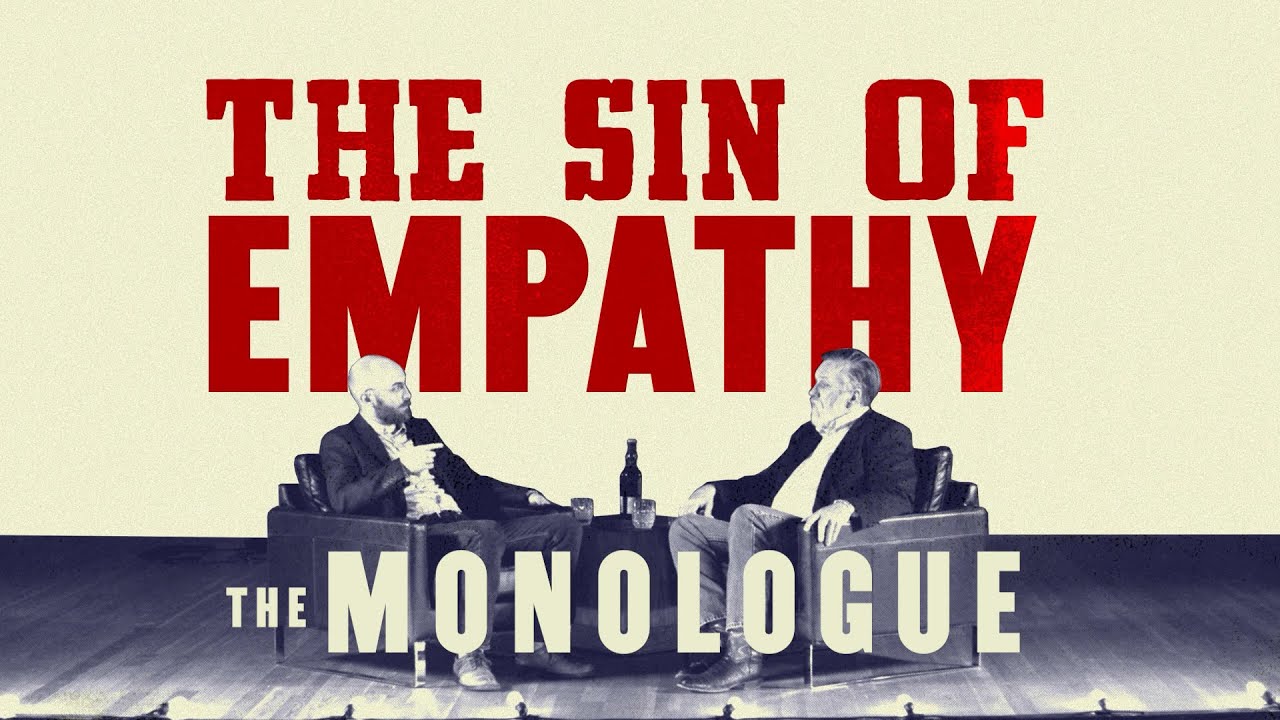 ." Empathy, says Wilson, “is not a good thing."
The “Man Rampant" agenda is reinforced on Wilson's website, which draws upon the creative people living in the Moscow community to turn his arguments into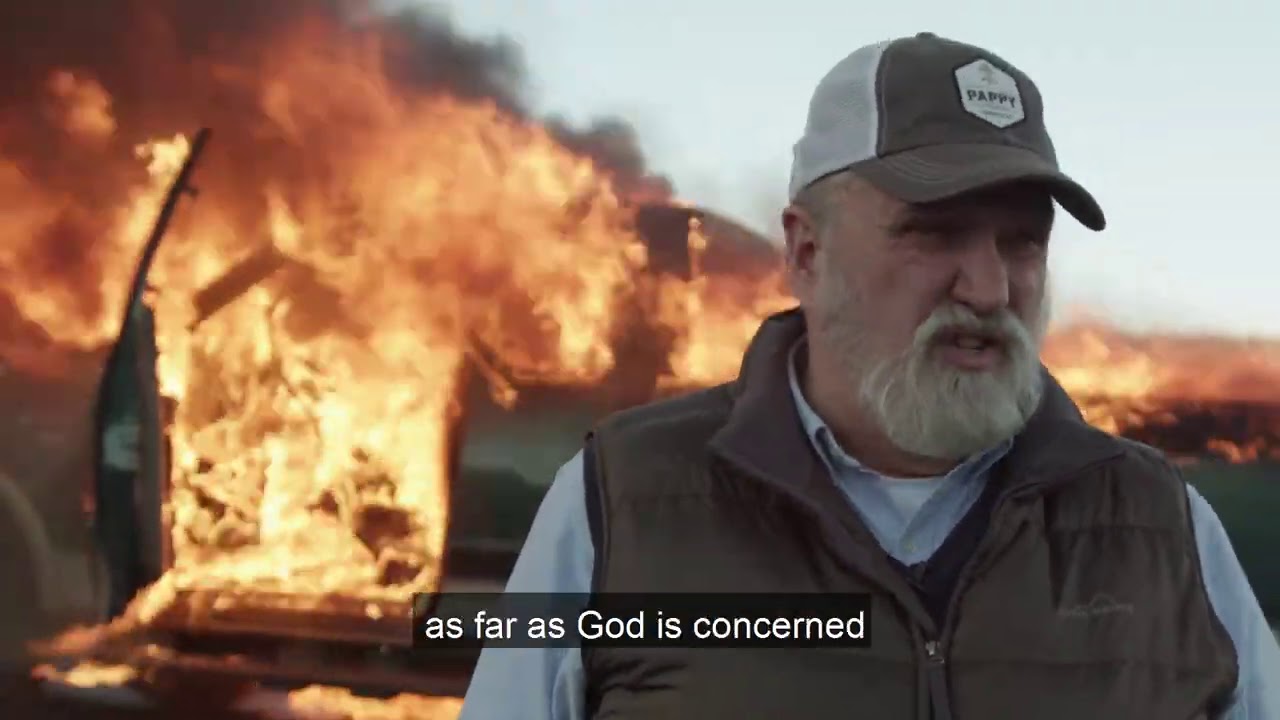 , and where, while dismissing racism, he argues that
 ."
Going local to convert America
In America's crowded religious marketplace, Wilson's message is clearly distinct.
One of Wilson's most important influences is the late R.J. Rushdoony, an Armenian-American Presbyterian theologian who was driven by protecting Protestants in the U.S. from suffering the kind of genocide from which his parents escaped. Frustrated by the other-worldliness of many American Christian denominations, whose adherents he feared preached more about heaven than earth, and their complacency in what he perceived to be a hostile liberal culture, Rushdoony set about developing biblical principles for how society should be organized.
The Ten Commandments were no longer to be considered as an artifact in the history of morality, Rushdoony argued. Instead, they should be understood as setting out the core principles for the running of the modern state. “Thou shalt not steal" ruled out the possibility of inflation, which Rushdoony argued devalued monetary assets and was therefore was a form of theft. And “Thou shalt have no other gods besides me" ruled out any possibility of religious pluralism.
Rushdoony promoted these ideals in titles such as 1973's “Institutes of Biblical Law" – a 1,000-page exposition of the Ten Commandments that argued for both the abolition of the prison system and a massive extension of capital punishment.
Christians would be secure in American society only when it was shaped by their religious values, he argued. But the Christian America that he anticipated would not be secured through revolution or any form of top-down political change – only by the transformation of individual lives, families, towns and states.
This strategy of promoting beliefs at the local level explains why Christian Reconstructionists, like those led by Wilson, prefer to focus energies in small towns. The Reconstructionists in Moscow believe that they can achieve much more significant cultural impact if they can secure significant demographic change, either by the conversion of existing inhabitants or by encouraging others to move to the area.
Eschewing the existential crisis
The stated goal of Wilson's congregation is to make Moscow a Christian town; at present only around a third of Moscow residents identify as “religious," according to a 2019 report.
But it is Wilson's attitude about public health measures during the pandemic that has most recently brought him and his church back to the attention of political leaders. Throughout the pandemic, he has argued that mask requirements reveal the hypocrisy of government. In September 2020, Wilson led his congregation in the illegal hymn-sing in front of City Hall that led to the arrests of several church members – footage of which was retweeted by President Trump, who suggested that the Moscow congregation's arrests were emblematic of what would happen to evangelicals if Democrats took control. “DEMS WANT TO SHUT YOUR CHURCHES DOWN, PERMANENTLY," the former president tweeted in all caps.
And yet, whatever the former president's fears, Wilson's congregation is growing. While large denominations, like the Southern Baptists, divide in the debate about critical race theory, Wilson's church shows how some congregations could respond to evangelicalism's existential crisis – and possibly thrive.
3 media outlets, 1 religion newsletter. [Get stories from The Conversation, AP and RNS.]
This article is republished from The Conversation under a Creative Commons license. Read the original article.
RELATED ARTICLES AROUND THE WEB
- A twisted history of sexuality | Mark Vernon | The Guardian ›
- The Social Construction of Racism in the United States | Manhattan ... ›
- "Religion's Influence on Environmental Concern: U.S. Evangelicals ... ›
https://www.alternet.org/2020/02/heres-how-trumps-state-of-the-union-address-was-a-white-christian-nationalist-dog-whistle/
no lnx
Here’s how Trump’s State of the Union address was a white Christian nationalist dog whistle
Written by Andrew L. Seidel / Religion Dispatches February 8, 2020
Amid the ripping paper and misbegotten medals, Trump’s State of the Union address promised nationalism with a distinctly Christian bent.
Trump wants to steal $5 billion from public schools (which he decried as “failing government schools”) to give to private, i.e., Christian, schools.Trump wants to roll back reproductive rights and ban abortion. But more than anything, Trump wants to weaponize religious freedom. If he is successful there, it will be a win for his war against abortion and public schools too. He said:
My administration is also defending religious liberty, and that includes the constitutional right to pray in public schools. In America, we don’t punish prayer. We don’t tear down crosses. We don’t ban symbols of faith. We don’t muzzle preachers and pastors. In America, we celebrate faith, we cherish religion, we lift our voices in prayer, and we raise our sights to the Glory of God.
The Constitution already protects students’ right to pray in public schools. What Trump actually wants is to use the machinery of the state to impose religion on students.
The allusion to tearing down crosses is a nod to the Supreme Court’s recent decision to allow the 40-ft tall Bladensburg cross to remain on government land and be maintained at government expense. Justice Alito’s opinion was full of irreconcilable contradictions and it bought in to the idea that curing First Amendment violations would show “hostility toward religion.” Until last summer, that was a claim that the Supreme Court had repeatedly rejected going all the way back to its very first state-church decision.
The placement of this passage, with its Christian nationalist dog whistles, belies its true meaning. It came immediately after he touted the Federalist Society’s “pipeline” set up to get conservative lawyers—many patently unqualified—lifetime appointments as federal judges:
“Working with Mitch McConnell — thank you, Mitch — and his colleagues in the Senate, we have recommended 180 new judges to uphold our Constitution as written. This includes Neil Gorsuch and Brett Kavanaugh.”
Those aren’t Trump judges, they’re McConnell/Federalist judges. And they’re the ones who will make Trump’s religious freedom subtext a legal reality.
It’s also worth noting that immediately following this nod to Christian nationalism Trump claimed to be “defending national security and combating radical Islamic terrorism.”
And, in fact, the speech may have been edited to drop an even more blatant call to Christian Nationalism. Politico’s transcript includes the following line (emphases mine):
In reaffirming our heritage as a free nation, we must remember thatAmerica has always been a Christian nation.
Time magazine’s transcript, meanwhile, reflects what the president actually said:
In reaffirming our heritage as a free Nation, we must remember that America has always been a frontier nation.
It’s entirely possible that the speech wasn’t deliberately edited; that Trump, who’s famous for ad-libbing, simply misread or decided to deviate from the speech as written, but it’s meaningful that the speech appears to have been toned down.
Even so, the message is out in the open: These judges will make Christian nationalism the law. They will redefine the Constitution so that it creates two classes of people: conservative Christians and everyone else. That is and has been the goal of Christian nationalism—to codify Christian privilege and elevate Christians to a special, favored class. All others will be second-class citizens.As Chrissy Stroop noted in her Religion Dispatches piece on the SOTU, these ideas have been mainstreamed due to the influence of the radical Christian Reconstructionist movement.
Right now, Christian nationalists are raging against the dying of their privilege. Trump’s State of the Union encapsulated this rage. And, as America nears the tipping point at which conservative Christianity’s power and privilege are reduced to equality for all, the Christian nationalist myths will be spouted more often and more loudly. But the end is near for this movement. That is the true state of our union.
=
transcript
https://time.com/5777857/state-of-the-union-transcript-2020/
ref seidel
https://religiondispatches.org/amid-reality-tv-gimmicks-and-xenophobic-rhetoric-trumps-sotu-appeals-to-evangelicals/
no lnx
since late December, 2019, when retiring editor-in-chief of Christianity Today Mark Galli published his infamous “Trump Should Be Removed from Office” editorial, there’s been a great deal of buzz in the pundit class over whether Trump, after a highly publicized impeachment trial, needs to be concerned with possible defections in his white evangelical base. From an analytical standpoint, the buzz is mere noise, horse race politics nonsense from people who don’t understand that most white evangelicals have long since come to regard CT as “too liberal.” As John Stoehr observed on RD back in December, “It’s not going to change much.”
And, what many failed to notice or recall, is that the editorial itself was entirely milquetoast, attacking only Trump’s “gross immorality and ethical incompetence,” while agreeing with Trump-supporting evangelicals that “his Supreme Court nominees, his defense of religious liberty, and his stewardship of the economy” are among “the president’s positives.”
Although this editorial was never going to make a dent in the unflagging support Trump counts on from his white evangelical base, he seems to have been scared enough by the furor around it to start ramping up his evangelical outreach. It’s probably no coincidence that Trump recently became the first U.S. president to address the radical anti-choice “March for Life” event in person.
Given that the vast majority of white evangelicals, America’s single most right-wing demographic, are Christian nationalists, we should have expected a substantial presence of Christian nationalist rhetoric in yesterday’s State of the Union Address, along with coded nods to specific evangelical concerns about abortion, schooling, and “religious freedom.”
Indeed, all these elements were present in a speech packed chock-full of “lies, damned lies, and statistics,” along with reality-show gimmicks including a surprise reunion of Trump guest Amy Williams and her husband, Sgt. 1st Class Townshend Williams, andawarding the Presidential Medal of Freedom to right-wing radio charlatan Rush Limbaugh, whose advanced lung cancer diagnosis does nothing to erase his substantial contributions to the destruction of America’s information ecosystem.
Trump’s appreciation for post-truth bluster and militarism are certainly among the characteristics that endear him to the Christian Right. And while he remains most in his element with the jingoistic rhetoric of borders, “heroes,” economic protectionism, and “criminal” immigrants, over the last few years Trump has become visibly more comfortable using language that more directly appeals to the conservative, mostly white evangelicals and radical traditionalist Catholics who represent his base, and with whom he has surrounded himself.
To those with “eyes to see,” Trump’s first clear appeal to the Christian Right came in his use of the phrase “failing government schools” in the midst of his calling for the expansion of “school choice” voucher policies. As a few observers on Twitter pointed out, notably religious studies professor Julie Ingersoll, the pejorative term “government schools” is a hallmark of Christian Reconstructionism, a radical theocratic ideology whose exponents believe that public education should be abolished in favor of homeschooling and/or Christian schools.
As Ingersoll’s research demonstrates, such ideas have been mainstreamed in evangelicalism precisely through the spread of Christian schooling and the deregulation of homeschooling, thanks to Christian Reconstructionist influence on curricula.
julie ingersoll
@julieingersoll
Trump calls public schools "government schools," a dog whistle to evangelicals and an indication of wide-ranging influence of Christian reconstructionism #SOTU @C_Stroop @profagagne
389
6:43 PM - Feb 4, 2020
Twitter Ads info and privacy
206 people are talking about this
Chrissy in the Dumbest Dystopia
?
@C_Stroop
- Feb 4, 2020
Replying to @cutrightest @julieingersoll
They’re not exactly the same thing but Christian Reconstructionism is very racist. But I guess the rhetoric is older:
https://t.co/3ng03XqUNY https://twitter.com/julieingersoll/status/1224899037117272065?s=21 …
julie ingersoll
@julieingersoll
I suspect #Rushdoony got it from J. Gresham Machen in the 20s. https://twitter.com/C_Stroop/status/1224898284491173888 …
julie ingersoll
@julieingersoll
I'd say that Rushdoony brought the language into modern popular Evangelical usage as he developed the "biblical" defense of Christian education and the rejection of public education.
15
7:40 PM - Feb 4, 2020
Twitter Ads info and privacy
See julie ingersoll's other Tweets
Trump’s subsequent appeals to his white evangelical base were more obvious.Right after touting the confirmation of new federal judges on his watch, including “two brilliant new Supreme Court Justices, Neil Gorsuch and Brett Kavanaugh,” the president boasted about his administration’s “defense of religious liberty, [which] includes the Constitutional right to pray in public schools.” While this right has never in fact been contested, it’s a longstanding evangelical tactic to disingenuously conflate the constitutional ban on school-sponsored prayer with the generic “prayer in schools,” which makes for a more effective rallying cry to agitate the faithful.
From here, Trump launched into a bizarrely manic description of what “we” do in America, rhetoric that reinforces the authoritarian urge to define “the nation” or “the people” in a way that excludes othered groups:
In America, we do not punish prayer. We do not tear down crosses. We do not ban symbols of faith. We do not muzzle preachers and pastors. In America, we celebrate faith. We cherish religion. We lift our voices in prayer, and we raise our sights to the Glory of God!
Few Americans would disagree with the first four sentences, all of which, with certain caveats, represent clearly protected First Amendment freedoms. (If, for example, the proverbial cross happens to be located in a public space that doesn’t permit equal representation to other faiths, then yes, the cross might be removed according to the Constitution.)
The last three sentences, however, are a different matter, as they’re clearly meant to define America as a religious nation to the exclusion of non-believers. And, given the proximity of these statements to Trump’s invocation of crosses, it’s no stretch to read these sentences as defining America as a specifically Christian nation.
Trump’s awkward transition from this Christian nationalist rhetoric to invoking the Second Amendment’s “right to keep and bear arms” may seem out of place to some observers. As I’ve argued previously, however, the coziness of God and guns makes perfect sense to Trump’s Christian Right base. Likewise, Trump’s subsequent lines on “manifest destiny,” “frontiers,” and defeating terrorism are red meat for Christian nationalists (if rather bizarrely thrown together with assertions that America will send the first woman to the moon and be the first nation to plant a flag on Mars).
Trump drove his speech to a close with more secularized and—despite references to Frederick Douglass and Harriet Tubman—racist nationalist appeals to “pioneers,” “settl[ing] the New World,” and “the beautiful, beautiful Alamo.” This language of “national greatness,” it’s worth noting, may be regarded as the expression of a type of political religion, an essentially secular expression that Christian nationalists nevertheless embrace enthusiastically. In the end, for those worried about attacks on the separation of church and state and about the unwavering support for Trump among white evangelicals, the 2020 State of the Union will do little to assuage these concerns.
Bio
Latest Posts
fake@gmail.com'
Chrissy Stroop
A prominent ex-evangelical writer, speaker, and advocate, Chrissy Stroop is (with Lauren O’Neal) coeditor of the essay anthology Empty the Pews: Stories of Leaving the Church. A senior correspondent for Religion Dispatches, her work has appeared in Dame Magazine, Foreign Policy, Playboy, Political Research Associates, and other outlets, including peer-reviewed academic journals. Holding a Ph.D. in modern Russian history from Stanford University, Stroop is a Senior Research Associate with the University of Innsbruck’s Postsecular Conflicts project. In 2019 Chrissy came out as a transgender woman and began her journey of medical transition. She resides in Portland, Oregon.
LINKS:
ince late December, 2019, when retiring editor-in-chief of Christianity TodayMark Galli published his infamous “Trump Should Be Removed from Office” editorial, there’s been a great deal of buzz in the pundit class over whether Trump, after a highly publicized impeachment trial, needs to be concerned with possible defections in his white evangelical base. From an analytical standpoint, the buzz is mere noise, horse race politics nonsense from people who don’t understand that most white evangelicals have long since come to regard CTas “too liberal.” As John Stoehr observed on RDback in December, “It’s not going to change much.”
And, what many failed to notice or recall, is that the editorial itself was entirely milquetoast, attacking only Trump’s “gross immorality and ethical incompetence,” while agreeing with Trump-supporting evangelicals that “his Supreme Court nominees, his defense of religious liberty, and his stewardship of the economy” are among “the president’s positives.”
Although this editorial was never going to make a dent in the unflagging support Trump counts on from his white evangelical base, he seems to have been scared enough by the furor around it to start ramping up his evangelical outreach. It’s probably no coincidence that Trump recently became the first U.S. president to address the radical anti-choice “March for Life” event in person.
Given that the vast majority of white evangelicals, America’s single most right-wing demographic, are Christian nationalists, we should have expected a substantial presence of Christian nationalist rhetoric in yesterday’s State of the Union Address, along with coded nods to specific evangelical concerns about abortion, schooling, and “religious freedom.”
Indeed, all these elements were present in a speech packed chock-full of “lies, damned lies, and statistics,” along with reality-show gimmicks including a surprise reunion of Trump guest Amy Williams and her husband, Sgt. 1st Class Townshend Williams, and awarding the Presidential Medal of Freedom to right-wing radio charlatan Rush Limbaugh, whose advanced lung cancer diagnosis does nothing to erase his substantial contributions to the destruction of America’s information ecosystem.
Trump’s appreciation for post-truth bluster and militarism are certainly among the characteristics that endear him to the Christian Right. And while he remains most in his element with the jingoistic rhetoric of borders, “heroes,” economic protectionism, and “criminal” immigrants, over the last few years Trump has become visibly more comfortable using language that more directly appeals to the conservative, mostly white evangelicals and radical traditionalist Catholics who represent his base, and with whom he has surrounded himself.
To those with “eyes to see,” Trump’s first clear appeal to the Christian Right came in his use of the phrase “failing government schools” in the midst of his calling for the expansion of “school choice” voucher policies. As a few observers on Twitter pointed out, notably religious studies professor Julie Ingersoll, the pejorative term “government schools” is a hallmark of Christian Reconstructionism, a radical theocratic ideology whose exponents believe that public education should be abolished in favor of homeschooling and/or Christian schools.
As Ingersoll’s research demonstrates, such ideas have been mainstreamed in evangelicalism precisely through the spread of Christian schooling and the deregulation of homeschooling, thanks to Christian Reconstructionist influence on curricula.
https://en.wikipedia.org/wiki/Christian_Reconstructionism
Christian reconstructionism is a fundamentalist[1] Reformed theonomic movement that developed under the ideas of Rousas Rushdoony, Greg Bahnsen and Gary North;[2] it has had an important influence on the Christian Right in the United States.[3][4] In keeping with the cultural mandate, reconstructionists advocate theonomy and the restoration of certain biblical laws said to have continuing applicability.[5]
:{
}:
The movement declined in the 1990s and was declared dead in a 2008 Church History journal article,[6] although Christian reconstructionist organizations such as the Chalcedon Foundation and American Vision are active today.[7][8][9] Christian reconstructionists are usually postmillennialists and followers of the presuppositional apologetics of Cornelius Van Til.[10]
A Christian denomination that advocates the view of Christian reconstructionism is the Reformed Presbyterian Church in the United States.[11] Most Reformed Christians, however, disavow Christian reconstructionism and hold to classical covenant theology, the traditional Reformed view of the relationship between the Old Covenant and Christianity.[12]
- :{1:(style="text-align:left;display:table-cell;padding-left:0px;padding-right:0.5em"):}::{Reconstructionist perspective:(style="text-align:left;display:table-cell"):}:
- :{1.1:(style="text-align:left;display:table-cell;padding-left:0px;padding-right:0.5em"):}::{Theonomy:(style="text-align:left;display:table-cell"):}:
- :{1.2:(style="text-align:left;display:table-cell;padding-left:0px;padding-right:0.5em"):}::{Views on pluralism:(style="text-align:left;display:table-cell"):}:
- :{2:(style="text-align:left;display:table-cell;padding-left:0px;padding-right:0.5em"):}::{Influence on the Christian right in general:(style="text-align:left;display:table-cell"):}:
- :{3:(style="text-align:left;display:table-cell;padding-left:0px;padding-right:0.5em"):}::{Christian critics:(style="text-align:left;display:table-cell"):}:
- :{4:(style="text-align:left;display:table-cell;padding-left:0px;padding-right:0.5em"):}::{Relation to dominionism:(style="text-align:left;display:table-cell"):}:
- :{5:(style="text-align:left;display:table-cell;padding-left:0px;padding-right:0.5em"):}::{See also:(style="text-align:left;display:table-cell"):}:
- :{6:(style="text-align:left;display:table-cell;padding-left:0px;padding-right:0.5em"):}::{Notes:(style="text-align:left;display:table-cell"):}:
- :{7:(style="text-align:left;display:table-cell;padding-left:0px;padding-right:0.5em"):}::{References:(style="text-align:left;display:table-cell"):}:
- :{8:(style="text-align:left;display:table-cell;padding-left:0px;padding-right:0.5em"):}::{Further reading:(style="text-align:left;display:table-cell"):}:
Reconstructionist perspective
Theonomy
Main article: Theonomy
Christian reconstructionists advocate a theonomic government and libertarian economic principles. They maintain a distinction of spheres of authority between family, church, and state.[13][14] For example, the enforcement of moral sanctions under theonomy is carried out by the family and church government, and sanctions for moral offenses are outside the authority of civil government (which is limited to criminal matters, courts and national defense). However, some believe these distinctions become blurred, as the application of theonomy implies an increase in the authority of the civil government. Reconstructionists argue, though, that under theonomy, the authority of the state is severely limited to a point where only the judicial branch exists (e.g., a homosexual does not fear of a police force breaking in their house at night, since, under theonomy, there is no executive branch and therefore no police). Reconstructionists also say that the theocratic government is not an oligarchy or monarchy of man communicating with God, but rather, a national recognition of existing laws. Prominent advocates of Christian reconstructionism have written that according to their understanding, God's law approves of the death penalty not only for murder, but also for propagators of all forms of idolatry,[15][16] open homosexuals,[17] adulterers, practitioners of witchcraft, blasphemers,[18] and perhaps even recalcitrant youths[19] (see the List of capital crimes in the Bible).
Conversely, Christian reconstructionism's founder, Rousas Rushdoony, wrote in The Institutes of Biblical Law (the founding document of reconstructionism) that Old Testament law should be applied to modern society, and he advocates the reinstatement of the Mosaic law's penal sanctions. Under such a system, the list of civil crimes which carried a death sentence would include murder, homosexuality, adultery, incest, lying about one's virginity, bestiality, witchcraft, idolatry or apostasy, public blasphemy, false prophesying, kidnapping, rape, and bearing false witness in a capital case.[20]
Kayser points out that the Bible advocates justice, and that biblical punishments prescribed for crimes are the maximum allowable to maintain justice and not the only available option, because lesser punishments are authorized as well.[21]
Views on pluralism
Rousas Rushdoony wrote in his magnum opus, The Institutes of Biblical Law: "The heresy of democracy has since [the days of colonial New England] worked havoc in church and state"[22] and: "Christianity and democracy are inevitably enemies", and he said elsewhere that "Christianity is completely and radically anti-democratic; it is committed to spiritual aristocracy," and characterized democracy as "the great love of the failures and cowards of life".[23] He nevertheless repeatedly expressed his opposition to any sort of violent revolution and advocated instead the gradual reformation (often termed "regeneration" in his writings) of society from the bottom up, beginning with the individual and the family and from there gradually reforming other spheres of authority, including the church and the state.[24]
Rushdoony believed that a republic is a better form of civil government than a democracy. According to Rushdoony, a republic avoided mob rule and the rule of the "51%" of society; in other words "might does not make right" in a republic.[25] Rushdoony wrote that America's separation of powers between 3 branches of government is a far more neutral and better method of civil government than a direct democracy, stating "[t]he [American] Constitution was designed to perpetuate a Christian order". Rushdoony argues that the Constitution's purpose was to protect religion from the federal government and to preserve "states' rights."[26]
Douglas W. Kennard, a Professor Theology and Philosophy at the Houston Graduate School of Theology, wrote with regard to Christian reconstructionism, that Christians of non-Reformed traditions, such as some "Baptist, Methodist, Catholic, [and] Orthodox", would be "under threat of capital punishment as fostered by the extreme Theonomist."[27] On the other hand, Ligon Duncan has stated that "Roman Catholics to Episcopalians to Presbyterians to Pentecostals", as well as "Arminian and Calvinist, charismatic and non-charismatic, high Church and low Church traditions are all represented in the broader umbrella of Reconstructionism (often in the form of the "Christian America" movement)."[28]
Influence on the Christian right in general
See also: Dominionism
Although relatively small in terms of the number of self-described adherents, Christian reconstructionism has played a role in promoting the trend toward explicitly Christian politics in the larger American Christian right.[29][page needed] This is the wider trend to which some critics refer, generally, as dominionism. They also allegedly have influence disproportionate to their numbers among advocates of the growth of the Christian homeschooling and other Christian education movements that seek independence from the direct oversight or support of the civil government. Because their numbers are so small compared to their influence, they are sometimes accused of being secretive and conspiratorial.[30][31][page needed][32][33][page needed]
In Matthew 28:18, Jesus says, "All power is given unto me in heaven and in earth." This verse is seen as an announcement by Jesus that he has assumed authority over all earthly authority. In that light, some theologians interpret the Great Commission as a command to exercise that authority in his name, bringing all things (including societies and cultures) into subjection under his commands. Rousas Rushdoony, for example, interpreted the Great Commission as a republication of the "creation mandate",[34] referring to Genesis 1:28
Be fruitful, and multiply, and replenish the earth, and subdue it: and have dominion over the fish of the sea, and over the fowl of the air, and over every living thing...
For Rushdoony, the idea of dominion implied a form of Christian theocracy or, more accurately, a theonomy. For example, he wrote that:
The purpose of Christ's coming was in terms of the creation mandate… The redeemed are called to the original purpose of man, to exercise dominion under God, to be covenant-keepers, and to fulfil "the righteousness of the law" (Rom. 8:4)… Man is summoned to create the society God requires.[35]
Elsewhere he wrote:
The man who is being progressively sanctified will inescapably sanctify his home, school, politics, economics, science, and all things else by understanding and interpreting all things in terms of the word of God.[36]
According to sociologist and professor of religion William Martin, author of With God on Our Side:
It is difficult to assess the influence of Reconstructionist thought with any accuracy. Because it is so genuinely radical, most leaders of the Religious Right are careful to distance themselves from it. At the same time, it clearly holds some appeal for many of them. One undoubtedly spoke for others when he confessed, 'Though we hide their books under the bed, we read them just the same.' In addition, several key leaders have acknowledged an intellectual debt to the theonomists. Jerry Falwell and D. James Kennedy have endorsed Reconstructionist books. Rushdoony has appeared on Kennedy's television program and the 700 Club several times. Pat Robertson makes frequent use of 'dominion' language; his book, The Secret Kingdom, has often been cited for its theonomy elements; and pluralists were made uncomfortable when, during his presidential campaign, he said he 'would only bring Christians and Jews into the government,' as well as when he later wrote, 'There will never be world peace until God's house and God's people are given their rightful place of leadership at the top of the world.' And Jay Grimstead, who leads the Coalition on Revival, which brings Reconstructionists together with more mainstream evangelicals, has said, 'I don't call myself [a Reconstructionist],' but 'A lot of us are coming to realize that the Bible is God's standard of morality … in all points of history … and for all societies, Christian and non-Christian alike… It so happens that Rushdoony, Bahnsen, and North understood that sooner.' He added, 'There are a lot of us floating around in Christian leadership—James Kennedy is one of them—who don't go all the way with the theonomy thing, but who want to rebuild America based on the Bible.'[37]
Christian critics
Michael Horton of Westminster Seminary California has warned against the seductiveness of power-religion. The Christian rhetoric of the movement is weak, he argues, against the logic of its authoritarian and legalistic program, which will always drive reconstructionism toward sub-Christian ideas about sin, and the perfectibility of human nature (such as to imagine that, if Christians are in power, they won't be inclined to do evil). On the contrary, Horton and others maintain, God's Law can, often has been, and will be put to evil uses by Christians and others, in the state, in churches, in the marketplace, and in families; and these crimes are aggravated, because to oppose a wrong committed through abuse of God's law, a critic must bear being labeled an enemy of God's law.[38]
J. Ligon Duncan of the Department of Systematic Theology of Reformed Theological Seminary in Jackson, Mississippi, warns that "Theonomy, in gross violation of biblical patterns and common sense, ignores the context of the giving of the law to the redemptive community of the Old Testament. This constitutes an approach to the nature of the civil law very different from Calvin and the rest of the Reformed tradition, which sees the civil law as God's application of his eternal standards to the particular exigencies of his people." Duncan rejects the reconstructionist's insistence that "the Old Testament civil case law is normative for the civil magistrate and government in the New Covenant era". He views their denial of the threefold distinction between moral, civil, and ceremonial law as representing one of the severe flaws in the reconstructionist hermeneutic.[39]
Professor Meredith Kline, whose own theology has influenced the method of several reconstructionist theologians, has adamantly maintained that reconstructionism makes the mistake of failing to understand the special prophetic role of biblical Israel, including the laws and sanctions, calling it "a delusive and grotesque perversion of the teachings of scripture."[40] Kline's student, Lee Irons, furthers the critique:
According to the Reformed theocrats apparently… the only satisfactory goal is that America become a Christian nation.
Ironically... it is the wholesale rejection (not revival) of theocratic principles that is desperately needed today if the church is to be faithful to the task of gospel witness entrusted to her in the present age… It is only as the church… puts aside the lust for worldly influence and power – that she will be a positive presence in society.[41]
Rodney Clapp wrote that reconstructionism is an anti-democratic movement.[42][43]
In an April 2009 article in Christianity Today about theologian and writer Douglas Wilson, the magazine described reconstructionism as outside the 'mainstream' views of evangelical Christians. It also stated that it "borders on a call for outright theocracy".[44]
George M. Marsden, a professor of history at the University of Notre Dame, has remarked in Christianity Today that "Reconstructionism in its pure form is a radical movement". He also wrote, "[t]he positive proposals of Reconstructionists are so far out of line with American evangelical commitments to American republican ideals such as religious freedom that the number of true believers in the movement is small."[45]
Popular religious author, feminist, and former Roman Catholic nun, Karen Armstrong sees a potential for "fascism" in Christian reconstructionism, and sees the eventual Dominion envisioned by theologians R. J. Rushdoony and Gary North as: "totalitarian. There is no room for any other view or policy, no democratic tolerance for rival parties, no individual freedom."[46]
Traditional Reformed Christians have argued that Christian reconstructionists have "significantly misunderstood the positions of Calvin, other Reformed teachers and the Westminster Confession concerning the relationship between the Sinai covenant's ethical stipulations and the Christian obligation to the Mosaic judicial laws today."[12]
Relation to dominionism
Some sociologists and critics refer to reconstructionism as a type of dominionism. These critics claim that the frequent use of the word dominion by reconstructionist writers, strongly associates the critical term dominionism with this movement. As an ideological form of dominionism, reconstructionism is sometimes held up as the most typical form of dominion theology.[29][page needed][30][31][page needed][32][33][page needed][47][page needed]
The Protestant theologian Francis Schaeffer is linked with the movement by some critics, but some reconstructionist thinkers are highly critical of Schaeffer's positions and he himself disavowed any connection or affiliation with reconstructionism, though he did cordially correspond with Rushdoony on occasion.[48] Authors Sara Diamond and Fred Clarkson suggest that Schaeffer shared with reconstructionism the tendency toward dominionism.[30][31][page needed]
Christian reconstructionists[who?] object to the dominionism and the dominion theology labels, which they say misrepresent their views. Some separate Christian cultural and political movements object to being described with the label dominionism, because in their mind the word implies attachment to reconstructionism. In reconstructionism the idea of godly dominion, subject to God, is contrasted with the autonomousdominion of mankind in rebellion against God.
See also

- Christian democracy
- Christian libertarianism
- Christian state
- Christianism
- Haredi Judaism
- Islamism
- Neo-Calvinism
- Salafi movement
- Sabbatarianism
- Summary of Christian eschatological differences
- TheocracyWatch
Notes
Michael :{Peroutka:(style="margin:0px;padding:0px;border:0px;font-style:inherit;font-variant:inherit;font-stretch:inherit;vertical-align:baseline"):}:, God, and :{Christian:(style="margin:0px;padding:0px;border:0px;font-style:inherit;font-variant:inherit;font-stretch:inherit;vertical-align:baseline"):}: Reconstructionists At ...
[](https://duckduckgo.com/?q=christian%20reconstrruction%20peroutka+site:www.rightwingwatch.org&atb=v31-5__ "Search domain www.rightwingwatch.org/post/michael-peroutka-god-and-christian-reconstructionists-at-larry-klaymans-revolution/"):{www.rightwingwatch.org:(style="margin:0px;padding:0px;border:0px;font-style:inherit;font-variant:inherit;font-weight:inherit;font-stretch:inherit;vertical-align:baseline;display:inline"):}::{/post/michael-peroutka-god-and-christian-reconstructionists-at-larry-klaymans-revolution/:(style="margin:0px;padding:0px;border:0px;font-style:inherit;font-variant:inherit;font-weight:inherit;font-stretch:inherit;vertical-align:baseline;opacity:1;visibility:visible"):}:
At the rally, Peroutka praised Klayman as a "legal restorer," saying "an order has been denigrated and lost and needs to be found and recovered and restored." His rhetoric echoes Christian Reconstructionist godfather Rousas John Rushdoony, who said, "The only true order is founded on Biblical law.
:{Christian:(style="margin:0px;padding:0px;border:0px;font-style:inherit;font-variant:inherit;font-stretch:inherit;vertical-align:baseline"):}: Reconstructionism And The GOP: 'Biblical Justice ...
[](https://duckduckgo.com/?q=christian%20reconstrruction%20peroutka+site:www.rightwingwatch.org&atb=v31-5__ "Search domain www.rightwingwatch.org/post/christian-reconstructionism-and-the-gop-biblical-justice-vs-social-justice/"):{www.rightwingwatch.org:(style="margin:0px;padding:0px;border:0px;font-style:inherit;font-variant:inherit;font-weight:inherit;font-stretch:inherit;vertical-align:baseline;display:inline"):}::{/post/christian-reconstructionism-and-the-gop-biblical-justice-vs-social-justice/:(style="margin:0px;padding:0px;border:0px;font-style:inherit;font-variant:inherit;font-weight:inherit;font-stretch:inherit;vertical-align:baseline;opacity:1;visibility:visible"):}:
John Lofton, a right-wing pundit, is the spokesperson for Republican county council candidate Peroutka, and for Peroutka's Christian Reconstructionist Institute on the Constitution, which has trained Tea Party activists on the biblical basis of the Constitution.
:{Peroutka:(style="margin:0px;padding:0px;border:0px;font-style:inherit;font-variant:inherit;font-stretch:inherit;vertical-align:baseline"):}: Stands Firm on Ties to Anti-Gay Secessionist Group
[](https://duckduckgo.com/?q=christian%20reconstrruction%20peroutka+site:www.metroweekly.com&atb=v31-5__ "Search domain www.metroweekly.com/2014/08/county-council-candidate-stands-firm-on-ties-to-anti-gay-secessionist-group/"):{https://www.metroweekly.com:(style="margin:0px;padding:0px;border:0px;font-style:inherit;font-variant:inherit;font-weight:inherit;font-stretch:inherit;vertical-align:baseline;display:inline"):}::{/2014/08/county-council-candidate-stands-firm-on-ties-to-anti-gay-secessionist-group/:(style="margin:0px;padding:0px;border:0px;font-style:inherit;font-variant:inherit;font-weight:inherit;font-stretch:inherit;vertical-align:baseline;opacity:1;visibility:visible"):}:
Peroutka Stands Firm on Ties to Anti-Gay Secessionist Group Anne Arundel County Council candidate refuses to back away from association with the League of the South.
Can You Run the Economy Just Using the Bible? Many in the ...
[](https://duckduckgo.com/?q=christian%20reconstrruction%20peroutka+site:www.alternet.org&atb=v31-5__ "Search domain www.alternet.org/2015/07/can-you-run-economy-just-using-bible-many-christian-right-believe-so/"):{https://www.alternet.org:(style="margin:0px;padding:0px;border:0px;font-style:inherit;font-variant:inherit;font-weight:inherit;font-stretch:inherit;vertical-align:baseline;display:inline"):}::{/2015/07/can-you-run-economy-just-using-bible-many-christian-right-believe-so/:(style="margin:0px;padding:0px;border:0px;font-style:inherit;font-variant:inherit;font-weight:inherit;font-stretch:inherit;vertical-align:baseline;opacity:1;visibility:visible"):}:
According to the Christian Right, only the Bible and God can determine how our economic system is run. In February, the culture warriors at Iowa's "pro-family" group The Family Leader ...
PART XVIII-C: :{Christian:(style="margin:0px;padding:0px;border:0px;font-style:inherit;font-variant:inherit;font-stretch:inherit;vertical-align:baseline"):}: Reconstruction, ATI, Abuse ...
[](https://duckduckgo.com/?q=christian%20reconstrruction%20peroutka+site:www.thepinkflamingoblog.com&atb=v31-5__ "Search domain www.thepinkflamingoblog.com/2014/07/07/part-xviii-c-christian-reconstruction-ati-abuse-submission-the-takeover/"):{www.thepinkflamingoblog.com:(style="margin:0px;padding:0px;border:0px;font-style:inherit;font-variant:inherit;font-weight:inherit;font-stretch:inherit;vertical-align:baseline;display:inline"):}::{/2014/07/07/part-xviii-c-christian-reconstruction-ati-abuse-submission-the-takeover/:(style="margin:0px;padding:0px;border:0px;font-style:inherit;font-variant:inherit;font-weight:inherit;font-stretch:inherit;vertical-align:baseline;opacity:1;visibility:visible"):}:
The long-term goal of Christians in politics should be to gain exclusive control over the franchise. Those who refuse to submit publicly to the eternal sanctions of God by submitting to His Church's public marks of the covenant-baptism and holy communion-must be denied citizenship, just as they were in ancient Israel …."
:{Christian:(style="margin:0px;padding:0px;border:0px;font-style:inherit;font-variant:inherit;font-stretch:inherit;vertical-align:baseline"):}: Reconstructionism | A VIEW FROM AN OPEN RECTORY WINDOW
[
According to Peroutka, government can only do what he thinks God says government can do. The Institute on the Constitution website enshrines the late Rousas Rushdoony, the father of Christian Reconstructionism. John Lofton, the one-time Institute's Director of Communications, called Rushdoony his "theological mentor."
:{Christian:(style="margin:0px;padding:0px;border:0px;font-style:inherit;font-variant:inherit;font-stretch:inherit;vertical-align:baseline"):}: reconstructionism - Warren Throckmorton
[](https://duckduckgo.com/?q=christian%20reconstrruction%20peroutka+site:www.wthrockmorton.com&atb=v31-5__ "Search domain www.wthrockmorton.com/tag/christian-reconstructionism/"):{https://www.wthrockmorton.com:(style="margin:0px;padding:0px;border:0px;font-style:inherit;font-variant:inherit;font-weight:inherit;font-stretch:inherit;vertical-align:baseline;display:inline"):}::{/tag/christian-reconstructionism/:(style="margin:0px;padding:0px;border:0px;font-style:inherit;font-variant:inherit;font-weight:inherit;font-stretch:inherit;vertical-align:baseline;opacity:1;visibility:visible"):}:
Author Warren Throckmorton Posted on October 10, 2013 Categories dominionism, history, Institute on the Constitution, League of the South, politics, Religion Tags Christianreconstructionism, Institute on the Constitution, John Lofton, Michael Peroutka, Rousas Rushdoony Leave a comment on Institute on the Constitution, God and Government, and ...
Institute on the Constitution, God and Government, and ...
[](https://duckduckgo.com/?q=christian%20reconstrruction%20peroutka+site:www.wthrockmorton.com&atb=v31-5__ "Search domain www.wthrockmorton.com/2013/10/10/institute-on-the-constitution-and-christian-reconstructionism/"):{https://www.wthrockmorton.com:(style="margin:0px;padding:0px;border:0px;font-style:inherit;font-variant:inherit;font-weight:inherit;font-stretch:inherit;vertical-align:baseline;display:inline"):}::{/2013/10/10/institute-on-the-constitution-and-christian-reconstructionism/:(style="margin:0px;padding:0px;border:0px;font-style:inherit;font-variant:inherit;font-weight:inherit;font-stretch:inherit;vertical-align:baseline;opacity:1;visibility:visible"):}:
According to Peroutka, government can only do what he thinks God says government can do. The IOTC website enshrines Rousas Rushdoony, the father of Christianreconstructionism. IOTC's Director of Communications, John Lofton, calls Rushdoony his "theological mentor" on more than one occasion.
What is :{Christian:(style="margin:0px;padding:0px;border:0px;font-style:inherit;font-variant:inherit;font-stretch:inherit;vertical-align:baseline"):}: Reconstructionism? - Stand Up For The Truth
[](https://duckduckgo.com/?q=christian%20reconstrruction%20peroutka+site:standupforthetruth.com&atb=v31-5__ "Search domain standupforthetruth.com/2013/03/what-is-reconstructionismtheonomy/"):{https://standupforthetruth.com:(style="margin:0px;padding:0px;border:0px;font-style:inherit;font-variant:inherit;font-weight:inherit;font-stretch:inherit;vertical-align:baseline;display:inline"):}::{/2013/03/what-is-reconstructionismtheonomy/:(style="margin:0px;padding:0px;border:0px;font-style:inherit;font-variant:inherit;font-weight:inherit;font-stretch:inherit;vertical-align:baseline;opacity:1;visibility:visible"):}:
Christian reconstructionism began with the publication of the Institute of Biblical Law by R. J. Rushdoony in 1973. This 800 page work expounded on the 10 Commandments. After Rushdoony's death in 2001, his son-in-law Gary North took the reins and has become a prolific writer, further advocating Christian Reconstructionism.
:{Christian:(style="margin:0px;padding:0px;border:0px;font-style:inherit;font-variant:inherit;font-stretch:inherit;vertical-align:baseline"):}: reconstructionism - Wikipedia
[ ](https://duckduckgo.com/?q=christian%20reconstrruction%20peroutka+site:en.wikipedia.org&atb=v31-5__ "Search domain en.wikipedia.org/wiki/Christian_Reconstructionism"):{https://en.wikipedia.org:(style="margin:0px;padding:0px;border:0px;font-style:inherit;font-variant:inherit;font-weight:inherit;font-stretch:inherit;vertical-align:baseline;display:inline"):}::{/wiki/Christian_Reconstructionism:(style="margin:0px;padding:0px;border:0px;font-style:inherit;font-variant:inherit;font-weight:inherit;font-stretch:inherit;vertical-align:baseline;opacity:1;visibility:visible"):}:
Christian reconstructionism is a fundamentalist Reformed theonomic movement that developed under the ideas of Rousas Rushdoony, Greg Bahnsen and Gary North; it has had an important influence on the Christian Right in the United States.
Why Has The Religious Right Embraced Neo-Confederate Michael Peroutka?
ByMiranda Blue | May 18, 2016 11:55 am
Our friends at the Southern Poverty Law Center have obtained a copy of the 2014 membership list of the Council for National Policy, a secretive group [led by the Family Research Council’s Tony Perkins](https://www.nationaljournal.com/twentysixteen/2015/04/15/conservative-leaders-plan-two-secret-meetings-aimed-picking-2016-candidate "https://www.nationaljournal.com/twentysixteen/2015/04/15/conservative-leaders-plan-two-secret-meetings-aimed-picking-2016-candidate
Ctrl+Click or tap to follow the link") that includes a who’s who of leaders of the Religious Right and the wider conservative movement who work together to influence national politics. (In 2014, Perkins was the group’s vice president.) We’ve known from news reports that CNP’s membership includes a wide range of Religious Right leaders, but one name on the list obtained by SPLC stood out: Michael Peroutka.
Peroutka, who made his fortune with a family debt-collection business, has become a minor benefactor to the Religious Right, including funding anti-choice groups, bankrolling some of the campaigns and advocacy work of Alabama Chief Justice Roy Moore (who is currently suspended for attempting to defy the federal courts on marriage equality), and, maybe most notably, donating a million-dollar dinosaur skeleton to a creationist group.
Peroutka runs the Institute on the Constitution, a Christian Reconstructionist groupthat argues for the enforcement of a particular interpretation of biblical law. For instance, Peroutka has suggested that all laws passed by the Maryland legislature are invalidbecause the legislature became an invalid body when it violated “God’s law” and passed marriage equality legislation.
Most troubling, Peroutka has a history as a neo-Confederate activist, including spending time on the board of the secessionist League of the South. In a 2004 speech to the group, Peroutkasaid that he was “still angry” that Maryland failed to secede from the Union during the Civil War. At the group’s 2012 convention, Peroutka led attendeesin a spirited rendition of “Dixie,” which he referred to as “the national anthem”: [vid]
Peroutka was appointed to the board of the League of the Southin 2013, the year before the CNP membership list obtained by SPLC was published. He quit the group in late 2014 as he ran for a local government seat in his home state of Maryland, unconvincingly claiming that he hadn’t been aware of the group’s racism.
Peroutka ended up winning a seat on the county council of Anne Arundel County, Maryland, after his openly gay Democratic opponent was hit with nasty anti-LGBT robocalls that were later tied to Peroutka’s advisers.
CNP’s membership list is closely guarded and new members can join only by invitation. This means that Peroutka didn’t just show up unannounced: He was invited to join a group that includes Perkins, the National Organization for Marriage’s Brian Brown, Liberty Counsel’s Mat Staver, Alliance Defending Freedom’s Alan Sears and many other high-profile conservative activists.
We don’t know if Peroutka is still a member of the group. But even by the time CNP’s 2014 membership directory was published, there was already plenty of public information available about his troubling ideology. Why was the leadership of the Religious Right willing to invite Peroutka into their fold?
Tags: Alan SearsBrian BrownMat StaverMichael PeroutkaTony PerkinsAlliance Defending FreedomCouncil for National PolicyFamily Research CouncilInstitute on the ConstitutionLiberty CounselNational Organization for Marriage
===
http://www.rightwingwatch.org/post/ginni-thomas-teams-up-with-james-okeefe-in-dark-money-operation-to-protect-trump/
Ginni Thomas, wife of Supreme Court Justice Clarence Thomas and a right-wing political activist, has launched a new set of organizations meant to “protect President Trump” and attack Democrats and left-leaning organizations, according to an article published by The Intercept this week.
The well-connected Thomas, a former Heritage Foundation staffer, presented her plans to build a “robust infrastructure” to a meeting of the secretive Council for National Policy last month. The CNP is a strategy-development-and-sharing network that includes leaders across the U.S. religious and political Right, including people like neo-Confederate Christian Reconstrucionist Michael Peroutka. CNP members pushed Trump to sign an executive order on religious liberty.
Thomas is planning to build a “robust infrastructure” of affiliated organizations.Among her partners in the new project are longtime right-wing operative Richard Viguerie; undercover videographer and political tricksterJames O’Keefe;Republican campaign lawyer Cleta Mitchell; and Bill Meierling, chief marketing officer for the American Legislative Exchange Council, a matchmaker for corporate lobbyists and conservative legislators willing to do their bidding.
A slide from Thomas’s presentation at Council for National Policy notes, “Long Term teams taking shape will focus on Education, Media, Entertainment/Arts, Faith, Corporate/Economic, Government, Science, and more”—nearly identical to the list of spheres of cultural influence targeted by Religious Right proponents of Seven Mountains Dominionism.
The Intercept also reported that Thomas had spoken at another CNP event last October, at which she declared, “The hard left is in control of the Democrat Party … And they’re controlling the media and corporations and Hollywood and education.”
This January, Thomas organized a White House meeting where she was joined by anti-Muslim activist Frank Gaffney and others where, among other things, they complained that White House aides were blocking right-wing Trump supporters from getting administration jobs.
Thomas and many of her partners were among conservative activists who mobilized a year ago to try to replace then-House Speaker Paul Ryan with right-wing favorite Rep. Jim Jordan.
Thomas presented United in Purpose “Impact” awards to O’Keefe, Gaffney, and Sean Hannity in 2017. In 2016, TPM reported that Thomas “wanted to ‘target’ the ‘most questionable’ precincts in Virginia with an anti-voter fraud campaign.”
Thomas also interviewed right-wing radio host Jesse Lee Peterson for the Daily Caller in 2016. The two talked about what Thomas called “race hustlers” who she said are “in the business of keeping blacks angry” and about Black Lives Matter, which Peterson called “evil,” “wicked,” and “worse than the KKK.” Last year, Thomas reportedly hired a former Turning Point USA staffer who had resigned after The New Yorker published screenshots of text messages that included a text that said “I HATE BLACK PEOPLE.”
Tags: Bill MeierlingCleta MitchellGinni ThomasJames O'KeefeRichard ViguerieElection 2020Seven MountainsALECAmerican Legislative Exchange CouncilCouncil for National Policy