sasse, ben Sen
pension sinecure?
LCV zero?!
http://scorecard.lcv.org/moc/benjamin-eric-sasse
===
Ex-GOP senator’s $1.3M catering bill as UF president may have been partly funded by taxpayers
an 9 24
pension grift
after leaving Congress, conservative former Sen. Ben Sasse (R-Nebraska) moved south and spent 17 months as president of the University of Florida. Sasse announced his resignation from that position on July 18, citing his wife's health problems. And his last day was July 31.
Journalist Garrett Shanley examines Sasse's stint as UF president in an article published by the Independent Florida Alligator (UF's student newspaper) on August 12, reporting that spending "ballooned" to "$17.3 million — a major increase from $5.6 million under former UF President Ken Fuchs."
"A majority of the spending surge was driven by lucrative contracts with big-name consulting firms and high-salaried, remote positions for Sasse’s former U.S. Senate staff and Republican officials," Shanley reports. "Sasse's consulting contracts have been kept largely under wraps, leaving the public in the dark about what the contracted firms did to earn their fees."
READ MORE:**'An implosion': Conservatives warn 'deeply unwell' Trump grows more 'dangerous' as Harris soars**
Shanley adds, "The university also declined to clarify specific duties carried out by Sasse's ex-Senate staff, several of whom were salaried as presidential advisers."
Shanley notes that when Sasse became UF president, he promised to distance himself from partisan politics — yet "tripled his office's spending, directing millions in university funds into secretive consulting contracts and high-paying positions for his GOP allies."
"Under Sasse's administration," Shanley explains, "two of his former Senate staffers — Raymond Sass and James Wegmann — were among the highest-ranking and highest-paid officials at UF. Both worked remotely from the D.C. area, roughly 800 miles from UF's main campus in Gainesville."
The re:{porter adds, "Sass, Sasses former Senate chief of staff, was UF's vice president for innovation and partnerships — a position which didn't exist under previous administrations. His starting salary at UF was $396,000, more than double the $181,677 he made on Capitol Hill."}:
READ MORE:**Why isn't the media reporting on Trump's increasing dementia?**
*Read the Independent Florida Alligator's full report at this link.
ref
in his 17-month stint as UF president, Ben Sasse more than tripled his office’s spending, directing millions in university funds into secretive consulting contracts and high-paying positions for his GOP allies.
Sasse ballooned spending under the president’s office to $17.3 million in his first year in office — up from $5.6 million in former UF President Kent Fuchs’ last year, according to publicly available administrative budget data.
A majority of the spending surge was driven by lucrative contracts with big-name consulting firms and high-salaried, remote positions for Sasse’s former U.S. Senate staff and Republican officials.
Sasse’s consulting contracts have been kept largely under wraps, leaving the public in the dark about what the contracted firms did to earn their fees. The university also declined to clarify specific duties carried out by Sasse’s ex-Senate staff, several of whom were salaried as presidential advisers.
The university said Sasse’s budget expansion went through the “appropriate approval process” but did not answer questions about how Sasse bankrolled his splurges, where the funds originated or who authorized the spending.
Keeping friends close
Amid protests over his conservative track record as a Nebraska Republican senator, Sasse promised during his ascension to the UF presidency in Fall 2022 that he would divorce himself from partisan politics under what he called a vow of “political celibacy.”
But the senator-turned-university president quietly broke that promise in his 17-month term at the university’s helm, hiring six ex-Senate staffers and two former Republican officials to high-paying, remote jobs at the university.
Under Sasse’s administration, two of his former Senate staffers — Raymond Sass and James Wegmann — were among the highest-ranking and highest-paid officials at UF. Both worked remotely from the D.C. area, roughly 800 miles from UF’s main campus in Gainesville.
Sass, Sasse’s former Senate chief of staff, was UF’s vice president for innovation and partnerships — a position which didn’t exist under previous administrations. His starting salary at UF was $396,000, more than double the $181,677 he made on Capitol Hill.
Wegmann, Sasse’s former Senate communications director, is UF’s vice president of communications, a position he works remotely from his $725,000 home in Washington, D.C.
Salaried at $432,000, Wegmann replaced Steve Orlando, who made $270,000 a year in the position and had nearly 30 years of experience in media relations at UF before he was demoted to be Wegmann’s deputy.
The Alligator first reported on Wegmann and Sass’ appointments last October, but an additional four who followed Sasse from the Senate to the Swamp have gone unnoticed by the press.
Sasse appointed his former Senate press secretary, Taylor Sliva, as UF’s Assistant Vice President of Presidential Communications and Public Affairs, a new position. Sliva’s $232,000 salary made him the second-highest-paid employee in UF’s Office of Strategic Communications and Marketing, trailing only Wegmann.
The remaining three ex-Senate staffers — Raven Shirley, Kari Ridder and Kelicia Rice — served as presidential advisers to Sasse, though their specific duties remain unclear. Rice, Sasse’s Senate scheduler, is listed as a presidential adviser in UF’s salary directory but in practice remained as Sasse’s scheduler, according to her LinkedIn profile.
Sasse raised his former Senate staffs’ salaries at UF by an average of 44% compared to their Capitol Hill pay, contributing to a $4.3 million increase in presidential salary expenses over Fuchs’ last year in office.
Outside of his Senate staff, Sasse also tapped former Republican Tennessee Commissioner of Education Penny Schwinn as UF’s inaugural vice president of PK-12 and pre-bachelors programs. Schwinn, with a starting salary of $367,500, worked the newly-created position from her $1 million home in Nashville, Tennessee.
Additionally, Sasse hired Alice James Burns, former scheduler for Sen. Lindsay Graham (R-SC), as Director of Presidential Relations and Major Events. Burns, salaried at $205,000, also worked for UF outside of Florida.
Citing his wife’s recent epilepsy diagnosis, Sasse abruptly resigned from his post in July — leaving the future of his UF inner circle unclear. The university did not respond to questions about whether his political appointees were fired, non-renewed or resigned following his departure.
Fuchs, who began as interim president Aug. 1, kept a relatively small staff of less than 10, compared to Sasse who employed more than 30 in his office.
Jet-setting on UF’s dime
All but one of Sasse’s political appointees worked for UF outside of Florida and commuted to Gainesville on the university’s dollar when needed — a move reflected in his office’s travel expenses.
In Sasse’s first full fiscal year at the university’s helm, travel expenses for the president’s office soared to $633,000 — over 20 times higher than Fuchs’ annual average of $28,000. Sasse spent more on travel in his 17 months at UF than Fuchs’ entire eight-year tenure.
It is not unprecedented for UF employees to work outside of Florida, but out-of-state positions have typically been reserved for those representing the university as federal lobbyists in its Washington, D.C. office. It is virtually unprecedented for top UF officials and rank-and-file administrators to work outside of Florida.
The university hasn’t responded to requests for a complete log of Sasse’s travel expenses, leaving it unclear how much of his sky-high travel expenditures were spent shuttling his remote hires to campus. A partial report shows Sasse spent over $20,000 between April 29 and July 29 to fly his employees to campus.
Taylor Sliva, Sasse’s press secretary, was the only one of Sasse’s political hires to work in Florida. His employment contract, obtained from a public records request, included a $15,000 relocation stipend. He currently rents out a house in Gainesville.
McKinsey comes to the Swamp
When Sasse took over UF in February 2023, he knew he’d need a hand.
His track record in higher education administration was limited to his five-year presidency at Midland University, a small, private liberal arts college in Fremont, Nebraska. At UF, which enrolls over 60,000 students and pulls in an annual $1 billion in research grants, Sasse faced a steep learning curve.
He turned to consultants for help.
During his presidency, Sasse spent $7.2 million in university funds to consultants for advice on his strategic planning and to fill leadership gaps — over 40 times more than Fuchs’ total consulting expenses over his eight-year term.
Sasse paid nearly two-thirds of the $7.2 million to McKinsey & Company, where he once worked as an adviser on an hourly contract. The firm carries prestige as one of the “big three” management consulting giants, but is notoriously secretive about its dealings and shielded its work from public view using records laws protecting trade secrets.
A critical “scope of work” attachment, which would outline McKinsey's responsibilities to UF, was redacted from a copy of the contract obtained from a public records request. The redaction, permissible under state public records laws, makes it virtually impossible for the public to know what the firm did to earn its fees.
A UF spokesperson said McKinsey was using data analysis to help Sasse build his strategic plan, but the university hasn’t disclosed further details about its $4.7 million contract with the firm since The Alligator first reported its existencelast August. Public records requests for any reports, presentations and data produced under the contract have yielded no responsive documents.
Sasse offered the only public glimpse of McKinsey’s work at UF last fall during “roadshows” of his strategic plan. Accompanied by slides displaying “sobriety data” provided by McKinsey, Sasse argued some faculty weren’t pulling their weight and had “quiet retired.”
One slide showed only 10% of research faculty drove 39% of research awards on campus. Another showed in one unidentified 47-person department, only 13 were engaged in research.
In two roadshows that were open to the press, Sasse skipped over a slide that sparked controversy after the Alligator reported on anonymous faculty accounts of previous presentations. The slide suggested reducing UF's total number of departments from 200 to an ideal number of 140.
Beyond the $4.7 million contract, Sasse payrolled three former McKinsey consultants as full-time employees in his office, with salaries ranging from $150,000 to $200,000, according to university records.
It remains unknown who Sasse paid the remaining $2.5 million in consulting expenses to. Public records requests for the president’s consulting contracts were not fulfilled in time for publication.
McKinsey’s contract allowed for UF to pay additional fees for consulting services until February 2025. The university has gone months without responding to public records requests for invoices related to the contract.
*This is a developing story. Check back for updates.
Contact Garrett Shanley at**gshanley@alligator.org* Follow him on X @garrettshanley.
---
===
an ah 10 22
Although Sen. Ben Sasse of Nebraska isn’t a full-fledged Never Trumper like the Washington Post’s Max Boot, MSNBC’s Joe Scarborough, attorney George Conway or former GOP strategist Rick Wilson, the conservative senator has been highly critical of former President Donald Trump at times and voted “guilty” during Trump’s second impeachment trial — a move that has resulted in Sasse being labeled a RINO (Republican In Name Only) by Trump and other far-right MAGA Republicans. Sasse has decided he would rather be in academia than politics, applying for a position as president of the University of Florida.
Sasse is the sole finalist for the position, and his departure from the U.S. Senate is almost certain. GOP strategist and Never Trump conservative Sarah Longwell is sorry to see Sasse leaving politics, although not surprised. In an article published by The Bulwark on October 17, the founder of the Republican Accountability Project (formerly Republican Voters Against Trump) laments that in the GOP of 2022, there is little or no room for those who are not far-right MAGA extremists and total devotees of Trumpism.
“Ben Sasse is retiring from the Senate at the youthful age of 50,” Longwell writes. “We know why. Politicians who thought they could wait out Trump now see the writing on the wall. The party’s over. For years, we watched the GOP defenestrations: Will Hurd, Jeff Flake, George W. Bush, the memory of John McCain, Paul Ryan, Liz Cheney, Adam Kinzinger, and any other Republican who stood up to Donald Trump — or even just opposed Trump’s attempted coup. Some fell on their swords. Some were tossed aside involuntarily. The result was the same.”
READ MORE: **Why Ben Sasse garners hostility from both Trump loyalists and liberals in academia**
Trump continues, “Simultaneously, we watched the progress on the other side of the spectrum as normie Republican moderates such as Lindsey Graham, Kevin McCarthy, Elise Stefanik, Ronna Romney McDaniel, and J.D. Vance became unquestioning Trump maximalists. What these two dynamics proved was a simple fact: In the Republican Party as it is currently constituted, political power emanates completely and totally from Donald Trump…. The end result of this truth is that it has driven the Good Republican — that rare animal who was supposed to be the post-Trump future of the GOP — to near extinction.”
Longwell adds that Florida Gov. Ron DeSantis is “not a Good Republican,” but rather, a “despicable human being” and “a performative culture warrior who uses the levers of government against companies who engage in speech he doesn’t like.”
The Never Trumper cites Virginia Gov. Glenn Youngkin and Arizona Gov. Doug Ducey as examples of Republicans who weren’t Big Lie promoters after the 2020 election but are now “stumping” for Kari Lake — an “election-denying lunatic” and far-right Big Lie promoter — in Arizona’s gubernatorial race because they want to remain “in good standing” with their party.
“To be a Republican in good standing today,” Longwell laments, “you have to make a devil’s bargain…. Did Glenn Youngkin move Republican voters? Or did Republican voters move Glenn Youngkin? Ask Kari Lake. She knows. And that’s the choice for the remaining Good Republicans. You can play ball with the base, with Trump, with (Steve) Bannon, with Lake, with your new lunatic colleagues. Or, like Ben Sasse, you can tap out. Either way, you can’t ignore the truth: The Good Republicans are gone. Probably for good.”
===
Sen. Ben Sasse (R-NE) is reportedly going to resign. Sasse has become a frequent target of the Trump-wing of the Republican Party claiming that he's nothing more than a "RINO" (Republican in Name Only) and that he isn't loyal enough to former President Donald Trump.
Sasse was seen as a young Republican rising star until Trump took over the party and made him a target.
According to KFAB radio host Ian Swanson, Sasse is being offered a job at theUniversity of Florida. Sasse previously served as the 15th President of Midland University until he was elected to the U.S. Senate. He didn't attend the University of Florida and has no otherwise obvious ties to the state.
Politico also reported Thursday that Sasse plans to resign his Senate seat, citing "two people familiar with the Nebraska Republican’s plans."
The Nebraska governor would then appoint a replacement until the seat comes up for reelection.
---
Former President Donald Trump lobbed an unprovoked attack against United States Senator Ben Sasse (R-Nebraska) on Thursday, hours after Sasse announced that he is retiring from Congress to become the president of the University of Florida.
Sasse was one of seven Republicans to vote to convict Trump for inciting the January 6th, 2021 insurrection at the Capitol following the conclusion of his unprecedented second Senate impeachment trial.
Trump's falsehoods about the 2020 election "had consequences, endangering the life of the vice president and bringing us dangerously close to a bloody constitutional crisis. Each of these actions are violations of a president’s oath of office," Sasse said in a statement at the time.
READ MORE: Nebraska Republican Senator Ben Sasse to resign
"This institution needs to respect itself enough to tell the executive that some lines cannot be crossed," Sasse added. "On election night 2014, I promised Nebraskans I’d always vote my conscience even if it was against the partisan stream. In my first speech here in the Senate in November 2015, I promised to speak out when a president – even of my own party – exceeds his or her powers. I cannot go back on my word, and Congress cannot lower our standards on such a grave matter, simply because it is politically convenient. I must vote to convict."
Although Trump was acquitted by the Senate's GOP caucus – twice – he has nonetheless held a grudge against the lawmakers who supported removing him from office.
That was abundantly clear in Trump's fit on his Twitter copycat app Truth Social.
"Great news for the United States Senate, and our Country itself. Liddle’ Ben Sasse, the lightweight Senator from the great State of Nebraska, will be resigning. If he knew he was going to resign so early in his term, why did he run in the first place? But it’s still great news! The University of Florida will soon regret their decision to hire him as their President," wrote Trump. He declared that "We have enough weak and ineffective RINOs in our midst. I look forward to working with the terrific Republican Party of Nebraska to get a REAL Senator to represent the incredible People of that State, not another Fake RINO!"
READ MORE: 'I want my documents back!' Donald Trump attacks the National Archives in new Truth Social rant
===
https://www.alternet.org/2021/08/conservative-christian-constructionists/
thconv
by Crawford Gribben, Queen's University Belfast
Evangelical groups in the U.S. have for years faced dwindling numbers. And a messy cultural fight over the direction of the movement might serve to drive further defections.
But while some of the largest Protestant denominations in America, such as Southern Baptists, continue to hemorrhage members, one small group of conservative evangelicals appears to be bucking the trend – despite numbering only around 1,300 or so.
For the past 30 years, believers from across the United States and beyond have been gathering inMoscow, a city in northern Idahowith a population of around 25,000. Here, as part of the Christ Church congregation, they have set their face against the cultures of American modernity. Guided by a controversial social theory known as “Christian Reconstruction," which holds that biblical law should apply in today's setting, they look to the Bible to understand how they believe American institutions should be reformed. Followers believe that abortion rights and same-sex marriage, among other evidences of what they would see as moral decline, will eventually be repealed. Their goal is simple – the conversion of the people of Moscow to their way of thinking as the first step toward the conversion of the world.
This hope might appear to be unrealistic. But as a scholar who has charted the rise of the movement in my book “Survival and Resistance in Evangelical America," I know that these believers have already made steps toward that goal.
Growing influence
In Moscow, the community has established churches, a classical Christian school, a liberal arts college, a music conservatory, a publishing house, and the makings of a media empire. With books published by major trade and academic presses, and a talk show on Amazon Prime, the community is setting the agenda for a theologically vigorous and politically reactionary evangelical revival.
These believers are led by conservative pastor Douglas Wilson,whose views on gender, marriage and many other topics are controversial, even among the most conservative Christians. For over 30 years, Wilson has been campaigning against the influence of everything from atheism to feminism.
In so doing, he has attracted some significant critical attention – not least from the late journalist and prominent atheist Christopher Hitchens, with whom he debated whether Christianity was good for the world in a series of exchanges that was later turned into a book.
The community that Wilson leads in Moscow is still small. It is hard to obtain figures for the growth of Christ Church in terms of numbers, but my research and conversations with members of the congregation suggest it is expanding. What is clear is that in little more than three decades, Christ Church has gone from being a little-known congregation to one generating media attention and getting attention from senior political figures.
The community has established a K-12 school, a member of an association of hundreds of classical Christian schools heavily influenced by the educational beliefs of Wilson. In a testament to the political reach of the group, in 2019 Republican Sen. Ben Sasse of Nebraska was one of the speakers at the association's annual convention.
As I note in my book, the community's liberal arts college sends students into doctoral programs in various disciplines at Ivy League and leading European universities – it isn't an insular educational world. Its small and closely connected group of authors has worked with publishers such as Random House and Oxford University Press.
And then there is the talk show on Amazon Prime.
This talk show, “Man Rampant," gives an indication of why this community is growing in influence despite the evangelical decline. Wilson, as its host, uses the platform to set out the ideas that undergird his vision of Christian renewal – developing an agenda drawn explicitly from the Bible about the revival of traditional masculinity.
As its title suggests, “Man Rampant" promotes an extremely muscular Christianity. Forget Jesus as well-meaning, meek and mild; the first episode condemned the 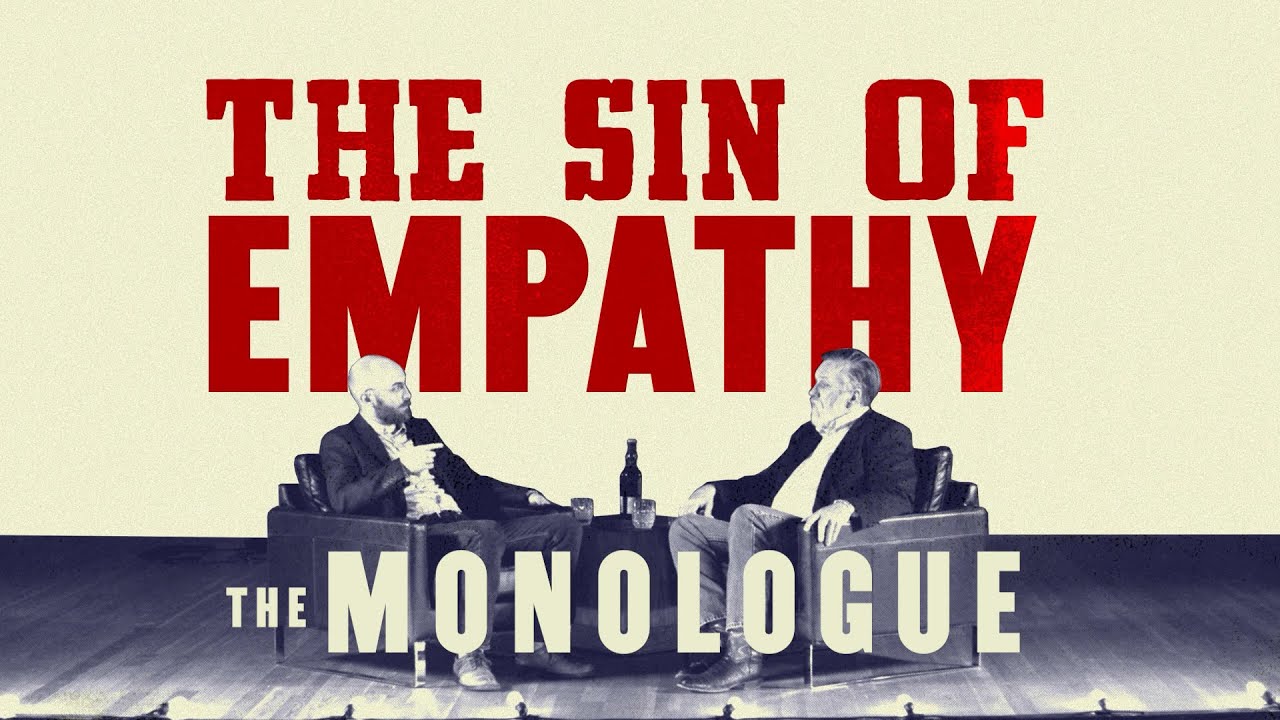 ." Empathy, says Wilson, “is not a good thing."
The “Man Rampant" agenda is reinforced on Wilson's website, which draws upon the creative people living in the Moscow community to turn his arguments into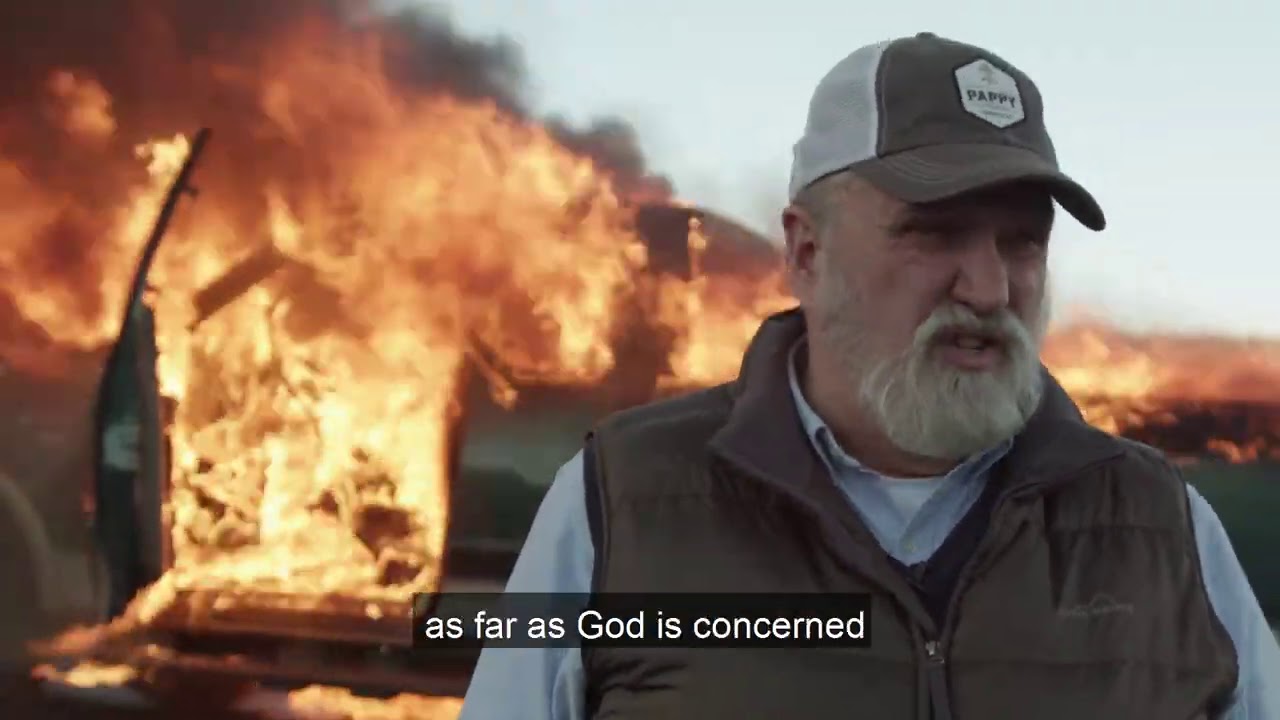 , and where, while dismissing racism, he argues that
 ."
Going local to convert America
In America's crowded religious marketplace, Wilson's message is clearly distinct.
One of Wilson's most important influences is the late R.J. Rushdoony, an Armenian-American Presbyterian theologian who was driven by protecting Protestants in the U.S. from suffering the kind of genocide from which his parents escaped. Frustrated by the other-worldliness of many American Christian denominations, whose adherents he feared preached more about heaven than earth, and their complacency in what he perceived to be a hostile liberal culture, Rushdoony set about developing biblical principles for how society should be organized.
The Ten Commandments were no longer to be considered as an artifact in the history of morality, Rushdoony argued. Instead, they should be understood as setting out the core principles for the running of the modern state. “Thou shalt not steal" ruled out the possibility of inflation, which Rushdoony argued devalued monetary assets and was therefore was a form of theft. And “Thou shalt have no other gods besides me" ruled out any possibility of religious pluralism.
Rushdoony promoted these ideals in titles such as 1973's “Institutes of Biblical Law" – a 1,000-page exposition of the Ten Commandments that argued for both the abolition of the prison system and a massive extension of capital punishment.
Christians would be secure in American society only when it was shaped by their religious values, he argued. But the Christian America that he anticipated would not be secured through revolution or any form of top-down political change – only by the transformation of individual lives, families, towns and states.
This strategy of promoting beliefs at the local level explains why Christian Reconstructionists, like those led by Wilson, prefer to focus energies in small towns. The Reconstructionists in Moscow believe that they can achieve much more significant cultural impact if they can secure significant demographic change, either by the conversion of existing inhabitants or by encouraging others to move to the area.
Eschewing the existential crisis
The stated goal of Wilson's congregation is to make Moscow a Christian town; at present only around a third of Moscow residents identify as “religious," according to a 2019 report.
But it is Wilson's attitude about public health measures during the pandemic that has most recently brought him and his church back to the attention of political leaders. Throughout the pandemic, he has argued that mask requirements reveal the hypocrisy of government. In September 2020, Wilson led his congregation in the illegal hymn-sing in front of City Hall that led to the arrests of several church members – footage of which was retweeted by President Trump, who suggested that the Moscow congregation's arrests were emblematic of what would happen to evangelicals if Democrats took control. “DEMS WANT TO SHUT YOUR CHURCHES DOWN, PERMANENTLY," the former president tweeted in all caps.
And yet, whatever the former president's fears, Wilson's congregation is growing. While large denominations, like the Southern Baptists, divide in the debate about critical race theory, Wilson's church shows how some congregations could respond to evangelicalism's existential crisis – and possibly thrive.
3 media outlets, 1 religion newsletter. [Get stories from The Conversation, AP and RNS.]
This article is republished from The Conversation under a Creative Commons license. Read the original article.
RELATED ARTICLES AROUND THE WEB
- A twisted history of sexuality | Mark Vernon | The Guardian ›
- The Social Construction of Racism in the United States | Manhattan ... ›
- "Religion's Influence on Environmental Concern: U.S. Evangelicals ... ›
===
===
// romney on periodic trump spine ethics erruptions? wants to run for prez out of ashes of gop (vs cotton and hawley)?
mitt and sasse
https://www.alternet.org/2020/11/sasse-romney-want-trump-out/
https://www.alternet.org/2021/01/josh-hawley-ben-sasse
Sen. Ben Sasse (R-Neb.) is still angry about his Republican colleague Sen. Josh Hawley (R-Mo.) recent political stunt in support of President Donald Trump's dangerous coup to challenge the Electoral College certification despite the U.S. Capitol breach that led to the deaths of five people.
On Friday, Jan.8, Sasse appeared on NPR's "Morning Edition" with host Steve Inskeep where he discussed the disturbing series of events that unfolded this week. The Republican lawmaker lambasted Hawley for his attempt to invalidate the outcome of the election on behalf of a disgraced president.
Sasse did not hold back when it came to sharing his brutally honest opinion of the Missouri senator. "Senator Hawley was doing something that was really dumbass, and I have been clear about that in public and in private since long before he announced he was going to do this" Sasse said.
Although Hawley claims to have been on the right side of history, Sasse argues that his actions were nothing more than "a stunt" and a "terrible idea." He also condemned the senator for repeatedly lying to the American public.
He added, "This was a stunt, it was a terrible, terrible idea, and you don't lie to the American people, and that's been going on. The American people have been lied to, chiefly by Donald Trump, and lies have consequences." twt vid]
sasse's latest remarks come just days after his remarks on the Senate floor just hours after Trump supporters stormed the U.S. Capitol. At the time, Sasse made his sentiments quite clear. Now, he has become the first Republican senator to confirm that he will consider articles of impeachment to remove Trump from office.
"The House, if they come together and have a process, I will definitely consider whatever articles they might move, because as I told you, I believe the president has disregarded his oath of office," Sasse said during a "CBS This Morning" interview.Lawmakers are currently working to determine the next course of action as Inauguration Day approaches.
FROM YOUR SITE ARTICLES
- Tensions heat up among Republicans over Trump's push to undo ... ›
- 'There is no excuse': Conservative writer demolishes Republicans ... ›
- GOP Sen. Sasse says Trump was 'delighted' about the Capitol riot ... ›
- Republican senator goes off on his own party for 'playing with fire ... ›
RELATED ARTICLES AROUND THE WEB
- Trump's Electoral College scheme divides 2024 GOP successors ... ›
- Opinion | If these leaders define the future of the Republican Party, it ... ›
- Ben Sasse Slams Republican Effort to Challenge Election - The ... ›
- Sen. Sasse calls Josh Hawley's election objections 'really dumbass ... ›
- Ben Sasse slams Josh Hawley on Facebook - Chicago Tribune ›
===
josh says he has 140 votes
https://www.alternet.org/2021/01/republicans-contest-elecotral-college
==
===
belated spine? congrats biden w/ 3?
jeff epstein probe 1120 an
==
https://www.alternet.org/2020/01/world-war-iii-trends-as-hawks-rejoice-at-trump-decision-to-assassinate-iranian-military-leader/
no lnx
‘World War III’ trends as hawks rejoice at Trump decision to assassinate Iranian military leader
Written by Jake Johnson / Common Dreams January 3, 2020
As peace advocates voiced alarm at the very real prospect of all-out conflict with Iran following the assassination Thursday night of that country’s top military leader on orders from U.S. President Donald Trump, war hawks who have had their crosshairs trained on Iran for years enthusiastically celebrated Trump’s decision—and even suggested the president should go further by targeting the nation’s oil refineries.
“To the Iranian government: If you want to stay in the oil business leave America and our allies alone and stop being the largest state sponsor of terrorism in the world,” tweeted Sen. Lindsey Graham (R-S.C.), a longtime supporter of regime change in Iran.
:{
}:
Republican Sens. Marco Rubio (Fla.), Tom Cotton (Ark.), Jim Risch (R.-Idaho), and Ben Sasse (Neb.) joined the chorus of applause, hailing Trump for taking “decisive action.”
Trita Parsi, executive vice president at the Quincy Institute for Responsible Statecraft, tweeted in response to the torrent of praise that “hawks are celebrating [Qassem] Soleimani’s assassination not because they believe it weakened Iran. Or the IRGC. Or that Iran will lose in Iraq. But because they believe we have passed an irreversible point of escalation.”
“From here, war is unavoidable, they believe,” Parsi added. “And celebrate.”
The likely unlawful U.S. assassination of Soleimani—and the jingoistic applause it provoked—led many to express fears of a global conflict, briefly catapulting “World War III” to the top of Twitter’s trending list. Trump, for his part, simply tweeted an image of an American flag following the strike:
Donald J. Trump
?
@realDonaldTrump
Trump’s decision to kill Soleimani, as well as at least six others, with a drone strike in Baghdad came after the Pentagon threatened Iran with preemptive action in response to supposed indications it was planning attacks on U.S. forces in the region.
Though the Pentagon did not offer a shred of evidence that Soleimani or militia groups were planning attacks, corporate media outlets dutifully echoed the Trump administration’s line, leading some commentators to see parallels with the buildup to the Bush administration’s 2003 invasion of Iraq.
“I don’t see any way to stop what is coming, war from the Mediterranean to the Indus and harsh repression in the U.S. that may vitiate the 2020 election,” said Barnett Rubin of the Center on International Cooperation. “This is the test for the Democrats: have our leaders learned anything since 2003? I fear the answer.”
Observers warned the U.S. assassination of Soleimani, on top of the Trump administration’s violation of the nuclear accord last year and other aggressive actions, effectively foreclosed the possibility of peaceful negotiations with Iran.
“Whatever happens next, understand and never stop pointing out that Donald Trump walked into office with no crisis with Iran,” said Stephen Miles, executive director of Win Without War. “He then filled his cabinet with warmongers, walked away from a multilateral diplomatic accord, and purposefully engaged in ‘maximum pressure.’ He owns this.”
Iran’s Supreme Leader Ayatollah Ali Khamenei quickly vowed “harsh retaliation” in response to Soleimani’s assassination, and Iranian Foreign Minister Javad Zarif accused the U.S. of committing “an act of state terrorism.”
Amid fears of revenge attacks, the State Department on Friday urged U.S. citizens to leave Iraq immediately.
“Trump’s Iran policy has been seeking to incite war with Iran since he reneged on the nuclear deal in May 2018,” said Sina Toossi, senior research analyst with the National Iranian American Council. “If a war breaks out, the blame lies squarely with this disastrous policy and its proponents.”
“Trump thinks he got his Bin Laden moment in an election year,” Toossi added. “In reality, he’s made the worst strategic mistake by an American leader since the Iraq invasion. The consequences will be felt for years to come.”
==
==
djt threat fire jeff s
https://www.alternet.org/ben-sasse-takes-stand-against-trump-firing-sessions
---
https://www.alternet.org/2019/09/gop-sen-ben-sasse-suddenly-dropped-his-habit-of-criticizing-the-president-trump-just-showed-why
no lnx
GOP Sen. Ben Sasse suddenly dropped his habit of criticizing the president. Trump just showed why
Written by Cody Fenwick September 11, 2019
Republican Sen. Ben Sasse of Nebraska was once a prominent critic of President Donald Trump from with his own party, using his national platform to criticize the GOP figurehead both before his 2016 election and after.
As late as 2018, Sasse was bemoaning the state of the GOP, saying he thinks about abandoning his Republican Party membership every morning.
But this year, things started to change. Most notably, he voted against an effort block Trump’s use of emergency powers to pilfer government funds for his border wall, a move that should have rankled Sasse’s self-conception as a “constitutional conservative.” Instead, he voted to uphold Trump’s abuse of power, despite being unable to offer a coherent explanation for his actions and despite the fact that his vote wouldn’t have been decisive either way. He should have felt free to vote his conscience.
Roll Call observed that Sasse’s personal Twitter account, where he used to frequently mock the president with a distinctive style, has been neglected since May.
And while his fellow anti-Trump Republican Rep. Justin Amash (MN) has come out forcefully to argue that the Mueller report provides grounds for the president’s impeachment (and has since become an independent), Sasse has been notably absent on the issue.
So what happened? On Tuesday night, it all became pretty plain when Trump endorsed the Nebraska senator in his re-election bid:
Donald J. Trump
?
@realDonaldTrump
Senator Ben Sasse has done a wonderful job representing the people of Nebraska. He is great with our Vets, the Military, and your very important Second Amendment. Strong on Crime and the Border, Ben has my Complete and Total Endorsement!
The development made any mystery behind Sasse’s change of heart dissolve, as many observed:
Igor Bobic
?
@igorbobic
Sasse has gone radio silent on Trump this year. Looks like it’s paid off for him https://twitter.com/realdonaldtrump/status/1171595113673347072 …
Donald J. Trump
?
@realDonaldTrump
Senator Ben Sasse has done a wonderful job representing the people of Nebraska. He is great with our Vets, the Military, and your very important Second Amendment. Strong on Crime and the Border, Ben has my Complete and Total Endorsement!
Matthew Miller
?
@matthewamiller
Sasse finally gets his thirty pieces of silver. https://twitter.com/realdonaldtrump/status/1171595113673347072 …
Donald J. Trump
?
@realDonaldTrump
Senator Ben Sasse has done a wonderful job representing the people of Nebraska. He is great with our Vets, the Military, and your very important Second Amendment. Strong on Crime and the Border, Ben has my Complete and Total Endorsement!
At the announcement for his campaign launch this month, Sasse even echoed Trump’s framing for the upcoming election, saying: “What’s at stake in 2020 is a choice between civics and socialism.”
But what’s actually at stake here seems pretty simple. Sasse wants to continue being a senator, and he knows as much as anybody else is that he’s destined to failure in a GOP primary if he’s seen as anti-Trump. So he suppressed his criticisms, bit his tongue, voted for Trump’s power grab against his better judgment, and earned that coveted endorsement from the commander-in-tweet.
The only mystery left is why you would want to be a senator if you have to abandon your principles to do it.
Though perhaps Sasse’s previous principles were much more malleable than they seemed — and his bigger priority has always been in his personal glory and power.
==
wiki
Benjamin Eric "Ben" Sasse (pronunciation: /:{ˈsæs:(style="border-bottom-width:1px;border-bottom-style:dotted"):}:/ ***:{sass}:***;[2] born February 22, 1972) is an American politician. Sasse, a member of the Republican Party, is a United States senator from the state of Nebraska.
Sasse earned a doctorate in history from Yale University and taught at the University of Texas before becoming President of Midland University in Fremont, Nebraska in 2010. In 2014, he was elected to fill the U.S Senate seat being vacated byMike Johanns, defeating Democratic Party candidate David Domina by a margin of 65% to 31%.[3]
Contents
- :{1:(style="display:table-cell;padding-left:0px;padding-right:0.5em"):}::{Early life and education}:
- :{2:(style="display:table-cell;padding-left:0px;padding-right:0.5em"):}::{Career and politics}:
- :{3:(style="display:table-cell;padding-left:0px;padding-right:0.5em"):}::{Midland University}:
- :{4:(style="display:table-cell;padding-left:0px;padding-right:0.5em"):}::{U.S. Senate}:
- :{5:(style="display:table-cell;padding-left:0px;padding-right:0.5em"):}::{Personal life}:
- :{6:(style="display:table-cell;padding-left:0px;padding-right:0.5em"):}::{References}:
- :{7:(style="display:table-cell;padding-left:0px;padding-right:0.5em"):}::{External links}:
Early life and education:{:(style="margin-right:0.25em"):}:[edit:{]}:
A fifth-generation Nebraskan,[4] Sasse was born on February 22, 1972, in Plainview, Nebraska, the son of Linda K. (Dunklau) and Gary Lynn Sasse. He graduated from Fremont Senior High School in Fremont, Nebraska, in 1990,[5] where he was valedictorian.[6]
Sasse graduated from Harvard University in 1994 with a bachelor's degree in government. He also studied at theUniversity of Oxford during the fall of 1992 on a junior year abroad program.[5]
Sasse graduated from St. John’s College in 1998 with a Master of Arts in Liberal Studies and from Yale University with a Master of Arts degree (M.A.), Master of Philosophy (M.Phil.) and Doctor of Philosophy (Ph.D), all from the Department of History, in 2004. Sasse’s dissertation, The Anti-Madalyn Majority: Secular Left, Religious Right, and the Rise of Reagan's America won the Theron Rockwell Field (best dissertation) and the George Washington Egleston (American history) Prizes.[5][7]
Career and politics:{:(style="margin-right:0.25em"):}:[edit:{]}:
From September 1994 to November 1995, Sasse worked as an associate consultant at the management consulting firm, Boston Consulting Group. For the next year, Sasse served as consultant/executive director for the Christians United For Reformation (CURE).[5] During Sasse's tenure, CURE merged with the Alliance of Confessing Evangelicals (ACE), and Sasse became executive director of ACE in Anaheim, California.[5][8]
From January 2004 to January 2005, Sasse served as chief of staff for the U.S. Department of Justice Office of Legal Policy in Washington, D.C. and as a part-time assistant professor at the University of Texas at Austin by commuting to Austin to teach. Sasse left the Department of Justice in 2005 to serve as chief of staff to Representative Jeff Fortenberry (R-NE) from January 2005 to July 2005.[5]
Sasse then advised the U.S. Department of Homeland Security in Washington, DC, on national security issues from July 2005 to September 2005 as a consultant. Sasse moved to Austin, Texas, to resume his professorship full-time from September 2005 to December 2006.[5]
From December 2006 to December 2007, Sasse served as counselor to the secretary at the U.S. Department of Health and Human Services (HHS) in Washington, DC, where he advised the Secretary on a broad spectrum of health policy issues, from affordable healthcare access to food safety and security.
In July 2007, Sasse was nominated by President George W. Bush to the post of Assistant Secretary for Planning and Evaluation in the U.S. Department of Health and Human Services.[9][10] His appointment was confirmed by the Senate in December 2007[11] and served until the end of the Bush Administration in January 2009. During his tenure at HHS, Sasse took unpaid leave from the University of Texas.[5]
During 2009, Sasse was advising private equity clients and health care investors and teaching at the University of Texas.[12][13] In October 2009, Sasse officially joined the University of Texas LBJ School of Public Affairs’ Center for Politics and Governance as a fellow, before being appointed president of Midland University.[14]
Midland University:{:(style="margin-right:0.25em"):}:[edit:{]}:
Sasse was announced as the 15th president of Midland University in October 2009. At the age of 37, he became one of the youngest chief executives in American higher education when he took over leadership of the 128-year-old institution in the spring of 2010. Sasse's grandfather, Elmer Sasse, worked for Midland for 33 years, mainly as vice president of finance.[15] The school was floundering both financially and academically; Sassis is credited with "turn(ing) it around;" rebranding "Midland Lutheran College" as Midland University, instituting new policies (including spot quizzes and class attendance,) and with "prodigious fundraising."[16][17]
Sasse was officially installed as president on December 10, 2010.[18] When he was appointed, enrollment was at a historic low and the college was "on the verge of bankruptcy."[15][19] During his tenure as president, enrollment grew from 590 to 1,300 students.[15][20] When nearby Dana College was forced to close, Sasse managed to hire much of the faculty and enable most of the students to transfer to Midland.[20]
When Sasse announced his intention to run for U.S. Senate, he offered to resign his post at Midland. Instead, the Board asked him to stay at Midland under a partial leave of absence;[21] in October 2013, Sasse's employment contract was amended to reduce his presidential duties and salary.[22] Sasse stepped down as president of Midland in January 2015.[19]
U.S. Senate:{:(style="margin-right:0.25em"):}:[edit:{]}:
2014 election:{:(style="margin-right:0.25em"):}:[edit:{]}:
Main article: United States Senate election in Nebraska, 2014
In October 2013, Sasse officially announced his candidacy for the United States Senate seat occupied by Republican Mike Johanns, who announced that he would not be running for re-election in 2014.[23] As of October 2013, Sasse's fundraising total of nearly $815,000 from individual donors in his first quarter broke Nebraska's previous record of $526,000 from individual donors, set in 2007 by Johanns while he was sitting U.S. Secretary of Agriculture.[24]
In announcing his Senate candidacy, Sasse expressed strong opposition to the Affordable Care Act (ACA, a.k.a. "Obamacare"), describing himself as "the anti-Obamacare candidate",[25] later declaring that "[i]f it lives, America as we know it will die."[23] Sasse's campaign website indicated that he was pro-life, stating "even one abortion is too many".[26] The website did not refer explicitly to same-sex marriage, but states "Ben believes marriage is between one man & one woman..."[27]
Primary opponent Shane Osborn questioned the depth of Sasse's opposition to the ACA, publicizing articles and speeches delivered by Sasse during and after the passage of the measure through Congress; according to the Omaha World-Herald, "Osborn's campaign appears intent on questioning whether Sasse is a true conservative."[28] The Osborn campaign cited, among other pieces, a 2009 Bloomberg Businessweek column entitled "Health-Care Reform: The Rush to Pass a Bad Bill" stating that "There's an emerging consensus that this [an individual mandate] might be a good idea",[29] and a 2010 speech in which Sasse stated that Republicans would probably lack the votes to repeal the ACA, stating that "a middle class entitlement has never been repealed", and opining that Republicans had failed to offer a useful alternative to the ACA, preferring to stage "symbolic repeal votes".[30] Sasse's response to the Osborn campaign's assertions was that in his articles and speeches, he was describing the political landscape rather than giving his own opinions on the merits of the ACA's provisions; to a World-Herald reporter, he declared "I have never changed my position on thinking Obamacare is a bad idea".[28]
On May 13, 2014, Sasse won 92 of 93 counties[31] and secured the Republican nomination with 109,829 votes, or 49.4% of all votes cast; banker Sid Dinsdale came in second, with 49,829 votes (22.4%), followed by former state treasurer Shane Osborn, with 46,850 votes (21.1%).[32]
On November 4, 2014, Sasse won the general election for the U.S. Senate, defeating Democratic nominee David Domina with 64.4% of the vote to Domina's 31.5%.[33]
Sasse assumed office as a United States senator on January 3, 2015. He was officially sworn in when the 114th Congressconvened on January 6, 2015.
Tenure:{:(style="margin-right:0.25em"):}:[edit:{]}:
In 2016, Sasse was the only senator from either party to vote against the Comprehensive Addiction and Recovery Act, which was intended to address abuse of heroin and opioid drugs by providing funds to the states for treatment and prevention programs and by making the anti-overdose drug naloxone more widely available to first responders and law enforcement agencies. Sasse stated that he was "distressed by opioid abuse", but questioned whether drug treatment should be addressed at the federal level.[34][35]
2016 presidential election:{:(style="margin-right:0.25em"):}:[edit:{]}:
In early 2016, while both parties' presidential primary election seasons were in progress, Sasse announced that he would not support Republican front-runner Donald Trump should Trump become the party's candidate; he was the first sitting senator to make such an announcement.[36] Sasse questioned Trump's commitment to theU.S. Constitution, in particular accusing him of attacking the First Amendment; he stated that Trump had refused to condemn the Ku Klux Klan; and he suggested that Trump "thinks he's running for King".[37] He stated that if Trump won the party's nomination, then he would vote neither for him nor for Democratic front-runner Hillary Clinton, but would probably "look for some third candidate—a conservative option, a Constitutionalist".[37] According to a Sasse spokesman, he did not say that he would necessarily leave the party if Trump was nominated.[38]
Trump, asked about Sasse's third-party suggestion, stated "That would be the work of a loser."[38] Several Nebraska Republican politicians, among them state senatorsBob Krist and Beau McCoy and U.S. senator Deb Fischer, took exception to Sasse's statements: Krist described Sasse's comments as "very immature", and declared that Sasse should "quietly and in a statesman-like manner allow the system to work out and provide the leadership that needs to be provided"; Fischer stated that a third-party alternative to Trump would essentially guarantee a Clinton victory.[39]
Committees:{:(style="margin-right:0.25em"):}:[edit:{]}:
Sasse has been appointed to serve on the following committees in the 114th Congress:[40]
- Committee on Agriculture, Nutrition and Forestry
- Committee on Banking, Housing, and Urban Affairs
- Committee on Homeland Security and Governmental Affairs
- Joint Economic Committee
- Special Committee on Aging
Personal life:{:(style="margin-right:0.25em"):}:[edit:{]}:
Sasse, and his wife, Melissa (McLeod) Sasse, live in Fremont, Nebraska, with their three children; the children are homeschooled.[1][41] Sasse grew up a Lutheran and was baptized in the Lutheran Church–Missouri Synod.[1] He later became an elder in the United Reformed Churches in North America, and served on the board of trustees for Westminster Seminary California.[42] He is now currently a member at St. Paul's Lutheran Church, a church of the LCMS.[43][44][45]
==
Senator Ben Sasse (R-NE)
Previous
The Heritage Foundation, Republican Policy Committee, Office of the Vice President
Education
Georgetown University Law Center
500+
connections
View Derrick’s full profile. It's free!
Your colleagues, classmates, and 400 million other professionals are on LinkedIn.
View Derrick’s Full Profile
Experience
Chief of Staff
Senator Ben Sasse (R-NE)
January 2015 – Present (1 year 8 months)
The Heritage Foundation
Vice President of Domestic & Economic Policy
The Heritage Foundation
May 2012 – January 2015 (2 years 9 months)
The Heritage Foundation
Chief of Staff to the President
The Heritage Foundation
April 2010 – April 2012 (2 years 1 month)
Policy Analyst/Counsel
Republican Policy Committee
2009 – April 2010 (1 year)
Assistant to Vice President Richard B. Cheney
Office of the Vice President
2005 – 2009 (4 years)
Gibson, Dunn & Crutcher
Associate Attorney
Gibson, Dunn & Crutcher
2004 – 2005 (1 year)
Law Clerk
Judge Sidney A. Fitzwater
2003 – 2004 (1 year)
Gibson, Dunn & Crutcher LLP
Associate Attorney
Gibson, Dunn & Crutcher LLP
2002 – 2003 (1 year)
Law Clerk
United States Department of Justice
September 2001 – April 2002 (8 months)
==
Taylor Sliva
Field Staff at Ben Sasse for US Senate
Jessica Prol
Writer & Legislative Assistant at Office of Senator Ben Sasse
Ryan Broker
State Outreach Director for U.S. Senator Ben Sasse
Alyssa Burleson
Office Manager for Senator Ben Sasse at United States Senate
Klon Kitchen
National Security Advisor to Senator Ben Sasse
Raven Shirley
Director of Operations at Ben Sasse for U.S. Senate
Tyler Grassmeyer
Deputy Chief of Staff to U.S. Senator Ben Sasse at United States Senate
James "Quin" Roberts
Homeland Security, Foreign Affairs, & Defense Legislative Correspondent, Senator Ben Sasse
Alexis Vercher
Staff Assistant at United States Senate
Ammon Simon
Legislative Counsel, U.S. Senator Ben Sasse
==
==