Berry Jon Fedsoc 2025
pow mofo pending
MERRI OK
pjt 2025 OIRA
Law Clerk to Associate Justice Samuel A. Alito, Jr.
Jul 2015 - Jul 2016 · 1 yr 1 mo
mpu dept labor IG attack union; fusion ctrs; DSAC? corp intel?
incubator?
adf
fedsoc
GORSUCH ALITO CLERK
RUFO
BERMAN
CATHOLIC
===
boyden gray mofo liar berry
off bs
managing Partner, Boyden Gray PLLC
- Permalink
- Facebook Share
- Twitter Share
Jonathan Berry provides strategic counsel and litigates on issues at the intersection of law, politics, and public policy. He helps his clients navigate the emerging field of bureaucratic overlap in government, corporate America, and capital markets, especially in matters relating to environmental, social, and governance factors. Mr. Berry also litigates complex constitutional and administrative law issues and appeals, particularly in labor, employment, and benefits policy. His commentary has been published by the Wall Street Journal, the New York Times, and First Things.
In government, Mr. Berry headed the regulatory office at the U.S. Department of Labor, where he oversaw the development process of dozens of proposed and final rules. As the Regulatory Policy Officer, he regularly represented the Department to the Executive Office of the President and the Office of Management and Budget. During Mr. Berry’s tenure, the Office of Information and Regulatory Affairs credited the Department of Labor with over ten billion dollars in deregulatory cost savings for the American public.
Mr. Berry previously served at the Department of Justice’s Office of Legal Policy, where he assisted with the confirmations of Associate Justice Neil Gorsuch and dozens of other federal judges, and also with the development of the Sessions and Brand memos on proper use of subregulatory guidance documents. He also served as Chief Counsel to the President-Elect Trump Transition, advising on ethics and legal policy.
Before his executive branch service, Mr. Berry worked at the international law firms of Morgan, Lewis & Bockius LLP and Jones Day, where he focused on regulatory and appellate litigation. He served on teams that brought the King v. Burwell Affordable Care Act challenge to the Supreme Court; defended Virginia Governor Robert McDonnell against a corruption prosecution that was ultimately vacated by the Court; and protected the Bladensburg WWI Veterans Memorial in Establishment Clause litigation that led to a landmark victory in the Court.
Mr. Berry graduated with Distinction in the Major from Yale College, where he was a National Merit Scholar and served as Speaker of the Yale Political Union. He later graduated from Columbia University School of Law, where he received the E.B. Convers Prize for best original legal writing, served as Executive Editor of the Columbia Journal of Law and Social Problems, and won National Chapter of the Year from the Federalist Society.
Mr. Berry previously served as a law clerk to Judge Jerry E. Smith of the United States Court of Appeals for the Fifth Circuit, and to Associate Justice Samuel A. Alito, Jr., of the Supreme Court of the United States.
Education
J.D., Columbia University, 2011
B.A., Yale University, 2005
Bar Admissions
District of Columbia
Virginia (inactive)
U.S. Courts of Appeals for the
D.C. Circuit and Fourth Circuit
INCUBATOR?
Memberships
Blackstone Legal Fellowship
blackstone ADF
(Winner, William Pew Religious Freedom Scholarship Competition;
E. Brandt Gustavson award for leadership)
Federalist Society

===
---
Material Contributors - What Does Project 2025 Say?
Jonathan Berry
Authored the section about: Section 3.9: Department of Labor and Related Agencies
Served in the Trump Administration: Yes. Berry served as counsel to the assistant attorney general in the Department of Justice (DOJ) in 2017 and 2018. Berry was also part of Trump’s presidential transition team in 2016 and 2017, advising on ethics and legal policy.
In His Own Words
Berry is the author of the book “Satisfaction Guaranteed” (2016), which is a self-help book for same-sex attracted Christians (as he himself is one) designed to help them resist those attractions, and purports that real satisfaction can only be found via a relationship with Jesus Christ.
Full Bio
---
nspm 7
Jun 25, 2026 MPU
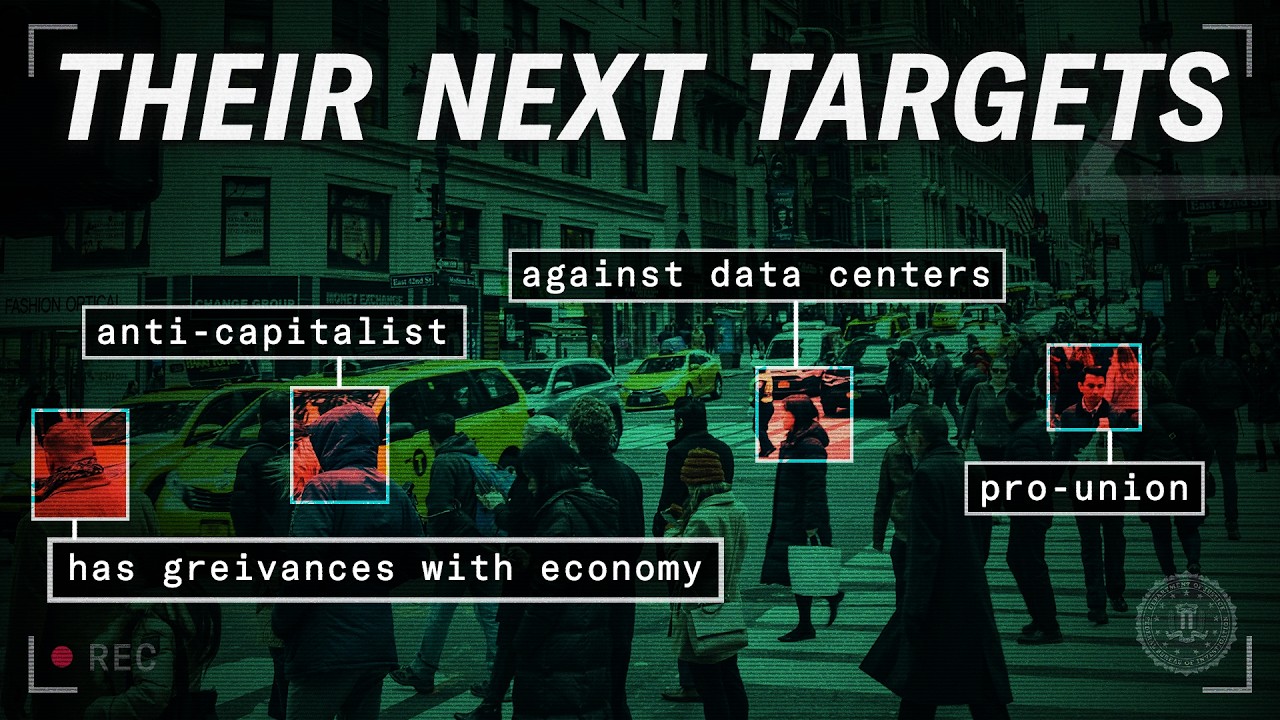
We Uncovered A New Government Watchlist. Are You Their Next Target?
You could end up on a watchlist for fighting back in the class war. The feds now consider opposition to data centers, inequality, and Big Tech as potential domestic terrorism. We uncovered how the FBI is colluding with corporate America to surveil ordinary Americans.
...
do not need judge warant, just the pattern says
4:18
4 minutes, 18 seconds
health insurance rates isn't about to commit an act of political violence, they're being targeted by the same powers used to target lunatic assassins.
4:26
4 minutes, 26 seconds
It’s unusually open about what they're targeting.
4:29
4 minutes, 29 seconds
And on the list are things like anti-Christian sentiment, anti “traditional family” sentiment, anti-Americanism. What about anti-capitalism?
4:37
4 minutes, 37 seconds
Is that on the list? Yes. Anti-capitalism is also on the list.
4:40
4 minutes, 40 seconds
Anti-tech sentiment has also shown up in federal law enforcement documents as a focal point of surveillance.
4:46
4 minutes, 46 seconds
Ken told me that these extremely broad and vague categories aren't just talking points, but massive dragnets to swoop up all kinds of speech and dissent.
4:54
4 minutes, 54 seconds
So, this is telling the Justice Department, the FBI, the DEA, the Secret Service, all these agencies, hey, guys, we have to focus on this.
5:01
5 minutes, 1 second
And what we're focused on is that list of so-called indicators that I was describing before.
5:06
5 minutes, 6 seconds
They’re supposed to tell you, or the administration says it's supposed to tell you, what will portend future acts of terrorism.
5:13
5 minutes, 13 seconds
this is something on which, people are being promoted, resources are being allocated at the field office level in all 52 FBI field offices across the country.
5:22
5 minutes, 22 seconds
NSPM-7 is a public record, but confidential documents Ken obtained show how it's been interpreted by intelligence agencies to become a guiding force in intelligence collection.
5:31
5 minutes, 31 seconds
So I was leaked a copy of the Department of Homeland Security's strategy.
5:35
5 minutes, 35 seconds
And it had a new term: “class-based or economic grievances.” They were worried about terrorism as defined by class-based or economic grievances, typically, when you have a counterterror approach that's supposed to be focused groups like Al Qaeda or ISIS.
5:49
5 minutes, 49 seconds
This is something that you don't want to be deploying against U.S. residents or U.S. citizens.
...
no judge warrant
fusion ctrs
6:09
6 minutes, 9 seconds
So, under this counterterrorism approach, they have a lot more authority than police normally have, because they don't have to go to a judge.
6:14
6 minutes, 14 seconds
They can just say, oh, these indicators predict that something might be committed later, After the rollout of NSPM-7, I got curious about how the new powers were playing out at the local level across the country.
6:25
6 minutes, 25 seconds
I began contacting sources in towns, big and small, trying to extract records from federal intelligence agencies.
6:31
6 minutes, 31 seconds
A few months ago, I finally got my hands on records that show NSPM-7 investigations are already taking place in FBI field offices from Boston to San Francisco.
6:41
6 minutes, 41 seconds
The bureau even made this handy map, which was not supposed to leak to the public.
6:45
6 minutes, 45 seconds
I also discovered that briefings, intelligence reports, and investigative notes are being circulated in over 70 government buildings across the country, ominously called fusion centers.
6:56
6 minutes, 56 seconds
These dystopian centers serve as a two-way street between local and state law enforcement and federal agencies like the Department of Homeland Security and FBI.
7:05
7 minutes, 5 seconds
By “fusing” state and federal intelligence, these centers give federal surveillance agencies far greater power to shape how local and state police think about domestic threats, like normal people pissed off about the price of groceries and health insurance.
7:18
7 minutes, 18 seconds
These are local law enforcement entities that was essentially warning all the other CEOs, “Oh, there's some campaign against CEOs, so we need to worry about the threat posed by this.”
7:27
7 minutes, 27 seconds
In the wake of the killing of UnitedHealth CEO Brian Thompson by alleged killer, Luigi Mangione, a state fusion center analyst warned in a document I obtained that, quote, “the public may view
7:37
7 minutes, 37 seconds
the ensuing manhunt and subsequent arrest of Mangione as NYPD and largely policing as a whole, as a tool that is willing to expend massive resources
7:46
7 minutes, 46 seconds
to protect the wealthy, while the average citizen is left to their own means for personal security.”
7:53
7 minutes, 53 seconds
This report seemed to even acknowledge that viewing CEOs as the main demographic to protect would only further enrage working people.
8:01
8 minutes, 1 second
Quote: “It is not an unfair comparison to equate to current reaction towards Mangione to the reactions to Robinhood.
8:08
8 minutes, 8 seconds
Citizens may see manganese alleged actions as an attack against a system designed to work against them. ” As I wrapped
8:17
8 minutes, 17 seconds
up my time with Ken, we reflected on the fact that his home state is also where Joseph McCarthy launched the Red Scare over a half a century ago.
8:24
8 minutes, 24 seconds
this is also the home state of one Senator Joseph McCarthy.
8:29
8 minutes, 29 seconds
the guy who really created nationwide frenzy around left wing movements, infiltrating labor unions, scaring the bejesus out of anyone that seemed “un-American,”
8:38
8 minutes, 38 seconds
very similar in some sense to the architecture laid out by NSPM-7, no?
8:44
8 minutes, 44 seconds
Yeah, and it's interesting because Wisconsin historically was one of the test beds for the New Deal and for progressive legislation.
8:51
8 minutes, 51 seconds
And it's interesting because you have in these two tendencies, the two different visions that exist for this society: one of paranoia
8:58
8 minutes, 58 seconds
and security and control and just worrying about threats everywhere, and another one being building some kind of a, you know, social fabric.
9:08
9 minutes, 8 seconds
We have a long history in this country of these sorts of agencies targeting the black Civil Rights Movement, targeting the multiracial Poor People's Campaign, targeting Occupy Wall Street.
9:19
9 minutes, 19 seconds
This is the latest iteration in that. That was Spencer Reynolds.
9:23
9 minutes, 23 seconds
He understands the internal apparatus of intelligence agencies because he used to work at one.
9:28
9 minutes, 28 seconds
I was at the Department of Homeland Security for about seven years, where I was a domestic intelligence and counterterrorism attorney.
9:34
9 minutes, 34 seconds
Spencer told me that corporations and Wall Street firms get a direct line to the spy agencies seeking to batter down dissent.
9:42
9 minutes, 42 seconds
In other words, CEOs literally have their own seat at the deep state's table.
DHS, the FBI, Department of Justice are deeply-enmeshed with big business and corporate security offices, and they do that in a few key ways.
9:58
9 minutes, 58 seconds
First, they all sit together at those fusion centers where information is swirling back and forth.
10:04
10 minutes, 4 seconds
And in that environment, they can provide intelligence to security offices at businesses that will then use it for their own business interests.
10:15
10 minutes, 15 seconds
They can also collect, they might call “tips and leads” from corporate partners, who give them people to look into, or incidents or events and protests, for instance, to look into.
10:26
10 minutes, 26 seconds
So that's one thing. It turns out, though, that in addition to actually sending liaisons to fusion centers, the Department of Homeland Security also has a two-way newsletter between businesses and intelligence analysts.
10:37
10 minutes, 37 seconds
DHS has platforms like the Homeland Security Information Network.
10:42
10 minutes, 42 seconds
The information that's provided on there can often include information about protests, constitutionally-protected speech and activity.
10:49
10 minutes, 49 seconds
But that's not all.
10:50
10 minutes, 50 seconds
There are also entire conferences dedicated to corporations snitching on consumers to the deep state.
10:57
10 minutes, 57 seconds
One of those is the Domestic Security Alliance Council., which is a consortium of business members, and it promises on its website a direct line to DHS the FBI
Domestic Security Alliance Council
Wikipedia
https://en.wikipedia.org › wiki › Domestic_Security_All...
The Domestic Security Alliance Council (DSAC) is an American Public–private partnership created at the request of corporations for an FBI-led organization.Read more
AI Overview
+5
Domestic Security Alliance Council Marks 20 Year Anniversary ...The Domestic Security Alliance Council (DSAC) is a strategic public-private partnership created in 2005 by the FBI and Department of Homeland Security. It bridges the information divide between the U.S. government and the private sector, enabling the exchange of vetted intelligence, threat trends, and coordinated responses to protect critical infrastructure.
The Security Foundation
+2
Key Functions & Benefits
Intelligence Sharing: Provides a two-way pipeline for real-time security information, helping businesses detect, prevent, and deter criminal and cyber threats.
ISAO Standards Organization
+1
Exclusive Access: Members gain direct, priority access to FBI leadership, DHS intelligence analysts, and FBI field office private sector coordinators.
The Security Foundation
+1
Programming & Networking: Organizes national, regional, and local meetings featuring tabletop exercises, cyber briefings (such as recent initiatives), and peer networking opportunities.
The Security Foundation
+1
Membership Criteria
DSAC is an exclusive corporate membership program geared toward large-scale organizations that impact national security or economic stability. To qualify for membership, companies must meet the following baseline requirements:
www.dsac.gov
Be a for-profit organization.
Generate a minimum of $2 billion in annual U.S. revenue.
Maintain a security component based in the United States.
Have established engagement with a local FBI Field Office for at least six months.
Have direct relevance to national security or economic resilience.
Applications for membership must be submitted by the organization's U.S.-based senior security executive (such as a CSO or CISO) via the DSAC Membership Application Form.
- Financial Services: Bank of America, American Express, MasterCard, Capital One
- Technology & Telecom: Roblox, Lumen Technologies
- Industrials & Aerospace: Boeing, General Electric
- Retail & Consumer: Walmart
- Other participants: Barclays, United Airlines [1, 2]
Due to the sensitive nature of the security partnerships, a full roster of the 800+ corporate members is only available internally on the secure DSAC Member Portal. [1, 2, 3]
11 minutes, 9 seconds
The result of all these systems is a vast intelligence apparatus, trained on people standing up to billionaires.
11:16
11 minutes, 16 seconds
During Occupy Wall Street, after the banking industry had gutted the world's economy and plunged us into recession
11:23
11 minutes, 23 seconds
there were, again, organic uprisings of people who were concerned, upset about that, felt alienated and left out by our economic system.
11:33
11 minutes, 33 seconds
And DHS spent a lot of time monitoring those protesters, the intelligence offices.
11:41
11 minutes, 41 seconds
To showcase what corporations working hand in hand with the government looks like.
11:44
11 minutes, 44 seconds
Let's go back to 2015, when workers at Walmart, the largest retailer in the world, launched a campaign for living wages and benefits.
11:53
11 minutes, 53 seconds
Internal Walmart documents obtained by Bloomberg showed that after the mega retailer hired a Lockheed Martin contractor to monitor union activists and protesters, the internal tracking and monitoring wasn't enough.
12:06
12 minutes, 6 seconds
They also contacted one of the FBI's Joint Terrorism Task Forces, when union activists planned to protest the annual shareholder meeting.
12:14
12 minutes, 14 seconds
But while the FBI is one of the most well-known offenders when it comes to violating constitutional rights, a different agency, one that was created for the very purpose of protecting workers, is now going after them.
12:26
12 minutes, 26 seconds
The Department of Labor doesn't have an official intelligence component, but its office of the Inspector General holds powerful investigative capabilities and liaisons with the FBI and other intelligence agencies, including DHS.
12:39
12 minutes, 39 seconds
It has also shown up on the Department of Homeland Security's joint task forces across the country. DOL’s top cop is literally a former cop.
12:47
12 minutes, 47 seconds
Inspector General Anthony D’Esposito, who previously served as an NYPD officer.
12:52
12 minutes, 52 seconds
And he was accused of stealing a golden chain from an arrestee and then lying to put a different guy in jail. The NYPD later paid out a six figure settlement to that guy.
13:01
13 minutes, 1 second
But even more concerning than D’Esposito is the top DOL lawyer, Jonathan Berry, the Solicitor General.
13:07
13 minutes, 7 seconds
While working as a corporate lawyer, Berry penned the chapter on the Department of Labor in the Policy Manual developed by the anti-worker Heritage Foundation, known as Project 2025.
13:19
13 minutes, 19 seconds
In the chapter, Berry calls for the transformation of the Department of Labor from a watchdog to ensure workers are protected from predatory corporations to an investigative arm targeting workers and unions.
13:30
13 minutes, 30 seconds
The chapter calls for using the office of the Inspector General to look into worker centers across the country, but it also calls for investigating unions
13:38
13 minutes, 38 seconds
without any initiating complaint, meaning investigations into workers and their unions could be undertaken without probable cause—at any time, and at any location across the country.
While Jonathan Berry's playbook takes shape, Spencer told me there's another element from the Department of Labor already in play.
We talk about these Homeland Security task forces and the Department of Labor, through its Office of Inspector General, participates in those task forces.
14:05
14 minutes, 5 seconds
When you look at the press releases touting DOJ successes, they often include Department of Labor there, and it's usually through the Office of Inspector General.
It's concerning, because I think there is that risk to investigate workers. In other words, the Department of Labor has found a way to inject itself into the dirty business of intelligence work.
So where does this leave you, the American worker? Well, believe it or not, there's a vast range of tools to fight back against government surveillance.
Cities across the country have used their city council to terminate partnerships with the FBI's Joint Terrorism Task Forces carrying out NSPM-7.
Unions, like the American Federation of Teachers and United Auto Workers, are suing the government to shut down unconstitutional surveillance.
14:54
14 minutes, 54 seconds
And whether in Minneapolis, Minnesota, where local residents drove agencies like ICE and CBP out of their communities, or in the nationwide upheaval
15:03
15 minutes, 3 seconds
to force the FBI to release its files on Jeffrey Epstein, the demands of the public continue to have a massive impact on the federal government's actions.
15:11
15 minutes, 11 seconds
The three letter agencies, whether DHS, FBI, or CIA, would have the American public believe that their war on working people is already won, but that lie couldn't be further from the truth.
---
LI 6 26 SEE BELOW

[Solicitor of Labor U.S. Department of Labor · Full-time
Oct 2025 - Present · 9 mos](https://www.linkedin.com/company/5697/)

[Boyden Gray Full-time · 5 yrs 7 mos
Washington, District of Columbia, United States](https://www.linkedin.com/company/1541460/)
Provide strategic counsel and litigate on issues at the intersection of law, politics, and public policy; help clients navigate the emerging field of bureaucratic overlap in government, corporate America, capital markets, and the workforce, especially in matters relating to environmental, social, and governance factors and to diversity, equity, and inclusion; litigate complex constitutional and administrative law issues and appeals, particularly in labor, employment, and benefits policy.

[Acting / Principal Deputy Assistant Secretary for Policy U.S. Department of Labor · Full-time
Apr 2018 - Apr 2020 · 2 yrs 1 mo
Washington, District of Columbia, United States](https://www.linkedin.com/company/5697/)
Head of the regulatory office at Labor; oversaw the development process of dozens of proposed and final rules, including Association Health & Retirement Plans, Joint Employer, and Overtime. As the Regulatory Policy Officer, regularly represented the Department to the Executive Office of the President and the Office of Management and Budget. During tenure, the Office of Information and Regulatory Affairs credited the Department of Labor with over ten billion dollars in deregulatory cost savings for the American public.

[Counsel to the Assistant Attorney General U.S. Department of Justice · Full-time
Jan 2017 - Apr 2018 · 1 yr 4 mos
Washington, District of Columbia, United States](https://www.linkedin.com/company/3564/)
Assisted with the confirmations of Associate Justice Neil Gorsuch and dozens of other federal judges, and with the development of the Sessions and Brand memos on proper use of subregulatory guidance documents.

[Associate Morgan, Lewis & Bockius LLP · Full-time
Sep 2016 - Jan 2017 · 5 mos
Washington, District of Columbia, United States](https://www.linkedin.com/company/5734/)

[Chief Counsel U.S. Presidential Transition Team · Full-time
Sep 2016 - Jan 2017 · 5 mos
Washington, District of Columbia, United States](https://www.linkedin.com/company/11692191/)
Advised on ethics and legal policy.
Law Clerk to Associate Justice Samuel A. Alito, Jr.
The Supreme Court of the United States · Full-time
Jul 2015 - Jul 2016 · 1 yr 1 mo
Washington, District of Columbia, United States

[Associate Jones Day · Full-time
Nov 2012 - Jun 2015 · 2 yrs 8 mos
Washington, District of Columbia, United States](https://www.linkedin.com/company/5096/)
Served on teams that brought the King v. Burwell Affordable Care Act challenge to the Supreme Court; defended Virginia Governor Robert McDonnell against a corruption prosecution that was ultimately vacated by the Court; protected the Bladensburg WWI Veterans Memorial in Establishment Clause litigation that led to a landmark victory in the Court.

[Law Clerk (Litigation) Romney for President
Sep 2012 - Nov 2012 · 3 mos
Boston, MA](https://www.linkedin.com/company/30020/)

[Law Clerk to Judge Jerry E. Smith U.S. Court of Appeals for the Fifth Circuit
Sep 2011 - Aug 2012 · 1 yr
Houston, TX](https://www.linkedin.com/company/4654/)

[Law Clerk Institute for Justice
May 2009 - Jul 2009 · 3 mos
Tempe, Arizona](https://www.linkedin.com/company/22643/)
[Senior Research Analyst Berman and Company
Jun 2005 - Jul 2008 · 3 yrs 2 mos](https://www.linkedin.com/company/34346/)
---
---
AN 4 24
Recently, you may have noticed that the hot weather is getting ever hotter. Every year the United States swelters under warmer temperatures and longer periods of sustained heat. In fact, each of the last nine months — May 2023 through February 2024 — set a world record for heat. As I’m writing this, March still has a couple of days to go, but likely as not, it, too, will set a record.
*This story originally appeared on TomDispatch.
Such heat poses increasing health hazards for many groups: the old, the very young, those of us who don’t have access to air conditioning. One group, however, is at particular risk: people whose jobs require lengthy exposure to heat. Numbers from the Bureau of Labor Statistics show that about 40 workers died of heat exposure between 2011 and 2021, although, as CNN reports, that’s probably a significant undercount.
In February 2024, responding to this growing threat, a coalition of 10 state attorneys general petitioned the federal Occupational Safety and Health Administration (OSHA) to implement “a nationwide extreme heat emergency standard” to protect workers from the kinds of dangers that last year killed, among others, construction workers, farm workers, factory workers, and at least one employee who was laboring in an unairconditioned area of a warehouse in Memphis, Tennessee.
Facing the threat of overweening government interference from OSHA or state regulators, two brave Republican-run state governments have stepped in to protect employers from just such dangerous oversight. Florida and Texas have both passed laws prohibiting localities from mandating protections like rest breaks for, or even having to provide drinking water to, workers in extreme heat situations. Seriously, Florida and Texas have made it illegal for local cities to protect their workers from the direct effects of climate change. Apparently, being “woke” includes an absurd desire not to see workers die of heat exhaustion.
And those state laws are very much in keeping with the plans that the national right-wing has for workers, should the wholly-owned Trump subsidiary that is today’s Republican Party take control of the federal government this November.
We’ve Got a Plan for That!
It’s not exactly news that conservatives, who present themselves as the friends of working people, often support policies that threaten not only workers’ livelihoods, but their very lives. This fall, as we face the most consequential elections of my lifetime (all 71 years of it), rights that working people once upon a time fought and died for — the eight-hour day, a legal minimum wage, protections against child labor — are, in effect, back on the ballot.
The people preparing for a second Trump presidency aren’t hiding their intentions either. Anyone can discover them, for instance, in the Heritage Foundation’s well-publicized Project 2025 Mandate for Leadership, a “presidential transition” plan that any future Trump administration is expected to put into operation.
As I’ve written before, the New York Times’s Carlos Lozada did us a favor by working his way through all 887 pages of that tome of future planning. Lacking his stamina, I opted for a deep dive into a single chapter of it focused on the “Department of Labor and Related Agencies.” Its modest 35 pages offer a plan to thoroughly dismantle more than a century of workers’ achievements in the struggle for both dignity and simple on-the-job survival.
First Up: Stop Discriminating Against Discriminators
I’m sure you won’t be shocked to learn that the opening salvo of that chapter is an attack on federal measures to reduce employment discrimination based on race or sex.
Its author, Jonathan Berry of the Federalist Society, served in Donald Trump’s Department of Labor (DOL). He begins his list of “needed reforms” with a call to “Reverse the DEI Revolution in Labor Policy.” “Under the Obama and Biden Administrations,” Berry explains, “labor policy was yet another target of the Diversity, Equity, and Inclusion (DEI) revolution” under which “every aspect of labor policy became a vehicle with which to advance race, sex, and other classifications and discriminate against conservative and religious viewpoints on these subjects and others, including pro-life views.”
You may wonder what it means to advance “classifications” or why that’s even a problem. Berry addresses this question in his second “necessary” reform, a call to “Eliminate Racial Classifications and Critical Race Theory Trainings.” Those two targets for elimination would seem to carry very different weight. After all, “Critical Race Theory,” or CRT, is right-wing code for the view that structural barriers exist preventing African Americans and other people of color from enjoying the full rights of citizens or residents. It’s unclear that such “trainings” even occur at the Labor Department, under CRT or any other label, so their “elimination” would, in fact, have little impact on workers.
On the other hand, the elimination of “racial classifications” would be consequential for many working people, as Berry makes clear. “The Biden Administration,” he complains, “has pushed ‘racial equity’ in every area of our national life, including in employment, and has condoned the use of racial classifications and racial preferences under the guise of DEI and critical race theory, which categorizes individuals as oppressors and victims based on race.” Pushing racial equity in employment? The horror!
Berry’s characterization of CRT is, in fact, the opposite of what critical race theory seeks to achieve. This theoretical approach to the problem of racism does not categorize individuals at all, but instead describes structures — like corporate hiring practices based on friendship networks — that can disadvantage groups of people of a particular race. In fact, CRT describes self-sustaining systems that do not need individual oppressors to continue (mal)functioning.
The solution to the problem of discrimination in employment in Project 2025’s view is to deny the existence of race (or sex, or sexual orientation) as a factor in the lives of people in this country. It’s simple enough: if there’s no race, then there’s no racial discrimination. Problem solved.
And to ensure that it remains solved, Project 2025 would prohibit the Equal Economic Opportunity Commission, or EEOC, from collecting employment data based on race. The mere existence of such “data can then be used to support a charge of discrimination under a disparate impact theory. This could lead to racial quotas to remedy alleged race discrimination.” In other words, if you can’t demonstrate racial discrimination in employment (because you’re enjoined from collecting data on the subject), then there’s no racial discrimination to remedy. Case closed, right?
By outlawing such data collection, a Republican administration guided by Project 2025 would make it almost impossible to demonstrate the existence of racial disparity in the hiring, retention, promotion, or termination of employees.
:{Right-wingers in my state of California tried something similar in 2003 with Ballot Proposition 54, known as the Racial Privacy Initiative. In addition to employment data, Prop. 54 would have outlawed collecting racial data about public education and, no less crucially, about policing. As a result, Prop. 54 would have made it almost impossible for civil rights organizations to address the danger of “driving while Black” — the disproportionate likelihood that Black people will be the subject of traffic stops with the attendant risk of police violence or even death. Voters soundly defeated Prop. 54 by a vote of 64% to 36% and, yes, racial discrimination still exists in California, but at least we have access to the data to prove it.}:
There is, however, one group of people Project 2025 would emphatically protect from discrimination: employers who, because of their “conservative and religious viewpoints… including pro-life views,” want the right to discriminate against women and LGBTQ people. “The President,” writes Berry, “should make clear via executive order that religious employers are free to run their businesses according to their religious beliefs, general nondiscrimination laws notwithstanding.” Of course, Congress already made it clear that, under Title VII of the Religious Freedom Restoration Act of 1993, “religious” employers are free to ignore anti-discrimination laws when it suits them.
But Wait, There’s More
Not content with gutting anti-discrimination protections, Project 2025 would also seek to rescind rights secured under the Fair Labor Standards Act, or FLSA, which workers have enjoyed for many decades. Originally passed in 1938, the FLSA “establishes minimum wage, overtime pay, recordkeeping, and child labor standards affecting full-time and part-time workers in the private sector and in Federal, State, and local governments,” according to the Department of Labor.
Perhaps because the federal minimum hourly wage has remained stuck at $7.25 for a decade and a half, Project 2025 doesn’t launch the typical conservative attack on the very concept of such a wage. It does, however, go after overtime pay (generally time-and-a-half for more than 40 hours of work a week), by proposing that employers be allowed to average time worked over a longer period. This would supposedly be a boon for workers, granting them the “flexibility” to labor fewer than 40 hours one week and more than 40 the next, without an employer having to pay overtime compensation for that second week. What such a change would actually do, of course, is give an employer the power to require overtime work during a crunch period while reducing hours at other times, thereby avoiding paying overtime often or at all.
Another supposedly family-friendly proposal would allow workers to choose to take their overtime compensation as paid time off, rather than in dollars and cents. Certainly, any change that would reduce workloads sounds enticing. But as the Pew Research Center reports, more than 40% of workers can’t afford to, and don’t, take all their paid time off now, so this measure could function as yet one more way to reduce the overtime costs of employers.
In contrast to the Heritage Foundation’s scheme, Senator Bernie Sanders has proposed a genuinely family-friendly workload reduction plan: a gradual diminution of the standard work week from 40 to 32 hours at the same pay. Such proposals have been around (and ridiculed) for decades, but this one is finally receiving serious consideration in places like the New York Times.
In deference to the supposedly fierce spirit of “worker independence,” Project 2025 would also like to see many more workers classified not as employees at all but as independent contractors. And what would such workers gain from that “independence”? Well, as a start, freedom from those pesky minimum wage and overtime compensation regulations, not to speak of the loss of protections like disability insurance. And they’d be “free” to pay the whole tab (15.3% of their income) for their Social Security and Medicare taxes, unlike genuine employees, whose employers pick up half the cost.
Young people, too, would acquire more “independence” thanks to Project 2025 — at least if what they want to do is work in more dangerous jobs where they are presently banned. As Berry explains:
“Some young adults show an interest in inherently dangerous jobs. Current rules forbid many young people, even if their family is running the business, from working in such jobs. This results in worker shortages in dangerous fields and often discourages otherwise interested young workers from trying the more dangerous job.”
The operative word here is “adults.” In fact, no laws presently exclude adults from hazardous work based on age. What Berry is talking about is allowing adolescents to perform such labor. Duvan Tomás Pérez, for instance, was a 16-year-old who showed just such an “interest” in an inherently dangerous job: working at a poultry plant in Mississippi, where he died in an industrial accident. The middle schooler, a Guatemalan immigrant who had lived in the United States for six years, was employed illegally by the Mar-Jac Poultry company. If there are “worker shortages in dangerous fields,” it’s because adults don’t want to take the risks. The solution is to make the work less dangerous for everyone, not to hire children to do it.
We’re Gonna Roll the Union Over
Mind you, much to the displeasure of Project 2025 types, this country is experiencing a renaissance of union organizing. Companies that long thought they could avoid unionization, from Amazon to Starbucks, are now the subject of such drives. In my own world of higher education, new unions are popping up and established ones are demonstrating renewed vigor in both private and public universities. As the bumper-sticker puts it, unions are “the folks who brought you the weekend.” They’re the reason we have laws on wages and hours, not to speak of on-the-job protections. So, it should be no surprise that Project 2025 wants to reduce the power of unions in a number of ways, including:
- Amending the National Labor Relations Act to allow “Employee Involvement Organizations” to supplant unions. Such “worker-management councils” are presently forbidden for good reason. They replace real unions that have the power to bargain for wages and working conditions with toothless pseudo-unions.
- Ending the use of “card-checks” and requiring elections to certify union representation. At the moment, the law still permits a union to present signed union-support cards from employees to the National Labor Relations Board and the employer. If both entities agree, the union wins legal recognition. The proposed change would make it significantly harder for unions to get certified, especially because cards can be collected without the employer’s knowledge, whereas a public election with a long lead time gives the employer ample scope for anti-union organizing activities, both legal and otherwise.
- Allowing individual states to opt out of labor protections granted under the Fair Labor Standards Act and the National Labor Relations Act.
The measures covered here are, believe it or not, just the highlights of that labor chapter of Project 2025. If put into practice, they would be an historically unprecedented dream come true for employers, and a genuine nightmare for working people.
Meanwhile, at the Trumpified and right-wing-dominated Supreme Court, there are signs that some justices are interested in entertaining a case brought by Elon Musk’s SpaceX that could abolish the National Labor Relations Board (NLRB), the federal entity that adjudicates most labor disputes involving federal law. Without the NLRB, legal protections for workers, especially organizing or organized workers, would lose most of their bite. Despite the court’s claim to pay no attention to public opinion, its justices would certainly take note of a resounding defeat of Donald Trump, the Republicans, and Project 2025 at the polls.
A New “Contract on America?”
The last time the right wing was this organized was probably back in 1994, when Newt Gingrich published his “Contract with America.” Some of us were so appalled by its contents that we referred to it as a plan for a gangster hit, a “Contract onAmerica.”
This year, they’re back with a vengeance. All of which is to say that if you work for a living, or if you know and love people who do, there’s a lot on the line in this year’s election. We can’t sit this one out.
REBECCA ?
FEDOC 6 26
Jonathan Berry is Solicitor at the U.S. Department of Labor, in service to President Trump’s agenda to put American workers first. He leads the Department’s lawyers in advising the Secretary and agency leadership on all aspects of law and in representing the Department in court. He was previously managing partner at Boyden Gray PLLC, where he provided strategic counsel and litigated on issues at the intersection of law, politics, and public policy. Earlier, he headed the regulatory office at Labor, and also served at the Department of Justice, in the first Trump Administration. Mr. Berry served as a law clerk to Judge Jerry E. Smith of the United States Court of Appeals for the Fifth Circuit, and to Associate Justice Samuel A. Alito, Jr., of the Supreme Court of the United States.
LI 6 26
Jonathan Berry - Boyden Gray | LinkedIn
People Strategy Professional/Assistant Professor of Practice at The Busch School of Business

The Busch School of Business 3 yrs 6 mos
- [Assistant Professor Full-time
Aug 2025 - Present · 11 mos
Washington, District of Columbia, United States · On-site](https://www.linkedin.com/school/40745766/)
Business Faculty Member overseeing the People and Organizations specialization.
A big thank you to Jonathan Berry for a captivating talk last Thursday as part of our Busch School of Business HR Speaker Series, co-sponsored by Legatus. His talk on incorporating Catholic Social Teaching into policy was greatly mission-aligned with The Busch School and with my approach to teaching best practice in Human Resource Management.
Thank you Collin Kourtz and Ben Roat for your assistance with the event.
Our next talk is scheduled for Wednesday, April 17th at noon with Roger Severino.

[Solicitor of Labor U.S. Department of Labor · Full-time
Oct 2025 - Present · 9 mos](https://www.linkedin.com/company/5697/)

[Boyden Gray Full-time · 5 yrs 7 mos
Washington, District of Columbia, United States](https://www.linkedin.com/company/1541460/)
Provide strategic counsel and litigate on issues at the intersection of law, politics, and public policy; help clients navigate the emerging field of bureaucratic overlap in government, corporate America, capital markets, and the workforce, especially in matters relating to environmental, social, and governance factors and to diversity, equity, and inclusion; litigate complex constitutional and administrative law issues and appeals, particularly in labor, employment, and benefits policy.

[Acting / Principal Deputy Assistant Secretary for Policy U.S. Department of Labor · Full-time
Apr 2018 - Apr 2020 · 2 yrs 1 mo
Washington, District of Columbia, United States](https://www.linkedin.com/company/5697/)
Head of the regulatory office at Labor; oversaw the development process of dozens of proposed and final rules, including Association Health & Retirement Plans, Joint Employer, and Overtime. As the Regulatory Policy Officer, regularly represented the Department to the Executive Office of the President and the Office of Management and Budget. During tenure, the Office of Information and Regulatory Affairs credited the Department of Labor with over ten billion dollars in deregulatory cost savings for the American public.

[Counsel to the Assistant Attorney General U.S. Department of Justice · Full-time
Jan 2017 - Apr 2018 · 1 yr 4 mos
Washington, District of Columbia, United States](https://www.linkedin.com/company/3564/)
Assisted with the confirmations of Associate Justice Neil Gorsuch and dozens of other federal judges, and with the development of the Sessions and Brand memos on proper use of subregulatory guidance documents.

[Associate Morgan, Lewis & Bockius LLP · Full-time
Sep 2016 - Jan 2017 · 5 mos
Washington, District of Columbia, United States](https://www.linkedin.com/company/5734/)

[Chief Counsel U.S. Presidential Transition Team · Full-time
Sep 2016 - Jan 2017 · 5 mos
Washington, District of Columbia, United States](https://www.linkedin.com/company/11692191/)
Advised on ethics and legal policy.
Law Clerk to Associate Justice Samuel A. Alito, Jr.
The Supreme Court of the United States · Full-time
Jul 2015 - Jul 2016 · 1 yr 1 mo
Washington, District of Columbia, United States

[Associate Jones Day · Full-time
Nov 2012 - Jun 2015 · 2 yrs 8 mos
Washington, District of Columbia, United States](https://www.linkedin.com/company/5096/)
Served on teams that brought the King v. Burwell Affordable Care Act challenge to the Supreme Court; defended Virginia Governor Robert McDonnell against a corruption prosecution that was ultimately vacated by the Court; protected the Bladensburg WWI Veterans Memorial in Establishment Clause litigation that led to a landmark victory in the Court.

[Law Clerk (Litigation) Romney for President
Sep 2012 - Nov 2012 · 3 mos
Boston, MA](https://www.linkedin.com/company/30020/)

[Law Clerk to Judge Jerry E. Smith U.S. Court of Appeals for the Fifth Circuit
Sep 2011 - Aug 2012 · 1 yr
Houston, TX](https://www.linkedin.com/company/4654/)

[Law Clerk Institute for Justice
May 2009 - Jul 2009 · 3 mos
Tempe, Arizona](https://www.linkedin.com/company/22643/)
[Senior Research Analyst Berman and Company
Jun 2005 - Jul 2008 · 3 yrs 2 mos](https://www.linkedin.com/company/34346/)
---
SCRAPE 6 26
More profiles for you
[
Keith Sonderling
- 3rd
United States Acting Secretary of Labor](https://www.linkedin.com/in/keith-sonderling/)
Follow
[
Andrew B. Rogers
- 3rd
Administrator of the Wage and Hour Division, United States Department of Labor](https://www.linkedin.com/in/abrogers11/)
[Brittany Bull Panuccio · 3rd
Commissioner, U.S. Equal Employment Opportunity Commission](https://www.linkedin.com/in/brittanykbull/)
[
Andrea Lucas
- 3rd
Chair, United States Equal Employment Opportunity Commission (EEOC)](https://www.linkedin.com/in/andrea-lucas-a5b27513/)
Follow
[
Trent McCotter
- 3rd
Department of Justice](https://www.linkedin.com/in/trent-mccotter-9869b4101/)
[Steven Hough · 3rd
Principal Deputy Solicitor, U.S. Department of Labor | Greater Philadelphia Native, Penn Law Graduate, and Former Eastern District of Pennsylvania Law Clerk](https://www.linkedin.com/in/stevenhough/)
Follow
[
Andy Countryman
- 3rd
Counselor, Office of the Solicitor, U.S. Department of Labor](https://www.linkedin.com/in/andy-countryman-32b21891/)
[
Michael Buschbacher
- 3rd
Managing Partner of Boyden Gray PLLC](https://www.linkedin.com/in/michael-buschbacher-48a9a355/)
[
Lorenzo Riboni
- 3rd
Attorney | Judge Advocate](https://www.linkedin.com/in/lorenzoriboni/)
[Laura Ruppalt · 3rd+
Counsel](https://www.linkedin.com/in/laura-ruppalt-253804b2/)
[
James Burnham
- 3rd
General Counsel at xAI and X](https://www.linkedin.com/in/james-burnham-2368b89/)
Follow
[
James Killmond, JD
- 3rd
Principal Deputy Assistant Secretary, U.S. Department of Labor, Employee Benefits Security Administration](https://www.linkedin.com/in/james-killmond-jd-10360912/)
[
Austin Lipari
- 3rd
Counsel, Boyden Gray PLLC](https://www.linkedin.com/in/austinlipari/)
[
Anthony Tran
- 3rd
Senior Attorney at U.S. Department of Labor, Office of the Solicitor](https://www.linkedin.com/in/itsanthonytran/)
[
Jihun Han
- 3rd
Chief of Staff, Labor Secretary Lori Chavez-DeRemer](https://www.linkedin.com/in/jihun-han-1526085b/)
[Cynthia M. McKnight · 3rd
Chief of Staff and Senior Counselor](https://www.linkedin.com/in/cynthia-mcknight/)
[
Alex Ehler
- 3rd
Counselor to the Solicitor of Labor at U.S. Department of Labor (DOL)](https://www.linkedin.com/in/alex1720/)
[
Catherine Eschbach
- 3rd
Department of Labor](https://www.linkedin.com/in/catherine-eschbach-46660330/)
[
Vittoria D'Addesi
- 3rd
Policy Advisor in the Office of the Secretary, U.S. Department of Labor](https://www.linkedin.com/in/vittoriadaddesi/)
[
Nichol Bradford
- 2nd
AI+HI Executive | Investor & Trustee | Keynote Speaker | Human Potential in the Age of AI](https://www.linkedin.com/in/nicholbradford/)
Follow
---
GGL 6 26
Jonathan Berry is a prominent conservative attorney and Managing Partner at Boyden Gray PLLC in Washington, D.C. He frequently writes, speaks, and litigates on administrative law, constitutional issues, and bureaucratic/corporate policy. [1]
His connection to Catholicism and the conservative movement is most clearly defined by his professional, public policy, and institutional ties:
- Professional Background: He previously headed the regulatory office at the U.S. Department of Labor, clerked for Supreme Court Justice Samuel Alito, and was an editor at the Federalist Society.
 , 2]
- Catholic Information Center: Berry lectures at the Catholic University of America and has been a featured speaker at the Catholic Information Center (CIC) in Washington, D.C. The CIC is widely known for hosting events for traditional and conservative Catholic thinkers and professionals. [1, 2]
- Heritage Foundation: He contributed to the Heritage Foundation's conservative governing agenda, Project 2025, which advances socially conservative policy proposals. [1, 2]
Opus Dei is a specific personal prelature of the Catholic Church known for emphasizing the universal call to holiness and the sanctification of daily work. While Berry's professional circles and speaking engagements overlap with prominent Catholic institutions (such as the CIC), there is no official, public confirmation of his personal membership in Opus Dei. [1]
GGL 6 26
[### Hon. Jonathan Berry

The Federalist Society
https://fedsoc.org › bio › jonathan-berry](https://fedsoc.org/bio/jonathan-berry)
Jonathan Berry is Solicitor at the U.S. Department of Labor, in service to President Trump's agenda to put American workers first. He leads the Department's ...
Missing: CB | Show results with: CB
[### New York Times Columnist Cites Boyden ...

Boyden Gray PLLC
https://boydengray.com › new-york-times-columnist-cit...](https://boydengray.com/new-york-times-columnist-cites-boyden-gray-pllc-managing-partner-jonathan-berrys-contributions-to-the-heritage-foundations-project-2025/)
Mar 1, 2024 — Boyden Gray PLLC's Managing Partner Jonathan Berry's contributions to the Heritage Foundation's Project 2025 are quoted in a recent New York Times column.Read more
Missing: CB FEDERALIST SOCIETY EDUCATION
[### Boyden Gray PLLC

The Federalist Society
https://fedsoc.org › ttd-topics › no-label-defined-948](https://fedsoc.org/ttd-topics/no-label-defined-948)
May 14, 2026 — Jonathan Berry. Solicitor, U.S. Department of Labor. Biography. Jonathan Berry is Solicitor at the U.S. Department of Labor, in ...
[### Jonathan Berry - Boyden Gray

LinkedIn · Jonathan Berry
2.7K+ followers](https://www.linkedin.com/in/jonathan-berry-a5640a2)
Washington, District of Columbia, United States · Boyden Gray
Experience: Boyden Gray · Education: Columbia University School of Law · Location: Washington · 500+ connections on LinkedIn. View Jonathan Berry's profile ...
Missing: CB FEDERALIST SOCIETY HERITAGE 2025
[### Jonathan Berry

Catholic Information Center
https://cicdc.org › Speakers](https://cicdc.org/speakers/jonathan-berry/)
Berry graduated with Distinction in the Major from Yale College, where he was a National Merit Scholar and served as Speaker of the Yale Political Union. He ...Read more
Missing: CB HERITAGE 2025
[### Join us next Thursday, February 27th as we host Jonathan ...

Instagram · fsufedsoc
10+ likes · 1 year ago](https://www.instagram.com/p/DGTCobvx07s/)
Join us next Thursday, February 27th as we host Jonathan Berry. Berry is a managing partner at Boyden Gray where he litigates complex ...Read more
Missing: CB | Show results with: CB
[### 2023 Education Law & Policy Conference

The Federalist Society
https://fedsoc.org › conferences › 2023-education-law-...](https://fedsoc.org/conferences/2023-education-law-policy-conference)
Speakers Confirmed to Date: Jonathan Berry, Managing Partner, Boyden Gray & Associates; Jennifer Braceras, Director, Independent Women's Law Center, Independent ...Read more
Missing: CB HERITAGE
[### What Do We Owe Workers? (ft. Jonathan Berry)

YouTube · American Moment
3.4K+ views · 3 years ago](https://www.youtube.com/watch?v=9CgJaW9XXto)
In Today's episode of "Moment of Truth," Saurabh sits down with Jonathan Berry, Managing Partner at Boyden Gray & Associates and former ...
Missing: CB FEDERALIST SOCIETY EDUCATION
[### Upcoming Events

The Federalist Society
https://fedsoc.org › events › topic=education-policy](https://fedsoc.org/events?topic=education-policy)
Jonathan Berry; Michael Berry; David Beylik; Katie Biber; Anya Bidwell; Michael Bindas; Brad Birzer; Joe Bishop-Henchman; Josh Blackman; Keith Blackwell; Ethan ...Read more
Missing: CB GRAY HERITAGE
[### Boyden Gray PLLC's Post

LinkedIn · Boyden Gray PLLC
40+ reactions · 2 years ago](https://www.linkedin.com/posts/boyden-gray-pllc_managing-partner-jonathan-berry-returned-activity-7142974375900639232-JUgV)
Managing Partner Jonathan Berry returned to Yale to deliver remarks to members of the Yale Federalist Society, “Restoring Sovereignty: ...
Missing: CB HERITAGE 2025
---