Polar Bear 2 bak
920
ENDANGERED?
ICONIC?
---
---
CBS axed its last climate reporting pillar
CBS’ climate coverage was already shifting toward misleading framing before the network reportedly cut its last dedicated climate reporter
Special ProgramsClimate & Energy
Written by Evlondo Cooper
Published 04/03/26
CBS News is laying off national environmental correspondent David Schechter, reportedly leaving no one at the network dedicated to covering climate change. That means that when CBS does cover the issue, the reporting will be more likely to omit scientific context and elevate misleading or contrarian framing, a shift already visible in the network's limited coverage so far in 2026.
Schechter’s departure is part of a broader round of cuts and restructuring
CBS is reportedly eliminating its last dedicated climate reporter as part of a wider round of layoffs affecting approximately 6% of staff. The cuts also include correspondents across the newsroom and the shutdown of CBS News Radio, ending the network’s radio service after almost 100 years on air.
CBS also cut another correspondent, Dave Malkoff, a national correspondent whose work included climate and environmental reporting across the network’s platforms.
The layoffs come as CBS News struggles with declining ratings and a shrinking audience. In the first quarter of 2026, it was reported that CBS Evening News was on track for its lowest-rated first quarter of the 21st century, while CBS Mornings is also heading toward record lows, even as competitors ABC and NBC grew during that period.
The changes to CBS’ climate coverage began in October 2025, when the network dismissed most of its dedicated climate team as part of a broader newsroom overhaul. Producers were reassigned or let go. What had been a sustained reporting effort was reduced to one dedicated climate correspondent and a handful of reporters who occasionally covered climate among their other beats. By this spring, the structure that supported climate reporting at CBS was already gone, and Schechter was left covering the beat in a newsroom no longer set up to support the work.
Dedicated climate reporting at CBS connected science, policy, and real-world impacts – and its degradation is already showing up in coverage
David Schechter was part of a group of CBS correspondents who regularly covered climate, helping integrate the issue into national reporting rather than treating it as an isolated topic. That work did not happen in a vacuum. It was supported by producers and internal coordination that helped reporters connect extreme weather, public health, and economic impacts back to climate change and the policies shaping it.
Schechter was not just covering climate as an abstract issue. He was reporting on how it was affecting people in real time and who was being left exposed.
During the June 8, 2024, episode of CBS Saturday Morning, Schechter examined heat-related disparities, interviewing Ken Rye, whose mother died in her apartment during a heat wave after her building failed to turn on the air conditioning. Schechter connected rising temperatures to inequality, public health, and climate justice.
Video
Citation
From the June 8, 2024, episode of CBS Saturday Morning
During the August 8, 2024, episode of CBS Evening News, he reported on the link between climate-driven heat and labor conditions, federal policy, and worker safety.
These segments showed what climate reporting looks like when someone is responsible for following the story, incorporating scientific context, connecting the issue to policy, and highlighting the communities most affected by climate change.
After October, the shift was immediate. CBS aired just 7 climate segments between Weiss’ takeover in October and the end of the year, a sharp drop from earlier in 2025.
When climate reporting did appear on CBS, it looked different.
During a January segment on CBS Evening News, the network highlighted the surprising health of polar bears despite melting sea ice, elevating an outlier narrative long used by climate skeptics. Not only did the segment not situate its findings within the overwhelming consensus on climate change, but anchor Tony Dokoupil also concluded by telling viewers that “experts have been wrong before,” reinforcing a line commonly used to cast doubt on established climate science.
A December segment on youth climate anxiety followed a similar pattern. Instead of examining the material impacts driving youth concerns, the segment reframed climate coverage around personal decision-making and cultural debate, echoing narratives that downplay risk and shift attention away from systemic causes of global warming.
This is what happens when no one is dedicated to the beat.
There was no one consistently responsible for bringing scientific context into the story. No one to connect individual events to broader climate trends. No one to challenge weak sourcing or misleading framing before it reaches viewers.
That was the state of CBS’ climate coverage before Schechter was laid off. His departure makes it clear that CBS is no longer willing to even pretend climate is worth covering in a way that reflects the science, the stakes, or the people most affected.
MMA
:{03/04/26
:{01/13/26
- ### How climate correspondents are driving improvements in corporate broadcast news' climate coverage
03/29/23
---
7 Outlets Scaremonger Polar Bears 'Rewriting' DNA to Fight Climate Change - Newsbusters
Newsbusters
Climate Depot founder Marc Morano blasted the media outlets perpetuating this nonsense in comments to MRC Business. “Scientists and scientific ...
bEAR-MAGEDDON: 7 Outlets Scaremonger Polar Bears ‘Rewriting’ DNA to Fight Climate Change
December 16th, 2025
Apparently, our furry friends in the Arctic are becoming ingenious chemists to fight the climate boogeyman didn’t you know! At least, that’s the kooky notion a number of lefty outlets are pushing in their latest batch of climate change codswallop.
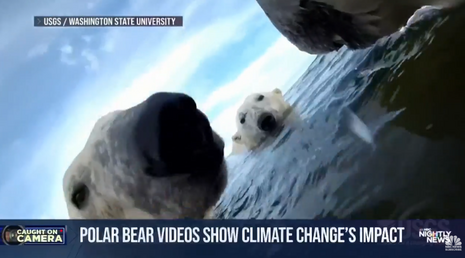 ABC News, NBC News, Daily Beast, BBC, The Guardian, The Independent and EuroNews all did the eco-scare dance over a new study and claimed polar bears were “rewriting their DNA” to fight climate change. No, you didn’t misread that. Amidst the repeatedly debunked notion that polar bears are destined to go extinct in the next few decades or so, the Daily Beastin particular, expressed “hopes that with these new findings we are able to reduce our carbon emissions to buy the bears enough time to adapt to their changing environment.” In essence, curb your carbon-emitting lifestyles or the bears are going to die!
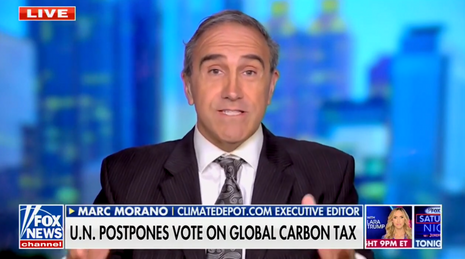
Climate Depot founder Marc Morano blasted the media outlets perpetuating this nonsense in comments to MRC Business. “Scientists and scientific data have known for decades that 'climate change' was not threatening polar bears in the Arctic. The number of polar bears in the Arctic has increased dramatically in recent decades, particularly since a hunting ban was imposed.” Specifically, said Morano, “The polar bear population exploded from an estimated 5,000 in the 1960s to 30,000 or more today.”
Reading the headlines from the liberal media made it seem like polar bears were forced to take matters into their own hands.
The Daily Beast Breaking News Intern Tamilore Oshikanlu was adamant December 15 that “Climate Change Is Forcing Polar Bears to Rewrite Their DNA.” Gee, we never expected these mammals to be such experts in gene editing. As global temperatures rise, claimed Oshikanlu, “Arctic sea ice is shrinking, leaving bears without the frozen platforms they rely on to hunt seals … prolonged food scarcity appears to be driving biological shifts that allow some bears to better process plant-based and lower-fat diets when prey is unavailable.” Makes sense why the Beast’s full-time reporters didn’t want to attach their name to such stupidity so they kicked it down to the intern. Our sympathies, Oshikanlu.
Apparently the Beast wasn’t the only one to pass off the story down the food chain in their staff. NBC News London-based intern Elmira Aliieva was one of the first to break the story on the polar bear superpowers. “Polar bears are rewiring their own genetics to survive a warming climate,” read her headline. It’s as if these media types are just copying off the same movie script. She propagandized that climate change was “the icy habitat essential to [polar bears’]” existence. As such, wrote Aliieva, “new research suggests polar bears are rapidly rewiring their own genetics in a bid to survive.”
 ABC News reporter Brianna Alvarado’s story on the matter wasn’t much better: “Polar bears are 'rewriting their DNA' to survive warming Arctic, study suggests.” In the piece, Alvarado doom-mongered, “Researchers say the discovery of these genetic changes offers a glimmer of hope for the bears' survival, as two-thirds of the world’s population could perish by 2050.”
But this is a load of bunk, as Morano joked to MRC. “It is safe to say that polar bears are disappearing, but only from Al Gore's books and movies!” He joked that “In Gore's 2006 film, he made the polar bear a poster child for global warming, but fast forward to his 2017 film and book sequel, and Gore did not even mention them.” Scientists have testified before Congress that “polar bears have survived several historic episodes of much warmer temperatures over the last 10,000 years, and they have adapted,” Morano noted. In essence, polar bear adaptation to a changing climate isn’t even a new thing.
Morano argued that what the new study does, if anything, is reveal “some insight into one of the many ways these bears have adapted.”
BBC also exploited the study to push for an eco-regulatory state: “But despite the signs of adaption [sic] to a changing environment, [Lead researcher Dr Alice Godden] said efforts to limit global temperature increases must continue.”
A blogger for the British leftist agitprop-pushing publication The Guardian, Martin Belam, teed up the study like a movie trailer in his December 16 newsletter: “Amid the constant drumbeat of bleak news about the planet’s environment and the accelerating climate emergency, the occasional bright spot still emerges.” He then attacked humanity outright:
But is it really good news that human activity – the burning of fossil fuels and the destruction of habitats – is forcing animals to alter their genetic makeup? The picture, as ever, is complicated.
Darn those pesky humans, right Belam?
The Independent's Asia Climate Correspondent Stuti Mishra took it a step further than her media compatriots in her eco-alarmism by stipulating that full polar bear extinction was possible because of humanity, regardless of their newly discovered, er, gene-editing capabilities:
More than two-thirds of polar bears are expected to vanish by 2050, with full extinction possible by the end of the century if global emissions continue on their current trajectory.
Euro News reporter Liam Gilliver made polar bear “jumping genes” the main hook in his headline, before taking Mishra’s route and decreeing Bear-Mageddon in his lede sentence. “Polar bears face ‘total extinction’ by the end of this century, but scientists have found a small beacon of ‘hope,’” Gilliver sensationalized.
But the seemingly nuttier bits of climate change tomfoolery continuously oozing out of the media eco-sphere shouldn’t be expected to fade away, Morano said. “When current reality fails to alarm, the climate activist will continue to make scarier and scarier (unfounded) predictions of the future."
---
---
no lnx grfx/text]
https://insideclimatenews.org/news/24022015/willie-soon-too-much-ice-really-bad-polar-bears
willie Soon: 'Too Much Ice Is Really Bad for Polar Bears'
In return for undisclosed funding from a coal utility, the scientist delivered contrarian talks and papers on Arctic melting.
BY SABRINA SHANKMAN, INSIDECLIMATE NEWS
FEB 24, 2015
"Too much ice is really bad for polar bears," climate skeptic Willie Soon said in a 2008 speech titled, "Endangering the Polar Bear: How Environmentalists Kill."
Soon later cited the talk as a "deliverable" in return for a research grant from Southern Company Services, one of the largest U.S. coal companies. Under the same grant the contrarian scientist also published two papers questioning whether climate change was dangerous for polar bears and whether the Arctic was warming, without disclosing the fossil fuel companies that funded his work.
The polar bear theories advanced by Soon in these and other works have been discredited by scientists worldwide. Even so, the ideas have sowed confusion about the fate of an iconic species that biologists expect to experience widespread devastation as climate change worsens.
"It plants doubt in the minds of people because of the complex nature of the science," said Juscelino Colares, a professor of law and associate director of the Frederick K. Cox International Law Center at the Case Western Reserve University School of Law in Cleveland. "That's all the industry needs is doubt to delay action."
Soon works at the Harvard-Smithsonian Center for Astrophysics in Cambridge, Mass. The center houses the Harvard College Observatory and the Smithsonian Astrophysical Observatory, which employs Soon. The polar bear papers were among 11 he published in research journals that failed to disclose Southern Co.'s funding, according to documents made public Saturday. All the papers question the extent, severity, cause or existence of man-made climate change.
Read: A Guide To Willie Soon's Climate Research Funded by Fossil Fuel Companies
The information comes from a trove of public emails and documents obtained by Greenpeace through Freedom of Information Act requests. They were released by the Climate Investigations Center, a watchdog group that tracks the activities of companies and organizations that fight climate action.
Click to view image] txt "" BS]
Between 2001 and 2012, Soon received $838,717 from the American Petroleum Institute, ExxonMobil and the Charles G. Koch Charitable Foundation for his research, the documents show. Since 2006, he has received an additional $409,754 from Southern Co. Soon relies on grants from outside funders for his research and salary.
On Monday, the Smithsonian Institution said in a statement that it was "greatly concerned" about the allegations of Soon's failure to disclose his funding sources. The U.S. government-backed museum and research organization said it would initiate a full review of the organization's ethics and disclosure policies.
Soon did not respond to multiple requests for comment and Southern Co. did not respond to a request for an interview. In an emailed response, the company said, "Southern Company funds a broad range of research on a number of topics that have potentially significant public policy implications for our business."
Soon's polar bear research has focused on various issues, from the population ecology of polar bears to the accuracy of models that predict how sea ice loss will affect the bears. The state of Alaska used his polar bear work in a failed attempt to block the listing of polar bears as threatened under the Endangered Species Act.
2007 Polar Bear Paper
Since 1979, almost 700,000 square miles of sea ice have vanished in the Arctic as global warming caused temperatures to rise. That's roughly the area covered by California, Nevada, Oregon, Washington, Arizona, Utah and most of Idaho. Biologists have predicted for decades that as the ice disappears, polar bear populations will decline because they rely on the ice as a hunting platform.
By 2050, two-thirds of the world's polar bears could be gone, with extinction a real possibility by the end of the century, according to biologist Steven Amstrup, a leading polar bear biologist who spent 30 years with the U.S. Geological Survey. He is now chief scientist for Polar Bears International, a conservation and advocacy group.
Scientists are seeing evidence of this decline, especially in Canada's western Hudson Bay, one of the world's most studied polar bear regions. Research there has shown a direct link between the loss of sea ice and the health of polar bears, including a connection between an earlier spring melting of sea ice and lower survival rates for cubs.
One of Soon's polar bear papers, published in 2007 in the peer-reviewed scientific journal Ecological Complexity, focused on this population. The paper questioned whether climate change was dangerous for polar bears and whether the region was warming at all, even as NASA reported that the 2007 minimum sea ice levels were at an all-time low, falling to nearly 40 percent below the 1979-2000 average. (A new historical low-point was reached in 2012.)
The paper suggested alternative theories for population declines, such as stress from interactions with tourists, and predicted that the carnivores would find new sources of food such as berries and vegetation to supplement their diet of seals and other marine mammals.
The lead author was Markus Dyck, a polar bear biologist for the Canadian territory of Nunavut. Among the six other authors were a number of known climate deniers, including Sallie Baliunas, who co-authored a 2003 study with Soon that challenged climate scientist Michael Mann's "hockey stick theory" of global warming.
The authors stated that they began without funding but that "W. Soon's effort for the completion of this paper was partially supported by grants from the Charles G. Koch Charitable Foundation, American Petroleum Institute, and Exxon-Mobil Corporation." No additional funders were listed.
Read: Documents Reveal Fossil Fuel Fingerprints on Contrarian Climate Research]
The paper challenged the work of two longtime, respected polar bear biologists—Ian Stirling and Andrew Derocher. In 2003, Derocher had seen a version of the paper that was submitted to the journal Ecography. Derocher was one of two people asked to peer-review it. Both reviewers recommended against publication, and it was rejected.
"I thought it was heavily flawed," Derocher said in an interview. Derocher decided to sign his review, though typically reviews are anonymous. Derocher said he thought it would be helpful if the authors knew who had written it.
When the paper was published in 2007, Derocher was surprised to see his review referenced—without mention of what he had said.
"We are grateful for the constructive comments on earlier versions of the manuscript from S. Polischuk, S.-L. Han, and A. Derocher, which were critical for the improvement of the final version," the study said.
"It was turned around to be used as an endorsement," Derocher said. "That was not my intent."
'Endangering the Polar Bear'
Almost a year after that paper's publication, a group of polar bear biologists including Stirling and Derocher published a response in Ecological Complexity. [2008]They wrote that Dyck, Soon and their collaborators ignored data from the previous decade that showed that as the climate warmed, the sea ice is melting earlier each spring, sending polar bears ashore for longer periods of time in progressively poorer condition.
Dyck and Soon struck back with a reply in Ecological Complexity that July[2008?], accusing the biologists of using "uni-dimensional, or reductionist thinking, which is not useful when assessing effects of climate change on complex ecosystems."
In a progress report to Southern Co., Soon reported his reply paper as one of seven "deliverables" in return for a grant of $120,000 grant from the coal utility, the documents released by the Climate Investigations Centershow. Neither Southern nor any other funding source is disclosed in Ecological Complexity.
The documents show that Soon and Harvard-Smithsonian granted Southern the right to comment and provide input before the "deliverables" were published. The contract also stated that Soon could not name or identify Southern in a publication without "express written consent of SCS" (Southern Company Services).
In the report to Southern on how he fulfilled his grant, he also lists a number of speaking events, at least two of which dealt with polar bears.
At a July 2008 event in Mesa, Arizona, Soon presented his "Endangering the Polar Bear" talk to the nonprofitDoctors for Disaster Preparedness,which distributes "scientific and defense related information on public health, safety and security issues," according to publicly available financial reports. The group regularly includes climate skeptics in its conferences.
"I really don't think that you can find or argue convincingly that there are any significant worries about the sea ice condition in the Arctic," Soon told the group. "I would suggest that the current condition today is nowhere near optimal for the polar bear, which means it can grow a little bit warmer."
Opposing Protection for Bears
Not long after publication of the first Ecological Complexity paper, [2007 Palin?] Alaska hired Soon for another polar bear-related job. He was to assess the U.S. Geological Survey's forecasting models. These had been used to predict how climate change would affect polar bears, according to Doug Vincent-Lang, who was then the state's Endangered Species Act (ESA) coordinator.Alaska was opposing the federal government's proposed listing of polar bears as threatened under the ESA.
Soon and his colleagues concluded that USGS scientists relied on faulty models in predicting that by mid-century two-thirds of the world's polar bears could be gone.
The state used Soon's work to argue against the ESA listing for polar bears. Designating the animals as threatened would mean increased protections of their habitat, and raised concerns that listing a species based on predictions of future population loss could be a slippery slope, with other ice-dependent species not far behind. Alaska lost the argument. WhenInterior Secretary Dirk Kempthorne announced on May 14, 2008, that the bears would be listed as threatened, he said it was based on the science of the USGS and the U.S. Fish and Wildlife Service.
"My hope is that the projections from these models are wrong, and that sea ice does not further recede," Kempthorne said in his announcement. "But the best science available to me currently says that is not likely to happen in the next 45 years."
Steven Amstrup, the biologist who led the USGS team, said Secretary Kempthorne held a conference call with all of the scientists involved in the forecasting reports that Soon challenged.
"He very candidly indicated that our science was so compelling he could see he had no other choice than to recognize it and proceed accordingly," Armstrup said.
A few months later, Soon and his collaborators published a paper based on their Alaska research in the September/October edition of Interfaces, a journal that focuses on the science of business and management. The paper acknowledged funding from Alaska—but not from Southern Co. The authors wrote that they had begun the work that led to the paper as consultants for Alaska, for which they were paid $9,998.
"We were impressed by the importance of the issue," they wrote. "Therefore, after providing our assessment, we decided to continue work on it and to prepare a paper for publication. These latter efforts have not been funded."
However, in reporting on his "deliverables" to Southern Co., Soon listed this paper first.
Interfaces does not have a conflict of interest policy unless questions are raised during the peer review process "with respect to suspicion of duplicate publication, fabrication of data or plagiarism," according to Miranda Walker, director of publications at the professional society that publishes the journal.
InsideClimate News reporters David Hasemyer and Lisa Song contributed to this report.
---
---
mashey 2012
p 150
Z.2006.05-10a H. Sterling Burnett
Are Polar Bears Dying?738
“A new study by Dr. David Legates,Delaware’s State Climatologist and director
of the University of Delaware’s Center for Climatic Research, throws cold water
on the claim that global warming threatens to cause the extinction of polar bears.
Meme-37
Scare Unwarranted
As part of his study titled Climate Science: Climate Change and its Impacts,
expected at press time to be released in April of this year, Legates reviewed
assertions by environmental alarmists …”
Legates is now the former State Climatologist and former director.739
A critique by serious scientist says:740
“The report is filled with personal assertions that reflect a very selective and
biased look at the available scientific results, skeptically treating and dismissing
scientific results that are broadly accepted while uncritically accepting very
weakly supported claims of a natural origin of virtually all variations and
changes that have been observed. It is seemingly aimed at refuting “climate
alarmists” (who are mainly not identified, but seem to include the media and
representatives of environmental groups) and in doing so sets up a lot of
strawmen that gives him an excuse to put in a couple of contradictory references.
In most cases, however, the claims he shoots at are neither valid nor at all central
to the key scientific findings regarding human-induced global warming.”
---
---
Pruitt's prospects
Here are some of the skeptical nominees under consideration:
Joseph D'Aleo, a certified consultant meteorologist and co-founder of the Weather Channel: He has run climate skeptic websites and has appeared as a speaker at Heartland conferences. D'Aleo said his priority on the board would be attacking the endangerment finding, the legally binding document that holds that carbon dioxide and other greenhouse gases harm human health and must be regulated by the executive branch. He said he wants to challenge the finding because it could otherwise be used later to build back Obama-era environmental regulations.
Edwin Berry. edberry.com
"We're going to push for reconsideration, start from scratch and put together the best science," he said. "If CO2 is not a serious pollutant, let's focus the attention of the EPA on other issues."
Edwin Berry, a meteorologist and atmospheric scientist: He has funded his own climate research and says human carbon dioxide emissions do not cause climate change. He has compared those who believe in human-caused climate change to "Aztecs who believed they could make rain by cutting out beating hearts and rolling decapitated heads down temple steps." On his Twitter account, he has called Islam "a death cult" and has encouraged motorists to drive into protesters.
Berry, in an email to E&E News today, described his tweet as a joke and said he does not advocate violence.
"Clearly, my tween says to slowly drive to not hurt anyone," Berry said in the email, misspelling "tweet."
brn
Kevin Dayaratna. Heritage Foundation
Berry, who confirmed that he and a number of other skeptics were nominated by Heartland, said he wants to use his position on the board to show that humans barely contribute to atmospheric carbon dioxide levels, which he claimed are mostly driven by natural factors.
"Let's get over this whole thing about climate change being an important thing, because in fact we humans have a negligible impact on climate," he said. "And if we had the Paris Agreement and everything else, it wouldn't do any good anyway."
Alan Carlin, a retired EPA employee who is affiliated with Heartland: He fought the agency's crafting of the endangerment finding. Carlin, an economist, was at the center of a political firestorm under Obama after he produced a widely criticized 93-page report comprising cherry-picked scientific data and blog entries concluding that regulating carbon dioxide was "the worst mistake that EPA has ever made."
Kevin Dayaratna, a statistician at the conservative Heritage Foundation: His report was cited by Trump as a reason to withdraw from the Paris climate accord. It claimed that the agreement could shrink U.S. gross domestic product by $2.5 trillion within two decades (though Trump stated the impact as coming within a decade). The report was criticized by some as being misleading, because that amount is less than 1 percent of the aggregate GDP over that period and the report did not account for the cost of taking no climate change action. Dayaratna was invited to attend Trump's withdrawal announcement in June in the White House Rose Garden.
Craig Idso, a senior fellow at the Heartland Institute: He has researched the benefits of atmospheric carbon dioxide. His work has centered on highlighting how increased carbon dioxide will benefit plants.
Paul Driessen, a senior policy adviser at the Committee for a Constructive Tomorrow, a libertarian environmental think tank: His organization handed out leaflets at a climate protest this year in Washington, D.C., that said, "CO2 is not the 'control knob' of the climate." He also co-founded Climate Exit, or "Clexit," which criticized the science behind the Paris climate agreement and holds that spiking levels of atmospheric carbon dioxide benefit the Earth. "The world must abandon this suicidal Global Warming crusade," the group stated in its founding statement. "Man does not and cannot control the climate."
Gordon Fulks, a physicist and adviser to the Cascade Policy Institute, an Oregon-based libertarian think tank: He has denied that net sea ice melt is occurring and that the Earth is warming. He has said those who express concern about climate change are like a "societal pathogen that virulently spreads misinformation in tiny packages like a virus."
Anthony Lupo, another founding member of Clexit: He has received support from the Heartland Institute and helped in the unsuccessful fight against the endangerment finding in court.
Leighton Steward, a former energy company executive and a founder of groups that promote the rise of carbon dioxide as a benefit: He has also encouraged the United States to drop out of the Paris climate accord and says that natural warming is raising the temperature of the Earth.
David Legates,a professor of climatology at the University of Delaware: He has denied that human-caused climate change could have catastrophic consequences and has co-authored climate research claiming polar bears are not harmed by human-caused climate change that was quietly funded, at least in part, by Koch Industries Inc.
Critics want to boot EPA 'cronies'
---
BAK of MAIN 920
---
code problem?
8/18 other bears too
see also monnett
cf polarbear914
this now expands to arctic conditions in general, such as ice cover and polar bears, not just lawsuit 4/14
ebell, cei inhofe sues to suppress nat'l assess horner sues clinton, NSTC and OSTP
cf eg dave ross UK e mail cited by US rep subcomm
cf cooling? note constant confusion between climate and weather
==
no lnx
==
Study predicts polar bears will die off within 80 years: ‘The poster child for climate change’
Igor Derysh / Salon July 27, 2020
Polar bears could face extinction by the end of the century as a result of shrinking sea ice in the Arctic caused by climate change, according to a new study published in…
==
Yellowstone’s Grizzlies Are Wandering Farther from Home and Dying in Greater Numbers
BY: JOHNATHAN HETTINGER
Climate change has fueled the devastation of one of the grizzly bear’s key food sources, and more of its Yellowstone habitat is at risk as temperatures rise.
==
Russian Polar Bear 'Invasion' Is a Sign of Something Much Bigger ew
==
9/15
http://ecowatch.com/2015/09/14/polar-bear-photos-climate-change
==
Obama used his tour of Alaska last week to highlight the human faces of climate change in the Arctic.
At the same time, representatives of the five nations with territory above the Arctic Circle—all signatories to a 1973 treaty to preserve polar bears—were grappling with how to stop climate change from decimating the iconic predator.
At their meeting in Ilulissat, Greenland, this week, Canada, the United States,Denmark, Norway, and Russia agreed to a new 10-year plan for protecting the species and its habitat across the entire Arctic.
“After 40 years of cooperation, this is the first time when parties came together to agree on one circumpolar action plan for polar bears,” said Alexander Shestakov, director of the World Wildlife Fund’s Global Arctic Program.
“It doesn’t mean for 40 years they weren’t doing anything,” he added. “But there was a real need for a pan-Arctic approach.”
Under the plan, scientists will collaborate to get a better estimate of current polar bear numbers; assess the impacts of climate change, pollution, and disease on their survival; and meet every two years to report on their progress.
“It is positive from our point of view that they established some mechanism for reporting and accountability,” Shestakov said.
When the five nations signed the first polar bear conservation treaty in 1973, uncontrolled hunting was the biggest threat to the bears’ survival.
In 2015, the major threat is warming temperatures across the Arctic, caused primarily by the burning of fossil fuels. The sea ice that is the primary habitat of polar bears and the only habitat of their preferred prey, ice seals, is melting, and it will continue to thaw for decades if not centuries to come.
Diminishing Arctic sea ice has stranded polar bears on land, far from the ice seals that are their main prey, for longer periods of the year. The situation has driven more polar bears to risk human settlements in search of food. “A polar bear can be a danger for people,” Shestakov said, “but in recent years people have become much more dangerous to bears.”
The five nations this week committed to jointly tracking and analyzing these encounters in what Gert Polet of WWF-Netherlands described as “the first range-wide database for any species” in the hope of devising ways to curb them.
Ocean habitats important to polar bears and other wildlife, areas that were once almost inaccessible to humans for most of the year, are now seeing increased industrial activity such as transnational shipping traffic, as well as new oil and gas prospecting.
Shell Oil’s summer drilling expedition in the Chukchi Sea, near an important marine feeding ground called Hanna Shoal, would have been impossible at the time the polar bear conservation treaty was signed.
http://www.alternet.org/environment/polar-bear-gets-protections-us-russia
==
Polar bears are now eating dolphins thanks to climate change
The polar bears are even saving frozen dolphin for later. 6/15 grist
==
http://www.washingtonpost.com/wp-dyn/content/article/2008/08/30/AR2008083001538.html
Correction to This Article
- An Aug. 31 A-section article incorrectly said that the American Petroleum Institute and four other business groups seek to challenge the listing of the polar bear as a threatened species. The groups are trying to enjoin the federal government from implementing a rule they call the "Alaska Gap," which subjects projects in Alaska to extra scrutiny. The federal government issued the rule in May in conjunction with the announcement of the polar bear's protected status.
Oil Group Joins Alaska in Suing To Overturn Polar Bear Protection
By Kari Lydersen
Washington Post Staff Writer
Sunday, August 31, 2008
CHICAGO -- The American Petroleum Institute and four other business groups filed suit Thursday against Interior Secretary Dirk Kempthorne and U.S. Fish and Wildlife Service Director H. Dale Hall, joining Alaska Gov. Sarah Palin's administration in trying to reverse the listing of the polar bear as a threatened species.
This Story
Oil Group Joins Alaska in Suing To Overturn Polar Bear Protection
Feds set aside 'critical habitat' for polar bear
On thin ice
On Aug. 4, the state of Alaska filed a lawsuit opposing the polar bear's listing, arguing that populations as a whole are stable and that melting sea ice does not pose an imminent threat to their survival. The suit says polar bears have survived warming periods in the past. The federal government has 60 days from the filing date to respond.
One of the plaintiff in Thursday's lawsuit, the National Association of Manufacturers (NAM), lauded the choice of Palin as the Republican vice presidential nominee for reasons including her advocacy of Alaskan oil and gas exploration, which many fear could be affected by the bear's protected status.
NAM and the petroleum institute were joined in the lawsuit by the U.S. Chamber of Commerce, the National Mining Association and the American Iron and Steel Institute. They object to what they call the "Alaska Gap" in relation to the special rule the federal government issued in May in conjunction with the polar bear's protected status. The rule, meant to prevent the polar bear's status from being used as a tool for imposing greenhouse gas limits, exempts projects in all states except Alaska from undergoing review in relation to emissions.
---
==
heartland "experts"; Coming in with a lower profile and a lower monthly retainer ($750 a month) are Anthony Lupo, and Canadian “Terrestrial Animal” specialists Crockford (the dog expert from the University of Victoria) and Mitch Taylor, a contract lecturer at the Lakehead University who has argued that polar bears are in no danger from climate change.
---
---
botkin cites
Fri, 2012-04-06 13:29BRENDAN DEMELLE
Brendan DeMelle's picture
Heartland Payments to University of Victoria Professor Susan Crockford Probed
University of Victoria adjunct professor Susan Crockford doesn't seem interested in discussing the monthly payments she appears to receive from the climate denying Heartland Spinstitute.
“Crockford would not respond to emails, and refused to speak with the Martlet,” reports a UVic student newspaper attempting to probe the payments.
The Heartland Institute's Denialgate documents indicate that the spinstitute gives Crockford $750 per month. She is one of three Canadian university professors on the denier dole at Heartland, along with Madhav Knandekar and Mitch Taylor.
Greenpeace contacted the University of Victoria to raise conflict of interest questions relating to Heartland's payments to Crockford, who has a history of denying climate science as a speaker for its anti-science International Climate Science Coalition. See Greenpeace's letter to the University of Victoria.
But apparently the University isn't interested in investigating the matter, stating that, because Crockford is “not a member of regular faculty,” it won't probe allegations of conflict of interest.
“She is a member as a non-remunerated appointment as an adjunct, a professional zooarcheologist associate,” a university spokesperson told The Martlet correspondent Mark Worthing.
But one of Crockford's colleagues at UVic had plenty to say about the disconnect between the university's science-based position and the spin emanating from the Heartland Institute.
“It is regrettable that anyone affiliated with the University of Victoria participated in the activities of an organization like the Heartland Institute,” says Dr. Thomas F. Pederson, Executive Director of the Pacific Institute for Climate Solutions (PICS) at UVic. “The University prides itself on being an institution of higher learning that deals with facts and that is nowhere more true than in the field of science. Those who deny that the planet is warming as a direct result of human activity are denying facts.
…
“The Heartland Institute is one of a collection of so-called think tanks that have been extensively supported by elements within the American fossil fuel industry,” says Pederson. “Their mission is quite clearly not to think, but instead to sow confusion with respect to the global warming issue.”
Susan Crockford's actual expertise is far removed from climate science, but that's never proven to be an obstacle to receiving invitations to speak at Heartland Institute events.
According to a description of her work by The Martlet, Crockford is “a sessional adjunct professor in Archaeozoology in the Pacific Rim with research focuses on the domestication and breed development, evolutionary theory and the evolution and history of the domestic dog.”
What the what? An expert in canine evolution - already tricky territory for certain science deniers - knows what exactly about climate change science?
What does Heartland's Denial-a-Palooza audience see in Crockford's dogged ability to provide $750 per month woof - ehem, worth - of climate confusion?
Is anyone else doggone confused here? Canine get an explanation? (Sorry, it's Friday, brain is mush!)
Tags: Heartland InstituteUniversity of VictoriaInternational Climate Science Coalitionclimate denialSusan Crockfordanti-scienceconflict of interestdenialgateDenierGatethe martletmark worthingspinstitutecanadian climate science
‹ PREVIOUS
S.E. Cupp Attacks Climate Science and Climate Scientists on MSNBC
---
To drill or not to drill in a nationally protected arctic wildlife habitat and polar bear breeding ground? That is the question heading to court.
On Friday, the state of Alaska launched a federal lawsuit against the U.S. Fish and Wildlife Service, the Department of the Interior and some of its directors, claiming they wrongfully rejected the state’s application to look for oil and gas on the coastal plain of the Arctic National Wildlife Refuge. According the the lawsuit, the agencies didn’t even consider the plan — an act that “deprived” Alaska of “its right to provide adequate opportunity for the satisfaction of the economic and social needs of the State.”
The application rejected by the U.S. government was not for actual drilling. Rather, it was a seven-year seismic program that would have provided a more specific estimate of the oil and gas resources within the Arctic Refuge’s coastal plain — commonly referred to as the 1002 Area. That estimate, the lawsuit says, would help “to inform future decisions by Congress” on whether to drill there.
The U.S. government contends that Alaska’s authority to look for oil in the nationally protected area has expired. Alaska contends it has not.
The Arctic Refuge’s oil has been an ongoing political controversy since 1977, when a British Petroleum geologist named Roger Herrera testified to Congress that he believed there was enormous potential for production. In 2000, the U.S. Energy Information Administration called the area “the largest unexplored, potentially productive geologic onshore basin in the United States.”
Indeed, the area’s oil potential could be enormous. The United States Geological Service estimates that anywhere from 5.7 to 16 billion barrels of oil is technically recoverable from the 1002 area. Taken at its mean, that means the 1002 area could produce about one million barrels of oil per day — about 20 percent of America’s daily domestic production, according to the Institute for Energy Research.[BS]
However, there are still uncertainties regarding the importance of the area’s oil. Despite its estimates for production, the EIA has also said that the 1002 area’s oil would probably not have a large impact on world oil prices. “Additional oil production resulting from the opening of the Arctic Refuge would be only a small portion of total world oil production, and would likely be offset in part by somewhat lower production outside the United States,” the agencysaid.
There are also myriad environmental issues. Located within the Arctic circle, the 1002 area has no sunlight for 56 days of the year, and temperatures are often as low as below 30 degrees Fahrenheit. This makes it extremely difficult to figure out how to clean up an oil spill if one were to occur, according to the Sierra Club, whose recent report on the issue noted that there are no proven technologies to clean up spills in Arctic waters.
“Trying to clean oil out of frigid water, covered in sea ice, in the perpetual darkness of winter would be impossible,” the report reads. “The closest help, a Coast Guard station, is 1,000 miles away.”
In addition, The Arctic Refuge itself is a beacon of wildlife. It is one of only two areas within the National Wildlife Refuge System that are home to all three species of North American bear — black, grizzly, and polar. The 1002 area’s polar bear population is especially important considering its high possibility of global extinction due to climate change — a fact that the Sierra Club noted in its report.
“Burning the fossil fuels found in the Arctic will only accelerate global warming and hasten the disappearance of animals like the polar bear,” the report reads.
A larger-than-expected number of pregnant females come to the 1002 area every year to dig maternity dens, according to the U.S. Fish and Wildlife Service. The area is the only national conservation area where polar bears regularly den, and is the most consistently-used polar bear land denning area in Alaska. In the 2008 Presidential election, both President Obama and Senator John McCain (R-AZ) expressed opposition to drilling in the pristine area.
Alaska’s Republican Governor Sean Parnell is touting the lawsuit, calling it “disappointing and disturbing” that the Obama Administration does not want to look for oil in the polar bear breeding ground. The stance is not unexpected for Parnell, who has expressed a desire to keep the Environmental Protection Agency out of the state, and immediately disbanded his state’s Climate Change Cabinet upon taking office in 2009.
Parnell — a former ConocoPhillips executive — is seeking reelection in 2014.
Tags: Alaska Arctic Arctic National Wildlife Refuge Drilling Polar Bears Sean Parnell
---
new site: industry/investment oriented? still has anto AGW bs :
http://www.energydepot.us/
cites blog 1st name;
Too Much Spring Ice Threatens Alaskan Polar Bears
http://cnsnews.com/news/article/barbara-hollingsworth/alaskan-polar-bears-threatened-too-much-spring-ice-0
multiple errors, not sure how serious: http://polarbearscience.com/2014/04/25/my-interview-with-cns-news-alaskan-polar-bears-threatenedby-too-much-spring-ice/#more-4945
her blogroll includes FoS and ross mcKittick UBC
Bishop Hill
Climate Resistance
Climateaudit
Dan Botkin
Friends of Science
Jo Nova
Nofrakkingconsensus
Polar Bear Alley
Polar Bear Specialist Group
Rational Optimist
Ross McKitrick
The View from Here
Tom Nelson
World Climate Report
WUWT
---
---
---
https://wattsupwiththat.wpcomstaging.com/2015/06/23/dr-willie-soon-on-the-vaticans-repeat-of-its-galileo-debacle/
no lnx
Dr. Willie Soon on the Vatican’s repeat of its Galileo debacle
Alec Rawls / June 23, 2015
Putting papal authority behind yet another failed scientific paradigm
GalileoTrial_1633 pix]
Guest post by Alec Rawls
As Galileo insisted about the perversity of his persecution by the Catholic Church: “[I]t is impossible for a conclusion to be declared heretical while we remain in doubt as to its truth.”
Now 400 years later, with the Pope’s new Laudato Si’ encyclical, Dr. Soon notes that the Vatican is again engaged in this same error, lending papal authority to highly uncertain scientific views that lie well outside of the Church’s sphere of moral authority.
Willie’s op-ed can be found at the Breitbart News website. I’ll just post a trio of fair-use excerpts here:
The verdict is clear: Any attempt to stop the use of available fossil fuels for life and all human activities will cause far more harm and lead to more deaths than the theological belief in future catastrophic disasters endorsed by the encyclical. Even worse, the church knows that many of the predicted catastrophic disasters from the rise of atmospheric carbon dioxide are highly exaggerated if not outright fraudulent. Yet Laudato Si’ gives credence and praise to these predictions by relying on climate models scenarios that have been proven to be false.
Plus:
I fear that this encyclical is driven not by science, but by social motivations and political yearnings.
And again from Galileo:
“[C]ertainly no one doubts that the Supreme Pontiff has always an absolute power to approve or condemn; but it is not in the power: of any created being to make things true or false, for this belongs to their own nature and to the fact.”
June 23, 2015 in Papal Climate Encyclical.
Related posts
Is the Pope Backing Away from the Climate Issue?
Papal Global Warming Encyclical Continues to Split the Church
Climate Insanity on steroids!
Post navigation? Wild Claim: ‘climate change…could wipe out health progress over the past 50 years’A shift in climate ‘forcing’ led to demise of Laurentide ice sheet 9000 years ago ?
177 thoughts on “Dr. Willie Soon on the Vatican’s repeat of its Galileo debacle”
---
https://wattsupwiththat.com/2018/04/14/a-conversation-with-dr-willie-soon-on-polar-bears-the-sun-and-earths-climate/
MANY lnx grafs
a conversation with Dr. Willie Soon – on polar bears, the sun, and Earth's climate
Guest Blogger / April 14, 2018
Science, Philosophy and Inquiry on a Galactic Scale
Contributed by Grégoire Canlorbe © 2017 Publised at WUWT by request of Mr. Canlorbe. These are the opinions of the author and interviewee.
Dr. Willie Soon is an independent solar physicist at the Harvard-Smithsonian Center for Astrophysics who has been studying the Sun and its influence on the Earth’s climate for more than a quarter of a century. A short while ago, he had a conversation with Mr. Grégoire Canlorbe, an independent journalist who is also vice president of the French Parti National-Libéral (“National-Liberal Party,” conservative, nationalist, and free-marketist). Here Dr. Soon speaks for himself.
Canlorbe: You say polar bears are far less endangered by global warming than by environmentalists dreading ice melt. Could you expand?
Dr. Soon: Yes, indeed. I have argued that too much ice will be the ultimate enemy for polar bears. Polar bears need less sea ice to be well fed and to reproduce. Why? Think about this for a minute: Polar bears eat a lot. Any large colony will need a great deal of food. The bears’ staple diet is seal blubber. But seals are a long way up the food chain. So a fully functional and healthy eco-system is required. And that means oceans warm enough to support the lower links in the food chain from plankton all the way up to seals.
Indeed, a good puzzle for polar-bear science is to answer the question how polar bears survived during the ice ages, when ice covered coastal zones and large parts of the global ocean. Ice was piled miles deep on land, making it extremely difficult for eco-systems to provide enough food. Of course, areas of relative warmth, which population biologists call refugia, always exist. They may well be the key to explaining how polar bears survived the Last Glacial Maximum about 21,000 years ago.
The so-called “environmentalists”, who seem to allow unreasoning emotion and political prejudice to stand in place of rational thought and sound science, became very angry when I asked them whether they would prefer to see a billion polar bears instead of the 20,000–30,000 living now. The real threat to polar bears was unregulated hunting, which reduced the population to perhaps as few as 5,000 bears in the early 1970s.
After the November 1973 agreement to regulate hunting and outlaw hunting from aircraft and icebreakers, the polar bear population rebounded. By 2017 it was approaching 30,000. In 2016 a survey by the Nunavut government found a vulnerable population in the western Hudson Bay region to have been stable for at least five years.
I should say categorically that this polar bear fear-mongering is evidence of mass delusion promoted by group think. As a physical scientist rather than a biologist, I am generally reluctant to get involved in such topics as the influence of climate on polar-bear population, health and biology. But in 2002, Markus Dyck asked me to examine independently these strange and insupportable claims by environmental extremists that polar bears are threatened with extinction by global warming.
Consider the facts. From 6,000 to 10,000 years ago, the Earth was considerably warmer than today. Yet the polar bears survived. In fact, they had evolved from land-based brown bears some 150,000 to 200,000 years ago, and to this day they rear their cubs in land-based dens burrowed into the snow.
Four dead bears found in an aerial survey of the Beaufort Sea (Monnett & Gleason, 2006)]
Readers curious about Al Gore’s false statement that a scientific survey had found polar bears drowning because they could not find ice should see my talk on how environmentalists are the real threat to polar bears: https://www.youtube.com/watch?v=AmoKRz5VcbI. The survey cited by Gore in his sci-fi comedy horror movie in fact found that just four polar bears had drowned, three of them very close to land, and they had died because of high winds and high waves in an exceptional Arctic storm. The authors of the paper were later victimized by their academic colleagues at the instigation of environmental extremists because they had stated – correctly – that it was the storm, and not global warming, that had killed the bears.
What is more, in the dozen years before the survey, the sea ice extent in the Beaufort Sea, where the survey took place, had actually increased slightly. At no point was Al Gore’s story true. In 2007 the High Court in London condemned Gore for his false statements about polar bears, whose Linnaean classification is ursus maritimus – the Bear of the Sea. It is now known that they can swim for more than 100 miles over periods of several days. Al Gore could not even ride a pushbike that far.
One positive aspect of my work in science is that I have befriended many seekers after truth. A polar bear expert, Professor Mitch Taylor of Lakehead University, told me late in 2017:
Just finished up in Davis Strait with 275 DNA samples. The bears were in better condition this year than they were during the 2005–2007 study years. The Wrangel Island bears in the photo are in good condition, but the Davis Strait bears were even fatter. Markus [Dyck] has found the same in the Cape Dyer area. Local people confirm the bears are very fat this year and are also reporting a big increase in ringed seals (immigration, not local productivity).
Keen readers who may want solid information and frequent scientific updates about the overall health and trends of all 19 subpopulations of polar bears should visit the website of another friend of mine, Dr. Susan Crockford: http://polarbearscience.com.
Is climate change naturally cyclical?
Canlorbe: Climate change is surely nothing new. It is a long-established, cyclical behavior of our planet, which has long been oscillating between glaciations and interglacial warm periods. Should we diagnose Mother Nature with a bipolar disorder?
Dr. Soon: Earth’s climate system dynamically oscillates between icehouse and hothouse conditions in geological time or, to a lesser degree, between the glacial and interglacial climates of the last 1–2 million years. But, as with many interesting questions about the Earth’s climate, there is no certain answer. The data do not support over-simplistic accounts.
Sea level rise – mother of all scares
I was fascinated to discover that changing sea levels, including extremely high global sea levels 65–250 feet (20–75 m) above today’s mean, occurred during the “hothouse Earth” era. One does not need an enormous ice sheet for sea level to be high, chiefly because the Earth’s coastal zones and ocean basins may be more porous and capacious than one would imagine. Indeed, deep geological studies proffer good evidence to support my position. I included this empirical evidence in an essay I recently co-wrote with Viscount (Christopher) Monckton of Brenchley. 404 --> https://web.archive.org/web/20181204045824/https://www.nas.org/images/documents/NAS_insideDivestment_forum.pdf
In addition to the ever-changing shape and depth of the ocean basins and coastal zone boundaries, one must also bear in mind the “leaky Earth”: There appears to be a continuous exchange of water between the ocean bottom and the Earth’s crust, as Professor Shige Maruyama of Tokyo Institute of Technology has shown.
Sea level has risen by 400 feet over the past 10,000 years. For the past 200 years it has been rising at about 8 inches per century, and that rate may well continue. It has very little to do with global warming and much more to do with long-term climate cycles. In fact, so slowly has sea level been rising that environmental-extremist scientists have tampered with the raw data by adding an imagined (and imaginary) “global isostatic adjustment”, torturing the data until they show a rate of sea-level rise that has not in reality occurred.
The Earth in the solar system in the galaxy in the universe
---
ebell, cei inhofe sues to suppress nat'l assess wm horner sues clinton, NSTC and OSTP
??
palin api and oil co polar bear suit, also nam
==
Dr. Charles Monnett, who had been under investigation with respect to his 2006 paper documenting polar bear mortality and with his administration of a cooperative study of polar bears carried out jointly with the University of Alberta, appears to have been un officially vindicated. Yesterday, Public Employees for Environmental Responsibility (PEER), who have been representing Monnett, released emails showing that he had not acted improperly in any way.
They also noted that, unfortunately:
Finally, the fact of the investigation has subjected Dr. Monnett's family to harassment, especially from climate-change skeptics who have, for example, posted his wife’s work email address on the web and invited readers to flood her inbox at her workplace which lead to a number of hateful and threatening messages.
Sadly, they are correct. I personally verified on 9/15/2011 that Climate Depot website had indeed done just that. Their post, date-stamped August 1, 2011, repeated the false claim that Dr. Monnett's wife (a respected scientist in her own right) had served as peer reviewer to her husband's paper, and publicly posted her work email address.
The post also commanded readers to:
Contact Monnett's wife [name redacted] with questions/comments about the Polar Bear paper: [email redacted.]
The reaction of some climate change denialists was apparently as predictable as it was regrettable, but PEER has drawn a merciful veil over the specific threats and insults that were hurled.
... State of Alaska (D.C. Cir. No. 11-5223; D.D.C. No. 08-
1352)
Safari Club International; and Safari Club International
Foundation (D.C. Cir. No. 11-5219; D.D.C. No. 08-1550)
California Cattlemen’s Association; and Congress of
Racial Equality (D.C. Cir. No. 11-5221; D.D.C. No. 08-
1689) (also Intervenor-Plaintiffs-Appellants in State of
Alaska cases (D.C. Cir. No. 11-5223; D.D.C. No. 08-
1352))
Conservation Force; Inuvialuit Game Council; Arviat
Hunters and Trappers Organization; Resolute Bay
Hunters and Trappers Organization; Louie Nigiyok d/b/a
Arctic Hills Tour Company; Nanuk Outfitting, Ltd.,
Canada North Outfittings, Inc.; Ameri-cana Expeditions,
Inc.; Webb Outfitting Nunavut, Ltd.; Henik Lake
Joseph Verni d/b/a Natura Spot;
USCA Case #11-5219 Document #1393180
Filed: 09/06/2012 Pag
age 4 Dallas Safari Club; Houston Safari Club; African Safari
Club of Florida, Inc.; Mark Beeler; Timothy Decker;
Chris Hanks; Don Hershey; Steve Hornady; William
Keene; Rob Kreider; Allyn Ladd; Ethel Leedy; Everett
Madson; Aaron Neilson; Major Roger Oerter; Bradley
Pritz; Kevin Reid; Robert Remillard; Jeff Sevor; Steve
Smith; Ted Stallings; Larry Steiner; Darwin J. Vander
Esch; Tim Walters (D.C. Cir. No. 11-5222; D.D.C. No.
09-245)
Federal Defendants-Appellees:
United States Fish and Wildlife Service; Daniel M. Ashe,
Director, United States Fish & Wildlife Service; and Ken
Salazar, United States Secretary of the Interior
Intervenor Defendants-Appellees:
Center for Biological Diversity; Greenpeace, Inc.; and
Natural Resources Defense Council (all of which were
Plaintiffs in D.D.C. No. 08-2113, but have not appealed,
and were Intervenor-Defendants in D.D.C. Nos. 08-1352,
08-1550, 08-1689, and 09-0245)
Humane Society of the United States; International Fund
for Animal Welfare (both of which intervened in D.D.C.
No. 09-0245)
Defenders of Wildlife (which intervened in D.D.C. Nos.
08-1352, 08-1550, 08-1689, and 09-245
---
August 2006. Hippo I took in on the Njamesembe River in Mozambique. Hunting with Bahati Adventures - Mike Thorne
---
update 10/12
Polar Bears' Threatened Species Designation Contested In U.S. Appeals Court
Reuters | Posted: 10/19/2012 1:28 pm EDT Updated: 10/19/2012 4:27 pm EDT
WASHINGTON, Oct 19 (Reuters) - Polar bears' designation as a threatened species was challenged in a U.S. appeals court on Friday, with a lawyer for Alaska and other parties arguing that regulators had failed to back up the listing.
Alaska and other plaintiffs that include hunters and the California Cattlemen's Association are appealing a federal court ruling last year that upheld the Interior Department's 2008 designation of the bears as threatened because their icy habitat is melting away.
Murray Feldman, a lawyer for Alaska and other appellants, told the U.S. Court of Appeals for the District of Columbia that the government had failed to show how the big white bears likely would be nearing extinction at the middle of this century.
The department's decision on the Arctic mammals was "arbitrary and capricious" since it was based on flawed models, Feldman said in oral arguments before a three-judge panel.
Katherine Hazard, a lawyer for the department's Fish and Wildlife Service, said that the designation relied on decades of research and long-term trends underpinned it.
"The agency needs to make a determination based on the best available science, which the agency did here," she said.
A designation that a species is threatens means that it is likely to become endangered within the foreseeable future in all or a significant part of its range.
Bruce Woods, a Fish and Wildlife spokesman, said the listing drew more attention to the bears' plight and also triggered funding for programs including patrols to limit contact with humans and a recovery plan for the bears.
Arctic sea ice shrank to a record low of 1.32 million square miles (3.41 million square km) by mid-September, the National Oceanic and Atmospheric Agency reported this month.
A decision by the appeals court is not expected for months.
Alaska and oil companies have argued that Endangered Species Act protections for polar bears diminish opportunities for Alaska energy development.
The state has said in its appeals court filing that bears have survived previous warming periods and most populations have grown or remained stable despite shrinkage of ice.
The case is Safari Club International et al v. Ken Salazar et al and Center for Biological Diversity et al, No. 11-5219. (Reporting by Ian Simpson; Editing by Paul Simao)
---
2008 suit: aei, nam, US CoC, Nat'l mining assoc, Am Iron and Steel Inst. 196 joined palin 2007 ltr to kemptheorne, ref'd soon paper a week before it was published 197 april 9 kempthorne did not want to list, tho his asst Hall (B2 appt) said no doubt about problem 197 foolme2x
legates and soon had worked together before ; not new data, just cherrypick
2003 soon paper ~ Mann by GCMI; sci figuted out how to use tree ring density crrelated to temp; mann extended: blue reconstructed, w/ red for actual and grey to show margin of error 199
---
greenpeace 2010 on koch:
Case Study 2: Polar Bear Junk Science
In 2007, several prominent climate denial scientists published
a non-peer reviewed article,35 (Dyck, Soon et al, 2007 ??Polar
bears of western Hudson Bay and climate change: Are
warming spring air temperatures the ‘??ultimate????? survival
control factor?”) concluding that polar bears are not being
threatened by anthropogenic global warming. One of the
paper???s authors, Dr. Willie Soon, disclosed in the acknowledgements
section that he had received direct corporate
funding for the work, stating ???
W. Soon’s effort for the
completion of this paper was partially supported by grants
from the Charles G. Koch Charitable Foundation, American
Petroleum Institute, and Exxon-Mobil Corporation.” (Exxon
grants to Soon’s organization are detailed below. The exact
amount received from the Koch foundation was not found
on its 990 forms. The American Petroleum Institute does
not disclose the multiple grants it has made to such climate
denial organizations over the years.)
The paper, which did not include any new scientific research,
but drew from other published work, appeared in the journal
Ecological Complexity as a “Viewpoint??? piece. This article
declared Arctic sea ice decline was less severe than recent
well founded conclusions in peer-reviewed literature.36 The
authors question the climate science of Arctic warming and
the scientific modeling that indicates climate change as a
threat to polar bear populations. Leading polar bear and
Arctic ice scientists criticized the article for containing “no
new research” and drawing erroneous conclusions from
existing research. Two polar bear experts, Dr. Ian Stirling37
and Dr. Andrew Derocher38, published a response to the
paper, stating that the 2007 article did not adequately
support the claim that non-climate factors were causing the
polar bear population decline. Stirling and Deroucher wrote,
???[The article’s authors] suggest that factors other than climate
warming are responsible for a decline in the polar bear
population of Western Hudson Bay… In our examination
of their alternative explanations, and the data available to
evaluate each, we found little support for any.???39
Oil interests and their allies likely realize that polar bear
protections might hinder oil exploration in the Arctic. In
addition, because polar bear decline is an iconic symbol of
the climate crisis, undermining the scientific proof of polar
bears in peril would potentially delay overall climate policy
measures that will reduce oil consumption.
The co-authors of the paper include long time climate
deniers: Sallie Baliunas,40 David Legates41 and Tim Ball42.
Willie Soon and Sallie Baliunas have a documented history
of receiving money from oil interests. ExxonMobil Foundation
tax records and company documents confirm a series
of grants to the Center for Astrophysics, which employs
both Soon and Baliunas. In 2008, ExxonMobil contributed
$76,10643 to Soon and Baliunas’ institute, the Smithsonian
Astrophysics Observatory, with funding totalling over
$340,000 in four grants since 2005.
Soon and Baliunas were the authors of another controversial
climate “junk science” report in 2003, funded by the
American Petroleum Institute. The paper, “Lessons & Limits
of Climate History: Was the 20th Century Climate Unusual?”,
published by another industry-funded think tank, the George
Marshall Institute,44 attacked the research of climate scientist
Michael Mann, who has also been a prominent target in the
“Climategate” controversy detailed above. Soon, Baliunas and
Legates teamed up on a version of the same paper, published
in a small journal Climate Research, which generated
such an uproar that the Editor in Chief and several others
resigned in protest.45 46 Both Soon and Baliunas have been
associated as spokespeople, advisors and board members
of multiple Koch-funded climate denial groups over the past
decade.
The 2007 polar bear junk science paper prompted a letter to
ExxonMobil from North Carolina Representative Brad Miller,47
Chair of the US House Subcommittee on Investigations
and Oversight, which raised a key question about Exxon???s
funding, which could well have been asked of Koch and API:
“To people outside the scientific community, one PhD may
seem like another. Certainly Exxon knows better, however.
Yet according to Dr Soon, an astrophysicist by profession,
ExxonMobil funded the development of his ???opinions” on
global warming and its potential impact on polar bear
populations???The Congress and the Public have a right to
know why ExxonMobil is funding a scientist whose writing
is outside his area of expertise to create the impression that
expert scientists have conducted vigorous, peer reviewed
work that says the problems with polar bears [and climate
change] are unproven or unserious.”48
Exxon responded,49 denying responsibility for Soon’s research
and claiming that the paper had undergone a ??lengthy
peer review process.”
The Koch-funded climate denial groups kicked into gear
before the paper was published. Regardless of the non-peer
reviewed status of the Ecological Complexity paper, it gave
the appearance of a peer reviewed paper. Multiple Koch and
Exxon-funded groups rebroadcast the story through their
websites and other media outlets, emphasizing the paper
and its ??findings’ that polar bears are not endangered by
climate change. When the Bush Administration was forced
to consider listing the polar bear under the Endangered
Species Act (by a lawsuit brought by Greenpeace and other
environmental groups), Sarah Palin and her officers in the
Alaskan government referenced the 2007 Dyck, Soon et al.
polar bear paper in its formal protest of government action
to protect the polar bear, even before the paper was even
published.50
Additional Koch-funded groups and industry groups threatened
to sue the Federal government for listing the polar bear
under the Endangered Species Act, including the American
Enterprise Institute51, the Heritage Foundation52, and National
Association of Manufacturers
==
greenpeace 2010 on koch: Case Study 2: Polar Bear Junk Science
In 2007, several prominent climate denial scientists published
a non-peer reviewed article,35 (Dyck, Soon et al, 2007 ??Polar
bears of western Hudson Bay and climate change: Are
warming spring air temperatures the ‘??ultimate????? survival
control factor?”) concluding that polar bears are not being
threatened by anthropogenic global warming. One of the
paper???s authors, Dr. Willie Soon, disclosed in the acknowledgements
section that he had received direct corporate
funding for the work, stating ???W. Soon’s effort for the
completion of this paper was partially supported by grants
from the Charles G. Koch Charitable Foundation, American
Petroleum Institute, and Exxon-Mobil Corporation.” (Exxon
grants to Soon’s organization are detailed below. The exact
amount received from the Koch foundation was not found
on its 990 forms. The American Petroleum Institute does
not disclose the multiple grants it has made to such climate
denial organizations over the years.)
The paper, which did not include any new scientific research,
but drew from other published work, appeared in the journal
Ecological Complexity as a “Viewpoint??? piece. This article
declared Arctic sea ice decline was less severe than recent
well founded conclusions in peer-reviewed literature.36 The
authors question the climate science of Arctic warming and
the scientific modeling that indicates climate change as a
threat to polar bear populations. Leading polar bear and
Arctic ice scientists criticized the article for containing “no
new research” and drawing erroneous conclusions from
existing research. Two polar bear experts, Dr. Ian Stirling37
and Dr. Andrew Derocher38, published a response to the
paper, stating that the 2007 article did not adequately
support the claim that non-climate factors were causing the
polar bear population decline. Stirling and Deroucher wrote,
???[The article’s authors] suggest that factors other than climate
warming are responsible for a decline in the polar bear
population of Western Hudson Bay… In our examination
of their alternative explanations, and the data available to
evaluate each, we found little support for any.???39
Oil interests and their allies likely realize that polar bear
protections might hinder oil exploration in the Arctic. In
addition, because polar bear decline is an iconic symbol of
the climate crisis, undermining the scientific proof of polar
bears in peril would potentially delay overall climate policy
measures that will reduce oil consumption.
The co-authors of the paper include long time climate
deniers: Sallie Baliunas,40 David Legates41 and Tim Ball42.
Willie Soon and Sallie Baliunas have a documented history
of receiving money from oil interests. ExxonMobil Foundation
tax records and company documents confirm a series
of grants to the Center for Astrophysics, which employs
both Soon and Baliunas. In 2008, ExxonMobil contributed
$76,10643 to Soon and Baliunas’ institute, the Smithsonian
Astrophysics Observatory, with funding totalling over
$340,000 in four grants since 2005.
Soon and Baliunas were the authors of another controversial
climate “junk science” report in 2003, funded by the
American Petroleum Institute. The paper, “Lessons & Limits
of Climate History: Was the 20th Century Climate Unusual?”,
published by another industry-funded think tank, the George
Marshall Institute,44 attacked the research of climate scientist
Michael Mann, who has also been a prominent target in the
“Climategate” controversy detailed above. Soon, Baliunas and
Legates teamed up on a version of the same paper, published
in a small journal Climate Research, which generated
such an uproar that the Editor in Chief and several others
resigned in protest.45 46 Both Soon and Baliunas have been
associated as spokespeople, advisors and board members
of multiple Koch-funded climate denial groups over the past
decade.
The 2007 polar bear junk science paper prompted a letter to
ExxonMobil from North Carolina Representative Brad Miller,47
Chair of the US House Subcommittee on Investigations
and Oversight, which raised a key question about Exxon???s
funding, which could well have been asked of Koch and API:
“To people outside the scientific community, one PhD may
seem like another. Certainly Exxon knows better, however.
Yet according to Dr Soon, an astrophysicist by profession,
ExxonMobil funded the development of his ???opinions” on
global warming and its potential impact on polar bear
populations???The Congress and the Public have a right to
know why ExxonMobil is funding a scientist whose writing
is outside his area of expertise to create the impression that
expert scientists have conducted vigorous, peer reviewed
work that says the problems with polar bears [and climate
change] are unproven or unserious.”48
Exxon responded,49 denying responsibility for Soon’s research
and claiming that the paper had undergone a ??lengthy
peer review process.”
The Koch-funded climate denial groups kicked into gear
before the paper was published. Regardless of the non-peer
reviewed status of the Ecological Complexity paper, it gave
the appearance of a peer reviewed paper. Multiple Koch and
Exxon-funded groups rebroadcast the story through their
websites and other media outlets, emphasizing the paper
and its ??findings’ that polar bears are not endangered by
climate change. When the Bush Administration was forced
to consider listing the polar bear under the Endangered
Species Act (by a lawsuit brought by Greenpeace and other
environmental groups), Sarah Palin and her officers in the
Alaskan government referenced the 2007 Dyck, Soon et al.
polar bear paper in its formal protest of government action
to protect the polar bear, even before the paper was even
published.50
Additional Koch-funded groups and industry groups threatened
to sue the Federal government for listing the polar bear
under the Endangered Species Act, including the American
Enterprise Institute51, the Heritage Foundation52, and National
Association of Manufacturers
---
int Appellants:
State of Alaska (D.C. Cir. No. 11-5223; D.D.C. No. 08-
1352)
Safari Club International; and Safari Club International
Foundation (D.C. Cir. No. 11-5219; D.D.C. No. 08-1550)
California Cattlemen’s Association; and Congress of
Racial Equality (D.C. Cir. No. 11-5221; D.D.C. No. 08-
1689) (also Intervenor-Plaintiffs-Appellants in State of
Alaska cases (D.C. Cir. No. 11-5223; D.D.C. No. 08-
1352))
Conservation Force; Inuvialuit Game Council; Arviat
Hunters and Trappers Organization; Resolute Bay
Hunters and Trappers Organization; Louie Nigiyok d/b/a
Arctic Hills Tour Company; Nanuk Outfitting, Ltd.,
Canada North Outfittings, Inc.; Ameri-cana Expeditions,
Inc.; Webb Outfitting Nunavut, Ltd.; Henik Lake
Adventures, Ltd.; Joseph Verni d/b/a Natura Sport;
USCA Case #11-5219 Document #1393180
Filed: 09/06/2012 Page 3 of 117
Page 4
ii
Dallas Safari Club; Houston Safari Club; African Safari
Club of Florida, Inc.; Mark Beeler; Timothy Decker;
Chris Hanks; Don Hershey; Steve Hornady; William
Keene; Rob Kreider; Allyn Ladd; Ethel Leedy; Everett
Madson; Aaron Neilson; Major Roger Oerter; Bradley
Pritz; Kevin Reid; Robert Remillard; Jeff Sevor; Steve
Smith; Ted Stallings; Larry Steiner; Darwin J. Vander
Esch; Tim Walters (D.C. Cir. No. 11-5222; D.D.C. No.
09-245)
Federal Defendants-Appellees:
United States Fish and Wildlife Service; Daniel M. Ashe,
Director, United States Fish & Wildlife Service; and Ken
Salazar, United States Secretary of the Interior
Intervenor Defendants-Appellees:
Center for Biological Diversity; Greenpeace, Inc.; and
Natural Resources Defense Council (all of which were
Plaintiffs in D.D.C. No. 08-2113, but have not appealed,
and were Intervenor-Defendants in D.D.C. Nos. 08-1352,
08-1550, 08-1689, and 09-0245)
Humane Society of the United States; International Fund
for Animal Welfare (both of which intervened in D.D.C.
No. 09-0245)
Defenders of Wildlife (which intervened in D.D.C. Nos.
08-1352, 08-1550, 08-1689, and 09-245
---
After getting past the initial shock of hearing about John McCain's selection of Alaska Governor Sarah Palin as his running mate, I quickly honed in on two particularly salient aspects of her environmental views: her belief that climate change is not man-made and her opposition to the polar bear's listing as a threatened species. Now while I may not yet know much about Palin's overall record in office (what little there is), I thought these positions were telling -- especially given the McCain campaign's strenuous efforts to play up its candidate's environmental bona fides.
Which is why I'm sure the McCain campaign won't be too thrilled with the news that the American Petroleum Institute (gee, what a surprise) and several other industry groups, including the National Association of Manufacturers (yup, these guys) and the National Mining Association, are joining the Palin administration's efforts to overturn the polar bear listing, as the WaPo's Kari Lydersen reports.
Polar bears are doing just fine, thank you very much
Palin's team and the industry groups have complained that the U.S. Fish and Wildlife Service's decision to list the polar bear would create an "Alaska Gap" by only subjecting the state's businesses to onerous greenhouse gas limits. Other states would be able to skirt such controls since they wouldn't have to make conservation a priority. A fair contention, perhaps, but this is where the lawsuit's argument really breaks down:
On Aug. 4, the state of Alaska filed a lawsuit opposing the polar bear's listing, arguing that their populations as a whole are stable and that melting sea ice does not pose an imminent threat to their survival. The suit says polar bears have survived warming periods in the past.
Lawsuit seeks to reverse decision by Bush administration
It's one thing to argue that the listing would impose burdensome regulations on your state; it's quite another to argue that, despite overwhelming evidence to the contrary, polar bear populations are not being harmed by climate change and that they have survived such incidents in the past. The important thing to remember here is that the decision would only list the polar bear as a threatened species (not endangered), and that it is being proposed by the Bush administration.
The easiest way to circumvent all this legal tussling would be for the federal government to actually impose greenhouse gas emission limits nationwide -- or, at the very least, allow individual states to do so themselves -- effectively negating the industry groups' argument that the listing would unfairly target Alaska. Of course we all know what the likelihood of that ever happening is.
Via ::The Washington Post: Oil Group Joins Alaska in Suing To Overturn Polar Bear Protection (news website)
More about polar bears
::US Department of Interior Lists Polar Bear As Threatened
::Follow the Ice and Save the Polar Bears
::The Next Polar Bear: Pacific Walrus
---
old version: ebell, cei inhofe sues to supress nat'l assess
palin api and oil co polar bear suit, also nam
==
Dr. Charles Monnett, who had been under investigation with respect to his 2006 paper documenting polar bear mortality and with his administration of a cooperative study of polar bears carried out jointly with the University of Alberta, appears to have been un officially vindicated. Yesterday, Public Employees for Environmental Responsibility (PEER), who have been representing Monnett, released emails showing that he had not acted improperly in any way.
They also noted that, unfortunately:
Finally, the fact of the investigation has subjected Dr. Monnett's family to harassment, especially from climate-change skeptics who have, for example, posted his wife’s work email address on the web and invited readers to flood her inbox at her workplace which lead to a number of hateful and threatening messages.
Sadly, they are correct. I personally verified on 9/15/2011 that Climate Depot website had indeed done just that. Their post, date-stamped August 1, 2011, repeated the false claim that Dr. Monnett's wife (a respected scientist in her own right) had served as peer reviewer to her husband's paper, and publicly posted her work email address.
The post also commanded readers to:
Contact Monnett's wife [name redacted] with questions/comments about the Polar Bear paper: [email redacted.]
The reaction of some climate change denialists was apparently as predictable as it was regrettable, but PEER has drawn a merciful veil over the specific threats and insults that were hurled.
---
pacific legal fdn:
int Appellants:State of Alaska (D.C. Cir. No. 11-5223; D.D.C. No. 08-1352)Safari Club International; and Safari Club InternationalFoundation (D.C. Cir. No. 11-5219; D.D.C. No. 08-1550)California Cattlemen’s Association; and Congress ofRacial Equality (D.C. Cir. No. 11-5221; D.D.C. No. 08-1689) (also Intervenor-Plaintiffs-Appellants in State ofAlaska cases (D.C. Cir. No. 11-5223; D.D.C. No. 08-1352))Conservation Force; Inuvialuit Game Council; ArviatHunters and Trappers Organization; Resolute BayHunters and Trappers Organization; Louie Nigiyok d/b/aArctic Hills Tour Company; Nanuk Outfitting, Ltd.,Canada North Outfittings, Inc.; Ameri-cana Expeditions,Inc.; Webb Outfitting Nunavut, Ltd.; Henik Lake
Joseph Verni d/b/a Natura Spot;
USCA Case #11-5219 Document #1393180
Filed: 09/06/2012 Pag
age 4
iiDallas Safari Club; Houston Safari Club; African SafariClub of Florida, Inc.; Mark Beeler; Timothy Decker;Chris Hanks; Don Hershey; Steve Hornady; WilliamKeene; Rob Kreider; Allyn Ladd; Ethel Leedy; EverettMadson; Aaron Neilson; Major Roger Oerter; BradleyPritz; Kevin Reid; Robert Remillard; Jeff Sevor; SteveSmith; Ted Stallings; Larry Steiner; Darwin J. VanderEsch; Tim Walters (D.C. Cir. No. 11-5222; D.D.C. No.09-245)Federal Defendants-Appellees:United States Fish and Wildlife Service; Daniel M. Ashe,Director, United States Fish & Wildlife Service; and KenSalazar, United States Secretary of the InteriorIntervenor Defendants-Appellees:Center for Biological Diversity; Greenpeace, Inc.; andNatural Resources Defense Council (all of which werePlaintiffs in D.D.C. No. 08-2113, but have not appealed,and were Intervenor-Defendants in D.D.C. Nos. 08-1352,08-1550, 08-1689, and 09-0245)Humane Society of the United States; International Fundfor Animal Welfare (both of which intervened in D.D.C.No. 09-0245)Defenders of Wildlife (which intervened in D.D.C. Nos.08-1352, 08-1550, 08-1689, and 09-245
---
August 2006. Hippo I took in on the Njamesembe River in Mozambique. Hunting with Bahati Adventures - Mike Thorne
---
update 10/12
Polar Bears' Threatened Species Designation Contested In U.S. Appeals Court
Reuters | Posted: 10/19/2012 1:28 pm EDT Updated: 10/19/2012 4:27 pm EDT
WASHINGTON, Oct 19 (Reuters) - Polar bears' designation as a threatened species was challenged in a U.S. appeals court on Friday, with a lawyer for Alaska and other parties arguing that regulators had failed to back up the listing.
Alaska and other plaintiffs that include hunters and the California Cattlemen's Association are appealing a federal court ruling last year that upheld the Interior Department's 2008 designation of the bears as threatened because their icy habitat is melting away.
Murray Feldman, a lawyer for Alaska and other appellants, told the U.S. Court of Appeals for the District of Columbia that the government had failed to show how the big white bears likely would be nearing extinction at the middle of this century.
The department's decision on the Arctic mammals was "arbitrary and capricious" since it was based on flawed models, Feldman said in oral arguments before a three-judge panel.
Katherine Hazard, a lawyer for the department's Fish and Wildlife Service, said that the designation relied on decades of research and long-term trends underpinned it.
"The agency needs to make a determination based on the best available science, which the agency did here," she said.
A designation that a species is threatens means that it is likely to become endangered within the foreseeable future in all or a significant part of its range.
Bruce Woods, a Fish and Wildlife spokesman, said the listing drew more attention to the bears' plight and also triggered funding for programs including patrols to limit contact with humans and a recovery plan for the bears.
Arctic sea ice shrank to a record low of 1.32 million square miles (3.41 million square km) by mid-September, the National Oceanic and Atmospheric Agency reported this month.
A decision by the appeals court is not expected for months.
Alaska and oil companies have argued that Endangered Species Act protections for polar bears diminish opportunities for Alaska energy development.
The state has said in its appeals court filing that bears have survived previous warming periods and most populations have grown or remained stable despite shrinkage of ice.
The case is Safari Club International et al v. Ken Salazar et al and Center for Biological Diversity et al, No. 11-5219. (Reporting by Ian Simpson; Editing by Paul Simao)
---
2008 suit: aei, nam, US CoC, Nat'l mining assoc, Am Iron and Steel Inst. 196 joined palin 2007 ltr to kemptheorne, ref'd soon paper a week before it was published 197 april 9 kempthorne did not want to list, tho his asst Hall (B2 appt) said no doubt about problem 197 foolme2x
legates and soon had worked together before ; not new data, just cherrypick
2003 soon paper ~ Mann by GCMI; sci figuted out how to use tree ring density crrelated to temp; mann extended: blue reconstructed, w/ red for actual and grey to show margin of error 199
---
greenpeace 2010 on koch: Case Study 2: Polar Bear Junk Science
In 2007, several prominent climate denial scientists published
a non-peer reviewed article,35 (Dyck, Soon et al, 2007 ??Polar
bears of western Hudson Bay and climate change: Are
warming spring air temperatures the ‘??ultimate????? survival
control factor?”) concluding that polar bears are not being
threatened by anthropogenic global warming. One of the
paper???s authors, Dr. Willie Soon, disclosed in the acknowledgements
section that he had received direct corporate
funding for the work, stating ???W. Soon’s effort for the
completion of this paper was partially supported by grants
from the Charles G. Koch Charitable Foundation, American
Petroleum Institute, and Exxon-Mobil Corporation.” (Exxon
grants to Soon’s organization are detailed below. The exact
amount received from the Koch foundation was not found
on its 990 forms. The American Petroleum Institute does
not disclose the multiple grants it has made to such climate
denial organizations over the years.)
The paper, which did not include any new scientific research,
but drew from other published work, appeared in the journal
Ecological Complexity as a “Viewpoint??? piece. This article
declared Arctic sea ice decline was less severe than recent
well founded conclusions in peer-reviewed literature.36 The
authors question the climate science of Arctic warming and
the scientific modeling that indicates climate change as a
threat to polar bear populations. Leading polar bear and
Arctic ice scientists criticized the article for containing “no
new research” and drawing erroneous conclusions from
existing research. Two polar bear experts, Dr. Ian Stirling37
and Dr. Andrew Derocher38, published a response to the
paper, stating that the 2007 article did not adequately
support the claim that non-climate factors were causing the
polar bear population decline. Stirling and Deroucher wrote,
???[The article’s authors] suggest that factors other than climate
warming are responsible for a decline in the polar bear
population of Western Hudson Bay… In our examination
of their alternative explanations, and the data available to
evaluate each, we found little support for any.???39
Oil interests and their allies likely realize that polar bear
protections might hinder oil exploration in the Arctic. In
addition, because polar bear decline is an iconic symbol of
the climate crisis, undermining the scientific proof of polar
bears in peril would potentially delay overall climate policy
measures that will reduce oil consumption.
The co-authors of the paper include long time climate
deniers: Sallie Baliunas,40 David Legates41 and Tim Ball42.
Willie Soon and Sallie Baliunas have a documented history
of receiving money from oil interests. ExxonMobil Foundation
tax records and company documents confirm a series
of grants to the Center for Astrophysics, which employs
both Soon and Baliunas. In 2008, ExxonMobil contributed
$76,10643 to Soon and Baliunas’ institute, the Smithsonian
Astrophysics Observatory, with funding totalling over
$340,000 in four grants since 2005.
Soon and Baliunas were the authors of another controversial
climate “junk science” report in 2003, funded by the
American Petroleum Institute. The paper, “Lessons & Limits
of Climate History: Was the 20th Century Climate Unusual?”,
published by another industry-funded think tank, the George
Marshall Institute,44 attacked the research of climate scientist
Michael Mann, who has also been a prominent target in the
“Climategate” controversy detailed above. Soon, Baliunas and
Legates teamed up on a version of the same paper, published
in a small journal Climate Research, which generated
such an uproar that the Editor in Chief and several others
resigned in protest.45 46 Both Soon and Baliunas have been
associated as spokespeople, advisors and board members
of multiple Koch-funded climate denial groups over the past
decade.
The 2007 polar bear junk science paper prompted a letter to
ExxonMobil from North Carolina Representative Brad Miller,47
Chair of the US House Subcommittee on Investigations
and Oversight, which raised a key question about Exxon???s
funding, which could well have been asked of Koch and API:
“To people outside the scientific community, one PhD may
seem like another. Certainly Exxon knows better, however.
Yet according to Dr Soon, an astrophysicist by profession,
ExxonMobil funded the development of his ???opinions” on
global warming and its potential impact on polar bear
populations???The Congress and the Public have a right to
know why ExxonMobil is funding a scientist whose writing
is outside his area of expertise to create the impression that
expert scientists have conducted vigorous, peer reviewed
work that says the problems with polar bears [and climate
change] are unproven or unserious.”48
Exxon responded,49 denying responsibility for Soon’s research
and claiming that the paper had undergone a ??lengthy
peer review process.”
The Koch-funded climate denial groups kicked into gear
before the paper was published. Regardless of the non-peer
reviewed status of the Ecological Complexity paper, it gave
the appearance of a peer reviewed paper. Multiple Koch and
Exxon-funded groups rebroadcast the story through their
websites and other media outlets, emphasizing the paper
and its ??findings’ that polar bears are not endangered by
climate change. When the Bush Administration was forced
to consider listing the polar bear under the Endangered
Species Act (by a lawsuit brought by Greenpeace and other
environmental groups), Sarah Palin and her officers in the
Alaskan government referenced the 2007 Dyck, Soon et al.
polar bear paper in its formal protest of government action
to protect the polar bear, even before the paper was even
published.50
Additional Koch-funded groups and industry groups threatened
to sue the Federal government for listing the polar bear
under the Endangered Species Act, including the American
Enterprise Institute51, the Heritage Foundation52, and National
Association of Manufacturers
---
int Appellants:
State of Alaska (D.C. Cir. No. 11-5223; D.D.C. No. 08-
1352)
Safari Club International; and Safari Club International
Foundation (D.C. Cir. No. 11-5219; D.D.C. No. 08-1550)
California Cattlemen’s Association; and Congress of
Racial Equality (D.C. Cir. No. 11-5221; D.D.C. No. 08-
1689) (also Intervenor-Plaintiffs-Appellants in State of
Alaska cases (D.C. Cir. No. 11-5223; D.D.C. No. 08-
1352))
Conservation Force; Inuvialuit Game Council; Arviat
Hunters and Trappers Organization; Resolute Bay
Hunters and Trappers Organization; Louie Nigiyok d/b/a
Arctic Hills Tour Company; Nanuk Outfitting, Ltd.,
Canada North Outfittings, Inc.; Ameri-cana Expeditions,
Inc.; Webb Outfitting Nunavut, Ltd.; Henik Lake
Adventures, Ltd.; Joseph Verni d/b/a Natura Sport;
USCA Case #11-5219 Document #1393180
Filed: 09/06/2012 Page 3 of 117
Page 4
ii
Dallas Safari Club; Houston Safari Club; African Safari
Club of Florida, Inc.; Mark Beeler; Timothy Decker;
Chris Hanks; Don Hershey; Steve Hornady; William
Keene; Rob Kreider; Allyn Ladd; Ethel Leedy; Everett
Madson; Aaron Neilson; Major Roger Oerter; Bradley
Pritz; Kevin Reid; Robert Remillard; Jeff Sevor; Steve
Smith; Ted Stallings; Larry Steiner; Darwin J. Vander
Esch; Tim Walters (D.C. Cir. No. 11-5222; D.D.C. No.
09-245)
Federal Defendants-Appellees:
United States Fish and Wildlife Service; Daniel M. Ashe,
Director, United States Fish & Wildlife Service; and Ken
Salazar, United States Secretary of the Interior
Intervenor Defendants-Appellees:
Center for Biological Diversity; Greenpeace, Inc.; and
Natural Resources Defense Council (all of which were
Plaintiffs in D.D.C. No. 08-2113, but have not appealed,
and were Intervenor-Defendants in D.D.C. Nos. 08-1352,
08-1550, 08-1689, and 09-0245)
Humane Society of the United States; International Fund
for Animal Welfare (both of which intervened in D.D.C.
No. 09-0245)
Defenders of Wildlife (which intervened in D.D.C. Nos.
08-1352, 08-1550, 08-1689, and 09-245
---
After getting past the initial shock of hearing about John McCain's selection of Alaska Governor Sarah Palin as his running mate, I quickly honed in on two particularly salient aspects of her environmental views: her belief that climate change is not man-made and her opposition to the polar bear's listing as a threatened species. Now while I may not yet know much about Palin's overall record in office (what little there is), I thought these positions were telling -- especially given the McCain campaign's strenuous efforts to play up its candidate's environmental bona fides.
Which is why I'm sure the McCain campaign won't be too thrilled with the news that the American Petroleum Institute (gee, what a surprise) and several other industry groups, including the National Association of Manufacturers (yup, these guys) and the National Mining Association, are joining the Palin administration's efforts to overturn the polar bear listing, as the WaPo's Kari Lydersen reports.
alaska governor sarah palin photo
Polar bears are doing just fine, thank you very much
Palin's team and the industry groups have complained that the U.S. Fish and Wildlife Service's decision to list the polar bear would create an "Alaska Gap" by only subjecting the state's businesses to onerous greenhouse gas limits. Other states would be able to skirt such controls since they wouldn't have to make conservation a priority. A fair contention, perhaps, but this is where the lawsuit's argument really breaks down:
On Aug. 4, the state of Alaska filed a lawsuit opposing the polar bear's listing, arguing that their populations as a whole are stable and that melting sea ice does not pose an imminent threat to their survival. The suit says polar bears have survived warming periods in the past.
Lawsuit seeks to reverse decision by Bush administration
It's one thing to argue that the listing would impose burdensome regulations on your state; it's quite another to argue that, despite overwhelming evidence to the contrary, polar bear populations are not being harmed by climate change and that they have survived such incidents in the past. The important thing to remember here is that the decision would only list the polar bear as a threatened species (not endangered), and that it is being proposed by the Bush administration.
The easiest way to circumvent all this legal tussling would be for the federal government to actually impose greenhouse gas emission limits nationwide -- or, at the very least, allow individual states to do so themselves -- effectively negating the industry groups' argument that the listing would unfairly target Alaska. Of course we all know what the likelihood of that ever happening is.
Via ::The Washington Post: Oil Group Joins Alaska in Suing To Overturn Polar Bear Protection (news website)
More about polar bears
::US Department of Interior Lists Polar Bear As Threatened
::Follow the Ice and Save the Polar Bears
::The Next Polar Bear: Pacific Walrus