ESA 3
5/19
see animal rights
see pandemics
see birds
Shellenberger has downplayed the extent to which human activities are driving mass extinctions across the globe. Shellenberger has insisted that humans are “not causing a ‘sixth mass extinction.'” Climate Feedback called this a “categorical statement” that “misrepresents the discussion happening in the scientific community.” Professor Gerardo Ceballos of Universidad Nacional Autonoma de Mexico explained that in reality, “In the last century, we lost in one year the same number of species that would have been lost in 100 years!We and other scientific groups have also shown that the extinction crisis is more severe because hundreds of millions of populations of animals and plants have disappeared in the last 40 years.” [Climate Feedback, 6/28/20] from linowes
-=-=
-=-=
-=-=
9 26 DN
The Trump administration is moving to gut a key provision of the Endangered Species Act, according to an internal memo obtained by The New York Times. Under the memo’s reinterpretation, only intentionally harming an animal would break the law. Accidental killings or injuries due to economic activity would not. Andrew Mergen, a law professor at Harvard University, said: “What the administration is proposing to do is take all of the force out of what we have all understood the act to mean: Don’t kill endangered species. What they seem to be saying in this document is, it doesn’t matter if you killed an endangered species if you didn’t mean to.” Twenty-one attorneys general have filed a lawsuit seeking to block implementation of the new Endangered Species Act rules.
-=-=
---
5 26 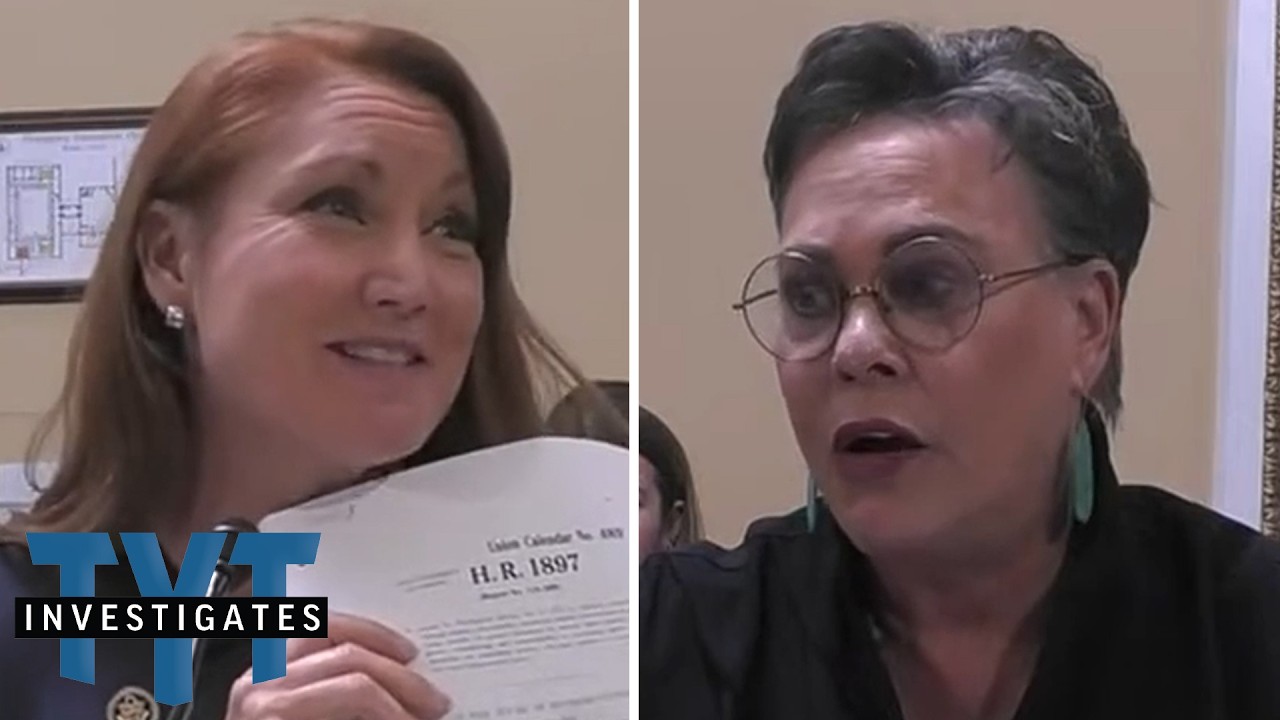
412- 4 harrison schmidt astronaught sen unanimous?
"Project 2025 Specifically CALLS FOR The Changes That Are IN These Bills"
god squad nat am tribes
hr 85x7
260505__IV02_MELANIESTANSBURYHOUSERULESEARTHDAYPROJECT2025
0:23
23 seconds
It seems particularly ironic that on the week that we are celebrating Earth Day,
0:28
28 seconds
the Republican majority is bringing several bills to the floor that seek to gut some of the most successful environmental protections in American history and on the face of planet Earth,
0:40
40 seconds
including one of the most successful conservation bills to protect endangered species. In fact, the ESA has not only
0:47
47 seconds
been one of our most successful, it has helped to save iconic species like whooping cranes, paragan falcons, grey
0:56
56 seconds
wolves, and the very symbol of America itself, the bald [snorts] eagle. But what is particularly stunning is that
1:03
1 minute, 3 seconds
these attacks come to some of the most bipartisan bills in the history of this country. In fact, the ESA was signed
1:10
1 minute, 10 seconds
into law in 1973 by Richard Nixon, of course, a Republican, and passed unanimously in the Senate and 4 to2 to 4
1:20
1 minute, 20 seconds
here in the House. It was championed, in fact, by a Republican senator from New Mexico named Harrison Schmidt, who you
1:26
1 minute, 26 seconds
might recognize as an astronaut who was the only geologist to ever step foot,
1:32
1 minute, 32 seconds
yes, on the moon. The passage of the ESA followed the passage of NEPA three years earlier. also signed by Nixon and also passed unanimously in the Senate. Why?
1:44
1 minute, 44 seconds
Because 50 years ago, Republicans in this body believe that saving wildlife,
1:48
1 minute, 48 seconds
protecting the planet, and investing in science was not a partisan issue, but a patriotic duty. It is noteworthy that
1:57
1 minute, 57 seconds
even then under immense pressure from the very same industries that are lobbying to pass these bills here today,
2:04
2 minutes, 4 seconds
oil and gas, mining, logging, and real estate development, they still pass unanimously in the Senate and with
2:10
2 minutes, 10 seconds
overwhelming bipartisan support. This is of course in stark contrast to what we see before us today as we see those same
2:19
2 minutes, 19 seconds
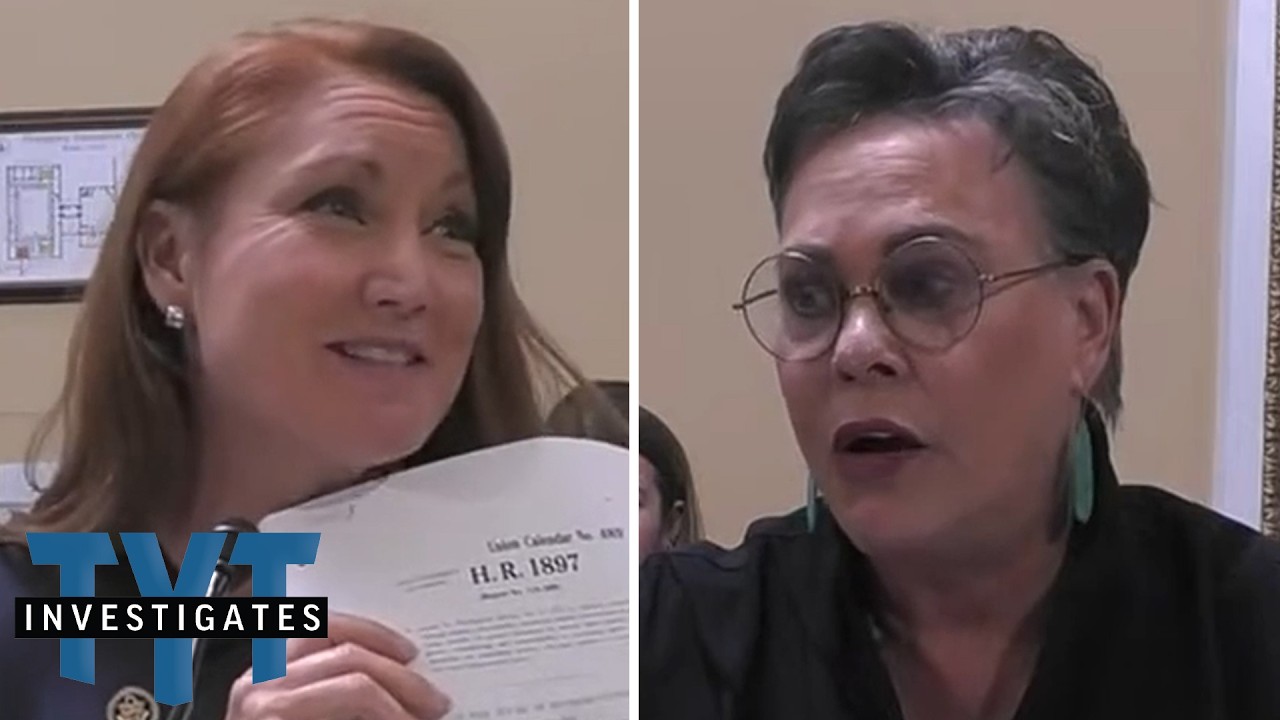
industries pushing these bills 50 years later, but with support from our colleagues across the aisle. HR1 1897
2:27
2 minutes, 27 seconds
would gut core provisions of the ESA and threaten countless endangered species.
2:33
2 minutes, 33 seconds
It would lead to premature dis delisting of species, gutting protections for critical habitat, opening the door to
2:39
2 minutes, 39 seconds
junk science, expanding the use of the god squad, limiting the ability of tribes, communities, and those most
2:46
2 minutes, 46 seconds
affected to stop bad actors in the courts, and prioritize corporate profits over our people and our environment.
2:56
2 minutes, 56 seconds
HR5587 or the Heats Act is in truth a wolf in sheep's clothing which hasn't been able
3:02
3 minutes, 2 seconds
to be passed out of Congress because it bypasses and guts the National Environmental Policy Act. It allows
3:10
3 minutes, 10 seconds
corporations to drill under public and private lands potentially for miles without consideration for public safety,
3:17
3 minutes, 17 seconds
drinking water, cultural resources, and in reality represents a backdoor to permitting that our oil and gas
3:25
3 minutes, 25 seconds
industries have sought for years. And all of this represents years of influence by special interests and big money and politics. In fact, the
3:33
3 minutes, 33 seconds
coordination between those special interest lobbyists and conservative think tanks culminating in Project 2025,
75-90% favor esa fischbach grey worlves ranchers
an 12 24
meta data ctr nix next to nuke plant b/c of end bee
21-species-removed-from-endangered-list-because-they-are-extinct
an 1222
Extinction fears soar amid 'perfect storm of unsustainable human activity decimating marine life'
Image via Creative Commons.
Jessica Corbett and Common Dreams December 11, 2022
During the United Nations biodiversity summit in Montreal, an international conservation group on Friday highlighted how humanity is dangerously failing marine life with illegal and unsustainable fishing, pollution from agricultural and industrial runoff, and activities that drive up global temperatures.
The International Union for Conservation of Nature (IUCN) Red List of Threatened Species now features 150,388 species, 42,108 of which face possible extinction. Of the 17,903 marine animals and plants on the list, more than 1,550 are at risk.
"Today's IUCN Red List update reveals a perfect storm of unsustainable human activity decimating marine life around the globe. As the world looks to the ongoing U.N. Biodiversity Conference to set the course for nature recovery, we simply cannot afford to fail," Bruno Oberle, the group's director general, warned Friday. "We urgently need to address the linked climate and biodiversity crises, with profound changes to our economic systems, or we risk losing the crucial benefits the oceans provide us with."
The primary aim of the 15th Conference of the Parties (COP15) of the Convention on Biological Diversity (CBD)—which is hosted by China but kicked off earlier in Canada this week due to Covid-19 restrictions—is the development of post-2020 global biodiversity framework (GBF).
A top priority for many parties to the treaty—along with the United States, which has failed to ratify the CBD over the past three decades but is still participating in the summit—is to protect 30% of lands and waters by 2030. However, as activists and Indigenous leaders from around the world have noted, there are serious human rights concerns regarding implementation of the 30x30 goal.
COP15 comes after the fifth round of discussions about establishing a U.N. treaty for the high seas, or the two-thirds of oceans outside territorial waters. Those August talks failed to produce an agreement—which, as Laura Meller of Greenpeace's Protect the Oceans campaign warned at the time, "jeopardizes the livelihoods and food security of billions of people around the world."
"While progress has been made, particularly on ocean sanctuaries, members of the High Ambition Coalition and countries like the USA have moved too slowly to find compromises, despite their commitments," Meller continued. "Time has run out. Further delay means ocean destruction. We are sad and disappointed. While countries continue to talk, the oceans and all those who rely on them will suffer."
Similarly urgent warnings came with the update Friday. Ashleigh McGovern, vice president of the Center for Oceans at Conservation International, said that "with this devastating IUCN Red List update on the status of marine species, it is clear that business as usual is no longer an option."
"Human activity has had devastating effects on marine ecosystems and biodiversity, but it can also be harnessed to drive action as a matter of survival, equity, and climate justice," she added. "If we are to secure a new future for the world's oceans and the essential biodiversity they harbor, we must act now."
Jon Paul Rodríguez, chair of the IUCN Species Survival Commission (SSC), pointed out that "most of the Earth's biosphere, 99% of all livable space on our planet, is underwater."
"Humanity acts as if oceans were inexhaustible, capable of sustaining infinite harvest of algae, animals, and plants for food and other products, able to transform vast quantities of sewage and other pollutants that we pour in coastal areas, and absorb the CO2 generated by land-use change and burning fossil fuel," he said. "This Red List update brings to light new evidence of the multiple interacting threats to declining life in the sea."
According to the IUCN Red List, 20 of the 54 abalone species—some of the world's most expensive seafood—are threatened with extinction.
"Abalones reflect humanity's disastrous guardianship of our oceans in microcosm: overfishing, pollution, disease, habitat loss, algal blooms, warming, and acidification, to name but a few threats. They really are the canary in the coal mine," said Howard Peters, a member of the IUCN SSC Mollusc Specialist Group and research associate at the U.K.'s University of York who led the abalone assessment.
"The most immediate action people can take is to eat only farmed or sustainably sourced abalones. Enforcing fishery quotas and anti-poaching measures is also critical," Peters noted. "However, we need to halt the changes to ocean chemistry and temperature to preserve marine life including abalone species over the long term."
The update also raised the alarm about dugongs, particularly in East Africa and New Caledonia. Populations of the large herbivorous marine mammals are threatened by fishing gear, oil and gas exploration and production, chemical pollution, and the destruction of seagrasses they rely on for food.
"Strengthening community-led fisheries governance and expanding work opportunities beyond fishing are key in East Africa, where marine ecosystems are fundamental to people's food security and livelihoods," said Evan Trotzuk, who led the region's assessment.
Another focus of the list is the pillar coral in the Caribbean, given that its population has shrunk by more than 80% across most of its range over the past three decades.
Noting that it is just one of 26 corals now listed as critically endangered in the Atlantic Ocean, Arizona State University associate professor Beth Polidoro, Red List coordinator for the IUCN SSC Coral Specialist Group, said that "these alarming results emphasize the urgency of global cooperation and action to address climate change impacts on ocean ecosystems."
Amanda Vincent, chair of the IUCN SSC Marine Conservation Committee, declared that "the awful status of these species should shock us and engage us for urgent action."
"These magical marine species are treasured wildlife, from the wonderful abalone to the charismatic dugong and the glorious pillar coral, and we should safeguard them accordingly," she added. "It is vital that we manage fisheries properly, constrain climate change, and reverse habitat degradation."
Nodding to the conference, Jane Smart, director of IUCN's Science and Data Center, said the update reinforces her group's "urgent call for a post-2020 global biodiversity framework that will be ambitious enough to cease destruction of our life support system and catalyze the necessary action and change to secure life on this planet."
an 12 22 sorta //
The day before nearly two weeks of negotiations kick off at the United Nations summit on biodiversity, campaigners warned Tuesday that the talks taking place this month in Montreal may offer humanity its last chance to mitigate the planet's crisis of rampant species loss, and called on policymakers to adopt an ambitious framework to protect wildlife.
More than 190 nations will be represented at the 15th Conference of the Parties to the Convention on Biological Diversity (COP15), where negotiators will discuss a draft agreement aimed at conservation, slashing levels of toxic pollutants, and mitigating the climate crisis.
With about one million species—out of about 8.7 million known species—expected to become extinct in the coming decades, advocates said that policymakers must reverse more than a decade of failure to meet the targets set in 2010 at COP10 in Aichi, Japan, including protecting 17% of terrestrial and inland water areas and conserving coral reefs.
"Now is the time for the world to set bold new goals to protect every last species," said Tierra Curry, a senior scientist at the Center for Biological Diversity. "We're undermining our own survival by taking nature for granted, decimating wild places and jeopardizing vulnerable communities."
Advocates are pushing the 196 member nations of the convention to adopt 21 targets named in the draft set to be presented at the meeting, including:
- Protections for at least 30% of lands and waters by 2030;
- Policies to prevent or reduce invasive species by 50%;
- The elimination of plastic waste;
- The reduction of pesticides in the environment by at least two-thirds;
- The recognition of Indigenous peoples' rights and central role in protecting biodiversity; and
- At least $100 billion in annual funding for developing countries to protect wildlife, provided by wealthy governments.
"If delegates at the Convention on Biological Diversity can't agree that we should end extinction, it's a tragic reflection on our values," said Curry. "We've put nature in the basement of our heart, but it needs to be in the penthouse."
Greenpeace International called the meeting "the make-or-break moment for global biodiversity" while Greenpeace East Asia senior policy adviser Li Shuo called it "a chance for reinvention."
"It is unacceptable for this process to continue to pump out promises and never deliver," he said. "Negotiations over the next two weeks need to generate targets that will actually be implemented and supported."
In his opening remarks on Tuesday, U.N. Secretary-General António Guterrescalled on negotiators to adopt a framework "that addresses the root causes of this destruction."
"Deforestation and desertification are creating wastelands of once-thriving ecosystems," he said. "Our land, water, and air are poisoned by chemicals and pesticides, and choked with plastics. Our addiction to fossil fuels has thrown our climate into chaos—from heatwaves and forest fires, to communities parched by heat and drought, or inundated and destroyed by terrifying floods."
"The deluded dreams of billionaires aside, there is no Planet B," Guterres added. "We must fix the world we have. We must cherish this wonderous gift. We must make peace with nature."
Biologist Alexandre Antonelli, the director of science of the Royal Botanic Gardens, Kew, in the U.K., called the conference "one of the most important meetings humanity has ever had."
"We have a very narrow window of opportunity to halt the loss of biodiversity by 2030 and reverse its decline by 2050," Antonelli toldThe New Statesman on Monday. "We may never have that chance again."
yikes
https://www.alternet.org/2022/10/animal-populations-69-percent-decline/
https://moneytrails.org/issue/independent-petroleum-association-of-america-ipaa/
follow the money trails ipaa:
Other Interior Officials Have Also Met With IPAA
FWS Director Nominee And Former Monsanto Employee Aurelia Skipwith Has Been Involved In Sage Grouse Protection Rollbacks And Spoke At The IPAA.
Skipwith’s Calendars Show She Has Been Involved In The Rollback of Sage Grouse Protections And Spoke At The Independent Petroleum Association Of America (IPAA). “According to her publically released calendars, Skipwith has been deeply involved in the Trump administration’s rollback of habitat protections for the imperiled sage grouse and spoke at the oil and gas association Independent Petroleum Association of America’s (IPAA) regulators’ forum.” DailyKos, [:{09/11/19:(style="box-sizing:inherit;margin:0px 0px 0px -0.225em;padding:0px 0.15em;border-style:solid;border-width:0px;background-repeat:no-repeat;position:relative;display:inline-block;z-index:9"):}:]
- The IPAA Is A Former Client Of Interior Secretary David Bernhardt. “The IPAA is a former client of Secretary Bernhardt’s whose political director was caught on tape laughing about the connections and access they have within the Trump administration,” stated O’Neill.” DailyKos, [09/11/19]
- Skipwith Sent Memos To FWS And The National Park Service Requesting Rules Regarding Bear And Wolf Killings Be Reviewed. “In July 2017, Skipwith sent memos to the National Park Service and FWS requesting they review rules that prevented hunters fromkilling bears and wolves using extreme techniques, like baiting the animals with greasy doughnuts, ambushing mothers with pups in dens and shooting animals from boats while the bears are swimming,’:{ said O’Neill.” DailyKos, :(style="background-color:#faf8f5;"):}:[09/11/19:{]}:
Current Deputy Solicitor for Parks and Wildlife Solicitor Karen Budd-Falen Met With The Oil Industry Lobbyists Who Helped “Rewrite” Obama-Era Sage Grouse Management Plans
On June 13, 2019, Karen Budd-Falen had a meeting with representatives from the Independent Petroleum Association Of America (IPAA). In a calendar event titled simply, “Meeting,” Karen Budd-Falen met with people with the email addresses mmiller@ipaa.org and dnaatz@ipaa.org. Karen Budd-Falen Calendar,[:{ :{06/13/19:(style="box-sizing:inherit;margin:0px 0px 0px -0.225em;padding:0px 0.15em;border-style:solid;border-width:0px;background-repeat:no-repeat;position:relative;display:inline-block;z-index:9"):}::(style="box-sizing:inherit;margin:0px 0px 0px -0.225em;padding:0px 0.15em;border-style:solid;border-width:0px;background-repeat:no-repeat;position:relative;display:inline-block;z-index:9"):}:]
- Mark Miller Is A Past Chairman Of IPAA And President Of Merlin Oil & Gas. IPAA.org,[accessed 09/26/19]
- Dan Naatz Is A Lobbyist For IPAA.:{ Senate Lobbying Disclosure Database,:(style="background-color:#faf8f5;"):}:[accessed 09/26/19:{]}:
IPAA’s Lobbyists Were “Integrally Involved In Rewriting Sage-Grouse Conservation Plans.” “During the Trump administration, IPAA has been integrally involved in rewriting sage-grouse conservation plans. Documents obtained by the Western Values Project indicate that IPAA lobbyists secured numerous meetings with key Interior Department officials, providing an entré for specific companies to give input into sage-grouse plans. In one instance,IPAA arranged phone calls for Chesapeake Energy, ConocoPhillips, and EOG Resources to ask BLM for specific revisions to sage-grouse maps.During the process of amending the sage-grouse conservation plans, IPAA submitted formal comments recommending specific policy changes. It appears that certain IPAA recommendations — such as cutting requirements to offset habitat damage from development with conservation gains elsewhere — were accepted by the BLM:{, either partially or in full, as a part of the agency’s draft plans.” Center For Western Priorities,:(style="background-color:#faf8f5;"):}:[:{ :{03/14/19:(style="box-sizing:inherit;margin:0px 0px 0px -0.225em;padding:0px 0.15em;border-style:solid;border-width:0px;background-repeat:no-repeat;position:relative;display:inline-block;z-index:9"):}::(style="box-sizing:inherit;margin:0px 0px 0px -0.225em;padding:0px 0.15em;border-style:solid;border-width:0px;background-repeat:no-repeat;position:relative;display:inline-block;z-index:9"):}::{]}:
Current Associate Deputy Secretary of the Interior James Cason Met With IPAA After Rumors Of Bernhardt’s Nomination To Be Secretary Began To Circulate
Cason Served as Acting Deputy Secretary of the Interior until Bernhardt’s Nomination was Confirmed. Rumors of Bernhardt’s nomination to Deputy Secretary began circulating in January 2017. Cason joined the Trump Administration as Associate Deputy Secretary on January 20, 2017, and served as Acting Deputy Secretary until David Bernhardt was confirmed in July 2017. ProPublica, [:{03/08/17:(style="box-sizing:inherit;margin:0px 0px 0px -0.225em;padding:0px 0.15em;border-style:solid;border-width:0px;background-repeat:no-repeat;position:relative;display:inline-block;z-index:9"):}:; Washington Post, :{07/24/17:(style="box-sizing:inherit;margin:0px 0px 0px -0.225em;padding:0px 0.15em;border-style:solid;border-width:0px;background-repeat:no-repeat;position:relative;display:inline-block;z-index:9"):}:]
- Cason’s “Task List” Included Meeting With IPAA. February 17: “Asked to rescind the 113 Financial Assurance orders from small energy companies.” [Cason Task List;Bernhardt Recusal Letter;About IPAA]
Interior Chief Of Staff Todd Willens Met With IPAA
On April 26, 2018, Todd Willens had an external meeting with IPAA. They topics discussed at this meeting wereMBTA, Mitigation, and the proposed removal of blanket 4(d). In addition to IPAA staff, this meeting included an employee of Noble Energy, which is also on Bernhardt’s recusal list. :{Todd Willens Department Of Influence Profile, :(style="background-color:#faf8f5;"):}:[:{accessed:(style="box-sizing:inherit;margin:0px 0px 0px -0.225em;padding:0px 0.15em;border-style:solid;border-width:0px;background-repeat:no-repeat;position:relative;display:inline-block;z-index:9"):}: :{10/16/19:(style="box-sizing:inherit;margin:0px 0px 0px -0.225em;padding:0px 0.15em;border-style:solid;border-width:0px;background-repeat:no-repeat;position:relative;display:inline-block;z-index:9"):}::{, Todd Willens Calendar, 04/26/18]}:
IPAA And Its Members Spend Millions On Campaign Contributions
// kpfa pandemocene mammals move and mix
also 40% of ocean life?
https://www.alternet.org/2022/04/humanity-degraded-40-percent-earth/
A new United Nations report released Wednesday shows farming, mining, and logging has marred more than half of the planet. In a portrait of land degradation across the globe, the report describes entire forests razed for timber or pasture; sensitive grasslands and wetlands lost to sprawling cities; and over-exploited lands that have dried up into desert.
People have altered 70 percent of Earth’s lands from their natural state and degraded up to 40 percent. This threatens “many species on Earth, including our own,” the report warns. If these trends continue, experts expect growing disruptions to human health, food supplies, migration, and biodiversity loss driven by climate change, in what the authors calls a “confluence of unprecedented crises.”
“The human-environment relationship must drastically change to avoid catastrophic tipping points whereby the human power of exploitation is overwhelmed by the power of nature,” the report says, noting that half of humanity already feels the effects of degraded land.
The report, called the Global Land Outlook 2, comes from the United Nations Convention to Combat Desertification and follows a landmark UN report earlier this month that called for “rapid and deep” emissions cuts to avoid the worst effects of global warming. The authors stressed that combating the erosion of the world’s lands actually makes a lot of economic sense: More than half of the global economy — about $44 trillion a year — relies on the natural world. At the same time, restoring lands and protecting forests could stem the rippling effects of poverty, hunger, conflict, and disease. And that, in turn, could contribute more than a third of the efforts needed to sequester carbon and limit global warming to 1.5 degrees Celsius.
More than anything, industrial agriculture has played an outsized role. The cultivation of cattle, palm oil, and soybeans in particular has led to depleted freshwater, widespread deforestation, and rampant extinctions, all of it underwritten by $700 billion in government subsidies each year that support unsustainable, polluting practices. In turn, this has unleashed tons and tons of greenhouse gasses each year.
In a press briefing on Wednesday, Ibrahim Thiaw, executive secretary of the U.N. organization, said that for too long, people have mined the earth, used its resources, and thoughtlessly discarded the rest. He pointed to his suit jacket: “This is fiber, this is cotton, this is land, this is water, this is carbon.” Thiaw said humanity must abandon this approach and adopt a more sustainable mindset of management.
The report warns that if nothing changes, by 2050, we can expect significant hits to crop yields, the degradation of an additional expanse of land the size of South America, and the loss of carbon locked up in poor soils and threatened peatlands. On the other hand, committing to conservation and restoring about a third of the world’s lands would not only improve yields and lock in carbon, but also prevent a third of expected extinctions.
The authors used “restoration” to refer to sustainable management of land and water. That includes practices like “rewilding” natural areas, protecting wetlands and waterways, prioritizing ecosystems in agriculture, and building green spaces in cities. They pointed to a number of success stories, such as efforts to rewild Argentina’s Iberá wetlands and preparefor dust storms in Kuwait.
“It’s not complicated,” Thiaw said. “It is actually low-tech, and it is accessible and achievable.” That is, if humanity can muster up the political will.
https://www.alternet.org/2021/06/major-extinction-events/
Roughly 66 million years ago, an asteroid or comet struck the planet and wiped out three-quarters of every animal and plant species alive. Known as the Cretaceous–Paleogene extinction event (K–Pg), it has been immortalized in popular culture because of its association with the end of the dinosaurs' reign on Earth.
That is why scientists are hopeful that a new study regarding the rate of extinction nowadays may hammer home the urgency of our pollution problems. In an international study led by the Justus Liebig University Giessen that included geologists, paleontologists, evolutionary biologists and many others, researchers found that in some cases, man-made factors are causing an extinction rate that surpassesthat of the Cretaceous–Paleogene extinction event.
The study, which was published last month in the journal Communications Earth & Environment, closely analyzed past extinction rates for freshwater animals and plants, then used that information to extrapolate likely future extinction rates. They discovered that the average predicated rate for freshwater animals and plants today is three orders of magnitude higher than it was during the Cretaceous–Paleogene extinction event. If current trends continue unabated, one-third of all freshwater species alive today may be forever gone by 2120.
If that happens, we can expect that the damage to our freshwater ecosystem — which, inevitably, has an impact on ecosystems everywhere else on the planet — will be effectively permanent.
"Our results indicate that, unless substantial conservation effort is directed to freshwater ecosystems, the present extinction crisis will have a severe impact to freshwater biota for millions of years to come," the authors write.
Even after the extinction event itself abated, the extinction rate remained high for 5.4 million years; the ecological recovery period required another 6.9 million years. Hence, the authors believe that our current situation might be comparable. Even if the man-made impact on life on Earth "ceases immediately, the already triggered phase of extinction might still involve several million years," they write.
Speaking to the Naturalis Biodiversity Center, the study's lead author Dr. Thomas A. Neubauer explained that "losing species entails changes in species communities and, in the long run, this affects entire ecosystems. We rely on functioning freshwater environments to sustain human health, nutrition and fresh water supply." He added that "despite our short existence on Earth, we have assured that the effects of our actions will outlast us by millions of years."
In the study itself, the authors explained that the extinction crisis "has consequences on many levels," noting that smaller changes compound into larger ones that eventually have devastating consequences.
"Radical changes in ecosystem functioning, in turn, may have severe implications on ecosystem services for humanity, such as food provision, disease resistance or economic benefits," the authors write. "Thus, if we continue to lose species at the fast pace our analysis suggests, we will continue to impair ecosystem services to our own disadvantage."
The new study is one of many red flags being thrown up by the planet about a number of pollution issues that threaten our survival. A February report by the World Wide Fund for Nature (WWF) and Global Wildlife Conservation revealed that roughly one-third of the world's 18,075 freshwater fish species face possible extinction. The reasons for this include climate change, the introduction of invasive species, habitat destructions, pollution, and overly aggressive draining and damming.
In September a report by the World Wildlife Fund (WWF) found that overall population sizes of "mammals, birds, amphibians, reptiles and fish" have dropped by 68 percent since 1970, indicating that the planet "is being destroyed by us at a rate unprecedented in history." Some scholars have already coined a term, Anthropocene, to describe the geological epoch brought about by climate change and marked by the proliferation of mass extinctions. We are already in the midst of what scientists refer to as the Holocene extinction, or the sixth known mass extinction event in the Earth's history, this one due to human activity.
FROM YOUR SITE ARTICLES
- The quest to save the banana from extinction - Alternet.org ›
- Why this philosopher fears we have a 1 in 6 chance of existential ... ›
- Marine life is fleeing the equator to cooler waters. History tells us this ... ›
RELATED ARTICLES AROUND THE WEB
- Mass extinction facts and information from National Geographic ›
- Six (Mass) Extinctions in 440 Million Years ›
- Mass Extinction Event ›
https://www.alternet.org/2021/04/marine-life/
flee equator
https://www.alternet.org/2020/10/new-global-report-warns-nearly-40-of-plants-are-at-risk-of-extinction
no lnx vid guk twt
New global report warns nearly 40% of plants are at risk of extinction
Jessica Corbett and Common Dreams October 01, 2020
Humanity's destruction of nature has made an estimated two in five plant species worldwide at risk of extinction, according to an assessment published Wednesday by the Royal Botanic Gardens, Kew, in the United Kingdom.
The fourth annual report, entitled State of the World's Plants and Fungi (pdf), draws on the expertise of 210 researchers from 42 countries for what professor Alexandre Antonelli, director of science at RBG Kew, calls an "unparalleled collaborative effort" that aims to put the planet and all its inhabitants on a more sustainable path.
"Open your fridge, peek into your medicine cupboard, examine your living room, feel your clothes. For thousands of years, we have searched nature to satisfy our hunger, cure our diseases, build our houses, and make our lives more comfortable," Antonelli writes in the report's introduction.
"But our early exploration of useful traits in species relied on rudimentary tools, and Indigenous knowledge was lost as local traditions were downplayed and globalization emerged," he adds. "As a result, humanity is still a long way from utilizing the full potential of biodiversity, in particular plants and fungi, which play critical roles in ecosystems. Now, more than ever before, we need to explore the solutions they could provide to the global challenges we face."
The report comes on the heels of a United Nations assessment that the international community has failed to fulfill any of the biodiversity targets that were set a decade ago as well as the latest edition of World Wide Fund for Nature's flagship publication, which warned that "nature—our life-support system—is declining at a staggering rate." Specifically, WWF found "an average 68% decrease in population sizes of mammals, birds, amphibians, reptiles, and fish between 1970 and 2016."
Throughout the report's 12 chapters, researchers address the importance of seeking out species before they disappear and calculating extinction risk; ways that plants and fungi can be used in terms of food, energy, healthcare, and more; how biological resources can be used more wisely; and the conditions in the U.K. and its territories.
"Natural ecosystems provide useful services for humanity, such as regulating climate, preventing floods, and filtering water. As the building blocks of ecosystems, plants and fungi have the potential to help us address current environmental challenges, such as climate change," the report notes. "However, these natural benefits could be compromised by biodiversity loss, caused by humans clearing or degrading natural vegetation and over-harvesting wild species, as well as by shifting weather patterns."
Given the importance of plants and fungi, "we need to have a rough idea of the conservation status of every species," Eimear Nic Lughadha, conservation scientist at RBG Kew and lead author of the extinction chapter, explained in a statement. Lughadha highlighted advancements with artificial intelligence, adding, "the techniques are good enough to say, 'this area has a lot of species that haven't been assessed but are almost certainly threatened.'"
In 2019 alone, 1,942 plants and 1,886 fungi were scientifically named for the first time, according to the report—which adds that "current threats to global biodiversity, from climate change, logging, and land-use change, make the task of cataloguing species a race against time."
Only six species of medicinal fungi have been assessed for conservation status, "one of which, Fomitopsis officinalis, a wood-inhabiting parasitic fungus, has already been pushed to the brink of extinction," the report says. Out of 25,791 known medicinal plants, 5,411 have been assessed and 723—or 13%—are threatened.
Professor Monique Simmonds, deputy director of science at RBG Kew and lead author of the commercialization chapter, told the Guardian that humanity should look to nature for treating coronaviruses and other diseases with pandemic potential. As she put it: "I am absolutely sure going forward that some of the leads for the next generation of drugs in this area will come from plants and fungi."
The report also notes that even though there are at least 7,039 plants that hold potential as foods, "just 15 crop plants contribute to 90% of humanity's energy intake, and more than four billion people rely on just rice, maize, and wheat." As an RBG Kew statement explained, "Relying on a handful of crops to feed the global population has contributed to malnutrition and left us vulnerable to climate change."
Stefano Padulosi, co-author of the food chapter, said that "the thousands of underutilized and neglected plant species are the lifeline to millions of people on Earth tormented by unprecedented climate change, pervasive food and nutrition insecurity, and economic disempowerment."
"Harnessing this basket of untapped resources for making food and production systems more diverse and resilient to change should be our moral duty to current and future generations," declared Padulosi, former senior scientist at the Alliance of Biodiversity International and the International Center for Tropical Agriculture.
Antonelli agreed, saying broadly that "the data emerging from this year's report paint a picture of a world that has turned its back on the potential of plants and fungi to address fundamental global issues such as food security and climate change. Societies have been too dependent on too few species for too long."
"At a time of rapid biodiversity loss, we are failing to access the treasure chest of incredible diversity on offer and missing a huge opportunity for our generation," he added. "As we start the most critical decade our planet has ever faced, we hope this report will give the public, businesses, and policymakers the facts they need to demand nature-based solutions that can address the triple threats of climate change, biodiversity loss, and food security."
ew 920
human consumption has led to an unprecedented rate of decline in the world's wildlife populations, according to the Living Planet Report 2020, a biennial paper put out by the World Wildlife Fund (WWF) and the Zoological Society of London.
Read More
==
https://www.ecowatch.com/brazil-amazon-wildlife-criminal-networks-2646841421.html
==
==
Study predicts polar bears will die off within 80 years: ‘The poster child for climate change’
Igor Derysh / SalonJuly 27, 2020
Polar bears could face extinction by the end of the century as a result of shrinking sea ice in the Arctic caused by climate change, according to a new study published in…
==
omfg
huffpo tag
https://www.huffpost.com/topic/william-perry-pendley
what fresh hell under radar
Trump will formally nominate William Perry Pendley, a self-proclaimed “sagebrush rebel” with extreme anti-environmental views and a long history of advocating for the sale of federal lands in the West, to serve as director of the Bureau of Land Management.:{ :(style="font-style:italic;background-color:#f5f5f5;"):}:[*Huffpo*:{]}:
:{
}:
trump will formally nominate William Perry Pendley, a self-proclaimed “sagebrush rebel” with extreme anti-environmental views and a long history of advocating for the sale of federal lands in the West, to serve as director of the Bureau of Land Management.
Pendley was :{tapped last July:(style="box-sizing:inherit"):}: for a senior policy position at BLM, an agency of the Department of the Interior, and quickly elevated to acting chief. The backdoor appointment put him in charge of overseeing 245 million acres of :{public land:(style="box-sizing:inherit"):}: — more than 10% of the entire U.S. landmass — and 700 million subsurface mineral acres. It also enraged environmentalists and :{sparked fears of a public lands sell-off:(style="box-sizing:inherit"):}:.
Pendley, a native of Wyoming, is the former longtime president of Mountain States Legal Foundation, a conservative nonprofit that has pushed for the government to sell off millions of federal acres. He’s written several books about Western land issues, including one titled “Sagebrush Rebel,” a reference to the Sagebrush Rebellion movement of the 1970s and ’80s that sought to remove lands from federal control. In a January 2016 op-ed published by The National Review, he wrote: “Founding Fathers intended all lands owned by the federal government to be sold.”
The Trump administration has :{vowed:(style="box-sizing:inherit"):}: not to dispose of public lands. Yet it has cozied up to members of the pro-land transfer movement and :{tapped:(style="box-sizing:inherit"):}::{ several:(style="box-sizing:inherit"):}: opponents of federal land policy for high-ranking department positions. Pendley has :{dismissed:(style="box-sizing:inherit"):}: concerns about his stance on federal lands and said his personal views and past statements ― including some that described climate science as “:{junk science:(style="box-sizing:inherit"):}:” and comparing immigrants to a “:{cancer:(style="box-sizing:inherit"):}:” ― are “irrelevant” to leading a bureau.
In a release announcing Trump’s intent to nominate him to the director post, the White House said Pendley “has worked to increase recreational opportunities on and access to our Nation’s public lands, heighten concern for the impact of wild horses and burros on public lands, and increase awareness of the Bureau’s multiple-use mission.”
[
In this photo from Oct. 11, 2019, William Perry Pendley speaks at a conference for journalists in Fort Collins, Colorado.]
Pendley also has ties to Lyndon LaRouche, the late cult leader, convicted fraudster and paranoid conspiracy theorist, as HuffPost first :{reported:(style="box-sizing:inherit"):}:. Pendley published anti-environmental pieces in 21st Century Science & Technology, a fringe LaRouche magazine loaded with pseudoscience and conspiracy theories, and documents indicate he was at a 1994 conference where two of LaRouche’s associates called on anti-environmental groups to help kill Senate support for an international biodiversity treaty. Pendley dismissed his connections to LaRouche as “irrelevant."
sen Tom Udall of New Mexico, the ranking Democrat on the interior and environment appropriations subcommittee, told HuffPost that Pendley’s writings in 21st Century Science & Technology were “yet another clear sign he should not be in charge of the BLM” and should step down.
“The Trump Administration should nominate someone who believes in the agency’s mission and supports protecting our thriving outdoor recreation economy and iconic wildlife—not a longtime advocate of selling off U.S. public lands to the highest bidder,” Udall said in an email.
Nearly 100 environmental organizations signed on to a letter in late December demanding Pendley resign or be removed from office. The groups argued that he poses an “existential threat” to America’s public lands.
“President Trump is doubling down on his record as the most anti-nature president in U.S. history,” Kate Kelly, public lands director at the left-leaning Center for American Progress, said in a statement Friday. “The nomination of William Perry Pendley sends a clear signal that Trump plans to move ahead with a radical, sweeping, and unpopular sell-off of America’s public lands.”
Pendley had voiced interest in becoming BLM’s permanent director, telling the Daily Sentinel in Grand Junction, Colorado, in November that he would welcome the opportunity but that it was ultimately up to the White House. The job requires Senate confirmation, meaning Pendley will soon face tough questions under oath from Democrats who say he’s unfit to lead the powerful agency.
Pendley’s first stint in government was under James Watt, President Ronald Reagan’s Interior Department chief, who is widely considered among the most anti-environment Cabinet appointees in U.S. history. Pendley joined Watt’s Interior Department in 1981 as deputy assistant secretary of the Minerals Management Service and has been described as Watt’s “ideological twin.”
Along with extreme views on federal land policy, Pendley detests the Endangered Species Act, once writing the conservation law seeks “to kill or prevent anybody from making a living on federal land.” He has sued the federal government numerous times in the last three decades, railed often against environmental “terrorists” and “eco-fascists,” and compared the climate crisis to a “unicorn” because “neither exists.”
related:
Trump’s Public Lands Chief Wrote For A Cult Extremist’s Magazine U.S. Public Lands Chief Says His Positions On Climate, Immigrants Don’t Matter Hatred For The Endangered Species Act Runs Deep At Trump’s Interior Department Chris D’Angelo Environment Reporter, HuffPost Politics News Donald Trump Federal Lands William Perry Pendley Interior Department
For :{20 minutes, Wyoming lawyer William Perry Pendley railed against “environmental extremists” and boasted about the legal battles his right-wing nonprofit had waged on behalf of Western property owners. The tirade came at a September 2014 }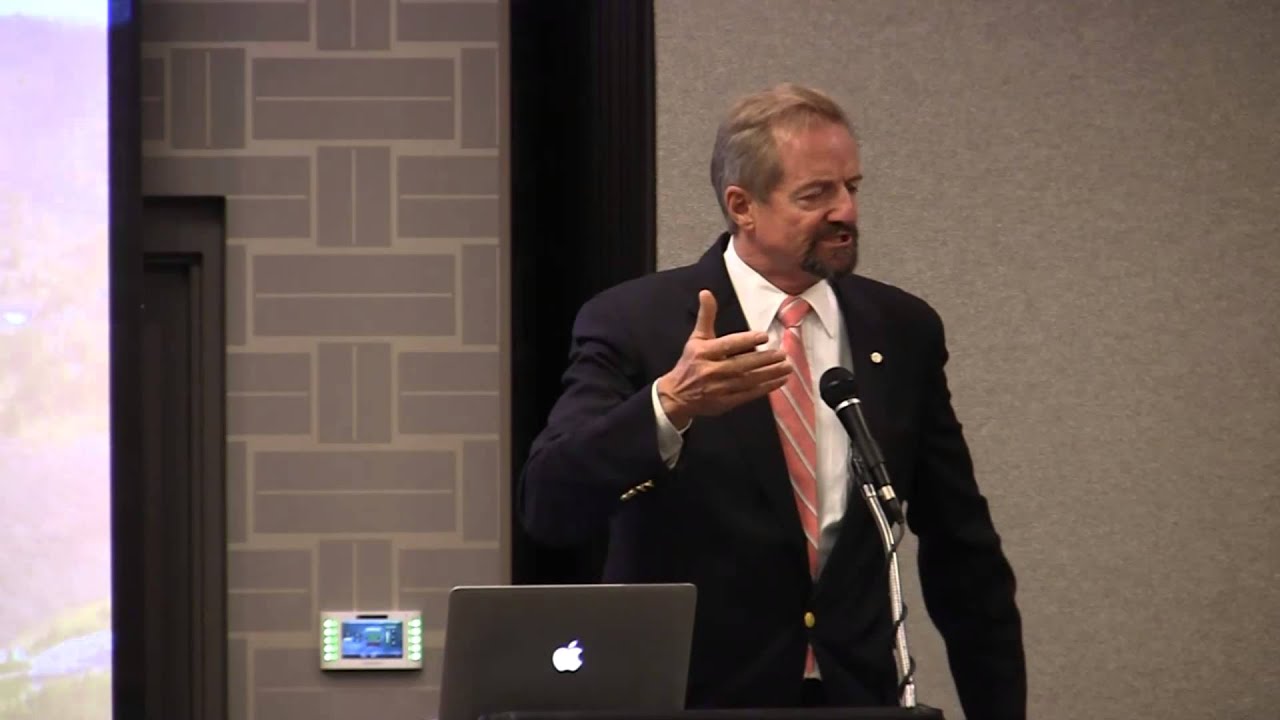 :{ of the conservative American Dream Coalition in Denver.}:
:{
}:
Environmentalists primarily use three laws, including the Endangered Species Act of 1973, as tools to “drive people off the land” and into cities where they can be “controlled,” he said. At the time, Pendley was president of the Mountain States Legal Foundation, a Colorado-based nonprofit law firm that focuses on “protecting property rights” and advocates for selling off millions of federal acres in the West.
“We’ve gone from protecting the warm and fuzzies to protecting the cold and slimies,” he said. “It was supposed to apply only to federal land. Today, it applies to private property ― coast to coast, border to border ― which leads us here in the West to say what? ‘Shoot, shovel and shut up’ if you encounter one of those critters on your property.”
He continued: “That, by the way, is not legal advice.”
“Shoot, shovel and shut up” ― also known as the “3-S treatment” ― is a strategy extreme property rights advocates have embraced for getting rid of unwanted, imperiled species on private land. Pendley has also written that the law underlying federal species protection is used “:{to kill or prevent anybody from making a living on federal land:(style="box-sizing:inherit"):}:.”
Late last month, Interior Secretary David Bernhardt :{tapped Pendley to serve as acting director:(style="box-sizing:inherit"):}: of the Bureau of Land Management, an agency of the Interior Department that oversees 245 million acres of :{public land:(style="box-sizing:inherit"):}:, or more than one-third of the federal estate. This week, the Trump administration:{**finalized rules that significantly weaken**:(style="box-sizing:inherit"):}:the Endangered Species Act.Among other things, the changes will make it easier for government agencies to remove species from the protected list and limit their ability to account for the impacts of future climate change. The rollback comes on the heels of a United Nations report that found :{up to 1 million species around the globe are at risk of extinction:(style="box-sizing:inherit"):}: due to human activities.
[PIX
Interior deputy Susan Combs, pictured in 2010, spent decades as an official in Texas fighting conservation efforts alongside the state’s oil and gas industry.
That the Interior Department took aim at the ESA comes as no surprise when one considers some of the people in high-ranking posts. Pendley is one of several agency officials who detest what is arguably America’s most important law for protecting imperiled plants and animals.
Susan Combs, a former Texas comptroller who was :{confirmed:(style="box-sizing:inherit"):}: in June as Interior’s assistant secretary for policy, management and budget, once equated proposed ESA listings to “:{incoming Scud missiles:(style="box-sizing:inherit"):}:” headed for her state’s oil and gas-rich economy.As a state lawmaker in the 1990s, she championed legislation prohibiting state wildlife officials from gathering endangered species data from private lands without permission, according to The Austin Chronicle. As Texas comptroller, she :{fought against the federal government’s proposal:(style="box-sizing:inherit"):}: to list the dune sagebrush lizard ― an effort that primarily benefited fossil fuel interests. And in 2015, Combs led three groups in a failed effort to :{petition:(style="box-sizing:inherit"):}: to have federal protections removed for the golden-cheeked warbler, an endangered songbird native to central Texas.
Karen Budd-Falen, Interior’s deputy solicitor for fish, wildlife and parks, has called the ESA “:{a sword to tear down the American economy:(style="box-sizing:inherit"):}:, drive up food, energy and housing costs and wear down and take out rural communities and counties.” As a private lawyer, she was involved in several ESA-related legal disputes, including representing parties accused of violating the law.
During a speech at a conservative summit in 2016, Budd-Falen asserted that she would “repeal the ESA in a heartbeat,” contradicting comments she made during congressional testimony in 2011.
[vid]
Budd-Falen was among several Interior officials who briefed reporters about the ESA overhaul on Monday.
kathy Benedetto, a top adviser at Interior, :{said in 1995:(style="box-sizing:inherit"):}:that the ESA “states that plants, animals and bugs are more important than human beings and that’s morally bankrupt,” according to a :{daily newsletter:(style="box-sizing:inherit"):}: from the Alliance for America, a property rights group that was “dedicated to bringing human concerns into environmental decision-making.”
“Most species became extinct before man showed up,” Benedetto added. “The earth changes constantly.”
At the time, Benedetto was an executive committee member at the Grassroots ESA Coalition, which was, as the Alliance for America described it, working to “throw out” the 1973 law.
Then there’s Interior chief Bernhardt, a former fossil fuel lobbyist and lawyer who has been a key figure in the Trump administration’s deregulatory agenda. In 2008, while working as the department’s top lawyer during the Bush administration, Bernhardt :{issued a legal memo:(style="box-sizing:inherit"):}: that concluded it’s impossible to prove planet-warming greenhouse gases are impacting imperiled species and instructed federal agencies not to consider climate change when making listing decisions. As an industry lawyer, he sued the federal government over its implementation of the act. And as an official in the Trump administration, he intervened to block a scientific report by the Fish and Wildlife Service about the threat certain pesticides pose to more than 1,000 endangered species, as an investigation by The New York Times uncovered earlier this year.
[
The black-footed ferret was brought back from the brink of extinction by a U.S. Fish and Wildlife Service captive breeding program. The species has been reintroduced in the wild, but is still listed under the Endangered Species Act.
Bernhardt and the agency have :{defended:(style="box-sizing:inherit"):}: the ESA rework, saying it will increase transparency and lift regulatory burdens without negatively impacting species recovery.
“We celebrate the #EndangeredSpeciesAct as the nation’s foremost conservation law w/ the ultimate goal of recovering the most imperiled species,” Interior’s press office wrote in :{a post:(style="box-sizing:inherit"):}: to Twitter. “We are updating ESA implementation to make it more clear, consistent & better address conservation challenges of the 21st century.”
What’s clear, however, is that there are several people walking the halls of Interior’s headquarters in Washington who don’t share that sentiment and want to see sweeping revisions to the ESA. And that’s exactly what environmental groups say the American public is getting with the new rules, which alter how federal agencies implement portions of the law.
“You’ll hear from the administration that a lot of these changes are just kind of cleaning up and technical in nature,” Jamie Rappaport Clark, president and CEO of the conservation nonprofit Defenders of Wildlife and a former director of the U.S. Fish and Wildlife Service under President Bill Clinton, told reporters Monday. “But this package of regulations in no way will improve species conservation, they’ll do quite the opposite. They’ll seriously undermine the Endangered Species Act’s effectiveness in significant and important ways.”
https://www.desmogblog.com/2020/05/03/keystone-xl-future-pipeline-permits
On April 15, Judge Brian Morris nullified water-crossing permits in Montana that were granted for the Keystone XL, a major setback for the long-embattled tar sands oil pipeline. The ruling came just days after Keystone XL owner TC Energy, formerly known as TransCanada, obtained billions of dollars in subsidies from the Alberta government as global oil prices plummeted.
The oil and gas industry has taken notice. Seemingly just a ruling on Keystone XL — the subject of opposition by the climate movement for the past decade — the ruling could have far broader implications for the future of building water-crossing pipelines and utility lines.
In his decision, Judge Morris cited a potential violation of the Endangered Species Act when he ordered the U.S. Army Corps of Engineers to do a deeper analysis of potential impacts to protected species. Morris required the Corps to demonstrate whether or not it could construct the pipeline without harming endangered species, such as the Pallid Sturgeon or the American burying beetle. Instead, the Army Corps “failed to consider relevant expert analysis and failed to articulate a rational connection between the facts it found and the choice it made,” Morris ruled, when the Corps gave Keystone XL the initial green light.
The original July 2019 complaintin that case — filed by Northern Plains Resource Council, Bold Alliance, Sierra Club, Natural Resources Defense Council, and Center for Biological Diversity — also argued that the Army Corps had violated the National Environmental Policy Act (NEPA) in using an obscure regulatory lever to fast-track the review process.
Known as Nationwide Permit 12, the permit only requires a short environmental analysis compared to the more robust environmental impact statement required under NEPA for other major infrastructure projects. But Morris also wrote that the decision applied not just to Keystone XL, but to all major federal projects aiming to utilize Nationwide Permit 12, calling for it to be “vacated pending completion of the consultation process and compliance with all environmental statutes and regulations.”
Just two days after this decision, Army Corps regulatory program Chief Jennifer Moyer wrote in an email obtained by the Associated Press that the agency should suspend the program indefinitely “out of an abundance of caution” until the issue is resolved legally.
The Trump administration has already requested a procedural halt on implementing Morris’ decision until its potential appeal weaves its way through the legal system.
“The Court has eliminated Nationwide Permit 12 for use by any utility line project anywhere in the country, which has extraordinary and immediate implications for numerous projects,” the U.S. Department of Justice attorneys wrote on behalf of the Army Corps.
The American Petroleum Institute (API), the lobbying and advocacy voice of the oil and gas industry, has also filed an affidavit in favor of putting a procedural halt to Morris’ ruling.
“The ability to provide reliable energy is even more important now during this sensitive and challenging time brought on by COVID-19,” Robin Rorick, Vice President of Midstream and Industry Operations for API, wrote in the affidavit. “The Court’s Order could threaten API’s members’ ability to continue numerous energy and infrastructure projects, affecting the health of numerous companies and job security in an already-strained economy.”
API also joined North America’s Building Trades Unions and Interstate Natural Gas Association of America in denouncing the ruling along similar lines.
'Single and Complete'
Nationwide Permit 12 historically was used for small “single and complete” projects crossing water parcels half an acre in size or smaller.
But in the aftermath of protests and civil disobedience actions taken against Keystone XL, the Obama administration began using that permitting process to split pipelines into hundreds or thousands of half-acre pieces. The process was a way around the more robust and democratic National Environmental Policy Act (NEPA) regulatory process, which involves both a public commenting and public hearing phase. Nationwide Permit 12 was also used to push through the Dakota Access pipeline, as well as the southern leg of the Keystone XL, both greenlighted by President Barack Obama.
During the Obama era, environmental groups decried this as a form of “segmentation” and a way out of complying with NEPA, which they routinely challeneged in court with some success—though not enough to undo the legal lever. The bedrock environmental law is now under further attack by President Donald Trump, with the administration trying to remove climate change contribution as a factor analyzed under the law for major projects and aiming to narrow the scope of and time it takes to complete these environmental impact reviews.
[vid]
Since March 2017, the Trump administration has utilized Nationwide Permit 12 over 37,000 times, the AP reported. As it stands today, the Army Corps’ decision to halt use of the Nationwide Permit 12 fast-track tool has put 360 permit applications on hold.
“The reason that matters is that the public and the communities and everybody that lives there has the chance to get involved in the process,” Eric Huber, Senior Managing Attorney with the Sierra Club's Environmental Law Program, told DeSmog. “Otherwise, these special permits just allow a pipeline company to go out and start construction without notice to anybody or to take private property and just proceed and blast this through regardless of how the local community thinks of it.”
External corporate attorneys, too, have taken notice and expressed their own concerns about the ruling.
“The decision puts in limbo thousands of infrastructure projects nationwide that rely on [Nationwide Permit] 12 for the construction, maintenance, or repair of utility lines and poses particularly acute problems for the oil and gas industry, which relies on the permit to facilitate projects ranging from large interstate pipelines to smaller gathering lines at exploration and production sites,” wrote attorneys fromBrownstein Hyatt Farber Schreck, a firm with close ties to the Trump administration, in one such reaction to the ruling.
Brownstein Hyatt Farber Schreck’s fossil fuel industry lobbying clients include the American Petroleum Institute, American Public Power Association, Freeport LNG, Talos Energy, Jordan Cove LNG, WPX Energy, and the New Mexico Oil and Gas Association.
Another firm heavily involved in fossil fuel industry litigation and lobbying,Steptoe & Johnson, also weighed in on the ruling and wrote that it could have the impact of “extending permitting time frames for these types of projects” going forward. The firm’s fossil fuel industry lobbying clients include American Gas Association, Gas Technology Institute, and Peabody Energy.
Permian Highway Pipeline in Texas
The legal precedent set in the Keystone XL case is already playing out in federal courts.
On April 30, the Sierra Club filed a lawsuitin the U.S. District Court for the Western District of Texas against the Army Corps of Engineers over another controversial pipeline. The complaint says the Army Corps did not comply with NEPA in issuing a Nationwide Permit 12 to the 428-mile Permian Highway gas pipeline. It also argues the agency is not currently in compliance with the order in the Keystone XL case because it has continued to allow pipeline construction under the contested Nationwide Permit 12 program.
“It is outrageous that the Corps approved this project without public notice or opportunity to comment on their permits,” Rebecca McCreary, a Sierra Club attorney, said of the Permian Highway pipeline in a press release. “Nationwide Permit 12 allows for no public hearings or participation by the local communities before the Corps permits construction to start, nor is there public notice or comment on the U.S. Fish and Wildlife Service permits allowing harm to the endangered species along the route. The Corps should stop this project immediately.”
Owned by Kinder Morgan, Permian Highway is a pipeline slated to carry gas obtained via hydraulic fracturing (“fracking”) in Texas’ Permian Basin east across the state. Kinder Morgan told DeSmog it was aware of the lawsuit, but declined to comment on it and the broader Nationwide Permit 12 issue.
Permian Highway has already seen issues with spills into water systems, with one late March incident spilling 36,000 gallons of drilling slurry — including a carcinogenic additive — into groundwater.
[twt]
Responding, the Hays County Commissioners Court voted on April 22 to rescind road permits given by the Texas county to allow Kinder Morgan to drill underneath county roads as it builds the pipeline. And Kinder Morgan, too, has suspended construction on this portion of the pipeline as it “determines the best path forward” in the aftermath of the spill, the company told Houston Chronicle.
The City of Austin, City of San Marcos, Hays County, Travis County, and others also filed their own Endangered Species Act lawsuit in February,arguing that the pipeline could threaten protected Golden Cheeked Warblers, two salamander species, and their habitats.
Keystone XL Decision Looms
In the Keystone XL case in Montana, Morris recently deniedthe Army Corps a procedural stay in the case. TC Energy, for its part, wants the decision struck down as it applies both to its own pipeline and for the permitting program at large.
“If TC Energy does not receive authorization from the Army Corps by early July, its construction plans will be significantly impacted,” Gary Salsman, a TC Energy vice president for the Keystone XL project, wrote in his April 29 affidavit. “Currently, TC Energy is evaluating potential options that would be available to it in that circumstance, each of which have significant adverse consequences.”
Those “potential options,” Salsman wrote, include a potential construction delay across Montana, South Dakota, and Nebraska; a change in construction plans this year to avoid the waters it is currently slated to cross that are impacted by the vacating of Nationwide Permit 12; or ending construction all together. He added that if construction does not begin in 2020, it could cost the company $750 million to $1.3 billion.
Morris could make a decision on how broadly his Nationwide Permit 12 decision applies as soon as May 8. Regardless of the outcome, Morris' next move will likely face an appeal from either side.
TAGS:
Brownstein Hyatt Farber Schreck
National Environmental Policy Act
==
Coronavirus Pandemic Linked to Destruction of Wildlife and World's Ecosystems
https://www.ecowatch.com/coronavirus-wildlife--ecosystem-destruction-2645713976.html
from DW
Charli Shield
After the novel coronavirus broke out in Wuhan, China in late December 2019, it didn't take long for conspiracy theorists to claim it was manufactured in a nearby lab.
Scientific consensus, on the other hand, is that the virus — SARS-CoV-2 — is a zoonotic disease that jumped from animal to human. It most likely originated in a bat, possibly before passing through another mammal.
While the virus was certainly not engineered in a laboratory, this doesn't mean we haven't played a role in the current pandemic. Human impingement on natural habitats, biodiversity loss and ecosystem degradation are making virus spillover events much more likely, a major new study from scientists in Australia and the US has found.
The number of emerging infectious disease outbreaks has more than tripled every decade since the 1980s. More than two thirds of these diseases originate in animals, and about 70% of those come from wild animals. Many of the infectious diseases we're familiar with — Ebola, HIV, swine and avian flu — are zoonotic.
Aided by a hyper-connected global population, SARS-CoV-2 and the disease it causes, COVID-19, has also demonstrated how quickly modern outbreaks can become pandemics.
While the speed at which COVID-19 has spread across the world has shocked many, scientists have long been warning of such a pandemic.
By disrupting ecosystems, we have created the conditions that allow animal viruses to cross over into human populations, says Joachim Spangenberg, ecologist and vice-president of the Sustainable Europe Research Institute.
"We are creating this situation, not the animals," Spangenberg told DW.
Deforestation, habitat encroachment
As people move further into the territories of wild animals to clear forests, raise livestock, hunt and extract resources, we are increasingly exposed to the pathogens that normally never leave these places and the bodies they inhabit.
"We're getting closer and closer to wild animals," says Yan Xiang, professor of virology at the University of Texas Health Science Center, "and that brings us into contact with these viruses."
"As you increase human population density and increase encroachment onto natural habitats, not just by people but by our domesticated animals, you're increasing the rolls on the die," David Hayman, professor of infectious disease ecology at Massey University in New Zealand, told DW.
But, as well as increasing the likelihood of transfer, ecosystem disruption also has an impact on how many viruses exist in the wild and how they behave.
In the last century,tropical forests, home to around two thirds of the world's living organisms, have been halved. This profound loss of habitat has ripple effects throughout the entire ecosystem, including on the "parts we tend to forget — infections," says Hayman.
In some cases, scientists have observed that when animals at the top of the food chain disappear, the animals at the bottom of the food chain, like rats and mice that carry more pathogens, tend to fill that space.
"It's not just about how many species we have in an ecosystem," says Alice Latinne at the Wildlife Conservation Society, "it's about which species."
"Each species plays a different role in the ecosystem and sometimes, if you just replace one species with another, this can have a huge impact in terms of disease risk. And sometimes we can't predict it," she told DW.
Habitat changes can also force animals — and their pathogens — to go elsewhere, including areas populated by people.
Latinne draws on the example of the emergence of Nipah virus in Malaysia in the late 1990s, where deforestation drove fruit bats from their forest habitat to mango trees on pig farms. Bats often carry pathogens that don't bother them, but in this case when the pigs came into contact with bat droppings and saliva, they became infected. The pigs then went on to infect farmers.
Evidence linking disruption of ecosystems to increased risk of novel infection transfer is why, Spangenberg says, experts talk about the importance of the "One Health" concept; the idea that the health of animals, the ecosystem and humans are all interlinked, and when one is out of balance, others follow suit.
Wildlife trade
So-called "wet markets" selling produce, meat and live animals provide another incubator for the emergence of infectious disease. Scientists believe there's a strong possibility SARS-CoV-2 emerged at a wet market in Wuhan, China.
Cramming stressed, sick animals into cages together is, in many ways, the "perfect setting" to incubate new pathogens, Spangenberg says, and "an excellent way to transfer diseases from one species to another." For that reason, many scientists, including Spangenberg, say the world needs, at the very least, to introduce strict regulations for live animal markets.
That's the message from Elizabeth Maruma Mrema, the United Nations' biodiversity chief, who has called for a global ban on wildlife markets.
But as Mrema also pointed out, millions of people — particularly in low-income communities — rely on the food and income sources these markets provide.
That's part of what makes solutions to preventing disease outbreak complex, according to Hayman. Animal exploitation is one part of it, he says. But "poverty, access to jobs, how people are treated in remote areas, the way people engage with food" also contribute to conditions that lead to spillovers.
Even just on an economic level, Latinne believes, "we will be forced to change — because the cost of disease emergence and spillover from wildlife will be much higher than the economic benefit of our exploitation of the environment."
"We are part of nature — we're part of the ecosystem where our health is linked to the health of wildlife, the health of livestock and the health of the environment," Latinne says. "We have to find a better way to live together safely."
Reposted with permission from Deutsche Welle.environment coronavirus biodiversity health china wildlife deforestation
==
===
https://insideclimatenews.org/news/07042020/global-warming-ecosystem-biodiversity-rising-heat-species
Global warming is about to tear big holes into Earth's delicate web of life, pushing temperatures beyond the tolerance of thousands of animals at the same time. As some key species go extinct, entire ecosystems like coral reefs and forests will crumble, and some will collapse abruptly, starting as soon as this decade, a new study in the journal Nature warns.
Many scientists see recent climate-related mass die-offs, including the coral bleaching of the Great Barrier Reef and widespread seabird and marine mammal mortality in the Northeastern Pacific linked to a marine heat wave, as warning signs of impending biodiversity collapse, said lead author Alex Pigot, a biodiversity researcher at University College, London. The new study shows that nowhere on Earth will escape the impacts.
"In the U.S., the southern states from Texas to Florida, the Appalachians and the West Coast are projected to be at particularly high risk, with between 20 and 40 percent of species facing conditions beyond anything they have previously experienced," Pigot said.
In those regions many species live in small geographic areas under a narrow range of climatic conditions. As global warming heats their habitat to the point that it is intolerable, many species have no place to go. Some will go extinct, with a domino effect that affects scores of other species. If it gets too hot for bumblebees, for example, it affects the reproduction of plants. If it gets too warm for insects and reptiles, it affects food supplies for birds and mammals.
"I hope our predictions are wrong. But increasingly, what we're observing around us are the signs of this happening," Pigot said, referring to research showing how global warming affects individual species. "I think these studies are showing that many species are already living very near their thermal limits. Our results suggest that these losses are likely to involve multiple species near simultaneously rather than happening gradually, one species at a time," he said.
At the current rate of warming, abrupt exposure events in tropical oceans will begin before 2030 and spread to tropical forests and higher latitudes by 2050. The risks decrease and arrive more slowly if global warming is capped at less than 3.6 degrees Fahrenheit, as per the goals of the 2015 Paris climate agreement, the study concluded.
"If we can avert the worst of the warming we can buy extra time," Pigot said. "Even if we can get a few extra decades, it gives us time to work on expanding protected areas, or deciding on whether to try things like assisted migration and assisted evolution."
Even an immediate curb on greenhouse gas emissions doesn't preclude warming of up to 7 degrees Fahrenheit by the end of the century because the current amount of warming could be magnified by big increases of heat-trapping methane in the Arctic or by changes to cloud processes, he said.
Jennifer Sunday, a research biologist at McGill University, said the new study for the first time shows when species will be faced with warmer temperatures than they've ever experienced for five years in a row. And it turns out that a surprising number of animals within various ecosystems will hit those climate thresholds at the same time, which can lead to widespread ecosystem disruptions or collapse, said Sunday, who was not involved in the research.
"We did not know about the time-course of events. We have lots of models that compare species ranges today to those at a future date, but we did not know when most of the changes were going to happen," she said. The research also makes it clear that global warming's impacts on ecosystems could arrive very suddenly.
"I think we often and maybe subconsciously expect climate change to be a gradual process, but this helps to illustrate that the impacts may be in fits and spurts," she said. "As we know today, our human adaptive systems are not great at dealing with synchronous events," she said, referring to the global response to the coronavirus pandemic. The findings show that some climate impacts could be as sudden and widespread as the pandemic, challenging our adaptive management systems.
Species in Tropics, Polar Regions, Will be Hardest Hit
In the study, Pigot's team assessed temperatures ranges for more than 30,000 land and sea species—birds, mammals, reptiles, amphibians, fish and other marine animals and plants—to estimate when they will start experiencing unprecedented temperature conditions. Capping global warming at 2.7 degrees Fahrenheit would decrease the risk of ecosystem failures significantly, but allowing global warming to continue unchecked would lead to widespread biodiversity decline quickly, they found.
Ecological communities in tropical regions near the equators will be hard hit because many species there are already living near the upper end of their heat tolerance spectrum. In high latitudes, toward the poles, communities of species will struggle because those areas are warming about twice as fast as the global average, giving them even less time to adapt, he said....
==
==
https://theconversation.com/study-shows-pangolins-may-have-passed-new-coronavirus-from-bats-to-humans-135687
==
someone pointed out pandemics come out of ~ ecology, logging etc
https://theconversation.com/the-new-coronavirus-emerged-from-the-global-wildlife-trade-and-may-be-devastating-enough-to-end-it-133333
OVID-19 is one of countless emerging infectious diseases that are zoonotic, meaning they originate in animals. About 75% of emerging infectious diseases are zoonotic, accounting for billions of illnesses and millions of deaths annually across the globe.
When these diseases spill over to humans, the cause frequently is human behaviors, including habitat destruction and the multibillion-dollar international wildlife trade – the latter being the suspected source of the novel coronavirus.
The COVID-19 pandemic has forced governments to impose severe restrictions, such as social distancing, that will have massive economic costs. But there has been less discussion about identifying and changing behaviors that contribute to the emergence of zoonotic diseases. As a conservation biologist, I believe this outbreak demonstrates the urgent need to end the global wildlife trade.
Markets for disease
As many Americans now know, the COVID-19 coronavirus is one of a family of coronaviruses commonly found in bats. It is suspected to have passed through a mammal, perhaps pangolins – the most-trafficked animal on the planet – before jumping to humans.
The virus’s spillover to humans is believed to have occurred in a so-called wet market in China. At these markets, live, wild-caught animals, farm-raised wild species and livestock frequently intermingle in conditions that are unsanitary and highly stressful for the animals. These circumstances are ripe for infection and spillover.
The current outbreak is just the latest example of viruses jumping from animals to humans. HIV is perhaps the most infamous example: It originated from chimps in central Africa and still kills hundreds of thousands of people annually. It likely jumped to humans through consumption of bushmeat, or meat from wildlife, which is also the likely origin of several Ebola oubreaks. PREDICT, a U.S.-funded nonprofit, suggests there are thousands of viral species circulating in birds and mammals that pose a direct risk to humans.
Decimating wildlife and humans...
==
https://www.ecowatch.com/biophobia-2645487848.html
omg
John R. Platt
What do we lose when natural spaces and species disappear?
Increasingly, research has shown that as species and ecosystems vanish, it also chips away at our ability to preserve what remains — because we no longer understand what we're losing.
You probably see it all the time. The neighbor who puts pesticides on his lawn rather than deal with pesky bees. The kid who squirms and runs at the sight of a harmless garter snake slithering through the grass. The politician who votes against wildlife protection because she's never seen a wolf in the wild. The corporation that wants to bulldoze the habitat of a rare frog, but frogs are gross, so who cares, right?
At best this can be termed "the extinction of experience," where our cultural and natural histories fade from our memories and therefore our reality.
At its worst it becomes something even more concerning: "biophobia," the fear of living things and a complete aversion to nature.
This isn't the fiction of living in a cold, empty dystopia. Sadly it's becoming a way of life for too many people — especially children.
A recent study in Japan paints a striking portrait of this problem. A survey of more than 5,300 school children in the Tochigi Prefecture examined their perception of local invertebrates — 14 insect species and one spider. The results? A collective "ew." Most of the students saw the species as things to dislike, fear or abhor, or even as sources of danger. The less experience the students had with nature, the more negative their feelings.
The results were published earlier this year in the in the journal Biological Conservation.
Lead researcher Masashi Soga with the University of Tokyo says the study stemmed from observations about today's nature-deficient children.
"Humans inherently avoid dangerous organisms such as bees, but children these days avoid even harmless animals such as butterflies and dragonflies," he said. "I have long wondered why so many of today's children react like this." >Soga said their survey echoed findings from around the world. For example, a 2014 study of 1,100 students in China elicited similar emotional reactions — and, like the Japanese study, found that direct contact with nature helped to turn biophobia into *biophilia*, the term popularized by biologist E.O. Wilson to refer to human connection with other forms of life.
Although the children's reactions were somewhat expected, the new study did contain an unexpected finding: Many of the surveyed children revealed that their parents also expressed fear or disgust of the same invertebrates. In fact these parental emotions were strong enough to overwhelm any positive experiences the children might have gained from direct experiences in nature.
As Soga and his coauthors wrote in their paper, "Our results suggest that there is likely a feedback loop in which an increase in people who have negative attitudes towards nature in one generation will lead to a further increase in people with similar attitudes in the next generation — a cycle of disaffection towards nature."
And that's possibly the greater threat posed by extinction of experience. Soga suggests the generational loss — a condition previously dubbed environmental generational amnesia — could chip away at our societal ability to preserve what we're losing.
"I believe that increased biophobia is a major, but invisible, threat to global biodiversity," Soga said. "As the number of children who have biophobia increases, public interest and support for biodiversity conservation will gradually decline. Although many conservation biologists still consider that preventing the loss of wildlife habitat is the most important way to conserve biodiversity, I think preventing increased biophobia is also important for conservation."
What's to be done about this? The paper makes several recommendations, the most obvious of which is that children should experience nature more often. The authors also suggest establishing policies to guide these natural experiences and increasing educational programs about the natural world.
Helping parents to see species around them in a new light would make a difference, too.
And, of course, maintaining support for preserving the wild spaces where these "scary" and "icky" creatures live is the most important thing of all.
That's a point reinforced by another recent study, which found that wild spaces located within urban areas — and the plants and animals that thrive in them — are particularly important for human health and well-being.
Published in the journal Frontiers in Sustainable Cities, the study examined attitudes toward Discovery Park, the heavily forested 534-acre public park in Seattle, Washington. It found that the public had the most appreciation for — and gained the most value from — the wildest parts of the park.
"I have seen orca whales, seals, fish, eagles, herons, shorebirds and many other sea creatures in their natural habitat," one survey participant wrote. "Going here with people has allowed me to connect and talk with them about conversation that simply does not happen in everyday life," wrote another.
An orca dorsal fin seen from Discovery Park with West Point lighthouse in background. Seattle Parks / Discovery Park Staff / CC BY 2.0
The participants reported that their most valuable experiences in the park included encountering wildlife, walking through open spaces, exploring the beach and finding beautiful views.
"We saw that a large majority of participants' interactions, especially their most meaningful interactions, depended on Discovery Park's relative wildness," said lead author Elizabeth Lev, a master's student in the University of Washington's Human Interaction With Nature and Technological Systems Lab.
This is only possible because the park is relatively wild. After all, you can't enjoy watching birds if there are no birds to follow; gaze at the sunset if it's obscured by skyscrapers; or stop and smell the flowers if they don't have room to grow.
Bald eagle at Discovery Park. Brandon Trentler / CC BY 2.0
And yet even this long-protected space could someday become less hospitable to nature. Over the past few years a lot of people and organizations have suggested developing parts of Discovery Park or the neighboring area. Most recently a plan proposed building 34 acres of much-needed affordable housing and parking spaces adjacent to the park, bringing with them noise, traffic and pollution.
If anything like that happened, both the park and the people of Seattle could lose something vital. And that would continue the trend of chipping away at Seattle's — and the world's — natural spaces, leaving just tiny pocket parks and green-but-empty spaces that offer little real value to wildlife, plants or people.
"It is true that any interaction with nature is better than none, but I don't want people to be satisfied with any small bit of grass and trees," Lev said. "We have been in this cycle of environmental generational amnesia for a long time, where the baseline keeps shifting and we don't even realize what we're losing until it's gone. If we can get people to understand how much meaning and value can come from having more experiences with more wild forms of nature, then maybe we can stop this cycle and move toward conserving and restoring what we have left."
Building this understanding in an ever-more fearful and disconnected world may be the biggest challenge. Peter Kahn, the senior author of Lev's paper and the director of the Human Interaction with Nature lab, made several suggestions for bridging this gap in this 2011 book, *Technological Nature*. They echo the recommendation about getting children into nature, but also include telling stories of how things used to be, imagining what things might be like in the future, and developing a common language about nature, "a way of speaking about wild and domestic interaction patterns, and their wide range of instantiations, and the meaningful, deep and often joyful feelings that they engender."
No matter what techniques we use, this growing field of research illustrates that saving nature requires encouraging people to experience it more often and more deeply. That calls for additional research — Lev and her coauthors have published a toolkit that other municipalities can follow to study the value of their own wild spaces — and clear communication of the results.
"If we can continue to characterize and show people the benefits of these wild spaces," Lev said, "maybe people will begin to see more value in keeping these areas undeveloped — for the sake of our mutual benefit."
Reposted with permission from The Revelator.
- BIOPHOBIA: On Raising a Generation of Nature-Phobic Kids ... ›
- Are we raising a generation of nature-phobic kids? - Los Angeles ... ›
==
https://www.ecowatch.com/trump-species-extinction-2645360290.html
theU.S. Fish and Wildlife Service and the Department of the Interior have failed to protect 241 plant and animal species under the Endangered Species Act, according to a federal lawsuit filed last week by the Center for Biological Diversity, as Bloomberg Environment reported.
*:{
*}:
Four years ago, the U.S. Fish and Wildlife Services created a framework to address the backlog of more than 500 species that were slated to receive protections, including the 241 species listed in the lawsuit. In the filing, the Center for Biological Diversity claims that the Trump Administration prevented the Fish and Wildlife Service from working its way through the list, as Newsweek reported.
One of the most pernicious things that can happen for species that need direct protection or habitat protection is for the federal government to do nothing. By systematically doing nothing, the administration has allowed 241 species to reach the brink of extinction, according to Mother Jones. Most of the species listed in the lawsuit have been awaiting protections for a decade or longer.
Among the species listed in the suit are spotted turtles in the Great Lakes and on the Eastern seaboard, moose in the Midwest, a western bumblebee that has declined by 84 percent, and a tiny freshwater fish in Chesapeake Bay that flips stones with its nose to find food, according to a statement from the Center for Biological Diversity. The Center also created an interactive map of the U.S. that details which species are living in each state.
"As moose and golden-winged warblers and hundreds of other species fight the rising tide of the extinction crisis, Trump officials won't lift a finger to help," Noah Greenwald, the Center for Biological Diversity's endangered species director said. "This administration's ugly contempt for wildlife and the Endangered Species Act threatens our country's entire web of life. Every day of delay brings these incredible, irreplaceable plants and animals one step closer to extinction."
The Center for Biological Diversity ran the numbers and calculated that the Trump administration has only approved 21 species to be listed on the Endangered Species list, which averages less than seven per year, as Mother Jones reported. That number is the lowest of any administration this far into its presidential term, slightly outpacing the Bush administration, which added protections for about eight species per year. By contrast, the Obama administration added about 45 species per year and the Clinton administration approved 65 species per year.
"The extinction crisis gets worse by the day, but Trump officials are twiddling their thumbs as plants and animals fade away," Greenwald said in a statement. "It's a moral failure of epic proportions. And it's hurting future generations in ways that can never be undone."
Greenwald identified several sources of the backlog to Mother Jones. He said, "There are these various political appointees in different positions [there] who have a very long record of opposition to the protection of endangered species, and I think they just end up hanging up decisions by asking questions: 'Well, are we sure about the range of the species?'; 'Are we sure this threat is really impacting them?'"
The lawsuit simply asks that the courts require the Fish and Wildlife Service to end the backlog for 231 species, finalize a determination for six in limbo, and finalize critical habitat protections for four other species.
- Trump's Wall Threatens 93 Endangered Species - EcoWatch ›
- How Trump Could Make the Extinction Crisis Even Worse - EcoWatch ›
endangered species species extinction trump administration donald trump wildlife animals
==
*rewilding in uber1: https://webbrain.com/brainpage/brain/6950F840-FB80-FCB0-D505-8AB1FA685F08#-781*
Animals large and small once covered North America’s prairies – and in some places, they could again
Joel Berger, *Colorado State University and Jon Beckmann, University of Nevada, Reno*
North America's prairies once were home to millions of wild animals. Today, most of that lands is farmed or developed, but some grasslands have never been plowed and could be rewilded.
===
djt
mofo re wind
The Trump administration announced plans Thursday to formally weaken protections for millions of migratory birds.
===
https://www.ecowatch.com/climate-crisis-plant-and-animal-species-2645160419.html
no lnx graf
By Jessica Corbett
The human-caused climate crisis could cause the extinction of 30 percent of the world's plant and animal species by 2070, even accounting for species' abilities to disperse and shift their niches to tolerate hotter temperatures, according to a study published this week in the journal Proceedings of the National Academy of Sciences.
University of Arizona researchers Cristian Román-Palacios and John J. Wiens analyzed data on 538 plant and animal species and 581 sites worldwide, focusing on species surveyed at the same locations over time, at least a decade apart. They found that 44 percent of the species had local extinctions at one or more sites.
"The study identified maximum annual temperatures — the hottest daily highs in summer — as the key variable that best explains whether a population will go extinct," said a statement from the university. "Surprisingly, the researchers found that average yearly temperatures showed smaller changes at sites with local extinction, even though average temperatures are widely used as a proxy for overall climate change."
As Wiens explained, "This means that using changes in mean annual temperatures to predict extinction from climate change might be positively misleading."
Lead author Román-Palacios laid out their key findings in a series of tweets Thursday:
"By analyzing the change in 19 climatic variables at each site, we could determine which variables drive local extinctions and how much change a population can tolerate without going extinct," Román-Palacios said in the statement. "We also estimated how quickly populations can move to try and escape rising temperatures. When we put all of these pieces of information together for each species, we can come up with detailed estimates of global extinction rates for hundreds of plant and animal species."
The university statement noted that "previous studies have focused on dispersal — or migration to cooler habitats — as a means for species to 'escape' from warming climates. However, the authors of the current study found that most species will not be able to disperse quickly enough to avoid extinction, based on their past rates of movement."
The researchers found that species were able to tolerate hotter conditions at their original locations to a point, but the local extinction rates increased as maximum temperatures did. About half of the species they studied experienced extinctions if the maximum temperature rose over 0.5°C; that figure jumped to 95 percent of species when maximum temperature rose by over 2.9°C.
"Given dispersal alone, many of these species (57–70%) may face extinction. However, niche shifts can potentially reduce this to only 30% or less," according to the study. Considering both dispersal and niche shifts, the researchers projected that 16–30% of the 538 studied species could disappear within the next 50 years.
While the researchers' new projections are similar for plant and animal species, they found that extinctions could be up to four times more common in the tropics compared with more temperate regions. Román-Palacios said that "this is a big problem, because the majority of plant and animal species occur in the tropics."
"In a way, it's a 'choose your own adventure,'" said Wiens. "If we stick to the Paris agreement to combat climate change, we may lose fewer than two out of every 10 plant and animal species on Earth by 2070. But if humans cause larger temperature increases, we could lose more than a third or even half of all animal and plant species, based on our results."
Some scientists and climate advocacy groups have long criticized the landmark 2015 Paris accord as too weak to adequately address the planetary emergency — and, as Common Dreams reported in December 2019, the latest global negotiations about implementing the agreement were denounced as an "utter failure." At the time, nearly 100 civil society groups called out polluting industries and wealthy countries for "throwing gasoline on the fire of the climate crisis."
Ahead of the COP 25, U.S. President Donald Trump delivered on his promise to ditch the Paris agreement by beginning the one-year withdrawal process in November 2019. Climate experts and activists condemned the move as "irresponsible and shortsighted" but also looked ahead to the November 2020 election and emphasized that the next president could recommit the U.S. to the accord and fight for even more ambitious action on a global scale.
The new study comes as young people take to the streets worldwide to demand bolder climate policies, experts warn that the climate crisis is an "existential danger," and scientists contribute to the growing body of research showing how global heating is expected to affect species and the environment. One of those studies, published last week, found that the rate at which bumblebees are declining due to extreme heat is "consistent with a mass extinction."
Reposted with permission from Common Dreams.
Endangered Wolf's 8,700-Mile Journey Ends in Tragedy - EcoWatch ›
This Penguin Colony Has Fallen by 77% on Antarctic Islands ... ›
Climate crisis: One-third of all plant and animal species could be ... ›
===
120
UN Proposes Protecting 30% of Earth to Slow Extinctions and Climate Change
BY PHIL MCKENNA
ICN
==
==
Talk is cheap, says the acting executive secretary of the United Nations Convention on Biological Diversity, who begged governments around the world to make sure that 2020 is not another year of conferences and empty promises, but instead is the year to take decisive action to stop the mass extinction of wildlife and the destruction of habitat-sustaining ecosystems, as The Guardian reported.
Acting Executive Secretary Elizabeth Maruma Mrema warned that the absence of concrete action to stop deforestation, pollution and the climate crisis will mean that humanity has given up on the planet.
Mrema who grew up in Tanzania near Mount Kilimanjaro has seen the streams near her childhood home dry up, turning a fertile forest into bare land, she said to The Guardian.
Her stark assessment of an empty world came just ahead of the Davos World Economic Forum, which starts on Wednesday. The climate crisis is expected to take center stage.
The World Economic Forum said this year that climate-related risks overshadow all other risks, and it placed loss of biodiversity as the third biggest risk to the world, ahead of infectious diseases, terrorism and war between countries. It was only outranked by other climate-related threats, with extreme weather as the top threat, followed by a failure to adapt and mitigate the climate crisis, according to the World Economic Forum.
"For the first time in the history of the Global Risks Perception Survey, environmental concerns dominate the top long-term risks by likelihood among members of the World Economic Forum's multistakeholder community," according to the executive summary of the Forum's 2020 Global Risks Report.
Mrema is tasked with creating an international agreement to protect nature on the scale of the 2015 Paris agreement. She noted in urgency that the disappearance of coral reefs, rainforests and other life supporting ecosystems will lead to an "empty world" and have "catastrophic" consequences for societies, according to The Guardian.
"People's lives depend on biodiversity in ways that are not always apparent or appreciated. Human health ultimately depends on ecosystem services: the availability of fresh water, fuel, food sources. All these are prerequisites for human health and livelihoods," she said to The Guardian in an exclusive interview.
Scientists have warned that human-activity is fueling the sixth mass extinction in history as animals and plants are disappearing at rates tens to hundreds of times faster than at any point in the last 10 million years. In fact, researchers predict that nearly 1,000 species will be lost over the next century and animal size will decrease 25 percent, as conditions favor smaller more adaptable animals, according to EcoWatch.
In October, governments will meet in China to formalize an agreement on protecting biodiversity. The draft proposal released last week calls for a modest commitment to protect at least 30 percent of the planet, controlling invasive species and reducing pollution from plastic waste, according to the draft from the Convention on Biological Diversity, as The Guardian reported.
Mrema told The Guardian she hopes the attendees will negotiate a more rigorous and ambitious agreement. However, if this modest one fails, the consequences will be dire.
"The risks will be major," she said to The Guardian. "One is that we will not have listened to the science and the evidence provided. Because we will not have listened, it means the global community will have said: let biodiversity loss continue, let people continue to die, let the degradation continue, deforestation continue, pollution continue, and we'll have given up as an international community to save the planet. I hope that's not where any of us would want to be."
*:{
- The UN Wants to Protect 30% of the Planet by 2030 - EcoWatch ›
- Earth's Sixth Mass Extinction Already Underway - EcoWatch ›
- Climate Change Named Biggest Global Threat in New WEF Risks ... ›
- Davos: Climate crisis threatens more than half of the world's GDP ... ›
- Davos VIPs are worried about the climate crisis. They're still using ... ›
wildlife species extinction deforestation pollution davos world economic forum biodiversity extreme weather paris agreement coral reefs rainforests sixth mass extinction climate crisis
*}:
==
https://www.alternet.org/2020/01/bird-species-are-facing-extinction-hundreds-of-times-faster-than-previously-thought/
Bird species are facing extinction hundreds of times faster than previously thought
While Hail Mary conservation efforts can pull birds back from the brink, an extinction wave still looms.
no lnx
Bird species are facing extinction hundreds of times faster than previously thought
Written by Arne Mooers, The Conversation January 17, 2020
Extinction, or the disappearance of an entire species, is commonplace. Species have been forming, persisting and then shuffling off their mortal coil since life began on Earth. However, evidence suggests the number of species going extinct, and the rate at which they disappear, is increasing dramatically.
Our recent work suggests that the rate at which species are going extinct may be many times higher than previously estimated — at least for birds. The good news, however, is that recent conservation efforts have slowed this rate a lot.
Old rates
For decades, palaeontologists have used fossils to estimate how long different species persisted before dying out. The discovery of a new fossil species gives a minimum estimate of when the species might have first evolved. The absence of the same species later in the fossil record signifies its probable extinction.
Though the methods are woefully imprecise, researchers have estimated that the average lifetime of a vertebrate species is between one and three million years. Many species are at the lower end of this range, while a few species persist many millions of years longer. For comparison, our own species, Homo sapiens, has been around for less than 500,000 years.
Such estimates can be compared to what is happening now. Conservation biologists estimate current extinction rates using historic, documented extinctions. For instance, since 1500 — just after Columbus’s arrival in the Americas — 187 of the roughly 10,000 bird species have gone extinct worldwide.
Some simple math based on the average duration of fossil species predicts that only two to five bird species should have been lost since 1500. If the fossil data suggests a bird species will persist for three million years before going extinct, a species living in 1500 could be expected to survive for 30,000 years. In other words, a hundredfold drop.
This is the sort of calculation that supports the argument that we are approaching a “sixth mass extinction,” rivalling times in the past when extinction rates were orders of magnitude higher than the long-term average.
However, a high historical extinction rate based on data from the past few centuries may not be helpful. Using the historical extinction rate to predict current rates of extinction is similar to using car crash numbers for Model T Fords in the 1920s to predict deaths on the road in the 2020s. Many more cars hurtle down the road much faster today than they did 100 years ago. But in contrast to the 1920s, cars today sport airbags and other safety features.
Almost 80 per cent of historic bird extinctions were on oceanic islands like Hawaii, Madagascar and New Zealand, and often due to our unwitting importation of rats and snakes. Current threats include habitat destruction and climate change. And, akin to airbags, we are now much more interested in, and able to attempt, active conservation.
Using the same reasoning as before, we studied the number of species that change their status. But instead of considering extinct versus living species from long ago, we considered all levels of endangerment (the entire escalator of decline that moves species closer to extinction), and more recent data. We used numbers from the International Union for the Conservation of Nature’s Red List for all 10,000 bird species from four time points.
The Red List gives each species a threat rating based on the likelihood that it is at risk of extinction. There are six ratings in total, starting with least concern (8,714 species in 2016) and moving through critically endangered (222 species) all the way to extinct in the wild (five species).
We started with the initial records from 1988 and compared them to subsequent updates taken every four to six years. My co-authors – comparative biologist Melanie Monroe and Stuart Butchart, chief scientist at BirdLife International — tallied the number of species that remained in place, rose or descended the extinction escalator decade over decade. Using those numbers, applied mathematician Folmer Bokma calculated a current average rate of extinction — the chance an average species would go extinct in any given year.
The vast majority of species moved down the endangerment escalator. That means that they are at higher risk of extinction today than they were previously. So the final average rate of extinction was high.
Based on the Red List numbers, the expected lifespan of a species living today is only about 5,000 years — this is six times worse than the historical rate and hundreds of times worse than the average extinction rate calculated using fossils.
A silver lining?
These results are surprisingly dismal, but we also found an encouraging pattern. We calculated the overall impact of conservation activity on rates of extinction by including or excluding improvements in risk status due to conservation efforts. Without conservation, our estimate of a 5,000 year future for living species would have dropped to 3,000 years.
Because of intense conservation efforts, a species designated as critically endangered in the past was twice as likely to improve in status as it was to become extinct in the wild. Likewise, from year to year, the probability of a critically endangered species to move up to the relative safety of merely endangered status was greater than the probability of an endangered species having its prospects become critical. This is hard evidence that conservation works.
Costs of preventing extinction
This raises an interesting challenge. It is clear that we can bring species back from the brink of extinction, and many countries engage in last-ditch efforts.
But we also know that 11th-hour intervention is expensive. For instance, in British Columbia, the government recently earmarked nearly $30 million to try to protect the few remaining caribou in the province.We have known for decades that B.C. caribou have been declining, and extreme intervention, like shooting wolves from helicopters, seems, well, desperate.
And this desperation is unnecessary. If we want to conserve particular species, we need to target them early. This means we need to pay more attention to species that are not currently critically endangered.
We must identify the species that we want to keep around and that are unlikely to deal well with the world we are creating (or maybe more accurately, destroying) for them. Importantly, these species may currently be assessed as merely vulnerable, or even of least concern. We need to get them off the extinction escalator. It bears repeating: an ounce of prevention, a stitch in time.
Arne Mooers, Professor, Biodiversity, Phylogeny & Evolution, Simon Fraser University.
This article is republished from The Conversation under a Creative Commons license. Read the original article.
===
===
yikes, indicator species? it's all types
good
Some in Congress are publicly bucking the Trump administration’s conservation rollbacks. Since Reps. Debbie Dingell (D-Michigan 12) and John Fortenberry (R-Nebraska 1)reintroduced the “Recovering America’s Wildlife Act” in mid-July, 98 members of Congress from both sides of the aisle have signed on as co-sponsors.
The bill would “provide $1.4 billion in federal funding to state wildlife agencies and tribal organizations to spend on ‘species of greatest conservation need.’ those are ones endangered or headed that way,” reports Pennsylvania’s TribLive.
==
===
OMG
an 120
A red-flag warning’: Scientists alarmed by mass death of 1 million seabirds from a hot ocean ‘blob’Jessica Corbett / Common Dr
==
==
---
OMFG
https://www.alternet.org/2019/10/that-1970s-scourge-acid-rain-is-back/
1970s scourge acid rain is back
Starting in the 1970s acid rain turned hundreds of lakes and streams in Adirondack Park in upstate New York so acidic that fish could not survive. Acid rain can be…
no lnx
That 1970s scourge acid rain is back
Written by Sarah Okeson / DC ReportOctober 26, 2019
Starting in the 1970s acid rain turned hundreds of lakes and streams in Adirondack Park in upstate New York so acidic that fish could not survive. Acid rain can be so toxic that it etches paint off cars.
The good news: some naturally reproducing trout were recently found in one body of water in the Adirondacks. Lake Colden had been without such naturally grown fish for 32 years. This revival comes after decades of government work to reduce the toxic air emissions that cause acid rain.
The bad news: Team Trump seems determined to create a comeback for acid rain. That would mean 500 other Adirondack ponds and lakes would continue without naturally breeding fish. Worse, some of the sprawling park’s 2,300 other bodies of water might also become too toxic for other wildlife such as crayfish, salamanders and frogs. And because acid rain leaches aluminum in the soil it also kills trees.
For people in the Northeast, it would also mean more asthma and heart disease as people breathe in air laced with greater amounts of sulfur dioxide, a toxic gas that causes acid rain.
The Trump EPA wants to squash Obama era rules that would force owners of electric power plants to clean up their toxic wastes.
To understand how Team Trump helps polluters and hurts everyone else, consider the coal-burning Martin Lake Power Plant in east Texas. It spews more sulfur dioxide than any other power plant in America. Last year it spit out 56,198 tons of sulfur dioxide, a 54% increase over 2017.
Acid rain, then and now.(From Environmental Defense Fund)]
Now the Trump EPA wants to squash Obama era rules that would force owners of this and other power plants to clean up their toxic wastes. Owners who escape these clean-up costs reap bigger profits. The rest of us pay the price: more sickness, shorter lives for some and hundreds of lakes with no fish surrounded by dying forests.
To help polluters escape those costs the Trump administration puts executives, lawyers and lobbyists for polluting companies in charge of various units of the Environmental Protection Agency and other regulatory bodies. Instead of enforcement of clean air laws, Team Trump runs a protection racket for polluters.
Plant Owners Identified
The Texas power plant is owned by Luminant Generation Co., part of Vistra Energy. One of Vistra’s lobbying firms once employed a lawyer who was hired to head the Trump EPA air office. Vistra is one of nine politically connected polluters being scrutinized by Congressional investigators. In 2018 alone it gave more than $101,000 to members of Congress at a three-to-one ratio favoring Republicans.
The lawyer was Bill Wehrum, who oversaw the Trump EPA’s air policy office until he resigned in June during a federal ethics investigation.Previously Wehrum was a partner at Hunton & Williams where he made $2.1 million. That law firm is now known as Hunton Andrews Kurth. A Congressional report dubbed the law firm “industry’s secret pipeline to EPA.”
Vistra Energy paid $140,000 in lobbying fees last year to Hunton Andrews Kurth.
Wehrum was accused of repeatedly violating his ethics pledge and legal duty to refrain from EPA matters involving his former clients. Citizens for Responsibility and Ethics in Washington, known as CREW, in May filed a detailed 14-page complaint against Wehrum with the EPA’s acting inspector general.
Other big sulfur dioxide polluters include DTE Energy Co., represented by Hunton Andrews Kurth in a long battle with the EPA over pollution from its coal-fired power plant in Monroe, Mich. David Harlow, attorney for the EPA Office of Air and Radiation, previously represented DTE for Hunton Andrews Kurth.
Lobbyists As Regulators
Soon after Harlow and Wehrum joined the EPA, the agency changed its position on a core issue in DTE’s case, adopting the company’s view.
A slightly different pro-polluter tactic was adopted for the power plant in east Texas. With former lobbyists for polluters in charge, the EPA made a mistake during the Obama years when it declared that parts of two counties near the Martin Lake plant exceeded the standard for sulfur dioxide emissions.
Trump’s EPA now wants to say the two-county area is “unclassifiable.” That would allow the plant to continue spewing tons of toxic air.
Because of actions assisting polluters, environmentalists fear acid rain is back.
While rain typically is slightly acidic with a pH reading of close to 6, acid rain is sometimes 3.2. That may not seem like much because pH is a scale. But acid rain can be more than 200 times more acidic than pollution-free rainfall.
Acid Rain Effects
EPA infographic]
Today 500 of 2,800 lakes and ponds in Adirondack State Park cannot support the plants and aquatic life that once existed in them.
Worse, acid rain can cause people to develop asthma as they breathe in even small concentrations of sulfur dioxide and the tiny particles it can form in the air. And it’s deadly for trees, trout and turtles.
“The numbers are going in the wrong direction,” said William Janeway, executive director of the Adirondack Council, about rising acidity in Northeast rainfall.
Adirondack, a state park, covers more than six million acres, making it bigger than the combined acreage of Yosemite, Yellowstone, Glacier, Grand Canyon and the Great Smokies National Parks.
When power plants in the heartland burn coal laced with sulfur the toxic waste goes up smokestacks. Prevailing winds that tend to blow eastward then carry pollution from these coal-burning power plants to the Northeast where much of it falls in rain that kills. Team Trump not only thinks that is fine, it wants more acid rain.
===
==
Trump Weakens Endangered Species Rules, Making It Harder to Consider Effects of Climate Change BY: SABRINA SHANKMAN The changes also let the government consider economic interests in deciding on species protections. Sabrina Shankman explains why Arctic habitats in particular are at risk. |
| Read More |
===
https://www.nytimes.com/2019/08/12/climate/endangered-species-act-changes.html
aug 12, 2019
WASHINGTON — The Trump administration on Monday announced that it would change the way the Endangered Species Act is applied, significantly weakening the nation’s bedrock conservation law credited with rescuing the bald eagle, the grizzly bear and the American alligator from extinction.
:{
}:
The changes will make it harder to consider the effects of climate change on wildlife when deciding whether a given species warrants protection. They would most likely shrink critical habitats and, for the first time, would allow economic assessments to be conducted when making determinations.
:{
}:
The rules also make it easier to remove a species from the endangered species list and weaken protections for threatened species, a designation that means they are at risk of becoming endangered.
:{
}:
Overall, the new rules would very likely clear the way for new mining, oil and gas drilling, and development in areas where protected species live.
:{
}:
Interior Secretary David Bernhardt said the new rules would modernize the Endangered Species Act and increase transparency in its application. “The act’s effectiveness rests on clear, consistent and efficient implementation,” he said in a statement Monday.
Commerce Secretary Wilbur Ross said in a statement the revisions “fit squarely within the president’s mandate of easing the regulatory burden on the American public, without sacrificing our species’ protection and recovery goals.”
The new rules are expected to appear in the Federal Register this week and will go into effect 30 days after that.
Environmental groups denounced the changes as a disaster for imperiled wildlife. A recent United Nations assessment, they noted, has warned that human pressures are poised to drive one million species into extinction and that protecting land and biodiversity is critical to keep greenhouse gas emissions in check.
Climate change, a lack of environmental stewardship and mass industrialization have all contributed to the enormous expected global nature loss, the United Nations report said.
...Ever since President Richard M. Nixon signed the Endangered Species Act into law 1973, it has been the main United States legislation for protecting fish, plants and wildlife, and acted as a safety net for species on the brink of extinction. The peregrine falcon, the humpback whale, the Tennessee purple coneflower and the Florida manatee all would very likely have disappeared without it, scientists say.
Republicans have long sought to narrow the scope of the law, saying that it burdens landowners, hampers industry and hinders economic growth. Mr. Bernhardt wrote in an op-ed last summer that the act places an “unnecessary regulatory burden” on companies.
They also make the case that the law is not reasonable because species are rarely removed from the list. Since the law was passed, more than 1,650 have been listed as threatened or endangered, while just 47 have been delisted because their populations rebounded.
Over the past two years Republicans made a major legislative push to overhaul the law. Despite holding a majority in both houses of Congress, though, the proposals were never taken up in the Senate. With Democrats now in control of the House, there is little chance of those bills passing.
The Trump administration’s revisions to the regulations that guide the implementation of the law, however, mean opponents of the Endangered Species Act are still poised to claim their biggest victory in decades.
One of the most controversial changes removes longstanding language that prohibits the consideration of economic factors when deciding whether a species should be protected.
Under the current law, such determinations must be made solely based on science, “without reference to possible economic or other impacts of determination.”
Gary Frazer, the assistant director for endangered species with the United States Fish and Wildlife Service, said that phrase had been removed for reasons of “transparency.” He said the change leaves open the possibility of conducting economic analyses for informational purposes, but that decisions about listing species would still be based exclusively on science.
Environmental groups saw a danger in that. “There can be economic costs to protecting endangered species,” said Drew Caputo, vice president of litigation for lands, wildlife and oceans at Earthjustice, an environmental law organization. But, he said, “If we make decisions based on short-term economic costs, we’re going to have a whole lot more extinct species.”
The new rules also give the government significant discretion in deciding what is meant by the term “foreseeable future.” That’s a semantic change with far-reaching implications, because it enables regulators to disregard the effects of extreme heat, drought, rising sea levels and other consequences of climate change that may occur several decades from now.
When questioned about that change and its implications in the era of climate change, Mr. Frazer said the agency wanted to avoid making “speculative” decisions far into the future.
Among the animals at risk from this change, Mr. Caputo listed a few: Polar bears and seals that are losing crucial sea ice; whooping cranes whose migration patterns are shifting because of temperature changes; and beluga whales that will have to dive deeper and longer to find food in a warmer Arctic.
Jonathan Wood, a lawyer at the Pacific Legal Foundation, a conservative group that has represented landowners in opposing endangered species designations, said he believed the changes would improve the law by simplifying the regulatory process and making the law less punitive.
:{
}:
“It’s a shift away from conflict in favor of more collaboration and cooperation,” he said.
related
https://www.nytimes.com/2019/05/06/climate/biodiversity-extinction-united-nations.html
==
==
https://www.ecowatch.com/iucn-red-list-species-extinction-human-activity-2639303405.html
The statistics around threatened species are looking grim. A new report by the International Union for Conservation of Nature (IUCN) has added more than 9,000 new additions to its Red List of threatened species, pushing the total number of species on the list to more than 105,000 for the first time, according to the Guardian....
==
https://www.ecowatch.com/california-condor-chick-born-2639303735.html
1000th chick
==
===
the gift that keeps giving
https://www.desmogblog.com/2019/05/23/climate-science-deniers-marc-morano-patrick-moore-biodiversity-report
many lnx graf
First, Climate Change, Now the Global Extinction Crisis: Industry-Paid Hacks Deny Science to Congress
Read time: 5 mins
By Justin Mikulka • Thursday, May 23, 2019 - 16:18
Patrick Moore, Marc Morano, Robert Watson]
In this week’s Congressional hearing on the recent (and dire) UN Global Assessment of Biodiversity, conservation scientist Dr. Jacob Malcom did not mince words as he explained the report's startling findings that one million species are at risk of extinction.
“We are, as you have heard, losing species faster than ever in human history, tens to hundreds of times faster than the background rate of extinction,” the Defenders of Wildlife scientist told the Congressional House Water, Oceans, and Wildlife Subcommittee. “We are in the middle of the sixth mass extinction, where the last time this happened it was because an asteroid hit the planet. Today we are that asteroid.”
Such a massive loss of plants, animals, and other species would also, quite naturally, affect human life on earth. But just as they have with hearings on the climate crisis, Congressional Republicans and their witnesses used this opportunity to attack the well-documented scientific evidence of a far-reaching global threat to life. And they even used some of the same climate science deniers and tired arguments to do it.
The comprehensive report they attacked gathers even more evidence that human activities are having a significant effect on global biodiversity, just as the scientific consensus shows humans are driving rapid changes in the climate.
“The evidence is crystal clear: Nature is in trouble. Therefore we are in trouble,” Sandra Díaz, one of the co-chairs of the UN Global Assessment Report on Biodiversity and Ecosystem Services, told National Geographic.
Business as Usual With Republican Science Denial
Marc Morano isn’t a scientist but does make his money attacking scientists. From 2006 to 2009, Morano was the communications director for Senator James Inhofe (R-Okla.), who will be remembered for his stunt of throwing a snowball in Congress as he tried to discredit climate science.
Morano moved on from politics to working for organizations funded by oil companies, and he currently runs the website ClimateDepot.com, a project funded by the climate science-denying Committee for a Constructive Tomorrow (CFACT), a conservative think tank which has received funding from ExxonMobil, Chevron, and the Koch brothers.
This week, Morano wasted no time in attacking some of the actual scientists on the hearing's panel, specifically Sir Robert T. Watson, who heads the UN agency that produced the biodiversity report. These attacks on fellow witnesses resulted in hearing Chairman Jared Huffman (D-CA) twice reprimanding Morano.
Rep. Huffman had to ask that Morano “show respect for your fellow panelists.”
[vid]
However, oil industry-funded attacks on climate science, and even Robert Watson, are nothing new. In 2001 a memo to the Bush administration from Exxon lobbyist Randy Randol specifically requests that Watson be removed as head of the Intergovernmental Panel on Climate Change (IPCC), a position he held at the time.
And Morano, a notorious climate science denier, is continuing this long tradition of groups funded by Exxon attacking Watson. Exxon has donated heavily to CFACT and was also involved in the infamous “Victory Will Be Achieved” memo. This memo, assembled by Randol and the American Petroleum Institute, declared in 1998 that “Victory will be achieved when average citizens 'understand' (recognize) uncertainties in climate science.”
The other climate science denier on the witness panel this week was Dr. Patrick Moore, current head of the CO2 Coalition, an organization that grew out of a now-defunct group heavily funded by Exxon.
What did the leader of an organization called “the CO2 Coalition” have to say about carbon dioxide?
“There is no hard evidence that CO2 has anything to do with the change in temperature of the earth’s climate,” Moore told the committee.
In fact, Exxon’s own research accurately predicted the rise in CO2 and temperature which the world has been experiencing.
However, Moore not only made the claim that CO2 doesn’t contribute to atmospheric warming — a concept first demonstrated by Eunice Foote in 1856 — but also said that because humans have been increasing the levels of CO2 in the atmosphere, they were actually the “salvation of life on earth.” And while plants do use carbon dioxide, more CO2 is not necessarily good for plants.
Not everyone in the hearing seemed interested in the blatantly false statements coming from these industry-backed science deniers. Chairman Huffman noted that the efforts came from the “shadowy corners of these junior varsity think tanks.”
Solutions Amid the Attacks and Noise
Due to the format of Congressional hearings and the general GOP policy of climate science denial, these hearings typically offer very little in the way of solutions or actual debate. However, two of the panelists did speak about the threats to biodiversity and comment on solutions.
Malcom, the scientist from Defenders of Wildlife, called out the success of the U.S. Endangered Species Act.“We have forty some odd years showing that the Endangered Species Act has worked incredibly well and as we all know the American economy has continued to grow throughout that entire time,” he said.
Notably, the Trump administration currently is attempting to weaken the scope and effectiveness of the Endangered Species Act.
Perhaps the most concrete recommendation of the day came from Watson, who recommended that governments stop subsidizing industries that are causing harm to the climate and global species.
“One should get rid of many of these environmentally harmful subsidies in agriculture, energy, and transportation,” Watson told the committee.
With suggestions like these, Watson was an obvious target for industry-funded science deniers like Morano and Moore.
==
==
U.N. Report: 1 Million Species at Risk of Extinction especially mammals and insects 5/19 see Bio-diversity.
n alarming new report by a panel of leading scientists warns that human activity is causing the disappearance and deterioration of wildlife at a rate that could represent an existential threat to humanity within our lifetimes. The United Nations’ Intergovernmental Science-Policy Platform on Biodiversity and Ecosystem Services, released its conclusions today, and found that one million species could go extinct in the foreseeable future unless current trends are reversed. The report will be released in full later this year. This is chair of the UN panel, Sir Robert Watson.
Sir Robert Watson: “We’re losing species at a historical rate, potentially 500,000 to a million species are threatened with loss. We’ve lost much of our native forests, much of our native wetlands and effectively biodiversity needs to be considered as an equally important issue as climate change. It’s not just an environmental issue, it is an economic issue, a development issue, a security issue, social, moral and ethical issue.”
TOPICS:
===
To Save Slow-Breeding Giants, Biologists Recommend New Method for Defining Endangered Species
https://www.ecowatch.com/endangered-species-definition-conservation-2637780680.html
==
*Yellowstone’s Grizzlies Are Wandering Farther from Home and Dying in Greater Numbers
BY: JOHNATHAN HETTINGER
Climate change has fueled the devastation of one of the grizzly bear’s key food sources, and more of its Yellowstone habitat is at risk as temperatures rise.*
==