BLUNT bakup
blunt216 (also 6/14)
see sen roy blunt 3 26
ed fucking martin cos for son matt gov
tag zombie?
see K street
see also tag
i sorta lost track on this guy
2007
Minority Whip Blunt, under boehner?
==
hard to update main? 7/16 also lost format?
https://www.alternet.org/2022/04/roy-blunt-defends-acquitting-trump/
https://www.alternet.org/2021/10/exxonmobil-climate-tax/
no lnx
The truth behind ExxonMobil’s claims to support a carbon tax
Elliott Negin and Independent Media Institute October 13, 2021
When then-ExxonMobil lobbyist Keith McCoy conceded in a secretly recorded video in May that the oil giant voiced support for a carbon tax only because it assumed it would never happen, ExxonMobil CEO Darren Woods said the company was "shocked by these interviews" and stood by its "commitments to working on finding solutions to climate change."
Wood's reaction was reminiscent of Captain Louis Renault feigning surprise to discover gambling at Rick's Café in the 1942 film "Casablanca." After quietly pocketing his winnings, Renault justifies closing down the nightclub by exclaiming, "I'm shocked, shocked to find that gambling is going on in here!"
Woods was shocked? Really? Just one look at his company's financial records would show that despite claiming to endorse a carbon tax—initially in a cynical attempt to derail a cap-and-trade bill that was under consideration in 2009—ExxonMobil has funneled millions of dollars over the last decade to lawmakers who staunchly oppose the idea.
Backing Climate Science Deniers
One tried-and-true way corporations ensure access to Congress is by making campaign contributions. Although there may not be a verifiable quid pro quo, donations guarantee access, and access guarantees influence.
So, given ExxonMobil's professed support for a carbon tax, one might reasonably assume that the company's political action committee (PAC) and employees would back lawmakers who sponsor such legislation and, over time, withdraw their funding for senators and representatives who stand in the way.
In fact, the opposite is true.
During the video interview, McCoy—who at the time was ExxonMobil's senior director of federal relations—compared lobbying Congress with fishing.
"When you have an opportunity to talk to a member of Congress," he said, "I liken it to fishing, right? You know you have bait, you throw that bait out…. And… [then you start to] reel them in…. They're a captive audience. They know they need you. And I need them."
The goal, he explained, is to develop a close relationship with legislative staff. "You want to be able to go to the chief… and say, look, we've got this issue, we need Congressman So-and-So to be able to either introduce this bill, we need him to make a floor statement, we need him to send a letter," he said. "You name it, we've asked for everything."
Not quite everything. ExxonMobil apparently has not asked for a carbon tax, notwithstanding the fact that the company was one of the founding members of the Climate Leadership Council (CLC), a bipartisan, industry-supported group, which was formed in 2017 to promote a carbon tax, and a year later, the company pledged to give $1 million over a two-year period to Americans for Carbon Dividends(AFCD), the council's lobbying arm. Over the last decade, members of both houses have voted on a handful of carbon tax-related amendments and nonbinding resolutions. In every case, a sizable majority who received donations from ExxonMobil's PAC and employees rejected the idea. For example:
In March 2015, the Senate voted 58 to 42 to pass a budget amendment prohibiting a carbon tax. Thirty of the 40 senators who had received ExxonMobil campaign contributions since 2010, including amendment sponsor Roy Blunt (R-MO), voted in favor of the prohibition.
In June 2016, the House passed a resolution introduced by Steve Scalise (R-LA) stating that a carbon tax "would be detrimental to American families and businesses" by a 237 to 163 margin. Eighty-five percent of the House members who voted for the resolution had received ExxonMobil political donationssince 2013. By contrast, only 26 of the representatives who voted against the resolution—16 percent—had received ExxonMobil money.
In July 2018, the House passed another Scalise-sponsored resolution asserting that "a carbon tax would be detrimental to the United States economy," this time by a 229 to 180 vote. During the 2018 election cycle, 75 percent of the representatives who gave the resolution a thumbs up received ExxonMobil donations. Only 23 percent of the 180 who voted against it got ExxonMobil funding.
:{
}:
The disparity between ExxonMobil's PAC donations to supporters of the July 2018 Scalise resolution and its opponents is even more telling, given that PACs—which can contribute as much as $10,000 to a candidate per two-year cycle—more accurately represent a company's agenda than that of individual employees. The ExxonMobil PAC contributed more than $935,000 to 74 percent of the resolution's supporters, but only $109,500 to opponents during the 2018 election cycle. Scalise, the resolution's sponsor, and 37 of his 48 resolution cosponsors received ExxonMobil PAC contributions.
:{
}:
The most recent congressional carbon tax vote took place in the Senate in February during a round of votes on the pandemic relief bill. John Hoeven (R-ND) sponsored an amendment that would have prohibited such a tax. It was rejected on a strict party-line vote: All 50 Republican senators voted for the amendment; all 50 Democratic senators voted no.
ExxonMobil PAC donations to those senators are mostly party-line, too. Twenty-seven of the 50 Republicans collectively have received $233,000 during the 2018 and 2020 election cycles. Over that same time frame, the PAC contributed just $62,000 to 11 of the Democrats.
Snubbing Carbon Tax Proponents
In January 2018, ExxonMobil Vice President of Public and Government Affairs Suzanne McCarron reaffirmed the company's support for a carbon tax, the Paris climate agreement and other related climate policies in a blog post on the company's website. ExxonMobil, she maintained, is "committed to being part of the solution."
Nevertheless, during the 2018 and 2020 election cycles, ExxonMobil employees and its PAC donated nearly $834,000 to 28 of the 30 senators and 90 of the 109 representatives currently in Congress who, according to the Center for American Progress, still reject the scientific consensus that global temperatures are rising and that burning fossil fuels is largely to blame. The company's PAC funded 16 of the climate science deniers in the Senate and 81 in the House.
Lawmakers sponsoring carbon tax legislation, meanwhile, have enjoyed considerably less support. Over the last two election cycles, climate science deniers in the 117th Congress received six and a half times more from ExxonMobil than carbon tax proponents.
Two carbon tax bills have been introduced in the Senate this session, both byDemocrats: one sponsored by Rhode Island Sen. Sheldon Whitehouse, which has nine cosponsors, the other by Illinois Sen. Dick Durbin. Three carbon tax bills have been introduced in the House: one sponsored by Pennsylvania's Republican Rep. Brian Fitzpatrick with one cosponsor, another by Connecticut's Democratic Rep. John Larson with two cosponsors, and a third by Florida's Democratic Rep. Theodore Deutch with 84 cosponsors.
:{
}:
Since 2017, ExxonMobil employees and the company PAC have donated only $127,692 to these carbon tax proponents: $35,486 to eight of the 11 sponsors and cosponsors in the Senate and $92,206 to 33 of the 90 sponsors and cosponsors in the House. The PAC contributed to only three of the senators and 12 of the representatives.
Despite this decidedly lopsided funding pattern, McCoy insisted during the interview that ExxonMobil wants to work with lawmakers on carbon tax legislation. "Put forth a bill and we'll show you that we'll support that bill, we'll help you work on that bill," he said. But, he added, "Nobody wants to do that because it's not politically expedient to put forth a tax for people, it just isn't."
In fact, a number of lawmakers have "put forth a bill" to establish a carbon tax in successive congressional sessions, but the company has shown no support, and neither McCoy nor ExxonMobil's other in-house lobbyists have broached the topic with members of Congress since 2018—the same year it announced its $1 million donation to the Climate Leadership Council's lobbying arm, AFCD—according to ExxonMobil's quarterly lobbying reports.
Staffers working for Rep. Larson and Sen. Whitehouse, who both have been sponsoring carbon tax legislation for years, recently verified that ExxonMobil has not expressed support for their respective proposals. Larson introduced a bill in 2009, the same year that ExxonMobil announced that it favored the policy, while Whitehouse first sponsored one in 2014 and has reintroduced a version of it in every session since.
Out of frustration, Whitehouse and his fellow bill sponsor, Sen. Brian Schatz of Hawaii, sent a letter to ExxonMobil in August 2016 criticizing the company for its indifference.
an 621
no lnx
:{
}:
Leaked recordings reveal Joe Manchin's real thoughts on filibuster and Jan 6 commission
:{
}:
Manchin under fire for prioritizing business by threatening to block infrastructure bill over corporate tax hike
Sky Palma June 16, 2021
In a private call this Monday that was obtained by The Intercept, Joe Manchin (D-WV) talked to major political donors during a meeting organized by the groupNo Labels, which The Intercept describes as a big money operation co-founded by former Sen. Joe Lieberman "that funnels high-net-worth donor money to conservative Democrats and moderate Republicans."
:{
}:
Interestingly, Manchin seemed open to filibuster reform -- a private stance that contradicts his public one.
"The call included several billionaire investors and corporate executives, among them Louis Bacon, chief executive of Moore Capital Management; Kenneth D. Tuchman, founder of global outsourcing company TeleTech; and Howard Marks, the head of Oaktree Capital, one of the largest private equity firms in the country," writes The Intercept's Lee Fang and Ryan Grim. "The Zoom participant log included a dial-in from Tudor Investment Corporation, the hedge fund founded by billionaire Paul Tudor Jones. Also present was a roster of heavy-hitting political influencers, including Republican consultant Ron Christie and Lieberman, who serves as a representative of No Labels and now advises corporate interests."
Manchin told the meeting's attendees that he needed help getting Republicans to vote in favor of a Jan. 6 commission in order to strip the "far left" of their best argument against the filibuster.
:{
}:
In regards to Missouri GOP Sen. Roy Blunt, Manchin said, "Roy Blunt is a great, just a good friend of mine, a great guy."
:{
}:
"Roy is retiring. If some of you all who might be working with Roy in his next life could tell him, that'd be nice and it'd help our country," Manchin continued. "That would be very good to get him to change his vote. And we're going to have another vote on this thing. That'll give me one more shot at it."
Read the full report over at The Intercept.
new 519
During a long interview with Missouri Sen. Roy Blunt, CNN host Dana Bash was forced to cut off the Republican when he cast doubt on the 2020 election results to point out there are no credible reports of massive election fraud.
Discussing Donald Trump's lawyer's attempts to get thrown out, the topic turned to Georgia and the vote recount that still showed former Vice President Joe Biden pulled off an upset in the state.
"Do you, Roy Blunt, as not just the former secretary of state of Missouri, as the [Senate] Rules chairman, you have a bird's eye oversight view of the elections, do you think it was rigged? Yes or no?" the State of the Union host pressed.
"I don't think it was rigged but I do think there was some things that were done that shouldn't have been done and I think there was some element of voter fraud as there is in every election but I don't have any reason to believe that the numbers are there that would have made that difference," he replied.
"I do wish in Pennsylvania — when they were opening all of those ballots, they would have let people see that they were checking the signatures. When you send ballots out to people that you don't know if they are still there or not and they come back and you don't check the signatures that is a huge problem but I don't think we have demonstrated it's a size of a problem that would change the result, " he added as Bash attempted to speak over him and then cut him off.
"Okay, senator, just to put a button on that, there is no evidence that people didn't see signatures," Bash lectured. "In fact, the state supreme court and now federal court have both thrown out the notion — that that didn't happen."
Watch below:
all 3 kids lobby
Matthew Roy Blunt (born November 20, 1970) is an American former naval officer and politician who served as the 54th Governor of Missouri from 2005 to 2009. Before his election as governor, Blunt served ten years in the United States Navy, was elected to serve in the Missouri General Assembly in 1998, and as Missouri's Secretary of State in 2000. He grew up in a political family and hisfather Roy Blunt served in a variety of political offices (including as Missouri secretary of state and congressman, and since 2011 in the U.S. Senate).
A Republican, Matt Blunt was elected governor on November 2, 2004, carrying 101 of Missouri's 114 counties. At age 33, he became the second-youngest person ever elected to that office after Kit Bond. Blunt did not seek a second term as governor, announcing his decision on January 22, 2008, in an address to Missourians,[2] which surprised many supporters and staff.[3]
After working as a consultant, Blunt was hired as the president of the American Automotive Policy Council in 2011, representing the auto lobby in Washington, D.C.[4]
...
Martin resigned in November 2007 as chief of staff, without explanation. Blunt's General Counsel Henry Herschel left soon after. On January 22, 2008, Blunt surprised voters, "staffers and supporters" by announcing he would not run for another term,[64] although he reportedly already had millions of dollars in a war chest for his upcoming campaign.,[3] FOX News, 23 January 2008, accessed 12 September 2014 More than a year later and after Blunt had left office, "An investigation by state officials later found that the governor's office failed to properly disclose Mr. Martin's emails."[70] This investigation, which cost the state $2 million, found that Martin had illegally destroyed some emails, in violation of the state's open government or Sunshine Law. It also found he had used his office to influence outside groups against opponents of Blunt.[71]
After a year-long legal effort, in November 2008, the Kansas City Star and St. Louis Post Dispatch reported having gained access to 60,000 pages of Blunt administration emails. Their analysis showed that Ed Martin, former chief of staff to Blunt, had used his state office to try to influence outside political groups, among other internal problems. In addition to trying to encourage opposition to AG Jay Nixon, Martin worked with political groups to oppose the appointment of Patricia Breckenridge to an open seat on the Missouri Supreme Court. (Blunt has supported her and she later gained the seat.)[64]
On May 22, 2009, the Missouri Attorney General's office announced that Eckersley's lawsuit against Blunt and others had been settled for $500,000.[72][73][74]
...
Career after governorship
Prior to his appointment as president of the American Automotive Policy Council in 2011, Blunt served as a member of the board of Copart, an auto salvage company in Fairfield, California; an advisor for Solamere Capital, a suburban Boston private equity firm started by Tagg Romney; a consultant for Cassidy & Associates, a Washington, D.C. lobbying firm,[82] and a partner with The Ashcroft Group, the Washington, D.C. and St. Louis-based consulting firm founded by former U.S. Attorney General John Ashcroft. Blunt has continued to advocate for greater transparency in government spending,[83] state and national lawsuit reform[84] and improving public education.[85]
Blunt has been critical of cuts to education funding, arguing that they will erode Missouri's future. He wrote, "States will either be welfare states that protect welfare programs, or they will be education states that prepare for the future."[86] He has also questioned the proposal to cut state scholarship funding for private colleges, writing in an op-ed, "I have been surprised to see those private schools and their students become a scapegoat as the state cuts education funding and scholarships."[87]
President of the American Automotive Policy Council
In February 2011, Matt Blunt was selected as president of the American Automotive Policy Council (AAPC).[88] The AAPC is a policy association created by General Motors, Ford and Chrysler. The council, is a bipartisan 501(c)6 based in Washington, D.C. and its mission is to promote the unique and significant economic contribution of the U.S.-based auto companies to the American economy. Blunt's leadership at one of the United States' top automobile and component-producing states is a major reason he was chosen to lead the policy initiatives of General Motors, Ford, Chrysler.[89]
==
https://scorecard.lcv.org/moc/roy-blunt
2108 7% life 5%
took over as whip from delay
Blunt rises to fourth in Republican Senate leadership ...
https://www.stltoday.com › news › national › govt-and-politics › blunt-rises-...
Nov 14, 2018 - WASHINGTON • Missourian Roy Blunt has moved up a rung to fourth on ... leaders and Senate Republican leaders, including Blunt, have said ...
:{
}:
no lnx
Blunt rises to fourth in Republican Senate leadership
By Chuck Raasch St. Louis Post-DispatchNov 14, 2018
WASHINGTON • Missourian Roy Blunt has moved up a rung to fourth on the U.S. Senate leadership ladder, a position that will put him directly in the middle of how Republicans take on key policy issues in Congress starting in 2019.
Blunt, who is in his second term, was elected by his Senate peers Wednesday to head the Republican Policy Committee. The position comes with a staff of more than a dozen and a mandate to help shape GOP policy initiatives and messaging.
But it also comes at a time of transition in Congress.
Democrats took control of the House of Representatives last week, which means any legislation that comes out of the new Congress will need bipartisan support of ideologically divergent chambers. Some new House Democratic members campaigned on greater expansion of government in areas like health care, environmental policy and fiscal regulation, and they have signaled they will challenge Democratic leadership on them.
Meanwhile, Republicans strengthened their majority in the Senate, and will have at least 52, and possibly 53 of the 100 seats, depending on the outcome of an unsettled Florida Senate race.
One of the contenders in that Florida race, Republican Gov. Rick Scott, was among six new GOP senators that Senate Majority Leader Mitch McConnell met with Wednesday. Sen.-elect Josh Hawley, who defeated incumbent Democrat Claire McCaskill last week, was in a group that met privately with McConnell and then publicly posed with the GOP leader before a bank of photographers.
Hawley stood between Sen.-elect Mitt Romney of Utah and Sen.-elect Marsha Blackburn of Tennessee in McConnell’s office, as photographers snapped away. Scott, the Florida governor, ignored shouted questions about his allegations that the Florida vote count between him and current Democratic Sen. Bill Nelson was fraudulent.
Hawley, 38, generally avoided reporters, and his staff said his days were packed with meetings and orientation, including sessions led by Blunt, 68.
Blunt also chairs the Senate Rules Committee,and in that position, he is also trying to hammer out a deal with Senate Democrats and the House on a new sexual harassment policy in Congress before the current session ends late next month.
Both the House and Senate have passed different bills to address it after allegations surfaced earlier this year that some members of Congress had used public funds to pay settlements. Broadly, the competing bills strengthen the reporting and investigative process and lay out congressional policies toward allegations of sexual harassment.
“I continue to believe that there will be and should be real interest in trying to get this done before the next Congress convenes,” Blunt said. ”There is no realistic reason to have to start this discussion all over again next year, and so hopefully there is every incentive to get this solved.”
A split Congress will now mean the greatest thrust of policy initiatives from Republicans will come from the Senate, because it controls the committee and majority-vote infrastructure of the upper house.
Democrats’ vows to investigate President Donald Trump’s business and political dealings also will mitigate Republicans’ opportunities to push policy through the White House.
Blunt, currently fifth in leadership among Senate Republicans, acknowledged that reality but argued it opens up new avenues for his policy job in the Senate.
“I think there is both a greater obligation and a greater opportunity for Senate Republicans to talk about policy than there might have been otherwise, and the small differences between House and Senate Republicans would be different than maybe the more dramatic policy differences between a House led by Speaker (Nancy) Pelosi” and the Republican Senate, he said.
He said he saw one of his jobs as making the case how Republican economic policies have led to a robust economy, and that continuing them should set the direction for Senate Republicans.
“I think there is a lot of reason here for Senate Republicans to want to focus on policy and the results of those policies,” he said. “I think we are in a better position to do that, frankly, than the administration might be and certainly a better position than the House is to advocate for the policies we believe that are making a real difference in the country.”
Infrastructurespending is one area that both Democratic House leaders and Senate Republican leaders, including Blunt, have said could be an area of common agreement.
But McConnell, mindful that the current GOP-controlled Congress has pushed deficits beyond $1 trillion, said any infrastructure bill would be well short of the $900 billion “stimulus” package passed to boost spending during the Great Recession nearly a decade ago.
“I do think that infrastructure is one of the things that a Democrat House and a Republican Senate and Republican administration should be able to move forward on,” Blunt said. “But it depends on how deeply people take opposing positions to start with. (McConnell) was pretty clear today (that) while we think infrastructure is important, we don’t think that it is important to the extent that we don’t come up with a way to pay for it.”
One order of business the current Congress still has not finished is the appointment of many Trump judicial appointees.
St. Louis lawyer, Stephen Clark, is one of those nominees. He passed out of the Judiciary Committee earlier this year on a strictly partisan vote after Democrats raised objections to his writings on abortion rights, gay rights, and other issues.
But Sen. Jeff Flake, R-Ariz., said late Wednesday that he would not allow votes on 21 judicial nominees to go forward unless he received a vote on a proposal to protect Special Council Robert Mueller from being fired.
Blunt said he expects Clark’s nomination to come up for a vote before the end of this Congress, and that Republicans will have enough votes to confirm him. But it could be a divisive vote that puts McCaskill in the spotlight one final time before she leaves office.
Also Wednesday:
• Sen. Dick Durbin, D-Ill., was re-elected Senate Majority Whip, the second-ranking leadership post in his party.
• Rep. Steve Scalise, R-La., was elected as Minority Whip, second spot in the Republican minority in the U.S. House. Rep. Ann Wagner, R-Ballwin, is a key ally and seconded the nomination in the Republican conference. Wagner has in the past served as deputy whip to Scalise.
==
Blunt has received over $400,000 from the oil and gas industry since 2012
inequality b/c ~ min wage and estate tax
==
https://www.opensecrets.org/members-of-congress/summary/roy-blunt?cid=N00005195
combo
| Bayer AG | $122,268 | $68,268 | $54,000 |
|---|---|---|---|
| Crawford Group | $104,100 | $73,100 | $31,000 |
| Edward Jones | $104,100 | $83,800 | $20,300 |
| Goldman Sachs | $71,450 | $55,950 | $15,500 |
| Koch Industries | $70,700 | $30,700 | $40,000 |
| Contributor | Total | Individuals | PACs |
|---|---|---|---|
| Edward Jones | $86,600 | $83,800 | $2,800 |
| Monsanto Co | $70,000 | $60,000 | $10,000 |
| Enterprise Rent-A-Car | $56,900 | $48,400 | $8,500 |
| Goldman Sachs | $56,450 | $55,950 | $500 |
| Bryan, Cave et al | $54,040 | $47,040 | $7,000 |
Top Industries, 2015 - 2020
| Industry | Total | Individuals | PACs |
|---|---|---|---|
| Securities & Investment | $788,707 | $686,407 | $102,300 |
| Retired | $625,343 | $625,343 | $0 |
| Real Estate | $612,732 | $531,232 | $81,500 |
| Lobbyists | $575,225 | $567,225 | $8,000 |
| Lawyers/Law Firms | $562,402 | $373,102 | $189,300 |
https://en.wikipedia.org/wiki/Roy_Blunt
Roy Dean Blunt[1] (born January 10, 1950) is an American politician who is the senior United States Senator from Missouri, serving since 2011. A member of the Republican Party, he previously served as a member of the United States House of Representatives and as Missouri Secretary of State.
Born in Niangua, Missouri, Blunt is a graduate of Southwest Baptist University and Missouri State University. After serving as Missouri Secretary of State from 1985 to 1993, he was elected to the U.S. House of Representatives for Missouri's 7th Congressional District in 1996. There he served as Republican Whip from 2003 to 2009.
Blunt successfully ran for United States Senate in 2010. The following year, he was elected vice chairman of the Senate Republican Conference.[2] Blunt is the dean of Missouri's Congressional delegation, and was elected to serve as Policy Committee chairman in November 2018.[3]
- :{1:(style="display:table-cell;padding-left:0px;padding-right:0.5em"):}::{Early life, education and career:(style="display:table-cell"):}:
- :{2:(style="display:table-cell;padding-left:0px;padding-right:0.5em"):}::{Early political career (1972–97):(style="display:table-cell"):}:
- :{2.1:(style="display:table-cell;padding-left:0px;padding-right:0.5em"):}::{Greene county clerk:(style="display:table-cell"):}:
- :{2.2:(style="display:table-cell;padding-left:0px;padding-right:0.5em"):}::{1980 lieutenant gubernatorial election:(style="display:table-cell"):}:
- :{2.3:(style="display:table-cell;padding-left:0px;padding-right:0.5em"):}::{Secretary of State:(style="display:table-cell"):}:
- :{2.4:(style="display:table-cell;padding-left:0px;padding-right:0.5em"):}::{1992 gubernatorial election:(style="display:table-cell"):}:
- :{3:(style="display:table-cell;padding-left:0px;padding-right:0.5em"):}::{U.S. House of Representatives (1997–2011):(style="display:table-cell"):}:
- :{3.1:(style="display:table-cell;padding-left:0px;padding-right:0.5em"):}::{Elections:(style="display:table-cell"):}:
- :{3.2:(style="display:table-cell;padding-left:0px;padding-right:0.5em"):}::{Tenure:(style="display:table-cell"):}:
- :{3.3:(style="display:table-cell;padding-left:0px;padding-right:0.5em"):}::{Leadership:(style="display:table-cell"):}:
- :{3.4:(style="display:table-cell;padding-left:0px;padding-right:0.5em"):}::{Committee assignments:(style="display:table-cell"):}:
- :{4:(style="display:table-cell;padding-left:0px;padding-right:0.5em"):}::{U.S. Senate (2011–present):(style="display:table-cell"):}:
- :{4.1:(style="display:table-cell;padding-left:0px;padding-right:0.5em"):}::{2010 election:(style="display:table-cell"):}:
- :{4.2:(style="display:table-cell;padding-left:0px;padding-right:0.5em"):}::{Tenure:(style="display:table-cell"):}:
- :{4.3:(style="display:table-cell;padding-left:0px;padding-right:0.5em"):}::{Political positions:(style="display:table-cell"):}:
- :{4.3.1:(style="display:table-cell;padding-left:0px;padding-right:0.5em"):}::{Agriculture:(style="display:table-cell"):}:
- :{4.3.2:(style="display:table-cell;padding-left:0px;padding-right:0.5em"):}::{Economic policy:(style="display:table-cell"):}:
- :{4.3.3:(style="display:table-cell;padding-left:0px;padding-right:0.5em"):}::{Energy and environment:(style="display:table-cell"):}:
- :{4.3.4:(style="display:table-cell;padding-left:0px;padding-right:0.5em"):}::{Foreign policy:(style="display:table-cell"):}:
- :{4.3.5:(style="display:table-cell;padding-left:0px;padding-right:0.5em"):}::{Gun policy:(style="display:table-cell"):}:
- :{4.3.6:(style="display:table-cell;padding-left:0px;padding-right:0.5em"):}::{Health policy:(style="display:table-cell"):}:
- :{4.3.7:(style="display:table-cell;padding-left:0px;padding-right:0.5em"):}::{National security:(style="display:table-cell"):}:
- :{4.3.8:(style="display:table-cell;padding-left:0px;padding-right:0.5em"):}::{Social Security and Medicare:(style="display:table-cell"):}:
- :{4.3.9:(style="display:table-cell;padding-left:0px;padding-right:0.5em"):}::{Trade:(style="display:table-cell"):}:
- :{4.3.10:(style="display:table-cell;padding-left:0px;padding-right:0.5em"):}::{Veterans:(style="display:table-cell"):}:
- :{4.4:(style="display:table-cell;padding-left:0px;padding-right:0.5em"):}::{2016 election:(style="display:table-cell"):}:
- :{5:(style="display:table-cell;padding-left:0px;padding-right:0.5em"):}::{Family and personal life:(style="display:table-cell"):}:
- :{6:(style="display:table-cell;padding-left:0px;padding-right:0.5em"):}::{Electoral history:(style="display:table-cell"):}:
- :{7:(style="display:table-cell;padding-left:0px;padding-right:0.5em"):}::{References:(style="display:table-cell"):}:
- :{8:(style="display:table-cell;padding-left:0px;padding-right:0.5em"):}::{External links:(style="display:table-cell"):}:
Early life, education and career
...
Tenure
According to the St. Louis Post-Dispatch, Blunt "has one of the Senate's most conservative voting records, yet he generally avoids the confrontational, firebrand style" and during his tenure in the U.S. Senate "Blunt's most significant legislative accomplishments all had Democrat co-sponsors."[43] The Lugar Center and Georgetown's McCourt School of Public Policy's Bipartisan Index ranked Blunt the 11th most bipartisan senator in the first session of the 115th United States Congress.[44]
Senate assignments
The committee and subcommittee appointments of the seated senator, as of May 2017 are as follows.[45]
- Committee on Appropriations
- Subcommittee on Agriculture, Rural Development, Food and Drug Administration, and Related Agencies
- Subcommittee on Defense
- Subcommittee on Interior, Environment, and Related Agencies
- Subcommittee on Labor, Health and Human Services, Education, and Related Agencies (Chairman)
- Subcommittee on State, Foreign Operations, and Related Programs
- Subcommittee on Transportation, Housing and Urban Development, and Related Agencies
- Committee on Commerce, Science and Transportation
- Subcommittee on Aviation Operations, Safety, and Security (Chairman)
- Subcommittee on Communications, Technology, Innovation, and the Internet
- Subcommittee on Consumer Protection, Product Safety, Insurance and Data Security
- Subcommittee on Surface Transportation and Merchant Marine Infrastructure, Safety, and Security
- Committee on Rules and Administration (Chairman)
- Joint Committee on the Library
- Select Committee on Intelligence
Political positions
Agriculture
In 2013, Blunt worked with Monsanto to author a rider called the Farmer Assurance Provision,[46][47] which was added into the Consolidated and Further Continuing Appropriations Act, 2013. The rider's language originated in an agriculture spending bill in the U.S. House.[48]
Since 2014, Blunt has been the largest recipient of campaign contributions from Monsanto,[49][50] which is headquartered in Missouri.[51]
According to progressive news magazine The Nation, the rider "curtailed already weak oversight over the handful of agro-giants that control the GMO market by allowing crops that a judge ruled were not properly approved to continue to be planted."[47] According to Blunt, who did not add the rider to the bill but who supported it, "What it says is if you plant a crop that is legal to plant when you plant it, you get to harvest it". He later led Senate Republicans in defeating an amendment by Democratic Senator Jeff Merkley to repeal the provision.[52] Blunt claimed all the amendment did "was repeat *[sic*] authority that the secretary in a hearing the other day, before the Agri[culture] Approp[riations] committee the other day, said he already had. And it didn't require the secretary to do anything that the secretary thought was the wrong thing to do. Which is one of the reasons I thought it was fine..."[53]
Economic policy
Blunt has been opposed to raising the federal minimum wage.[29][54][55]
On June 20, 2013, Blunt co-sponsored the Death Tax Repeal Act of 2013. The bill was intended to permanently eliminate federal estate tax and it did not pass.[56][57]
On January 17, 2014, Blunt introduced a bill called the Partnership to Build America Act. If signed into law, the bill would create a special fund to pay for infrastructure projects across the United States, according to Ripon Advance.[58]
Energy and environment
According to The Guardian, Blunt has acknowledged that climate change exists, however he said that the human role in it is "unclear".[59]
In 2015, Blunt voted against a nonbinding Senate resolution stating that "climate change is real and caused by human activity and that Congress needs to take action to cut carbon pollution."[60]
According to The Springfield News-Leader, "Blunt has railed against the Obama administration's proposed rules to combat global warming, which could deal a blow to Missouri's coal-fired power plants."[60] In 2015, Blunt sponsored an unsuccessful amendment which "called on the Senate to nullify a climate change agreement in November between the United States and China in which both nations pledged to reduce their carbon emissions."[61]
Blunt has worked to protect the coal industry and co-sponsored an amendment to urge President Obama to consult with the Senate before ratifying the Paris climate agreements.[62] In 2017, Blunt was one of 22 senators to sign a letter[63] to President Donald Trump urging the President to have the United States withdraw from the Paris Agreement. According to theCenter for Responsive Politics, Blunt has received over $400,000 from the oil and gas industry since 2012.[64]
In 2016, Blunt worked to block a carbon tax on emissions.[65] He supports the expanded domestic exploration for coal and natural gas.[60] Citing his support for agriculture and energy production, Blunt "has aggressively pushed to block a rule that would allow the Environmental Protection Agency to regulate some streams, wetlands and other waters."[60]
Foreign policy
In 2011, Blunt called for a no fly zone over Libya.[66]
In 2018, Blunt rejected the CIA's "high confidence" assessment that Saudi prince Mohammed bin-Salman ordered the killing of Jamal Khashoggi, a prominent critic of the Saudi regime.[67][68] Blunt said, "we don't quite have all the information we’d like to have yet."[67][68]
Gun policy
Blunt has an "A" rating from the National Rifle Association (NRA) for his continued support of the 2nd amendment.[69] The NRA has donated $4,551,146 to his political activities as of 2017.[70]
In April 2013, Blunt was one of forty-six senators to vote against the passing of a bill which would have expanded background checks for all gun buyers. Blunt voted with 40 Republicans and 5 Democrats to stop the bill, which failed to pass.[71][72]
One month after the 2016 Orlando nightclub shooting, Blunt voted for two Republican-sponsored bills. The first was proposed by John Cornyn and would have enabled a 72-hour waiting period for federal authorities to investigate individuals seeking to buy guns who are listed on the terrorist watch list. The second bill, proposed by Chuck Grassley, would have expanded background checks and made it illegal for individuals with certain mental health disorders to purchase guns. Neither bill passed. Blunt voted against two Democrat-sponsored bills, both which also did not pass, including one that would have made background checks required for online gun sales and gun sales at gun shows and another that would have not allowed anyone on the terrorist watchlist to purchase a gun.[73]
In response to the 2017 Las Vegas shooting, Blunt stated that he was "saddened by the tragic loss of life" and offered his thoughts to the victims.[70]
Health policy
The Wall Street Journal reported in February 2011 that "Blunt introduced an amendment to the Patient Protection and Affordable Care Act that would allow an employer to deny health services if they conflict with their 'religious beliefs or moral convictions'."[74]
Blunt said of the amendment, "[W]as it an overreach when Mrs. Clinton put it in the Clinton health care plan in 1994? I don't think it's an overreach at all. It doesn't mention any specific procedure. It doesn't even suggest the mandate should be eliminated."[75]
In 2012, he proposed the "Blunt Amendment," which would have amended the Affordable Care Act (Obamacare) provision that requires all insurance plans to cover the birth control pill to allow moral and religious objectors to opt out of birth control coverage. The amendment was ultimately defeated.[76]
In July 2013, Blunt indicated that he would not support efforts to tie raising the federal debt ceiling to defunding Obamacare. In an interview on MSNBC, he expressed his opinion that Obamacare is "destined to fail", but that raising the debt ceiling shouldn't be "held hostage" to "any specific thing".[77]
In 2016, Senators Blunt and Patty Murray (D-WA) co-sponsored a successful $2 billion funding increase for the National Institutes of Health, the first such research increase in over a decade.[43]
National security
Blunt supported President Donald Trump's 2017 executive order to temporarily curtail Muslim immigration until better screening methods are devised. He stated "[Trump] is doing what he told the American people he would do. I would not support a travel ban on Muslims; I do support increased vetting on people applying to travel from countries with extensive terrorist ties or activity. These seven countries meet that standard. Our top priority should be to keep Americans safe."[78]
Social Security and Medicare
Blunt has argued for the need to reduce fraud and waste in Medicare and Social Security.[34] He has spoken out for the need to reform entitlement programs such as Medicare and Social Security.[66]
Trade
Blunt has been a supporter of free-trade agreements. The Springfield News-Leader wrote: "[Blunt] has supported a spate of free-trade agreements during his nearly 20 years in Congress, including a U.S-Singapore deal in 2003, the Central American Free Trade agreement in 2005 and the U.S-Korea agreement in 2011." After early enthusiasm, Blunt has been ambivalent about supporting the Trans Pacific Partnership (TPP).[60]
Veterans
In February 2017, along with Democrat Joe Manchin, Blunt introduced the HIRE Veterans Act, legislation that would recognize qualified employers in the event that they met particular criteria designed to encourage businesses that are friendly toward veterans. These include the percentages of new hires or overall workforce who are veterans, the availability of particular types of training and leadership development opportunities, and other factors that show an employer's commitment to support veterans after their military careers. The bill passed in the Senate in April.[79]
2016 election
Main article: 2016 United States Senate election in Missouri
Blunt ran for re-election to the U.S. Senate in 2016. He won the Republican primary with 73% of the vote[80] and faced Democrat Jason Kander in the November 2016 general election on November 8, 2016. Blunt won with 49.4% of the vote to Kander's 46.2%.[81]
Family and personal life
Blunt has been married twice. He married Roseann Ray in May 1967, and had three children with her: Matt, the former governor of Missouri, Amy Blunt Mosby and Andrew Blunt.[82] All three children are corporate lobbyists.[83][84]
Blunt married Abigail Perlman, a lobbyist for Kraft Foods,[84][85] in 2003.[24] In April 2006, he and Perlman adopted Charlie Blunt, an 18-month-old boy from Russia.[86][87] The family lives in Washington D.C. Blunt owns a condominium in Springfield, Missouri.[88] Roy Blunt has six grandchildren.[89] He is a practicing Southern Baptist.[90]
...
==
https://www.opensecrets.org/news/2019/05/interests-pushing-for-hard-line-against-iran
Tensions between the United States and Iran have skyrocketed in recent weeks following American military movements in the Persian Gulf and resumed uranium production by Iran. Decades of animosity worsened by the collapse of the 2015 nuclear deal have sparked a major standoff, as both nations review strategy while denying any desire for war. Experts fear that an error on either side could spark a regional maelstrom that would dwarf the wars in Afghanistan and Iraq in scope and lethality.
But while many members of Congress are seeking a way to prevent the potential conflict, others are pressuring the administration to maintain its aggressive stance. In a recent interview with PBS, Sen. Tom Cotton (R-Ark.) said the U.S. could end a potential war with Iran in two strikes, “the first strike and the last strike.” While he said he doesn’t want to go to war, he insisted that the U.S. would retaliate massively if provoked. Sen. Lindsey Graham (R-S.C.) demanded Monday that the U.S. “respond militarily and in an overwhelming fashion” if Iranian forces or proxies harm the United States or its allies in the region.
There may be more than genuine concern behind such aggressive stances towards Iran. Dozens of government officials, from Congress to the White House, have received financial support from an expansive network of interest groups, political action committees, foreign lobbyists and wealthy donors pushing for the hardest line possible against Iran.
At the heart of the rising hostility is National Security Advisor John Bolton, known throughout the political world for his hawkish foreign policy views and support for intervention in North Korea, Venezuela, Syria, Cuba and Iran. Rising to prominence during George W. Bush’s administration as the State Department’s undersecretary for arms control, Bolton has been a central figure in provoking the conflict between the U.S. and Iran. He recently sparked fears of war by suggesting that Iranian leaders wouldn’t “have many anniversaries left to enjoy” in a video posted by the White House and personally ordered updates to military plans that would send over 120,000 troops to the Middle East.
Bolton’s PAC and super PAC serve as the central financial mechanism of the wide-ranging influence network.Founded by Bolton in 2013, these groups quickly began to attract prominent megadonors who shared his aggressive view of foreign policy and his apprehension towards Iran. Over a five-year period up until when Bolton took office in 2018, the groups raked in more than $24 million in contributions, the vast majority of which came from a handful of large backers aligned against the Obama administration’s efforts to seek a diplomatic solution with Iran.
Chief among Bolton’s backers is Robert Mercer, the reclusive billionaire who was Donald Trump’s top donor in the 2016 presidential election. Over the course of the 2014, 2016, and 2018 election cycles, Mercer donated $5 million to The John Bolton Super PAC, a quarter of the super PAC’s lifetime receipts and one-sixth of Bolton’s combined contributions from both groups. OpenSecrets previously reported that Mercer was a primary funder of a secretive nonprofit that targeted swing voters with three disturbing anti-Muslim videos during the 2016 election.
Another prominent supporter is Bernie Marcus, co-founder of Home Depotand ardent critic of nuclear diplomacy with Iran. Marcus donated $530,000 to Bolton’s super PAC over its lifetime. Marcus has publicly scoffed at the prospect of conducting diplomacy with Iran, saying in a with Fox Business, “When you do business with the devil, you’re in deep trouble, and I think Iran is the devil.”
He also notably donated $3.5 million to the Foundation for Defense of Democracies (FDD), a Washington think tank that has decried the Iran nuclear deal and submitted a memo to the Trump White House in 2017 outlining ways to stoke domestic unrest in Iran with the ultimate goal of regime change. The FDD’s suspected close ties with the Trump administration were further confirmed when Bolton selected a senior adviser at the organization to be his assistant in January 2019.
Bolton’s connections to hardliners don’t end with the committees. Sheldon and Miriam Adelson, the top individual political contributors for the 2018 midterms and major Trump donors, personally lobbied the president to select Bolton as deputy secretary of state. While this effort ultimately failed, Bolton eventually joined the administration as national security advisor- that move came after Sheldon Adelson supported publicity campaigns against Trump’s first national security advisor, Lt. Gen. H.R. McMaster, that claimed McMaster was anti-Israeli in an effort to open the position for Bolton. Adelson is also a prominent supporter of major anti-Iranian lobbying groups, having donated more than $1.04 million to the American Israel Public Affairs Committee since 2007 and $1.5 million to the FDD between 2008 and 2011.
Bolton and Adelson share strikingly similar beliefs:in 2013, Adelso that the U.S. drop an atomic bomb in the Iranian desert as a warning to the government to abandon its nuclear programs. In 2015, Bolton followed suit, writing an op-ed in The New York Times entitled “To Stop Iran’s Bomb, Bomb Iran”, in which he advocated for a pre-emptive strike on Iranian military facilities to stymie potential nuclear weapons development.
Also among Bolton’s financial backers is the Mojahedin-e Khalq (M.E.K.), an Iranian opposition group with a history of violence towards Iranians and Americans alike. Founded in 1965 by left-leaning Iranian students in opposition to the Shah, the group committed dozens of terrorist acts throughout the 1970s that killed thousands of Iranians and numerous American citizens.
Supporting Ayatollah Khomeini’s forces in the 1979 Iranian Revolution, the group quickly came to blows with the new government, conducting the 1981 bombing that killed Iranian president Mohammad Ali Rajai and prime minister Mohammad Javad Bahonar as well as six other senior officials. They fought alongside Saddam Hussein in the 1980 Iran-Iraq War and formed a close alliancewith the dictator over the next two decades, killing thousand of Iranian soldiers in combat and launching brutal campaigns of repression against the Kurdish people of northern Iraq.
The group was long-labeled a foreign terrorist organization by the U.S. government, with numerous Congressional transcripts showing the group was responsible for decades of terrorism. The group, whose philosophy is heavily influenced by Marxism and Islamism, has been described by many researchers as a cult, with women being forbidden to marry and all followers pledging near-fanatical support to the group’s leader, “Iran’s future president” Maryam Rajavi. The group’s goal has remained constant since its inception: overthrow the Iranian government.The M.E.K has dramatically expanded its presence in American policy spheres, attracting prominent political fans and spending millions on lucrative speaker fees to gain allies in Washington. The M.E.K.’s political arm, the National Council of Resistance of Iran (NCRI), led a multimillion-dollar influence campaign beginning in the latter half of the 2000s that lobbied dozens of congressmen to push the State Department to remove the group from its designated terrorist organizations list. Three of Washington’s top lobbying groups — DiGenova & Toensing, Akin Gump and DLA Piper — were paid over $1.5 million dollars in 2012 to lobby for the delisting and protection of the group’s members in Iraq. The effort was ultimately successful, as then-Secretary of State Hillary Clinton removed the M.E.K from the list in 2012.
Their lucrative speaking deals have attracted some of the biggest names in American politics, among them former Secretary of Homeland Security Tom Ridge, former FBI director Louis Freeh, and former Under Secretary of State for Arms Control and International Security Robert Joseph.
The M.E.K’s influence extends to many members of the current government. Secretary of Transportation Elaine Chao was paid $50,000 to give a five-minute speech to a meeting of the NCRI in 2015. Former House Speaker Newt Gingrich spoke at the group’s 2016 gala in Paris, commending the group’s dedication and promising to tell the Trump campaign about their demands for regime change in Iran.
But Bolton has always been the star of the show. Records show that the M.E.K has paid Bolton at least $180,000 in speaker fees to attend the group’s annual Paris conference for more than a decade. At the 2017 annual summit, Bolton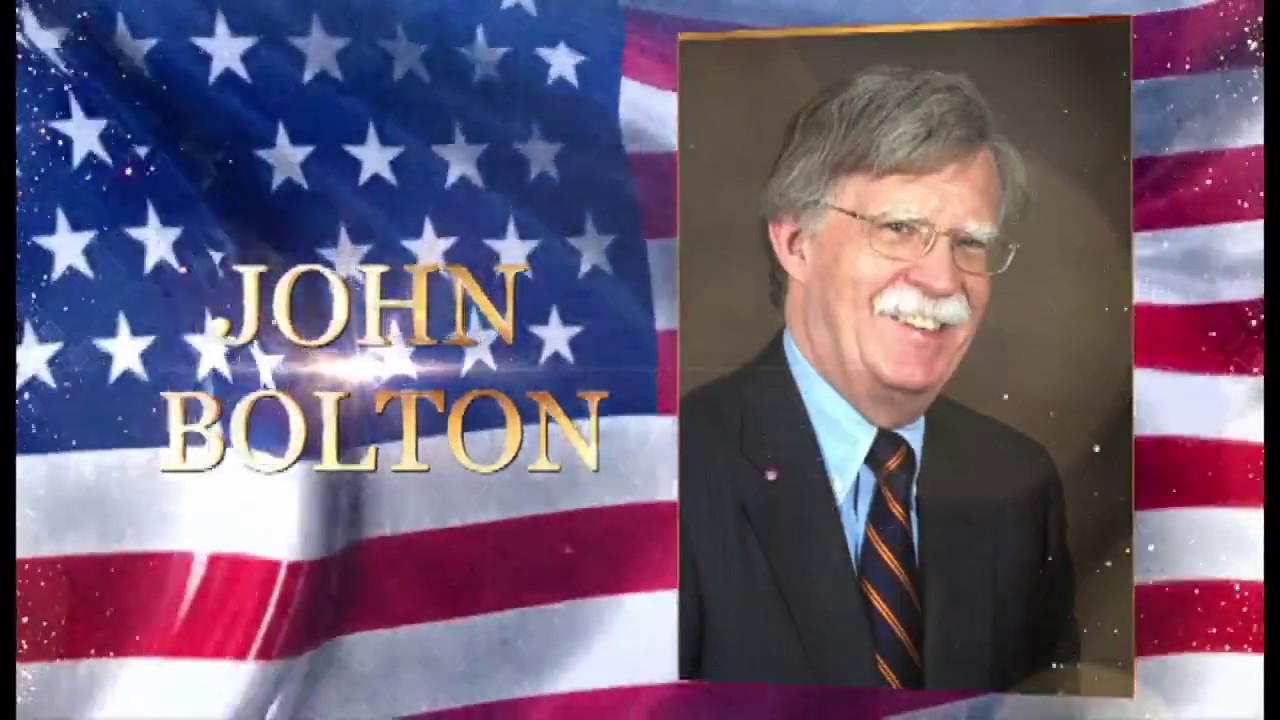 that the president’s review of Iranian policy should conclude that the Ayatollah’s government shouldn’t survive into its fortieth year, promising the crowd in attendance that they would meet again in 2019 to celebrate their victory in Tehran.
The M.E.K is finding themselves welcomed by many on Capitol Hill who have been funded by Bolton’s political action committees and allies. Cotton, described by some as the loudest voice advocating for escalated conflict alongside Bolton, also received thousands of dollars in contributions from Sheldon Adelson and $5,000 from John Bolton PAC in 2014 and spoke at a 2015 event run by the Organization of Iranian American Communities, which is closely aligned with the M.E.K.
Cotton was joined there by Sen. Thom Tillis (R-N.C.), who, in addition to being backed by $1.37 million in independent expenditures from Bolton’s super PAC, journeyed to Albania in 2017 to meet with Rajavi and express admiration for the former terrorist group’s “struggle for democracy and human rights in Iran.” Joining him in Albania was Sen. Roy Blunt (R-Mo.),current chairman of the Senate Republican Policy Committee andanother Bolton beneficiary.
Overall, 28 sitting senators have received sizable contributions from John Bolton PAC during the election cycle, as have nine representatives on the House defense, foreign affairs, and homeland security subcommittees.
Feel free to distribute or cite this material, but please credit the Center for Responsive Politics.
For permission to reprint for commercial uses, such as textbooks, contact the Center: info@crp.org
RELATED TOPICS
- bernard marcus
- iran
- iran deal
- John Bolton
- john bolton pac
- john bolton super pac
- Robert Mercer
- Roy Blunt
- Sheldon Adelson
- thom thillis
==
tough race b.c of trump?
Missouri Republican Sen. Roy Blunt last Friday, and was asked why he is underwater in his approval ratings with voters in the state. His answer? It's the voters' fault.
I guarantee you if you knew what I was doing rather than what you think — what your neighbors think I might have been doing I'd be a whole lot more popular because I fight these rules and regulations all the time. I'm always looking for ways to get their attention. And by the way no better way to get their attention recently than President Obama in the last year of his presidency will not get a lifetime nominee on the Supreme Court...
==
royb $ goes to 1 staffer under 2 names?
https://www.opensecrets.org/news/2016/07/for-roy-blunt-one-staff-salary-makes-up-most-of-pac-spending/
==
career
Edward Jones $271,400$231,400$40,000Crawford Group $242,625$167,000$75,625Goldman Sachs $188,792$137,792$51,000Leggett & Platt $159,021$91,450$67,571Hallmark Cards $145,000$81,000$64,000Ameren Corp $130,600$40,300$90,300Emerson Electric $125,550$73,050$52,500Monsanto Co $124,350$88,350$36,000Peabody Energy $120,750$91,250$29,500Dairy Farmers of America $118,150$25,450$92,700Boeing Co $114,516$51,016$63,500Bryan Cave LLP $112,358$89,858$22,500Northwestern Mutual $109,500$82,750$26,750Anheuser-Busch InBev $105,200$43,700$61,500Blackstone Group $103,650$89,150$14,500General Electric $102,150$44,650$57,500Elliott Management $97,442$97,442$0Comcast Corp $94,600$39,100$55,500AT&T Inc $93,925$11,850$82,075Capital One Financial $90,050$56,050$34,000==
Missouri Sen. Roy Blunt was nowhere to be found at his party’s nominating convention in Cleveland this week, despite being vice chair of the Senate Republican conference. That has nothing to do with his feelings about the guy at the top of the ticket, he’s said; he’s in the middle of a tight re-election race and is using the time to campaign, like a number of other embattled GOP senators.
Despite being in a close contest, though, Blunt may not be making maximum use of one of the tools at his disposal: His leadership PAC. The top expenditure for Rely on Your Beliefs PAC — which shrinks to the fitting acronym ROYB — isn’t for fundraising or communications or travel. Instead, it’s one staffer’s salary.
It isn’t particularly uncommon for a candidate or a political committee to direct more than half of its operating expenditures to a single source — one communications firm or consulting group, for example, which then hires other contractors to perform various tasks. But only a handful send more than half their outlays in an election cycle to a single individual. Topping this short list in 2012, 2014 and now 2016? Blunt’s leadership PAC, which has paid its executive director, Keri Ann Hayes, hundreds of thousands of dollars each cycle, making her one of the highest paid individuals to hold such a position.
When Blunt was a member of the House from 1996-2010, his PAC’s spending profile was fairly typical. Big recipients included communications groups, strategy firms and resorts that played host to large fundraising events, with various administrative costs making up much of the rest of the group’s disbursements. But after Blunt was elected to the Senate in 2010, those patterns shifted.
Hayes, who has worked with the PAC for at least a decade, was paid less than $50,000 per cycle in 2008 and 2010. Then that spiked to nearly $300,000 in 2012 and more than $410,000 in 2014, with her salary making up more than half the committee’s operating expenditures every two years. And so far in 2016, she has received more than $160,000, or nearly 70 percent of the PAC’s spending.
That’s in addition to more than $120,000 she has received directly from Blunt’s candidate committee this cycle, paid to her married name of Keri Ann Tatusko rather than her maiden name of Hayes. In total, from 2011 through the end of June 2016, Blunt’s PAC and candidate committee have made payments to Hayes totaling $1 million....
declined comment
david roberts grist 3/15
Last year, the House of Representatives passed two absurd anti-science bills, the Secret Science Reform Act and the EPA Science Advisory Board Reform Act. It will come as no surprise that both bills, under the guise of “reform,” would have the practical effect of crippling the EPA’s efforts to assess science in a fair and timely way. I don’t have the heart to get into it — follow the links above for the details.
The bills are back; the House considered them both again yesterday. Emily Atkin has the gory details if you’re interested. They might get a little further this time — the Democratic Senate didn’t take them up last year, obviously, but the GOP-controlled Senate might this year — though it won’t matter in the end, as Obama has threatened to veto both. So it’s mainly yet another act of reactionary symbolism from the right.
All that is by way of background so I can draw your attention to a hilarious amendment attached to the Science Advisory Board bill. It comes by way of the bill’s sponsor, Rep. David McKinley (R-W.Va.), a far-right, coal-country, climate-denying conservative of the old school.
Here’s the amendment. Its sole purpose is to prohibit the EPA’s Science Advisory Board from taking into consideration, for any purpose, the following reports:
the U.S. Global Change Research Program’s National Climate Assessment
the IPCC Fifth Assessment Report
the May 2013 Technical Update of the Social Cost of Carbon for Regulatory Impact Analysis Under Executive Order No. 12866 (which I wrote about here)
the July 2014 Pathways to Deep Decarbonization Report, from the Sustainable Development Solutions Network and Institute for Sustainable Development and International Relations (which I wrote about here)
So. When considering what to do about carbon pollution, EPA may not consider what America’s best scientists have concluded about it, what an international panel of scientists has concluded about it, how the federal government has officially recommended calculating its value, or the most comprehensive solutions for it. Oh, and it can’t consider Agenda 21 either. Otherwise the EPA can go nuts.
As I’ve said many, many times, most Americans have no idea how batshit crazy the House GOP has gone. They serve the base, and only the base (and Politicoobsessives) pay close attention. But imagine, if you will, a GOP House and Senate paired with President Jeb Bush. A bill like this might pass. Politicians might be picking and choosing, based on ideological criteria, which scientific reports administrative agencies are allowed to consider. It’s amusing in its own dark way, but it’s not a sitcom or a satire. It’s real life.
==
whyblunt content here?
==
LCV 23% 4% lifetime
2013180McCarthy Confirmation (EPA)Air, Water
2013151Border FenceLands/Forests, Water, Wildlife
2013145Advancing Conservation in the Farm BillWater, Lands/Forests, Wildlife
2013119Clean Water ProtectionsWater
2013116National Endowment for the OceansOceans
201394Jewell Confirmation (DOI)Lands/Forests, Wildlife
201376Climate Change SafeguardsClimate Change
201372Toxic Air Pollution from Power PlantsAir
201361Keystone XL Tar Sands Pipeline (KXL)Climate Change, Dirty Energy, Water
201359Pricing Carbon PollutionClimate Change
201346Big Oil BudgetOther
201341Military Investments in Advanced BiofuelsClean Energy, Dirty Energy
20134Disaster Relief for Hurricane SandyLands/Forests, Wildlife, Climate Change, Other
2012206Military Investments in Alternative FuelsClean Energy
2012159Industrial Farm Clean Water ViolationsWater
2012155Conservation ComplianceLands/Forests, Water
2012148Conservation on Private FarmlandsLands/Forests, Water
2012139Toxic Air Pollution from Power PlantsAir
2012106Genetically Engineered SalmonWildlife, Oceans, Other
201263Oil Subsidies & Clean Energy IncentivesDirty Energy, Clean Energy
201247Environmental Review in Transportation RebuildingOther, Transportation
201239Clean Energy Tax IncentivesClean Energy
201238Arctic Refuge & Offshore Drilling & KXLClimate Change, Dirty Energy, Drilling, Lands/Forests, Water, Wildlife
201234Keystone XL Tar Sands Pipeline (KXL)Climate Change, Dirty Energy, Water
201232Gulf Coast Restoration & Land and Water Conservation FundLands/Forests, Oceans, Water
201230Toxic Pollution from Industrial BoilersAir
201228Offshore DrillingDrilling, Dirty Energy
2011229Undermining Critical Environmental ProgramsOther
2011202Broad Environmental Assault (S. 1720)Air, Dirty Energy, Drilling, Water, Wildlife
2011201Cross-State Air PollutionAir
http://www.climatesciencewatch.org/2014/06/24/house-votes-to-direct-the-pentagon-to-disregard-climate-change-assessments/
The U.S. House-passed 2015 Defense Appropriation bill apparently intends to have the Pentagon stop using leading scientific assessments of global climate disruption in national security planning. The Pentagon takes climate change and its impacts seriously and has included these issues in two Quadrennial Defense Reviews. But an amendment by a coal-state Republican would direct DoD to disregard the U.S. National Climate Assessment and the IPCC international assessment.
Department of Defense Appropriations Act, 2015, passed by the House of Representatives on June 20.
Environment & Energy Daily reported today (by subscription):
The amendment by Rep. David McKinley (R-W.Va.) -- one of more than 150 amendments offered to the appropriations bill -- would prevent the Defense Department from helping to plan or implement the National Climate Assessment and the United Nations' Intergovernmental Panel on Climate Change.
The amendment targets two perennial GOP targets: the NCA and the U.S. contribution to the IPCC -- which seek to measure the effects of climate change in the United States and globally.
This is a radical amendment. Currently, the climate change problem is studied and taken into consideration as a matter of course in national security planning. The Pentagon takes climate change and its impacts seriously and has included these issues in two Quadrennial Defense Reviews. The McKinley amendment apparently intends to have the DoD essentially stop considering climate change as a national security issue. (For a bit more background on McKinley's views, see here and here.)
McKinley's amendment reads:
None of the funds made available by this Act may be used to design, implement, administer, or carry out the U.S. Global Climate Research Program National Climate Assessment, the Intergovernmental Panel on Climate Change's Fifth Assessment Report, the United Nations' Agenda 21 sustainable development plan, or the May 2013 Technical Update of the Social Cost of Carbon for Regulatory Impact Analysis Under Executive Order 12866.
The same amendment was attached last month to the House version of the 2015 National Defense Authorization bill ("House Directs Pentagon To Ignore Climate Change"):
[McKinley wrote in a memo to House colleagues:] "The climate is obviously changing; it has always been changing. With all the unrest around the [world], why should Congress divert funds from the mission of our military and national security to support a political ideology?"
Research suggests, however, that the Department of Defense has a number of reasons to be worried about climate change. The department said in its own evaluation last year that climate change presents infrastructure challenges at home and abroad. Meanwhile, a March Pentagon report found that climate change impacts are "threat multipliers," and that the rapid rise of global temperatures and associated extreme weather events could exacerbate issues like "poverty, environmental degradation, political instability and social tensions -- conditions that can enable terrorist activity and other forms of violence."
Nor is climate change a threat that the Obama administration dreamed up to distract the DOD. A National Intelligence Assessment issued during the George W. Bush administration concluded that climate change poses a significant threat to national security. And just this week, Tom Ridge, who served as homeland security secretary under Bush, said that climate change is "a real serious problem," one that "would bring destruction and economic damage" if we ignore it.
McKinley's amendments may be unlikely to survive consideration of the Defense appropriation and budget authorization bills in the Senate.
Climate Wire reported on May 14 (by subscription):
Former military leaders push for quicker effort to deal with climate change
Seven years ago a group of senior retired generals broke new ground when they warned climate change poses a serious security threat. Now, those top military leaders say the U.S. and others have not done enough to prepare for the challenge.
Writing in a major new report out today, the 16-man military team -- including retired four-star Adm. Frank Lee "Skip" Bowman, former director of the Naval Nuclear Propulsion Program; retired Gen. Charles "Chuck" Wald, former deputy commander of the United States European Command; and retired Gen. Gordon Sullivan, the 32nd chief of staff of the Army -- concludes that its early fears about climate change were well-founded. The threats are worsening and the political discourse is discouraging, the report says.
"We are dismayed that discussions of climate change have become so polarizing and have receded from the arena of informed public discourse and debate. Political posturing and budgetary woes cannot be allowed to inhibit discussion and debate over what so many believe to be a salient national security concern for our nation," they wrote. "Time and tide wait for no one."
The report comes on the heels of the White House releasing its National Climate Assessment, which like the United Nations' recent Intergovernmental Panel on Climate Change warned that climate change is happening now and the damage associated with it is widespread, affecting everything from farming to military bases. ...
Sherri Goodman, executive director of the CNA Military Advisory Board who served in the DOD as a deputy undersecretary from 1993 to 2001, called the report a "clarion call." She applauded the fact that addressing climate change has become a mainstream topic within defense and national security circles and said she expected as much.
"In two decades working with the military, I'm not surprised. Because when the military identifies a risk ... it really begins to work on it. They get it," Goodman said. But in the political sphere, she said, much more needs to get done.
CNA Corporation Military Advisory Board report, National Security and the Accelerating Risks of Climate Change
Columnist Paul Farrell, commenting on this development in the Wall Street Journal's Market Watch ("GOP climate-science deniers threaten national defense--Republican House wants to limit Pentagon’s use of climate studies"):
Last week 227 of 231 GOP members of the House voted to turn the Pentagon into climate-science deniers, a decision certain to weaken national security. That’s about as absurd as telling Silicon Valley they can’t use technology.
Get it? The Republican Party is now officially on record as the party of climate-science denialism. These research programs, ongoing and widely used by the Pentagon in strategic national defense planning for many years, could, if the Senate agrees, become illegal to use.
Yes, this Marine veteran is mad as hell. GOP science deniers have “crossed the line,” they’re now messing with national security. ... The military has been using climate-science research for decades. This vote is self-destructive. These research studies are essential in our national defense. ...
Ask the CNA Corporation Military Advisory Board, a longtime Pentagon consultant that includes 16 retired generals and admirals. They just updated a report that earlier “described projected climate change as a threat multiplier.”
Get it? The Pentagon has seen climate change as a threat to our national defense for over seven years. Their updated report “drills down on the new vulnerabilities created and tensions amplified due to climate change, which it deems a catalyst for conflict.” No wonder the Dems warned GOP leaders before that radical amendment to the budget vote: “That’s science denial at its worst and it fails our moral obligation to our children and grandchildren.”
CNA Corporation Military Advisory Board's National Security and the Accelerating Risks of Climate Change (PDF)re-examines the impact of climate change on U.S. national security in the context of a more informed, but more complex and integrated world. - See more at: http://www.cna.org/reports/accelerating-risks#sthash.4UMiO8Sz.dpuf
the CNA Corporation Military Advisory Board's National Security and the Accelerating Risks of Climate Change (PDF)re-examines the impact of climate change on U.S. national security in the context of a more informed, but more complex and integrated world.
The Board’s 2007 report described projected climate change as a “threat multiplier.” In this report the 16 retired Generals and Admirals who make up the board look at new vulnerabilities and tensions posed by climate change, which, when set against the backdrop of increasingly decentralized power structures around the world, they now identify as a “catalyst for conflict.”
In the seven years since the first Military Advisory Board (MAB) report, developments in scientific climate projections, observed climate changes (particularly in the Arctic), the toll of extreme weather events both at home and abroad, and changes in the global security environment have all served to accelerate the national security implications of climate change. While there has been some movement in efforts to plan effective responses to these challenges, the lack of comprehensive action by both the United States and the international community to address the full spectrum of projected climate change issues remains a concern.
The specific questions addressed in this update are:
Have new threats or opportunities associated with projected climate change or its effects emerged since our last report? What will be the impacts on our military?
The 2014 National Climate Assessment indicates that climate change, once considered an issue for a distant future, has moved firmly into the present. What additional responses should the national security community take to reduce the risks posed to our nation and to the elements of our National Power (Political, Military, Social, Infrastructure, and Information systems (PMESII))?
- See more at: http://www.cna.org/reports/accelerating-risks#sthash.4UMiO8Sz.dpuf
* * *
Earlier posts:
Commander of U.S. Forces Pacific: Climate Change is Top Threat
House Science Committee majority plays out the politics of climate science denialism
Roy D. Blunt, a Republican, has been a U.S. Senator from Missouri since 2011. Previously he was a member the U.S. House of Representatives from the 7th Congressional District of Missouri 1997-2011. The district is located in the Ozarks region in the southwestern part of the state and includes Springfield and Joplin (map). Blunt was the House minority whip for the 110th Congress. [1]
Contents [hide]
1 Record and controversies
1.1 Iraq War
1.2 Environmental record
1.3 Oil Voting Record
1.4 Tom DeLay
1.5 Ties to tobacco industry
1.6 Jack Abramoff
1.7 Matt Blunt
1.8 Trips by staffers
1.9 House delegate voting rights
2 Bio
2.1 Background
2.2 Congressional career
2.2.1 Abortion
2.2.2 Religious education
2.2.3 Guns
2.2.4 Business
2.3 Blunt's K Street cabinet
2.4 Majority Leader
2.4.1 2006 elections
3 Money in politics
3.1 Oil contributions
3.2 Coal Contributions
4 Committees and coalitions
4.1 Committees
4.1.1 Committee assignments in the 109th Congress (2005-2006)
5 More background data
6 Contact
6.1 Twitter
7 Articles and resources
7.1 References
7.2 External resources
7.3 Local blogs and discussion sites
7.4 Articles
Record and controversies
General information about important bills and votes for can be found in Congresspedia's articles on legislation. You can add information you find on how Roy Blunt voted by clicking the "[edit]" link to the right and typing it in. Remember to cite your sources!
Iraq War
Blunt voted for the Authorization for Use of Military Force Against Iraq Resolution of 2002 that started the Iraq War.[2]
When in March 2007, House Democrats introduced their plan to withdrawal U.S. troops from Iraq through the FY2007 supplemental spending bill, Minority Whip Blunt, agreeing with an assessment made by Vice President Cheney, stated that Democrats were “not able to come up with a strategy” for victory. He promised to do everything in his power to defeat the measure from passing in the House.
Main article: U.S. Troop Readiness, Veterans' Health, and Iraq Accountability Act, 2007 (H.R.1591)
For more information see the chart of U.S. House of Representatives votes on the Iraq War.
Environmental record
For more information on environmental legislation, see the Energy and Environment Policy Portal
Oil Voting Record
Roy Blunt has voted in favor of big oil companies on 91% of important oil-related bills. These include Iraq Oil Funding, Climate Change Studies, Clean Energy, and Ending Oil Subsidies. See money in politics below.[citation needed]
Tom DeLay
In 1999 Roy Blunt began working with Tom DeLay as his deputy whip rounding up votes on the House floor. He was also introduced to DeLay's political machine that operated in the form of the Alexander Strategies Group (ASG) and theU.S. Family Network, both founded by ex-DeLay chief of staff and personal minister Ed Buckham. Buckham and another DeLay associate Jim Ellis ran a nonfederal version of DeLay's ARMPAC out of ASG. A nonfederal PAC does not have to file paperwork with the FEC and does not contribute to candidates. Blunt started his own nonfederal version of his Rely On Your Beliefs (RoyB) PAC in 1999. Soon these two nonfederal PACs, RoyB and ARMPAC, would become intimately involved with one another.
According to a report from The New Republic, Blunt's nonfederal PAC showed reciepts in 2000 of $249,837 with $150,000 coming from two transfers from DeLay's ARMPAC to Blunt's RoyB. The New Republic writes, "over the course of the year, [RoyB] recorded expenditures of just over $150,000 to ASG and other DeLay operations. That amount looks suspiciously similar to the $150,000 RoyB took in from DeLay's ARMPAC during this same period."[1]
Digging deeper into the transfers the article uncovers the following information:
In 2000, RoyB ran up a $145,000 bill with ASG for what it described as either "consulting" or "strategy and fundraising," and it paid out another $5,281 to ASG's usfn and Ellis for rent and utilities. In addition, right after the first $50,000 arrived from armpac, RoyB donated $10,000 to DeLay's Foundation for Kids, a Texas-based charity that DeLay uses for p.r. and to justify golfing events. Could ASG have been worth $145,000 in "strategy and fundraising" to RoyB's PAC? Well, RoyB actually raised only $99,837 in 2000. Spending $145,000 to raise less than $100,000 doesn't make a lot of sense. And Blunt did not need strategic advice from Ellis and other Washingtonians to know how to spend his money in Missouri. In other words, the $145,000, along with the $10,000, looks like a subsidy to ASG and to DeLay himself that the Houston representative was trying to hide by transferring the money from one nonfederal PAC to another.[2]
Ellis was later indicted for money laundering and conspiracy in relation to Tom DeLay's use of another political action committee in Texas, TRMPAC.[3] Buckham is currently under investigation in connection to the Jack Abramoffscandal.[4]
On November 16, 2005, Travis County, Texas District Attorney Ronnie Earle subpoenaed documents that purportedly show communication between DeLay's political action committee and that of Roy Blunt. The subpoenaed documents were bank records of DeLay's Americans for a Republican Majority PAC, which gave $75,000 to start the Texans for a Republican Majority. Federal Election Commission records show that Blunt's PAC also paid roughly $88,000 in fees since 2003 to a consultant facing indictment in Texas in the same case as DeLay.
DeLay said of Blunt: "Roy Blunt has done a tremendous job. . . . His leadership is vital to our cause." [5]
Ties to tobacco industry
In 2002, Blunt attempted to insert a provision in support of tobacco corporations into the legislation that created the Department of Homeland Security. According to the Washington Post, "The provision would have made it harder to sell tobacco products over the Internet and would have cracked down on the sale of contraband cigarettes, two practices that cut into Philip Morris's profits."[6] Blunt said that he pushed for the provision after speaking with John F. Scruggs, vice president of government affairs for Altria. At the time, Blunt was dating Altria (the parent group that owns Philip Morris) lobbyist Abigail Perlman, whom he later married. His son, Andrew, also works as a lobbyist for Philip Morris in Missouri. In contrast to House tradition, the rider had not been cleared by the House leadership. It was removed from the final bill by an anonymous Republican member.[7]
Jack Abramoff
In 2003 Roy Blunt co-signed a letter written by lobbyist Todd A. Boulanger, part of Team Abramoff, to the Interior Department endorsing the position of one of Abramoff's tribal clients, the Louisiana Coushatta's in their fight to protect their casino turf.[8] Blunt's leadership PAC, Rely On Your Beliefs, received $8,500 from Abramoff.
Blunt was one of 18 lawmakers, lobbyists, and lawyers who was listed as "FOO Comp" at Abramoff's restaraunt Signatures, meaning that he could dine for free.[9]
Matt Blunt
According to The Hill, Missouri state records revealed contributions to Blunt's son Matt's campaign for Missouri Governor from firms and individuals with business pending before Roy Blunt's subcommittees. Although some of the companies have significant interests in the state, others didn't.
Top executives at Freddie Mac, for example, contributed $4,000 to his campaign. On Nov. 6, 2000, Senior Vice President Gary Lanzara and Vice President Lelan Brendsel gave $1,000 each. Two weeks later, Freddie Mac lobbyist David Glenn and his wife, Cherie, also contributed $1,000 apiece. Cherie is listed as a homemaker; the couple reside in Great Falls, Va.
Contributions from telecommunications-related entities accounted for over $10,000. Railway transportation companies also contributed more than $6,000 to Matt Blunt's campaign. John Scruggs, a top lobbyist for Altria, formerly Phillip Morris, contributed $1,000. Other contributions came from companies and executives in — or representatives for — such heavily regulated industries as healthcare, insurance, chemicals and defense technology.
By far the biggest outside contributors to Matt Blunt's campaign, however, were colleagues of Roy Blunt. Campaign finance documents show 84 House lawmakers made 95 contributions to the secretary of state campaign, totaling more than $65,000.[10]
Principally as a result of these scandals involving influence peddling in exchange for family benefits, Blunt was named in 2006 by Citizens for Responsibility and Ethics in Washington as one of the twenty most corrupt US legislators.[11]
Trips by staffers
In July 2006, a study by the Center for Public Integrity, American Public Media, and the Northwestern University’s Medill News Service concluded that Blunt’s staff spent over $385,000 on trips over the previous five-and-a-half years. The destinations included Switzerland, Hawaii, Florida, Austria, Amsterdam, Russia, California, and France. The study found that over this period, members of Congress and their aides took at least 23,000 trips valued at almost $50 million.[12]
House delegate voting rights
On January 24, 2007, after Democrats took control of the House following the 2006 congressional elections, a rule change was again passed providing delegates and the resident commissioner with limited voting rights. The change allowed delegates and the resident commissioner (4 of 5 of whom were Democrats) to vote on the House floor in the "Committee of the Whole," whereby bills are debated and amendments are added. The rule, however, stipulated that if a delegate's vote was decisive, the committee would disband and a new vote would be taken without the non-voting members.[3]
All but one House Republican, Rep. Dan Burton (R-Ind.), opposed the change. House Minority Leader John Boehner (R-Ohio) called it, “An outrageous grab of power by the majority,” while Minority Whip Blunt argued it amounted to, “Representation without taxation.”[4]
Main article: Voting rights in the District of Columbia
Bio
Background
Born January 10, 1950, Blunt earned a Bachelor of Arts in History from Southwest Baptist University. Blunt also earned a Master's degree in History from Southwest Missouri State University (now Missouri State University). Blunt taught history and government at both the high school and college levels.
Blunt comes from a family of Missouri politicians. His father, Leroy Blunt, was a state legislator and his grandfather was a county politician
:{
Blunt began his career in politics as a driver for John Ashcroft during his failed 1972 congressional bid.[13] According to the 2006 Almanac of American Politics, Blunt "showed up at campaign headquarters in his pickup truck, Ashcroft asked, 'Have you got gas in this truck?' Blunt said yes and became his driver". }:In 1973 Blunt was elected county clerk and chief election official of Greene County, Missouri (where Springfield is located). Blunt was the Republican nominee for Missouri lieutenant governor in 1980, but lost to Democrat Kenneth Rothman. He served as Greene County clerk until 1984, when he was elected Missouri Secretary of State--the first Republican to hold that post in 50 years. He ran unsuccessfully for Governor of Missouri in 1992, losing the Republican primary to Missouri Attorney General William L. Webster. From 1993 to 1996, Blunt was president of his alma mater.
Congressional career
Blunt was first elected to Congress in 1996. In 2004, he was reelected to his fifth term in the House with 70.4% of the vote[14].
After only one term, Blunt was appointed as Chief Deputy Whip, the highest appointed position in the House Republican Caucus. In that capacity, he served as the Republicans' chief vote-counter. When Dick Armey retired and fellow Texan DeLay was elected to succeed him, DeLay personally selected Blunt to replace him as Majority Whip.
Blunt has been a key vote counter throughout the period of Tom DeLay's term as Majority Leader. One of his greatest accomplishments was marshalling the controversial Medicare prescription drug bill of 2003 through a divided House. Blunt even set up a "war room" for lobbyists, the largest of its kind, during the lead up to the Medicare vote.[15] The Republicans eventually won by one vote after keeping the voting open for hours - accusations of vote buying and arm twisting followed the controversial vote.[16]
Abortion
Although Missouri Right to Life endorsed Webster over Blunt in the 1992 Republican gubernatorial primary, Blunt has voted pro-life in Congress and has a conservative record on most other social issues. He has voted to ban partial-birth abortion, and to make it more difficult for minors to get an abortion.[17] He also voted in favor of the Federal Marriage Amendment which bans same-sex marriages and has voted against same-sex adoptions. He received a 14% rating from the American Civil Liberties Union [18] and a 92% rating from the conservative Christian Coalition. [19]
Religious education
Blunt has voted in favor of school prayer and supported the No Child Left Behind Act. He has voted in favor of school vouchers within the District of Columbia but has voted against broader legislation allowing states to use federal money to issue vouchers for private or religious schools. He has received a 17% rating from the National Education Association. [20]
Guns
Blunt has voted to prohibit lawsuits against gun manufacturers and dealers if the guns they manufacture or sell are later used in a crime. He has also voted to reduce the waiting period for purchasing a gun from 72 hours to 24 hours. He has received an "A" rating from the National Rifle Association. [21]
Business
Blunt received a 97% rating from the U.S. Chamber of Commerce indicating a pro-business voting record. He supported efforts to overhaul U.S. bankruptcy laws, requiring consumers who seek bankruptcy protection to repay more of their debts.[22]
Blunt's K Street cabinet
In an article titled "House Majority Whip Exerts Influence by Way of K Street" the Washington Post detailed the group of lobbyists that Blunt plots strategy with for congressional sessions:
At the top of the Republican leadership's K Street lobbying arm, there is a de facto "executive committee," a hard-core base of about 25 lobbyists. Among them are Ed Gillespie, former Republican Party chair; Mark Isakowitz, formerly with the National Federation of Independent Business; Samantha Poole, Blunt's former senior legislative assistant; former DeLay aide Tony Rudy; Lyle Beckwith, senior vice president of the National Association of Convenience Stores; and Ralph Hellmann, senior vice president of the Information Technology Industry Council.[23]
Blunt has proved effective at directing support from the lobbying community to gain victories on the 2003 Medicare prescription drug bill and the Central American Free Trade Agreement, both tough and controversial bills.
Majority Leader
On September 28, 2005 Majority Leader Tom DeLay was indicted by a Texas grand jury on felony charges of money laundering and conspiracy. House GOP rules mandate that any member of the leadership must immediately resign his/her post if they are indicted for a felony crime. DeLay stepped down and pushed for Rules Committee Chairman David Dreier (R-CA) to fill his Majority Leader post. The rank and file Republicans revolted at this selection of a new Majority Leader for a number of reasons. One reason was that they felt that DeLay was going over their heads in appointing someone rather than letting the caucus vote on who his replacement would be. And second, Dreier has long been rumored to be gay[24], a sexuality that may not go over well with GOP grassroots voters who flocked to the polls in 2004 to vote on anti-gay marriage amendments. After a closed door meeting the Republican caucus emerged to announce that Roy Blunt had been unanimously chosen as the interim Majority Leader.[25]
On January 8, 2006, one day after DeLay announced that he would not seek to regain his position, Blunt announced he would run to permanently replace DeLay. [26] On January 14, 2006, he issued a release claiming that the majority of the Republican caucus had endorsed him as DeLay's successor. [27] Blunt faced opposition from a former member of Newt Gingrich's leadership team, John Boehner of Ohio, and hard-line conservative from Arizona John Shadegg. Both Shadegg and Boehner ran as reformers and attempted to cast Blunt as unable to lead the Republicans beyond the scandals brought on by Jack Abramoff, Tom DeLay, and Duke Cunningham.
On February 2, 2006 the GOP held the election for Majority Leader by secret ballot. The first ballot showed Blunt with the highest number of votes, but not enough to secure the nomination. Shadegg received the fewest votes in the first ballot and was forced to drop out. He then directed his supporters to back Boehner against Blunt. With Shadegg's supporters behind him, John Boehner emerged as the victor on the second ballot, with 122 votes to 109 for Blunt.[28]
2006 elections
In 2006, the Democrats nominated Jack Truman to face Blunt in his November 2006 bid for reelection. (See U.S. congressional elections in 2006) [29] Blunt defeated Truman, receiving 67% of the vote. [30]
Money in politics
This section contains links to – and feeds from – money in politics databases. cid=N00005195&cycle=2006
Links to more campaign contribution information for Roy Blunt
from the Center for Responsive Politics' OpenSecrets.org site.
Fundraising profile: 2006 election cycle Career totals
Top contributors by organization/corporation: 2006 election cycle Career totals
Top contributors by industry: 2006 election cycle Career totals
Revolving door profile for Roy Blunt from the Center for Responsive Politics' OpenSecrets.org website.
2006 privately funded travel profile for Roy Blunt from the Center for Responsive Politics' OpenSecrets.org website.
Personal finance profile for Roy Blunt from the Center for Responsive Politics' OpenSecrets.org website.
Oil contributions
Roy Blunt has received $120,350 in oil contributions during the 110th congress. $89,500 of those dollars were from industry PACS. Since 2000, he has accepted a total of $355,748. He has also received $48,000 in coal contributions during the 110th congress, which places him in the top 25% of representatives receiving coal money. $36,500 of those dollars were from industry PACS.[citation needed]
Coal Contributions
In late October 2010, during the lead up to the Congressional midterm elections, The New York Times reported:
Coal industryspending on campaigns and lobbying is substantial and growing, although it is dwarfed by the far better-financed oil and gas, electric utility, financial services and health care lobbies.
Among the largest recipients of coal money are Republican and Democratic members who have sponsored or voted for measures to block new E.P.A. regulations on climate cahnge pollution from the burning of coal and oil and who are most likely to support efforts to block other new rules.
These members include Representatives Roy Blunt of Missouri and Joe L. Barton of Texas, both Republicans, and Nick J. Rahall II of West Virginia and Rick Boucher of Virginia, both Democrats. Each had received more than $25,000 in contributions as of early October, according to the Center for Responsive Politics, a nonpartisan group that tracks campaign spending.
Two Senate candidates, Rob Portman, Republican of Ohio, and Gov. Joe Manchin, Democrat of West Virginia, have also received sizable industry donations.
The political action committee of Representative John Boehner of Ohio, who is in line to become speaker if Republicans capture the House, has received more than $300,000 from mining interests, most of it from coal companies. The industry is counting on Mr. Boehner to reverse the current Democratic leadership's refusal to allow a vote on the measure blocking E.P.A. carbon regulation.[5]
Committees and coalitions
Committees
Committee assignments are not yet available for the 110th Congress.
Committee assignments in the 109th Congress (2005-2006)
House Committee on International Relations
More background data
Background information on Roy Blunt from Project Vote Smart
Interest group scorecard ratings for Roy Blunt from Project Vote Smart
Voting record for Roy Blunt from the Washington Post database
Information on Roy Blunt from Congress Merge
Wikipedia also has an article on Roy Blunt. This article may use content from the Wikipedia article under the terms of the GFDL.
Contact
DC Office:
217 Cannon House Office Building
Washington, DC 20515-2507
Phone: 202-225-6536
Fax: 202-225-5604
Web Email
Website
District Office- Joplin:
Northpark Mall
101 Rangeline Road
Joplin, MO 64801
Phone: 417-781-1041
Fax: 417-781-2832
District Office- Springfield:
2740-B East Sunshine
Springfield, MO 65804
Phone: 417-889-1800
Fax: 417-889-4915
Roy Blunt posts on Twitter at http://twitter.com/RoyBlunt/
Latest posts: Extension:RSS -- Error: "http://twitter.com/statuses/user_timeline/6751592.rss%7Ctitle=none%7C max=3| short" is not in the whitelist of allowed feeds. The allowed feeds are as follows:http://www.prwatch.org/taxonomy/term/75/feed, http://www.prwatch.org/taxonomy/term/103/feed, http://www.prwatch.org/taxonomy/term/726/feed, http://www.prwatch.org/taxonomy/term/723/feed,http://www.prwatch.org/taxonomy/term/59/feed and http://www.prwatch.org/taxonomy/term/659/feed. See all the members of Congress who Twitter
Articles and resources
References
Jump up? Roy Blunt profile, The Washington Post, accessed January 2011.
Jump up? Roll call vote, Authorization for Use of Military Force Against Iraq Resolution of 2002.
Jump up? "House delegates may get partial voting rights," Associated Press (via MSNBC), January 22, 2006.
Jump up? "House delegates may get partial voting rights," Associated Press (via MSNBC), January 22, 2006.
Jump up? "Coal Industry Spending to Sway Next Congress" John Broder, The New York Times, October 29, 2010.
External resources
Official website
Summary of Blunt's Issue Positions
Technorati Search: Roy Blunt
Google News Search: Roy Blunt
Yahoo! News Search: Roy Blunt
Power Trips: How much did Roy Blunt travel?
GovTrack Statistics: Roy Blunt
Letter from Reps. Dennis Hastert (R-Ill.), Tom DeLay (R-Texas), Eric Cantor (R-Va.) and Roy Blunt (R-Mo.) to Interior Secretary Gale Norton on June 10, 2003. The letter opposed an expansion of gambling by some Indian tribes that would have cut into the gambling profits of another tribe that was a client of lobbyist and convicted felon Jack Abramoff.
Open Secrets - 2006 congressional races database
Follow the Oil Money
Vote Tracker
Follow the Coal Money
Appalachian Voices
Local blogs and discussion sites
Chatter
Articles
Jim VandeHei, GOP Whip Quietly Tried to Aid Big Donor, Washington Post, June 11, 2003.
Thomas Edsall, Blunt Exerts Influence by Way of K Street, Washington Post, May 17, 2005.
John Judis, Tom DeLay and Roy Blunt, The New Republic, October 8, 2005.
John Judis, More Tom DeLay and Roy Blunt, The New Republic, October 27, 2005.
Laura Litvan and Jonathan D. Salant, Blunt, Boehner Share Broad Network of Lobbying Ties, Bloomberg, January 10, 2006.
Brody Mullins, Lawmakers turn to lobbyists for fund raising, Wall Street Journal, January 26, 2006.
Pamela Brogan, "Blunt, staff travel tab: over $350,000," Gannett News Service, July 10, 2006.
"CREW releases second annual most corrupt members of Congress report," Citizens for Responsibility and Ethics in Washington, September 20, 2006.
"Thomas Edsall: Same Old Party," Rozius Unbound Blogspot, November 21, 2006.
Dana Milbank, "For the GOP, Taking the War Out of the War Debate," Washington Post, February 14, 2007.
Edward Jones $232,100 $196,100 $36,000
Crawford Group $196,325 $125,700 $70,625
Leggett & Platt $141,971 $79,400 $62,571
Goldman Sachs $141,792 $92,292 $49,500
Hallmark Cards $114,500 $60,500 $54,000
:{Emerson Electric $113,650 $64,650 $49,000
Dairy Farmers of America $110,100 $22,600 $87,500
Ameren Corp $100,250 $14,950 $85,300
Monsanto Co $98,250 $62,250 $36,000
Elliott Management $97,442 $97,442 $0
Peabody Energy $95,600 $66,100 $29,500}:
Anheuser-Busch InBev $93,150 $31,650 $61,500
Northwestern Mutual $92,950 $71,200 $21,750
Verizon Communications $78,608 $11,608 $67,000
AT&T Inc $77,025 $4,950 $72,075
American Trucking Assns $76,430 $11,100 $65,330
Interface Group $75,100 $75,100 $0
National Auto Dealers Assn $75,000 $0 $75,000
United Parcel Service $72,500 $1,000 $71,500
National Assn of Realtors $72,000 $0 $72,000
career
Securities & Investment $1,498,480
Health Professionals $1,309,692
Retired $1,001,311
Insurance $949,416
Real Estate $940,738
Lawyers/Law Firms $933,816
Oil & Gas $805,210
Commercial Banks $774,243
Misc Manufacturing & Distributing $757,407
Lobbyists $715,700
Pharmaceuticals/Health Products $651,372
Automotive $617,795
Leadership PACs $604,514
Retail Sales $576,130
Electric Utilities $528,184
TV/Movies/Music $521,741
Food Processing & Sales $438,179
Food & Beverage $428,050
Hospitals/Nursing Homes $409,639
Business Services $401,87
FIRST ELECTED:1996
Sen. Roy Blunt ran for and was elected to the Senate in 2010. Previously he served in the House from 1997 to 2010.
Leadership PAC (1):
Rely on Your Beliefs
Career Fundraising
1995 - 2014 Total Receipts: $28,400,139
1995 - 2014 Total Spent: $27,174,660
Debts: $0
Last Report: Monday, March 31, 2014
Top 5 Contributors, 1995 - 2014
Contributor Total Indivs PACs
Edward Jones $232,100 $196,100 $36,000
Crawford Group $196,325 $125,700 $70,625
Leggett & Platt $141,971 $79,400 $62,571
Goldman Sachs $141,792 $92,292 $49,500
Hallmark Cards $114,500 $60,500 $54,000
...view more data
Top 5 Industries, 1995 - 2014
Industry Total Indivs PACs
Securities & Investment $1,498,480 $1,121,933 $376,547
Health Professionals $1,309,692 $512,514 $797,178
Retired $1,001,311 $1,001,311 $0
Insurance $949,416 $281,824 $667,592
Real Estate $940,738 $719,354 $221,384
...view more data
Member(1 result)
Blunt, Roy (R-MO)
Candidate(2 results)
Blunt, Jeffrey (L) - 2012 for TX23
Blunt, Jeffrey (L) - 2004 for TX11
Personal Finances(1 result)
Blunt, Roy (R-Mo) 2012
Revolving Door(1 result)
Blunt, Roger R Sr
Lobbyist(5 results)
Blunt, Abigail P 2014
Blunt, Amanda 2014
Blunt, Amy 2006
Blunt, Matthew 2014
Bluntzer, Rick 2012
PAC Treasurer(2 results)
BLUNT, ABIGAIL 2014
BLUNT, ABIGAIL MS. 2012
WASHINGTON -- The House passed an amendment to the National Defense Authorization bill on Thursday that would bar the Department of Defense from using funds to assess climate change and its implications for national security.
The amendment, from Rep. David McKinley (R-W.Va.), passed in what was nearly a party-line vote. Four Democrats voted for the amendment, and three Republicans voted against it. The bill aims to block the DOD from taking any significant action related to climate change or its potential consequences. It reads:
None of the funds authorized to be appropriated or otherwise made available by this Act may be used to implement the U.S. Global Change Research Program National Climate Assessment, the Intergovernmental Panel on Climate Change's Fifth Assessment Report, the United Nation's Agenda 21 sustainable development plan, or the May 2013 Technical Update of the Social Cost of Carbon for Regulatory Impact Analysis Under Executive Order 12866.
"This amendment will prohibit the costs of the President's climate change policies being forced on the Department of Defense by the Obama Administration," wrote McKinley in a memo to House colleagues on Thursday that was obtained by The Huffington Post. "The climate is obviously changing; it has always been changing. With all the unrest around the [world], why should Congress divert funds from the mission of our military and national security to support a political ideology?"
Research suggests, however, that the Department of Defense has a number of reasons to be worried about climate change. The department said in its own evaluation last year that climate change presents infrastructure challenges at home and abroad. Meanwhile, a March Pentagon report found that climate change impacts are "threat multipliers," and that the rapid rise of global temperatures and associated extreme weather events could exacerbate issues like "poverty, environmental degradation, political instability and social tensions -- conditions that can enable terrorist activity and other forms of violence."
Nor is climate change a threat that the Obama administration dreamed up to distract the DOD. A National Intelligence Assessment issued during the George W. Bush administration concluded that climate change poses a significant threat to national security. And just this week, Tom Ridge, who served as homeland security secretary under Bush, said that climate change is "a real serious problem," one that "would bring destruction and economic damage" if we ignore it.
Reps. Henry Waxman (D-Calif.) and Bobby Rush (D-Ill.) sent a letter to colleagueson Thursday calling the McKinley measure "irresponsible."
"Science denial will not solve the problem," they wrote.
huffpo
ORGANTOWN, W.Va. (AP) — President Barack Obama and the U.S. Department of Energy are committed to a role for coal in a national energy strategy, and they've backed it up with research spending, Energy Secretary Ernest Moniz said Monday.
In a visit to the National Energy Technology Laboratory in Morgantown — the only one of the federal government's 17 national labs dedicated to fossil fuels — Moniz said the administration has spent $6 billion on clean-coal technology with an emphasis on the capture, storage and reuse of carbon emissions.
"We have an 'all of the above' strategy, and it's real," he said.
But the administration also believes the U.S. must prepare for a low-carbon economy, so scientists must help find ways to use coal and gas more cleanly.
Moniz spoke to hundreds of federal employees who work at the West Virginia lab, and to those who watched remotely from research sites and small offices in Pennsylvania, Oregon, Alaska and Texas. In all, the national lab employs 1,426 people, about 850 of whom are contractors.
Last month, Obama laid out a general plan to reduce greenhouse gas emissions and increase both the production of clean energy and energy efficiency.
That worries the coal industry and angers some of the politicians who support it, including U.S. Rep. David McKinley, a West Virginia Republican who has long questioned the science behind global warming. McKinley, who now acknowledges climate change but is not convinced human activity is to blame, accompanied Moniz on a tour of the lab but didn't speak to reporters.
promoted to evil 5/14, just for sheer diversity of connections, survived 2010 lcv dirty doz
new tag 5/14
LCV 25/4% sometimes ZERO?
Contact: Kate Geller, (202) 785-8683 or kate_geller@lcv.org 10 Mar 2010 | Jay Natoli
WASHINGTON – Today, the League of Conservation Voters (LCV), which works to turn environmental values into national priorities, announced that U.S. Rep. Roy Blunt of Missouri’s 7th District and candidate for U.S. Senate has been named to its2010 "Dirty Dozen" list. Rep. Roy Blunt’s lifetime LCV environmental score is an abysmal 2%. In 2009, he received a 0% score after voting against every major piece of clean energy and environmental legislation.[1] LCV also launched BigOilBlunt.com, a website dedicated to exposing Rep. Blunt’s ongoing efforts to stand in the way of progress on clean energy and protect Big Oil’s profits.
“In his twelve years in office, Rep. Roy Blunt has taken good care of Big Oil by maintaining their costly tax breaks while continually voting against opportunities to create clean energy jobs, reduce pollution and improve fuel economy for Missourians,” said Tony Massaro, Senior Vice President for Political Affairs at the League of Conservation Voters. “As Senator, Roy Blunt would be paid for by Big Oil and that’s exactly why LCV is naming Roy Blunt to the Dirty Dozen for the 2010 campaign cycle.”
Roy Blunt has accepted more than $1 million from Big Oil and other energy interests over his entire career, $460,198 from the Oil and Gas industry alone.[2] He has been an unwavering supporter of Big Oil through his votes to maintain tax breaks and subsidies to polluting corporations while Missourians paid record prices at the pump.
Rep. Blunt has consistently voted against repealing subsidies to Big Oil, against increasing the use of renewable electricity and against efforts to help American drivers go further on a gallon of gas. In 2009, he most notably voted twice, in committee and on the floor, against the American Clean Energy and Security Act that would help create 35,000 clean energy jobs in Missouri, reduce carbon pollution and increase energy independence.[3]
“Rep. Blunt has made his position clear: he does not support a clean energy future for Missouri families. His attempts to block progress on clean energy put him drastically out of touch with Missourians who overwhelmingly supported a Renewable Electricity Standard on the 2008 ballot,” said Massaro.
A November statewide poll showed two-thirds of Missouri voters support legislation that reduces pollution and requires the use of clean energy sources, with 59% of voters saying they would feel more favorable towards a senator who supports such a plan.[4]
LCV's trademark Dirty Dozen program targets candidates for Congress — regardless of party affiliation — who consistently vote against clean energy and conservation and are running in races in which LCV has a serious chance to affect the outcome. Senator Blanche Lincoln (D-AR) and former Congressmen Steve Pearce (R-NM) and Richard Pombo (R-CA) are currently on the 2010 Dirty Dozen list. Learn more at http://www.lcv.org/campaigns/dirty-dozen/
Rep. Blunt’s Dirty Dozen website can be found here: http://www.bigoilblunt.com/
Follow the action on Twitter: https://twitter.com/BigOilBlunt
# #
Paid for by the League of Conservation Voters, http://lcv.org/, and not authorized by any candidate or candidate’s committee.
[1] The non-partisan LCV National Environmental Scorecard is a nationally accepted yardstick used to rate Members of Congress on conservation and clean energy issues. Based on key conservation votes in the House and Senate, it is often used by the media to quickly describe a Member's record. For more information, visit www.lcv.org/scorecard.
[2]http://www.opensecrets.org/politicians/industries.php?cycle=Career&cid=N00005195&type=I
[3] Center for American Progress & Political Economy Research Institute,http://www.americanprogress.org/issues/2009/06/clean_energy_map.html
[4] http://www.pewglobalwarming.org/newsroom/polls_5nov2009.html
---
2013180McCarthy Confirmation (EPA)Air, Water
2013151Border FenceLands/Forests, Water, Wildlife
2013145Advancing Conservation in the Farm BillWater, Lands/Forests, Wildlife
2013119Clean Water ProtectionsWater
2013116National Endowment for the OceansOceans
201394Jewell Confirmation (DOI)Lands/Forests, Wildlife
201376Climate Change SafeguardsClimate Change
201372Toxic Air Pollution from Power PlantsAir
201361Keystone XL Tar Sands Pipeline (KXL)Climate Change, Dirty Energy, Water
201359Pricing Carbon PollutionClimate Change
201346Big Oil BudgetOther
201341Military Investments in Advanced BiofuelsClean Energy, Dirty Energy
20134Disaster Relief for Hurricane SandyLands/Forests, Wildlife, Climate Change, Other
2012206Military Investments in Alternative FuelsClean Energy
2012159Industrial Farm Clean Water ViolationsWater
2012155Conservation ComplianceLands/Forests, Water
2012148Conservation on Private FarmlandsLands/Forests, Water
2012139Toxic Air Pollution from Power PlantsAir
2012106Genetically Engineered SalmonWildlife, Oceans, Other
201263Oil Subsidies & Clean Energy IncentivesDirty Energy, Clean Energy
201247Environmental Review in Transportation RebuildingOther, Transportation
201239Clean Energy Tax IncentivesClean Energy
201238Arctic Refuge & Offshore Drilling & KXLClimate Change, Dirty Energy, Drilling, Lands/Forests, Water, Wildlife
201234Keystone XL Tar Sands Pipeline (KXL)Climate Change, Dirty Energy, Water
201232Gulf Coast Restoration & Land and Water Conservation FundLands/Forests, Oceans, Water
201230Toxic Pollution from Industrial BoilersAir
201228Offshore DrillingDrilling, Dirty Energy
2011229Undermining Critical Environmental ProgramsOther
2011202Broad Environmental Assault (S. 1720)Air, Dirty Energy, Drilling, Water, Wildlife
2011201Cross-State Air PollutionAir
As the Obama administration begins to take action to rein in the emissions from the dirty energy industry [1], big business groups all over the country have announced that they aren’t willing to stop polluting without putting up a very serious fight [2].
The U.S. Chamber of Commerce, the American Gas Association, and 74 other big business groups said that they are banding together to fight the administration’s forthcoming power plant standards that will require carbon capture technologies to be in place at all plants. According to The Hill [2], the groups said that they are planning “everything from lobbying to litigation” in order to fight the administration’s efforts.
These business groups say that they have seen “what Obama has done [3]” to the coal industry, and fear that their industries could be targeted next. They are also fearful that too much emphasis is being put on developing renewable energy, as The Hill points out [2]:
American Gas Association President Dave McCurdy, a former Democratic congressman from Oklahoma, said the coalition would need to protect a single-minded push toward renewable energy production.
As expected, politicians in Washington saw that the industry was pushing back, so they have jumped on the bandwagon.
A coalition of Senators, led by Republican Senator Roy Blunt of Missouri, have sent a letter [4] to Obama, asking him to reconsider the EPA’s plans to require carbon capture technology at new and existing power plants. The coalition consists mainly of Republicans, with the exception of Democratic Senator Joe Manchin, who represents the coal-dependent state of West Virginia. Mr. Blunt has personally received more than $1.8 million in campaign money [5] from the dirty energy industry over the course of his career. ...
letter: ...The Senators urged the president “to avoid any actions which damage ratepayers throughout this country, especially when those actions result in no measurable benefits and no measurable effects on the very thing that the actions are designed to address.”
The letter was co-signed by: U.S. Senators Lamar Alexander (Tenn.), John Barrasso (Wyo.), John Boozman (Ark.), Dan Coats (Ind.), John Cornyn (Texas), Mike Enzi (Wyo.), Deb Fischer (Neb.), Dean Heller (Nev.), John Hoeven (N.D.), Jim Inhofe (Okla.), Mike Johanns (Neb.), Joe Manchin (W.V.), Jerry Moran (Kan.), Lisa Murkowski (Alaska), Rob Portman (Ohio), Jim Risch (Idaho), Pat Roberts (Kan.), Tim Scott (S.C.), Jeff Sessions (Ala.), John Thune (S.D.), and David Vitter (La.).
==
inhofe
The new clean air rules will create jobs building clean energy resources and updating power plants, and Senator Inhofe's attacks will only cause economic uncertainty. Please stand strong in favor of clean air and a healthy environment, and against this shutdown of the Clean Air Act.
Please vote "no" on Amendment No. 2615 to Senate Bill 1845. Emergency Unemployment Compensation Extension Act
Sen. McConnell, Mitch [R-KY]* 01/08/2014
Sen. Vitter, David [R-LA]* 01/08/2014
Sen. Blunt, Roy [R-MO]* 01/08/2014
Sen. Cornyn, John [R-TX]* 01/08/2014
Sen. Roy Blunt: Monsanto's Man in Washington
As I reported a couple of weeks ago, a recent Senate bill came with a nice bonus for the genetically modified seed industry: a rider, wholly unrelated to the underlying bill, that compels the USDA to ignore federal court decisions that block the agency's approvals of new GM crops. I explained in this post why such a provision, which the industry has been pushing for over a year, is so important to Monsanto and its few peers in the GMO seed industry. (You can also hear my talking about it on NPR's The Takeaway, along with the senator who tried to stop it, Montana's Jon Tester, and see me on Al Jazeera's Inside Story.)
Which senator pushed the rider into the bill? At the time, no one stepped forward to claim credit. But since then, Sen. Roy Blunt (R-Mo.) has revealed to Politico's ace reporter David Rogers that he's the responsible party. Blunt even told Rogers that he "worked with" GMO seed giant Monsanto to craft the rider.
The admission shines a light on Blunt's ties to Monsanto, whose office is located in the senator's home state. According to OpenSecrets, Monsanto first started contributing to Blunt back in 2008, when it handed him $10,000. At that point, Blunt was serving in the House of Representatives. In 2010, when Blunt successfully ran for the Senate, Monsanto upped its contribution to $44,250. And in 2012, the GMO seed/pesticide giant enriched Blunt's campaign war chest by $64,250.
Blunt is also a magnet for PAC money from the agribusiness industry as a whole, OpenSecrets data shows. In 2012, agribiz PACs gave him $51,000—more than any other industry save for finance, insurance, and real estate (FIRE). In 2010, the year of his Senate run, agribiz PACs handed him over $243,000, more than any other besides the FIRE and energy industries.
The senator's blunt, so to speak, admission that he stuck a rider into an unrelated bill at the behest of a major campaign donor is consistent with the tenor of his political career. While serving as House whip under the famously lobbyist-friendly former House Majority leader Tom DeLay (R-Texas) during the Bush II administration, Blunt built a formidable political machine by transforming lobbying cash into industry-accomodating legislation. In a blistering 2006 report, Public Citizen declared Blunt "a legislative leader who not only has surrendered his office to the imperative of moneyed interests, but who has also done so with disturbing zeal and efficiency."
In a profile of Blunt published the year before, the Washington Post's Thomas B. Edsall wrote that Blunt had "converted what had been an informal and ad hoc relationship between congressional leaders and the Washington corporate and trade community into a formal, institutionalized alliance." According to Edsall, Blunt's relationship to the DC lobbying scene rivaled that of DeLay's, who would later be hounded out of the House after being indicted for ethical lapses. Edsall writes:
Both "Blunt Inc." and "DeLay Inc." reflect the growing importance of commanding multimillion-dollar funds and having reliable loyalists in Washington's lobbying community. Blunt and DeLay are fundraising powerhouses. Their political organizations use multiple fundraising committees, have rewarded family members and have provided an avenue to riches for former aides now in the private sector.
Blunt's connections to lobbyists extend to his family. His wife, Abigail Blunt, serves as head of US government affairs for the processed food giant Kraft. In 2012, the Hill placed Abigail Blunt on annual its list of "top lobbyists." That same year, Kraft joined Monsanto in shoveling cash into the effort to defeat California's Proposition 37, which would have required the labeling of GMO ingredients in food. Monsanto led donors in the effort with more than $8 million; Kraft chipped in nearly $2 million.
The two met while Abigail Blunt was serving as a prominent lobbyist for tobacco giant Philip Morris in the early 2000s. Their relationship drew controversy in 2002 when then-Rep. Blunt "unsuccessfully tried to insert a measure benefiting Philip Morris into the 475-page bill creating the Department of Homeland Security," as the Washington Post reported at the time. Throwing a bone to Big Tobacco in a homeland security bill is about as bold as larding a funding bill with a rider that grants legal protection to novel GM crops.
:{
And Blunt's son Andy Matt, now the US auto industry's top lobbyist, served as governor of Missouri in the mid-aughts. During his tenure there, Gov. Blunt earned the praise of the state's powerful biotech industry, which is anchored by St. Louis-based Monsanto}:. He was honored with an "Award for Leadership Excellence" by the Biotechnology Industry Organization (BIO), an industry group led by Monsanto and its peers.
If Sen. Blunt plans to continue carrying Monsanto's water in the Senate, the company will have gained the allegiance of a wily and proven political operator.
http://www.motherjones.com/tom-philpott/2013/04/sen-roy-blunt-monsantos-man-washington
Roy D. Blunt (born January 10, 1950) is the junior United States Senator from Missouri. He is a member of the Republican Party. The seat was previously held by Republican Kit Bond who decided to retire.
He served as the U.S. Representative from Missouri's 7th congressional district from 1997 to 2011. The district takes in most of Southwest Missouri, the most conservative part of the state, anchored in the city of Springfield and also includes other cities such as Joplin, Carthage, and Neosho. The district also contains the popular tourist destination of Branson. In January 2011, Blunt was succeeded in the House by Billy Long.
Contents
[hide]
1 Record and controversies
1.1 Iraq War
1.2 Environmental record
1.3 Oil Voting Record
1.4 Tom DeLay
1.5 Ties to tobacco industry
1.6 Jack Abramoff
1.7 Matt Blunt
1.8 Trips by staffers
1.9 House delegate voting rights
2 Bio
2.1 Background
2.2 Congressional career
2.2.1 Abortion
2.2.2 Religious education
2.2.3 Guns
2.2.4 Business
2.3 Blunt's K Street cabinet
2.4 Majority Leader
2.4.1 2006 elections
3 Money in politics
3.1 Oil contributions
3.2 Coal Contributions
4 Committees and coalitions
4.1 Committees
4.1.1 Committee assignments in the 109th Congress (2005-2006)
5 More background data
6 Contact
6.1 Twitter
7 Articles and resources
7.1 References
7.2 External resources
7.3 Local blogs and discussion sites
7.4 Articles
Record and controversies
General information about important bills and votes for can be found in Congresspedia's articles on legislation. You can add information you find on how Roy Blunt voted by clicking the "[edit]" link to the right and typing it in. Remember to cite your sources!
Iraq War
Blunt voted for the Authorization for Use of Military Force Against Iraq Resolution of 2002 that started the Iraq War.[2]
When in March 2007, House Democrats introduced their plan to withdrawal U.S. troops from Iraq through the FY2007 supplemental spending bill, Minority Whip Blunt, agreeing with an assessment made by Vice President Cheney, stated that Democrats were “not able to come up with a strategy” for victory. He promised to do everything in his power to defeat the measure from passing in the House.
Main article: U.S. Troop Readiness, Veterans' Health, and Iraq Accountability Act, 2007 (H.R.1591)
For more information see the chart of U.S. House of Representatives votes on the Iraq War.
Environmental record
For more information on environmental legislation, see the Energy and Environment Policy Portal
Oil Voting Record
Roy Blunt has voted in favor of big oil companies on 91% of important oil-related bills. These include Iraq Oil Funding, Climate Change Studies, Clean Energy, and Ending Oil Subsidies. See money in politics below.[citation needed]
Tom DeLay
In 1999 Roy Blunt began working with Tom DeLay as his deputy whip rounding up votes on the House floor. He was also introduced to DeLay's political machine that operated in the form of the Alexander Strategies Group (ASG) and the U.S. Family Network, both founded by ex-DeLay chief of staff and personal minister Ed Buckham. Buckham and another DeLay associate Jim Ellis ran a nonfederal version of DeLay's ARMPAC out of ASG. A nonfederal PAC does not have to file paperwork with the FEC and does not contribute to candidates. Blunt started his own nonfederal version of his Rely On Your Beliefs (RoyB) PAC in 1999. Soon these two nonfederal PACs, RoyB and ARMPAC, would become intimately involved with one another.
According to a report from The New Republic, Blunt's nonfederal PAC showed reciepts in 2000 of $249,837 with $150,000 coming from two transfers from DeLay's ARMPAC to Blunt's RoyB. The New Republic writes, "over the course of the year, [RoyB] recorded expenditures of just over $150,000 to ASG and other DeLay operations. That amount looks suspiciously similar to the $150,000 RoyB took in from DeLay's ARMPAC during this same period."[1]
Digging deeper into the transfers the article uncovers the following information:
In 2000, RoyB ran up a $145,000 bill with ASG for what it described as either "consulting" or "strategy and fundraising," and it paid out another $5,281 to ASG's usfn and Ellis for rent and utilities. In addition, right after the first $50,000 arrived from armpac, RoyB donated $10,000 to DeLay's Foundation for Kids, a Texas-based charity that DeLay uses for p.r. and to justify golfing events. Could ASG have been worth $145,000 in "strategy and fundraising" to RoyB's PAC? Well, RoyB actually raised only $99,837 in 2000. Spending $145,000 to raise less than $100,000 doesn't make a lot of sense. And Blunt did not need strategic advice from Ellis and other Washingtonians to know how to spend his money in Missouri. In other words, the $145,000, along with the $10,000, looks like a subsidy to ASG and to DeLay himself that the Houston representative was trying to hide by transferring the money from one nonfederal PAC to another.[2]
Ellis was later indicted for money laundering and conspiracy in relation to Tom DeLay's use of another political action committee in Texas, TRMPAC.[3] Buckham is currently under investigation in connection to the Jack Abramoff scandal.[4]
On November 16, 2005, Travis County, Texas District Attorney Ronnie Earle subpoenaed documents that purportedly show communication between DeLay's political action committee and that of Roy Blunt. The subpoenaed documents were bank records of DeLay's Americans for a Republican Majority PAC, which gave $75,000 to start the Texans for a Republican Majority. Federal Election Commission records show that Blunt's PAC also paid roughly $88,000 in fees since 2003 to a consultant facing indictment in Texas in the same case as DeLay.
DeLay said of Blunt: "Roy Blunt has done a tremendous job. . . . His leadership is vital to our cause." [5]
Ties to tobacco industry
In 2002, Blunt attempted to insert a provision in support of tobacco corporations into the legislation that created the Department of Homeland Security. According to the Washington Post, "The provision would have made it harder to sell tobacco products over the Internet and would have cracked down on the sale of contraband cigarettes, two practices that cut into Philip Morris's profits."[6] Blunt said that he pushed for the provision after speaking with John F. Scruggs, vice president of government affairs for Altria. At the time, Blunt was dating Altria (the parent group that owns Philip Morris) lobbyist Abigail Perlman, whom he later married. His son, Andrew, also works as a lobbyist for Philip Morris in Missouri. In contrast to House tradition, the rider had not been cleared by the House leadership. It was removed from the final bill by an anonymous Republican member.[7]
??
Jack Abramoff
In 2003 Roy Blunt co-signed a letter written by lobbyist Todd A. Boulanger, part of Team Abramoff, to the Interior Department endorsing the position of one of Abramoff's tribal clients, the Louisiana Coushatta's in their fight to protect their casino turf.[8] Blunt's leadership PAC, Rely On Your Beliefs, received $8,500 from Abramoff.
Blunt was one of 18 lawmakers, lobbyists, and lawyers who was listed as "FOO Comp" at Abramoff's restaraunt Signatures, meaning that he could dine for free.[9]
Matt Blunt
According to The Hill, Missouri state records revealed contributions to Blunt's son Matt's campaign for Missouri Governor from firms and individuals with business pending before Roy Blunt's subcommittees. Although some of the companies have significant interests in the state, others didn't.
Top executives at Freddie Mac, for example, contributed $4,000 to his campaign. On Nov. 6, 2000, Senior Vice President Gary Lanzara and Vice President Lelan Brendsel gave $1,000 each. Two weeks later, Freddie Mac lobbyist David Glenn and his wife, Cherie, also contributed $1,000 apiece. Cherie is listed as a homemaker; the couple reside in Great Falls, Va.
Contributions from telecommunications-related entities accounted for over $10,000. Railway transportation companies also contributed more than $6,000 to Matt Blunt's campaign. John Scruggs, a top lobbyist for Altria, formerly Phillip Morris, contributed $1,000. Other contributions came from companies and executives in — or representatives for — such heavily regulated industries as healthcare, insurance, chemicals and defense technology.
By far the biggest outside contributors to Matt Blunt's campaign, however, were colleagues of Roy Blunt. Campaign finance documents show 84 House lawmakers made 95 contributions to the secretary of state campaign, totaling more than $65,000.[10]
Principally as a result of these scandals involving influence peddling in exchange for family benefits, Blunt was named in 2006 by Citizens for Responsibility and Ethics in Washington as one of the twenty most corrupt US legislators. [11]
:{Trips by staffers
In July 2006, a study by the Center for Public Integrity, American Public Media, and the Northwestern University’s Medill News Service concluded that Blunt’s staff spent over $385,000 on trips over the previous five-and-a-half years. The destinations included Switzerland, Hawaii, Florida, Austria, Amsterdam, Russia, California, and France. The study found that over this period, members of Congress and their aides took at least 23,000 trips valued at almost $50 million}:. [12]
House delegate voting rights
On January 24, 2007, after Democrats took control of the House following the 2006 congressional elections, a rule change was again passed providing delegates and the resident commissioner with limited voting rights. The change allowed delegates and the resident commissioner (4 of 5 of whom were Democrats) to vote on the House floor in the "Committee of the Whole," whereby bills are debated and amendments are added. The rule, however, stipulated that if a delegate's vote was decisive, the committee would disband and a new vote would be taken without the non-voting members.[3]
All but one House Republican, Rep. Dan Burton (R-Ind.), opposed the change. House Minority Leader John Boehner (R-Ohio) called it, “An outrageous grab of power by the majority,” while Minority Whip Blunt argued it amounted to, “Representation without taxation.”[4]
Main article: Voting rights in the District of Columbia
Bio
Background
Born January 10, 1950, Blunt earned a Bachelor of Arts in History from Southwest Baptist University. Blunt also earned a Master's degree in History from Southwest Missouri State University (now Missouri State University). Blunt taught history and government at both the high school and college levels.
Blunt comes from a family of Missouri politicians. His father, Leroy Blunt, was a state legislator and his grandfather was a county politician
Blunt began his career in politics as a driver for John Ashcroft during his failed 1972 congressional bid.[13] According to the 2006 Almanac of American Politics, Blunt "showed up at campaign headquarters in his pickup truck, Ashcroft asked, 'Have you got gas in this truck?' Blunt said yes and became his driver". In 1973 Blunt was elected county clerk and chief election official of Greene County, Missouri (where Springfield is located). Blunt was the Republican nominee for Missouri lieutenant governor in 1980, but lost to Democrat Kenneth Rothman. He served as Greene County clerk until 1984, when he was elected Missouri Secretary of State--the first Republican to hold that post in 50 years. He ran unsuccessfully for Governor of Missouri in 1992, losing the Republican primary to Missouri Attorney General William L. Webster. From 1993 to 1996, Blunt was president of his alma mater.
Congressional career
Blunt was first elected to Congress in 1996. In 2004, he was reelected to his fifth term in the House with 70.4% of the vote[14].
After only one term, Blunt was appointed as Chief Deputy Whip, the highest appointed position in the House Republican Caucus. In that capacity, he served as the Republicans' chief vote-counter. When Dick Armey retired and fellow Texan DeLay was elected to succeed him, DeLay personally selected Blunt to replace him as Majority Whip.
Blunt has been a key vote counter throughout the period of Tom DeLay's term as Majority Leader. One of his greatest accomplishments was marshalling the controversial Medicare prescription drug bill of 2003 through a divided House. Blunt even set up a "war room" for lobbyists, the largest of its kind, during the lead up to the Medicare vote.[15] The Republicans eventually won by one vote after keeping the voting open for hours - accusations of vote buying and arm twisting followed the controversial vote.[16]
Abortion
Although Missouri Right to Life endorsed Webster over Blunt in the 1992 Republican gubernatorial primary, Blunt has voted pro-life in Congress and has a conservative record on most other social issues. He has voted to ban partial-birth abortion, and to make it more difficult for minors to get an abortion.[17] He also voted in favor of the Federal Marriage Amendment which bans same-sex marriages and has voted against same-sex adoptions. He received a 14% rating from the American Civil Liberties Union [18] and a 92% rating from the conservative Christian Coalition. [19]
Religious education
Blunt has voted in favor of school prayer and supported the No Child Left Behind Act. He has voted in favor of school vouchers within the District of Columbia but has voted against broader legislation allowing states to use federal money to issue vouchers for private or religious schools. He has received a 17% rating from the National Education Association. [20]
Guns
Blunt has voted to prohibit lawsuits against gun manufacturers and dealers if the guns they manufacture or sell are later used in a crime. He has also voted to reduce the waiting period for purchasing a gun from 72 hours to 24 hours. He has received an "A" rating from the National Rifle Association. [21]
Business
Blunt received a 97% rating from the U.S. Chamber of Commerce indicating a pro-business voting record. He supported efforts to overhaul U.S. bankruptcy laws, requiring consumers who seek bankruptcy protection to repay more of their debts.[22]
Blunt's K Street cabinet
In an article titled "House Majority Whip Exerts Influence by Way of K Street" the Washington Post detailed the group of lobbyists that Blunt plots strategy with for congressional sessions:
At the top of the Republican leadership's K Street lobbying arm, there is a de facto "executive committee," a hard-core base of about 25 lobbyists. Among them are Ed Gillespie, former Republican Party chair; Mark Isakowitz, formerly with the National Federation of Independent Business; Samantha Poole, Blunt's former senior legislative assistant; former DeLay aide Tony Rudy; Lyle Beckwith, senior vice president of the National Association of Convenience Stores; and Ralph Hellmann, senior vice president of the Information Technology Industry Council.[23]
Blunt has proved effective at directing support from the lobbying community to gain victories on the 2003 Medicare prescription drug bill and the Central American Free Trade Agreement, both tough and controversial bills.
Majority Leader
On September 28, 2005 Majority Leader Tom DeLay was indicted by a Texas grand jury on felony charges of money laundering and conspiracy. House GOP rules mandate that any member of the leadership must immediately resign his/her post if they are indicted for a felony crime. DeLay stepped down and pushed for Rules Committee Chairman David Dreier (R-CA) to fill his Majority Leader post. The rank and file Republicans revolted at this selection of a new Majority Leader for a number of reasons. One reason was that they felt that DeLay was going over their heads in appointing someone rather than letting the caucus vote on who his replacement would be. And second, Dreier has long been rumored to be gay[24], a sexuality that may not go over well with GOP grassroots voters who flocked to the polls in 2004 to vote on anti-gay marriage amendments. After a closed door meeting the Republican caucus emerged to announce that Roy Blunt had been unanimously chosen as the interim Majority Leader.[25]
On January 8, 2006, one day after DeLay announced that he would not seek to regain his position, Blunt announced he would run to permanently replace DeLay. [26] On January 14, 2006, he issued a release claiming that the majority of the Republican caucus had endorsed him as DeLay's successor. [27] Blunt faced opposition from a former member of Newt Gingrich's leadership team, John Boehner of Ohio, and hard-line conservative from Arizona John Shadegg. Both Shadegg and Boehner ran as reformers and attempted to cast Blunt as unable to lead the Republicans beyond the scandals brought on by Jack Abramoff, Tom DeLay, and Duke Cunningham.
On February 2, 2006 the GOP held the election for Majority Leader by secret ballot. The first ballot showed Blunt with the highest number of votes, but not enough to secure the nomination. Shadegg received the fewest votes in the first ballot and was forced to drop out. He then directed his supporters to back Boehner against Blunt. With Shadegg's supporters behind him, John Boehner emerged as the victor on the second ballot, with 122 votes to 109 for Blunt.[28]
2006 elections
In 2006, the Democrats nominated Jack Truman to face Blunt in his November 2006 bid for reelection. (See U.S. congressional elections in 2006) [29] Blunt defeated Truman, receiving 67% of the vote. [30]
Money in politics
This section contains links to – and feeds from – money in politics
Links to more campaign contribution information for Roy Blunt
from the Center for Responsive Politics' OpenSecrets.org site.
Fundraising profile: 2006 election cycle Career totals
Top contributors by organization/corporation: 2006 election cycle Career totals
Top contributors by industry: 2006 election cycle Career totals
Revolving door profile for Roy Blunt from the Center for Responsive Politics' OpenSecrets.org website.
2006 privately funded travel profile for Roy Blunt from the Center for Responsive Politics' OpenSecrets.org website.
Personal finance profile for Roy Blunt from the Center for Responsive Politics' OpenSecrets.org website.
Oil contributions
Roy Blunt has received $120,350 in oil contributions during the 110th congress. $89,500 of those dollars were from industry PACS. Since 2000, he has accepted a total of $355,748. He has also received $48,000 in coal contributions during the 110th congress, which places him in the top 25% of representatives receiving coal money. $36,500 of those dollars were from industry PACS.[citation needed]
Coal Contributions
In late October 2010, during the lead up to the Congressional midterm elections, The New York Times reported:
Coal industry spending on campaigns and lobbying is substantial and growing, although it is dwarfed by the far better-financed oil and gas, electric utility, financial services and health care lobbies.
Among the largest recipients of coal money are Republican and Democratic members who have sponsored or voted for measures to block new E.P.A. regulations on climate cahnge pollution from the burning of coal and oil and who are most likely to support efforts to block other new rules.
These members include Representatives Roy Blunt of Missouri and Joe L. Barton of Texas, both Republicans, and Nick J. Rahall II of West Virginia and Rick Boucher of Virginia, both Democrats. Each had received more than $25,000 in contributions as of early October, according to the Center for Responsive Politics, a nonpartisan group that tracks campaign spending.
Two Senate candidates, Rob Portman, Republican of Ohio, and Gov. Joe Manchin, Democrat of West Virginia, have also received sizable industry donations.
The political action committee of Representative John Boehner of Ohio, who is in line to become speaker if Republicans capture the House, has received more than $300,000 from mining interests, most of it from coal companies. The industry is counting on Mr. Boehner to reverse the current Democratic leadership's refusal to allow a vote on the measure blocking E.P.A. carbon regulation.[5]
Committees and coalitions
Committees
Committee assignments are not yet available for the 110th Congress.
Committee assignments in the 109th Congress (2005-2006)
House Committee on International Relations
More background data
Background information on Roy Blunt from Project Vote Smart
Interest group scorecard ratings for Roy Blunt from Project Vote Smart
Voting record for Roy Blunt from the Washington Post database
Information on Roy Blunt from Congress Merge
Wikipedia also has an article on Roy Blunt. This article may use content from the Wikipedia article under the terms of the GFDL.
Contact
DC Office:
217 Cannon House Office Building
Washington, DC 20515-2507
Phone: 202-225-6536
Fax: 202-225-5604
Web Email
Website
District Office- Joplin:
Northpark Mall
101 Rangeline Road
Joplin, MO 64801
Phone: 417-781-1041
Fax: 417-781-2832
District Office- Springfield:
2740-B East Sunshine
Springfield, MO 65804
Phone: 417-889-1800
Fax: 417-889-4915
Roy Blunt posts on Twitter at http://twitter.com/RoyBlunt/
Latest posts:
Failed to load RSS feed from http://twitter.com/statuses/user_timeline/6751592.rss!
See all the members of Congress who Twitter
Articles and resources
??
References
? Roy Blunt profile, The Washington Post, accessed January 2011.
? Roll call vote, Authorization for Use of Military Force Against Iraq Resolution of 2002.
? "House delegates may get partial voting rights," Associated Press (via MSNBC), January 22, 2006.
? "House delegates may get partial voting rights," Associated Press (via MSNBC), January 22, 2006.
? "Coal Industry Spending to Sway Next Congress" John Broder, The New York Times, October 29, 2010.
External resources
Official website
Summary of Blunt's Issue Positions
Technorati Search: Roy Blunt
Google News Search: Roy Blunt
Yahoo! News Search: Roy Blunt
Power Trips: How much did Roy Blunt travel?
GovTrack Statistics: Roy Blunt
Letter from Reps. Dennis Hastert (R-Ill.), Tom DeLay (R-Texas), Eric Cantor (R-Va.) and Roy Blunt (R-Mo.) to Interior Secretary Gale Norton on June 10, 2003. The letter opposed an expansion of gambling by some Indian tribes that would have cut into the gambling profits of another tribe that was a client of lobbyist and convicted felon Jack Abramoff.
Open Secrets - 2006 congressional races database
Follow the Oil Money
Vote Tracker
Follow the Coal Money
Appalachian Voices
Local blogs and discussion sites
Chatter
Articles
Jim VandeHei, GOP Whip Quietly Tried to Aid Big Donor, Washington Post, June 11, 2003.
Thomas Edsall, Blunt Exerts Influence by Way of K Street, Washington Post, May 17, 2005.
John Judis, Tom DeLay and Roy Blunt, The New Republic, October 8, 2005.
John Judis, More Tom DeLay and Roy Blunt, The New Republic, October 27, 2005.
Laura Litvan and Jonathan D. Salant, Blunt, Boehner Share Broad Network of Lobbying Ties, Bloomberg, January 10, 2006.
Brody Mullins, Lawmakers turn to lobbyists for fund raising, Wall Street Journal, January 26, 2006.
Pamela Brogan, "Blunt, staff travel tab: over $350,000," Gannett News Service, July 10, 2006.
"CREW releases second annual most corrupt members of Congress report," Citizens for Responsibility and Ethics in Washington, September 20, 2006.
"Thomas Edsall: Same Old Party," Rozius Unbound Blogspot, November 21, 2006.
Dana Milbank, "For the GOP, Taking the War Out of the War Debate," Washington Post, February 14, 2007.
Corresponding article on Wikipedia and Cause Caller. (If Cause Caller link does not work, pick from its list of senators and representatives.)
wife lobbies for ___
http://influenceexplorer.com/politician/roy-blunt-r/fdde6f716afa4bb4963424ffe3dd8488?cycle=2010
James Walter "Jim" Ellis, who runs Thomas D. DeLay's political action committee Americans for a Republican Majority Political Action Committee (ARMPAC), is one of the two political associates who were indicted with DeLay on September 28, 2005, in "an alleged scheme to use corporate political donations illegally to support candidates in state elections." [1]
Indictments and More Indictments
Ellis and John Colyandro, who "also faces 13 counts of unlawful acceptance of a corporate political contribution," "already faced charges of money laundering in the case." They were indicted September 13, 2005, "on additional felony charges of violating Texas election law and criminal conspiracy to violate election law for their role in the 2002 legislative races." [2]
"The money laundering charges stem from $190,000 in corporate funds that were sent" to the Republican National Committee, "which then spent the same amount on seven candidates for the Texas Legislature." [3]
Ellis-Blunt-DeLay
"... most people are unaware that Ellis has extensive ties to both Tom DeLay and Roy Blunt that go back at least to 1999." --Roy Temple, Fired Up America, August 15, 2005.
Contents
[hide]
1 Blunt Defense
2 Pay to Play
3 Related SourceWatch Resources
4 External links
Blunt Defense
"On September 22, 2004, the day after Ellis was indicted by a Texas grand jury, Roy Blunt rushed onto CNN's 'Inside Politics' and defended Ellis. Blunt dismissed the indictiments as 'all politics' and then proceeded to attack the prosecutor in the case," Roy Temple wrote June 9, 2005.
Blunt "then describe[d] the DeLay fundraising tactics for which Ellis was indicted as 'reasonable by any standard that I know of in terms of how political fund-raising is done in the country today.'
"On March 8, 2005, Roll Call reported that in January 2004, Roy Blunt, through the political committee that Ellis formerly ran, contributed $10,000 to Ellis' legal defense fund," Temple wrote. "The contributions to Ellis' legal defense fund, are in addition to separate contributions Blunt has made directly to DeLay's legal defense fund."
Pay to Play
The Associated Press reported September 28, 2005, that Roy Blunt’s "federal PAC, Rely On Your Beliefs Fund, paid Jim Ellis’s firm, the J W Ellis Company, $3,000 a month from May March 2003 to January 2005, and $4,000 a month from February 2005 to at least July 2005. The payment for June and July was made in August, the last month covered by disclosure reports. The payments were identified as political consulting and fundraising services. The total payment for those months was $88,000 $94,000." [4]
Blunt's political committee has paid fees since 2003 to "a consultant under indictment in Texas with DeLay, according to federal records," Larry Margasak wrote September 28, 2005.
Related SourceWatch Resources
conspiracy to violate state election code
Republican 'culture of corruption'
External links
Bruce Rushton, "The Ethics Omission. Enforcers of Missouri's campaign-finance laws would rather hide than seek," River Front Times, October 1, 2001.
Roy Temple, "DeLay Gave Roy Blunt $150,000," Fired Up Missouri!, June 9, 2005.
"GOP operative should stand trial for money-laundering. Judge makes first ruling in corporate cash case," Austin American-Statesman, July 12, 2005.
"Judge Supports Charges Vs. DeLay Colleagues," Associated Press, August 10, 2005.
Roy Temple, "The Role of Jim Ellis," Fired Up America, August 15, 2005.
Patrick O'Connor, "With ethics back in spotlight, Republicans are holding fundraiser for DeLay associate," The Hill, August 17, 2005.
"Grand jury indicts two DeLay associates," Associated Press (CNN), September 13, 2005.
Syvia Moreno, "3 DeLay Workers Indicted in Texas. Aides Charged in Fundraising Probe," Washington Post, September 22, 2005.
Larry Margasak, "Blunt Hired Consultant Who's Also Indicted," Associated Press (Yahoo! News), September 28, 2005.
Categories: Corruption | Scandals
ST. LOUIS • Roy Blunt moved from one side of the Capitol to the other when the former Congressman was sworn-in as a U.S. Senator.
Now, his wife will have to do the same.
Abigail Blunt, a lobbyist for Kraft Foods, abstained from working the U.S. House when Roy Blunt was a Congressman representing southwest Missouri.
On disclosure forms filed Wednesday, Kraft says that Abigail Blunt will once again lobby the House -- and stay away from the Senate.
Paperwork filed by the global food giant indicates that Blunt will lobby the House, as well as the administration, on agricultural and transportation issues, including food safety, dairy rules and trucking regulations.
Abigail and Roy Blunt met while she was a lobbyist for the company that owns Philip Morris tobacco, which was previously affiliated with Kraft.
Roy Blunt's son, Andy, is also a lobbyist, but his practices focuses on Jefferson City.
Jake Wagman covers politics for the Post-Dispatch. Follow him on Twitter @JakeWagman
Read more: http://www.stltoday.com/news/local/govt-and-politics/political-fix/roy-blunt-s-wife-will-no-longer-lobby-senate/article_533bfee8-6c4f-11e0-b58d-0019bb30f31a.html#ixzz1jpQS5qjr
Leadership bound
That steering committee slot helped Blunt snare a plum seat on the Energy and Commerce Committee, a powerful panel that handles matters from oil to consumer protection to steroids in baseball.
On and off that committee over the years, Blunt used it as a platform to press the Environmental Protection Agency to reduce requirements for anti-pollution "boutique fuels" and, more recently, as a leading foe of climate change legislation that remains stalled in Congress.
From his earliest days in Washington, Blunt angled to join GOP leadership. He volunteered for tasks, almost becoming "a nuisance," as former Rep. Tom DeLay, of Texas, a House GOP power broker, once joked. Early in Blunt's second term, DeLay rewarded his eagerness, putting him on the whip team in charge of rounding up votes.
Blunt was known as DeLay's protég??, like-minded but smoother, and became the Texan's chief deputy. When DeLay advanced to House majority leader in 2003, Blunt inherited his whip position, No. 3 in the GOP hierarchy.
With his star affixed to DeLay's, Blunt, like DeLay, became known for connections with lobbyists. DeLay's departure from leadership under a cloud in 2005 left Blunt on two rungs of the GOP leadership ladder at once during the administration of President George W. Bush, acting as majority leader even as he retained his whip position.
Read more: http://www.stltoday.com/news/local/govt-and-politics/in-congress-roy-blunt-s-fast-ascension-fueled-by-fundraising/article_38761c4d-9816-5c8c-b2b4-de06ecf234aa.html#ixzz1jpRVZNar
A top lobbyist for the Kraft Food Co., Abigail Blunt is a longtime fixture on the society and charity circuit. The 47-year-old is also the wife of former House Majority Whip Roy Blunt, who is running for the U.S. Senate in 2010. Together, they are part of the old-school Georgetown social establishment, which keeps them in the pages of Washington’s glossy society magazines. (They even lived in one of JFK’s first homes.)
Blunt, who is originally from Bethesda, Md. and graduated from the University of Maryland in 1984, knows the ways of Washington well. She got her start working for Rep. Stewart McKinney (R-Conn.) and later served as the finance director at the National Republican Congressional Committee. In 2001, Blunt became a lobbyist for conglomerate Altria Group and its companies, most notably tobacco giant Philip Morris and Kraft Foods. When Altria sold Kraft Foods in 2007, she followed her job.
????
??
http://www.democraticunderground.com/discuss/duboard.php?az=view_all&address=132x2380692
Prominent Conservative Commentator Says Roy Blunt’s Relationship With His Wife “Was Hatched In Lobbying
From FiredUp!Missouri I discovered that Robin Carnahan released a new TV ad claiming, among other things, that Roy Blunt “got caught trying to insert a secret deal for tobacco giant Philip Morris into a bill just days after company executives gave him over $30,000.???
Even though it is well known among Blunt watchers that he did in fact try to insert a provision into the Homeland Security bill back in 2003 beneficial to the tobacco giant, nevertheless Fox4KC did a “Truthwatch” segment on the ad, featuring two political consultants, Jason Klindt, a Republican, and Steve Glorioso, a Democrat.
Naturally, Klindt defended Blunt’s actions, claiming it “wasn’t exactly a secret,” which Sean at FiredUp! pointed out wasn’t true by citing a 2003 article from the Washington Post, which began:
Only hours after Rep. Roy Blunt was named to the House’s third-highest leadership job in November, he surprised his fellow top Republicans by trying to quietly insert a provision benefiting Philip Morris USA into the 475-page bill creating a Department of Homeland Security, according to several people familiar with the effort.
Okay, so Roy Blunt did insert the questionable provision at the last minute—”within hours of a final House vote“—and it did come as a surprise to his House colleagues, who unceremoniously yanked it out.
Among those who opposed Blunt’s subterfuge was the ethically-challenged Tom DeLay, and when you do something so brazen that DeLay has a problem with it, you know you may have crossed a line.
But I like how Democratic consultant Steve Glorioso reminded everyone of something they might otherwise have forgotten about the Blunt-Philip Morris issue:
He divorced his wife and remarried a tobacco lobbyist, the very lobbyist that urged him to put in the special favor…
Oh, yeah. That lobbyist and the object of Baptist Blunt’s either extra- or post-marital affection is Abigail Perlman.
The following is something written about the Blunt-Philip Morris issue, after Blunt’s party lost control of the House of Representatives in November of 2006. At the time, Republicans were beginning to wrestle with just who their party leaders would be, including whether Roy Blunt deserved to be the House Minority Whip over John Shadegg:
By the same token, Rep. John Shadegg (R-Ariz.) also stands for principled politics and deserves the support of those who understand what hit them on Nov. 7. Not so of his opponent. Majority Whip Roy Blunt’s (R-Mo.) wife, Abigail Perlman, and his son, Andrew, both lobby for Altria, which is the newly sanitized name for Philip Morris. If Blunt is limited to the standard congressional salary of $165,500, there is no reason why he shouldn’t take care of his family finances by letting lobbying firms that represent this death-dealing industry hire his son.
Blunt…deserve(s) to be thrown out of leadership.
And here is something written about Mr. Blunt the following summer:
House Minority Whip Roy Blunt’s (R-Mo.) wife, Abigail Perlman, is director of federal government affairs for Altria — the former Philip Morris corporation. Their relationship is one that was hatched in lobbying. While Blunt was dating Abigail, he quietly drafted language to benefit Altria/Philip Morris and tried to sneak it in the bill that established the Department of Homeland Security — without alerting the Republican leadership. Blunt’s mission was to minimize the sale of cigarettes on the Internet, a thorn in the side of Altria/Philip Morris. Fortunately, Hastert killed the amendment.
Now, those two selections weren’t written by a wild-eyed liberal blogger or a Carnahan operative, but none other than the toesucker himself, Dick Morris, a popular conservative commentator and regulator contributor to the Republican News Network Featuring Glenn Beck, as Fox “News??? is now affectionately known around the expansive offices of The Erstwhile Conservative.
Like the situation with Tom DeLay, when the toesucker—whose ethical net has so many holes in it a whopper like Bill Clinton could squeeze through—questions your ethics, you probably have crossed the line.
Here is the Carnahan ad and the Fox4KC segment:
http://duanegraham.wordpress.com/2010/09/07/prominent-conservative-commentator-says-blunts-relationship-with-his-wife-was-hatched-in-lobbying/
...
Senator Kit Bond announced his retirement in January 2009. Former Minority Whip Roy Blunt announced his decision to seek the seat in February 2009. Secretary of State Robin Carnahan also announced at this time and the race between two renowned Missouri political dynasties was fully engaged. In May 2009, American Viewpoint polling showed President Obama with a job approval rating of 58%-39% among Missouri likely voters – in a state he lost by 4000 votes. His approval rating would only decline during the course of the campaign. Obama’s job approval was 42%-54% in the last week of tracking. With the Republican Party clearly in the minority in both the Senate and the House of Representatives and the newly emergent Democratic Party at its ascendancy, fundraising for GOP candidates got off to a slow start in the first half of 2009. Allies of Robin Carnahan took this opportunity to go on the air early with an Independent Expenditure campaign that directly targeted Roy Blunt personally, with the goal of driving up his unfavorable ratings very early on before the campaign would logically consider going on air. The first buy from League of Conservation Voters (LCV) hit in the Springfield Media Market, the heart of the Blunt base, then moved to Kansas City and St. Louis. Ultimately LCV would spend hundreds of thousands of dollars in linking Blunt to “Big Oil.” Both the Carnahan campaign and LCV had a common denominator throughout all of their advertising efforts – to go after Blunt personally as a tool of special interests and a Washington insider to drive up his unfavorable ratings to unsustainable levels. The Blunt campaign showed remarkable discipline in not engaging in an early response that would have depleted money necessary at the end of the campaign. In May 2009, after the first LCV attack was aired, Roy Blunt’s favorable:unfavorable ratio was 41:31 in comparison to 53:27 for Robin Carnahan. Carnahan held a ballot advantage of 41%-49%, but was unable to surpass the 50% barrier. Blunt also trailed with the critical Independent voter bloc, down 34%-43% on the ballot. Most disturbing, his favorable:unfavorable ratio with Independents was 33:34 in comparison to Carnahan’s strong 57:21 favorable:unfavorable ratio. The same trend was apparent with women 60+ and white suburban women, where Blunt trailed on the ballot test with Carnahan holding a vastly superior favorable:unfavorable ratio. Fast forward to February 2010, during the height of the debate on Obama’s health care plan, with Robin Carnahan tepidly supporting the bill. Blunt had worked aggressively in visiting the entire state and all 114 counties, building a strong grass roots organization, cranking out new media hits on Carnahan, asking voters where Carnahan was and what her position was on the key issues of the day. Along with LCV, additional Carnahan allies spent significant resources attacking Roy Blunt, with total outside money topping $1 million by early 2010. Carnahan’s outside allies understood early on that the ground was shifting against the Democratic Party and its candidates and was making every attempt to drive up Blunt’s unfavorable ratings with Independents. However, American Viewpoint polling in February 2010 showed Blunt had forged into a narrow ballot advantage of 47%-41%. More importantly, his favorable:unfavorable ratio, while weak was still positive at 42:39 with Carnahan’s rating declining to 46:33. Blunt had reversed a 39%-54% ballot deficit with women 60+ and now led 46%-43%. The same trend was apparent with Independent women, with Blunt trailing 29%-39% in May 2009, but leading 44%-40% in February 2010. From the beginning, Blunt strategists recognized that for the campaign to be successful, Blunt had to be positioned as the agent of change and strive to tie Carnahan to the party in power in Washington. A key metric to measure the achievement of this goal was the vote share Blunt held with wrong track voters. In May 2010, Blunt was leading with wrong track voters 67%-24%. Clearly, Carnahan’s strategy was not working as Blunt was winning handily with those voters angered by the direction President Obama was taking the country. July 8th, 2010, the game changer occurred. President Obama and his entourage flew to Kansas City for a fundraiser for Robin Carnahan. The President clearly pleaded with his supporters to give him the support he needed in Washington – another vote by Robin Carnahan to support his policies. Thus, Rubber Stamp Robin was born. Obama’s job approval rating was 41%-55% in the August 2010 survey....http://www.amview.com/roy%20blunt.htm altria and lcv clients.
open secrets
1996 elected
Top 5 Industries, 1995 - 2014
Industry Total Indivs PACs
Securities & Investment $1,431,766 $1,065,219 $366,547
Health Professionals $1,293,942 $512,264 $781,678
Retired $994,161 $994,161 $0
Insurance $932,916 $276,824 $656,092
Real Estate $923,538 $704,654 $218,884
...view more data
Source of Funds
legend Individual Contributions $14,818,905 (52%)
legend PAC Contributions $11,838,429 (42%)
legend Candidate self-financing $19,757 (0%)
legend Other $1,723,048 (6%)
Edward Jones $230,100 $194,100 $36,000
Crawford Group $206,325 $125,700 $80,625
Leggett & Platt $141,971 $79,400 $62,571
Emerson Electric $114,650 $64,650 $50,000
Goldman Sachs $114,592 $71,092 $43,500
Hallmark Cards $113,300 $59,300 $54,000
Dairy Farmers of America $110,100 $22,600 $87,500
Ameren Corp $100,250 $14,950 $85,300
Monsanto Co $98,250 $62,250 $36,000
Elliott Management $97,442 $97,442 $0
Peabody Energy $95,600 $66,100 $29,500
Northwestern Mutual $86,450 $67,700 $18,750
Anheuser-Busch InBev $84,150 $22,650 $61,500
AT&T Inc $77,025 $4,950 $72,075
Verizon Communications $76,608 $11,608 $65,000
American Trucking Assns $76,430 $11,100 $65,330
Interface Group $75,100 $75,100 $0
National Auto Dealers Assn $75,000 $0 $75,000
United Parcel Service $72,500 $1,000 $71,500
National Assn of Realtors $72,000 $0 $72,00
Securities & Investment $1,431,766
Health Professionals $1,293,942
Retired $994,161
Insurance $932,916
Real Estate $923,538
Lawyers/Law Firms $919,116
Oil & Gas $803,510
Commercial Banks $763,743
Misc Manufacturing & Distributing $754,657
Lobbyists $698,300
Pharmaceuticals/Health Products $649,772
Automotive $612,945
Leadership PACs $603,158
Retail Sales $573,630
Electric Utilities $526,684
TV/Movies/Music $518,741
Food Processing & Sales $431,329
Food & Beverage $422,950
Hospitals/Nursing Homes $408,339
Business Services $400,624
Sector Totals
Sector Total PACs Indivs
Agribusiness $1,583,867 $973,267 $610,600
Communications/Electronics $1,462,814 $1,016,388 $446,426
Construction $957,783 $461,298 $496,485
Defense $307,900 $269,000 $38,900
Energy & Natural Resources $1,834,008 $1,216,265 $617,743
Finance, Insurance & Real Estate $5,093,819 $2,192,599 $2,901,220
Health $2,703,726 $1,736,915 $966,811
Lawyers & Lobbyists $1,617,416 $303,001 $1,314,415
Transportation $1,678,972 $994,275 $684,697
Misc Business $3,572,102 $1,499,750 $2,072,352
Labor $130,200 $127,300 $2,900
Ideological/Single-Issue $1,314,639 $993,874 $320,765
Other $1,273,523 $8,500 $1,265,023