MONSANTO2
new node 5/15 capt 817
corp bad actor
includes gmo in general, well no see gmo2
see main and gmonsanto tag --> roy
rfk sued 2018 won?
see roundup
---
EVIL
---
---
an 3 26
Mark Twain supposedly once said, “Never let the truth get in the way of a good story,” but there is a difference between a good story told in fun and a story (supposedly backed by independent scientific research) that people are led to believe because, well, science is supposed to be true. And so we come to the story of Roundup, the herbicide developed by Monsanto that swept the world because it worked and was the “safe” alternative to widely used weedkillers like Dicamba and 2,4-D,—it was said to be safer than table salt!
Roundup was developed in the 1970s as a non-selective herbicide, meaning it would kill almost any growing plant it touched. It was an effective burn-down herbicide farmers could apply prior to planting, and it assured an almost weed-free field at the beginning of the growing season. Roundup could be used in non-agricultural situations as well, to kill weeds and grass growing in sidewalk and patio cracks, around buildings, etc, but care was needed because, as noted, it was non-target and could kill whatever plant it touched.
For farmers, it worked well, except while it did kill growing weeds, buried weed seeds were not harmed, so a weed-free field at planting time did not ensure a weed-free field throughout the growing season. Weeds would continue to sprout, and more herbicide applications would be needed during the growing season.
Then Monsanto developed their big fix released in 1996, genetically engineered (GE) soybeans resistant to Roundup, followed by GE versions of other commodity crops: corn, cotton, sugar beet, and canola. Over-the-top spraying of these GE crops would kill everything but the crop, and Roundup became one of the most widely used herbicides in the world and GE crops came to dominate world commodity crop production.
Companies like Bayer have to protect their product and their profit even if they have to tell a few lies to do so.
While Monsanto sold Roundup with the slogan, “One spray is all you’ll ever need,” in time, it became clear that some weeds were developing resistance to Roundup and farmers were right back where they started, looking for herbicides that worked consistently. More genetic modifications were made to commodity crops making them resistant to other herbicides, like Dicamba and 2,4-D, the herbicides Roundup was supposed to have replaced. These multiple GE or “stacked” crops could be sprayed with a cocktail of herbicides, hopefully ensuring weed-free fields for the entire growing season.
Farmers are using more herbicide, even on the GE crops, and costs for GE seed have risen much faster than non-GE seed. Of course, the motive was never to reduce the farmer’s production costs or agricultural herbicide use but to increase it—that’s where the profit is.
For farmers who didn’t jump on the GE bandwagon, finding non-GE seed is often difficult. Even more onerous, some farmers have found it necessary to plant GE seed as a preventative measure because non-GE cropscan be damaged by chemical drift from neighboring GE fields.
So much for effectiveness, what about the safety of Roundup? In 2000 a study was published in the journal Regulatory Toxicology and Pharmacologythat deemed the active ingredient in Roundup (glyphosate) was safe and not a human health risk. Since then, that study has been cited consistently as proof of Roundup’s safety. Numerous other studies have shown that glyphosate could cause cancer and that the inert ingredients that are part of the patented Roundup formulation increase the toxicity of glyphosate. Further, the practice of using Roundup as a desiccant on small grain crops (oats, wheat, and barley) prior to harvest puts Roundup directly on grain that enters the human food chain.
Since acquiring Monsanto in 2018, Bayerhas paid out about $11 billion to settle almost 100,000 cancer-related lawsuits with approximately 61,000 still pending. In December of 2025 another blow to the claimed safety of Roundup came when the Regulatory Toxicology and Pharmacology journal withdrew the 2000 article that had touted Roundup’s safety. While the study claimed to be independent and peer reviewed, it has come to light that Monsanto’s scientists played a significant role in conceiving and writing the article. Oops.
For decades Roundup has been sold as an effective herbicide, one that was safe for humans and the environment, and without which “consequences would be dire.” Companies like Bayer have to protect their product and their profit even if they have to tell a few lies to do so. They claim to produce safe products that help farmers thrive—real independent research refutes that. Bayer and the agribusiness industry may be thriving, but farmers are not and in these times, too few people seem to care that lies are accepted as truth.
---
---
MAJ REPT 2 26?
rfk glypho
1:01
or suppressed in many instances uh
1:03
studies about um Roundup. You know, one
1:07
of the biggest problems with Roundup in
1:09
my um perspective was
1:12
you're creating a monoulture
1:15
um
1:17
because of the way that the seeds if
1:21
they intermingle with anything else. I
1:22
mean, the way Roundup works is uh
1:25
Monsanto creates seeds for crops that
1:28
are resistant to Roundup so that you can
1:31
pour as much Roundup as you want on it.
1:33
Now, of course, one of the other
1:35
problems with when you feel like I can
1:38
go to town on this uh this uh pest this
1:41
uh herbicide is that it ends up rolling
1:43
into like washing into water areas and
1:48
uh it's a problem. But um here is Robert
1:52
Kennedy back in 2017.
1:56
His neck was significantly smaller than
1:58
it is now.
1:59
He looks he looks like pretty human. Uh
2:02
uh this is before his TRT
2:06
um and uh talking about his lawsuit
2:10
against Monsanto. We bring this up only
2017 VANDANNA SHIVA?!
3:46
And if you read all of these documents
3:48
that we've gotten from Monsanto and see
3:52
all the sneaky stuff that they do, one
3:55
of the most fearful things for them is
3:58
that somebody is going to do testing on
4:01
Roundup because even in their most
4:04
private emails to each other, they're
4:06
talking about
4:08
nobody's ever tested this and we know
4:10
that the formulation is much much more
4:13
toxic than the glyphosate.
4:16
Because the formulation has all these
4:18
surfactants in it and adgivants in it
4:20
that are intended to allow the
4:22
glyphosate
4:24
to slip through the bark of the plant
4:27
and through the coating of the plant.
4:29
And they allow also those same chemicals
4:33
also enable that molecule to to
4:36
penetrate the bloodb brain barrier and
4:38
get into the human system. And they're
4:40
toxic themselves.
4:42
And the synergistic toxicity is
4:44
something they've been able to keep the
4:46
regulatory agencies from ever looking at
4:49
that. The only thing they ever test is
4:51
pure glyphosate.
4:54
Nobody ever gets to test Roundup. And of
4:57
course, Roundup has many different
5:00
formulations, but they're all much more
5:03
toxic than glyphosate.
---
---
maha?
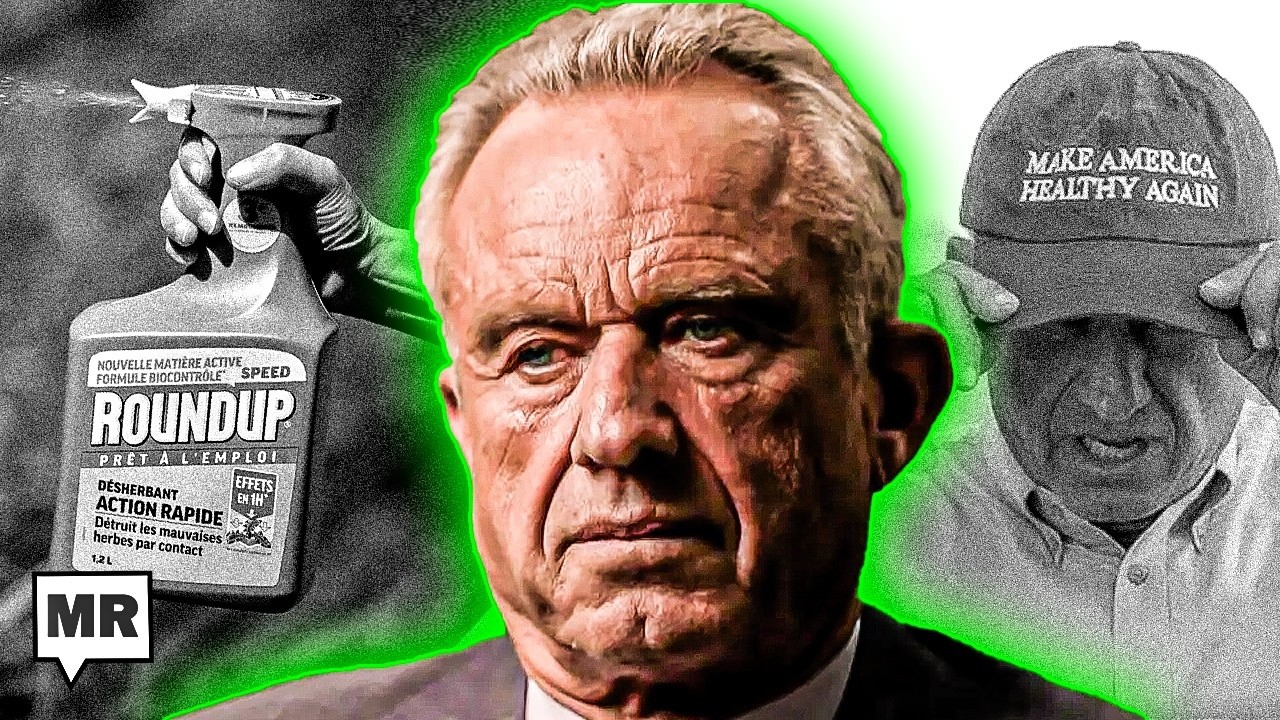
health and Human Services Secretary Robert F. Kennedy Jr. raised his concerns about widely used herbicides containing glyphosate and atrazine, linking them to chronic disease, in a Thursday report by the Make America Healthy Again (MAHA) Commission.
Why It Matters
The report highlights two commonly used weed killers—glyphosate, the active ingredient in Roundup, and atrazine, another widely used herbicide for weed control.
In 2015, the International Agency for Research on Cancer classified glyphosate as "probably carcinogenic to humans." But the U.S. Environmental Protection Agency (EPA), which has reviewed and reevaluated its status, said in 2020, "glyphosate is unlikely to be a human carcinogen." There are conflicting opinions about the toxicity of pesticides and their potential health risks, as well as their impact on the food system and environment. Herbicides are classified as a type of pesticide.
President Donald Trump signed an executive order in February establishing the Make America Healthy Again Commission, which pledged to produce a report within the president's first few months back in office. The assessment, released Thursday, aims to lay the groundwork for understanding what Kennedy calls the "magnitude of crisis" in American children's declining health and the factors driving it.
As the nation's top health official, Kennedy has repeatedly raised concerns about chemicals in food and the environment and their connection to chronic disease. The report's first section focuses on the rise of ultra-processed foods, while the second addresses the "cumulative load of chemicals in our environment."
What To Know
The 69-page assessment took issue with common herbicides, saying that children are exposed to them through food, water, dust, lawn treatment and household sprays.
"The cumulative effect of multiple chemical exposures and impact on children over time is not fully understood," the report says, adding that data and research on the "complex mixtures of chemicals" children encounter have yet to be fully explored.
Kennedy has long opposed pesticides, having helped win a 2018 lawsuit filed against Monsanto, the original producer of Roundup.
Pesticides are widely used in farming across the U.S. In April, a group of 79 Republicans, including some Senators like Chuck Grassley of Iowa, wrote a letter to Kennedy, saying that "regular testing by DFA and USDA finds that more than 99% of all pesticide residues meet extremely conservative limits established by EPA."
As of 2017, the United States Geological Survey reported, "about 1 billion pounds of conventional pesticides are used each year" throughout the country.
Read more Robert F. Kennedy Jr.
Is the FDA Doing Enough About Food Additives?
The MAHA Commission's assessment received expected blowback from agricultural and farming associations, which largely rely on pesticides for their livelihood.
What People Are Saying
The National Corn Growers Association said in a statement:"The Make America Healthy Again Report is filled with fear-based rather than science-based information about pesticides. We are deeply troubled that claims of this magnitude are being made without any scientific basis or regard for a long history of EPA expert evaluations of these products."
American Soybean Association said in a statement: "The American Soybean Association strongly rebukes the May 22 Make America Healthy Again Commission report for being brazenly unscientific and damaging to consumer confidence in America's safe, reliable food system. Should the administration act on the report—which was drafted entirely behind closed doors—it will harm U.S. farmers, increase food costs for consumers, and worsen health outcomes for all Americans. ASA calls on President Trump, who has long been a friend of farmers, to step in and correct the Commission's deeply misguided report."
Dr. Michelle Perro, pediatrician, author and activist for children's health, told The New Lede: "While I support and applaud the MAHA focus on chronic diseases affecting our children, it is disheartening that it took us decades to get here. The environmental toxic impacts on our children's well-being has been known for decades, but not acted upon until now."
The National Council of Farmer Cooperatives said in a Thursday statement:"We have serious concerns over the assessment's allegations about pesticides. The report includes statements that do not reflect the wealth of evidence developed over decades by federal agencies such as the EPA and USDA on the safety of crop inputs and food production methods. These institutions have consistently reaffirmed the safety and efficacy of the systems that help feed our country and the world."
American Farm Bureau President Zippy Duvall said in a statement:"It is deeply troubling for the White House to endorse a report that sows seeds of doubt and fear about our food system and farming practices, then attempts to celebrate farmers and the critical role they play in producing the safest food supply in the world.
Farmers are identified as 'critical partners,' yet were excluded from development of the report, despite many requests for a seat at the table. The report also expresses a desire to ensure farmers continue to thrive, but undermining confidence in our food system directly contradicts that noble goal. The report spotlights outlier studies and presents unproven theories that feed a false narrative and only then does it acknowledge a mountain of evidence about the safety of our food system." zippy
What Happens Next
The report pledges to support "gold-standard scientific research" as part of its effort to address chronic disease. The assessment marks the first step toward developing the commission's strategy, which is due 180 days after Trump's February executive order establishing the panel.
===
===
https://www.desmog.com/2022/12/09/pesticide-industry-science-denial-monsanto-glyphosate-cancer/
As regulators in the United States and European Union prepare to review and potentially reauthorize the controversial weedkiller glyphosate, anew report reveals the stealth tactics and narrative spin deployed by the chemical’s manufacturer to discredit inconvenient science and protect profits.
The report, published by Friends of the Earth and nonprofit investigative organization U.S. Right to Know, uses the case study of Monsanto (now owned by Bayer) and its widely used glyphosate-based product Roundup to illustrate the pesticide industry’sdeceptive tactics and communications strategies — which mirror those of the tobacco and fossil fuel industries.
“The pesticide industry is not just following in the footsteps of Big Tobacco and Big Oil, they co-wrote the playbook,” Stacy Malkan, lead report author and co-founder of U.S. Right to Know, said.
The pesticide industry used this PR strategy, which involves tactics like distorting science and disseminating misleading messaging through third party allies, to convince regulators and the public that its products were safe and necessary, the report explains.
“This case study provides an important window into how one company worked with many partners across the pesticide and processed food industries, academia, PR firms, and various front groups to sell the world on a toxic pesticide,”said author and advocate Anna Lappé, who contributed to the report. “These disinformation tactics are critical to understand because they have been used to push the entwined myths that we need pesticides to ‘feed the world’ and that they are totally safe.”
Despite mounting scientific evidence of their harms to human health and the environment, pesticides have proliferated, withglobal usage up by about 80 percent since 1990. The most widely used pesticide in the world is Roundup, which is alleged to have caused cancers. Litigation over this cancer link is ongoing, spurred by a 2015 finding from the World Health Organization’s cancer research arm classifying the chemical as a probable human carcinogen.
[twt]
the report, released December 5, brings together internal corporate documents revealed through this litigation, as well as documents obtained through public records requests filed by U.S. Right to Know, to illuminate the extensive campaign by one of the world’s leading pesticide manufacturers — Monsanto, acquired by Bayer in 2018 — to disseminate disinformation and manipulate science regarding the health and environmental impacts of glyphosate.
These strategies have been “used by the pesticide industry for decades now and [their] impact on public health is enormous,” Nathan Donley, PhD, environmental health science director at the Center for Biological Diversity, told DeSmog via email.
Litigation concerning the health hazards of various pesticides, including glyphosate, stems from companies hijacking the regulatory process, he explained. “This can happen multiple ways, from pressuring decision makers at the EPA to producing enormous amounts of biased data that guide the actions of regulators. It’s been very effective unfortunately.”
For example, as noted in the report, under pressure from Monsanto in 1986, EPA overturned its own decision made the previous year to classify glyphosate as a possible human carcinogen. To this day, EPA maintains the position that glyphosate is not carcinogenic and does not pose human health risks if used according to its label. However, the agency is planning to conduct a new review of the chemical after a federal appeals courtstruck down EPA’s previous designation of glyphosate as benign.
The report found that over a five-year period, seven front groups with links to Monsanto spent $76 million “to push corporate disinformation, including attacks on scientists.” During that same period, six industry trade associations that appear in Monsanto PR papers spent $1.3 billion, including on lobbying and PR around glyphosate regulation.
It also argues that the pesticide industry’s current business model “would not be possible if pesticide products were subject to rigorous, independent research and if there were widespread public understanding of the harms and risks of many of these products.”
“It’s clear from this report and all the work that’s been done in this field that corporate influence in science-based decision-making is way too common,” said Genna Reed, director of policy analysis in the Center for Science and Democracy at the Union of Concerned Scientists, and lead author of a2021 study exploring ways to protect scientific integrity from the corporate “disinformation playbook.”
“This isn’t just a wonky policy problem,” Reed added. “This is a massive institutional rot that needs to be fixed to protect public health.”
Fossil Fuel and Pesticide Industry Parallels
In addition to pressuring regulators, Monsanto deployed other strategies to discredit evidence of health and environmental harms of its glyphosate-based product. The report found that Monsanto undermined or even shaped the science, attacked public health experts, bought influence at academic institutions, and used third party messengers to pollute the public discourse. These are the same strategies — and in some instances involved the same actors — that the tobacco and fossil fuel industries used to generate doubt and to deceive the public about the harmful consequences of their products.
According to the report, Monsanto covertly contributed to the scientific literature examining the health risks of glyphosate, ghostwriting papers in toxicology journals, including an influential paper published in April 2000 that concluded that glyphosate-based Roundup “does not pose a health risk to humans.” Internal company emails reveal that Monsanto employees played critical roles in data collection, drafting, editing, and relationship-building with the paper’s authors. In the wake of the 2015 glyphosate classification from the World Health Organization’s cancer research agency, Monsanto ghostwrote scientific manuscripts published in a prestigious journal as an “independent review” on the science of glyphosate. The company also orchestrated a campaign to intimidate cancer researchers and enlist Republican lawmakers to try to defund the World Health Organization’s cancer research arm.
[twt]
monsanto’s influence extended to academia.The report details how the company funded academics and universities to promote educational messaging supportive of pesticides and genetically engineered organisms (GMOs) — seed traits designed to resist toxic chemicals. Emails obtained from records requests reveal that the University of Florida, for example, “had plans for ‘educating the masses’ about GMOs and pesticides with messaging that was ‘harmonious’ with Monsanto’s,” Malkan explained.
This co-opting of academia was part of a larger pro-pesticide PR strategy. As the report explains, PR firms that helped Monsanto defend glyphosate and promote GMOs have worked with other polluting industries, including tobacco and fossil fuels. For example,FTI Consulting,which has worked extensively with the oil and gas industry, has also worked closely with Monsanto/Bayer to discredit the science on glyphosate.
Furthermore, as the report details, one industry front group that worked to attack cancer scientists and dispute the evidence linking glyphosate to cancer was the Genetic Literacy Project. Its founder Jon Entine has worked in defense of chemicals, plastics, fracking, and oil companies, and the group’s funding sources “trace back to some of the largest, most consistent funders of climate science denial.” These include foundations like Donors Trust, Scaife Foundation, and Charles Koch Foundation. Other institutions that engaged in climate denial — including Competitive Enterprise Institute,Heartland Institute,Cato Institute, andCommittee for a Constructive Tomorrow (CFACT) — also attacked scientists who raised concerns over glyphosate, according to the report.
“This is not surprising since nearly all agricultural chemicals are derived from fossil fuels,” Malkan said, adding that both industries are continuing to mislead the public in portraying their business or products as essential to climate and sustainability solutions.
“Just like Big Oil, pesticide companies are using disinformation tactics to push false solutions for the climate crisis, and stalling action on real solutions,” Malkan added. ADeSmog investigation published in November 2020 described how pesticide companies are now marketing themselves as climate-friendly.
“Pesticide companies are desperately trying to, and in many instances are successfully greenwashing the poisons they make billions of dollars selling,” Lori Ann Burd, senior attorney and environmental health program director at Center for Biological Diversity, said via email. She added that many U.S. government officials have adopted the pesticides industry’s position that their products are necessary.
“USDA, EPA and many members of Congress have largely bought in to industry rhetoric that dangerous pesticides are essential tools for feeding Americans, ignoring the reality that many countries, including Brazil, China and nations within the E.U. continue to eat despite having banned dangerous pesticides that are still widely used in the U.S.,” she explained. UN human rights experts have also pushed back against the claim that pesticides are necessary to feed the world.
Bayer did not immediately respond to a request for comment on the report.
Countering the Disinformation Playbook
The report concludes with some recommendations and steps to take to counter the pesticide industry disinformation playbook. According to this advice, which is aligned with that of other experts in fighting disinformation, exposing the tactics and strategies and enforcing strong disclosure and accountability rules are important steps to mitigate undue industry influence.
“We need to continue to shine a light on these practices and actively work on policies that can serve as firewalls,” Reed of the Union of Concerned Scientists said.
Other recommendations include challenging corporate influence in academia and holding PR firms accountable. Just as there are now campaigns to do just that for fossil fuels, the report calls for similar action and pressure for combatting pesticide industry influence and enablers.
“While the propaganda tactics of Big Oil and Big Tobacco are well-documented and their grave impacts well understood, the pesticide industry’s similar role in widespread disinformation, and its extensive scope and impact, has not been as well documented or publicly understood. We hope this report, and the chorus of recent reporting, will change that,” the report states.
===
---
Monsanto wins $7.7b lawsuit in Brazil – but farmers’ fight to stop its ‘amoral’ royalty system will continue
Karine Eliane Peschard, Graduate Institute – Institut de hautes études internationales et du développement (IHEID)
Farmers worldwide say Monsanto's policy of charging for every use of its genetically modified seeds violates their planting rights. But judges in these patent law cases aren't so sure.
==
early 80's study glypho
https://www.ehn.org/of_mice_monsanto_and_a_mysterious_tumor-2497173718.html
==
https://theintercept.com/2019/08/23/monsanto-republicans-cancer-research
EMAILS SHOW MONSANTO ORCHESTRATED GOP EFFORT TO INTIMIDATE CANCER RESEARCHERS
Lee Fang
August 23 2019, 3:00 a.m.
IN 2015, the World Health Organization’s cancer research arm, the International Agency for Research on Cancer, classified glyphosate, an active ingredient in the herbicide Roundup, as a “probable carcinogen,” setting off a global debate about the world’s most popular weedkiller.
Over the last four years, Republicans in Congress have excoriated and pushed to defund the IARC, casting their defense of the chemical as a quest on behalf of small American farmers. Rep. Frank Lucas, R-Okla., has written that his outrage over the cancer research is on behalf of the “farmers and food manufacturers who rely on traditional farming methods to produce the food that fuels America — and the world.”
But according to a recent trove of documents, the ongoing political assault on the IARC has been scripted in part by Monsanto, the St. Louis-based chemical and seed conglomerate that produces Roundup and Roundup-resistant crops.
Roundup has been cash cow for the company since the 1970s, fueling billions of dollars in annual profits. Its use has skyrocketed in recent decades since the company developed genetically modified corn and other crops that are resistant to it; it is now the world’s leading herbicide.
A growing number of individuals say that Monsanto failed to warn consumers of the dangers of using Roundup and had marketed the chemical spray as harmless to humans, while internally recommending that its own employees use gloves and protective gear. Critics say that the Roundup formula used in the U.S. also contains a surfactant that makes the herbicide far more toxic than the variation of the spray sold in the European market.
Monsanto, which merged with German multinational pharmaceutical company Bayer AG last year, is facing as many as 11,000 cases relating to glyphosate. Last year, Dewayne Johnson, a former groundskeeper now dying of cancer, was the first to win his jury trial in San Francisco state court against Monsanto, alleging that years of using Roundup contributed to his non-Hodgkin’s lymphoma. Johnson was awarded $289 million by a jury, though a judge later reduced the amount to $78 million. Another plaintiff, Edwin Hardeman, also alleged that he spent decades spraying the glyphosate-based weedkiller with little to no protective gear and developed the same blood cancer, won a similar case in federal court this year.
[Plaintiff Dewayne Johnson after hearing the verdict in his case against Monsanto at the Superior Court of California in San Francisco on Aug. 10, 2018. Photo: Josh Edelson, Pool/AP]
The newly disclosed files, released by a plaintiff’s law firm, Baum Hedlund, include company emails, documents, and deposition transcripts showing that Monsanto lawyers and lobbyists guided lawmakers, coordinating efforts to question the IARC’s credibility and slash U.S. support for the international body.
The company has denied claims that its products cause cancer, and Monsanto lawyers have declared that Environmental Protection Agency’s designation of glyphosate as safe should clear the company of any legal liability. In a recent marketing campaign, Bayer touted its friendly cooperation with regulators as a sign that the public should have nothing to fear from its products.
But the documents also suggest that the firm has used its influence with lawmakers to antagonize regulators, applying pressure and investigative threats to shape the science used to research glyphosate and other controversial chemical compounds, as part of a larger campaign to silence critics and discredit the IARC.
IN JUNE 2015, Michael Dykes, then serving as Monsanto’s vice president of government affairs, laid out the company’s strategy for “managing the IARC issue,” following the cancer research center’s determination that March.
The company, he wrote in an email, had dispatched its team of lobbyists to brief “key staff at EPA, USTR, USDA, and the State Department as well as members of Congress” to raise concerns with the IARC’s scientific process, and with how the decision could impact agriculture as well as international trade. Lobbyists also met with an official at the Department of Health and Human Services; they saw the agency’s support as key “to secure a WHO clarification.”
Later in the year, Dykes updated the Monsanto team with plans to push back against the IARC, including the possible placement of advertisements — in the form of letters from third-party groups — in Capitol Hill newspapers, as well as preparation to use a Senate Agriculture Committee hearing as a venue to get the EPA to reaffirm support for glyphosate. “We will make sure Committee members ask EPA the glyphosate safety question,” Dykes wrote.
[Roundup weed killing products on May 14, 2019. Photo Illustration: Scott Olson/Getty Images
The following year, FTI Government Affairs, one of several consulting firms guiding Monsanto’s political response to the IARC decision, assisted GOP lawmakers with an effort to investigate U.S. support for the IARC.
In one email sent by Todd Rands, a former Monsanto attorney working with FTI, sent a draft of a letter ostensibly written by Rep. Rob Aderholt, R-Ala., a senior lawmaker on the House Appropriations Committee, addressed to Dr. Francis Collins, the director of the National Institutes for Health. NIH is the government agency responsible for most federal public health research and is the largest funder to the IARC. The letter, in fact, had been written by FTI consultants, along with Rands’s edits, accordingto his deposition testimony.
The FTI-written letter declared that glyphosate “does not cause cancer,” accused the IARC of peddling “bunk science,” and threatened a reassessment of the NIH budget to ensure that the agency is “committed to only funding organizations that produce information and conclusions based on sound science, robust processes, and credible methodology.”
During his deposition, Rands said that he believed it appropriate for Monsanto to draft a letter on behalf of a lawmaker to NIH, calling such ghostwriting a “common practice in Washington.”
It’s not clear what Aderholt’s office did with the FTI-authored letter. Aderholt’s office did not respond to a request for comment from The Intercept. On June 2, 2016, Aderholt sent a letter to NIH to request a briefing on the IARC’s designation of glyphosate as a probable carcinogen and “the standards that NIH places on research funded by the U.S. taxpayers,” a letter that mirrored many of the demands in the FTI letter, though it used different language.
More GOP letters and demands for investigation over NIH’s funding for IARC followed. Rep. Jason Chaffetz, R-Utah, then-chairman of the House Oversight Committee, Rep. Trey Gowdy, R-S.C., Chaffetz’s successor as Oversight chair, and Rep. Lamar Smith, R-Texas, then-chair of the House Science Committee, all called for inquiries into IARC funding and the designation of glyphosate as a carcinogen.
The Monsanto lobbyists closely conferred with the committees as they honed in on the IARC’s funding. Drew Feeley, an attorney for the GOP staff of the House Oversight Committee, emailed an FTI consultant to explain that his office was working to attach a line to a government budget bill designed “to apply to IARC” in order to slash its funding over the glyphosate issue. “Thanks again for coordinating,” Feeley wrote to the Monsanto consultant. Feeley, notably, is now serving as an attorney with the Council on Environmental Quality, the White House office that oversees environmental policy.
“We expect the House OGR investigation about IARC to expand as they move into the new administration,” wrote Rands, in an update to Monsanto colleagues.
Last year, under Smith, the House Science Committee devoted an entire committee hearing into questioning the IARC, with a focus on its conduct around glyphosate. Smith subsequently sent more letters to cancer researchers in Norway, demanding they “correct the flaws in IARC.” The House Appropriations Committee followed up by cutting $2 million in funding to the IARC, a symbolic move to distance the U.S. from the international body, which relies on a budget of around $40 million from a range of member countries.
THE CONGRESSIONAL OUTREACH was only part of a multifaceted effort to control the backlash sparked by the IARC designation.
In recent years, a great deal of new information has come to light around Monsanto’s work to conceal the potential health risks around glyphosate. Earlier this month, new documents revealed that Monsanto operated a “fusion center” to discredit critics of the company, including former Reuters journalist Carey Gillam, who has written extensively about glyphosate. The operation even monitored and considered legal action again singer Neil Young, a critic of Monsanto.
Le Monde, the French newspaper, published an award-winning investigation on the controversy, referring to the Monsanto-run campaign to discredit the IARC as an effort to “intimidate” the cancer research center.
A separate cache of litigation files, released in May, revealed that Monsanto also contracted with Hakluyt, a corporate intelligence firm, to keep close tabs on political elites in Washington. The company consulted with senior Trump and EPA officials, and confirmed that the administration would support Monsanto on glyphosate issues. “We have Monsanto’s back on pesticide regulation,” a domestic policy adviser in the White House told Hakluyt.
[pixA building on the campus of Monsanto headquarters in St. Louis on May 23, 2016. Photo: Michael B. Thomas/AFP/Getty Images
The last year has exposed other cloak-and-dagger tactics. The company was criticized for ghostwriting scientific studies on the safety of glyphosate, which were presented as independent research. At the San Francisco civil trial over glyphosate, an FTI consultant working for Monsanto was caught posing as a journalist working for the BBC and another British outlet.
And in 2017, one of the most stunning disclosures revealed that a senior EPA staffer, Jess Rowland, had quietly tipped Monsanto off to the fact that federal agencies had sought to reevaluate the safety of glyphosate, boasting to the company that he could “kill” federal investigations into glyphosate. Shortly before a crucial European Union vote on glyphosate products, the EPA suddenly released a report declaring the safety of the product. The document was later taken down because it had not yet been completed. One Monsanto official relayed to a colleague that Rowland had told him, “If I can kill this I should get a medal,” in regards to the glyphosate review conducted by the Agency for Toxic Substances and Disease Registry, a department of Health and Human Services.
After leaving the EPA, Rowland went to work in the private sector, consulting for chemical companies.
There’s also a revolving door between lawmakers supporting Monsanto and professionals working on behalf of the company. Shortly after retiring from Congress this year, following his investigation of the IARC, Lamar Smith took a job at Akin Gump Strauss Hauer & Feld LLP, a lobbying firm that represents Bayer-Monsanto’s interests in Washington.
---
https://www.alternet.org/2019/08/documents-reveal-monsanto-surveilled-journalists-activists-even-musician-neil-young/
cf DN
Explosive new documents reveal the U.S. agribusiness giant Monsanto ran a “fusion center” to surveil and discredit journalists and activists who criticized or wrote damning reports about Monsanto, as well as legendary singer-songwriter Neil Young, who released an album in 2015 called “The Monsanto Years.” Monsanto monitored Young’s Twitter activity and even analyzed the lyrics of his album. The fusion center also surveilled journalist Carey Gillam, who has done extensive research and writing about Monsanto and its popular pesticide Roundup, which has been linked to cancer. The corporation also targeted the nonprofit research group U.S. Right to Know, which submitted Freedom of Information Act requests about the company. From Kansas City, Missouri, we speak to Carey Gillam, a veteran investigative journalist and author of “Whitewash: The Story of a Weed Killer, Cancer, and the Corruption of Science,” and from Berkeley, California, Gary Ruskin, co-founder of U.S. Right to Know
==
no lnx
Corporations can legally put carcinogens in our food without warning labels. Here's why
Cheerios has so much glyphosate in it, it should be labeled as toxic. Corporate free speech precedents prevent that
MATTHEW ROZSA
JULY 14, 2019
A recent study by the Environmental Working Group revealed something horrifying: Glyphosate, the active ingredient in the popular weedkiller Roundup, was present in 17 of the 21 oat-based cereal and snack products at levels considered unsafe for children. That includes six different brands of Cheerios, one of the most popular American cereals.
I've written before about the limits of corporate free speech when it comes to public safety, but on that occasion I discussed this insofar as it involved corporate-sponsored climate change denialism. Yet here we have something more tangible, more direct: The safe glyphosate limit for children is 160 parts per billion (ppb), yet Honey Nut Cheerios Medley Crunch has 833 parts per billion and regular Cheerios has 729 ppb. While the potential risks of glyphosate are fiercely debated, many scientists believe that it is linked to cancer.
So if there are unsafe levels of glyphosate in a cereal popular with children, why isn't this disclosed on the cereal boxes? The complicated answer has to do with a legal case that defined free speech as something that non-human persons, like corporations, have a "right" to, in a sense. That sounds absurd, perhaps, and probably not something the framers of the constitution intended. Indeed, the idea of "corporate constitutional rights" is a relatively new one, yet one that corporations' legal arms fight tooth and nail to preserve.
There are several activist groups working to amend the constitution to undo the notion of corporate personhood and make it so that this mind-bending and harmful interpretation of corporate free speech is no longer enshrined in law. Move to Amend — as in, the constitution — is one such group.Salon interviewed Kaitlin Sopoci-Belknap, the National Director of Move to Amend,to understand how this weird legal situation came to exist.
:{:{}:
}:
What does glyphosate do to weeds?
:{:{}:
}:
Glyphosate is a non-selective herbicide, meaning it will kill most plants, not just weeds. It prevents plants from making certain proteins that are needed for plant growth.
:{:{}:
}:
What do peer-reviewed studies indicate it does to human beings and animals if they ingest it?
:{:{}:
}:
The International Agency for Research on Cancer (IARC) has labeled glyphosate as “probably carcinogenic” and the California Office of Environmental Health Hazard Assessment categorized it as a “chemical known to the state to cause cancer.”
:{:{}:
}:
How did glyphosate wind up in foods like breakfast cereals?
:{:{}:
}:
According to the U.S. Geological Survey, 250 million pounds of glyphosate are sprayed on American crops each year. Glyphosate is primarily used on Roundup Ready corn and soybeans that are genetically modified to withstand the toxin. Glyphosate is also sprayed on other non-GMO crops, like wheat, oats, barley and beans, right before harvest.
:{:{}:
}:
What have Monsanto and other companies done to suppress knowledge of its effects (lobbying, suppressing science, etc.)?
:{:{}:
}:
Monsanto has waged a sophisticated PR campaign to bully scientists and undermine findings that glyphosate is cancerous. In addition Monsanto and agribusiness leaders protecting the company's interests have a revolving door relationship with many agencies that are supposed to be overseeing and regulating the corporation. Monsanto and agribusiness associations have also made significant political contributions to Congressmembers like former Rep Lamar Smith from Texas who chaired the House Science, Space, and Technology Committee where he used his platform to undermine the [International Agency for Research on Cancer] when their cancer findings came out, accusing the agency of using "cherry-picked" science when determining that glyphosate is “probably carcinogenic.”
Good info on this is here.
Where do corporate constitutional rights play into why these companies don't have to have warnings about pesticides in their foods?
Monsanto has argued that California's Prop 65 labeling law is a violation of the company's First Amendment right not to speak.
What is the boundary separating corporate free speech between their responsibility to the public health? Have those boundaries shifted over the years?
The courts have expanded the ability of corporations to overturn labeling requirements on a number of occasions over the last 35 years. In 1986 the Supreme Court decided that the Pacific Gas and Electric Company in California was not required to allow a consumer advocacy group to use the extra space in their billing envelope, upholding the corporation's right not to speak and protecting the corporation's “freedom of mind.”
In 1996 the U.S. Second Circuit Court of Appeals overturned a Vermont law requiring the labeling of all products containing bovine growth hormone and ruled that the right not to speak inheres in political and commercial speech alike and extends to statements of fact as well as statements of opinion.
In Nike v. Kasky in 2003 the Supreme Court heard arguments on whether purposeful untruths in advertising are protected political speech before sending the case back to a California court where it was settled in Kasky’s favor, finding that the state laws requiring truth in advertising had been violated. The question of whether the First Amendment gives a corporation the right to speak lies remains unsettled.
Legally speaking, why are companies allowed to have poisons in our foods without warning the public of that fact?
The Supreme Court never had the authority to determine that corporations have any Constitutional rights, including First Amendment rights. By granting corporations these powers, meant to be the ultimate protections for people from government overreach, it in effect means that in many ways regulatory agencies have no authority over corporate actions — even when those actions are determined to cause public harm. In cases involving the First Amendment right not to speak it is even more insidious because it means that their so-called right not to warn the public about their toxic products trumps our right to know what's in our food.
The only solution to this problem is to pass an amendment to the US Constitution to make clear that only human beings have Constitutional rights, and that government absolutely has the right to regulate corporations like Monsanto, so that they can no longer use the Constitution as a shield against public oversight and protection. The We the People Amendment will do just that.
MATTHEW ROZSA
Matthew Rozsa is a breaking news writer for Salon. He holds an MA in History from Rutgers University-Newark and is ABD in his PhD program in History at Lehigh University. His work has appeared in Mic, Quartz and MSNBC.
==
==
https://www.ecowatch.com/bayer-secret-list-of-monsanto-critics-2636999291.html
no lnx
Bayer Apologizes Over Secret List of Monsanto Critics
Deutsche Welle 3 hours ago BUSINESS
O. Andersen / Getty Images / AFP
Germany's Bayer, which bought the U.S. agrochemical firm Monsanto, issued an apology on Sunday following reports that its American subsidiary drew up a list of those critical of the firm's practices.
"After an initial analysis, we understand that such a project raised concerns and criticism," Bayer said in a statement. "This is not the way Bayer would seek dialogue with different stakeholders and society, so we apologize."
The Leverkusen-headquartered firm said it would hire a law firm to carry out an external investigation into the matter.
The French prosecutor said Friday it had opened a probe after newspaper Le Monde filed a complaint.
The French daily alleges that Monsanto built up a file of about 200 names, including journalists and lawmakers who are skeptical about the company and its products, in the hope of influencing their positions on pesticides.
The charge is that the information was collected illegally.
Paris police are investigating the possible "collection of personal information by fraudulent, unfair or illicit means."
Naming Names
Le Monde and one of its journalists complained that they were on the list drawn up since 2016 and allegedly leaked by U.S. public relations firm FleishmanHillard.
The name of France's former Environment Minister Segolene Royal is also said to be on the list. She told AFP it "says a lot about the methods of lobbyists ... they carry out spying, infiltration, seek to influence, sometimes financially, I imagine."
PR firm FleishmanHillard said on Friday it would investigate the allegations.
French public broadcaster France Televisions announced Sunday that it would also file charges.
Monsanto's Roundup.
Lawsuits Over Monsanto's Roundup
Monsanto produces the broad-spectrum glyphosate-based herbicide Roundup. The firm and new owner Bayer deny that Roundup causes cancer.
However, last August, a U.S. jury found Bayer liable because Monsanto had not warned users of alleged cancer risks linked to Roundup.
The U.S. Environmental Protection Agency (EPA) issued a new decision in April that glyphosate, the active ingredient in Roundup, which is made by Monsanto, does not cause cancer or other health problems if used according to instruction labels.
Bayer Chief Executive Officer Werner Baumann is facing increased shareholder pressure over the litigation it inherited from Monsanto. It is the named defendant in U.S. lawsuits concerning Roundup filed by 13,400 people.
Bayer shares have fallen about 40 percent since the $63 billion (€56 billion) Monsanto purchase was completed last June.
Reposted with permission from our media associate Deutsche Welle.
RELATED ARTICLES AROUND THE WEB
Bayer apologizes for Monsanto PR firm's media list | The Japan Times ›
---
==
'Huge Victory': French Court Finds Monsanto Guilty of Poisoning Farmer
https://www.commondreams.org/news/2019/04/12/huge-victory-french-court-finds-monsanto-guilty-poisoning-farmer
---
---
https://www.rollingstone.com/politics/politics-features/monsanto-cancer-710902/
For years, DeWayne “Lee” Johnson drove a truck with a 50-gallon tank of Monsanto’s Ranger Pro pesticide mounted on top. A groundskeeper for the Benicia Unified School District in Solano County, California, north of San Francisco, Johnson went through hundreds of gallons of the stuff every week between the truck and his backpack sprayer. When it was windy, the pesticide would coat his body in a fine chemical mist. One day, the tank’s hose broke, soaking him from head to toe. A few months later, he developed a rash on his knee. A few months after that, the rash spread across his body. In 2014, Johnson was diagnosed with non-Hodgkin lymphoma.
On Friday, a California jury found that Monsanto’s products likely caused Johnson’s cancer, and ordered the company to pay the terminally-ill groundskeeper $289 million. As the first of an estimated 5,000 similar suits pending against Monsanto, the judgement is a harbinger of trouble for the company. After the decision was announced, the stock price of Monsanto’s parent company, Bayer, nosedived on concerns Monsanto may be liable for billions more in damages. But the product the jury believes caused Johnson’s cancer is still on the market. That’s because the EPA, as recently as November 2017, declared the chemical harmless to humans. At trial, Johnson’s legal team was able to demonstrate, via internal emails, just how deeply Monsanto was involved in getting the EPA to reach that conclusion.
Three months after receiving his prognosis, Johnson called Monsanto to ask if there might be a connection between his cancer and the chemicals he worked with every day. “He was told no, there is no connection,” Johnson’s lawyer, Timothy Litzenburg, tells Rolling Stone. Monsanto’s medical director was alerted to the call; he was supposed to call Johnson back to get more information; Johnson says he never heard from the man. He kept spraying.
RELATED

New Zealand Bans Semiautomatic Weapons 5 Days After Christchurch Massacre. What’s Taking Us So Long?
What Is Going on With Andrew Yang’s Candidacy?
A few months later, in March 2015 — the same month the World Health Organization announced its analysis that glyphosate, the active ingredient in both Ranger Pro and Roundup, the most widely used pesticide in the world, was a “probable carcinogen” — Johnson called the Missouri Regional Poison Control Center. (The center has a contract with Monsanto to consult with anyone who contacts the company with health concerns.) “Instead of saying ‘The WHO says it causes cancer, we disagree,’ he was just told no, it doesn’t cause it,” Litzenburg says. Johnson kept spraying.
He had no reason to think he ought to stop because, according to the U.S. government, glyphosate is “not likely to be carcinogenic to humans.” Jurors in Johnson’s case, however, were not only persuaded there was overwhelming scientific evidence glyphosate can cause certain types of cancer, they were convinced that Monsanto was aware of the risk, and made concerted efforts to distort both scientific research and public opinion about it.
[Plaintiff Dewayne Johnson reacts after hearing the verdict to his case against Monsanto at the Superior Court Of California in San Francisco, California, on August 10th, 2018.]
Internal documents produced in court indicated Monsanto had reason to believe glyphosate was dangerous as early as 1983, when a study conducted by the company discovered a statistically-significant increased risk of cancer in mice who were treated with glyphosate. The EPA was alarmed by the finding, but Monsanto dismissed the results, saying it wasn’t definitive because a single mouse who was not exposed to the pesticide also developed a tumor. The agency wanted the study replicated, but Monsanto refused. “They fought over that one mouse’s kidney for years, spent millions of dollars on experts, instead of just doing the test again,” Litzenburg says. “The EPA even offered a compromise — let’s just do a kidney and liver test. Monsanto said ‘no.’ It’s amazing how often they’re able to say no to the EPA.”
The reason the company was able to say ‘no’ to the agency ostensibly charged with regulating its products, says Nathan Donley, a senior scientist at the Center for Biological Diversity, is because the pesticide companies quite literally bankroll the EPA’s pesticide office. Under the Pesticide Registration Improvement Act, pesticide manufacturers are required to pay registration fees, and those fees amount to about a third of the office’s operating budget.
The system was originally conceived as a way to make sure the companies who profit from the products pay for the costs associated with regulating those products, rather than the taxpayers. But, in Donley’s view, the plan has backfired spectacularly. “If industry is paying for 30-to-40 percent of the operating cost — the salaries — of the pesticide office, who are they working for?”
One thread of emails revealed in court demonstrated that precise dynamic, to damning effect. A matter of weeks after WHO declared glyphosate a probable cancer-causer, emails flew as Monsanto planned its response. In one, employees discuss “approaching EPA and… ask if there is anything that would help them defend the situation?” Ultimately, the Monsanto employees settled on a plan to enlist the help of Jess Rowland, who served as deputy division director in the health effects division of the EPA’s Office of Pesticide Programs at the time. In emails, Rowland, who also chaired the committee reviewing the safety of glyphosate, assured Monsanto officials he was in control of the process.
Rowland’s word appeared good enough for one Monsanto executive, who later wrote in an internal email, “We know, but cannot say, the EPA’s Office of Pesticide Program scientists strongly feel the glyphosate does not cause cancer and have defended their written determination internally for months.” In another email, Dan Jenkins, in charge of regulatory affairs at Monsanto, wrote Rowland and told him about a planned study of glyphosate — not at the EPA, but at the Agency for Toxic Substances and Disease Registry, overseen by an entirely different government agency. Rowland, Jenkins said in an email to his colleague, told him, “If I can kill this I should get a medal.” (The study has not been conducted.)
In May 2016, two weeks before the European Union was set to vote on whether or not to allow the use of glyphosate-based pesticides, the report produced by Rowland’s committee declaring glyphosate safe mysteriously appeared online. The EPA quickly took the document down, saying its assessment was not yet completed, but not before Monsanto put out a statement declaring the agency had issued an “official classification” that glyphosate was safe. Rowland was placed on administrative leave a few days later. He left the EPA shortly thereafter and now works as a consultant. (The EPA’s inspector general is currently investigating his conduct}:
Nevertheless, the EPA, under the Trump administration, ultimately came to the conclusion Monsanto was looking for, announcing in November 2017 its belief that glyphosate is not a carcinogen.
In the absence of government intervention, more and more people who, like Johnson, developed cancer after using glyphosate-based pesticides like Roundup are turning to civil arbitration. Johnson’s was the first judgement of an estimated 5,000 lawsuits currently pending against Monsanto concerning glyphosate.
“The courts are really the last line of defense,” Donley says.
Courts, though, can be slow. Monsanto is planning to appeal the jury’s decision, which means Johnson, who doctors believe has only matter of months left, will probably die before his family sees a cent from the corporation. In the meantime, Monsanto is paying in other ways. When trading opened Monday after the jury’s decision, shares for Bayer, which acquired Monsanto in June, fell 11 percent. (An Australian company that manufacturers a similar product also fell 17 percent on the news.)
“The amount of money they lost on the stock market today would have taken care of all of our clients long ago,” Litzenburg says.
---
non-hodg lymphoma 11k cases waiting
2 bif ct loss --> settle 5 bill?$
4 key epa sci oppose current legal status, one ed imp peer jrl
kpfa 3/12 jess roland rev dr to chem gp; dessicant on wht and oats 9kids food, ~ ca bill)
Whitewash Bk USRTK Terry Gillam
40 mil lbs? to 300 m now, in rain
==
---
https://www.alternet.org/news-amp-politics/monsanto-ordered-pay-massive-financial-damages-groundskeeper-who-said-roundup-gave
NEWS & POLITICS
Monsanto Ordered to Pay Massive Financial Damages to Groundskeeper Who Said Roundup Gave Him Deadly Cancer
A jury sided with the groundskeeper over the massive agriculture giant.
cody f
Monsanto has been ordered by a San Francisco jury to pay Dewayne Johnson a total of nearly $329 million in damages after he claimed in court that the company's product, Roundup, gave him cancer, NBC Newsreported.
Johnson, 42, worked as a groundskeeper and used Roundup, an herbicide, along with Ranger Pro, another Monsanto product, according to the report. He now has lymphoma, which many believe is caused by exposure to Roundup.
Monsanto has denied the Roundup causes cancer, but the jury, it seems, disagreed.
NBC News notes that this particular ruling does not have any direct effect on the other Roundup cases making their way through the courts.
“Today the jury confirmed what we have known since our investigation began — that Monsanto knew Roundup contained cancer-causing ingredients and failed to take this product off the shelf and protect consumers," said Micah Dortch of the Potts Law Firm, according to USA Today. "The company chose corporate profit and greed above humanity.”
Dortch was not directly involved in the case decided Friday, but his law firm represents more than a 100 client making related claims.
==
What Would a Monsanto-Bayer Merger Really Grow?
By Courtney Lindwall
A megamerger between two of the world's biggest agricultural corporations looms on the horizon. The seed and pesticide giant Monsanto is inching closer to uniting with the German pharmaceutical and chemical company Bayer—a consolidation that could spell disaster for farmers, pollinators, and affordable, healthy food.
Here's why the Monsanto-Bayer merger is a toxic relationship:
---
618 ca
https://www.ecowatch.com/landmark-glyphosate-case-2571385642.html
---
==
Report: Monsanto May Leave India After Losing GMO Cotton Patent
https://www.ecowatch.com/monsanto-india-cotton-gmo-2559650068.html
Could Monsanto's six-decade presence in India be coming to a halt?
On Wednesday, the Delhi High Court ruled that the biotech giant cannot claim patents for Bollgard and Bollgard II, its genetically modified cotton seeds, in the country.
Citing India's Patents Act of 1970, the court said that plant varieties and seeds cannot be patented, thereby rejecting Monsanto's attempt to block its Indian licensee, Nuziveedu Seeds Ltd., from selling the seeds.
"What it means is effectively Monsanto has no patent on seeds in India and they have never had it. They have tried to hoodwink the seed companies and farmers for years claiming they have a patent and making huge amounts of money from that," Diya Kapur, a lawyer for Nuziveedu Seeds, told Bloomberg.
As Dilsher Dhillon wrote in Business Insider India, Wednesday's verdict could prompt Monsanto to pull out of the country:
With the latest ruling, Monsanto's claims against Nuziveedu for unpaid royalties have been waived because its patents are invalid. It will now have to settle for the rates decided by the government.
This is a significant blow for Monsanto, the world's largest seed producer, as it currently licenses its seeds to nearly 50 domestic companies through its local joint venture with Mahyco Seeds Ltd. It could, in all probability, lead to the company's complete exit from India.
Monsanto had already threatened to stop business in India after the government imposed price controls on cotton seeds in 2016.
Monsanto first introduced its GM-technology in India in 1995. Today, more than 90 percent of the country's cotton crop is genetically modified. These crops have been inserted with a pest-resistant toxin called Bacillus thuringiensis, or Bt.
Business Insider's Dhillon noted that the ruling has significant implications for Monsanto and farmers alike:
While yields have increased significantly, Monsanto has long been accused of overcharging farmers for its seeds, especially given the fact that their ability to resist pests diminishes with time. The high cost of seeds and royalties left thousands of farmers in a vicious cycle of debt, which inevitably led to many suicides when crops failed. As a result, the government was forced to start regulating Bt cotton prices in 2006.
Hence, the Delhi High Court's ruling can be seen as a moral reckoning on Monsanto. But it also has wider implications. Yes, it will reduce prices for farmers, given that seed licensing companies pass on the royalty costs to them, but it could prove to be the death knell for innovation in the agriculture sector—something that will hurt farmers in the long run.
However, the company's presence in India may ultimately be decided by its pending mega-merger with Bayer AG.
"Bayer is generally seen as a company with a more collaborative approach towards governments. If Bayer sits down at the negotiating table with the Indian government and works out a solution, then it's possible that the next generation of Bt cotton technology may still see the light of day in India at some point in the future, although it may take years," Abhijit R. Akella, vice president at IIFL Institutional Equities, told Mint.
A Monsanto India spokesman said the company was "very disappointed" with the court's ruling.
"Today's order will have wide-ranging, negative implications for biotech-based innovation across many sectors within India, and is inconsistent with other international markets where agricultural innovation has flourished," the spokesman said.
Monsanto said it might challenge the decision in India's Supreme Court.
...
==
https://www.ecowatch.com/bayer-monsanto-merger-2550813842.html
EU Approves Controversial Bayer-Monsanto Merger
The European Union approved Bayer's takeover of Monsanto, a major hurdle in the $66 billion merger that would create the world's largest integrated seed and pesticide conglomerate.
The European Commission said the German chemical-maker's takeover of the St. Louis-based agribusiness giant is "conditional on an extensive remedy package, which addresses the parties' overlaps in seeds, pesticides and digital agriculture."
...
==
==
OMFG:
https://www.ecowatch.com/monsanto-avaaz-glyphosate-2538134798.html
Monsanto 'Commands' Civic Group to Turn in All Communications Over Glyphosate
Avaaz, a civic campaigning network that counts roughly 45 million subscribers around the world, has been served with a 168-page subpoena on behalf of agribusiness giant Monsanto.
The document, dated Jan. 26 and sent from New York Supreme Court, "commands" the U.S.-based organization to turn in a decade's worth of internal communications by Friday, Feb. 23.
The subpoena specifically seeks a trove of documents and communications related to Avaaz's campaigns around regulating glyphosate—the controversial star ingredient in Monsanto's blockbuster weedkiller, Roundup. The organization says this includes their 2017 effort to stop the European Union from re-issuing a 15-year license for glyphosate; its 2013 effort to block a Monsanto genetically-modified seed factory in Argentina; and an ongoing campaign to stop the mega-merger between Monsanto and Bayer.As founder Ricken Patel and his team pointed out, that's "pretty much every single private email, document, note, chat or anything else that any Avaaz staffer has ever written or done on our campaigns to ban Monsanto's key herbicide, glyphosate."
...
[docs]
Avaaz worries about the scope of the subpoena, as it would also include the names and email addresses of members who have signed Monsanto petitions. GM Watch noted that one of its petitions calling for a moratorium on glyphosate garnered more than 2 million signatures.
The subpoena was issued as part of a class-action lawsuit against Monsanto in which plaintiffs around the country claim that they or their loved ones developed non-Hodgkin's Lymphoma due to exposure to Roundup.
Avaaz is now fighting back and is raising funds for the defense effort. The group will be represented by the New York firm of Emery Celli Brinckerhoff & Abady, LLP.
"This is big," Avaaz writes in a new petition. "[Monsanto's] a $50 billion mega-corporation, infamous for legal strong-arm tactics like this. They have unlimited resources. If they get their hands on all our private information, there's no telling what they'll use it for."
Emma Ruby-Sachs, Deputy Director of Avaaz, said Monsanto's demand for internal communications is a "violation" of first amendment rights.
"There are millions of people around the world who have a deep and genuine concern that Monsanto's glyphosate is making us and our environment sick," she added. "That is the sole reason our members have called on governments to regulate it based on independent science. We're not going to let this legal attack slow down that essential work one bit."
RELATED ARTICLES AROUND THE WEB
- Monsanto's Fingerprints All Over Newsweek's Opinion Piece, a Hit ... ›
- Carey Gillam on Monsanto, Cancer and the Corruption of Science ... ›
- Monsanto's Roundup Faces European Politics and U.S. Lawsuits ... ›
---
---
==
https://www.alternet.org/environment/farmers-and-environmentalists-sue-trumps-epa-over-approval-monsantos-disastrous-dicamba
Last year's farm season was the first year Monsanto’s newly approved XtendiMax pesticide was used. Crop damage was so bad that multiple states had to step in and take action to protect their farmers. Why? Because, as revealed below, U.S. agriculture has rarely if ever seen such a dramatic and disastrous season as 2017, the result of our government regulators failing to protect farmers and the environment—instead doing the bidding of chemical companies.
Dicamba and Monsanto’s XtendiMax
Monsanto's "new" pesticide is actually just an old pesticide with a new twist: dicamba, a pesticide more than 50 years old, intended for use on Monsanto's new genetically engineered dicamba-resistant corn and soybeans. Dicamba has been sold in various forms since 1967 and used primarily with cereal crops like corn and wheat, which can tolerate small doses of it. However, its notorious propensity to drift made it unpopular with most farmers, who switched to safer herbicides as they became available. Because dicamba is extremely toxic to traditional cotton and soybean, the pesticide previously could be used only before these plants sprouted, to clear a field of weeds early in the season, and few used it for that purpose.
Monsanto's genetically engineered varieties changed all that, allowing XtendiMax to be sprayed "over-the-top" of the dicamba-resistant crops, much later in the season. This is also when neighboring crops have leafed out and are susceptible to crop injury—and when higher temperatures increase vapor drift. Now, the agribusiness giant can conveniently market patented GE dicamba-resistant seeds (which are also resistant to Roundup herbicide) together with XtendiMax, as the "Roundup Ready Xtend Crop System."
Doubling down on the pesticide treadmill
This crop system is Monsanto's false solution to a problem of its own making. For 20 years, the company has sold Roundup and seeds genetically engineered to resist Roundup's active ingredient, glyphosate. This "Roundup Ready" crop system has dramatically and controversially increased the overall pesticide output into our environment, making Roundup the most used pesticide in the history of mankind, contaminating our watersheds, soils and harming biodiversity. However, it also caused a related agronomic problem: Monsanto told farmers they could rely entirely on Roundup without weeds becoming resistant to glyphosate, contrary to weed science experts' warnings. But as with overusing antibiotics, Roundup overuse generated an epidemic of glyphosate-resistant "superweeds" infesting an estimated 100 million acres of U.S. cropland.
So now, Monsanto's new business model consists of GE soybean and cotton to resist both dicamba and Roundup so they can both to be sprayed freely without killing the crops. Although Monsanto presents the ability to kill glyphosate-resistant weeds with dicamba as a quick fix to the glyphosate-resistant weed epidemic, it will actually make things worse. The massively increased dicamba use spurred by Monsanto's crops—nearly a 100-fold increase on soybeans alone—will foster rapid evolution of still more intractable superweeds, now resistant to both pesticides. There are already initial signs of dicamba resistance arising in farmers' most feared weed, Palmer amaranth, in Arkansas and Tennessee.
Disastrous 2017 Season
Just as critics had warned, dicamba sprayed on Monsanto's GE soybeans and cotton volatilized, forming vapor clouds that drifted to damage a host of crops and wild plants. By July, farmers officially reported dicamba drift damaged 2.5 million acres of soybeans alone, rising to over 3.5 million acres in 16 states by August. Many other crops were also damaged, including tomatoes, melons, fruit and nut trees, and vegetables. Because experts estimate only one in ten dicamba drift episodes were reported, the true impacts could be ten times greater. Dicamba also injured residential gardens, shrubs and trees. Flowering wild plants near cropland also suffered, with potential harms to pollinators robbed of nectar and pollen resources, as well as hundreds of endangered species. Agronomists reported the scale of damage was "uncharted territory," and they had never seen herbicide-related drift damage on anything approaching this scale before.
Dicamba drift threatens farmers' livelihoods, by slowing soybean growth and reducing yields, costing them millions. Dicamba has drifted so rampantly that many farmers feel compelled to plant Monsanto’s seeds, which are considerably more expensive than others, to avoid crop injury—which many feel is a form of extortion. Farmers have banded together to file class action lawsuits against Monsanto, in an attempt to recoup their losses. Dicamba drift has torn apart rural communities, pitting farmer against farmer. One dicamba drift dispute resulted in the gunshot death of an Arkansas grower.
EPA and Monsanto's failure to protect farmers
...
==
==
PR
Christie C. Ly
Council for biotechnology information – CBI
Ketchum
christie.ly@ketchum.com
C: 917-617-2437
---
Senior Account Executive
Ketchum
emily.coy@ketchum.com
W: 415-984-6216
---
Beth Anne Mumford
Project Manager
CMA
bethannem@cmabuildstrust.com
W: 816-556-3137
C: 309-256-0755
---
Kevin Oates
Vice President, Group Manager
Ketchum
kevin.oates@ketchum.com
W: 310-295-3320
---
Bill Mashek
Vice President, Group Manager
Ketchum
bill.mashek@ketchum.com
202-835-9452
==
http://monsantomafia.com/biotech-employees.html
shills
Keith Reding, Ph.D
Regulatory Policy Lead
Monsanto
h.keith.reding@monsanto.com
W: 314-694-6615
C: 314-809-9624
---
Director Corproate Engagement for Asia
Monsanto Company
Yong.Gao@monsanto.com
W: 314-694-3855
C: 314-488-0971
---
Regulatory Policy & Scientific Affairs
Monsanto (35 years)
eric.s.sachs@monsanto.com
W: 314-694-1709
C: 314-637-7650
---
Carolyn Daly
Senior Administrative Assistant, Stakeholder Engagement
Monsanto
cadaly@monsanto.com
W: 314-694-2119
---
Lisa Drake
Director of Government Affairs
Monsanto Company (25 years)
lisa.m.drake@monsanto.com
W: 303-514-5533
---
Aimee Hood
Regulatory Communications and Information Mgmt lead
Monsanto (20 years)
---
Ben Schaefer “Snarky science/biotech defender”
Scientific Communications Manager
Monsanto
benjamin.adam.schaefer@monsanto.com
W: 314-694-3319
C: 314-813-7071
---
Cindy Goldstein
Industry Relations Manager, Hawaii
DuPont Pioneer
W: 808-637-0100 ext. 117
C: 808-722-7819
---
Kirby Kester
Applied Genetics Manager
BASF – The Chemical Company
kirby.kester@basf.com
W: 808-337-2065
C: 808-954-5305
---
fronts
Author of Biofortified.org
Food and Agriculture Speaker
savage.sd@gmail.com
760-390-2432
@grapedoc
---
Karl Haro von Mogel, Ph.D.
Research Geneticist
Chair and Co-director
Biology Biofortified (BFI)
BFI Co-Founder and Associate of Jon Entine via Genetic Literacy Project
karl@biofortified.org
---
Senior fellow
Information Technology and Innovation Foundation
Washington D.C.
vgiddings@itif.org
---
President
American Association for the Advancement of Science
617-258-5215
gfink@wi.mit.edu
---
Executive Director
HCIA – Hawaii Crop Improvement Association
Director@hciaonline.com
(808) 224-3648
---
President
Hawaii Crop Improvement Association
No contact info
---
Executive Director, Council for Biotechnology Information
Executive Vice President, Food & Agriculture at the Biotechnology Industry Organization
cenright@bio.org
W: 202-962-6644
C: 202-735-4025
---
Mischa Popoff, B.A.
Former USDA Contract Organic Inspector
Policy Advisor for the Heartland Institute
Research Associate for the Frontier Centre for Public Policy
answers@pollyphase.us
W: 903-456-1368
==
https://www.alternet.org/environment/koch-funded-anti-climate-group-tells-women-ignore-concerns-about-toxic-chemicals
At a recent soiree at Union Station, the D.C. power elite gathered in an anti-public health confab dressed up as a celebration of women that should concern anyone who cares about the health and rights of women and children.
The Independent Women’s Forum drew an impressive array of Republican politicians to its annual gala sponsored by, among others, the American Chemistry Council, the tobacco company Philip Morris, the cosmetics industry trade group, Google and the right-wing American Legislative Exchange Council.
Speakers included House Speaker Paul Ryan and Trump adviserKellyanne Conway, who won the IWF Valor Award for being a “passionate advocate for limited government” who does not embrace “the idea that being a woman is a handicap.” Conway is also an IWF board member.
So what is the Independent Women’s Forum? IWF got its start 25 years ago as an effort to defend now-Supreme Court Justice Clarence Thomas as he faced sexual harassment charges. The group has since raised millions from the secretive foundations of the Koch brothers and other right-wing billionaires to carry out its mission of “increasing the number of women who value free markets and personal liberty.”
In the world of the IWF—a group Joan Walsh described in The Nation as “the ‘feminists’ doing the Koch’s dirty work”—that means defending the freedom of corporations to sell toxic products and pollute the environment, while trying to frame that agenda as good for women and children.
E-cigarettes should be approved because of the unique biological needs of women, for example, and climate science education is too scary for students. (The e-cig letter is “standard Philip Morris PR,” says tobacco industry expert Stan Glanz, and Greenpeace classifies IWF as a “Koch Industries climate denial front group.”)
Women can also benefit by ignoring “alarmist” concerns about toxic chemicals, according to an IWF lecture series sponsored by Monsanto.
To give you a sense of the messaging on chemicals: Moms who insist on organic food are arrogant, snobby “helicopter parents” who “need to be in control of everything when it comes to their kids, even the way food is grown and treated,” according to Julie Gunlock, director of IWF’s “Culture of Alarmism” project, as quoted in an article titled “The tyranny of the organic mommy mafia” that was written by an IWF fellow.
At the IWF gala, Gunlock posed for a photo op with Monsanto staffer Aimee Hood and Julie Kelly, who writes articles casting doubt on climate science and pesticide risk, and once even called climate hero Bill McKibben “a piece of shit.”
Gunlock and Kelly are “rock stars,” Hood tweeted.
“I’m framing this,” Monsanto employee Cami Ryan tweeted in return.
Put a frame around the whole shindig and behold the absurdity of corporate-captured politics in America, where policy leaders openly embrace an anti-women “women’s group” that equates “freedom” with eating toxic pesticides, at an event sponsored by the chemical industry, a tobacco company, an extremist group that wants to do away with a voter-elected Senate and the world’s most influential news source.
Meanwhile in the rational world
In just the past few weeks, the Journals of the American Medical Association published a Harvard study implicating pesticide-treated foods in fertility problems, a UC San Diego study documenting huge increases in human exposure to a common pesticide, and a physician’s commentary urging people to eat organic food.Recent science suggests that if you want to get pregnant and raise healthy children, you should reject the propaganda that groups like the Independent Women’s Forum are trying to sell.
I wrote about those studies in more detail here, “Trying to get pregnant? Science suggests: eat organic and regulate the pesticide industry”.
Mainstream groups have been giving similar advice for years.
In 2012, the American Academy of Pediatrics recommended reducing children’s exposure to pesticides due to a growing body of literature that links pesticides to chronic health problems in children, including behavioral problems, birth defects, asthma and cancer.
In 2009, the bipartisan President’s Cancer Panel reported: “the true burden of environmentally induced cancer has been grossly underestimated.”
The panel urged then-President George W. Bush “most strongly to use the power of your office to remove the carcinogens and other toxins from our food, water, and air that needlessly increase health care costs, cripple our Nation’s productivity, and devastate American lives.”
Unfortunately for our nation, acting on that advice has not been possible in a political system indentured to corporate interests.
Corporate capture of health and science
For decades, pesticide corporations have manipulated science and U.S. regulatory agencies to keep the truth hidden about the health dangers of their chemicals.
The details are being revealed by hundreds of thousands of pages of industry documents turned loose from legal discovery, whistleblowers and FOIA requests that have been examined in government hearings and by many media outlets.
For a synopsis of Monsanto’s “long-running secretive campaign to manipulate the scientific record, to sway public opinion, and to influence regulatory assessments” on its herbicide glyphosate, see this essay by my colleague Carey Gillam in Undark magazine.
As one example of government/corporate collusion: in 2015, on the Obama administration’s watch, the EPA official in charge of evaluating the cancer risk ofglyphosateallegedly bragged to a Monsanto executive about helping to “kill” another agency’s cancer study, as Bloomberg reported.
Suppressing science has been a bipartisan, decades-long project. Since 1973, Monsanto has presented dubious science to claim the safety of glyphosate while EPA largely looked the other way, as Valerie Brown and Elizabeth Grossman documented for In These Times.
Brown and Grossman spent two years examining the publicly available archive of EPA documents on glyphosate, and reported:
“Glyphosate is a clear case of ‘regulatory capture’ by a corporation acting in its own financial interest while serious questions about public health remain in limbo. The record suggests that in 44 years—through eight presidential administrations—EPA management has never attempted to correct the problem. Indeed, the pesticide industry touts its forward-looking, modern technologies as it strives to keep its own research in the closet, and relies on questionable assumptions and outdated methods in regulatory toxicology.”
The only way to establish a scientific basis for evaluating glyphosate’s safety, they wrote, would be to “force some daylight between regulators and the regulated.”
Limited government means freedomtoharm
In Trump’s Washington, there is no daylight at all between the corporations selling harmful products and the agencies that are supposed to regulate them.
EPA Administrator Scott Pruittis pushing scientists off advisory boards and stacking the EPA with political appointees connected to the oil, coal and chemical industries, many of whom are connected to climate science deniers.
As one of his first official actions, Pruitt tossed aside the recommendation of EPA’s scientists and allowed Dow Chemical to keep selling a pesticide developed as a nerve gas that is linked to brain damage in children.
“Kids are told to eat fruits and vegetables, but EPA scientists found levels of this pesticide on such foods at up to 140 times the limits deemed safe,” Nicholas Kristof wrote in a scathing NYT op-ed. “Trump’s most enduring legacy may be cancer, infertility and diminished I.Q.s for decades to come.”
Pruitt has gone so far as to put a chemical industry lobbyist in charge of a sweeping new toxics law that was supposed to regulate the chemical industry.
It’s all so outrageous – but then, it has been for a very long time.
That sweeping new toxics law, which passed last year in a hailstorm of bipartisan glory, was opposed by many environmental groups but lauded by—and reportedly written by—the American Chemistry Council.
“The $800 billion chemical industry lavishes money on politicians and lobbies its way out of effective regulation. This has always been a problem, but now the Trump administration has gone so far as to choose chemical industry lobbyists to oversee environmental protections,” as Kristof described it.
“The American Academy of Pediatrics protested the administration’s decision on the nerve gas pesticide, but officials sided with industry over doctors. The swamp won. The chemical industry lobby, the American Chemistry Council, is today’s version of Big Tobacco…”
“Someday we will look back and wonder: What were we thinking?!”
The character of our country
A decade ago, the Independent Women’s Forum presented its Valor Award to Nancy Brinker, founder of the Susan G. Komen for the Cure, the nation’s largest breast cancer organization – a group that has also drawn criticism for taking money from polluting corporations and promoting unhealthy food and toxic products.
At the 2007 IWF gala, in an acceptance speech she called “The Character of our Country,” Brinker warned that millions of lives will be lost unless America acts to avert the coming “cancer tsunami.”
But then, she said: “My friends, this is not a problem of politics. When it comes to cancer, there are no Republicans or Democrats, no liberals or conservatives.”
Rather, she said, invoking vagueness as she stood before a group that tells women not to worry about pesticides, at an event awash in corporate cash, beating cancer is a matter of summoning the will to make cancer a “national and global priority!”
But that is exactly a problem of politics. It’s about Republicans and Democrats, both of whom have let Americans down by failing to confront the chemical industry. It’s about summoning the political will to get chemicals linked to cancer, infertility and brain damage off the market and out of our food.
In the meantime, we can take the advice of science: eat organic and vote for politicians who are willing to stand up to the pesticide industry.
This article first appeared in Huffington Post.
Stacy Malkan is co-director of U.S. Right to Know,
==
==
oxford
https://www.ecowatch.com/oxford-university-monsanto-2506308904.html
Oxford Study Attacks Regenerative Agriculture — Monsanto Ally?
The British Empire has schooled the world in colonialism, with resulting devastation in India, Africa and the Americas. While the colonies' revolutionary army was successful in defeating the British redcoats more than 240 years ago, today we face a new kind of threat from the United Kingdom.
A University of Oxford think-tank, the Food Climate Research Network (FCRN), has come out with a report, Grazed and Confused, that likens 100-percent grass-fed beef to that produced on a 10,000-cow confined animal feedlot operation (CAFO) like Harris Ranch on Interstate 5 in Central California—calling them basically the same in climate impacts.
Think, for a moment, how absurd that is. One has to wonder why this Oxford think-tank is being so deferential to Monsanto and the GMO/fertilizer industry, which profits via the planet-killing, health-destroying CAFO model.
The Monsanto Connection to Oxford University
It seems that Monsanto has deep and enduring connection to the University of Oxford (UO). Monsanto has paid out to UO through various business ventures more than $50M pounds ($75M US).
Also, Oxford University Press has published a flattering book, written by Robert Paarlberg, full of Monsanto puffery: Food Politics: What Everyone Needs to Know.
In 2006, the Guardian reported that UO professor and Oxford resident Dr. Richard Droll wrote and testified that Monsanto chemicals did not cause cancer, while he "was receiving a consultancy fee of $1,500 a day in the mid-1980s from Monsanto, then a major chemical company and now better known for its GM crops business."
Oxford University has advertised a Monsanto Senior Research Fellowship.
The search function on the FCRN website produces only one link for Monsanto (a very favorable article on CRISPR, a new GMO 2.0 technique). How could a supposed climate independent food research group not be writing about the high impacts of the agrochemical sector within the areas in which it claims expertise, such as health, food access, environment and climate change?
The FCRN website makes the following statement:
Our principles of impartiality, academic rigor, and interdisciplinarity inform our vision of a fair, healthy, and ethical food system that sits within environmental limits.
They fail to mention their university's conflict of interest regarding Monsanto. Why are they silent about Monsanto's role in creating an unhealthy and unethical food system? It's convenient for Monsanto and the giant synthetic fertilizer industry to have this "green credentials" think tank to discredit the small ranchers who have created a soil-health building meat production system that has no use for Monsanto merchandise.
Many of the U.K.'s wealthy families and investors hold vast acreages in Argentina, where cancer rates have skyrocketed in towns near the heavy spraying of Monsanto RoundUp on GMO soy fields. Now perhaps FCRN is just an anti-meat cheerleader. Either way, the report is damaging.
...
==
http://www.alternet.org/food/how-monsanto-devastating-thousands-farms-across-20-states
==
https://www.ecowatch.com/monsanto-seed-policy-2476201123.html
malawi
==
https://www.ecowatch.com/monsanto-investigation-who-2477067618.html
Monsanto Calls for Investigation Into WHO Agency for Ignoring Monsanto-Funded Studies
The agrochemical and seed giant Monsanto, one of the world's most controversial corporations, is attempting to take down a World Health Organization (WHO) agency that in 2015 linked the Monsanto product glyphosate to an increased risk of cancer in humans. That year, the WHO's International Agency for Research on Cancer (IARC) found that the widely used herbicide is "probably carcinogenic to humans."
The decision was a major blow to Monsanto as its most popular product, Roundup, is glyphosate-based. Following the IARC's decision, the European Union began to consider banning the product altogether, potentially depriving Monsanto of a significant stream of revenue. Monsanto, which is seeking the EU's renewalof the chemical's license for the next 10 years, is now also fighting a high-profile court case attempting to bring IARC's 2015 decision—as well as the agency itself—under scrutiny.
Central to Monsanto's case is its argument that the IARC failed to consider two studies that found glyphosate to be safe. The first was conducted by the German-based Federal Institute for Risk Assessment (BfR), which concluded in 2015 that "glyphosate is unlikely to pose a carcinogenic risk to humans." The second is a studyfrom "independent" German scientist Helmut Greim, who conducted a meta-analysis and found that "glyphosate's carcinogenic potential is extremely low or non-existent."
Monsanto has claimed that IARC's lack of consideration for these two studies proved that the agency's findings were an "outlier" in linking glyphosate exposure to cancer. Their failure to include these two studies, according to Monsanto's vice president of strategy, Scott Partridge, shows that the IARC "was corrupted apparently with individuals who have an agenda" and warrants an external investigation into the workings of the agency and its leadership.
Partridge told Politico in an interview that "When an organization such as IARC is given authority, with that comes a responsibility … to be objective, transparent, thorough and fair. IARC has violated each and every one of those responsibilities and that should be troubling to anyone who is interested in preserving sound science."
Though Monsanto's reasoning may be considered sound be some, there is clear evidence that the studies that form the base of Monsanto's legal argument are hardly "sound science" themselves. The first study conducted by BfR, for instance, in drawing conclusions contrary to those of the IARC, relied heavily on unpublished papers provided to its authors by the Glyphosate Task Force—an industry lobbying group, working to relicense the herbicide in the EU, whose website is run by Monsanto UK.
The meta-analysis conducted by Helmut Greim is little different. According to the declaration of interest found within the study, all of Greim's co-authors are employed by either the Glyphosate Task Force or Monsanto. Greim himself was funded by Monsanto "as an independent consultant for his expert contributions to this manuscript." Other work by Greim, including one entirely funded by Monsanto, lists him as having previously served as an independent consultant for Monsanto and for the Glyphosate Task Force.
This amounts to Monsanto calling for an investigation into the credibility of an international agency after it refused to consider studies either funded by Monsanto or written by Monsanto-linked employees with a vested interest in glyphosate's reapproval by the European Union.
As Anton Safer, an independent scientist at the University of Heidelberg who has done extensive research into the standards of industry-funded scientific studies, told Politico: "IARC only looks at studies of quality and sorts out all studies that are deemed not reliable, at least to a certain degree. The claim from industry is that 'we are perfect and we are working to good laboratory practices.' The truth is that there are violations which could lead to major questions arising of the studies used by industry."
Ironically, if IARC had considered these two industry-funded studies that are laden with conflicts of interests, it would have undermined their scientific credibility to the point where Monsanto would have a genuine cause to complain.
This is just the latest attempt on Monsanto's part to attempt to convince regulatory bodies and governments that its flagship product is safe and not a danger to human and environmental health. Monsanto itself has known for more than 36 years that glyphosate is linked to cancer in humans, yet continues to hope that aggressive legal tactics, coupled with industry scientists on its payroll, will serve to rehabilitate the tarnished reputation of one of the world's most controversial and unpopular companies.
Reposted with permission from our media associateMintPress News.
==
https://www.ecowatch.com/monsanto-dicamba-2468298141.html
17 States Investigate Dicamba Damage Complaints Spanning 2.5 Million Acres
Complaints of crop damage from the powerful and volatile weedkiller dicamba have increased rapidly around the country.
According to weed scientist and University of Missouri associate professor Kevin Bradley, 17 state governments are investigating more than 1,400 official complaints of dicamba-related injuries this year covering 2.5 million acres.
"This is a substantial problem that needs to be addressed," Bradley wrote.
Reports suggest that farmers applied the herbicide to Monsanto Co.'s new dicamba-tolerant soybean and cotton crops to beat back ever-resistant weeds, but the drift-prone chemical can be picked up by the wind and land on neighboring non-target fields, crops and native plants. Fruits and vegetables, as well as other crops that are not genetically engineered to withstand dicamba, are often left cupped and distorted when exposed to the chemical.
The current rash of complaints echoes the similar devastation last summer, when 10 states reported hundreds of thousands of crop acres adversely impacted by the apparent misuse of the herbicide.
Although dicamba has been around for decades, Monsanto, DuPont Co. and BASF SE sells new formulations of the herbicide that's said to be less drift-prone and volatile than older versions when used correctly.
Monsanto execs defended its product, blaming growers for using older versions of dicamba or not following directions on the new product label. As reported by Bloomberg:
The company attributes the drifting problem to farmers using illegal, off-label products that are more volatile—and thus more prone to drift—than the latest versions of dicamba. They may also be cleaning or using their spraying equipment incorrectly, or applying dicamba when it's windy, said Robb Fraley, executive vice president and chief technology officer.
But Bradley, University of Missouri's weed scientist, casted off what he considers as industry excuses:
First, does 1,411 official dicamba-related injury investigations and/or approximately 2.5 million acres of dicamba-injured soybean constitute a problem for U.S. agriculture? I guess it depends on your perspective but my answer is an emphatic yes. If you think so as well, let others know how you feel and let's stop the standard denial routine that I have heard so often this season. Instead, lets put our time and effort into figuring out where we go from here as an industry and what's going to be different about next season.
Second, I said previously that the purpose of this article is NOT to debate about the reasons for off target movement. And it isn't. And I'm not. But the reasons for off-target movement of dicamba are the number one thing we are going to have to discuss if you agree that there is a problem. So my last question is this; can you look at the scale and the magnitude of the problem on these maps and really believe that all of this can collectively be explained by some combination of physical drift, sprayer error, failure to follow guidelines, temperature inversions, generic dicamba usage, contaminated glufosinate products, and improper sprayer clean out, but that volatility is not also a factor?
...
---
It's Official: California Lists Key Ingredient in Monsanto's Roundup as Cancer-Causing
https://www.ecowatch.com/glyphosate-cancer-2454487516.html
==
===
http://www.rawstory.com/2010/09/disney-monsanto-discovered-blackwaters-hidden-clients/
on list: Royal Caribbean, Deutsche Bank, Chevron
Almost three years ago exactly — Sept. 17, 2007 — a cadre of guards from the security firm then known as Blackwater shot and killed 17 Iraqis at a public plaza in Baghdad.
The company, long in the public eye, has been known for brutal tactics and as a mercenary for the US State Department in countries where the US has boots on the ground. What hasn’t been known, however, is that the same company was handling intelligence ops for publicly-traded US companies.
Atop the list is Monsanto, the biotech giant, who The Nation’s Jeremy Scahill revealed Wednesday accepted a proposal through a Blackwater subsidiary which “offer[ed] to provide operatives to infiltrate activist groups organizing against the multinational biotech firm.”
Monsanto doesn’t stand alone. Through a network of 30 subsidiaries and shell corporations, Blackwater-linked entities provided “intelligence, training and security services” to a cache of major multinational firms, including: Monsanto, Chevron, the Walt Disney Company, Royal Caribbean Cruise Lines, Deutsche Bank and Barclays, according to documents Scahill obtained.
Blackwater’s owner and founder, Erik Prince — who has himself been linked to the CIA — helped train companies through two other firms he controlled: Total Intelligence Solutions and the Terrorism Research Center.
Perhaps unsurprisingly, no one responded to requests for comment.
Monsanto topped the list of firms using Prince’s services, Scahill writes.
“According to internal Total Intelligence communications, biotech giant Monsanto—the world’s largest supplier of genetically modified seeds—hired the firm in 2008–09,” the reporter writes. “The relationship between the two companies appears to have been solidified in January 2008 when Total Intelligence chair Cofer Black traveled to Zurich to meet with… Monsanto’s security manager for global issues.”
“After the meeting in Zurich, Black sent an e-mail to other Blackwater executives…. saying that Wilson “understands that we can span collection from internet, to reach out, to boots on the ground on legit basis protecting the Monsanto [brand] name…. Ahead of the curve info and insight/heads up is what he is looking for.” Black added that Total Intelligence “would develop into acting as intel arm of Monsanto.” Black also noted that Monsanto was concerned about animal rights activists and that they discussed how Blackwater “could have our person(s) actually join [activist] group(s) legally.” Black wrote that initial payments to Total Intelligence would be paid out of Monsanto’s “generous protection budget” but would eventually become a line item in the company’s annual budget. He estimated the potential payments to Total Intelligence at between $100,000 and $500,000. According to documents, Monsanto paid Total Intelligence $127,000 in 2008 and $105,000 in 2009.
….In an… e-mail to The Nation, Wilson confirmed he met Black in Zurich and that Monsanto hired Total Intelligence in 2008 and worked with the company until early 2010. He denied that he and Black discussed infiltrating animal rights groups, stating “there was no such discussion.” He claimed that Total Intelligence only provided Monsanto “with reports about the activities of groups or individuals that could pose a risk to company personnel or operations around the world which were developed by monitoring local media reports and other publicly available information. The subject matter ranged from information regarding terrorist incidents in Asia or kidnappings in Central America to scanning the content of activist blogs and websites.” Wilson asserted that Black told him Total Intelligence was “a completely separate entity from Blackwater.”
Walt Disney?
The Walt Disney Company hired Total Intelligence and TRC to do a “threat assessment” for potential film shoot locations in Morocco, with former CIA officials Black and Richer reaching out to their former Moroccan intel counterparts for information. The job provided a “good chance to impress Disney,” one company executive wrote. How impressed Disney was is not clear; in 2009 the company paid Total Intelligence just $24,000.
And Deutsche Bank?
Total Intelligence and TRC also provided intelligence assessments on China to Deutsche Bank. “The Chinese technical counterintelligence threat is one of the highest in the world,” a TRC analyst wrote, adding, “Many four and five star hotel rooms and restaurants are live-monitored with both audio and video” by Chinese intelligence. He also said that computers, PDAs and other electronic devices left unattended in hotel rooms could be cloned. Cellphones using the Chinese networks, the analyst wrote, could have their microphones remotely activated, meaning they could operate as permanent listening devices. He concluded that Deutsche Bank reps should “bring no electronic equipment into China.” Warning of the use of female Chinese agents, the analyst wrote, “If you don’t have women coming onto you all the time at home, then you should be suspicious if they start coming onto you when you arrive in China.” For these and other services, the bank paid Total Intelligence $70,000 in 2009.
Prince, now the owner of Blackwater successor Xe Services, has his eyes on another target: the Democrats.
He’s now writing a book alleging that officials in the Clinton and Obama administrations “approved of his most sensitive and controversial operations,” according to a report by veteran intel reporter Jeff Stein published in *The Washington Post* earlier this month.
The Post‘s Jeff Stein cited two unnamed sources who say Erik Prince, the founder of Blackwater, is hurrying to sell his company before he can go public with a book that takes aim at the Democratic Party. One of the sources told Stein that Prince and his friends “think this will destroy the Democratic Party in the elections.”
The source, who is described as having a “business relationship with Xe,” said Prince had “given his people three weeks to complete the sale of the company and the book will be released then,” in time for the November elections.
---
==
http://www.ecowatch.com/monsanto-hires-internet-trolls-2401703407.html
Monsanto Hires Internet Trolls to Cover Up Roundup’s Cancer Risk
By Josh Gay
Internet trolls, paid for by Monsanto, have been scouring the internet to hide the ugly truth about the herbicide Roundup and the dangers of glyphosate, while the chemical giant worked with government regulators to declare the product safe to use, even though it "probably" causes cancer.
According to court documents, Monsanto hired third parties to search out negative comments about their products and counter them with pseudo-scientific research commissioned by the company itself.
Mike Papantonio, of America's Lawyer,predicts that Monsanto will pay heavily in a jury trial and describes how the company even has trolled The Ring of Fire, while manipulating the U.S. Food and Drug Administration and the U.S. Environmental Protection Agency (EPA).
...
While Monsanto's despicable practices are nothing new, the latest round of accusations stem from new research confirming that chemicals in Roundup are carcinogenic.
In March of 2015, the International Agency for Research on Cancer (IARC), an arm of the World Health Organization (WHO), declared that glyphosate, the key ingredient in the popular weed killer, "probably" causes non-Hodgkin's lymphoma, a form of cancer. Monsanto quickly attempted to discredit the report, demanding that the WHO explain their findings.
In the wake of that report, Monsanto stepped up their efforts to keep the public in the dark about the dangerous product. Dr. William Moar, a Monsanto executive, said at a conference in 2015 that the company had "an entire department" with the sole purpose of "debunking" science that threatened their bottom line, like the IARC report.
In fact, as internal emails revealed, Monsanto had staffers ghost-write favorable studies about glyphosate. The company would then pay experts to "just edit & sign their names" to the "findings." The documents also show that this is not the first time Monsanto undertook such efforts: "Recall that is how we handled Williams Kroes & Munro, 2000." That quote is in referencing the April 2000 study on Roundup that declared "that there is no indication of any human health concern." Monsanto, predictably, denies that they took part in ghost-writing scientific studies, saying that the allegations stem from a "single comment in a single email out of context."
Kara Cook-Schultz, toxics director at the U.S. Public Interest Research Group blasted the company for the practice in a statement:
"Monsanto tells us that Roundup is safe because scientists say it is safe. But apparently scientists sign their names, while Monsanto signs the checks. This calls into question multiple studies written or possibly ghostwritten, by agricultural scientists."
Monsanto's deception does not stop with scientific studies—government agencies are also eating out of the chemical giant's palm. In a statement, a representative for Monsanto said that:
"[N]o regulatory agency in the world considers glyphosate a carcinogen."
Of course, that claim is not without its own controversy. In March, Bloomberg reported that an EPA official bragged to Monsanto that he interfered with an investigation by the U.S. Health and Human Service Department. "If I can kill this I should get a medal," Jess Rowland, a manager within the EPA's pesticide division, told an official at Monsanto.
Shortly after the Bloomberg piece was published, Representative Ted Lieu of California called for the Department of Justice to open an investigation into the EPA's collusion with Monsanto:
"Reports suggest that a senior official at the EPA worked to suppress a U.S. Department of Health and Human Services review of glyphosate, and may have leaked information to Monsanto. I believe that a Department of Justice investigation is warranted to look into any potential misconduct by employees of the EPA. I also believe a congressional hearing is immediately warranted."
Additionally, court documents also show that Monsanto created a program called "Let Nothing Go," which sought to respond to any and all negative social media comments and posts about Roundup and its other products. The documents say:
"[T]hrough a series of third parties, ["Let Nothing Go"] employs individuals who appear to have no connection to the industry, who in turn post positive comments on news articles and Facebook posts, defending Monsanto, its chemicals and GMOs."
The program has become so prevalent that concerned citizens on social media have had to purposefully misspell the company's name to thwart the online trolls. One of the top comments on a Reddit discussion thread highlights the practice: "Everyone should spell Monsant0 with a zero, it allows rational discussion without the Monsant0 shills showing up."

It is no surprise that Monsanto is working so fiercely to defend their deadly chemicals. In 2015, the company achieved nearly $4.76 billion in herbicide sales, with the global market for glyphosate set to approach $10 billion within 5 years.
As for the trolls, our own Mike Papantonio offers this advice:
"Next time you're scrolling through social media, YouTube or even this website's comment section, remember that the trolls attacking you for no apparent reason may in fact be receiving an annual salary."
==
ref ghostwr
http://www.ecowatch.com/monsanto-cancer-roundup-coverup-2317043832.html
Unsealed Court Documents Suggest Monsanto Ghostwrote Research to Coverup Roundup Cancer Risk
:{:{}:
By Reynard Loki
Monsanto suffered a major setback Tuesday when a federal judge in San Francisco unsealed documents that call into question the agrichemical giant's research practices and the safety of its best-selling herbicide, Roundup, the world's most-produced weedkiller. The documents counter industry-funded research that has long asserted Monsanto's flagship product—used by home gardeners, public park gardeners and farmers and applied to hundreds of crops—is relatively safe.
According to the New York Times:
The court documents included Monsanto's internal emails and email traffic between the company and federal regulators.The records suggested that Monsanto had ghostwritten research that was later attributed to academics and indicated that a senior official at the Environmental Protection Agency had worked to quash a review of Roundup's main ingredient,glyphosate, that was to have been conducted by the United States Department of Health and Human Services.
One of the documents unsealed by Judge Vince Chhabria was an email written by William F. Heydens, a Monsanto executive, giving his colleagues the green light to ghostwrite glyphosate research and then hire academics to put their names on the papers. He even cited an instance where the company had used this method in the past. "We would be keeping the cost down by us doing the writing and they would just edit & sign their names so to speak," wrote Heydens.
The documents also indicate that within the U.S. Environmental Protection Agency (EPA), there was not only internal disagreement regarding the agency's own safety assessment of Roundup, but also foul play. In one email from 2015, Dan Jenkins, a Monsanto executive, said that Jess Rowland, an EPA official who was heading the cancer risk evaluation of Roundup, referring to an agency review, had told him over the phone, "If I can kill this, I should get a medal." The review never happened.
The revelations from the current court challenge, a combination of more than 55 lawsuits filed against Monsanto in the U.S. District Court for the Northern District of California—including individuals who claim to have developed non-Hodgkin's lymphoma due to glyphosate exposure—adds significant weight to the mounting concerns about the widespread use of glyphosate, the main ingredient in Roundup. It also raises concerns about Monsanto's questionable methods to ensure a light regulatory hand on its marketplace activities.
The litigation was set in motion following the determination by the International Agency for Research on Cancer (IARC), the World Health Organization's cancer arm, in March 2015, that Monsanto's controversial herbicide is "probably carcinogenic to humans." In its finding, IARC noted that "case-control studies of occupational exposure in the USA, Canada and Sweden reported increased risks for non-Hodgkin lymphoma that persisted after adjustment for other pesticides."
In addition to its potential cancer-causing properties, Roundup has been linked to a host of other health issues such as ADHD, Alzheimer's disease, kidney disease, liver disease, reproductive problems and birth defects, as well as environmental impacts, such as the record decline of monarch butterflies. A 2014 study conducted by the U.S. Geological Survey detected the presence of Roundup in 75 percent of air and rainfall test samples take from the Mississippi Delta, a fertile agricultural region.
First approved for use in the 1970s, glyphosate is currently used in more than 160 countries. In California, farmers apply it to around 250 different crops. But as concerns have mounted, glyphosate bans have been passed by some nations, including El Salvador, Colombia, the Netherlands, Sri Lanka and France, whose ban was passed just months after the IARC determination.
Monsanto isn't alone in its assertion that Roundup is safe. Some governmental agencies, including the EPA and the European Food Safety Agency, have disagreed with IARC's conclusion that glyphosate is a probable carcinogen.
Though Monsanto may have found pro-industry allies within the EPA, the judiciary has proved to be a tough arena for the world's largest seed company. The disclosure of the damning documents in San Francisco comes on the heels of a ruling Friday by Fresno County Superior Court Judge Kristi Kapetan that California's EPA can now list glyphosate as a chemical "known to the state to cause cancer" in accordance with the Safe Drinking Water and Toxic Enforcement Act of 1986, more commonly known as Proposition 65. Kapetan's decision gives the state the authority to require Monsanto to label Roundup a possible carcinogen. Monsanto's attorney, Trenton Norris, argued that the warnings would hurt the company because it would dissuade some consumers from purchasing the product.
While Monsanto is on the defense in California, the collection of cases overseen by Judge Chhabria will soon have a global dimension, as he overruled Monsanto's objection to the plaintiffs' request to secure documents and depose a former Monsanto official from Europe. The New York Times reports that other Monsanto officials will be deposed in the coming weeks.
Chhabria also threatened Monsanto with sanctions if the company continues "overbroad" efforts to hide relevant documents from the public. "I have a problem with Monsanto, because … it is insisting that stuff be filed under seal that should not be filed under seal," he said at the hearing. When documents are "relevant to the litigation, they shouldn't be under seal, even … if Monsanto doesn't like what they say."
New court filings earlier this month focus on alleged collusion between Monsanto and the EPA. The basis for the allegation is a 2013 letter written by Marion Copley, in which the late EPA senior toxicologist asserts, "It is essentially certain that glyphosate causes cancer," contradicting the agency's 1991 ruling that the chemical is not a human carcinogen. In that letter, Copley also accused Rowland of unethical behavior: "For once in your life, listen to me and don't play your political conniving games with the science to favor the registrants ... For once do the right thing and don't make decisions based on how it affects your bonus."
The recent legal setbacks, which comprise hundreds of lawsuits across the U.S., have put Monsanto on its back foot, but the company remains steadfast in its claims that glyphosate is relatively safe and has vowed to continue its fight in the courts. Monsanto spokesman Samuel Murphey called California's proposal to list the chemical under Proposition 65 "flawed and baseless," claiming it violates both the state and U.S. Constitution. "Monsanto will continue to challenge this unfounded proposed ruling on the basis of science and the law," Murphey said.
"Glyphosate is not a carcinogen," Monsanto insisted in a statement. The company added, "The allegation that glyphosate can cause cancer in humans is inconsistent with decades of comprehensive safety reviews by the leading regulatory authorities around the world. The plaintiffs have submitted isolated documents that are taken out of context." The company also rejected claims that the academic research it funds should be discredited.
For environmental, public health and corporate accountability advocates, the mounting legal pressure on Monsanto is welcome, but long overdue—and a bit surprising.
"Initially when these cases started to be filed, I was skeptical because Monsanto has such a strong track record of prevailing in court," said Carey Gillam, a director of the consumer group U.S. Right to Know. "But the more information that comes out through discovery and new scientific research that's emerging, the more it looks like the plaintiffs may have a case."
While hundreds of cases against Monsanto have already been filed in state and federal courts, Tim Litzenburg, an attorney with the Miller Firm, a Virginia-based law office filing many of the cases, believes that the number will increase rapidly. "Six to eight weeks from now they could number in the thousands," he told the St. Louis Post-Dispatch.
And though the science around glyphosate may not be settled in some regulatory agencies, sustained public debate about the chemical, as well as increased transparency in regard to its regulation, sale and marketing can only benefit consumers, farmers and wildlife. As John Barton, a farmer from Bakersfield, California, who believes Roundup caused his non-Hodgkin lymphoma, recently told the Fresno Bee, "I don't want anyone to go through what I have gone through."
==
ref ghost hack
https://www.nytimes.com/2017/03/14/business/monsanto-roundup-safety-lawsuit.html
he reputation of Roundup, whose active ingredient is the world’s most widely used weed killer, took a hit on Tuesday when a federal court unsealed documents raising questions about its safety and the research practices of its manufacturer, the chemical giant Monsanto.
Roundup and similar products are used around the world on everything from row crops to home gardens. It is Monsanto’s flagship product, and industry-funded research has long found it to be relatively safe. A case in federal court in San Francisco has challenged that conclusion, building on the findings of an international panel that claimed Roundup’s main ingredient might cause cancer.
The court documents included Monsanto’s internal emails and email traffic between the company and federal regulators. The records suggested that Monsanto had ghostwritten research that was later attributed to academics and indicated that a senior official at the Environmental Protection Agency had worked to quash a review of Roundup’s main ingredient, glyphosate, that was to have been conducted by the United States Department of Health and Human Services.
The documents also revealed that there was some disagreement within the E.P.A. over its own safety assessment.
Continue reading the main story
Continue reading the main storyThe files were unsealed by Judge Vince Chhabria, who is presiding over litigation brought by people who claim to have developed non-Hodgkin’s lymphoma as a result of exposure to glyphosate. The litigation was touched off by adetermination made nearly two years ago by the International Agency for Research on Cancer, a branch of the World Health Organization, that glyphosate was a probable carcinogen, citing research linking it to non-Hodgkin’s lymphoma.
Court records show that Monsanto was tipped off to the determination by a deputy division director at the E.P.A., Jess Rowland, months beforehand. That led the company to prepare a public relations assault on the finding well in advance of its publication. Monsanto executives, in their internal email traffic, also said Mr. Rowland had promised to beat back an effort by the Department of Health and Human Services to conduct its own review.
Dan Jenkins, a Monsanto executive, said in an email in 2015 that Mr. Rowland, referring to the other agency’s potential review, had told him, “If I can kill this, I should get a medal.” The review never took place. In another email, Mr. Jenkins noted to a colleague that Mr. Rowland was planning to retire and said he “could be useful as we move forward with ongoing glyphosate defense.”
The safety of glyphosate is not settled science. A number of agencies, including the European Food Safety Agency and the E.P.A., have disagreed with the international cancer agency, playing down concerns of a cancer risk, and Monsanto has vigorously defended glyphosate.
But the court records also reveal a level of debate within the E.P.A. The agency’s Office of Research and Development raised some concern about the robustness of an assessment carried out by the agency’s Office of Pesticide Programs, where Mr. Rowland was a senior official at the time, and recommended in December 2015 that it take steps to “strengthen” its “human health assessment.”
In a statement, Monsanto said, “Glyphosate is not a carcinogen.”
It added: “The allegation that glyphosate can cause cancer in humans is inconsistent with decades of comprehensive safety reviews by the leading regulatory authorities around the world. The plaintiffs have submitted isolated documents that are taken out of context.”
Newsletter Sign Up
Continue reading the main story
The E.P.A. had no immediate comment, and Mr. Rowland could not be reached immediately.
Monsanto also rebutted suggestions that the disclosures highlighted concerns that the academic research it underwrites is compromised. Monsanto frequently cites such research to back up its safety claims on Roundup and pesticides.
In one email unsealed Tuesday, William F. Heydens, a Monsanto executive, told other company officials that they could ghostwrite research on glyphosate by hiring academics to put their names on papers that were actually written by Monsanto. “We would be keeping the cost down by us doing the writing and they would just edit & sign their names so to speak,” Mr. Heydens wrote, citing a previous instance in which he said the company had done this.
Asked about the exchange, Monsanto said in a second statement that its “scientists did not ghostwrite the paper” that was referred to or previous work, adding that a paper that eventually appeared “underwent the journal’s rigorous peer review process before it was published.”
David Kirkland, one of the scientists mentioned in the email, said in an interview, “I would not publish a document that had been written by someone else.” He added, “We had no interaction with Monsanto at all during the process of reviewing the data and writing the papers.”
The disclosures are the latest to raise concerns about the integrity of academic research financed by agrochemical companies. Last year, a review by The New York Times showed how the industry can manipulate academic research or misstate findings. Declarations of interest included in a Monsanto-financed paper on glyphosate that appeared in the journal Critical Reviews in Toxicology said panel members were recruited by a consulting firm. Email traffic made public shows that Monsanto officials discussed and debated scientists who should be considered, and shaped the project.
“I think it’s important that people hold Monsanto accountable when they say one thing and it’s completely contradicted by very frank internal documents,” said Timothy Litzenburg of the Miller Firm, one of the law firms handling the litigation.
The issue of glyphosate’s safety is not a trivial one for Americans. Over the last two decades, Monsanto has genetically re-engineered corn, soybeans and cotton so it is much easier to spray them with the weed killer, and some 220 million pounds of glyphosate were used in 2015 in the United States.
“People should know that there are superb scientists in the world who would disagree with Monsanto and some of the regulatory agencies’ evaluations, and even E.P.A. has disagreement within the agency,” said Robin Greenwald, a lawyer at Weitz & Luxenberg, which is also involved in the litigation. “Even in the E.U., there’s been a lot of disagreement among the countries. It’s not so simple as Monsanto makes it out to be.”
==
dow
enlist duo pruitt sued
http://www.ecowatch.com/epa-lawsuit-dow-enlist-duo-2323372668.html
---
--
http://www.ecowatch.com/trump-business-leaders-2318342090.html
e coal industry has long enjoyed a reputation for callousness. But the new mood exemplified by President Trump has spread to companies that invest a lot of resources in portraying themselves as responsible, sustainable corporate citizens. Take Monsanto.
The company has been engaged in a high stakes effort to maintain its ability to market its Roundup brand of herbicide in spite of mounting evidence that it's safety is uncertain at best. When Roundup's active ingredient was listed as a probably human carcinogen under California's Proposition 65 (disclosure: I co-authored it 30 years ago), Monsanto sued, claiming that it was a violation of the constitution to require the company to inform users and others exposed of the view of international science bodies of its risks.
A California court shot the lawsuit down, commenting that there was no plausible basis for the company's claim that making the company inform the public it was selling them a potentially dangerous chemical was unconstitutional. Then, when Monsanto argued that the documents on the basis of which the judge had ruled against it be kept secret, the judge threatened the company with sanctions and required the documents to be released.
img]
It became clear why Monsanto wanted the documents sealed. The revealed a sordid history of the company's efforts to keep Roundup's real risks a secret, including apparent collusion with regulatory staff inside the U.S. Environmental Protection Agency to head off further research into its dangers.
Monsanto's response? Embarrassment? Hardly. The company proclaimed that it would continue to appeal the case. It insists that Roundups users and other exposed were not entitled to know that international agencies had found that the herbicide was a probable human carcinogen.
==
http://www.alternet.org/environment/has-monsanto-orchestrated-massive-cancer-coverup-court-case-documents-point-troubling
Monsanto suffered a major setback Tuesday when a federal judge in San Francisco unsealed documents that call into question the agrichemical giant's research practices and the safety of its best-selling herbicide, RoundUp, the world's most-produced weedkiller. The documents counter industry-funded research that has long asserted Monsanto's flagship product—used by home gardeners, public park gardeners and farmers, and applied to hundreds of crops—is relatively safe.
According to the New York Times:
The court documents included Monsanto's internal emails and email traffic between the company and federal regulators. The records suggested that Monsanto had ghostwritten research that was later attributed to academics and indicated that a senior official at the Environmental Protection Agency had worked to quash a review of Roundup’s main ingredient, glyphosate, that was to have been conducted by the United States Department of Health and Human Services.
One of the documents unsealed by Judge Vince Chhabria was an email written by William F. Heydens, a Monsanto executive, giving his colleagues the green light to ghostwrite glyphosate research and then hire academics to put their names on the papers. He even cited an instance where the company had used this method in the past. "We would be keeping the cost down by us doing the writing and they would just edit & sign their names so to speak,” wrote Heydens.
The documents also indicate that within the EPA, there was not only internal disagreement regarding the agency's own safety assessment of Roundup, but also foul play. In one email from 2015, Dan Jenkins, a Monsanto executive, said that Jess Rowland, an EPA official who was heading the cancer risk evaluation of Roundup, referring to an agency review, had told him over the phone, "If I can kill this, I should get a medal." The review never happened.
The revelations from the current court challenge, a combination of more than 55 lawsuits filed against Monsanto in the U.S. District Court for the Northern District of California—including individuals who claim to have developed non-Hodgkin’s lymphoma due to glyphosate exposure—add significant weight to the mounting concerns about the widespread use of glyphosate, the main ingredient in RoundUp. It also raises concerns about Monsanto's questionable methods to ensure a light regulatory hand on its marketplace activities.
The litigation was set in motion following the determination by the International Agency for Research on Cancer, the World Health Organization's cancer arm, in March 2015, that Monsanto's controversial herbicide is "probably carcinogenic to humans." In its finding, IARC noted that "case-control studies of occupational exposure in the USA, Canada, and Sweden reported increased risks for non-Hodgkin lymphoma that persisted after adjustment for other pesticides."
In addition to its potential cancer-causing properties, Roundup has been linked to a host of other health issues such as ADHD, Alzheimer's disease, kidney disease, liver disease, reproductive problems and birth defects, as well as environmental impacts, such as the record decline of monarch butterflies. A 2014 study conducted by the U.S. Geological Survey detected the presence of Roundup in 75 percent of air and rainfall test samples take from the Mississippi Delta, a fertile agricultural region....
---
Donald Trump's election win and his pick for attorney general could be a big boost to Bayer AG's $66 billion purchase of Monsanto Co. that is currently undergoing state and federal antitrust investigations.
Investopedia reports that Monsanto stocks have risen more than 4 percent since Trump's surprise victory. Additionally, Terry Haines of the investment banking advisory firm Evercore ISI said that the president-elect's nominee for attorney general—Sen. Jeff Sessions, a pro-business conservative from Alabama—is good news for any pending mega-deals.
"Sessions' likely nomination and confirmation by the Senate, in which he has served since 1997, is a market positive for merger and acquisition activity," Haines, who heads Evercore's Political Analysis team, wrote in a note last week.
"Sessions as attorney general would shift immediately from the current mostly 'red light' Obama antitrust/competition policy and move towards one that would be friendlier to M&A activity," Haines added.
A successful merger between the German pharmaceutical company and the St. Louis-based agritech giant will form the largest seed and pesticide company in the world. Critics are concerned that the consolidation of the two multinational juggernauts will increase pesticide and herbicide prices for farmers, and will have less incentive to compete and introduce better and cheaper products.
"Farmers get paid less for their crops, more pesticides are used and there are fewer options for consumers at the grocery store," Wenonah Hauter, the executive director of Food & Water Watch, told EcoWatch after Bayer and Monsanto announced acquisition plans in September.
img
Haines, however, pointed out that Sessions might not think that big businesses unfairly reduces competition. "[Sessions may decide] that no reflexive test for the disapproval of a merger should be applied, as Obama regulators did with their 'no four into three' doctrine," he wrote.
Although, legal experts told Reuters that as U.S. attorney general, Sessions would be tough on any corporate crime. Daniel Richman, a former federal prosecutor and Columbia Law School professor, told Reuters that the senator will be "a strong supporter" of corporate enforcement.
Regardless, as Carey Gillam of U.S. Right to Know wrote that President Trump's era signals "[dark days] ahead for America's burgeoning food movement," which has been advocating for more transparency and fewer pesticides in food production. Case in point, he has picked U.S. Rep. Mike Pompeo to be CIA director, a "designated hitter for Monsanto and the other Big Ag chemical and seed players."
img
In October, Trump blamed an intern for retweeting an insult to Monsanto.
"#BenCarson is now leading in the polls in #Iowa. Too much #Monsanto in the #corn creates issues in the brain? #Trump #GOP," the post read.
The retweet shunned Monsanto, which has a major presence in Iowa, with facilities in 18 different cities in the state. The company also happens to be a major GOP donor.
Trump, who reportedly holds between $15,001 and $50,000 worth of Monsanto stocks, does not support the labeling of foods made with genetically modified ingredients.
When asked by the Iowa Farm Bureau, "Do you support the use of biotechnology in food products and oppose efforts to require mandatory labeling for foods simply because they contain ingredients derived from biotechnology?" Trump allegedly responded, "Yes."
Not only that, Modern Farmer noted that Trump, a junk food lover, does not seem to have an interest in organic food or organic farmers, and assembled an agribusiness-friendly agriculture advisory council during his presidential campaign.
---
http://www.counterpunch.org/2016/11/18/why-are-public-officials-protecting-the-pesticides-industry-digging-down-into-the-cesspool-of-corruption/
sci media ctr ~ seralini
2) Glyphosate, conflicts of interest and PR masquerading as science.By naming names (Alan Boobis, Angelo Moretti, Chris Wolf, Michael Pragnell and others), Mason notes how key positions are held by individuals with proven links to the agrochemicals industry. As a result, crucial decisions and documents are slanted accordingly.
==
http://www.ecowatch.com/monsanto-tribunal-2043486785.html
Starting tomorrow, 30 witnesses and legal experts from five different continents will testify before five international judges at the three-day Monsanto Tribunal in The Hague, Netherlands. Their testimonies will attempt to hold the agrochemical giant accountable for their alleged "crimes against humanity" and destruction of the environment, or "ecocide."
s have called Monsanto's Roundup "the source of the greatest health and environmental scandal in modern history."Monsanto Tribunal Facebook
This symbolic trial, which will be live streamed from Oct. 15, 8:30 a.m. GMT+2 on the tribunal website, will follow guidelines of the United Nations's international court of justice and will have no legal standing. Rather, its purpose is to gather legal counsel from the judges as well as legal grounds for future litigation.
"The aim of the tribunal is to give a legal opinion on the environmental and health damage caused by the multinational Monsanto," the tribunal organizers state on their website. "This will add to the international debate to include the crime of Ecocide into international criminal law. It will also give people all over the world a well documented legal file to be used in lawsuits against Monsanto and similar chemical companies."
Monsanto, which is inching closer to a $66 billion takeover from German pharmaceuticals giant Bayer, has faced a never-ending slew of health and environmental controversies over its products since, well, the beginning of the twentieth century.
Monsanto's historical line-up of products includes banned and highly toxic chemicals such as 2,4,5-trichlorophenoxyacetic acid (a dioxin-containing component of the defoliant Agent Orange); PCBs (polychlorinated biphenyl); and Lasso, a herbicide banned in Europe. Glyphosate, the controversial main ingredient in Monsanto's best-selling weedkiller RoundUp, is the most widely used pesticide in the world. Monsanto is also the world's largest genetically modified (GMO) seed maker, giving them a major hand over the world food supply.
The trial, which will proceed on the same weekend as World Food Day, is organized by Organic Consumers Association, International Foundation for Organic Agriculture (IFOAM) Organics International, Navdanya, Regeneration International, Millions Against Monsanto as well as dozens of global food, farming and environmental justice groups.
Tribunal organizer Vandana Shiva is an outspoken critic of Monsanto. "Monsanto has come to be seen as one of the most dangerous corporations on the planet," the physicist, author, activist and founder of Navdanya said in a statement.
"It has earned this reputation through a history of producing products toxic to humans and the environment, as well as well-documented manipulation of scientific evidence, disingenuous PR efforts and applying relentless political pressure worldwide to promote its products. Life, society and democracy are under threat. We refuse to allow this future to unfold."
Andre Leu, president of IFOAM, said, "Monsanto is able to ignore the human and environmental damage caused by its products, and maintain its devastating activities through a strategy of systemic concealment: by lobbying regulatory agencies and governments, by resorting to lying and corruption, by financing fraudulent scientific studies, by pressuring independent scientists, and by manipulating the press and media. Monsanto's history reads like a text-book case of impunity, benefiting transnational corporations and their executives, whose activities contribute to climate and biosphere crises and threaten the safety of the planet."
Monsanto will not be present at the trial, calling it a "staged" event organized by the organic food industry "where the outcome is pre-determined."
"As this is a stunt staged and supported by the International Foundation for Organic Agriculture (IFOAM)—an umbrella organization of organic agriculture organizations, and their associates such as Navdanya and others who are fundamentally opposed to modern agriculture—we will not participate," states an open letter signed by the company's Human Rights Steering Committee.
"To address these ever increasing challenges collaboratively and advance our commitment to human rights, we welcome a genuine constructive conversation with diverse ideas and perspectives about food and agriculture production," the letter also states. "These conversations are much needed to help find sustainable solutions to those challenges."
Tribunal organizers have responded to Monsanto's allegations of a mock court. "Other similar tribunals have found both for and against corporations," Damien Short, director of the Human Rights Consortium at London University, told The Guardian. "This is a test of international law. It has moral force and the tribunal's decision will be evidence-based. Peoples' tribunals are testing the law."
"Under existing [international] law, it is impossible to bring criminal charges against a company like Monsanto or its management, for possible crimes against human health and the integrity of the environment," Lucy Rees, speaking on behalf of End Ecocide on Earth, also told the publication.
Greenpeace has been a vocal supporter of the tribunal. "The industrial scale of agriculture today has broken our food system," the environmental group said. "Giant agri-businesses fail to take into account the health of the environment and the communities who depend on it. Monoculture and dependence on chemical fertilizers and pesticides are taking its toll on the planet, animals and us."
According to a tribunal newsletter, witnesses and experts who will be present at the trial includes health experts, "victims" and representatives from communities affected by the spraying of pesticides in Argentina, Brazil, Colombia, France, India, Sri Lanka and Paraguay; farmers and seed savers from Australia, Bangladesh, Burkina Faso, Canada, France; beekeepers from Yucatan, Mexico; and scientists from Brazil, Germany, France, the UK and the U.S. Former UN special rapporteur on the right to food Olivier De Schutter will also testify. ==
http://www.alternet.org/environment/dangers-monsantobayer-merger
=
http://ecowatch.com/2016/05/26/monsanto-losses-pcb-lawsuit/
Chow | May 26, 2016
A St. Louis jury has awarded three plaintiffs a total of $46.5 million in damages in a lawsuit alleging that Monsanto and three other companies were negligent in its handling of polychlorinated biphenyls, or PCBs, a highly toxic and carcinogenic group of chemicals.
This case, which went on trial April 28, involved only three of nearly100 plaintiffs claiming that exposure to polychlorinated biphenyls, or PCBs, caused non-Hodgkin lymphoma.
Yesterday’s 10-2 verdict in St. Louis Circuit Court awarded $17.5 million in damages to the three plaintiffs and assessed an additional $29 million in punitive damages against Monsanto, Solutia, Pharmacia and Pfizer, the St. Louis Dispatch reported.
PCBs were used to insulate electronics decades ago. Before switching operations to agriculture, Monsanto was the sole manufacturer of the compound from 1935 until 1977. The U.S. Environmental Protection Agency (EPA) banned PCBs in 1979, due to its link to birth defects and cancer in laboratory animals. PCBs can also have adverse skin and liver effects in humans. PCBs linger in the environment for many decades.
=
UNC Press - Baptized in PCBs
www.uncpress.unc.edu/.../boo...
University of North Carolina at Chapel Hill
Paper. ISBN 978-1-4696-2729-8. Published: February 2016. Baptized in PCBs. Race, Pollution, and Justice in an All-American Town. By Ellen Griffith Spears ...
---
http://www.amazon.com/Baptized-PCBs-Pollution-Justice-AllAmerican/dp/1482970155
In the mid 1990s, residents of Anniston, Alabama, began a legal fight against the agrochemical company Monsanto over the dumping of PCBs in the city's historically African American and white working class west side. Simultaneously, Anniston environmentalists sought to safely eliminate chemical weaponry that had been secretly stockpiled near the city during the Cold War. In this probing work, Ellen Griffith Spears offers a compelling narrative of Anniston's battles for environmental justice, exposing how systemic racial and class inequalities reinforced during the Jim Crow era played out in these intense contemporary social movements. Spears focuses attention on key figures who shaped Anniston from Monsanto's founders to white and African American activists to the ordinary Anniston residents whose lives and health were deeply affected by the town's military industrial history and the legacy of racism. Situating the personal struggles and triumphs of Anniston residents within a larger national story of regulatory regimes and legal strategies that have affected toxic towns across America, Spears unflinchingly explores the causes and implications of environmental inequalities, showing how civil rights movement activism undergirded Anniston's campaigns for redemption and justice.
Baptized in PCBs: Race, Pollution, and Justice in an All-
...
www.amazon.com › Books › History › Americas
Amazon.com, Inc.
Baptized in PCBs: Race, Pollution, and Justice in an All-... and over one million other books are available for Amazon Kindle. ... Baptized in PCBs: Race, Pollution, and Justice in an AllAmerican Town MP3 CD – Audiobook, MP3 Audio. ... Save Big On Open-Box & Pre-owned: Buy "Baptized in ...
---
http://www.lawyersgunsmoneyblog.com/2015/04/book-review-ellen-griffith-spears-baptized-in-pcbs-race-pollution-and-justice-in-an-all-american-town
...
Ellen Spears’ new environmental history of the chemical industry in Anniston, Alabama is a worthy addition to the literature on environmental justice. She tells the story of Anniston, a city noted for the burning of the Freedom Riders bus in 1961, through both the narrative of civil rights and also the narrative of a modern postwar New South city dominated by the military-industrial complex. Monsanto sited one of its largest plants in Anniston and poisoned the poor and African-American part of the city with massive PCB production. Yet even as the environmental movement fought against PCB production and succeeding in ending the production of these extremely toxic substances in Anniston, Monsanto never got around to telling the local people what was in their soil and water. This quite readable story of race, environmental justice, and chemical corporate greed in one southern city is well worth the time of interested general readers.
Anniston was more of a postbellum southern city and as a representative of the New South, it cultivated both an industry-friendly pose and a city leadership that attempted moderation on racial issues, albeit well within a Jim Crow framework. Even during the bus bombings, the city’s leadership attempted to distance itself from this violence, although without granting rights to African-Americans. Like other New South cities, it attempted to cultivate a reputation of civility, even as its white citizens acted violently toward blacks. In the early 20th century, it began attracting attention from the growing chemical industry.
This growing chemical industry merged with the militarization of the United States after World War II, as national sacrifice zones developed to develop the weapons the U.S. wanted to fight the Cold War. Of course, most of these places took advantage of those who were poor and people of color. So the Mormon and Paiute downwinders of Nevada and Utah, the poor whites living outside of Oak Ridge, Tennessee, and the African-Americans of Anniston became those who would have to live with the impact of this production. As Spears notes, “pollution is related to other forms of inequality,” and disadvantaged people struggling for basic rights in this nation also struggled to maintain control over their bodies from the vast pollution around them because they were so poor. For wealthier and whiter Anniston in most of the 20th century, pollution was simply the price of progress. And with nonexistent or limited regulation, the corporations simply had no need to tell local people what was happening.
Monsanto developed in St. Louis in 1901 and became a major player in the synthetic chemical industry by World War I. It began expanding its product lines after World War I and entered the nascent PCB market in the 1930s. From very early, Monsanto knew of PCBs dangers because some of its workers got sick and died from exposure. But many of the laborers in the Anniston plant were African-American and so the need to tell them about any of these health issues was essentially nonexistent. Instead, Monsanto tried to shape public relations around the chemicals, assuring the public of their safety and value. That worked for awhile locally, but nationally, the environmental movement began organizing against DDT, PCBs, and other chemicals poisoning the nation. The company had a lot of lose with PCB regulations and bans and its hired scientists went so far as to commit outright fraud in their scientific reports about the safety of PCBs. It worried about being held legally responsible for all its pollution as early as 1970, as up to 80 pounds of PCBs were coming out of the plant in a single day. Finally, PCB production was banned in the United States in 1979 and Monsanto adjusted very nicely.
Through all of this, even as Monsanto was warning its industrial customers about handling PCBs, the company said absolutely nothing to the people who lived near the plant.As public knowledge of the dangers of PCBs built in the nation, activist groups began in Anniston. These usually developed out of the civil rights movement, as activists by the late 1970s started noticing the correlation between impoverished black parts of the country and where corporations and the government sited toxicity. African-Americans in Anniston had long been concerned about the impact of the factory on their community. They soon built upon the nascent environmental justice movement and began organizing to keep themselves and their neighborhoods safe. Making this all the more important was U.S. Army plans to build an incinerator in Anniston to burn chemical weapons stored at the Anniston Army Depot as the Cold War ran down. Both corporate and government entities were actively degrading the bodies of the largely African-American population living near these facilities.
With the discovery of deformed fish in nearby streams, the movement to hold Monsanto accountable really took off in the early 1990s. The activists took Monsanto to court both for compensation for the PCBs and to stop the development of the incinerator. Of course, Monsanto contested every claim. When one scientist based his expert opinion of Monsanto’s culpability by noting the high rates of PCBs in local residents’ blood, the company’s lawyers called him a “fringe scientist.” The company claimed it simply had no idea how contaminated west Anniston was and besides, it was “not a liability issue anymore because it happened so long ago”(257). But in 2003, the lawsuits finally ended with Monsanto agreeing to a $400 million settlement. Yet the attorneys received 40 percent of this money because they were working on a percentage, leaving a great deal of resentment over the attorney fees and a continuing struggle to recoup some of that money today. Plus the cleanup procedures uprooted people from their homes, disrupted ways of life, and destroyed communities. There was no real win for the people who Monsanto had made suffer.
This review is a bit unbalanced compared to the focus of the book. If I have any criticism of the book, it’s that the in depth discussions of the trials and aftermath might be a bit lengthy, taking up about third of the book. Yet while not every detail might be of particular use to scholars, it probably does engage general readers who are interested in how the case developed and who wins and who loses in these struggles. Overall, it’s a very good book, a quality addition to the literature, and likely on my syllabus the next time I teach a graduate seminar in Environmental History.
---
Book Review: Ellen Griffith Spears: Baptized in PCBs: Race ...
www.lawyersgunsmoneyblog.com › General
Apr 25, 2015 - Ellen Spears' new environmental history of the chemical industry in Anniston, Alabama is a worthy addition to the literature on environmental ...
==
3 Toxins Found in the Cord Blood of Every One of the 10 Newborns Tested National media outlets, public health officials and Congress have all focused recently on lead contamination in drinking water. The tainted water in Flint, Michigan, Newark, New Jersey and many other communities around the country poses a serious, potentially lifelong public health threat to millions.
Most of us encounter chemicals that can cause brain damage, cancer and other serious health problems in a place critical to human development—the mother’s womb. But industrial pollution in people happens long before they take their first sip of water. Most of us encounter chemicals that can cause brain damage, cancer and other serious health problems in a place critical to human development—the mother’s womb.
In 2009, Environmental Working Group (EWG) conducted a pioneering study testing the umbilical cord blood of 10 babies for toxic chemicals. In all, the tests found more than 230 industrial pollutants across the 10 samples. Among those that were in the cord blood of every one of the 10 newborns werelead, mercury and polychlorinated biphenyls (PCBs). 4/16
=
http://ecowatch.com/2016/03/15/robert-kennedy-jr-monsanto-rider/
==
CONFLUENCE OF GMO AND CHEM Plus military? see pcb
USRTK:
http://usrtk.org/gmo/what-bill-gates-isnt-saying-about-gmos/
Why is Cornell University hosting a GMO propaganda campaign? And why is Gates Foundation funding it?
As the big food companies announce plans to label genetically engineered foods in the United States, it’s a good time to take a closer look at the stories we hear from proponents and people who are raising concerns about the controversial food technology. Two recent videos illuminate the divide over GMOs.
In January, Bill Gates explained his support for genetic engineering in an interview with the Wall Street Journal’s Rebecca Blumenstein:
“What are called GMOs are done by changing the genes of the plant, and it’s done in a way where there’s a very thorough safety procedure, and it’s pretty incredible because it reduces the amount of pesticide you need, raises productivity (and) can help with malnutrition by getting vitamin fortification. And so I think, for Africa, this is going to make a huge difference, particularly as they face climate change …
The US, China, Brazil, are using these things and if you want farmers in Africa to improve nutrition and be competitive on the world market, you know, as long as the right safety things are done, that’s really beneficial. It’s kind of a second round of the green revolution. And so the Africans I think will choose to let their people have enough to eat.”
If Gates is right, that’s great news. That means the key to solving the hunger problem is lowering barriers for companies to get their climate-resilient, nutrition-improved genetically engineered crops to market.
Is Gates right?
Another video released the same week as Gates’ WSJ interview provides a different perspective.
The short film by the Center for Food Safety describes how the state of Hawaii, which hosts more open-air fields of experimental genetically engineered crops than any other state, has become contaminated with high volumes of toxic pesticides.
The film and report explain that five multinational agrichemical companies run 97% of GE field tests on Hawaii, and the large majority of the crops are engineered to survive herbicides. According to the video:
“With so many GE field tests in such a small state, many people in Hawaii live, work and go to school near intensively sprayed test sites. Pesticides often drift so it’s no wonder that children and school and entire communities are getting sick. To make matters even worse, in most cases, these companies are not even required to disclose what they’re spraying.”
If the Center for Food Safety is right, that’s a big problem. Both these stories can’t be right at the same time, can they?
Facts on the ground
Following the thread of the Gates’ narrative, one would expect the agricultural fields of Hawaii – the leading testing grounds for genetically engineered crops in the U.S. – to be bustling with low-pesticide, climate-resilient, vitamin-enhanced crops.
Instead, the large majority of GMO crops being grown on Hawaii and in the US are herbicide-tolerant crops that are driving up the use of glyphosate, the main ingredient in Monsanto’s Roundup and a chemical the World Health Organization’s cancer experts classify as “probably carcinogenic to humans.”
In the 20 years since Monsanto introduced “Roundup Ready” GMO corn and soy, glyphosate use has increased 15-fold and it is now “the most heavily-used agricultural chemical in the history of the world”, reported Douglas Main in Newsweek.
The heavy herbicide use has accelerated weed resistance on millions of acres of farmland. To deal with this problem, Monsanto is rolling out new genetically engineered soybeans designed to survive a combination of weed-killing chemicals, glyphosate and dicamba. EPA has yet to approve the new herbicide mix.
But Dow Chemical just got the green light from a federal judge for its new weed-killer combo of 2,4D and glyphosate, called Enlist Duo, designed for Dow’s Enlist GMO seeds. EPA tossed aside its own safety data to approve Enlist Duo, reported Patricia Callahan in Chicago Tribune.
The agency then reversed course and asked the court to vacate its own approval – a request the judge denied without giving reason.
All of this raises questions about the claims Bill Gates made in his Wall Street Journal interview about thorough safety procedures and reduced use of pesticides.
Concerns grow in Hawaii, Argentina, Iowa
Instead of bustling with promising new types of resilient adaptive GMO crops, Hawaii is bustling with grassroots efforts to protect communities from pesticide drift, require chemical companies to disclose the pesticides they are using, and restrict GMO crop-growing in areas near schools and nursing homes.
Schools near farms in Kauai have been evacuated due to pesticide drift, and doctors in Hawaii say they are observing increases in birth defects and other illnesses they suspect may be related to pesticides, reported Christopher Pala in the Guardian and The Ecologist.
According to the American Academy of Pediatrics, prenatal and early-life pesticide exposures are linked to childhood cancers, decreased cognitive function, behavioral problems and birth defects.
In Argentina – the world’s third largest producer of GMO crops – doctors are also raising concerns about higher than average rates of cancer and birth defects they suspect are related to pesticides, reported Michael Warren in The Associated Press.
Warren’s story from 2013 cited evidence of “uncontrolled pesticide applications”:
“The Associated Press documented dozens of cases around the country where poisons are applied in ways unanticipated by regulatory science or specifically banned by existing law. The spray drifts into schools and homes and settles over water sources; farmworkers mix poisons with no protective gear; villagers store water in pesticide containers that should have been destroyed.”
In a follow-up story, Monsanto defended glyphosate as safe and called for more controls to stop the misuse of agricultural chemicals, and Warren reported:
“Argentine doctors interviewed by the AP said their caseloads – not laboratory experiments – show an apparent correlation between the arrival of intensive industrial agriculture and rising rates of cancer and birth defects in rural communities, and they’re calling for broader, longer-term studies to rule out agrochemical exposure as a cause of these and other illnesses.”
Monsanto spokesman Thomas Helscher responded, “the absence of reliable data makes it very difficult to establish trends in disease incidence and even more difficult to establish causal relationships. To our knowledge there are no established causal relationships.”
The absence of reliable data is compounded by the fact that most chemicals are assessed for safety on an individual basis, yet exposures typically involve chemical combinations.
‘We are breathing, eating, and drinking agrochemicals’
A recent UCLA study found that California regulators are failing to assess the health risks of pesticide mixtures, even though farm communities – including areas near schools, day care centers and parks – are exposed to multiple pesticides, which can have larger-than-anticipated health impacts.
Exposures also occur by multiple routes. Reporting on health problems and community concerns in Avia Teria, a rural town in Argentina surrounded by soybean fields, Elizabeth Grossman wrote in National Geographic:
“Because so many pesticides are used in Argentina’s farm towns, the challenges of understanding what may be causing the health problems are considerable, says Nicolas Loyacono, a University of Buenos Aires environmental health scientist and physician. In these communities, Loyacono says, “we are breathing, eating, and drinking agrochemicals.”
In Iowa, which grows more genetically engineered corn than any other state in the U.S., water supplies have been polluted by chemical run off from corn and animal farms, reported Richard Manning in the February issue of Harper’s Magazine:
“Scientists from the state’s agricultural department and Iowa State University have penciled out and tested a program of such low-tech solutions. If 40% of the cropland claimed by corn were planted with other crops and permanent pasture, the whole litany of problems caused by industrial agriculture – certainly the nitrate pollution of drinking water – would begin to evaporate.”
These experiences in three areas leading the world in GMO crop production are obviously relevant to the question of whether Africa should embrace GMOs as the best solution for future food security. So why isn’t Bill Gates discussing these issues?
Propaganda watch
GMO proponents like to focus on possible future uses of genetic engineering technology, while downplaying, ignoring or denying the risks. They often try to marginalize critics who raise concerns as uninformed or anti-science; or, as Gates did, they suggest a false choice that countries must accept GMOs if they want “to let their people have enough to eat.”
This logic leaps over the fact that, after decades of development, most GMO crops are still engineered to withstand herbicides or produce insecticides (or both) while more complicated (and much hyped) traits, such as vitamin-enhancement, have failed to get off the ground.
“Like the hover boards of the Back to the Future franchise, golden rice is an old idea that looms just beyond the grasp of reality,” reported Tom Philpott in Mother Jones.
Meanwhile, the multinational agrichemical companies that also own a large portion of the seed business are profiting from both the herbicide-resistant seeds and the herbicides they are designed to resist, and many new GMO applications in the pipeline follow this same vein.
These corporations have also spent hundreds of million dollars on public relations efforts to promote industrial-scale, chemical-intensive, GMO agriculture as the answer to world hunger – using similar talking points that Gates put forth in his Wall Street Journal interview, and that Gates-funded groups also echo.
For a recent article in The Ecologist, I analyzed the messaging of the Cornell Alliance for Science, a pro-GMO communications program launched in 2014 with a $5.6 million grant from the Gates Foundation.
My analysis found that the group provides little information about possible risks or downsides of GMOs, and instead amplifies the agrichemical industry’s PR mantra that the science is settled on the safety and necessity of GMOs.
For example, the group’s FAQ states,
“You are more likely to be hit by an asteroid than be hurt by GE food – and that’s not an exaggeration.”
This contradicts the World Health Organization, which states, “it is not possible to make general statements on the safety of all GM foods.” Over 300 scientists, MDs and academics have said there is “no scientific consensus on GMO safety.”
The concerns scientists are raising about the glyphosate-based herbicides that go with GMOs are also obviously relevant to the safety discussion.
Yet rather than raising these issues as part of a robust science discussion, the Cornell Alliance for Science deploys fellows and associates to downplay concerns about pesticides in Hawaii and attack journalists who report on these concerns.
It’s difficult to understand how these sorts of shenanigans are helping to solve hunger in Africa.
Public science for sale
The Cornell Alliance for Science is the latest example of a larger troubling pattern of universities and academics serving corporate interests over science.
Recent scandals relating to this trend include Coca-Cola funded professors who downplayed the link between diet and obesity, a climate-skeptic professor who described his scientific papers as “deliverables” for corporate funders, and documents obtained by my group U.S. Right to Know that reveal professors working closely with Monsanto to promote GMOs without revealing their ties to Monsanto.
In an interview with the Chronicle of Higher Education, Marc Edwards, the Virginia Tech professor who helped expose the Flint water crisis, warned that public science is in grave danger.
“I am very concerned about the culture of academia in this country and the perverse incentives that are given to young faculty. The pressures to get funding are just extraordinary. We’re all on this hedonistic treadmill – pursuing funding, pursuing fame, pursuing h-index – and the idea of science as a public good is being lost … People don’t want to hear this. But we have to get this fixed, and fixed fast, or else we are going to lose this symbiotic relationship with the public. They will stop supporting us.”
As the world’s wealthiest foundation and as major funders of academic research, especially in the realm of agriculture, the Bill & Melinda Gates Foundation is in a position to support science in the public interest.
Gates Foundation strategies, however, often align with corporate interests. A 2014 analysis by the Barcelona-based research group Grain found that about 90% of the $3 billion the Bill & Melinda Gates Foundation spent to benefit hungry people in the world’s poorest countries went to wealthy nations, mostly for high-tech research.
A January 2016 report by the UK advocacy group Global Justice Now argues that Gates Foundation spending, especially on agricultural projects, is exacerbating inequality and entrenching corporate power globally.
“Perhaps what is most striking about the Bill & Melinda Gates Foundation is that despite its aggressive corporate strategy and extraordinary influence across governments, academics and the media, there is an absence of critical voices,” the group said.
But corporate voices are close at hand. The head of the Gates Foundation agricultural research and development team is Rob Horsch, who spent decades of his career at Monsanto.
The case for an honest conversation
==
http://ecowatch.com/2016/03/15/robert-kennedy-jr-monsanto-rider/
The New York Times reported last month that Congressional Republicans have clandestinely inserted a provision into the Toxic Substances Control Act (TSCA) reauthorization bill that will give Monsanto permanent immunity from liability for injuries caused by its toxic polychlorinated biphenyls (PCBs).The long awaited and grievously needed bill is now in the Conference Committee for reconciliation with a companion Senate bill. The so-called “Monsanto Rider” would shield the chemical colossus from thousands of lawsuits by cities, towns, school districts and individuals, who have been injured by exposure to PCBs.
PCBs are known human carcinogens and potent endocrine disruptors, which can interfere with physical, intellectual and sexual development in children. PCBs persist in the environment and bio accumulate in animals and humans. According to U.S. Environmental Protection Agency (EPA), children exposed to PCBs can suffer damage to their immune, reproductive, nervous and endocrine systems. Two recent publications from U.S. EPA and the National Institute Environmental Health Science Children’s Center at UC Davis report that PCBs can disrupt early brain development, by hijacking the signals that promote normal neuron branching which increase the risk of brain damage, including autism. Between 1935 and 1977, Monsanto was the exclusive manufacturer of PCBs in the U.S. Congress banned the manufacturing of PCBs in 1979 over concerns about its potential to cause severe health and environmental injury.
I’ve been sparring over PCBs since the start of my 32-year career as an environmental lawyer. For more than three decades I have been litigating and campaigning against General Electric (GE) to force the clean-up of the Hudson River. PCBs manufactured by Monsanto and dumped by GE have contaminated 200 miles of the Hudson, which is the country’s largest superfund site. GE’s long awaited Hudson River clean-up is now ongoing, but the Hudson is not America’s only PCB contaminated waterway.
Monsanto’s PCBs have poisoned 80,000 river miles elsewhere in our nation from Washington state’s Duwamish River to Connecticut’s Housatonic. Seattle and six other cities are currently in litigation with Monsanto to force the company to clean up local rivers and bays. The GOP’s TSCA’s shield provision would dismiss all those lawsuits. Congress would have the public, not the polluters pay to clean up Monsanto’s monumental mess.
Of even greater concern is the burgeoning issue of PCBs in our public schools.
Monsanto marketed PCB-based caulking to schools and other municipal buildings throughout the U.S beginning in 1950, touting the chemical’s ability to contract and expand with changing temperatures. Studies suggest that any school built or renovated between 1950 and 1977 may contain PCBs. As the scientific evidence about PCB hazards to human health accumulated in the early 1970’s, and regulatory agencies and Congress began moving toward a ban, Monsanto amplified its aggressive marketing of plasticizer PCBs for use in caulk that was applied throughout America’s public schools. Despite Monsanto’s own internal conclusion in 1969 that PCBs were becoming “global environmental contaminants,” Monsanto increased its production of PCBs which peaked in 1970 at 85 million pounds.
The National Center for Education Statistics estimates that 45 percent of all schools in the U.S. (approximately 45,000) were built during this era. About 27 to 54 percent of all these schools—12,000 to 25,000 nationwide—may contain PCBs with little variation among U.S. regions. The costs of mitigation and remediation ranges from $750,000 to $3.1 million per building. The total costs to school districts across the nation could be upwards of $80 billion. As the exclusive manufacturer of PCBs in the U.S., Monsanto is responsible for these damages. I am representing school districts across the country who are suing Monsanto to pay the costs of removing contaminated caulking and PCB laden light bulb ballasts.
TSCA section 15 U.S.C. 2605(e), which was enacted in 1977, requires that every school district with PCBs in caulking and lighting ballasts greater than 50 parts per million, immediately remove these contaminants to safeguard school children’s health. However, in 2009, the EPA implemented an informal policy allowing school districts to delay remediation until such time as there were major renovations or demolition of the contaminated structure. The EPA told the school districts that it would not enforce that law if the school district chose to wait.
While this unpromulgated and illegal EPA policy seemed like a concession to financially pressed school districts, it was actually a monumental gift to Monsanto. Most schools, low on cash flow, chose to delay the expensive and logistically challenging remediation projects indefinitely, despite the danger to children. When delays stretch past the five year statute of limitations (which begins running when the school district becomes aware—or should have been aware—of the contamination), Monsanto is off the hook. Those $80 billion in Monsanto’s costs are then transferred to local school districts. As predicted, school districts given the option to delay, mostly did just that despite the awful consequences to future taxpayers.
It’s important to understand that if a single school district in a state files a class action lawsuit against Monsanto to recover remediation costs, the statute of limitations is tolled for every district in that state. In most states, no district has filed a class action lawsuit. However, one courageous, pioneering district in Massachusetts chose to file, and that suit had the effect of tolling the statute for every school in that state—creating a deep pool of potential liability for Monsanto. GOP’s new shield provision is designed to abolish Monsanto’s liability as a favor to the company, which has donated $39 million to politicians over 30 years.
Documents uncovered during our litigation have confirmed Monsanto’s sickeningly corrupt corporate culture. Instead of being a good corporate citizen, Monsanto’s decision making matrix puts greed before public health and welfare.
As early as the 1930’s and 1940’s, Monsanto was aware that prolonged occupational exposure to PCBs might cause liver damage in humans. A Monsanto memorandum dated Sept. 20, 1955, stated:
“We know Aroclors [PCBs] are toxic but the actual limit has not been precisely defined.”
In late 1968, Monsanto learned that Japanese citizens were becoming ill from eating rice oil contaminated with Japanese manufactured PCBs. The company responded with a draft Oct. 2, 1969 directive stressing a preeminent focus on its bottom line:
“The objective of the [PCB] committee was to recommend action that will: 1. Protect continued sales and profits of Aroclors; 2. Permit continued development of new uses and sales, and; 3. Protect the image of the Organic Division and the Corporation as members of the business community …”
An internal draft document dated Oct. 2, 1969, illustrates the moral bankruptcy of the company:
“The committee believes there is little probability that any action that can be taken [that] will prevent the growing incrimination of specific [PCBs] (the higher chlorinated—e.g. Aroclors 1254 and 1260) as nearly global environmental contaminants leading to contamination of human food (particularly fish), the killing of some marine species (shrimp), and the possible extinction of several species of fish-eating birds. There are, however, a number of actions which must be undertaken in order to prolong the manufacture, sale and use of these particular Aroclors as well as to protect the continued use of other members of the Aroclor series.”
A document dated Jan. 26, 1970, The PCB-Pollution Problem, describes a Jan. 21 and 22, 1970 meeting between representatives of GE and Monsanto.This document appears to make a commitment by Monsanto science and safety division to fraudulently massage scientific data to make their dangerous product appear safe. The document states (emphasis added):
“In essence, results reported by Mr. Wheeler on chronic animal toxicity tests and animal reproducibility studies underway are not as favorable as we had hoped or anticipated. Particularly alarming is evidence of effect on hatchability and production of thin egg shells regards white leghorn chickens. The studies involved Aroclor 1242, 1254 and 1260. Some of the studies will be repeated to arrive at better conclusions.”
The GOP is currently working to rewrite TSCA to assure that no jury will ever see these or the many other damning documents in our possession.
If Monsanto gets its way, the American people will pay a high price for corporate greed and political corruption.
YOU MIGHT ALSO LIKE
Seattle Sues Monsanto Over PCB Contamination, Becomes 6th City to Do So
California Widow Sues Monsanto Alleging Roundup Caused Her Husband’s Cancer
Why Is Glyphosate Sprayed on Crops Right Before Harvest?
France, Sweden, Italy and the Netherlands Rebel Against Relicensing of Monsanto’s Glyphosate
---
DARK act update 3/16
http://ecowatch.com/2016/03/12/united-states-monsanto/
==
shiva
http://ecowatch.com/2016/02/26/make-monsanto-pay/
==
win monsanto australia
http://ecowatch.com/2016/02/12/monsanto-lawsuit-gmo-contamination/
==
Former University of Illinois food science professor Bruce Chassy is known for his academic gravitas. Now retired nearly four years, Chassy still writes and speaks often about food safety issues, identifying himself with the full weight of the decades of experience earned at the public university and as a researcher at the National Institutes of Health. Chassy tells audiences that before he retired in 2012, he worked “full time” doing research and teaching.
What Chassy doesn’t talk much about is the other work he did while at the University of Illinois — promoting the interests of Monsanto Co., which has been trying to overcome mounting public concerns about the genetically engineered crops and chemicals the company sells. He also doesn’t talk much about the hundreds of thousands of dollars Monsanto donated to the university as Chassy was helping promote GMOs, or Monsanto’s secretive role in helping Chassy set up a nonprofit group and website to criticize individuals and organizations who raise questions about GMOs.
But emails released through Freedom of Information Act requests show that Chassy was an active member of a group of U.S. academics who have been quietly collaborating with Monsanto on strategies aimed at not just promoting biotech crop products, but also rolling back regulation of these products and fending off industry critics. The emails show money flowing into the university from Monsanto as Chassy collaborated on multiple projects with Monsanto to counter public concerns about genetically modified crops (GMOs) – all while representing himself as an independent academic for a public institution.
A New York Times article by Eric Lipton published last September laid bare the campaign crafted by Monsanto and other industry players to use the credibility of prominent academics to push the industry’s political agenda. That Times article focused primarily on University of Florida academic Kevin Folta, chairman of the university’s Horticultural Sciences Department, and Folta’s work on behalf of Monsanto. But an examination of recently released email exchanges between Monsanto and Chassy show new depths to the industry efforts.
The collaborations come at a critical juncture in the United States regarding GMO public policy. Mandatory GMO labeling is set to take effect in Vermont on July 1; Congress is wrestling over a federal labeling law for GMOs; and several other states are seeking their own answers to rising consumer demand for transparency about this topic.
Many consumer and environmental groups want to see more restrictions and regulation on GMO crops and the glyphosate herbicide many know as Roundup, which is used on GMOs. But the companies that market the crops and chemicals argue their products are safe and there should be less regulation, not more. Monsanto’s roughly $15 billion in annual revenue comes almost exclusively from GMO crop technology and related chemicals.
Amid the furor, the revelations about corporate collaboration with public university scientists to promote GMOs have sparked a new debate about a lack of transparency in the relationships between academics and industry.
Chassy has said he did nothing unethical or improper in his work supporting Monsanto and the biotech crop industry. “As a public-sector research scientist, it was expected... that I collaborate with and solicit the engagement of those working in my field of expertise,” Chassy has stated.
Still, what you find when reading through the email chains is an arrangement that allowed industry players to cloak pro-GMO messaging within a veil of independent expertise, and little, if any, public disclosure of the behind-the-scenes connections.
CRITICAL COLLABORATIONS
- In a November 2010 email, Monsanto chief of global scientific affairs Eric Sachs tells Chassy that Monsanto has just sent a “gift of $10,000” to the university “so the funds should be there.” He then tells Chassy he is working on a plan for Monsanto and others in the agribusiness industry to support an “academics review” website that Chassy can use to counter concerns and allegations raised by critics of GMOs. “From my perspective the problem is one of expert engagement and that could be solved by paying experts to provide responses,” Sachs wrote. “The key will be keeping Monsanto in the background so as not to harm the credibility of the information.”
- In a separate 2010 exchange, Jay Byrne, president of the v-Fluence public relations firm and former head of corporate communications for Monsanto, tells Chassy he is trying to move the Academics Review project forward. He suggests “we work on the money (for all of us).” Byrne says that he has a list of GMO critics for Academics Review to target. He tells Chassy that the topic areas “mean money for a range of well-heeled corporations.”
- In 2011, several emails show Chassy and Monsanto chief of global scientific affairs Eric Sachs, along with others, discussing ways to lobby the Environmental Protection Agency against expanded regulation of biotech crops.
- In one email exchange from September 2011, Chassy suggests how the biotech crop industry might “spin” a government study that found significant levels of the chemical glyphosate, the key ingredient in Monsanto's Roundup herbicide, in air and water samples.
- In emails from 2012, Chassy and Monsanto’s Sachs and Monsanto’s John Swarthout, who leads the company’s “scientific outreach and issues management,” discuss an upcoming presentation Chassy is preparing to make in China. They discuss Monsanto’s review of, and changes to, the presentation. Monsanto’s Sachs instructs Swarthout to send slide decks to Chassy as material for his presentation.
- In April 2012, Monsanto toxicologist Bruce Hammond asks in an email if short videos can be created about the “safety of GM crops.” Chassy says that he is applying for funding from the State Department and “also seeking other sources of support” and can use university equipment to make the videos. Chassy asks Monsanto’s Hammond for a list of videos that “you think would be helpful.” Chassy tells Hammond that Byrne’s group V-fluence has helped create and edit the video scenarios.
- In separate emails, Monsanto’s Sachs tells Chassy that Monsanto is shooting its own videos” but says “Obviously, independent content from the U of I and supported by US Govt agencies is the preferred approach.” Sachs tells Chassy that Monsanto is happy to help “provide guidance or approaches for additional videos.”
EMAILS ABOUT MONEY
The emails also discuss money.
- In an October 2010 email, Chassy tells colleagues at the university that Monsanto has told him it is going to make a “substantial contribution” to his biotech account at the university.
- In an October 2011 exchange, Chassy asked Sachs about a contribution for the university foundation biotech fund. The Monsanto executive responded that he would "make a gift to the foundation right away" if it had not already been made. Chassy instructs Monsanto to mail the check to the head of the university’s department of food science and to enclose a letter saying the check is “an unrestricted grant… in support of the biotechnology outreach and education activities of Professor Bruce M. Chassy.”
- And in April and May of 2012 Chassy asks Monsanto directly about an expected “deposit.” In one, on May 31, 2012, as he was preparing to begin his retirement on June 30, Chassy wrote Monsanto’s Sachs again asking “is there any way to find out if a check was issued to U of I for me? I don’t see it in my account yet…”
- Also in May 2012, Monsanto made a $250,000 grant to the university to help set up an agricultural communications endowed chair. That donation was just a drop in the bucket of the donations from Monsanto – at least $1.9 million in the last five years, according to the university, - for agriculture-related projects.
CONTINUED CLOSE TIES
The close ties between Monsanto and Chassy continued past Chassy’s retirement in June 2012 from the university. Through 2013 and 2014 Chassy frequently appeared as an “independent expert” on the GMO Answers website, a pro-GMO site funded by Monsanto and other agribusiness giants. In that role, he answered questions and concerns about GMOs.
Chassy also has continued to operate Academics Review, publishing critical articles about individuals and organizations, including the World Health Organization’s cancer experts, that report information unfavorable for the GMO crop industry. (I was the subject of at least two such attacks in 2014. Chassy objected to my presentation of both sides of the GMO safety debate in one Reuters article and objected to a second Reuters article that detailed the findings of a USDA report that found both benefits but also concerns associated with GMOs.)
When asked about its interactions with Chassy, Monsanto has said that there is nothing improper with its “engagements” with “public sector experts,” and that such collaborations help educate the public on important topics. The university also has said it sees nothing wrong with the relations. A university spokeswoman said Chassy has "strong scientific credibility." She also said that Monsanto has given the university at least $1.9 million in the last five years.
But others familiar with the issues say the lack of transparency is a problem.
“These revelations regarding the connections are very important,” said George Kimbrell, senior attorney with the Center for Food Safety, a nonprofit consumer advocacy group. “The basic disclosure that some academics and other ‘neutral’ commentators in the public sphere are actually paid operatives/working directly with the chemical industry rightly alarms the public, as they are being misled.”
Revelations similar to these involving University of Florida Professor Kevin Folta’s connections to Monsanto did spark a public backlash after emails showed Folta received an unrestricted $25,000 grant and told Monsanto he would “write whatever you like.” Folta said in a Jan. 18 blog that he no longer works with Monsanto because of the heated backlash.
Both Chassy and Folta have repeatedly written or been quoted in news articles that failed to disclose their connections to Monsanto and the GMO industry. In a recent example, Chassy has co-authored a series of articles that argue GMO labeling is a “disaster in waiting,” again with no disclosure of his collaboration with GMO developer Monsanto. His co-author is Jon Entine, founder of the PR firm ESG MediaMetrics, whose clients have included Monsanto, a connection Entine does not include in the article.
The revelations in the emails about Chassy, Folta and other assorted academics, leave many questions about who to trust, and how to trust, information critical to understanding our evolving food system. With food labeling issues at the forefront of debate, it’s time for more transparency.
Carey Gillam is research director at U.S. Right to Know, a nonprofit organization that investigates the risks associated with the corporate food system. She has worked as a journalist, researcher and writer specializing in food and agriculture for more than 20 years.
==
http://ecowatch.com/2016/01/29/monsanto-cut-jobs/
==
http://ecowatch.com/2016/01/22/monsanto-sues-california-glyphosate
...
Last September, California’s Office of Environmental Health Hazard Assessment (OEHHA) issued plans to add glyphosate to the state’s list of chemicals known to cause cancer, making it the first state in the country to do so. The state agency’s decision came after the International Agency for Research on Cancer’s (IARC), the World Health Organization’s cancer research arm, infamously declared that glyphosate was a “possible carcinogen” in March 2015.
Monsanto has long maintained the safety of their flagship product and has vehemently denied glyphosate’s link to cancer. The agribusiness giant has also demanded a retraction of the IARC’s report.
Monsanto is now suing OEHHA and the agency’s acting director, Lauren Zeise, in California state court, citing a 2007 study by OEHHA that concluded the chemical was unlikely to cause cancer, Reuters reported.
“The IARC classification of glyphosate is inconsistent with the findings of regulatory bodies in the United States and around the world, and it is not a sound basis for any regulatory action,” Phil Miller, Monsanto’s vice president of regulatory affairs, told Reuters.
@MonsantoCo just sued @California for trying to protect people from #glyphosate https://t.co/yfcO8VXGlC pic.twitter.com/swEP8IfedX
— Nathan Donley (@Nathan_Donley) January 22, 2016
OEHHA’s effort to list glyphosate as a known carcinogen falls under California’s Proposition 65, in which the state is required to publish a list of chemicals known to cause cancer or birth defects or other reproductive harm. The same law, otherwise known as the Safe Drinking Water and Toxic Enforcement Act of 1986, also requires that certain substances identified by the IARC be listed as known to cause cancer.
The case, known as Monsanto Company v. Office of Environmental Health Hazard Assessment, et al, case number 16-CECG-00183, was filed in the Superior Court of the State of California, County of Fresno.
According to the lawsuit, the St. Louis-based company is accusing OEHHA of delegating law-making authority to “an unelected, undemocratic, unaccountable, and foreign body without providing intelligible principles or procedural safeguards to define the boundaries of that authority or prevent its arbitrary exercise.”
Monsanto claims that OEHHA has violated the company’s right to procedural due process under the California and United States Constitutions.
The lawsuit claims that listing glyphosate under Proposition 65 would violate Monsanto’s right to free speech and compel it to affix “false and/or misleading” statements to its products: “If glyphosate is added to the Proposition 65 list, Monsanto will be required to provide a ‘clear and reasonable warning’ on its glyphosate-based products that states that the products contain a chemical ‘known to the state to cause cancer.'” Monsanto argues that this label would damage its reputation and violate its First Amendment rights.
Citing conclusions from U.S. Environmental Protection Agency and the European Food Safety Authority, Monsanto maintains that glyphosate does not cause cancer.
Listing glyphosate as a carcinogen would cause irreparable injury to Monsanto and the public, and would require Monsanto to spend significant sums of money to re-label and re-shelf its products, the lawsuit said.
OEHHA has yet to issue a response to the lawsuit. Scientists and advocacy groups, however, have spoken out against the litigation.
Monsanto's grounds for suing California over its cancer warning for #glyphosate include that it violates Monsanto's First Amendment rights!
— GMWatch (@GMWatch) January 22, 2016
“Monsanto’s decision to sue California and attack the most well-respected cancer research agency in the world, the IARC, is absurd,” Dr. Nathan Donley, scientist at the Center for Biological Diversity, told EcoWatch via email. “Why would California use anything other than the gold standard to inform its public health decisions?”
Roundup, which generated Monsanto $4.8 billion in 2015 revenue, is the world’s most popular herbicide. The chemical is applied onto “Roundup Ready” crops that are genetically modified to resist applications of the spray.
Monsanto, however, is facing a slew of criticism from environmentalists as well as mounting class-action lawsuits over the controversial chemical.
In September, two separate U.S. agricultural workers slapped Monsanto with lawsuits, alleging that the company caused their cancers. They also argued that the company “falsified data” and “led a prolonged campaign of misinformation” to convince the public, farm workers and government agencies about the safety of the Roundup.
#Monsanto Sued by Farm Workers Claiming #Roundup Caused Their Cancers http://t.co/NRhlrUScrR @GMOjournal #GMO pic.twitter.com/l0qMxc5qaW
— EcoWatch (@EcoWatch) September 30, 2015
YOU MIGHT ALSO LIKE
Monsanto’s Genetically Engineered Roundup Ready Alfalfa Has Gone Wild
Demand for Non-GMO Products Hits the Seed Industry
59 Indigenous Corn Varieties at Risk as Monsanto Eyes Mexico
FDA Approves Genetically Engineered Potato
---
12/15
http://ecowatch.com/2015/12/05/monsanto-gmo-climate-hunger
==
http://www.alternet.org/environment/global-food-farming-and-environmental-justice-groups-send-monsanto-tribunal-crimes
---
hawaii
http://www.alternet.org/environment/more-100-monsanto-employees-crashed-my-presentation-ge-crops-and-pesticides
On October 14, I presented the findings of the Center for Food Safety's Pesticides in Paradise [3] report on the island of Moloka‘i in Hawai'i. At around 5:45 PM, about 15 minutes before the presentation was going to start, more than 100 Monsanto employees, all dressed in neon yellow shirts, arrived.
As I stared at the long line of workers, men and women of all colors and ages and sizes, entering the building, there was a moment when I wanted to walk away. I walked to the bathroom and sat with my face in my hands. I am not brave enough for this confrontation. I am not the right person to deliver this message. I am not strong enough for the yelling and fighting that will likely ensue. Deep breaths. Air punches.
I re-entered the main hall, now crowded with community members, workers. The island is so small that I already recognized faces from the four days I had spent here. My team gave me half horrified, half encouraging looks as I paced the front of the hall. With a few deep breaths and a nod from the few friends we had in the audience, I began. [4].
The presentation walks the audience through data on pesticides and genetically engineered crops in Hawai‘i and the medical literature that examines the human health and environmental impacts of pesticide exposure[5], on pregnant women, children, and farm workers, who are particularly vulnerable to adverse health effects.
And herein lies the greatest challenge of that night and the greatest opportunity. Although seemingly there to intimidate me and oppose our message, these 100+ people are the most at risk from the growing GE seed industry in our state.
Workers exposed to restricted use pesticides have higher rates of chronic diseases such as bladder and colon cancer[[i]](http://www.centerforfoodsafety.org/blog/4098/last-week-on-molokai#_edn1) [6], Non-Hodgkin’s lymphoma[[ii]](http://www.centerforfoodsafety.org/blog/4098/last-week-on-molokai#_edn2) [7],[[iii]](http://www.centerforfoodsafety.org/blog/4098/last-week-on-molokai#_edn3) [8],[[iv]](http://www.centerforfoodsafety.org/blog/4098/last-week-on-molokai#_edn4) [9],[[v]](http://www.centerforfoodsafety.org/blog/4098/last-week-on-molokai#_edn5) [10], Parkinson’s disease[[vi]](http://www.centerforfoodsafety.org/blog/4098/last-week-on-molokai#_edn6) [11],[[vii]](http://www.centerforfoodsafety.org/blog/4098/last-week-on-molokai#_edn7) [12],[[viii]](http://www.centerforfoodsafety.org/blog/4098/last-week-on-molokai#_edn8) [13] ,[[ix]](http://www.centerforfoodsafety.org/blog/4098/last-week-on-molokai#_edn9)[14], and depression[[x]](http://www.centerforfoodsafety.org/blog/4098/last-week-on-molokai#_edn10) [15] ,[[xi]](http://www.centerforfoodsafety.org/blog/4098/last-week-on-molokai#_edn11) [16],[[xii]](http://www.centerforfoodsafety.org/blog/4098/last-week-on-molokai#_edn12) [17]. Children who live in and around agricultural operations like those owned by Monsanto and Dow are vulnerable to chronic, low-level exposure to restricted used pesticides that drift from GE test fields on a weekly basis. In utero and early life, children are at a risk of neurodevelopmental disabilities like autism and ADHD[[xiii]](http://www.centerforfoodsafety.org/blog/4098/last-week-on-molokai#_edn13) [18],[[xiv]](http://www.centerforfoodsafety.org/blog/4098/last-week-on-molokai#_edn14) [19],[[xv]](http://www.centerforfoodsafety.org/blog/4098/last-week-on-molokai#_edn15) [20],[[xvi]](http://www.centerforfoodsafety.org/blog/4098/last-week-on-molokai#_edn16) [21], leukemia[[xvii]](http://www.centerforfoodsafety.org/blog/4098/last-week-on-molokai#_edn17) [22],[[xviii]](http://www.centerforfoodsafety.org/blog/4098/last-week-on-molokai#_edn18) [23],[[xix]](http://www.centerforfoodsafety.org/blog/4098/last-week-on-molokai#_edn19) [24], and asthma[[xx]](http://www.centerforfoodsafety.org/blog/4098/last-week-on-molokai#_edn20)[25],[[xxi]](http://www.centerforfoodsafety.org/blog/4098/last-week-on-molokai#_edn21) [26],[[xxii]](http://www.centerforfoodsafety.org/blog/4098/last-week-on-molokai#_edn22) [27].
hawaii
http://www.alternet.org/environment/more-100-monsanto-employees-crashed-my-presentation-ge-crops-and-pesticides
---
GMO
http://www.alternet.org/food/monsanto-scandal-biotech-giant-solicited-academics-fight-their-pro-gmo-war
The Monsanto public relations machine has done a stellar job in recent years of reducing the GMO debate to one that pits “pro-science advocates” against “anti-science climate-denier types” — with Monsanto portrayed as being squarely planted in the pro-science camp.
But that well-oiled machin may be starting to sputter.
---
new node 5/15
includes gmo in general, well no see gmo2
see main and gmonsanto tag --> roy
---
---
GMO
http://www.alternet.org/food/monsanto-scandal-biotech-giant-solicited-academics-fight-their-pro-gmo-war
The Monsanto public relations machine has done a stellar job in recent years of reducing the GMO debate to one that pits “pro-science advocates” against “anti-science climate-denier types” — with Monsanto portrayed as being squarely planted in the pro-science camp.
But that well-oiled machine may be starting to sputter.
Turns out that Monsanto executive solicited pro-GMO articles from university researchers, and passed the “research” off as independent science which the biotech giant then used to prop up its image and further its agenda.
We know this, thanks to thousands of pages of emails obtained by U.S. Right to Know (USRTK) under the Freedom of Information Act (FOIA). And because a host of news outlets—including the New York Times, the Boston Globe,Bloomberg, the StarPhoenix and others — are now running with the story.
For anyone who has paid attention, this latest scandal should come as no surprise. As Steven Druker writes in his book Altered Genes, Twisted Truth, "For more than 30 years, hundreds (if not thousands) of biotech advocates within scientific institutions, government bureaus, and corporate offices throughout the world have systematically compromised science and contorted the facts to foster the growth of genetic engineering, and get the foods it produces, onto our dinner plates.”
Will Druker’s book (published this year), and this new wave of bad press be enough to finally expose Monsanto’s “science” for what it i is — nothing more than an expensive, sustained and highly orchestrated public relations campaign?
The story behind the story
USRTK, a nonprofit funded almost entirely by the Organic Consumers Association, launched an investigation into “the collusion between Big Food, its front groups, and university faculty and staff to deliver industry PR to the public.”
As part of its ongoing investigation, the group filed FOIA requests to obtain the emails and documents from 43 public university faculty and staff. The requested documents included records from scientists, economists, law professors, extension specialists and communicators — all of whom, as the group points out, were conducting work in public institutions, all funded by taxpayers.
On its website, the group says, "We believe the public deserves to know more about the flow of money and level of coordination between public university scientists and other academics, and the agrichemical and food companies whose interests they promote."
And now we do. And we know exactly how the latest plan to deceive, involving a paid PR firm posing as an independent third party, was hatched.
According to Mother Jones, in an August 2013 email to nine prominent academics, Monsanto's strategic engagement lead Eric Sachs broached a plan: that the group would pen "short policy briefs on important topics in the agricultural biotechnology arena," chosen "because of their influence on public policy, GM crop regulation, and consumer acceptance."
Sachs assured the professors that the project would be handled discreetly. "I understand and appreciate that you need me to be completely transparent and I am keenly aware that your independence and reputations must be protected," he wrote. Two outside entities — an industry-funded group called the American Council on Science and Health and a PR outfit called CMA — would "manage the process of producing the policy briefs," "coordinate website posting and promotion," and "merchandize" the briefs by helping turn them into "op-eds, blog postings, speaking engagements, events, webinars, etc." This third-party management is "an important element," the Monsanto exec added, "because Monsanto wants the authors to communicate freely without involvement by Monsanto."
---
==
Gates fdn
Robert B. Horsch is one of the pioneers of genetic engineering, along with Robert T. Fraley and Stephen G. Rogers. He is a senior program officer at the Bill and Melinda Gates Foundation, a position he took in 2006. There, he works to apply genetic engineering "toward improving crop yields in regions including sub-Saharan Africa, where the foundation recently launched a major drive with the Rockefeller Foundation."[1]Prior to that he was the Vice President of Product and Technology Cooperation at Monsanto "with responsibility for public-private partnerships to help smallholder farmers in developing countries gain access to better agricultural products and technologies."[2]
Contents
Promoting GMOs in Africa
Work With Monsanto
According to a 2005 report by GRAIN:[3]
"In 1990, two Monsanto executives [Horsch and his colleague Earnest Jaworski] got in touch with Joel Cohen, the Senior Biotechnology Specialist for USAID (the US Agency for International Development). Monsanto wanted USAID to help develop a GM crop for Africa that would give GMOs a good name. Cohen, who had come to the agency from the US seed industry, turned to USAID’s most trusted research institute in Africa-- the Kenyan Agricultural Research Institute (KARI). The three men set up a meeting with KARI and began to put their plan into action."They decided to work on sweet potato, a crop neglected by seed companies and scientists but for which there were some promising GM applications being developed in the US. KARI had the perfect person for Monsanto to collaborate with - Florence Wambugu, a KARI scientist who had just completed a PhD programme on sweet potatoes. Monsanto immediately hired Wambugu to work in the United States on a GM sweet potato resistant to the sweet potato feathery mottle virus. Fourteen years later, it is pretty clear that Wambugu’s sweet potatoes are far from ready for the fields of Kenya’s farmers; in recent field studies the GM crop failed to resist the virus and underperformed compared to non- GM local varieties."But getting the GM sweet potato out to farmers was not the real intention anyway. The overriding goal was to open doors to GM, and in this it was a great success... Most importantly, the project served as a vehicle for driving forward a regulatory framework conducive to GM crops. And this is where USAID is making it’s mark - getting Southern countries to set up the regulatory frameworks and the technical capacity that US corporations require to build-up global markets for their GM crops."
Education and Experience
Horsch earned his PhD in Genetics at the University of California, Riverside, in 1979. Following that, he did his postdoctoral work in plant physiology at the University of Saskatchewan. He was hired by Monsanto in 1981, where he "led the company's plant tissue culture and transformation efforts until 1995. In 1996 he became Vice President and General Manager of the Agracetus Campus of Monsanto Company's Agricultural Sector in Middleton, Wisconsin, serving in that capacity until the end of 1999. Dr. Horsch has served on the editorial boards of several leading journals in the plant sciences and also as an advisor to the National Science Foundation and the Department of Energy. He has published more than 50 articles on plant biology and plant biotechnology and is a frequent speaker on these subjects, including Congresssional testimony. In 1999 he was awarded the National Medal of Technology by President Clinton for contributions to the development of agricultural biotechnology. He is currently a member of the CGIAR Private Sector Committee and the United Nations Millennium Goal Task Force on Hunger."[2][4] By 2001, Horsch had already "led several outreach programs to transfer and apply [genetic engineering] to developing countries, serving as principal investigator or principal advisor for grants from Monsanto, USAID, the Rockefeller Foundation and other sources."[5]
Awards
- 1986: Thomas & Hochwalt Award, Monsanto Company.[5]
- 1998: The National Medal of Technology and Innovation[6]
- 2001: Distinguished Alumnus Award, University of California-Riverside.[5]
Articles and Resources
Related SourceWatch Articles
- Monsanto
- Monsanto's Use of Humanitarian Projects to Open Global Markets to GMOs
- Bill and Melinda Gates Foundation
- June 12, 2003 House Hearing on Plant Biotechnology Research in Africa
- Joel I. Cohen
- Program for Biosafety Systems (PBS)
- USAID
- USAID Promotion of Agricultural Biotechnology
References
- Jump up↑ Kristi Helm, "Want to work for the Gates Foundation?," Seattle Times, October 17, 2006, Accessed October 14, 2011.
- ↑ ^Jump ^up ^to:2.0^ ^2.1 Horsch, The Critical Role of International Agricultural Development in the Fight Against Undernutrition and HIV/AIDS, Capitol Hill Forum 2004, January 27, 2004, Accessed October 14, 2011.
- Jump up↑ USAID: Making the world hungry for GM crops, GRAIN, April 25, 2005, Accessed October 14, 2011.
- Jump up↑ Robert B. Horsch, UN Millennium Project, Accessed October 14, 2011.
- ↑ ^Jump ^up ^to:5.0^ 5.1 ^5.2 Robert B. Horsch, Distinguished Alumnus Award, Accessed October 14, 2011.
- Jump up↑ The National Medal of Technology and Innovation Recipients, Accessed October 14, 2011.
External Resources
- Robert Horsch, "What is agrobacterium?, Robert Horsch," DNA Learning Center.
- Robert Horsch, "Using argobacterium to genetically engineer plants, Robert Horsch," DNA Learning Center.
- Robert Horsch, "Plant transformation using the gene gun, Robert Horsch," DNA Learning Center.
- Robert Horsch, "Genetically engineering plants using agrobacterium, Robert Horsch," DNA Learning Center.
- Robert Horsch, "Different methods of genetically engineering plants - Robert Horsch," DNA Learning Center.
External Articles
- Raj Patel and Robert Horsch, "Food fight! The polarized GM food debate," Food First, March 9, 2004.
==
DARK act
http://www.alternet.org/environment/will-monsanto-launch-another-sneak-attack-congress
==
http://ecowatch.com/2015/09/11/monsanto-guilty-chemical-poisoning/
---
folta update
...Turns out that Monsanto executive solicited pro-GMO articles from university researchers, and passed the “research” off as independent science which the biotech giant then used to prop up its image and further its agenda.
We know this, thanks to thousands of pages of emails obtained by U.S. Right to Know (USRTK) under the Freedom of Information Act (FOIA). And because a host of news outlets—including the New York Times, the Boston Globe,Bloomberg, the StarPhoenix and others — are now running with the story.
For anyone who has paid attention, this latest scandal should come as no surprise. As Steven Druker writes in his book Altered Genes, Twisted Truth, "For more than 30 years, hundreds (if not thousands) of biotech advocates within scientific institutions, government bureaus, and corporate offices throughout the world have systematically compromised science and contorted the facts to foster the growth of genetic engineering, and get the foods it produces, onto our dinner plates.”
Will Druker’s book (published this year), and this new wave of bad press be enough to finally expose Monsanto’s “science” for what it i is — nothing more than an expensive, sustained and highly orchestrated public relations campaign?
The story behind the story
USRTK, a nonprofit funded almost entirely by the Organic Consumers Association, launched an investigation into “the collusion between Big Food, its front groups, and university faculty and staff to deliver industry PR to the public.”
As part of its ongoing investigation, the group filed FOIA requests to obtain the emails and documents from 43 public university faculty and staff. The requested documents included records from scientists, economists, law professors, extension specialists and communicators — all of whom, as the group points out, were conducting work in public institutions, all funded by taxpayers.
On its website, the group says, "We believe the public deserves to know more about the flow of money and level of coordination between public university scientists and other academics, and the agrichemical and food companies whose interests they promote."
And now we do. And we know exactly how the latest plan to deceive, involving a paid PR firm posing as an independent third party, was hatched.
According to Mother Jones, in an August 2013 email to nine prominent academics, Monsanto's strategic engagement lead Eric Sachs broached a plan: that the group would pen "short policy briefs on important topics in the agricultural biotechnology arena," chosen "because of their influence on public policy, GM crop regulation, and consumer acceptance."
Sachs assured the professors that the project would be handled discreetly. "I understand and appreciate that you need me to be completely transparent and I am keenly aware that your independence and reputations must be protected," he wrote. Two outside entities — an industry-funded group called the American Council on Science and Health and a PR outfit called CMA — would "manage the process of producing the policy briefs," "coordinate website posting and promotion," and "merchandize" the briefs by helping turn them into "op-eds, blog postings, speaking engagements, events, webinars, etc." This third-party management is "an important element," the Monsanto exec added, "because Monsanto wants the authors to communicate freely without involvement by Monsanto."
The explanation outlined by Mother Jones followed an articles by mainstream news outlets, including Bloomberg and the New York Times. Here’s a partial roundup of the coverage generated so far by USRTK’s investigation.
New York Times: ‘helped produce important payoffs’
In a September 5 article, New York Times reporter Eric Lipton credited USRTK with obtaining “thousands of pages” of emails, many of which the Times then requested on its own.
After reviewing the documents, and describing some of the email exchanges between Monsanto’s PR firm and academics who were solicited to write articles, Lipton concluded that Monsanto’s strategy was effective:
The efforts have helped produce important payoffs, including the approval by federal regulators of new genetically modified seeds after academic experts intervened with the United States Department of Agriculture on the industry’s behalf, the emails show.
Lipton singled out, among others, Kevin Folta, chairman of the horticultural sciences department at the University of Florida. Monsanto recruited Folta, Lipton wrote, ”to help with ‘biotechnology outreach’ and to travel around the country to defend genetically modified foods.”
Folta, who according to the Times became “part of an inner circle of industry consultants, lobbyists and executives who devised strategy on how to block state efforts to mandate G.M.O. labeling and, most recently, on how to get Congress to pass legislation that would pre-empt any state from taking such a step, received a $25,0000 grant from Monsanto to fund his travel and “outreach.” According to Bloomberg, the University of Florida donated the $25,000 to charity — after the Times story ran.
Despite the grant, and the incriminating emails revealed by the Times, Folta has long denied any “formal connection” to Monsanto. (USRTK provides a listof Folta’s many denials).

The Times also singled out Bruce M. Chassy, a professor emeritus at the University of Illinois, who in 2011 received a grant for an undisclosed amount to support “biotechnology outreach and education activities." Emails obtained by the Times reveal that Chassy and a Monsanto executive talked about efforts to persuade the U.S. Environmental Protection Agency (EPA) to “abandon its proposal to tighten the regulation of pesticides used on insect-resistant seeds."
Bloomberg: ‘How Monsanto mobilized academics’
The headline on an article posted October 2 by Bloomberg said it all: ‘How Monsanto Mobilized Academics to Pen Articles Supporting GMOs.’
Bloomberg reported that the “undisclosed recruitment of scientists from Harvard University, Cornell University and three other schools to write about the benefits of plant biotechnology is drawing fire from opponents.”
The Bloomberg piece focused on how the Genetic Literacy Project, a clearly pro-GMO nonprofit that says its mission is “to disentangle science from ideology,” published articles by the scientists on its website, without disclosing that the articles had been solicited by Monsanto and its PR firm.
Despite its headline, however, the Bloomberg report bends over backwards to present Monsanto and the scientists’ arguments that their articles weren’t influenced by Monsanto’s PR firm, CMA Consulting, even going so far as to infer that there exists a scientific consensus that GMOs are safe with this statement: “The challenge for the pro-GMO lobby is the yawning gulf between scientific consensus and public perception.”
The existence of a scientific consensus on the safety of GMOs is widely disputed by international scientists.
Boston Globe: ‘Harvard Professor failed to disclose’
Taking the local angle approach, a reporter for the Boston Globe focused on a Harvard professor caught up in the scandal.
Reporter Laura Krantz wrote, "A Harvard Kennedy School professor wrote a widely disseminated policy paper last year in support of genetically modified organisms at the behest of seed giant Monsanto, without disclosing his connection, e-mails show."
Professor Calestous Jumanot is author of an article titled “Global Risks of Rejecting Agricultural Biotechnology,” published on the Genetic Literacy website. According to the Globe, in an email to Jumanot, Monsanto’s Eric Sachs, head of regulatory policy and scientific affairs suggested a topic, a summary and a headline. Jumanot chose a different headline, but the gist of the article conformed to the PR firm’s agenda.
As the Globe, the Times and others outlined, the Jumanot was one of nine professors who received emails from Sachs.
...
http://www.alternet.org/food/monsanto-scandal-biotech-giant-solicited-academics-fight-their-pro-gmo-war
==
The fake persuaders
George Monbiot
Corporations are inventing people to rubbish their opponents on the internet
@GeorgeMonbiot
Tuesday 14 May 2002 08.07 EDT
Persuasion works best when it's invisible. The most effective marketing worms its way into our consciousness, leaving intact the perception that we have reached our opinions and made our choices independently. As old as humankind itself, over the past few years this approach has been refined, with the help of the internet, into a technique called "viral marketing". Last month, the viruses appear to have murdered their host. One of the world's foremost scientific journals was persuaded to do something it had never done before, and retract a paper it had published.
While, in the past, companies have created fake citizens' groups to campaign in favour of trashing forests or polluting rivers, now they create fake citizens. Messages purporting to come from disinterested punters are planted on listservers at critical moments, disseminating misleading information in the hope of recruiting real people to the cause. Detective work by the campaigner Jonathan Matthews and the freelance journalist Andy Rowell shows how a PR firm contracted to the biotech company Monsanto appears to have played a crucial but invisible role in shaping scientific discourse.
Monsanto knows better than any other corporation the costs of visibility. Its clumsy attempts, in 1997, to persuade people that they wanted to eat GM food all but destroyed the market for its crops. Determined never to make that mistake again, it has engaged the services of a firm which knows how to persuade without being seen to persuade.
The Bivings Group specialises in internet lobbying.
An article on its website, entitled Viral Marketing: How to Infect the World, warns that "there are some campaigns where it would be undesirable or even disastrous to let the audience know that your organisation is directly involved... it simply is not an intelligent PR move. In cases such as this, it is important to first 'listen' to what is being said online... Once you are plugged into this world, it is possible to make postings to these outlets that present your position as an uninvolved third party... Perhaps the greatest advantage of viral marketing is that your message is placed into a context where it is more likely to be considered seriously." A senior executive from Monsanto is quoted on the Bivings site thanking the PR firm for its "outstanding work".
On November 29 last year, two researchers at the University of California, Berkeley published a paper in Nature magazine, which claimed that native maize in Mexico had been contaminated, across vast distances, by GM pollen. The paper was a disaster for the biotech companies seeking to persuade Mexico, Brazil and the European Union to lift their embargos on GM crops.
Even before publication, the researchers knew their work was hazardous. One of them, Ignacio Chapela, was approached by the director of a Mexican corporation, who first offered him a glittering research post if he withheld his paper, then told him that he knew where to find his children. In the US, Chapela's opponents have chosen a different form of assassination.
On the day the paper was published, messages started to appear on a biotechnology listserver used by more than 3,000 scientists, called AgBioWorld. The first came from a correspondent named "Mary Murphy". Chapela is on the board of directors of the Pesticide Action Network, and therefore, she claimed, "not exactly what you'd call an unbiased writer". Her posting was followed by a message from an "Andura Smetacek", claiming, falsely, that Chapela's paper had not been peer-reviewed, that he was "first and foremost an activist" and that the research had been published in collusion with environmentalists. The next day, another email from "Smetacek" asked "how much money does Chapela take in speaking fees, travel reimbursements and other donations... for his help in misleading fear-based marketing campaigns?"
The messages from Murphy and Smetacek stimulated hundreds of others, some of which repeated or embellished the accusations they had made. Senior biotechnologists called for Chapela to be sacked from Berkeley. AgBioWorld launched a petition pointing to the paper's "fundamental flaws".
There do appear to be methodological problems with the research Chapela and his colleagueDavid Quist had published, but this is hardly unprecedented in a scientific journal. All science is, and should be, subject to challenge and disproof. But in this case the pressure on Nature was so severe that its editor did something unparalleled in its 133-year history: last month he published, alongside two papers challenging Quist and Chapela's, a retraction in which he wrote that their research should never have been published.
So the campaign against the researchers was extraordinarily successful; but who precisely started it? Who are "Mary Murphy" and "Andura Smetacek"?
Both claim to be ordinary citizens, without any corporate links. The Bivings Group says it has "no knowledge of them". "Mary Murphy" uses a hotmail account for posting messages to AgBioWorld. But a message satirising the opponents of biotech, sent by "Mary Murphy" from the same hotmail account to another server two years ago, contains the identification bw6.bivwood.com. Bivwood.com is the property of Bivings Woodell, which is part of the Bivings Group.
When I wrote to her to ask whether she was employed by Bivings and whether Mary Murphy was her real name, she replied that she had "no ties to industry". But she refused to answer my questions on the grounds that "I can see by your articles that you made your mind up long ago about biotech". The interesting thing about this response is that my message to her did not mention biotechnology. I told her only that I was researching an article about internet lobbying.
Smetacek has, on different occasions, given her address as "London" and "New York". But the electoral rolls, telephone directories and credit card records in both London and the entire US reveal no "Andura Smetacek". Her name appears only on AgBioWorld and a few other listservers, on which she has posted scores of messages falsely accusing groups such as Greenpeace of terrorism. My letters to her have elicited no response. But a clue to her possible identity is suggested by her constant promotion of "the Centre For Food and Agricultural Research". The centre appears not to exist, except as a website, which repeatedly accuses greens of plotting violence. Cffar.org is registered to someone called Manuel Theodorov. Manuel Theodorov is the "director of associations" at Bivings Woodell.
Even the website on which the campaign against the paper in Nature was launched has attracted suspicion. Its moderator, the biotech enthusiastProfessor CS Prakash, claims to have no connection to the Bivings Group. But when Jonathan Matthews was searching the site's archives he received the following error message: "can't connect to MySQL server on apollo.bivings.com". Apollo.bivings.com is the main server of the Bivings Group.
"Sometimes," Bivings boasts, "we win awards. Sometimes only the client knows the precise role we played." Sometimes, in other words, real people have no idea that they are being managed by fake ones.
==
http://robynobrien.com/how-monsanto-took-over-our-food-system-a-graphical-history/
==
data viz mapping
http://sth.sagepub.com/content/40/5/655.short?rss=1&ssource=mfr
---
---
http://www.alternet.org/environment/monsantos-gmo-crops-banned-two-more-european-nations
Monsanto's GMO Crops Banned by Two More European Nations
Greece and Latvia join Germany and Scotland in rejecting the biotech giant's genetically-modified crops.
==
==
Sheldon Krimsky is no stranger to the evolution of genetic testing and manipulation. In fact, he's authored and co-authored dozens of books on a range of topics including industrial genetics, hormone mimickers, corrupt biomedical research and why the public needs a "Genetic Bill of Rights."
Krimsky, a professor of Urban and Environmental Policy and Planning at Tufts University in Massachusetts, has dedicated his career to analyzing the relationship between agricultural biotechnology and the environment.
His latest book entitled, The GMO Deception: What You Need to Know about the Food, Corporations, and Government Agencies Putting Our Families and Our Environment at Risk, discusses genetically engineered foods and the long-term effects that they have on people's health and the environment.
A preview of his book on Amazon discusses his reaction to his college biology professor's allegation that "science is science," a statement that Krimsky highly disagrees with. "Today, my response would be 'not quite,'" wrote the author.
Krimsky is head of the Council for Responsible Genetics, a public interest group that "fosters public debate about the social, ethical and environmental implications of genetic technologies," according the group's website.
His expertise includes links between science, technology, ethics, values and public policy. Recently, Krimsky spoke with The Boston Globe's Karen Weintraub about his new book.
Weintraub quickly began questioning Krimsky about his apparent "anti-GMO position," asking whether or not he's truly opposed to them or just skeptical.
Krimsky cleverly rebutted by explaining that one of the core values of science is "organized skepticism," and the only way to truly test science is by being skeptical, exploring every possible fault until the skepticism disappears.
When Krimsky addressed the U.S. Food and Drug Administration's (FDA) failure to test the safety of GMOs, instead working a backward approach asking industry to report problems after they have occurred, Weintraub asked if he disagrees with that approach.
"You cannot predict what's going to happen to an organism if you put in a foreign gene. It could interfere with other genes, it could over-express some things and under-express other things. You cannot make predictions without testing them," explained Krimsky.
Weintraub responded by questioning whether or not a company can control where a gene goes or what it does after insertion.
"Genes do more than one thing. If you think of the genome as an ecosystem rather than a Lego system, it gives you a different idea of what the possibilities are. We have to test in order to understand what the foreign gene is going to do to the organism," said Krimsky.
He explained the difference between cross-pollination and genetic engineering, clarifying that hybrid crops come from the same species, while GM crops involve inserting genes from a completely different species and placing them into a plant genome.
Unsatisfied, the interviewer began referencing industry studies that regard GMOs as safe and no different from ordinary crops. Scientists that question the corporate narrative are often "vilified," replied Krimsky, and not all studies have proven GMOs to be safe.
Krimsky discussed the criticism that French scientists received after publishing research which found GMOs to cause "severe adverse health effects" in mice, including the development of mammary tumors and organ damage.
After calling the French study "unrealistic," Weintraub asked, "So this one negative finding carries more weight than dozens of positive ones?"
"Whenever you're looking at the risk of a product, a single negative result is more important than 99 positive results, especially when a substantial number of those positive results are funded by the agribusiness industry. We've had products on the market for 50 years: PCBs, asbestos, tobacco, DDT. Early on people said they were safe," answered Krimsky.
Weintraub wrapped up the interview by asking if anything would convince Krimsky that GMOs are safe.
"I would feel convinced if there were independent studies asking the right questions and seeking experiments looking for the most vulnerable cases," he replied.
A reprint of the interview by GMWatch corrected a few of Weintraub's points, including that there was nothing "unrealistic" about Seralini's long-term safety study on GM maize NK603 and Roundup.
Secondly, regarding Weintraub's comment about one negative study carrying more weight than dozens of positive ones, GMWatch points out that there are no other long-term safety studies on GM corn.
Additional sources:
http://www.councilforresponsiblegenetics.org
http://www.motherearthnews.com
http://science.naturalnews.com
Learn more: http://www.naturalnews.com/046689_GMOs_biomedical_research_Krimsky.html#ixzz3lY4dZM2L
==
http://sth.sagepub.com/content/early/2015/08/05/0162243915598381.abstract
An Illusory Consensus behind GMO Health Assessment
^1TuftsUniversity, Medford, MA, USA
- Sheldon Krimsky, Tufts University, 97 Talbot Ave, Medford, MA 02155, USA. Email:sheldon.krimsky@tufts.edu
Abstract
Prominent scientists and policymakers assert with confidence that there is no scientific controversy over the health effects of genetically modified organisms (GMOs)—that genetically modified crops currently in commercial use and those yet to be commercialized are inherently safe for human consumption and do not have to be tested. Those who disagree are cast as “GMO deniers.” This article examines scientific reviews and papers on GMOs, compares the findings of professional societies, and discusses the treatment of scientists who have reported adverse effects in animal feeding experiments. This article concludes by exploring the role that politics and corporate interests have had in distorting an honest inquiry into the health effects of GMO crops.
Orwellian Nightmare: Congress May Block States from Requiring GMO Labeling
By Timothy Wise [1] / Food Tank [2]
September 11, 2015
If recent history is any indication, Sheldon Krimsky should expect to be slammed as a “science denier.”
The current vehemence is the product of a well-funded campaign to “depolarize” the GMO debate through “improved agricultural biotechnology communication,” in the words of the Gates Foundation-funded Cornell Alliance for Science. And it is reaching a crescendo because of the march of the Orwellian “Safe and Accurate Food Labeling Act of 2015” (code-named “SAFE” for easy and confusing reference) through the U.S. House of Representatives on July 23 on its way to a Senate showdown in the fall.
In an April *New York Times*op-ed [4], Alliance for Science affiliate Mark Lynas follows the party line, accusing environmentalists of “undermining public understanding of science,” even more than climate deniers and vaccine opponents. Slate’s William Saletan goes further in his July feature [5], calling those who want GM labeling “an army of quacks and pseudo-environmentalists waging a leftist war on science.”
Who would have known that depolarization could feel so polarizing — and so stifling of scientific inquiry.
Precaution and the Public’s Right to Know What We Eat
The SAFE law sounds like it promises what polls suggest 99 percent of Americans want, accurate labeling of foods with GM ingredients. It likely guarantees that no such thing will ever happen.
Backed by biotech and food industry associations, SAFE would make it illegal for states to enact mandatory GM labeling laws. It would instead establish a “voluntary” GM labeling program that pretty well eviscerates the demand for the right to know what’s in our food. It would undercut the many state level efforts.
Vermont now has a labeling law that survived industry opposition, threats, and a court challenge, which may explain why the industry got busy in Congress. If you can’t beat democracy, change it. The Senate is expected to take up the bill after its August recess.
As written, SAFE is truly the labeling law to end all labeling laws.
The biotech industry is acting desperate for a reason. It’s seen Europe and most of the world close its regulatory doors to GM crops, for now, insisting on the same “precautionary principle” enshrined in the Convention on Biological Diversity and the Cartagena Protocol on Biosafety. That principle calls for a relatively high level of precaution before the introduction of a new technology, to avoid the kinds of unintended consequences that have caused such harm in the past: tobacco, thalidomide, DDT, PCBs, and other cases of industry-backed claims of safety that, in retrospect, proved deadly.
Not SAFE for Science
In a sane world that respects scientific inquiry, we would be engaged in a debate about the appropriate levels of precaution that we as a society want for a technology as novel as genetic engineering. That would be constructive, not to mention depolarizing.
Instead, we get pundits like Lynas and Saletan tarring anyone who dares call for precaution with the stain of being another science-denying zealot who ignores the scientific evidence that no one has been harmed by all the GM foods consumed in the United States.
To reinforce how duped or dumb the American public is, they point to a Pew Institute poll [6] indicating that 88 percent of scientists think GM foods are safe, while just 37 percent of the public thinks so. The gap is repeatedly cited as a measure of how science-deniers are winning the public relations battle, and how ignorant the U.S. people are on the issue.
Maybe not. Is it really a surprise that nearly nine in ten scientists think a new invention is good for society? Not really. As Joel Achenbach explained in his otherwise good piece on science denial in *National Geographic[7], we all suffer from “confirmation bias,” the tendency to interpret information in ways that confirm our existing beliefs. True enough, and guess what group scores high for confirmation bias in favor of new technology? Scientists. Honestly, I’m shocked that 12 percent of scientists think GM food *isn’t safe.
What about that skeptical public? Are they really just ignorant and brainwashed? Or is their confirmation bias perhaps informed by their repeated experiences with big corporations telling them something is safe or good for them and finding out it’s deadly. Who in the United States has not lost a family member or friend to smoking-related disease? Given the negligence of U.S. regulatory authorities in accepting industry claims of safety, is the public really so foolish to be skeptical, of both industry and government?
Washington University’s Glenn Stone drove the scientific point home nicely [8] about how long the process of scientific discovery of hazards can be. He documents how DDT was suspected as a cause of breast cancer but studies kept failing to find a link. This is, until 2007, when an intrepid researcher thought to ask if girls exposed to DDT during puberty had a higher risk of breast cancer. More than half a century after they were exposed, she found what no one else had: a five times greater risk in such girls, and a significant additional risk in their female children.
On GMOs and labeling, Stone asks if all the evidence is really in just 20 years into this experiment. Are there comparable studies of GM effects on pregnant or lactating women and developing infants and children? No, there are not.
No Consensus on Food Safety
For those still willing to look past the campaign slogans and slurs, science is still happening. My colleague at Tufts University, Sheldon Krimsky, examined peer-reviewed journal articles [3] from 2008-2014. Contrary to the claims of consensus, he found 26 studies that showed significant cause for concern in animal studies, among many studies that showed no harm.
He identified clear evidence that proteins transferred into the genome of another plant species can generate allergic reactions even when the original transgene did not, a scientific finding that undermines industry claims that the transgenic process creates no instability in the genome. (Scientists even have a name for such a gene: an “intrinsically disordered protein.”)
Krimsky found eight reviews of the literature and they showed anything but consensus. Three cited cause for concern from existing animal studies. Two found inadequate evidence of harm that could affect humans, justifying the U.S. government’s principle that if GM crops are "substantially equivalent" to their non-GM counterparts, this is adequate to guarantee safety. Three reviews suggested that the evidence base is limited, the types of studies that have been done are inadequate to guarantee safety even if they show no harm, and further study and improved testing is warranted.
What about the much-cited consensus among medical and scientific associations? Krimsky found no such agreement, just the same kind of wide variation in opinion, which he usefully ascribes to differing standards, methods, and goals, not ignorance or brainwashing.
Krimsky goes out of his way, however, to document the industry-backed campaigns to discredit two scientific studies that found cause for concern, and he warns of the anti-science impact such campaigns can have. "When there is a controversy about the risk of a consumer product, instead of denying the existence of certain studies, the negative results should be replicated to see if they hold up to rigorous testing.”
That would have been a refreshing, and depolarizing, industry response to the recent World Health Organization finding [9] that Roundup Ready herbicides are a “probable human carcinogen.” Instead of calling for further study to determine safe exposure levels, the industry called out its attack dogs to discredit the study.
Who here is really anti-science?
RELATED STORIES
House Votes to Let Monsanto Deceive Consumers About GMOs [10]
Monsanto's GMO Crops Banned by Two More European Nations [11]
Celebrity Moms Want Food Companies to Get Real About GMO Labeling [12]
Can GMOs Help Feed a Planet Stressed by Climate Change and Overpopulation? [14]
---
http://ecowatch.com/2015/09/12/scientists-conspire-monsanto-gmos
...
Shining a Light on Monsanto and the Corruption of Public University Scientists
Lipton’s story details how a University of Illinois professor and longtime GMO promoter Bruce Chassy used his Monsanto connections to lobby the Environmental Protection Agency to abandon its efforts to tighten regulations on insecticidal GMO seeds. If you take a dive into the emails, you can see how Chassy enlisted the help of former advisor to George W. Bush and Hillary Clinton, Nina Federoff in his efforts to influence the EPA’s policies.
In the emails, Chassy’s efforts to lobby the EPA for looser regulations were encouraged by a Monsanto lobbyist even as Chassy was negotiating the release of his grant from the company.
For background on how this current story originally broke, you have to go back to Aug. 6, when the international science journal Nature reported that more than 4,600 pages of emails from University of Florida plant scientist Kevin Folta “reveal his close ties to the agriculture giant Monsanto … and other biotechnology-industry interests.”
The Nature article set off a minor firestorm on social media, when University of Florida professor and Monsanto promoter Kevin Folta’s emails were leaked to Nature’s Keith Kloor for damage control.
While Folta has not yet been charged with scientific misconduct or wrongdoing, these emails reveal a close relationship and financial ties to Monsanto for the first time publicly. The new reports of financial ties and Folta’s regular communication with Monsanto executives and lobbyists contradict Folta’s previous repeated denials of any relationship or conflict of interest with the St. Louis, Missouri based biotech seed and chemical giant responsible for mass producing such toxic cancer-causing chemicals as PCBs, Agent Orange, dioxin and now 80 percent of the genetically engineered crops that appear in our food supply.
“The documents show that Monsanto paid for Folta’s travel to speak to U.S. students, farmers, politicians and the media,” according to Nature’s Keith Kloor. As reported, Folta received a $25,000 “unrestricted” grant from Monsanto in 2014, which a Monsanto representative stated could be used by Folta at his “discretion in support of your research and outreach projects.”
The information regarding Monsanto’s $25,000 donation only became public as a result of a Freedom of Information Act (FOIA) request by the public advocacy group U.S. Right to Know, who made the request after noticing Folta’s frequent responses on a pro-GMO industry run website, which is funded by the members of The Council for Biotechnology Information and includes BASF, Bayer CropScience, Dow AgroSciences, DuPont, Monsanto and Syngenta.
According to the emails released by the New York Times, Kevin Folta appears eager to please Monsanto’s executives, telling them, “I’m glad to sign on to whatever you like, or write whatever you like” and, in order to get his $25,000 check cleared Folta claims, “I am grateful for this opportunity and promise a solid return on the investment.” What kind of investment was Monsanto really making?
Two days later, Monsanto confirmed payment to Kevin Folta in an official letter.
In addition, the emails reveal a near constant communication between Kevin Folta, Monsanto’s top lobbyists, the crisis public relations firm Ketchumand a handful of U.S. scientists working behind the scenes to manipulate public perception on the safety of GMOs and Monsanto’s flagship herbicide Roundup dating back to at least 2013.
The emails between Folta, Monsanto and Ketchum PR are especially damning as they indicate that agents from the New York crisis management PR firm wrote answers specifically for Folta that he then cut and paste and posted on the GMO Answers website under his own name. A quick search of Folta’s public responses on the industry run website show that he began responding to questions about GMO technology on the website in July of 2013.
GMO Answers, lists Folta as an “Independent Expert” and a professor and chairman of the Horticultural Sciences Department at the University of Florida. One wonders what Professor Folta or the University of Florida would do if they caught Monsanto and Ketchum PR agents writing papers or scientific studies for their students which they submitted under their own names. In most cases this would result in plagiarism charges for the students and a potential dismissal from the university, but for Kevin Folta posting canned PR responses resulted in Monsanto writing a $25,000 check for what Folta claims is for his personal “science communication” fund.
For the past several years, Kevin Folta has made repeated claims that he was not linked, in any way, to Monsanto and he has made vicious attacks on anyone who insinuated otherwise on social media. But the content of these emails reveals otherwise.
Folta’s Deceptive Claims of No Relationship with Monsanto Do Not Add Up
In a recent June 4 interview with actor/comedian Joe Rogan, Folta was so bold as to claim “I have nothing to do with Monsanto” and “I am not a shill,” which produced a hearty chuckle from Rogan and a knowing grin from Folta himself.
[vid]
By this time, Folta had been in close communication with Monsanto’s top lobbyists and executives for more than 3 years and had already started spending the $25,000 “unrestricted grant” from Monsanto. So why the cover-up?
Why Monsanto’s Hidden Conflict of Interest with Public University Scientists Harms Science and Open Discourse
While Folta proclaims independence, his public comments exactly mirror Monsanto talking points. This past spring, when the World Health Organization’s International Agency for Research on Cancer (IARC) declared glyphosate, the main chemical ingredient in Monsanto’s Roundup, to be “probably carcinogenic to humans,” Monsanto immediately called this new report “junk science”.
Rather than look at the new report objectively, Kevin Folta sneeringly dismissed it and then offered to drink a pint of glyphosate in front of a class of students at Iowa State University that he was supposedly educating with his “science communication” skills. As an Iowan, I’m pretty sure that the ISU students were too smart to fall for this stupid stunt.
According to the British watchdog group GMWatch, which has documented Folta’s repeated attacks on GMO critics and false statements his claims about the safety of glyphosate are simply dead wrong.
This wouldn’t be such a big deal if Folta was just another self-promoting blowhard on the Internet, but with Monsanto’s backing and close ties to a PR firm like Ketchum, these compromised public university scientists now have big media access and are being used as pawns to promote the safety of Monsanto and the biotechnology industry’s products.
For the first time now, with these public records requests, Americans concerned about how their food is produced are getting a firsthand look at the secret tactics of how corporations like Monsanto use PR firms and public university scientists to put a deceptive spin on potential safety issues of GMOs and pesticides.
In reality, this recently revealed collusion between Monsanto and public university scientists poisons the public dialogue and puts the health and safety of the American public at risk by using tobacco industry tactics.
In 1994, seven tobacco executives testified in front of Congress denying they manipulated their brand’s formula to make cigarettes addicting and mislead members of Congress about the scientific evidence linking their products to cancer. Exactly twenty years later, on December 10, 2014, a group of biotech industry apologists followed the same script while testifying in Congress to try to block reasonable and common sense GMO labeling laws, which more than 90 percent of Americans regularly support in public opinion polls.
Make no doubt about it, Monsanto’s current efforts to recruit public university scientists are not about communicating science, but to manipulate public opinion just like the tobacco industry.
The tragedy of this scenario is that taxpayers are indirectly helping fund a public disinformation campaign that is ultimately bent on denying them their basic right to know what’s in their food and derail the national movement to label genetically engineered foods. One wonders how much longer Big Tobacco would have been able to deceive Congress and the American public with a few more “independent scientists” like Chassy and Folta on hand.
Dave Murphy is the founder and executive director of Food Democracy Now!, a grassroots movement of more than 650,000 American farmers and citizens dedicated to reforming policies relating to food, agriculture and the environment.
---
http://ecowatch.com/2015/09/08/california-becomes-first-state-to-label-monsantos-roundup-as-a-carcinogen
In a first for the country, California’s Environmental Protection Agency (Cal/EPA) has issued plans to list glyphosate—the toxic active ingredient in Monsanto’s Roundup herbicide—as known to cause cancer.
---
http://ecowatch.com/2015/06/16/france-bans-monsantos-roundup-as-environmental-groups-push-who-for-stronger-safety-standards/
...
Monsanto, which manufactures the glyphosate weedkiller Roundup, reacted furiously to areport released earlier this year by the World Health Organization (WHO) that glyphosate likely causes cancer. The company demanded that WHO retract the report, repudiating the years of research by multiple scientists. With Roundup the most widely used and top-selling herbicide, Monsanto clearly has a bottom line to protect.
That bottom line has just taken another hit. In Europe, where people are far more suspicious of the extravagant claims and potential dangers of GMOs than in the U.S. and heavily regulates them, the French government has announced this week that it is restricting the sale of glyphosate weedkillers in garden centers.
“France must be on the offensive with regards to the banning of pesticides,” said ecology minister Ségolène Royal. “I have asked garden centers to stop putting Monsanto’s Roundup on sale.”
....
==
http://www.opensecrets.org/news/2015/06/monsantos-latest-bid-could-test-its-lobbying-might
==
http://www.alternet.org/environment/how-monsanto-could-get-even-bigger-and-more-powerful
Earlier this month, Swiss seed and agrochemical company Syngenta rejected Monsanto's second takeover bid in a year. Syngenta's board said the offer undervalued the company and did not fully address regulatory risks.
But the St. Louis-based biotech giant, the world's biggest seed seller, is not deterred and is planning a new offer to Syngenta, the world's biggest pesticide and fertilizer seller. If approved, it would be the biggest agribusiness merger in history. But clearing antitrust regulators in the U.S. and the EU is a big if.
The combined behemoth would be the world's largest seed and crop chemical company with more than $30 billion in revenue and control over 35 percent of the world's seed supply. It would dominate a market that includes other Big Ag players like BASF SE, Bayer AG and Dow Chemical Co.
Possible antitrust issues arise specifically because of the potential merger'sbusiness overlaps in the herbicide markets in North American and Latin America, as well as the North American seed market, according to Morgan Stanley. To get the deal approved, Monsanto said it would divest Syngenta's seed business. But that isn't enough for critics who argue that the merger would result in a near-monopoly on the global food system.
---
---
Turns out that Monsanto executive solicited pro-GMO articles from university researchers, and passed the “research” off as independent science which the biotech giant then used to prop up its image and further its agenda.
We know this, thanks to thousands of pages of emails obtained by U.S. Right to Know (USRTK) under the Freedom of Information Act (FOIA). And because a host of news outlets—including the New York Times, the Boston Globe,Bloomberg, the StarPhoenix and others — are now running with the story.
For anyone who has paid attention, this latest scandal should come as no surprise. As Steven Druker writes in his book Altered Genes, Twisted Truth, "For more than 30 years, hundreds (if not thousands) of biotech advocates within scientific institutions, government bureaus, and corporate offices throughout the world have systematically compromised science and contorted the facts to foster the growth of genetic engineering, and get the foods it produces, onto our dinner plates.”
Will Druker’s book (published this year), and this new wave of bad press be enough to finally expose Monsanto’s “science” for what it i is — nothing more than an expensive, sustained and highly orchestrated public relations campaign?
The story behind the story
USRTK, a nonprofit funded almost entirely by the Organic Consumers Association, launched an investigation into “the collusion between Big Food, its front groups, and university faculty and staff to deliver industry PR to the public.”
As part of its ongoing investigation, the group filed FOIA requests to obtain the emails and documents from 43 public university faculty and staff. The requested documents included records from scientists, economists, law professors, extension specialists and communicators — all of whom, as the group points out, were conducting work in public institutions, all funded by taxpayers.
On its website, the group says, "We believe the public deserves to know more about the flow of money and level of coordination between public university scientists and other academics, and the agrichemical and food companies whose interests they promote."
And now we do. And we know exactly how the latest plan to deceive, involving a paid PR firm posing as an independent third party, was hatched.
According to Mother Jones, in an August 2013 email to nine prominent academics, Monsanto's strategic engagement lead Eric Sachs broached a plan: that the group would pen "short policy briefs on important topics in the agricultural biotechnology arena," chosen "because of their influence on public policy, GM crop regulation, and consumer acceptance."
Sachs assured the professors that the project would be handled discreetly. "I understand and appreciate that you need me to be completely transparent and I am keenly aware that your independence and reputations must be protected," he wrote. Two outside entities — an industry-funded group called the American Council on Science and Health and a PR outfit called CMA — would "manage the process of producing the policy briefs," "coordinate website posting and promotion," and "merchandize" the briefs by helping turn them into "op-eds, blog postings, speaking engagements, events, webinars, etc." This third-party management is "an important element," the Monsanto exec added, "because Monsanto wants the authors to communicate freely without involvement by Monsanto."
---
==
Gates fdn
Robert B. Horsch is one of the pioneers of genetic engineering, along with Robert T. Fraley and Stephen G. Rogers. He is a senior program officer at the Bill and Melinda Gates Foundation, a position he took in 2006. There, he works to apply genetic engineering "toward improving crop yields in regions including sub-Saharan Africa, where the foundation recently launched a major drive with the Rockefeller Foundation."[1]Prior to that he was the Vice President of Product and Technology Cooperation at Monsanto "with responsibility for public-private partnerships to help smallholder farmers in developing countries gain access to better agricultural products and technologies."[2]
Contents
Promoting GMOs in Africa
Work With Monsanto
According to a 2005 report by GRAIN:[3]
"In 1990, two Monsanto executives [Horsch and his colleague Earnest Jaworski] got in touch with Joel Cohen, the Senior Biotechnology Specialist for USAID (the US Agency for International Development). Monsanto wanted USAID to help develop a GM crop for Africa that would give GMOs a good name. Cohen, who had come to the agency from the US seed industry, turned to USAID’s most trusted research institute in Africa-- the Kenyan Agricultural Research Institute (KARI). The three men set up a meeting with KARI and began to put their plan into action."They decided to work on sweet potato, a crop neglected by seed companies and scientists but for which there were some promising GM applications being developed in the US. KARI had the perfect person for Monsanto to collaborate with - Florence Wambugu, a KARI scientist who had just completed a PhD programme on sweet potatoes. Monsanto immediately hired Wambugu to work in the United States on a GM sweet potato resistant to the sweet potato feathery mottle virus. Fourteen years later, it is pretty clear that Wambugu’s sweet potatoes are far from ready for the fields of Kenya’s farmers; in recent field studies the GM crop failed to resist the virus and underperformed compared to non- GM local varieties."But getting the GM sweet potato out to farmers was not the real intention anyway. The overriding goal was to open doors to GM, and in this it was a great success... Most importantly, the project served as a vehicle for driving forward a regulatory framework conducive to GM crops. And this is where USAID is making it’s mark - getting Southern countries to set up the regulatory frameworks and the technical capacity that US corporations require to build-up global markets for their GM crops."
Education and Experience
Horsch earned his PhD in Genetics at the University of California, Riverside, in 1979. Following that, he did his postdoctoral work in plant physiology at the University of Saskatchewan. He was hired by Monsanto in 1981, where he "led the company's plant tissue culture and transformation efforts until 1995. In 1996 he became Vice President and General Manager of the Agracetus Campus of Monsanto Company's Agricultural Sector in Middleton, Wisconsin, serving in that capacity until the end of 1999. Dr. Horsch has served on the editorial boards of several leading journals in the plant sciences and also as an advisor to the National Science Foundation and the Department of Energy. He has published more than 50 articles on plant biology and plant biotechnology and is a frequent speaker on these subjects, including Congresssional testimony. In 1999 he was awarded the National Medal of Technology by President Clinton for contributions to the development of agricultural biotechnology. He is currently a member of the CGIAR Private Sector Committee and the United Nations Millennium Goal Task Force on Hunger."[2][4] By 2001, Horsch had already "led several outreach programs to transfer and apply [genetic engineering] to developing countries, serving as principal investigator or principal advisor for grants from Monsanto, USAID, the Rockefeller Foundation and other sources."[5]
Awards
- 1986: Thomas & Hochwalt Award, Monsanto Company.[5]
- 1998: The National Medal of Technology and Innovation[6]
- 2001: Distinguished Alumnus Award, University of California-Riverside.[5]
Articles and Resources
Related SourceWatch Articles
- Monsanto
- Monsanto's Use of Humanitarian Projects to Open Global Markets to GMOs
- Bill and Melinda Gates Foundation
- June 12, 2003 House Hearing on Plant Biotechnology Research in Africa
- Joel I. Cohen
- Program for Biosafety Systems (PBS)
- USAID
- USAID Promotion of Agricultural Biotechnology
References
- Jump up↑ Kristi Helm, "Want to work for the Gates Foundation?," Seattle Times, October 17, 2006, Accessed October 14, 2011.
- ↑ ^Jump ^up ^to:2.0^ ^2.1 Horsch, The Critical Role of International Agricultural Development in the Fight Against Undernutrition and HIV/AIDS, Capitol Hill Forum 2004, January 27, 2004, Accessed October 14, 2011.
- Jump up↑ USAID: Making the world hungry for GM crops, GRAIN, April 25, 2005, Accessed October 14, 2011.
- Jump up↑ Robert B. Horsch, UN Millennium Project, Accessed October 14, 2011.
- ↑ ^Jump ^up ^to:5.0^ 5.1 ^5.2 Robert B. Horsch, Distinguished Alumnus Award, Accessed October 14, 2011.
- Jump up↑ The National Medal of Technology and Innovation Recipients, Accessed October 14, 2011.
External Resources
- Robert Horsch, "What is agrobacterium?, Robert Horsch," DNA Learning Center.
- Robert Horsch, "Using argobacterium to genetically engineer plants, Robert Horsch," DNA Learning Center.
- Robert Horsch, "Plant transformation using the gene gun, Robert Horsch," DNA Learning Center.
- Robert Horsch, "Genetically engineering plants using agrobacterium, Robert Horsch," DNA Learning Center.
- Robert Horsch, "Different methods of genetically engineering plants - Robert Horsch," DNA Learning Center.
External Articles
- Raj Patel and Robert Horsch, "Food fight! The polarized GM food debate," Food First, March 9, 2004.
==
DARK act
http://www.alternet.org/environment/will-monsanto-launch-another-sneak-attack-congress
==
http://ecowatch.com/2015/09/11/monsanto-guilty-chemical-poisoning/
---
folta update
...Turns out that Monsanto executive solicited pro-GMO articles from university researchers, and passed the “research” off as independent science which the biotech giant then used to prop up its image and further its agenda.
We know this, thanks to thousands of pages of emails obtained by U.S. Right to Know (USRTK) under the Freedom of Information Act (FOIA). And because a host of news outlets—including the New York Times, the Boston Globe,Bloomberg, the StarPhoenix and others — are now running with the story.
For anyone who has paid attention, this latest scandal should come as no surprise. As Steven Druker writes in his book Altered Genes, Twisted Truth, "For more than 30 years, hundreds (if not thousands) of biotech advocates within scientific institutions, government bureaus, and corporate offices throughout the world have systematically compromised science and contorted the facts to foster the growth of genetic engineering, and get the foods it produces, onto our dinner plates.”
Will Druker’s book (published this year), and this new wave of bad press be enough to finally expose Monsanto’s “science” for what it i is — nothing more than an expensive, sustained and highly orchestrated public relations campaign?
The story behind the story
USRTK, a nonprofit funded almost entirely by the Organic Consumers Association, launched an investigation into “the collusion between Big Food, its front groups, and university faculty and staff to deliver industry PR to the public.”
As part of its ongoing investigation, the group filed FOIA requests to obtain the emails and documents from 43 public university faculty and staff. The requested documents included records from scientists, economists, law professors, extension specialists and communicators — all of whom, as the group points out, were conducting work in public institutions, all funded by taxpayers.
On its website, the group says, "We believe the public deserves to know more about the flow of money and level of coordination between public university scientists and other academics, and the agrichemical and food companies whose interests they promote."
And now we do. And we know exactly how the latest plan to deceive, involving a paid PR firm posing as an independent third party, was hatched.
According to Mother Jones, in an August 2013 email to nine prominent academics, Monsanto's strategic engagement lead Eric Sachs broached a plan: that the group would pen "short policy briefs on important topics in the agricultural biotechnology arena," chosen "because of their influence on public policy, GM crop regulation, and consumer acceptance."
Sachs assured the professors that the project would be handled discreetly. "I understand and appreciate that you need me to be completely transparent and I am keenly aware that your independence and reputations must be protected," he wrote. Two outside entities — an industry-funded group called the American Council on Science and Health and a PR outfit called CMA — would "manage the process of producing the policy briefs," "coordinate website posting and promotion," and "merchandize" the briefs by helping turn them into "op-eds, blog postings, speaking engagements, events, webinars, etc." This third-party management is "an important element," the Monsanto exec added, "because Monsanto wants the authors to communicate freely without involvement by Monsanto."
The explanation outlined by Mother Jones followed an articles by mainstream news outlets, including Bloomberg and the New York Times. Here’s a partial roundup of the coverage generated so far by USRTK’s investigation.
New York Times: ‘helped produce important payoffs’
In a September 5 article, New York Times reporter Eric Lipton credited USRTK with obtaining “thousands of pages” of emails, many of which the Times then requested on its own.
After reviewing the documents, and describing some of the email exchanges between Monsanto’s PR firm and academics who were solicited to write articles, Lipton concluded that Monsanto’s strategy was effective:
The efforts have helped produce important payoffs, including the approval by federal regulators of new genetically modified seeds after academic experts intervened with the United States Department of Agriculture on the industry’s behalf, the emails show.
Lipton singled out, among others, Kevin Folta, chairman of the horticultural sciences department at the University of Florida. Monsanto recruited Folta, Lipton wrote, ”to help with ‘biotechnology outreach’ and to travel around the country to defend genetically modified foods.”
Folta, who according to the Times became “part of an inner circle of industry consultants, lobbyists and executives who devised strategy on how to block state efforts to mandate G.M.O. labeling and, most recently, on how to get Congress to pass legislation that would pre-empt any state from taking such a step, received a $25,0000 grant from Monsanto to fund his travel and “outreach.” According to Bloomberg, the University of Florida donated the $25,000 to charity — after the Times story ran.
Despite the grant, and the incriminating emails revealed by the Times, Folta has long denied any “formal connection” to Monsanto. (USRTK provides a listof Folta’s many denials).
The Times also singled out Bruce M. Chassy, a professor emeritus at the University of Illinois, who in 2011 received a grant for an undisclosed amount to support “biotechnology outreach and education activities." Emails obtained by the Times reveal that Chassy and a Monsanto executive talked about efforts to persuade the U.S. Environmental Protection Agency (EPA) to “abandon its proposal to tighten the regulation of pesticides used on insect-resistant seeds."
Bloomberg: ‘How Monsanto mobilized academics’
The headline on an article posted October 2 by Bloomberg said it all: ‘How Monsanto Mobilized Academics to Pen Articles Supporting GMOs.’
Bloomberg reported that the “undisclosed recruitment of scientists from Harvard University, Cornell University and three other schools to write about the benefits of plant biotechnology is drawing fire from opponents.”
The Bloomberg piece focused on how the Genetic Literacy Project, a clearly pro-GMO nonprofit that says its mission is “to disentangle science from ideology,” published articles by the scientists on its website, without disclosing that the articles had been solicited by Monsanto and its PR firm.
Despite its headline, however, the Bloomberg report bends over backwards to present Monsanto and the scientists’ arguments that their articles weren’t influenced by Monsanto’s PR firm, CMA Consulting, even going so far as to infer that there exists a scientific consensus that GMOs are safe with this statement: “The challenge for the pro-GMO lobby is the yawning gulf between scientific consensus and public perception.”
The existence of a scientific consensus on the safety of GMOs is widely disputed by international scientists.
Boston Globe: ‘Harvard Professor failed to disclose’
Taking the local angle approach, a reporter for the Boston Globe focused on a Harvard professor caught up in the scandal.
Reporter Laura Krantz wrote, "A Harvard Kennedy School professor wrote a widely disseminated policy paper last year in support of genetically modified organisms at the behest of seed giant Monsanto, without disclosing his connection, e-mails show."
Professor Calestous Jumanot is author of an article titled “Global Risks of Rejecting Agricultural Biotechnology,” published on the Genetic Literacy website. According to the Globe, in an email to Jumanot, Monsanto’s Eric Sachs, head of regulatory policy and scientific affairs suggested a topic, a summary and a headline. Jumanot chose a different headline, but the gist of the article conformed to the PR firm’s agenda.
As the Globe, the Times and others outlined, the Jumanot was one of nine professors who received emails from Sachs.
...
http://www.alternet.org/food/monsanto-scandal-biotech-giant-solicited-academics-fight-their-pro-gmo-war
==
The fake persuaders
George Monbiot
Corporations are inventing people to rubbish their opponents on the internet
@GeorgeMonbiot
Tuesday 14 May 2002 08.07 EDT
Persuasion works best when it's invisible. The most effective marketing worms its way into our consciousness, leaving intact the perception that we have reached our opinions and made our choices independently. As old as humankind itself, over the past few years this approach has been refined, with the help of the internet, into a technique called "viral marketing". Last month, the viruses appear to have murdered their host. One of the world's foremost scientific journals was persuaded to do something it had never done before, and retract a paper it had published.
While, in the past, companies have created fake citizens' groups to campaign in favour of trashing forests or polluting rivers, now they create fake citizens. Messages purporting to come from disinterested punters are planted on listservers at critical moments, disseminating misleading information in the hope of recruiting real people to the cause. Detective work by the campaigner Jonathan Matthews and the freelance journalist Andy Rowell shows how a PR firm contracted to the biotech company Monsanto appears to have played a crucial but invisible role in shaping scientific discourse.
Monsanto knows better than any other corporation the costs of visibility. Its clumsy attempts, in 1997, to persuade people that they wanted to eat GM food all but destroyed the market for its crops. Determined never to make that mistake again, it has engaged the services of a firm which knows how to persuade without being seen to persuade.
The Bivings Group specialises in internet lobbying.
An article on its website, entitled Viral Marketing: How to Infect the World, warns that "there are some campaigns where it would be undesirable or even disastrous to let the audience know that your organisation is directly involved... it simply is not an intelligent PR move. In cases such as this, it is important to first 'listen' to what is being said online... Once you are plugged into this world, it is possible to make postings to these outlets that present your position as an uninvolved third party... Perhaps the greatest advantage of viral marketing is that your message is placed into a context where it is more likely to be considered seriously." A senior executive from Monsanto is quoted on the Bivings site thanking the PR firm for its "outstanding work".
On November 29 last year, two researchers at the University of California, Berkeley published a paper in Nature magazine, which claimed that native maize in Mexico had been contaminated, across vast distances, by GM pollen. The paper was a disaster for the biotech companies seeking to persuade Mexico, Brazil and the European Union to lift their embargos on GM crops.
Even before publication, the researchers knew their work was hazardous. One of them, Ignacio Chapela, was approached by the director of a Mexican corporation, who first offered him a glittering research post if he withheld his paper, then told him that he knew where to find his children. In the US, Chapela's opponents have chosen a different form of assassination.
On the day the paper was published, messages started to appear on a biotechnology listserver used by more than 3,000 scientists, called AgBioWorld. The first came from a correspondent named "Mary Murphy". Chapela is on the board of directors of the Pesticide Action Network, and therefore, she claimed, "not exactly what you'd call an unbiased writer". Her posting was followed by a message from an "Andura Smetacek", claiming, falsely, that Chapela's paper had not been peer-reviewed, that he was "first and foremost an activist" and that the research had been published in collusion with environmentalists. The next day, another email from "Smetacek" asked "how much money does Chapela take in speaking fees, travel reimbursements and other donations... for his help in misleading fear-based marketing campaigns?"
The messages from Murphy and Smetacek stimulated hundreds of others, some of which repeated or embellished the accusations they had made. Senior biotechnologists called for Chapela to be sacked from Berkeley. AgBioWorld launched a petition pointing to the paper's "fundamental flaws".
There do appear to be methodological problems with the research Chapela and his colleagueDavid Quist had published, but this is hardly unprecedented in a scientific journal. All science is, and should be, subject to challenge and disproof. But in this case the pressure on Nature was so severe that its editor did something unparalleled in its 133-year history: last month he published, alongside two papers challenging Quist and Chapela's, a retraction in which he wrote that their research should never have been published.
So the campaign against the researchers was extraordinarily successful; but who precisely started it? Who are "Mary Murphy" and "Andura Smetacek"?
Both claim to be ordinary citizens, without any corporate links. The Bivings Group says it has "no knowledge of them". "Mary Murphy" uses a hotmail account for posting messages to AgBioWorld. But a message satirising the opponents of biotech, sent by "Mary Murphy" from the same hotmail account to another server two years ago, contains the identification bw6.bivwood.com. Bivwood.com is the property of Bivings Woodell, which is part of the Bivings Group.
When I wrote to her to ask whether she was employed by Bivings and whether Mary Murphy was her real name, she replied that she had "no ties to industry". But she refused to answer my questions on the grounds that "I can see by your articles that you made your mind up long ago about biotech". The interesting thing about this response is that my message to her did not mention biotechnology. I told her only that I was researching an article about internet lobbying.
Smetacek has, on different occasions, given her address as "London" and "New York". But the electoral rolls, telephone directories and credit card records in both London and the entire US reveal no "Andura Smetacek". Her name appears only on AgBioWorld and a few other listservers, on which she has posted scores of messages falsely accusing groups such as Greenpeace of terrorism. My letters to her have elicited no response. But a clue to her possible identity is suggested by her constant promotion of "the Centre For Food and Agricultural Research". The centre appears not to exist, except as a website, which repeatedly accuses greens of plotting violence. Cffar.org is registered to someone called Manuel Theodorov. Manuel Theodorov is the "director of associations" at Bivings Woodell.
Even the website on which the campaign against the paper in Nature was launched has attracted suspicion. Its moderator, the biotech enthusiastProfessor CS Prakash, claims to have no connection to the Bivings Group. But when Jonathan Matthews was searching the site's archives he received the following error message: "can't connect to MySQL server on apollo.bivings.com". Apollo.bivings.com is the main server of the Bivings Group.
"Sometimes," Bivings boasts, "we win awards. Sometimes only the client knows the precise role we played." Sometimes, in other words, real people have no idea that they are being managed by fake ones.
==
http://robynobrien.com/how-monsanto-took-over-our-food-system-a-graphical-history/
==
data viz mapping
http://sth.sagepub.com/content/40/5/655.short?rss=1&ssource=mfr
---
---
http://www.alternet.org/environment/monsantos-gmo-crops-banned-two-more-european-nations
Monsanto's GMO Crops Banned by Two More European Nations
Greece and Latvia join Germany and Scotland in rejecting the biotech giant's genetically-modified crops.
==
==
Sheldon Krimsky is no stranger to the evolution of genetic testing and manipulation. In fact, he's authored and co-authored dozens of books on a range of topics including industrial genetics, hormone mimickers, corrupt biomedical research and why the public needs a "Genetic Bill of Rights."
Krimsky, a professor of Urban and Environmental Policy and Planning at Tufts University in Massachusetts, has dedicated his career to analyzing the relationship between agricultural biotechnology and the environment.
His latest book entitled, The GMO Deception: What You Need to Know about the Food, Corporations, and Government Agencies Putting Our Families and Our Environment at Risk, discusses genetically engineered foods and the long-term effects that they have on people's health and the environment.
A preview of his book on Amazon discusses his reaction to his college biology professor's allegation that "science is science," a statement that Krimsky highly disagrees with. "Today, my response would be 'not quite,'" wrote the author.
Krimsky is head of the Council for Responsible Genetics, a public interest group that "fosters public debate about the social, ethical and environmental implications of genetic technologies," according the group's website.
His expertise includes links between science, technology, ethics, values and public policy. Recently, Krimsky spoke with The Boston Globe's Karen Weintraub about his new book.
Weintraub quickly began questioning Krimsky about his apparent "anti-GMO position," asking whether or not he's truly opposed to them or just skeptical.
Krimsky cleverly rebutted by explaining that one of the core values of science is "organized skepticism," and the only way to truly test science is by being skeptical, exploring every possible fault until the skepticism disappears.
When Krimsky addressed the U.S. Food and Drug Administration's (FDA) failure to test the safety of GMOs, instead working a backward approach asking industry to report problems after they have occurred, Weintraub asked if he disagrees with that approach.
"You cannot predict what's going to happen to an organism if you put in a foreign gene. It could interfere with other genes, it could over-express some things and under-express other things. You cannot make predictions without testing them," explained Krimsky.
Weintraub responded by questioning whether or not a company can control where a gene goes or what it does after insertion.
"Genes do more than one thing. If you think of the genome as an ecosystem rather than a Lego system, it gives you a different idea of what the possibilities are. We have to test in order to understand what the foreign gene is going to do to the organism," said Krimsky.
He explained the difference between cross-pollination and genetic engineering, clarifying that hybrid crops come from the same species, while GM crops involve inserting genes from a completely different species and placing them into a plant genome.
Unsatisfied, the interviewer began referencing industry studies that regard GMOs as safe and no different from ordinary crops. Scientists that question the corporate narrative are often "vilified," replied Krimsky, and not all studies have proven GMOs to be safe.
Krimsky discussed the criticism that French scientists received after publishing research which found GMOs to cause "severe adverse health effects" in mice, including the development of mammary tumors and organ damage.
After calling the French study "unrealistic," Weintraub asked, "So this one negative finding carries more weight than dozens of positive ones?"
"Whenever you're looking at the risk of a product, a single negative result is more important than 99 positive results, especially when a substantial number of those positive results are funded by the agribusiness industry. We've had products on the market for 50 years: PCBs, asbestos, tobacco, DDT. Early on people said they were safe," answered Krimsky.
Weintraub wrapped up the interview by asking if anything would convince Krimsky that GMOs are safe.
"I would feel convinced if there were independent studies asking the right questions and seeking experiments looking for the most vulnerable cases," he replied.
A reprint of the interview by GMWatch corrected a few of Weintraub's points, including that there was nothing "unrealistic" about Seralini's long-term safety study on GM maize NK603 and Roundup.
Secondly, regarding Weintraub's comment about one negative study carrying more weight than dozens of positive ones, GMWatch points out that there are no other long-term safety studies on GM corn.
Additional sources:
http://www.councilforresponsiblegenetics.org
http://www.motherearthnews.com
http://science.naturalnews.com
Learn more: http://www.naturalnews.com/046689_GMOs_biomedical_research_Krimsky.html#ixzz3lY4dZM2L
==
http://sth.sagepub.com/content/early/2015/08/05/0162243915598381.abstract
An Illusory Consensus behind GMO Health Assessment
^1TuftsUniversity, Medford, MA, USA
- Sheldon Krimsky, Tufts University, 97 Talbot Ave, Medford, MA 02155, USA. Email:sheldon.krimsky@tufts.edu
Abstract
Prominent scientists and policymakers assert with confidence that there is no scientific controversy over the health effects of genetically modified organisms (GMOs)—that genetically modified crops currently in commercial use and those yet to be commercialized are inherently safe for human consumption and do not have to be tested. Those who disagree are cast as “GMO deniers.” This article examines scientific reviews and papers on GMOs, compares the findings of professional societies, and discusses the treatment of scientists who have reported adverse effects in animal feeding experiments. This article concludes by exploring the role that politics and corporate interests have had in distorting an honest inquiry into the health effects of GMO crops.
Orwellian Nightmare: Congress May Block States from Requiring GMO Labeling
By Timothy Wise [1] / Food Tank [2]
September 11, 2015
If recent history is any indication, Sheldon Krimsky should expect to be slammed as a “science denier.”
The current vehemence is the product of a well-funded campaign to “depolarize” the GMO debate through “improved agricultural biotechnology communication,” in the words of the Gates Foundation-funded Cornell Alliance for Science. And it is reaching a crescendo because of the march of the Orwellian “Safe and Accurate Food Labeling Act of 2015” (code-named “SAFE” for easy and confusing reference) through the U.S. House of Representatives on July 23 on its way to a Senate showdown in the fall.
In an April *New York Times*op-ed [4], Alliance for Science affiliate Mark Lynas follows the party line, accusing environmentalists of “undermining public understanding of science,” even more than climate deniers and vaccine opponents. Slate’s William Saletan goes further in his July feature [5], calling those who want GM labeling “an army of quacks and pseudo-environmentalists waging a leftist war on science.”
Who would have known that depolarization could feel so polarizing — and so stifling of scientific inquiry.
Precaution and the Public’s Right to Know What We Eat
The SAFE law sounds like it promises what polls suggest 99 percent of Americans want, accurate labeling of foods with GM ingredients. It likely guarantees that no such thing will ever happen.
Backed by biotech and food industry associations, SAFE would make it illegal for states to enact mandatory GM labeling laws. It would instead establish a “voluntary” GM labeling program that pretty well eviscerates the demand for the right to know what’s in our food. It would undercut the many state level efforts.
Vermont now has a labeling law that survived industry opposition, threats, and a court challenge, which may explain why the industry got busy in Congress. If you can’t beat democracy, change it. The Senate is expected to take up the bill after its August recess.
As written, SAFE is truly the labeling law to end all labeling laws.
The biotech industry is acting desperate for a reason. It’s seen Europe and most of the world close its regulatory doors to GM crops, for now, insisting on the same “precautionary principle” enshrined in the Convention on Biological Diversity and the Cartagena Protocol on Biosafety. That principle calls for a relatively high level of precaution before the introduction of a new technology, to avoid the kinds of unintended consequences that have caused such harm in the past: tobacco, thalidomide, DDT, PCBs, and other cases of industry-backed claims of safety that, in retrospect, proved deadly.
Not SAFE for Science
In a sane world that respects scientific inquiry, we would be engaged in a debate about the appropriate levels of precaution that we as a society want for a technology as novel as genetic engineering. That would be constructive, not to mention depolarizing.
Instead, we get pundits like Lynas and Saletan tarring anyone who dares call for precaution with the stain of being another science-denying zealot who ignores the scientific evidence that no one has been harmed by all the GM foods consumed in the United States.
To reinforce how duped or dumb the American public is, they point to a Pew Institute poll [6] indicating that 88 percent of scientists think GM foods are safe, while just 37 percent of the public thinks so. The gap is repeatedly cited as a measure of how science-deniers are winning the public relations battle, and how ignorant the U.S. people are on the issue.
Maybe not. Is it really a surprise that nearly nine in ten scientists think a new invention is good for society? Not really. As Joel Achenbach explained in his otherwise good piece on science denial in *National Geographic[7], we all suffer from “confirmation bias,” the tendency to interpret information in ways that confirm our existing beliefs. True enough, and guess what group scores high for confirmation bias in favor of new technology? Scientists. Honestly, I’m shocked that 12 percent of scientists think GM food *isn’t safe.
What about that skeptical public? Are they really just ignorant and brainwashed? Or is their confirmation bias perhaps informed by their repeated experiences with big corporations telling them something is safe or good for them and finding out it’s deadly. Who in the United States has not lost a family member or friend to smoking-related disease? Given the negligence of U.S. regulatory authorities in accepting industry claims of safety, is the public really so foolish to be skeptical, of both industry and government?
Washington University’s Glenn Stone drove the scientific point home nicely [8] about how long the process of scientific discovery of hazards can be. He documents how DDT was suspected as a cause of breast cancer but studies kept failing to find a link. This is, until 2007, when an intrepid researcher thought to ask if girls exposed to DDT during puberty had a higher risk of breast cancer. More than half a century after they were exposed, she found what no one else had: a five times greater risk in such girls, and a significant additional risk in their female children.
On GMOs and labeling, Stone asks if all the evidence is really in just 20 years into this experiment. Are there comparable studies of GM effects on pregnant or lactating women and developing infants and children? No, there are not.
No Consensus on Food Safety
For those still willing to look past the campaign slogans and slurs, science is still happening. My colleague at Tufts University, Sheldon Krimsky, examined peer-reviewed journal articles [3] from 2008-2014. Contrary to the claims of consensus, he found 26 studies that showed significant cause for concern in animal studies, among many studies that showed no harm.
He identified clear evidence that proteins transferred into the genome of another plant species can generate allergic reactions even when the original transgene did not, a scientific finding that undermines industry claims that the transgenic process creates no instability in the genome. (Scientists even have a name for such a gene: an “intrinsically disordered protein.”)
Krimsky found eight reviews of the literature and they showed anything but consensus. Three cited cause for concern from existing animal studies. Two found inadequate evidence of harm that could affect humans, justifying the U.S. government’s principle that if GM crops are "substantially equivalent" to their non-GM counterparts, this is adequate to guarantee safety. Three reviews suggested that the evidence base is limited, the types of studies that have been done are inadequate to guarantee safety even if they show no harm, and further study and improved testing is warranted.
What about the much-cited consensus among medical and scientific associations? Krimsky found no such agreement, just the same kind of wide variation in opinion, which he usefully ascribes to differing standards, methods, and goals, not ignorance or brainwashing.
Krimsky goes out of his way, however, to document the industry-backed campaigns to discredit two scientific studies that found cause for concern, and he warns of the anti-science impact such campaigns can have. "When there is a controversy about the risk of a consumer product, instead of denying the existence of certain studies, the negative results should be replicated to see if they hold up to rigorous testing.”
That would have been a refreshing, and depolarizing, industry response to the recent World Health Organization finding [9] that Roundup Ready herbicides are a “probable human carcinogen.” Instead of calling for further study to determine safe exposure levels, the industry called out its attack dogs to discredit the study.
Who here is really anti-science?
RELATED STORIES
House Votes to Let Monsanto Deceive Consumers About GMOs [10]
Monsanto's GMO Crops Banned by Two More European Nations [11]
Celebrity Moms Want Food Companies to Get Real About GMO Labeling [12]
Can GMOs Help Feed a Planet Stressed by Climate Change and Overpopulation? [14]
---
http://ecowatch.com/2015/09/12/scientists-conspire-monsanto-gmos
...
Shining a Light on Monsanto and the Corruption of Public University Scientists
Lipton’s story details how a University of Illinois professor and longtime GMO promoter Bruce Chassy used his Monsanto connections to lobby the Environmental Protection Agency to abandon its efforts to tighten regulations on insecticidal GMO seeds. If you take a dive into the emails, you can see how Chassy enlisted the help of former advisor to George W. Bush and Hillary Clinton, Nina Federoff in his efforts to influence the EPA’s policies.
In the emails, Chassy’s efforts to lobby the EPA for looser regulations were encouraged by a Monsanto lobbyist even as Chassy was negotiating the release of his grant from the company.
For background on how this current story originally broke, you have to go back to Aug. 6, when the international science journal Nature reported that more than 4,600 pages of emails from University of Florida plant scientist Kevin Folta “reveal his close ties to the agriculture giant Monsanto … and other biotechnology-industry interests.”
The Nature article set off a minor firestorm on social media, when University of Florida professor and Monsanto promoter Kevin Folta’s emails were leaked to Nature’s Keith Kloor for damage control.
While Folta has not yet been charged with scientific misconduct or wrongdoing, these emails reveal a close relationship and financial ties to Monsanto for the first time publicly. The new reports of financial ties and Folta’s regular communication with Monsanto executives and lobbyists contradict Folta’s previous repeated denials of any relationship or conflict of interest with the St. Louis, Missouri based biotech seed and chemical giant responsible for mass producing such toxic cancer-causing chemicals as PCBs, Agent Orange, dioxin and now 80 percent of the genetically engineered crops that appear in our food supply.
“The documents show that Monsanto paid for Folta’s travel to speak to U.S. students, farmers, politicians and the media,” according to Nature’s Keith Kloor. As reported, Folta received a $25,000 “unrestricted” grant from Monsanto in 2014, which a Monsanto representative stated could be used by Folta at his “discretion in support of your research and outreach projects.”
The information regarding Monsanto’s $25,000 donation only became public as a result of a Freedom of Information Act (FOIA) request by the public advocacy group U.S. Right to Know, who made the request after noticing Folta’s frequent responses on a pro-GMO industry run website, which is funded by the members of The Council for Biotechnology Information and includes BASF, Bayer CropScience, Dow AgroSciences, DuPont, Monsanto and Syngenta.
According to the emails released by the New York Times, Kevin Folta appears eager to please Monsanto’s executives, telling them, “I’m glad to sign on to whatever you like, or write whatever you like” and, in order to get his $25,000 check cleared Folta claims, “I am grateful for this opportunity and promise a solid return on the investment.” What kind of investment was Monsanto really making?
Two days later, Monsanto confirmed payment to Kevin Folta in an official letter.
In addition, the emails reveal a near constant communication between Kevin Folta, Monsanto’s top lobbyists, the crisis public relations firm Ketchumand a handful of U.S. scientists working behind the scenes to manipulate public perception on the safety of GMOs and Monsanto’s flagship herbicide Roundup dating back to at least 2013.
The emails between Folta, Monsanto and Ketchum PR are especially damning as they indicate that agents from the New York crisis management PR firm wrote answers specifically for Folta that he then cut and paste and posted on the GMO Answers website under his own name. A quick search of Folta’s public responses on the industry run website show that he began responding to questions about GMO technology on the website in July of 2013.
GMO Answers, lists Folta as an “Independent Expert” and a professor and chairman of the Horticultural Sciences Department at the University of Florida. One wonders what Professor Folta or the University of Florida would do if they caught Monsanto and Ketchum PR agents writing papers or scientific studies for their students which they submitted under their own names. In most cases this would result in plagiarism charges for the students and a potential dismissal from the university, but for Kevin Folta posting canned PR responses resulted in Monsanto writing a $25,000 check for what Folta claims is for his personal “science communication” fund.
For the past several years, Kevin Folta has made repeated claims that he was not linked, in any way, to Monsanto and he has made vicious attacks on anyone who insinuated otherwise on social media. But the content of these emails reveals otherwise.
Folta’s Deceptive Claims of No Relationship with Monsanto Do Not Add Up
In a recent June 4 interview with actor/comedian Joe Rogan, Folta was so bold as to claim “I have nothing to do with Monsanto” and “I am not a shill,” which produced a hearty chuckle from Rogan and a knowing grin from Folta himself.
[vid]
By this time, Folta had been in close communication with Monsanto’s top lobbyists and executives for more than 3 years and had already started spending the $25,000 “unrestricted grant” from Monsanto. So why the cover-up?
Why Monsanto’s Hidden Conflict of Interest with Public University Scientists Harms Science and Open Discourse
While Folta proclaims independence, his public comments exactly mirror Monsanto talking points. This past spring, when the World Health Organization’s International Agency for Research on Cancer (IARC) declared glyphosate, the main chemical ingredient in Monsanto’s Roundup, to be “probably carcinogenic to humans,” Monsanto immediately called this new report “junk science”.
Rather than look at the new report objectively, Kevin Folta sneeringly dismissed it and then offered to drink a pint of glyphosate in front of a class of students at Iowa State University that he was supposedly educating with his “science communication” skills. As an Iowan, I’m pretty sure that the ISU students were too smart to fall for this stupid stunt.
According to the British watchdog group GMWatch, which has documented Folta’s repeated attacks on GMO critics and false statements his claims about the safety of glyphosate are simply dead wrong.
This wouldn’t be such a big deal if Folta was just another self-promoting blowhard on the Internet, but with Monsanto’s backing and close ties to a PR firm like Ketchum, these compromised public university scientists now have big media access and are being used as pawns to promote the safety of Monsanto and the biotechnology industry’s products.
For the first time now, with these public records requests, Americans concerned about how their food is produced are getting a firsthand look at the secret tactics of how corporations like Monsanto use PR firms and public university scientists to put a deceptive spin on potential safety issues of GMOs and pesticides.
In reality, this recently revealed collusion between Monsanto and public university scientists poisons the public dialogue and puts the health and safety of the American public at risk by using tobacco industry tactics.
In 1994, seven tobacco executives testified in front of Congress denying they manipulated their brand’s formula to make cigarettes addicting and mislead members of Congress about the scientific evidence linking their products to cancer. Exactly twenty years later, on December 10, 2014, a group of biotech industry apologists followed the same script while testifying in Congress to try to block reasonable and common sense GMO labeling laws, which more than 90 percent of Americans regularly support in public opinion polls.
Make no doubt about it, Monsanto’s current efforts to recruit public university scientists are not about communicating science, but to manipulate public opinion just like the tobacco industry.
The tragedy of this scenario is that taxpayers are indirectly helping fund a public disinformation campaign that is ultimately bent on denying them their basic right to know what’s in their food and derail the national movement to label genetically engineered foods. One wonders how much longer Big Tobacco would have been able to deceive Congress and the American public with a few more “independent scientists” like Chassy and Folta on hand.
Dave Murphy is the founder and executive director of Food Democracy Now!, a grassroots movement of more than 650,000 American farmers and citizens dedicated to reforming policies relating to food, agriculture and the environment.
---
http://ecowatch.com/2015/09/08/california-becomes-first-state-to-label-monsantos-roundup-as-a-carcinogen
In a first for the country, California’s Environmental Protection Agency (Cal/EPA) has issued plans to list glyphosate—the toxic active ingredient in Monsanto’s Roundup herbicide—as known to cause cancer.
---
http://ecowatch.com/2015/06/16/france-bans-monsantos-roundup-as-environmental-groups-push-who-for-stronger-safety-standards/
...
Monsanto, which manufactures the glyphosate weedkiller Roundup, reacted furiously to areport released earlier this year by the World Health Organization (WHO) that glyphosate likely causes cancer. The company demanded that WHO retract the report, repudiating the years of research by multiple scientists. With Roundup the most widely used and top-selling herbicide, Monsanto clearly has a bottom line to protect.
That bottom line has just taken another hit. In Europe, where people are far more suspicious of the extravagant claims and potential dangers of GMOs than in the U.S. and heavily regulates them, the French government has announced this week that it is restricting the sale of glyphosate weedkillers in garden centers.
“France must be on the offensive with regards to the banning of pesticides,” said ecology minister Ségolène Royal. “I have asked garden centers to stop putting Monsanto’s Roundup on sale.”
....
==
http://www.opensecrets.org/news/2015/06/monsantos-latest-bid-could-test-its-lobbying-might
==
http://www.alternet.org/environment/how-monsanto-could-get-even-bigger-and-more-powerful
Earlier this month, Swiss seed and agrochemical company Syngenta rejected Monsanto's second takeover bid in a year. Syngenta's board said the offer undervalued the company and did not fully address regulatory risks.
But the St. Louis-based biotech giant, the world's biggest seed seller, is not deterred and is planning a new offer to Syngenta, the world's biggest pesticide and fertilizer seller. If approved, it would be the biggest agribusiness merger in history. But clearing antitrust regulators in the U.S. and the EU is a big if.
The combined behemoth would be the world's largest seed and crop chemical company with more than $30 billion in revenue and control over 35 percent of the world's seed supply. It would dominate a market that includes other Big Ag players like BASF SE, Bayer AG and Dow Chemical Co.
Possible antitrust issues arise specifically because of the potential merger'sbusiness overlaps in the herbicide markets in North American and Latin America, as well as the North American seed market, according to Morgan Stanley. To get the deal approved, Monsanto said it would divest Syngenta's seed business. But that isn't enough for critics who argue that the merger would result in a near-monopoly on the global food system.
---
}: