riley moore W V treas
see state financial officers fdn
-=-=
RWW
- Kathryn Wilkens @ Mediaite: GOP Rep Claims Nixon Was ‘Framed’ As Trump’s DOJ Probes Watergate ‘Weaponization’ Against Ex-Prez
Rep. Riley Moore (R-WV) offered a revision of Watergate history, claiming former President Richard Nixon was “framed” and “couped out of office” over a “fake” scandal that ultimately forced him to step down.
-=-=
mm 7 23
u.S. House candidate Riley Moore, who's backed by Speaker Kevin McCarthy, has made six appearances on virulent antisemite Michael Scheuer’s podcast, where the West Virginia treasurer praised the host and his “tremendous program.”
Scheuer is a QAnon conspiracy theorist who has called for the assassinations of numerous Democrats and said that Jewish people are “disloyal,” “subversive,” and “lethal enemies of Americans” who "must be stopped and then scoured from the continent.”
Moore, who was elected treasurer of West Virginia in 2020, announced in November 2022 that he’s running for the state’s 2nd Congressional District seat. McCarthy endorsed his campaign last month, with Politico writing that his “endorsement could help Moore clear the field in his primary election, where he is already outraising all of his opponents.”
Scheuer is an ex-CIA intelligence officer who co-hosts the Two Mikes podcast. Moore has appeared on the show six times since December 2021, including twice since beginning his congressional run. Moore’s most recent appearance was on June 26 and was posted with the title “Riley Moore is Standing up to The Globalists.” (Antisemites frequently use the term “globalist” as a dog whistle meaning Jewish.) The Republican candidate has promoted his guest spots on social media. [twit stands u[p to globalists]
moore has been one of Scheuer’s favorite guests, and the host has repeatedly praised him:
- During a show about Moore threatening to “leave big banks over discrimination against oil companies,” Scheuer told him, “I think it's tremendously important what you're doing, sir, and I hope we can support it a little bit by having you on.”
- Regarding perceived enemies, Scheuer told him, “We should have more people in the country like you, sir, who's willing to put a bull's eye on their back, because you're fighting the good fight and it needs to be fought.”
- Scheuer said to him: “What you're doing is fighting tyranny. And I can't think of a stronger advocate than you are of fending off those tyrants.So I wish you had — there were 49 more of you, sir.”
- Scheuer also praised him as a potential member of Congress, stating: “You’ve got a lot of common sense in your head. And when you speak, people know, you know, this guy is one of us.”
Moore, in turn, has returned Scheuer’s praise. He told the hosts during their third anniversary show: “It’s a tremendous program, and you all have done so much in three years. So I'm just glad to be able to pop on here periodically and be part of the win.”
He has also praised the feedback he gets when appearing on Scheuer’s podcast, noting that he received a “tremendous” response after one appearance, which included calls to his office and messages on social media. He told Scheuer that “the more that I do, the more detractors I get, but the more support I also get from programs like this, and I truly appreciate it.”
He has additionally asked Scheuer’s audience for donations, saying on his most recent appearance: “Look, just thanks again for having me on. And to your listening audience, you know, look, we'd love any support you could throw our way. MooreforWV.com is the website. That's M-O-O-R-E-F-O-R-W-V dot com, MooreforWV.com. Sign up for our list, support us in any way that you can because I'm going to be going in there really ready, guns ablazing, ready to fight, and I need all the support I can get.”
Media Matters recently reported that Fox’s Jeanine Pirro had appeared on Scheuer’s program as well.During her appearance, Scheuer told the Fox News host that prior elections had been “rigged” and he thanks God that “the Second Amendment remains in the Constitution because I don't know how else to take care of these vermin.”
Moore could easily find out about Scheuer’s history of making antisemitic statements and calls for political assassinations by simply looking at his website, where the podcaster openly attacks Jewish people and advocates for the deaths of numerous people.The following is a summary of such vitriolic remarks made on Scheuer’s blog.
Scheuer on Jewish people: “Disloyal and subversive”; “unreliable and increasingly anti-American”; “lethal enemies of Americans”; "They must be stopped and then scoured from the continent.”
- Scheuer wrote: “Currently, average Americans are faced by an immediate and quite desperate need to reduce a domestic enemy to the same kind of dust. The Democratic Party, its black and white terrorists forces and legions of sexually depraved; many of the U.S. military’s flag officers and their highly ranked butt-boy underlings; most of the federal bureaucracy; any person employed by or associated with the United Nations; the media; all teachers/professors; Hollywood; pedophiles; the leaders and their staffs of major league sports; the leaders and their lieutenants of giant companies in the banking, medicine, pharmaceuticals, arms, technology, and social-media sectors; most Jewish-American leaders, journalists, and organizations, and their unending hatred for the American republic; and all Christian clerics who have abandoned their God, Bible, and flocks to side with the foregoing entities, can only be classified as the lethal enemies of Americans and their republic. They must be stopped and then scoured from the continent.”
- Scheuer claimed that “Jewish-Americans, as whole, are unreliable and increasingly anti-American citizens” and “Jewish-Americans are opting out of the American republic and are part of the governing elite that – via the Wuhan Flu and Climate Change – are determined to make America into fascist state.”
- Scheuer wrote a blog post with the headline: “The eagerness of Jewish-Americans leaders to be hitmen, racists, anti-Americans, and propagandists for Biden’s fascists is getting old and, frankly, downright annoying.”
- Scheuer claimed: “Recent events suggest that, at least in the case of Jewish-Americans, they are hated and attacked because their leaders are virulent haters of America, its traditions, its dominant faith, its conservative predilections, and its Constitution.”
- Of Jewish-Americans’ “loyalty” to the United States, Scheuer wrote: “In 2022, however, one might say that the myth and mask of Jewish-American loyalty to the republic has slipped from face to floor. …It seems that many Jewish-Americans and most of their leaders simply hate the United States and its continued existence as a constitutional republic. Is it truthfully surprising that such an intense and easily recognizable hatred should be returned in kind by those on whom it is focused and exercised?”
- Scheuer wrote in a blog post headlined “In Biden’s murderous, anti-White war, loyal Americans will be ‘White Nationalist Supremacists’ prepared to kill tyranny”: “Funny thing, I.G. Farben helped kill millions of Jews, and now great number of pro-Biden, Jewish-Americans are cheering on the mass murderers. Useful idiots, these people.”
- Scheuer wrote before the 2020 presidential election: “A Trump victory would first luridly disclose, and then destroy, the deep, war-causing corruption driven and paid for by wealthy Jewish-Americans, their organizations, and their overseas friends, and publicized by their legion of media shills.”
- Scheuer claimed in 2019: “The republic’s fifth lethal enemy, unsurprisingly, is much of the country’s Jewish-American community and the state of Israel. … My bet is that President Trump will make the disloyal Jewish-Americans and their country of first allegiance the last target on the above list of the five deadly enemies of the republic.”
- Scheuer wrote after the Internet company GoDaddy removed his account “because, they claim, I was ‘spamming and abusive’”: “Godaddy has no concerns about the disloyal and subversive activities of Jewish-American leaders/organizations and Israeli leaders and their intervention in U.S. elections.”
Scheuer supports the assassinations of U.S. political leaders and Democrats
- Scheuer wrote: “Fauci, Gates, Birx, the Bidens, Harris, the Clintons, the Obamas, the Bushes, and most media are all direct descendants of Mao Tse Tung, Josef Stalin, Pol Pot, Margaret Sanger, Adolph Hitler, and all UN leaders. … It is time to rid the United States of these depraved, murdering tyrants and their allies by any means that will permanently terminate their ability to harm anyone. Praise God for the 450 million firearms now in the hands of the increasingly poisoned and persecuted citizenry.”
- Scheuer urged the “assassination” of George Soros, writing that if Israel refuses to kill him for the United States, the U.S. Marines should.
- Scheuer suggested that Anti-Defamation League CEO Jonathan Greenblatt will get “retribution” for his support of Soros, writing: “Come retribution … and it is, God willing, coming soon.”
- Scheuer wrote: “How much better would all of us be today, if the U.S. Air Force had staged simultaneous bombing strikes on the WEF’s [World Economic Forum’s] Davos Conference and the UN just as the last WEF meeting was occurring, with follow-on Warthog raids to make sure as few as possible of the gangsters were left alive amongst the rubble.”
- Scheuer suggested, as the Daily Beast also previously reported, thatnumerous political leaders should be executed. His list included Barack Obama, Nancy Pelosi, Joe Biden, and Hillary Clinton. He wrote: “Personally, I would prefer immediate and lethal, post-trial punishment – by loyal-citizen firing squads chosen by lottery – but will stand by any decision that is supported by the majority of loyal citizens.”
Additionally, as the Daily Beast previously reported, Scheuer said on his podcast: “The only thing I would be upset about if it came to war is that not enough Democrats would get killed.”
nyer vivek
...
Ramaswamy was also casting about for another business to start—maybe an anti-woke shoe company to compete with Nike, or an anti-woke beverage company to take on Coca-Cola. But conditions seemed more propitious for an “anti-BlackRock”—something much bigger than the anti-E.S.G. companies that had already formed.
At the time, a wave of anti-E.S.G sentiment was taking hold at the local level. States including Oklahoma, Kentucky, and Texas passed bills that allowed their officials to restrict the activities of financial institutions if they were determined to be limiting their dealings with the fossil-fuel or firearm industries.The lobbying arm of the Heritage Foundation, which has received funding from the billionaire Koch brothers and other allies of the fossil-fuel industry, is an enthusiastic supporter of such anti-E.S.G. endeavors. (Ramaswamy has appeared frequently at Heritage functions.)Heritage also has ties to the State Financial Officers Foundation,a group that includes conservative state treasurers and has promoted anti-E.S.G. efforts. Ramaswamy spoke to a gathering of the group this past February. A few months later, he was collaborating with one of its rising stars,Riley Moore,the West Virginia state treasurer, on a Wall Street Journal op-ed.The piece criticized the disproportionate power of the “big three” asset managers over public companies.
Moore told me that, after he took office in January, 2021, he heard that coal, gas, and oil companies with operations in his state were struggling because some banks had made it more difficult for them to borrow money. (He declined to name any of the companies.) “I immediately started to dig in and wonder about how we could push back,” Moore said. West Virginia was one of the country’s largest energy producers, with some seventy-two thousand workers in the sector, and the industry generated millions of dollars in revenue for the state. Moore wrote to Goldman Sachs, JPMorgan, Wells Fargo, Morgan Stanley, BlackRock, and U.S. Bank, warning that they might lose state contracts should they be found to be boycotting fossil fuels.
“Everybody talks about climate change, and I get what they’re saying—maybe the climate is changing,” Moore said. “But it misses what’s measurably changing drastically in this country, and that is the question of human flourishing. We see people’s life expectancy dropping, drug addiction, people generationally doing worse than their grandparents or parents were doing. That is a huge problem, one that has to be addressed more immediately than the question of the climate changing. Here in West Virginia, that is a rich man’s problem.”
Moore added that today some West Virginia coal miners make ninety thousand dollars a year. Meanwhile, small towns and local businesses have been “gutted” by Walmart. “If they take our coal-mining jobs away in certain parts of this state, the only jobs we have left are in Walmarts,” he said. “And that’s not living.”
Some states that pass anti-E.S.G. legislation could face a new set of economic difficulties, according to a recent study by Daniel Garrett, an assistant professor of finance at Wharton, and Ivan Ivanov, a senior economist with the Federal Reserve Bank of Chicago. They found that in Texas five banks paused or halted their underwriting of municipal bonds after anti-E.S.G. laws were adopted in September, 2021. The experts’ estimate suggests that a loss of competition in the market cost Texas municipalities an additional three to five hundred million dollars in interest on bonds in the first eight months.
Earlier this month, the anti-E.S.G. movement gained ground in unexpected territory. Vanguard withdrew from a large climate-finance alliance, the Net Zero Asset Managers Initiative, which aims to encourage fund companies to reach net-zero carbon targets by 2050. The company, which had been under pressure from Republican politicians, stated that it would track its own climate progress instead.Critics immediately accused the company of giving in to the anti-woke movement. Ramaswamy filed the news away as another victory.
He was also gratified, this fall, by the response to a public letter he’d sent the C.E.O. of Chevron, urging him to reject calls by BlackRock and other institutional shareholders to reduce carbon emissions and to increase investments in renewable energy. When I met Ramaswamy for dinner one night in Manhattan at his favorite Mexican restaurant, he told me he’d be meeting later that evening with Chevron’s C.F.O. Ramaswamy seemed exhilarated by the thought that he, like Larry Fink, could start telling business leaders what to do.
He’d been on a round of speaking engagements and was in the city with his body man to promote, among other things, a new book with a self-explanatory title: “Nation of Victims: Identity Politics, the Death of Merit, and the Path Back to Excellence.” As he tore into a plate of quesadillas with huitlacoche, I asked Ramaswamy if his burgeoning reputation as a conservative firebrand had taken a personal toll. He chose his words carefully. A family member no longer spoke to him, and he’d been ghosted by a close friend. Although he’d forged new relationships with conservatives, none of the connections had turned into friendships. “I feel like the public advocacy, or whatever you call what I’ve been doing in the last couple of years, has eroded more friendships than new friendships made up for it,” he said.
Although Ramaswamy delights in the visibility that his Fox News appearances bring, he wonders about the opportunities foreclosed.“I feel like I recoil when I see someone describe me as a conservative,” Ramaswamy said. “Not that there’s anything wrong with being a conservative. It’s just not how I would describe myself.”
Fear of the label did not stop Ramaswamy from travelling to Washington, D.C., a few weeks later to receive the Gentleman of Distinction Award at the annual gala of a right-leaning organization called the Independent Women’s Forum. The unofficial theme of the event, which took place in the great hall of a museum, seemed to be outrage about transgender athletes in women’s sports. Still, the mood in the room was exuberant. The midterms were imminent, and Republicans were anticipating big gains.
Ramaswamy had flown in from an investment conference in Las Vegas, where he had been interviewed alongside Mike Pompeo, the former Secretary of State, at an event entitled “ESG for Thee, China for Me.” Somewhere along the way, he had upgraded his footwear to black brogues, and when he took the stage he delivered a speech less folksy than the one he’d tried out months earlier, in Dublin.He shared his child-of-immigrants story; quoted Abraham Lincoln and Martin Luther King, Jr.; slammed E.S.G. and tech censorship; and then got to the self-mythologizing portion of the narrative—that he had stepped down from his company, where he’d been working to develop a cancer drug, to fight a new kind of cancer afflicting our culture....
omg
https://www.nytimes.com/2022/08/05/climate/republican-treasurers-climate-change.html
no lnx
How Republicans Are ‘Weaponizing’ Public Office Against Climate Action
A Times investigation revealed a coordinated effort by state treasurers to use government muscle and public funds to punish companies trying to reduce greenhouse gases.
Riley Moore stands in an office wearing a dark suit jacket unbuttoned with a white collared shirt without a tie. On the walls hang portraits of presidents and other officials.
Riley Moore, the West Virginia treasurer, announced last week that several major banks would be barred from government contracts with his state.Credit...Kristian Thacker for The New York Times
By David Gelles
Gelles reviewed more than 10,000 pages of documents and emails while reporting for this article.
Aug. 5, 2022
Nearly two dozen Republican state treasurers around the country are working to thwart climate action on state and federal levels, fighting regulations that would make clear the economic risks posed by a warming world, lobbying against climate-minded nominees to key federal posts and using the tax dollars they control to punish companies that want to reduce greenhouse gas emissions.
Over the past year, treasurers in nearly half the United States have been coordinating tactics and talking points, meeting in private and cheering each other in public as part of a well-funded campaign to protect the fossil fuel companies that bolster their local economies.
Last week, Riley Moore, the treasurer of West Virginia, announced that several major banks — including Goldman Sachs, JPMorgan and Wells Fargo— would be barred from government contracts with his state because they are reducing their investments in coal, the dirtiest fossil fuel.
Mr. Moore and the treasurers of Louisiana and Arkansas have pulled more than $700 million out of BlackRock, the world’s largest investment manager, over objections that the firm is too focused on environmental issues. At the same time, the treasurers of Utah and Idaho are pressuring the private sector to drop climate action and other causes they label as “woke.”
And treasurers from Pennsylvania, Arizona and Oklahoma joined a larger campaign to thwart the nominations of federal regulators who wanted to require that banks, funds and companies disclose the financial risks posed by a warming planet.
At the nexus of these efforts is the State Financial Officers Foundation, a little-known nonprofit organization based in Shawnee, Kan., that once focused on cybersecurity, borrowing costs and managing debt loads, among other routine issues.
Then President Biden took office, promising to speed the country’s transition away from oil, gas and coal, the burning of which is dangerously heating the planet.
The foundation began pushing Republican state treasurers, who are mostly elected officials and who are responsible for managing their state’s finances, to use their power to promote oil and gas interests and to stymie Mr. Biden’s climate agenda, records show.
The New York Times reviewed thousands of pages of internal emails and documents obtained through public records requests by Documented, a watchdog group, that shed light on the treasurers’ efforts since January 2021.
At conferences, on weekly calls, and with a steady stream of emails, the foundation hosted representatives from the oil industry and funneled research and talking points from conservative groups to the state treasurers, who have channeled the private groups’ goals into public policy.
The Heritage Foundation, the Heartland Institute and the American Petroleum Institute are among the conservative groups with ties to the fossil fuel industry that have been working with the State Financial Officers Foundation and the treasurers to shape their national strategy.
Many Democratic state treasurers support efforts to combat climate change and want banks and investment firms to be clear about risks posed to returns for retirees and others. Democratic lawmakers in California and New Jersey are working on legislation that would require their state pension systems to divest from fossil fuels. But Democrats have not mounted anything like the national campaign being orchestrated by the State Financial Officers Foundation.
The Republican treasurers skirt the fact that global warming is an economic menace that is damaging industries like agriculture and causing extreme weather that devastates communities and costs taxpayers billions in recovery and rebuilding. Instead, they frame efforts to reduce emissions as a threat to employment and revenue, and have turned climate science into another front in the culture wars.
“This is a departure from their traditional roles,” said Robert Butkin, the former Oklahoma treasurer and a professor at the University of Tulsa. “There used to be a strong nonpartisan and bipartisan ethic among treasurers, but you’ve seen a lot of that erode over the past several years.”
‘Politically motivated’
In November, as major banks and corporations at a global summit in Glasgow were promising to take climate action, the Republican state treasurers were huddling at a State Financial Officers Foundationconference in Orlando, Fla., talking about ways to stop them.
At the meeting, the group’s chief executive, Derek Kreifels, made a presentation about a new law that had been signed by Gov. Greg Abbott of Texas, a Republican. It prohibited state agencies from investing in businesses that have cut ties with fossil fuel companies.
The Biden Administration’s Environmental Agenda
President Biden is pushing stronger regulations, but faces a narrow path to achieving his goals in the fight against global warming.
[Long-Sought Climate Action: After decades of failed attempts, Congress is on the cusp of passing the nation’s first major climate law. The bill avoided the political pitfalls of past legislative attempts by offering only incentives to cut climate pollution, not taxes.
Extreme Heat: President Biden said that he would expand existing federal programs to help Americans cope with the extreme heat wrought by climate change, stopping short of declaring a national emergency.
Supreme Court Ruling: By limiting the Environmental Protection agency’s ability to regulate carbon emissions, the court made it much harder for the president to achieve his climate goals.]
Within weeks, Mr. Moore was working with legislators in West Virginia to write a similar bill, which became law in March. While Texas officials have been slow to enforce their law, Mr. Moore was quick to put it into action.
Last week, he notified five major financial institutions — Goldman Sachs, BlackRock, Wells Fargo, JPMorgan and Morgan Stanley — that they are barred from doing business with West Virginia because they have intentionally wound down their dealings with coal companies.
“If a bank, for instance, decides to say they have a no-lending policy as relates to thermal coal, well, then we’ll find a bank that doesn’t have that policy,” Mr. Moore said in an interview.
Mr. Moore went on to offer a classic denial of the overwhelming scientific consensus that the continued burning of oil, gas and coal will lead to planetary catastrophe.
“The climate has been changing in the world since Earth was created,” Mr. Moore said. “Whether these greenhouse gas emissions are contributing to the warming of the globe, I’m not sure I necessarily agree with that.”
The banks targeted by Mr. Moore say they are not boycotting the fossil fuel industry. All of them still do substantial business with oil and gas companies, but in the long run, they say, moving away from fossil fuels makes economic sense. West Virginia, for example, is the second-largest coal-producing state in the country, but production has declined significantly during the past two decades.
“He’s trying to counter pressure that’s coming from progressives on the left,” said Loren Allen, general counsel of the West Virginia Bankers Association, which lobbied against the new law celebrated by Mr. Moore. “Our banks are tied up in the center of a battle that no one can really win.”
Mr. Kreifels declined an interview but said in a statement that concerns over issues like climate change were “putting politics over profits, and likely reducing shareholder value.”
Kentucky, Tennessee and Oklahoma have passed similar laws this year. “Kentucky joins our growing coalition of states that have taken concrete steps to push back against the woke capitalists who are trying to destroy our energy industries,” Mr. Moore said in a news release praising the moves by the states.
Republican lawmakers in more than a dozen other states, including New York, Oregon and Virginia, are trying to advance similar legislation.
The laws could cost taxpayers. A recent study found that Texas cities, where some financial institutions have voluntarily left the market because of laws targeting companies that embrace environmental, social and governance priorities, collectively known as E.S.G., are likely to incur up to $532 million in higher interest costs in less than a year because of the legislation.
“These officials are using the public finance market to make political statements,” said Daniel Garrett, a finance professor at the Wharton School at the University of Pennsylvania and one of the authors of the study. “They can use these laws as a carrot or stick as they desire, but the costs can be potentially quite large.”
The treasurers are increasingly going after individual financial institutions.
In addition to the banks targeted by Mr. Moore, the treasurers of Utah and Idaho are criticizing plans by S&P Global, the ratings agency, to integrate climate risk into its credit ratings of states.And BlackRock, which manages some $8.5 trillion, has been the target of withering attacks for its stance on environmental issues.
Larry Fink, the BlackRock chief executive, has been outspoken in his desire to steer away from fossil fuels and toward what he considers a more sustainable, greener economy.
“Every government, company, and shareholder must confront climate change,” Mr. Fink wrote in a public letter in 2020 in which he described the integration of climate risk into investment decisions as “a fundamental reshaping of finance.”
In response, Mr. Moore’s office stopped using BlackRock to help manage West Virginia’s operating funds, withdrawing about $20 million.
“Larry Fink has stated it very clearly that he thinks capitalism has the power to shape society,” Mr. Moore said. “But my state doesn’t want the same shape of society that Larry Fink does.”
Other treasurers followed suit. In March, the Arkansas treasurer, Dennis Milligan, pulled $125 million from BlackRock. And in April, the treasurer of Louisiana, John Schroder, emailed Mr. Moore and Marlo Oaks, the Utah treasurer, and boasted about withdrawing more than $600 million from BlackRock accounts. Mr. Schroder said he had also blocked Citibank, Bank of America and JPMorgan from almost $1 billion in bond financing.
“That’s excellent, John!!!” Mr. Moore replied, according to emails reviewed by The Times. “Great work!!!”
BlackRock declined to comment.
Mr. Milligan, the Arkansas treasurer, emailed a statement in which he said, “I feel a strong sense of responsibility to do my part in not allowing the liberal ‘woke’ agenda to disadvantage the very people I was elected to serve.” Mr. Schroder and Mr. Oaks declined requests for interviews.
Withdrawals by a few states represent a tiny slice of BlackRock’s business. But inside banks and investment firms, there is mounting concern that the state bans could spread to pension funds, which account for nearly $4 trillion in investments across the country.
“We already have a lot of divisions in this country,” said Noah Friend, the former general counsel for the Kentucky treasurer. “I don’t like the idea that if you’re a Republican you have to bank with this company and if you’re a Democrat you have to bank with that company. Everything becomes this politicized decision about who you do business with.”
‘A coordinated attack’
Julie Ellsworth, the Idaho treasurer, asked the State Financial Officers Foundation to distribute a memo that misrepresented the position of banks on environmental, social and governance issues.]
Behind the treasurers and the State Financial Officers Foundation is a complex web of conservative groups linked to the fossil fuel industry, as well as some of the biggest names on Wall Street.
In March, Julie Ellsworth, the Idaho treasurer, asked Mr. Kreifels to distribute a memo about the fossil fuel boycott bills to other state treasurers, according to the emails.
The memo had been prepared using research from the Heartland Institute, a think tank with a history of denying climate science, and it misrepresented how banks and other financial institutions were implementing their E.S.G. strategies.
“If you’re a small-business owner with a gasoline powered car, you’re eventually going to be phased out of banks’ portfolios, unless you switch to electric vehicles, of course,” the memo said in a section about how banks would use E.S.G. to force businesses to change. “Similarly, if you want to buy a house in the future that runs on natural gas, you, too, won’t be able to get a mortgage until you put solar panels on the roof.”
No banks have proposed such measures. Ms. Ellsworth declined to comment.
The Heartland Institute has also worked to amplify the treasurers’ message and connect them with influential conservative media personalities including Glenn Beck, records show.
Other groups supporting the treasurers’ efforts include the Heritage Foundation, a think tank that has long opposed action to combat climate change and that has received substantial funding from the oil billionaires Charles G. Koch and David H. Koch.
The State Financial Officers Foundation this year hired CRC Advisors, a conservative strategy firm that was founded by Leonard Leo, who has led a multiyear effort to stack federal courts with judges who oppose climate action. In recent months, CRC Advisors has helped coordinate media responses for treasurers, including Mr. Oaks of Utah, according to emails reviewed by The Times.
And the State Financial Officers Foundation shares many ties with the American Legislative Exchange Council, or ALEC, a conservative group with longstanding ties to the Koch brothers.
The American Legislative Exchange Council chief executive, Lisa Nelson, is on the State Financial Officers Foundation board, and ALEC’s chief economist, Jonathan Williams, is a senior policy adviser to the foundation.
Last July, the State Financial Officers Foundation hosted a conference in conjunction with ALEC, and the two groups have even shared blocks of discounted hotel rooms for their event. Mr. Moore and Mr. Kreifels were among the treasurers attending ALEC’s annual meeting in Atlanta last week.
“The State Financial Officers Foundation is a key node in a network of political groups waging a coordinated attack on climate policy,” said Jesse Coleman, a senior researcher at Documented, the watchdog organization that obtained the emails. The group is working “to weaponize state treasurers’ offices against federal appointees, regulations, and corporate policies that address climate change,” he said.
As a nonprofit organization, the State Financial Officers Foundation is not legally required to disclose its funders. A partial list of the organization’s financial supporters on its website shows that it gets funding from not only conservative groups but also from some of the biggest companies in the world, many of which say they are committed to reducing greenhouse gas emissions. They include JPMorgan, Wells Fargo, Visa, Mastercard, Fidelity, Federated Hermes and SAP — all of which have publicly embraced E.S.G. principles.
Most of the sponsors declined to comment, and many of their contributions were relatively small. In a statement, Beth Richek, a Wells Fargo spokeswoman, acknowledged the bank’s support for the group. “While we may not agree with every position they take, our mutual engagement is important for our company, employees, and customers,” she said.
Blocking federal appointees
Saule Omarova, President Biden’s first nominee to lead the Office of the Comptroller of the Currency, withdrew after treasurers portrayed her as a “radical extremist.”Credit...Sarahbeth Maney/The New York Times]
Mr. Biden came to office with a vision: the entire federal government would be focused on reducing the country’s emissions, with new rules implemented across federal agencies staffed by political appointees who embraced the effort.
Among the obstacles Mr. Biden didn’t anticipate were the state treasurers.
An early sign of turbulence came in May 2021, when 15 treasurers sent a letter to John Kerry, Mr. Biden’s climate envoy, raising concerns about what they said was the administration’s hostility toward the oil and gas industry.
“Reckless attacks on the fossil fuel industry ultimately cut off paychecks for workers and take food off the table for hard-working middle-class families,” the letter read.
By the end of the year, the treasurers were publicly lobbying against a bevy of proposed rules and nominees.
Among their first targets was Saule Omarova, Mr. Biden’s nominee for comptroller of the currency. Ms. Omarova was heavily criticized by Republican senators, some moderate Democrats and the banking industry for her desire to limit speculative trading by banks and to open the Federal Reserve to retail banking.
But she drew the ire of the treasurers for saying that if fossil fuel companies went bankrupt it would help fight climate change. The State Financial Officers Foundation issued a letter signed by more than 20 financial officers calling her a “radical extremist.”
When Ms. Omarova withdrew her nomination in December, Mr. Kreifels sent an email to the treasurers congratulating them. “It’s an honor to work along side you all,” he said in an email titled “VICTORY!”
Two months later, the treasurers focused on another nominee: Sarah Bloom Raskin, whom Mr. Biden had nominated to be the Federal Reserve’s head of bank oversight. Ms. Raskin, a former Federal Reserve and Treasury official, has argued that financial regulators should police climate risks more diligently.
Mr. Kreifels urged the treasurers to speak out against Ms. Raskin, describing her as an “anti-energy climate change alarmist.”
In emails to state treasurers, the foundation provided draft tweets and other messaging strategies. “We must make as much noise about this as possible,” Mr. Kreifels wrote. “Make this THE ‘kitchen table’ issue in your state for the week.”
Like Ms. Omarova, Ms. Raskin withdrew her nomination. “Sarah was subject to baseless attacks from industry and conservative interest groups,” Mr. Biden said in a statement.
The treasurers have also set their sights on new federal rules and regulations intended to strengthen the government’s ability to act on climate change.
Late last year, the State Financial Officers Foundation worked with the Heritage Foundation to respond to proposals from the Financial Stability Oversight Council, a government panel assigned to minimize risk in the financial sector, on ways to reduce the threats posed by climate change, records show.
And soon after that, Mr. Oaks, the Utah treasurer, drafted a letter opposing a potential Department of Labor rule that would allow retirement plans to consider risks from global warming in their investment strategy. Mr. Kreifels distributed the draft to the foundation’s members, and more than a dozen treasurers signed the final letter. The Department of Labor has not decided whether to implement the rule.
This year, the treasurers targeted the Office of the Comptroller of the Currency. After the agency proposed a rule to require banks to consider climate-related financial risk, executives from the Heritage Foundation sent Mr. Kreifels and Mr. Oaks a memo outlining their opposition. Within weeks, dozens of state treasurers and attorneys general from Republican-led states submitted comments objecting to the proposed rule.
“This special concern for and attention to climate-related risks is irrational,” one comment read.
And in May, Mr. Kreifels organized a call with the treasurers to discuss regulations proposed by the Securities and Exchange Commission that would require companies to publicly disclose climate risks to investors. The featured guest was a representative from the American Petroleum Institute, the lobbying arm of the fossil fuel industry.
The next month, the State Financial Officers Foundation sent a 20-page letter signed by more than a dozen treasurers, calling the S.E.C.’s proposed rule, which has not yet been enacted, “irrational climate exceptionalism, elevating climate issues to a place of prominence in disclosures that they do not deserve.”
alex k
the Center for Media and Democracy (CMD) investigation has identified more than two dozen major U.S. companies that are publicly committed to environmental, social, and governance (ESG) principles yet have recently donated large amounts of campaign cash to a group of Republican state attorneys general that is hyper-focused on eroding air and water regulations, promoting fossil fuel companies, and using state governments to punish companies that try to limit their climate-related risks by divesting from oil, gas, and coal.
Republican attorneys general, along with fellow GOP governors and state financial officers, are weaponizing their public offices to prevent action on climate change. Their latest efforts seek to bar companies that divest from fossil fuels or employ other ESG principles from receiving government contracts.
And yet large U.S. companies such as AT&T, Cigna, Citigroup, Lowe’s, Pfizer, T-Mobile, and UPS—all of which publicly promote their commitment to ESG—have recently funded the political prosperity of these Republican AGs.
Contradictory Takes on Climate Change
“Climate change is one of the most pressing global challenges,” the multinational brewing company Anheuser-Busch InBev (AB InBev) acknowledges in its2021 ESG reportfor investors. “Our evolved understanding of potential climate-related risks and opportunities across our value chain continues to inform our long-term strategy.”
AB InBev has set an ambitious climate goal for 2025, aiming to reduce its carbon emissions by 25% and purchase 100% of its electricity from renewable sources by then. In joining the internationalRE100initiative to switch to 100% renewables, the company intends to achievenet zerogreenhouse gas emissions by 2040.
But the beer giant is one of the largest corporate funders of theRepublican Attorneys General Association(RAGA), a group of powerful state officials that has long attacked environmental regulations in the U.S. Members of RAGA—which receives substantialfundingfrom fossil fuel companies to support the reelection campaigns of these AGs—have filed legal challenges against Obama-era air andwater pollutionregulations. Former Oklahoma AG Scott Pruitt is among those who haveworked directly with fossil fuel lobbyiststo challenge these laws.
Numerous other corporations have given large sums to RAGA for this year’s elections while publicly committing to ESG principles and, in many cases, to direct climate action.
RAGA recently scored a big win in:{West Virginia v. EPA:(style="box-sizing:inherit"):}:when the right-wing justices who now dominate the Supreme Court ruled against the agency,preventingthe Biden administration from regulating greenhouse gas emissions under the Clean Air Act without going back to Congress for explicit authorization.
Retaliating Against “Energy Discrimination”
As the Right gets more extreme in the U.S., climate-denying Republicans have added a new weapon to their arsenal: attacking financial firms that decrease their investments in fossil fuels.
GOP attorneys general and financial officers are joining state lawmakers inpenalizinginvestment firms that divest from fossil fuel companies. Although they are members of a political party ostensibly committed to a free market, these GOP officials are meddling in corporate decision-making by trying to prevent executives from limiting the enormous financial risk posed by the effects of climate change—likely the biggest economic challenge of the century.
As with their outcry about critical race theory supposedly being taught in American schools, GOP politicians are attempting to cast climate action as a culture war issue, branding routine practices such as ESG disclosures to investors and divesting from a waning fossil fuel industry as “woke.”
In 2021, Texas enacted a law to root out alleged “energy discrimination,” seeking to prevent investment firms that decrease their stakes in oil, gas, and coal from managing the state’s pension and other funds. After the law passed, the energy task force of the ultra-conservative, corporate-fundedAmerican Legislative Exchange Council(ALEC) approved amodel billwith similar language, directing state treasurers or comptrollers to maintain a list of firms that have divested from fossil fuels and to only issue government contracts to businesses with more than 10 employees that verify their allegiance to fossil fuels.
In the past year or so,similar legislationhas been introduced in at least 15 states and has already passed in four. On Aug. 24, Texasreleasedits first list of firms that allegedly “boycott energy companies,” including BlackRock, Credit Suisse, and UBS.
Dubious Claims
On Aug. 4, 19 GOP attorneys general sent aletterto BlackRock CEO Larry Finkaccusing his firm of making ESG investments that “force the phase-out of fossil fuels, increase energy prices, drive inflation, and weaken the national security of the United States.”
Claims like this are histrionic and often baseless. For example, BlackRock has invested more than$108 billionin Texas-based energy companies, and this year it plans to support proportionallyfewer ESG shareholder resolutionsthan it did last year. And while Texas Attorney General Ken Paxton (R) and his allies from other states claim that ESG investing hurts their pension funds, academic studies like arecent oneundertaken by researchers at the University of Pennsylvania and the Federal Reserve Bank of Chicago refute this. In fact, since Texas passed its anti-ESG law last year, the UPenn/Fed study indicates that it has already cost the state between $303 and $532 million, as Kate Aronoffpoints outinThe New Republic.
Other evaluations of ESG investing are mixed, but when researchers from the New York University Stern Center for Sustainable Business and Rockefeller Asset Management analyzed over 1,000 relevant research papers from 2015–20, they found that a majority of the studies indicated ESG investing leads to either neutral or improved financial performance. Themeta-analysispoints out that “improved financial performance due to ESG becomes more marked over longer time horizons.”
Despite these findings, Republican state AGs and other officials have accelerated their attacks on climate action—a central tenet of ESG investing—in the past few years.
In August, Florida’s Gov. Ron DeSantis (R) and the trustees of the State Board of Administration voted toban its investment managersfrom using ESG considerations in managing its portfolio of roughly $245 billion, primarily from the Florida Retirement System Pension Plan. Florida’s AG Ashley Moody (R) joined the governor in supporting the move.
In May, Kentucky’s AG Daniel Cameron(R) issued anopinionbarring investment managers doing government business from employing ESG principles. On Sept. 1, Indiana’s AG Todd Rokita (R)did the same.
Meanwhile,right-wing entrepreneur Vivek Ramaswamy is cashing in on the GOP’s anti-ESG and anti-woke craze, as CMDrecently reported. His firm Strive Asset Management (DRLL) is trying to pull business away from the Big Three asset managers in red states. It recently announced that it hasraised $250 millionthanks to large investments from far-right tech mogulPeter Thieland his affiliated groups.
Not only are GOP AGs targeting asset managers that reduce fossil fuel investments, but they’re going after regulators and ratings agencies as well.
In June, Paxton spearheaded aletterfrom a group of 12 Republican AGs to the Securities and Exchange Commission (SEC)opposing its proposed corporate disclosure requirements around sustainability. The rule would require firms to back up their claims of purportedly green or socially aware investments. Twenty-one GOP AGs sent anotherletterof opposition to the SEC on Aug. 16.
“The woke left is going full throttle in their mission to change every facet of American life… and erode our democratic institutions to suit their liberal agenda,”saidWest Virginia’s AG Patrick Morrisey (R).
In late July, Missouri’s AG Eric Schmitt (R)launched an investigationinto whether Morningstar, a financial research and rating company, violated a state consumer-protection law by evaluating ESG issues. A few weeks later,18 other AGsjoined the probe.Schmitt and 16 other attorneys general are also trying toblock California from setting its own vehicle emissions standards.
At the same time, the nonprofitState Financial Officers Foundation(SFOF)and its members are doingall they canto prop up fossil fuel companies and punish firms that divest from oil, gas, and coal.In West Virginia, state Treasurer Riley Mooretoldfive financial companies—the banks Goldman Sachs, JPMorgan, Morgan Stanley, and Wells Fargo, as well as BlackRock—that they would no longer be eligible for state contracts because they have reduced financing for coal projects.
Corporate Code of Silence ...
https://americafirstworks.com/news/america-first-works-commends-treasurer-moore-for-recognizing-blackrock-inc-and-jp-morgan-chase-co-as-energy-discriminators
https://americafirstworks.com/news/america-first-works-commends-treasurer-moore-for-recognizing-blackrock-inc-and-jp-morgan-chase-co-as-energy-discriminatorshttps://americafirstworks.com/news/america-first-works-commends-treasurer-moore-for-recognizing-blackrock-inc-and-jp-morgan-chase-co-as-energy-discriminatorshttps://americafirstworks.com/news/america-first-works-commends-treasurer-moore-for-recognizing-blackrock-inc-and-jp-morgan-chase-co-as-energy-discriminatorshttps://americafirstworks.com/news/america-first-works-commends-treasurer-moore-for-recognizing-blackrock-inc-and-jp-morgan-chase-co-as-energy-discriminatorsAmerica First Works Commends Treasurer Moore for Recognizing ...
https://americafirstworks.com› news › america-first-wo...
On Friday, June 10, state Treasurer Riley Moore informed six financial corporations, including BlackRock Inc. and JP Morgan Chase & Co., that they will be ...
:{https://www.nytimes.com/2022/07/28/business/west-virginia-fossil-fuel-banks.html
West Virginia Punishes Banks That It Says Don't Support Coal
https://www.nytimes.com› 2022/07/28 › business › west-...
2 days ago —The announcement, made by West Virginia's treasurer, Riley Moore, is the first time a state has moved to sever banking relationships with ...
https://www.politico.com/newsletters/the-long-game/2022/03/30/the-republican-state-treasurer-sticking-it-to-the-banks-00021625
The state treasurer sticking it to banks - Politico
https://www.politico.com› the-long-game › 2022/03/30
Mar 30, 2022 —Riley Moore is the state treasurer of West Virginia. ... What we need to be doing here in this country is putting America first.
https://wallbuilderslive.com/with-treasurer-moore-esg/
What You Need To Know About ESG - With Treasurer Riley ...
https://wallbuilderslive.com› Archive
Jun 14, 2022 —Tune in to hear Treasurer Riley Moore discuss the important answers to ... And that's why you should read their book, 'the American Story'.
https://www.linkedin.com/in/riley-moore-002158116
Riley Moore - Executive Director - Generations | LinkedIn
https://www.linkedin.com› riley-moore-002158116
Ogden, Utah, United States·Executive Director·Generations
I finished my undergraduate degree in April of 2021 in health administrative services. I elected to participate in extracurricular work to gain extra ...
:{https://twitter.com/rileymoorewv?lang=en
Follow Riley Moore's (@RileyMooreWV) latest Tweets / Twitter
https://twitter.com› rileymoorewv
I'll be announcing West Virginia's first Restricted Financial Institution List. As State Treasurer, I will not stand by and allow these institutions to work ...
- https://mobile.twitter.com/RileyMooreWV/status/1524731382009847811
Riley Moore on Twitter: "Gas prices have reached record ...
https://mobile.twitter.com› RileyMooreWV › status
This is an administration determined to destroy America's oil and gas industry, Biden doesn't care if that means Americans can't afford to fill up their ...
https://www.legistorm.com/person/bio/26827/Riley_M_Moore.html
Former State Del. Riley Moore - Biography - LegiStorm
https://www.legistorm.com› person › bio › Riley_M_Mo...
See more about Former State Del. Riley Moore including employment history, education, lobbying records, contact details and office information.
https://www.youtube.com/watch?v=khUGFW4C6qc
###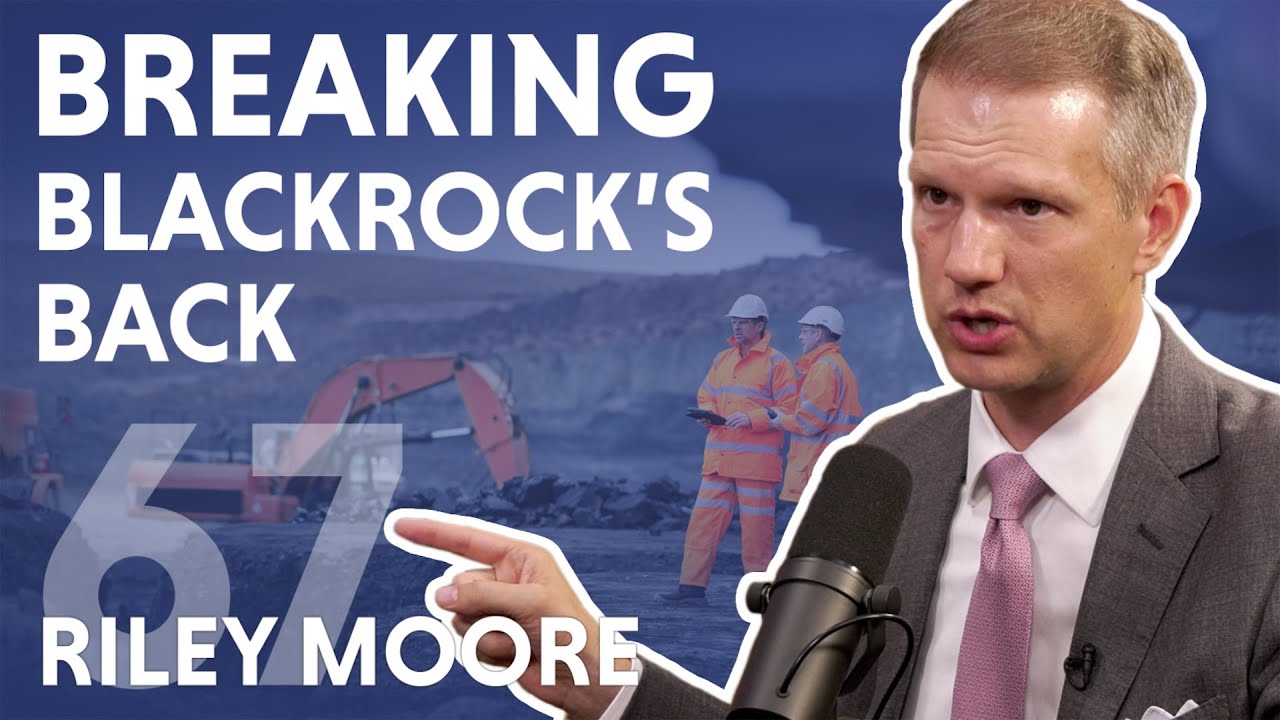
https://www.youtube.com› watch
Jul 18, 2022 —Learn more about Riley Moore's work: https://mooreforwv.com ... Nick Solheim – https://twitter.com/NickSSolheim American Moment's "Moment of ...
https://ms-my.facebook.com/MooreforWV/videos/discussing-the-banking-boycott-with-two-mikes/1080703219411850/
Riley Moore - Discussing the Banking Boycott with Two Mikes ...
https://ms-my.facebook.com› MooreforWV › videos
The West Virginia treasurer, Riley Moore, who's going to break some really ... about America first, American jobs, and American independence in terms of ...
}:}: