NOAA NASA
see also nasa letter (bogus) and tag
targeted by lamar smith
see noaa 2 sullivan post 2/17
Trump may cancel NASA’s powerful SLS Moon rocket – here’s what that would mean for Elon Musk and the future of space travel an 12 24
==
UCS 2007
...Media policies at federal agencies have been changed in recent years to increase control over communications about climate science. Scientists studying climate change have been subjected to special interference when attempting to communicate their research with the press. Scientists experiencing the greatest interference are those working on "controversial" topics such as the extent of human influence on the climate or the impact of a warmer climate on ecological and agricultural systems.
In 2004, the National Oceanic and Atmospheric Administration (NOAA) issued a new media policy that implemented top-down control over press contacts. NOAA public affairs officers reminded scientists and managers of the new policy in emails such as the following:
From NOAA public affairs officer Erica Rule:
"A study on hurricanes and global warming by Emanuel Kerry [sic] will be released in Nature this Sunday. As this topic might generate media inquiries—consider this e-mail a reminder that ALL media requests are to be directed to NOAA Public Affairs..."1
From NOAA public affairs officer Jim Teet:
"I have been informed that any request for an interview with a national media outlet/reporter must now receive prior approval by DOC [Department of Commerce, NOAA's parent agency]. Please ensure everyone on your staff is aware of this requirement..."2
Although these emails seem to show a media policy intended to apply to all scientists, NOAA public affairs officer Jana Goldman confirmed that the policy was unevenly enforced. Certain scientists working on topics considered by the agency to be sensitive received special scrutiny.3 In some cases, public affairs officials actively denied agency scientists access to the media due to the politically sensitive nature of their work.
Dr. Thomas Knutson is a NOAA climate modeling expert working with hurricane specialists to investigate the link between climate change and tropical cyclone activity. He has experienced several instances of political interference in his work, illustrating the power of NOAA's media policies and practices to control the communication of scientific research.....
https://www.ecowatch.com/hurricane-harvey-trump-epa-response-2630918498.html
Andrea Germanos
President Donald Trump's U.S. Environmental Protection Agency (EPA) and Texas state officials rejected an offer from NASA scientists in 2017 to use their state-of-the-art flying laboratory to evaluate air quality in Houston after Hurricane Harvey, new reporting by the Los Angeles Times reveals.
"This is disturbing," said Lina Hidalgo, judge for Texas's Harris County.
Harvey brought historic rainfall, catastrophic flooding and triggered potentially dangerous environmental and public health impacts: Houston's many refineries and petrochemical released pollutants into the air and waters, and area residents began to complain of worrisome smells and toxic sights near the facilities, as well as symptoms including headaches. The EPA asserted that the air quality posed no threat.
NASA, it turned out, was in a good position to gather data on air quality in the area with its DC-8. The jet, whose ability to ability to gather data dwarfs that of the EPA's air pollution plane or the hand-held devices used by Texas state officials, was already set up for testing because of a scheduled six-hour test flight to Lamont, Oklahoma on Sept. 14.
The response to NASA's offer? Thanks but no thanks.
Susanne Rust and Louis Sahagun reported for the Times:
On Sept. 9, David Gray, the EPA's deputy regional administrator in Texas and leader of the agency's emergency response, wrote to NASA and Texas officials that he was "hesitant" to have the jet "collect additional information that overlaps our existing efforts" until he learned more about the mission. He noted that media and nongovernmental organizations were releasing data that was "conflicting" with the state and EPA's.
The NASA scientists offered assurances that their fact-finding would not get in the way, but noted that the data would eventually be seen by the public. Texas and the EPA were unmoved.
The state-level response came from director of toxicology Michael Honeycutt, who now heads EPA's Science Advisory Board and is known for expressing views well out of the reach of mainstream science, such as the idea that lowering ozone would be bad for public health.
On Sept. 11, Honeycutt wrote in an email to NASA and EPA officials that state data showed no sign for concern, and "we don't think your data would be useful for source identification while industry continues to restart their operations."
Gray agreed with Honeycutt: "EPA concurs with your assessment and we will not plan to ask NASA to conduct this mission."
Associated Press reporter Frank Bajak noted that the new investigation adds weight to his own news agency's previous reporting showing that "Texas environmental regulators had little interest in exposing most post-Harvey industrial contamination."
Reacting to the reporting on Twitter, Dr. Chelsea Thompson, a research scientist in atmospheric chemistry, wrote, "It's worth noting that, over a year later now, all of us involved are still stunned by how this played out."
...
==
==
A surprising number of dolphins are washing up on Southern California beaches this February, and the Pacific Marine Mammal Center (PMMC) wants to know why.
The PMCC has responded to six beached dolphins in just 14 days, it said in a Monday press release. By this time last year, it had only responded to one stranding.
"This drastic and unexpected increase in cetaceans has had a significant impact on our Center. With so many incidents concentrated in such a short period of time, this has taken up much of the attention as well as our resources away from our more 'traditional' animal care operations focused on seals and sea lions," PMMC CEO Peter Chang said.
PMCC is working with scientists from the National Oceanic and Atmospheric Administration (NOAA) and NOAA certified labs at universities across the country to determine what is causing the uptick in dolphin deaths.
"There are a variety of potential reasons as to why these dolphins are stranding. These include, but are not limited to, viral infections, bacterial infections and toxins," PMCC veterinarian Kristen Sakamaki said.
One source of toxins could be algae blooms that the Southern California Coastal Ocean Observing System (SCCOOS) has observed off the coast of Southern California. Algae blooms can release domoic acid, which is poisonous for humans, marine mammals and seabirds.
Another potential source could be the storms and heavy rainfall that Southern California has received this winter, which flushes more excess nutrients and pollutants from land into the oceans.
...
==
==
https://www.alternet.org/news-amp-politics/climate-science-denying-trump-regime-silently-killed-nasa-carbon-monitoring-system
==
https://www.alternet.org/news-amp-politics/climate-science-denying-trump-regime-silently-killed-nasa-carbon-monitoring-system
...
when it comes to the biggest crisis humans have faced since the species arose in Africa 200 to 300 millenniums ago, not only do they not care about gathering data, they don’t even accept the consensus that there is a crisis. Or, in the case of the brighter numbskulls, they accept it, but they prefer to pad their wallets by doing the bidding of the extractive industries and their captive disinformation hubs like the Heartland Institute and Competitive Enterprise Institute. Malignant corruption reigns.
In this regard the man squatting in the White House has been on the attack since he came into office. In particular, he has threatened NASA's earth science budget as well as its other climate-related missions. The latest example of how this is playing out in practice is examined here by Pakalolo. At Science, Paul Voosen gives us the skinny:
The move jeopardizes plans to verify the national emission cuts agreed to in the Paris climate accords, says Kelly Sims Gallagher, director of Tufts University's Center for International Environment and Resource Policy in Medford, Massachusetts. "If you cannot measure emissions reductions, you cannot be confident that countries are adhering to the agreement," she says. Canceling the CMS "is a grave mistake," she adds. [...]
This Trump regime action meshes perfectly with its overall assault on science and its lickspittle kowtowing to the fossil-fuel industries’ objectives of extracting ever more oil and gas from public lands and denying access to informational tools that are essential to the campaign to keep in the ground as much of those prolific greenhouse-gas emitters as possible.
While Trump and his ever-changing parade of minions keep spewing the Make America Great Again campaign slogan, the reality is that killing CMS cedes U.S. leadership to Europe. Duffy points out, "We really shoot ourselves in the foot if we let other people develop the technology."
While Trump has announced that he plans to pull out of the 2015 Paris climate accord, the U.S. cannot do that until 2020. So U.S. negotiators are now in Bonn, Germany, working out the details of how the accord will actually work. According to the BBC, those negotiators are, ironically, insisting on strict rules for measuring and monitoring emissions.
The loss of CMS doesn’t mean NASA will have no carbon-measuring capability. This summer the Global Ecosystem Dynamics Investigation laser system (GEDI) will be launched to the International Space Station. Rachel Licker, a senior climate scientist at the Union of Concerned Scientists, told the BBC that the move to eliminate CMS is nonetheless problematic:
"In the long-term, dismantling the Carbon Monitoring System will adversely affect our ability to track flows of carbon through our land, oceans, and atmosphere," Ms Licker said.
"Being able to better track carbon is critical to evaluating efforts and policies aimed at limiting global warming and its impacts."
But Trump is more interested in wars in outer space than using space science to provide measurements to help us survive on the only planet we know capable of supporting intelligent life. Too bad there’s not a bunch more intelligence down here and a lot less numbskullery
https://www.ecowatch.com/nasa-study-methane-spike-2526089909.html
New NASA Study Solves Climate Mystery, Confirms Methane Spike Tied to Oil and Gas
By Sharon Kelly
Over the past few years, natural gas has become the primary fuel that America uses to generate electricity, displacing the long-time king of fossil fuels, coal. In 2019, more than a third of America's electrical supply will come from natural gas, with coal falling to a second-ranked 28 percent, the Energy Information Administration predicted this month, marking the growing ascendency of gas in the American power market.
But new peer-reviewed research adds to the growing evidence that the shift from coal to gas isn't necessarily good news for the climate.
A team led by scientists at NASA's Jet Propulsion Laboratory confirmed that the oil and gas industry is responsible for the largest share of the world's rising methane emissions—which are a major factor in climate change—and in the process the researchers resolved one of the mysteries that has plagued climate scientists over the past several years.
Missing Methane
That mystery? Since 2006, methane emissions have been rising by about 25 teragrams (a unit of weight so large that NASA notes you'd need more than 200,000 elephants to equal one teragram) every year. But when different researchers sought to pinpoint the sources of that methane, they ran into a problem.
If you added the growing amounts of methane pollution from oil and gas to the rising amount of methane measured from other sources, like microbes in wetlands and marshes, the totals came out too high—exceeding the levels actually measured in the atmosphere. The numbers didn't add up.
It turns out, there was a third factor at play, one whose role was underestimated, NASA's new paper concludes, after reviewing satellite data, ground-level measurements and chemical analyses of the emissions from different sources.
A drop in the acreage burned in fires worldwide between 2006 and 2014 meant that methane from those fires went down far more than scientists had realized. Fire-related methane pollution dropped twice as much as previously believed, the new paper, published in the journal Nature Communications, reports....
==
bridenstine:
update/overview:
http://www.alternet.org/environment/jim-bridenstine-nasa-climate-change
...
As is the case for most politicians who mangle climate science to this degree, Bridenstein’s denial appears rooted in opposition to policy solutions. In a 2016 interview, he argued that climate policies will damage the American economy, and in 2013 he criticized the Obama administration for spending too much on climate science research. Those comments, and Bridenstine’s beliefs about Nasa’s mission, may very well be the reason Trump nominated Bridenstein to lead the agency.
Bridenstine and GOP don’t want NASA doing climate research
NASA does some of the best climate research in the world. For example, Nasa scientists published a 2010 paper in Science showing that carbon dioxide is the principle control knob governing Earth’s temperatures, which directly contradicts recent assertions by members Trump administration who have claimed otherwise.
But Republicans have decided that they don’t want Nasa doing climate research. For example Trump’s proposed budget would terminate four Nasa Earth science missions as part of a $102 million cut to the agency’s Earth science program. His space policy advisor suggested eliminating Nasa’s climate and Earth science research altogether. Republicans in Congress have been trying to slash Nasa’s Earth science budget for years.
Some Republican policymakers have suggested that the agency’s climate resesarch could be absorbed into NOAA, because they want Nasa focused on space. The problem is that aside from the needless difficulty of shifting scientists and their research from one government agency to another, these policymakers aren’t proposing to increase Noaa’s budget to pay for that climate research. Quite the opposite – Trump’s proposed budget would also cut hundreds of millions of dollars from Noaa’s research funding.
Currently, Nasa’s institutional objectives include “The expansion of human knowledge of the Earth and of phenomena in the atmosphere and space.” In Congress, Bridenstine introduced legislation that would change that objective to “The expansion of the human sphere of influence throughout the Solar System.” Like his fellow Republicans, Bridenstine wants to shift NASA away from its world-class scientific research toward space exploration. ...
==
The White House released its budget request for the 2018 fiscal year on Tuesday, the Trump administration made good on its promise to target deep cuts to federal spending on climate, energy, science, research and other programs widely seen as critical to America’s ability to adapt to a warming world and reduce its impact on the climate.
White House Budget Director Mick Mulvaney told reporters Tuesday that the government has been spending too much money on climate change and Trump’s proposed budget intentionally rebukes the Obama administration’s support for federally funded climate research.
“We want to do some climate science, but we're not going to do some of the crazy stuff the previous administration did,” Mulvaney said.
Trump, who has called climate change a hoax, has strenuously objected to the Environmental Protection Agency’s greenhouse gas emissions regulations created by the Obama administration. His budget reflects his vow to hamstring the EPA’s ability to control and monitor climate pollution by cutting its budget by about 30 percent — more than any other agency.
The $4 trillion budget proposes massive tax cuts for the rich and major corporations while boosting defense spending and it attempts to pay for both with cuts to nearly everything else. The budget eviscerates Medicaid and other social safety net programs, eliminates federal arts support and slashes environmental programs that are unpopular with the administration and its supporters.***
Congressional hearings on the budget begin this week, and deliberations in the House and Senate are expected to last into the summer. If the process is not completed by September, lawmakers can pass continuing resolutions to keep the government operating into the next fiscal year, which begins in October. If no agreement is reached, the government will shut down.
Other big proposed cuts to federal climate, environment and energy programs that were outlined in the administration’s “skinny” budget in March are largely intact in the final version. Compared to 2017 levels approved by Congress in May, the budget calls for a 9 percent funding cut for the Department of Energy and a nearly 7 percent cut for the Department of Interior. NASA saw a cut of about 3 percent, including 8.7 percent from its earth science programs, and the National Science Foundation saw an 11 percent cut, according to the American Geophysical Union.
The National Oceanic and Atmospheric Administration, one of the government’s key climate science and meteorological agencies, is targeted for a 16 percent cut. NOAA’s climate research program received a 19 percent cut, according to AGU.
The U.S. Geological Survey’s Climate and Land Use Change program, now known as the “Land Resources” program, is targeted for a 24 percent cut, and the agency, part of the Interior Department, is proposed to receive a 15 percent cut overall.
The cuts to NSF and USGS were particularly surprisingly large because their budgets have mostly stayed flat and haven’t been part of the more rancorous policy discussions, said AGU public affairs director Lexi Shultz.
The budget calls for numerous programs to be killed entirely, including the the EPA’s Energy Star Programenergy efficiency program and the DOE’s National Sea Grant College Program. The Energy Star Program certifies consumer electronic goods and buildings for energy efficiency. And the National Sea Grant College program pays for university-based efforts to shore up coastal economies and communities against the ravages of climate change and extreme weather.
The Trump administration is calling for the elimination of four DOE energy research and development programs, including those focusing on energy efficiency, renewables, nuclear, and electric power grid modernization. Also targeted is the DOE’s Advanced Research Project Agency-Energy, which supports research for cutting-edge clean energy technology. Its tasks can be best handled by the private sector, the administration said.
Five climate-related NASA satellite missions are also targeted for elimination.The missions help scientists learn more about the earth’s climate system and how global warming is changing it. They also monitor the health of the nation’s coasts and provided early warnings of drought stress in crops.
Deeply unpopular with scientists, the budget is now in the hands of Congress, which is broadly expected to give the White House few of the cuts it is asking for. Congress ignored Trump’s callfor deep cuts in federal programs when it passed a budget for the last five months of the 2017 fiscal year in early May, funding the government largely at 2016 levels.
“If the White House budget plan were to become law, it would devastate America’s science and technology enterprise,” Rush Holt, CEO of the American Association for the Advancement of Science and a former New Jersey congressman, told reporters Tuesday. “The White House does not make appropriations. It is Congress that makes appropriations. Congress has made it clear that they do not buy into this really harsh and abrupt approach to science funding.”
Shultz said Congress has pushed back against Trump’s previous budget proposal and it’s likely Congress will do so again.
If the cuts in the skinny budget had made it into law, they “would’ve really decimated the federal sciences,” and not just what the agencies do themselves, but in academia as well “because that’s where the grants come from,” Shultz, said.
Antonio Busalacchi, president of the University Corporation for Atmospheric Research, said UCAR is concerned that the proposed budget cuts for federal earth systems science programs will undermine scientific progress needed to protect the U.S. from natural disasters.
“This would have serious repercussions for the U.S. economy and national security, and for the ability to protect life and property,” he said.
Danny Cullenward, an energy economist at Stanford University, said the proposed budget is an attack on the integrity of both U.S. environmental protection and the nation’s leadership in energy innovation.
“The proposed budget includes massive cuts to national environmental remediation programs, earth sciences, and basic energy research,” he said. “At a time when advanced science and technology is so important to solving our national challenges, this budget would force the United States’ smartest researchers out of public interest science.”
==
==
ONE OF NASA’S most high-profile projects has been to track historical average global temperature. In January 2016, the agency released data that showed 2015 had been the hottest year on record. “Today’s announcement not only underscores how critical NASA’s Earth observation program is, it is a key data point that should make policy makers stand up and take notice — now is the time to act on climate,” said NASA Administrator Charles Bolden in a statement at the time. Since then, NASA’s monthly updates on temperature delivered a steady dose of dread as month after month was declared the hottest recorded.
Now Donald Trump’s first NASA transition team pick is Christopher Shank, a Hill staffer who has said he is unconvinced of a reality that is accepted by the vast majority of climate scientists: that humans are the primary driver of climate change. Shank previously worked for Rep. Lamar Smith, a Republican congressman who played a key role in dragging out debates on the basic nature of climate change at a time when the science is settled and action is urgent.
Shank has criticized the type of scientific data NASA regularly releases. As part of a panel in September 2015 at Arizona State University’s Consortium for Science, Policy, and Outcomes, he said, “The rhetoric that’s coming out, the hottest year in history, actually is not backed up by the science — or that the droughts, the fires, the hurricanes, etc., are caused by climate change, but it’s just weather.”
He shrugged off the severity of the climate crisis, criticizing “the rhetoric about, let’s call this climate pollution, which is CO2, which I’m emitting here today.” And he mockingly asked: “is this really about some neo-Malthusian discussion about population control that we’re talking about here?” That was a reference to Thomas Malthus, the late 18th century thinker who predicted a resource crisis if population growth continued unchecked. “What are we trying to solve here?” he asked.
Shank’s appointment dovetails with threats from Trump’s advisors to scrap NASA’s research on climate change. In an October op-ed for Space News, Trump campaign advisors Robert Walker and Peter Navarro stated, “NASA should be focused primarily on deep space activities rather than Earth-centric work that is better handled by other agencies.”
Walker told The Guardian last week, “I believe that climate research is necessary, but it has been heavily politicized, which has undermined a lot of the work that researchers have been doing. Mr Trump’s decisions will be based upon solid science, not politicized science.”
David Titley, director of the Center for Solutions to Weather and Climate Risk at Penn State, wrote in response, “We can measure the Earth as an entire system only from space.”
NASA works with the National Oceanic and Atmospheric Administration (NOAA) to measure climate changes. NASA’s role includes developing observational technologies.
“If they really shut down the satellites, we’d be driving in the dark, in the fog, with no headlights, on a mountain road,” Titley said in an interview. Analyzing the satellite data reveals inconvenient truths, he said. “What they will find is the vast scientific consensus is correct. The earth is warming. We know why it’s warming. And it will continue to warm as we add greenhouse gases into the system.”
“Even in the post-truth world, shouting and screaming in all caps at 3 in the morning is not going to change the physics,” he said.
Shank’s longtime boss Smith, the Republican head of the House Science, Space, and Technology committee, led an effort to slash NASA’s earth science budget this year and in 2011 requested an investigation into the “politicization of NASA.”
Smith is obsessed with combatting what he has called “climate religion.” Among other things, Smith has accused scientists with NOAA of altering peer-reviewed data that challenged a key argument of climate deniers, the notion that the global temperature rises have stalled.
Shank was Smith’s deputy chief of staff from 2011 to 2013, before becoming a senior staffer for the House science committee, which Smith has led since 2012. Before the House, Shank worked at NASA between 2005 and 2009, serving in various roles, including as chief of strategic communications. He did not respond to a request for comment.
At the September 2015 panel, Shank went on to question humans’ role in climate change, repeatedly recommending that attendees read the work of Judith Curry, Roger Pielke Jr., and Roger Pielke Sr. “I find them to be the best source of commentary on climate issues and what to do about it,” he said. At one point he repeated Curry’s blog URL twice, for emphasis.
Pielke Jr., a professor at the University of Colorado, has testified before Smith’s committee arguing, “There exists exceedingly little scientific support for claims found in the media and political debate that hurricanes, tornadoes, floods and drought have increased in frequency or intensity on climate timescales either in the United States or globally.”
Titley chaired a committee of the National Academies of Sciences, Engineering and Medicine that issued a report last March on the science of attributing weather events to climate. The study indicated scientists now have a strong understanding of how climate impacts extreme heat and cold events and a moderate understanding of how it impacts drought and heavy rain. “When I listen to people like Pielke talk about how we can’t show tornadoes have increased, it doesn’t negate fact that seas are rising, temperatures are rising, the magnitude and severity of droughts are increasing, as well as impacting our food and our water systems,” Titley said.
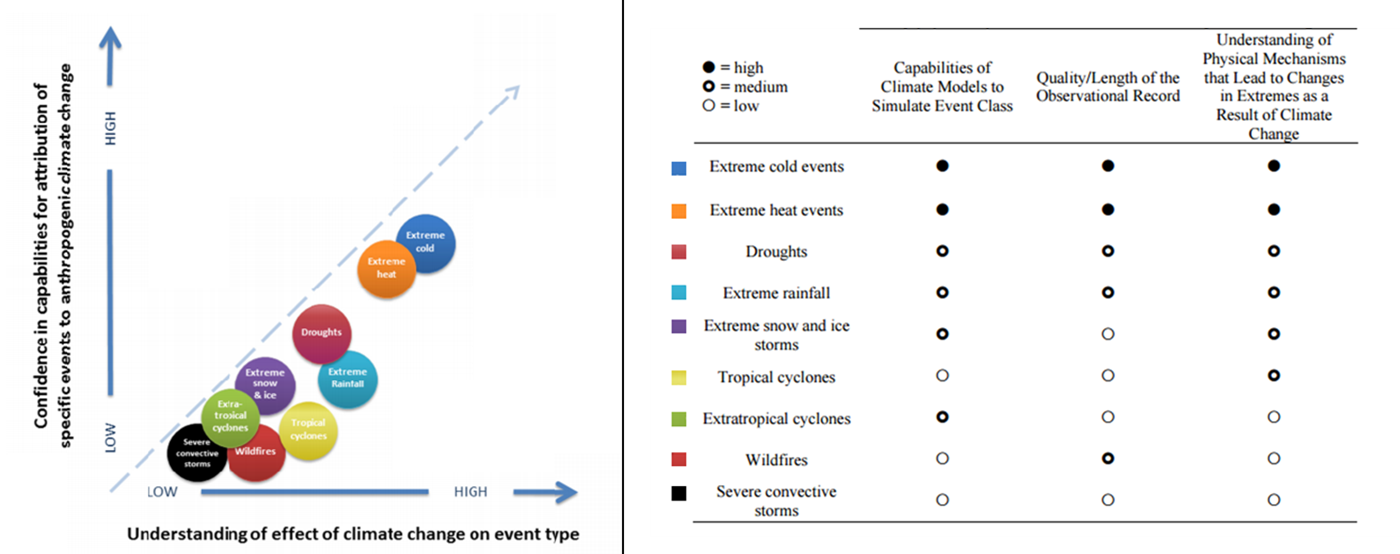
The other scientist Shank mentioned, Curry, is a professor at Georgia Institute of Technology’s School of Earth and Atmospheric Sciences, and is notorious for her view that humans may not be the primary driver of climate change. In a recent blog post, she zeroed in on NASA’s Goddard Institute for Space Studies as the agency’s hub of what she called “politicized climate science.”
Curry noted that NASA has given her more research funding than any other agency. She advocated for continuing support for NASA earth science projects, but added, “This is a welcome opportunity to redirect NASA Earth Science research towards other topics that are not directly related to or motivated by human caused climate change.”
Update: December 2, 2016
This story has been updated to clarify that Shank was talking about Roger Pielke Junior and Senior.
==
sds climate conf cancelled but gore jimmy
==
http://www.climatedepot.com/2017/02/12/christopher-booker-will-trump-gop-bring-an-end-to-the-costliest-scare-story-ever-known/
entine morano telegraph uk
Booker weighs in on the latest NOAA scandal:
Two years ago last week, I wrote a column given the provocative heading “The fiddling of temperature data is the biggest science scandal ever”. It was the second of two articles which attracted a record 42,000 comments from all over the world, reporting on the discovery by expert bloggers in half a dozen countries – led in Britain by Paul Homewood on his site “Not a lot of people know that” – that something very odd appeared to have been done to the official land surface temperature records on which, more than anything else, the entire alarm over man-made global warming has rested.
These derive from the record known as the Global Historical Climatology Network (GHCN), run by the US government’s National Oceanic and Atmospheric Administration (NOAA). By comparing archived data with that now being published, the bloggers claimed to have discovered that temperature records all over the world had, seemingly, been systematically “adjusted” to show older temperatures lower than those originally measured and more recent temperatures higher than those recorded: thus conveying the notion that the world is warming significantly more than the actual data justified.
This scandal has now surfaced again with accusations made by Dr John Bates, a recently retired senior scientist at the NOAA, against his former boss , Tom Karl. Bates alleges that an NOAA paper written before the historic climate conference in Paris in 2015 breached its own rules and was based on misleading and unverified data. That, to many, looks like the paper was designed to stoke up hysteria over global warming in the run-up to the conference.
A Greenpeace protest hot air balloon is launched near the Eiffel Tower in Paris
2015 saw a major climate conference in Paris Credit: Benoit Tessier/Reuters
The warmist lobby had no greater concern at that time than the so-called “pause”: the evidence that, for nearly 20 years, the trend in global temperatures had been failing to rise as all the official computer models had predicted it should.
Karl’s paper won worldwide publicity by purporting to show that there had, in fact, been no “pause”, and that both land and sea temperatures had continued to rise more than was previously accepted.
What Dr Bates now claims is that, in defiance of rules he himself drew up and over his (Bates’s) private objections, Karl’s paper had again been based on “adjustments” that the scientific evidence didn’t justify.
The paper, widely quoted by President Barack Obama and others, played a key part in persuading the Paris conference to sign a “historic” (but non-binding) agreement to take all sorts of hugely costly measures to prevent global temperatures rising by “more than two degrees”.
==
http://www.factcheck.org/2017/02/no-data-manipulation-at-noaa/
==
https://science.house.gov/news/press-releases/former-noaa-scientist-confirms-colleagues-manipulated-climate-records
off BS
Former NOAA Scientist Confirms Colleagues Manipulated Climate Records
Feb 5, 2017
Press Release
WASHINGTON – U.S. House of Representatives Committee on Science, Space, and Technology members today responded to reports about the National Oceanic and Atmospheric Administration’s (NOAA) 2015 climate change study (“the Karl study”). According to Dr. John Bates, the recently retired principal scientist at NOAA’s National Climatic Data Center, the Karl study was used “to discredit the notion of a global warming hiatus and rush to time the publication of the paper to influence national and international deliberations on climate policy.”
Chairman Lamar Smith (R-Texas): “I thank Dr. John Bates for courageously stepping forward to tell the truth about NOAA’s senior officials playing fast and loose with the data in order to meet a politically predetermined conclusion. In the summer of 2015, whistleblowers alerted the Committee that the Karl study was rushed to publication before underlying data issues were resolved to help influence public debate about the so-called Clean Power Plan and upcoming Paris climate conference. Since then, the Committee has attempted to obtain information that would shed further light on these allegations, but was obstructed at every turn by the previous administration’s officials. I repeatedly asked, ‘What does NOAA have to hide?’
“Now that Dr. Bates has confirmed that there were heated disagreements within NOAA about the quality and transparency of the data before publication, we know why NOAA fought transparency and oversight at every turn. Dr. Bates’ revelations and NOAA’s obstruction certainly lend credence to what I’ve expected all along – that the Karl study used flawed data, was rushed to publication in an effort to support the president’s climate change agenda, and ignored NOAA’s own standards for scientific study. The Committee thanks Dr. Bates, a Department of Commerce Gold Medal winner for creating and implementing a standard to produce and preserve climate data, for exposing the previous administration’s efforts to push their costly climate agenda at the expense of scientific integrity.”
Oversight Subcommittee Chairman Darin LaHood (R-Ill.):“I applaud Dr. Bates’s efforts in uncovering the truth of this data manipulation, and I commend Chairman Smith and the Science Committee for conducting rigorous oversight on behalf of the American people. Transparent and faithful execution of the scientific process, especially where taxpayer dollars are involved, is crucial to ensure that our policies are based on sound science and not on politically predetermined outcomes.”
Environment Subcommittee Chairman Andy Biggs (R-Ariz.): “I commend Dr. Bates for bringing to light the corrupt practices used by his former colleagues and hope this serves as a deterrence to anyone thinking of manipulating science to serve their own political agenda. I applaud Chairman Smith and the Science Committee's efforts to provide the necessary oversight to ensure the American people have the best information possible.”
Background
In the summer of 2015, NOAA scientists published the Karl study, which retroactively altered historical climate change data and resulted in the elimination of a well-known climate phenomenon known as the “climate change hiatus.” The hiatus was a period between 1998 and 2013 during which the rate of global temperature growth slowed. This fact has always been a thorn in the side of climate change alarmists, as it became difficult to disprove the slowdown in warming.
The Karl study refuted the hiatus and rewrote climate change history to claim that warming had in fact been occurring. The committee heard from scientists who raised concerns about the study’s methodologies, readiness, and politicization. In response, the committee conducted oversight and sent NOAA inquiries to investigate the circumstances surrounding the Karl study.
Over the course of the committee’s oversight, NOAA refused to comply with the inquiries, baselessly arguing that Congress is not authorized to request communications from federal scientists. This culminated in the issuance of a congressional subpoena, with which NOAA also failed to comply. During the course of the investigation, the committee heard from whistleblowers who confirmed that, among other flaws in the study, it was rushed for publication to support President Obama’s climate change agenda.
For a complete timeline of the Science Committee’s oversight of NOAA’s 2015 climate change study, click here.
115th Congress
==
A senior adviser to President-elect Donald Trump is urging the new administration to shut down NASA’s world-leading climate science work. The idea, apparently, is that turning away from facts about climate change will make it go away.
That would not only be devastating for global efforts to keep our climate safe, but a severe problem for anyone who depends on cutting-edge weather prediction – including farmers, states vulnerable to destructive storms, businesses and our economy as a whole.
The problem is that climate and weather research comprises a “seamless suite” of services. Advancements in climate modeling support critical weather prediction modeling.
Since weather prediction and short-term climate prediction (think El Niño, drought and so on) are important to all Americans, cuts to climate research at NASA would have large economic consequences and negative impacts on efforts to protect American lives and property.
This work is particularly important in dealing with weather disasters occurring across the southern tier of the United Sates. And as the climate continues to change, weather prediction will become ever more important for preparedness and planning.
Cuts to climate research at NASA would have large economic consequences and negative impacts on efforts to protect American lives and property.
The bigger picture is that climate change is on a path to cause trillions in damage to our economy, according to Citibank estimates. That’s why so many leading businesses want to keep us on track to cut carbon pollution. If we don’t we will be leaving a terrible burden for our children.
Science makes America great
America was born in an age of reason. Our founders respected science.
Science made America what it is – it helped us win World War II, the space race, the Cold War and made us the preeminent global power.
Weather and climate prediction have provided incalculable value to our economy and saved untold numbers of lives.
Slashing vital research on climate – as suggested by Bob Walker, a former Republican congressman from Pennsylvania who now serves on Trump’s NASA transition team – will hurt everyone, no matter who they voted for.
==
Sea Level Rise Estimate Grows Alarmingly Higher in Latest Federal Report
NOAA's latest report arrives, predicting worst-case scenario of 8 feet of rise by century's end, just as Donald Trump takes office with pro-fossil fuel policies.
https://insideclimatenews.org/news/24012017/sea-level-rise-global-warming-federal-report-donald-trump
New federal estimates say global sea levels could rise faster than previously thought, and the rise may be even worse in many coastal regions of the United States.
A new report, written by scientists with several federal agencies and universities, says that under a worst-case scenario, climate change couldraise the oceans an average of more than 8 feet by 2100, about 20 inches more than aprevious federal estimate published in 2012. The best case now projected would be an average of about a foot.
The report was delivered just as President Donald Trump took office, immediately working to undo President Barack Obama's climate policies. On his inauguration day, pages mentioning climate change on whitehouse.gov were removed. Trump has promised policies to increase fossil fuel development in the U.S., and to undo Obama's major emissions-cutting initiative, the Clean Power Plan.
Sea level rise will likely be worse in some regions of the U.S. because of ocean currents, wind patterns and settling sediments. The authors examined six scenarios with a range of probabilities in an effort to help state and local governments plan for sea level rise. Under all of them, theNortheast should expect higher waters than much of the rest of the globe. The Pacific Northwest and Alaska would likely experience lower-than-average increases under the best-case scenarios.
"The ocean's not flat," said William V. Sweet, one of the authors and a scientist at NOAA. "It's not going to rise like water in a bathtub."
The six scenarios are based on United Nations models of future greenhouse gas emissions, depending on whether countries rapidly slash pollution or continue burning fossil fuels as usual. The authors determined that the worst-case rise of more than 8 feet has only a 0.1 percent chance of occurring by 2100, even under a business-as-usual emissions scenario, but a rise of more than 1.5 feet is near certain with high emissions.
==
Unrelenting warmth during what should be the iciest time of year sent global sea ice extent to a record low last month, the National Snow and Ice Data Center said on Friday, with both polar ice caps at a record-low extent every single day of the month.
Compared to the average from 1981 to 2010, the area of ice missing in the Arctic was about the size of Texas and Arizona combined; in the Antarctic, it was bigger than Alaska, according to the NSIDC.
Temperatures in the Arctic were about 9 degrees Fahrenheit above average throughout November and December, with peak readings soaring to 50 degrees above the long-term average around Christmas, when the North Pole warmed above freezing, a mark rarely seen outside of summer.
"Some of the crazy weather patterns we've seen this winter could be, in part, due to the loss of sea ice," said NSIDC director Mark Serreze. "We've had very unusual weather patterns pumping warmth up into the Arctic...the changes are happening so fast that we can't keep up with them."
Scientists measuring sea ice in a three-year run of record global heat feel the urgency of the data they are capturing, while the political climate around them changes even faster.
The NSIDC is part of the National Oceanic and Atmospheric Administration, which is administered by the Department of Commerce.
With many in President-elect Donald Trump's proposed cabinet on record either denying that global warming is caused by greenhouse gases or questioning the need for urgent action, many fear that future funding for government climate science could be at risk.
After Trump's election, a senior NASA official expressed concern in an internal email that the Earth Sciences division would have its funding cut, and Trump adviser Bob Walker, a former House Science Committee chair, has said he believed NASA should end its climate monitoring programs, which he calls "politically correct environmental monitoring." Christopher Shank, the leader of Trump's NASA transition team, is policy director for the House Science Committee, which has doggedly questioned the climate work of NOAA and NASA scientists.
Those sentiments have led some scientists reportedly to begin to duplicate climate data to protect it from potential Trump administration tampering.
NASA ice scientist Walt Meier said he hopes it does not come to a showdown with Trump policymakers. "Our aim is to get the best data, the best models, the best understanding of the science to policy makers and the public," Meier said. "We hope that the policymakers use that wisely. My job is to provide the information to make the decisions."
Monitoring Arctic sea ice conditions is important, he said, because of implications for shipping, the Arctic environment and energy development.
Serreze said, "We at the NSIDC view our role as the honest purveyors of the best scientific information. We've tried to avoid getting into advocacy because we would lose respect. We're in a situation now where the data speak for themselves. People who deny that, who say that humans don't have anything to do with it, have their head in the sand. Deny it at your peril.
"You can't hide or suppress data. We're in the information age."
The information these days carries sobering implications about the vicious cycle of climate change, which has been amplified in the Arctic as it warms at double the rate of the global average.
"Our attention is starting to shift to what we are seeing in the autumn and winter. Things are creeping into the cold season," he said. "September has been viewed as month that tells the most—after the melt season, what have you got left? Now, we're realizing we have to look at a lot more than what's been going on in winter."
The slow formation of sea ice this winter is a seasonal climate feedback loop. Less ice on the ocean means the water absorbs more heat in late summer, which slows the freeze-up in autumn and early winter.
"You're at a situation where, in the past, when everything was ice covered, heat from the ocean can't get to the atmosphere, but when when the ocean is exposed, it can't be colder than 32 degrees Fahrenheit," said Meier. "But the most remarkable thing about this year and last year is not just the internal Arctic warming from the sea, but the heat coming up from south."
According to Serreze and Meier, there's increasing evidence that the continuing loss of sea ice is, at least in part, causing the weather patterns that funnel even more warm air toward the Arctic byshifting the path of the jet stream.
"It's not only the extent. The thickness and volume are even more concerning," said Lars Kaleschke, an oceanographer with theAlfred WegenerInstitute of Polar Research in Bremerhaven, Germany.
Recent satellite data show that much of the thicker multi-year ice has vanished from the Arctic. The remaining ice is so thin that it's susceptible to melting and breaks up faster during stormy weather, according to Mats Granskog, a research scientist at the Norwegian Polar Institute who specializes in tracking the age of Arctic ice.
Granskog and other scientists shared observations from recent field research at the recent conference of the American Geophysical Union. As the ice breaks up, water as warm as 40 degrees Fahrenheit can surge up thousands of feet from deep in the ocean, melting even more ice, said Amelie Meyer, an oceanographer at the Norwegian Polar Institute. Within 48 hours, the surface temperature can climb more than 70 degrees Fahrenheit, to above freezing, which increases the moisture in the air tenfold, Meyer said. That moisture and warmth fuel more storms, which intensifies the cycle, they said.
The changes in Antarctic ice extent the past few months have been equally dramatic, but the causes are not well understood. By August of 2016, the belt of ice around Antarctica was sharply below average.
The exact cause of the precipitous decline remains elusive, scientists said, but they detected significant changes in wind patterns in August, September and November that are most likely linked with global warming, according to Serreze.
The job of monitoring complex systems like the Arctic and Antarctic and studying climate change impacts requires not just well-funded U.S. research, but also global collaboration. For example, some European satellite missions have specialized in reading sea ice thickness and volume. Together with data from NASA and NOAA, scientists are able to most accurately paint a picture of global climate change.
Mark Drinkwater, head of the European Space Agency's Earth Observation Program science division, said in an email significant policy changes under Trump "could indeed have a very important impact on what is today an extremely positive reciprocal working relationship. Shifts in U.S. policy could easily impact this relationship."
According to Drinkwater, European Earth observation programs are dependent on NASA and NOAA for certain critical data, and vice-versa.
"Policy (be it mitigation, adaptation, technology infusion) is completely reliant on knowledge...required to avoid the 'blind spot,' which could otherwise slap humankind in the face."
PUBLISHED UNDER:
==
http://www.globalpossibilities.org/the-worse-anti-science-nonsense-of-2016/
Interfering with government scientists?
Trump hasn’t even been sworn in yet, but already there are troubling signs that his administration may attempt to interfere with the work of government scientists and experts.
- Energy Department questionnaire.The president-elect’s transition team submitted a questionnaire to the Department of Energy asking for a list of employees and contractors who had worked on the Obama administration’s efforts to calculate the “social cost of carbon” — that is, the dollar value of the health and environmental damage caused by burning fossil fuels. The transition team also asked for a list of staffers who attended U.N. climate negotiations. As the Washington Post explained, the questionnaire “has raised concern that the Trump transition team is trying to figure out how to target the people, including civil servants, who have helped implement policies under Obama.” (The department didn’t comply with the request, and the Trump team ultimately disavowed the questionnaire after facing criticism.)
- Earth science at NASA.One of Trump’s space advisers, Bob Walker, has repeatedly floated the idea that the administration should begin to remove Earth science from NASA’s portfolio. NASA’s Earth science program is well known for producing some of the world’s most important climate change research, and Walker’s proposal has sparked an outcry among many in the scientific community. (Walker has suggested shifting the work to NOAA, but the incoming administration hasn’t proposed giving NOAA additional funding, and Walker’s critics have called the plan unworkable.) Trump hasn’t actually adopted Walker’s idea, and scientists such as David Grinspoon, an astrobiologist who receives NASA funding, are optimistic that he won’t. But if Trump does attempt to gut NASA’s research efforts, the backlash could be intense. “We’re not going to stand for that,” said Grinspoon on our Inquiring Minds podcast. “We’re going to keep doing Earth science and make the case for it. We’ll get scientists to march on Washington if we have to. There’s going to be a lot of resistance.”
==
guard uk no link ref
Trump to scrap Nasa climate research in crackdown on ‘politicized science’
Nasa’s Earth science division is set to be stripped of funding as the president-elect seeks to shift focus away from home in favor of deep space exploration
Oliver Milman in New York
@olliemilman
Wednesday 23 November 2016 00.00 EST
Last modified on Thursday 1 December 2016 16.33 EST
This article is 1 month old
Donald Trump is poised to eliminate all climate change research conducted by Nasa as part of a crackdown on “politicized science”, his senior adviser on issues relating to the space agency has said.
Nasa’s Earth science division is set to be stripped of funding in favor of exploration of deep space, with the president-elect having set a goal during the campaign to explore the entire solar system by the end of the century.
2016 locked into being hottest year on record, Nasa says
Read more
This would mean the elimination of Nasa’s world-renowned research into temperature, ice, clouds and other climate phenomena. Nasa’s network of satellites provide a wealth of information on climate change, with the Earth science division’s budget set to grow to $2bn next year. By comparison, space exploration has been scaled back somewhat, with a proposed budget of $2.8bn in 2017.
:{Bob Walker, a senior Trump campaign adviser, said there was no need for Nasa to do what he has previously described as “politically correct environmental monitoring”.
“We see Nasa in an exploration role, in deep space research,” Walker told the Guardian. “Earth-centric science is better placed at other agencies where it is their prime mission.}:
“My guess is that it would be difficult to stop all ongoing Nasa programs but future programs should definitely be placed with other agencies. I believe that climate research is necessary but it has been heavily politicized, which has undermined a lot of the work that researchers have been doing. Mr Trump’s decisions will be based upon solid science, not politicized science.”
A senior Trump adviser said there is no need for Nasa to do what he has called ‘politically correct environmental monitoring’.
A senior Trump adviser said there is no need for Nasa to do what he has called ‘politically correct environmental monitoring’.
Trump has previously said that climate change is a “hoax” perpetrated by the Chinese, although on Tuesday he said there is “some connectivity” between human actions and the climate. There is overwhelming and long-established evidence that burning fossil fuels and deforestation causes the release of heat-trapping gases, therefore causing the warming experienced in recent decades.
Current Time 0:00
/
‘No one’s an exception’: toll of climate change, from US to the Marshall Islands – video
Walker, however, claimed that doubt over the role of human activity in climate change “is a view shared by half the climatologists in the world. We need good science to tell us what the reality is and science could do that if politicians didn’t interfere with it.”
It could put us back into the ‘dark ages’ ... Space research is a luxury, Earth observations are essential
Kevin Trenberth, National Center for Atmospheric Research
It’s understood that federal government scientists have been unnerved by Trump’s dismissal of climate science and are concerned that their work will be sidelined as part of a new pro-fossil fuels and deregulation agenda. Climate scientists at other organizations expressed dismay at the potential gutting of Earth-based research.
Kevin Trenberth, senior scientist at the National Center for Atmospheric Research, said as Nasa provides the scientific community with new instruments and techniques, the elimination of Earth sciences would be “a major setback if not devastating”.
“It could put us back into the ‘dark ages’ of almost the pre-satellite era,” he said. “It would be extremely short sighted.
“We live on planet Earth and there is much to discover, and it is essential to track and monitor many things from space. Information on planet Earth and its atmosphere and oceans is essential for our way of life. Space research is a luxury, Earth observations are essential.”
Paris climate deal: Trump says he now has an 'open mind' about accord
Read more
Michael Mann, a climate scientist at Penn State University, said Nasa has a “critical and unique role” in observing Earth and climate change.
“Without the support of Nasa, not only the US but the entire world would be taking a hard hit when it comes to understanding the behavior of our climate and the threats posed by human-caused climate change,” he said.
“It would be a blatantly political move, and would indicate the president-elect’s willingness to pander to the very same lobbyists and corporate interest groups he derided throughout the campaign.”
Nasa has appointed two officials, Tom Cremins and Jolene Meidinger, to lead the transition to the new Trump administration. However, the president-elect’s team has yet to formally review the space agency.
“The Nasa community is committed to doing whatever we can to assist in making the executive branch transition a smooth one,” a Nasa spokesman said. “The agency remains focused on the future, a future that will improve our understanding of our changing home planet from Nasa’s unique platforms in space.”
==
http://www.alternet.org/environment/scientists-scramble-protect-decades-climate-research-trump-takes-office
==
trump
https://www.washingtonpost.com/news/energy-environment/wp/2016/12/09/amidst-fears-for-its-climate-funding-nasa-announces-another-climate-research-mission
==
http://www.globalpossibilities.org/trump-to-scrap-nasa-climate-research-in-crackdown-on-politicized-science/
TRUMP TO SCRAP NASA CLIMATE RESEARCH IN CRACKDOWN ON ‘POLITICIZED SCIENCE’
Nov 23, 2016 by Casey Coates Danson
Nasa’s Earth science division is set to be stripped of funding as the president-elect seeks to shift focus away from home in favor of deep space exploration
A Nasa Earth photo shows the Bruckner and Heim glaciers where they flow into the Johan Petersen fjord in southeastern Greenland.
A Nasa Earth photo shows the Bruckner and Heim glaciers where they flow into the Johan Petersen fjord in southeastern Greenland. Photograph: Jeremy
Donald Trump is poised to eliminate all climate change research conducted by Nasa as part of a crackdown on “politicized science”, his senior adviser on issues relating to the space agency has said.
Nasa’s Earth science division is set to be stripped of funding in favor of exploration of deep space, with the president-elect having set a goal during the campaign to explore the entire solar system by the end of the century.
2016 locked into being hottest year on record, Nasa says
This would mean the elimination of Nasa’s world-renowned research into temperature, ice, clouds and other climate phenomena. Nasa’s network of satellites provide a wealth of information on climate change, with the Earth science division’s budget set to grow to $2bn next year. By comparison, space exploration has been scaled back somewhat, with a proposed budget of $2.8bn in 2017.
Bob Walker, a senior Trump campaign adviser, said there was no need for Nasa to do what he has previously described as “politically correct environmental monitoring”.
“We see Nasa in an exploration role, in deep space research,” Walker told the Guardian. “Earth-centric science is better placed at other agencies where it is their prime mission.
“My guess is that it would be difficult to stop all ongoing Nasa programs but future programs should definitely be placed with other agencies. I believe that climate research is necessary but it has been heavily politicized, which has undermined a lot of the work that researchers have been doing. Mr Trump’s decisions will be based upon solid science, not politicized science.”
A senior Trump adviser said there is no need for Nasa to do what he has called ‘politically correct environmental monitoring’.
A senior Trump adviser said there is no need for Nasa to do what he has called ‘politically correct environmental monitoring’. Photograph: Massimo Rumi / Barcroft Images
Trump has previously said that climate change is a “hoax” perpetrated by the Chinese, although on Tuesday he said there is “some connectivity” between human actions and the climate. There is overwhelming and long-established evidence that burning fossil fuels and deforestation causes the release of heat-trapping gases, therefore causing the warming experienced in recent decades.
‘No one’s an exception’: toll of climate change, from US to the Marshall Islands – video
Walker, however, claimed that doubt over the role of human activity in climate change “is a view shared by half the climatologists in the world. We need good science to tell us what the reality is and science could do that if politicians didn’t interfere with it.”
It could put us back into the ‘dark ages’ … Space research is a luxury, Earth observations are essential
Kevin Trenberth, National Center for Atmospheric Research
It’s understood that federal government scientists have been unnerved by Trump’s dismissal of climate science and are concerned that their work will be sidelined as part of a new pro-fossil fuels and deregulation agenda. Climate scientists at other organizations expressed dismay at the potential gutting of Earth-based research.
Kevin Trenberth, senior scientist at the National Center for Atmospheric Research, said as Nasa provides the scientific community with new instruments and techniques, the elimination of Earth sciences would be “a major setback if not devastating”.
“It could put us back into the ‘dark ages’ of almost the pre-satellite era,” he said. “It would be extremely short sighted.
“We live on planet Earth and there is much to discover, and it is essential to track and monitor many things from space. Information on planet Earth and its atmosphere and oceans is essential for our way of life. Space research is a luxury, Earth observations are essential.”
Paris climate deal: Trump says he now has an ‘open mind’ about accord
Michael Mann, a climate scientist at Penn State University, said Nasa has a “critical and unique role” in observing Earth and climate change.
“Without the support of Nasa, not only the US but the entire world would be taking a hard hit when it comes to understanding the behavior of our climate and the threats posed by human-caused climate change,” he said.
“It would be a blatantly political move, and would indicate the president-elect’s willingness to pander to the very same lobbyists and corporate interest groups he derided throughout the campaign.”
Nasa has appointed two officials, Tom Cremins and Jolene Meidinger, to lead the transition to the new Trump administration. However, the president-elect’s team has yet to formally review the space agency.
“The Nasa community is committed to doing whatever we can to assist in making the executive branch transition a smooth one,” a Nasa spokesman said. “The agency remains focused on the future, a future that will improve our understanding of our changing home planet from Nasa’s unique platforms in space.”
==
SUNDAY, FEBRUARY 28, 2016
Conspiracy theorising Lamar Smith can't hack change
I see that Lamar Smith hasn't been able to find any evidence for his conspiracy theory yet, so he's asked NOAA for more emails. He complained that he "only" got 301 pages of emails. He figured the search terms were "unnecessarily narrow". If you want to get a feel for Lamar's conspiracy theory that climate change is a Presidential hoax, he now wants NOAA to send him all emails containing any of the following words:
Karl
buoy
ship
Night Marine Air Temperature
temperature
climate
change
Paris
U.N.
United Nations
clean power plan
regulations
Environmental Protection Agency (EPA)
President
Obama
White House
Council on Environmental Quality (CEQ)
He gave them seven whole days. In his next request, he'll no doubt separate words white from house, united from nations, clean from power and plan, Council from quality, and maybe boy as well as buoy, etc. He might also widen temperature to temp, which would allow him to get any emails relating to temporary whatever.
I sincerely hope that he gets sent all emails that include stuff like:
"there's been a change to my mobile phone number"
"can you change the staff meeting to 2:00 pm"
"Lamar Smith is spelt with an "i" not a "y". Change all versions of "Smyth" to "Smith""
"please ship the staplers to our Seattle office"
If he does, then he'll probably spend years trying to work out the coded messages in the above.
This could go on forever. Will Lamar Smith call for NOAA's budget to be expanded to cover the cost of his private army of email searchers? As Gavin Schmidt tweeted:
Follow
Gavin Schmidt @ClimateOfGavin
More abuse of congressional authority for pointless fishing expeditions:
"All email containing the word 'change'" https://twitter.com/sjvatn/status/703367492027195394 …
3:55 AM - 27 Feb 2016
33 33 Retweets 21 21 likes
Nobody makes them like the Republican Party in the USA. Nutty as a fruit cake.
References
Latest demand letter from Lamar Smith to NOAA
Congressman demands more NOAA e-mails about climate study - article by Scott K Johnson at Ars Technica
http://blog.hotwhopper.com/2016/02/conspiracy-theorising-lamar-smith-cant.html
==
http://blog.hotwhopper.com/2016/02/conspiracy-theorising-lamar-smith-cant.html
==
http://arstechnica.com/science/2016/02/congressman-demands-more-noaa-e-mails-about-climate-study/
As part of his ongoing fight with the National Oceanic and Atmospheric Administration (NOAA), Congressman Lamar Smith (R-TX) sent a February 22 letter that demanded documents related to the agency's analysis of global temperature data. NOAA handed over 301 pages of e-mails between NOAA officials (but not scientists) pertaining to a study published last year in the journal Science. There apparently wasn’t anything juicy in those e-mails, however, because Rep. Smith is now asking for a great deal more.
A new letter (initially acquired by the Union of Concerned Scientists) complains that “[i]t seems unlikely that documents and communications would be so scarce,” and Smith directs NOAA to cast a wider net. He requests e-mails and documents not just from officials in the offices that had been targeted by the previous requests but also from “agency employees” across a broad swath of NOAA. The list includes the National Centers for Environmental Information that houses the scientists behind NOAA's global temperature dataset—a group Rep. Smith has accused of manipulating data.
NOAA had apparently searched for e-mails including “hiatus”, “global temperature”, and “climate study”, but Rep. Smith wants that list expanded dramatically. Now, he wants NOAA to hand over anything that contains “Karl” (the name of the lead NOAA scientist on the Science paper), “buoy”, “ship”, “Night Marine Air Temperature”, “temperature”, “climate”, “change”, “Paris”, “U.N.”, “United Nations”, “clean power plan”, “regulations”, “Environmental Protection Agency”, “President”, “Obama”, “White House”, and “Council on Environmental Quality”.
Those (very broad) terms reflect the fact that Rep. Smith hopes to find that climate data was manipulated due to a directive from the Obama Administration. (It should be noted that NOAA’s dataset looks the same as everyone else’s, and Smith already has access to the data and details on how it was analyzed.)
Rep. Smith also cites a letter to sent him by “325 scientists, engineers, economists, and other scholars raising serious inquiries about the adherence of NOAA to [Office of Management and Budget] guidelines established under the Data Quality Act.” That letter was circulated around climate “skeptic” circles for signatures by retired physicist and George C. Marshall Institute chairman William Happer. Rep. Smith’s has yet to acknowledge the protest letters sent by a number of major scientific organizations, however.
FURTHER READING
More organizations speak out against Congressman’s NOAA investigation
Nevertheless, Rep. Smith has followed the letter’s cue to demand “all documents and communications referring or relating to the processes and methodologies that NOAA implements to adhere to the Data Quality Act,” both generally and relating to the Science paper. The letter even demands “the peer review record” of that paper.
The letter gives NOAA until February 29 to deliver.
http://arstechnica.com/science/2015/11/more-organizations-speak-out-against-congressmans-noaa-investigation/
==
In a major move, seven scientific organizations came together today to send a message to the Chair of the House Committee on Science, Space, and Technology, Lamar Smith (R-Tex.). Smith is investigating the NOAA climate scientists behind a study that concluded we’ve seen slightly more surface warming since 1998 than previously thought. That organization's message? “Grave concern” about Rep. Smith’s subpoena of internal communications among NOAA scientists and staff.Former NOAA researcher comments on whistleblower allegations
The letter comes from the American Association for the Advancement of Science, the American Chemical Society, the American Geophysical Union, the American Meteorological Society, the American Statistical Association, the Ecological Society of America, and the Geological Society of America.
The letter highlights the fact that all the data and methodology of the study “have been publicly shared and discussed directly with the committee staff,” and that there is no evidence of misconduct. The study has gone through the usual peer-review process, as other research relevant to the topic has in the past and will in the future.
“Scientists should not be subjected to fraud investigations or harassment simply for providing scientific results that some may see as politically controversial,” the letter reads. “Science cannot thrive when policymakers—regardless of party affiliation—use policy disagreements as a pretext to attack scientific conclusions without public evidence.”
While emphasizing that the organizations “recognize the oversight responsibility of Congress,” they argue that this isn’t the right way to fulfill that responsibility. “We encourage the committee to utilize other avenues, such as the National Academies, for assessing the science and distilling technical matters to assist policymakers,” the letter concludes.
In a separate development, NOAA Administrator Kathryn Sullivan sent a response to Rep. Smith’s recent letters. Sent on Friday on behalf of NOAA and Commerce Secretary Penny Pritzker, the letter lays out all the actions NOAA has taken since mid-July to answer Rep. Smith’s questions about the NOAA study. It argues that Rep. Smith has all the information he needs. “If the Committee doubts the integrity of the study, it has the tools it needs to commission a competing scientific assessment,” Sullivan wrote.
“Nevertheless, we take any whistleblower allegations seriously and stand ready to work with the Committee, the Inspector General, or the NOAA scientific integrity review process to respond and evaluate these allegations appropriately,” the letter also states.
Sullivan—a geologist and former astronaut—also responds to Rep. Smith’s accusations of collusion with the Obama administration, writing, “I proudly serve President Obama, as I proudly served President Reagan, President Bush, President Clinton, and President Bush before him. I am a life-long public servant profoundly dedicated to using science to inform decision-making in the best interests of the nation. I have not and will not allow anyone to manipulate the science or coerce the scientists who work for me.”
==
==
http://www.desmogblog.com/noaa-stonewalls-on-dcsovr-documents
0'sullivan cites in satellite-gate
m anderson 2/08
The stonewalling on DSCOVR documents continues, this time with the National Oceanic and Atmospheric Administration (NOAA).
To recap, NASA was given over $100 million in taxpayers money to build the Deep Space Climate Observatory (DSCOVR), a spacecraft designed to measure the energy budget of our warming planet from the unique vantage of a million miles away.
Even though it is fully completed over five years ago, DSCOVR is still sitting in a box at the Goddard Space Centre – likely for political reasons.
The mission was originally promoted by Al Gore – a liability when George Bush and Dick Cheney remain in the Whitehouse.
DSCOVR would also immediately settle any remaining debate about the origins of climate change – a potential wrinkle for the $8 trillion oil industry. NASA may also be threatened by DSCOVR because the mission may call into question the billions of dollars they have invested low Earth orbit satellites.
Low orbit satellites are useful but they fly so close to the planet it is like trying to map an elephant using a microscope.
Because DSCOVR would orbit over 1,000 times farther away, it would for the first time allow us able to monitor the entire sunlit disc of our planet and resolve some glaring discrepancies in our understanding of the planet's energy budget. If it works better, then some NASA heads might roll.
DeSmog Blog has been doing an investigative series on this unique spacecraft since September and the story just keeps getting weirder.
NASA quietly killed DSCOVR in 2006 citing “competing priorities”. Using the Freedom of Information Act (FOIA), I tried unsuccessfully for over a year to extract any internal documents from NASA about why the project was cancelled. What was released instead was letters from over thirty leading scientists expressing concern that this vital mission was not going forward.
You can view them here.
Then I tried to digging documents out of the Whitehouse.
If the Bush Administration had a hand in killing the mission, it seemed reasonable that there might be a paper trail. We will never know. I received a short letter from Whitehouse Deputy General Counsel F. Andrew Turley, stating:
Please be advised that the Office of the Administration, Executive Office of the President is not subject to the provisions of the Freedom of Information Act. Your letter therefore is returned without further action.”
Next I tried NOAA.
Last year, NOAA apparently requested that the entire mission be transferred over to them, at no cost to NASA. Strangely there has been no response from NASA. Meanwhile there is the real worry that NASA may destroy or cannibalize the spacecraft to cover their tracks.
So I filed a third information request last year, this time with NOAA.
The government stonewalling has kicked in again.
My request was sent in November. I was told my documents would be emailed on December 11. Then I got call from NOAAGeneral Counsel Hugh Schratwieser before Christmas telling me that it going to take longer than they thought but I should get the document package in early January. Mr. Schratwieser also assured me NOAA takes pride in their compliance with the Freedom of Information Act and that I shouldn’t worry.
Then silence.
I have since sent five unanswered emails to NOAA requesting updates on my request. Government bodies like NOAA have a legal obligation to respond to FOIA requests in 20 working days. It is now over three times that long and counting.
Since I was repeatedly told over the last two months that the package of documents was very close to being assembled, I can only assume that it is now complete but being held up for political reasons.
What could be in there that they are so worried about?
If members of media want to ask what the hold up is, I encourage them to contact Mr. Schratwieser directly at 301-713-9684 or by email: Hugh.c.Schratwieser@noaa.gov
Here's the previous stories we've done in our ongoing DSCOVR investigative series:
Part 1: the background
Part 2: How politics conspired to kill DSCOVR
Part 3: Digging for answers from NASA
Part 4: FOIA, NASA, DSCOVR - my acronym hell
==
http://ecowatch.com/2016/01/21/deniers-attack-nasa-scientist/
...
Sellers concluded that, rather than summiting Everest or traveling to exotic beaches, he wanted to spend his final days with loved ones and getting back to work. In his lifetime, Sellers accomplished a lot. He visited the International Space Station three times, walked in space six times and logged more than 600 hours in space. Currently, Sellers is managing a team of scientists doing research on Earth’s climate and weather patterns. Ultimately, he said he’s happy with how his life turned out and he’s hopeful for the planet’s future.
He wrote:
“As for me, I’ve no complaints. I’m very grateful for the experiences I’ve had on this planet. As an astronaut I spacewalked 220 miles above the Earth. Floating alongside the International Space Station, I watched hurricanes cartwheel across oceans, the Amazon snake its way to the sea through a brilliant green carpet of forest, and gigantic nighttime thunderstorms flash and flare for hundreds of miles along the Equator. From this God’s-eye-view, I saw how fragile and infinitely precious the Earth is. I’m hopeful for its future. And so, I’m going to work tomorrow.”
It was a very moving letter from a man facing a terminal illness, and yet, it took no time at all for climate deniers to lambaste Sellers, ThinkProgress reported. Breitbart, a conservative news outlet, completely misrepresented Sellers by running this piece: NASA Chief: Global Warming Is Real Because I Have Cancer.
“A senior scientist at NASA has announced in the New York Times that he has terminal cancer. This is sad,” Breitbart’s James Delingpolewrote. “What’s sadder, though, is that he has chosen to exploit his personal tragedy for the purposes of promoting climate change alarmism.”
Wow. Climate doubters are attacking dying astronaut, climate scientist. Just stunning. https://t.co/oM9hQ5Inwu
— seth borenstein (@borenbears) January 17, 2016
Delingpole wasn’t alone though. :{Marc Morano:(style="background-color:#ffff66;"):}: of Climate Depot and Lubos Motl, two prominent climate deniers, also attacked Sellers.
Motl wrote on his blog:
“Sellers’ text is so unbelievably detached from ‘what you would expect to be important’ that I could imagine that it was—and who know, maybe even his disease was—masterminded by the climate alarmist sect in order to create a moral symbol. Maybe the true believers have gathered and picked a martyr who will strengthen the idea that the climate alarmists aren’t just a bunch of dishonest parasitic hypocritical crackpots and scum but that they also include many believers who are ready to place their totally irrational faith above their own lives.”
Ironically, Sellers said in his op-ed that 2015 “may also be seen in hindsight as the year of the Death of Denial. Globally speaking, most policy makers now trust the scientific evidence and predictions, even as they grapple with ways to respond to the problem,” he said. “And most Americans—70 percent, according to a recent Monmouth University poll—believe that the climate is changing. So perhaps now we can move on to the really hard part of this whole business.”
His words echo those of President Obama’s in his State of the Union address last week.
The president said:
“Look, if anybody still wants to dispute the science around climate change, have at it. You’ll be pretty lonely, because you’ll be debating our military, most of America’s business leaders, the majority of the American people, almost the entire scientific community and 200 nations around the world who agree it’s a problem and intend to solve it.”
==
1. After NASA Announced It Found Water On Mars, Rush Limbaugh Said It Was Part Of A Climate Change Conspiracy
Following NASA’s announcement that it had found flowing water on Mars, Rush Limbaughposited that NASA was “making up something that happened on Mars that will help advance their left-wing agenda on this planet,” adding, “I would assume it would be something to do with global warming.” After his comments were widely mocked, Limbaugh doubled down on his conspiracy theory, declaring that he was being “misquoted … on purpose” because he was “getting too close to the truth.” Limbaugh’s original remarks:
==
A new NASA study found that there has been a net increase in land ice in Antarctica in recent years, despite a decline in some parts of the continent. The study's lead author astutely predicted that climate science deniers would distort the study, even though it does nothing to contradict the scientific consensus on climate change or the fact that sea levels will continue to rise.
...
And Other Measurements Show Net Loss Of Antarctic Ice In Recent Years
NASA's Gavin Schmidt: "I Would Pin More Weight" To Recent Data From NASA GRACE Satellite "Than To This Latest Paper."VICE News reported:
Gavin Schmidt, who directs the NASA Goddard Institute for Space Studies and was not affiliated with the study, said that data from a pair of satellites called GRACE, which measure gravity, actually points towards a net loss of ice on the Antarctic continent in more recent years.
Schmidt said that there are two methods for measuring the mass of an ice sheet. The first measures gravity, and the second measures the elevation of the top of the ice sheet. Both methods need to take different variables into account to be accurate. The method used in this most recent study measured the ice sheet's elevation, and the most recent time period it considered ended in 2008.
"I would pin more weight to the GRACE data than to this latest paper," Schmidt told VICE News. VICE News, [11/2/15]
Slate's Phil Plait: Since End Of Study Dataset In 2008, Antarctic Ice Loss Has Greatly Accelerated.Slate science writer Phil Plait wrote:
A new study just published in the Journal of Glaciology is causing some buzz in climate circles, because it appears to claim that Antarctica -- long thought to be losing ice at extremely alarming rates -- is actually gaining ice. However, note the word "appear". The reality is more complicated, and in the end the important aspect of this is that the study only talks about part of Antarctica, and only used data up to 2008. Both of these points are critical.
[...]
They looked at data going from 1992 - 2008. Starting right around that time, mass loss due to melting ice in Antarctica (mostly in the west) has accelerated. It's actually been speeding up for some time, but in recent years it's really kicked in. Every year, about six billion more tons of ice are lost than the year before. In the past two decades, the loss rate has doubled.
This is enough to easily outpace the mass gained by snowfall over East Antarctica. Using data taken by the Grace satellites (which measure how mass underneath them changes over time), we know that overall, Antarctica is currently losing more than 130 billion tons of ice per year, and again, that number is increasing every year. Since 2002 it's lost about two trillion tons of ice. Slate, [11/3/15]
Study Author Was Right: Conservative Media Used Study To Deny Climate Science Consensus
Fox's Varney: Study Provides "Doubt" That "Global Warming Theories Are Going The Right Way."On the November 2 edition of Fox Business' Varney & Co., host Stuart Varney teased a segment on the NASA study by claiming it is "putting some doubt that some global warming theories are going the right way. That's NASA saying that." Varney later brought on Fox News contributor Stephen Moore, who complained that the media touts every "story that seems to validate global warming," while ignoring studies like the NASA study, which are an "indication that it's actually not happening." At the end of the segment, Moore joked that "this might be the start of another Ice Age." Fox Business, *Varney & Co.*, [11/2/15; 11/2/15]
Drudge Report Hyped NASA Study Underneath Headline About Putin Calling Global Warming "A Fraud."The Drudge Report, a highly trafficked conservative news aggregator, linked to the Christian Science Monitor's article on the NASA study with the headline "Antarctica gaining ice ..." The headline was placed beneath another headline that stated: "PUTIN: Global Warming 'A Fraud'..." (as well as a headline touting the baseless claim that the United Nations is planning to create a "climate justice" court):
Drudge Report Archives, [11/2/15; Media Matters,11/3/15]
Limbaugh Criticized Media Outlet For Reporting That Study Does Not Disprove Global Warming.On the November 2 edition of his show, Rush Limbaugh criticized the Christian Science Monitorfor reporting that the NASA study is not evidence that "global warming is over":
LIMBAUGH: Is global warming over? No, no, of course not. We're not supposed to assume that! We only assume when the ice is melting that there is global warming. But when the ice is expanding? No, no, no, no, no. That does not mean that there isn't any global warming! See how this works? Premiere Radio Networks, *The Rush Limbaugh Show*, [11/2/15;Christian Science Monitor,11/1/15]
American Thinker: "The Fraud Is Falling Apart."Conservative blog American Thinker published a blog post headlined: "Oh-oh! NASA study finds Antarctic ice cap growing." In it, American Thinker asserted that the global warming "fraud" is "falling apart." American Thinker, [11/2/15]
The Telegraph: Antarctic Ice Growing "Despite Fears Over Global Warming."The Telegraph reported: "Antarctica's ice floes have been found to be growing faster than they are shrinking despite fears over global warming." *The Telegraph*, [11/2/15]
The Daily Express: "What Global Warming?"The Daily Express published an article headlined, "What global warming? Antarctic ice is INCREASING by 135 billion tonnes a year, says NASA." The article asserted: "Global warming theories have been thrown into doubt after Nasa also claimed current horror predictions into future sea-level rises may not be as severe." *The Daily Express*, [11/2/15]
Newsmax: "NASA Debunks Global Warming." Right-wing website Newsmax published an article headlined: "NASA Debunks Global Warming: Ice Sheets Growing." Newsmax, [11/1/15]
Conservative Media Have History Of Distorting Scientific Research To Fit Deniers' Agenda.Over the past several years, scientists have frequently had to call out right-wing media for distorting their studies to promote climate science denial. [Media Ma
http://mediamatters.org/research/2015/11/04/nasa-scientist-warned-deniers-would-distort-his/206612
http://www.alternet.org/environment/congressional-witch-hunt-against-noaa-scientists
we have long been suspicious of the House Science Committee’s expanded subpoena power. The evidence now demonstrates that the committee is using this new authority not to conduct effective oversight but to harass those who produce robust scientific analysis it refuses to accept.
The committee is harassing individuals, launching an investigation into the actions of a climate scientist who, in the words of my colleague Andrew Rosenberg, had the “temerity to express his views that fossil fuel companies should be held accountable for climate change.” Although subpoenas have not been formally issued, an investigation has begun.
he committee is now stepping up its harassment of government agencies. On October 13, the committee subpoenaed nearly seven years of internal deliberations and communications among scientists at the National Oceanic and Atmospheric Administration, including “all documents and communications” related to NOAA’s measurement of our climate.
“All documents and communications” would presumably include emails, preliminary drafts, peer review comments, notes, audio recordings, and a treasure trove of other material. This would mean thousands upon thousands of records for employees to identify and go through and analyze for no clearly stated purpose.
NOAA was given two weeks to comply.
Some will say that the committee is right, that we should have access to the data. But this, of course, is not about data. The data is already public. In ablistering letter, ranking member Rep. Eddie Bernice Johnson (D-TX) hit the nail on the head:
However, obtaining all of the data and methods used in this study seemingly was not enough for the majority. You also demanded internal communications by NOAA scientists regarding their scientific research. NOAA, rightfully, has been reluctant to waste their time and resources, not to mention break confidence with their superb research scientists by responding to this demand…
I cannot help but note that your requests in this case echo the tactics of notable climate change skeptics, who frequently submit similar FOIA requests of climate scientists in both the federal government and in state universities. One of the most publicized occasions of harassment occurred when then-Virginia Attorney General Ken Cuccinelli and the American Tradition Institute (ATI) sought email communications of former University of Virginia climate scientist Michael Mann.
The original UVA case was even worse, as Mr. Cuccinelli issued Civil Investigative Demands—essentially subpoenas—under the Virginia Fraud Against Taxpayers Act for this information. At the time, even some climate change skeptics called his move a “witch hunt.” The American Tradition Institute, whose lawyers were recently found to be paid by the coal industry, followed with open records requests for the exact same information.
According to Rep. Johnson, the House Science Committee has made no specific allegations of fraud or scientific misconduct. It’s just fishing, and in the process, harassment.
“You don’t become a biologist to get rich or powerful,” Canadian scientist Jay Fitzsimmons told me in the wake of this week’s Canadian election results. “You become a biologist because you love nature and science. To work under a government that tries to silence scientists is pretty demoralizing.”
The same holds true in the United States. Yet Congress routinely holds the budget hostage, creating uncertainty for agency staff and extensive planning for government shutdowns even when they don’t occur. It consistently asks agencies to do more with fewer resources....
==
==
what about coney blue pencil?!
NASA OIG: Investigative Summary Regarding Allegations that NASA Suppressed Climate Change Science and Denied Media Access to Dr. James E. Hansen
- Status Report Source: NASA Office of Inspector General
- Posted Monday, June 2, 2008
On September 29, 2006, 14 United States Senators cosigned a letter to the NASA Inspector General to request a formal investigation into allegations of "political interference" with the work of scientists at NASA. In particular, the letter conveyed the Senators' concern with apparent and "repeated instances of scientists . . . having publication of their research and access to the media blocked, solely based upon their views and conclusions regarding the reality and impacts of global warming." The letter also identified areas of specific concern coupled with a request for this Office "to conduct a full and thorough investigation into the suppression of science and censorship of scientists at [NASA]."
Accordingly, the NASA Office of Inspector General conducted an administrative investigation to examine reports of alleged "political interference," predominantly by senior NASA Headquarters Office of Public Affairs officials, with the work of NASA scientists pertaining to climate change--to include whether NASA inappropriately prevented one of its scientists, Dr. James E. Hansen, from speaking to the media in December 2005.
Our investigation found that during the fall of 2004 through early 2006, the NASA Headquarters Office of Public Affairs managed the topic of climate change in a manner that reduced, marginalized, or mischaracterized climate change science made available to the general public through those particular media over which the Office of Public Affairs had control (i.e., news releases and media access). We also concluded that the climate change editorial decisions were localized within the NASA Headquarters Office of Public Affairs; we found no credible evidence suggesting that senior NASA or Administration officials directed the NASA Headquarters Office of Public Affairs to minimize information relating to climate change. To the contrary, we found that once NASA leadership within the Office of the Administrator were made aware of the scope of the conflict between the Office of Public Affairs and scientists working on climate change, they aggressively implemented new policies with a view toward improved processes in editorial decision-making relating to scientific public affairs matters.
Further, it is our conclusion that the NASA Headquarters Office of Public Affairs' actions were inconsistent with the mandate and intent of NASA's controlling legislation--the National Aeronautics and Space Act of 19581 (Space Act) and NASA's implementing regulations--insomuch as they prevented "the widest practicable and appropriate dissemination" of information concerning NASA's activities and results.While we could not substantiate that Administration officials employed outside NASA approved or disapproved or edited specific news releases, we do, however, find by a preponderance of the evidence2 that the claims of inappropriate political interference made by the climate change scientists and career Public Affairs Officers were more persuasive than the arguments of the senior Public Affairs officials that their actions were due to the volume and poor quality of the draft news releases. Although the scientific information alleged to be "suppressed" appeared to be otherwise available through a variety of Agency forums, we cannot reconcile that the Space Act would permit any purposeful obfuscation of scientific research by the Agency in any news dissemination forum as "appropriate" under the Act.
The supporting evidence detailed in this report reveals that climate change scientists and the majority of career Public Affairs Officers strongly believe that the alleged actions taken by senior NASA Headquarters Public Affairs officials intended to systemically portray NASA in a light most favorable to Administration policies at the expense of reporting unfiltered research results. Senior NASA Headquarters Office of Public Affairs officials (political appointees3) deny such actions, claiming that many of the proposed news releases were poorly written or too technical in nature for meaningful broad public dissemination.
With respect to NASA's climate change research activities, we found no evidence indicating that NASA blocked or interfered with the actual research activities of its climate change scientists. In contrast to our findings associated with the NASA Headquarters Office of Public Affairs, we found that NASA systematically distributed its technical climate change research throughout the scientific community and otherwise made it available through a variety of specialized forums, such as scientific journals, professional conferences, and public appearances by NASA scientists. Further, our recent audit of NASA's formal process for releasing scientific and technical data resulting from research conducted by its employees and contractors found no evidence that the process was used as a means to inappropriately suppress the release of scientific or technical data at the four NASA Field Centers reviewed.4Of the 287 authors surveyed at those Field Centers, none indicated that they had experienced or knew of someone who had experienced actual or perceived suppression of their research by NASA management.5 In short, the defects we found are associated with the manner of operation of the NASA Headquarters Office of Public Affairs and are largely due to the actions of a few key senior employees of that office.
Regarding media access, our investigation confirmed that, contrary to its established procedures, the NASA Headquarters Office of Public Affairs declined to make one of NASA's scientists, Dr. James E. Hansen, available for a radio interview withNational Public Radio in December 2005. Our investigative efforts revealed that NASA's decision was based, in part, on concern that Dr. Hansen would not limit his responses to scientific information but would instead entertain a discussion on policy issues. NASA maintains that the decision to deny media access to Dr. Hansen was unilaterally made by a junior Schedule C political appointee in the NASA Headquarters Office of Public Affairs. The evidence, however, reflects that this appointee acted in accord with the overall management of climate change information at that time within the NASA Headquarters Office of Public Affairs.
Regardless of the aforementioned Space Act standards, we otherwise found that the Agency mismanaged this activity insomuch as it occurred over a sustained period of time until senior management was eventually alerted by congressional staff and the media. That senior management did not know before then was emblematic of ineffective internal management controls such as a dispute resolution mechanism between contributing scientists and public affairs officials. This is especially true in that relations between NASA's climate change science community and the NASA Headquarters Office of Public Affairs had somehow deteriorated into acrimony, non-transparency, and fear that science was being politicized--attributes that are wholly inconsistent with effective and efficient Government. The investigation also uncovered that one of the underlying contributing factors of these problems may have, in fact, been in the very structure of the NASA Headquarters Office of Public Affairs, where political appointees were placed in the seemingly contradictory position of ensuring the "widest practicable" dissemination of NASA research results that were arguably inconsistent with the Administration's policies, such as the "Vision for Space Exploration."
That said, the core issue of how our Government in general, and NASA in particular, continues to manage the important issue of climate change information is worthy of careful consideration by both the Executive and Legislative branches of Government-- and is an issue that the NASA Office of Inspector General will continue to monitor from an Agency oversight perspective.
We provided a draft of this Investigative Summary to the NASA Administrator on March 6, 2008, for the purpose of soliciting the Agency's comments. The Agency's comments (Appendix D) were received on April 18, 2008. Our evaluation of those comments is also provided (Appendix E).
^1 The National Aeronautics and Space Act of 1958, Pub. L. No. 85-568, 72 Stat. 426 (codified as amended at 42 U.S.C. S 2451 et. seq. [2007]).
^2 Preponderance of the evidence is a standard of proof that simply requires that the matter asserted seems more likely true than not.
^3 The term "political appointee" in this report refers to two categories of appointments--Schedule C and Non-Career Senior Executive Service.
^4 Goddard Space Flight Center, Johnson Space Center, Langley Research Center, and Marshall Space Flight Center.
^5 NASA Office of Inspector General, "Final Report on NASA's Actions Needed to Ensure Scientific and Technical Information Is Adequately Reviewed at Goddard Space Flight Center, Johnson Space Center, Langley Research Center, and Marshall Space Flight Center" (IG-08-017, May 21, 2008).
==
new rain sat
http://www.alternet.org/environment/new-satellite-boosts-research-global-rainfall-and-climate
==
NOAA BILL
...
It is sponsored by Rep. Jim Bridenstine, a Republican from Oklahoma, who said the recent devastation of extreme weather in his state — including the tragicMoore tornadoes and a crippling drought — prompted him to push for better forecasting tools.
Recent severe events such asHurricane Sandy havehighlighted deficiencies in the current top U.S. weather model, known as the Global Forecast System, but many in the weather and climate community argue that narrowing the agency’s focus would be counter-productive because climate science research and weather modeling work hand-in-hand to understand what the weather might have in store for us at various time scales.
NOAA has objected to the bill because it draws rigid lines between those two priorities and also leaves out other key areas entirely, such as social science research about effectively communicating severe weather warnings.
The bill, known as the “[Weather Forecasting Improvement Act](http://thomas.loc.gov/cgi-bin/bdquery/D?d113:2:./temp/bdXrKp:@@@C|/home/LegislativeData.php|),” was the subject of two hearings in the House Science Subcommittee on the Environment, which approved the bill by voice vote on July 9.
At the July 9 markup, Democrats raised objections to the speed with which the bill was progressing, saying there has not been enough time to get input from the weather and climate community.
Experts testified at two previous hearings that advances in weather forecasting typically benefit the accuracy of climate forecasts, and vice versa.
The bill that emerged from the subcommittee markup contains a provision that would require the NOAA administrator to make “weather-related activities” the top priority for planning in all NOAA “line offices,” including the Office of Atmospheric and Oceanic Research, which funds a large portfolio of the agency’s research programs.
Kathryn Sullivan, the acting NOAA director, said drawing a fine line between weather and climate forecasting would be shortsighted.
“The underlying intent of the bill, of course, is one that we embrace," Sullivan said at a press conference at an Arctic climate conference in Washington on Wednesday. But, she said, "There are a number of provisions as currently drafted in it that we find too narrow and not consistent with how the weather enterprise works.”
According to NOAA’s definition, weather forecasts extend to two weeks in advance, while climate forecasts cover time spans beyond two weeks. Such climate forecasts include everything from seasonal drought outlooks, which are relied upon by water managers, wildfire firefighting agencies, and farmers in particular, to long-range climate change projections that provide insight into how the planet is likely to respond to increasing amounts of manmade greenhouse gases.
The House bill places an emphasis on short-term weather forecasting compared to climate. Bridenstine press secretary Sheryl Kaufman told Climate Central that the bill would prompt “A shift in priority so that there is a higher priority on weather forecasting” within NOAA, when compared to climate research. ...
http://www.climatecentral.org/news/bill-to-shift-noaa-resources-to-weather-marches-on-16256
http://kos.salsalabs.com/dia/track.jsp?v=2&c=89NG7oj93ZRZ0%2BOJBj%2B3rT3cQDo38urx
end of civ 3/14
==
VAdm (Ret.) Richard H. Truly (acting) May 14, 1989 June 30, 1989 47 days [16]
Richard H. Truly VAdm (Ret.) Richard H. Truly July 1, 1989 March 31, 1992 1004 days [16]
Daniel S. Goldin Daniel S. Goldin April 1, 1992 November 17, 2001 3517 days [16]
Daniel R. Mulville Dr. Daniel R. Mulville (acting) November 19, 2001 December 21, 2001 32 days [16]
Sean O'Keefe Sean O'Keefe December 21, 2001 February 11, 2005 1148 days [16]
Frederick D. Gregory Col (Ret.) Frederick D. Gregory (acting) February 11, 2005 April 14, 2005 62 days [16]
Michael D. Griffin Dr. Michael D. Griffin April 14, 2005 January 20, 2009 1377 days [1][16]
Christopher Scolese Christopher Scolese (acting) January 21, 2009 July 16, 2009 176 days [16]
Charles F. Bolden, Jr. Maj. Gen. Charles F. Bolden, Jr. July 17, 2009 Present 1430+ days
dep admin:
John R. Dailey (acting) November 3, 1992 December 31, 1999 3173 days [16] USMC
Daniel Mulville Dr. Daniel Mulville (acting) January 1, 2000 November 19, 2001 688 days [16] engr
Daniel Mulville Dr. Daniel Mulville (acting) December 21, 2001 August 11, 2002 233 days [16]
Frederick D. Gregory Frederick D. Gregory August 12, 2002 February 20, 2005 923 days [16] tuskeegee
Frederick D. Gregory Frederick D. Gregory April 14, 2005 November 4, 2005 204 days [16]
Shana Dale Shana Dale November 4, 2005 January 17, 2009 1171 days [16]
Lori Garver Lori Garver July 17, 2009 Present 1430+ days [16
Office of Legislative and gov affairs formerly ? IA Organization Structure
- Associate Administrator: Seth Statler
- Deputy Associate Administrator: Mary D. Kerwin
- Director Legislative Liaison
- Deputy Associate Administrator: Mary D. Kerwin
Tom Cremins
- Director Legislative Reference & Analysis
Maureen Muncy (Acting)
- Director Outreach & Appropriations
Lisa Stewart (Acting)
NOAA weather-monitoring program hit by sequester cuts
==
http://www.huffingtonpost.com/2013/02/09/landsat-launch-earth-observing-satellite-nasa_n_2652621.html?ir=Green&ref=topbar
Landsat Launch: Earth-Observing Satellite Will Blast Off Feb. 11, NASA Says
http://www.yesmagazine.org/planet/five-ways-the-space-program-is-helping-to-battle-global-warming
==
popsci: With scientists reluctant to speak out (and drowned out when they do), skeptics have had more room to attack climate-research programs. Last year, Republicans in the House of Representatives made a unanimous decision to overturn the Environmental Protection Agency’s finding that greenhouse-gas pollution threatens public health. Texas representative Ralph Hall, the chairman of the House Committee on Science, Space, and Technology, along with 10 of his Republican colleagues, also called for budget cuts and program terminations that directly targeted climate-science research, efforts to curb emissions, and preparations for climate-change impact at the National Science Foundation, the EPA and the Department of Energy.
Although many of the cuts were undone in the Senate, funding for climate-related programs at the National Oceanic and Atmospheric Administration did not fare as well. After launching an investigation into NOAA’s attempts to reorganize its climate services into a single unit, Hall successfully pushed through legislation to cut the agency’s climate-research funding by 20 percent, forcing it to cancel research grants.
“Now government agencies and researchers are doing anything to keep the word ‘climate’ out of their budgets and proposals,” says Rick Piltz, a former senior associate in the U.S. Climate Change Science Program Office (in 2009, it was renamed the U.S. Global Change Research Program). “And this at a time when all agencies need to be thinking about how the nation will be affected by climate change and factor it into their planning.”