Jp Morgan Jr 1867-1943
---
spivak tesitimony?
Thomas W. Lamont of J.P. Morgan & Co. called it "perfect moonshine."[see maverick marine
===
From HNN:
The Art Collector Who Wanted to Stage a Fascist Coup Against FDR By Nicholas Fox Weber Nicholas Fox Weber is the author of The Clarks of Cooperstown, on which the foillowing article is based.
It sounds like a fabrication whenever I mention that, in researching the great art collector Robert Sterling Clark—proud owner of thirty-nine Renoirs and of the only significant altar piece by Piero Della Francesca in America, and founder of a fine and well-known public art museum in Williamstown, Massachusetts—I discovered that, in 1934, he apparently devoted considerable energy to an attempt to have President Franklin Delano Roosevelt overthrown and replaced by a Fascist dictator.
The evidence, however, is clear; the only real mystery is why more attention has never been given to the attempted putsch in the White House. Sterling—as everyone called him—had approximately thirty million dollars at the time, in addition to a valuable art collection, sumptuous houses in America and France, and vast holdings of silver, rare books, vintage Burgundies, and other collectables. He was a bon vivant who took great pleasure in acquiring things and in living well; he was also a man given to intense and consuming rages. A lot of his fury was directed toward his three brothers, with whom he had had a violent dispute concerning family trusts; Sterling was enraged that he could not secure more of the family’s fortune for his wife and her daughter.
The problem was that only direct descendents of his parents could eventually inherit the bulk of his wealth, which consisted mostly of Singer Sewing Machine stock (the Clark brothers’ grandfather had been Isaac Singer’s lawyer, and had, in the middle of the 19th century, taken leadership of the company and made his fortune with it.) Sterling’s vitriol toward his siblings had begun in the early 1920s; a decade later, a lot of his rage was directed at the president he privately referred to as “Rosenfart,” who infuriated Clark because of his attitude toward the gold standard. Sterling was heard to say more than once that he would “spend half of his fortune to save the other half.”
The fifteen million dollars he was apparently willing to spend would go toward payments for an army of retired soldiers—half a million of them—whom he hoped to hire with a number of other rich and prominent Americans. The story behind the plot is complex, but its essence is that Sterling, through intermediaries, had hoped to persuade a retired U.S. General, Smedley Darlington Butler, to head the coup, and that he had indeed funded a lot of research into the formation of Fascist armies abroad. The example that most impressed the man whose trip to Europe he financed was the Croix de Feu, a group of French soldiers who had succeeded in ousting a president.
The story was told in the pages of the New York Times and Time Magazine. The accounts often have a mocking tone, especially about Butler, who was the man who spilled the beans at hearings held by the U.S. House of Representatives in private sessions, where Congressman John McCormack skillfully, and often in outrage, investigated the matter. Names of people associated with the Morgan bank, members of the DuPont family, and the well-known politician Al Smith were also linked to the attempted coup. It became clear that many of these people really thought that Roosevelt, his vice-president, and the secretary of state could all be coerced into stepping down, and then a hand-picked replacement would take charge.
That the putsch did not come about is not itself astonishing. But that it is such a neglected chapter of American history—in spite of books and films devoted to the subject—remains the great surprise. Roosevelt himself wanted to hear little about it; it was as if taking it to heart would make it too real. Perhaps that is still the fear behind the relative silence.
===
---
===
guk
donald Trump’s elaborate plot to overthrow the democratically elected president was neither impulsive nor uncoordinated, but straight out of the playbook of another American coup attempt – the 1933 “Wall Street putsch” against newly elected Franklin Delano Roosevelt.
America had hit rock bottom, beginning with the stock market crash three years earlier. Unemployment was at 16 million and rising. Farm foreclosures exceeded half a million. More than five thousand banks had failed, and hundreds of thousands of families had lost their homes. Financial capitalists had bilked millions of customers and rigged the market. There were no government safety nets – no unemployment insurance, minimum wage, social security or Medicare.
[Many are disillusioned with American democracy. Can Joe Biden win them over? Francine Prose
Read more](https://www.theguardian.com/commentisfree/2022/jan/07/biden-trump-capitol-attack-riot-democracy)
Economic despair gave rise to panic and unrest, and political firebrands and white supremacists eagerly fanned the paranoia of socialism, global conspiracies and threats from within the country. Populists Huey Long and Father Charles Coughlin attacked FDR, spewing vitriolic anti-Jewish, pro-fascist refrains and brandishing the “America first” slogan coined by media magnate William Randolph Hearst.
On 4 March 1933, more than 100,000 people had gathered on the east side of the US Capitol for Roosevelt’s inauguration. The atmosphere was slate gray and ominous, the sky suggesting a calm before the storm. That morning, rioting was expected in cities throughout the nation, prompting predictions of a violent revolution. Army machine guns and sharpshooters were placed at strategic locations along the route. Not since the civil war had Washington been so fortified, with armed police guarding federal buildings.
FDR thought government in a civilized society had an obligation to abolish poverty, reduce unemployment, and redistribute wealth. Roosevelt’s bold New Deal experiments inflamed the upper class, provoking a backlash from the nation’s most powerful bankers, industrialists and Wall Street brokers, who thought the policy was not only radical but revolutionary. Worried about losing their personal fortunes to runaway government spending, this fertile field of loathing led to the “traitor to his class” epithet for FDR. “What that fellow Roosevelt needs is a 38-caliber revolver right at the back of his head,” a respectable citizen said at a Washington dinner party.
In a climate of conspiracies and intrigues, and against the backdrop of charismatic dictators in the world such as Hitler and Mussolini, the sparks of anti-Rooseveltism ignited into full-fledged hatred. Many American intellectuals and business leaders saw nazism and fascism as viable models for the US. The rise of Hitler and the explosion of the Nazi revolution, which frightened many European nations, struck a chord with prominent American elites and antisemites such as Charles Lindbergh and Henry Ford. Hitler’s elite Brownshirts – a mass body of party storm troopers separate from the 100,000-man German army – was a stark symbol to the powerless American masses. Mussolini’s Blackshirts – the military arm of his organization made up of 200,000 soldiers – were a potent image of strength to a nation that felt emasculated.
A divided country and FDR’s emboldened powerful enemies made the plot to overthrow him seem plausible. With restless uncertainty, volatile protests and ominous threats, America’s right wing was inspired to form its own paramilitary organizations. Militias sprung up throughout the land, their self-described “patriots” chanting: “This is despotism! This is tyranny!”
Today’s Proud Boys and Oath Keepers have nothing on their extremist forbears. In 1933, a diehard core of conservative veterans formed the Khaki Shirts in Philadelphia and recruited pro-Mussolini immigrants. The Silver Shirts was an apocalyptic Christian militia patterned on the notoriously racist Texas Rangers that operated in 46 states and stockpiled weapons.
A divided country and FDR’s emboldened powerful enemies made a plot to overthrow him seem plausible
The Gray Shirts of New York organized to remove “Communist college professors” from the nation’s education system, and the Tennessee-based White Shirts wore a Crusader cross and agitated for the takeover of Washington. JP Morgan Jr, one of the nation’s richest men, had secured a $100m loan to Mussolini’s government. He defiantly refused to pay income tax and implored his peers to join him in undermining FDR.
So, when retired US Marine Corps Maj Gen Smedley Darlington Butler claimed he was recruited by a group of Wall Street financiers to lead a fascist coup against FDR and the US government in the summer of 1933, Washington took him seriously. Butler, a Quaker, and first world war hero dubbed the Maverick Marine, was a soldier’s soldier who was idolized by veterans – which represented a huge and powerful voting bloc in America. Famous for his daring exploits in China and Central America, Butler’s reputation was impeccable. He got rousing ovations when he claimed that during his 33 years in the marines: “I spent most of my time being a high-class muscle man for big business, for Wall Street and for bankers. In short, I was a racketeer for capitalism.”
Butler later testified before Congress that a bond-broker and American Legion member named Gerald MacGuire approached him with the plan. MacGuire told him the coup was backed by a group called the American Liberty League, a group of business leaders which formed in response to FDR’s victory, and whose mission it was to teach government “the necessity of respect for the rights of persons and property”. Members included JP Morgan, Jr, Irénée du Pont, Robert Sterling Clark of the Singer sewing machine fortune, and the chief executives of General Motors, Birds Eye and General Foods.
The putsch called for him to lead a massive army of veterans – funded by $30m from Wall Street titans and with weapons supplied by Remington Arms – to march on Washington, oust Roosevelt and the entire line of succession, and establish a fascist dictatorship backed by a private army of 500,000 former soldiers.
As MacGuire laid it out to Butler, the coup was instigated after FDR eliminated the gold standard in April 1933, which threatened the country’s wealthiest men who thought if American currency wasn’t backed by gold, rising inflation would diminish their fortunes. He claimed the coup was sponsored by a group who controlled $40bn in assets – about $800bn today – and who had $300m available to support the coup and pay the veterans. The plotters had men, guns and money – the three elements that make for successful wars and revolutions. Butler referred to them as “the royal family of financiers” that had controlled the American Legion since its formation in 1919. He felt the Legion was a militaristic political force, notorious for its antisemitism and reactionary policies against labor unions and civil rights, that manipulated veterans.
The planned coup was thwarted when Butler reported it to J Edgar Hoover at the FBI, who reported it to FDR. How seriously the “Wall Street putsch” endangered the Roosevelt presidency remains unknown, with the national press at the time mocking it as a “gigantic hoax” and historians like Arthur M Schlesinger Jr surmising “the gap between contemplation and execution was considerable” and that democracy was not in real danger. Still, there is much evidence that the nation’s wealthiest men – Republicans and Democrats alike – were so threatened by FDR’s policies that they conspired with antigovernment paramilitarism to stage a coup.
The final report by the congressional committee tasked with investigating the allegations, delivered in February 1935, concluded: “[The committee] received evidence showing that certain persons had made an attempt to establish a fascist organization in this country”, adding “There is no question that these attempts were discussed, were planned, and might have been placed in execution when and if the financial backers deemed it expedient.”
As Congressman John McCormack who headed the congressional investigation put it: “If General Butler had not been the patriot he was, and if they had been able to maintain secrecy, the plot certainly might very well have succeeded … When times are desperate and people are frustrated, anything could happen.”
There is still much that is not known about the coup attempt. Butler demanded to know why the names of the country’s richest men were removed from the final version of the committee’s report. “Like most committees, it has slaughtered the little and allowed the big to escape,” Butler said in a Philadelphia radio interview in 1935. “The big shots weren’t even called to testify. They were all mentioned in the testimony. Why was all mention of these names suppressed from this testimony?”
While details of the conspiracy are still matters of historical debate, journalists and historians, including the BBC’s Mike Thomson and John Buchanan of the US, later concluded that FDR struck a deal with the plotters, allowing them to avoid treason charges – and possible execution – if Wall Street backed off its opposition to the New Deal. The presidential biographer Sidney Blumenthal recently said that Roosevelt should have pushed it all through, then reneged on his agreement and prosecuted them.
What might all of this portend for Americans today, as President Biden follows in FDR’s New Deal footsteps while democratic socialist Bernie Sanders also rises in popularity and influence? In 1933, rather than inflame a quavering nation, FDR calmly urged Americans to unite to overcome fear, banish apathy and restore their confidence in the country’s future. Now, 90 years later, a year on from Trump’s own coup attempt, Biden’s tone was more alarming, sounding a clarion call for Americans to save democracy itself, to make sure such an attack “never, never happens again”.
If the plotters had been held accountable in the 1930s, the forces behind the 6 January coup attempt might never have flourished into the next century.
This article was amended on 12 January 2022 to rewrite a sentence in line with Guardian style guidance.
- Sally Denton is the author of The Plots Against the President: FDR, a Nation in Crisis, and the Rise of the American Right. Her forthcoming book is The Colony: Faith and Blood in a Promised Land
John Pierpont Morgan Jr. (September 7, 1867 – March 13, 1943) was an American banker, and finance executive.[1] He inherited the family fortune and took over the business interests including J.P. Morgan & Co. after his father J. P. Morgan died in 1913.
After graduating from St. Paul's School and Harvard College, Morgan trained as a finance executive working for his father and grandfather. He became a banking financier, a lending leader, and a director of several companies. He supported New York's Society for the Lying-In Hospital, the Red Cross, the Episcopal Church, and endowed the creation of a rare book and manuscript collection at the Morgan Library.
Morgan brokered a deal that positioned his company as the sole munitions and supplies purchaser during World War I for the British and French governments, bringing his company a 1% commission on $3 billion ($30 million). He was also a banking broker for financing to foreign governments both during and after the war.
Early life
John Pierpont Morgan Jr, nicknamed Jack, was born on September 7, 1867, in Irvington, New York, to J. P. Morgan and Frances Louisa Tracy. He graduated from St. Paul's School, and later in 1886 from Harvard College, where he was a member of the Delphic Club, formerly known as the Delta Phi.
His siblings included Louisa Pierpont Morgan (1866–1946), who married Herbert L. Satterlee (1863–1947),[2] Juliet Pierpont Morgan (1870–1952) who married William Pierson Hamilton (1869–1950), and Anne Tracy Morgan (1873–1952), a philanthropist. His paternal grandparents were Junius Spencer Morgan (1813–1890)[3] and Juliet Pierpont (1816–1884), the daughter of John Pierpont.[4][5]
Career
[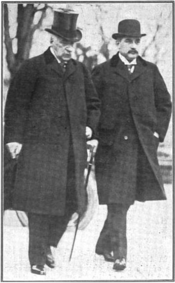 ](https://en.wikipedia.org/wiki/File:J.P._Morgan_and_J.P._Morgan_Jr.png)John Pierpont Morgan Jr. walking alongside his father J. P. Morgan in the last known photograph of the two together (ca. 1913).
The younger Morgan resembled his father in his dislike for publicity and continued his father's philanthropic policy. In 1905, his father acquired the Guaranty Trust bank as part of his efforts to consolidate banking in New York City. After his father died in 1913, the bank became John's base.
World War I
Morgan played a prominent part in financing World War I. Following its outbreak, he made the first loan of $12,000,000 to Russia.[6] In 1915, a loan of $500,000,000 was made to France and Britain following negotiations by the Anglo-French Financial Commission.[7] The firm's involvement with British and French interests fueled charges the bank was conspiring to maneuver the United States into supporting the Allies in order to rescue its loans. By 1915, when it became apparent the war was not going to end quickly, the company decided to forge formal relationships with France.[8]
Those dealings became strained over the course of the war as a result of poor personal relations with French emissaries, relationships that were heightened in importance by the unexpected duration of the conflict, its costs, and the complications flowing from American neutrality. Contributing to the tensions was the favoritism displayed by Morgan officials to British interests.[9] His personal friendship with Cecil Spring Rice ensured that from 1915 until sometime after the United States entered the war, his firm was the official purchasing agent for the British government, buying cotton, steel, chemicals and food, receiving a 1% commission on all purchases.[10] Morgan organized a syndicate of about 2200 banks and floated a loan of $500,000,000 to the Allies. The British sold off their holdings of American securities and by late 1916 were dependent on unsecured loans for further purchases.[11]
At the beginning of World War I, US Treasury Secretary William McAdoo and others in the Wilson administration were very suspicious of J. P. Morgan & Co.'s enthusiastic role as British agent for purchasing and banking. When the United States entered the war, this gave way to close collaboration, in the course of which Morgan received financial concessions.[12] From 1914 to 1919, he was a member of the advisory council for the Federal Reserve Bank of New York.[10]
On July 3, 1915, an assassin, Eric Muenter, entered Morgan's Long Island mansion and shot him twice. This was ostensibly to bring about an embargo on arms, and in protest of his profiteering from war. Morgan, however, quickly recovered from his wounds.[13]
Postwar
 Time cover, September 24, 1923.
After World War I and the Versailles Treaty, Morgan Guaranty managed Germany's reparation payments. After the war, Morgan made several trips to Europe to investigate and report on financial conditions there. In 1919 he was for a time chairman of the international committee, composed of American, British and French bankers, for the protection of the holders of Mexican securities.
In November 1919, he was made a director of the Foreign Finance Corporation, which was organized to engage in the investment of funds chiefly in foreign enterprises. By the 1920s, Morgan Guaranty had become one of the world's most important banking institutions, as a leading lender to Germany and Europe.[10][14] During the Great Depression he took heavy financial losses. The assets of the House of Morgan fell 40% from $704 million to $425 million.[15]
American banking came under heavy attack.[16] Morgan personified banking, and drew attacks from politicians, especially in the U.S. Senate's Pecora hearings of 1932, which "created a tidal wave of anger against Wall Street".[17][18]
He was a director in numerous corporations, including the U.S. Steel Corp., the Pullman Co., the Aetna Insurance Co., and the Northern Pacific Railway Co.[10]
He died of a stroke on March 13, 1943, in Boca Grande, Florida.[19]
 Morgan family memorial in Cedar Hill Cemetery
Personal life
Jack's brownstone, now part of the Morgan Library
In 1890, Morgan married Jane Norton Grew (1868–1925), daughter of Boston banker and mill owner Henry Sturgis Grew. She was the aunt of Henry Grew Crosby. The couple raised four children:
- Junius Spencer Morgan III (1892–1960), who married Louise Converse (1895–1974), daughter of Frederick Shepherd Converse, in 1915.[20]
- Jane Norton Morgan Nichols (1893–1981), who married George Nichols (1878–1950).[21]
- Frances Tracy Pennoyer (1897–1989),[22] who married Paul Geddes Pennoyer (1890–1970), a lawyer, in 1917.[23]
- Henry Sturgis Morgan (1900–1982), a founding partner of Morgan Stanley who married Catherine Lovering Adams (1902–1988), daughter of Charles Francis Adams III, descendants of the 2nd U.S. President, John Adams.
Philanthropy
In 1920, Morgan gave his London residence, 14 Princes Gate (near Imperial College London), to the U.S. government for use as its embassy.
In 1924, Morgan created the Pierpont Morgan Library as a public institution as a memorial to his father. Belle da Costa Greene, Morgan's personal librarian, became the first director and continued the aggressive acquisition and expansion of the collections of illuminated manuscripts, authors' original manuscripts, incunabula, prints, and drawings, early printed Bibles, and many examples of fine bookbinding. Today the library is a complex of buildings which serve as a museum and scholarly research center.
Morgan donated many valuable works to the Metropolitan Museum of Art.[24]
Social
A yachtsman, like his father, Morgan served as commodore of the New York Yacht Club from 1919 to 1921. In 1930, he built the turbo electric driven yacht Corsair IV at Bath Iron Works in Maine. Corsair IV, launched April 10, 1930, was one of the most opulent yachts of its day and the largest built in the United States with an overall length of 343 feet (104.5 m), 42 feet (12.8 m) beam and 2,142 GRT.[25][26] Legend at the shipyard credits the phrase "If you have to ask, you can't afford it" to Morgan, when asked what the yacht cost. However, this quote is most often attributed to his father in connection with the yacht Corsair, launched in 1891. Morgan sold the Corsair IV to the British Admiralty in 1940 for one dollar to assist with Britain's war effort.[27] After the war the Corsair IV was sold to Pacific Cruise Lines and, on September 29, 1947, began service as a luxury cruise ship operating between Long Beach, California and Acapulco, Mexico. On November 12, 1949 the yacht struck a rock near the beach in Acapulco and, although all passengers and crew were rescued, was deemed a total loss.[28]
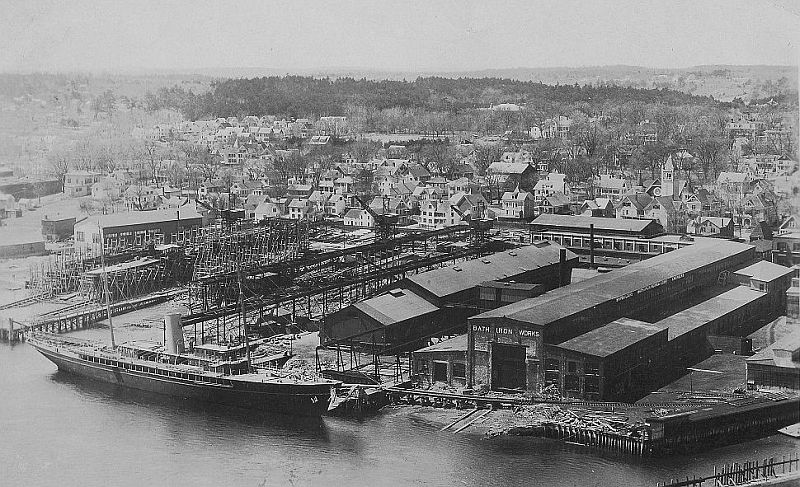
Morgan was a member of the Jekyll Island Club (a.k.a. "The Millionaires' Club") on Jekyll Island, Georgia, as had been his father J. P. Morgan Sr.
References
---
---