IDW intell dark web
premature?
---
AN 11 24
Every US election throws up a cast of figures adjacent to the campaign who endorse one candidate or another. Kamala Harris had a long line of celebrity backers, from Beyoncé to Bruce Springsteen.
Donald Trump had his own celebrities, such as Hulk Hogan, but he was also supported by a group of converted Democrats: Joe Rogan, Tulsi Gabbard, (just chosen as Trump’s director of national intelligence), Robert F. Kennedy Jr (Trump’s pick to head the federal health agency), and Elon Musk, who has been selected to co-lead Trump’s Department of Government Efficiency.
These figures are notable not just because they switched sides, but because they were part of an immensely popular online phenomenon born in the mid-2010s: the intellectual dark web. (Not to be confused with the dark web.)
After Trump’s victory, I found myself exclaiming: my God, the intellectual dark web just won the election! Though the name is now rarely used, understanding the phenomenon can help us understand what just happened.
The intellectual dark web became increasingly well known during the first Trump presidency. It gained mainstream attention through a 2018 New York Times article, which described it as “a collection of iconoclastic thinkers, academic renegades and media personalities who are having a rolling conversation – on podcasts, YouTube and Twitter, and in sold-out auditoriums – that sound unlike anything else happening, at least publicly, in the culture right now”.
Many of these figures, the Times noted, were building their own media channels. It identified The Joe Rogan Experience podcast, which has an audience in the tens of millions, as a focal point. “People are starved for controversial opinions,” Rogan has said. “And they are starved for an actual conversation.” VID]
In the week before the election, podcast episodes with ,
 and
 gained 80 million views on YouTube alone. Interestingly, in the week after the election, MSNBC’s viewership was down 39% and CNN’s down 22%, compared with their October averages. The audience of Fox News jumped 39% in the same period.
What was the intellectual dark web?
In the mid-2010s, longform podcasts became an unexpected success. Rogan’s was one of the most successful. His conversations with academics, politicians and media personalities went for hours and were uncensored, and his approach was very different from the heavily produced interviews of mainstream media.
The “core” of the intellectual dark web included Rogan, psychologist and bestselling author of 12 Rules for Life Jordan Peterson, neuroscientist Sam Harris (who voted for Hillary Clinton), and Eric Weinstein, managing director of Peter Thiel’s venture capital firm until 2022 (and a Bernie Sanders supporter).
However, there were 50 or more others like Musk and Gabbard who appeared on Rogan’s podcast (and those of other core figures), who had similar values and concerns.
:{Musk and Gabbard both first appeared on Rogan’s podcast in 2018. five times and Gabbard
 .
VID]
Kennedy Jr, a latecomer, has appeared once so far, in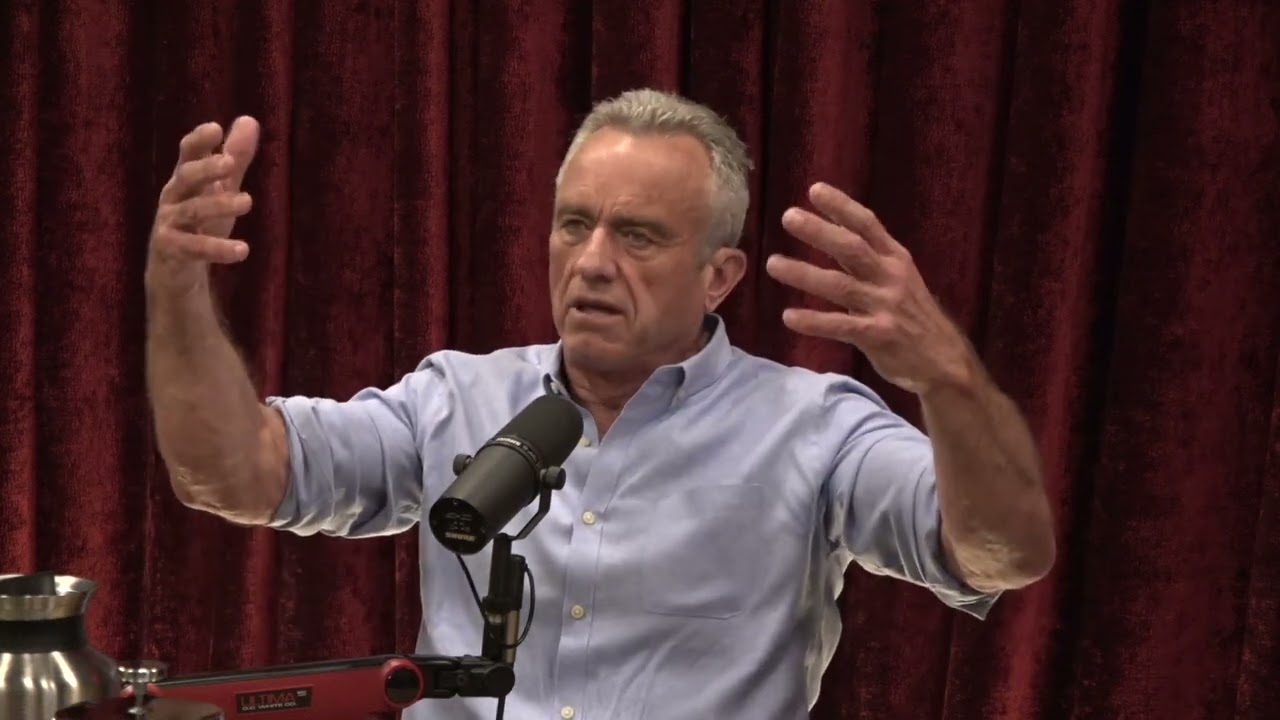 .}:
Gabbard, a former congresswoman for Hawaii, even announced her resignation from the Democratic party on Rogan’s podcast, in October 2022. “The people in charge of the Democratic party… have created this cult-like atmosphere,” . “The Democratic party of the past – the party that I joined – doesn’t exist anymore. The party of JFK, of Dr Martin Luther King … The big tent party that welcomed and encouraged this marketplace of ideas.”
The rise of podcasting coincided with campus politics spilling over into the wider world. “Cancel culture”, which grew out of this, has often been mentioned on Rogan’s podcast as a problem.
For the intellectual dark web, the worst aspects of campus politics are driven by postmodernism’s degradation of traditional liberal values. Once, the great liberal objective was to try to grasp the truth – the nature of reality. This was done through open and civil discussion, and by drawing on reasoning and evidence.
Postmodernism, ‘woke’ and disputed realities
The 1960s saw the rise of poststructuralism, which led to postmodernism from the 1980s. The latter was influenced by the ideas of French philosopher Michel Foucault, who was concerned with dissecting power. Foucault believed power “produces reality”. so does rove and trump
Postmodern thinking argues there is no objective truth: apparent claims to it are always related to power. Postmodernism became the unofficial philosophy of identity politics – what many now refer to as being “woke”.
For postmodern thinkers, the task of the intellectual activist is to prevent or transform the speech of the powerful. The introduction of gender-neutral pronouns (they/them) and, relatedly, the term “Latinx” (a gender-neutral term for Latino) are examples. For postmodern and “woke” thinkers, the “truth” that matters belongs to those without power in our society. According to this way of thinking, the less power you have, the greater your worth, and vice versa.
“There’s no real world. Everything’s a social construct,” Peterson said of postmodernism. “And it’s a landscape of conflict between groups.”
The intellectual dark web’s criticism of “woke” politics is centred on this disputed reality (and ideas about power) – spanning issues as diverse as biological sex and gender, debates over police violence and Black Lives Matter, and Diversity, Equity and Inclusion (DEI) policies. While they accept that social norms influence us, they object to the idea that language conjures reality into existence.
These kinds of discussions had, for decades, been routinely shut down in universities. For example, last year, students called for the cancelling of “gender-critical feminist” Holly Lawford-Smith’s course on feminism at the University of Melbourne, due to her arguments for the significance of biological sex.
And these opinions (which are associated with conservatism) are rarely heard in the liberal mainstream media, where conservatism is the enemy.
Free speech as the path to truth
The intellectual dark web championed free speech as the pathway to truth.
Intellectual dark web thinkers do not believe in gender as a social construct: they see it as a biological reality, with real implications for men, women and relationships between them.
Louise Perry, author of The Case Against the Sexual Revolution, who has appeared on intellectual dark web podcasts, argues gender difference is not just physical, but psychological – and that women do not benefit from casual sex, despite liberal feminism encouraging it. Peterson exhorts men to follow a middle path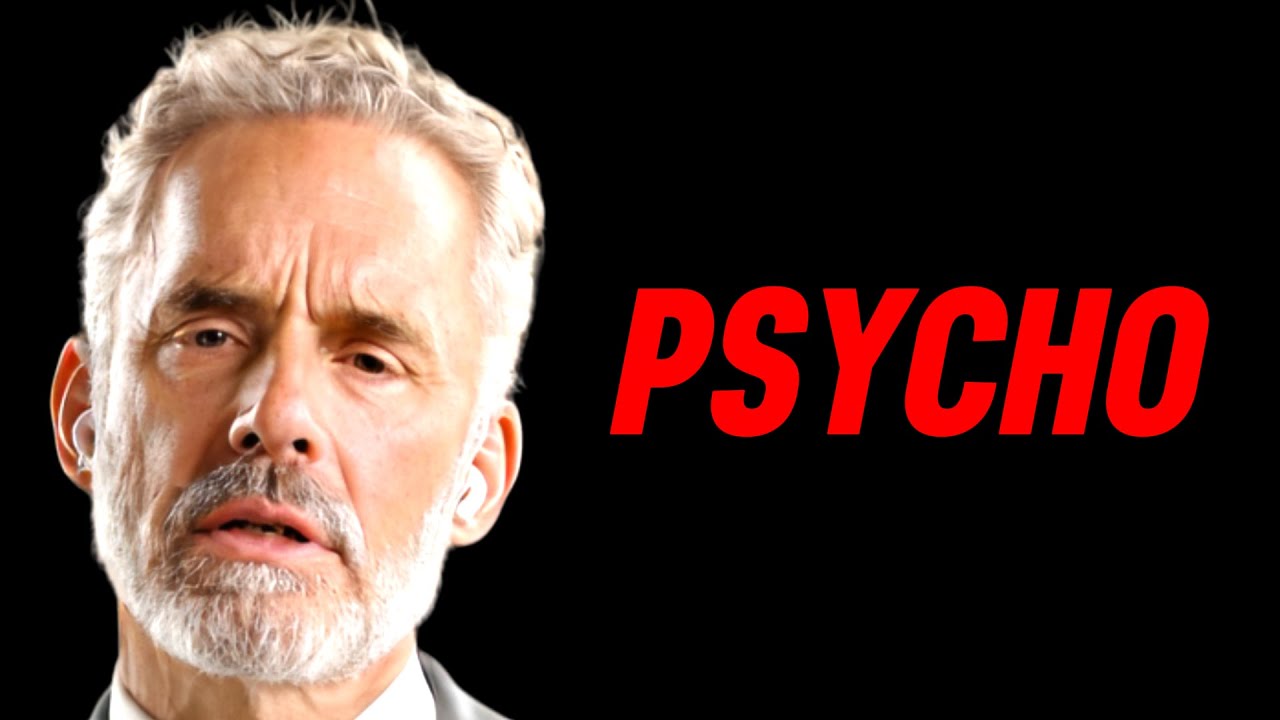 .
Yes, the manosphere is real: Rogan’s audience is mostly male, as is Peterson’s. And Rogan’s guests are also mostly male. But the term “manosphere” is inherently dismissive. It ignores concerns that seemed to resonate with many US voters.
The intellectual dark web, in its commitment to reality, also bemoans the postmodern devaluation of merit. “I think the pathology that’s at the core of the culture war is an attack on competence itself,” .
For me, Raygun’s recent performance at the Olympics, which was internationally criticised as poor, is a clear example of the postmodern devaluation of merit. As Rogan said: “It’s an offense to actual breakdancers that that lady did that. Actual high-level breakdancing is an athletic art form.”
This devaluation of merit is at the core of the intellectual dark web’s criticisms of Diversity, Equity and Inclusion (DEI) initiatives. Black economist Glenn Loury, a member of the intellectual dark web, argues such initiatives don’t even help those they are designed to help. “I hate affirmative action,” . “It is a substitute for the actual development of the capacities of our people to compete.”
In such ideas, there is a recurring tension between creating equality of opportunity and equality of outcome. For instance, US President Joe Biden was urged to pick a Black woman as vice president and promised to nominate a Black woman to the Supreme Court – both of which he did. He has been criticised for making these choices based on identity rather than merit.
These are complex discussions: there is a long history of Black people and women suffering discrimination when they have merit. But, arguably, the Democratic party has increasingly become concerned with a superficial equality of outcome, at the expense of the party’s erstwhile base: workers.
As US Senator Bernie Sanders said following Trump’s election win: “It should come as no great surprise that a Democratic Party which has abandoned working class people would find that the working class has abandoned them.”
Rogan endorsed Sanders, , as the Democratic candidate for the 2020 presidential election.
In 2020, at the height of the Black Lives Matter protests, Sam Harris spoke some then-taboo truths about the absurdity of calls to defund the police in the US. “Having a police force that can deter crime, and solve crimes when they occur, and deliver violent criminals to a functioning justice system, is the necessary precondition for almost anything else of value in society,” he said.
“Woke capitalism” is a concept that circulated within the intellectual dark web. It argues that identity politics might seem radical, but in fact works hand-in-glove with the corporate world. Rather than actually improving the lot of workers, many corporations prefer to make costless gestures by running diversity, equity and inclusion programs.
Where to now?
While Trump won for many reasons, including immigration and the economy, my sense is that Trump, forever the populist, harnessed a widespread dissatisfaction with a form of identity politics promulgated by a quite often well-paid, white-collar class: psychologist Steven Pinker’s “chattering class”.
The intellectual dark web, which can be seen as a broad populist movement spanning the left and right, has been going on about identity politics and its postmodern roots for more than a decade. Now, its ideas and figures have helped elect a president, and some of them – Musk, Gabbard and Kennedy Jr – have roles in Trump’s administration.
Jamie Q Roberts, Lecturer in Politics and International Relations, University of Sydney
This article is republished from The Conversation under a Creative Commons license. Read the original article.
---
i forgot that he came out of MMA. cf BTB
https://www.alternet.org/2021/09/ivermectin-conspiracy-theories/
Proponents of ivermectin as a treatment for covid are now in damage-control mode after a series of stories about people overdosing on horse paste and sheep drench from feed stores.
Such luminaries as Joe Rogan, Tucker Carlson, Brett Weinstein and United States Senator Ron Johnson (R-Wisconsin) stoked demand for the dewormer, only to have the craze blow up in the faces when the ginned-up demand outstripped the pharmaceutical supply and people started self-medicating with horse paste.
The zeal of the ivermectin prophets was self-defeating. The whole point of being an Ivermectin Guy is that you can indulge in antivaxx conspiracy theories while sounding smarter than the Microchip Guys. That's why they get so mad when you call it "horse paste."
Internet tough guy Joe Rogan will have you know that the ivermectin he (supposedly) took for his (supposed) covid was (supposedly) from a doctor. "Bro, do I have to sue CNN?" Rogan grumbled. "They're making shit up. They keep saying I'm taking horse dewormer." It's an image thing: Rooting for Team Horse Paste pushes you over the line from "bold independent thinker" to "utter crackpot."
The Basic Ivermectin Conspiracy Theory goes like this: There's a cheap cure for covid butBig Pharma doesn't want you to have it, because it's a generic drug. A more elaborate version, shared by the host of the aptly-named Dark Horse podcast on Tucker Carlson's show, posits that the government is refusing to acknowledge ivermectin as a safe and effective treatment for covid because to do so would somehow undercut the Emergency Use Authorizations for covid vaccines.
This makes no sense, given the government is funding an ivermectin trial. But it's not about the logic. It's about feeding the anti-vaxx fantasy that vaccine mandates will evaporate if we go all in on ivermectin. Human prescriptions for ivermectin soared from fewer than 4,000 a week pre-pandemic to nearly 90,000 a week in August.
Surging demand has caused shortages in pharmacies and feed stores alike. Docs and vets worry the fad will keep the drug out of the hands and off the hides of the creatures who really need it.
The hype beasts of the Intellectual Dark Web dangle a miracle cure in front of their credulous audience and pretend to be shocked when they hit up the feed store. Ivermectin boosters know that ethical doctors won't prescribe ivermectin for covid because there's no evidence it's a safe or effective against the virus. Indeed, the American Medical Association strongly advises against prescribing ivermectin for covid outside of a clinical trial.[so does mfgr]
Ivermectin kills the covid virus in a Petri dish, but only at concentrations that will never be matched in the human body — even if you take enough to choke a horse. The most famous clinical trial purporting to show benefit in humans waswithdrawn after it was determined the authors plagiarized the text from pro-ivermectin press releases and fabricated their data. The data are so implausible some experts question whether the trialever happened. Pro-ivermectin trials have a funny habit of appearing as pre-prints making fantastical claims before being retracted amid allegations of fraud or conflict of interest.
Ivermectin has a good safety record when it's prescribed by a doctor or a vet to treat parasites, but ivermectin-related calls to the nation's poison control centers have quintupled, because people are guesstimating doses of livestock meds. It's a fool's game. No safe or effective dosage has been established for covid because there's no good evidence it works. Ivermectin partisans are always reminding us that some guys won a Nobel Prize for using ivermectin to treat something else. They're showing their ignorance of medicine. The drug, the dose, and the diagnosis actually matter.
However, the real harm of the ivermectin craze is not the relatively rare—though completely pointless—horse paste ODs. It's the much larger group of people who are using ivermectin as an excuse not to get vaccinated, whether they're currently taking the drug or not. If you're on the fence about vaccination, the myth that ivermectin cures covid makes it easier to skip your shot.
Some pundits have chided irreverent commentators for poking fun at people who eschew a free, safe and effective vaccine and pay for animal drugs that won't cure covid. Americans aren't eating horse paste because it's a noble rural tradition to self-medicate from the tractor supply. Grifters played on people's hopes for a quick covid fix and their fear of vaccines, and now their fans are paying the price.
---
https://en.wikipedia.org/wiki/Bret_Weinstein
Bret Samuel Weinstein /ˈwaɪnstaɪn/ (born 21 February 1969) is an American podcaster and author. He served as a professor of biology at Evergreen State College, but resigned in the aftermath of the 2017 Evergreen State College protests, which brought him to national attention. Along with his brother Eric Weinstein, he is among the people referred to collectively as the intellectual dark web.[3][4] Weinstein has been criticized for making false statements about COVID-19 treatments and vaccines.[5][6][7]
Education
Weinstein, a native of Southern California,[8] began his undergraduate studies at the University of Pennsylvania. As a freshman, he wrote a letter to the school newspaper that condemned sexual harassment of strippers at a Zeta Beta Tau fraternity party.[9] After experiencing harassment for the letter, hetransferred to the University of California, Santa Cruz, where he completed his undergraduate degree in 1993.[10] Weinstein received a doctorate from the University of Michigan in 2009.[2][11]
Career
Professor at Evergreen State College
Until 2017, Weinstein was a professor of biology at Evergreen State College in Washington State. In 2002, he published The Reserve-Capacity Hypothesis, which proposed that the telomeric differences between humans and laboratory mice have led scientists to underestimate the risks that new drugs pose to humans in the form of heart disease, liver dysfunction, and related organ failure.[12][13][14]
Evergreen State College Day of Absence
In March 2017, Weinstein wrote a letter to Evergreen faculty in which he objected to a change in the college's decades-old tradition of observing a "Day of Absence", during which ethnic minority students and faculty would voluntarily stay away from campus to highlight their contributions to the college.[15] The change to the event asked white participants to stay off campus, to attend a program on race issues, while the on-campus program was designated for people of color.[16] Weinstein wrote that the change established a dangerous precedent:
There is a huge difference between a group or coalition deciding to voluntarily absent themselves from a shared space in order to highlight their vital and underappreciated roles.... and a group encouraging another group to go away. The first is a forceful call to consciousness, which is, of course, crippling to the logic of oppression.The second is a show of force, and an act of oppression in and of itself.
— Bret Weinstein, in a message to event organizer, Rashida Love[17]
The event organizers responded that participation was voluntary and that the event did not imply that all white people should leave.[18]
In May 2017, student protests disrupted the campus and called for a number of changes to the college. The protests involved allegations of racism, intolerance and threats; brought national attention to Evergreen; and sparked further debate about free speech on college campuses.[19] During the protests, there was an altercation between protesters and Weinstein.[20][21]
Weinstein and his wife, Heather Heying, brought a lawsuit against the school, alleging that the college's president had not asked campus police to quell student protesters.[22][23] Weinstein also said that campus police had told him that they could not protect him, and that they had encouraged him to stay off campus. Instead, Weinstein held his biology class that day in a public park.[24][25] A settlement was reached in September 2017 in which Weinstein and Heying resigned and received $250,000 each, after having sought $3.8 million in damages.[19]
Post-Evergreen
Following his resignation from Evergreen, he appeared on the podcasts of Sam Harris[26] and Joe Rogan on many occasions. He moderated two debates between Harris and Jordan Peterson.[27] He appeared in the documentary No Safe Spaces, which documents the Evergreen incidents.[28] Weinstein's brother Eric coined the term "intellectual dark web" and described Bret as a member. The term refers to a group of academics and media personalities who publish and debate outside the mainstream media.[29][30][31][32]
In June 2019, Weinstein began the DarkHorsePodcast on his YouTube channel, which is usually co-hosted with his wife Heather.[33] Their guests have included Glenn Loury, Douglas Murray, Sam Harris, John Wood Jr., Thomas Chatterton Williams and Coleman Hughes, with topics often centered on current events, science, and culture.[34]
Weinstein was a 2019–2020 James Madison Program Visiting Fellow at Princeton University,which continued for the 2020–2021 year.[35][36]
Personal life and views
Weinstein is married to Heather Heying, an evolutionary biologist who also worked at Evergreen. Heying resigned from the college along with Weinstein and took a similar position during the Day of Absence controversy.[19][clarification ^needed]
Weinstein describes himself as politically liberal, progressive,[37][38] and left-libertarian.[39] He appeared before the U.S. House Oversight Committee on May 22, 2018, to discuss freedom of speech on college campuses.[40][41] In 2020, he announced Unity 2020, a plan to nominate for the upcoming US presidential elections a pair of suitable candidates, each associated with one of both major political parties, to govern as a team.[42][43][44]
COVID-19
Further information: COVID-19 misinformation
During the COVID-19 pandemic, Weinstein has made several public appearances advocating the use of the antiparasitic drug ivermectin to prevent or treat the disease and downplaying the effectiveness of COVID-19 vaccines. David Gorski, in Science-Based Medicine, described Weinstein as a prominent "COVID-19 contrarian and spreader of disinformation".[5] Weinstein made baseless claims that the drug can prevent or treat COVID-19,[5][45] claims for which there is no good evidence.[46][47][48] Weinstein hosted ivermectin advocate Pierre Kory on his DarkHorse podcast to discuss the drug,[49][7] and promoted ivermectin on other podcast and television news appearances.[50][51]
Weinstein took ivermectin during a livestream video and said both he and his wife had not been vaccinated because of their fears concerning COVID-19 vaccines.[52] YouTubedemonetized the couple's channels in response to their claims about ivermectin. Afterward, Weinstein and Heying moved their subsequent broadcasts to the alternative/fringe video sharing platformOdysee.[49] In August of 2021, Weinstein said he had misstated that a study had shown a 100% effective ivermectin protocol for the prevention of COVID.[46][53] Weinstein considers himself a supporter of vaccines in general; he believes mRNA vaccines have promise despite what he claims are "some clear design flaws".[37] Weinstein has falsely claimed that the spike protein produced by or contained within COVID-19 vaccines is "very dangerous" and "cytotoxic".[54][55][56]
Publications
- Heying, Heather; Weinstein, Bret (2021), A Hunter-Gatherer's Guide to the 21st Century: Evolution and the Challenges of Modern Life, Portfolio, p. 320, ISBN 978-0593086889
- Weinstein, Bret S. (January 2009). "Evolutionary Trade-Offs: Emergent Constraints and Their Adaptive Consequences" (PDF). University of Michigan.
- Lahti, David C.; Weinstein, Bret S. (January 2005). "The better angels of our nature: Group stability and the evolution of moral tension". Evolution & Human Behavior. 26 (1): 47–63. doi:10.1016/j.evolhumbehav.2004.09.004.
- Weinstein, Bret S; Ciszek, Deborah (2002). "The reserve-capacity hypothesis: Evolutionary origins and modern implications of the trade-off between tumor-suppression and tissue-repair". Experimental Gerontology. 37 (5): 615–27. doi:10.1016/S0531-5565(02)00012-8. PMID 11909679. S2CID 12912742.
References
...
---
an 621
It was inspiring — really inspiring. I remember watching clip after clip of Sam Harris, Richard Dawkins and Christopher Hitchens debating Christians, Muslims and "purveyors of woo,"...
---
As states like Georgia and Florida seek to return to business as usual, they not only risk a new wave of coronavirus infections, they will begin driving people off the unemployment rolls, treating workers concerned about a possible trip to the ICU as indolent bums who lack “personal responsibility.”
All this suffering is necessary, say Republican politicians and pundits, to save “the economy” — a term with no actionable meaning in the lives of people who would rather save their lives. Fearless defenders of the supposed rights of an unborn fetus continue to call themselves “pro-life,” even as they make cold calculations on which lives have value according to their own bizarre criteria of marketability. Popular right-wing “intellectual” Ben Shapiro recently said this to a typically blank-eyed Dave Rubin: “If grandma in a nursing home dies at 81, that’s tragic and terrible. Also, the life expectancy in the United States is 80.”
After all the years of feigning outrage over the nonexistent “death panels” that Barack Obama had supposedly proposed to ration health care, the right wing is suddenly comfortable with sacrificing the elderly for the sake of economic prosperity — a phenomenon, by the way, that is disproportionately concentrated among the top few percent of income earners.
Cavalier disregard for the lives of their elders reveals that self-proclaimed “conservatives” are anything but that. No political party can call themselves the keepers of tradition if they are not willing to make sacrifices to save the lives of the elderly. Prioritizing life over money would require the American right to accept that their country is more than an economy, and that their religion of corporate capitalism is modern-day idolatry.
For a measurement of the absurd lengths these anarchists masquerading as conservatives will go to protect their claims, consider Dennis Prager — a popular talk show host who often leads his listeners through his studies of the Torah and the Bible. In defiance of all known traditions of Jewish and Christian ethics, Prager actually wrote, “The lockdown is the greatest mistake in the history of humanity.”
---
AN c de v
Last week during a rally in the border city of El Paso, Texas, before thousands of his most adoring fans, Donald Trump showed America and the world–again–who he really is. Trump worked his audience up into a fever pitch as he lambasted and threatened the news media and free press. For Trump and his movement, they are the “enemy of the people.” This is a fundamental principle of authoritarianism. One of Trump’s MAGA hat-wearing supporters responded to the president’s incitement by physically attacking a BBC cameraman named Ron Skeans.
During the same speech, Donald Trump lied about his imaginary wall along the U.S.-Mexico border and about “illegal immigrants” who come to America in order to commit crimes against white people. He spun vainglorious stories out of whole cloth about his “accomplishments” and “greatness.”
Donald Trump’s values and beliefs may appear incoherent, but they are not a buffet or à la carte meal from which a person can pick and choose from. Rather, they are a nasty, incestuous knot that cannot be easily untangled. Ultimately, to wear Donald Trump’s MAGA hats or his other regalia is to share and endorse his racism, sexism, nativism, bigotry and anti-social behavior. To utter the words “Make America Great Again” with no sense of irony or foreboding is to announce one’s betrayal of human decency and distrust of democracy.
How do Trump’s MAGA hats and other clothing and slogans help to create a sense of political community for his followers? Is “Make America Great Again” an implicit threat against nonwhites, Muslims and others that he and his followers deem to be a type of enemy Other?Does Trumpism represent larger cultural battles in America about the role of academics, teachers, intellectuals and other experts in public life? Should Trump’s supporters be held morally accountable for their political decision-making and the harm that they are causing to American society?
In an effort to answer these questions I spoke with Matthew A. Sears, an associate professor of classics and ancient history at the University of New Brunswick. Sears’ essays have also been featured by the Washington Post and the History News Network. His most recent column for the Washington Post is “Why the decision to wear MAGA hats matters.”
This conversation has been edited for clarity and length.
Professors and other educators who speak out about the threat to democracy embodied by Donald Trump and his movement have been victims of a coordinated campaign of threats and violence — including being fired from their jobs. Trumpism and the American right have birthed a type of new McCarthyism and anti-intellectualism in America. As a professor who studies literature and history, and also writes for a popular audience, how has that impacted you?
I don’t know if it is “anti-intellectual” per se, in the spirit of what we saw in fascist Italy or with the Khmer Rouge, the latter being an obvious and odious example. But there is certainly a kind of battle royale taking place between different kinds of intellectuals in America and the West.
There are people like [white nationalist leader] Richard Spencer who try to give themselves an air of academic respectability. These types try to claim that their positions are actually well-thought out, well-researched and well-sourced. They are trying to piggy-back on academic prestige.
There is the so-called “intellectual dark web.” These are all academics or academic-adjacent people. Jordan Peterson and Brett Weinstein, even Steven Pinker increasingly, and people like Richard Dawkins and Sam Harris can be included in that group.
This is a battle for the soul of public discourse and who gets to claim expertise on certain areas. Given my expertise and public voice, I am part of a public debate and fight over keeping or getting rid of “traditional” ideas of Western civilization and arguments and beliefs such as “The West is Best.”
As a classics professor who talks about, writes about and teaches about the Greeks and the Romans, for many of the “alt-right” or “alt-lite”I am often seen as a traitor. Why? Because I research and show how those societies were complex, problematic and different from our own. Studying ancient Greece and Rome can show us ways of how not to act and how not to organize a society. These “alt-right” and “alt-lite” types say I am “ruining” Western civilization and I’m “ruining” the classics because I don’t engage in hero worship where I say things like, “Look at these great founders of democracy, and look at these heroes like Achilles and Julius Caesar and these great men.”
---
---
salon
There's an ideological war raging in the U.S. That's what Commentary magazine's John Podhoretz said in a recent podcast, anyways. And he's not wrong. It might not be a conflict as epic as the Second World War. It's not being fought on a battlefield or in research labs. But it is consuming much of the discourse in 2018, especially on Twitter.
Much of the battles involving the left appear to be partisan infighting: liberals pushing back against the dramatic shift to the left; Democratic Socialists assailing the liberal establishment. Conservatives, meanwhile, have seemingly abandoned any constructive introspection. "Owning the libs" has become their only battlecry.
The rise of President Donald Trump should have precipitated an ideological insurrection. But the most popular movement to come out of the right post-2016 was the Intellectual Dark Web (IDW), a quasi-informal group of political commentators and professors who've gained traction for its hostility towards American liberalism. Bari Weiss, a conservative op-ed writer at The New York Times, introduced the IDW in a column earlier this year. In the piece, she elevated personalities such as Jordan Peterson, Dave Rubin, Candace Owens and Charlie Kirk, to name a few. They were grouped together not because of an ideology they shared, but because of an ideology they all rejected. The IDW criticizes most, if not all, policies and social movements that have arisen from America's liberal trajectory. Feminism, affirmative action, subsidized health care, Black Lives Matter, wealth distribution, immigration, all have come under fire by the IDW. Their main antagonist may be the "mainstream liberal media," which they vilify for propping up progressive causes. Because of this, conservative media has welcomed these new voices into the tent, even though some whitewash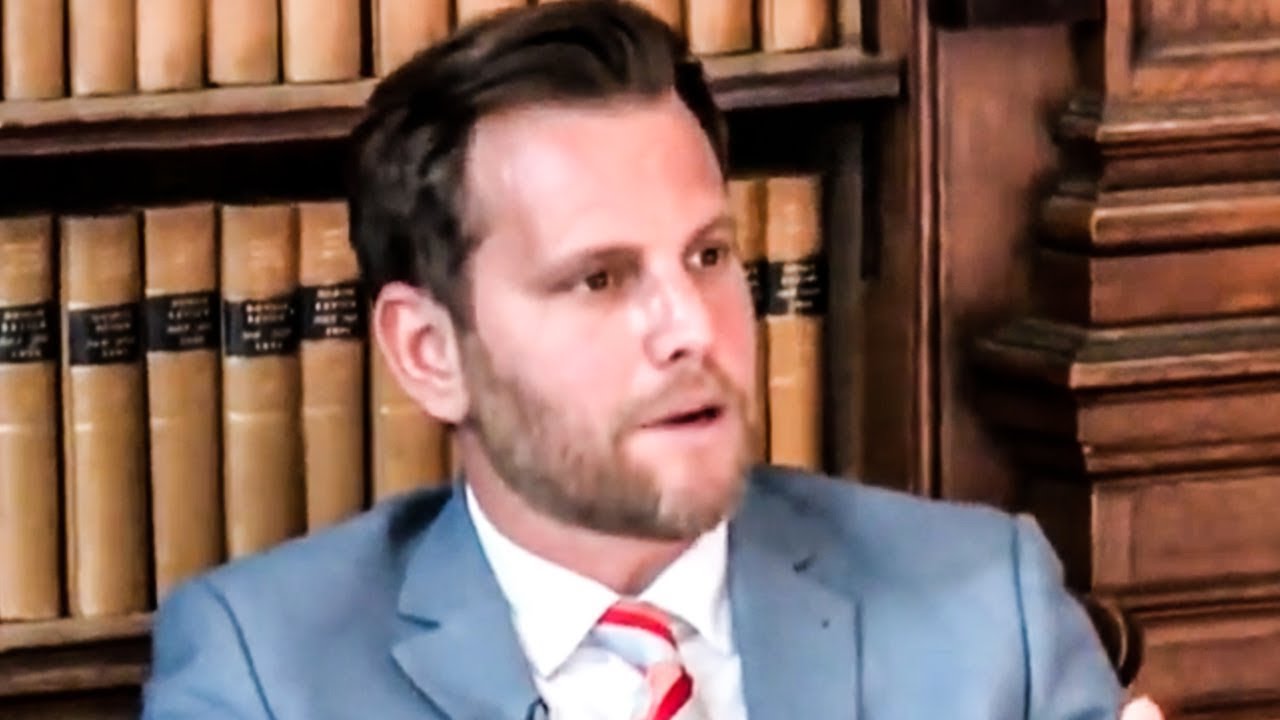 and anti-LGBTQ bigotry.
SPONSORED
Some would argue that parts of right-wing media landscape have long been tainted. Before Trump announced his campaign for the presidency, certain writers and watchdog groups have monitored the debasement of conservative media. But since Trump took control of the White House, there has been a more aggressive push to discredit certain conservative personalities and websites. CNN's Brian Stelter has taken on some of the responsibility, as his show "Reliable Sources" seeks to call out journalistic malpractice from all sides.
Nevertheless, the most formidable group that has consistently held conservative media's feet to the fire this past year or two has been a handful of anonymous Twitter accounts. These anonymous Twitter accounts — or anons — have fact-checked and criticized conservative journalism to the point that the right can no longer ignore them. Their media criticism has now become mainstream, frustrating conservatives who see this as a blatant attempt to delegitimize and silence right-wing voices.
Some, if not most, of these Twitter anons were or are self-described conservatives. They include, but are not limited to: @KT_So_It_Goes, @UrbanAchievr, @AtticusGF,@cnn94cnn, @PeterWaldoToo,
@ClenchedFisk, @kbaxter, @LesserFrederick, @ALTscoe and @classiclib3ral. These anons have entered the limelight this past week, as some raised questions as to whether columnist Salena Zito has been fabricating quotes and misrepresenting sources. (Not a household name by any means, Zito has grown in prominence the past year or two for documenting the satisfaction of Trump voters post-2016.)
It all began when Twitter user @rod_inanimate pointed out that some people described in Zito's latest book as "lifelong Democrats" and "former Obama voters" were actually elected Republicans and party officials. After the threadwent viral, other anons began resurfacing critiques of Zito that they have made in the past. Perhaps the most damning allegation was that Zito invents quotes made by complacent Trump voters — the circumstantial evidence being that Zito often relies on unnamed sources to tie her stories together.
Using unnamed sources in "man on the street" reporting is often frowned upon, if not improper. Washington Post journalist Dave Weigel revealed this week that he would not use a quote unless he gets the speaker's full name, age and occupation. This is standard policy for many media outlets. One could forgive Zito if this was an one-off affair. But a review of Zito's work, conducted by anons, demonstrated that Zito goes to the unnamed-source well over and overagain. Some hints that Zito may be making up quotes, according to the anons, was that dialogue she shares contains language and syntax that appear in her prose. Another mainstay in Zito's writing is that she often converses with people at rural gas stations. The anons swear that these quotes cannot possibly be real. It's difficult to verify them considering she does not provide enough information to identify the speakers.
Zito addressed the allegations in a Twitter thread on Tuesday. She emphatically denied the charges in parts and in whole. She also tried to impeach her accusers by emphasizing they were anonymous, although she did say "it's their right to criticize me anonymously."
Zito was not the first mainstream conservative pundit to deflect criticism because they were coming from anonymous sources. Over the past year or two, many editors and writers at right-wing outlets such as The Federalist and National Review have complained that their most vocal detractors are people "hiding behind anonymity." It has become a frequent trope in right-wing media criticism. As these anons gain more and more notoriety for their criticism, right-wing commentators have become more and more desperate to invalidate them. These are just a sample of prominent conservatives rushing to the defense of Zito this past week:
There were some good-faith defenses of Zito's work. However, a lot of her allies tried to kill the messengers as opposed to the message. The public confrontation between mainstream conservative pundits and the anons was the manifestation of an ongoing debate over the merits of anonymous criticism. The concern over bot accounts and foreign intelligence campaigns has somewhat stigmatized the anonymous use of Twitter. Some tech leaders, such as Mark Cuban, have advocated that Twitter should confirm users' actual names. For right-wing punditry, however, the main objection is that a group of anons are attacking their journalism. As one anon recently put it:
Some conservative commentators have proposed that the anons are a cabal of left-leaning mercenaries tasked with taking down prominent conservatives.
Other conservatives have accused the anons of seeking fame and fortune for their work.
The suggestion that these anonymous Twitter accounts profit from their social media use is patently absurd. None ask for donations. If they do aspire for fame and fortune, then their currency is likes and retweets, not contributions via Patreon pages or Go-Fund Me accounts. If anything, the service they provide only brings them threats of doxxing, which one Federalist contributor has already intimated.
Ironically, the person who made this threat against @UrbanAchievr also runs an anonymous Twitter account. Not one conservative seems to have a problem with his or her anonymity.
When Weiss' IDW column first published, the name "Intellectual Dark Web" drew some eye rolls. The dark web is a part of the Internet that can only be accessed through unconventional networks, such as Tor. Members of the IDW are anything but inaccessible. Content from the IDW will appear as recommended videos on YouTube. Peterson and Rubin have gone on tour together, speaking before sold-out auditoriums. Candace Owens and Charlie Kirk have become two of the most prominent conservative voices on Twitter.
Beyond their disgust with American liberalism, the other trait that draws IDW members together is their ability to capitalize on a void in American conservatism. Taking a page from Trump, the IDW learned that to succeed in the punditry business meant becoming an avatar for disenchanted Americans, a mostly-white demographic that feel as if 21st-century orthodoxy repels them. It's not intellectualism that the IDW offers, nor is it an ideology. It's a sense of injustice that the IDW has enflamed and exploited for money. Zito's own reporting confirms how receptive Trump voters are to grievance politics — how they prefer playing the victim. In this sense, the IDW and mainstream conservative media have dovetailed their efforts to curtail progressivism.
Not all conservative outlets have lost respect for its past. Publications such as The Weekly Standard and Commentary continue to appreciate its roots. So does National Review from time to time. However, a plurality of conservatives seem to have become untethered from the ideological strain it once embraced.
The jury is still out as to whether Zito crossed any lines in her reporting. Regardless, it's evident that the right needs to look inward to self-regulate some of the content it has been peddling. Sadly, most of the people willing to do so at the moment are anonymous Twitter users. If people are looking for a discreet group of influencers striving to hold gatekeepers accountable, then the Twitter anons staging a crusade on conservative media are far more deserving of an audience.
---
https://www.alternet.org/these-anonymous-twitter-accounts-are-real-intellectual-dark-web-and-theyre-calling-out-right-wing
---