cascade domino ripple
i have a bunch of related cats, this is sorta disambig
SEE CASCADE converge INTERACTION
WEATHER CHAOS --> INSURANCE BOOST --> INFLATION HOMELESS // MORTAGE CRASH ECONOMY
maybe this is for unintended inter-relations/ inter-actions? eg higher ocean temp less 02 COMBINED with eutroprication?! (acid?)
see also
this node triggered by 2 big sys fail below
---
9 25
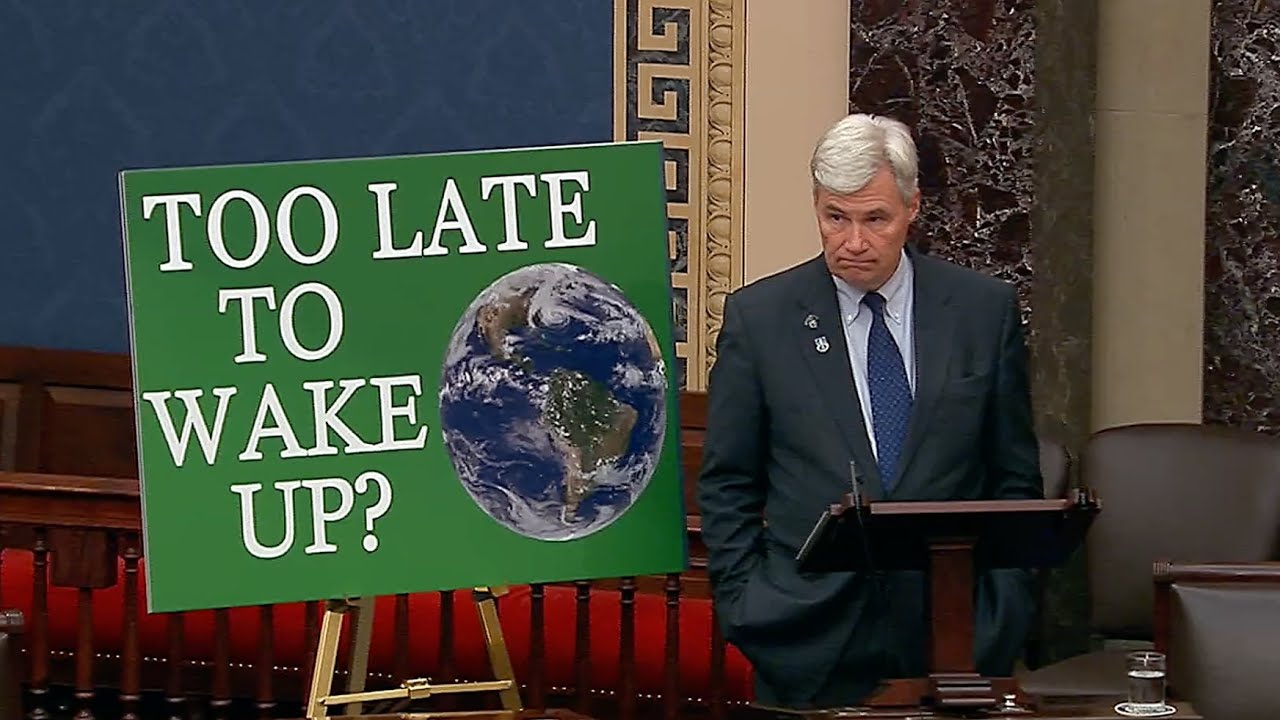
Time to Wake Up 301: The Four Phases of Climate Denial
24:36
FLORIDA IS OUR PREVIEW OF COMING
24:42
ATTRACTIONS, AN INSURANCE MARKET IN GRAVE DISTRESS, MORT
24:49
MARKETS -- MORTGAGE MARKETS BEGINNING TO TREMBLE,
24:54
MIDDLE-CLASS FAMILIES FINDING IT HARD TO SELL HOMES. THE CHIEF ECONOMIST OF FREDDIE
25:00
MAC SOME YEARS AGO PREDICTED THIS CASCADE FROM INSURANCE TO
25:07
MORTGAGES TO PROPERTY VALUES TO WHAT HE THEN CALLED A COASTAL
25:13
PROPERTY VALUES CRASH THAT WOULD HIT THE ENTIRE ECONOMY LIKE THE
25:24
2008 GREAT RECESSION. NOTE THAT WORD COASTAL. WELL, IT'S NOT JUST COASTAL
25:34
ANYMORE. WILDFIRE NOW MATCHES COASTAL AS AN ADDED THREAT THAT CAN TRIGGER
25:41
THAT ECONOMIC CASCADE INTO COLLAPSE.
25:46
ON TOP OF THAT LOOMS THE
25:51
LONG-PREDICTED CARBON BUBBLE. WHAT'S THE CARBON BUBBLE? THAT'S WHEN THE FOSSIL FUEL
25:58
INDUSTRY COLLAPSES IN A SUDDEN AND DISORDERLY FASHION BECAUSE WE WERE IRRESPONSIBLE ABOUT A
26:07
GRADUAL AND RELIABLE ENERGY TRANSITION. AND BY THE WAY, IT'S NOT COASTAL
26:13
OR WILDFIRE OR CARBON BUBBLE COLLAPSE, ALL THREE COULD
26:21
HAPPEN. EACH COLLAPSE MAKING THE OTHERS FASTER AND MORE DEEP AND
26:27
DANGEROUS AND PAINFUL. REMEMBER HEMINGWAY'S NOTORIOUS
26:33
LINE THAT YOU GO BROKE GRADUALLY AND THEN ALL AT ONCE.
26:40
WHAT COULD PROVOKE THIS ALREADY GRADUAL COLLAPSE TO SUDDENLY GO
26:46
ALL AT ON? WELL, THERE ARE A LOT OF WAYS
26:53
THIS COULD HAPPEN. ONE, IS RELATED TO OPEC.
27:00
SAY A LOW-COST OIL AND GAS PRODUCER LIKE SAUDI ARABIA
27:08
DECIDES TO SELL FUEL AT COST
27:14
RATHER THAN AT THE OPEC CARTEL
27:19
PRICE. WHEN THEY SEE IT'S TIME TO MAKE THE MOVE FOR THE EXITS AND SELL
27:25
WHAT THEY CAN WHILE THEY STILL
27:30
CAN, WHEN THEY DO THAT, THE AMERICAN FOSSIL FUEL INDUSTRY
27:36
RAPIDLY COLLAPSES BECAUSE OUR FOSSIL FUEL INDUSTRY CAN NO LONGER COMPETE.
27:42
IT'S ONLY PROFITABLE AT PUFFED UP AT OPEC CARTEL PRICES, NOT AT
27:50
THE PRICES SAUDI ARABIA COULD BRING TO THE MARKET IF IT CHOSE TO.
27:55
SO INSTANT CRASH. HERE'S ANOTHER SCENARIO.
28:02
FANNIE AND FREDDIE, THE MORTGAGE GIANTS, STOP ACCEPTING MORTGAGES
28:10
INSURED BY FLORIDA'S FLIMSY POPUP PROPERTY INSURANCE
28:17
COMPANIES. OVER A DOZEN OF WHICH HAVE ALREADY GONE BUST SINCE
28:24
HURRICANE ERMA IN 2017. IT IS A HUGE TAXPAYER LIABILITY
28:32
FOR FREDDIE AND FANNIE TO ASSUME ALL THAT RISK WITHOUT CREDIBLE
28:42
INSURANCE. LOCAL FLORIDA BANKS WON'T HOLD THOSE MORTGAGES BECAUSE THE
28:48
30-YEAR RISK TO A BANK IS NOT SURVIVABLE.
28:54
FLORIDA BECOMES A REGION CHAIRMAN POWELL PREDICTED WHERE
29:01
YOU CAN'T GET MORTGAGES ANYMORE. A MASSIVE ASSET REPRISING THEN
29:08
FOLLOWS THAT TRIGGERS SYSTEMIC ECONOMIC DAMAGE. PERHAPS EVEN CASCADING GLOBALLY
29:17
AS THE ECONOMIST MAGAZINE WARNED.
29:27
THE TRUSTY SIGN THAT I WORKED WITH ALL THESE YEARS THROUGH HUNDREDS OF SPEECHES IS TIME TO
29:36
WAKE UP. I'M NOT SURE WE CAN SAVE
29:42
OURSELVES ANY LONGER.
....
---
---
an 8 25
In the southernmost town in Maryland, residents who backed President Donald Trump in the 2024 election are now grappling with the consequences of his administration’s decision to cancel a major FEMA flood‑relief program.
NBC Washington published a report Thursday spotlighting former businesses now claimed by flooding.
Mayor Darlene Taylor pointed to vacant storefronts while speaking with NBC. “That was Subway and it used to have to close all the time because of floods or even high tides,” she said, nodding to a windowless shell of a building.
READ MORE:'Wild': Outrage as GOP governors facilitate controversial Trump move 'for a photo op'
She added: “There’s nothing in Crisfield that’s not touched by our flooding issue.”
The report noted that Taylor leads a shrinking seaside town battling relentless flooding from the Chesapeake Bay and other climate‑related threats.
Last year, FEMA awarded a $36 million grant through its Building Resilient Infrastructure and Communities (BRIC) program to flood‑proof Crisfield. But in April, the Trump administration abruptly terminated the BRIC program — canceling applications from 2020‑2023 and halting future awards.
Due to this development, Taylor and other townspeople are forced to scramble for alternatives — to “get it back.”
Records show a majority of voters in the town supported Trump in 2024, per the report.
“In an article that someone sent to me, it says, ‘Crisfield: Maryland’s Trumpiest city,” Taylor told NBC.
Taylor’s efforts to secure federal flood relief began early in her tenure — she took office in 2022 amid mounting concern from residents about rising water levels. With Crisfield only a few feet above sea level, flooding has hollowed out the local economy and left residents increasingly vulnerable.
When asked how voters felt about the canceled funding, despite their ideological leanings, Taylor noted, “People are tied to their philosophies and ideologies. So, they may see rationales in one way or another, but for me, I believe that that should play in our favor.”
Francis Martinez Myers, a member of of the Greater Crisfield Action Coalition, told NBC: “I feel like the government, the administration turned their back on the community."
AN 2 25
According to the Washington Post, as many as 200,000 federal workers may be fired because of efforts by the Trump Administration and the Elon Musk-led Department of Government Efficiency (DOGE) to greatly downsize the United States' federal government. And the criticism of their efforts is coming not only from Democrats, but also, from voices on the right.
Former Rep. Charlie Dent (R-Pennsylvania), during a February 17 appearance on MSNBC, slammed Trump and DOGE for carrying out mass government layoffs in a "haphazard" way. And the next morning, MSNBC's Joe Scarborough (a Never Trump conservative and ex-GOP congressman) argued that while government "waste" needs to be reduced and the U.S. needs to balance its federal budget, the Trump Administration and DOGE are recklessly jeopardizing "food safety" and "air safety."
The Guardian's George Monbiot also fears that Trump's second term could trigger some type of major crisis.
READ MORE:George Conway: Trump’s 'pathological narcissism' is fueling 'full-scale' DOJ 'revolt'
In a February 18 opinion column, Monbiot lays out a variety of frightening scenarios and offers some tips for surviving a worst-case scenario.
"Though we might find it hard to imagine," Monbiot warns, "we cannot now rule it out: the possibility of systemic collapse in the United States. The degradation of federal government by Donald Trump and Elon Musk could trigger a series of converging and compounding crises, leading to social, financial and industrial failure…. A financial crisis in the U.S. would immediately become a global crisis."
Monbiot continues, "But the hazards extend much further. Musk, calling for a 'wholesale removal of regulations,' sends his child soldiers to attack government departments stabilizing the entire U.S. system. Regulations, though endlessly maligned by corporate and oligarchic propaganda, are all that protect us from multiple disasters. In its initial impacts, deregulation is class war, hitting the poorest and the middle classes at the behest of the rich. As the effects proliferate, it becomes an assault on everyone's wellbeing."
The columnist warns that undermining regulatory government agencies could make everything from a pandemic to "future climate disasters" worse.
READ MORE:'Brutal': Ex-federal prosecutor reveals why Trump DOJ’s 'illegal order' was 'so corrupt'
"As Trump rips down environmental protections and trashes federal responsiveness," Monbiot explains, "the impacts will spiral. They could include non-linear shocks to either the insurance sector or homeowners, escalating into U.S.-wide economic and social crisis. If, or when, another pandemic strikes, which could involve a pathogen more transmissible and even more deadly than COVID-19 — which has so far killed 1.2 million people in the U.S. — it will hit a nation whose defenses have been stood down."
Monbiot urges Americans — as well as residents of the U.K., where The Guardian is published — by doing a lot of networking.
"So, though there is no substitute for effective government, we must seek to create our own backup systems," the Guardian columnist advises. "Start with this principle: don't face your fears alone. Make friends, meet your neighbors, set up support networks, help those who are struggling. Since the dawn of humankind, those with robust social networks have been more resilient than those without. Yes, we also — and urgently — need national and global action, brokered by governments. But it's beginning to look as if no one has our backs. Prepare for the worst."
READ MORE:John Roberts is to blame for Trump challenge of federal courts: analysis
*George Monbiot's full Guardian column is available at this link.
---
---
NOTE CASACADE EFFECT
AN 2 25
'Diseases of despair': Rural Americans don’t live as long as those in cities - Alternet.org
Rural Americans – particularly men – are expected to live significantly shorter, less healthy lives than their urban counterparts, according to our research, recently published in the Journal of Rural Health.
We found that a 60-year-old man living in a rural area is expected on average to live two fewer years than an urban man. For women, the rural-urban gap is six months.
A key reason is worse rates among rural people for smoking, obesity and chronic conditions such as high blood pressure and heart disease. These conditions are condemning millions to disability and shortened lives.
What’s more, these same people live in areas where medical care is evaporating. Living in rural areas, with their relatively sparse populations, often means a shortage of doctors, longer travel distances for medical care and inadequate investments in public health, driven partly by declines in economic opportunities.
Our team arrived at these findings by using a simulation called the Future Elderly Model. With that, we were able to simulate the future life course of Americans currently age 60 living in either an urban or rural area.
The model is based on relationships observed in 20 years of data from the Health and Retirement Study, an ongoing survey that follows people from age 51 through the rest of their lives. Specifically, the model showed how long these Americans might live, the expected quality of their future years, and how certain changes in lifestyle would affect the results.
We describe the conditions that drive our results as “diseases of despair,” building off the landmark work of pioneering researchers who coined the now widely used term “deaths of despair.” They documented rising mortality among Americans without a college degree and related these deaths to declines in social and economic prospects.
The main causes of deaths of despair – drug overdoses, liver disease and suicide – have also been called “diseases of despair.” But the conditions we study, such as heart disease, could similarly be influenced by social and economic prospects. And they can profoundly reduce quality of life.
We also found that if rural education levels were as high as in urban areas, this would eliminate almost half of the rural-urban life-expectancy gap. Our data shows 65% of urban 60-year-olds were educated beyond high school, compared with 53% of rural residents the same age.
One possible reason for the difference is that getting a bachelor’s degree may make a person more able or willing to follow scientific recommendations – and more likely to work out for 150 minutes a week or eat their veggies as their doctor advises them to. Rural communities are increasingly hampered by their lack of access to health care.
Why it matters
The gap between urban and rural health outcomes has widened over recent decades. Yet the problem goes beyond disparities between urban and rural health: It also splits down some of the party lines and social divides that separate U.S. citizens, such as education and lifestyle.
Scholarship on the decline of rural America suggests that people living outside larger cities are resentful of the economic forces that may have eroded their economic power. The interplay between these forces and the health conditions we study are less appreciated.
Economic circumstances can contribute to health outcomes. For example, increased stress and sedentary lifestyle due to joblessness can contribute to chronic health issues such as cardiovascular disease. Declines in economic prospects due to automation and trade liberalization are linked to increases in mortality.
But health can also have a strong influence on economic outcomes. Hospitalizations cause high medical costs, loss of work and earnings, and increases in bankruptcy. The onset of chronic disease and disability can lead to long-lasting declines in income. Even health events experienced early in childhood can have economic consequences decades later.
In tandem, these health and economic trends might reinforce each other and help fuel inequality between rural and urban areas that produces a profoundly different quality of life.
What still isn’t known
It should be noted that our results, like many studies, are describing outcomes on average; the rural population is not a monolith. In fact, some of the most physically active and healthy people we know live in rural areas.
Just how much your location affects your health is an ongoing area of research. But as researchers begin to understand more, we can come up with strategies to promote health among all Americans, regardless of where they live.
*:{The Research Brief is a short take on interesting academic work.
Elizabeth Currid-Halkett, James Irvine Chair in Urban and Regional Planning and Professor of Public Policy, University of Southern California; Bryan Tysinger, Assistant Professor of Health Policy and Management, University of Southern California, and Jack Chapel, Postdoctoral Scholar in Economics, University of Southern California
This article is republished from The Conversation under a Creative Commons license. Read the original article.
---
Car insurance has skyrocketed due to increased climate-fueled disasters
Special ProgramsClimate & Energy
Written by Allison Fisher
Published 08/28/24 mma
During the August 28 edition of Fox News’ America’s Newsroom, Fox Business correspondent Max Gordon reported on the skyrocketing cost of car insurance, another one of the “big issues coming up in the campaign” according to anchor Dana Perino. Gordon went on to connect this pocketbook issue to climate change, noting that the, “Increase in severe weather events has been one of the main drivers behind these increasing premiums. Climate events that cause a billion dollars or more in damage have been steadily on the rise, impacting how insurers set rates.”
Notably, the climate crisis is creating a housing insurance crisis as well. Climate change is making storms and wildfires more destructive. Last year, the U.S. experienced a record 28 disasters that cost more than a billion dollars each in damage. In response, some private insurers are raising premiums in areas frequently hit by extreme weather or pulling out of high-risk areas altogether, leaving homeowners uninsured.
Rising insurance costs are not the only economic impact of climate change. A study released early this year found that climate change is among the factors driving inflation which is “driving up the prices of food and other goods worldwide.” As Axios reported: “This is not the first study to note the economic toll of climate change, or even the inflationary pressures of increasing temperatures and extreme weather events.”
Video
CitationFrom the August 28, 2024, edition of Fox News' America's Newsroom
DANA PERINO (ANCHOR): We've been talking about all these big issues coming up in the campaign. Housing is one. Here is another one: The cost of car insurance is crushing drivers. Rates have spiked since President Biden took office, and they’re projected to surge even more this year. Fox Business' Max Gordon is live from Los Angeles with an explanation as to what is going on.
:{MAX GORDON (FOX BUSINESS CORRESPONDENT): Hey there Dana. Well, here in California, car insurance rates are expected to jump by more than 50% by the end of the year. It’s one of three states who are going to be seeing that. That’s also happening in Missouri and Minnesota.:{ The big reason for this — well, it's natural disasters. Severe weather}:. That's all according to a study from Insurify. That’s a company that provides information about the insurance market.
The average cost of full coverage in the U.S. rose by 15% in the first half of this year. And that number is expected to hit 22% by the end of this year. The report says that increase in severe weather events has been one of the main drivers behind these increasing premiums. Climate events that cause a billion dollars or more in damage have been steadily on the rise, impacting how insurers set rates. Hail-related claims were up to 11.8% of all comprehensive claims in 2023, according to the report, a 2.8% increase since 2020. Vehicle maintenance and repair costs have also increased by around 38% over the past five years, according to federal figures. These higher repair costs have led to more expensive claims, with insurance companies passing the cost to consumers in the way of higher premiums.}:
---
aha note insurance drives home price thus inflation
mma 8 24
strategy to control the narrative as the fossil fuel industry faces mounting scrutiny.
https://www.alternet.org/2022/08/climate-endgame/
https://www.pnas.org/doi/full/10.1073/pnas.2108146119
https://yyy.theguardian.com/environment/2022/aug/01/climate-endgame-risk-human-extinction-scientists-global-heating-catastrophe
no lnx twt
The worst-case outcomes of an unmitigated climate emergency—civilizational collapse or even human extinction—are "dangerously underexplored" scenarios requiring further study, an analysis published Monday asserted.
In a perspective published in the Proceedings of the National Academy of Sciences, climate scientists Luke Kemp, Chi Xu, Joanna Depledge, and Timothy M. Lenton argue that humanity must prepare for what they call the "climate endgame."
"It is time for the scientific community to grapple with the challenge of better understanding catastrophic climate change," the researchers write.
Although climate scientists say such catastrophic consequences are unlikely, the paper's authors caution that "facing a future of accelerating climate change while blind to worst-case scenarios is naïve risk management at best and fatally foolish at worst."
"There is ample evidence that climate change could become catastrophic. We could enter such 'endgames' at even modest levels of warming," they warn. "Understanding extreme risks is important for robust decision-making, from preparation to consideration of emergency responses."
"This requires exploring not just higher temperature scenarios but also the potential for climate change impacts to contribute to systemic risk and other cascades," the authors add. "We suggest that it is time to seriously scrutinize the best way to expand our research horizons to cover this field."
:{
}:
The scientists propose a research agenda that seeks to answer four main questions:
:{
}:
What is the potential for climate change to drive mass extinction events?
What are the mechanisms that could result in human mass mortality and morbidity?
What are human societies' vulnerabilities to climate-triggered risk cascades, such as from conflict, political instability, and systemic financial risk?
How can these multiple strands of evidence—together with other global dangers—be usefully synthesized into an "integrated catastrophe assessment?"
"Knowing the worst cases can compel action, as the idea of 'nuclear winter' in 1983 galvanized public concern and nuclear disarmament efforts," the analysis states. "Exploring severe risks and higher-temperature scenarios could cement a recommitment to the 1.5 °C to 2 °C guardrail" that the Paris climate agreement says is imperative to avoid an irreversible climate catastrophe.
"I think it's sane risk management to think about the plausible worst-case scenarios and we do it when it comes to every other situation, we should definitely do when it comes to the fate of the planet and species," study lead author Luke Kemp, a researcher at the University of Cambridge in England, told the BBC.
In a separate interview with The Guardian, Kemp said that "paths to disaster are not limited to the direct impacts of high temperatures, such as extreme weather events. Knock-on effects such as financial crises, conflict, and new disease outbreaks could trigger other calamities."
Study co-author Xu of Nanjing University in China told the BBC that "average annual temperatures of 29°C currently affect around 30 million people in the Sahara and Gulf Coast."
"By 2070, these temperatures and the social and political consequences will directly affect two nuclear powers, and seven maximum containment laboratories housing the most dangerous pathogens," he added. "There is serious potential for disastrous knock-on effects."
ref guk
no lnx
Climate endgame: risk of human extinction ‘dangerously underexplored’
Scientists say there are ample reasons to suspect global heating could lead to catastrophe
@dpcarrington
Mon 1 Aug 2022
The risk of global societal collapse or human extinction has been “dangerously underexplored”, climate scientists have warned in an analysis.
They call such a catastrophe the “climate endgame”. Though it had a small chance of occurring, given the uncertainties in future emissions and the climate system, cataclysmic scenarios could not be ruled out, they said.
“Facing a future of accelerating climate change while blind to worst-case scenarios is naive risk management at best and fatally foolish at worst,” the scientists said, adding that there were “ample reasons” to suspect global heating could result in an apocalyptic disaster.
The international team of experts argue the world needs to start preparing for the possibility of the climate endgame. “Analysing the mechanisms for these extreme consequences could help galvanise action, improve resilience, and inform policy,” they said.
Explorations in the 1980s of the nuclear winter that would follow a nuclear war spurred public concern and disarmament efforts, the researchers said. The analysis proposes a research agenda, including what they call the “four horsemen” of the climate endgame: famine, extreme weather, war and disease.
They also called for the Intergovernmental Panel on Climate Change to produce a special report on the issue. The IPCC report on the impacts of just 1.5C of heating drove a “groundswell of public concern”, they said.
“There are plenty of reasons to believe climate change could become catastrophic, even at modest levels of warming,” said Dr Luke Kemp at the University of Cambridge’s Centre for the Study of Existential Risk, who led the analysis. “Climate change has played a role in every mass extinction event. It has helped fell empires and shaped history.
“Paths to disaster are not limited to the direct impacts of high temperatures, such as extreme weather events. Knock-on effects such as financial crises, conflict and new disease outbreaks could trigger other calamities.”
The analysis is published in the journal Proceedings of the National Academy of Sciences and was reviewed by a dozen scientists. It argues that the consequences of global heating beyond 3C have been underexamined, with few quantitative estimates of the total impacts. “We know least about the scenarios that matter most,” Kemp said.
A thorough risk assessment would consider how risks spread, interacted and amplified, but had not been attempted, the scientists said. “Yet this is how risk unfolds in the real world,” they said. “For example, a cyclone destroys electrical infrastructure, leaving a population vulnerable to an ensuing deadly heatwave.” The Covid pandemic underlined the need to examine rare but high-impact global risks, they added.
Particularly concerning are tipping points, where a small rise in global temperature results in a big change in the climate, such as huge carbon emissions from an Amazon rainforest suffering major droughts and fires. Tipping points could trigger others in a cascade and some remained little studied, they said, such as the abrupt loss of stratocumulus cloud decks that could cause an additional 8C of global warming.
The researchers warn that climate breakdown could exacerbate or trigger other catastrophic risks, such as international wars or infectious disease pandemics, and worsen existing vulnerabilities such as poverty, crop failures and lack of water. The analysis suggests superpowers may one day fight over geoengineering plans to reflect sunlight or the right to emit carbon.
“There is a striking overlap between currently vulnerable states and future areas of extreme warming,” the scientists said. “If current political fragility does not improve significantly in the coming decades, then a belt of instability with potentially serious ramifications could occur.”
There were further good reasons to be concerned about the potential of a global climate catastrophe, the scientists said: “There are warnings from history. Climate change has played a role in the collapse or transformation of numerous previous societies and in each of the five mass extinction events in Earth’s history.”
[Domino-effect of climate events could move Earth into a ‘hothouse’ state
Read more]
New modelling in the analysis shows that extreme heat – defined as an annual average temperature of more than 29C – could affect 2 billion people by 2070 if carbon emissions continue.
“Such temperatures currently affect around 30 million people in the Sahara and Gulf Coast,” said Chi Xu, at Nanjing University in China, who was part of the team. “By 2070, these temperatures and the social and political consequences will directly affect two nuclear powers, and seven maximum containment laboratories housing the most dangerous pathogens. There is serious potential for disastrous knock-on effects.”
The current trend of greenhouse gas emissions would cause a rise of 2.1-3.9C by 2100. But if existing pledges of action are fully implemented, the range would be 1.9-3C. Achieving all long-term targets set to date would mean 1.7-2.6C of warming.
“Even these optimistic assumptions lead to dangerous Earth system trajectories,” the scientists said. Temperatures more than 2C above pre-industrial levels had not been sustained on Earth for more than 2.6m years, they said, far before the rise of human civilisation, which had risen in a “narrow climatic envelope” over the past 10,000 years.
“The more we learn about how our planet functions, the greater the reason for concern,” said Prof Johan Rockström, at the Potsdam Institute for Climate Impact Research in Germany. “We increasingly understand that our planet is a more sophisticated and fragile organism.We must do the maths of disasterin order to avoid it.”
refs
--
ref of ref note i did not grab all refs]
nov 2019
Climate emergency: world 'may have crossed tipping points’ | Climate crisis | The Guardian
the world may already have crossed a series of climate tipping points, according to a stark warning from scientists. This risk is “an existential threat to civilisation”, they say, meaning “we are in a state of planetary emergency”.
Tipping points are reached when particular impacts of global heating become unstoppable, such as the runaway loss of ice sheets or forests. In the past, extreme heating of 5C was thought necessary to pass tipping points, but the latest evidence suggests this could happen between 1C and 2C.
The planet has already heated by 1C and the temperature is certain to rise further, due to past emissions and because greenhouse gas levels are still rising. The scientists further warn that one tipping point, such as the release of methane from thawing permafrost, may fuel others, leading to a cascade.
The researchers, writing in a commentary article in the journal Nature, acknowledge that the complex science of tipping points means great uncertainty remains. But they say the potential damage from the tipping points is so big and the time to act so short, that “to err on the side of danger is not a responsible option”. They call for urgent international action.
“A saving grace is that the rate at which damage accumulates from tipping could still be under our control to some extent,” they write. “The stability and resilience of our planet is in peril. International action – not just words – must reflect this.”
Prof Tim Lenton at the University of Exeter, the lead author of the article, said: “We might already have crossed the threshold for a cascade of interrelated tipping points. The simple version is the schoolkids [striking for climate action] are right: we are seeing potentially irreversible changes in the climate system under way, or very close.”
“As a scientist, I just want to tell it how it is,” he said. “It is not trying to be alarmist, but trying to treat the whole climate change problem as a risk management problem. It is what I consider the common sense way.”
Phil Williamson at the University of East Anglia, who did not contribute to the article, said: “The prognosis by Tim Lenton and colleagues is, unfortunately, fully plausible: that we might have already lost control of the Earth’s climate.”
The new article comes as the UN warns action is very far from stopping global temperature rise, with the world currently on track for 3C-4C. The commentary lists nine tipping points that may have been activated.
The scientists report that 17% of the Amazon rainforest has been lost since 1970.
“We have this alarming evidence that part of the west Antarctic ice sheet may be in irreversible retreat,” said Lenton. “All the signals are that it is.” A similar situation appears to be occurring at the Wilkes basin in east Antarctica. The collapse of these ice sheets would eventually raise sea level by many metres.
The massive Greenland ice sheet was melting at an accelerating rate, the scientists said, while Arctic sea ice is shrinking fast. “Permafrost across the Arctic is beginning to irreversibly thaw and release carbon dioxide and methane,” they said.
The Gulf Stream current in the Atlantic, which warms Europe, has also slowed by 15% since the mid-20th century. “That is just about in the range of natural variability, but it is also hard to rule out that it is part of a longer downturn,” Lenton said.
The scientists report that 17% of the Amazon rainforest has been lost since 1970. The tipping point, where loss of forest leads to it drying out, could lie in the range 20%-40%, they said. In temperate forests, especially in North America, heating has triggered more fires and pest outbreaks, potentially turning some regions from a sink for carbon to a source. In the tropics, corals are predicted to be wiped out by 2C of heating.
Domino-effect of climate events could move Earth into a ‘hothouse’ state
Read more]
A cascade of tipping points could occur because, for example, the melting of Arctic sea ice amplifies heating by exposing dark ocean that absorbs more sunlight. That may increase the melting of Greenland ice and permafrost areas. “Multiple risks can interact, with one change reinforcing another, and with warming of just a degree or two sufficient to result in dramatic cascading effects,” said Williamson.
Prof Martin Siegert, at Imperial College London, said: “The new work is valuable. They are being a little speculative, but maybe you need to be.” He pointed out that the extremely rapid rate at which CO2 was being pumped into the atmosphere was unlikely to have ever occurred on Earth before. “It may mean that tipping points can occur in unexpected ways as there is no geological precedent for this rate of CO2 change.”
The article reports that preliminary results from the latest climate models suggest global heating will be greater than expected, increasing the risk of tipping points. Prof Piers Forster, at the University of Leeds, disagreed on that point. However, he added: “I completely endorse their call for action. Although possibly low probability, the risks they identify are real.”
Lenton said action would still have real benefits, by slowing the impacts and giving more time for people to adapt. He said: “This article is not meant to be a counsel of despair. If we want to avoid the worst of these bad climate tipping points, we need to activate some positive social and economic tipping points [such as renewable energy] towards what should ultimately be a happier, flourishing, sustainable future for the generations to come.”
The climate disaster is here, with temperatures soaring across Europe, the US and much of the northern hemisphere – and scorching summers becoming the norm. As scientific predictions become reality, the emergency is becoming palpable, indisputable and widespread, with dramatic weather events reported with an ever-increasing frequency. Such patterns have disastrous, far-reaching effects –for the natural world, global food supplies, health, infrastructure and more.
UN chief António Guterres has likened the crisis to ''collective suicide". The Guardian is one group of people who are trying to avert such a scenario, with daily reporting on the emergency. We are calling on you to support us, to ensure that even more people are made aware of the dangers — and opportunities — of this moment.
Our editorial independence means we are free to write and publish journalism which prioritises the crisis. We can highlight the climate policy successes and failings of those who lead us in these challenging times. We have no shareholders and no billionaire owner, just the determination and passion to deliver high-impact global reporting, free from commercial or political influence.
https://www.nature.com/articles/s41561-019-0310-1.epdf
possible climate transitions from breakup of stratocumulus decks under greenhouse warmingTapioSchneider1,2*, ColleenM.Kaul1 and KyleG.Pressel1Stratocumulus clouds cover 20% of the low-latitude oceans and are especially prevalent in the subtropics. They cool the Earth by shading large portions of its surface from sunlight. However, as their dynamical scales are too small to be resolvable in global climate models, predictions of their response to greenhouse warming have remained uncertain. Here we report how stratocumulus decks respond to greenhouse warming in large-eddy simulations that explicitly resolve cloud dynamics in a representative subtropical region. In the simulations, stratocumulus decks become unstable and break up into scattered clouds when CO2 levels rise above 1,200 ppm. In addition to the warming from rising CO2 levels, this instability triggers a surface warming of about 8 K globally and 10 K in the subtropics. Once the stratocumulus decks have broken up, they only re-form once CO2 concentrations drop substantially below the level at which the instability first occurred. Climate transitions that arise from this instability may have contributed importantly to hothouse climates and abrupt climate changes in the geological past. Such transitions to a much warmer climate may also occur in the future if CO2 levels continue to rise.
prev civs: https://www.academia.edu/44322625/The_IPCC_A_Primer_for_Archaeologists
IPCC: A Primer for Archaeologists
American Antiquity, 2020
Rediscovering lessons of adaptation from the past
7 22
neo-con is // neo-libtard [Gt Recession] Bush 43; BOTH MUY MACHO, REDUCTIONISTIC?
aha GULF WAR 2 POSTER CHILD FOR CASCADE OF FAILS:
JRNLISM FAIL
set off refugee surge --> brexit [CAMBRIDGE anal ] , alt rt, authoritarian [eu la penn] ; wolfie neo-cons wanted it for decades , cooked the intel, hunted the whistleblowers Plame
SEE WMD BS YELLOWCAKE CHENEY
de-Bathification --? al queda, CNP fail ministry of oil
origin of xian nat'l trumpism?recall his BS about ppl dancing in streets in NJ? birther obama other foreigner secret muslim
televangelist grifters said it was god angry at our sin (loss of white xian am?]
pvtization blackwater halliburton? tigerswan
mark T climate web 7 22
systems:https://app.thebrain.com/brains/2cfec560-6321-4d32-a42f-f04ad33f1092/thoughts/3b0aa8de-7ac7-55ce-979a-ec991628550f/notes
eg trenberth: 2002 Trenberth_The need for a systems approach to climate observations.pdf (actualy he has a bunch
more recent
-----
https://app.thebrain.com/brains/2cfec560-6321-4d32-a42f-f04ad33f1092/thoughts/771c006d-a301-5dd3-bd3b-e325266bf640/attachments/c4983276-c44e-52e2-bf09-e0bc22266534
----
indirect effects:
https://app.thebrain.com/brains/2cfec560-6321-4d32-a42f-f04ad33f1092/thoughts/17565f8c-4c56-5201-b4f5-978893913a40/notes
eg
2018 Zscheischler_Future climate risk from compound events.pdf
https://ln4.sync.com/dl/4f26f87c0/5p6jk3uq-x22cuwpz-d2edt2e7-fti42f7w/view/doc/10192738730005
PersPective
https://doi.org/10.1038/s41558-018-0156-31
Institute for Atmospheric and Climate Science, ETH Zurich, Zurich, Switzerland. 2
School of Civil, Environmental and Mining Engineering, University of
Adelaide, Adelaide, South Australia, Australia. 3
Royal Netherlands Meteorological Institute (KNMI), De Bilt, The Netherlands. 4
Institute for Environmental
Studies, Vrije Universiteit Amsterdam, Amsterdam, The Netherlands. 5
Australian Research Council Center of Excellence for Climate Extremes and Climate
Change Research Center, University of New South Wales, Sydney, New South Wales, Australia. 6
Department of Civil and Environmental Engineering,
University of California, Irvine, CA, USA. 7 Institute for Environmental Decisions, ETH Zurich, Zurich, Switzerland. 8 Federal Office of Meteorology and
Climatology, MeteoSwiss, Zurich, Switzerland. 9
Department of Civil, Environmental and Construction Engineering and National Center for Integrated
Coastal Research, University of Central Florida, Orlando, FL, USA. 10
Climate Research Division, Environment and Climate Change Canada, Toronto, Ontario,
Canada. *e-mail: jakob.zscheischler@env.ethz.ch
In the summer of 2010, Russia was struck by an unprecedented
heatwave 1
. Below-normal precipitation in the first seven months
of the year induced a summer drought that contributed to the
exceptional magnitude of the heatwave 2
. The extremely dry and hot
conditions led to widespread wildfires3
, which damaged crops and
caused human mortality4
. The wildfires also induced large-scale air
pollution in cities such as Moscow5
, adding to the death toll caused
by the heatwave6
. The incidents in Russia in the summer of 2010
can be termed a compound event, involving the co-occurrence of
multiple dependent hazards: drought, heat, fire and air pollution.
In combination, these hazards caused devastating impacts in many
areas, at a scale well beyond that which any one of these hazards
would have caused in isolation.
One might think that the simultaneous occurrence of these haz-
ards is bad luck or simply a low-probability occurrence. Indeed, the
extraordinary nature of the 2010 event in western Russia is clear and
could be viewed as too rare to be predictable. However, accounting
for dependencies between all relevant climate drivers and/or haz-
ards increases the likelihood of such events considerably, and may
make events of the rarity of the Russian event foreseeable and to
some extent predictable, as illustrated in the following. Temperature
and precipitation are strongly negatively correlated in summer
over western Russia, increasing the likelihood of extremely hot and
dry summers by a factor of up to five compared with both vari-
ables being independent7
. Furthermore, in addition to rising global
temperatures 8
, low soil moisture in spring and summer strongly
increased the magnitude of the heatwave 2
, providing an opportu-
nity for increased predictability. Similarly, fire regimes are known
to interact closely with drought9
, and high temperatures and low
humidity can be predictable precursors of intense fires10
.
The interaction between multiple climate drivers and/or haz-
ards can also play a major role in coastal extremes11,12
. Hurricane
Sandy hit the metropolitan New York area in 2012, causing damages
in excess of US$50 billion and a total death toll of 23313
. Sandy’s
significant impacts were due to its unusual path, which resulted
from multiple weather systems coinciding over the North American
continent and the north Atlantic. Atlantic hurricanes commonly
dissipate over the open ocean; however, a strong blocking high in
the mid- to high latitudes of the north Atlantic in combination with
a mid-latitude trough over Canada and the northeast United States
steered Sandy back towards the coast 14
, leading to substantial inland
rain and flooding. Coming almost directly from the east, the storm
caused the highest storm surge in at least 300 years 15
, and coinciding
with a high (spring) tide, the storm led to widespread flooding in
New York City and surrounding areas. The strong winds also pro-
duced high waves along the sandy coasts of New Jersey, where they
could travel closer to shore without breaking because of the high
water levels from the storm tide, ultimately resulting in massive
coastal erosion16
. The compounding effects from inland precipita-
tion (pluvial flooding), high wind speeds, storm surge and waves,
played an important role in exacerbating the impacts of the event.
In 2017 Hurricane Harvey provided another example of com-
pound flooding. From a meteorological perspective, the simultane-
ous occurrence of a high-pressure system over the western United
States pushed the storm back into the Gulf of Mexico instead of
allowing it to follow the typical track further inland, where the
system would have dissipated much faster. Instead, Harvey circled
back and made landfall a second time in the greater Houston area.
The stationarity of the system for an extended period of time led
to extremely high accumulated precipitation over several days (ini-
tial estimates suggest a return time between 100 and 2,000 years 17
).
At the same time, Harvey produced a storm surge along the coast
that was moderate in height, but affected an extremely long segment
of the coast, with elevated water levels over five days and multiple
tidal cycles, significantly reducing the inland freshwater drainage
capacity. From a climate perspective, unusually high sea surface
temperature additionally fuelled the tropical system 18
, and sea-level
rise has led to higher baseline ocean levels than a century ago. This
Future climate risk from compound events
Jakob Zscheischler 1
*, Seth Westra 2
, Bart J. J. M. van den Hurk 3,4
, Sonia I. Seneviratne 1
,
Philip J. Ward 4
, Andy Pitman 5
, Amir AghaKouchak 6
, David N. Bresch7,8
, Michael Leonard 2 ,
Thomas Wahl 9 and Xuebin Zhang10
Floods, wildfires, heatwaves and droughts often result from a combination of interacting physical processes across multiple
spatial and temporal scales. The combination of processes (climate drivers and hazards) leading to a significant impact is
referred to as a ‘compound event’. Traditional risk assessment methods typically only consider one driver and/or hazard at
a time, potentially leading to underestimation of risk, as the processes that cause extreme events often interact and are spa-
tially and/or temporally dependent. Here we show how a better understanding of compound events may improve projections
of potential high-impact events, and can provide a bridge between climate scientists, engineers, social scientists, impact mod-
ellers and decision-makers, who need to work closely together to understand the...
===
https://www.alternet.org/2022/03/climate-change-surge-uncharted-territory/
j little tom dispatch
consider this perhaps the strangest thing of all in our all-too-strange world: the greatest crisis humanity has ever faced essentially never leads the news. Yes, the immediate crises of our world, most recently Vladimir Putin’s disastrous invasion of Ukraine, are 24/7 headlines for weeks at a time. And any set of events that sends millions of us into external or internal exile, as has become all too common on this planet of ours, should indeed be a focus of attention. But to put all of this in context, it’s estimated that within three decades up to a mind-boggling 1.2 billion human beings could be driven from their homes thanks to the burgeoning climate emergency.
Of course, climate change, as TomDispatch regular Jane Braxton Little, who still lives in the fire-devastated northern Californian town of Greenville, reminds us today, is already hard at work wrecking lives across our world. When it hits as fire or flood, as a dramatic weather disaster of some sort, the news often loves to show us the calamity at hand (and the all-too-photogenic weeping survivors). But the cause of it all, climate change itself? No such luck. The ongoing, never-ending, ever-worsening calamity that could someday simply destroy human life as we’ve known it gets remarkably little attention here (unless coal merchant Joe Manchin votes against its solution in some fashion).
Only recently the authoritative U.N. Intergovernmental Panel on Climate Change released its latest devastating report, produced by 1,000 scientists, on what we’re doing to ourselves. In the midst of the Ukrainian events, it got hardly a moment’s notice. Yet its version of the news to come should have been screaming headlines, given that, if the effects of the overheating of this planet aren’t mitigated soon, by 2050, at least 183 million more people could be going hungry and that’s just to start down a long list of possible nightmares to come. At least climate change makes headlines here at TomDispatch. Today, for instance, you can learn from Little, who has experienced its effects in an up-close-and-personal way, just how we’re going to be “whiplashed” by the weather that our eternally fossil-fuel-burning societies (and the https://tomdispatch.com/best-of-tomdispatch-engelhardt-the-biggest-criminal-enterprise-in-history/... big energy companies...Greenville, CA — Snow began falling on December 24th, big fluffy flakes that made lace on mittens before melting. Within hours it had coated the ashes, the brick chimneys that the flames had left behind, and the jagged remains of roofs strewn across my burned-out town. White mounds soon softened the look of charred cars that are everywhere, while even the scorched trees that stretch to the hilltops were coated in a forgiving winter wonder.
Any moisture would have been welcome. Over the seven months since the destroyed Greenville and several other rural communities in California’s northern Sierra Nevada mountains, the drought that led to the flaming disaster had only deepened. October brought brief, drenching rains, but November and December were dry again. Soil that should have been moist was as desiccated as the air, while the humidity hovered just above single digits. We watched bulldozers move the dilapidated walls — what had not long ago been homes — into gigantic dump trucks in a haze of grime. Even the trees that survived had a withered look. Now, it was snowing — for Christmas! We greeted it with hearts as wide as the open mouths of kids savoring falling flakes. [linx]
Greenville, my adopted town of 46 years, had been devastated by a climate-change disaster. Sparked by the ...https://s1.q4cdn.com/880135780/files/doc_downloads/wildfire_updates/2021/07/071821.pdf... , the Dixie fire scorched nearly one million acres, the distance, if you care to measure, from Philadelphia to New York City. On August 4th, a pyrocumulus cloud collapsed on the ridge above the tarnished old Gold Rush community where I worked, erupting into red-hot embers that fell over a several square-mile area. Trees were transformed into towering torches. Flames roared down the nearby mountain, racing through overcrowded forests left bone dry (after a century of ill-advised fire suppression) by a third year of drought. It took less than 45 minutes for that inferno to raze the historic 160-year-old downtown, including my journalism office on the second floor of the oldest building around. About 800 homes went up in flames. Over the next four months, we gathered in grief in twos and threes in the post offices and shops of neighboring towns, soothing one another.
Now, it was Christmas and snowing! We relaxed and rejoiced amid the ruins.
Little did we know that, driven by our overheated planet, we were about to be whiplashed from drought to deluge. Hotter days and hotter nights have corkscrewed our weather patterns into spiraling extremes, leaving entire regions around the world jerked from the hottest temperatures they’ve known to the coldest, from devastating fires to disastrous floods. This is uncharted territory and, scientists say, an all-too-grim preview of the future we’re creating for ourselves.
By the fourth day of non-stop snow our euphoria had waned. Electricity was flickering on and off. The Internet was mostly off. We shoveled our steps and then the paths to our cars, only to find them covered all over again. Driveways were challenging and roads treacherous (if open at all). Snow was piling up across the Sierra Nevada, the gigantic tilted block of granite that lies along the state line with Nevada.
At Lake Tahoe, 75 miles to the south, 18 feet of snow was dumped on luxury second homes, collapsing decks, and taxing municipal snow-removal crews gone soft after years of mild winters. Highway 80, the main route over the mountains, was closed for three days by storms that made December the third snowiest month on record and the snowiest December ever. Those storms catapulted the state’s precipitation to 258% of its average for that point in the year.California water officials were giddy with expectation, predicting that our three-year-old drought would be broken.
Then, of course, it ended. Precipitation of any kind simply stopped. January clocked in as the driest ever for some parts of the state, as well as most of Nevada, Utah, and western Colorado. Last month was the driest February in 128 years, according to a multi-agency partnership monitoring drought. And here’s the truth of it: if we keep letting greenhouse gases increase in the atmosphere from the burning of fossil fuels, we better get used to this sort of seesaw experience. Scientists say that, by century’s end, such abrupt transitions between wet and dry will increase by another 25% in northern California and possibly double that in southern California.
Weather Whiplash
While California may be a poster child for extreme weather events, they are occurring almost everywhere. Such wild swings from tinder-dry to inundation are known as climate or weather whiplash. What causes them is a matter of scientific speculation and the subject of much cutting-edge research, says Daniel Swain, a climate scientist at the Institute of the Environment and Sustainability at the University of California, Los Angeles. Some scientists cite a connection between the polar vortex, a wall of wind that circles the Arctic, and jet streams, the bands of strong winds that generally blow from west to east. As the Arctic warms — at as much as triple the average global rate — it seems to be destabilizing those jet streams and so, according to a study published in Environmental Research, provoking abnormal and extreme weather across the planet.
Swain thinks we should imagine it as a colossal tug of war involving complex atmospheric dynamics over the Pacific Ocean. Yes, he says, the world is definitely getting warmer as greenhouse-gas concentrations rise. That, in turn, means wet times will generally be wetter and dry times drier, especially in California. He’s also found emerging evidence, as he told me, of what he calls “a relatively weird” regional effect: the loss of Arctic sea ice might actually be counteracting the drying effect of the expanding subtropical zone, keeping California from becoming more arid still in a warming world.
People in my community know local weather and the land. Ranchers, loggers, and firefighters, they understand storms and seasons, soil, water, and trees in an up close and personal way. I’ve found my place among them over these years, writing about their work and their love of the landscape we share. We here in Greenville may not know anything about what the intersection of the polar vortex and jet streams or atmospheric dynamics are doing to our world, but we certainly know when our environment is off kilter. Being jerked from the drought that provoked the Dixie fire to that historic snowfall and back again has left us with little doubt: something with the weather is seriously bonkers.
The unexpected uncertainty of weather we once took for granted is spawning anxieties that add to the trauma of living through a town-destroying fire. Instead of one disaster and done, weather whiplash threatens us with disaster after disaster. Having somehow survived fire, we’ve been thrust into a deeply uncertain future. The forests we turned to for hiking, fishing, and birdsong no longer promise solace. The natural world that welcomed and kept us in this valley ringed by mountains has become unreliable. What can we trust?
A Is for Anthropocene
When it comes to weather whiplash, Australia is exhibit A for Anthropocene, the current geological epoch dominated by the human impact on the environment. Storms have been pounding that island nation’s southeast coast since late February, earning the moniker “rain bombs” for their severity. In just two days, the town of Doon Doon in New South Wales received 42 inches of rain, roughly Washington, D.C.’s annual precipitation. Flooding has killed 22 people so far, prompting Prime Minister Scott Morrison to declare a national emergency. This round of extreme wet weather follows the catastrophic bushfires of 2020 that killed 28 people and more than a billion animals, while scorching an area nearly the size of Connecticut in a fashion never before seen.
Worse yet, as we in California have discovered, the recovery time for communities between such climate disasters is shrinking. Simon Bradshaw, a researcher at the Australian Climate Council, summed things up simply enough: “New South Wales was hit hard by the 2019-20 Black Summer bushfires and now it is in the grips of another climate-driven disaster.”
Then there’s Texas. During the last decade that state has reeled from one of the most significant droughts since the 1950s to a series of deluges that have rivaled any period of flooding Texas has ever experienced. Rainfall in 2011 was 25 inches below average, forcing mandatory water restrictions. Meteorologist Jeff Lindner called the heat in Houston that August a 10,000-year event. Over the 2011 Labor Day weekend, vegetation primed by that drought combined with 40 mile-per-hour winds to produce the Bastrop fire, the single most devastating wildfire in that state’s history. It burned more than 35,000 acres and around 1,600 homes, while the Tricounty fire incinerated over 19,000 acres and 100 homes.
Then the weather seesawed. By the time Hurricane Harvey made landfall at Port Aransas on August 27, 2017, the area had rocketed from drought to deluge. Rainfall for the year was nearly 30 inches above the annual average. Netherland, a city on the Gulf of Mexico, recorded more than 60 inches. The devastation Harvey wreaked affected an estimated 13 million people and included at least 107 deaths, nearly 135,000 homes damaged or destroyed (one third of the total number in four counties), and up to a million wrecked cars.
Governor Greg Abbott, a veteran climate-change denier who has threatened to sue President Biden over policies addressing the crisis, conceded that something was changing dramatically. “We need to recognize that this is going to be a new normal. A new and different normal for the entire region,” he said. [bs cya on ercot?]
Even when such weather swings don’t create disasters, they have tangible consequences. Across the American Midwest, for instance, weather whiplash is driving a decline in municipal water quality. After excessive flooding followed a drought in 2012, researchers at the University of Kansas noticed a nitrogen spike in surface waters in the area. In dry times, thenitrogen fertilizerthat farmers put in their fields doesn’t go into the plants it’s intended to enrich. A 2017 study found that the nitrogen stays in the soil, which acts like a sponge, holding it in place. “But as soon as you wet it,” Amy Burgin, one of its authors, points out, “like when you wring a sponge, the nitrogen can flood into the rivers.”
Such increasingly high nitrate levels in drinking water forced the Des Moines Water Works to construct a $4.1 million nitrate removal plant that costs $7,000 a day to operate. As weather whiplash becomes ever more the norm, scientists expect surface-water nitrate spikes to occur throughout the agricultural Midwest.
Elsewhere, the changing patterns of various kinds of wildlife are only exacerbating the problems caused by weird weather. In eastern Oregon, for instance, widespread drought followed by deep snow has caused elk to move out of the hills to feed on the haystacks that are ranchers’ paychecks. Conflicts between wildlife and humans are already common enough, but climate scientists expect them to increase as droughts, floods, and fires push animals off their normal ranges and into agricultural areas.
Who Drives the Climate Train?
As I’ve learned all too personally, climate disasters are profoundly destabilizing. They can wrench communities from their roots and turn them upside down. They are also profoundly unjust. Those with the fewest resources and least responsible for the climate crisis are going to continue to bear the brunt of its impact.
And here’s the only good news: climate change is a problem with a solution. We humans created it, which means it’s solvable. That, however, would require societal and political will of a kind we simply haven’t seen yet. And that’s the bad news. We haven’t mustered anything close to enough determination to halt the relentless increases in temperature driving the weather that’s whiplashing us ever more violently. As United Nations Secretary General António Guterres put it, a recent report by the Intergovernmental Panel on Climate Change is “a damning indictment of failed climate leadership… that reveals how people and the planet are getting clobbered by climate change.”
Swain, the UCLA climate scientist, put it this way: “We’re on a train going faster and faster down the tracks with perfectly functional brakes. But the drivers, for whatever reasons, are choosing not to engage the brakes.”
One of the great ironies of experiencing climate-change disaster may be that we are both its victims and its drivers. We could, at least theoretically, apply the brakes of the locomotive. In our fury over the forces of destruction beyond our control — the flames that incinerate and the floods that inundate our lives — perhaps we’ll find the political will and guts to bring meaningful change, at least on a very small scale right here in my town of Greenville.
In its charred devastation, we could now choose solar power over fossil fuels. (And if so, who would blame us for feeling smug about shunning PG&E?) We could choose community gardens over imported produce. All that, however, remains a distant future for a place with a single grocery store, a gas station, and little else. But if we must spend the rest of our lives healing, we can at least invest them in empowering one another and our community in a new way. We have so little left to lose.
===
===
fast fall was both slow diplomacy bottom up but also cascade amplify fdbk
rnc pulls pages on boast about trump afghan deal?
top Taliban leaders are among the 5000 that Trump released last year over everyone's objections [when screwed kurds?]
August 16, 2021
One year ago, the Donald released 5000 Taliban fighters in exchange for a cease-fire to help his flailing presidential campaign, despite strenuous objections from both the Pentagon and the Afghan government...
===
===
404
an 920
the coronavirus pandemic has only made the opioid epidemic worse
The Conversation September 3, 2020
by Elizabeth Chiarello, Saint Louis University COVID-19 has overshadowed the U.S. opioid crisis, but that doesn’t mean opioid addiction has gone away. During the COVID-19 pandemic, the opioid crisis has…
===
cascade / compound/ interacting factors
Hurricane Laura worsens already inhumane ICE conditions
Detained people already suffer dangerous conditions while in Immigration and Customs Enforcement (ICE) custody, including inhumane living arrangements, medical mistreatment or no treatment at all, and systemic patterns of abuse. The novel coronavirus pandemic has only piled…
==
==
cascade interactions: AGW --> drought --> bark beetle = fuel --> fire --> move infected ppl into confined large shelter and pollutes air /aggravates lungs --> infections
820 ew
Apple Fire Forces 7,800 to Seek Shelter in Coronavirus-Ravaged California
==
===
aha yikes: ocean buffer turns into amplifier?! 5/20 typhoon displace inda? bangladesh in covid outbreak --> camps
https://insideclimatenews.org/news/18052020/hurricane-tropical-storms-climate-change
New warnings of a global warming-driven increase in the most deadly and destructive tropical storms are especially scary in regions already hit hard, including the Southeastern U.S., where Hurricane Michael damaged 60,000 homes in 2018, and the Caribbean, where Hurricane Maria killed nearly 3,000 people in Puerto Rico and crippled the island's infrastructure.
There's more of the same ahead, recent federal research suggests. One study found that the chances of major tropical storms forming increased globally by 6 percent in each of the last four decades. A second shows the biggest increase in frequency in already storm-battered areas, including Florida, the Bahamas, eastern Africa, Japan, China and the Philippine Islands.
The results bolster "projections of increased (tropical cyclone) intensity under continued warming," the authors of the first study wrote. Those researchers focused on storms with winds greater than 115 mph (category 3 or above), because those cause the most damage.
The findings landed as residents are warily watching Tropical Storm Arthur spin toward the Carolina coast well ahead of the official start of the hurricane season, and with projections for above-average hurricane activity in the Atlantic this summer.
In the Bay of Bengal, Tropical Cyclone Amphan is projected to drive a deadly surge of flooding toward Bangladesh this week, with winds of more than 170 mph. Emergency responders are struggling to evacuate up to a million people, and provide them with emergency shelter during the global coronavirus pandemic, which requires evacuees maintain physical distancing to prevent the spread of the disease.
New tropical storm data from 2010 to 2017 showed that "the probability of a hurricane having wind speeds of at least 100 knots increased by approximately 15 percent between the early and latter halves of the 39-year record."
Overheated oceans caused by global warming are super-charging tropical storms, but year-to-year variations are also affected by short-term climate cycles like El Niño. The new study helps sort out the different influences, making it "95 percent certain" that oceans heated by global warming are brewing up bigger storms more often, according to National Oceanic and Atmospheric Administration (NOAA) hurricane scientist Jim Kossin, who led the study.
"This shows us there is a global trend of more stronger hurricanes," Kossin said. "It's consistent with our expectations, based on physics." Warmer oceans supply more energy for storms and the warmer atmosphere holds more moisture.Several recent studies show how those combine to cause more damage worldwide, and pin down the role of global warming.
Increasingly, such projections help city planners and coastal developers consider if they should abandon some areas, build seawalls or floodgates, or discourage development on the most vulnerable beaches and bluffs in the next few decades.
Tropical storm frequency has increased in the warm waters of the Atlantic hurricane belt, where dangerous storms often spin toward the Southeastern U.S. and the Caribbean, while decreasing in the southern Indian Ocean and Western North Pacific, according to the second study.
Hiroyuki Murakami, a climate scientist with the NOAA's Geophysical Fluid Dynamics Laboratory, led that research, which was published May 4 in PNAS. Murakami said the average annual number of tropical storms globally had held steady at 86 since 1980. The frequency increased in hotspots like the Arabian Peninsula and East Africa, Southeast Asia, around the Hawaiian Islands and especially in the eastern Atlantic.
...[graph]
==
===
yikes OMFG note models not good at tip pt
https://www.washingtonpost.com/climate-environment/top-scientists-warn-of-an-amazon-tipping-point/2019/12/20
dec. 20, 2019 at 12:14 p.m. PST
Deforestation and other fast-moving changes in the Amazon threaten to turn parts of the rainforest into savanna, devastate wildlife and release billions of tons carbon into the atmosphere, two renowned experts warned Friday.
“The precious Amazon is teetering on the edge of functional destruction and, with it, so are we,” Thomas Lovejoy of George Mason University and Carlos Nobre of the University of Sao Paulo in Brazil, both of whom have studied the world’s largest rainforest for decades, wrote in an editorial in the journal Science Advances.“Today, we stand exactly in a moment of destiny: The tipping point is here, it is now.”
Combined with recent news that the thawing Arctic permafrost may be beginning to fill the atmosphere with greenhouse gases, and that Greenland’s ice sheet is melting at an accelerating pace, it’s the latest hint that important parts of the climate system may be moving toward irreversible changes at a pace that defies earlier predictions.
The speed of the transformation in some key systems, such as Greenland’s ice and the Arctic’s permafrost, has “indeed been underestimated by climate science,” said Stefan Rahmstorf, the head of Earth system analysis at the Potsdam Institute for Climate Impact Research in Germany. “And that’s partly because we cannot really capture them well in our models.”
In interviews, Lovejoy and Nobre said they decided to sound a dire alarm about the Amazon after witnessing the acceleration of troubling trends. The combination of rising temperatures, crippling wildfiresand ongoing land clearing for cattle ranching and crops has extended dry seasons, killed off water-sensitive vegetation and created conditions for more fire.
How we know that global warming is real]
The Amazon is 17 percent deforested, but for the large portion of it inside Brazil, the figure is closer to 20 percent. The fear is that soon there will be so little forest that the trees, which not only soak up enormous quantities of rainwater but also give off mist that aids agriculture and sustains innumerable species, won’t be able to recycle enough rainfall.At that point, much of the rainforest could decline into a drier savanna ecosystem. Rainfall patterns would change across much of South America. Several hundred billion tons of carbon dioxide could wind up in the atmosphere, worsening climate change. And such a feedback loop would be tough to reverse.
That point of no return, commonly referred to by scientists as a tipping point, “is much closer than we anticipated,” Nobre said in an interview.
The troubling news comes on top of other alarming developments regarding the Earth’s climate.
This month, nearly 100 scientists detailed how the Greenland ice sheet’slosses have accelerated in recent decades, growing from 33 billion tons lost per year in the 1990s to a current average of 254 billion tons annually.
“Greenland is losing ice faster than expected, partly because climate models aren’t good at predicting extreme melting events, but also because many of the ice sheet’s smaller glaciers have started to speed up, too,” said Andrew Shepherd, a glaciologist at the University of Leeds in Britain who led the latest study. “So the [worst]-case scenario now becomes business as usual."
Separately, a report this month from the National Oceanic and Atmospheric Administration laid out evidence suggesting that the global Arctic already has become a net emitter of carbon dioxide because of the thawing permafrost. That would be a profound shift for a region that includes vast stretches of Alaska, Canada, Siberia and Greenland, and which haslong stored massive amounts of carbonin its frozen soil.
At the same time, a global die-off of coral reefs in 2016 and 2017, which included the loss of nearly half of Australia’s Great Barrier Reef, shocked scientists.
“Compared to coral bleaching in 1998 and 2002, the 2016 event was much more extreme — hotter, far more extensive, and deadlier,” said Terry Hughes, an expert on the reef and the director of the ARC Center of Excellence for Coral Reef Studies at James Cook University in Australia. “The reef has changed forever."
While the speed of the changes involving the Amazon, permafrost and ice sheets has surprised experts, models that scientists created decades ago regarding the average global temperature have largely held true.
The world has experienced about 1 degree Celsius, or 1.8 degrees Fahrenheit, of warming since the late 19th century, largely because of greenhouse gas emissions from human activity.
But much of the Arctic has already warmed by 2 degrees Celsius and some regions even more.
The Amazon also is warming at an accelerated rate. An analysis by The Washington Post of global temperature changes found that almost the entirety of Brazil has warmed by more than 1.5 degrees Celsius, or 2.7 degrees Fahrenheit, since the late 1800s.
Higher temperatures and deforestation are drying out parts of the Amazon and posing a fundamental threat to the rainforest.
In the southern Amazon dry season in particular, temperatures are already 3 degrees Celsius higher than in the 1980s, and the dry season is getting longer, exceeding four months in some regions, Nobre said.
Particularly worrying, he said, is a recent study showing how trees are faring in more than 100 locations across the Amazon. Led by Adriane Esquivel Muelbert of the University of Leeds, researchers found forest transition has begun — trees accustomed to dry conditions are more likely to grow now while trees that require more moisture are disproportionately dying in places where climate changes are the greatest.
Paulo Brando, a tropical ecologist and professor at the University of California at Irvine who has long studied the Amazon, said it is tricky to try to determine the tipping point.
"The definition of ‘tipping point’ can be quite broad,” Brando said, so it is difficult to say whether the Amazon has reached what scientists would call a point of irreversible change. But this much is clear, he added: “We’re not moving away from that tipping point. We’re probably driving very fast toward that direction.”
The impact of changes to the Amazon reach far beyond South America. The rainforest stores an immense amount of carbon in its enormous trees, and if they die, that carbon is released.
In a radically different part of the world, scientists last week described something eerily similar.
Ted Schuur, an expert on northern permafrost at Northern Arizona University, wrote in NOAA’s 2019 Arctic Report Card that recent studies suggest that the thawing of the permafrost — a repository for millennia of dead plant and animal remains — is likely to be contributing carbon dioxide to the atmosphere as those once-frozen materials begin to decompos.
For the “science community at large,” Schuur said in an email, “this is a ‘surprising’ confirmation that the data show the Arctic currently acting as a carbon source.”
Schurr’s reasoning is based heavily on a groundbreaking study led by Susan Natali of the Woods Hole Research Center, research that is in many ways parallel to the new Amazon study. It pools the results from large numbers of scientists across the Arctic to show that in winter, permafrost soils are already emitting a lot of carbon. And those releases are probably enough to offset what happens in the growing season, when Arctic plant growth absorbs carbon.
The models that scientists have used to try to determine how the Arctic region is processing carbon were too conservative when it came to losses in winter in particular, Natali said. As a result, the potential for a transition of the Arctic from a “sink” that takes up carbon to a “source” that emits it may have been underestimated.
"The models, they project that to be happening quite a ways out in the future, but I would say it’s happening now,” Natali said.
Occasional extreme heat events in the Arctic can cause abrupt hillside collapses or “thaw slumps,” which rapidly expose very old and deep permafrost to the open air. Meanwhile, worsening Arctic fires can quickly remove insulating soil and vegetation layers from large stretches of permafrost, suddenly exposing it to the sun.
“It’s like you’re opening the top of a cooler,” Natali said.
In combination, the Amazon and Arctic news underscores that even as humans are largely failing to reduce greenhouse gas emissions, the Earth may increase such emissions yet further.
Still, it is possible to slow the transformation of the Amazon through reforestation, researchers said.
“A tipping point is a way to talk about a moment of system shift or system change,” Lovejoy said. “In this case, it’s not going to be instantaneous, and that’s good news. It allows you to do something about it.”
==
===
https://www.alternet.org/2019/12/potential-for-sudden-and-extreme-change-new-climate-report-warns-a-feedback-loop-may-already-be-underway/
no lnx
‘Potential for sudden and extreme change’: New climate report warns a feedback loop ‘may already be underway’
Written by Jessica Corbett / Common Dreams December 11, 2019
In addition to warning that “the feedback to accelerating climate change may already be underway,” the U.S. government’s latest report on conditions in the Arctic reveals that temperatures in the region are persistently warming, leading to land and sea ice melting, permafrost thawing, species being threatened with extinction, and putting Native communities at risk.
The National Oceanic and Atmospheric Administration on Tuesday published its 14th annual Arctic Report Card (pdf), which warns that “the Arctic marine ecosystem and the communities that depend upon it continue to experience unprecedented changes as a result of warming air temperatures, declining sea ice, and warming waters.”
The new NOAA report “draws particular attention to the Bering Sea region, where declining winter sea ice exemplifies the potential for sudden and extreme change,” and features commentary from Indigenous elders.
“The Bering Sea, in particular, has experienced unprecedented declines in sea ice over the last two years, with resulting changes in algae growth to include observations of the presence of harmful algal blooms,” Clark University polar scientist Karen Frey, lead author of one of the report’s chapters, said in a statement.
Zack Labe
@ZLabe
The annual @NOAA Arctic Report Card is available today for 2019. It discusses recent changes in the Arctic, extreme events, and broad implications for the Earth system.
+ Report: https://arctic.noaa.gov/Report-Card/Report-Card-2019 …
+ Video: https://www.youtube.com/watch?v=UlhU4vrE3e4&feature=emb_title …
+ Summary/News: https://www.washingtonpost.com/weather/2019/12/10/arctic-may-have-crossed-key-threshold-emitting-billions-tons-carbon-into-air-long-dreaded-climate-feedback/ …
Infographic highlighting 2019's extreme events within the Arctic
Erich Osterberg, a Dartmouth College professor who has studied glaciers, told PBS NewsHour that “I think the headline from this report is that the Arctic is in real trouble. If this were an annual health check-up, I think we’d have to say that the Arctic is chronically sick and getting worse. 2019 was a particularly bad year for the Arctic.”
Osterberg, who did not contribute to the report, highlighted that this year saw the second-warmest average annual land surface air temperature on record, which led to significant sea ice loss in the Arctic Ocean and melting of glaciers on Greenland—both of which cause sea level rise.
Major findings include observations about rising temperatures, the Greenland Ice Sheet, North American Arctic snow cover, Tundra greening, thawing permafrost, sea ice extent, thickness of sea ice, ocean primary productivity, wildlife population declines, winter sea ice, and northerly shifts in the distribution of fish species.
Andrew Freedman
@afreedma
This is a BIG deal, and a finding that's a bit buried in the @noaa Arctic Report Card out today. https://www.washingtonpost.com/weather/2019/12/10/arctic-may-have-crossed-key-threshold-emitting-billions-tons-carbon-into-air-long-dreaded-climate-feedback/ …
The Arctic may have crossed key threshold, emitting billions of tons of carbon into the air, in a...
A new federal report on the Arctic finds the region is in the midst of drastic and sudden changes as a result of human-caused warming.
washingtonpost.com
NOAA’s new report is made up of 12 essays written by an international team of 81 researchers from 12 countries. An independent peer review was organized by the Arctic Monitoring and Assessment Program of the Arctic Council.
“It’s a really sobering report, but I have to say it’s not a very surprising report,” said Osterberg, “because this is a continuation of the trends that we’ve been seeing happening in the Arctic for quite a few decades now as climate change has gotten worse.”
Alongside the report, NOAA published a short video which explains that “unprecedented warming and exceptionally low levels of sea ice are imposing dramatic, rapid, and disruptive change on marine ecosystems in the far north,” including a “cascade of impacts on the marine food web.”
Watch:
“Changing growing conditions, including warmer summers, decreasing snow cover, and permafrost instability lead to alterations in the vegetation of the Arctive landscape. This can strongly affect habitat for caribou, birds, and other wildlife, putting further pressure on northern ecosystems and communities,” the video details. “Indigenous communities along the Bering Sea are on the front lines of climate change. As sea ice disappears, so does hunting access to seals, whales, whales, and other marine life.”
Bering Sea Elders Group executive director Mellisa Johnson, who edited a chapter of NOAA’s report, spoke with InsideClimate News about dead or dying salmon increasingly washing up on the shores over the past few years. She explained that “the seals, they don’t want to eat those types of fish. They know they’re unhealthy for consumption. So then they don’t have enough fat reserves to last them.”
The chapter that Johnson edited, which offers perspective from Indigenous voices, reads in part:
Our resilience as Indigenous Peoples comes from our close proximity to the food resources that we depend on. In a warming Arctic, access to our subsistence foods is shrinking and becoming more hazardous to hunt and fish. At the same time, thawing permafrost and more frequent and higher storm surges increasingly threaten our homes, schools, airports, and utilities. Our environment has changed, but we remain vigilant. By adapting as we always have, we continue to hunt, fish, and harvest from the ocean and land. But, we fear for our young people; we worry that they will grow without the same foods and places that we have known throughout our lives. Maintaining what we inherited from our elders and thinking about our future generations, we offer this report as a glimpse into what we are observing and experiencing at the locations of our eight communities in the Bering Sea region of Alaska.
Johnson, whose group represents 38 regional communities, emphasized in her comments to InsideClimate News the need for action to address the climate impacts in the region. “The Bering Sea provides for our people,” she said. “It’s our responsibility to take care of the one who provides for our people.”
Retired Navy Rear Adm. Timothy Gallaudet, deputy undersecretary of commerce for oceans and atmosphere at NOAA, led the news conference where the report was released Tuesday. In a statement, he underscored the importance of scientists continuing to track the conditions in the Arctic.
“The speed and trajectory of the changes sweeping the Arctic, many occurring faster than anticipated, makes NOAA’s continued investment in Arctic research and activities all the more important,” Gallaudet said. “We need the best scientific information to support NOAA’s efforts to better understand how environmental change is affecting the Arctic and weather around the globe, to support adaptation and economic opportunities in the region, and to sustain our ocean-based Blue Economy.”
===
===
it's not just the threat of heat stress that is escalating. Our new research shows thatrising temperatures due to climate change are making some pesticides up to 100 times as toxic.Current laws leave farmworkers at grave risk of injury and death—but we can help change that.
Urge your US representative to cosponsor the Asunción Valdivia Heat Illness and Fatality Prevention Act
==
==
https://www.alternet.org/2019/12/new-iucn-report-on-ocean-oxygen-loss-gives-ultimate-wake-up-call-to-act-on-climate/
no lnx
New IUCN report on ocean oxygen loss gives ‘ultimate wake-up call’ to act on climate
Written by Andrea Germanos / Common Dreams December 8, 2019
A new report on ocean oxygen loss released Saturday should serve as the “ultimate wake-up call” to take bold action to rein in planet-warming emissions and save the world’s “suffocating seas,” researchers said.
The publication from the International Union for Conservation of Nature (IUCN) shows how the problem known as ocean deoxygenation, driven by global warming and human-caused nutrient pollution, is expanding, with impacts on humans and marine ecosystems alike.
“With this report, the scale of damage climate change is wreaking upon the ocean comes into stark focus. As the warming ocean loses oxygen, the delicate balance of marine life is thrown into disarray,” said IUCN acting director general Dr. Grethel Aguilar.
Representing the expertise of over five dozens scientists across 17 countries, the report is framed as “the largest peer-reviewed study conducted so far on ocean deoxygenation.”
Driving the problem is climate change, both directly, as oxygen is less soluble in warmer waters, and indirectly by affecting ocean dynamics. Deoxygenation is also being fueled by nutrient pollution, such as phosphorus and nitrogen, from sewage, agriculture, and aquaculture. Those factors are summed up in an infographic from IUCN:
Infographic on deoxygenation from IUCN
A four-minute video entitled “A Breathless Ocean” released by the IUCN explains the process further:
The researchers found that from 1960-2010 overall ocean oxygen reserves fell by 2%, and they say the level could drop by as much as a further 7% by 2100.
While there were just 45 ocean sites around the world with low oxygen conditions in the 1960s, 700 such sites now exist. The number of areas in the global ocean depleted of oxygen, or anoxic waters, has quadrupled, the report found.
That’s bad news, because changes in oxygen levels mess with species distribution. Species like jellyfish want low-oxygen areas, but low-oxygen sensitive ones, including most fish, don’t.
Those species are then driven to other areas not affected by deoxygenation, but that can leave them susceptible to over-fishing by commercial operations.
Humans dependent on the affected species, especially smaller-scale fisheries, are adversely impacted. Communities may have a reduced catch or are forced to spend more to obtain the affected species—impacts that threaten not only nutrient loss but cultural loss.
“We are now seeing increasingly low levels of dissolved oxygen across large areas of the open ocean. This is perhaps the ultimate wake-up call from the uncontrolled experiment humanity is unleashing on the world’s ocean as carbon emissions continue to increase,” said report co-editor Dan Laffoley, the principal advisor on Marine Science and Conservation for IUCN’s Global Marine and Polar Program.
“To stop the worrying expansion of oxygen-poor areas,” said Laffoley, “we need to decisively curb greenhouse gas emissions as well as nutrient pollution from agriculture and other sources.”
That points to action global leaders must commit to right now as they attend COP 25.
According to Minna Epps, IUCN Global Marine and Polar Program director, “Decisions taken at the ongoing climate conference will determine whether our ocean continues to sustain a rich variety of life, or whether habitable, oxygen-rich marine areas are increasingly, progressively, and irrevocably lost.”
==
==
https://insideclimatenews.org/news/27112019/climate-tipping-points-permafrost-forests-ice-antarctica-greenland-amazon-nature
Humans are playing Russian roulette with Earth's climate by ignoring the growing risk of tipping points that, if passed, could jolt the climate system into "a new, less habitable 'hothouse' climate state," scientists are warning ahead of the annual UN climate summit.
Research now shows that there is a higher risk that "abrupt and irreversible changes" to the climate system could be triggered at smaller global temperature increases than thought just a few years ago. There are also indictations that exceeding tipping points in one system, such as the loss of Arctic sea ice, can increase the risk of crossing tipping points in others, a group of top scientists wrote Wednesday in the scientific journal Nature.
"What we're talking about is a point of no return, when we might actually lose control of this system, and there is a significant risk that we're going to do this," said Will Steffen, a climate researcher with the Australian National University and co-author of the commentary. "It's not going to be the same conditions with just a bit more heat or a bit more rainfall. It's a cascading process that gets out of control."
The scientists focused on nine parts of the climate system susceptible to tipping points, some of them interconnected:
- Arctic sea ice, which is critical for reflecting the sun's energy back into space but is disappearing as the planet warms.
- The Greenland Ice Sheet, which could raise sea level 20 feet if it melts.
- Boreal forests, which would release morecarbon dioxide (CO2) than they absorb if they die and decay or burn.
- Permafrost, which releases methane and other greenhouse gases as it thaws.
- The Atlantic Meridional Overturning Circulation, a key ocean current, which would shift global weather patterns if it slowed down or stopped.
- The Amazon rainforest, which could flip from a net absorber of greenhouse gases to a major emitter.
- Warm-water corals, which will die on a large scale as the ocean warms, affecting commercial and subsistence fisheries.
- The West Antarctic Ice Sheet, which would raise sea level by at least 10 feet if it melted entirely and is already threatened by warming from above and below.
- Parts of the East Antarctic Ice Sheet that would also raise sea level significantly if they melted.
Just looking at Arctic changes shows how the links between parts of the climate system susceptible to tipping can amplify global warming and its effects, said Tim Lenton, director of the Global Systems Institute at Exeter University and an author of the commentary.
Shrinking sea ice increases ocean heat because it no longer reflects as much of the sun's energy back to space and it enables the darker water to absorb more warmth. The ocean heat extends over land and, combined with other heating effects, thaws permafrost, which releases more heat-trapping gases to the atmosphere, Lenton said.
Research shows that melting of the Greenland Ice Sheet may also be slowingtheAtlantic Meridional Overturning Circulation, a key Atlantic Ocean current that transports heat between the Northern and Southern Hemispheres and directs rainfall around the planet. That could disrupt monsoon rains critical to agriculture in developing countries.
"If you transfer less heat from south to north, it warms up the Southern Hemisphere, which affects the Antarctic ice sheets. When you start thinking about this, heading to a new climate state becomes very plausible indeed," he said.
The ocean circulation slowdown was documented in a 2015 study by researchers including Michael Mann and Stefan Rahmstorf, a co-author of the new commentary. Cold water from the melting Greenland Ice Sheet is likely slowing the current, showing "how these tipping point responses are actually interrelated, not independent," Mann said. "If one goes early then so too may the others, like dominoes."
Lack of Policy Urgency as Permafrost Thaws
Despite increasingly urgent warnings about the effects of rising greenhouse gas emissions, two new reports published this week by the United Nations show that international efforts to slow global warming are falling far short of what scientists recommend.
The Emissions Gap Report—an annual assessment of global pledges to cut greenhouse gas emissions—shows that countries' current pledges under the Paris climate agreement will still raise global temperatures 3.2°C (5.8°F) by the end of the century, well beyond the Paris goal of limiting warming to well below 2°C (3.6°F).The Production Gap Report shows that the amount of oil, gas and coal that countries already plan to produce will lead to 50 percent more fossil fuels produced by 2030 than would be allowable to stay under 2°C warming.
The Earth is now warming faster and CO2 levels "are increasing at rates that are an order of magnitude higher than at the end of the last ice age," when rapid climate change destabilized the climate quickly, the scientists wrote in the Naturecommentary.
"To err on the side of danger is not a responsible option," they wrote.
long, cont....]
...The Western U.S. may already be seeing a forest dieback tipping point, Overpeck said.
"Much of our western forest cover is either dying or burning, leading to irreversible changes in vegetation that, in turn, impact water supplies and natural carbon storage," he said.
Some Tipping Points Are Already Close
One of the biggest concerns is that some tipping points, like the meltdown of alpine glaciers and near-total loss of coral reefs, will be reached even if the world meets the goals of the Paris climate agreement, said Katherine Richardson, a climate researcher at the University of Copenhagen and co-author of the commentary.
If multiple tipping points are reached, it's questionable whether emissions reductions will be enough to stabilize the climate system, she said.
"Another problem we have is that we have taken a cost-benefit approach," she said. "Economists assume high-impact tipping points are low probability events, but we may already have passed some of them—which completely changes the way we should be doing our cost-benefit analyses.
"In 2001, IPCC said not to worry (about tipping points) until there is 5 degrees Celsius warming, now they're saying 1 to 2 degrees. Economists have to stay on top of the science."
[map graf scary]
Richardson said she had just explained that morning to the Danish Parliament that some of the common tools for cutting emissions weren't proving to be effective enough, including the European Union's carbon trading market at its current prices.
"There are so many emissions credits floating around that using them won't have any effect on total emissions or atmospheric concentrations on a meaningful time scale. We can't wait 30 to 40 years," she said. The UN Emissions Gap Report released this week "basically says we've done nothing so far."
The new Nature article reinforces other recent similar warnings, said climate scientist Katharine Hayhoe, director of the Texas Tech University Climate Science Center.That includes a chapter in the latest U.S. National Climate Assessment on "potential surprises" in the climate system, "The scariest thing that you'll ever read that's not by Stephen King," Hayhoe said.
It explores climate impacts and feedback systems that we don't fully understand, she said, and "that may be far more worrisome than what we do know."
===
===
==
MTR flooding
==
Climate Change Threatens 60% of Toxic Superfund Sites, GAO Finds
:{BY: PHIL MCKENNA
Hundreds of polluted sites face an increased risk of inundation from sea level rise, flooding exacerbated by global warming, or wildfires, Congress’s watchdog warns. Read More}:
===
https://www.ecowatch.com/superfund-sites-climate-disaster-2641394009.html
climate crisis has put at least 945 designated toxic waste sites at severe risk of disaster from escalating wildfires, floods, rising seas and other climate-related disasters, according to a new study from the non-partisan Government Accountability Office (GAO), as the AP reported.
The country's most contaminated spots that pose an imminent threat to human health or the environment are designated Superfund sites. That means cleaning them up is a national priority. The EPA has identified more than 500 contaminants at Superfund sites, including arsenic, lead and mercury.
...
However, the GAO found that efforts to secure the toxic waste have weakened as the Trump administration plays down their threat, according to the AP.
Senate Democrats responded to the report in a letter to the EPA Administrator Andrew Wheeler demanding an explanation for agency leaders' "failure to embrace addressing climate change as a strategic objective," according to the Washington Post.
"We believe that EPA's refusal to implement GAO's recommendations could result in real harm to human health and the environment as the effects of climate change become more frequent and intense," the lawmakers wrote to Wheeler, as the Washington Post reported.
The GAO report looked at 1,571 Superfund sites and found that six out of 10 are vulnerable to extreme weather caused by the climate crisis. The GAO produced an interactive map that shows each of the 945 vulnerable sites. It is color-coded to show if the site is threatened by wildfires, hurricanes, storm surge, sea-level rise, or coastal and river flooding, as the Verge reported.
==
2 big SYS fails uncorrected led to djt: gt recess and gulf war 2, brexit
...curry salon
After the Iraq war, British Prime Minister Gordon Brown appointed a commission to investigate how exactly his country stumbled into such a tragic fiasco. The Chilcot Report (for Lord John Chilcot, who led the commission) was an account of political bungling and deception as thorough and damning as the Pentagon Papers. Its 2016 release made former Prime Minister Tony Blair, chief accomplice to George W. Bush in that disastrous undertaking, into a social leper. Unlike Robert Mueller, Chilcot had an absolute right to interview any witness and compel production of any document he felt he needed; nearly all his interviews were done in public, and he delivered his report direct to the people of the United Kingdom.
The war was hatched in America by ideologues bent on exporting democracy via bribery and force of arms. In the eyes of many, it surpasses Vietnam as the worst foreign policy blunder in our nation’s history. In a speech to the nation summarizing the case for it, Bush leaned heavily on the only possible rationale for an unprovoked attack on a sovereign nation:
Intelligence gathered by this and other governments leaves no doubt that the Iraq regime continues to possess and conceal some of the most lethal weapons ever devised.
For months, his vice president and national security adviser peddled “evidence” of nuclear and chemical weapons. Before his speech, Bush was told by experts at the Department of Energy that the evidence was false, but he kept the news to himself. To this day it remains unproven who was lying, and who was only lied to.
The Congressional Budget Office says the war cost the U.S. $2 trillion. Nobel Prize-winning economist Joe Stiglitz puts it at $3 trillion. Nearly 4,500 U.S. military personnel died there, and tens of thousands more suffered disabling physical and psychic wounds. Iraqi casualties remain in dispute — as Gen. Tommy Franks informed reporters, “We don’t do body counts” — but estimates range from 180,000 to more than a million deaths. The UN High Commissioner for Refugees counted 3.7 million refugees. Americans think the war’s over. Last month, it took 166 Iraqi lives.
In 2009, as Gordon Brown was launching the Chilcot Inquiry, Barack Obama was being pressured to take a similar look back at how America was lured or lied into war. Obama took a different tack. Rather than appoint a commission with plenipotentiary powers, he did nothing. Aides said he thought retracing Bush’s path to war would make it hard to forge bipartisan alliances with Republicans.
Similar concerns colored his take on the other huge crisis he inherited, the 2008 Wall Street meltdown that leveled the global economy. No one knows its true cost, only that the number exceeds most human minds’ ability to conceptualize. A Government Accountability Office study put the U.S. cost at $22 trillion.
Social and political costs were even higher. Post-meltdown austerity measures, following on decades of stagnant wages just as millions of Middle East refugees flooded Europe, rocking center-left coalitions that had ruled the West since World War II. Far-right political parties the old order was too polite to label fascist began to metastasize. Britain got Brexit. America got Trump.[NOTE CONFLUENCE OF 2 FAILS]
When the crisis broke, Obama was running for president. His closing stump speech was a litany of vows to curb corruption; above all, to punish Wall Street fraud. His administration never brought a case. Three years later, he went on “60 Minutes” to explain that the worst behavior wasn’t actually illegal. Given his dazzling intellect and access to wise counsel, one assumes he knew that what he said wasn’t true.
Privately, Obama revealed his thinking. He worried that prosecutions would hurt banks. He worried he’d lose personal support in the business community. (A major culprit, Goldman Sachs, was also his biggest donor.) And he worried he’d lose business backing vital to building bipartisan coalitions in Congress.
Lying was as much a cause of the Great Recession as it was of the Iraq war. Loan originators lied about applicants’ creditworthiness. Investment bankers lied about the toxicity of mortgage portfolios. Standard and Poor’s and Moody’s and Fitch all lied. So did Obama and most of Congress, which meant major reforms, excepting only Elizabeth Warren’s Consumer Financial Protection Bureau, were designed to curb “irrational exuberance,” not the immorality at the root of what befell us.
Instead of going to prison, bankers got bailed out, while homeowners got betrayed. Like the meltdown itself, the government’s response helped incite a populist revolt. Obama and Clinton Democrats were deaf to it, but Trump’s final 2016 TV ad began “Our movement is about replacing a failed and corrupt political establishment.” In the last week, it replaced nearly every other ad he had up in the industrial Midwest.
These failures — to investigate the origins of the Iraq war and the Great Recession and punish the culprits — were not anomalies. After 9/11, no one had the stomach to hold George W. Bush to account for ignoring intelligence reports on his desk, so the bipartisanship crowd invented a structural failure and wasted years rearranging intelligence and homeland security bureaucracies, resulted in a new Cabinet-level post, the Director of National Intelligence, who lacks the authority to direct anyone to do anything.
It happened after the 2000 election: Media barons set out to fix the exit polls, Congress set out to rid the world of hanging chads via nifty paperless ballots and the Democratic Party set out to rid the world of Ralph Nader.Thus, a pioneering GOP foray into voter suppression went nearly unremarked. Despite butterfly ballots, staged riots, a chief election official doing double duty as a Bush campaign chair and a Supreme Court concocting phony equal protection claims to rob Al Gore of real due process, Bush was clothed in legitimacy, leaving millions of Americans to conclude that the system was indeed rigged.
I doubt we’d be saddled with Trump had we not come to resemble him: way too materialistic, more than a bit narcissistic, unfocused, unlettered, infantile, even amoral. Our responses to these crises suggest that we also share a high tolerance for lying, a limited capacity for self-examination and an unspoken belief that the rich and powerful are above the law. Which brings us to the latest in our recent line of failures to look either evil or ourselves in the eye, the Mueller Report....
==