Insurance 2
819 disting from RX
see inflation bc of gloBal warming
SEE FLOOD WILDFIRE WEIRDING --> INSUR --> MORTAGE --> gnp CASCADE
bak capt main
see munich re
---
GMAIL 11 25
The cost of home insurance is rapidly rising across the country, as insurers pass the escalating costs of extreme weather disasters on to their customers through higher rates. But New York lawmakers are trying to break this cycle, by making the companies most responsible for the problem pay their fair share of the financial consequences.
Senate Bill 8585, introduced last week by New York Senator Brian Kavanagh, would empower the state to take the largest oil and gas companies to court following major weather disasters made worse by climate change.
“It’s not fair that New Yorkers are being asked to pick up the tab for the damages of climate change while the companies that made the problem worse pay nothing,” testified Iyla Shornstein, Political Director at the Center for Climate Integrity, during a New York State Senate hearing on the cost and availability of residential property insurance. “New York needs every tool in the toolbox to protect its citizens from massive insurance rate hikes as climate disasters worsen in the coming years. That includes the ability to hold accountable the at-fault companies that knowingly made the problem worse.”
---
an 8 25
In the southernmost town in Maryland, residents who backed President Donald Trump in the 2024 election are now grappling with the consequences of his administration’s decision to cancel a major FEMA flood‑relief program.
NBC Washington published a report Thursday spotlighting former businesses now claimed by flooding.
Mayor Darlene Taylor pointed to vacant storefronts while speaking with NBC. “That was Subway and it used to have to close all the time because of floods or even high tides,” she said, nodding to a windowless shell of a building.
READ MORE:'Wild': Outrage as GOP governors facilitate controversial Trump move 'for a photo op'
She added: “There’s nothing in Crisfield that’s not touched by our flooding issue.”
The report noted that Taylor leads a shrinking seaside town battling relentless flooding from the Chesapeake Bay and other climate‑related threats.
Last year, FEMA awarded a $36 million grant through its Building Resilient Infrastructure and Communities (BRIC) program to flood‑proof Crisfield. But in April, the Trump administration abruptly terminated the BRIC program — canceling applications from 2020‑2023 and halting future awards.
Due to this development, Taylor and other townspeople are forced to scramble for alternatives — to “get it back.”
Records show a majority of voters in the town supported Trump in 2024, per the report.
“In an article that someone sent to me, it says, ‘Crisfield: Maryland’s Trumpiest city,” Taylor told NBC.
Taylor’s efforts to secure federal flood relief began early in her tenure — she took office in 2022 amid mounting concern from residents about rising water levels. With Crisfield only a few feet above sea level, flooding has hollowed out the local economy and left residents increasingly vulnerable.
When asked how voters felt about the canceled funding, despite their ideological leanings, Taylor noted, “People are tied to their philosophies and ideologies. So, they may see rationales in one way or another, but for me, I believe that that should play in our favor.”
Francis Martinez Myers, a member of of the Greater Crisfield Action Coalition, told NBC: “I feel like the government, the administration turned their back on the community."
---
AN 2 25
According to the Washington Post, as many as 200,000 federal workers may be fired because of efforts by the Trump Administration and the Elon Musk-led Department of Government Efficiency (DOGE) to greatly downsize the United States' federal government. And the criticism of their efforts is coming not only from Democrats, but also, from voices on the right.
Former Rep. Charlie Dent (R-Pennsylvania), during a February 17 appearance on MSNBC, slammed Trump and DOGE for carrying out mass government layoffs in a "haphazard" way. And the next morning, MSNBC's Joe Scarborough (a Never Trump conservative and ex-GOP congressman) argued that while government "waste" needs to be reduced and the U.S. needs to balance its federal budget, the Trump Administration and DOGE are recklessly jeopardizing "food safety" and "air safety."
The Guardian's George Monbiot also fears that Trump's second term could trigger some type of major crisis.
READ MORE:George Conway: Trump’s 'pathological narcissism' is fueling 'full-scale' DOJ 'revolt'
In a February 18 opinion column, Monbiot lays out a variety of frightening scenarios and offers some tips for surviving a worst-case scenario.
"Though we might find it hard to imagine," Monbiot warns, "we cannot now rule it out: the possibility of systemic collapse in the United States. The degradation of federal government by Donald Trump and Elon Musk could trigger a series of converging and compounding crises, leading to social, financial and industrial failure…. A financial crisis in the U.S. would immediately become a global crisis."
Monbiot continues, "But the hazards extend much further. Musk, calling for a 'wholesale removal of regulations,' sends his child soldiers to attack government departments stabilizing the entire U.S. system. Regulations, though endlessly maligned by corporate and oligarchic propaganda, are all that protect us from multiple disasters. In its initial impacts, deregulation is class war, hitting the poorest and the middle classes at the behest of the rich. As the effects proliferate, it becomes an assault on everyone's wellbeing."
The columnist warns that undermining regulatory government agencies could make everything from a pandemic to "future climate disasters" worse.
READ MORE:'Brutal': Ex-federal prosecutor reveals why Trump DOJ’s 'illegal order' was 'so corrupt'
"As Trump rips down environmental protections and trashes federal responsiveness," Monbiot explains, "the impacts will spiral. They could include non-linear shocks to either the insurance sector or homeowners, escalating into U.S.-wide economic and social crisis. If, or when, another pandemic strikes, which could involve a pathogen more transmissible and even more deadly than COVID-19 — which has so far killed 1.2 million people in the U.S. — it will hit a nation whose defenses have been stood down."
Monbiot urges Americans — as well as residents of the U.K., where The Guardian is published — by doing a lot of networking.
"So, though there is no substitute for effective government, we must seek to create our own backup systems," the Guardian columnist advises. "Start with this principle: don't face your fears alone. Make friends, meet your neighbors, set up support networks, help those who are struggling. Since the dawn of humankind, those with robust social networks have been more resilient than those without. Yes, we also — and urgently — need national and global action, brokered by governments. But it's beginning to look as if no one has our backs. Prepare for the worst."
READ MORE:John Roberts is to blame for Trump challenge of federal courts: analysis
*George Monbiot's full Guardian column is available at this link.
---
===
fox biz fail morano
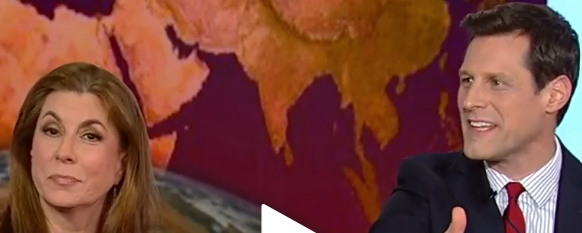
Biden 'doubling down' in the face of 'absurdity' with latest climate push, expert says
Fox Business
Climate Depot executive editor Marc Morano reacts to comments from a Senate hearing on climate concerns and sounds off on the Biden ...
december 19, 2024
05:29
mclean va
foghorn
Biden ‘doubling down’ in the face of ‘absurdity’ with latest climate push, expert says
Climate Depot executive editor Marc Morano reacts to comments from a Senate hearing on climate concerns and sounds off on the Biden administration's latest climate push on 'The Bottom Line.'
nyt ben keys}:
ditch home; extremiest arent you? cli hypoc on blast hdline; cli obsession ethos; expose absurdity; wharton prof; un says exteme wether not increasing; own hse in flood zone; nyt long hist gone aftr home racism, cli emergency, houses more dang to cli than cars; doing all the things they twll us not to do giant homes oprah lame duck joe pedal to metal on his cli agenda; new emission targets; cuts GG 60 percent by 2035; gum up sys w new regs; very easy to undo; climate agenda hatyes us hates am way, 2x down in face of ... magical thinking paperwork climate agenda get us out of pais treaty by going to congress woman fatr based agenda, requruers their intervation; misnamed IRA is really the grn new deal; get rid of epa endangerment finding; day 1 reverse agancy pentagon abolish every cliate agy and goal do fast and rapid, do in 2 wks
dr_benjamin_jkeystestimonysenatebudgetcommittee
Testimony of Benjamin J. Keys, Ph.D. Rowan Family Foundation Professor, Professor of Real Estate and Finance,
The Wharton School, University of Pennsylvania Hearing
on “Next to the Fall: The Climate-Driven Insurance Crisis is Here – And Getting Worse”
United States Senate Committee on the Budget December 18, 2024 Chairman Whitehouse, Ranking Member Grassley, and Members of the Committee:
Thank you for inviting me back to address the turmoil in insurance markets, its connection to climate change, and its effect on housing, mortgages, and household well-being. My name is Ben Keys and I am a Professor of Real Estate and Finance at the University of Pennsylvania’s Wharton School.
My research agenda examines how households interact with the financial system and how the financial system manages risk. I first testified before this committee in March 2023. In the last year and a half, the situation in the homeowners insurance market has gone from bad to worse.
Both affordability and accessibility issues have reached a crisis point in many communities across the country. In terms of affordability, my new research with Professor Philip Mulder uses mortgage escrow data to build a dataset of 47 million homeowners insurance premiums from 2014 to 2023.
Our dataset shows rapidly increasing premiums across the country, but especially in the highest-risk areas.1 We attribute this increase to a combination of inflation and financial frictions associated with the pass-through of rising reinsurance costs to homeowners policies. Insurers are responding to larger realized disaster losses, better data and risk models, and growing reinsurance costs.2
While raising premiums is one margin of adjustment, insurers also change where they are willing to write policies. Some of the largest insurance companies have exited markets, deciding that they cannot charge premiums that adequately reflect this growing risk.3 While many of these high-profile departures have be...
Car insurance has skyrocketed due to increased climate-fueled disasters
Special ProgramsClimate & Energy
Written by Allison Fisher
Published 08/28/24 mma
During the August 28 edition of Fox News’ America’s Newsroom, Fox Business correspondent Max Gordon reported on the skyrocketing cost of car insurance, another one of the “big issues coming up in the campaign” according to anchor Dana Perino. Gordon went on to connect this pocketbook issue to climate change, noting that the, “Increase in severe weather events has been one of the main drivers behind these increasing premiums. Climate events that cause a billion dollars or more in damage have been steadily on the rise, impacting how insurers set rates.”
Notably, the climate crisis is creating a housing insurance crisis as well. Climate change is making storms and wildfires more destructive. Last year, the U.S. experienced a record 28 disasters that cost more than a billion dollars each in damage. In response, some private insurers are raising premiums in areas frequently hit by extreme weather or pulling out of high-risk areas altogether, leaving homeowners uninsured.
Rising insurance costs are not the only economic impact of climate change. A study released early this year found that climate change is among the factors driving inflation which is “driving up the prices of food and other goods worldwide.” As Axios reported: “This is not the first study to note the economic toll of climate change, or even the inflationary pressures of increasing temperatures and extreme weather events.”
Video
CitationFrom the August 28, 2024, edition of Fox News' America's Newsroom
DANA PERINO (ANCHOR): We've been talking about all these big issues coming up in the campaign. Housing is one. Here is another one: The cost of car insurance is crushing drivers. Rates have spiked since President Biden took office, and they’re projected to surge even more this year. Fox Business' Max Gordon is live from Los Angeles with an explanation as to what is going on.
:{MAX GORDON (FOX BUSINESS CORRESPONDENT): Hey there Dana. Well, here in California, car insurance rates are expected to jump by more than 50% by the end of the year. It’s one of three states who are going to be seeing that. That’s also happening in Missouri and Minnesota.:{ The big reason for this — well, it's natural disasters. Severe weather}:. That's all according to a study from Insurify. That’s a company that provides information about the insurance market.
The average cost of full coverage in the U.S. rose by 15% in the first half of this year. And that number is expected to hit 22% by the end of this year. The report says that increase in severe weather events has been one of the main drivers behind these increasing premiums. Climate events that cause a billion dollars or more in damage have been steadily on the rise, impacting how insurers set rates. Hail-related claims were up to 11.8% of all comprehensive claims in 2023, according to the report, a 2.8% increase since 2020. Vehicle maintenance and repair costs have also increased by around 38% over the past five years, according to federal figures. These higher repair costs have led to more expensive claims, with insurance companies passing the cost to consumers in the way of higher premiums.}:
---
aha note insurance drives home price thus inflation
mma 8 24
strategy to control the narrative as the fossil fuel industry faces mounting scrutiny.
Permian Proud ignores climate crisis as Texas faces escalating climate disasters and environmental injustice
Texas recently endured a record-breaking heat wave, with temperatures soaring above 110 F in multiple cities. The Washington Post reported that Abilene shattered its all-time high at 113 F, while other cities set new August records. This extreme heat isn't just uncomfortable, it's potentially deadly — and it’s straining the state's power grid to its limits.
This recent crisis is just the latest example of Texas’ extreme vulnerability to climate change. A stark analysis from Public Citizen reveals that between 1980 and 2022, a staggering 44% of all billion-dollar climate and weather disasters in the country affected Texas. The state faces an onslaught of heat waves, hurricanes, floods, droughts, and wildfires that are increasing in both frequency and intensity.
The climate crisis is also creating significant financial impacts for Texas residents. Erin Douglas of The Texas Tribune reported that insurance rates in Texas have skyrocketed by 22% in 2023, twice the average national increase. Even more troubling, “many areas of the state are likely underpriced relative to their climate risk, according to a model created by the First Street Foundation, a nonprofit group of academics and experts that quantifies climate risks,” suggesting that the financial strain on homeowners is only set to worsen.
Notably, the fossil fuel industry operating in Texas bears outsized responsibility for climate change, amplifying the risks facing communities across the state:
Texas emits more greenhouse gas emissions than any other state, according to the Environmental Protection Agency. It accounts for 14% of the nation’s climate-warming emissions, and produces more than twice the total emissions of California, the next largest greenhouse gas emitter. Texas is also the nation’s largest oil and gas producing state, accounting for more than 40% of the nation’s oil production.
Beyond the climate impacts of the fossil fuel industry, Texas also faces severe environmental justice challenges. Low-income communities and communities of color bear a disproportionate burden of industrial pollution — in Port Arthur and Houston, the concentration of petrochemical facilities and other polluting industries near residential areas is a direct result of historical segregation and discriminatory land-use practices. The Texas Commission on Environmental Quality's permitting decisions, particularly for facilities like concrete batch plants in Harris County, have further entrenched these disparities, leading to ongoing health risks for vulnerable populations.
The fossil fuel industry deploys multifaceted deception campaigns like Permian Proud to delay climate action
https://www.eenews.net/articles/growing-storms-push-shrinking-la-insurers-into-failure/
==
I kinda forgot about this until
https://kpfa.org/episode/upfront-june-22-2022/ nordhaus fraction of % gdp 2100 now 14%/yr much earlier, he got nobel; state CA fla pick up when mkt bails, perfect design to go over cliff?!
https://www.youtube.com/watch?v=2qkpBizCFYo apr 2022 commonwealth
Fire and Flood: A People’s History of Climate Change, from 1979 to the Present
https://www.harvard.com/book/fire_and_flood/
Eugene Linden wrote his first story on climate change, for Time magazine, in 1988; it was just the beginning of his investigative work, exploring all ramifications of this impending disaster. Fire and Flood represents his definitive case for the prosecution as to how and why we have arrived at our current dire pass, closing with his argument that the same forces that have confused the public’s mind and slowed the policy response are poised to pivot with astonishing speed, as long-term risks have become present-day realities and the cliff’s edge is now within view.
Starting with the 1980s, Linden tells the story, decade by decade, by looking at four clocks that move at different speeds: the reality of climate change itself; the scientific consensus about it, which always lags reality; public opinion and political will, which lag further still; and, perhaps most important, business and finance. Reality marches on at its own pace, but the public will and even the science are downstream from the money, and Fire and Flood shows how devilishly effective moneyed climate-change deniers have been at slowing and even reversing the progress of our collective awakening. When a threat means certain but future disaster, but addressing it means losing present-tense profit, capitalism’s response has been sadly predictable.
Now, however, the seasons of fire and flood have crossed the threshold into plain view. Linden focuses on the insurance industryas one loud canary in the coal mine: fire and flood zones in Florida and California, among other regions, are now seeing what many call “climate redlining.” The whole system is teetering on the brink, and the odds of another housing collapse, for starters, are much higher than most people understand. There is a path back from the cliff, but we must pick up the pace. Fire and Flood shows us why, and how.
omg risk asses not doing job?!
https://www.alternet.org/2020/02/extreme-weather-could-spark-an-economic-recession-the-likes-of-which-weve-never-seen-before/
no lnx
Extreme weather could spark an economic crisis the ‘likes of which we’ve never seen before’
Written by Jake Johnson / Common Dreams February 18, 2020
New research published Monday warns that extreme weather driven by the climate crisis could bring about an economic recession “the likes of which we’ve never seen before” if markets don’t do a better job assessing climate risks.
Paul Griffin, an accounting professor at the University of California, Davis Graduate School of Management, wrote in a paper for Nature Energy that financial markets have not sufficiently accounted for the major economic risks posed by the global climate crisis, even as extreme weather—from destructive hurricanes to prolonged drought—wreaks havoc across the globe.
“Unpriced risk was the main cause of the Great Recession in 2007-2008,” Griffin wrote. “Right now, energy companies shoulder much of that risk. The market needs to better assess risk, and factor a risk of extreme weather into securities prices… Without better knowledge of this risk, the average energy investor can only hope that the next extreme event will not trigger a sudden correction to the market values of energy firms.”
Griffin continued:
This past summer, the United States and Europe experienced record-breaking heat. Now linked reliably to climate change, excessive high temperature is among the deadliest of weather extremes. Not only can it disrupt agriculture, harm human health, and stunt economic growth, it can also overwhelm—and temporarily shut down—large parts of a state’s or a nation’s energy system, as in the case of the Pacific Gas and Electric Company (PG&E) in California.
Extreme heat events can create uncertain and longer duration power outages, threaten critical infrastructure, exacerbate energy supply and demand imbalances, and trigger significant legal liability for energy firms. Newer reports of an increase in the frequency and severity of extreme weather events, moreover, amplify those risks for energy firms.
Despite these obvious risks, investors and asset managers have been conspicuously slow to connect physical climate risk from extreme weather events to company market valuations.
Griffin is not the first financial expert to raise alarm about the potentially calamitous economic impacts of the climate crisis—which would come in addition to the emergency’s incalculable effects on humans, animals, plants, insects, and the planet as a whole.
The Switzerland-based Bank for International Settlements warned in a 115-page report (pdf) last month that the “increase in the frequency and intensity of extreme weather events could trigger non-linear and irreversible financial losses.”
“Climate change poses unprecedented challenges to human societies,” the report stated, “and our community of central banks and supervisors cannot consider itself immune to the risks ahead of us.”
guk 1219
Coal power becoming 'uninsurable' as firms refuse cover
US insurers join retreat from European insurers meaning coal projects cannot be built or operated
Julia Kollewe
Mon 2 Dec 2019 01.01 ESTLast modified on Tue 3 Dec 2019 02.12 EST
The number of insurers withdrawing cover for coal projects more than doubled this year and for the first time US companies have taken action, leaving Lloyd’s of London and Asian insurers as the “last resort” for fossil fuels, according to a new report.
The report, which rates the world’s 35 biggest insurers on their actions on fossil fuels, declares that coal – the biggest single contributor to climate change – “is on the way to becoming uninsurable” as most coal projects cannot be financed, built or operated without insurance.
Ten firms moved to restrict the insurance cover they offer to companies that build or operate coal power plants in 2019, taking the global total to 17, said the Unfriend Coal campaign, which includes 13 environmental groups such as Greenpeace, Client Earth and Urgewald, a German NGO. The report will be launched at an insurance and climate risk conference in London on Monday, as the UN climate summit gets underway in Madrid.
The first insurers to exit coal policies were all European, but since March, two US insurers – Chubb and Axis Capital – and the Australian firms QBE and Suncorp have pledged to stop or restrict insurance for coal projects.
At least 35 insurers with combined assets of $8.9tn, equivalent to 37% of the insurance industry’s global assets, have begun pulling out of coal investments. A year ago, 19 insurers holding more than $6tn in assets were divesting from fossil fuels.
Peter Bosshard, one of the Unfriend Coal campaign co-ordinators, said: “We hope within two to three years it will be so difficult to obtain insurance that most coal projects won’t be able to go forward.
“We’ve seen the acceleration [in firms pulling out of coal] for a good reason – people are freaking out.”
As global temperatures climb, hurricanes, wildfires and floods have become more frequent and severe, resulting in higher claims bills for insurers.
Lloyd’s, the world’s biggest insurance market, is the only major European firm which continues to insure new coal projects.
Bosshard said it had a critical role to play: “Together with Asian insurers, the Lloyd’s market is becoming the ‘insurer of last resort’ for a dying and destructive industry.”
Lloyd’s started excluding coal from its investments in its own £4bn central mutual fund in April 2018. However, its chief executive John Neal last month ruled out issuing guidelines on underwriting coal projects to its member syndicates.
Lloyd’s said: “We take climate change extremely seriously and recognise the important role insurance can play in supporting, accelerating and de-risking the transition to a low carbon economy.
“Whilst Lloyd’s Corporation does not set underwriting policy in the market, except if there is a specific legal or regulatory requirement to do so, we are nevertheless committed to building consensus across the 90-plus syndicates that operate at Lloyd’s about how we make this transition.”
==
a kind of buffer/resilience aha
large parts of cty --> uninsurable
...an 919] dr Carolyn Kousky, executive director at the Wharton Risk Management and Decision Processes Center at the University of Pennsylvania, told The Daily Beast that federal disaster aid can often be “limited or delayed,” which is one reason having home insurance is so crucial.
“Many families do not have savings to repair a severely damaged home and for some, taking on debt can be burdensome or not feasible,” Kousky said. “There is really no substitute for insurance for having the needed funds quickly post-disaster to begin recovery. Unfortunately, often those who need the coverage the most are the least likely to be able to afford it.”
Multiplied across city after city and rural community after rural community, and this spells utter economic disaster on a scale larger than the previous housing crisis. With climate change, the cost of inaction today farexceeds the cost of inaction. Inaction is especially perverse considering that mitigation policies would create enormous positive economic activity across multiple sectors, including the sort of low-skill labor under threat from recent economic paradigms.
And, of course, the climate crisis is principally caused and exacerbated by continuing to burn fossil fuels. In that sense, rising oil prices–provided the economic shock is not too sudden and severe–are part of the necessary framework for solving the problem. The more economically advantageous renewable energy is compared to fossil fuels, the faster the market will help shift in that direction without government intervention....
https://www.alternet.org/2019/08/the-extortion-economy-how-insurance-companies-are-fueling-a-rise-in-ransomware-attacks/
no lnx
The extortion economy: How insurance companies are fueling a rise in ransomware attacks
Written by Renee Dudley / ProPublica August 27, 2019
On June 24, the mayor and council of Lake City, Florida, gathered in an emergency session to decide how to resolve a ransomware attack that had locked the city’s computer files for the preceding fortnight. Following the Pledge of Allegiance, Mayor Stephen Witt led an invocation. “Our heavenly father,” Witt said, “we ask for your guidance today, that we do what’s best for our city and our community.”
Witt and the council members also sought guidance from City Manager Joseph Helfenberger. He recommended that the city allow its cyber insurer, Beazley, an underwriter at Lloyd’s of London, to pay the ransom of 42 bitcoin, then worth about $460,000. Lake City, which was covered for ransomware under its cyber-insurance policy, would only be responsible for a $10,000 deductible. In exchange for the ransom, the hacker would provide a key to unlock the files.
“If this process works, it would save the city substantially in both time and money,” Helfenberger told them.
Without asking questions or deliberating, the mayor and the council unanimously approved paying the ransom. The six-figure payment, one of several that U.S. cities have handed over to hackers in recent months to retrieve files, made national headlines.
Left unmentioned in Helfenberger’s briefing was that the city’s IT staff, together with an outside vendor, had been pursuing an alternative approach. Since the attack, they had been attempting to recover backup files that were deleted during the incident. On Beazley’s recommendation, the city chose to pay the ransom because the cost of a prolonged recovery from backups would have exceeded its $1 million coverage limit, and because it wanted to resume normal services as quickly as possible.
“Our insurance company made [the decision] for us,” city spokesman Michael Lee, a sergeant in the Lake City Police Department, said. “At the end of the day, it really boils down to a business decision on the insurance side of things: them looking at how much is it going to cost to fix it ourselves and how much is it going to cost to pay the ransom.”
The mayor, Witt, said in an interview that he was aware of the efforts to recover backup files but preferred to have the insurer pay the ransom because it was less expensive for the city. “We pay a $10,000 deductible, and we get back to business, hopefully,” he said. “Or we go, ‘No, we’re not going to do that,’ then we spend money we don’t have to just get back up and running. And so to me, it wasn’t a pleasant decision, but it was the only decision.”
Ransomware is proliferating across America, disabling computer systems of corporations, city governments, schools and police departments. This month, attackers seeking millions of dollars encrypted the files of 22 Texas municipalities. Overlooked in the ransomware spree is the role of an industry that is both fueling and benefiting from it: insurance. In recent years, cyber insurance sold by domestic and foreign companies has grown into an estimated $7 billion to $8 billion-a-year market in the U.S. alone, according to Fred Eslami, an associate director at AM Best, a credit rating agency that focuses on the insurance industry. While insurers do not release information about ransom payments, ProPublica has found that they often accommodate attackers’ demands, even when alternatives such as saved backup files may be available.
The FBI and security researchers say paying ransoms contributes to the profitability and spread of cybercrime and in some cases may ultimately be funding terrorist regimes. But for insurers, it makes financial sense, industry insiders said. It holds down claim costs by avoiding expenses such as covering lost revenue from snarled services and ongoing fees for consultants aiding in data recovery. And, by rewarding hackers, it encourages more ransomware attacks, which in turn frighten more businesses and government agencies into buying policies.
“The onus isn’t on the insurance company to stop the criminal, that’s not their mission. Their objective is to help you get back to business. But it does beg the question, when you pay out to these criminals, what happens in the future?” said Loretta Worters, spokeswoman for the Insurance Information Institute, a nonprofit industry group based in New York. Attackers “see the deep pockets. You’ve got the insurance industry that’s going to pay out, this is great.”
A spokesperson for Lloyd’s, which underwrites about one-third of the global cyber-insurance market, said that coverage is designed to mitigate losses and protect against future attacks, and that victims decide whether to pay ransoms. “Coverage is likely to include, in the event of an attack, access to experts who will help repair the damage caused by any cyberattack and ensure any weaknesses in a company’s cyberprotection are eliminated,” the spokesperson said. “A decision whether to pay a ransom will fall to the company or individual that has been attacked.” Beazley declined comment.
Fabian Wosar, chief technology officer for anti-virus provider Emsisoft, said he recently consulted for one U.S. corporation that was attacked by ransomware. After it was determined that restoring files from backups would take weeks, the company’s insurer pressured it to pay the ransom, he said. The insurer wanted to avoid having to reimburse the victim for revenues lost as a result of service interruptions during recovery of backup files, as its coverage required, Wosar said. The company agreed to have the insurer pay the approximately $100,000 ransom. But the decryptor obtained from the attacker in return didn’t work properly and Wosar was called in to fix it, which he did. He declined to identify the client and the insurer, which also covered his services.
“Paying the ransom was a lot cheaper for the insurer,” he said. “Cyber insurance is what’s keeping ransomware alive today. It’s a perverted relationship. They will pay anything, as long as it is cheaper than the loss of revenue they have to cover otherwise.”
Worters, the industry spokeswoman, said ransom payments aren’t the only example of insurers saving money by enriching criminals. For instance, the companies may pay fraudulent claims — for example, from a policyholder who sets a car on fire to collect auto insurance — when it’s cheaper than pursuing criminal charges. “You don’t want to perpetuate people committing fraud,” she said. “But there are some times, quite honestly, when companies say: ’This fraud is not a ton of money. We are better off paying this.’ … It’s much like the ransomware, where you’re paying all these experts and lawyers, and it becomes this huge thing.”
Insurers approve or recommend paying a ransom when doing so is likely to minimize costs by restoring operations quickly, regulators said. As in Lake City, recovering files from backups can be arduous and time-consuming, potentially leaving insurers on the hook for costs ranging from employee overtime to crisis management public relations efforts, they said.
“They’re going to look at their overall claim and dollar exposure and try to minimize their losses,” said Eric Nordman, a former director of the regulatory services division of the National Association of Insurance Commissioners, or NAIC, the organization of state insurance regulators. “If it’s more expeditious to pay the ransom and get the key to unlock it, then that’s what they’ll do.”
As insurance companies have approved six- and seven-figure ransom payments over the past year, criminals’ demands have climbed. The average ransom payment among clients of Coveware, a Connecticut firm that specializes in ransomware cases, is about $36,000, according to its quarterly reportreleased in July, up sixfold from last October. Josh Zelonis, a principal analyst for the Massachusetts-based research company Forrester, said the increase in payments by cyber insurers has correlated with a resurgence in ransomware after it had started to fall out of favor in the criminal world about two years ago.
One cybersecurity company executive said his firm has been told by the FBI that hackers are specifically extorting American companies that they know have cyber insurance. After one small insurer highlighted the names of some of its cyber policyholders on its website, three of them were attacked by ransomware, Wosar said. Hackers could also identify insured targets from public filings; the Securities and Exchange Commission suggests that public companies consider reporting “insurance coverage relating to cybersecurity incidents.”
Even when the attackers don’t know that insurers are footing the bill, the repeated capitulations to their demands give them confidence to ask for ever-higher sums, said Thomas Hofmann, vice president of intelligence at Flashpoint, a cyber-risk intelligence firm that works with ransomware victims.
Ransom demands used to be “a lot less,” said Worters, the industry spokeswoman. But if hackers think they can get more, “they’re going to ask for more. So that’s what’s happening. … That’s certainly a concern.”
In the past year, dozens of public entities in the U.S. have been paralyzed by ransomware. Many have paid the ransoms, either from their own funds or through insurance, but others have refused on the grounds that it’s immoral to reward criminals. Rather than pay a $76,000 ransom in May, the city of Baltimore — which did not have cyber insurance — sacrificed more than $5.3 million to date in recovery expenses, a spokesman for the mayor said this month. Similarly, Atlanta, which did have a cyber policy, spurned a $51,000 ransom demand last year and has spent about $8.5 million responding to the attack and recovering files, a spokesman said this month. Spurred by those and other cities, the U.S. Conference of Mayors adopted a resolution this summer not to pay ransoms.
Still, many public agencies are delighted to have their insurers cover ransoms, especially when the ransomware has also encrypted backup files. Johannesburg-Lewiston Area Schools, a school district in Michigan, faced that predicament after being attacked in October. Beazley, the insurer handling the claim, helped the district conduct a cost-benefit analysis, which found that paying a ransom was preferable to rebuilding the systems from scratch, said Superintendent Kathleen Xenakis-Makowski.
“They sat down with our technology director and said, ‘This is what’s affected, and this is what it would take to re-create,’” said Xenakis-Makowski, who has since spoken at conferences for school officials about the importance of having cyber insurance. She said the district did not discuss the ransom decision publicly at the time in part to avoid a prolonged debate over the ethics of paying. “There’s just certain things you have to do to make things work,” she said.
Ransomware is one of the most common cybercrimes in the world. Although it is often cast as a foreign problem, because hacks tend to originate from countries such as Russia and Iran, ProPublica has found that American industries have fostered its proliferation. We reported in May on two ransomware data recovery firms that purported to use their own technology to disable ransomware but in reality often just paid the attackers. One of the firms, Proven Data, of Elmsford, New York, tells victims on its website that insurance is likely to cover the cost of ransomware recovery.
Lloyd’s of London, the world’s largest specialty insurance market, said it pioneered the first cyber liability policy in 1999. Today, it offers cyber coverage through 74 syndicates — formed by one or more Lloyd’s members such as Beazley joining together — that provide capital and accept and spread risk. Eighty percent of the cyber insurance written at Lloyd’s is for entities based in the U.S. The Lloyd’s market is famous for insuring complex, high-risk and unusual exposures, such as climate-change consequences, Arctic explorers and Bruce Springsteen’s voice.
Many insurers were initially reluctant to cover cyber disasters, in part because of the lack of reliable actuarial data. When they protect customers against traditional risks such as fires, floods and auto accidents, they price policies based on authoritative information from national and industry sources. But, as Lloyd’s noted in a 2017 report, “there are no equivalent sources for cyber-risk,” and the data used to set premiums is collected from the internet. Such publicly available data is likely to underestimate the potential financial impact of ransomware for an insurer. According to a report by global consulting firm PwC, both insurers and victimized companies are reluctant to disclose breaches because of concerns over loss of competitive advantage or reputational damage.
Despite the uncertainty over pricing, dozens of carriers eventually followed Lloyd’s in embracing cyber coverage. Other lines of insurance are expected to shrink in the coming decades, said Nordman, the former regulator. Self-driving cars, for example, are expected to lead to significantly fewer car accidents and a corresponding drop in premiums, according to estimates. Insurers are seeking new areas of opportunity, and “cyber is one of the small number of lines that is actually growing,” Nordman said.
Driven partly by the spread of ransomware, the cyber insurance market has grown rapidly. Between 2015 and 2017, total U.S. cyber premiums written by insurers that reported to the NAIC doubled to an estimated $3.1 billion, according to the most recent data available.
Cyber policies have been more profitable for insurers than other lines of insurance. The loss ratio for U.S. cyber policies was about 35% in 2018, according to a report by Aon, a London-based professional services firm. In other words, for every dollar in premiums collected from policyholders, insurers paid out roughly 35 cents in claims. That compares to a loss ratio of about 62% across all property and casualty insurance, according to data compiled by the NAIC of insurers that report to them. Besides ransomware, cyber insurance frequently covers costs for claims related to data breaches, identity theft and electronic financial scams.
During the underwriting process, insurers typically inquire about a prospective policyholder’s cyber security, such as the strength of its firewall or the viability of its backup files, Nordman said. If they believe the organization’s defenses are inadequate, they might decline to write a policy or charge more for it, he said. North Dakota Insurance Commissioner Jon Godfread, chairman of the NAIC’s innovation and technology task force, said some insurers suggest prospective policyholders hire outside firms to conduct “cyber audits” as a “risk mitigation tool” aimed to prevent attacks — and claims — by strengthening security.
“Ultimately, you’re going to see that prevention of the ransomware attack is likely going to come from the insurance carrier side,” Godfread said. “If they can prevent it, they don’t have to pay out a claim, it’s better for everybody.”
Not all cyber insurance policies cover ransom payments. After a ransomware attack on Jackson County, Georgia, last March, the county billed insurance for credit monitoring services and an attorney but had to pay the ransom of about $400,000, County Manager Kevin Poe said. Other victims have struggled to get insurers to pay cyber-related claims. Food company Mondelez International and pharmaceutical company Merck sued insurers last year in state courts after the carriers refused to reimburse costs associated with damage from NotPetya malware. The insurers cited “hostile or warlike action” or “act of war” exclusions because the malware was linked to the Russian military. The cases are pending.
The proliferation of cyber insurers willing to accommodate ransom demands has fostered an industry of data recovery and incident response firms that insurers hire to investigate attacks and negotiate with and pay hackers. This year, two FBI officials who recently retired from the bureau opened an incident response firm in Connecticut. The firm, The Aggeris Group, says on its website that it offers “an expedient response by providing cyber extortion negotiation services and support recovery from a ransomware attack.”
Ramarcus Baylor, a principal consultant for The Crypsis Group, a Virginia incident response firm, said he recently worked with two companies hit by ransomware. Although both clients had backup systems, insurers promised to cover the six-figure ransom payments rather than spend several days assessing whether the backups were working. Losing money every day the systems were down, the clients accepted the offer, he said....
==
primary on CA wildfire, but recall only gov't sells flood for a while?
see INSURANCE 2 819 BAK
i shd distinguish between property and hmo rx?
see HMO 2 Rx 719
rev door, see also tauzin
see also reinsurance st Munich Re
==
NEW
https://www.alternet.org/2019/08/parts-of-california-are-too-wildfire-prone-to-insure
no lnx
Parts of California are too wildfire-prone to insure
Written by Nathanael Johnson / Grist.Org August 24, 2019
California is facing yet another real estate-related crisis, but we’re not talking about its sky-high home prices. According to newly released data, it’s simply become too risky to insure houses in big swaths of the wildfire-prone state.
This post originally appeared on Grist.
Last winter when we wrote about home insurance rates possibly going up in the wake of California’s massive, deadly fires, the insurance industry representatives we interviewed were skeptical. They noted that the stories circulating in the media about people in forested areas losing their homeowners’ insurance was based on anecdotes, not data. But now, the data is in and it’s really happening: Insurance companies aren’t renewing policies areas climate scientists say are likely to burn in giant wildfires in coming years.
Insurance companies dropped more than 340,000 homeowners from wildfire areas in just four years. Between 2015 and 2018, the 10 California counties with the most homes in flammable forests saw a 177 percent increase in homeowners turning to an expensive state-backed insurance program because they could not find private insurance.
In some ways, this news is not surprising. According to a recent survey of insurance actuaries (the people who calculate insurance risks and premiums based on available data), the industry ranked climate change as the top risk for 2019, beating out concerns over cyber damages, financial instability, and terrorism. While having insurance companies on board with climate science is a good thing for, say, requiring cities to invest in more sustainable infrastructure, it’s bad news for homeowners who can’t simply pick up their lodgings and move elsewhere.
“We are seeing an increasing trend across California where people at risk of wildfires are being non-renewed by their insurer,” said California Insurance Commissioner Ricardo Lara in a statement. “This data should be a wake-up call for state and local policymakers that without action to reduce the risk from extreme wildfires and preserve the insurance market we could see communities unraveling.”
A similar dynamic is likely unfolding across many other Western states, according to reporting from the New York Times.
To understand the data coming out of California we can use my own family as an example: A few months after Grist published a story about how my parent’s neighborhood is trying to fortify itself against future forest fires, my mom’s insurer informed her and my stepfather that they’d need to get home insurance elsewhere. For two months they called one insurer after another, but no company would take their premiums. So they turned to the state program as the insurer of last resort — which costs about three times more than they’d been spending under their previous, private insurer.
My folks have spent a lot of money clearing trees and brush from around their house. They’ve covered the walls in hard-to-burn cement panels, and the roof with metal. But insurance risk maps don’t adjust for these improvements. Instead, insurance companies seem to have made the call that the changing climate, along with years of fire suppression, have made houses in the midst of California’s dry forests a bad bet, and therefore uninsurable.
“For us, because we’ve done good financial planning and our house is paid off, it’s just an extra expense,” said my mom, Gail Johnson Vaughan. “But we have friends who have no choice but to leave.”
==
How Chicago, a Hospital and Private Companies Make Money Off the Poor
Three stories about debt, bankruptcy and the institutions that perpetuate them.
by Logan Jaffe
July 5, 4 a.m. CDT
Hospital Suspends Debt Collection Lawsuits Amid Furor Over Suing Its Own Employees
Methodist Le Bonheur Healthcare is reevaluating its policy after an MLK50-ProPublica investigation found that it had filed 8,300 lawsuits in the past five years, including against many of its own employees.
by Wendi C. Thomas, MLK50
July 3, 10:01 a.m. EDT
==
==
https://www.alternet.org/2019/05/conservative-democrats-dark-money-funded-rural-voter-project-has-everything-to-do-with-sinking-medicare-for-all/
Two conservative former Democratic senators, Heidi Heitkamp of North Dakota and Joe Donnelly of Indiana, have launched the One Country Project, a 501(c)(4) not-for-profit organization that aims to attract rural voters to the Democratic Party. However, according to Maplight’s Andrew Perez, working in partnership with The Intercept, the organization is also a “dark money” group, using the two former lawmakers to push an anti-Medicare-for-all agenda.
Perez found that “the One Country Project’s website is registered to an executive at Forbes Tate Partners, a lobbying and public relations firm founded by former Clinton administration officials.”Forbes Tate Partners is leading lobbying efforts for Partnership for America’s Health Care Future (PAHCF), which, according to Maplight, is a “health industry-backed nonprofit created to crush momentum for a comprehensive universal health care system.”
Heitkamp had previous ties to Forbes Tate Partners, hiring a subsidiary called Columbia Campaign Group for polling and media campaign consulting for her 2018 Senate bid. Her former chief of staff, Tessa Gould, is now a partner there. The Heitkamp campaign, Perez reports, paid Gould $35,000 for consulting in March, part of the over $6 million the campaign had left over from a last-minute infusion of donations after Heitkamp declined to confirm Brett Kavanaugh to the Supreme Court.
Heitkamp railed against Medicare-for-all in a May op-ed for The Washington Post, writing that “polling indicates that most Americans are satisfied with the health care they receive and do not want their coverage options taken away and replaced with a one-size-fits-all government program.” Both Heitkamp and Donnelly campaigned against such a proposal in their reelection bids, and both lost to Republicans.
Two conservative former Democratic senators, Heidi Heitkamp of North Dakota and Joe Donnelly of Indiana, have launched the One Country Project, a 501(c)(4) not-for-profit organization that aims to attract rural voters to the Democratic Party.However, according to Maplight’s Andrew Perez, working in partnership with The Intercept, the organization is also a “dark money” group, using the two former lawmakers to push an anti-Medicare-for-all agenda.
Perez found that “the One Country Project’s website is registered to an executive at Forbes Tate Partners, a lobbying and public relations firm founded by former Clinton administration officials.” Forbes Tate Partners is leading lobbying efforts for Partnership for America’s Health Care Future (PAHCF), which, according to Maplight, is a “health industry-backed nonprofit created to crush momentum for a comprehensive universal health care system."
Heitkamp had previous ties to Forbes Tate Partners, hiring a subsidiary called Columbia Campaign Group for polling and media campaign consulting for her 2018 Senate bid. Her former chief of staff, Tessa Gould, is now a partner there. The Heitkamp campaign, Perez reports, paid Gould $35,000 for consulting in March, part of the over $6 million the campaign had left over from a last-minute infusion of donations after Heitkamp declined to confirm Brett Kavanaugh to the Supreme Court.
Heitkamp railed against Medicare-for-all in a May op-ed for The Washington Post, writing that “polling indicates that most Americans are satisfied with the health care they receive and do not want their coverage options taken away and replaced with a one-size-fits-all government program.” Both Heitkamp and Donnelly campaigned against such a proposal in their reelection bids, and both lost to Republicans.
Before Donnelly left the Senate, he told CNN’s Dana Bash that “when you talk Medicare-for-all … you start losing the people in my state.” He added, “When we start talking about, ‘Hey, we’re going to work together with the insurance companies to lower premiums,’ that’s what connects.”
In addition to his work with the One Country Project, Donnelly joined lobbying Akin Gump Strauss Hauer & Feld LLP, which also has ties to anti-Medicare-for-All efforts through its lobbying for health care industry clients, who have also donated to the Democratic Congressional Campaign Committee (DCCC).
According to reporting by Alex Kotch in Sludge, “Vic Fazio, a senior advisor at lobbying firm Akin Gump Strauss Hauer & Feld and former California Democratic congressman, has raised nearly $130,000 for the DCCC this year. He has lobbied for Pharmaceutical Research and Manufacturers of America (PhRMA), a PAHCF member and the nation’s largest pharmaceutical trade association.”
Support for broader health coverage is growing among Americans, though they remain divided on terminology, and on whether to abolish private insurance. According to an April 2019 poll from the Kaiser Family Foundation, 56% of Americans support a national health plan or Medicare-for-all.
“Yet,” the KFF report continues, “how politicians discuss these different proposals does affect public support.” The poll found 63% of respondents said they support Medicare-for-All or universal coverage, while 59% say they support a national health plan, and 46% support socialized medicine. The most common theme, researchers report, “is a desire for universal coverage.”
A February poll from The Hill-HarrisX found that just 13% of respondents favored a health care system controlled entirely by the government with no private insurance and 32% of respondents favored universal coverage, operated by the government, that still included room for supplemental private insurance. Another 26% want a public option that doesn’t compete with private insurance.
Mostly, there’s a lot of confusion. As Mohamed Younis, editor-in-chief of Gallup, told The Hill TV’s Krystal Ball, “Folks are clearly saying the system is still sort of broken to some degree, but there isn’t a lot of consensus around how to fix it in one way or another.”
Neither Heitkamp nor Donnelly responded to Maplight’s requests for comment.
==
tesla fails still on car deliv, but has solar co, going into insurance biz, tho tought b/c regulated, but has data on customers 419
==
==
Private health insurance stocks ‘in free fall’ as Medicare for All gains momentum
With comprehensive Medicare for All legislation now introduced in both chambers of Congress and bolstered by surging grassroots support, health insurance stocks are “crumbling” as investors grow increasingly fearful that single-payer…
==
==
https://www.alternet.org/2019/04/i-felt-americans-needed-to-know-insurance-industry-whistleblower-gives-glimpse-into-effort-to-crush-medicare-for-all/
==
How health insurers use cash and gifts to sway which benefits employers choose
The insurance industry gives lucrative commissions and bonuses — from six-figure payouts to a chance to bat against Mariano Rivera — to the independent brokers who advise employers. Critics call the payments a “classic conflict of interest” that drive up costs.
==
see VA pvtization:
https://www.alternet.org/how-republicans-sold-out-veterans-health-care-and-wastefully-funneled-money-private-companies
For years, conservatives have assailed the U.S. Department of Veterans Affairs as a dysfunctional bureaucracy. They said private enterprise would mean better, easier-to-access health care for veterans.President Donald Trump embraced that position, enthusiastically moving to expand the private sector’s role.
Here’s what has actually happened in the four years since the government began sending more veterans to private care: longer waits for appointments and, a new analysis of VA claims data by ProPublica and PolitiFact shows, higher costs for taxpayers.
Since 2014, 1.9 million former service members have received private medical care through a program called Veterans Choice.It was supposed to give veterans a way around long wait times in the VA. But their average waits using the Choice Program were still longer than allowed by law, according to examinations by the VA inspector general and the Government Accountability Office. The watchdogs also found widespread blunders, such as booking a veteran in Idaho with a doctor in New York and telling a Florida veteran to see a specialist in California. Once, the VA referred a veteran to the Choice Program to see a urologist, but instead he got an appointment with a neurologist.
The winners have been two private companies hired to run the program, which began under the Obama administration and is poised to grow significantly under Trump. ProPublica and PolitiFact obtained VA data showing how much the agency has paid in medical claims and administrative fees for the Choice program. Since 2014, the two companies have been paid nearly $2 billion for overhead, including profit. That’s about 24 percent of the companies’ total program expenses — a rate that would exceed the federal cap that governs how much most insurance plans can spend on administration in the private sector.
According to the agency’s inspector general, the VA was paying the contractors at least $295 every time it authorized private care for a veteran. The fee was so high because the VA hurriedly launched the Choice Program as a short-term response to a crisis. Four years later, the fee never subsided — it went up to as much as $318 per referral.
“This is what happens when people try and privatize the VA,” Sen. Jon Tester of Montana, the ranking Democrat on the Senate veterans committee, said in a statement responding to these findings. “The VA has an obligation to taxpayers to spend its limited resources on caring for veterans, not paying excessive fees to a government contractor. When VA does need the help of a middleman, it needs to do a better job of holding contractors accountable for missing the mark.”
(Read more about how ProPublica and PolitiFact did the analysis.)
The Affordable Care Act prohibits large group insurance plans from spending more than 15 percent of their revenue on administration, including marketing and profit. The private sector standard is 10 percent to 12 percent, according to Andrew Naugle, who advises health insurers on administrative operations as a consultant at Milliman, one of the world’s largest actuarial firms. Overhead is even lower in the Defense Department’s Tricare health benefits program: only 8 percent last year.
Even excluding the costs of setting up the new program, the Choice contractors’ overhead still amounts to 21 percent of revenue.
“That’s just unacceptable,” Rick Weidman, the policy director of Vietnam Veterans of America, said in response to the figures. “There are people constantly banging on the VA, but this was the private sector that made a total muck of it.”
Trump’s promises to veterans were a central message of his campaign. But his plans to shift their health care to the private sector put him on a collision course with veterans groups, whose members generally support the VA’s medical system and don’t want to see it privatized. The controversy around privatization, and the outsize influence of three Trump associates at Mar-a-Lago, has sown turmoil at the VA, endangering critical services from paying student stipends to preventing suicides and upgrading electronic medical records.
A spokesman for the VA, Curt Cashour, declined to provide an interview with key officials and declined to answer a detailed list of written questions.
One of the contractors, Health Net, stopped working on the program in September. Health Net didn’t respond to requests for comment.
The other contractor, TriWest Healthcare Alliance,said it has worked closely with the VA to improve the program and has made major investments of its own. “We believe supporting VA in ensuring the delivery of quality care to our nation’s veterans is a moral responsibility, even while others have avoided making these investments or have withdrawn from the market,” the company said in a statement.
TriWest did not dispute ProPublica and PolitiFact’s estimated overhead rate, which used total costs, but suggested an alternate calculation, using an average cost, that yielded a rate of 13 percent to 15 percent. The company defended the $295-plus fee by saying it covers “highly manual” services such as scheduling appointments and coordinating medical files. Such functions are not typically part of the contracts for other programs, such as the military’s Tricare. But Tricare’s contractors perform other duties, such as adjudicating claims and monitoring quality, that Health Net and TriWest do not. In a recent study comparing the programs, researchers from the Rand Corporation concluded that the role of the Choice Program’s contractors is “much narrower than in the private sector or in Tricare.”
Before the Choice Program, TriWest and Health Net performed essentially the same functions for about a sixth of the price, according to the VA inspector general. TriWest declined to break down how much of the fee goes to each service it provides.
Because of what the GAO called the contractors’ “inadequate” performance, the VA increasingly took over doing the Choice Program’s referrals and claims itself.
In many cases, the contractors’ $295-plus processing fee for every referral was bigger than the doctor’s bill for services rendered, the analysis of agency data showed. In the three months ending Jan. 31, 2018, the Choice Program made 49,144 referrals for primary care totaling $9.9 million in medical costs, for an average cost per referral of $201.16. A few other types of care also cost less on average than the handling fee: chiropractic care ($286.32 per referral) and optometry ($189.25). There were certainly other instances where the medical services cost much more than the handling fee: TriWest said its average cost per referral was about $2,100 in the past six months.
Beyond what the contractors were entitled to, audits by the VA inspector general found that they overcharged the government by $140 million from November 2014 to March 2017. Both companies are now under federal investigation arising from these overpayments. Health Net’s parent company, Centene, disclosed a Justice Department civil investigation into “excessive, duplicative or otherwise improper claims.” A federal grand jury in Arizona is investigating TriWest for “wire fraud and misused government funds,” according to a court decision on a subpoena connected to the case. Both companies said they are cooperating with the inquiries.
Despite the criminal investigation into TriWest’smanagement of the Choice Program, the Trump administration recently expanded the company’s contract without competitive bidding. Now, TriWest stands to collect even more fees as the administration prepares to fulfill Trump’s campaign promise to send more veterans to private doctors.
==
ca 11/18
https://www.alternet.org/heres-why-california-kidney-dialysis-clinics-are-spending-111-million-defeat-modest-ballot
... funds raised to support the No on 8 campaign are the most a campaign has spent on one side on a U.S. ballot measure since 2002, according to an Associated Press analysis. Dialysis provider Fresenius Medical Care pushed the total amount of funds for the opposing campaign past the previous record — $109 million, which pharmaceutical companies spent to oppose a measure limiting prescription drug costs — with a $5 million donation last week.
According to the nonpartisan California legislative analyst's office, dialysis companies bring in nearly $3 billion in annual profits from their California operations — yet, according to one dialysis patient Salon spoke to, Lorraine Lewis of Los Angeles, they claimed they couldn’t afford to give her a package of chicken broth after a treatment. She described her experiences at two DaVita centers in Los Angeles as “cold” and like an “assembly line.”
“It was obvious to me they were understaffed and overworked,” the 71-year-old told Salon. “I witnessed a death and that [made me feel] crazy, because I said, ‘the same thing can happen to me.’”
The man whom Lewis saw die during treatment was left unattended, according to her account, seemingly because of staffing issues.
“Two minutes later she [the technician] comes around and she looked at him and she started working on him and she went to call for the nurse and they put the put him on the floor, and gave him CPR but it didn’t work,” she recalled.
The massive sum spent to defeat the measure, and harrowing stories like Lewis's, belie the companies' claims that the measure will have an adverse impact on the dismal conditions in many dialysis clinics. Indeed, given that the proposition requires corporations to return excessive profits that aren't spent on improving patient care, and limit what insurance companies are required to pay for dialysis care, it seems like a minor regulation that would help prevent the kinds of dystopian scenes patients have experienced in said clinics.
Dialysis is a life-saving treatment. It helps patients with kidney failure by removing their blood from their bodies with a machine, cleaning out the toxins and waste, and putting it back in the body, a function patients' kidneys can no longer successfully do. A typical four-hour session can be grueling for patients, however. Moreover, there have been reports of unsterile environments in the California centers — blood stains on the floor among them — and terrible patient care. Yet each patient who has a private insurance provider is charged nearly $150,000 a year — a 350 percent markup of the cost of care, according to those supporting the measure.
Just this last summer, two California families were awarded $253 million in damages in a lawsuit against DaVita for wrongful deaths — verdicts the company said they would appeal.
Opponents claim Proposition 8 will keep clinics from covering all of their costs.
“When you add everything up it will only cover 69 percent of a clinic’s total operating costs,” Fairbanks, from the campaign advocating against the proposition, told Salon. “Prop 8 bans managerial costs and doesn’t allow things that you absolutely must have in order to have business in California, such as insurance, as a healthcare facility you must have medical malpractice insurance.”
Yet patients' experiences reveal that many clinics are already spending barely more than the minimum on their patients and facilities — and indeed, Proposition 8 would raise that minimum. Lewis, who has been a dialysis patient for six years, said one time after leaving her treatment at a Los Angeles DaVita treatment center she felt “weak.” Another patient was nearby when this happened and called the center for help, to which she was told there was nothing they could do because Lewis “had left the premises.” He wheeled her back.
“I asked for chicken broth and was told that they no longer do that because they can’t afford it,” she said. “They make $150,000 a year on me [and] they can’t afford a package of chicken broth soup.”
Sean Wherley, a spokesperson for the Service Employees International Union–United Healthcare Workers, the organization that sponsored the measure, explained to Salon how Proposition 8 ended up on this year’s ballot.
“Two years ago dialysis workers approached the union with concerns about poor patient care,” he said. “They attempted to organize, but they never held a vote because they came under tremendous pressure from these companies,” he said. “Some received threats to be fired, and efforts just flatlined.”
Wherley said industry threats that the centers will close if the proposition passes are merely a “scare tactic.”
“They have the means to keep these clinics open, it just won’t be at the outrageous profit margins they are making today,” he said. “They have chosen not to invest in their patients.”
Fairbanks claimed patient care in California is “very good,” noting there is “always room for improvement.” “They have patients who have seen bugs, and I’m sure they have, but that doesn’t mean all throughout the state of California the situation here is that patient care is suffering,” she said.
Yet Wherley pointed to a report by the California Department of Public Health that found more than 1,400 deficiencies during inspections at dialysis clinics in fiscal year 2016-2017.
“The industry is claiming the clinics in California are the best in the country, [but] the California Department of Public Health found more than 1,400 deficiencies in these clinics after only assessing a quarter of them,” he noted.
==
N carolina
pig, 1.x million dead chickens, coal ash
socialize cost, pvtize profit
https://www.alternet.org/hurricane-florences-surge-expected-hit-homes-already-cost-government-millions
Though the flooding from Hurricane Florence is predicted to be unprecedented, residents of the coastal North Carolina towns threatened by the storm surge know what it’s like to take on water. Some homes in these areas have been repeatedly flooded — and repeatedly bailed out by federal flood insurance.
ProPublica examined storm surge predictions by the National Hurricane Center, layering a map of areas expected to be affected by Florence over a map of the most flood-prone properties tracked by the Federal Emergency Management Agency, which provides most of the flood insurance for U.S. homeowners.
Critics have long argued that the program subsidizes risky development, but efforts at reform inevitably stall because raising premiums would make flood insurance unaffordable for lower-income residents. The insurance is required for federally backed mortgages of homes in flood-prone areas. The program is more than $20 billion in debt.
Looking at some of the towns, it’s easy to see why.
High-risk areas include communities along the Pamlico River and North Topsail Beach, which is on a barrier island near Wilmington. Homes there have gotten multiple flood payouts from FEMA’s National Flood Insurance Program going back as far as 1978. One property in North Topsail Beach has received nine separate payments, totaling $77,000, though the building is worth just $37,125. Another in nearby Topsail Beach has received 10 payments worth $467,000. That building is worth $300,000.
FEMA places buildings like these — including 1,132 across North Carolina — on a special list called “severe repetitive loss” structures because they’ve been flooded and rebuilt again and again with FEMA flood insurance. Properties that qualify for the list have made at least four claims of more than $5,000 each since 1978, or two claims with a combined value that’s worth more than the building itself. There are more than 35,000 such properties nationwide.
Collectively, the buildings in North Carolina are worth at least $280 million, and they’ve received $164 million in payments, according to FEMA data provided by the Natural Resources Defense Council, an environmental advocacy group. The list undoubtedly will grow after Hurricane Florence, placing additional strain on a debt-ridden program that experts say is in desperate need of reform.
The areas facing the worst impact from Hurricane Florence are among the most vulnerable in the country when it comes to sea-level rise; parts of North Topsail Beach, for instance, are eroding at 5 feet per year. And a team of scientists concluded on Wednesday that climate change had supercharged the storm — increasing its projected rainfall by roughly 50 percent and its size by 50 miles.
Rob Moore, a senior policy analyst at the Natural Resources Defense Council, said these homes are “perfect examples of what we’ll see as sea levels continue to rise.”
North Carolina has a rocky history of confronting sea-level rise. In 2012, after scientific advisers for the state predicted up to 39 inches of rising sea levels over the next century, state legislators passed a law saying North Carolina would only base policies on studies that exclusively used historical data, effectively outlawing climate science. The current governor has backtracked, and North Carolina has joined a multistate effort to tackle climate change.
Moore said the government should fund more property buyouts to permanently remove homes from risky areas. Nationwide, a majority of the homes on the list belong to low-income and middle-class residents, he said, and since buyouts often take years to process, most homeowners can’t afford to wait and are forced to use insurance claims to rebuild in the same place.
The slow-moving hurricane will linger over the Carolinas through the weekend.
https://www.alternet.org/health-insurers-are-vacuuming-details-about-you-and-it-could-raise-your-rates
no lnx pro publ
Health Insurers Are Vacuuming Up Details About You — And It Could Raise Your Rates
Without any public scrutiny, insurers and data brokers are predicting your health costs based on data about things like race, marital status, how much TV you watch, whether you pay your bills on time or even buy plus-size clothing.
By Marshall Allen / ProPublica July 18, 2018, 4:03 AM GMT
To an outsider, the fancy booths at last month’s health insurance industry gathering in San Diego aren’t very compelling. A handful of companies pitching “lifestyle” data and salespeople touting jargony phrases like “social determinants of health.”
But dig deeper and the implications of what they’re selling might give many patients pause: A future in which everything you do — the things you buy, the food you eat, the time you spend watching TV — may help determine how much you pay for health insurance.
With little public scrutiny, the health insurance industry has joined forces with data brokers to vacuum up personal details about hundreds of millions of Americans, including, odds are, many readers of this story. The companies are tracking your race, education level, TV habits, marital status, net worth. They’re collecting what you post on social media, whether you’re behind on your bills, what you order online. Then they feed this information into complicated computer algorithms that spit out predictions about how much your health care could cost them.
Are you a woman who recently changed your name? You could be newly married and have a pricey pregnancy pending. Or maybe you’re stressed and anxious from a recent divorce. That, too, the computer models predict, may run up your medical bills.
Are you a woman who’s purchased plus-size clothing? You’re considered at risk of depression. Mental health care can be expensive.
Low-income and a minority? That means, the data brokers say, you are more likely to live in a dilapidated and dangerous neighborhood, increasing your health risks.
“We sit on oceans of data,” said Eric McCulley, director of strategic solutions for LexisNexis Risk Solutions, during a conversation at the data firm’s booth. And he isn’t apologetic about using it. “The fact is, our data is in the public domain,” he said. “We didn’t put it out there.”
Insurers contend they use the information to spot health issues in their clients — and flag them so they get services they need. And companies like LexisNexis say the data shouldn’t be used to set prices. But as a research scientist from one company told me: “I can’t say it hasn’t happened.”
At a time when every week brings a new privacy scandal and worries abound about the misuse of personal information, patient advocates and privacy scholars say the insurance industry’s data gathering runs counter to its touted, and federally required, allegiance to patients’ medical privacy. The Health Insurance Portability and Accountability Act, or HIPAA, only protects medical information.
“We have a health privacy machine that’s in crisis,” said Frank Pasquale, a professor at the University of Maryland Carey School of Law who specializes in issues related to machine learning and algorithms. “We have a law that only covers one source of health information. They are rapidly developing another source.”
Patient advocates warn that using unverified, error-prone “lifestyle” data to make medical assumptions could lead insurers to improperly price plans — for instance raising rates based on false information — or discriminate against anyone tagged as high cost. And, they say, the use of the data raises thorny questions that should be debated publicly, such as: Should a person’s rates be raised because algorithms say they are more likely to run up medical bills? Such questions would be moot in Europe, where a strict law took effect in May that bans trading in personal data.
This year, ProPublica and NPR are investigating the various tactics the health insurance industry uses to maximize its profits.Understanding these strategies is important because patients — through taxes, cash payments and insurance premiums — are the ones funding the entire health care system. Yet the industry’s bewildering web of strategies and inside deals often have little to do with patients’ needs. As the series’ first story showed, contrary to popular belief, lower bills aren’t health insurers’ top priority.
Inside the San Diego Convention Center last month, there were few qualms about the way insurance companies were mining Americans’ lives for information — or what they planned to do with the data.
The sprawling convention center was a balmy draw for one of America’s Health Insurance Plans’ marquee gatherings. Insurance executives and managers wandered through the exhibit hall, sampling chocolate-covered strawberries, champagne and other delectables designed to encourage deal-making.
Up front, the prime real estate belonged to the big guns in health data: The booths of Optum, IBM Watson Health and LexisNexisstretched toward the ceiling, with flat screen monitors and some comfy seating. (NPR collaborates with IBM Watson Health on national polls about consumer health topics.)
To understand the scope of what they were offering, consider Optum. The company, owned by the massive UnitedHealth Group, has collected the medical diagnoses, tests, prescriptions, costs and socioeconomic data of 150 million Americans going back to 1993, according to its marketing materials. (UnitedHealth Group provides financial support to NPR.) The company says it uses the information to link patients’ medical outcomes and costs to details like their level of education, net worth, family structure and race. An Optum spokesman said the socioeconomic data is de-identified and is not used for pricing health plans.
Optum’s marketing materials also boast that it now has access to even more. In 2016, the company filed a patent application to gather what people share on platforms like Facebook and Twitter, and link this material to the person’s clinical and payment information. A company spokesman said in an email that the patent application never went anywhere. But the company’s current marketing materials say it combines claims and clinical information with social media interactions.
I had a lot of questions about this and first reached out to Optum in May, but the company didn’t connect me with any of its experts as promised. At the conference, Optum salespeople said they weren’t allowed to talk to me about how the company uses this information.
It isn’t hard to understand the appeal of all this data to insurers. Merging information from data brokers with people’s clinical and payment records is a no-brainer if you overlook potential patient concerns. Electronic medical records now make it easy for insurers to analyze massive amounts of information and combine it with the personal details scooped up by data brokers.
It also makes sense given the shifts in how providers are getting paid. Doctors and hospitals have typically been paid based on the quantity of care they provide. But the industry is moving toward paying them in lump sums for caring for a patient, or for an event, like a knee surgery. In those cases, the medical providers can profit more when patients stay healthy. More money at stake means more interest in the social factors that might affect a patient’s health.
Some insurance companies are already using socioeconomic data to help patients get appropriate care, such as programs to help patients with chronic diseases stay healthy. Studies show social and economic aspects of people’s lives play an important role in their health. Knowing these personal details can help them identify those who may need help paying for medication or help getting to the doctor.
But patient advocates are skeptical health insurers have altruistic designs on people’s personal information.
The industry has a history of boosting profits by signing up healthy people and finding ways to avoid sick people — called “cherry-picking” and “lemon-dropping,” experts say. Among the classic examples: A company was accused of putting its enrollment office on the third floor of a building without an elevator, so only healthy patients could make the trek to sign up. Another tried to appeal to spry seniors by holding square dances.
The Affordable Care Act prohibits insurers from denying people coverage based on pre-existing health conditions or charging sick people more for individual or small group plans. But experts said patients’ personal information could still be used for marketing, and to assess risks and determine the prices of certain plans. And the Trump administration is promoting short-term health plans, which do allow insurers to deny coverage to sick patients.
Robert Greenwald, faculty director of Harvard Law School’s Center for Health Law and Policy Innovation, said insurance companies still cherry-pick, but now they’re subtler. The center analyzes health insurance plans to see if they discriminate. He said insurers will do things like failing to include enough information about which drugs a plan covers — which pushes sick people who need specific medications elsewhere. Or they may change the things a plan covers, or how much a patient has to pay for a type of care, after a patient has enrolled. Or, Greenwald added, they might exclude or limit certain types of providers from their networks — like those who have skill caring for patients with HIV or hepatitis C.
If there were concerns that personal data might be used to cherry-pick or lemon-drop, they weren’t raised at the conference.
At the IBM Watson Health booth, Kevin Ruane, a senior consulting scientist, told me that the company surveys 80,000 Americans a year to assess lifestyle, attitudes and behaviors that could relate to health care. Participants are asked whether they trust their doctor, have financial problems, go online, or own a Fitbit and similar questions. The responses of hundreds of adjacent households are analyzed together to identify social and economic factors for an area.
Ruane said he has used IBM Watson Health’s socioeconomic analysis to help insurance companies assess a potential market. The ACA increased the value of such assessments, experts say, because companies often don’t know the medical history of people seeking coverage. A region with too many sick people, or with patients who don’t take care of themselves, might not be worth the risk.
Ruane acknowledged that the information his company gathers may not be accurate for every person. “We talk to our clients and tell them to be careful about this,” he said. “Use it as a data insight. But it’s not necessarily a fact.”
In a separate conversation, a salesman from a different company joked about the potential for error. “God forbid you live on the wrong street these days,” he said. “You’re going to get lumped in with a lot of bad things.”
The LexisNexis booth was emblazoned with the slogan “Data. Insight. Action.” The company said it uses 442 non-medical personal attributes to predict a person’s medical costs. Its cache includes more than 78 billion records from more than 10,000 public and proprietary sources, including people’s cellphone numbers, criminal records, bankruptcies, property records, neighborhood safety and more. The information is used to predict patients’ health risks and costs in eight areas, including how often they are likely to visit emergency rooms, their total cost, their pharmacy costs, their motivation to stay healthy and their stress levels.
People who downsize their homes tend to have higher health care costs, the company says. As do those whose parents didn’t finish high school. Patients who own more valuable homes are less likely to land back in the hospital within 30 days of their discharge. The company says it has validated its scores against insurance claims and clinical data. But it won’t share its methods and hasn’t published the work in peer-reviewed journals.
McCulley, LexisNexis’ director of strategic solutions, said predictions made by the algorithms about patients are based on the combination of the personal attributes. He gave a hypothetical example: A high school dropout who had a recent income loss and doesn’t have a relative nearby might have higher than expected health costs.
But couldn’t that same type of person be healthy? I asked.
“Sure,” McCulley said, with no apparent dismay at the possibility that the predictions could be wrong.
McCulley and others at LexisNexis insist the scores are only used to help patients get the care they need and not to determine how much someone would pay for their health insurance. The company cited three different federal laws that restricted them and their clients from using the scores in that way. But privacy experts said none of the laws cited by the company bar the practice. The company backed off the assertions when I pointed that the laws did not seem to apply.
LexisNexis officials also said the company’s contracts expressly prohibit using the analysis to help price insurance plans. They would not provide a contract. But I knew that in at least one instance a company was already testing whether the scores could be used as a pricing tool.
Before the conference, I’d seen a press release announcing that the largest health actuarial firm in the world, Milliman, was now using the LexisNexis scores. I tracked down Marcos Dachary, who works in business development for Milliman. Actuaries calculate health care risks and help set the price of premiums for insurers. I asked Dachary if Milliman was using the LexisNexis scores to price health plans and he said: “There could be an opportunity.”
The scores could allow an insurance company to assess the risks posed by individual patients and make adjustments to protect themselves from losses, he said. For example, he said, the company could raise premiums, or revise contracts with providers.
It’s too early to tell whether the LexisNexis scores will actually be useful for pricing, he said. But he was excited about the possibilities. “One thing about social determinants data — it piques your mind,” he said.
Dachary acknowledged the scores could also be used to discriminate. Others, he said, have raised that concern. As much as there could be positive potential, he said, “there could also be negative potential.”
It’s that negative potential that still bothers data analyst Erin Kaufman, who left the health insurance industry in January. The 35-year-old from Atlanta had earned her doctorate in public health because she wanted to help people, but one day at Aetna, her boss told her to work with a new data set.
To her surprise, the company had obtained personal information from a data broker on millions of Americans. The data contained each person’s habits and hobbies, like whether they owned a gun, and if so, what type, she said. It included whether they had magazine subscriptions, liked to ride bikes or run marathons. It had hundreds of personal details about each person.
The Aetna data team merged the data with the information it had on patients it insured. The goal was to see how people’s personal interests and hobbies might relate to their health care costs. But Kaufman said it felt wrong: The information about the people who knitted or crocheted made her think of her grandmother. And the details about individuals who liked camping made her think of herself. What business did the insurance company have looking at this information? “It was a dataset that really dug into our clients’ lives,” she said. “No one gave anyone permission to do this.”
In a statement, Aetna said it uses consumer marketing information to supplement its claims and clinical information. The combined data helps predict the risk of repeat emergency room visits or hospital admissions. The information is used to reach out to members and help them and plays no role in pricing plans or underwriting, the statement said.
Kaufman said she had concerns about the accuracy of drawing inferences about an individual’s health from an analysis of a group of people with similar traits. Health scores generated from arrest records, home ownership and similar material may be wrong, she said.
Pam Dixon, executive director of the World Privacy Forum, a nonprofit that advocates for privacy in the digital age, shares Kaufman’s concerns. She points to a study by the analytics company SAS, which worked in 2012 with an unnamed major health insurance company to predict a person’s health care costs using 1,500 data elements, including the investments and types of cars people owned.
The SAS study said higher health care costs could be predicted by looking at things like ethnicity, watching TV and mail order purchases.
“I find that enormously offensive as a list,” Dixon said. “This is not health data. This is inferred data.”
Data scientist Cathy O’Neil said drawing conclusions about health risks on such data could lead to a bias against some poor people. It would be easy to infer they are prone to costly illnesses based on their backgrounds and living conditions, said O’Neil, author of the book “Weapons of Math Destruction,” which looked at how algorithms can increase inequality. That could lead to poor people being charged more, making it harder for them to get the care they need, she said. Employers, she said, could even decide not to hire people with data points that could indicate high medical costs in the future.
O’Neil said the companies should also measure how the scores might discriminate against the poor, sick or minorities.
American policymakers could do more to protect people’s information, experts said. In the United States, companies can harvest personal data unless a specific law bans it, although California just passed legislation that could create restrictions, said William McGeveran, a professor at the University of Minnesota Law School. Europe, in contrast, passed a strict law called the General Data Protection Regulation, which went into effect in May.
“In Europe, data protection is a constitutional right,” McGeveran said.
Pasquale, the University of Maryland law professor, said health scores should be treated like credit scores. Federal law gives people the right to know their credit scores and how they’re calculated. If people are going to be rated by whether they listen to sad songs on Spotify or look up information about AIDS online, they should know, Pasquale said. “The risk of improper use is extremely high. And data scores are not properly vetted and validated and available for scrutiny.”
As I reported this story I wondered how the data vendors might be using my personal information to score my potential health costs. So, I filled out a request on the LexisNexis website for the company to send me some of the personal information it has on me. A week later a somewhat creepy, 182-page walk down memory lane arrived in the mail. Federal law only requires the company to provide a subset of the information it collected about me. So that’s all I got.
LexisNexis had captured details about my life going back 25 years, many that I’d forgotten. It had my phone numbers going back decades and my home addresses going back to my childhood in Golden, Colorado. Each location had a field to show whether the address was “high risk.” Mine were all blank. The company also collects records of any liens and criminal activity, which, thankfully, I didn’t have.
My report was boring, which isn’t a surprise. I’ve lived a middle-class life and grown up in good neighborhoods. But it made me wonder: What if I had lived in “high risk” neighborhoods? Could that ever be used by insurers to jack up my rates — or to avoid me altogether?
I wanted to see more. If LexisNexis had health risk scores on me, I wanted to see how they were calculated and, more importantly, whether they were accurate. But the company told me that if it had calculated my scores it would have done so on behalf of their client, my insurance company. So, I couldn’t have them.
ProPublica is a Pulitzer Prize-winning investigative newsroom. Sign up for their newsletter.
==
==
https://www.ecowatch.com/insurance-companies-climate-change-2547518560.html
U.S. Insurance Companies Underwrite Fossil Fuels, Deny Homeowners
U.S. insurance companies are trying to have it both ways on climate change, underwriting and investing in fossil fuel companies but raising premiums or denying coverage to homeowners impacted by increased floods and wildfires, Jacques Leslie wrote in an Op-Ed for The Los Angeles Times Tuesday.
Leslie pointed to a December 2017 study by California's Department of Insurance which showed that instances in which insurance companies refused to renew coverage to homeowners in fire-prone counties increased by about 15 percent between 2015 and 2016.
"Insurers are increasingly using computer models to assess the risk of fires for individual homes and deciding that homes in some areas face too high a risk," Insurance Commissioner Dave Jones said in a press release about the study.
Jones recommended legislation that would ensure Californians living in high-fire-risk areas could continue to insure their homes.
Meanwhile, a 2014 Ceres study found that the investment portfolios of the 40 largest U.S. insurance companies contained a higher proportion of oil and gas bonds than average, Leslie wrote.
The attitude of U.S. insurance companies is particularly striking because, internationally, insurers are waking up to the real risks posed by fossil fuels.
An insurance scorecard published in November 2017 by Unfriend Coal, which Leslie cited, found that 15 insurance companies are divesting $20 billion from coal companies and declining to underwrite coal projects.
"The shift of insurers away from coal is now gathering momentum and may be approaching a tipping point," the scorecard's executive summary said.
However, that shift hasn't reached the U.S. "So far, no American insurer has taken meaningful action on coal and climate change, and even industry giants such as Berkshire Hathaway, AIG and Liberty Mutual have remained completely silentabout the catastrophic climate risks affecting their clients," the summary continued.
Leslie suggested the U.S. insurance industry could pay financially for its selective denial about fossil-fuel risks. If climate-related lawsuits against fossil fuel companies, such as the suit brought by Oakland and San Francisco against Chevron, ConocoPhillips, ExxonMobil, BP and Royal Dutch Shell, succeed, then insurers might have to pay up on behalf of their clients.
The choices of insurance companies are important, because they have the power to stop new or existing fossil fuel projects by denying coverage.
"Although some large coal companies might be able to self-insure if their mining operations lost coverage, others would be forced to close," Leslie wrote.
==
GOP threatens to sue Calif. over climate rule for insurers
Benjamin Hulac, E&E News reporter
Published: Wednesday, June 21, 2017
Twelve Republican attorneys general and Kentucky Gov. Matt Bevin (R) demanded Monday that the California insurance commissioner halt a program requiring companies to disclose their investments in fossil fuels.
:{
}:
They called the program misguided and inflammatory, and they threatened to file a lawsuit if it continues to be used. The Republican officials made their demands related to the Climate Risk Carbon Initiative in a letter yesterday to California Insurance Commissioner Dave Jones.
Jones announced the climate disclosure effort in January 2016. He said falling coal prices present financial hazards, and he asked insurance companies to "voluntarily" sell their stakes in thermal coal. He also required insurers to turn over data about their fossil fuel investments.
That has chafed Republicans, who claim that California's requirements are heavy-handed and ideological. They say the program is not about the financial stability of insurers — the traditional jurisdiction of insurance regulators.
"Rather, your call for divestment and attempt to publicly shame those who invest in American energy appears to be driven by politics unrelated to insurance regulation, animus towards the fossil fuel industry and those who depend on it, and a desire to discriminate against those who transact in commerce that mostly takes place outside your state (e.g. coal mining and coal power generation)," the letter reads.
If Jones does not end the program, Bevin and the attorneys general said, "we will be forced to consider the legal avenues of relief available to protect our insurance carriers, energy producers, and consumers."
Jones said threats of lawsuits would not get him to shut down the program.
"For those climate-denying politicians of red states who threaten to sue me, I will happily defend my obligation as California's insurance commissioner to make sure insurers are addressing climate change related risks and to protect California consumers," he said in a statement.
The interstate spat highlights the massive financial clout California wields in American insurance markets. To do business nationwide, insurers often need to comply with regulations set down by the California Department of Insurance.
The attorneys general of Alabama, Arkansas, Indiana, Louisiana, Montana, Missouri, North Dakota, Utah, Texas, Oklahoma, West Virginia and Wyoming signed the letter.
Representatives for Bevin and Jones did not respond to requests for comment.
About 650 insurance firms have responded to the disclosure program. More than 300 said they have analyzed their "carbon risk," while 272 declined to do so, according to figures from the California insurance commission.
The data show that insurers surveyed have invested about $240 billion in the oil and gas industry and roughly $10.5 billion in thermal coal.
"This misguided policy is negligent, politically driven, unrelated to insurance regulation and is risking a certain lawsuit," Oklahoma Attorney General Mike Hunter (R), the letter's author, said in a statement.
Alex Gerszewski, a spokesman for Hunter, said the attorney general has not spoken to Jones about the issue but was motivated by his experience in the energy industry and by his conversations with the Oklahoma insurance commissioner.
Hunter succeeded Scott Pruitt, who now serves as U.S. EPA administrator, as Oklahoma's attorney general earlier this year.
==
==
http://www.exposedbycmd.org/2017/03/10/paul-ryan-fundraised-health-insurance-lobbying-firm-just-powerpoint/
Just hours before House Speaker Paul Ryan held a press conference to sell his health care overhaul legislation — using a PowerPoint presentation mocked for misrepresenting basic facts — he was doing something he’s much better at: fundraising.
The two things were related. The Thursday morning breakfast fundraiser he attended was hosted by a lobbying firm working to unwind the Affordable Care Act on behalf of health insurance company Blue Cross Blue Shield, one of the big winners of Ryan’s proposed legislation.
The breakfast, according to an invitation, was sponsored byMcGuireWoods PAC, the political action committee for the lobbying firm McGuireWoods. Blue Cross Blue Shield, an Anthem company, pays McGuireWoods $120,000 a year to lobby on changes to health reform, records show. Attendees of the event paid were asked to pitch in as much as $10,000.

Ryan’s American Health Care Act (AHCA), which rolls back most of the revenue-generating provisions of the ACA, reduces premium subsidies, and imposes deep cuts to Medicaid, has largely been panned by medical professionals, health policy experts, and political advocacy groups from across the ideological spectrum.
But the bill enjoys enthusiastic support from some corners of the health care industry — primarily health insurance firms and medical device companies that directly benefit from the legislation.
America’s Health Insurance Plans, the trade group that lobbies on behalf of health insurance companies, wrote a letter to Congress on Wednesday praising much of the AHCA.
“The proposed legislation includes a number of positive steps to help stabilize the market,” wrote AHIP president Marilyn Tavenner, citing the bill’s provisions on “continuous coverage” and added flexibility for “health plans to offer consumers more choices.”
Alissa Fox, the senior vice president for the Blue Cross Blue Shield Association, another health insurance lobby group, also provided a statement praising the bill.
The ACHA includes a special 30 percent premium surcharge insurers can charge anyone who has gone without health coverage for at least two months. The bill also reduces the types of medical coverage Medicaid policies are required to cover — the type of flexibility insurers have sought in order to cover less health care costs.
As we reported earlier this week, insurance lobbyists are particularly fond of a tax change made by the Republican health bill that removes limitations on deductions for executive compensation. That reversal will reduce the tax bill for health insurance companies while incentivizing higher pay for insurance employees.
The ACHA would also permanently repeal the 2.3 percent excise tax on medical device tax, which was imposed by Obama’s health reform law. AdvaMed, the lobby group representing the largest medical device firms, released a statement commending the Republican-led House Ways and Means Committee for the repeal of the tax.
While some media outlets praised Ryan’s “wonky” style and use of bar graphs to make his case for the bill on Thursday, many reporters noted that the speaker stumbled when asked basic questions about the legislation.
Ryan notably called the ACA system of younger, healthier people helping to subsidize the insurance of elderly, sick patients a “fatal conceit.” But that general principle — of high- and low-risk consumers alike pooling their resources — is a fundamental element of all health insurance programs. Ryan also “made a series of misleading statements,” noted Politico’s Danny Vinik, who pointed out that the speaker cherry-picked data to exaggerate ACA premium increases.
Despite the perception of Ryan as a policy expert — a brand carefully manufactured by friendly D.C. reporters — the speaker has devoted himself to relentless fundraising. Records show Ryan spent much of the year flying to resorts and huddling with lobbyists to raise huge amounts of cash to maintain his party’s control of the House of Representatives. The Team Ryan joint fundraising committee, hosted by McGuireWoods on Thursday morning, is allowed to raise as much as $244,200 per person.
==
http://ecowatch.com/2016/05/02/buffett-rejects-climate-change-report/
Warren Buffett‘s Berkshire Hathaway shareholders voted overwhelmingly against a shareholder proposal to create a report citing the climate change risks for its insurance companies.
Buffett, the so-called “Seer of Omaha” for his company’s S&P beating returns, said he doesn’t think climate change creates serious risks for Berkshire’s insurance business and also refused to make a public statement in favor of reducing fossil fuel use.
A study by Asset Owners Disclosure Project (AODP) recently found that nearly half of the world’s top 500 investors are doing nothing to mitigate climate risks in their investments. AODP CEO Julian Polter said pension funds and insurers that ignore climate change were “gambling with the savings and financial security of hundreds of millions of people.”
Warren Buffet's advice to shareholders at annual meeting: Avoid envy and costly fees. https://t.co/4A7q40ezAu
— The Associated Press (@AP) April 30, 2016
For a deeper dive:
News: AP, Reuters, Daily Caller, Bloomberg
Commentary: Christian Science Monitor, Christina Beck analysis; CleanTechnica, James Ayre analysis
==
==
7/15
Washington’s notorious revolving door was in full swing again last week as the health insurance industry snagged another top federal official to help it get what it wants out of lawmakers and regulators.
America’s Health Insurance Plans, the industry’s biggest lobbying and PR group, announced Wednesday that its new president, starting next month, will be none other than Marilyn Tavenner, who served as the chief administrator of the Centers for Medicare and Medicare Services from 2013 until she stepped down in February.
Tavenner’s appointment comes just a few months after the industry recruited former Congresswoman Allyson Schwartz, a Pennsylvania Democrat, to head its newest front group, the Better Medicare Alliance.
These two hires tell us all we need to know about where insurance companies see their pot of gold in the not-too-distant future. Some insurers, in fact, have already discovered that taxpayer-supplied pot of gold and want to make doubly sure that nobody in Washington dares take it away.
The pot of gold is the Medicare Advantage program, which over the past several years has become an increasingly important revenue stream for the country’s insurers, especially the big for-profit corporations. As I wrote last week, one of the main reasons behind the recently announced consolidation in the insurance industry—Aetna offering $37 billion for Humana and Anthem bidding $54 billion for Cigna—is the desire of the acquiring companies to boost their presence in the privately-run Medicare business.
I’ll have to admit, the Tavenner announcement caught me a little off guard. But after thinking about it for a couple of minutes, I realized it made perfect sense. It probably has been in the works for months, maybe even before she left CMS or at least since May, when AHIP’s longtime CEO, Karen Ignagni, said she was leaving to become CEO of EmblemHealth, a New York insurance company.
This Washington version of musical chairs should have been clear from the way lawmakers on both sides of the political aisle warmed up to Tavenner when President Obama nominated her to lead CMS, which oversees a budget that is inching toward a trillion dollars a year. The Senate vote to confirm Tavenner on May 15, 2013 was 91-7, an indication that AHIP had told its friends on Capitol Hill that insurers liked her.
A big chunk of that federal money is now flowing through the insurance industry, so much so that many companies have become dependent on it to sustain their profits. The efforts by some of those companies to recruit Medicare eligible Americans into their privately operated (but publicly financed) Medicare Advantage programs have been wildly successful. As many as one in three of the country’s senior (65 and older) and disabled citizens are now enrolled in a private plan.
By far the largest Medicare Advantage insurers are UnitedHealthcare, Humana, Kaiser Permanente and Aetna. More than half of all the 16.6 million Medicare Advantage enrollees as of Dec. 1 last year were in plans administered by one of those four companies, all but Kaiser of which are investor-owned. Just two companies—UnitedHealthcare and Humana—controlled 37 percent of the market. If the Aetna-Humana deal is approved by regulators, at least 44 percent of the market will be controlled by two companies.
While Humana has operated private Medicare plans for more than two decades, its competitors are relatively new to the business. I can recall my former CEO at Cigna, Ed Hanway, turning his nose up at Medicare money as recently as the mid-2000s. He told investors he didn’t see the government as a reliable partner because of the changes that can occur in the Medicare Advantage program’s funding, depending on who is in the White House. CEOs’ attitudes began to change, however, as they watched Humana’s bottom line swell along with its Medicare membership.
e heavy-handed attack from lobbyists on the Intergovernmental Panel on Climate Change (IPCC) that arose during the 1990s presented a new risk: that the oilmen would become isolated from other leaders of industry.
As early as 1995, a deep divide began to open up between the chief executive officers and shareholders of major corporations in the United States and Britain who were anxious that their own operations and profits could be undermined by climate change.
The Delphi Group in London, a major investments advisor, published a landmark report that year, warning banks, insurers and institutional investors to immediately withdraw investments from oil and coal.
Mark Mansley, the report’s author, pointed out that “climate change presents major long-term risks to the carbon fuel industry [which] has not been adequately discounted by the financial markets.”
Major Threat
At the same time, Sven Hansen, vice-president of the Union Bank of Switzerland, spoke at a conference for finance capital: “Some of our clients are under major threat from climate change.” ...
==
bit dated, blog but:
How the Corporate Republican Courts Turned From ‘Tort Reform’ to ‘Sovereign Immunity’ for Hospitals and Destroyed Americans’ Sixth Amendment Jury Rights
How did Karl “Turd Blossom” Rove, the adopted son of a gay man with pierced balls and a drunk, drug addict mother, become such a powerful and destructive force in American politics?
In the South we have a long history of asking people where they’re from, about their family. We have a need to know something about their mama. Yet as an American demographic, white Southern males over 50 have been listening to the politicians handled by Karl Rove and his ilk for three decades now. How did this happen?
While Karl Rove’s personal story may be a sad and tragic one, it may also explain why he became such a vicious, mean political animal. But that does not mean we have to listen to him.
Was it not clear enough in 2008 that Rove’s crowning political achievement, fooling the American establishment and the people into electing one of the worst presidents in U.S. history twice, George W. Bush, that his brand of Machiavellian, scorched-earth politics is bad for American democracy and the global economy?
Now, according to all the available evidence, including the reporting in Craig Unger’s book *Boss Rove: Inside Karl Rove’s Secret Kingdom of Power*, Rove sits on the largest political war chest in human history. He has usurped the National Republican Party’s fund raising authority. He’s using millions of dollars from billionaire donors to try to help Massachusetts Mormon Mitt Romney unseat President Barack Obama from the White House, and he’s now allowed to do it in a totally unaccountable way due to the conservative majority on the U.S. Supreme Court’s controversial ruling in *Citizens United vs. the Federal Election Commission*.
:{
How is it possible that no one in the American news media been able to bury this horrendous political animal and stop him from destroying what’s left of this experiment in government of, by and for “the people?”}:
If Rove’s client Mitt Romney wins the presidential election of 2012, chances are we will end up in another world war, perhaps a nuclear war, and a global depression, according to a variety of experts. But even the president of the United States can’t seem to effectively make that case with only two weeks to go before the Nov. 6 elections.
So we will make the case here.
While Craig Unger was hobnobbing with the political brass in Dallas, Texas, and knows the Bush family political landscape where Rove got his first start in big time politics, and his book is highly recommended for anyone wanting to know the factual big picture of what happened, I know the other state where Karl Rove really cut his political consulting teeth, Alabama. When Rove was invited by Bill Canary of the Business Council of Alabama to come help Republicans take over the state Supreme Court starting in 1994, I had already worked as a political reporter for newspapers in South Alabama and North Alabama and covered the final term in office of George C. Wallace, one of the brilliant politicians who mastered the art of dirty tricks Rove would study and steal tactics from — especially using racism as a political weapon.
In 1994, however, I was not in a position to cover what became a Conservative Revolution in Alabama politics while House Speaker Newt Gingrich took over Congress and implemented his so-called “Contract With America.” I had my nose in books and academic research papers studying how the news media effects public opinion in a Master’s degree program at the University of Alabama, in the College of Communications and the Political Science department. In the very early days of the Internet and Web browsers, I was spending much of my time in Gorgus Library reading books and journals in paper form and making hundreds of copies of documents, which I still have in metal file cabinets all underlined from my extensive readings.
By 1995, I finished my Master’s thesis, earned my degree and left the state to teach in Georgia, then to work on a Ph.D. in Tennessee. By the year 2000, the year the U.S. Supreme Court handed George W. Bush the keys to the White House in the wake of the hanging chad controversy in Florida, I had moved to News Orleans to teach and conduct research at Loyola University New Orleans. By 2002, I was writing for The Dallas Morning News, however, and then the Christian Science Monitor and the New York Times.
In 2004, when Taylor Bright did one of the few stories on what Karl Rove was up to in Alabama for the now defunct *Birmingham Post-Herald,* and Joshua Green was working on his piece for Atlantic Monthly on Karl Rove in a Corner, I did my own investigation and told the definitive story on George W. Bush’s lost year in 1972. Bush was hiding out from a drug charge in Houston by working on the Senate campaign of Republican Red Blount in Montgomery, Alabama, while Karl Rove was stealing his first election — as president of the College Republicans.

I moved to Washington, D.C. in 2004 to get news work in the nation’s capital, and maybe find a way to help stop Bush from being re-elected to a second term. I already had a sense that the Bush-Rove style of politics was bad for America, but nobody would listen then. Nobody seemed to care until in early 2008, we found out that the country had already been in a Great Recession since the winter of 2007.
All of a sudden the political landscape was ripe for a Harvard educated black guy like Barack Obama, a one-term U.S. Senator from Chicago.
Since moving back to my home state, however, I finally got the opportunity to interview Mark Kennedy earlier this year on what really happened to him in 1994.
How Karl Rove Ran Mark Kennedy Off the Supreme Court
Kennedy, the son-in-law of George Wallace himself, was the first state Supreme Court Justice targeted by Karl Rove, who came to work for a University of Alabama Law School professor named Harold See at the behest of the Business Council of Alabama. It was and is still run by Bill Canary who had worked as a political operative for George H.W. Bush. We haven’t seen much of Canary since he was named prominently in all the stories about the political prosecution of former Alabama Governor Don Siegelman.
Kennedy actually beat Rove and his candidate in that first race, barely, but he was so shaken by the dirty campaign tactics that he decided not to seek another term and face Rove again in 1998. He retired, but finally agreed in 2010 to get back into politics as head of the Alabama Democratic Party.
I caught up with him at an AFL-CIO convention in Prattville last fall and got him to tell me the story of what Karl Rove did to him. You can see the interview in the above.
Before being elected to the state Supreme Court, Kennedy served as a juvenile judge and family-court judge, where he saw the negative plight of abused children who ended up in the justice system. In light of his experiences, he helped start the Children’s Trust Fund of Alabama and later the Corporate Foundation for Children and served as president of the National Committee to Prevent Child Abuse and Neglect. Kennedy’s campaign commercials showed his volunteer work, and included pictures of him holding hands with children he had helped.
Rove took those innocent pictures and, in the early days of the Internet, got Republican operatives at the University of Alabama Law School and the secretive, conservativeFederalist Society to e-mail around an attack ad claiming Kennedy was a gay pedophile. It was not unlike the “whispering campaign” he used in Texas to get Bush elected over Ann Richards, who he accused of being a lesbian in similar fashion.
“Karl Rove is a expert at turning what you believe to be your strongest suit into being your worst nightmare, kind of like the Swiftboat ads,” Kennedy said. “He accused me of being a pedophile.”
Rove also exaggerated the issue of large jury awards and turned “tort reform” into a campaign issue, accusing judges like Kennedy of being “too liberal” and guilty of “jackpot justice.” With those misleading tactics, he managed to take over the Texas and Alabama appellate court systems by getting pro-big business Republicans elected.Over time the Alabama Supreme Court and the Court of Civil Appeals became a “no win zone” for any average Alabamian seeking justice for a grievance against any corporate entity that wronged them. Big insurance companies loved this, so they chipped in millions to Rove’s campaigns after that and still support him to this day in a big way.
While it is clear that even if there was an imbalance in the court system in favor of juries granting too much to defendants in trials in those days, the pendulum has swung way too far back in the other direction, and nobody in the mainstream media is telling that story.
So in the process of investigating this, to show how imbalanced the courts have become, we caught up with a Montgomery woman named Jo Ann Shiver. She is also interviewed in the.
How the Supreme Court Came Up With ‘Sovereign Immunity’ for Hospitals
Shiver’s mother was killed by a deadly staph infection she caught in a Baptist hospital that was ignored and even covered up by the hospital staff.
Her sister filed a lawsuit against the Montgomery hospital and actually managed to win a jury verdict in the lower court. But the case was thrown out by the state Supreme Court, by the judges Rove and his brand of dirty politics were instrumental in electing to the bench.
Ms. Shiver said she has no doubt politics played a role in the case. “Follow the money,” she said.
You could research the court dockets in this state and find hundreds of cases like this where justice was clearly not done. But this one is so strange it deserves special attention.
In this case, not only did the justices throw out the jury verdict and the award for damages. They actually set a precedent that unless reversed soon will result in thousands of unnecessary deaths by unaccountable doctors and hospitals. Here again, the University of Alabama plays a critical role in this part of the saga.
The Montgomery hospital had entered into a management agreement with the university on paper to handle some of the accounting due to some financial problems they were having, and as a result, the Supreme Court ruled that the hospital was a legal entity of the state and could not be sued under an old English Common Law tenant known as “Sovereign Immunity.” You could not sue the King in a Monarchy, and under certain circumstances, you can’t sue the state even today.
But somehow I doubt that even those who wrote the language for the English law would have envisioned a day when sovereign immunity would cover a private, for profit hospital owned by a church.
The court vacated a $3.2 million jury verdict in favor of the family of Lauree Durden Ellison. She died Nov. 8, 2005, after a stay at Baptist Medical Center East in Montgomery. She developed a staph infection from the hospital, but the church-state hospital administrators refused further treatment and denied liability or responsibility.
“They said she slipped through the cracks,” Ms. Shiver said, nearly tearing up.
I have searched high and low for an independent legal expert who could address this situation with insight. But so far, apparently the precedent is so strange that no one knows anything about it. It truly is one of those times when you have to throw up your hands and say, “only in Alabama.”
“Nobody knows the consequences of that opinion. It goes where no one has gone before,” Mark White, a former president of the Alabama Bar Association, told a Tuscaloosa newspaper reporter last year in one of the few news stories on the case to get reported in Alabama. No national news organization has touched the story.
Then-Chief Justice Sue Bell Cobb, the one Democrat on the court at the time who dissented in the case, said although Baptist Health retains an interest in its assets that are managed by the UAB health care authority, the court’s decision means the hospital is no longer “legally responsible for the harm that may be caused by its negligence.”
“Shouldn’t a hospital be responsible if they cut the wrong leg off?” Ms. Shiver asks. “It gives them license to be negligent.”
William Powell, an attorney for a friend-of-the-court group, said sovereign immunity is a powerful legal-protection device.
“You can only sue the king if the king lets you,” he said.
The Alabama Association for Justice and the Alabama AFL-CIO have asked the court to grant a rehearing in the case, but so far, the high court has been non-responsive.
Morris Lilienthal, a trial lawyer in North Alabama who has reviewed the Ellison case, said the decision overreaches in a major way.
“It’s going to have dramatic effects on the law in Alabama,” he said.
The effect, in essence, is that all the health systems in Alabama, which already have “unbelievable, overreaching” protections under the Alabama Medical Liability Act, “may just be totally immune” from negligence or wrongful death claims from now on, Lilienthal said. “The doctors and staff there now have compete immunity from any accident.”
The Law as a Check on Greed
The law is supposed to be a leveler for and a check on “corporations out just for greed and money” and has made the world a safer place, he said. Even doctors should admit if they operate on the wrong limb of someone or leave medical instruments in a person and cause harm, for example, they should be held to a certain standard and be held accountable.
The Ellison case sets up a scenario where they are no longer held to a standard and are immune from any accountability. “It’s certainly not fair,” he said.
Tom Edwards, who ran for a state Supreme Court slot in 2010 as a Democrat and lost, said the Ellison case is a “clear example of how our Supreme Court will go out of its way to protect big business.”
When asked if he thought Rove’s takeover of the courts ended up creating a big corporation protection bureau and destroyed constitutional jury rights, making it impossible for average folks to get justice in the court system, he said: “That’s exactly what happened.”
“They do it very systematically,” he said. “The decision uses strained logic to set a legal precedent that grants state sovereign immunity to a private, profit-making operation competing in the private sector. It was a way for them to go out of their way to protect the medical industry.”
Another one of Rove’s tactics is to get his clients to rail against “activist liberal judges” who “legislate from the bench” to protect minorities and such.
But no one ever seems seems to talk about “activist conservative judges” who legislate from the bench to protect big corporations.
The Ellison case, Edwards said, is an example of “an activist court of an extreme nature. They write new laws from the bench every Friday, and they protect big corporations over the citizens of Alabama.”
Of course many doctors, hospitals, their PACs and their insurance carriers give millions of dollars in campaign contributions every year, mostly to Republicans.
Now ask yourself if your vote matters. If a hospital killed your mother, would you not want to sue somebody? Apparently you can’t do that anymore in Alabama.
For average working folks to vote Republican is “absolutely against their economic interest,” according to union officials such as Al Henley of the Alabama AFL-CIO and Auburn History Professor Wayne Flynt.
In addition, Lienthall added, most states have a tort claims act on the books where state entities can be held liable. But not in Alabama, he said, which is still operating under an outdated constitution written in 1901, updated in election years by constitutional amendments placed on the ballot at election time — and by judges. Those judges are elected as partisans who must raise millions in campaign contributions to get elected to jobs that qualify them for state retirement benefits — subsidized by the taxpayers, citizens who no longer possess full citizenship since they have no right to sue for damages or render judgements against corporations from the jury box.
Legal experts agree that where legislatures and courts intercede on these rights they violate the Sixth Amendment to the U.S. Constitution.
Yet again, Karl Rove and his clients are getting away with trampling on the constitution — seemingly without challenge. Only on the Web Press.
Why is it that the people who are getting screwed the worst keep voting for them?
“You can fool some of the people all of the time, and all of the people some of the time, but you cannot fool all of the people all of the time,” Lincoln said.
Unless you can convince them all to get their news from talk radio and Fox.
Karl Rove at a book signing in Birmingham with William “Bill” Pryor who President George W. Bush appointed to the U.S. Eleventh Circuit Court of Appeals in Atlanta as a political payoff for beginning the prosecution of former Alabama Governor Don Siegelman. Rove denied even knowing Pryor in a hearing before the House Judiciary Committee, even though he ran his campaign for Attorney General of Alabama in 1998. When Pryor greeted Rove at this event at Brookwood Mall, he said, “Hey bud,” and they hugged.
Ms. Shiver has written a letter to the University of Alabama Board of Trustees asking about a conflict of interest and an ethics problem with the hospital arrangement, but she has never received a response. You can read her letter below.
==
10/14
==
http://insideclimatenews.org/news/20141023/us-insurers-meet-climate-risk-deeply-troubling-silence
Even though insurers are in the business of protecting others from risk, a new report shows that most major United States players are turning a blind eye to a serious threat to their own bottom line—climate change.
"It's shocking...most of the industry continues to be far behind where they need to be in terms of understanding and articulating [climate risk]," said study author Cynthia McHale, insurance program director at the Boston-based nonprofit Ceres.
This stands in stark contrast to other big businesses, from carmaker General Motors to candymaker Mars Inc., that are increasingly taking a public stand on climate change and devoting resources to combat it.
The heads of insurance departments in five states—California, Connecticut, Minnesota, New York and Washington—required large insurers to fill out climate risk disclosure surveys in 2013. The states wanted to know how the companies regard climate change, and what they might do in the face of it.
Ceres, which works with investors and businesses on issues concerning the environment and sustainability, organized, analyzed and ranked the responses,which are publicly available.
The participating 330 companies make up 87 percent of the American insurance industry. They are mostly U.S.-based and include both insurers and reinsurers, companies that cover against other insurers' losses. All companies fall under three large umbrellas of business: property, life or health.
According to the report "Insurer Climate Risk Disclosure Survey Report & Scorecard" released this week, around 90 percent of participating companies have yet to issue a public statement on their approach to climate change. To this point, the report said: "This near total silence on climate change is deeply troubling and is thwarting constructive public engagement on appropriate responses."
American-based Allstate and Europe's Zurich are the only two major companies that have issued such statements from America's top 10 list of property insurers.
State Farm, the country's No. 1 property insurer, has remained silent. So have Berkshire Hathaway Group and Nationwide, two other companies in the top 10. These three companies are also among a majority of property insurers whose top executives don't publicly acknowledge the issue.
The situation is more grave for life and health insurers.
Despite increasing evidence that changes in climate, such as longer and more intense heat waves, are likely to affect human health and lifespan, the report said these "insurers show widespread indifference to climate risk, both in regard to their core business" and their investments.
But it's not all bad news. Nine companies have emerged as clear leaders in the industry and 50 more are taking steps in the right direction.
The nine top companies include four American companies (ACE, The Hartford, Prudential and XL Group) and five international companies (Allianz, Munich Re, Sompo Japan, Swiss Re and Zurich Insurance).
McHale told InsideClimate News, "When you do have a breakaway group like that...industry competition kicks in and it can sort of create a bit of a tipping point.
"We [at Ceres] are of the mind that competition rather than science is going to move this industry at the end of the day and motivate insurers to take visible action on climate."
One of those leaders is Swiss Re, a major reinsurer based in Zurich. The company started tracking the issue closely 25 years ago when it considered protecting insurers against extreme weather events.
The company's mindset is "anything that can potentially make [extreme weather] worse is something we need to understand," and climate change fit the bill, said Mark Way, head of Swiss Re's sustainability department.
"We spend a lot of time peering over the horizon to see what new risks are coming," Way said.
Franklin Nutter, president of the industry trade group Reinsurance Association of America, points out that European reinsurers like Swiss Re have a corporate culture that's more open to "forward thinking" on emerging risks like climate change than many American counterparts.
Some of the risks bring new business opportunities. An example is the property insurer The Hartford, based in Hartford, Conn. Another Ceres-named leader, Hartford's leadership on the issue includes offering insurance coverage to renewable energy companies.
These two companies also have initiatives to limit their own carbon footprints.
In fact, so do many of the companies surveyed. But unlike Hartford and Swiss Re, these other companies often said their plans were motivated to save money and don't acknowledge the climate implications.
"It's quite hypocritical," said study author McHale. "It really begs the question: Why would you care if [you say] climate change isn't real and matters?"
Spreading the Blame
Next year, insurers operating in Illinois, and possibly New Mexico and Maryland, will be required to fill out the climate risk disclosure survey.
Every time a new state signs on, it's a sign that their insurance leaders "are really looking at this and thinking about this and publicly coming forward saying climate risk is really relevant to the insurance industry," said McHale.
The fact that only a handful of the 50 states require this survey suggests regulators are not yet fully committed to addressing climate change.
Nutter hinted at this when he explained that an American insurer who doesn't consider climate change as a risk to a business customer might simply blame the regulators.
"The regulatory system will not let [companies] factor in a risk or price rate for climate change," he said. "It's too speculative."
It's not just state regulators, apparently. National politics is also at play. Mark Way, the Swiss Re executive, said, "it would be a lot easier [for other companies to discuss the issue] if the leadership from D.C. was less adversarial on the topic at the policy level." He also called for more formal guidance on ways the industry could and should be approaching climate change.
American insurers and reinsurers often see climate change as a "red flag for energy policy," said McHale. These companies will actively talk about extreme weather and behind closed doors they are even talking about changes to observed extreme weather, said McHale, but they are reluctant to discuss the potential drivers of that weather, namely climate change.
In Europe, "it's such a dichotomy," she said. For example, last year, the insurance and risk think tank Geneva Association put out a statement on climate change that affirmed the latest science. Of the 66 major insurance companies that backed it, less than a handful were from the U.S.
See Also
Big Business Climate Change Movement Grows in Size and Heft
==
Leaders of Chicago-area municipalities will have to explain in court why they didn't do a better job of bracing for the types of floods that climate change is starting to bring down upon us. If they fail to make their case, then taxpayers could be on the hook for flood-related costs that would normally be borne by insurers.
Farmers Insurance recently filed nine class-action lawsuits on behalf of itself, other insurers, and customers in the wake of heavy flooding a year ago. The damaging floods followed the type of climate change–juiced rainstorms that Chicago's mayoral advisors had concluded would pose growing threats to the city's unusual flood control system. Reuters explains:
==
:{ALEC's corporate members are a who's-who of companies that face tort liability. Its corporate board, recently renamed by ALEC as the ":(style="font-variant-numeric:normal;font-variant-east-asian:normal"):}:Private Enterprise Advisory Board," includes representatives of fossil fuel interests (Koch Industries, Peabody Energy, Exxon Mobil, Energy Future Holdings), the pharmaceutical industry (PhRMA, Pfizer), and big tobacco (Altria, formally known as Phillip Morris). It also includes insurance companies like State Farm, which profits from a rigged tort liability system by paying out less in claims (even while raising premiums).
==
us gov writes 95% of flood insurance; only aspect of biz to take climate seriously early
triple pundit
One would think the insurance industry would beproactive confronting and preparing for the long term effects of climate change. The mounting costs of hurricanes, droughts and floods have already reached catastrophic levels. But last week’s assessment byCeres on insurance and climate change revealed insurers are “not very” prepared for climate change’s impacts on their business.
The Insurer Climate Risk Disclosure Survey queried over 180 companies with at least $300 million in direct written premiums. These agencies filed documents related to climate-change risks in California, New York or Washington because insurance regulators in those states require insurers to disclose climate-related material information. The report’s findings, as well as Ceres’ suggestions, are important because without a viable insurance sector, business–everywhere–STOPS. With climate volatility on the rise, and trends still witnessing populations moving to at-risk coastal and arid regions, insurance companies have got to take more action in planning for climate change in order to withstand future disasters.
Some of Ceres’ conclusions include:
- Only 23 of the 184 companies Ceres surveyed have a “comprehensive” climate change strategy. Most of those firms, not surprisingly, are in the property and casualty (P&C) segment. Health insurers as well as those companies that primarily underwrite life insurance and annuities (L&A) are far less prepared than their P&C counterparts, and often view climate change as an environmental concern, not as an overall business risk. Kaiser Permanente is one health insurer pushing the envelope on climate-related disclosures.
- Insurers that do take action on climate change planning cited energy savings (i.e. “cost efficiencies”) as the main reason to take action. Reduced exposure to extreme weather events, not a holistic approach to climate change, was the second most common motivator.
- Very few insurers actively engage their stakeholders on climate change issues. Such an “inward-facing” approach suggests insurance companies are vulnerable to the dangers change climate patterns pose because they lack the information needed to plan for the long run.
- Rather than taking a hard look at carbon-intensive industries that could become susceptible to future regulations and market realities, insurers instead will sooner screen out vulnerable regions such as Florida’s coast.
Recommendations Ceres makes to the industry are as follows:
- Climate change should be a corporate wide strategic issue, for all functions and across all levels. If current trends prove correct, natural disasters will increase in frequency and intensity: insurers must work with the insured to protect everyone’s assets.
- The focus cannot just be on disasters, however; disease pathways, population migration and infrastructure failure also should factor into insurers’ future scenario plans. Companies also need to develop their own internal modeling to plan for this brave and hot new world and not rely so much on outside vendors.
- Transparency and complete disclosures, as well as partnering with governments at the local and federal levels, will help build an economy and business climate braced for resilience.
- Climate change is not just about threats: companies have an opportunity to create products and services tailored for a low-carbon economy prepared for climate change.
The insurance companies may keep their heads in the sand for a while, but that sand is washing away figuratively–and literally. Insurers and regulators should partner and share the information necessary to prepare for new developments that will rock the industry in future years. The time to do it was yesterday: Ceres had issued a report in fall 2011 with similar warnings, and yet nothing has changed despite even worse disasters. It should not take more events such as Hurricane Sandy for insurers to get a clue.
Based in Fresno, California, Leon Kaye is the editor of*GreenGoPost.com*and frequently writes about business sustainability strategy. Leon also contributes to*Guardian Sustainable Business*; his work has also appeared on*Sustainable Brands*,*Inhabitat*and*Earth911*. Most recently he explored children’s health issues in India with the*International Reporting Project*. You can follow Leon and ask him questions on*Twitter*or Instagram (*greengopost*).
==
==
Private-Equity Firms Target the US Health-Care Industry
Private equity (PE) firms are targeting the US health-care providers. Growing PE interest in low profit or non-profit sectors like hospitals is expanding. PE investors are betting on new profit opportunities from the growing needs of the baby-boomer generation and from the Affordable Care Act, which will dramatically expand health-insurance coverage.
==
Global Insurance Industry Says Cut the Carbon, Already! As they pay out more billions every year for damages from climate change, reports Ken Weiss at the LA Times. The muli-TRILLION dollar industry is cleaning up its act and portfolios, and urging the rest of the planet to do so, too.
And for those who mistakenly claim there is no data showing an increase in warming-driven extreme weather disasters, BBW has this rejoinder:
If all that doesn’t impress, forget the scientists ostensibly devoted to advancing knowledge and saving lives. Listen instead to corporate insurers committed to compiling statistics for profit.
On Oct. 17 the giant German reinsurance company Munich Re issued a prescient report titledSevere Weather in North America. Globally, the rate of extreme weather events is rising, and “nowhere in the world is the rising number of natural catastrophes more evident than in North America.” From 1980 through 2011, weather disasters caused losses totaling $1.06 trillion. Munich Re found “a nearly quintupled number of weather-related loss events in North America for the past three decades.” By contrast, there was “an increase factor of 4 in Asia, 2.5 in Africa, 2 in Europe, and 1.5 in South America.” Human-caused climate change “is believed to contribute to this trend,” the report said, “though it influences various perils in different ways.”
Global warming “particularly affects formation of heat waves, droughts, intense precipitation events, and in the long run most probably also tropical cyclone intensity,” Munich Re said. This July was the hottest month recorded in the U.S. since record-keeping began in 1895, according to the National Oceanic and Atmospheric Administration. The U.S. Drought Monitor reported that two-thirds of the continental U.S. suffered drought conditions this summer.
OMG list of lobbyists http://lobbydata.com/Directory/Issue/Health-Issues
http://www.globalexchange.org/sites/default/files/FIREsectorInfographic2012.pdf
griftopia:
Sherman anti-trust broke up Pullman, but insur co exempt b/c not commerce
whenever stock mkt goes down, suddenly need for more tort reform 187
co's said not wind but flood b/c gov't covers flood; Lott got stiffed by State farm but 1980 amend to Fed Trade Act forbids investogation about insure or even study 189 so can fix proces and deny contract so in 2005 even after katrina record profits 48.8b$ vs 40.5 yr before 189
2007 defazio and jindal tried to repeal McCarran-Ferguson. ins spent 46m$ to beat (Cornyn got 287K$) lots of laws ~ pricefixing, but FTC law makes them immune 192
Marsh & McLennan Rebounds to Level Before Spitzer’s Suit
By Marci Jacobs - Oct 28, 2013
Marsh & McLennan Cos. (MMC), the biggest insurance broker by market value, has climbed to a 9-year high, bouncing back from the plunge that followed then-New York Attorney General Eliot Spitzer’s lawsuit against the company.
The broker has rallied 34 percent this year, including a 2.3 percent gain last week to $46.56. That compares with $46.13 on Oct. 13, 2004, the day before Spitzer sued, accusing Marsh & McLennan of rigging bids and taking kickbacks from insurers. The stock slipped 23 cents to $46.33 at 4:02 p.m. in New York.
Chief Executive Officer Daniel Glaser is building on the strategy of his predecessor, Brian Duperreault, who cut costs, streamlined operations and expanded through regional and international acquisitions. Glaser is Marsh & McLennan’s third CEO since Jeffrey Greenberg resigned after Spitzer’s suit.
“It was a culture that was frankly not focused on operating as efficiently as they could,” Fred Fialco, co-manager at investment firm Torray LLC, which manages about $600 million in assets, said in an interview last week. “When Brian Duperreault came in, that was one of the areas he targeted aggressively, as well as driving revenue growth in international expansion and trying to acquire smaller, regional insurance brokerage businesses.”
An improving economy, higher insurance pricing and investor interest in health-care exchanges are fueling the insurance-brokerage industry,Meyer Shields, an analyst at Keefe Bruyette & Woods Inc., said in a phone interview.
Marsh & McLennan rival Aon Plc (AON) gained 2.9 percent in last week’s trading after reporting that third-quarter profit climbed. Both brokers invested this year in the exchanges, in which they help clients’ employees buy coverage online.
Investor Excitement
“There is a lot of investor excitement regarding the possibility of health-care exchanges driving incremental revenue in the future,” Charles Sebaski, an analyst with Bank of Montreal, said in an interview last week. “Aon, its largest and only true competitor, was the first to build out a health-care exchange and the stock has done very well.”
Shares of New York-based Marsh & McLennan had their biggest drop in at least two decades on Oct. 14, 2004, the day of Spitzer’s suit, plummeting as much as 26 percent. The stock posted annual declines until 2010.
Marsh & McLennan agreed in 2005 to pay $850 million to settle the case. It apologized, saying some employees had “unlawfully deceived” customers, without admitting or denying any claim in Spitzer’s suit. The broker won release from lawsuit-related restrictions in 2010.
CEO Changes
Greenberg was replaced as CEO in 2004 by Michael Cherkasky, a former prosecutor who cleaned up relations with regulators and was then ousted in 2007 after he was unable to regain lost clients and profit. The next CEO, Duperreault, joined the company after a career at American International Group Inc. and Ace Ltd. He retired last year.
Glaser, 53, took over the top job on Jan. 1 this year after serving as chief operating officer and head of the flagship insurance brokerage. His company is scheduled to post third-quarter results on Nov. 6.
Spitzer gained national prominence for bringing cases against Wall Street firms, and was elected New York governor in 2006. He was driven from office in March 2008 after patronizing prostitutes. Spitzer lost the Democratic primary race for New York City comptroller this year.
To contact the reporter on this story: Marci Jacobs in New York at mjacobs63@bloomberg.net
To contact the editor responsible for this story: Dan Kraut at dkraut2@bloomberg.net
==