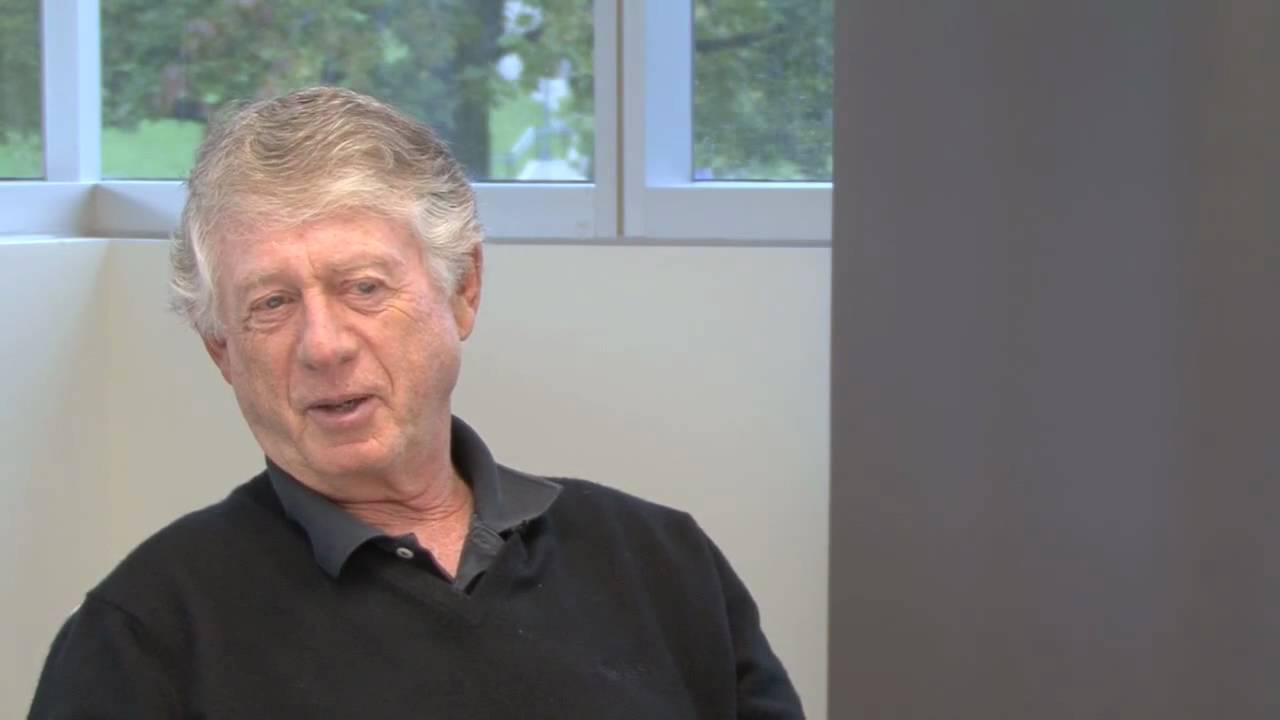
Ted Koppel nightline
Twenty Years of Advocacy, Not Journalism, on Global Warming
The media has forged a consensus around climate change.
By Rich Noyes
April 23, 2010
wsj BS
From the Media Research Center
For more than two decades, the so-called mainstream media have preached the dangers of manmade global warming, insisting American businesses and consumers must make massive economic sacrifices to ward off a global climate catastrophe. Not even last November's exposure of e-mails from leading scientists on the alarmist sideof the debate — showing them conniving to fudge or suppress data, discredit critics and distort the peer review process — has caused journalists to finally take a skeptical approach to radical environmentalists' doomsaying.:{
}::{
}:A new study from the MRC's Business & Media Institute documents how ABC, CBS and NBC have been just as strident in their advocacy in the months following "ClimateGate" as they were in the 20 years that preceded the scandal. At the same time, a review of the Media Research Center's archives going back to the late 1980s shows just how strongly reporters have pushed the liberal line on global warming. Here are just some of the many examples::{
}::{
}:• "Global warming could mean economic upheaval. It could bring suffering. It could bring starvation....The causes of global warming are no mystery. The biggest culprit is carbon dioxide, or CO2, a bi-product when man burns fossil fuels to run cars or generate electricity....If we fail to act, there may be hell to pay in a hotter world....Global warming is not a fact, just a widely-held theory. The problem is, if man waits for proof, it may be too late.":{
}:— Host Don Harrison narrating CNN's primetime Climate In Crisis special, August 1, 1989.:{
}::{
}:•"As the science editor at Time, I would freely admit that on this issue we have crossed the boundary from news reporting to advocacy.":{
}:— Time's Charles Alexander at a September 16, 1989 global warming conference at the Smithsonian Institute, as quoted in the October 5 Wall Street Journal.:{
}::{
}:• "If the world is to head off the risk of global warming, with its danger of massive crop failure, or rising sea levels, or spreading starvation in the poorest countries, then America — the largest producer of the gases that cause global warming — is in the spotlight.":{
}:— ABCreporter Ned Potter on World News Tonight, April 7, 1992.:{
}::{
}:• "Environmentalists see catastrophes of biblical proportions, from droughts to melting ice caps that send sea levels rising.":{
}:— Correspondent Barry Petersen on the CBS Evening News, December 1, 1997.:{
}::{
}:• Karen Kerrigan, Small Business Survival Committee: "To say that the science is conclusive...is actually bunk.":{
Host}: Ted Koppel: "I was just going to make the observation that there are still some people who believe in the Flat Earth Society, too, but that doesn't mean they're right."
— Exchange on the December 9, 1997 Nightline.
==
https://en.wikipedia.org/wiki/Nightline
nothing on climaTE?
Over the years, Nightline had a number of technological firsts. The program did the first live report from the base of Mount Everest. In November 1992, science reporter Michael Guillen did the first live broadcast from Antarctica. There were times when a major breaking news story occurred as late as 11:00 p.m. Eastern Time, resulting in the subject of that night's edition being changed in order to cover the story in some form of detail, depending on the depth of information available at the time of broadcast. Examples of this were the deaths of John Lennon (1980) and Yasser Arafat (2004).
:{
}:
https://abcnews.go.com/Nightline/Nightline25/story?id=289178
really cold, gear
==
GCC tries to caPITALIZE
http://www.climatefiles.com/denial-groups/global-climate-coalition-collection/1994-nightline-press-office/
This 1994 Global Climate Coalition (GCC) letter to journalists encouraged coverage of ABC’s Nightline piece, “Is Science for Sale?” The special covered the work and funding of climate science deniers often cited by the GCC. The industry-funded GCC opposed greenhouse gas regulations throughdirect engagement and collaboration withaffiliated climate deniers from 1989 to 2002. Its membership spanned across the automotive, utility, manufacturing, petroleum, and mining industries.
In this 1994 letter, GCC’s media representative Donald Rheem pitched a story to journalists about Al Gore attempting to influence that segment of Nightline. Rheem explained that Gore called Ted Koppel, the show’s host, and suggested that he “might want to look into connections between scientists who scoff at the so-called greenhouse effect… and the coal industry.”
Rheem stated that the immediate need to take action on climate change was untrue, “…environmental special interest groups have tried to convince the public and policy makers that the scientific community is certain of a future threat of a disastrous increase in global temperatures and on the need to take drastic actions now … Neither assertion is true, and it is important that as reporters and scientists enter this public debate, they are not vilified for their participation.”
This document is part of the private collection of Nicky Sundt, a Washington-based climate change science, policy and communications expert.
==
https://en.wikipedia.org/wiki/Ted_Koppel
Edward James Martin Koppel (born February 8, 1940) is a British-born American broadcast journalist, best known as the anchor for Nightline, from the program's inception in 1980 until 2005.
Before Nightline, he spent twenty years as a broadcast journalist and news anchor for ABC. After becoming host of Nightline, he was regarded as one of the most "outstanding" of the serious-minded interviewers on American television. Five years after its 1980 debut the show had a nightly audience of some seven and a half million viewers.[2]
After leaving Nightline, Koppel worked as managing editor for the Discovery Channel, a news analyst for NPR and BBC World News America and a contributor to Rock Center with Brian Williams. Koppel is currently a special contributor to CBS News Sunday Morning. His career as foreign and diplomatic correspondent earned him numerous awards, including nine Overseas Press Club awards and twenty-five Emmy Awards.
- :{1:(style="display:table-cell;padding-left:0px;padding-right:0.5em"):}::{Early life and education:(style="display:table-cell"):}:
- :{2:(style="display:table-cell;padding-left:0px;padding-right:0.5em"):}::{Career:(style="display:table-cell"):}:
- :{3:(style="display:table-cell;padding-left:0px;padding-right:0.5em"):}::{Host of *Nightline*:(style="display:table-cell"):}:
- :{3.1:(style="display:table-cell;padding-left:0px;padding-right:0.5em"):}::{Controversy regarding Nate Thayer:(style="display:table-cell"):}:
- :{3.2:(style="display:table-cell;padding-left:0px;padding-right:0.5em"):}::{Departure from *Nightline*:(style="display:table-cell"):}:
- :{3.3:(style="display:table-cell;padding-left:0px;padding-right:0.5em"):}::{Discovery Channel:(style="display:table-cell"):}:
- :{4:(style="display:table-cell;padding-left:0px;padding-right:0.5em"):}::{Honors and awards:(style="display:table-cell"):}:
- :{5:(style="display:table-cell;padding-left:0px;padding-right:0.5em"):}::{Personal life:(style="display:table-cell"):}:
- :{6:(style="display:table-cell;padding-left:0px;padding-right:0.5em"):}::{See also:(style="display:table-cell"):}:
- :{7:(style="display:table-cell;padding-left:0px;padding-right:0.5em"):}::{References:(style="display:table-cell"):}:
- :{8:(style="display:table-cell;padding-left:0px;padding-right:0.5em"):}::{External links:(style="display:table-cell"):}:
Early life and education
Koppel, an only child, was born in Nelson, England. His parents, German Jews, had fled Germany after the rise of Adolf Hitler and Nazism.[3] In Germany, Koppel's father had operated a tire-manufacturing company. To help the British economy, the Home Secretary invited him and his wife to move the factory to Lancashire, England, where, he was promised, they would be protected in the event of war.[3] They moved the factory there in 1936; but, when war broke out in Europe, in 1939, he was instead declared an enemy alien and imprisoned on the Isle of Man for a year and a half.[3]
Koppel was born in 1940, shortly after his father was taken away. For income, his mother sold her personal jewelry and did menial work in London to provide for her infant son.[3] When his father was released, he still was not permitted to work in England, nor would he allow his wife to work. In the years after the war ended, they gained some money from their confiscated assets and decided to leave for the United States.[3] While in England, Ted Koppel was a pupil at Abbotsholme School, in Derbyshire. In 1953, when he was 13, the family emigrated to the United States,[3] where his mother, Alice, became a singer and pianist, and his father, Edwin, opened a tire factory.[4] Koppel says "they came here because they believed the opportunities for me would be better in America."[3] Koppel's boyhood hero was radio broadcaster Edward R. Murrow, whose factual reports during the bombings of London inspired him to want to become a journalist.[5]
After attending the McBurney School, a private preparatory institution in New York,[6] Koppel attended Syracuse University, from which he graduated at age 20 with a Bachelor of Science degree. He was a member of the Alpha Chi chapter of the Pi Kappa Alpha fraternity. His roommate recalls that Koppel "was incredibly focused and had a photographic memory. He remembers almost every conversation he ever had with anybody. And the man never needs sleep."[7]
Koppel then went to Stanford University, where he earned a Master of Arts degree in mass-communications research and political science.[8] While at Stanford, he met his future wife, Grace Anne Dorney.[3]
Career
News correspondent

Koppel as the diplomatic correspondent for ABC News, 1976.
Koppel had a brief stint as a teacher before being hired as acopyboy at The New York Times and as a writer at WMCA Radio in New York. In June 1963, he became the youngest correspondent ever hired by ABC Radio News, working on the daily Flair Reports program. As a result of his covering the Kennedy assassination in 1963 with Charles Osgood, the national news audience took notice of him.[3] He was scheduled to do a short report, but a delay during the crisis forced him to ad-lib for an hour and a half.[5]
In 1964, he covered his first of many presidential nominating conventions. He also began covering the civil rights movement in Selma, Alabama. ABC officials were impressed by Koppel's ability to clarify issues using plain language.[5] Starting in 1966, he was made the ABC News correspondent during the Vietnam War, and it was during that period he changed from broadcasting over radio to doing so on national television.[3] He accepted the assignment only after the network agreed to send his wife and their two children to Hong Kong so they could be nearby.[3] Before going he took a course to learn the Vietnamese language.[3]
He returned in 1968 to cover the campaign of Richard Nixon, before becoming Hong Kong bureau chief, and U.S. State Department correspondent where Koppel formed a friendship with Henry Kissinger.[3] According to Nixon assistant John Ehrlichman, Koppel's friendship with Kissinger was partly due to their similar backgrounds, as they both had Jewish parents who were refugees from Hitler, and both emigrated to America in their youth.[3]
Koppel was among those traveling to China with U.S. President Richard Nixon in 1972. He spoke about this with the USC U.S.-China Institute for their Assignment: China documentary series on American media coverage of China.[9] Koppel likened the trip to a "journey to the dark side of the moon." By 1975, he was anchoring ABC Evening News on Saturdays, and he continued to file reports for ABC Radio.[10]
Koppel would often report on the State Department's foreign conferences, as when he traveled with Kissinger during his meetings in Egypt and Israel in 1975.[3] He said about Kissinger: "I have a high regard for Henry. He has a first-class mind. A half hour with him gives me a better insight into a foreign policy question than hours with others."[3]
In the mid-1970s, Koppel took a year off from his news anchor position to stay home with his children so that his wife could complete her education at Georgetown Law School. That decision by Koppel upset ABC News president Roone Arledge, who then dropped Koppel as news anchor when he returned to the network.[7]
In April 1979, he was lead reporter for an eleven-segment series, "Second to None?", which focused on explaining the dangers of nuclear war. He did his own research and wanted to present "complex material to an audience that hasn't paid much attention in the past but must in the future ... if there is to be a future."[5] For the series he received an Alfred I. duPont–Columbia University Award.[5]
Nelson Mandela interview
In 1990, Koppel interviewed Nelson Mandela in a US-style town hall meeting situation.[11]
Host of Nightline
Koppel became known for his work as the host of a late night news program called Nightline. The program originated as a series of special reports about the 444-day-long Iran hostage crisis, during which Iranian militants held 52 Americans captive, beginning in early November 1979. At first, the program was called The Iran Crisis: America Held Hostage, and was hosted by Frank Reynolds. Koppel eventually joined Reynolds as co-anchor. In March 1980, the program evolved into Nightline, with Koppel as its host.[12] In 1990, ABC News ran a one-hour special called "The Best of Nightline with Ted Koppel."[13] Koppel spent twenty-five years anchoring the program, before leaving ABC (and leaving as host of Nightline) in late November 2005.[14]
While hosting Nightline, Koppel also hosted a series of special programs called Viewpoint, beginning in 1981, which provided media criticism and analysis. It was envisioned by ABC News Vice President George Watson as a way to address any media bias that viewers might believe that they encountered on the network. Broadcast before a live audience, it provided viewers with a chance to question how stories were reported or critique television news.[15] Viewpoint was broadcast sporadically, from 1981 until 1997.
Some liberal groups suggested that Koppel was a conduit for the government's point of view and accused him of favoring conservatives when selecting guests.[16] In the late 1980s, the progressive media criticism organization Fairness and Accuracy in Reporting (FAIR) claimed that policymakers and ex-officials dominated the Nightline guest list, with critics of foreign policy less visible. In 1987, Newsweek called him the "quintessential establishment journalist". Koppel responded that "We are governed by the president and his cabinet and their people. And they are the ones who are responsible for our foreign policy, and they are the ones I want to talk to".[17]
Controversy regarding Nate Thayer
According to Nate Thayer, the journalist writing for the Far Eastern Economic Review who interviewed Pol Pot shortly before Pol Pot's death, Ted Koppel of ABC News made a verbal agreement with Thayer to use footage from the trial on Nightline and then violated that agreement.[18] Nate Thayer later became the first journalist to refuse a Peabody prize and has spoken negatively many times about his experience of dealing with Koppel.
Departure from Nightline
On November 22, 2005, Koppel stepped down from Nightline after 25 years with the program and left ABC after 42 years with the network. His final Nightline broadcast did not feature clips highlighting memorable interviews and famous moments from his tenure as host, as is typical when an anchor retires. Instead, the show replayed an episode of Nightlinewith Koppel's 1995 interviews with retired Brandeis University sociology professor Morrie Schwartz, who was dying of Lou Gehrig's disease.[19]
He signed up as an opposite editorial-contributing columnist, effective January 29, 2006, for The New York Times,[20]Following Nightline Koppel has taken on a number of roles which span various formats of news media:
- Starting in June 2006, he provided commentary to Morning Edition, All Things Considered, and Day to Day on National Public Radio, joining NPR's other two Senior News Analysts, Cokie Roberts and Daniel Schorr.[21] As such, he participated in the annual NPR Fourth of July reading of the Declaration of Independence in 2007. Koppel ended his regular commentary on NPR in April 2008, and last appeared as a news analyst on the network in 2014.[22]
- Koppel made occasional guest appearances on The Daily Show appearing in extreme close-up as a disembodied head, acting as Jon Stewart's journalistic conscience, sometimes as the replacement for the so-called "Giant Head of Brian Williams" projected on the screen behind Stewart. Koppel has jokingly insisted that "this is the actual size of [Koppel's] head"
- Koppel worked for BBC World News America as a "contributing analyst" covering the 2008 Republican National Convention and the 2008 Democratic National Convention[23] and hosted a special edition of the program in 2011.[24]
- On December 12, 2011, Koppel made his first appearance on NBC Nightly News with Brian Williams as a reporter. He would later become a special correspondent for NBC's Rock Center until the show's cancellation.
- On August 6, 2013, The Wall Street Journal published an opinion piece by Koppel entitled "America's Chronic Overreaction to Terrorism".[25]
- In 2015 Koppel published the book, Lights Out: A Cyberattack, A Nation Unprepared, Surviving the Aftermath, about the potential of a major cyberattack on America's power grid.[26]
- Since March 2016 Koppel has served as a special contributor to CBS Sunday Morning.[27]
- On March 24, 2020, Koppel made a guest appearance on Nightline to mark the program's 40th anniversary, discussing how he and his wife had been coping with the COVID-19 pandemic.[28]
Discovery Channel
Following his departure from Nightline Koppel formed a three-year partnership with Discovery Communications as managing editor of the Discovery Channel. While at Discovery, Koppel produced several lengthy documentaries on a variety of subjects including a 2008 four-hour miniseries on China, which Koppel "ranks with some of the work that [he is] most proud of over the years."[29] The four-part documentary, called The People's Republic of Capitalism, is an extensive look at the fast-changing country. It takes a look at the role of Chinese consumers in the growing yet communist economy.[30]
Koppel and Discovery Communications parted ways in November, 2008, terminating their contract six months early, prompting rumors that Koppel would be hired for NBC's Meet the Press. Koppel stated that he was not interested in the job.[29]
Honors and awards
- Eight Alfred I. duPont–Columbia University Awards for broadcast journalism;[31]
- Nine Overseas Press Club Awards for best television commentary on foreign news;[32][31]
- Two George Polk Awards[31]
- Two Sigma Delta Chi Awards[31]
- Three George Foster Peabody Awards[33]
- 1987: honorary Doctor of Humane Letters degree from Duke University.[34]
- 2004: Paul White Award, Radio Television Digital News Association[35]
- 2006: honorary Doctor of Laws degree, University of Southern California[36]
Koppel returns to Syracuse University regularly as a guest speaker. He was a member of the student-run WAER and keeps in touch with the student media at Syracuse.[37] He is a member of the Pi Kappa Alpha fraternity.[38]
Emmy Awards
- He has won 25 Emmy Awards, including:[31]
- 1987 - Outstanding Coverage of a Breaking News Story - Programs (Nightline)
- 1999 - Outstanding Investigative Journalism - Programs (Nightline)
- 1999 - Outstanding Coverage of a Breaking News Story - Programs (Nightline)
- 2004 - Outstanding Feature Story in a News Magazine (Nightline)
- 2007 - Lifetime Achievement Award [39]
Personal life
In 1962, Koppel became a naturalized citizen of the United States and married Grace Anne Dorney.[40][failed verification]
They have four children: Andrea (a former journalist), Deirdre, Andrew, and Tara. Andrew Koppel was found dead in an apartment in New York City on May 31, 2010, reportedly after a day-long drinking binge; a post mortem toxicology report identified illicit drugs.[41]
Koppel speaks German and French, in addition to his native English.
He is a longtime friend of Henry Kissinger. Both of them moved to the United States as children. Along with former Secretary of State Alexander Haig, Kissinger was the most frequent guest on Nightline.[17] In an interview, Koppel commented, "Henry Kissinger is, plain and simply, the best secretary of state we have had in 20, maybe 30 years – certainly one of the two or three great secretaries of state of our century," and added, "I’m proud to be a friend of Henry Kissinger. He is an extraordinary man. This country has lost a lot by not having him in a position of influence and authority".[42]
In 1993, Koppel and his wife paid $2.7 million for 16 acres overlooking the Potomac River in Potomac, Maryland.[43] They sued to hold their neighbors to an agreement to limit the size of the houses in the neighborhood to 10,000 sq ft (930 m2).[43]^
See also
References
- ^ *Vanity Fair*. 1994. Retrieved 2017-01-18.
- ^ "Meet Mr. Perfect of television news," The Washington Post, April 6, 1985
- ^ :{Jump up to::(style="user-select:none;top:-99999px;clip:rect(1px, 1px, 1px, 1px);overflow:hidden;position:absolute !important;padding:0px !important;border:0px !important;height:1px !important;width:1px !important"):}:^a b(https://en.wikipedia.org/wiki/Ted_Koppel#cite_ref-Ehrlichman_3-1) c(https://en.wikipedia.org/wiki/Ted_Koppel#cite_ref-Ehrlichman_3-2) d(https://en.wikipedia.org/wiki/Ted_Koppel#cite_ref-Ehrlichman_3-3) e(https://en.wikipedia.org/wiki/Ted_Koppel#cite_ref-Ehrlichman_3-4) f(https://en.wikipedia.org/wiki/Ted_Koppel#cite_ref-Ehrlichman_3-5) g(https://en.wikipedia.org/wiki/Ted_Koppel#cite_ref-Ehrlichman_3-6) h(https://en.wikipedia.org/wiki/Ted_Koppel#cite_ref-Ehrlichman_3-7) i(https://en.wikipedia.org/wiki/Ted_Koppel#cite_ref-Ehrlichman_3-8) j(https://en.wikipedia.org/wiki/Ted_Koppel#cite_ref-Ehrlichman_3-9) k(https://en.wikipedia.org/wiki/Ted_Koppel#cite_ref-Ehrlichman_3-10) l(https://en.wikipedia.org/wiki/Ted_Koppel#cite_ref-Ehrlichman_3-11) m(https://en.wikipedia.org/wiki/Ted_Koppel#cite_ref-Ehrlichman_3-12) n(https://en.wikipedia.org/wiki/Ted_Koppel#cite_ref-Ehrlichman_3-13) o(https://en.wikipedia.org/wiki/Ted_Koppel#cite_ref-Ehrlichman_3-14) p(https://en.wikipedia.org/wiki/Ted_Koppel#cite_ref-Ehrlichman_3-15) John Ehrlichman. "Why We Stay Up for Ted Koppel." Parade Magazine, September 27, 1987, pp. P18, 20-21.
- ^ "Ted Koppel Biography (1940–)". Filmreference.com. Retrieved 2010-07-18.
- ^ :{Jump up to::(style="user-select:none;top:-99999px;clip:rect(1px, 1px, 1px, 1px);overflow:hidden;position:absolute !important;padding:0px !important;border:0px !important;height:1px !important;width:1px !important"):}:^a b(https://en.wikipedia.org/wiki/Ted_Koppel#cite_ref-Moritz_5-1) c(https://en.wikipedia.org/wiki/Ted_Koppel#cite_ref-Moritz_5-2) d(https://en.wikipedia.org/wiki/Ted_Koppel#cite_ref-Moritz_5-3) e(https://en.wikipedia.org/wiki/Ted_Koppel#cite_ref-Moritz_5-4) Moritz, Charles. editor, Current Biography Yearbook, 1984, The H. W. Wilson Co., N.Y. (1984) pp. 216-220
- ^ Dan Nimmo and chevelle Newsome. Political Commentators in the United States in the 20th Century. Greenwood Press, 1997, p. 151.
- ^ :{Jump up to::(style="user-select:none;top:-99999px;clip:rect(1px, 1px, 1px, 1px);overflow:hidden;position:absolute !important;padding:0px !important;border:0px !important;height:1px !important;width:1px !important"):}:^a b(https://en.wikipedia.org/wiki/Ted_Koppel#cite_ref-WashPost_7-1) "The Real King of Late Night", The Washington Post, June 12, 1996
- ^ "Ted Koppel". ABC News. November 17, 2005. Retrieved January 2, 2011.
- ^ "Assignment: China - The Week that Changed the World | US-China Institute". China.usc.edu. Retrieved 2017-01-18.
- ^ "The Ted Koppel Collection." Syracuse University Library, Special Collections. [1]
- ^ https://www.youtube.com/watch?v=ryO3En-zG68
- ^ "Ask the Globe." Boston Globe, April 28, 1988, p. 52.
- ^
 , 1 hour
- ^ Mark Jurkowitz. "Koppel to Leave Nightline and ABC News." Boston Globe, April 1, 2005, p. D5.
- ^ Judy Flander. "Ted Koppel to Moderate 'Viewpoint.'" Chicago Tribune, August 12, 1982, Section 4, p. 11.
- ^ "Koppel Looks Back on a Decade of Nightline." Boston Globe, November 8, 1989, p. 80
- ^ :{Jump up to::(style="user-select:none;top:-99999px;clip:rect(1px, 1px, 1px, 1px);overflow:hidden;position:absolute !important;padding:0px !important;border:0px !important;height:1px !important;width:1px !important"):}:^a b(https://en.wikipedia.org/wiki/Ted_Koppel#cite_ref-SolomonN-FAIR-2801_17-1) Solomon, Norman. – "Ted Koppel: 'Natural Fit' at NPR News and Longtime Booster of Henry Kissinger". – Fairness & Accuracy in Reporting (FAIR). – January 16, 2006
- ^ "Kelly Heyboer, "A Journalistic Coup Turns Sour," *American Journalism Review,*September 1997, pp. 10–11". Ajr.org. Retrieved January 12, 2012.
- ^ Jerold Wedge (16 September 2015).
 – via YouTube.
- ^ "Koppel Takes Posts at The Times and NPR", The New York Times, January 13, 2006
- ^ "Ted Koppel to Join NPR as Senior News Analyst", NPR, January 12, 2006
- ^ Ted Koppel biography, NPR,
- ^ Consoli, John. "Ted Koppel Joins BBC World News America". Adweek.com. Retrieved 2017-01-18.
- ^ "Ted Koppel returns to anchor's chair on 'BBC World News America:{':(style="padding-right:0.2em"):}:". Latimesblogs.latimes.com. 2011-03-22. Retrieved 2017-01-18.
- ^ Koppel, Ted (2013-08-06). "America's Chronic Overreaction to Terrorism". Wall Street Journal. WSJ. Retrieved 24 March 2015.
- ^ "‘Lights Out,’ by Ted Koppel", New York Times, Nov. 20, 2015
- ^ Chris Ariens (2016-03-13). "Ted Koppel Named Special Contributor to CBS Sunday Morning | TVNewser". Adweek.com. Retrieved 2017-01-18.
- ^ Johnson, Ted (2020-03-25). "Ted Koppel, In a Return To 'Nightline', Warns Of Misinformation During Coronavirus Crisis". Deadline. Retrieved 2020-04-06.
- ^ :{Jump up to::(style="user-select:none;top:-99999px;clip:rect(1px, 1px, 1px, 1px);overflow:hidden;position:absolute !important;padding:0px !important;border:0px !important;height:1px !important;width:1px !important"):}:^a b(https://en.wikipedia.org/wiki/Ted_Koppel#cite_ref-reuters.com_29-1) Gough, Paul J. (November 28, 2008). "Ted Koppel, Discovery parting ways". Reuters.
- ^ Genzlinger, Neil (July 9, 2008). "On the Trail of Consumerism in a Booming Chinese City". The New York Times.
- ^ :{Jump up to::(style="user-select:none;top:-99999px;clip:rect(1px, 1px, 1px, 1px);overflow:hidden;position:absolute !important;padding:0px !important;border:0px !important;height:1px !important;width:1px !important"):}:^a b(https://en.wikipedia.org/wiki/Ted_Koppel#cite_ref-Inquirer_31-1) c(https://en.wikipedia.org/wiki/Ted_Koppel#cite_ref-Inquirer_31-2) d(https://en.wikipedia.org/wiki/Ted_Koppel#cite_ref-Inquirer_31-3) e(https://en.wikipedia.org/wiki/Ted_Koppel#cite_ref-Inquirer_31-4) "Rebuilding the Future", The Philadelphia Inquirer, August 25, 2000
- ^ "Ted Koppel gets his own program", The Jackson Sun, (Jackson, TN) July 4, 1975
- ^ Ted Koppel biography, Museum of Broadcast Communications
- ^ [2]
- ^ "Paul White Award". Radio Television Digital News Association. Retrieved 2014-05-27.
- ^ "Honorary Degrees - Past Recipients". University of Southern California. Archived from the original on November 29, 2008. Retrieved January 2, 2011.
- ^ “” (2001-10-11).
 . YouTube. Retrieved 2010-07-18.
- ^ "Pikes.org - Prominent Pikes". 2 February 2009. Archived from the original on 2 February 2009.
- ^ "Ted Koppel : Awards". IMDb.com. Retrieved 2017-01-18.
- ^ "Joel Rosenberg on The Passion of the Christ on National Review Online". 26 December 2010. Archived from the original on 26 December 2010.
- ^ "Ted Koppel's son, 40, found dead in NYC apartment". USA Today. June 1, 2010. Archived from the original on 31 October 2010.
- ^ Columbia Journalism Review, March/April 1989.
- ^ :{Jump up to::(style="user-select:none;top:-99999px;clip:rect(1px, 1px, 1px, 1px);overflow:hidden;position:absolute !important;padding:0px !important;border:0px !important;height:1px !important;width:1px !important"):}:^a b(https://en.wikipedia.org/wiki/Ted_Koppel#cite_ref-MoskM-WP-2002-12-26_43-1) Mosk, Matthew. - "Koppel Tries to Cut Neighbors Down to Size". - Washington Post. - December 26, 2002. - Retrieved: 2008-07-10
External links
 | Wikimedia Commons has media related to Ted Koppel. |
 | Wikiquote has quotations related to: Ted Koppel |
- Biography from ABC
- Ted Koppel to Join 'NY Times' Editorial Page, Contribute to NPR, a January 2006 article from Editor & Publisher
- *Global National* anchor Kevin Newman recalls Ted Koppel on his blog
- ABC News' "Time Tunnel" page containing clips of numerous newscasts (including *Nightline*) on which Koppel appeared
- Memory and Imagination: New Pathways to the Library of Congress Documentary
- Ted Koppel at The Interviews: An Oral History of Television
- Appearances on C-SPAN
Preceded by |
March 24, 1980 – November 22, 2005 | Succeeded by |
show <ul style="list-style-image: url(" w="w" skins="skins" vector="Vector" resources="resources" skins.vector.styles="skins.vector.styles" images="images" bullet-icon.svg="bullet-icon.svg" d4515="d4515" margin="margin" px="px" padding="padding" display="display" inline-block="inline-block" white-space="white-space" nowrap="nowrap" line-height="line-height" inherit="inherit"><font size="4" face="Times New Roman"></font><li class="nv-view" style="margin: 0px; display: inline; word-spacing: -0.125em;"><font size="4" face="Times New Roman"><font size="4" face="Times New Roman"><font size="4" face="Times New Roman"><font size="4" face="Times New Roman"><font size="4" face="Times New Roman"><font size="4" face="Times New Roman"><font size="4" face="Times New Roman"><font size="4" face="Times New Roman"><font size="4" face="Times New Roman"><font size="4" face="Times New Roman"><font size="4" face="Times New Roman"><font size="4" face="Times New Roman"><font size="4" face="Times New Roman"><a href="https://en.wikipedia.org/wiki/Template:1991_Television_Hall_of_Fame" title="Template:1991 Television Hall of Fame" style="text-decoration-line: none; background: none;"><abbr title="View this template" style="border: none; cursor: inherit; text-decoration-line: none; text-decoration-style: initial; font-variant-numeric: normal; font-variant-east-asian: normal; font-variant-caps: small-caps; background: none transparent; box-shadow: none; padding: 0px;">v</abbr></a></font></font></font></font></font></font></font></font></font></font></font></font></font></li><li class="nv-talk" style="margin: 0px; display: inline; word-spacing: -0.125em;"><a href="https://en.wikipedia.org/wiki/Template_talk:1991_Television_Hall_of_Fame" title="Template talk:1991 Television Hall of Fame" style="text-decoration-line: none; background: none;"><abbr title="Discuss this template" style="border: none; cursor: inherit; text-decoration-line: none; text-decoration-style: initial; font-variant-numeric: normal; font-variant-east-asian: normal; font-variant-caps: small-caps; background: none transparent; box-shadow: none; padding: 0px;">t</abbr></a></li><li class="nv-edit" style="margin: 0px; display: inline; word-spacing: -0.125em;"><a class="external text" href="https://en.wikipedia.org/w/index.php?title=Template:1991_Television_Hall_of_Fame&action=edit" style="text-decoration-line: none; background: none !important; padding: 0px !important;"><abbr title="Edit this template" style="border: none; cursor: inherit; text-decoration-line: none; text-decoration-style: initial; font-variant-numeric: normal; font-variant-east-asian: normal; font-variant-caps: small-caps; background: none transparent; box-shadow: none; padding: 0px;">e</abbr></a></li></ul> Television Hall of Fame Class of 1991 |
show <ul style="list-style-image: url(" w="w" skins="skins" vector="Vector" resources="resources" skins.vector.styles="skins.vector.styles" images="images" bullet-icon.svg="bullet-icon.svg" d4515="d4515" margin="margin" px="px" padding="padding" display="display" inline-block="inline-block" white-space="white-space" nowrap="nowrap" line-height="line-height" inherit="inherit"><font size="4" face="Times New Roman"></font><li class="nv-view" style="margin: 0px; display: inline; word-spacing: -0.125em;"><font size="4" face="Times New Roman"><font size="4" face="Times New Roman"><font size="4" face="Times New Roman"><font size="4" face="Times New Roman"><font size="4" face="Times New Roman"><font size="4" face="Times New Roman"><font size="4" face="Times New Roman"><font size="4" face="Times New Roman"><font size="4" face="Times New Roman"><font size="4" face="Times New Roman"><font size="4" face="Times New Roman"><font size="4" face="Times New Roman"><font size="4" face="Times New Roman"><a href="https://en.wikipedia.org/wiki/Template:Orwell_Award_recipients" title="Template:Orwell Award recipients" style="text-decoration-line: none; background: none;"><abbr title="View this template" style="border: none; cursor: inherit; text-decoration-line: none; text-decoration-style: initial; font-variant-numeric: normal; font-variant-east-asian: normal; font-variant-caps: small-caps; background: none transparent; box-shadow: none; padding: 0px;">v</abbr></a></font></font></font></font></font></font></font></font></font></font></font></font></font></li><li class="nv-talk" style="margin: 0px; display: inline; word-spacing: -0.125em;"><a href="https://en.wikipedia.org/wiki/Template_talk:Orwell_Award_recipients" title="Template talk:Orwell Award recipients" style="text-decoration-line: none; background: none;"><abbr title="Discuss this template" style="border: none; cursor: inherit; text-decoration-line: none; text-decoration-style: initial; font-variant-numeric: normal; font-variant-east-asian: normal; font-variant-caps: small-caps; background: none transparent; box-shadow: none; padding: 0px;">t</abbr></a></li><li class="nv-edit" style="margin: 0px; display: inline; word-spacing: -0.125em;"><a class="external text" href="https://en.wikipedia.org/w/index.php?title=Template:Orwell_Award_recipients&action=edit" style="text-decoration-line: none; background: none !important; padding: 0px !important;"><abbr title="Edit this template" style="border: none; cursor: inherit; text-decoration-line: none; text-decoration-style: initial; font-variant-numeric: normal; font-variant-east-asian: normal; font-variant-caps: small-caps; background: none transparent; box-shadow: none; padding: 0px;">e</abbr></a></li></ul> Recipients of the Orwell Award |
Authority control  |
- American columnists
- American television news anchors
- American television reporters and correspondents
- 1940 births
- Living people
- ABC News personalities
- Managing editors
- Jewish American journalists
- American people of German-Jewish descent
- British emigrants to the United States
- People from Nelson, Lancashire
- People from Potomac, Maryland
- Stanford University alumni
- Syracuse University alumni
- American male journalists
- American male writers
- 20th-century American journalists
- 21st-century American journalists
- 20th-century American non-fiction writers
- 21st-century American non-fiction writers
- McBurney School alumni
see koppel singer gore
biased:
http://gelbspanfiles.com/?p=6997
al Gore’s 1994 ABC News Nightline ‘Crooked Skeptics’ Name-Calling Failure
You couldn’t ask for a more damaging report to reappear against Al Gore and enviro-activists’ collective notion that ‘skeptic climate scientists are on the payroll of Big Coal and Oil’ — inexplicably posted to Youtube just weeks ago by Kert Davies, one of the main promulgators of that accusation. Quoting Nightline host Ted Koppel in this February 24, 1994 “Is Science for Sale?” program, starting at the 1:06 point.

vid works 8/20 [https://www.youtube.com/watch?time_continue=66&v=HM9SNjRXIxs&feature=emb_logo
OnFebruary 24th, 1994 ABC’s Nightline aired a news segment titled, “Is Science for Sale?” The segment was hosted by Ted Koppel. It featured clips of former Vice President Al Gore along with clips and interviews of climate change deniers including: Fred Singer of the Science and Environmental Policy Project, Ron Arnold of the Wise Use Movement, Patrick Michaels of the Cato Institute, Richard Lindzen of the Cato Institute and The Heartland Institute, Sherwood Idso of CO2 Science, and Roger Maduro of 21st Century Science and Technology Magazine.A report and partial transcript of the segment can be found on Climate Files, CIC's archival database of news, documents, and information.
:{
}:
LEGIT
http://www.climatefiles.com/denial-gr...]
a number of years ago, I ran into then-Senator Al Gore at LaGuardia Airport … Senator Gore used the occasion to sketch out on a napkin one of his chief ecological concerns, depletion of the ozone layer. Ever the environmental activist, Senator Gore was proposing a Nightline program on the subject. He’s the Vice President now, of course, but he is still proposing. A few weeks ago, Mr Gore called to draw our attention to some of the forces, political and economic, behind what he would regard as the anti-environmental movement. The Vice President suggested that we might want to look into connections between scientists who scoff at the so-called greenhouse effect, for example,and the coal industry.
Things go downhill from there.
Koppel noted at the ,
Fred Singer is one of the people that Gore is concerned about.
And, after exploring an angle provided by Gore’s office about a questionable church association, Koppel described Dr Singer’s science credentials, noting at the ,
You can see where this is going. If you like Dr Singer’s views on the environment, you mention his more impressive credentials. If you don’t, it’s ‘Fred Singer and the Reverend Sun Myung Moon.’
At the 6:08 point, the Nightline program favoring the idea of ozone layer depletion and man-caused global warming, but then inadvertently illustrated a reason why the environmentalist side might resort to the tactic of character assassination against skeptic climate scientists:
But environmentalists are worried about even the appearance of a scientific dispute.
[Michael Oppenheimer, Environmental Defense Fund]: If they can get the public to believe, that ozone wasn’t worth acting on, that they were led in the wrong direction by scientists, then there’s no reason for the public to believe anything about any environmental issue.*
(* Dr Oppenheimer’s alarm isn’t the first – Newsweek reporter Sharon Begley’s alarm predated this by four months, in an October 1993 hit piece aimed at – guess who? – Dr Singer.)

So, how could Al Gore and enviro-activists prompt the public and reporters to ignore such skeptics out-of-hand? Plant a notion that these skeptics are shills of the fossil fuel industry.
Koppel sets up the situation this way, with a clip from a very famous conservative radio show host at the :
[Rush Limbaugh]:I can produce as many scientists who say there is not global warming as they can produce scientists who say there is. Pat Michaels from the University of Virginia is one that I rely on.
[Koppel]: Professor Michaels is also editor of the World Climate Review, which is funded by the Western Fuels Association, a consortium of coal utilities.
[Pat Michaels]: Whether or not Western Fuels funds the Review has nothing to do with with what was published long before* they funded it.
[Koppel]: On the other hand, you wouldn’t expect the folks at Western Fuels to be too upset if the scientists they’re funding were to conclude that, far from causing global warming, emissions of CO2, one of the so-called greenhouse gases, is actually good for the environment.
(* Regarding Dr Michaels’ point about the pre-existing science viewpoints, I’ve already detailed that situation in my May 12, 2016 blog post.)
After basically providing Nightline viewers with video clips of Dr Sherwood Idso detailing how CO2 is beneficial, Koppel set up the situation at the of an Al Gore Senate hearing clip where Gore didn’t dispute what Dr Idso said, but instead had this to say:
Just for the record, your film, which has been widely circulated by the coal industry and by OPEC was financed by the coal industry, is that correct?
Koppel continued on the Western Fuels funding angle for another minute, and then offered :
But what to we have here? Is this a case of industry supporting scientists who happen to hold sympathetic views, or scientists adapting their views to accommodate industry? Remember Dr Fred Singer? He has received consulting fees from Exxon, Shell, ARCO, Unocal, and Sun.*
(* Remember that Koppel was prompted to air this program after receiving documents from Al Gore’s office. Among those documents may have been the Singer v. Lancaster libel/slander lawsuit containing that list of oil companies in that exact order … since an affidavit related to the lawsuit noted Lancaster’s association with Al Gore. Much more on that situation here.)


Dr Singer basically shot down the insinuation about :
Every environmental organization I know of gets money from Exxon, Shell, Arco, Dow Chemical, and so on. … If it doesn’t taint their science, it doesn’t taint my science.
Koppel then spent an extended time examining the faulty side of science-based predictions. It was at the end of that section where he offered his first zinger against Gore, at the :
The important thing that seems to be getting lost these days is the examination of data with an open mind. Depending on what you’ve been conditioned to believe, you can come to the wrong conclusion consulting a supercomputer, or the atmosphere.
[Montage of grim heating news announcements]
That was back in the summer of ’88, when an unusual heat wave seemed to foreshadow the arrival of the greenhouse effect.But what are we going to conclude now, that the winter of ’94 has been colder than usual.
Koppel then had a knockdown punch in his conclusion, at the …
There is some irony in the fact that Vice President Gore, one of the most scientifically literate men to sit in the White House in this century, that he is resorting to political means to achieve what should ultimately be resolved on a purely scientific basis.
… and finished with this knockout at the :
The issues of global warming and ozone depletion are undeniably important. The future of mankind may depend on how this generation deals with them. But the issues have to bedebated and settled on scientific grounds,not politics. There’s nothing new about major institutions seeking to influence science to their own ends. The Church did it, ruling families have done it, the Communists did it, and so have others in the name of anti-communism. But it has always been a corrupting influence, and it always will be. The measure of good science isneither the politics of the scientist nor the people with whom the scientist associates. It is the immersion of hypotheses into the acid of truth.That’s the hard way to do it, but it’s the only way that works.
It is exactly that “hard way to address the science” — or the lack thereof by the mainstream media following this broadcast, that causes me to be skeptical of the idea of global warming being primarily caused by fossil fuel emissions. The above-featured EDF’s Michael Oppenheimer, subsequently associated with the UN Intergovernmental Panel on Climate Change, has appeared on the PBS NewsHour multiple times without ever having his viewpoints “immersed in the acid of truth” by opposing scientists of equal stature, as I demonstrate in ongoing fashion here.

I’m not a climate scientist, I have no climate science expertise, thus I can’t say with any authority whether Dr Oppenheimer or Dr Singer is correct. The other main reason for my skepticism is the way Al Gore and other pro-global warming people tell the public not to listen to skeptic climate scientists who ‘on the payroll of Big Coal & Oil.’
Back in 1994, ABC News and Ted Koppel exposed Gore’s embarrassingly clumsy and intellectually ludicrous attempt at character assassination for what it was, a desperate effort to con the public and journalists into ignoring skeptic climate scientists’ detailed science-based assessments.
It’s probably the last time any prominent journalist in the mainstream media held Al Gore’s side accountable. That situation, after Koppel’s broadcast to the present time, is arguably journalistic malfeasance of epic proportions.
This entry was posted in mainstream media reporting and tagged Al Gore, Justin Lancaster, Kert Davies, S. Fred Singer by Russell Cook. Bookmark the permalink.