GAIN
==
SEE CRAIG STEVENS DCI
infiltrate 3rd way TT
yikes
https://theintercept.com/2019/09/06/exxon-mobil-progressive-policy-institute-climate/}:
kate a
PROGRESSIVE POLICY Institute, a centrist Democratic think tank that grew out of the party’s pro-business wing in the 1980s and ’90s, received $50,000 from Exxon Mobil in 2018 via its parent organization, the Third Way Foundation, according to the oil giant’s 2018 Worldwide Giving Report.
Exxon Mobil did not return The Intercept’s multiple requests for comment. In an email, PPI Executive Director Lindsay Lewis said the money was used for general support and that “we only accept general support funding from corporate interests, we do not do paid for work/research or have any donor run programs.”
Lewis also confirmed that this is the first time Exxon Mobil has donated to the Third Way Foundation.
Though it’s a first, PPI’s new donor isn’t so dramatic a shift from its fundraising record. The Intercept’s Akela Lacy has also found that PhRMA — the Pharmaceutical Research and Manufacturers of America — has annually donated between $25,000 and $75,000 to the Third Way Foundation since 2009, upping its donation to $265,000 in 2016 — the same year that Medicare for All, which the trade group and PPI both oppose, entered the national spotlight. Donations dipped back to normal levels in 2017, although documents were not yet available for 2018 when the piece was published in late April.
Related
PhRMA Is Funding a Democratic Think Tank Trying to Derail Medicare for All
In the last couple years, Exxon has taken up softer messaging on climate than either the Koch brothers or the Mercer family. With business all over the world, Exxon — like every other multinational oil company — is well-accustomed to operating in environments where denying the reality of the climate emergency outright is politically unthinkable. As climate concerns spike around the U.S., the company is still plenty opposed to environmental regulations and the lawsuits being lobbed its way from climate-vulnerable communities and attorneys general, who are each calling into question Exxon’s rule in fueling both the climate crisis and misinformation campaigns about it. Rather than paying people to say that there’s no problem at all, it can rebrand as a good-faith actor in the climate fight with paeans to carbon capture technology, low-carbon fuels (algae!), and carbon taxes that also conveniently exempt it from some of the lawsuits and regulations it’s most worried about. The decades of climate denial Exxon helped fund — and now the Trump administration — have dragged the national debate on climate change so far into the gutter that there are influential liberals willing to give the company credit simply for not denying the science.
This all dovetails well with a centrist approach to climate politics that’s long sought common ground with industry and harbors both temperamental and ideological opposition to big, confrontational proposals like the Green New Deal. The upshot is that they’ve started to sound a lot alike. Carbon capture, R&D, and carbon pricing — while not mutually exclusive with the Green New Deal framework that the Sunrise Movement, Rep. Alexandria Ocasio-Cortez, and others have begun to flesh out — have reliably been wielded as a cudgel by establishment types against calls for more sweeping action.
Kert Davies, founder and director of the Climate Investigations Center, noted that the report indicates the money PPI received was through a “corporate” grant, rather than through the ExxonMobil Foundation. “We have never sussed how thesetwo black boxes of money are managed or dolled out. So if you grab the ExxonMobil Foundation 990s, there are sometimes different descriptions or breakdowns of the funding, but this grant won’t be there,” he wrote in an email. “There is no need for public accounting of such grants. No obligation. But they have seemed compelled to disclosed them through the years.”
Of course, $50,000 is not an enormous amount of money either for PPI or Exxon Mobil. But it may well signal a shift in the fossil fuel industry’s relationship to climate politics.
In March, [who?] Goldberg co-authored a reportfor the industry front group Grow America’s Infrastructure Now on how to bring legal action against anti-pipeline organizers. “Allowing vigilante regulation to go unchecked undermines our democracy. We honor civil protests in this country, but we should not have to accept improper efforts to overturn the rule of law,” Goldberg said in a press release. “People who violate the law by improperly interfering with legitimate business activities, even to advance a political or public policy preference, can be held accountable for their actions through civil litigation.”
While not disclosed on the group’s website, GAIN spokesperson Craig Stevensis a partner at the DCI Group, which specializes in astroturf campaigns that have fought everything from anti-smoking laws to climate legislation. From 2005 through 2016, Exxon Mobil was a DCI client. In another detail not mentioned on the GAIN site, the group’s strategic adviser is James “Spider” Marks,who as of 2017 was the advisory board chair of the security firm TigerSwan, which — as The Intercept has documented extensively — engaged in “military-style counterterrorism measures” against anti-pipeline protesters.
For years, Exxon Mobil prolifically funded climate denier groups like the Heartland Institute and Competitive Enterprise Institute. Under pressure, the company pledged to stop funding deniers in 2007, although it kept bankrolling politicians who deny the reality of the climate crisis. Exxon also still support right-wing think tanks like theManhattan Institute, which received $970,200 from Exxon between 2008 and 2018. As recently as 2011, MI Senior Fellow Robert Bryce said “the science is not settled” on climate change. Another MI Senior Fellow,Oren Cass,last year — the year after three of the five most expensive hurricanes to have ever hit the Atlantic — authored a report arguing that the potential costs of climate change are overblown, suggesting that many people prefer warmer temperatures and could adapt easily to global warming. In addition to Exxon, MI is — like other flagrant denier groups — funded by the Mercer Family Foundation; Rebekah Mercer, a key financier of Donald Trump’s 2016 campaign, runs the foundation and sits on the MI board. Exxon also continues to give large donations the U.S. Chamber of Commerce and remains a member of the American Petroleum Institute, each of which has fought hard against environmental regulations and climate measures. The oil company only left the Koch-funded American Legislative Exchange Council in 2017, four years after it pushed model legislation in Oklahoma, Colorado, and Arizona that described global warming as a “theory.”
Itai Vardi reported at DeSmog this summer that Phil Goldberg, director of PPI’s Center for Civil Justice, has come out swinging against climate lawsuits being brought by cities and states against fossil fuel companies. The law firm at which Goldberg is a partner — Shook, Hardy & Bacon — defended the tobacco industryfor decades and was the inspiration for the fictional firm Smoot, Hawking in the 2005 film “Thank You For Smoking.” As a slew of lawsuits has begun to call into question fossil fuel companies’ role in fueling and spreading misinformation about the climate crisis, the industry has stepped into high gear to fight off litigation.
Goldberg is a former lobbyist for the coal company Peabody Energywho was brought on as special counsel by the National Association of Manufacturers in January as part of its Manufacturers Accountability Project, founded in 2017 to take on “activist litigation” against big oil companies; Exxon Mobil is a NAM member, and the MAP project has been among the most active bodies fighting off climate-related legal action. Both Peabody and NAM have also donated generously to climate denial groups over the years. Both, for instance, were members of the now-defunct Global Climate Coalition, which through the 1990s sought to undermine U.N. climate negotiations and the Intergovernmental Panel on Climate Change. Goldberg has also been an adviser for ALEC’s Civil Justice Task Force. In addition to the model legislation on global warming, ALEC has vigorously opposed climate and clean energy legislation around the country.
Lewis said that Goldberg works with PPI in a volunteer capacity and is not employed by the Third Way Foundation, despite his lofty title. Evidently, he’s vocally defending fossil fuel companies out of the goodness of his heart.
Asked whether Goldberg’s positions on climate litigation were also PPI’s, Lewis replied, “PPI, which has long advocated for cap and trade, a carbon tax, and other polices to combat climate change, believes such policies should be made in representative legislatures, not the courts.” In short, yes.
Throughout the 2020 campaign cycle, PPI strategic adviser and Clinton White House insider Paul Bledsoe has commented frequently about the dangers of candidates being too hard on fossil fuels.“[Joe] Biden and other moderate candidates must emphasize that the market is already phasing out coal over time, but that their climate policies still allow a role for natural gas as a low-carbon transition fuel for some time,” he told the Washington Examiner in August. “This distinction is crucial to success in swing states like Pennsylvania, Ohio, and Michigan.” In a New York Times piece about Biden’s critics on the left, Bledsoe said, “Indulging in ideological purity is great until you actually want to solve the problem.”
“Happily,” he wrote in a February Forbesop-ed attacking the Green New Deal, “there is no need to eliminate fossil fuels in the next decade or require only renewable energy or guarantee public sector jobs to meet our climate goals.” We might never find out what Exxon Mobil’s money got up to at PPI last year. If its experts keep sounding like Bledsoe and Goldberg, though, it’ll probably keep coming.
---
POLITICO
...HOOPLA, DANCING, CHAMPAGNE CORKS A-POPPING: The Paris Climate Agreement goes into force today, officially launching the 195-nation agreement that aims to stem the rising tide of climate change. To date, about half of those countries, responsible for 66 percent of global emissions, have ratified the agreement, more than enough to clear key accord thresholds, according to the World Resources Institute. “Humanity will look back on November 4, 2016, as the day that countries of the world shut the door on inevitable climate disaster and set off with determination towards a sustainable future,” Patricia Espinosa, executive secretary of the United Nations Framework Convention on Climate Change, and Salaheddine Mezouar, the Moroccan President of COP22, wrote in an op-ed released Thursday night.
Party’s over, now get to work:After years of urgently working toward an international climate agreement, a speedy ratification has left negotiators suddenly over their skis. The first meeting of the Parties to the Paris Agreement will take place on Nov. 15, but it will have to be suspended while negotiators work out the rules and guidelines for future discussions. In addition, the nations that have not yet ratified the agreement cannot participate in negotiations (though they can observe). Negotiators will work through an ad hoc group that can include these countries to lay out the rules and wait for more ratifications to take place.
The hard part:Climate negotiations that kick off next week in Marrakech, will dig deep into how best to implement the agreement. The U.S. will keep up the pace, hoping to get the procedural issues resolved in time for a key 2018 reassessment of national goals. “Paris was the beginning,” U.S. Special Envoy for Climate Change Jonathan Pershing said in a conference call Thursday. “We’re on a rapid time table.”
Not so fast, say GOP senators: Environment and Public Works Chairman Jim Inhofe and 13 of his GOP colleagues sent a letter to Secretary of State John Kerry insisting that “the administration has not been forthright in acknowledging the legal limitations of the president’s domestic climate actions.” The letter says the majority of the U.S. Congress opposes the agreement, and “any future administration will have numerous options to forego President Obama’s political commitments under the Paris Agreement and the fact that it will soon be in force is of no consequence.”
ENERGY GROUPS STAY AWAY FROM POTUS RACE:Hillary Clinton raised just more than $61,000 from energy and environmentalist PACs, out of her overall haul of $513 million, while just $21,000 of Donald Trump’s $255 million total came from energy PACs. Clinton’s biggest energy donations include $10,000 from FuelCell Energy, $7,700 from Renewable Energy Systems Americas and $7,500 from St. Louis-based utility Ameren. Trump did well with coal groups, adding $10,000 to his coffers from Murray Energy’s PAC, $2,700 from coal mining equipment maker JH Fletcher & Co. and $1,000 from the Ohio Coal Association. Pro’s Alex Guillén has more on how energy and environmental interests spent their political cash in the latest edition of Energy Influence.
Speaking of campaign spending, the League of Conservation Voters is out with a memo today detailing their most extensive spending in an election cycle to date. The green group says it spent $45 million (up from an earlier estimate of $40 million), knocked on 2.5 million doors and aired more than 20 TV and digital ads.
EXXON LAWYERS WARN GROUPS: KEEP YOUR EMAILS:Lawyers with Exxon Mobil recently warned nonprofit groups targeting the company over its climate change record that all of their communications with the media could become part of the court record in its legal battle with New York’s and Massachusetts’ attorneys general, Pro’s Elana Schor reports. In an Oct. 20 letter to the Union of Concerned Scientists, Exxon lawyer Justin Anderson expressed particular interest in records between the group and “members of the press,” former Vice President Al Gore, 350.org co-founder Bill McKibben, climate activist Kenny Bruno, and lawyers Sharon Eubanks, Matt Pawa and Linda Singer.
Alan Jeffers, a spokesman for Exxon, tells ME: “We have no choice but to defend ourselves against politically motivated investigations that are biased, in bad faith and without legal merit. We did not start this, but we will see it through and will vigorously defend ourselves.”
INDUSTRY SCOFFS AT DAKOTA ACCESS REPORT:Craig Stevens, a spokesman for the pro-pipeline Midwest Alliance of Infrastructure Now Coalition, is not impressed by a report released Tuesday calling the Army Corps of Engineers’ review of the Dakota Access pipeline “seriously deficient.” Dakota Access opponents released the report, prepared by a consultant who has worked with industry and environmental groups and who sits on a federal pipeline advisory committee. It would be “ludicrous” to consider those findings with the same weight as government analysis of the project, Stevens told ME in a statement. “Had this been an industry-funded screed it would be immediately dismissed. This should be given that same value,” said Stevens, a vice president at the DCI Group....
==
https://www.desmogblog.com/2019/02/15/propaganda-pipeline-front-group-gain-grow-america-infrastructure-now
Although pipelines have been facing a number of setbacks recently, pro-pipeline groups aren’t giving up. One of those is Grow America’s Infrastructure Now (GAIN), which came to our attention because it’s recently begun sponsoring the Washington Examiner’s daily energy newsletter.
GAIN’s website simply describes the group as supporting strengthening infrastructure development and only mentions pipelines as one aspect of its focus, which also includes bridges, roads, etc. But the group’s blog, Twitter, and coverage in the mediaare pretty exclusively dedicated to pro-pipeline messaging. Hmmm, almost like it isn’t an all-around infrastructure group, and perhaps may have some ulterior motive …
Which, of course, it does. GAIN was formerly known as the Midwest Alliance for Infrastructure Now (MAIN), which Steve Horn at DeSmog reported was acting as a front group for DCI. You may remember DCI as the PR firm tied to the GOP: It’s got experiencein creating front groups on behalf of Big Tobacco, it’s known for its role spearheading the modern Tea Party movement, and it’s also worked to discredit Dakota Access pipeline protesters.
And although it seems to have changed names, GAIN is still up to the same tricks.
Back in July of 2017, Eric Hananoki at Media Matters wrote a piece exposing howCNN Commentator James “Spider” Marks was writing op-eds attacking pipeline protestors without disclosing he was on the advisory board of TigerSwan, a company that was hired to provide security for the Dakota Access pipeline. This led to numerous papers updating Marks’ pieces to reflect this. PennLive actually stated “his work will not appear on the website again” due to this failure to disclose.
What’s Marks been up to lately? Well as it turns out, in the past year, he’s been writing more pro-pipeline op-eds, in the Pittsburgh Post-Gazette, the Washington Times, and RealClearPolitics. All, of course, without mentioning his position as a Strategic Advisor at GAIN.
GAIN’s latest project is a “fact-checker” tool, designed, as the website says, to push back against the so-called “coordinated disinformation campaigns” that have been leveraged against pipelines like Dakota Access and Keystone XL.
However, GAIN seems unaware of how fact-checkers generally work: The website often just repeats a claim without offering any further evidence and then deems it true.
A recent fact-check from earlier this week has the appearance of offering more evidence, but that disappears once you dig in. The check gives a “False” rating to a claim that a pipeline would negatively impact property values, using evidence in a 2016 study by the Interstate Natural Gas Association of America (INGAA), a trade organization that advocates for the natural gas pipeline industry, which concluded that proximity to a natural gas pipeline has no impact on property value.
Beyond the inherent bias of having a natural gas pipeline advocacy group do this study,some have also pointed outthat the study compared houses next to the pipeline with houses in the same development, a few hundred feet from the pipeline, rather than with the broader market. This means the research may not be accurately portraying the influence of pipelines on property value. After all, if the pipeline depresses value for the whole neighborhood, this methodology wouldn’t notice.
Personal and local accounts suggest that’s exactly what’s happening. One property owner in the path of that Kinder Morgan pipeline — a self-described conservative who supports pipelines — says he’s been trying to sell his property and interest has dropped since the project was announced.
Meaning that unless you own the pipeline or get paid by the people who do, buying into the industry‘s propaganda will be all pain, no GAIN.
---
no lnx pix vid
Dakota Access protesters claim responsibility for pipeline sabotage
William Petroski, bpetrosk@dmreg.com Published 11:04 a.m. CT July 24, 2017 | Updated 8:56 p.m. CT July 24, 2017
Jessica Reznicek (purple shirt) and Ruby Montoya (blue shirt) claim responsibility for Dakota Access equipment vandalism on July 24, 2017.
170724_02_iubprotest_bp.jpgBuy Photo
(Photo: Brian Powers/The Register)
Two Iowa activists with a history of arrests for political dissent are claiming responsibility for repeatedly damaging the Dakota Access Pipeline while the four-state, $3.8 billion project was under construction in Iowa.
Jessica Reznicek, 35, and Ruby Montoya, 27, both of Des Moines, held a news conference Monday outside the Iowa Utilities Board’s offices where they provided a detailed description of their deliberate efforts to stop the pipeline's completion. They were taken into custody by state troopers immediately afterward when they abruptly began using a crowbar and a hammer to damage a sign on state property.
Both women are involved in Iowa’s Catholic Worker social justice movementand they described their pipeline sabotage as a "direct action" campaign that began on Election Day 2016. They said their first incident of destruction involved burning at least five pieces of heavy equipment on the pipeline route in northwest Iowa's Buena Vista County.
"The Dakota Access Pipeline is an issue that affects this entire nation and the people that are subject to its rule," Reznicek said. "With DAPL, we have seen incredible issues regarding the rule of law, indigenous sovereignty, land seizures, state-sanctioned brutality, as well as corporate protections and pardons for their wrongdoings. To all those that continue to be subjected to the government's injustices, we humbly stand with you, and we ask now that you stand with us."
The two women said they researched how to pierce the steel pipe used for the pipeline and in March they began using oxyacetylene cutting torches to damage exposed, empty pipeline valves. They said they started deliberately vandalizing the pipeline in southeast Iowa's Mahaska County, delaying completion for weeks.
Jessica Reznicek
Jessica Reznicek (Photo: Special to the Register)
Reznicek and Montoya said they subsequently used torches to cause damage up and down the pipeline throughout Iowa and into part of South Dakota, moving from valve to valve until running out of supplies. They said their actions were rarely reported in the media. They also contended the federal government and Dallas-based Energy Transfer Partners, the pipeline developer, withheld vital information from the public.
The two women said they later returned to arson as a tactic, using tires and gasoline soaked rags to burn multiple valve sites and electric units, as well as heavy equipment located on pipeline easements throughout Iowa. They said they attempted again in May to pierce a valve in southeast Iowa's Wapello County with a cutting torch. But they were disappointed to learn oil was already in the pipe.
Ruby Montoya
Ruby Montoya (Photo: Special to the Register)
In Montoya's comments to reporters, she criticized decisions by the courts and public officials that allowed the pipeline project to proceed.
"Our conclusion is that thesystem is broken and it is up to us as individuals to take peaceful action and remedy it,and this we did, out of necessity," Montoya said.
Both Reznicek and Montoya were transported Monday by law enforcement officers to the Polk County Jail, where they were booked on charges of fourth-degree criminal mischief for damaging metal letters on the sign outside the Iowa Utilities Board building. They were each held on $1,000 bond.
Ronald Humphrey, a special agent in charge of the arson and explosives bureau of the State Fire Marshal's Office, said there is an active, open investigation into arson and damage to the pipeline and construction equipment. Details about the investigation are confidential because it is an ongoing investigation, he added. Meanwhile, an FBI spokesman in Omaha declined to comment and representatives of Energy Transfer Partners didn't respond to a request for comment.
The Dakota Access Pipeline, which became operational June 1, transports crude oil from the Bakken/Three Forks production areas in North Dakota to a distribution hub near Patoka, Ill. It has the capacity to ship about 520,000 barrels of oil daily.
Look at some numbers associated with the Bakken Pipeline, (Dakota Access Crude Pipeline) Rodney White/The Register
The pipeline has encountered strong opposition in Iowa, particularly from environmental activists. The project, which cuts diagonally through 18 Iowa counties, has also been fought by farmers who have criticized the use of eminent domain to obtain access to their land for the pipeline. Litigation involving the pipeline is still pending in federal court and before theIowa Supreme Court.
Veteran activist Frank Cordaro of Des Moines, a former Catholic priest who has long been involved in the Catholic Worker movement, cheered Reznicek and Montoya as they were taken into custody Monday morning. He shouted, "Thank you for your witness. Thank you for your courage."
Cordaro characterized the actions of the two women as consistent with an American tradition of civil disobedience in the face of wrongdoing and injustice. He said the two women felt an obligation to take personal responsibility to stop the crude oil pipeline project in an effort to prevent environmental damage to soil and water and the eventual destruction of the planet through climate change caused by the world’s reliance on fossil fuels.
Leaders of anti-pipeline organizations had mixed reactions Monday to the women's arrests and claims of responsiblity for the sabotage.
Sierra Club of Iowa lawyer Wally Taylor of Cedar Rapids deplored the women's actions. "Certainly, we had absolutely no knowledge about what these women were doing or were going to do, and we condemn any kind of damage or anything like that," he said.
Ed Fallon of Des Moines, a former state legislator who helped lead Iowa anti-pipeline protests, said he admired the courage and passion of Reznicek and Montoya.
"I think what this does is generate a pretty hearty discussion about violent vs. non-violent action, about effectiveness versus ineffective actions," Fallon said. "I think that is a conversation that we all need to continue. It is not a strategy that I have historically approved or of embraced. But I am willing to keep an open mind on where other people stand on it."
A representative of Iowa Citizens for Community Improvement had no comment, while a spokesman for the Bakken Pipeline Resistance Coalition said the organization was surprised by Reznichek and Montoya's claims of responsibility and had no involvement in their actions.
Craig Stevens,a spokesman for the Grow America's Infrastructure Now Coalition, a pro-pipeline group which includes business and labor interests, called the two women's statements a "stunning admission of guilt."
"Despite their repeated claims, in no way are the use of gasoline, motor oil, fire and welding torches to destroy construction equipment or pierce pipelines acts of 'peaceful' protest," Stevens said. "These are violent criminals hiding beneath the veneer of young women. They are lucky they were not seriously injured or killed."
Stevens also said his organization believes improving the nation’s energy infrastructure is critical to ensuring that people have necessary energy. "One has to wonder what magic juice gets these violent criminals from protest site to protest site and also provides the feedstock to the thousands of everyday products they, their families and all Americans use," he added.
Reznicek and Montoya are active in the Des Moines Catholic Worker community, which was founded in 1976 in response to the Gospel call for compassionate action as summarized by the Sermon on the Mount. However, the Catholic Workers are not all Catholics and they are not controlled by the bishop of the Des Moines Roman Catholic Diocese. The Catholic Workers also have no financial ties to the diocese.
The Catholic Worker community has four houses in Des Moinesthat focus on a nonviolent lifestyle while serving the poor. Some members of the community have been critical of the Des Moines Roman Catholic Diocese and have called for changes that include ordination of women as Catholic priests and stances against corporate agriculture and the military-industrial complex.
One of the incidents described by the two women appears to match a law enforcement report in March involving an incident in Oskaloosa in southeast Iowa. The Mahaska County sheriff’s office said someone used a blowtorch to damage an above-ground safety valve surrounded by a security fence. There was no oil in the pipeline, although authorities said it was pressurized with nitrogen gas.
A suspect burned a hole through the Dakota Access Pipeline
A suspect burned a hole through the Dakota Access Pipeline in Mahaska County, according to the sheriff's office. (Photo: Special to the Register)
However, both women have reportedly denied involvement in several suspected arson incidents last year along the Dakota Access Pipeline construction project that have never been solved by authorities. These included fires in July 2016 involving heavy equipment such as bulldozer and backhoes in Jasper and Mahaska counties that caused nearly $1 million in damage near Newton, Reasonor and Oskaloosa. In October, an intentionally-set fire caused about $2 million in damage to construction equipment near Reasnor.
Both Reznicek, a Des Moines native, and Montoya, who previously lived in Phoenix, Ariz., are experienced political activists. Reznizek became involved in political movements about six years ago withOccupy Wall Street protests. Montoya came to Iowa last year after becoming involved in pipeline protests at the Standing Rockreservation in North Dakota. Both were involved in the "Mississippi Stand" protest against the pipeline along the Mississippi River in southeast Iowa.
Reznicek was among four people arrested in 2015 in Bellevue, Neb., for breaking windows at Northrop Grumman,which is a defense contractor for the U.S. Air Force. She was also engaged in ahunger strike outside the Iowa Utilities Board’s office in November, demanding the board take action to stop the pipeline project. She was subsequently arrested for trespassing after she refused police orders to leave the building. Reznicek and Montoya were also among 12 people arrested in January in Memphis, Tenn., during a protest at a Valero oil refinerywhile protesting the $900 million Diamond Pipeline project.
[Protesters gather at the Iowa Air National Guard Base in Des Moines, Iowa on Satuday, March 15, 2014, to demonstrate their opposition to U.S. Military use of Unmannned Aerial Vehicles. Charlie Litchfield/The Register
In addition, Reznicek and Montoya among four people arrested in June who blocked access to the Iowa Air National Guard Base at the Des Moines airport to protest the base's operation of military drones overseas. All four were ordered last week to pay restitution jointly for more than $3,200 to cover the costs of police, firefighters and other city employees who were called to the protest, which blocked McKinley Avenue for more than two hours.
In a statement emailed to The Register on Saturday, Montoya said both she and Reznicek deny responsibility for the restitution, alleging they were mistreated by firefighters and police. Des Moines police and fire officials said they followed standard operating procedures and there was nothing improper about the way the protesters were treated.
Reporters Charly Haley and Grant Rodgers contributed to this story.
DALLAS M N
businessEnergy
Why were Dakota Access pipeline proponents so slow to join public debate?
After years of getting little attention outside the states where it's being built, pipeline opponents and proponents are suddenly international news. What happened?
By Jeffrey Weiss
Sep. 16, 2016
|
Updated 1:48 p.m. CDT
|
Across the country and around the world, attention is suddenly focused on the battle over the Dakota Access Pipeline project. Demonstrators in assemble in cities by the hundreds. Celebrities post videos online urging fans join the opposition.
The flurry of activity months after the project had quietly picked up all needed government approvals and was well on its way to completion clearly caught the Dallas company building the pipeline off guard.
Now, in an effort to reframe the debate, pipeline proponents have been showing up on TV and in newspaper stories and columns in the past couple of weeks.
The stakes are high: Dallas-based Energy Transfer Partners is about 60 percent finished with the 1,172 mile, $3.78 billion pipeline that's supposed to carry more than 450,000 barrels of oil a day. Opponents say the stakes also include the fate of land sacred to the Standing Rock Sioux Indian tribe and the global warming effects of oil that would be piped from the Bakken fields in North Dakota.
Both sides have gotten more aggressive recently, particularly after the Obama administration surprisingly ordered a temporary shutdown on Sept. 9 of construction along a short stretch in North Dakota.
Supporters of the pipeline are working much harder to get their message out: They say the pipeline will be safe and that the routing process gave the Standing Rock Sioux every chance to weigh in. It's clear though, that their effort has come long after opponents have grabbed control of the public image of the project.
Keeping their heads down
If pipeline proponents didn't have much to say until recently, that's because they didn't think they had much to gain in going public, said Sean Hackbarth, senior editor for digital content at The U.S. Chamber of Commerce.
The Chamber is among the groups supporting the pipeline. Hackbarth has started posting about the project in recent weeks.
He thinks the success protesters had in shutting down the Keystone XL pipeline emboldened activists. But few expected that success to be repeated.
"Companies just sort of keep their heads down and talk to the locals and stick to business," he said. "It's a pipeline. It's not super exciting."
Why did the issue finally start to get such attention? Partly, he thinks, it's kind of random. After all, protests against other pipelines, including the Trans-Pecos cutting through west Texas, haven't picked up so much public traction.
"I'm always trying to learn what makes something go viral," Hackbarth said. "I learned a long time ago, it's a lot of luck."
Local coverage
The Dakota Access Pipeline project was first made public in 2014, when domestic crude oil was selling for more than $100 a barrel. Energy Transfer announced plans for a pipeline to carry fracked crude from the then booming shale oilfields in northwest North Dakota to Illinois, where the oil could be shifted to other pipelines that link up with refiners and distributors. The route runs through North and South Dakota, Iowa and Illinois.
Though the price of crude oil plummeted, the pipeline project beavered on.
For most of the next two years, the company went through the tedious process of getting rights of way and going through permitting procedures with federal and state officials. Environmentalists raised objections at public hearings, but the pipeline steadily got its approvals.
News coverage was all local, in the states where the route passes through, or business-related, looking at financing.
A turning point
Construction started in May of this year. And in July, the U.S. Army Corps of Engineers gave what was supposed to be final approval. Energy Transfer said it expected to start shipping crude before the end of the year.
Paradoxically, getting what was thought to be final approvals seemed to galvanize the public debate against the pipeline.
"That was a big turning point. That what triggered a lot of the opposition," said Josh Nelson, deputy political director of CREDO Action, a progressive lobbying group that opposes the pipeline. "That really escalated the fight. That's when you had thousands of people descend on Standing Rock."
The route of the pipeline runs near -- but not on -- the Standing Rock Sioux reservation that straddles the border between North and South Dakota. The route passes under the Missouri river, which the tribe uses for drinking water and irrigation. And it crosses land that tribal leaders say retains cultural and spiritual significance.
Members of tribes that weren't close showed up to stand together at a protest encampment near the reservation and the pipeline route. The idea of unprecedented Indian unity got linked to opposition to the pipeline. Visually striking images of people wearing feathers or colorful T-shirts started to get national play.
And while environmentalist boilerplate concerns about any pipeline didn't seem to resonate with the public, the story of the Indians' connection to the land and their fears did.
Clashes with protesters
In August, protesters raised the ante. In addition to what had become the permanent encampment near Cannon Ball, N.D., construction equipment in Iowa was vandalized -- about $1 million in damage. And protesters shut down construction at several locations briefly by chaining themselves to equipment.
On Sept. 3, dozens of protesters pushed their way onto private land several miles from the protest encampment. They were met by private security guards with dogs and pepper spray. Videos of protestors being attacked by the dogs went viral.
Opposition to the pipeline was a trending thing on social media. Reporters for the New York Times, Outside Magazine and other national media outlets started to make the trek to Cannon Ball and file stories about the pipeline and the protests.
How broad had the attention become? Earlier this month, President Obama held a town hall meeting in Laos and took questions from citizens. One question was about the Dakota Access pipeline.
Obama punted, saying he wasn't familiar with the exact details but that he feels strongly about the relationship of Indians with their ancestral lands. But only two days later, a joint letter by the departments of justice and interior and the Army Corps of Engineers ordered a temporary shutdown of construction on public lands under the Missouri river.
A counter-narrative
At this point, pipeline proponents finally decided they needed to be more assertive in making their case.
A business-backed group called Midwest Alliance for Infrastructure Now had been working in the pipeline states since 2014. But MAIN hadn't reached out beyond that.
On Labor Day, just after the protesters met the dogs, the coalition hired Craig Stevens, vice president at DCI Group, an international media relations company.
"The MAIN coalition wasn't built for national media," Stevens said last week.
He has reached out to the national media. Just last week, he hosted a call-in for reporters with a legal expert and a pipeline safety expert. From his perspective, he's trying to get out facts to counter the protesters' position.
"I knew we were never going to win a Twitter war," he said. "We had to get the facts out.
NYU law professor Richard Epstein was one of the experts on the MAIN coalition call. He was asked why he thought the companies didn't go public quicker.
"Companies that are trying to get pipelines through are well advised by their lawyers not to speak publicly on the issue," he said, "because anything that they can say publicly could be used to damage what they're saying in court."
At about the same time MAIN hired Stevens, a different business alliance, whose members still won't release their names, hired Liz Mair. She's a Washington-based PR consultant who had once been online communications director for the Republican National Committee.
Mair has been sending out emails to reporters nearly daily with links to pro-pipeline posts and coverage.
Getting the message
Energy Transfer had remained largely silent until last week, when it sent out a letter over the signature of CEO Kelcy Warren. Most of the letter was a detailed refutation of claims made by pipeline opponents. But it also had this line:
"However, misinformation has dominated the news, so we will work to communicate with the government and media more clearly in the days to come."
However, by Friday a company spokeswoman said there were no details about what that new and clear communication might entail. And they company did not respond to requests for clarification about parts of the letter.
At the moment, the substance of the pipeline debate is about how long the Obama administration plans to keep its stoppage order in place. And in a federal courtroom where a judge who ruled for of the pipeline the same day the administration ordered the shutdown is continuing to hold hearings.
The emotion, however, is playing out in continuing demonstrations in many cities including Dallas. And in some of the new responses by proponents, who are trying to make the case that the pipeline represents jobs and access to plentiful energy.
The Chamber of Commerce's Hackbarth and other pipeline supporters are trying now use similar strategies as their opponents to grab the public's attention.
"We are all storytelling creatures. We are all trying to tell a compelling story," he said. "That's kind of my mission."
Jeffrey Weiss
By Jeffrey Weiss
==
PHOENIX – Shutting down the Navajo Generating Station near Page not only would displace hundreds of workers, it also could raise rates for consumers, protesters who marched on the state Capitol said Tuesday.
Related story
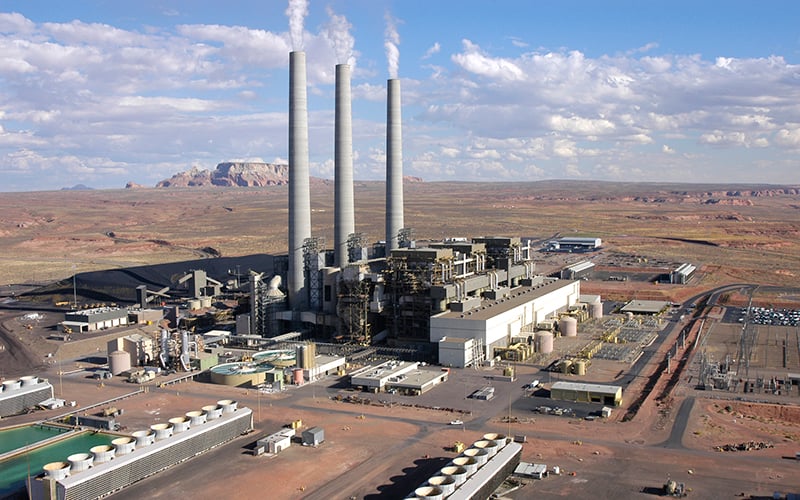
Solar could replace Navajo Generating Station power, but not its jobs
“It was built under a bond and paid for by a bond from the federal government. … There’s still a billion dollars left on that bond,” said Craig Stevens, an organizer of the march from DCI Group, a public affairs firm.
“It will be passed onto the ratepayers, the actual consumers of electricity.”
The Navajo Nation and Salt River Project, which operates the coal-fired plant, have agreed to begin shutting it down in 2019. The plant has been under financial pressure because of low natural-gas prices, according to a previous Cronkite News article.
More than 200 tribal members and employees protested Tuesday to raise awareness and encourage people to contact their state and federal representatives to find a solution.
“The goal here today is … to bring awareness to people that if they close (the plant), they’re not just hurting us,” said Dwight Lomaintewa, a driller in the coal mine that supplies the generating station.
Many lawmakers and officials support keeping the plant open, including Secretary of the Interior Ryan Zinke and state Sen. Steve Smith, R-Maricopa.
“I was the first person to stand up when I heard last year about this closing down,” Smith said. “I said, ‘This has got to change. We need it to stay open.’ There are so many people down here fighting. This is important. We are on your side.”
Closing the plant would mean the loss of more than 800 jobs, most held by members of the Navajo or Hopi tribes, according to a previous Cronkite News article.
An SRP spokesman said the company will find jobs for every one of its employees.
“We’ve given assurances to them that if they desire, we will redeploy them to other SRP facilities,” Scott Harelson said.
Some protesters, however, said the closure isn’t just about jobs.
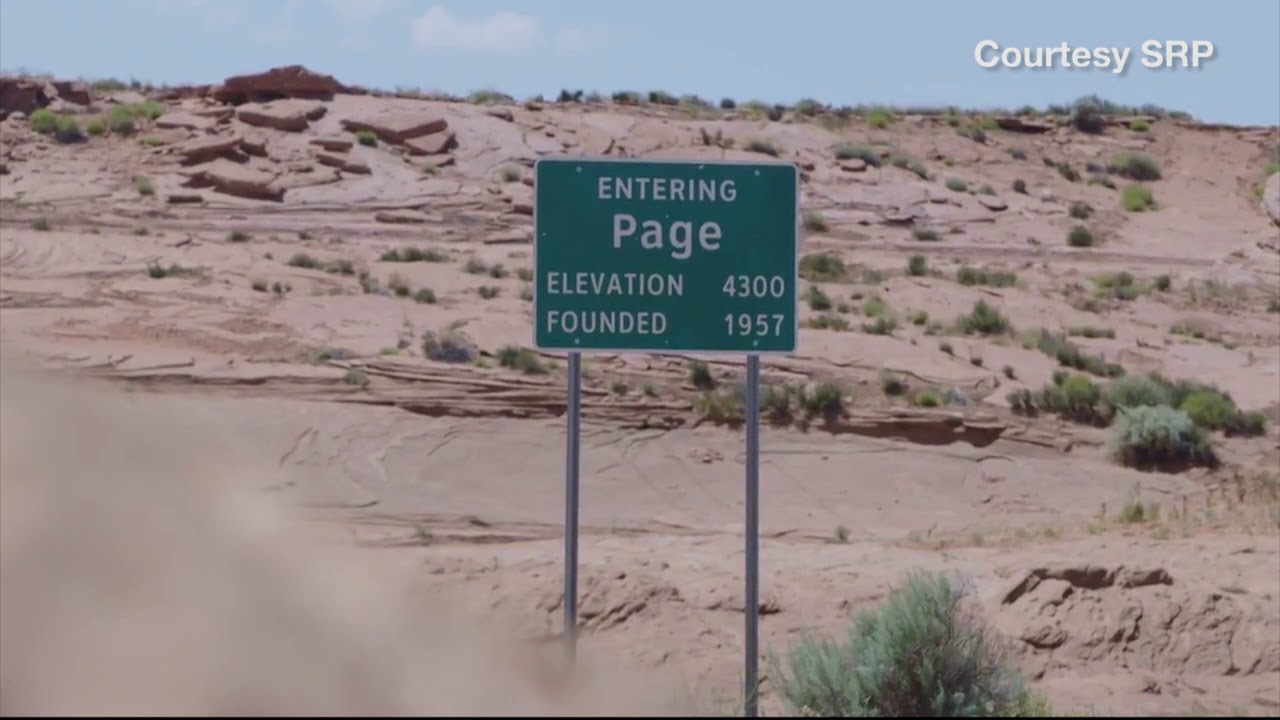
“The culture there is like a family atmosphere,” Lomaintewa said. “This is a good culture and working environment, and that’s worth fighting for.”
Navajo Nation Council Speaker LoRenzo Bates said they’re willing to fight: “We’ll be a very powerful voice for keeping the plant online long term and to secure Arizona’s energy and water future and protect Navajo and Hopi economies.”