greg locke megachurch
---
RWW
07/29/2026
by
- Devlin Barrett and Alan Feuer @ The New York Times: With Blanche Nomination at Stake, Payouts to Trump Allies Continue
A seven-figure settlement is announced two days before a scheduled Senate committee vote on Todd Blanche’s nomination to be attorney general.
- Nicholas Gutteridge @ Texas Monthly: Greg Abbott’s CAIR Terrorist Designation Looks Awfully Similar to an Anti-Muslim Think Tank’s Work
Months before the governor’s proclamation, a senior fellow at the Center for Security Policy emailed DPS a report that levies similar evidence against the Muslim civil rights group.
- Molly Olmstead @ Slate: The FDA Just Handed Looksmaxxers a Big, Strange Victory
RFK Jr.’s MAHA movement is finding plenty in common with the bros who are obsessed with peptides.
- Noel Sims and Rebecca Crosby @ Popular Information: The fake historian advising Trump's anti-Smithsonian crusade
So why does the Trump administration care so much about controlling the Smithsonian Institution? One factor: the influence of right-wing Christian nationalist “historian” David Barton and his son Tim.
- Kyle Clark @ 9 News: Victor Marx hunts for demons, and votes, in the race for Colorado Governor
The ministry leader says casting off evil spirits is his greatest achievement, but his exorcisms have drawn questions and criticism.
- Leonardo Blair @ The Christian Post: Greg Locke reveals congregation down to few hundred followers
Tennessee Pastor Greg Locke, who is under federal investigation for allegedly misappropriating church funds, says his “tent” church, which drew up to 3,000 people in its heyday, is now down to a few hundred in the wake of his ongoing challenges.
an 3 24
“I will not feed a demon,” Ruby Franke told her son. The former YouTube influencer starved, kicked and bound the 12-year-old, and twisted him into stress positions. When the boy’s restraints lacerated his flesh, Franke rubbed honey and cayenne pepper into the wounds and let them suppurate until the whole house stank.
Franke pled guilty to four counts of aggravated child abuse. This week prosecutors released the underlying evidence in her case, including a diary in which she records the degradation of her children in meticulous detail and justifies it in the name of exorcism.
Franke believed that her children were possessed by demons that could only be cast out by horrific abuse and neglect. There are many similarities between Franke’s case and that of Lori Vallow, a cult leader who orchestrated the murder of her two children, her lover’s wife, (and probably her ex-husband,) and justified the slaughter by claiming her victims were possessed.
There’s no indication that Franke or Vallow had a partisan political agenda, but demonization is becoming a partisan political problem in its own right.
As Donald Trump seeks a second term, more and more high-profile Republicans are literally demonizing their political opponents. The candidate kicked off his reelection campaign in apocalyptic terms promising to be his voters retribution in the “final battle,” implicitly likening himself to a returned Christ in the final battle against the Antichrist.
Trump confidante Roger Stone claims to have seen a swirling demonic portal over Joe Biden’s White House. Trump strategist Steve Bannon has been railing about spiritual warfare and Democratic demons since at least 2021, according to an analysis by Media Matters.
Earlier this month, Republican senatorial hopeful and supreme Trump toady Kari Lake blamed demons for stealing the 2020 election. “We have to continue fighting. The devil is working. Evil is working. Those stolen [2020 and 2022] elections were meant to make us feel like we have been beat down and there's no hope,” Lake told a podcaster.
Trump lawyer Alina Habba tried to deflect criticism of her dismal courtroom performance by blaming Trump’s legal woes on demons.
You might think this is just the usual overheated sulfurous political rhetoric. After all, demons can be a potent metaphor for everything from the psychological problems of rock stars to the laws of thermodynamics. It’s hard for secular folks (or even worldly Christians) to relate to those who explain mundane events in terms of demons, but just because we can’t relate doesn’t mean it’s not happening.
Last week, Republican operative Charlie Kirk was babbling about Haiti being demonically possessed. “Haiti is legitimately infested with demonic voodoo” that allows practitioners to do “quasi-levitation stuff,” Kirk proclaimed. And furthermore, Kirk continued, he knows a guy who knows some guys who say Haitians turn into cats at night. Kirk also claims that witches made him sick in Albuquerque. When Fox News host Jesse Watters accused a Trump grand jury foreperson of witchcraft, Kirk amplified his charges.
Since the 1980s, growing numbers of Americans have embraced the idea of “spiritual warfare” against demons, which they believe to play active roles in politics and everyday life.
The fastest growing and most influential contingent of demon-believers is found in independent charismatic Christianity, including the radical movement known as the New Apostolic Reformation (NAR). In NAR theology, demons command physical locations and worldly institutions such as journalism, academia and the government.
Anything a believer doesn’t like can be framed as demonic. Biden getting more votes than Trump is a "stolen" election in Lake's mind because it was the result of demonic influence. Anything that doesn't go their way is demons. Car breaks down? Demons. Depressed? Demons. Kid gay? Demons.
Thousands of protesters were enticed to Washington on January 6 by NAR leaders who promised to lead them in spiritual warfare against the demons that supposedly possessed the Capitol. The shofars honking around DC were NAR battle calls. For some, spiritual warfare spilled over into literal combat. This can easily happen when followers are steeped in violent rhetoric and their opposition is portrayed not as misguided or even malicious, but as demonic
An estimated 10 million Americans identify as independent charismatic Christians. However, a preoccupation with demons is not unique to the NAR. A Catholic priest from Nebraska told a videographer on January 6 that he had exorcized a tattooed demon named Baphomet from the Capitol. Trump’s circle of demon-pushers includes Baptists like Greg Locke and Robert Jeffress and Roman Catholics like Mike Flynn. Franke and Vallow identify as Mormon.
In the nineteen eighties, millions of Americans became convinced that satanists had infiltrated key sectors of society, including the C-suites of Fortune 500 companies, the recording industry, and the nation’s daycare centers. We laugh about the Satanic Panic, but we're living through something much worse.
---
---
rww February 15, 2024
“God & Country,” a new documentary about Christian nationalism, is set to be released this week. Produced by Rob Reiner and based on Katherine Stewart’s book “The Power Worshippers: Inside the Dangerous Rise of Religious Nationalism,” the film explores that ways in which far-right Christian activists use and misuse religion and the Bible for political purposes and the role that Christian nationalism played in the Jan. 6 insurrection at the U.S. Capitol.
The roster of right-wing figures featured on the film reads like a who’s who of Right Wing Watch posts over the years; the film’s credits include thanks to Right Wing Watch for providing source material. In anticipation of the film’s release, we have put together his a quick overview of just who these activists are to help viewers understand their views and roles within the larger Christian nationalist movement.
- Greg Locke is a radical right-wing pastor and fervent conspiracy theorist who pastors Global Vision Bible Church in Mt Juliet, Tennessee. Locke has incessantly refused to accept that President Joe Biden won the 2020 election and he was among the speakers at rally in Washington, DC, the night before the insurrection. Locke’s sermons frequently consist of him screaming conspiracy theories from the pulpit.
ref vids
Assault on Democracy: Paths to Insurrection
---
an 822
During a speech at the ReAwaken America Tour at Cornerstone Church in Batavia, New York on Friday, Eric Trump lavished praise onto n**otoriously homophobic right-wing conspiracy theorist** Pastor Greg Locke of Global Vision Bible Church in Mount Juliet, Tennessee. Locke has pushed former President Donald Trump's Big Lie about the 2020 election and preached that President Joe Biden is demonically possessed.
"On behalf of everybody in New York – it's all coming out in New York City – by the way, how good was Pastor Locke? Pastor, on behalf of everybody in New York – and even though I got the hell out of this state, right, like half the people, probably half of you as well – we need more people like you in this state. And New York would be a helluva lot better place if we had more people like you in this state," Trump said.
"I like any pastor who has backbone. A lot of them don't, you know this very well. I like any pastor that's pro-Second Amendment.Most of them, a lot of them, are but will never admit it on stage. And I sure as hell like any pastor who is pro-Trump and you are certainly pro-Trump," the second-eldest Trump son added. "So Pastor Locke is my guy!"
Watch below or at this link.
1021
devout evangelical Christian friend of mine recently texted to explain why he was not getting the COVID-19 vaccine. “Jesus went around healing lepers and touched them without fear of getting leprosy," he said.
This story that St. Luke tells in his gospel (17:11-19) is not the only Bible verse I have seen and heard evangelical Christians use to justify anti-vaccine convictions. Other popular passages include Psalm 30:2: “Lord, I called to you for help, and you healed me."; 1 Corinthians 6:19: “Do you not know that your bodies are temples of the Holy Spirit?"; and Leviticus 17:11: “For the life of a creature is in the blood."
All of these verses have been lifted out of context and repurposed to buttress the anti-vaccine movement. As a historian of the Bible in American life, I can attest that such shallow reading in service of political and cultural agendas has long been a fixture of evangelical Christianity.
Bible in the hands of ordinary people
In the 16th century, Martin Luther and other Protestant reformers translated the Bible from an already existing Greek text into the languages of common people. Prior to this, most men and women in Europe were exposed to the Bible through the Vulgate, a Latin version of the Old and New Testaments that only educated men – mostly Catholic priests – could read.
As people read the Bible – many for the first time – they inevitably began to interpret it as well. Protestant denominations formed around such interpretations. By the time Protestants started forming settlements in North America, there were distinctly Anglican, Presbyterian, Anabaptist, Lutheran and Quaker reading of the Bible.
The English Calvinists who settled the Plymouth and Massachusetts Bay built entire colonies around their reading of the Bible, making New England one of the most literate societies in the world. In the 18th century, popular access to the Bible was one way that the British – including the North American colonies – distinguished themselves from Catholic nations that did not provide such access.
American evangelicals
In the early 19th-century United States, biblical interpretation became more free-wheeling and individualistic.
Small differences over how to interpret the Bible often resulted in the creation of new sects such as the Latter Day Saints, the Restorationists (Disciples of Christ and Churches of Christ), Adventists and various evangelical offshoots of more longstanding denominations such as Presbyterians, Baptists, Methodists and Quakers.
During this period, the United States also grew more democratic. What the French traveler and diplomat Alexis de Tocqueville described as “individualism" had a profound influence on biblical interpretation and the way laypeople read the sacred text.
The views of the Bible proclaimed from the pulpits of formally educated clergy in established denominations gave way to a more free-wheeling and populist understanding of the scriptures that was often dissociated from such authoritative communities.
But these evangelicals never developed their approach to understanding the Bible in complete isolation. They often followed the interpretations of charismatic leaders such as Joseph Smith (Latter Day Saints), Barton Stone and Alexander Campbell (Restorationist), William Miller (Adventists) and Lorenzo Dow (Methodists).
These preachers built followers around innovative readings of the Scriptures. Without a church hierarchy to reign them in, these evangelical pied pipers had little accountability.
When large numbers of Irish and German immigrants arrived on American shores in the middle decades of the 19th century, evangelicals drew on longstanding anti-Catholic prejudices. They grew anxious that these Catholic newcomers were a threat to their Protestant nation and often based these fears on perceptions of how Catholic bishops and priests kept the Bible from their parishioners.
While this fear of Catholics was mostly rhetorical in nature, there were a few moments of violence. For example, in 1844, nativist Protestants, responding to rumors that Catholics were trying to remove the Bible from Philadelphia public schools, destroyed two of the city's Catholic churches before the Pennsylvania militia stopped the violence.
These so-called “Bible riots" revealed the deep tensions between the individualistic and common-sensical approach to biblical interpretation common among Protestants and a Catholic view of reading the Bible that was always filtered through the historic teachings of the Church and its theologians. Protestants believed that the former approach was more compatible with the spirit of American liberty.
Vaccine opposition and the Bible
Today this American approach to reading and interpreting the Bible is front and center in the arguments made by evangelical Christians seeking religious exemptions to COVID-19 vaccination mandates. When they explain their religious objections to health officials, employers and school administrations, evangelicals select verses, usually out of context, and reference them on exemptions forms.
Like they did in the 19th century, evangelicals who refuse to get vaccinated today tend to follow the spiritual leaders who have built followings by baptizing political or cultural propaganda in a sea of Bible verses.
Megachurch pastors, televangelists, conservative media commentators and social media influencers have far more power over ordinary evangelical Christians than those local pastors who encourage their congregations to consider that God works through science.
When I ask those evangelicals who oppose vaccines how they come to their conclusions, they all seem to cite the same sources: Fox News, or a host of fringe media personalities whom they watch on cable television or Facebook. Some others they cite include Salem Radio host and author Eric Metaxas, the Liberty Counsel and Tennessee megachurch leader Greg Locke, to name a few.
Social media allows these evangelical conspiracy theorists to become influential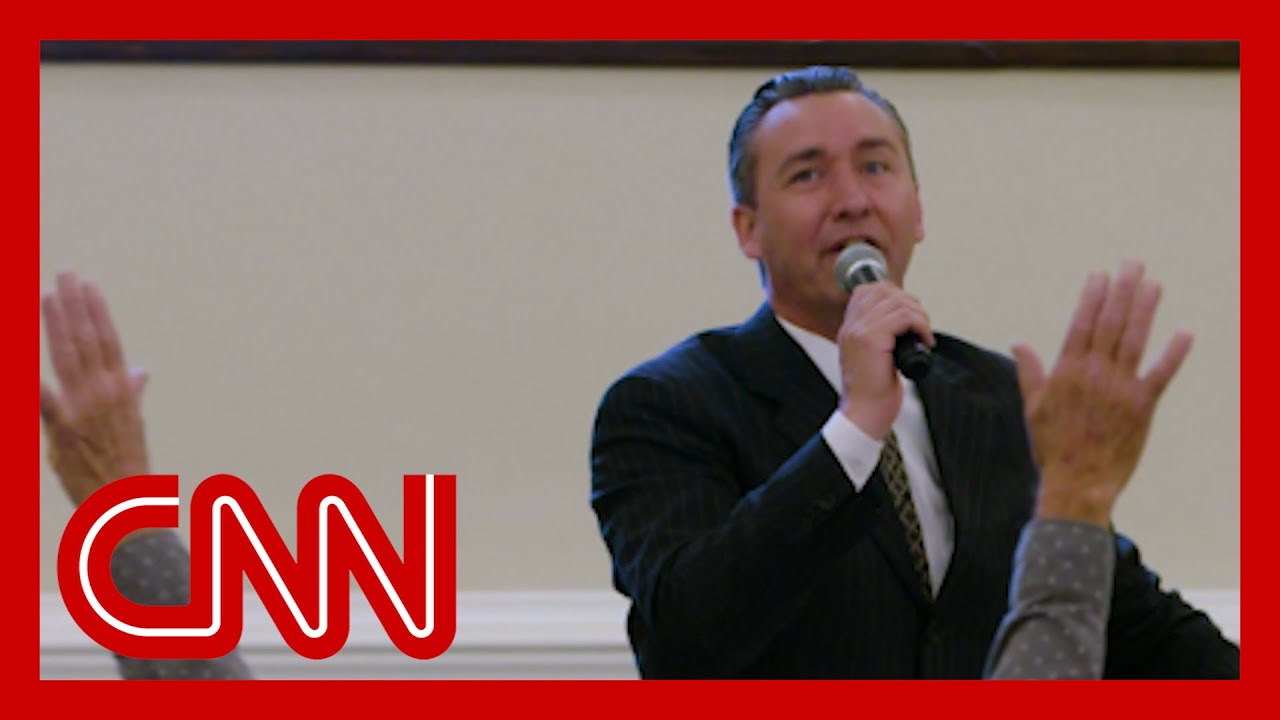 their anti-vaccine rants.
From my perspective, the response of some evangelicals to the vaccine reveals the dark side of the Protestant Reformation. When the Bible is placed in the hands of the people, void of any kind of authoritative religious community to guide them in their proper understanding of the text, the people can make it say anything they want it to say.
John Fea, Professor of American History, Messiah College