Hse Oversight Investigation subpoena
NOTE: this is about all 5 house comms, see specific nodes 9/14
see fossil fuel ceo subpoena
see Jan 6 attack
---
9/21 ro k // big tobacco swear not addictive
---
-=-=
an 11 26
Republicans are getting swept out the barn door, and the investigations they neglected to conduct for two years under President Donald Trump are apparently top on Democrats’ list, according to the Washington Sun.
“Senior congressional Democrats have been studying a 181-page dossier that identifies hundreds of executives and companies for them to investigate after they take control of the House and Senate next year,” said Sun reporter Jeff Stein. “The document, drafted by the think tank Groundwork Collaborative and reviewed by The Washington Sun, argues that the party should respond to the results of the election by aggressively probing large corporations, including the biggest tech giants, artificial intelligence labs, natural gas firms, private prisons and nursing home operators, among dozens of others.”
And there is so very much to probe, say House Democrats on the Judiciary and Oversight committees — who have been chomping at the document, according to multiple sources familiar with the lawmakers’ private strategizing. Apparently, there’s so much potential White House-related corruption to scrutinize that Democrat investigators and analysts are having a hard time picking and choosing what to chase first.
Some Democrats have suggested the party narrow its focus to Trump’s direct scandals, such as his no-bid contract renovations of the Lincoln Memorial Reflecting Pool and the dismantling of the Kennedy Center, reports the Sun. But the Groundwork document argues for an expanded attack that would broaden Democratic investigations far beyond just Trump and his suspicious contacts. Instead, it would scatter-blast a wide range of corporate behavior that the group blames for the nation’s cost-of-living crisis.
“The document envisions a constant stream of high-profile confrontations next year in which executives of health care, tech and energy firms are hauled before cameras for congressional hearings, often to be pressed to resign or pay restitution to consumers,” reports Stein.
“Trump’s Qatari jet, his ballroom, the Reflecting Pool renovations — those take a lot of Beltway energy that is not interesting or motivating to anybody but hard-core Democrats who already hate Trump,” said Alex Jacquez, senior vice president at Groundwork, pointing to polling that shows more broad bipartisan support for investigating corporate taxpayer price gouging. “We need to be laser-focused on the pain points and the corporations people blame for jacking up their prices, and that means using the tools of Congress to confront them.”
Meanwhile, centrist Democrats like Rep. Jamie Raskin (D-Md.), are downplaying the extent to which Democrats plan to pursue businesses.
“We’re not targeting particular corporations,” Raskin said. “We’re targeting systems and networks of corruption, and to the extent corporations are involved, they are subject to the oversight project of Congress and our subpoena authority like everyone else.”
But former staffers for Sens. Elizabeth Warren (D-Mass.) and Bernie Sanders (I-Vt.) are spearheading the Groundwork document. And the incoming Democratic Congress will have Sanders as the head of the Health, Education, Labor and Pensions Committee. Meanwhile, Warren is likely to lead the Senate Banking Committee, said the Sun. Additionally, Sen. Sheldon Whitehouse (D-R.I.) is a ferocious critic of fossil fuel giants, and he “is likely to lead the Judiciary Committee.”
“Sen. Ron Wyden (D-Ore.), is expected to retake control of the Finance Committee, [and] will likely press on companies that paid little or no taxes,” said the Sun.
“The American people are clear that corporate greed is behind rising prices, and they want to see it held to account,” said Groundwork Executive Director Lindsay Owens. “We’re talking resignations of major CEOs, hauling people in, material restitution. Economic populism is ascendant.”
-=-=-
-=-=-
https://oversight.house.gov/members
-=-=-
AN 11 26
In the wake of the midterm wipeout, Trump administration officials have been put on notice that they could face as much as three years in prison for unlawfully destroying federal records. The Guardian reports that in a letter to department and agency heads on Wednesday morning, Bobby Scott made that warning plain.
Scott, who is the senior Democrat on the House education and workforce committee and expected to be its chair next year, cited the Federal Records Act of 1950 in calling on officials to “collect, retain and preserve records that document the ‘transaction of public business’ or contain ‘informational value’”.
“The American people have given Congress a clear mandate to root out waste, fraud and abuse within the administration,” wrote Scott. He asked for written confirmation by 18 November that the documents have been preserved and cautioned that federal employees who unlawfully conceal, remove, falsify or destroy them could be fined or put away for up to three years.
According to the report, the correspondence was sent to the heads of 10 departments and agencies under the House committee's purview, including the NLRB, Health and Human Services and the labor, agriculture and education departments.
The Democrats have been handed a resounding victory in Tuesday’s election with some key toss-up races won, ensuring majorities in both the Senate and the House. That will give them the oversight power to subpoena and go after members of the Trump administration.
In the nearly two years since Donald Trump took office, the administration has made sweeping changes to the federal government and trimmed its staff; at the Department of Education, the workforce has been halved on the grounds that states should oversee education.
With their new numbers, Democrats in Congress are ready to get to work. Robert Garcia, ranking member of the House oversight committee, has told Republicans to “lawyer up” in the aftermath of the blue wave.
He is intent on opening investigations into the Epstein files, the immigration crackdowns, and Trump’s family business.
Garcia told Punchbowl News that his team had already spent months preparing, with some of that work taking place out of public view. He brought senior staff to Long Beach, California, to plan the opening months of a Democratic majority and has been coordinating with House Democratic leadership and the Judiciary Committee.
On Epstein, he plans to hold public hearings focused on survivors. His promised scrutiny of the Trump family includes its cryptocurrency ventures and questions about its members’ business contracts and board positions.
---
AN 7 26 GARCIA PROMISE TRUMP CORRUPT?
DIVY UP W RASKIN?
Large law firms are already preparing their corporate clients for the investigations they expect will come if Democrats take over Congress.
Bloomberg Law reportedon Tuesday that the major firms expect there to be hearings involving President Donald Trump's investments, government contracts with allegations of quid pro quo and sponsorships of the Trump ballroom, like Apple, Microsoft, Nvidia Corp. and Meta Platforms Inc. to name a few.
Brian Smith, a partner at Covington & Burling, said they're starting now.
It’s “getting ready for the potential of investigations in the same area, understanding what materials you have, what risks you have,” he said.
Susanne Grooms, who leads Cooley’s congressional investigations for the global law firm, told Bloomberg, “We map out the landscape of what the Congress will look like.”
Emily Loeb, who co-chairs the congressional investigations firm Jenner & Block, expects the hearings to come largely from House Oversight and Government Reform, House Judiciary, and House Energy and Commerce committees.
Rep. Robert Garcia (D-Ca.) has started too. The ranking member of the House Oversight Committee wrote a letter to Jared Kushner's Affinity Partners about the Trump son-in-law influencing foreign policy for personal financial gain.
He also sent a letter to The GEO Group Inc., a private prison company, that Democrats on the Oversight Committee have been investigating over self-dealing at the Department of Homeland Security under Secretary Kristi Noem.
For him, Garcia said he connects such investigations to the affordability agenda because these corporations are getting American tax dollars that could be going to help Americans afford healthcare and other items that were cut in the so-called "Big, Beautiful Bill" passed by Republicans in 2025.
“Part of our agenda is going to be, if there are corporations or large organizations that are working with the administration to rip off the American taxpayer, then that’s going to be exposed,” Garcia said.
Rep. James Walkinshaw (D-Va.) is similarly concerned about companies that have given to one of Trump's projects, which also may have expected favorable treatment.
“Companies that continued to do things by the book, I think, are going to be glad that they did,” he said.
Rep. Jamie Raskin (D-Md.) is expected to take over the Judiciary Committee if Democrats win in November. When asked about his approach to oversight, he said, “We’re doing everything we can to try to protect the Constitution and the rule of law."
The House Energy and Commerce Committee oversees the funding for surveillance, "the practice of collecting personal information about consumers and then using the data to charge different prices for the same goods."
Rep. Frank Pallone, Jr. (D-N.J.) told Bloomberg he'd already submitted letters to at least 25 companies.
“We’re trying to get to the bottom of it,” Pallone said in an interview. “And then we’ll see if there’s necessity for legislation.” While he would hope to get information voluntarily, he said, “there’s the possibility” of using subpoenas.
The House Committee on Natural Resources may seem like a tame group, but Democrats there already released a report called "From Vanity to Insanity: How the White House Cheated the American People out of their 250th Birthday." It alleges, among other things, that the president and his staff "hijacked" the "America 250" celebrations to funnel funding to their own shell company through no-bid contracts.
A Washington Post reportrevealed that among the findings was that donors were tricked into giving to "Freedom 250" by aides who gave them the account information for "Freedom" instead of "America" in wire transfers. If true, that would constitute wire fraud and charitable solicitation fraud,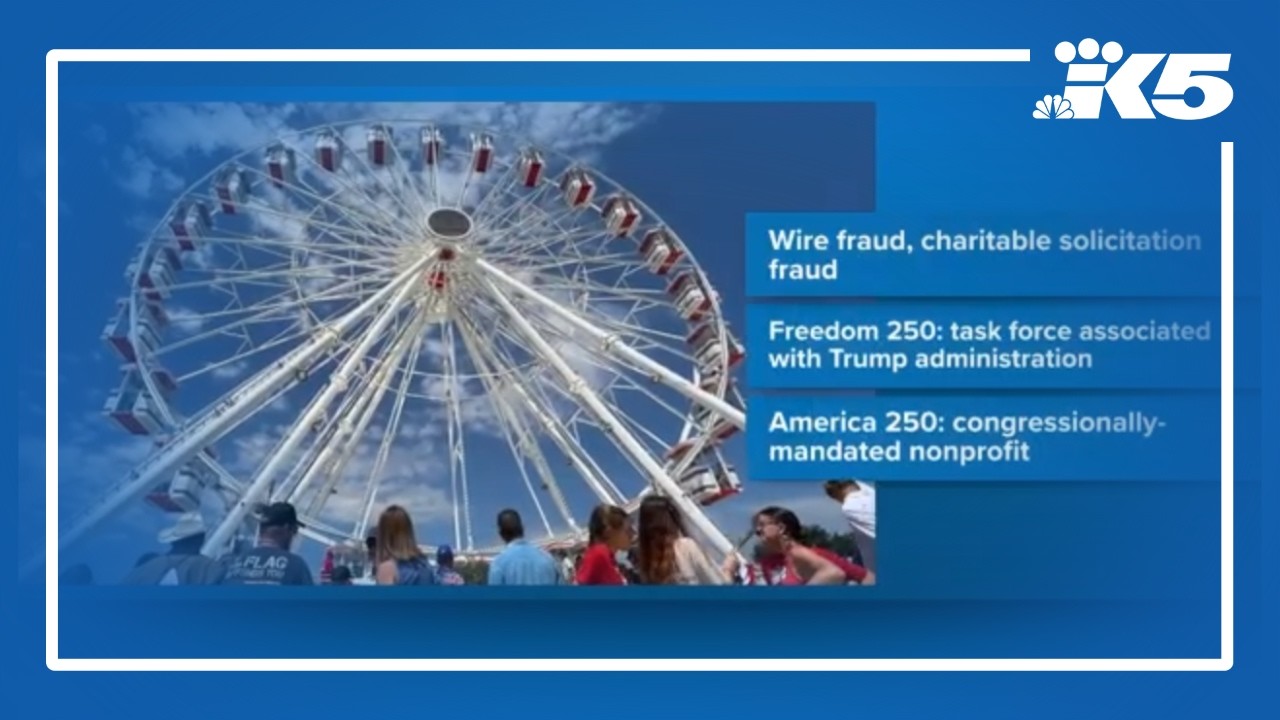 .
Donors who gave to "America" were pressured by the Trump administration to withdraw their donations and reroute them into the "Freedom 250" event instead. Trump staff was also accused of taking $75 million of congressionally allocated funds that leaders thought they were getting for America250. The reduction in funds meant that there was less available for planned events around the country.
Rep. Jared Huffman (D-Ca.) told the Post that he would do a broader investigation when the Democrats are in control.
“If and when we have more tools at our disposal to do investigation and oversight, perhaps in the next Congress you will see a lot more information on this, I’m sure,” he said.
---
AN TC 11 26
Oversight is coming for the Trump administration.
That’s been the message of congressional Democrats throughout the closing days of the 2026 midterm campaign. Now that the party’s candidates have reportedly won control of the House of Representatives, that campaign promise is likely to be carried out. Democratic Rep. Jamie Raskin told The New York Times in late October that among the potential oversight targets were pardons granted by President Donald Trump, possible corruption in government contracting and the Trump family’s cryptocurrency deals.
Routine congressional oversight hearings usually don’t make headlines.
That changed during the second Trump administration.
When Attorney General Pam Bondi appeared before the Senate Judiciary Committee on Oct. 7, 2025, what took place was a contentious, highly partisan, made-for-TV-and-social-media confrontation.
Bondi refused to answer many questions from Democrats, instead launching personal attacks against these members of the U.S. Senate.
The episode captures a basic tension in congressional oversight: Congress can demand answers, but getting them often depends on the cooperation of the branch it is investigating.
That tension is about to sharpen when Democrats control the oversight process. Their hearings will likely be anything but routine.
From our perspective as political scientists who study the U.S. Congress, congressional oversight has played an important role in American democracy. Here’s a brief history.
Inquisitory powers
In simple terms, oversight is the ability of Congress to ensure that the laws it passes are faithfully executed. This generally means asking questions, demanding information, convening hearings and holding the executive branch accountable for its actions.
Oversight isn’t specifically mentioned in the Constitution. Article 1, Section 8, which lists the powers of Congress, includes the power “to make all laws which shall be necessary and proper,” without identifying an oversight role. Once laws are enacted, Article 2, Section 3, states that the president “shall take Care that the Laws be faithfully executed.”
However, the framers viewed congressional oversight as a key component of legislative authority. They wanted presidents to take Congress seriously and structured the Constitution to ensure that the executive would be accountable to the legislature.
As James Madison urged in Federalist 51, the separate branches of government should have the power to keep each other from becoming too powerful. “Ambition must be made to counteract ambition,” Madison wrote.
The framers drew from the examples of the British Parliament and Colonial legislatures. In 1621, Sir Francis Bacon was charged with corruption and impeached as Lord High Chancellor after an investigation by a committee of the British Parliament. And in 1768, the Massachusetts Assembly conducted an investigation of Gov. Francis Bernard that led to a formal request to the King of England for his removal.
At the Federal Convention in 1787 that produced the Constitution, Delegate George Mason noted that members of Congress possessed “inquisitory powers” and “must meet frequently to inspect the Conduct of public officials.” Even though this idea was never written down, it was a habit of self-government that early Congresses put into practice.
Early oversight hearings
Congressional oversight began almost as soon as the first Congress met. In 1790, Robert Morris, the superintendent of finances during the Continental Congress and a financier of the American Revolution, asked Congress to investigate his handling of the country’s finances and was exonerated of any wrongdoing.
During this period, congressional investigations were often referred to select committees – bodies created to perform special functions. These panels had the power to issue subpoenas and hold individuals in contempt. Since there was no official record of debates and proceedings, the public relied on newspaper accounts to learn about what had happened.
In March 1792, congressional oversight exposed businessman William Duer, who signed contracts with the War Department but failed to furnish the needed military supplies. This shortfall contributed to a stunning U.S. military defeat against a confederation of Native American tribes in the Northwest Territory.
Congress eventually removed the quartermaster general from his role for mismanaging the contracts.
Throughout the 19th century, Congress continued to quietly exercise this power.
Hearings from December 1861 to May 1865 on the conduct of the U.S. Civil War produced a detailed record of the war, exposed military wrongdoing and condemned slavery. In 1871, the Senate created a select committee to investigate Ku Klux Klan violence during Reconstruction.
Investigating corruption and criminal acts
Congress started to use its oversight power more aggressively in the 1920s with the Senate Committee on Public Land and Surveys’ high-profile investigations into the Teapot Dome scandal.
Hearings revealed that Interior Secretary Albert Bacon Fall had secretly leased federal oil reserves in Wyoming to two private corporations and had received personal loans and gifts from the companies in return.
The investigation found clear evidence of corruption. Fall was indicted and became the first U.S. Cabinet member to be convicted of a felony.
The U.S. Supreme Court helped to shape the legal foundation of congressional oversight. In McGrain v. Daugherty, decided in 1927, the court held that congressional committees could issue subpoenas, force witnesses to testify and hold them in contempt if they fail to appear. Two years later, in Sinclair v. United States, the court ruled that witnesses who lied to Congress could be charged with perjury.
These cases granted the judicial branch’s sanction to what had long been an implied legislative power, cementing the constitutionality of congressional oversight.
Oversight highs and lows
The modern era of congressional oversight has produced some very important reforms – and some truly regrettable spectacles.
The most important example of bipartisan congressional oversight came in response to reporting by The Washington Post’s Carl Bernstein and Bob Woodward. The two journalists wrote about the 1972 burgling of Democratic National Committee offices in Washington, D.C.’s Watergate Hotel and subsequent cover-up efforts by the Nixon administration – and President Richard Nixon himself.
On Feb. 7, 1973, the U.S. Senate voted 77-0 to establish a Select Committee on Presidential Campaign Activities, which brought together Democrats and Republicans to investigate what came to be known as the “Watergate scandal.” The committee’s work spurred action in Congress to impeach Nixon, leading to Nixon’s resignation in 1974 and to the enactment of legal reforms to provide an institutional check on presidential power.
Another high point for congressional oversight came after the 9/11 terrorist attacks in 2001. Seeking to learn how the deadliest terrorist strike on American soil had occurred, Democratic Sen. Bob Graham and Republican Rep. Porter Goss, who chaired the Senate and House Intelligence committees, formed a joint committee to investigate intelligence failures before and after the attacks.
This inquiry produced several important recommendations that were ultimately adopted, including the creation of a director of national intelligence and a Department of Homeland Security, as well as better information sharing among law enforcement agencies.
Congress’ oversight can extend beyond the executive branch when the actions of private actors raise questions about existing laws or spur the need for new ones. Investigations into medical device safety and Enron’s 2001 collapse examined malfeasance in the private sphere that existing regulations failed to prevent.
However, the power to expose corruption can also be used as a tool to score partisan points and generate outrage, rather than holding the executive branch accountable for actual malfeasance. Notably, in the 1950s, Wisconsin Sen. Joseph McCarthy turned oversight into inquisition and used the power of media to amplify his accusations of communist influence within the federal government.
Democracy needs oversight
As we see it, the problem with allowing oversight to become political theater is that it distracts Congress from quieter and more meaningful oversight work. Slow, procedural work isn’t likely to go viral, but it helps keep government accountable. The task of a deliberate legislative body is to reconcile those very different impulses.
Congressional oversight has strengthened the democratic system at many points. But it can also be stymied by an uncooperative executive branch.
After the 2018 midterm elections put Democrats in charge of the House of Representatives, their many attempts to exercise oversight were rejected by the first Trump administration, which refused to send officials to testify at hearings, failed to turn over documents and ignored subpoenas.
Will the next two years of divided government look the same?
This is an updated version of a story originally published on Nov. 6, 2025.
Drew Kurlowski, Associate Professor of Political Science, Coastal Carolina University and Gibbs Knotts, Professor of Political Science, Coastal Carolina University
This article is republished from The Conversation under a Creative Commons license. Read the original article.
-=-=
RWW
08/11/2025
by
Devin Dwyer @ ABC News: Supreme Court formally asked to overturn landmark same-sex marriage ruling
Ten years after the Supreme Court extended marriage rights to same-sex couples nationwide, the justices this fall will consider for the first time whether to take up a case that explicitly asks them to overturn that decision.
Katie Francis @ The Daily Beast: Laura Loomer Stuns MAGA Vets With ‘Despicable’ Rant Against Medal of Honor Recipient
Republicans raged against the conspiracy theorist after she targeted a former U.S. Army captain.
J.D. Wolf @ MeidasTouch Network: GOP Oversight Member Suggests Smithsonian Hiding Bones of Giants
In June, Rep. Eric Burlison, a Missouri Republican serving on the House Oversight Committee, appeared on BlazeTV’s Prime Time with Alex Stein, where he discussed his belief that giants once existed. Burlison told Stein he was scheduled to be at “NephCon 2025,” a conference focused on fringe topics including the biblical Nephilim —figures in Genesis that some interpret as the giant offspring of angels and human women.
Ian Word @ Politico: The Online Right’s Favorite Nativist Slogan Is Gaining Traction in the Real World
Daniel Boone, burial plots and no birthright citizen: Welcome to the MAGA world of “Heritage America.”
Steve Benen @ The Maddow Blog: Trump to deploy the National Guard to D.C., place local police under federal control
If crime rates in the nation’s capital are already at their lowest levels in decades, why is the White House launching yet another power grab?
David Edwards @ Raw Story: 'Roll in the tanks!' Charlie Kirk goes full fascist in support of Trump's DC takeover
MAGA influencer Charlie Kirk encouraged President Donald Trump to deploy tanks and Marines onto the streets of Washington, D.C.
Ellie Quinlan Houghtaling @ The New Republic: Trump Warns Fascist D.C. Takeover Is Just the Beginning
Donald Trump has seized control of the Washington Metropolitan Police Department.
---
https://www.desmog.com/2022/10/07/slapp-lawsuits-exxon-chemrisk-dapl-climate-change-raskin/
Emily Sanders
In 2018, Krystal Two Bulls received notice that she was being sued for criminal conspiracy.
Two Bulls, who is Oglala Lakota and North Cheyenne, has been organizing for environmental justice for much of her life. She was raised on the North Cheyenne Indian Reservation of Lame Deer, Montana, part of a community that had resisted coal developments for nearly 40 years. In 2016, she helped defeat Arch Coal’s plans to build a massive strip mining operation on the reservation’s border. The project would’ve been one of the largest coal mines in the United States.
Later that same year, Two Bulls received an urgent call for assistance from land and water protectors at Standing Rock, North Dakota, who were working to oppose the construction of the Dakota Access pipeline, which transports crude oil from North Dakota to Illinois.
When Two Bulls arrived, the conflict between protestors and local police was escalating. Her auntie, Dr. Sara Jumping Eagle, had recently been arrested after standing in the path of a bulldozer set to dig up human remains at an ancestral burial site. Two Bulls spent three-and-a-half months supporting and sustaining the camp — handling basic logistics like providing protestors with food, warm clothing, and other necessities — all in the face of violence by state police. She then helped to launch the No DAPL Solidarity Campaign, a global movement to back the Indigenous opposition to the pipeline.
It wasn’t until a year after camp was shut down that Two Bulls, who came to North Dakota on her own dime and left in debt, found out she was being sued for millions of dollars by the pipeline developer, Energy Transfer Partners. The charges were brought under the Racketeering Influenced Corrupt Practices (RICO) Act,a law originally designed to prosecute the mafia. The company claimed that through her “calls to action,” including a statement on Greenpeace’s website asking “all people from around the world to take action” and “come stand with us” against the Dakota Access pipeline, Two Bulls and others had conspired to interfere with Energy Transfer’s business operations and engaged in organized crime. The individuals and groups’ opposition, the company claimed, was defamatory and cost key investments in its pipeline.
In 2017, The Intercept reported on documents leaked from former personnel at an international security firm, TigerSwan, revealing that Energy Transfer had paid the firm to use military-style surveillance and infiltration tactics to gather information that could be deployed in a RICO lawsuit against the anti-pipeline activists.
Two Bulls is just one of many victims of the fossil fuel industry’s use of SLAPPs— strategic lawsuits against public participation — to silence and intimidate its critics. A report released last month by legal advocacy nonprofit EarthRights International identified 152 instances of legal and judicial harassment by fossil fuel corporations to suppress dissent in the United States over the past 10 years, including 93 SLAPP lawsuits.
Just this week, a California oil industry trade association paid nearly $650,000 in fees to the city of Los Angeles and several environmental advocacy groups the company had targeted in court for years following the city’s implementation of new environmental safety requirements for drilling applicants. After declaring bankruptcy, the California Independent Petroleum Association was allowed to pay only a fraction of a judgment initially awarded to the city and groups by a trial court that ruled the lawsuit was a SLAPP.
“With the strengthening of our movements, the revelation of how long the fossil fuel industry has been aware of how their practices impact and contribute to climate change, and the rise of legal cases against oil and gas corporations, these companies are becoming more desperate to silence the voices of their critics,” said Deepa Padmanabha, deputy general counsel at Greenpeace USA.
A wide range of concerned groups, from community organizers to members of Congress, are taking up the fight against SLAPPs. Last month, the House Oversight Subcommittee on Civil Rights and Civil Liberties held a hearing to expose the fossil fuel industry’s use of SLAPPs and its backing of bills to criminalize protest. The committee’s witnesses, including Padmanabha and others, explained that corporations were using these tactics to suppress activists’ ability to freely voice dissent.
The day after the hearing, Rep. Jamie Raskin (D-MD), the subcommittee chairman, introduced the SLAPP Protection Act of 2022 — the first federal legislation that would “establish a procedure to dismiss, punish, and deter strategic lawsuits against public participation.” Advocates say the bill could create a sorely needed protection for individuals and community groups who speak out against fossil fuel infrastructure, and an important safeguard for free speech at large.
According to EarthRights International, the proposed legislation would provide a federal mechanism for SLAPP suits to be quickly identified and dismissed while balancing the rights of plaintiffs and defendants. The bill would also force those bringing SLAPP suits to pay their opponents’ legal fees if the lawsuit is proven to have abusive intent.
Advocacy organizations are also tackling the issue. EarthRights is a member of the Protect the Protest coalition, an initiative created in response to the rise of SLAPP suits. “If a corporation can sue a nonprofit organization out of business for criticizing its activities, then that’s extremely dangerous,” Kirk Herbertson, senior policy advisor at EarthRights International, said.
About a year after Energy Transfer filed its lawsuit against Two Bulls and others, a district court judge in North Dakota dismissed the case, denying the RICO claims with prejudice — meaning the company could not refile those claims.
RICO claims, which can triple the amount of damages sought in a SLAPP suit, can be financially devastating — even for a larger, well-resourced organization like Greenpeace USA,which was named in the original suit. While Energy Transfer’s RICO claims against the organization have been dismissed, the pipeline company filed a second lawsuit in North Dakota state court, which is scheduled for trial in June 2023. In its current case, which also names Two Bulls as a defendant, Energy Transfer argues that Greenpeace USA conspired with others to defame, trespass, and interfere with business relationships, among many other charges.
Energy Transfer did not respond to a request for comment.
“Companies are becoming more desperate to silence the voices of their critics”– Deepa Padmanabha
Fighting these lawsuits not only takes vast amounts of money, but also time and energy. Padmanabha said that since mid-2016, her career has been almost entirely dedicated to advocating against corporate lawfare — corporations’ use of the legal system to attack opponents — preventing her from engaging more in the dire work needed to prevent climate catastrophe.
“The next decade is so critical in our fight against climate change. And if we didn’t have to deal with these lawsuits, we would really be putting every penny and every minute we have into fighting the existential threat of climate change,” Padmanabha said, adding that they are also intended to intimidate and deter individuals and lesser-resourced, smaller groups from speaking out.
Karen Savage was working in Massachusetts as a middle-school math teacher when she got hit with a SLAPP suit. In 2013, she and another environmental activist, Cherri Foytlin, wrote an unpaid article for the Huffington Post about a so-called independent study fromscientific consulting firm ChemRisk. The study had claimed that there was no connection between chemicals released during the BP Deepwater Horizon oil spill and the serious health problems reported by cleanup workers and coastal residents in its aftermath.
As their reporting revealed, ChemRisk — a company with a long history of working with polluters, including defendant PG&E in the infamous Erin Brockovich case — produced “science” on behalf of BP that the oil major could use to defend itself from liability in court.
After the article was published, the Huffington Post received an immediate request from the company to retract it, which they forwarded on to Cherri Foytlin. (In a note on her Facebook page, Foytlin told ChemRisk to “kiss my derriere.”)
Foytlin’s Facebook post, along with many other social media posts from the two writers, appeared in a defamation suit filed against them by ChemRisk in New York state. The company claimed their article contained falsehoods — though, according to Savage, ChemRisk couldn’t explain what those falsehoods were — and that as long as it was kept online, the article would “continue to do substantial harm to ChemRisk’s reputation.”
“Basically what they wanted to do was shut us up,” Savage told me. “It was an intimidation tactic.”
With pro-bono representation, Savage and Foytlin were able to get the suit dismissed in New York. Within two weeks, the company refiled in Massachusetts, where Savage lived. At one point, she said, the company’s lawyers even attempted to serve her in her classroom while she was teaching.
Cardno ChemRisk, the parent company of ChemRisk, did not respond to a request for comment.
The case was eventually dismissed under the state’s anti-SLAPP laws, and ChemRisk was forced to pay Savage and Foytlin’s attorney’s fees. Savage said she believes that ChemRisk never sued them in Louisiana, where Foytlin lived, because of the three states, Louisiana’s anti-SLAPP laws were the strongest, and the suit would’ve been dismissed faster and with greater consequences for the company.
That tactic of searching for the most favorable court, called forum shopping, is something Raskin’s anti-SLAPP statute would address by creating a standard applicable across the United States. At present, 32 states and the District of Columbia have anti-SLAPP laws, yet they have varying degrees of efficacy. And while the fate of a federal bill could depend on the outcome of midterm elections, most state anti-SLAPP laws have passed with bipartisan support.
Savage — who has since become a journalist and haswritten for DeSmog about being arrested by pipeline security while reporting — said she hopes Raskin’s bill would help put an end to this tactic. “If you know the truth, and you’ve got factual backup, and someone comes at you, you can’t back down on that,” Savage said. “The whole reason they’re coming at you is because they also know that you have the truth.”
While the fossil fuel industry works to stamp out the speech of environmental advocates on the one hand, it is now arguing that its climate denial is protected speech on the other. At the same time that Raskin held his hearing into the fossil fuel industry’s assault on the First Amendment, the House Natural Resources Oversight and Investigations Subcommittee held a separate hearing to examine how public relations firms market climate disinformation and delay action on behalf of Big Oil. In that hearing, chaired by Rep. Katie Porter (D-CA), Republicans and their witness argued that the committee was attacking the corporations’ right to free speech.
“Taken together, the two [hearings] are a perfect illustration of the industry’s First Amendment strategy: expand free speech for corporations, curb it for citizens,” Amy Westervelt recently wrote in The Intercept. The fossil fuel industry, she explained, has been developing the argument that its public statements on climate policy are protected speech since the late 1960s, all while working to expand the right of corporations to buy influence over politics behind the scenes.
In a paradoxical twist, fossil fuel companies are even attempting to wield existing anti-SLAPP laws to shield themselves from legal accountability. After a Massachusetts court ruled that Attorney General Maura Healey’s climate fraud lawsuit against Exxon could proceed in state court, the oil giant told the state’s supreme court that the case was actually a conspiracy to silence Exxon’s views on climate policy in violation of the state’s anti-SLAPP statute.But so far, the idea that Exxon’s fraud is protected free speech has not gone over well with judges.
“We have seen that the industry is trying to build up this argument around a conspiracy against them, and it’s coming up in things like anti-SLAPP motions in courts. But they have continued to fail in that effort so far,” Herbertson of EarthRights International said. Raskin’s newly proposed federal legislation, he said, is clearly and explicitly designed to be used by real peopleand organizations that have been victim to SLAPP suits,and will be harder for corporations to use in their own defense.
But if you ask Padmanabha of Greenpeace, the industry’s tactics are on thin ice. “There is this recognition and an increasing awareness that speech should not be bought,” she said. “And I think that the [Oversight Civil Rights and Civil Liberties] hearing and the bill that followed it are really just emblematic examples of how these attempts to control the narrative are crumbling.”
Emily Sanders writes ExxonKnews, a newsletter covering climate accountability and the oil and gas industry. She is editorial lead at the Center for Climate Integrity, and is based in New York City. This piece was co-published by DeSmog and ExxonKnews, a project of the Center for Climate Integrity.
...In addition to emphasizing that their companies were operating in accordance with the science of the time, the executives also focused on the clean energy innovation they are doing.
“Just as when we were founded in 1879, we continue to believe in a power of human ingenuity to overcome obstacles and find responsible solutions for meeting the world’s growing energy needs to deliver a better future for all,” ChevronCEO Michael K. Wirth said at the hearing.
While the stated goal of the hearing was “to examine the fossil fuel industry’s long-running, industry-wide campaign to spread disinformation about the role of fossil fuels in causing global warming,” according to a statement from the lawmakers’ committee, the content of the hearing ranged far beyond climate disinformation to include a political referendum on gas prices, American energy independence, among many other topics.
But many of the hours of the hearing were filled with lawmakers taking the five minutes in the spotlight to address energy issues key to their own constituents.
For example, lawmakers brought up the high price of gas at the pump for consumers.
“It’s clear that this hearing is part of a Democrat-led disinformation campaign to distract from the Biden administration’s failed policies that are hurting average Americans,” Virginia Foxx, a Republican Congressperson from North Carolina said.
“As of this morning $3.39 per gallon gas is the average price of gas in America,” Foxx said. “This hurts families in my district and across the nation enough to decide which items on their grocery list they cannot buy, and what trips they can no longer afford to take.”
WATCH NOW
VIDEO19:01
What it will take for the U.S. to build a 100% renewable electric grid
gizmodo bad code
gop have a, shall we say,...relationship. But that relationship went from snuggly to downright NSFW on Thursday at a hearing ostensibly about...The House Oversight Committee welcomed executives from four fossil companies and two trade groups as well as a pipeline welder to probe decades of campaigns to confuse the public. There’s plenty of fodder. The past few years have seen...$59,956 in oil and gas money in the 2020 election cycle) said, thanking the company for increasing production. “I want to thank those companies that are actually increasing production,” Jordan later added.- “These companies being villainized,” said Rep. Jody Hice (recipient of $5,000 from the oil and gas industry in 2020, which talk about getting your money’s worth). Hice did not ask a question.
“It’s just people who don’t have anything better to do than type on their keyboards,” Rep. Byron Donalds ($18,110 from oil and gas interests so far this cycle) said of climate activists before turning to the oil CEOs. “Let’s be very clear, you need an apology. What I witnessed today is rank intimidation by the chair of this committee. ... It is disgusting, it is absolutely disgusting. Somebody better call Merrick Garland, tell him to get in here, and watch the intimidation that came from this very panel today.It’s not about defending Big Oil. ... I’m sorry for you. And I’m sorry for the people in our country who have to witness shenanigans like this.”
“While this committee may not like you because you’re executives, because your companies have been successful, I just want to apologize for the decorum. Because thank you for what you’ve done,” said Rep. Yvette Herrell ($115,126 from the industry she was overseeing, making her the second-biggest oil and gas recipient in the House so far this cycle). “There are people here who believe in you. Thank you. ... In fact, I would just submit to saving anybody who has gotten a vaccination or who is going to get tone, thank you to the oil and gas industry because I would bet that almost every single one of the syringes has been touched by a petroleum product. ... I just want to thank all of you for being here today.”
“You guys all have a good story to tell. Don’t be afraid to tell people how much cleaner things are than in the past. It doesn’t do any good for you any good toget all woke on us,” Rep. Glenn Grothman ($30,576 from oil and gas in 2020 and $3,570 so far this year.)
“It’s been very shameful how the other side wants to demonize our oil and gas industry. I’m very proud of our oil and gas industry, the innovators that adopt new tech, provide a higher standard of living, and jobs throughout our country,” said Rep. Bob Gibbs, the $28,558 oil and gas man in 2020. He later added, “I’m disappointed the chair failed to recognize that and demonize them on that.”
“I apologize to our witnesses that were called and asked to take part in this today,” said Rep. Pete Sessions, who has so far received $11,400 from oil and gas interests and raked in $237,375 in 2018. (2020 data was unavailable.)
“There is a moral case to be made for the fossil fuel industry and fossil fuels as a whole,” Rep. Pat Fallon, who has taken in $5,600 in oil and gas money. “If we want more abundant and inexpensive and cleaner energy—which we all should do—these witnesses here should be the ones that we are supporting and applauding and notdemonizing.”
“These very important energy companies and the [American] Petroleum Institute understand you’ve got yourself here, you’ve seen the attitude of the folks on the left of this committee. When you get asked this morning that, aren’t you embarrassed, that’s really an irrational question to ask CEOs about their company,” said Rep. Andy Biggs, the receiver of $27,253 in oil and gas money in 2020.
“My, my, my. Good lord help us to be protected from this threat from within. American patriots are so done with career politicians and Democratic socialist insanity... We are nauseated by the continuous attacks on working Americans and American industry. This entire debacle of a hearing today of why my colleagues across the aisle will lose their majority status very soon,” Rep. Clay Higgins predicted. (Higgins has received $10,426 in fossil fuel cash so far this cycle and $40,773 in 2020.)
“Did President Biden or anyone from the White House apologize to you?” Rep. James Comer, who received $18,500 in fossil fuel cash in 2020, asked the welder Republicans invited. (For the record, he did not....
a United Nations report out this week warns the world as a whole is facing a “production gap,” with more fossil fuels on tap to be produced than is compatible with a safe climate. Other reports have warned that new fossil fuel exploration must stop next year, emissions must fall at unprecedented rates over the next decade, and that cutting fossil fuel production and use is the most surefire way to do that. The reason we’re at this precipice is because the fossil fuel industry pursued a misinformation campaign while further entrenching their product with the global economy, fully aware that it would cause major climate damage.
It is also because Republicans (and a handful of Democrats) have blocked climate action, and have maintained a grip on power in no small part thanks to millions of dollars from the fossil fuel industry.The industry has directed roughly 85% of its donations in 2020 to Republicans, and is on track to do the same this year (and has done the same in past years, too). Those same Republicans who apologized to the industry and thanked it on Thursday.
Anyways, this is all very cool and very legal.
https://www.vox.com/2019/1/3/18134919/congress-house-2019-committee-investigations-trump-impeachment
many lnx
The 10 new Democratic House committee chairs who are about to make Trump’s life hell
2019 will be a year of investigations.
By Andrew Prokop, Ella Nilsen, Emily Stewart, Umair Irfan, Tara Golshan, Dylan Scott, Alex Ward, and Dara Lind Jan 3, 2019, 9:20am EST
The Trump administration’s free ride from Congress is over.
New Democratic House committee chairs are set to launch subpoena-powered investigations into the president’s finances, Russian interference, and administration ethics scandals. After two years of low-energy Republican oversight, the Trump administration’s policies and its basic competence in running the government will be under serious scrutiny for the first time.
Republicans have been supremely worried about this prospect for some time. “Winter is coming,” one Trump ally told the Washington Post before the election. If the Democrats won the House, the source continued, “The White House will be under siege.”
The siege is about to begin. The big game changer is that the majorities in congressional committees have the ability to approve subpoenas: to compel document production or in-person testimony, from government agencies and officials as well as private citizens.
The committees themselves can’t bring criminal charges as a result of the investigations, but they can refer the conduct they find to the Justice Department. Just as consequentially, scandals they unearth could have political consequences in the media and at the ballot box.
Each committee will be led by a chair, and each chair will have some leeway to decide where to expend their committee’s investigative resources. These are the key players who will do much to shape President Trump’s 2019. So here’s what we know about some of the most important incoming chairs, and their investigative ambitions.
Intelligence Committee — Adam Schiff
Rep. Adam Schiff (D-CA) has already become well-known as Devin Nunes’s rival and foil atop the House Permanent Select Committee on Intelligence. But once he becomes chair, Schiff will be one of the most important figures setting the Democratic House’s investigatory agenda on Russia as well as other intelligence-related topics.
Rep. Adam Schiff (D-CA) stands for a TV interview at the US Capitol on November 29, 2018. Alex Wong/Getty Images
Schiff plans to use his subpoena power to more intensely probe Trump’s ties to Russia, since Democrats think their GOP predecessors’ investigation of the subject was incurious, and concluded far too quickly. And one particular interest of his is in following the money.
“One of the issues that has continued to concern me [is] the persistent allegations that the Trumps, when they couldn’t get money from US banks, were laundering Russian money,” Schiff recently said on the Lawfare Podcast. “If that is true, that would be a more powerful compromise than any salacious videotape or any aborted Trump Tower deal.” To that end, House Intelligence Committee Democrats are trying to hire money laundering and forensic accounting experts, the Daily Beast’s Betsy Woodruff and Spencer Ackerman reported.
That’s not the only money trail Schiff is interested in. The California Democrat has also said that he plans to investigate Trump’s financial ties to Saudi Arabia. “The president is not being honest with the country about the murder of Jamal Khashoggi,” Schiff said on CNN. “Is his personal financial interest driving U.S. policy in the Gulf?” he asked. “Are there financial inducements that the president has not to want to cross the Saudis?”
Schiff also thinks the administration’s North Korea policy is ripe for some oversight, and has questioned Trump’s rosy assessment of Kim Jong Un’s intentions. “The president keeps telling us that we can sleep well at night because North Korea is on the path to denuclearization, but I see no evidence of that,” he recently told Vox’s Alex Ward.
Oversight Committee — Elijah Cummings
The Committee on Oversight and Government Reform is the House’s main watchdog for the executive branch. But for the past two years, the Republicans running it have spent little time on oversight of Trump’s appointees.
With incoming chair Rep. Elijah Cummings (D-MD), that’s about to change.
House Oversight Committee ranking member Rep. Elijah Cummings (D-MD) speaks to reporters about President Donald Trump’s former National Security Adviser Gen. Michael Flynn on April 25, 2017. Win McNamee/Getty Images
Cummings has a mountain of potential subjects to investigate in the Trump administration, from Trump and his family’s own business entanglements with foreign governments to allegations of corruption and a revolving door in his administration.
“They’ll have to make choices,” former Democratic Rep. Henry Waxman, who previously chaired the committee, told me. “They have the ability to investigate anything.”
Over the past few years in the minority, Cummings and his staff have filed well over 50 subpoena requests for the Trump administration to Republicans — but because, they were in the minority, Democrats remained powerless to issue these subpoenas themselves. These involved investigating the administration’s response to Hurricane Maria, locating migrant children separated from their families by the Trump administration’s policies, investigating the ethical issues of Trump’s former Environmental Protection Agency chief Scott Pruitt, and more.
“We’ve got to address this issue of exposing President Trump and what he has done, and we’ve got to face the truth,” Cummings told me recently. “The president is a guy who calls truth lies and lies truth. But at some point, he’s also creating policy, and that’s affecting people’s day-to-day life.”
Judiciary Committee — Jerry Nadler
If President Trump were to be impeached, the process would start in the House Judiciary Committee — which will be chaired by Rep. Jerry Nadler (D-NY).
House Judiciary Committee ranking member Rep. Jerry Nadler (D-NY) arrives for a Democratic caucus meeting at the U.S. Capitol on November 14, 2018.
House Judiciary Committee ranking member Rep. Jerry Nadler (D-NY) arrives for a Democratic caucus meeting at the US Capitol on November 14, 2018. Chip Somodevilla/Getty Images
But Nadler is in no rush to get to that point. “It’s too early,” he told the New York Times Magazine’s Jason Zengerle in November. He added that he would only begin the process if he believes an “appreciable fraction of the Trump voters” could become convinced. “You don’t want to tear the country apart.”
For now, Nadler plans to investigate what’s been going on at the Justice Department since Attorney General Jeff Sessions’s sudden firing and replacement with Matthew Whitaker. And he’s indicated he may reopen questions related to the sexual assault allegations against Supreme Court Justice Brett Kavanaugh.
His committee also intends to take the lead on oversight of Trump’s immigration policy. Oversight of the Department of Homeland Security is fragmented, but the Judiciary Committee has pretty broad jurisdiction over Trump’s enforcement of immigration law. Given how aggressive the Trump administration has been in changing executive branch immigration policy, and how opaque or slapdash some of those moves have been, there is more than enough for Nadler to take up.
Democrats’ questioning of Homeland Security Secretary Kirstjen Nielsen in December offered some hints about where Nadler and his committee would like to go, including the widespread family separations of late spring 2018 and the treatment of unaccompanied children in the custody of Health and Human Services.
Nadler’s Judiciary Committee will also likely lend some investigative heft to Democratic appropriators’ efforts to cut funding for Immigration and Customs Enforcement arrests and detention. Immigration detention has exploded over the past two years despite Republican appropriators’ efforts to limit spending on it — so Democrats will likely ask questions about who is being detained, for how long, and why.
Ways and Means Committee — Richard Neal
turbotAX FAN?
Rep. Richard Neal (D-MA) hopes to get his hands on President Trump’s tax returns. He’s just not yet sure how or when, exactly, he’s going to do it. “Our staff is working on it,” Neal said in December.
Rep. Richard Neal (D-MA), Rep.-elect Lori Trahan (D-MA), and Rep. Jan Schakowsky (D-IL) arrive for the House Democrats’ leadership elections in Longworth Building on November 29, 2018. Tom Williams/CQ Roll Call
The Ways and Means Committee is one of the most powerful in the House, with jurisdiction over broad swaths of tax and health care. And Neal intends to scrutinize Trump administration policies about the Affordable Care Act, protections for preexisting conditions, and prescription drug pricing.
But it’s the long-running mystery of what’s in Trump’s long-concealed tax returns — which he promised to release during the campaign and then didn’t — that Neal is asked about most often.
“One of the things that I’m going to try to convince him of is voluntarily relinquishing the documents,” Neal told the Amherst Wire. “We’re going to try, in this case, to convince him to do it, but at the same time prepare the legal case for asking for the documents.”
That legal case may hinge on an obscure law from 1924 that says the Ways and Means Committee chair can request to the Treasury Department to review any individual’s tax returns in closed session.
NBC News reported that “committee sources could find no evidence” that this law “had ever been used” for this purpose — but that they’re likely to try it anyway. But a spokesperson for Neal told Politico that they might not do so right away, because Neal “wants to lay out a case about why presidents should be disclosing their tax returns before he formally forces him to do it.”
And even if and when the request is made, don’t expect Trump’s tax returns to be handed over right away — Neal has said he expects a court battle over the matter, and there are further questions about how exactly he’d be able to make informations in the tax returns public.
Financial Services — Maxine Waters
As chair of the House Committee on Financial Services, Rep. Maxine Waters (D-CA) will have an opportunity to scrutinize broad swaths of the financial industry and agencies such as the Consumer Financial Protection Bureau and the Department of Housing and Urban Development. She’s also indicated she plans to target the megabank Wells Fargo and the credit score company Equifax.
Rep. Maxine Waters (D-CA) exits a Democratic Caucus meeting to elect new leadership on Capitol Hill on November 28, 2018.
Rep. Maxine Waters (D-CA) exits a Democratic Caucus meeting to elect new leadership on Capitol Hill on November 28, 2018. Zach Gibson/Getty Images
But, of course, she’ll also take aim at President Trump. In a letter to colleagues after the 2018 midterms, Waters said she intends to follow the “Trump money trail,” starting with Deutsche Bank — one of the few banks that still lend money to Trump and also does business with his son-in-law Jared Kushner — and “suspicious activity reports” filed with financial crimes officials.
As ranking member of the committee, Waters sent letters asking about Trump’s financial ties with Russia and asked then-committee chair Jeb Hensarling (R-TX) to subpoena information on his ties to Deutsche Bank. As committee chair, she’ll have the ability to conduct investigations — and issue subpoenas — on a number of matters related to the Trump administration and Trump family’s finances, including potential ties to Deutsche Bank, Citibank, and Russia.
Foreign Affairs Committee — Eliot Engel
Under Rep. Eliot Engel (D-NY), the Foreign Affairs Committee plans to dig into Trump’s connections abroad and whether his business interests might be influencing the administration’s policies.
Ranking member of the House Foreign Relations Committee, Rep. Representative Eliot Engel (D-NY), in his office on Capitol Hill on November 15, 2018.
Ranking member of the House Foreign Relations Committee Rep. Representative Eliot Engel (D-NY) in his office on Capitol Hill on November 15, 2018. Brendan Smialowski/AFP/Getty Images
In addition to the obvious topic of Russia, the committee hopes to obtain more documents about the Trump Organization’s property in Panama. Earlier this year, Trump’s company appealed directly to Panama’s president to stop its eviction from the building as managers. Some say that episode shows a clear conflict of interest between Trump’s duty as president and his ties — since severed — to his namesake company.
But a Democratic congressional aide listed several other foreign policy topics the committee hopes to investigate, including:
Greater oversight of the State Department and the US Agency for International Development (USAID). The committee is particularly interested in looking into reported “loyalty tests,” where officials are vetted for their loyalty to Trump.
Updating authorizations for the use of military force abroad, which have remained untouched since 2002.
Ending America’s support for the war in Yemen, a move for which there is has been growing congressional support.
Energy and Commerce — Frank Pallone
Rep. Frank Pallone (D-NJ) is taking over the gavel at Energy and Commerce, a committee with some of the broadest jurisdiction in Congress — and his planned oversight agenda for 2019 reflects it. The Trump administration has given Pallone and his staff plenty of openings to burrow into the scandals and controversial policy decisions of the past two years.
Rep. Frank Pallone (D-NJ) announces the House Democrats’ new infrastructure plan during a news conference on February 8, 2018.
Rep. Frank Pallone (D-NJ) announces House Democrats’ new infrastructure plan during a news conference on February 8, 2018. Chip Somodevilla/Getty Images
For starters, there’s the environment. The incoming Democratic first-term members are animated by climate change, and Pallone’s committee plans to examine how the Trump administration, led by a president who denies climate change even exists, is neglecting or even exacerbating the problem.
They will in turn spend a lot of time on the Environmental Protection Agency, which has rolled back Obama-era regulations governing coal and methane while also disbanding an air pollution review panel. Democrats have been agitating for a hearing on how the EPA handles toxic chemicals, based on worrying press reports, and will now have the freedom to pursue the issue.
Health care is the other huge topic that falls under the committee’s purview. Pallone’s office says they plan to probe various regulations and funding cuts from the Trump administration that seem designed to undermine the Affordable Care Act. They have also already requested — and can now set — a hearing on Trump’s family separations policy and how health officials are planning to reunite children who were separating from their parents at the border.
Natural Resources — Raúl Grijalva
A few weeks after Democrats’ midterm elections victory, Rep. Raúl Grijalva (D-AZ) — the incoming chair of the House Committee on Natural Resources — wrote that scandal-plagued Interior Secretary Ryan Zinke was “unfit to serve” and should step down.
Rep. Raúl Grijalva (D-AZ) speaks during a news conference regarding the separation of immigrant children at the US Capitol on July 10, 2018. Alex Edelman/Getty Images
At first, Zinke responded on Twitter with defiance and innuendo about Grijalva’s purported drinking habits. But just two weeks later, Grijalva got his way: President Trump announced that Zinke was out.
Grijalva plans to investigate both policy and ethics matters from Zinke’s controversial tenure. On Zinke’s watch, the Interior Department proposed the largest rollback of federal land protections in US history and opened nearly all US coastal waters to offshore drilling. Democrats say they want to investigate how the fossil fuel industry influenced these policies, as well as whether the agency properly considered the environmental implications of its decisions.
The committee also plans to scrutinize Zinke’s temporary replacement, acting Interior Secretary David Bernhardt, a former fossil fuel lobbyist. “His years of lobbying on behalf of clients who stand to profit from Interior policy decisions are cause for serious concern,” Grijalva said in a statement to Earther.
Veterans’ Affairs — Mark Takano
The Department of Veterans’ Affairs has seen tumultuous times under the Trump administration — the president’s first VA secretary was forced out, his replacement nominee withdrew amid scandal, and current VA Secretary Robert Wilkie has faced controversies of his own at the department.
Rep. Mark Takano (D-CA) leaves the Capitol after a series of votes on repeal and replace of Obamacare on May 4, 2017. Bill Clark/CQ Roll Call Inc.
As incoming head of the House Committee on Veterans’ Affairs, Rep. Mark Takano (D-CA) will have the opportunity to dig into what’s been going on.
One of the potential items on his agenda for a probe will likely be the ProPublica report in August that found that three members of Trump’s Mar-a-Lago resort — Marvel Entertainment chair Ike Perlmutter, Palm Beach doctor Bruce Moskowitz, and lawyer Marc Sherman — were essentially calling the shots at the VA, reviewing policy and personnel decisions from the get-go. Congressional Democrats requested emails and communications between the three and VA officials, but Secretary Wilkie refused to provide them, citing ongoing litigation.
Takano also told the Hill that he will also focus on ensuring the VA doesn’t “slow walk” filling thousands of vacancies in its ranks. And, Takano is likely to continue to press the VA for answers on delayed housing benefits payments to student veterans under the Forever GI Bill. In November, he led a group of Democratic lawmakers in sending a letter to Wilkie asking for answers on the topic.
Science, Space, and Technology — Eddie Bernice Johnson
In December at an American Geophysical Union meeting, a conference of top physicists, geologists, and atmospheric scientists, Rep. Eddie Bernice Johnson (D-TX) told the gathering that climate change would be front and center for the House Committee on Science, Space, and Technology, which she will chair.
Gen. William Shelton, head of the U.S. Air Force Space Command, greets House Science, Space and Technology Committee ranking member Rep. Eddie Bernice Johnson (D-TX) before a hearing on Capitol Hill, on March 19, 2013.
Gen. William Shelton, head of the US Air Force Space Command, greets House Science, Space, and Technology Committee ranking member Rep. Eddie Bernice Johnson (D-TX) before a hearing on Capitol Hill on March 19, 2013. Chip Somodevilla/Getty Images
“As we look forward to next year, with a change in leadership on the Science Committee, you can expect to see a renewed focus on climate change,” Johnson said.
It will be a stark shift from the tenure of her predecessor, retiring Rep. Lamar Smith (R-TX), who has denied that humans are changing the climate and spent years subpoenaing climate scientists for research documents, emails, and correspondence. Critics, including Johnson, described the subpoenas as “harassment.”
Come January, Johnson said the committee will instead focus more on how federal agencies under the Trump administration are handling climate science and research matters — scrutinizing, for instance, the EPA’s ousting of science advisers and its proposals to limit the kinds of research that can be used to make regulations.
bs dirty trick
can'tcome close to keeping up on hypocrisy in Bizarro-world
https://www.alternet.org/2020/10/house-gop-vows-to-investigate-biden-for-campaigning-on-amtrak/
Republican Office of the Subcommittee on Rail, Pipelines, and Hazardous Materials
gibbs smucker, scott perry crAWFORD delay covid supplies?
1119
no lnx
House committee sues AG Barr in wake of judge’s ruling that declared ‘presidents are not kings’
Written by David Badash / The New Civil Rights Movement November 26, 2019
The House Oversight Committee wasted no time in filing a lawsuit against Attorney General Bill Barr and Commerce Secretary Wilbur Ross, suing both Trump appointees for failure to respond to subpoenas demanding documents.
Declaring “President Trump and his aides are not above the law,” Oversight Chairwoman Carolyn Maloney on Tuesday announced, “I am filing this enforcement action today because the Trump Administration’s brazen obstruction of Congress must not stand.”
Politico reports Maloney is seeking documents related to the 2020 Census, and the Trump administration’s attempts to add a citizenship question to the constitutionally-mandate survey.
That question was the brainchild of a Republican strategist, now deceased, who wrote it would depress participation in the Census by minorities, effectively granting Republicans greater representation in the House and other areas – including where $675 billion in federal funds are spent.
One federal judge declared if the citizenship question made it onto the census, “hundreds of thousands — if not millions — of people will go uncounted.”
The Trump administration has ignored many subpoenas from House Democrats. On Monday a federal judge ruled former White House Counsel Don McGahn could not ignore a subpoena and must testify before Congress.
“Stated simply, the primary takeaway from the past 250 years of recorded American history is that Presidents are not kings,” Judge Ketanji Brown Jackson wrote in her 118-page ruling Monday.
==