jgraham 914
txt only
note 7/15 recover seems to have failed of main node
johngraham.txt
see 916 node 2 graham2619
see also word doc 7/15
see Harvard Ctr of Risk Analysis,OMB, tozziand john graham
atrazine has timeline
---
sw BELOW
---
John Graham (policy analyst) - Wikipedia NO TALK, HIGHLY POLISHED
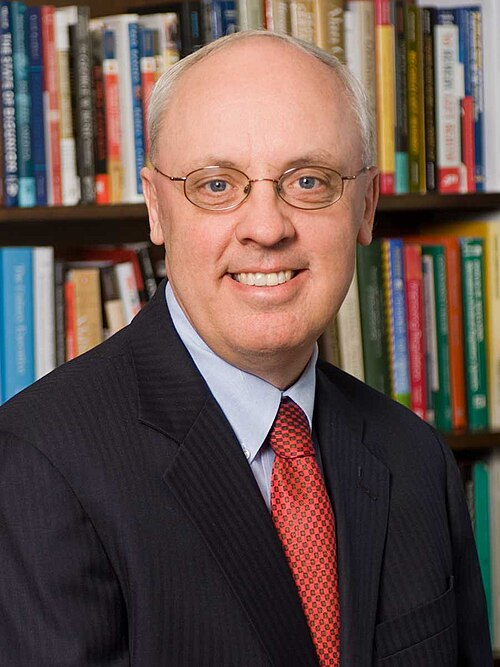
...
Graham is a longtime director of NSF International (Ann Arbor, Michigan) and an elected Fellow, National Academy of Public Administration (2009).[8] Throughout his scholarly career, he has authored or co-authored more than 10 books and 200 articles for academic journals and national publications.
Personal life
Graham is married to Susan Woerner Graham, a certified financial planner. They have two daughters, Jennifer and Katie, and three grandchildren. The Grahams share interests in duplicate bridge, golf, and ballroom dancing.
---
PUBLIC CITIZEN
Industry Ally John Graham Is Wrong Choice to Be Nation’s Regulatory Gatekeeper
*May 17, 2001
Industry Ally John Graham Is Wrong Choice to Be
Nation’s Regulatory Gatekeeper
*Health, Safety, Environmental and Labor Groups Oppose Nomination
WASHINGTON, D.C. — John Graham, an industry ally who has a long record of crusading against health, safety and environmental standards, should not be approved by the Senate to the country’s top regulatory oversight position, Public Citizen told the Senate Governmental Affairs Committee today in written testimony.
Public Citizen submitted written testimony because the committee refused to let any witnesses other than Graham testify — a violation of its obligation to air opposing points of view, Public Citizen President Joan Claybrook said. Others who requested to testify and were denied the opportunity include Frank Mirer of the International Union, United Automobile, Aerospace and Agricultural Implement Workers of America (UAW); Dr. Eric Chivian of Harvard Medical School, who shared the 1985 Nobel Peace Prize; Dr. Philip Landrigan of Mount Sinai School of Medicine; and Dr. Herbert Needleman of the University of Pittsburgh School of Medicine. The committee also refused to let Public Citizen view information submitted to the committee by Graham, although the committee allowed reporters to view it.
Graham, who runs the Harvard Center for Risk Analysis, has been nominated by President Bush to be Administrator of the Office of Information and Regulatory Affairs (OIRA) within the Office of Management and Budget (OMB). The post requires Senate confirmation. The office reviews federal safeguards on industrial chemicals, fuel economy standards, air and water pollution levels, tobacco regulation and virtually every other issue that is critical to human and environmental health. The administrator can serve as the ultimate chokepoint and can slow, stall, weaken or stop regulatory proposals.
Graham’s Center receives funding from 100 major industrial corporations and trade associations, including oil, energy, chemical, agribusiness, mining and auto interests. Industry funders have seen their positions reflected in the Center’s research, in Graham’s work and in his statements to the media and testimony to Congress. At Harvard, Graham has lent academic legitimacy to regulated industries’ opposition to environmental, health and safety standards. One of his first moves at OIRA likely would be to draft a new executive order that could place national safeguards at risk by limiting the issuance of new health, safety and environmental safeguards, Claybrook said.
“John Graham is unfit to serve as the Administrator of OIRA because of the many conflicts of interest that would plague his service,” Claybrook said. “An unaccountable OIRA will be able to overturn years of investment in protective health, safety and environmental safeguards by the public, stakeholders, scientific experts and the agencies. His appointment would give regulated industries a wide-open back door to the White House.”
The groups have three key objections to Graham’s appointment. First, he has deep ties to the regulated industries his decisions would affect. For instance, high-ranking industry executives serve on the Center’s executive board and advisory council.
Second, Graham’s research and advocacy have serviced his industry funders. In letters sent earlier this month to the committee, 79 academics including department chairs and medical doctors raised concerns that Graham’s research has downplayed hazards faced by the public and triggered conflict-of-interest concerns.
Third, Graham has made extensive use of faulty methodologies. If confirmed, Graham is expected to rely heavily on highly disputed and easily manipulable cost-benefit calculations used to determine when particular regulations are warranted. But there are numerous problems with those methods in the regulatory context. The costs are highly exaggerated by industry and are rarely scrutinized by government agencies. Further, benefit data are hard to document, and the practice of quantifying the value of a life is questionable.
“It already takes decades to set a new OSHA standard,” said Alan Reuther, UAW legislative director. “We are concerned that, with Mr. Graham as head of OIRA, public health and safety regulations will be further delayed, protections on the books now will be jeopardized, and the interests of workers and consumers will not be given adequate weight.”
Others in the labor, environmental and public health fields are also concerned about Graham’s nomination.
“Dr. Graham’s track record does not demonstrate the sort of objectivity and dispassionate analysis that we should expect from the next OIRA administrator,” said Gary Bass, executive director of OMB Watch. “He has demonstrated a consistent hostility to health, safety, and environmental protection.”
Said Wesley Warren, senior fellow of environmental economics at the Natural Resources Defense Council, “Our analysis of his record leads us to the unmistakable conclusion that John Graham’s appointment as the nation’s regulatory gatekeeper poses too high a risk for public health and the environment.”
Added Peg Seminario, AFL-CIO safety and health director, “John Graham is the wrong choice to serve as the nation’s chief reviewer and gatekeeper of safety, health and environmental regulations. He cares more about the cost of regulations than the need to protect workers and the public from serious hazards. If his views were the nation’s policy, there would be no real protections from workplace hazards like cotton dust, benzene and arsenic, where the cost of controls is immediate but the benefits are long term.”
In a letter to committee chair Sen. Fred Thompson (R-Tenn.), 30 top medical and public health academics including seven from Harvard Medical School and the Harvard School of Public Health, which houses Graham’s Center, wrote, “It is a cardinal rule of scientific research to avoid at all costs any conflict of interest that could influence the objectivity of one’s findings. . . . For more than a decade, John Graham . . . has violated this rule.”
---
NRDC 600 PP
Graham’s record as the head of an industry-backed think tank showed that he was likely to use his position to bend the regulatory process into a more industryfriendly shape.
...
debate was divisive, with his critics charging that his record as the head of an industrybacked think tank showed that he was likely to use his position to bend the regulatory process into a more industry-friendly shape. So far his actions have supported the views of his critics. Graham has begun to put in place unprecedented procedures for agencies to follow. The effect of these procedures is to substitute the White House’s judgment for that of the agencies that are responsible for rulemakings under various statutes.
Though the White House is trying to usurp the agencies’ role, it can not fully replicate the agencies’ expertise. At best it would produce misguided decisions due to individual bias or a lack of understanding. At worst, it grants special interests a way to dictate policy. One of the most notable procedures established by Graham was the formalization of a “return letter.” The return letter allows the OMB to send a rule back to an agency for more cost-benefit analysis when the OMB does not like the agency’s conclusions.
The OMB can use a return letter to send a rule back to an agency even when a cost-benefit test was not the one prescribed in the statute. Now, whenever industry complains about a proposal it does not like, this new power enables the White House to use its own preferred approach to judging costs and benefits as a way to override environmental statutes that may be based on other criteria, such as available technology or protecting human health. Using this new tool, Graham already has returned several rules to agencies for “improved analysis,” which means they likely will be watered down or killed by paralysis.
One such rule was the EPA’s already weak proposal for reducing emissions from snowmobiles and other off-road vehicles. On September 24, Graham notified the EPA that the OMB was requiring the agency to perform a host of additional assessments. These assessments could favor industry by inflating cost estimates even though the fuel savings to consumers alone would justify the proposed rule.
SLANTING SCIENCE As an extension of the White House substituting its own views for the expertise of individual agencies, the OMB also has begun replacing its traditional scientific review procedures with new, industry-friendly ones. One of the first procedures Graham put into place was a directive that agency rules must be subjected to review by outside panels or they would receive less favorable treatment from the OMB. Although outside review may sound like a good idea, in practice it is rife with problems. In many cases, agencies already have their work peerreviewed.
An additional requirement for an outside review at the end of the process could create unnecessary costs, or worse, another needless opportunity for delay. More significant, the directive does not fully ensure that the outside panel will be objective. Indeed, such panels are typically stacked with industry “peers” without full public disclosure of conflicts of interest. The OMB also recently issued new guidance on how federal agencies can use information. This guidance affects both the kind of information agencies can use in their decision-making process as well as information they disseminate to the public on a rightto-know basis. It puts in place several internal hurdles agencies must overcome befor.....
[COST BEBEFIT BS]
THE OMB HIT LIST John Graham did not waste any time implementing his plans to roll back existing regulations, and he has been reaching out to industry for help. For example, he met with representatives of the National Association of Manufacturers at its headquarters in late October and asked for their assistance in identifying “ill-advised” regulations under consideration. A subsequent Washington Post article disclosed links between Graham and conservative members of Congress who are working directly with business groups to develop a regulatory hit list.
Meanwhile, the recent 2001 OMB report on regulations selectively gleaned recommendations from antiregulatory groups and industry trade associations such as the American Petroleum Institute, the American Gas Association, and the National Association of Manufacturers, while largely ignoring input from public interest groups.
The OMB report goes further by identifying a list of 23 rules that are candidates for weakening. More than half of rules on the list (13) relate to the environment, underscoring the administration’s anti-environmental tilt.
The list includes rules governing such major debates as arsenic in drinking water, controls on toxic chemicals, the new-source-review provision of the Clean Air Act, limits on the total maximum daily load of water pollutants, effluents from concentrated animal feeding operations, and forest planning regulations. Although the OMB has solicited comments from the public and a range of interested groups, all of the rules selected for further review by the OMB were targeted by industry trade associations or the Mercatus Center, represented by Wendy Gramm, the former
head of OIRA under the Reagan administration. The Mercatus Center, which made numerous suggestions for reducing pollution controls on some of the greatest sources of air and water pollution, is itself a conservative think tank heavily funded by industry donors.
The OMB seems to listen only to what it wants to hear about changing regulatory protections. Table 1 lists the 13 environmental rules that the OMB says it may revise sometime in the coming year. The table lists the rule identified by an outside commenter, the name of the commenter, and the potential effect on the environment if the government adopts the proposed changes. The 13 rules that the OMB has put on its hit list include some of the most significant regulations currently being debated nationally for their potential to improve environmental quality in the United States
....
---
BIG REPORT
...The Clinton administration fi nished with a fl urry, completing a host of signifi cant health, safety, and environmental standards in its fi nal months. This included new energy effi ciency standards, restrictions on logging and hard rock mining, ergonomics rules to protect workers, and safeguards for medical privacy, among others. Industry lobbyists misleadingly denounced this last-minute output as “midnight regulation.” Undoubtedly, the Clinton administration was hurrying to wrap up work before the president’s term expired. Yet as required by law, all of these actions were subjected to extensive analysis, as well as public notice and comment, and took years to complete. For example, the ergonomics rulemaking actually began during the fi rst Bush administration under then-Labor Secretary Elizabeth Dole, and was fi nalized only after numerous studies demonstrated the seriousness of the problem.
Nonetheless, corporate interests found a receptive ear in the new Bush administration. On President Bush’s fi rst day in offi ce, White House Chief of Staff Andrew Card issued a memorandum that forbade federal agencies from publishing new standards and ordered a 60-day stay of just-completed standards.
Although likely illegal,1 this allowed the administration to repeal or weaken Clinton actions before they could take effect.2 At the same time, Vice President Cheney convened an industrydominated energy task force, which, among other things, compelled the administration to nix action on global warming, gut restrictions on power-plant pollution, and open public lands to mining and drilling.
This service to large-scale campaign contributors has extended to other areas as well, leading to a procession of rollbacks over the last three and a half years. From giveaways to the timber industry to the slashing of overtime pay to the repeal of food labeling requirements, the Bush administration has consistently put narrow corporate interests over the broader public interest.
....
IMMED AFTER TKE OFFICE
Bush established a task force led by Vice President Cheney to develop a national energy plan. This task force – formally called the National Energy Policy Development Group – was composed of high-ranking administration officials, including Energy Secretary Spencer Abraham, and regularly met in secret with executives and lobbyists from the oil, gas, coal, and nuclear energy industries.
According to documents turned over to the Natural Resources Defense Council as a result of litigation, corporate representatives contacted or met with the task force more than 700 times from January to September 2001.
This backdoor channel paid off generously for the energy industry, which contributed more than $48.3 million (75 percent of its total contributions) to Republican candidates and party committees in 1999-2000, including $2.9 million directly to the Bush-Cheney campaign.
The administration quickly backtracked on global warming, moved to undo clean air standards for the oldest, dirtiest power plants, and then proposed its Orwellian “Clear Skies Initiative” on power-plant pollution, which turned out to be just another rollback in disguise. When Congress balked at this industry-backed plan, the administration went forward anyway and issued new standards on mercury emissions, lifted from Clear Skies, which roll back a determination that mercury is a “hazardous pollutant” requiring the strongest possible controls.
Meanwhile, the administration significantly weakened energy efficiency standards that if implemented would negate the need to build new power plants and save consumers billions in utility bills. In the Bush administration, unfortunately, saving money for the power industry is the priority. Global Warming On March 14, 2001, President Bush reversed his campaign pledge to regulate carbon dioxide emissions by electric power plants, and two weeks later, the United States withdrew from
KYOTO
...
:{:{umber of dubious claims:3 • First, it wrongly claimed that the Senate unanimously rejected Kyoto in a test vote. In fact, the vote in question was on a resolution that expressed broad, uncontroversial views over ongoing treaty negotiations, drawing the support of avowed Kyoto supporters. • Second, it argued that Kyoto would impose an unbearable financial burden on the U.S. economy.}:
In fact, a detailed 2000 study by the Department of Energy estimated costs at less than 1 percent of gross domestic product – echoing a 1998 study by the White House Council of Economic Advisers – and found that new energy efficiency measures could actually increase economic performance over the long run. The Bush administration made no effort to further analyze costs, relying instead on overblown estimates by industry. • Third, it claimed that Kyoto should be invalidated for letting developing countries off the hook.
In fact, Kyoto was developed in accordance with a 1992 United Nations treaty on climate change – signed by the president’s father and ratified by the Senate– that required all countries, including developing countries, to establish programs to reduce greenhouse gas emissions. In keeping with this earlier treaty, Kyoto provides incentives for developing countries to reduce emissions while setting mandatory targets for developed countries, which account for more than 75 percent of all greenhouse gas pollution and are far...}:
---
big pix
History of US Presidential Assaults on Modern Environmental Health Protection
abstract
The Trump administration has undertaken an assault on the Environmental Protection Agency (EPA), an agency critical to environmental health. This assault has precedents in the administrations of Ronald Reagan and George W. Bush. The early Reagan administration (1981–1983) launched an overt attack on the EPA, combining deregulation with budget and staff cuts, whereas the George W. Bush administration (2001–2008) adopted a subtler approach, undermining science-based policy. The current administration combines both these strategies and operates in a political context more favorable to its designs on the EPA. The Republican Party has shifted right and now controls the executive branch and both chambers of Congress. Wealthy donors, think tanks, and fossil fuel and chemical industries have become more influential in pushing deregulation. Among the public, political polarization has increased, the environment has become a partisan issue, and science and the mainstream media are distrusted. For these reasons, the effects of today’s ongoing regulatory delays, rollbacks, and staff cuts may well surpass those of the administrations of Reagan and Bush, whose impacts on environmental health were considerable.
In less than a year, the Trump administration has overturned or delayed dozens of regulations of, proposed massive budget cuts for, and reduced staff and enforcement at the Environmental Protection Agency (EPA) as part of a broad challenge to existing US environmental health policy. This approach is not without historical precedent. Comparison with similar initiatives during the administrations of Ronald Reagan and George W. Bush sheds light on the roots of the Trump assault, while clarifying what is new about it. The early Reagan administration (1981–1983) launched an overt attack on the EPA, combining deregulation with budget and staff cuts, whereas the George W. Bush administration (2001–2008) adopted a subtler approach, undermining science-based policy. The Trump administration combines both these strategies. It also operates in an institutional and cultural context that is more favorable to the new administration’s designs on an agency critical to the nation’s environmental health. In this history, we suggest a difficult period ahead and offer hope for sustaining this agency’s role in protecting environmental health.
We focus on the EPA because the Trump administration has targeted it and because the EPA is the primary federal regulator of environmental health. Other agencies also deal with environmental health, but less centrally, and many do not make and enforce regulations. None produces as many regulations with as many environmental health benefits as the EPA.1 We used secondary sources, newspapers, government documents, and 54 interviews with current and former EPA employees conducted by the Environmental Data and Governance Initiative (EDGI). EDGI identified interviewees through preexisting relationships, responses to an alumni association invitation, and snowball sampling. Approximately half had or still worked primarily at the District of Columbia headquarters, two fifths at regional offices, and the rest split time between headquarters and regions. Interviewees worked across a broad range of agency offices and had a range of professional backgrounds. Our questions concerned presidential transitions, workplace morale, and the politics of science and policy in the agency.2
Attacks on the EPA are especially concerning because of the strong connection between the agency’s activities and public health. The EPA’s hazardous waste, drinking water, and air pollution regulations have reduced many health problems, including cancer, reproductive problems, fetal toxicity, lowered IQ, heart attacks, asthma, and numerous other cardiovascular, respiratory, and chronic health conditions. From air pollution control alone, economists have estimated enormous benefits over time, including an estimated $50 to $400 billion in benefits between 1970 and 2000 and $2 trillion in benefits since 1990.3
Despite these benefits, the new administration is convinced that the EPA needs to be brought to heel. Current conditions favor its resolve in ways that those in earlier decades did not. The Republican Party has shifted to the right and now controls the executive branch and both chambers of Congress (unlike in the early Reagan administration). Wealthy donors, think tanks, and fossil fuel and chemical industries have become more influential in fighting regulation. In the broader public, political polarization has increased, the environment has become a partisan issue, and science and the mainstream media are distrusted. For these reasons, the effects of today’s ongoing regulatory delays, rollbacks, and staff cuts may well surpass those of the administrations of Reagan and Bush, whose impacts on environmental health were considerable.
THE REAGAN ASSAULT
Section:
ChooseTop of pageAbstractTHE REAGAN ASSAULT <<RESISTANCETHE BUSH ASSAULTTHE TRUMP ASSAULTENDNOTESCITING ARTICLES
 [
 ](https://ajph.aphapublications.org/doi/full/10.2105/AJPH.2018.304396#_i3)
The EPA was created by an executive initiative of the Republican president Richard Nixon in 1970, the culmination of decades of rising environmental concern and growing dissatisfaction with absent or ineffective environmental regulation at the state level. President Nixon proposed a “strong, independent agency” with a “broad mandate” to control pollution, and a bipartisan Congress passed landmark acts for clean air (1970) and clean water (1972) that the new agency would enforce. Over the next few years these and other laws gave the new agency ambitious goals and powerful tools to set and enforce national pollution standards. But as this new agency pushed against private interests, and in some cases the prerogatives of state regulators, powerful resistance arose.4
New antienvironmental conservatives in the Republican Party found a champion in Ronald Reagan, who in 1980 won office through a campaign against government overreach by federal bureaucracies, including the EPA. As president-elect, he snubbed a moderate environmental policy blueprint drafted by Republican environmentalists in favor of a plan written by the Heritage Foundation, a right-wing think tank then less than a decade old, that devolved EPA functions and authority back to the states.5
Once in office, Reagan abandoned the practice of previous administrations of appointing agency heads with federal government experience and sympathy for the agency’s mission. Instead, he chose people from industry who shared his antiregulatory views. To run the EPA, Reagan selected Anne Gorsuch, a 38-year-old corporate lawyer and two-term Colorado legislator who had opposed the Clean Air Act, water quality rules, and hazardous waste protections.6 Other EPA appointments were also based more on ideology and loyalty than government experience, with many coming from the industries that they were tasked with regulating, including Aerojet General and Exxon.7
Gorsuch demoralized, marginalized, and reorganized EPA staff. In her inaugural speech, according to one interviewee, Gorsuch told employees, “We’re going to do more with less and we’re going to do it with fewer of you.” She realized part of this promise, reducing staff at the agency by 21% between 1981 and 1983. She also reorganized the agency in disruptive ways, dissolving the Office of Enforcement, for example, and distributing its staff to other offices. In the first year of the new administration, civil enforcement cases fell by about three quarters. The removal of “strong environmental players” through reorganization made everyone feel vulnerable, as did the hostility of political appointees to career staff. Congressional hearings eventually revealed that agency higher-ups had hit lists of career staff.8
The Reagan administration erected powerful new checks on agency rule making. An early executive order required regulatory review and cost–benefit analysis for new regulations, which was enforced by a new Office of Information and Regulatory Affairs (OIRA). It disproportionately targeted EPA rules and acted with little transparency, allowing business influence to go unchallenged. Reagan also created the Presidential Task Force on Regulatory Relief, headed by Vice-President George Bush, to solicit industry complaints about environmental rules. Among those from which the task force sought relief was an EPA regulation to phase out leaded gasoline, which it only backed away from after tremendous public outcry.9
For all of Gorsuch’s and Reagan’s efforts to dial back this agency’s mandates, rules, and reach, they faced a serious obstacle in Congress, where Democrats still controlled the House. The Reagan administration was nevertheless able to slash the EPA budget, by coaxing support from conservative Southern House Democrats (some of whom soon switched parties), although not as much as Gorsuch had originally proposed.10 Between fiscal years 1980 and 1983, under Gorsuch, the EPA’s operating budget fell by 27%. The science budget tumbled 58% (Figure 1).
.....
The Reagan administration also launched interventions into science-based decision-making. It placed industry-aligned scientists on the EPA’s recently created Science Advisory Board. New administrators abruptly abandoned standard scientific and risk analysis methods. For example, despite evidence to the contrary emphasized by their own scientists, the assistant administrator for toxics at EPA, John Todhunter, resisted classifying formaldehyde as a human carcinogen. The Reagan administration also stonewalled the scientific consensus on acid rain, potentially delaying controls on air pollution that would eventually bring large public health cobenefits.11
The health tolls of this antiregulatory push at Gorsuch’s EPA were likely significant....
---
capt 9/14/2014
Graham, John
John D. Graham
http://www.sourcewatch.org/index.php?title=John_D._Graham
---
promoted 9/13 even tho not agw; leverage
why not return to harvard?
---
The Bush43 administration was so evil in terms of environment, there were not one but two entire books devoted to the subject. And so central was Graham that Robert F. Kennedy, Jr., devotes an entire chapter to him in "Crimes Against Nature." summary:
ch 4 The Office of Info and Reg Affairs under the White House OMB became all-powerful; its job is to report on fiscal impact of legislation; John Graham head (fdr Harvard Ctr of Risk Analysis
WU hack, Mercatus Ctr, ASSC, AEI; Am Council on Sci and Health (tobacco tactics)
:{:{"At Xmas, let us be thankful for pesticides and safe food"; can kibosh law 6-7 yrs in making w/ public input; establish in 1980, part of the Reagan [counter-]Revolution, its bible being the Heritage Foundation Mandate for Leadership, which holds the market sacred and tax cuts as magical ([Supply-Side Friedman?] some would say Voodoo) means to prosperity for all (or at least all our friends). With Mercatus, created the wish/hit list of deregulation. }:
A seemingly sensible but ultimately catastophic idea that Reagan injected was that regulations should take into account economic consequence. Fair enough, but recall there's already a bias built into the system that envirinmental regulations are meant to deal with: effects on people and ecosystems magically disappear under the term "externalities." So here again, we see forces of moderation neutralized.}:
Particularly for its "dark soothsayer" cost-benefit analysis is easy to manipulate, especially in terms of green legislation (e.g. cost/damages of a massive fish kill measured by price of fillet of one of the few edible species p. 60-1).
Graham got his start with an air bag study in 80's (based on his academic work?), got an adjunct position at Harvard, then sold its reputation to corprations to whitewash their industries, which in turn got more funding which got him tenure (a presumably bottom-line minded dean pushed for, several professors signed letter against) This cash cow was (not coincidently) named Harvard Center for Risk Analysis. HCRA $ from monsanto, dupoint, ge, union carbide, dow, Boise-Cascade, api, am chem council 62-3 Its board included dupont, exxon ecol lawyer, NAM, eastman chem, Am elec Pwr.
:{:{No fool he, it's no surprise that Graham also cashed in on the big secondhand smoke bonanza, working for Phillip Morris ([strat ignor says: extorted PM for 25K$] laundering money through its Kraft Foods subsidiary before they gave up and just renamed as Altria [perhaps intentionally nonsensical, as most of those 80's business monikers were, but perhaps a bit of "altruism" and the Austrian economics], then he worked w/ them on pesticides in food (p. 64).}:
Then his air bag report reviewed, not 400k$ for each year of life saved but 61K$. 1996 study said 60K lives could be saved by changing regulations and resource allocation[Graham: 17K$ to save life via mamogram, but $19 million to limit carcenogenic benzene (from drinking water?), so if we do the latter that means regulatory murder of 60,000 people because we did not spend the benzene money or airbags; makes perfect logical sense, right?]; failure to do so amounted to "statistical murder" by the governemt, a meme picked up and replayed endlessly by the RWI (most notably charging that banning DDT led to murder of millions of poor dark defenseless people.
This overlooks the fact that the US only banned use of DDT in US, we still made plenty of money exporting it [some of it karmically coming back as the pesticide residue on imported food. This ploy had a number of advantages: it's not greedy evil Big Business that kills people but stupidly imcompetent (even if well-meaning" Big Gubmint that does; moreover, the godmother of the second wave of the envirinmental movement [granola-cruching commie tree-huggers] Rachel Carson was that hysterical spinster that American Cyanamid said she was]].
During his OMD dirrctor confirmation, 1st peer review of statistical murder?: 79 of the rules never enacted (only 11 of 90 had been); he also "grossly understated the value of hu life" (p65). 2 letters, 11 ppl from Harvard opposed;}:
(only got 37 no votes , 2nd to John "beat-by-a-dead-guy" Ashcroft).
however, he got the job and thus rendered opinion on many complex issues, tho no hard science degree (p 66).
Even worse perhaps, he routinely made deceptive comments to media; he has solcited $ from industries affected by his work w/o saying he did 67 GAO found he hobbled health and environmental rules incl EPA (p. 67).
w/ Am Chem Council, Mercatus and American Petroleum Institue created a hit list of regulations, 23 presented to Congr (incl arsenic, snowmoblies in parks, roadless areas, coal plants p(.6-).
Strategic Ignorance picks up the story:
:{:{Graham may have laid down the foundation for another RW favorite meme/ammo: the nanny state; We do not need to test chemicals before used (and more odiously to business, the company that wants to put toxins into our envirinment and thus into our kids should have to prove they are safe beforehand, as opposed to our having to gather evidence, and try to isolate that toxin from all the others, in order to prove a smoking gun 1:1 connection between a chemical and a cancer that develops twenty years later in someone who has moved away from the source/community of others affected;}:
this Precautionary Principle is key, and has been adopted, sensibly, in Europe [home of the effete cheese-eating surrender monkeys and their kin John Kerry; hey, bonus, if we did not poision people/give them cancer in the first place, then we could not also statistically murder the: come down to what the cost is, and who pays] (p 23). This "scare" meme/scam (e.g. Alar) gets profitably recycled endlessly in any number of Regnery and CTT published books (as well as vanity press) hypochondria including Chris Horner, who can crank one out about every other year, as well as Entine.}:
Graham allowed 16K dirty power plants of all types grandfathered (p24) and let Gov. Jeb Bush dump wastewater into Florida drinking aquifer;
He declared hazardous waste (sludge?) ok for farms and playgrounds (24 strat ignor).
extorted PM for 25K$; Opposed dioxin regulation (one of the worst carcinigens, prodiced when chlorine gets dumped by paper and ctton mills, and by burning trash; Graham pronounced cell phone drive deaths ok because of increased productivity (52) [not to mention tow trucks, ambulances, surgery and phyiscal therapy, and funerals, all add to the GNP].
CT Whitman, in addition to her other sins who got her rendered a "wind test dummy' and tossed out of Air Force One had a mixed record in that she supported court order that allowed EPA set air standards without consulting Graham (p58).
th dilorenzo at von mises inst: airbag murders of smaller cars; z28 305 camaro w/ cigar PO's petty tyrant and bizbody 62
---
data qual act used by syngenta to end run around EPA advisory bd, pay attn to only one study the published on atrazine?
==
9/04 chem trade jrnl
The White House Office of Management and Budget (OMB) is defending its role in EPA's decision to reregister the weedkiller atrazine, a response to a Washington Post article claiming that Syngenta used a challenge to the Data Quality Act to help smooth the way for EPA to approve atrazine use for another five years. John Graham, OMB director of the Office of Information and Regulatory Affairs, says the Washington Post story incorrectly attributed the atrazine approval to a challenge filed by a Syngenta consultant under the Data Quality Act, which requires that OMB ensure all information released by federal agencies be reliable.
At issue is the pesticide reregistration …
==
New York Times: Precaution is for Europeans. Reporter Sam Loewenberg interviews OMB head John Graham, arch foe of the Precautionary Principle, about Bush administration concerns over Europe's willingness to employ the Precautionary Principle in regulations. Loewenberg's essay, in Week in Review, ends by highlighting the fact that the logic Bush used to justify invasion of Iraq was quintessential precaution. 18 May 2003.
---
20 February 2003. Stories in the Wall Street Journal and New York Times report on a suppressed EPA report on children's health and the environment. According to the Journal: "A partial draft, titled "America's Children and the Environment," notes that states increasingly are issuing warnings about dangerous mercury levels in fish. It says there is mounting evidence that mercury is collecting in the blood of women of child-bearing age. The evidence is also increasing, warns the EPA report, that high doses of mercury can cause mental retardation and other neurological disorders in infants." The Journal story examines utility and coal industry pressure on the Administration to not implement stronger mercury standards.
Not covered by either story: While the WSJ story describes a battle within the Bush Administration about mercury, it fails to report that a key source of political pressure to stall on the report's release as been the Office of Management and Budget's John Graham. In principle, OMB has no role to play in this report because it is a scientific finding without regulatory impact. In fact, according to EPA sources, Graham's office insisted on reviewing the document.
And finally, a note abour press wars. When the Administration learned that the Journal had obtained a full copy of the report and was preparing to run a story, it leaked selective portions of it to the New York Times. Hence the Times coverage provides a far rosier interpretation.
http://www.ourstolenfuture.org/commentary/News/press.htm
==
---
wiki BS?
John D. Graham is dean of the Indiana University School of Public and Environmental Affairs (SPEA).[1]
John D. Graham began his tenure at SPEA in 2008.[2] He is the fourth dean in the school’s 36-year history.
Dr. Graham's personal research interests include government reform, energy and the environment, and the future of the automobile in both developed and developing countries. Previous to his appointment as dean, he served as dean at the Frederick Pardee RAND Graduate School at the RAND Corporation in California. While at RAND, Dr. Graham streamlined the core curriculum, established new analytic concentrations, revised the program requirements to enable students to launch their dissertations more promptly and raised funds from individuals and corporations to support scholarships, dissertation support and policy papers co-authored by students and RAND researchers.
Prior to joining RAND, Dr. Graham served in the White House Office of Management and Budget (OMB) from 2001 to 2006. As the Senate-confirmed Administrator of the Office of Information and Regulatory Affairs (OIRA), Dr. Graham led a staff of 50 career policy analysts who reviewed major regulatory proposals from Cabinet agencies. Prior to his role at OMB, Dr. Graham was a tenured Professor of Policy and Decision Sciences at the Harvard University School of Public Health.
From 1990 to 2001 Dr. Graham founded and led the Harvard Center for Risk Analysis (HCRA). By raising over $10 million in project grants and philanthropic contributions, Dr. Graham helped support eight new faculty positions and dozens of post-doctoral and doctoral students. By 2001 HCRA had become internationally recognized for analytic contributions to environmental protection, injury prevention, and medical technology innovation.
In 1995 Dr. Graham was elected President of the Society for Risk Analysis, an international membership organization of 2,400 scientists and engineers. Dr. Graham reached out to risk analysts in Europe, China, Japan and Australia as he helped organize the first World Congress on Risk Analysis (Brussels, 2000).
Dr. Graham earned his B.A. (politics and economics) at Wake Forest University (1978) where he won national awards as an intercollegiate debater. He earned his M.A. degree in public policy at Duke University (1980) before serving as staff associate to Chairman Howard Raiffa’s Committee on Risk and Decision Making of the National Research Council/National Academy of Sciences. His Carnegie Mellon University Heinz College Ph.D. dissertation on automobile safety was cited by the U.S. Supreme Court in a pro-airbag decision in 1983 and again in 1985 by Secretary of Transportation Elizabeth Dole. Subsequently, his first academic position was at the Heinz College.
:{:{Notable Publications[}:
The Greening of Industry: A Risk Management Approach NOTE NO DATE?PUBL
Risk vs. Risk: Tradeoffs in Protecting Health and the Environment
Harnessing Science for Environmental Regulation
Auto Safety
References[edit source | editbeta]
^ Boyd, James (April 18, 2008). "Former OMB administrator John D. Graham to head SPEA". The Herald-Times. Retrieved 16 April 2011.
^ "John Graham CV".
Authority control
VIAF: 61688287
Categories: Indiana University faculty 1956 births Wake Forest University alumni Duke University alumni Carnegie Mellon University alumni Carnegie Mellon University faculty Harvard University faculty Living people
==
- JOHN D. GRAHAM, administrator of regulatory affairs in the White House budget office. Graham is the de facto boss of all regulatory programs for the entire government -- any change in enviro rules must pass through his strangling hands. An avowed enemy of pollution regulations, he previously headed a quasi-academic front group that consistently issued reports claiming that environmental protections are too costly for industry -- not a surprising stance since he and his "risk-assessment" center were financed by more than 100 corporate entities, including the American Petroleum Institute, Dow, Dupont, Exxon, Monsanto, and 3M. JH
---
http://www.environmentalcalculations.com/PBMreview.pdf strat ignor rev u chic
http://books.google.com/books/about/Strategic_Ignorance.html?id=K0tKNh-1ZvkC eh cloud
john graham ~ nanny state; do not need to test chems before used 23 hypochondria;
16K dirty plants of all types grandfathered p24 let jeb dump wastewater into drink aquifer;
haz waste (sludge?) ok for farms and playgrounds 24 strat ignor
Graham: 17K$ to save life via mamogram, but $19m benzene, so regulatory murder of 60K ppl
extorted PM for 25K$; ~ dioxin reg; cell phone drive deaths ok b/c up productivity 52
CTW mixed rec'd supported ct order that allowed EPA set air st'ds w/o consult j graham 58
th dilorenzo at von mises inst: airbag murders of smaller cars; z28 305 camaro w/ cigar PO's petty tyrant and bizbody 62
---
John D. Graham
Government: Administrator of the Office of Information and Regulatory Affairs (OIRA), Office of Management and Budget
Industry: Is on leave from position as Professor of Policy and Decision Sciences in the Faculty of Public Health at Harvard University, financed by corporate polluters
"Graham is the de facto boss of all regulatory programs for the entire government -- any change in enviro rules must pass through his strangling hands. An avowed enemy of pollution regulations, he previously headed a quasi-academic front group that consistently issued reports claiming that environmental protections are too costly for industry -- not a surprising stance since he and his 'risk-assessment' center were financed by more than 100 corporate entities, including the American Petroleum Institute, Dow, Dupont, Exxon, Monsanto, and 3M."[8]
---
The Manhattan Institute's Senior Fellow and Director of the its Center for Medical Progress, Paul Howard, spoke at the 2011 American Legislative Exchange Council Annual Conference in a Workshop titled "Rationing By Any Other Name: Medicare's Independent Payment Advisory Board." He co-lead the panel with the Pacific Research Institute's Director of Health Care Studies, John Graham.[4]
---
John D. Graham is the 4th dean of the Indiana University School of Public and Environmental Affairs, one of the leading public affairs and environmental schools in the country. He is the former Administrator of the Office of Information and Regulatory Affairs (OIRA), Office of Management and Budget in the George W. Bush administration. According to a biographical note on the White House website, Graham's "responsibilities include coordination of regulatory review, paperwork reduction, statistical policy and information policy in the Federal government."
Prior to joining the Bush administration he was a Professor of Policy and Decision Sciences in the Faculty of Public Health at Harvard University. He founded and was director of the Harvard Center for Risk Analysis from 1990 to 2001.[1]
According to his biographical note Graham earned "his BA from Wake Forest University, his MA from Duke University and his Ph.D. from Carnegie-Mellon University. He served as a pre-doctoral fellow at the Brookings Institution and as a post-doctoral fellow at the Harvard School of Public Health. Dr. Graham has written seven books and more than 100 scientific articles and is best known for his scholarship on automotive safety and environmental policy."
Opposition to Graham's nomination
John Graham's appointment to the OIRA was hotly contested by scientists, doctors, public health professionals and environmental, consumer and labor organizations, as well as many of his own academic peers, who questioned his science and his ethical practices. His application of cost-benefit analyses to industrial pollution is controversial and tends to favor polluters by systematically overstating the costs of regulation to industry and underestimating the cost to those affected. As founding director of the Harvard Center for Risk Analysis, his acceptance of funding from America's largest corporate polluters, including Dow Chemical, DuPont, Monsanto, Alcoa, Exxon, General Electric and General Motors, was considered a conflict of interest. No environmental or consumer group is represented on the center's advisory board.
Graham has argued that smog protects people from too much sunlight, dioxin might reduce cancer in some cases, safe housing codes can kill people and pesticides on foods are a trivial problem that does not constitute a health hazard. In addition, "he claims that our choice of environmental regulations contributes to the death of 60,000 people under a theory he calls 'statistical murder'." [2]
:{:{A letter signed by 53 academics from across the country opposed Graham's nomination and questioned his credibility and scientific integrity. They stated: "Professor Graham's controversial risk management methodology discounts the real risks of well-documented pollutants such as dioxin and benzene, and makes use of extreme and highly-disputed economic assumptions. Professor Graham has shown his willingness to over-ride health, safety, environmental, civil rights, and other social goals in applying crude cost-benefit tools far past the point at which they can be justified by existing scientific and economic data...}:
Moreover, Professor Graham has publicly rendered many opinions on complex and imperfectly understood scientific phenomena, such as the etiology of cancer and other diseases, despite his lack of a degree in the hard sciences. " It concluded: "Graham's work has, overall, demonstrated a remarkable congruency with the interests of regulated industries. In contrast, the position at OIRA requires a much more even-handed approach." [3]}:
Graham's role as regulatory gatekeeper
As administrator of the OIRA, John Graham has much more discretion than it would appear at first glance. He serves as the nation's regulatory gatekeeper, passing judgment on all major national health, safety, and environmental standards. Acting as "a sort of 'regulatory czar' who can block any new regulation, whether arsenic standards for drinking water, worker-protection rules or the public's right to know about toxic chemicals," Graham's position is a crucial one for overseeing essential consumer protections.[4] He has further extended his influence by appropriating the authority to carry out laws entrusted by Congress to heads of agencies such as the EPA.
Given his history of favoring industry and weakened government regulations, Graham's record since he took the post of administrator is not surprising. In ways that are always beneficial to industry, he has strong-armed agencies to weaken programs and promoted changes in scientific and economic assumptions that pervert the regulatory process. The list of Graham's pro-industry regulatory changes is extensive. A sampling includes: the purging of a backlog of violations against the Clean Air Act, adoption of a developer-financed study that claims wetlands emit more pollutants than they absorb, and elimination of OSHA ergonomics regulations that protected Americans from repetitive stress injuries.
According to Robert F. Kennedy, Jr. chief prosecuting attorney for the Hudson Riverkeeper and the senior attorney for Natural Resources Defense Council, under Graham's supervision "[the] Environmental Protection Agency has halted work on 62 environmental standards, the federal Department of Agriculture has stopped work on 57 standards, and the Occupational Safety and Health Administration has halted 21 new standards. The EPA completed just two major rules--both under court order and both watered down at industry request--compared to 23 completed by the Clinton administration and 14 by the Bush Sr. administration in their first two years." [5]
As predicted by many of his colleagues at Harvard, Graham's "persistent pattern of conflict of interest, of obscuring and minimizing dangers to human health with questionable cost-benefit analyses, and of hostility to governmental regulation in general," has proven highly detrimental to the health and safety of the very citizens his office was designated to protect. [6]
"The easy, kind of sophomoric criticism you'll hear from some of the activists is, `These guys just look at the money and they don't care about anything else.' That's not an accurate characterization," Graham told the Seattle Times.[7]
External links
http://www.hcra.harvard.edu/nomination/
Harvard College, "John D. Graham Professor of Policy and Decision Sciences in the Faculty of Public Health, accessed January 12, 2004.
Sen. Dick Durbin, "Graham Flunks The Cost-Benefit Test," Washington Post, July 16, 2001.
Robert F. Kennedy, Jr., "Crimes Against Nature," TomPaine.com.
Letter from 53 academics to the Senate Governmental Affairs Committee opposing the nomination of John Graham as director of the Office of Information and Regulatory Affairs (OIRA), May 9, 2001.
Robert Perks and Gregory Wetstone, "Rewriting the Rules, Year-End Report 2002: The Bush Administration's Assault on the Environment," Natural Resources Defense Council, January 2003.
"EPA Scientist Resigns in Protest Over Agency's Acceptance of Developer-Financed Wetlands Study, Democracy Now! October 31, 2003.
Resignation statement of Bruce Boler, former EPA biologist.
Amanda Griscom, "They Blinded Me with Pseudo Science: The Bush administration is jettisoning real scientists in favor of yes-men," Grist Magazine, Nov 12, 2003.
Cindy Skrzycki, "Overseer of the Rules for OMB: John D. Graham, the Bush administration's choice to head the regulatory branch of the Office of Management and Budget, isn't much for appearances," Washington Post, July 31, 2001.
Cindy Skrzycki, "Nominee's Business Ties Criticized," Washington Post, May 15, 2001.
Gene Karpinski, U.S. PIRG Urges The Senate To Oppose Dr. John Graham As Head Of The Office of Information and Regulatory Affairs, Letter from the Executive Director, U.S. Public Interest Research Group, to the Senate, June 13, 2001.
Douglas Jehl, "Regulations Czar Prefers New Path," New York Times, March 25, 2001.
Alex Fryer, "Bush's gatekeeper weighs costs, benefits of new regulations," Seattle Times, October 4, 2004.
Category: United States
---
rfk2 Robert F. Kennedy, Jr., "Crimes Against Nature,"
ch 4 Office of Info and Reg Affairs under OMB all powerful; job is to report on fiscal impact of legis; John Graham head (fdr Harvard Ctr of Risk Analysis
WU hack, Mercatus Ctr, ASSC, AEI; Am Council on Sci and Health (tobacco tactics)
"At Xmas, let us be thankful for pesticides and safe food"; can kibosh law 6-7 yrs in making w/ public input; est 1980
"dark soothsayer" of cost -benefit analysis, which is easy to manip, esp w/ green (eg massive fish kill measured by price of fillet of one of the few edible ones 60-1
JG got start w/ air bag study in 80's, got adjunct gig at harvard, then sold its rep, which got more funding which got him tenure (dean pushed for , several signed ltr ~) HCRA $ from monsanto, dupoint, ge, union carbide, dow, boise cas, api, am chem council 62-3 bd has dupont, exxon ecol lawyer, NAM, eastman chem, Am elec Pwr.
JG worked for PM, on 2ndhand smoke (launder $ thru kraft subsid, then worked w/ them on pesti in food 64). then his air bag report reviewed, not 400k$ for each year of life saved but 61K$. 1996 study said 60K lives could be saved by change regs and resource alloc "statistical murder' picked up by rwi. during confirmation, 1st peer rev: 79 of the rules never enacted (only 11 of 90 had been); also "grossly understated the value of hu life' p65 2 ltrs, 11 ppl from harvard ~; rendered opinion on many complex issues, tho no hard sci degree (p 66 )
routinely made deceptive comments to media; he has solcitied $ from industries affected by his work w/o saying he did 67 (only got 37 no votes , 2nd to JA. GAO found he hobbled health and eco rules incl epa 67
w/ Am Chem C, Mercatus and API hit list of regs, 23 presented to Congr (incl arsenic, snowmoblies in parks, roadless areas, coal plants 6
---
DATA QUALITY ACT see sep node
Publication date: Feb. 3, 2004
SHOULD WHITE HOUSE MUZZLE SCIENTISTS ON HEALTH AND SAFETY?
A firestorm of debate over politicization of science has dogged a White House proposal that could limit the access of reporters and the public to scientific information about environmental health risks.
An August 2003 proposal by the White House Office of Management and Budget (OMB) would centralize under OMB the "peer review" of science by almost all government agencies - limiting disclosure of scientific results if OMB raises objections.
The OMB "Bulletin" - similar in some ways to an executive order in that it has largely the force of law for executive branch agencies like EPA, FDA, and the Interior Department - is an extension of authority claimed by the White House under the obscure "Data Quality Act." (See Nov. 19, 2003, WatchDog TipSheetarticle with links to earlier articles). OMB, along with conservative and business groups, has claimed the Data Quality Act gives them authority to prevent "dissemination" of inaccurate information, although the law, still untested in the courts, does not define this term.
Debate over OMB's peer review bulletin has erupted both in a National Academy of Sciences workshop on Nov. 18, 2003, and in the comments in the formal docket on the regulatory proposal itself. On one side are the industry groups - who want to discredit the science underlying federal regulations that eat into their profits. On the other side are a number of scientists, scientific groups, environmental groups, and right-to-know groups, who fear the White House will use the new power to shape scientific findings to industry's liking.
John Graham, who heads OMB's Office of Information and Regulatory Affairs (OIRA) has advanced the proposal under the banner of "sound science." But many commenters on the proposal think it will manipulate science to produce the exact opposite.
While the Data Quality Act was quietly slipped into the 2001 appropriations bill without hearings on the representation that it was meant merely to correct technical errors, conservative forces quickly began trying to expand its scope. Since then it has been used by lawyers attempting to censor findings (such as those in the "National Assessment" of climate change impacts) reached by a consensus of scientists.
The deadline for public comments on the OMB bulletin was Dec. 15, 2003, while federal agencies had until Jan. 14, 2004. In its proposed form, the bulletin was supposed to have taken effect on Jan. 1, 2004, but is unlikely to have any practical force until OMB issues it in final form - an action which could be months away.
One group of commenters - 20 former top federal regulators (more from Dem than GOP administrations) including former EPA Administrators Carol Browner and Russell Train - called on OMB to withdraw the proposal and let the National Academy of Sciences handle the issue. ?
Also calling for its withdrawal were Reps. Henry A. Waxman (CA), John F. Tierney (MA), and five other House Democrats. Waxman's staff maintains a Congressional Web site that tracks what it considers the Bush administration's political manipulation of science related to health and the environment.
On the other side, saying the OMB proposal did not go far enough, were GOP Reps. Jim Gibbons and Chris Cannon (UT), styling himself co-Chair of the "Sound Science Caucus," a group that declared its intention to form in Oct. 2003, a month after OMB proposed its bulletin, by a core of Western GOPers centered mainly in the Resources Committee. They have gun sights trained on the "precautionary principle."
Commenters generally supportive of the OMB bulletin included the American Petroleum Institute, National Petrochemical & Refiners Association, Industrial Minerals Association, American Farm Bureau Federation, National Cattlemen's Beef Association and the Public Lands Council (jointly), Gas Appliance Manufacturers Association, Nickel Development Institute, Styrene Information and Research Center, Chlorine Chemistry Council, American Chemistry Council, CropLife America, Edison Electric Institute, National Association of Home Builders, the U.S. Chamber of Commerce, and the National Association of Manufacturers. Some of the groups urged OMB to assume even more control of agency science.
Commenters opposing or calling for major revisions of the bulletin included the National Academy of Sciences, Association of American Medical Colleges and Federation of American Societies for Experimental Biology (jointly), Ornithological Council, Federation of American Scientists, American Public Health Association, Ecological Society of America, and the National Association of State Universities and Land-Grant Colleges.
http://members.sej.org/sej/tipsheet.php?ID=634 supress sci
---
BS different guy?
John R. Graham
Director, Health Care Studies and Executive Director, Benjamin Rush Society
A financial analyst who researches the effects of laws and regulations on investments in the health sector, John R. Graham has been Director of Health Care Studies at the Pacific Research Institute since May 2005. He was promoted to the additional responsibility of Executive Director of the Benjamin Rush Society in August 2011. Other appointments include Senior Fellow of the National Center for Policy Analysis, Adjunct Scholar of the Mackinac Center for Public Policy, and member of the Board of Visitors of the Benjamin Rush Society of medical students and physicians.
Graham received his M.B.A. from the England) and his B.A. (with Honors) in economics and commerce from the Royal Military College of Canada. He is a Chartered Alternative Investment Analyst (CAIA Charterholder) and is an affiliate member of the CFA Society of San Francisco, having completed all three levels of the Chartered Financial Analyst (CFA) program.
His research agenda includes:
The effect of the 2010 federal health-reform law on returns to publicly listed firms in the health sector;
Quality of health plans' earnings generated by different lines of business, e.g. commercial groups, Medicaid managed-care, and Medicare Advantage;
Valuation of health plans' expansions into international markets;
The effect of regulations sponsored by the Food and Drug Administration and the European Medicines Authority on investments by venture capital and private equity in pharmaceutical and medical-device enterprises;
Effect of philanthropic investment in medical research on returns to commercial investment;
Identifying and measuring factors (alternative betas) derived from government action that explain returns to firms in the health sector; and
Expected contribution of investments in the health sector to traditional (long-only) and alternative portfolios under different legislative and regulatory scenarios.
He writes the monthly Health Policy Prescriptions series of analytical essays, and contributes to PRI's Capital Ideas columns on public policy. He has written for periodicals including the Wall Street Journal and the Washington Post, and writes almost daily for a number of blogs, which are aggregated at Free American Health Care. Readers can follow him on Twitter and Facebook.
Related Link
Free American Health Care
Related Publications
Leviathan’s Drug Problem
Taxing Health Insurance: How Much Do States Earn?
Medicare Advantage or Medicare Monopoly: Protecting Seniors’ Choices and Taxpayers’ Wallets in the Federal Government’s Largest Entitlement Program
This information was found online at:
http://www.pacificresearch.org/keypeople/id.88/scholar_detail.asp
---
http://www.citizen.org/congress/article_redirect.cfm?ID=5255
"It is clear that the president’s choice for OIRA Administrator represents more of the same. John Graham has garnered strong support from regulated industries because he has repeatedly sided with industry in opposing many health, safety and environmental standards over the past decade. As director of the Harvard Center for Risk Analysis, Graham plays a central role in undermining support for many of the country’s vital protections through his research, work with the media and testimony before Congress. Oil, chemical, auto, drug and food companies, mining and other industrial interests have heavily funded his work.
A diverse array of national organizations and prestigious academics are raising serious concerns about Graham's nomination.
Why OIRA Is So Critical
The development of new regulatory safeguards by federal agencies requires skilled professionals to conduct extensive studies, scientific research and economic analyses. Agencies also must conduct a formal notice and comment process wherein the stakeholders submit written testimony and testify at public hearings. As a result, federal agencies often take years to develop new rules (for example, the recently reversed ergonomics standard was 10 years in the making).
A series of presidential executive orders has provided that all significant pending rules are reviewed by OIRA, which means that its administrator can serve as a last-minute regulatory chokepoint on agency action. Federal safeguards on industrial chemicals, fuel economy standards, air and water pollution levels, tobacco regulation, implementation of a Patients’ Bill of Rights, and virtually every other issue that is critical to human and environmental health fall under the office’s purview.
The review power given to OIRA has, in the past, enabled conservative political appointees and government economists, many of whom are prejudiced against new regulations, to intervene in the regulatory process. OIRA has sought to control the agencies’ economic analyses so that the costs of a regulation appear greater and the benefits less; ordered agencies to base decisions on cost-benefit calculations even when prohibited by Congress, which prioritized safety first; and required agencies to reconsider data that it had already disregarded as scientifically unhelpful or flawed.
For example, under the Reagan and Bush I administrations, OIRA was viewed as a "black hole," and many needed regulations were stalled for long periods, altered to be less protective of the public, or blocked altogether. The office was the home of last resort for regulated industries: Whenever an industry did not prevail in the public rulemaking process conducted by agency experts, it came through the back door to quash a rule. President Bush I created the Council on Competitiveness, the so-called "Quayle Council," headed by Vice President Dan Quayle, to work with OIRA in facilitating industries’ anti-regulation objectives." i think: Background on the John Graham Nomination (Updated July 13, 2001):
---
bs cv
Education
Ph.D., Carnegie-Mellon University, 1983
M.A, Duke University, 1980
B.A., Wake Forest University, 1978
Professional Experience
Dean, School of Public and Environmental Affairs, Indiana Univeristy, 2008 to present
Dean, The Pardee RAND Graduate School, RAND Corporation, 2006-2008
Administrator, Office of Information and Regulatory Affairs, US Office of Management and Budget, Executive Office of the President, 2001-2006
Founding Director, Center for Risk Analysis, Harvard School of Public Health, 1989-2001
Deputy Chairman, Department of Health Policy and Management, Harvard School of Public Health, 1987-1992
Staff Associate, Committee on Risk and Decision Making, National Research Council/National Academy of Sciences, Washington D.C., 1979-1981
Awards, Honors & Certifications
Member, International Advisory Board of Germany’s Helmholtz-Programme “Technology, Innovation and Society “(2010 to present)
Member, Administrative Conference of the United States (2011 to present)
Chairperson, Regulatory Occupations Evaluation Committee (ROEC), State of Indiana (2010 to present).
Member, The B. John Garrick Foundation for the Advancement of the Risk Sciences Advisory Board (2010 to present).
Member, Dow AgroSciences Advisory Committee (2010 to present).
Member, American Chemistry Society (2008 to present).
Member, Board of Scholars, American Council for Capital Formation (1995-2000 & 2007 to present).
Member, Scientific and Technology Council, International Risk and Governance Council, Geneva, Switzerland (2008 to present).
Distinguished Lifetime Achievement Award, Society for Risk Analysis, 2008
Member of the Scientific and Technology Council, International Risk and Governance Council, Geneva, Switzerland, 2008 to present
Member of the Board, International Risk and Governance Council, Geneva, Switzerland, 2006 - 2008
Member, Committee on the Status and Future of Federal e-Rulemaking, 2008
Member of the Scientific Advisory Panel, Green Chemistry Initiative, State of California, 2007 – 2008
Alumni Merit Award, Carnegie Mellon University, 2002
Member, National Council on Radiation Protection and Measurement, 1997-2001
Member, Public Health Policy Advisory Board, 1997-2001
Member, Board of Scholars, American Council for Capital Formation Center for Policy Research, 1995-2001
Member, Editorial Board, Journal of Risk Research, 1990-2001
Member, Editorial Board, Risk: Health, Safety and Environment, 1990-2001
Member, Editorial Board, Risk Analysis: An International Journal, 1989-2001 and 2008 to present
Member, Editorial Board, Injury Control and Safety Promotion, 1999
Member, Editorial Board, Accident Analysis and Prevention: An International Journal, 1990-1999
Annapolis Center Annual Public Service Award for Achievements in Risk Communication to the American People, 1998
President, the Society for Risk Analysis, 1995-1996
Professional Interests
Government reform, energy and the environment, and the future of the automobile in both developed and developing countries
Current Projects
e-Newsletter
Selected Publications
Full Vita | Biographical Sketch
Kristin Seefeldt and John D. Graham, America’s Poor and the Great Recession, Indiana University Press, Bloomington, IN (2012).
Liu, Ying, Zhang, Wei, Garber, Steven, Graham, John D., “Potential Health and Financial Benefits from Reduced Salt Intake in the Chinese Adult Population” under review, 2012.
Hajiamiri, Sara, Graham, John D., “Consumer Preferences for Vehicle Performance, Size, and Fuel Economy: A Revealed-Preference Approach”, submitted for publication and currently under review, 2012.
Krutilla, Kerry and Graham, John D., “Are Green Vehicles Worth the Extra Cost? The Case of Diesel-Electric Hybrid Technology for Urban Delivery Vehicles”, Journal of Policy Analysis and Management, Volume 31, Number 3, Summer 2012, pp. 501-532.
Seefeldt, Kristin, Abner, Gordon, Bolinger, Joel, Xu, Lanlan, Graham, John D., “At Risk: America’s Poor During and After the Great Recession”, SPEA, IU, January 2012.
Abelkop, Adam, Graham, John D., Wise, Lois R., “Lessons from the EU’s REACH Program, Vol. 2(2) European Journal of Risk Regulation, February 2011, pp. 181-182.
Fernandez, Sergio & Graham, John, “Reform of Public Organizations: How to Induce More Proactive Responses to Emerging Risks”, Paper presented at the International Risk Governance Council’s Workshop on Emerging Risks, December 16 & 17, 2010. Rüschlikon, Switzerland.
John D. Graham, “Why Governments Need Guidelines for Risk Assessment and Management”, Risk and Regulatory Policy: Improving the Governance of Risk, OECD Reviews of Regulatory Reform, 2010, pp. 237-246.
Graham, John D., “Bush on the Home Front: Domestic Policy Triumphs and Failures,” Indiana University Press, Bloomington, IN, 2010.
Graham, John D., Olmstead, Sarah, "Is There a Universal Precautionary Principle?" Controversies in Globalization, edited by Peter M. Haas, John A. Hird and Beth McBratney, CQ Press, Washington, D.C. 2009, pp. 115-12
Keefe, Ryan, Griffin, Jay, Graham, John D., “The Benefits and Costs of New Fuels and Engines for Light-Duty Vehicles in the United States,” Risk Analysis, Volume 28, No. 5, 2008, pp. 1141-1154
Graham, John D., “Saving Lives through Administrative Law and Economics,” University of Pennsylvania Law Review, Volume 157 (2), December 2008, pp. 395-540
Graham, John D., Wiener, Jonathan B., “The Precautionary Principle and Risk-Risk Tradeoffs: A Comment,” Journal of Risk Research, Volume 11(4), December 2008, pp. 465-474
Graham, John D., Wiener, Jonathan B., “Empirical Evidence for Risk-Risk Tradeoffs: A Rejoinder to Hansen and Tickner,” Journal of Risk Research, Volume 11(4), December 2008, pp. 485-490
Graham, John D., Noe, Paul, “Due Process and Management for Guidance Documents: Good Governance Long Overdue,” Yale Journal on Regulation, Volume 25(1), Winter 2008, pp. 103-112
Graham, John D., Montoya, Silvia, “Modernizing the Federal Government: Paying for Performance,” RAND Publications, OP-213-PV/EMR, 2007
Epstein, Diana, Graham, John D., “Polarized Politics and Policy Consequences,” RAND Publications, OP-197-PV/EMR, 2007
Keefe, Ryan, Graham, John D., Griffin, Jay, “The Benefits and Costs of New Fuels and Engines for Cars and Light Trucks,” RAND Publications, WR-537-PRGS, 2007
Graham, John D., Hu, Jianhui, “The Risk-Benefit Balance in the United States: Who Decides?” Health Affairs, Volume 26(3), May-June. 2007, p. 625-635
Brown, Elizabeth, Graham, John D., “Leading the Executive Branch: Strategies and Options for Achieving Success,” RAND Publications, OP-181-PV-MR, 2007
Graham, John D., “The Evolving Regulatory Role Of The U.S. Office Of Management And Budget,” Review of Environmental Economics and Policy, Vol.1(2), 2007, pp. 171-191
Graham, John D., “Valuing the Future: OMB’s Refined Position,”The University of Chicago Law Review, Volume 74, Winter 2007 pp. 51-57
Graham, John D., Paul R. Noe, Elizabeth L. Branch, “Managing the Regulatory State: The Experience of the Bush Administration,”Fordham Urban Law Journal, Volume 33(4), 2006, pp. 953-1002
---
Education
Post-Doctoral Fellow (1984), Environmental Science and Public Policy, Harvard School of Public
Health. Advisors: Professors Donald Hornig, Marc Roberts, and Howard Raiffa.
Ph.D. in Urban and Public Affairs (1983), The Heinz School Carnegie-Mellon University.
Dissertation: "Automobile Safety: An Investigation of Occupant-Protection Policies."
Committee: Professors M. Granger Morgan, Steven Garber and Alfred Blumstein.
M.A. in Public Affairs (1980), Duke University.
Thesis: "The Value of a Life: What Difference Does It Make?"
Advisor: Professor James W. Vaupel
B.A. with Honors in Economics and Politics (1978), Wake Forest University.
Honors Paper: "A Cost-Benefit Analysis of the 55 MPH Speed Limit."
Honors Paper: “A Theory of Criminal Punishment.”
Advisor: Professor Jack Fleer
Recent Positions
Dean, School of Public and Environmental Affairs, Indiana University, Bloomington and
Indianapolis, Indiana, 2008 to present
Directing the largest comprehensive public affairs school in the United States, including a Master’s
of Public Affairs program that was #2 in US News and World Report’s 2013 national ranking of
university-based programs. Supervising on two campuses (Bloomington and Indianapolis) 110
full-time faculty, over 100 adjunct and part-time faculty, and dozens of professional staff in the
delivery of educational programs to over 1500 undergraduate majors, over 400 master’s degree
students and over 90 doctoral students. Research programs cover the full range of disciplines from
laboratory and field work in environmental science to social scientific investigations. Initiated
strategic planning process leading to “SPEA 2015” and creation of a new Dean’s Council,
including the first development program for non-alumni. Launched new overseas study programs in
seven countries and a new program to recruit and retain junior faculty.
Dean, The Pardee RAND Graduate School, RAND Corporation, Santa Monica, California,
2006 to 2008
Led the largest policy-analysis Ph.D. program in the world. Responsible for curricula, faculty
oversight, student recruitment and placement, fundraising, commencement exercises and
disciplinary issues. Streamlined the core curriculum, established new analytic concentrations,
much more see pdf
---
INDUSTRIE$
LOBBYIST$
MEDIA
FLACKS
HACKS
DIRTY TRICKS
REVOLVING DOOR
webodec3
Franklin Ctr for Gov't and Public IntegrityAmerican Crossroads GPSWebofDCeitGLOBAL WARMINGSKEPTIC/DENIERFUNDER$FRONTSPOLITICIANSINDUSTRIE$LOBBYIST$MEDIAFLACKSHACKSDIRTY TRICKSREVOLVING DOORGraham, Johnalec, api, B2, CoC, Exxon, Koch, PacRes, tobacco, wise useGraham, JohnCEI, coal, CoC, tobaccoData Quality Actalec, coal, CoC, H&W, inhofe, Koch, nam, Norquist, Primary, spnEdison Elec Inst EEIepa, UberEPA501(c)3, api, BM, bp, CoC, Exxon, hub, Koch, SLAPP, tobaccoNAM/National Assoc of ...alec, CoC, Denier, Koch, PacRes, Uber, wsjWall St Journal WSJCLIMATEHAWK, democratWaxman, HB2, Denier, gopCannon, C RepHack, tobaccoCarlo, GLChloroxalec, Front, lobbyist, StafferCropLifecfact, crc, gmu, tobaccoDiLorenzo, ThDioxinEconomistFood SafetyPesticidesalec, fedsoc, Koch, tobaccoQuayle, DKoch, SLAPPRanching/beefActivistRFK2acsh, BM, heritage, hoovr, Koch, pacleg, Pioneer, tobaccoSecondhand smokeB2, revolvdoorWhitman, CTcoal, CoC, coors, KochWorker Safety/Compfedsoc, Front, PacResBenjamin Rush SocietycoalMercuryRAND1980's, coors, gop, Pioneer, wise use, wtReaganacsh, alec, Berman, BM, GMOnsanto, pacleg, SLAPP, syngentaAgribiz/GMOalec, api, bp, Exxon, frack, gingrich, revolvdoor, Uber, xlAm Petroleum Inst APIapco, frackAmerican Chemistry Councilabramoff, alec, api, B2, bgr, BM, Christian, coal, enron, H&W, Koch, Norquist, revolvdoor, rove, rush, UberBUSH21994 Newt Revo, 2000 election, abramoff, aei, B2, brooksbros, delay, lobbyist, wtABRAMOFFalec, api, CoC, Denier, Exxon, frack, KochALEC2gop, lobbyist, tobaccoAltriaacsh, coors, Exxon, Front, GMOnsanto, gmu, Hack, Koch, pacleg, scaife, shell, syngenta, tobaccoAm cncl on sci and health ACSH2501(c)3, abramoff, api, astroturf, gingrich, gps, Koch, scaife, tobaccoAmer. for Tax Reform ATR GNorqalec, api, coors, delay, enron, gingrich, hub, Koch, PacRes, pic, Uber, walmrtALEC1B2, Exxon, fedsoc, Koch, Pioneer, tobacco, TPC. Boyden Gray
---
7/18/2014
see bush family: The Right Nation: Conservative Power in Ameri… (Paperback) by John Micklethwait, Adrian Wooldridge
wow, can't believe i never wrote this up. apparently RR wise use got a pass b/c b2 so bad? tiny bit on arnold/eco-terr in Darkside (no mention of Cheney?! only a bit in Mod, secret task force, enron, imp pres)
As RFK2 as well as another book document in groteque detail, the Bush43 administration was far and away the most anti-environmental in history/imaginable. Howerver, it would not have been piossible without the groundwork, ideological and beaurocratic/institutional set up by the Reagan administration. We all recall the bumperstickers "I Know Watt's Wrong" which forced the resignation of the head of the Dept of Interior who declared Jesus would return when the last tree was cut down [as an aside, a major argument here is that moderation is key, so information and correction are key; having said that, Bill Moyers apologized for drawing attention to that remark was a mistake vbecause it correctly portrayed his attitude, merely got minor detals wrong about where/when it was said].
However, the real damage was not done by Watt (or even his Bush43 equivalent Gale Norton [husband also gig/rancher giveaway of We the People's natural resources for a pittance] by John Graham
laid the groundwork for many ideol entre hack/hacademics to follow; infiltration of Ivy League [cia?], OMB risk analysis paralyzed enviro (esp?) regulations.
wikibits:
born 1956
Dr. Graham earned his B.A. (politics and economics) at Wake Forest University (1978) where he won national awards as an intercollegiate debater. He earned his M.A. degree in public policy at Duke University (1980) before serving as staff associate to Chairman Howard Raiffa’s Committee on Risk and Decision Making of the National Research Council/National Academy of Sciences. His Carnegie Mellon University Heinz College Ph.D. dissertation on automobile safety was cited by the U.S. Supreme Court in a pro-airbag decision in 1983 and again in 1985 by Secretary of Transportation Elizabeth Dole. Subsequently, his first academic position was at the Heinz College.
From 1990 to 2001 Dr. Graham founded and led the Harvard Center for Risk Analysis (HCRA). By raising over $10 million in project grants and philanthropic contributions, Dr. Graham helped support eight new faculty positions and dozens of post-doctoral and doctoral students. By 2001 HCRA had become internationally recognized for analytic contributions to environmental protection, injury prevention, and medical technology innovation.
In 1995 Dr. Graham was elected President of the Society for Risk Analysis, an international membership organization of 2,400 scientists and engineers. Dr. Graham reached out to risk analysts in Europe, China, Japan and Australia as he helped organize the first World Congress on Risk Analysis (Brussels, 2000).
. Prior to his role at OMB, Dr. Graham was a tenured Professor of Policy and Decision Sciences at the Harvard University School of Public Health.
The White House Office of Management and Budget (OMB) from 2001 to 2006. As the Senate-confirmed Administrator [fight?] of the Office of Information and Regulatory Affairs (OIRA)
Previous to his appointment as dean, he served as dean at the Frederick Pardee RAND Graduate School at the RAND Corporation in California
currently/ is dean of the Indiana University School of Public and Environmental Affairs.? joined 2008
The Manhattan Institute's Senior Fellow and Director of the its Center for Medical Progress, Paul Howard, spoke at the 2011 American Legislative Exchange Council Annual Conference in a Workshop titled "Rationing By Any Other Name: Medicare's Independent Payment Advisory Board." He co-lead the panel with the Pacific Research Institute's Director of Health Care Studies, John Graham.[4]
"Graham is the de facto boss of all regulatory programs for the entire government -- any change in enviro rules must pass through his strangling hands. An avowed enemy of pollution regulations, he previously headed a quasi-academic front group that consistently issued reports claiming that environmental protections are too costly for industry -- not a surprising stance since he and his 'risk-assessment' center were financed by more than 100 corporate entities, including the American Petroleum Institute, Dow, Dupont, Exxon, Monsanto, and 3M."[8]
sourcewatch: ["
Opposition to Graham's nomination
John Graham's appointment to the OIRA was hotly contested by scientists, doctors, public health professionals and environmental, consumer and labor organizations, as well as many of his own academic peers, who questioned his science and his ethical practices. His application of cost-benefit analyses to industrial pollution is controversial and tends to favor polluters by systematically overstating the costs of regulation to industry and underestimating the cost to those affected. As founding director of the Harvard Center for Risk Analysis, his acceptance of funding from America's largest corporate polluters, including Dow Chemical, DuPont, Monsanto, Alcoa, Exxon, General Electric and General Motors, was considered a conflict of interest. No environmental or consumer group is represented on the center's advisory board.
Graham has argued that smog protects people from too much sunlight, dioxin might reduce cancer in some cases, safe housing codes can kill people and pesticides on foods are a trivial problem that does not constitute a health hazard. In addition, "he claims that our choice of environmental regulations contributes to the death of 60,000 people under a theory he calls 'statistical murder'." [2]
A letter signed by 53 academics from across the country opposed Graham's nomination and questioned his credibility and scientific integrity. They stated: "Professor Graham's controversial risk management methodology discounts the real risks of well-documented pollutants such as dioxin and benzene, and makes use of extreme and highly-disputed economic assumptions. Professor Graham has shown his willingness to over-ride health, safety, environmental, civil rights, and other social goals in applying crude cost-benefit tools far past the point at which they can be justified by existing scientific and economic data... Moreover, Professor Graham has publicly rendered many opinions on complex and imperfectly understood scientific phenomena, such as the etiology of cancer and other diseases, despite his lack of a degree in the hard sciences. " It concluded: "Graham's work has, overall, demonstrated a remarkable congruency with the interests of regulated industries. In contrast, the position at OIRA requires a much more even-handed approach." [3]
Graham's role as regulatory gatekeeper
As administrator of the OIRA, John Graham has much more discretion than it would appear at first glance. He serves as the nation's regulatory gatekeeper, passing judgment on all major national health, safety, and environmental standards. Acting as "a sort of 'regulatory czar' who can block any new regulation, whether arsenic standards for drinking water, worker-protection rules or the public's right to know about toxic chemicals," Graham's position is a crucial one for overseeing essential consumer protections.[4] He has further extended his influence by appropriating the authority to carry out laws entrusted by Congress to heads of agencies such as the EPA.
Given his history of favoring industry and weakened government regulations, Graham's record since he took the post of administrator is not surprising. In ways that are always beneficial to industry, he has strong-armed agencies to weaken programs and promoted changes in scientific and economic assumptions that pervert the regulatory process. The list of Graham's pro-industry regulatory changes is extensive. A sampling includes: the purging of a backlog of violations against the Clean Air Act, adoption of a developer-financed study that claims wetlands emit more pollutants than they absorb, and elimination of OSHA ergonomics regulations that protected Americans from repetitive stress injuries.
According to Robert F. Kennedy, Jr. chief prosecuting attorney for the Hudson Riverkeeper and the senior attorney for Natural Resources Defense Council, under Graham's supervision "[the] Environmental Protection Agency has halted work on 62 environmental standards, the federal Department of Agriculture has stopped work on 57 standards, and the Occupational Safety and Health Administration has halted 21 new standards. The EPA completed just two major rules--both under court order and both watered down at industry request--compared to 23 completed by the Clinton administration and 14 by the Bush Sr. administration in their first two years." [5]
As predicted by many of his colleagues at Harvard, Graham's "persistent pattern of conflict of interest, of obscuring and minimizing dangers to human health with questionable cost-benefit analyses, and of hostility to governmental regulation in general," has proven highly detrimental to the health and safety of the very citizens his office was designated to protect. [6]" end sw]
Strategic Ignorance: (vs Robert F. Kennedy, Jr., "Crimes Against Nature," )
Origin of the meme nanny state? We do not need to test chemials before used (p 23). Key enermy of Precautionary Principle, which he likens to hypochondria?
16,000 dirty plants of all types grandfathered p24 let Gov. Jeb Bush dump wastewater into drink aquifer;
hazardous waste (sludge?) ok for farms and playgrounds 24 strat ignor
Graham: 17K$ to save life via mamogram, but $19m benzene, so regulatory murder of 60K ppl (another meme, DDT?)
extorted Philip Morris for 25K$; ~ dioxin reg; cell phone drive deaths ok b/c up productivity 52
CT Whitman mixed environmental record as NJ governoer, but supported court order that allowed EPA set air st'ds w/o consult j graham 58
---
PhD Dissertation Carnegie Mellon University 297 (1983)
A quantitative analysis of the frequency and severity of occupant injuries from motor vehicle crashes indicates that the problem deserves attention by public policy makers. The efficacy and cost-effectiveness of various occupant-protection policies are estimated. Results from time-series and cross-sectional models of highway safety suggest that crash-survivability standards adopted in the late 1960's by the Federal government have saved the lives of thousands of automobile occupants. The full potential of the standards has not been realized because few motorists wear available safety-belt equipment. A behavioral analysis of belt-use decision making casts some doubt on the hypothesis that nonuse of belts is a product of rational, utility-maximizing behavior. Passive restraints such as air bags and automatic belts have been proposed as technological alternatives to manual belts. A stochastic benefit-cost model of passive-restraint regulation is estimated with subjective data elicited from crash-protection experts. Results from the model indicate that passive restraints are likely to be cost-beneficial unless a relatively low monetary value is assigned to lifesaving. The concluding chapter discusses several specific policy recommendations for Federal and state decision makers, with explicit attention to questions of administrative law, public acceptance, and political feasibility.
==
Education
Post-Doctoral Fellow (1984), Environmental Science and Public Policy, Harvard School of Public
Health. Advisors: Professors Donald Hornig, Marc Roberts, and Howard Raiffa.
Ph.D. in Urban and Public Affairs (1983), The Heinz School Carnegie-Mellon University.
Dissertation: "Automobile Safety: An Investigation of Occupant-Protection Policies."
Committee: Professors M. Granger Morgan, Steven Garber and Alfred Blumstein.
M.A. in Public Affairs (1980), Duke University.
Thesis: "The Value of a Life: What Difference Does It Make?"
Advisor: Professor James W. Vaupel
B.A. with Honors in Economics and Politics (1978), Wake Forest University.
Honors Paper: "A Cost-Benefit Analysis of the 55 MPH Speed Limit."
Honors Paper: “A Theory of Criminal Punishment.”
Advisor: Professor Jack Fleer
Recent Positions
Dean, School of Public and Environmental Affairs, Indiana University, Bloomington and
Indianapolis, Indiana, 2008 to present
Directing the largest comprehensive public affairs school in the United States, including a Master’s
of Public Affairs program that was #2 in US News and World Report’s 2013 national ranking of
university-based programs. Supervising on two campuses (Bloomington and Indianapolis) 110
full-time faculty, over 100 adjunct and part-time faculty, and dozens of professional staff in the
delivery of educational programs to over 1500 undergraduate majors, over 400 master’s degree
students and over 90 doctoral students. Research programs cover the full range of disciplines from
laboratory and field work in environmental science to social scientific investigations. Initiated
strategic planning process leading to “SPEA 2015” and creation of a new Dean’s Council,
including the first development program for non-alumni. Launched new overseas study programs in
seven countries and a new program to recruit and retain junior faculty.
Dean, The Pardee RAND Graduate School, RAND Corporation, Santa Monica, California,
2006 to 2008
Led the largest policy-analysis Ph.D. program in the world. Responsible for curricula, faculty
oversight, student recruitment and placement, fundraising, commencement exercises and
disciplinary issues. Streamlined the core curriculum, established new analytic concentrations,