DuPont
merger with dow --> corteva
see butler biz coup
primary 9/16 evil pending
history/family vs co?
==
AN 9 24
alternet-no lnx
Inside the billionaire's trick to keep people from voting
Thom Hartmann
September 23, 2024
Outside of Oprah Winfrey and Michael Jordan (and a hedge fund guy), just about all American billionaires are white. And while their white privilege helped most of them to become billionaires in the first place, for the politically active billionaires on the right, it’s their money that they care about the most.
Fred Koch, the founding patriarch of the Koch family, was an early supporter of the John Birch Society (JBS), which vigorously opposed any efforts to reduce the powers of the very wealthy white people or elevate the wealth or political power of poor or working-class people. Their most public positions in the 1950s and 1960s were against racial integration and communism— the ultimate method for leveling the fortunes of the rich. The JBS opposed virtually all “welfare” legislation, from Social Security to Medicare to unemployment insurance, calling it socialism and equating it with a softer version of communism. Around that same time, a Russian immigrant who’d fled the Soviet Union (her father had lost his pharmacy shop to the Bolshevik Revolution) came to America with dreams of becoming a great author or actress. Alisa Zinovyevna Rosenbaum chose the stage and pen name of Ayn Rand, and in the 1950s she wrote a rather simplistic novel celebrating inherited wealth.
In Atlas Shrugged, a young woman and her hapless brother inherit a railroad from their father and try to grow it strong over opposition from the unions, which want a safe workplace and reasonable pay. As George Monbiot wrote:
In a notorious passage, she argues that all the passengers in a train filled with poisoned fumes deserved their fate. One, for instance, was a teacher who taught children to be team players; one was a mother married to a civil servant, who cared for her children; one was a housewife “who believed that she had the right to elect politicians, of whom she knew nothing.”35
It means nothing, in other words, if average people are ground into the dirt. But when people who inherited wealth face challenges, particularly those from average working families, they should be able to utterly destroy them.
ALSO READ: Trump has a brand new front in the Haitian conspiracy push
In a subsequent novel, The Fountainhead, one of the “producers” of her mythology rapes a woman, but it’s all good because the woman decides that she enjoys it mid-rape. Monbiot boils it down simply: “Rand’s is the philosophy of the psychopath, a misanthropic fantasy of cruelty, revenge, and greed.”
While Fred Koch was helping the JBS in its fight against taxes and regulation, his sons were apparently reading Ayn Rand and taking her philosophy of radical selfishness to heart. They were also, by the 1970s, running the Koch oil operation and having constant struggles with regulators, particularly during the Carter administration.
Looking for political juice, David Koch joined and then largely took over the Libertarian Party in the late 1970s.
That political party had been created by the Foundation for Economic Education (FEE), a lobbying group formed in 1946 that represented the Big Three carmakers, the top three US oil companies, Monsanto, DuPont, GE, Merrill Lynch, Eli Lilly, and both US Steel and Republic Steel. Robert Welch, the founder of the John Birch Society, was on its board of directors, as were United Fruit president Herb Cornuelle; National Association of Manufacturers director and DuPont and GM board member Donaldson Brown; and Leonard Read, a longtime US Chamber of Commerce executive.
The mission of the new libertarian movement was straightforward: to lobby for the interests of big business and the uber-wealthy people that such business had created.
The same year that the FEE was created and they began the rollout of libertarianism, Congress busted an obscure University of Chicago economist named Milton Friedman for illegally shilling for the real estate industry.
As Mark Ames wrote:
The purpose of the FEE—and libertarianism, as it was originally created—was to supplement big business lobbying with a pseudo-intellectual, pseudo-economics rationale to back up its policy and legislative attacks on labor and government regulations.
This background is important in the Milton Friedman story because Friedman is a founder of libertarianism and neoliberalism, and because the corrupt lobbying deal he was busted playing a part in was arranged through the Foundation for Economic Education.36
Friedman was later implicated in the aftermath of the brutal and violent takedown of democracy in Chile, and his acolytes helped privatize the state-owned properties of the Soviet Union, creating the kleptocratic and oligarchic government that now runs Russia and many of the former Soviet states. Libertarianism, it turns out, has had real-world impacts, which include the deaths of hundreds of thousands.
No country has ever successfully established a libertarian form of economy or governance; it was, after all, a scam set up to front for the very rich, and the corporations that made them that way. But that hasn’t stopped libertarian and corporatist ideologues from trying.
While Chile and Russia are well-known examples, few Americans seem to remember how George W. Bush, Dick Cheney, and Donald Rumsfeld simply stood on the sidelines watching as the treasures of Iraq were looted after the United States took down their government.
It was to be a Grand Experiment: they’d finally prove that without government interference in a nation’s economy or social systems, an utopia would emerge. L. Paul Bremer was their front man, arriving in Iraq on May 2, 2003, to begin the process of “freeing” the country’s economy so that the world’s corporations would flood in and create a paradise.
https://cen.acs.org/articles/95/web/2017/03/FMC-buy-DuPonts-pesticide-business.html
3/17
Taking another step toward completing its merger with Dow Chemical, DuPont has agreed to sell a large portion of its crop protection business to FMC.
The sale will satisfy DuPont’s commitment to the anti-trust regulators of the European Union, which gave a conditional green light to the Dow deal on Monday. In return, DuPont will receive $1.6 billion and FMC’s health and nutrition business.
The asset swap will make FMC the fifth-largest crop protection chemical company in the world with estimated annual revenue of $3.8 billion. In the deal, FMC will get DuPont’s insecticides that control chewing and sucking insects on fruit and vegetable crops, including Rynaxypyr and Cyazypyr, which together are expected to generate$1 billion in sales in this year.FMC will also get DuPont’s broadleaf herbicide portfolio for cereal crops.
Of longer-term importance, the deal transfers to FMC most of DuPont’s agriculture R&D footprint. The research organization is made up of a crop protection headquarters in Delaware, 14 regional labs, a research workforce, and regulatory staff. FMC also gets DuPont’s development pipeline of 14 active ingredients.
Overall, the DuPont crop protection businesses being sold represented roughly $1.4 billion in sales and $450 million in earnings in 2016. FMC says the products complement its broad spectrum insecticide and pre- and post-emergent herbicide portfolios.
“By combining these high-value products and R&D capabilities with our own product portfolio, pipeline, and formulation expertise, FMC will be able to serve our customers better and accelerate the pace at which we bring new solutions to the market,” says FMC CEO Pierre Brondeau.
The swap will help cement FMC’s competitive position in agriculture,says Laurence Alexander, chemical analyst at the investment bank Jefferies. He points out that FMC easily could have lost out to BASF.
“Had the assets gone to BASF, FMC would have been viewed as a stranded, lower-quality agrichemical portfolio due to investor concerns over the strength of the R&D pipeline after the current family of candidates are commercialized,” Alexander wrote in a note to investors.
Although DuPont was expected to sell the agriculture portfolio, an unexpected part of the deal is FMC’s agreement to sell its $700 million-per-year food and pharmaceutical ingredients business to DuPont. FMC produces texturing agents, such as the biopolymers carrageenan and alginates, as well as excipients used in drugs. DuPont has its own nutrition and health business that sells products such as probiotics and the food texturant pectin.
According to DuPont, the deal with FMC will happen after it completes its merger with Dow, which is now expected to occur between Aug, 1 and Sept. 1 of this year.
Dow and DuPont say they remain committed to then splitting the combined firm into three independent companies—materials science, agriculture, and specialty products—within 18 months. The two firms say the materials science business will emerge first.
still no fed law, trump admin threat veto; mark ruffalo movie Dk waters
does not brk down in nature or ppl thus massive liability
FEBRUARY 15, 2020
Exposure
Environmental lawyer Robert Bilott chronicled his 20-year legal battle against DuPont.
https://www.c-span.org/video/?468718-10/exposure
pfos
pro p
We have obtained a list of 95 new Trump administration appointees made over the past six months. Following a pattern we’ve detailed before, many of the hires previously worked on President Donald Trump’s campaign or at conservative think tanks such as the Heritage Foundation. In other cases, appointees seem to have little work experience at all.
We compiled the information from Freedom of Information Act requests and have added the appointees to our Trump Town app, which lets you search the disclosures of nearly 3,000 of them.
Here are a few of the recent appointments:
- Lynn DeKleva, who worked for decades at chemical giant DuPont,was appointed to a job as an environmental engineer in the Environmental Protection Agency’s chemical safety and pollution prevention office in October. Typically, environmental engineering positions are not political appointments. DeKleva did not respond to ProPublica’s requests for comments. The EPA said in a statement that DeKleva “brings considerable product stewardship experience and knowledge with her to assist” the agency.
- Ileana Garcia, a co-founder of the campaign’s Latinas for Trump, was appointed in October as deputy press secretary in the Department of Homeland Security.
- Todd Thurman, a Heritage Foundation staffer who used to write for the Daily Signal and Breitbart, was appointed as the Department of Housing and Urban Development’s digital strategy specialist in September.
- Antonin Scalia, the namesake grandson of the late Supreme Court justice, was appointed in September as a temporary assistant in the State Department. Scalia graduated from college last year. Scalia and the State Department did not respond to ProPublica’s requests for comments.
==
==
greenwash
2016
Companies like Pepsi, DuPont, and Google might say that they support climate action, but in reality, they are funding lawmakers opposed to President Obama’s climate agenda, according to a Reuters report released Tuesday morning.
Over the last year, more than 150 companies have signed on to the “American Business Act on Climate Pledge,” a commitment created by Obama to encourage businesses to adopt sustainable practices and show their support for the Paris climate agreement. But in looking at the 25 largest donations made during the 2016 election cycle by the political action committees of the 30 largest publicly traded companies involved in the pledge, Reuters found a discrepancy between the businesses’ outward support for climate action and their private political spending.
13 Giant Companies Just Made Big Climate Pledges]
**Twenty-five of the thirty companies funded campaigns of lawmakers considered climate deniers** byOrganizing for Action, a nonprofit created by former Obama staffers. According to a Center for American Progress Action Fund report released in March, 182 members of Congress do not accept the mainstream scientific consensus on man-made climate change.
Pepsi and DuPont are the biggest funders of climate deniers out of the companies that have signed the president’s pledge, according to Reuters. Both companies gave more than half of their largest donations in support of lawmakers that qualify as climate deniers. In the 2016 election cycle, Pepsi PAC gave $56,500 to climate deniers, while DuPont’s PAC gave $40,000.
Lawmakers that received funds from some companies on the list include legislators like Sen. Jim Inhofe (R-OK) who infamously brought a onto the Senate floor in February of 2014 to disprove global warming, and Rep. Kevin Cramer (R-ND), Donald Trump’s energy adviser and self-declared “climate skeptic.”
Reuters noted that it’s not uncommon for companies to spread their donations across the political spectrum, but quoted Jon Lukomnik, head of the Investor Responsibility Research Center Institute, in saying that companies which support climate action but fund those opposed to it might need to have a better oversight and “a process that looks at these issues.”
Environmental groups have long cautioned against the concept of greenwashing, where a company uses public pledges to obfuscate their questionable environmental record. Greenwashing was a major issue at the Paris climate talks last December, which were funded in large part by companies like Engie, a massive energy company that, as an entity, emitted as much greenhouse gases in 2014 as the entire country of Belgium.
Companies in the United States have also been trying to bolster their green image by leaving the American Legislative Exchange Council (ALEC), a Koch-funded organization that has worked to oppose pro-renewable legislation across the country. In 2014, a handful of tech companies like Google, Facebook, and Microsoft all left ALEC due to its opposition to climate action — and last summer, oil and gas giant Shell followed suit, refusing to renew its membership with the council over the council’s climate policy. Dropping ALEC did not stop Shell, however, from pursuing its highly-controversial bid to drill for oil in the Arctic — exploration that eventually ceased in September of last year.
==
omg borders on dis cap'l, massive subsidies
PORT ARTHUR, Texas (AP) — As the nation plans new defenses against the more powerful storms and higher tides expected from climate change, one project stands out: an ambitious proposal to build a nearly 60-mile “spine” of concrete seawalls, earthen barriers, floating gates and steel levees on the Texas Gulf Coast.
Like other oceanfront projects, this one would protect homes, delicate ecosystems and vital infrastructure, but it also has another priority — to shield some of the crown jewels of the petroleum industry, which is blamed for contributing to global warming and now wants the federal government to build safeguards against the consequences of it.
The plan is focused on a stretch of coastline that runs from the Louisiana border to industrial enclaves south of Houston that are home to one of the world’s largest concentrations of petrochemical facilities, including most of Texas’ 30 refineries, which represent 30 percent of the nation’s refining capacity.
Texas is seeking at least $12 billion for the full coastal spine, with nearly all of it coming from public funds. Last month, the government fast-tracked an initial $3.9 billion for three separate, smaller storm barrier projects that would specifically protect oil facilities.
That followed Hurricane Harvey, which roared ashore last Aug. 25 and swamped Houston and parts of the coast, temporarily knocking out a quarter of the area’s oil refining capacity and causing average gasoline prices to jump 28 cents a gallon nationwide. Many Republicans argue that the Texas oil projects belong at the top of Washington’s spending list.
“Our overall economy, not only in Texas but in the entire country, is so much at risk from a high storm surge,” said Matt Sebesta, a Republican who as Brazoria County judge oversees a swath of Gulf Coast.
But the idea of taxpayers around the country paying to protect refineries worth billions, and in a state where top politicians still dispute climate change’s validity, doesn’t sit well with some.
“The oil and gas industry is getting a free ride,” said Brandt Mannchen, a member of the Sierra Club’s executive committee in Houston. “You don’t hear the industry making a peep about paying for any of this and why should they? There’s all this push like, ‘Please Senator Cornyn, Please Senator Cruz, we need money for this and that.’”
Normally outspoken critics of federal spending, Texas Sens. John Cornyn and Ted Cruz both backed using taxpayer funds to fortify the oil facilities’ protections and the Texas coast. Cruz called it “a tremendous step forward.”
Federal, state and local money is also bolstering defenses elsewhere, including on New York’s Staten Island, around Atlantic City, New Jersey, and in other communities hammered by Superstorm Sandy in 2012.
Construction in Texas could begin in several months on the three sections of storm barrier. While plans are still being finalized, some dirt levees will be raised to about 17 feet high, and 6 miles of 19-foot-tall floodwalls would be built or strengthened around Port Arthur, a Texas-Louisiana border locale of pungent chemical smells and towering knots of steel pipes.
The town of 55,000 includes the Saudi-controlled Motiva oil refinery, the nation’s largest, as well as refineries owned by oil giants Valero Energy Corp. and Total S.A. There are also almost a dozen petrochemical facilities.
“You’re looking at a lot of people, a lot of homes, but really a lot of industry,” said Steve Sherrill, an Army Corps of Engineers resident engineer in Port Arthur, as he peered over a Gulf tributary lined with chunks of granite and metal gates, much of which is set to be reinforced.
The second barrier project features around 25 miles of new levees and seawalls in nearby Orange County, whereChevron, DuPont and other companies have facilities. The third would extend and heighten seawalls around Freeport, home to a Phillips 66 export terminal for liquefied natural gas and nearby refinery, as well as several chemical facilities.
uber1:
https://webbrain.com/brainpage/brain/6950F840-FB80-FCB0-D505-8AB1FA685F08#-1909
jim h
...
ver heard of it? Few have, for the financial establishment–along with its media and political henchmen–rushed out, clucking like mother hens to bury the story and protect the gentlemen of Wall Street implicated in the plot. But what a story! It was capitalist skullduggery by a few self-entitled Lords of Wealth trying to overthrow the government and enthrone a fascist regime friendly to themselves.
Fortunately, a real patriot was able to expose them, nipping their coup d’etat in the bud. Nonetheless, their attempt reveals the threat of concentrated wealth and the ever-present danger that the imperious rich pose to majority rule. Not only should this real-life drama be highlighted in our history books, but it would also make a blockbuster movie:
THE SCENE
The Great Depression was at full force in 1933, spreading mass unemployment, waves of bankruptcies, and abject poverty. The people’s boiling political anger was scaring the aloof denizens of Wall Street silly, as more and more people joined in open rebellion against things the plutocrats considered sacrosanct: Unfettered capitalism and–scariest of all–against rich people themselves!
THE CAST
The President By promising a New Deal for millions of Americans impoverished by the Depression, Franklin D. Roosevelt had scored a landslide victory in 1932 over Wall Street’s man, Herbert Hoover. Then, in 1933, to the bankers’ horror, the new president launched myriad new government policies and programs to help people get back on their feet–including new taxes on wealth to fund the recovery.
The conspirators Such Wall Street multimillionaires as Grayson M.P. Murphy (banker and Anaconda Copper Mining head), Thomas Lamont (J.P. Morgan partner), and Robert Sterling Clark (heir to the Singer sewing machine fortune) were enraged by FDR’s moves. Class war, they wailed, claiming that their “liberty” to grab as much profit as they could was being shackled–and for no better reason than to fund “socialism!” Calling Roosevelt a traitor to his class, these men would later be named as instigators of the putsch to replace FDR with a military-backed government of capitalists–i.e., themselves.
The hero Smedley Darlington Butler–a name made for a Hollywood thriller! A retired Marine general, he became a well-known, influential advocate for veterans. The conspirators considered Butler the perfect choice to lead their takeover of Washington, and they spent a year wooing him, gradually laying out their plan.
THE PLOT
Apparently, being super-rich doesn’t make you super-smart, for the scheme these millionaires devised was hapless and cockamamie: They planned to oust Roosevelt by enlisting and arming a private military force made up of thousands of destitute World War I vets who were protesting their failure to receive federal bonus payments they had been promised. But how to engage them in the plot?
Gerald MacGuire, Grayson Murphy’s bond salesman, was an ex-soldier and an active member of the American Legion veterans’ organization, so he was the one who first contacted the soldiers’ champion, Smedley Butler. After several meetings spent discussing veterans issues, MacGuire finally got down to business, explaining that the financial powers he represented wanted Butler to create a paramilitary corps of 500,000 vets and march on Washington to force FDR from the White House.
As Butler later related, MacGuire told him that the Wall Street cohort, plus a new group called American Liberty League (made up of the right-wing bosses of such corporate giants as DuPont, Colgate, General Foods, and GM), would fund the cause to the tune of $300 million–that’s $5.6 billion in today’s money! MacGuire also claimed that the Remington Arms Company would supply the weapons. As investigative journalist Sally Denton wrote in her 2011 book, The Plots Against the President, the conspirators were so out of touch with reality that they actually expected Roosevelt to accept the takeover without a fight. They figured that (1) he knew he was in over his head as president, so he’d welcome these stronger people taking control, and (2) as a member of the patrician class himself, FDR would happily agree to become a ceremonial figurehead, while the financiers and militarists installed a “secretary of general affairs” to run the country. Who was their choice to become this authoritarian SGA? General Smedley D. Butler.
A HERO
…to the rescue! They chose the wrong general.
Butler, a patriot and lifelong soldier for democracy, was astounded and repulsed by the hubris and treachery of these American would-be aristocrats. He felt a duty to stop them.
The general enlisted Paul Comly French, an investigative reporter he knew and trusted, to help gather proof of the bankers’ intent. French even got an interview with MacGuire, who was surprisingly unguarded: “We need a Fascist government in this country,” he blurted to French, “to save the Nation from the communists who want to tear it down. The only men who have the patriotism [!!] to do it are the soldiers, and Smedley Butler is the ideal leader.”
Evidence in hand, Butler got a US House “Special Committee on Un-American Activities” to conduct a two-month investigation, which convinced its members that, as Time magazine later reported, “General Butler’s story of a Fascist march on Washington was alarmingly true.” The committee opened public hearings on November 20, 1934, with Butler giving detailed testimony. The next morning, French’s expose ran in both the Philadelphia Record and New York Post. The story was out and Butler’s gutsy stand had halted the putsch.
THE COVER-UP
https://www.dcreport.org/2017/11/21/we-dont-need-no-stinking-science/
‘We Don’t Need No Stinking Science!’
Pesticide Makers Seek to Bar Scientists from Assessing How Their Poisons Affect Endangered Species
By Sarah Okeson
EPA Administrator Scott Pruitt overruled his own scientists to prevent an agriculture ban of a DowDuPont pesticide that causes brain damage in children, and now pesticide manufacturers have their sights set on undermining federal protections for endangered animals like the whooping crane.
A draftbill being shopped around by the pesticide industry would bar expert wildlife scientists from assessing what harm pesticides can do to about 1,800 endangered species unless the makers of those pesticides ask for their input, according to the Center for Biological Diversity and other conservation groups.
“If Pruitt won’t protect our children and farmworkers from the overuse of highly poisonous insecticides, then he certainly can’t be trusted to protect our endangered species from them,” said Peter Jenkins, counsel for theCenter for Food Safety. “Beautiful species like
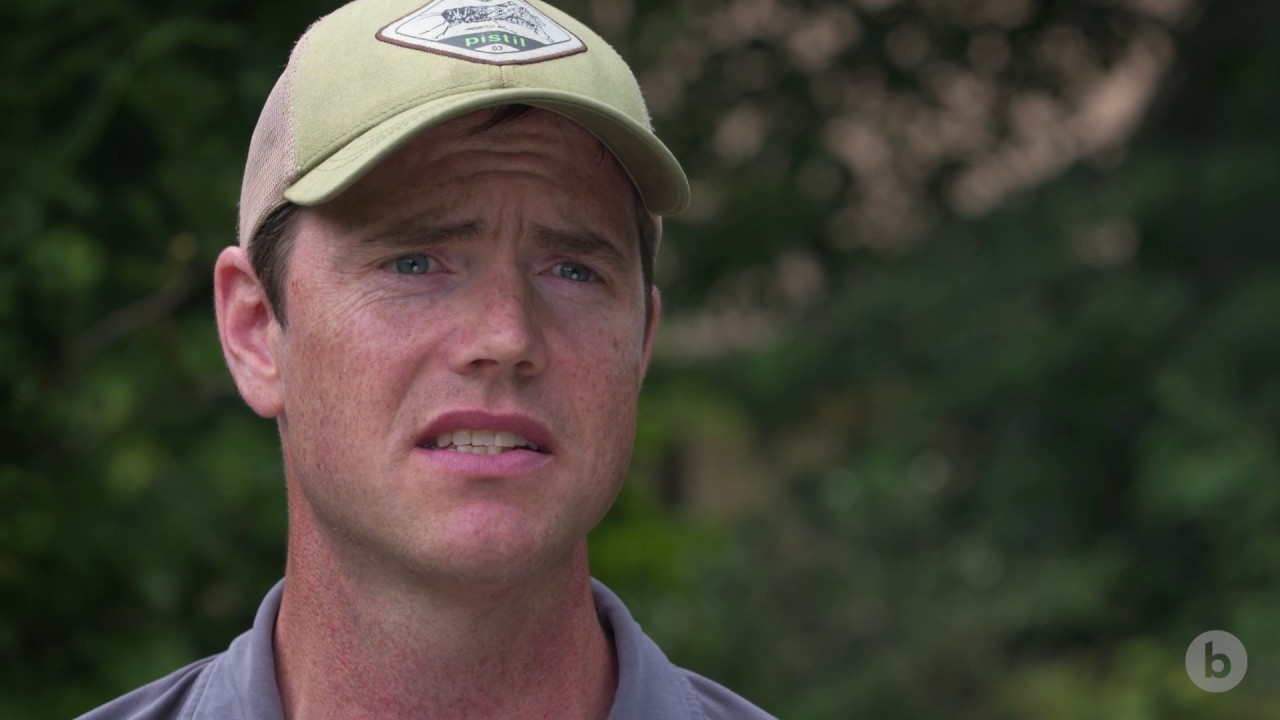 and even ourmajestic whooping cranes may all disappear if we are forced to trust Mr. Pruitt—but this bill removes all the checks on him.”
ACTION BOX/What You Can Do About It
Tell Pruitt your thoughts via his Facebook and Twitter sites. His email is Pruitt.scott@Epa.gov. His phone number is 202-564-4700.
Write him at USEPA Headquarters / William Jefferson Clinton Building / 1200 Pennsylvania Ave. NW / Mail Code:1101A / Washington, D.C. 20460.
The Center for Food Safety can be reached at office@centerforfoodsafety.org or at 202-547-9359.
Under current law, the Environmental Protection Agency must consult with the Fish and Wildlife Service and the National Marine Fisheries Service to minimize harm to endangered species from pesticides that are approved by the EPA.
EPA spokesman Robert Daguillard was unable to provide a response Monday to questions from DCReport.org.
DowDuPont has close ties to the Trump administration. Dow Chemical, which merged with DuPont in August, contributed $1 million to help pay for Trump’s inauguration, and DowDuPont Executive Chairman Andrew Liveris led a White House manufacturing working group that has been disbanded.
A Dow spokesman did not respond Monday to questions from DCReport.org.
 In January, just before former President Barack Obama left office, the EPA released its first nationwide biological evaluation of three commonly used pesticides–chlorpyrifos, malathion and diazinon. The report said the three, which are all organophosphates, were harmful to almost all our country’s endangered species, including whooping cranes,gray wolves, Miami blue butterflies and killer whales.
Organophosphates work by targeting the neuronal pathways in insects and pests, much the way that a nerve gas would attack humans. Organophosphates are also harmful to mammals, including humans.
In April, lawyers representing Dow Chemical and two other pesticide manufacturers sent letters to Pruitt and the heads of two other Cabinet agencies asking them “to set aside” the findings of the government studies which the pesticide companies say are flawed.
Commerce Secretary Wilbur Ross, who oversees the National Marine Fisheries Service, and Interior Secretary Ryan Zinke,who oversees the Fish and Wildlife Service, also received letters. The two other companies were FMC Corp., which sells malathion, and diazinon maker Makhteshim Agan of North America Inc., which does business under the name Adama.
FMC Corp. said withdrawing the government studies would allow time for the “best available” scientific data to be compiled.
==
:{:{:{Amidst the imminent merger between chemical giants Monsanto and Bayer, we’re facing a consolidated seed and food supply controlled by just a few corporations. Right now, Monsanto, }::{DuPont,}::{ and Syngenta alone own more than 50% of the global commercial seed supply, and just 10 corporations own 73% altogether. Corporate ownership of our seed supply means that these companies can limit the seed varieties available to farmers and gardeners, limit the availability of non-GMO seed, and control the cost of these seeds. }:
}:}:
In response,CFS is launching a peer-to-peer online network for sharing seedswith the ultimate goal of creating an independent seed supply to bypass the corporations altogether and empower farmers and home gardeners.
==
2 faced denier
Since Republicans have spent so long telling their constituents that climate change is not a serious threat, they are in no position to do anything about it in government.
This leaves the Democrats with the responsibility to pass as much legislation to lessen the impact of climate change and deal with its consequences. Since Republicans insist on vetoing nearly all legislation concerning the threat, it is likely that if Hillary Clinton is elected, she will have to follow Obama's footsteps and implement policy through executive actions.
Conservative media and politicians may not be the only reasons why Americans are so divided about the climate: Corporate groups are also hedging their bets and throwing investment behind both sides, an investigation by Reuters found.
Some of the country's most vocal corporate supporters of Obama's environmental programs have been found to be funding some of the most ardent anti-climate change politicians in Washington. Among these companies are PepsiCo, Dupont and Google, Reuters said on Tuesday.
Though companies often split their campaign donations to both parties, arguing for both sides of a particular issue may be a problem, the head of the Investor Responsibility Research Center Institute Jon Kukomnik told Reuters.
"There really needs to be a process that looks at these issues … at C-suite and board levels on a periodic basis," he said.
Of the 35 biggest U.S. companies which signed on to Obama's American Business Act on Climate Change Pledge last year, 25 of these companies are supporting Congressional climate deniers by helping to fund their campaigns.
These climate deniers include North Dakota Republican Congressman Kevin Cramer, who once argued the Earth was getting cooler and not warmer, and Oklahoma Republican Sen. Jim Inhofe, who once held up a snowball in the Senate to prove that global warming is not occurring.
Other companies which signed the environmental pact and then gave political donations to climate deniers are Mondelez, Google,AT&T, Verizon and GE.
Only GE responded to Reuters' requests for comment, saying it supports "elected officials based on a wide range of issues." The company insists it has been "outspoken about the need to address climate change."
Sen. Inhofe said businesses might have signed the environmental pact because it appeared politically expedient to do so at that moment.
"These are competitive companies, and the board might have said, 'Look, right now it might be a popular thing to join this, and there's no downside since we're not really committing to anything,'" he said.
However, investors may want companies to be more committed to environmental sustainability, Lauren Compere of Boston Common Asset Management said.
"No company wants to be perceived as espousing progressive climate policies on the one hand, while funding climate deniers on the other," she said.
http://www.ecowatch.com/companies-drive-climate-denial-1998224867.html
==
==
http://www.alternet.org/environment/factory-farms-are-putting-north-carolinians-risk-interactive-map
Corporate heavyweight DuPont is back in court right now, defending their decision to poison entire communities along the Ohio River by releasing a toxic chemical known as C8 into the river. C8 is a chemical that is used in the manufacturing of the company’s blockbuster product Teflon.
The case alleges that DuPont officials were intimately aware of the dangerous side effects of C8 exposure but still decided to allow exposure among workers and by releasing the chemical into the environment.
Once the chemicals were dumped into the Ohio River, they seeped into the water supplies of nearby communities, resulting in thousands of people being exposed to dangerous levels of C8. Complicating the exposure problem is the fact that , meaning that it does not break down in the body or in the environment, and instead continues to build as exposure increases.
The case currently before the court is being handled by Mike Papantonio, the co-host of Ring of Fire (full disclosure: I work for Papantonio and serve as his co-host on Ring of Fire on Free Speech TV.) This is the second trial that Papantonio has handled in the last year, with the first resulting in a jury award of $1.6 million for a woman who developed a cancerous tumor on her kidneys. In that case, the jury found that DuPont acted negligently, but not with malice.
But the “malice” argument might be easier to prove now that a slew of documents have been unsealed from the ongoing trial. The documents show that DuPont was well aware of the dangers of C8 dating all the way back to 1961, and in many instances, their own environmental lawyers privately questioned the company’s decision to pretend that a problem didn’t exist.
Here are a few items found within these documents, which have been made available by the Levin Papantonio Law Firm:
- In November, 1961, a top DuPont toxicologist informed the company that C8 used in the production of Teflon was toxic.
- February, 1961: DuPont becomes aware that C8 exposure in rats was linked to enlargement of testes, kidneys, and adrenal glands.
- September, 1979: DuPont learns that monkeys exposed to high levels of C8 died, and that their workers who were exposed to C8 showed abnormal liver functions in lab tests.
- April, 1981: DuPont recognizes the link between C8 exposure and birth defects and removes pregnant women from C8 projects to limit exposure.
- November, 1982: 21 years after the company recognizes C8 as “toxic,” they finally recommend limiting workers’ exposure to C8.
- October 1983: DuPont scientists grow concerned about the levels of C8 being dumped by the company into the Ohio River.
- October, 1986: DuPont finally begins to worry about the “liability” they could face as a result of dumping C8 into the Ohio River.
- March 1988: DuPont learns of link between C8 and testicular cancer. DuPont then internally classified C8 as a possible human carcinogen. DuPont knew it was in the public water supply, but did not tell the public.
- February 1995: DuPont internal memo shows that they are concerned about the potential health effects associated with C8 exposure.
- August, 1999: In two separate emails a DuPont environmental attorney talked about C8, where he stated the following: “Too bad the business wants to hunker down as though everything will not come out … god knows how they could be so clueless”…“A debacle at best, the business did not want to deal with this issue in the 1990s, and now it is in their face, and some are still clueless. Very poor leadership, the worse I have seen in the face of a serious issue since I have been with DuPont.”
- August, 2000: DuPont in-house counsel writes: “The [expletive] is about to hit the fan in WV, the lawyer for the farmer finally realizes the surfactant [C8] issue, he is threatening to go to the press to embarrass us to pressure us to settle for big bucks. [Expletive] him. Finally the plant recognizes it must get public first, something I have been urging for over a year, better late than never, we are hoping plaintiff does not get there the next couple days, we need about a week. We boned ourselves again, such is life in big and I suspect little companies.”
- : DuPont finally stops dumping C8 into the Ohio River.
The documents can be found here.
53 years passed from the time that DuPont acknowledged that C8 was toxic until they ceased dumping the chemical into the Ohio River. 16 years passed between the end of the dumping and the company’s acknowledgment that C8 was a human carcinogen. And not once during that time did they ever announced to the public that their health could be in danger, nor did the U.S. Environmental Protection Agency step forward to warn the public about the dangers they were being exposed to, in spite of the agency fining DuPont $16.5 million in 2005 for concealing the dangers of C8.
One of the worst aspects of this story that is continuously overlooked is the fact that that could be equally as dangerous.
The current trial will be coming to a close before the end of June, but there are still more than 3,500 cases left to try. And as the case develops, more documents like those mentioned above will undoubtedly come to light giving us a more complete picture of DuPont’s callous disregard for human life.
Farron Cousins is the executive editor of The Trial Lawyer magazine, and his writings have appeared in publications such as California's Information Press and Pensacola's Independent Weekly. He has also worked for the Ring of Fire radio program with hosts Robert F. Kennedy, Jr. and Mike Papantonio since August 2004, and is currently the producer of the program, in charge of guest booking, research, and scripting the week's show. Farron also runs Mike Papantonio's publishing company - Seville Publishing. Farron received his bachelor's degree in Political Science from the University of West Florida in 2005 and became a member of American MENSA in 2009
==
http://desmogblog.com/2016/06/19/document-dump-lawsuit-reveals-extent-dupont-s-c8-cover
==
rev dr
As it moves ahead with its $130 billion merger with fellow chemical giant Dow, DuPont has made quite a hire. To lead the company's "public policy and government affairs strategies," DuPont has tapped Krysta Harden, who just ended a six-plus-year stint at the US Department of Agriculture, where she served as chief of staff to Secretary Tom Vilsack and, most recently, as deputy secretary, the department's No. 2 position.
Krysta HardenDuPont
Harden's move from the USDA to DuPont is not her first whirl through the revolving door separating industries from the government watchdogs that regulate them. According to her USDA bio, she started her career on Capitol Hill, where she worked as staff director for the House subcommittee on peanuts and tobacco and as chief of staff and press secretary for former Rep. Charles Hatcher (D-Ga.), who was defeated in 1992. From there, she moved to Gordley Associates, which handles "legislative initiatives" for the American Soybean Association. The soybean-industry lobbying stint lasted until 2004. After a stretch as CEO of the National Association of Conservation Districts, Harden moved to the USDA in 2009, where she started as assistant secretary for congressional relations before working up to the No. 2 spot under chief Vilsack.
Harden is joining DuPont before the deal with Dow is fully consummated, but when it is the combined company plans to split into three independent parts, one of which will likely emerge as the globe's biggest agrichemical/seed company, bigger even than rivals Monsanto and Syngenta.
Her role in the combined DowDuPont, as it will be called, remains unclear. A DuPont spokesman told me that the two companies are still operating as independent entities pending completion of the merger, which isn't likely until the second half of this year. The deal is still in the process of being vetted by US antitrust authorities, including the Department of Justice and the Federal Trade Commission, he said. If and when it's approved, he added, management will decide what roles current DuPont and Dow execs will play within the merged company.
http://www.motherjones.com/tom-philpott/2016/03/dupont-plucks-top-usda-official-lead-government-affairs-strategies
==
http://www.prwatch.org/news/2016/01/13026/dupont-rakes-federal-dollars-despite-history-hazards
Four workers were tragically killed when an insecticide leaked into a building at DuPont's LaPorte, Texas plant in November 2014. After two workers were overcome by toxic fumes, another responded to a distress call and was overwhelmed. His brother, too, died attempting to aid the fallen. Three others were injured.
OSHA officials blasted DuPont in the strongest terms, stating those who died "would be alive today, had their employer taken steps to protect them." Yet, just months later, the same plant was cited by OSHA for even more safety violations. Now,DuPont—which with its subsidiaries has held multiple federal contracts over recent years totaling millions of dollars—is part of a corporate coalition trying to block rules that would ensure federal contractors abide by health, safety, and labor laws.
President Obama's Fair Pay and Safe Workplaces Executive Order aims to protect hard-working Americans by requiring companies with an ongoing history of violating safety and labor standards to clean up their acts and comply with federal health and safety laws before being rewarded with taxpayer dollars. DuPont and its subsidiaries, whose history of OSHA violations as of January 2016 includes dozens of "Serious" citations, multiple "Repeat" and "Willful" citations, and more than $500,000 in penalties since 2013, are exhibiting exactly the type of behavior the new rules were created to discourage.
With millions in federal contracts at stake, federal contractors have pushed back hard against the new rules through little-known trade organizations like the Human Resources Policy Association (HRPA), which has attacked the executive order in congressional testimony, media statements, and lobbying efforts. A DuPont executive sits on HRPA's board of directors.
HRPA complains that holding regular OSHA violators to account is an effort to "create a black list" and "intimidate companies." The organization also claims that the rules "seek to solve a problem that does not exist" as its member companies "have a long standing commitment to complying with all federal and state employment and labor laws."
But as the records of DuPont and its subsidiaries show, pervasive safety problems with federal contractors are all too real.
Four Tragic Deaths Follow "Serious Failures" by DuPont
On November 15,2014, operator Crystal Rae Wise collapsed when 20,000 pounds of gaseous methyl mercaptan, a gas used in insecticide production, leaked into the enclosed space where she was working at the the LaPorte chemical plant. Other employees were killed and injured by the toxic fumes in the building trying to rescue her and each other. OSHA documented what went wrong in a
OSHA issued DuPont one "Repeat" violation and nine "Serious" violations for what it called "serious failures," including failing to train its employees properly, along with a $99,000 fine. Investigators found a "Repeat" violation because the company didn't teach the employees how to use the plant's ventilation system. OSHA had found similar problems involving inspection and training failures following the death of a DuPont worker at its Belle, West Virginia plant in 2010.
"Four people lost their lives and their families lost loved ones because DuPont did not have proper safety procedures in place," Assistant Secretary of Labor for Occupational Safety and Health Dr. David Michaels said of the horrific incident at the LaPorte plant, but the violations are being contested by the company.
The same plant was inspected again in January 2015. DuPont, which chalked up $34.7 billion in annual revenues and paid its CEO Ellen Kullman $14.3 million in 2014, had failed to clean up its act, so OSHA enrolled the company in its "Severe Violator Enforcement Program."
"We have concerns about the safety culture," Dr. Michaels told the Texas Tribune in July 2015 as OSHA issued another 4 "Serious," 3 "Willful," and 1 "Repeat" violation, and $273,000 in penalties on top of those issued in 2014. "We expect chemical facilities where highly toxic materials are used to have a culture that focuses on ensuring worker protection. It appears to have broken down." These penalties are also being contested.
History of Dangerous Violations
The LaPorte tragedy is not an isolated incident.
A tanker truck leak exposed workers at the DuPont Chamber Works plant in Deepwater, New Jersey to hazardous chemicals in May 2014. DuPont Chamber Works was issued 8 "Serious" violations over process safety management standards, and 2 "Repeat" violations for failing to perform inspections and tests on the equipment used in chemical processes. The plant had been cited for the same violations in 2010 and 2011, but the most recent violations are being contested.
When a hose ruptured at DuPont's Belle, West Virginia plant in January 2010—the third hazardous chemical release in two days at that plant—a worker's face was sprayed with phosgene, a hazardous herbicide that was used as a chemical weapon in World War I. The man died in the hospital the following night. OSHA fined DuPont $43,000, citing it for 6 Serious and 5 other violations.
A storage tank at DuPont's Yerkes facility in Buffalo, New York exploded on November 2010 due to an undetected leak of flammable vinyl fluoride, killing one worker and causing first-degree burns on another. The Chemical Safety Board, which produced a safety video based on the incident, called it "preventable" and identified problems with DuPont's monitoring of flammable vapor. After a separate investigation, OSHA cited the DuPont Yerkes Plant and a contractor for a combined total of 17 Serious violations, and $61,500 and $55,440 in proposed fines, respectively. The case was closed in February 2012, after an Administrative Law Judge sustained 7 of the Serious citations against the DuPont Yerkes Plant and a fine of $49,000.
Millions in Federal Contracts for an OSHA "Severe Violator"
It may come as news to HRPA and DuPont, but no taxpayer wants to subsidize federal contractors that have an established pattern of flouting health and safety laws.
Between 2013-2016, the "look back" period that triggers action under President Obama's executive order, DuPont and its subsidiaries incurred a total of 41 "Serious," 3 "Willful," and 4 "Repeat" OSHA violations. Yet during this same time period, DuPont or its subsidiaries were still awarded significant federal contracts.
Once President Obama's executive order is fully implemented, companies like DuPont would have to report this data as part of the process of gaining federal contracts and federal agencies could begin holding companies with bad records to account.
"Dupont is such an egregious violator that OSHA placed them in their Severe Violator Program, which focuses agency resources on employers who have demonstrated indifference towards creating a safe and health workplace," OSHA expert Deborah Berkowitz, a Senior Fellow at the National Employment Law Project, told CMD.
HRPA may try to spin the Fair Pay and Safe Workplaces Executive order as a "blacklisting" of "well-intentioned companies." But the executive order addresses a serious flaw in the federal contracting system.
"This executive order is about saving lives and making sure federal tax dollars don't reward companies that are indifferent to their obligation under the law. It's not about blacklisting, it provides an opportunity for DuPont to fix these dangerous conditions and come into compliance with the law," said Berkowitz.
This series on fair pay and safe workplaces is dedicated to the memory of watchdog journalist Chris Thompson of CorpWatch, who wrote the 2014 report "Subsidizing Contractor Misconduct." If you want to encourage the White House Office of Management and Budget to take swift action to protect workers, please sign CMD's petition here.
==
http://www.npr.org/2015/03/30/396365659/how-one-nation-didnt-become-under-god-until-the-50s-religious-revival
On how corporations hired ministers to spread "free enterprise"
The New Deal had passed a large number of measures that were regulating business in some ways for the first time, and it [had] empowered labor unions and given them a voice in the affairs of business. Corporate leaders resented both of these moves and so they launched a massive campaign of public relations designed to sell the values of free enterprise. The problem was that their naked appeals to the merits of capitalism were largely dismissed by the public.
The most famous of these organizations was called The American Liberty League and it was heavily financed by leaders at DuPont, General Motors and other corporations. The problem was that it seemed like very obvious corporate propaganda. As Jim Farley, the head of the Democratic Party at the time, said: "They ought to call it The American Cellophane League, because No. 1: It's a DuPont product, and No. 2: You can see right through it."
So when they realized that making this direct case for free enterprise was ineffective, they decided to find another way to do it. They decided to outsource the job. As they noted in their private correspondence, ministers were the most trusted men in America at the time, so who better to make the case to the American people than ministers?
On the message the ministers conveyed
They use these ministers to make the case that Christianity and capitalism were soul mates. This case had been made before, but in the context of the New Deal it takes on a sharp new political meaning. Essentially they argue that Christianity and capitalism are both systems in which individuals rise and fall according to their own merits. So in Christianity, if you're good you go to heaven, if you're bad you go to hell. In capitalism if you're good you make a profit and you succeed, if you're bad you fail.
==
ch3 koch war BO
dupont, lib league, minute men etc Am legion, thought about kkk 84 but dems tied al landon to "economic royalists", cellophane league b/c see thru it cf bk Invisible Hands by kim Phillips-Fein new deal to RR;
dupont fail b/c lacked coherent intellectual framework, so coors and scaife built one 84 but no direct challenge to prez till kochs; om fang mach
==
6/15
Chalk up another win for the little guy. A handful of residents of Kauai’s Waimea community prevailed in court over biotech giant DuPont-Pioneer earlier this month. Citing extensive, harmful dust generated by DuPont’s seed operations, a jury awarded 15 residents $500,000 in damages.
==
Du Pont Dynasty: Behind the Nylon Curtain
By Gerard Colby
pete gave gopac to newt, contras, star wars, col in wsj; wilmington bank in derivatives. got 800m$ TARP.
==
==
Nike's not alone in seeking Constitutional protection against bad publicity. In 1986,Dow Chemical sued the federal government. The company argued that the use of aerial photography by the Environmental Protection Agency (EPA) was a violation of the corporation's Fourth Amendment rights. Dow asserted that the EPA shouldn't be able to snap photos in search of federal violations. The Fourth Amendment protects Americans from unreasonable search and seizure, and Dow alleged its rights were violated by EPA flyovers [source: Connecticut General Assembly]. The Supreme Court ultimately decided 5 to 4 to uphold the lost case, opining that Dow couldn't reasonably expect privacy in its chemical plant [source: New York Times].
==
du pont bros opposed prohbition b/c liq tax would make inc tax lower; also worried about investigation of wwi profittering. one quit nat'l labort bd b/c stikes prolif (1800 involving 1.4 mil workers). one vp complained his black servants quitting for better oppourinuites p4. ot really old $, made miost ww1 and 20's. du ponts met w pals to create org to ally w/ Am Legion and KKK to defend Const p 10, Am Liberty League; 1st ok w/ FDR but split on SS (lawyer defended milk co from unfair siezing // now? pal of EKodak head
NAM became big ~ to new deal, ~ union; lost members b/c of GD, but by '37 spend 1/2 on PR to bost free enterprie, but also went after unnions opposed Wagner Act and publized Mowhawk Valley Formula 15.
GM, goodyear chrysler and Rep Stell stocked tar gas (some machine guns: sen report 1939 "indusrial Munitions".
by 40's nam caLIMED THOUSANDS "sentinels" to prosletze for mkt 15.
USCoC supported fdr's nra; Read FEE and Mullendore latter wantdto fight new deal) . So scared ND tools wd be used ~ segrration. du ponts had co unions, big progits in WW11. piere du ont gave $ to black educ but favored segreration
==
biggest producer of cfc's , invented and last maker of leaded gas, one of biggest polluter 1.6m lbs/day, in US 1989 348m lbs
[someone noted that dupont smart to get out of any product with consumer enduser so as to be free from boycott worry?]
http://www.panna.org/resources/caia/corpProfilesDuPont
Interestingly, the Koch meetings are managed by Kevin Gentry, an executive who doubles as a staffer in the Koch Industries lobbying office in Washington and as the key point person who helps deliver Koch charitable foundation grants. As ThinkProgress has documented, Koch Industries has dramatically boosted its own profits by using conservative front groups to manipulate public policy. The fusion between the “intellectual” conservative movement and big businesses opposed to regulations and accountability has a history in America dating back to the New Deal. During the thirties, theDu Pont family and other wealthy interests organized an assortment of “Liberty League” front groups to try to defeat New Deal agenda items and repeal President Roosevelt’s Social Security program. Now, corporations fund groups like the Heritage Foundation and the American Enterprise Institute — both had representatives at the Koch meeting — to further their lobbying agenda. The American Enterprise Institute even changed its name from the New Deal-era American Enterprise Association to try to dispel the notion that they were nothing more than a glorified business trade association.
...
is this ron arnold?
Undue influence
To advance their interests, powerhouses like DuPont invest heavily in political and social influence. Some of DuPont’s efforts to influence policy and public opinion include:
Trade organizations and think tanksSome of the trade and policy organizations in which DuPont participates include:[[63]](http://www.panna.org/campaigns/caia/corpProfilesDuPont.dv.html#_edn63)
- American Chemistry Council (http://www.americanchemistry.com/)
- American Petroleum Institute (http://api-ec.api.org/)
- American Plastics Council (http://www.plastics.org/)
- Biotechnology Industry Organization (http://www.bio.org/)
- British Potato Council (http://www.potato.org.uk/)
- Business Roundtable (http://www.businessroundtable.org/)
- Chemical Industry Institute of Toxicology (http://www.ciit.org/)
- CropLife America (http://www.croplifeamerica.org/)
- EuropaBio (http://www.europabio.org/)
- Grocery Manufacturers of America (http://www.gmabrands.com/)
- International Chamber of Commerce (http://www.iccwbo.org/)
- U.S. Council for International Business (http://www.uscib.org/)
- World Business Council for Sustainable Development (http://www.wbcsd.ch/)
- World Economic Forum (http://www.weforum.org/)
Campaign contributionsDuPont political action committees (PACs) contributed a total of US$641,914 to federal candidates from 1994 to 2002 (70% to Republicans)— US$128,000 per election cycle.[[64]](http://www.panna.org/campaigns/caia/corpProfilesDuPont.dv.html#_edn64) DuPont gave more than US$345,750 in soft money contributions to the Republican and Democratic parties in the 1998, 2000 and 2002 election cycles.[[65]](http://www.panna.org/campaigns/caia/corpProfilesDuPont.dv.html#_edn65)
Lobbying From 1998 to 2004, DuPont spent a total of US$10,225,000 lobbying the U.S. government. In 2004 alone, the company invested US$1,370,000 while lobbying the U.S. government.[[66]](http://www.panna.org/campaigns/caia/corpProfilesDuPont.dv.html#_edn66) Additionally, many of the trade organizations to which DuPont belongs deploy teams of lobbyists. For example, the American Chemistry Council (formerly the Chemical Manufacturers Association) spent US$4.68 million lobbying in Washington in the first half of 1996 alone.[[67]](http://www.panna.org/campaigns/caia/corpProfilesDuPont.dv.html#_edn67)
Government connectionsDuPont CEO and Chairman Charles Holliday Jr. has served on President Bush’s National Infrastructure Advisory Council.[[68]](http://www.panna.org/campaigns/caia/corpProfilesDuPont.dv.html#_edn68) Richard H. Brown, a member of DuPont’s board of directors, serves on the President’s National Security Telecommunication Advisory Committee.[[69]](http://www.panna.org/campaigns/caia/corpProfilesDuPont.dv.html#_edn69) Director William K. Reilly is a former administrator of EPA and Director Charles M. Vest serves on the President’s Committee of Advisors on Science and Technology.[[70]](http://www.panna.org/campaigns/caia/corpProfilesDuPont.dv.html#_edn70)
