gaslighting
===
merri ok
6 24 neglected, why abandon the term?
see alt fact earth 2
see big lie jan 6 two revisionism
see echo escalator
see lie pwr any means
===
===
earth 2 gaslight lie rep
06/26/24
===
===
https://www.alternet.org/2021/07/gop-2653956348/
salon kirk s
as the Republican Party continues on its march toward fascism, it's easy to find yourself making political connections — even when you are trying your best not to think about politics.
Recently I was reading about astrophysics (understanding only an infinitesimal amount) and saw the Republican Party's implosion into Trumpism as akin to the formation of a black hole in space, where truth (instead of light) is unable to escape the event horizon.
I found myself in the same frame of mind while watching Alfred Hitchcock's 1951 classic "Strangers on a Train," about a couple of men falling into a conversation and making an unholy bargain,which one of them thinks is a macabre intellectual exercise not to be taken seriously.
Falling back into the dream of the film, I could not help but see the conniving, unhinged Bruno Antony (brilliantly played by Robert Walker) as a precursor of Mitch McConnell, Lindsey Graham, Ted Cruz, Josh Hawley, Ron Johnson and their ilk, those who have managed to kill off the old Republican Party and who are hard at work to murder majority-rule democracy — both through voter suppression and by inciting actual violence. For me, Guy Haines (played by Farley Granger) represented Republicans I understood, at least to a degree: Nelson Rockefeller, George H.W. Bush, John McCain, Mitt Romney, Liz Cheney. To me, those Republicans might have been willing to take advantage of others and perhaps stretch the law to avoid taxes or otherwise enrich themselves, but they would likely have ruminated over it and made sure to attend church service soon after banking the profits. In any case, they believed in the necessity of compromise, the work inherent in politics.
These are the so-called RINOs, or "Republicans in name only," a term which — now that I consider it — was always a form of gaslighting and projection. That term has been used to attack actual Republicans and make them seem like another group Trump voters could despise and blame for their failings and bad impulses — another "other." Newt Gingrich and his chortling crew sent the Republicans who understood that compromise was the way of politics (and who, it ought to be said, also took their oaths of office seriously) the way of the Oldsmobile. It was a Swift Boat operation done on their own people. We could all see they were Republicans, but we were told they were somehow not Republicans, or at least not real Republicans — they were RINOs. The fake Republicans pushed out the real ones.
And there it was: Gaslighting — the favored authoritarian manipulation of "don't believe what you see with your own eyes" — so named for the 1944 film "Gaslight" (directed by George Cukor with Hitchcockian flair), in which a criminal, played by Charles Boyer, purposively undermines the mental health of his wife (Ingrid Bergman, who won an Oscar for the role) by lying to her endlessly and saying that things she has seen with her own eyes are not true. You know, like Donald Trump has done to the public for years — indeed, for his entire adult life.
The overarching gaslighting that the modern Republican Party continues to perpetrate on the American public is that good old yarn about how lowering taxes for the wealthy and corporations will boost the economy — the so-called trickle-down theory, which George H.W. Bush memorably called "voodoo economics," before he was selected as Ronald Reagan's running mate, at least partly to shut him up. It always brings to mind something economist John Kenneth Galbraith wrote:
The modern conservative is not even especially modern. He is engaged, on the contrary, in one of man's oldest, best financed, most applauded, and, on the whole, least successful exercises in moral philosophy. That is the search for a superior moral justification for selfishness.
The actual Republicans — who we are told by the likes of Matt Gaetz are not the actual Republicans — must have thought back in the Tea Party days that the Gingrich plan, the treat-the-opposition-as-your-enemy, shut-down-the-government, win-at-all-costs faction, would be a temporary thing, something to be countenanced for a short time. They clearly felt the same way about the antics of Donald Trump. It was all just kind of an unsettling joke, as Guy Haines thought of Bruno's proposed bargain to trade murders.
In the film, Bruno crashes a party and nearly strangles a woman while re-enacting the murder he has committed, which might remind anyone old enough both of Gingrich's crashing the GOP with his "Contract With America" (often referred to then as "Contract on America") and of the equally oddly named Grover Norquist, co-author of the "Contract," who often said he wanted a government small enough that he could drown it in the bathtub. (That phrasing seemed pretty personal — there's more than a hint of gruesome domestic violence in there.)
What Gingrich and Norquist brought to the party was the end of what used to be called "political comity" — seeing beyond different political positions and working together professionally to reach compromise. You know — pretty much the substance of politics.
There is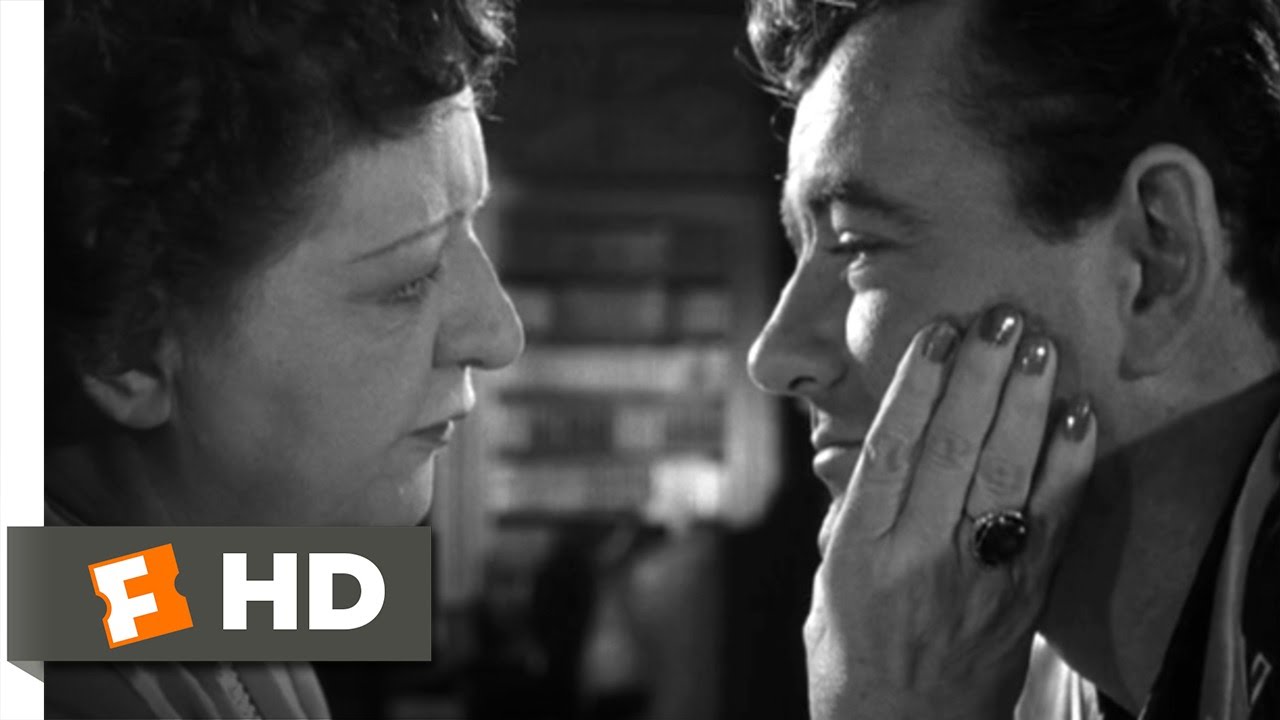 , in "Strangers on a Train" in which Bruno and his mother (the memorable Marion Lorne, in her film debut) have a chance to catch up, and we learn a good deal about how Bruno became the person he is now. She fusses about his health and his attitude, remarking to her son that at least he had given up on his crazy earlier plan:
Mother: Now, you haven't been doing anything foolish?
[Bruno shakes his head while nuzzling her hand.]
Mother: Well, I do hope you've forgotten all about that silly little plan of yours.
Bruno: Which one?
Mother: About, um, blowing up the White House.
Bruno: Oh, ma, I was only fooling. Besides, what would the president say?
Mother[laughing with relief]: Oh, you're a naughty boy, Bruno! Well, you can always make me laugh.
When the film was made, the politics of the day were focused on the Cold War and distrust of anyone who might be sympathetic to the "other side." Looking at the film today, who could doubt that Bruno, like far too many Republicans, might be a QAnon believer, as well as a delighted supporter of Trump's Big Lie about the election, shrugging off the lack of any evidence while pointing to Chinese and Russian conspiracy websites. (In the film, Bruno works assiduously to plant evidence to tie Granger to the murder that Bruno actually committed.) Bruno would have been delighted to help with the planning for the insurrection of Jan. 6 and would have cheered others on from a discreet distance. And he would just as cheerfully deny everything he'd done. You can never pin down a psychopath. As we all know now, it is not possible to hold the shameless to account. They just cry persecution.
The images of the fight on the merry-go-round — sent into overdrive by a policeman who shoots indiscriminately, killing the carny operating the ride — are unforgettable. Granger's character, like, say, Liz Cheney and Mitt Romney, is trying desperately to hang on as Bruno kicks at his hands and the whole contraption seems about to break apart. It does, at least until a carnival employee crawls beneath the carousel to reach the controls, too late to save the ride and some of its passengers.
One story concerning the making of "Strangers on a Train," as told by Ben Mankiewicz on Turner Classic Movies, is that Hitchcock was haunted by his decision to allow the man to crawl under the frantically spinning merry-go-round. For years afterward, Hitchcock said, he got sweaty palms every time he thought about that day. If Donald Trump is directing this insurrectionist flick now in production from Mar-a-Lago Studios, he's more than happy to sacrifice anyone and everyone.
The old GOP is going the way of that merry-go-round, and even if someone were to try to get to the controls now (Who? The Lincoln Project? The Bulwark?) it seems too late to save anything worthy of a democratic republic. Conservatives who are not pro-white supremacy, pro-conspiracy, anti-science, and chock-full of grievances will need to create a new political party someday — and get themselves out of the carnival business, with its glaring lights, mesmerizing sounds and untrustworthy machinery.
FROM YOUR SITE ARTICLES
- GOP senator dismisses deaths of 400 children from Covid - Alternet ... ›
- GOP lawmaker defies Trump by defending Capitol cop who killed ... ›
- Texas GOP wants a forensic election audit — but there's a catch ... ›
RELATED ARTICLES AROUND THE WEB
- Some Republicans worry voting limits will hurt the GOP, too ›
- Pelosi Bars Trump Loyalists From Jan. 6 Inquiry, Prompting a G.O.P. ... ›
- 'Deadly serious': Pelosi goes to war with GOP over Jan. 6 - POLITICO ›
===
https://www.alternet.org/2020/09/trumps-constant-lies-reveal-a-big-truth-about-the-right-wing/
are they stupid or evil?
When I first started writing about politics, way back in the George W. Bush era, this was a legitimate question when it came to trying to understand the mindset of Republicans, especially when it came to their stubborn refusal to accept scientific truths. Republicans have denied or cast doubt on science in so many ways — denying that condoms are effective, that evolution is real, that climate change is actually happening and largely caused by human activity — and many liberals and progressives have felt legitimately confused about exactly why.
Was it that right-wingers were too ignorant or benighted to accede to scientific realities? Or was it more sinister than that: They knew full well what the science said, but were too selfish and cruel to care, and also selfish and cruel enough to lie about it to our faces?
Well, with the West Coast on fire, a pandemic spreading across the land, and a pathological liar in the White House as the Republican standard-bearer, I think we can consider that debate settled: It’s not ignorance. It’s malice.
the cruelty, as Adam Serwer of The Atlantic famously wrote, is the point.
Donald Trump is a profoundly stupid man — so stupid that he appears to have actually believed it was a stroke of genius to suggest injecting household cleaners into people’s lungs — but even he, as we now know for certain, was only pretending not to understand that the coronavirus is deadly and easily transmitted. Famed journalist Bob Woodward has been steadily releasing audio clips from the interviews he conducted with Trump over the spring for his new book, “Rage.” These recordings make clear that Trump knowingly lied about the scale and danger of the pandemic. In one, he tells Woodward, “I wanted to always play it down” and “I still like playing it down”.
New tapes released on Monday indicate that, even as Trump was publicly claiming that the virus “would soon be in full retreat” and encouraging protests against lockdown measures, he was privately admitting that “this thing is a killer” and that the virus “rips you apart” if “you’re the wrong person.”
In other words, Trump gets it but simply doesn’t care. That was confirmed again on Monday by a reporter for the Las Vegas Review-Journal, who confronted Trump about his decision to hold a packed (and largely mask-free) indoor rally in Henderson, Nevada, despite warnings from public health officials that such events easily spread the coronavirus.
“I’m on a stage and it’s very far away,” Trump told the reporter. “And so I’m not at all concerned.”
So the safety of the thousands of people who showed up to show fealty to Trump is clearly of no importance. He was far away from them! So he’s “not at all concerned.”
Trump’s odious attitudes towards the people who are being harmed by his failure to take science seriously were on display later in his trip, when he visited McClellan Park in Sacramento, California, where the skies are clogged from smoke from wildfires tearing up the West Coast.
That the frequency and severity of wildfires around the world — and currently up and down the Pacific Coast at a level never seen in human memory — is a result of climate change is beyond dispute. But when a California state official asked him about the issue, Trump simply responded, “It will start getting cooler. You just watch.”
“I don’t think science knows,” Trump insisted, while trying to pretend the problem on the West Coast is about forest management, instead of soaring summer temperatures that turn bone-dry wooded areas into kindling. (It was just nine months ago that similar summer fires in Australia reportedly killed more than a*billion* animals.)
Claiming that the science is still unclear or that the continued existence of winter proves that there’s no climate crisis are standard issue deflections from Republicans. It worked for many years, however, because the consequences of climate change weren’t readily apparent to most people, and many people didn’t grasp that snow in December doesn’t negate the problems caused by record hot summers. (In fact, one aspect of the climate crisis is more extreme weather in all directions: Record heat, epic hurricanes and sometimes powerful blizzards.)
But the “I don’t see the problem here” act is a lot harder to pull off when you literally have to walk through a cloud of smoke to get to the microphone where you deny the problem.
The term “gaslighting” —when someone pretends not to know something that both they and their target know is true — has been around in psychology for a long time and recently made the leap to politics, since it so perfectly describes the nature of Trump’s obvious lies.
That’s also what Republicans have been doing all along when it comes to denying science. Even the duller specimens within the party tend to be a little sharper than Trump, after all. So if he understands the facts and is just pretending not to, it’s safe to assume the same thing about the vast majority of Republicans whose lead he follows, and who are perhaps a bit more skillful at performing ignorance.
They aren’t ignorant. They don’t really believe the science is controversial. That’s just an act to cover for a sadistic agenda....
==
amanda
https://www.alternet.org/2020/04/trump-desperately-tries-to-gaslight-america-as-he-faces-humiliation-from-lysol-gate/
It’s gone mainstreamin recent years, but the word “gaslighting” used to be an esoteric term from the world of psychology and domestic abuse counseling. The word refersto the 1944 film “Gaslight,” in which Ingrid Bergman plays a woman whose husband tries to drive her insane by hiding her belongings and otherwise manipulating her environment, and telling her that the changes she perceives are all in her head. Experts in domestic violence developed the term to describe the way that abusers in real life try to manipulate victims. The gaslighter works by denying reality, often when the facts are plain as day, with such conviction and repetition that the victim starts to question themselves and the evidence of their own senses.
For instance, this might take the form of the abuser denying that he hit his victim or falsely claiming that she provoked it, and then browbeating her until she accepts the lie and even starts to wonder whether she imagined the whole thing.
Under Donald Trump’s administration, however, the term has ventured into politics. It’s become a way to talk about how Trump and his defenders won’t merely tell lies, but will stand by even the dumbest and most obvious lies, holding their ground until the defenders of reality simply give up fighting. This started from the very beginning of the administration, when Trump and his administration claimed his inauguration crowd was bigger than Barack Obama’s, and insisted on repeating that lie and intimidating government agencies into backing it up. Needless to say, this has continued throughout the coronavirus pandemic, dialed up to an extreme.
One might wonder why we need a term with such a complicated back story, when the word “lying” is right there for the taking. The reason is that Trump lies so frequently and in such varying ways that it’s useful to have a taxonomy of Trump lies to understand the various ways his lies work and how best, perhaps, to resist them.
With garden-variety lying, the liar tends to assume the target doesn’t know the truth and so can be made to accept the lie as if it were truth. Gaslighting differs dramatically in that the target actually knows what’s true. They experienced it, heard it or witnessed what really happened themselves. So what the gaslighter must do is convince the target to reject the evidence of their own eyes and ears.
Gaslighting is a useful term to explain what Trump did throughout this past weekend, in response to what we at Salon are calling “Lysol-gate,” in which our president went on national television and suggested that injecting household cleaners into people’s lungs might be a clever idea to fight the coronavirus that the medical profession clearly hadn’t thought of yet.
The reason doctors haven’t considered this idea is that it will kill the patient — and, I guess, also any virus lurking in his or her lungs. Trump is literally too stupid and lazy to know that fact, which was deeply embarrassing for him and anyone who supports him.
The problem Trump faces here is that he’s right there on video, marveling about “the disinfectant, where it knocks it out in a minute” and speculating about an “injection inside, or almost a cleaning, because, you see, it gets in the lungs,” and pompously instructing the federal officials tasked with managing this crisis to investigate this possible treatment.
In the wake of widespread outrage, mockery and , Trump turned to gaslighting. The goal is to deny the evidence of our own eyes and ears with such shamelessness and persistence that people start to question whether they heard what they heard, or at least give up trying to insist on the truth.
Trump’s first gaslighting attempt was to try to pretend he was pranking the press, telling a group of reporters the next day: “I was asking a question sarcastically to reporters like you just to see what would happen.”
This is a classic example of how gaslighting differs from plain old lying. Trump is insisting here that those of us who heard him suggest injecting disinfectants in people’s lungs have broken brains — if we didn’t detect the slightest hint of sarcasm in his tone, it’s because we are defective in some way, not because he wasn’t actually being sarcastic. The point is to force people who heard him perfectly well to defend their own ability to hear and see things, knowing full well that there’s no definitive, objective way for human beings to “prove” that they know the difference between sarcasm and not-sarcasm.
But at the same time Trump was implying that only crazy people with broken brains didn’t detect his supposedly obvious sarcasm, he also suggested that only crazy people with broken brains heard him say the word “lungs.” To repeat, he suggested an “injection inside, or almost a cleaning, because, you see, it gets in the lungs.”
“I do think that disinfectant on the hands could have a very good effect,” Trump told reporters later.
This is more gaslighting. It’s about trying to make people question whether, in their eagerness to criticize Trump, they misheard or misinterpreted him. (Never mind that rubbing bleach or Lysol or other household disinfectants on your hands is also a bad idea, since they will burn your skin.) His two arguments contradict each other — he couldn’t simultaneously have been messing with reporters and making an earnest argument about hand-washing — but in a sense, that’s the point. What the gaslighter wants to do is disorient the target so they begin to question their own sense of reality. Flooding them with a bunch of confusing and logically incoherent claims suits that goal.
Since then, Trump has been ranting incessantly on Twitter, throwing out a bunch of scattershot argumentsover which government officials he addressed his disinfectant comments to, and whether or not he directly said that coronavirus was a “hoax.” He’s referring to the long-ago controversy following a rally in February where he said that fears about the coronavirus — which turned out to be fully justified — were a “hoax.” This was bizarre but entirely typical Trump hedging, indulged in precisely so he could get into quibbling arguments later about what, exactly, he had described as a hoax.
All these insignificant points of litigation — was he talking to Dr. Deborah Birx or Homeland Security Undersecretary Bill Bryan when he made his “injection” comment? Was he talking about the virus itself or merely the fear of the virus when he said “hoax”? — are also forms of gaslighting. It’s about seizing on minor but irrelevant details the target may have gotten wrong to imply that the target’s sense of reality is irrevocably damaged and therefore they can’t be trusted to understand anything at all.
An abuser in a marriage, for instance, might use the fact that his wife once forgot that his favorite shirt is purple, not red, to argue that she is too stupid and crazy to be trusted when she says that he hit her or that he won’t let her see her friends. Trump is pulling the same trick, using minor confusion over the details of that specific press conference as “evidence” that people didn’t hear him correctly when they heard him suggest injecting disinfectants into people’s lungs.
Because gaslighting works differently than garden-variety lying, it requires a different response. With garden- variety lying, it’s often just a matter of supplying a fact check. But gaslighters put the person who is being lied to on the defensive, and try to make the debate over whether the target is mentally stable enough to be trusted, not the content of the gaslighter’s lies. Trump wants the debate to be about what’s in our heads, which is ultimately insubstantial and unprovable, not what the entire world heard him saying with his own mouth.
Defeating gaslighting often requires more of a meta-response. Rolling the tape over and over to confirm that we all heard Trump say the words he actually said certainly helps, but it’s not enough. It’s important to resist getting mired in line-by-line debates over whether people who are horrified by Trump’s disinfectant comments got the color of his tie right. Instead, we should call out these kinds of diversionary tactics, which are meant to force us into a debate about whether our minds are broken and whether we can literally perceive anything at all. That’s not the issue. The issue is that our president is a lazy, arrogant moron who went on TV and spewed fatuous bullshit about how maybe doctors should look into shooting up patients with poisonous chemicals because, y’know, it’s worth a shot.
===
==
no lnx
an 1119
Here’s why Republican impeachment theatrics — as buffoonish as they are — serve a purpose for the GOP
Rep. Jim Jordan, ABC's "This Week" Screengrab
Written by Alex Henderson November 15, 2019
Liberal and progressive pundits — and some Never Trump conservatives as well — have been highly critical of the silly, buffoonish theatrics that Rep. Jim Jordan of Ohio, Rep. Devin Nunes of California and other far-right House Republicans brought to the first public testimony in the impeachment inquiry against President Donald Trump. But then, Jordan and Nunes weren’t trying to win over liberals, progressives or anti-Trump conservatives on Wednesday, November 13, when they aggressively attacked the testimony of two diplomats: Ambassador William B. Taylor (top U.S. ambassador to Ukraine) and the U.S. State Department’s George P. Kent (deputy assistant secretary for European and Eurasian affairs). They were playing to Trump’s hardcore MAGA base, pushing emotional buttons rather than relying on substance.
For that matter, Jordan and Nunes weren’t trying to win over independents either. They were preaching to the converted, determined to show pro-Trump voters that they still have their backs.
Rep. Adam Schiff, Democratic chairman of the House Intelligence Committee, knew what he was doing with Taylor and Kent’s testimony — and that testimony made a strong case for impeaching Trump. Schiff and other House Democrats showed exactly why Trump deserves impeachment: during a phone conversation on July 25, Trump tried to pressure Ukrainian President Volodymyr Zelensky into investigating a political rival — former Vice President Joe Biden — as well as his son, Hunter Biden. The testimony demonstrated that Trump withheld military aid to Ukraine and made an investigation of the Bidens a condition of that aid.
Jordan and Nunes never disproved anything that Taylor or Kent had to say. Instead, they angrily insisted that the entire impeachment inquiry is one big fabrication on the part of partisan Democrats — and the way in which they said it was more important than the substance (of lack thereof) of what they were saying. Their inflammatory rhetoric, while short on facts, was clearly designed to fire up the MAGA base as much as possible.
During the testimony, Jordan and Nunes both promoted the ludicrous Crowdstrike conspiracy theory, which claims that the real interference in the 2016 presidential election came not from the Russian government and President Vladimir Putin, but from the Ukraine government. Never mind the fact that former Special Counsel Robert Mueller, in his in-depth report for the Russia investigation, made it abundantly clear that Russian officials aggressively interfered in the 2016 election.
Nunes referenced “Ukrainian election meddling” more than once. But when Kent was asked if there was any evidence of Ukraine interfering in the 2016 election, the U.S. State Department diplomat responded, “To my knowledge, there’s no factual basis” for that claim. Kent even said, “To be honest, I had not heard of Crowdstrike” until after he read the transcript of Trump’s July 25 conversation with Zelensky.
Evidently, Kent doesn’t spend a lot of time listening to conspiracy theorist Alex Jones’ “Infowars” show.
Nunes indignantly insisted that Trump’s July 25 conversation with Zelensky was perfectly innocent, asserting, “We’re supposed to believe that President Trump committed a terrible crime that never actually occurred.”
Jordan asserted that it is horribly unfair that Schiff hasn’t told him the identity of the intelligence whistleblower who made the complaint that led to the impeachment inquiry. But the whistleblower’s identity, at this point, is irrelevant because Taylor’s testimony backed up everything in the whistleblower’s complaint.
Saying that Nunes and Jordan’s theatrics were silly and devoid of substance, however, is not saying that they weren’t effective as far as reaching the people they were intended to reach: the MAGA base. And so many of their talking points have been echoed in the right-wing media: the impeachment inquiry is a sham, Trump’s conversation with Zelensky was perfectly innocent, Crowdstrike is a real concern, Democrats are pursuing impeachment because they refuse to accept the 2016 election results.
Liberal Washington Post columnist Eugene Robinson has described Trump’s rhetorical style as a form of “gaslighting”: Trump and his sycophants will repeat nonsense over and over — and the goal is to overwhelm those who are listening. The type of “gaslighting” that Robinson describes works well if one watches Fox News religiously, lives in a Trumpian bubble and never seriously listens to what anti-Trump voices have to say.
That type of “gaslighting” was very much in evidence on November 13 with Nunes, Jordan and other House Republicans. Their theatrics were clearly aimed at the far-right Fox News/AM talk radio/Breitbart News audience. It’s easy to debunk much of what they Nunes and Jordan have had to say about the impeachment inquiry, but for those House Republicans, such theatrics serve a purpose: whipping the MAGA base into a frenzy at every turn and giving them reasons to get to the polls in November 2020. And one need only spend some time watching Fox News to see that it’s working.
===