Univ of Arizona/ASU
==
see also univ of ariz (mostly on ~sci)
sinema ai 9 25
Arizona State University’s Center for the Study of Economic Liberty,for example, has received $3.5 million from the Charles Koch Charitable Foundation. The other freedom schools are the Center for Political Thought and Leadership at Arizona State University and Center for the Philosophy of Freedom at the University of Arizona.
==
afpi
Lee E. Ohanian is from Santa Barbara, California, and serves as a Member on AFPI’s Board of Academic Advisors. He is a Distinguished Professor of Economics, and Director of the Ettinger Family Program in Macroeconomic Research at UCLA, where he has taught since 1999. He is also a Senior Fellow at the Hoover Institution at Stanford University, and the Associate Director of the Center for the Advanced Study in Economic Efficiency at Arizona State University. Ohanian is an adviser to the Federal Reserve Bank of Minneapolis, and previously has advised other Federal Reserve Banks, Foreign Central Banks, and the National Science Foundation. He has been an economic adviser to state and national political campaigns and has testified to the U.S. Senate and the California State Legislative Assembly. His research, which recently has been discussed in the New York Times, Wall Street Journal, Washington Post, and other media sources, focuses on economic crises, and has been published widely in several peer-reviewed journals. He is a frequent columnist for the Wall Street Journal, San Francisco Chronicle, and other media. He received his Ph.D. in Economics from the University of Rochester.
“Underlying most arguments against the free market is a lack of belief in freedom itself.”
MILTON FRIEDMAN
mma 6 23
pro school shooter drills?
In addition to skirting Instagram’s policies, Roux is seemingly violating FTC rules by promoting Amend2 without clearly disclosing her material relationship with the brand [pix]
roux stocked up on magazines in an unlabeled May 2023 post promoting Amend2’s monthly magazine subscription service: “Not complaining about my collection of colorful mags from @amend2mags,” Roux wrote. “They have a monthly subscription for specialty mags that sell out FAST and don’t come back. Check out my website or theirs for info.” Roux also promoted AMEND2’s “monthly mag delivery” service in November 2022. Roux did not add disclosures to that post, either.
- Roux tagged Amend2 magazines at the bottom of a May 2023 video, noting that the company provided magazines for a gun training sponsored by the Arizona State University chapter of Turning Point USA. Roux boasted, “60 students, 20 rounds each, no malfunctions.” This appears to violate FTC guidelines, as disclosures must be clear and prominent; followers are more likely to miss disclosures placed at the end of posts, so the FTC directs influencers to place endorsements at the beginning.
grijalva?
called out by grijalva, foia'd, result? (also curry, pielke, balling etc 7
az rep paper symp, Am Meteor Assoc, crow too march
https://www.pressreader.com/usa/the-arizona-republic/**2015**0312/282514362007779
ASU prof 'shocked' to be target of Dems' climate probe
Anne Ryman The Republic | azcentral.com
march 12 2015 no lnx
ASU President Michael Crow, in a written response to Grijalva last week, said the university will comply with the public-records request. However, Crow said he has "personal concerns" about the manner in which Grijalva is proceeding.
Scientists at seven universities%2C including ASU%2C are subjects of probe over climate-change research funding.
U.S. Rep. Ra%FAl Grijalva%2C D-Ariz.%2C is seeking records on external funding going to Robert Balling Jr.
Balling%2C an ASU professor%2C says he has properly disclosed all his funding.
An Arizona State University scientist said he is "shocked" to be among seven researchers at the center of a probe by an Arizona congressman over funding for their climate-change research.
U.S. Rep. Raúl Grijalva, D-Ariz., wrote letters to seven universities last month, saying he has concerns about issues of potential conflicts of interest and failure to disclose corporate funding sources related to climate research. The issues were raised in a New York Times article.
Grijalva is seeking records on external funding going to Robert Balling Jr., a professor in ASU's School of Geographical Sciences and Urban Planning. The request also seeks drafts of any testimony Balling prepared for a government body or agency and correspondence surrounding his testimony and funding dating back to 2007.
The congressman sent the letters in his role as the ranking Democrat on the House Committee on Natural Resources. He wrote in the Feb. 24 letters that "my colleagues and I cannot perform our duties if research or testimony provided to us is influenced by undisclosed financial relationships."
Balling, in an interview with The Arizona Republic, said there is "absolutely no truth" to the suggestion he failed to disclose funding sources.
"I have zero concerns," he said. "I know what's there."
ASU President Michael Crow, in a written response to Grijalva last week, said the university will comply with the public-records request. However, Crow said he has "personal concerns" about the manner in which Grijalva is proceeding.
"I strongly urge you and your colleagues to be aware of and to consider the principle of academic freedom as you continue your pursuit of documents and information from universities and individual faculty members," Crow wrote in the letter.
ASU President Michael Crow speaks at the grand opening celebration of SkySong 3 in Scottsdale on Tuesday, January 13, 2015.
Crow said the university's policy on academic freedom gives researchers the right to search for truth and knowledge without obstruction or restraint.
The American Meteorological Society has also weighed in with a letter to Grijalva. Singling out specific researchers based on a perspective they have expressed "sends a chilling message to all academic researchers," the society said.
The records request is the latest controversy to erupt in the contentious field of climate change. Climate scientist Wei-Hock "Willie" Soon, who works at the Harvard-Smithsonian Center for Astrophysics, has been criticized recently over allegationshe accepted grants from fossil-fuel companies and didn't disclose all the corporate funding.
Soon has called the attacks a "shameless attempt to silence my scientific research and writing."
The same week Grijalva's letter went out, three other Democratic senators sent letters to 100 fossil-fuel companies, trade groups and other organizations. The letters sought to determine whether they are funding climate-change studies and whether the funded scientists failed to disclose their funding sources in scientific publications or in testimony to legislators.
Grijalva's letter went to scientists at the University of Delaware, the University of Alabama, Georgia Institute of Technology, Massachusetts Institute of Technology, University of Colorado and Pepperdine University, as well as ASU.
The ASU letter says that, according to a 2012 news article and other sources, Balling as recently as 2012 was receiving $1,000 monthly from the Heartland Institute, "a group funded in part by Altria and the Charles G. Koch Charitable Foundation that once proposed to teach children that climate change is a hoax — despite Balling's claims that he had not been involved with the organization since 2008."
Balling said the claim keeps resurfacing but is false. He said that around 2008 he went to New York City for a meeting with the Heartland Institute and received an honorarium of $1,000.
"I've never seen a dime (from them) since," he said.
Balling, 62, has worked at ASU for 30 years. He has written four books on climate change. His 1992 book, "The Heated Debate: Greenhouse Predictions Versus Climate Reality," explored the position that global warming will be moderate rather than catastrophic.
"Any time you write an argument against the popular vision, you are branded," he said.
ASU Professor Robert Balling (right) is one of seven researchers who have received letters from an Arizona congressman, asking for information on the funding of their climate-change research.
In the past, while he was director of the Laboratory of Climatology at ASU, funding sources included money from fossil-fuel companies, among other sources, Balling said. He added that he properly disclosed the funding and that researchers often seek funding from a variety of sources.
Since 2004, he has been involved in and now runs a master's degree program in geographic-information systems at ASU, which he describes as a "breath of fresh air" compared to tense climatology meetings.
A spokesman for Grijalva directed questions to theHouse Committee on Natural Resources, which issued a statement that the committee continues to pursue information that sheds light on financial conflicts of interest in the preparation of testimony and policy recommendations to lawmakers.
"We look forward to productive conversations with the recipients of our letters about getting the information we need. ... We have every expectation of full and fair disclosure," the statement said.
Balling said the committee is welcome to any documents he has.
"It's a free country, if these guys want to investigate it. I would freely release anything I have. But they better get ready to be bored because there's not much to see."
Reach the reporter at 602-444-8072 or anne.ryman@arizonarepublic.com.
8 22
https://www.rightwingwatch.org/post/student-group-invites-white-nationalist-jared-taylor-to-arizona-state-university/
New guard and old guard white nationalists are set to descend on Arizona State University next week. Kai Schwemmer, a 19-year-old influencer with the white nationalist America First youth movement, and Jared Taylor, the founder of a white nationalistthink tank, are scheduled to speak on university grounds next Monday and Friday respectively.
Taylor was the longtime editor of the American Renaissance, a now-defunct magazine and website that presents racism and eugenics with a “pseudo-academic polish.” He also sponsors conferences by the same name at which “racist ‘intellectuals’ rub shoulders with Klansmen, neo-Nazis and other white supremacists,” the Southern Poverty Law Center explains.
Schwemmer, meanwhile, is a follower of a white nationalist youth movement headed by Nick Fuentes. The groyper influencer “launders stylized takes on White nationalist ideology for a Gen-Z audience through his popular Kai Clips account on TikTok,” Public Research Associate’s Ben Lorber reports. Now, Schwemmer has expanded his takes to the explicitly racist, misogynist, homophobic, and antisemitic Cozy streaming platform, where he streams regularly.
Schwemmer announced his scheduled Aug. 29 appearance at ASU on a Monday night livestream on Cozy, adding that Tyler Russell, the self-appointed leader of the “Canadian branch” of the America First movement, may be a speaker as well. He revealed that Jared Taylor, a figure Schwemmer affectionately called “Uncle Jared,” would speak at the university just days later.
“I’m gonna be doing a speech at ASU, at Arizona State University,” Schwemmer said. “I think it’ll be on the 29th. Actually, it’s literally in a week. We’ll be doing a speech there. It might be Tyler Russell as well, but me for sure.”
“Guess who else is going to be speaking like a few days after Tyler and I are potentially speaking?” Schwemmer said. “It’s gonna be Jared Taylor, old head of the dissident right, major, major player. Jared Taylor is going to be speaking only like three days after the speech event I’m doing. That’s going to be a big deal. This is going to be his first campus speech in over a decade.”
Urging his followers to fly out to Arizona for a week to see both speeches, Schwemmer admitted that attendance would likely be sparse. “What they’re worried about right now is just filling up the seats,” he said.
A description of the event on Baam! Tickets shows that Taylor was invited to speak by the ASU student groupCollege Republicans United. The group appears to be affiliated with the white nationalist America First movement, with the group’s Gab profile declaring, “America First at Arizona State University!”Another Gab post the group shared urged people to follow Fuentes, and from photos on the university website, the group has invited speakers like Michelle Malkin—referred to as “Mommy Malkin” by groypers—and Joe Arpaio—the far-right former Arizona sheriff who was first known nationally for jailing people in tents in triple-digit summer heat and using them on chain gangs.
American Renaissance says the topic of Taylor’s Sept. 2 speech will be titled “If We Do Nothing: A Defense of White Identity Politics.” According to a post promoting the speech on the American Renaissance website, Eventbrite declined to host ticket sales on its platform.
Right Wing Watch reached out to Arizona State University about Taylor’s and Schwemmer’s appearances Wednesday.
“Arizona State University permits registered student organizations to host guest speakers and use university facilities for student events. The presence of an invited speaker on campus does not in any way imply university endorsement,” a spokesperson for Arizona State University stated.
This wouldn’t be the first time in recent years Taylor was invited to speak at a university by an America First student group. The student organization America First at the University of Alabama invited Taylor to speak there in 2018, but the speech was canceled after the student group lost its registered status with the university.
As Jared Holt reported for Right Wing Watch in 2019, American Renaissance, with Taylor at its helm, has been grooming the next generation of young white nationalist YouTubers and podcasters via its conferences and other outreach, even providing a 19-year-old Fuentes a primetime speaking slot at that year’s conference. Now, those white nationalists have a new conference: the annual America First Political Action Conference headed by Fuentes.
Schwemmer said he met with Taylor at AFPAC III, held in February. That conference made headlines for the special guest appearance of the far-right Rep. Marjorie Taylor Greene, who served as white nationalists’ latest vehicle into the mainstream GOP. But the event also served as a meeting of the minds between old guard white nationalists like Taylor and the up-and-coming groypers of the America First movement.
==
The Charles Koch Foundation also funds Texas Tech's Institute for the Study of Western Civilization, which co-hosted an event with the right-wing, Koch-funded Texas Public Policy Foundation that presented a panel featuring the Koch Foundation's director of university relations and the deputy director of theKoch-funded Center for the Philosophy of Freedom at the University of Arizona.
==
$5 Million Is Going To Koch-Backed Think Tanks In Arizona Universities. Professors Are Angry.
CASEY QUINLAN
APR 28, 2016,
Arizona lawmakers could provide the state’s public universities with $32 million in additional funding this year?—?but some of that money will go to supporting conservative causes. A $5 million addition has been specifically earmarked for “freedom schools” at Arizona State University and the University of Arizona, according to the Arizona Republic.
These conservative institutes?—?which center on free-enterprise ideals and libertarian thought?—?don’t offer degrees, but instead function more as think tanks. They are often funded by the conservative Koch brothers.Arizona State University’s Center for the Study of Economic Liberty,for example, has received $3.5 million from the Charles Koch Charitable Foundation. The other freedom schools are the Center for Political Thought and Leadership at Arizona State University and Center for the Philosophy of Freedom at the University of Arizona.
Arizona Gov. Doug Ducey (R) said he supports lawmakers’ efforts to fund these schools?—?and for good reason. A study from the Center for the Study of Economic Liberty supported the governor’s land trust plan last year. And Ducey has connections to groups tied to the Koch brothers, which spent nearly $1 million on his recent campaign to stop an amendment renewing a sales tax, Proposition 204, according to IRS records analyzed by the Arizona Republic.
In this photo taken Oct. 7, 2015, George Mason University students Colin Nackerman, left, and Samantha Parson, poste for a portrait by the George Mason statue on campus in Fairfax, Va. George Mason University, a public school outside the nation’s capital, has quietly become a conservative powerhouse in economics and law, a reputation built in part with tens of millions of dollars a year from billionaire Republican donor Charles Koch.
It makes sense that the Koch Brothers would be invested in these schools. According to Jane Meyer’s book, Dark Money: The Hidden History of the Billionaires Behind the Rise of the Radical Right, it’s part of a bigger strategy to create a future generation of lobbyists for their causes. Charles Koch spent $109.7 million on 361 campuses from 2005–2014, Greenpeace found.
Koch-funded professors and advisers have suggested that educational initiatives that are disguised as being more neutral in their approach but that support a libertarian ideology would be beneficial for creating a talent “pipeline” for future lobbyists, and have argued that free enterprise ideals will have more credibility if they’re attached to a university, according to excerpts from Meyer’s book published in The Huffington Post.
Ben Miller, senior director for postsecondary education at the Center for American Progress, said the story represents the continuation of a disturbing trend in higher education. (Disclosure: ThinkProgress is an editorially independent site housed at the Center for American Progress.)
“ Just because dollars go back into the system doesn’t mean they pay for the things they did before.”
“What I would say is interesting is that at least in Arizona the state government appears to be mimicking a common move used by more conservative philanthropists in the past … The Arizona move suggests this type of support has jumped from private individuals to the state government itself,” Miller told ThinkProgress.
He added, “This shows why we need more nuance in the discussion of state funding. Just because dollars go back into the system doesn’t mean they pay for the things they did before.”
The discussion of where money slated for state universities is really going is particularly relevant to Arizona students. Arizona’s public universities are in serious trouble. Its state universities earned the dubious distinction of enduring the country’s biggest cuts, according to a Center on Budget and Policy Priorities report released last year. The state spent almost 50 percent less in 2015 than it did in 2008, the report found, and it has seen the largest tuition increases?—?spiking by 83 percent from 2008 to 2015.
“The state has slashed higher education funding over the past decade, which has forced public universities to operate like private universities and to the detriment of access for state residents,” Ozan Jaquette, an assistant professor at the College of Education at the University of Arizona, told ThinkProgress. “The proposed increase in unrestricted funding is puny in comparison to past cuts. Public universities need more unrestricted revenues to subsidize the education of Arizona residents. Without those funds, universities turn to out-of-state students and raise in-state tuition price, both of which work against access for Arizona residents.”
In this context, it’s not surprising that some University of Arizona professors aren’t thrilled to see state money earmarked to these centers.
“In higher education, power is broadly distributed and decentralized and faculty have enormous voice, influence, and sometimes positions of authority …”
Jaquette said it “sets a bad precedent” to use state funds for what is essentially a political think tank, no matter what its ideology is. And Gary Rhoades, the department head for educational policy studies and practice at the College of Education at the University of Arizona, said it is a “cynical” ploy on the part of politicians to claim they’re refunding the higher education budget when it is actually providing funding for a special interest group.
“Gifts from the Koch Foundation are particularly problematic in that they often violate long-established principles of gift giving in higher education, which is that the giver does not control decision making, for example, about the governance of the unit being funded, or about the people being hired or students being supported by the funds,” Rhoades said of Koch’s philanthropic influence in higher education.
Rhoades pointed to Florida State University, where the Charles Koch Foundation gave $1.5 million to the economics department. A contract between Koch’s foundation and Florida State University required that an advisory committee chosen by Koch would provide annual evaluations and choose professors, the Tampa Bay Times reported. According to the Times report, Koch rejected almost 60 percent of the faculty’s first round of hiring recommendations in 2009.
“In short, giving should not be governing. [The gifts] constitute, in a very real sense, the Koch Foundation purchasing hired guns to promote their particular beliefs. That is not what a university in a democracy is about,” Rhoades said.
==
ONE OF NASA’S most high-profile projects has been to track historical average global temperature. In January 2016, the agency released data that showed 2015 had been the hottest year on record. “Today’s announcement not only underscores how critical NASA’s Earth observation program is, it is a key data point that should make policy makers stand up and take notice — now is the time to act on climate,” said NASA Administrator Charles Bolden in a statement at the time. Since then, NASA’s monthly updates on temperature delivered a steady dose of dread as month after month was declared the hottest recorded.
Now Donald Trump’s first NASA transition team pick is Christopher Shank, a Hill stafferwho has said he is unconvinced of a reality that is accepted by the vast majority of climate scientists: that humans are the primary driver of climate change. Shank previously worked for Rep. Lamar Smith, a Republican congressman who played a key role in dragging out debates on the basic nature of climate change at a time when the science is settled and action is urgent.
Shank has criticized the type of scientific data NASA regularly releases. As part of a panel in September 2015 at Arizona State University’s Consortium for Science, Policy, and Outcomes, he said, “The rhetoric that’s coming out, the hottest year in history, actually is not backed up by the science — or that the droughts, the fires, the hurricanes, etc., are caused by climate change, but it’s just weather.”
He shrugged off the severity of the climate crisis, criticizing “the rhetoric about, let’s call this climate pollution, which is CO2, which I’m emitting here today.” And he mockingly asked: “is this really about some neo-Malthusian discussion about population control that we’re talking about here?” That was a reference to Thomas Malthus, the late 18th century thinker who predicted a resource crisis if population growth continued unchecked. “What are we trying to solve here?” he asked.
Shank’s appointment dovetails with threats from Trump’s advisors to scrap NASA’s research on climate change. In an October op-ed for Space News, Trump campaign advisors Robert Walker and Peter Navarro stated, “NASA should be focused primarily on deep space activities rather than Earth-centric work that is better handled by other agencies.”
Walker told The Guardian last week, “I believe that climate research is necessary, but it has been heavily politicized, which has undermined a lot of the work that researchers have been doing. Mr Trump’s decisions will be based upon solid science, not politicized science.”
David Titley, director of the Center for Solutions to Weather and Climate Risk at Penn State, wrote in response, “We can measure the Earth as an entire system only from space.”
NASA works with the National Oceanic and Atmospheric Administration (NOAA) to measure climate changes. NASA’s role includes developing observational technologies.
“If they really shut down the satellites, we’d be driving in the dark, in the fog, with no headlights, on a mountain road,” Titley said in an interview. Analyzing the satellite data reveals inconvenient truths, he said. “What they will find is the vast scientific consensus is correct. The earth is warming. We know why it’s warming. And it will continue to warm as we add greenhouse gases into the system.”
“Even in the post-truth world, shouting and screaming in all caps at 3 in the morning is not going to change the physics,” he said.
Shank’s longtime boss Smith, the Republican head of the House Science, Space, and Technology committee, led an effort to slash NASA’s earth science budget this year and in 2011 requested an investigation into the “politicization of NASA.”
Smith is obsessed with combatting what he has called “climate religion.” Among other things, Smith has accused scientists with NOAA of altering peer-reviewed data that challenged a key argument of climate deniers, the notion that the global temperature rises have stalled.
Shank was Smith’s deputy chief of staff from 2011 to 2013, before becoming a senior staffer for the House science committee, which Smith has led since 2012. Before the House, Shank worked at NASA between 2005 and 2009, serving in various roles, including as chief of strategic communications. He did not respond to a request for comment.
At the September 2015 panel, Shank went on to question humans’ role in climate change, repeatedly recommending that attendees read the work of Judith Curry, Roger Pielke Jr., and Roger Pielke Sr. “I find them to be the best source of commentary on climate issues and what to do about it,” he said. At one point he repeated Curry’s blog URL twice, for emphasis.
Pielke Jr., a professor at the University of Colorado, has testified before Smith’s committee arguing, “There exists exceedingly little scientific support for claims found in the media and political debate that hurricanes, tornadoes, floods and drought have increased in frequency or intensity on climate timescales either in the United States or globally.”
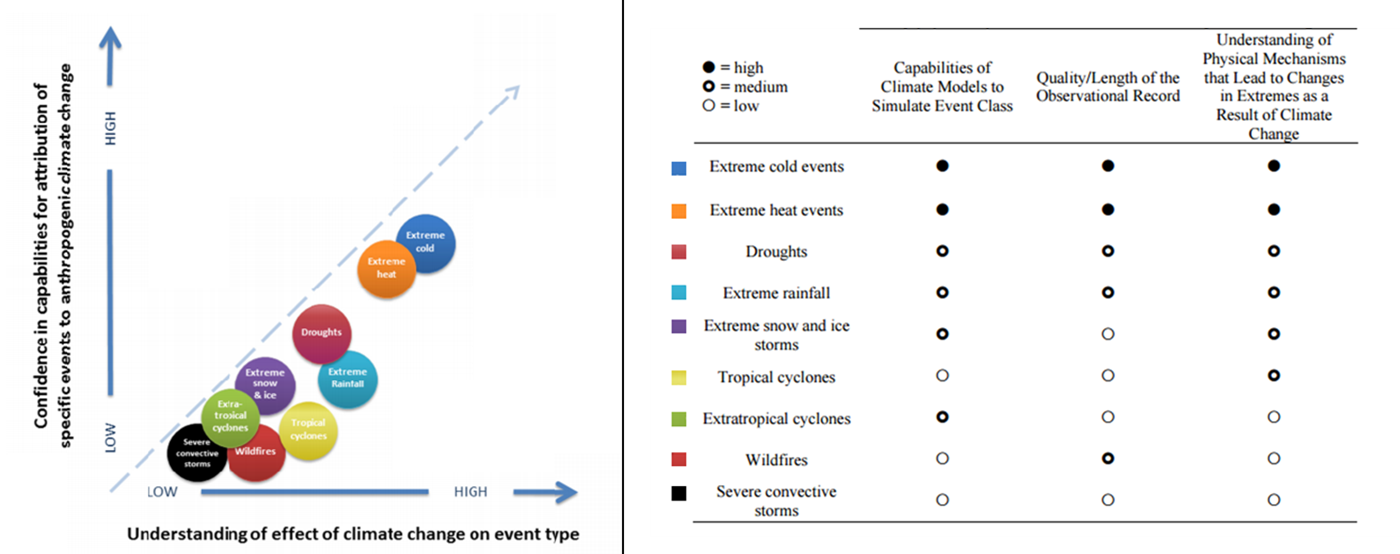
Titley chaired a committee of the National Academies of Sciences, Engineering and Medicine that issued a report last March on the science of attributing weather events to climate. The study indicated scientists now have a strong understanding of how climate impacts extreme heat and cold events and a moderate understanding of how it impacts drought and heavy rain. “When I listen to people like Pielke talk about how we can’t show tornadoes have increased, it doesn’t negate fact that seas are rising, temperatures are rising, the magnitude and severity of droughts are increasing, as well as impacting our food and our water systems,” Titley said.
The other scientist Shank mentioned, Curry, is a professor at Georgia Institute of Technology’s School of Earth and Atmospheric Sciences, and is notorious for her view that humans may not be the primary driver of climate change. In a recent blog post, she zeroed in on NASA’s Goddard Institute for Space Studies as the agency’s hub of what she called “politicized climate science.”
Curry noted that NASA has given her more research funding than any other agency. She advocated for continuing support for NASA earth science projects, but added, “This is a welcome opportunity to redirect NASA Earth Science research towards other topics that are not directly related to or motivated by human caused climate change.”
Update: December 2, 2016
This story has been updated to clarify that Shank was talking about Roger Pielke Junior and Senior.
==
IDSO
By Josh Harkinson mojo?
No. 8: Center for the Study of Carbon Dioxide and Global Change (A.K.A. The Idso Family)
Meet the 12 loudest members of the chorus claiming that global warming is a joke and that CO2 emissions are actually good for you.
The Idso clan is the von Trapp family of climate change denial. In 1980, paterfamilias Sherwood Idso, a self-described "bio-climatologist," published a paper in Science concluding that doubling the world's carbon dioxide concentration wouldn't change the planet's temperature all that much. In years that followed, Idso and his colleagues at Arizona State University's Office of Climatology received more than $1 million in research funding from oil, coal, and utility interests.In 1990, he coauthored a paper funded by a coal mining company, titled "Greenhouse Cooling."
In 1998, Idso's son Craig founded the Center for the Study of Carbon Dioxide and Global Change and began publishing CO2 Science, an online digest of climate change skepticism. He subsequently earned his PhD in geography from ASU under the tutelage of climate skeptic Robert Balling, then the director of its climatology program.In the early 2000s, Idso was director of environmental science at Peabody Energy, the world's largest privately owned coal company. After Peabody laid him off, he began aggressively fundraising for the center, whose budget increased from just north of $30,000 in 2004 to more than $1 million last year.
==
12/14
Here is a list of what I am calling my top 5 climate essays of 2014. No doubt there are others that deserve mentioning, but these are the ones that come to mind this morning. These essays are chosen because the stand out to me in some way, which I describe below. All are focused in some way or another on the climate policy debate as it occurs in the public sphere. Were I to pick essays or papers on various aspects of climate science I’d have a different list. In the comments, I welcome suggestions for other essays of 2014 worth reading and remembering.
In his characteristic style, ASU’s Dan Sarewitz explains that the debate on climate change has become intolerant and narrow. Climate change is important, but so too are other issues. Key excerpt:
…the climate-change-as-apocalypse orthodoxy thereby radically narrows the range of viewpoints we are willing to tolerate and the range of options we are willing to consider for dealing with complex challenges to our well-being like natural disasters and infectious disease and poverty and civil strife.
==
:{
}:
726K asu 2007-11? koch
:{
}:
http://investigativereportingworkshop.org/investigations/the_koch_club/story/Koch_millions_spread_influence_through_nonprofits/
:{
}:
:{===
}:
On March 24, after years of litigation, the Arizona Superior Court, Pima County, ruled in favor of the University of Arizonaand its efforts to protect climate scientists’ correspondence and prepublication work.[[1]](http://blogs.law.columbia.edu/climatechange/2015/03/31/arizona-court-upholds-protections-for-scientific-research-and-correspondence/#_ftn1) In particular, in Energy & Environment Legal Institutev. Arizona Board of Regents, et al., the court upheld the University’s decision to deny large portions of open records requests by Energy & Environment Legal (known as E&E, and formerly named the American Tradition Institute or ATI), a group that has repeatedly sought to use open records laws to access troves of researchers’ private files.[[2]](http://blogs.law.columbia.edu/climatechange/2015/03/31/arizona-court-upholds-protections-for-scientific-research-and-correspondence/#_ftn2) E&E has been described as having “a core mission of discrediting climate science and dismantling environmental regulations” in part through “filing nuisance suits to disrupt important academic research,” and the group has been linked to the fossil fuel industry, “major conservative players,” and “organizations opposing action on climate change.”[[3]](http://blogs.law.columbia.edu/climatechange/2015/03/31/arizona-court-upholds-protections-for-scientific-research-and-correspondence/#_ftn3)
State and federal open records laws promote government transparency by allowing citizens to request administrative records, with exemptions for national security, trade secrets, and similar issues. But open records laws have also become common tools of those seeking to harass scientists,[[4]](http://blogs.law.columbia.edu/climatechange/2015/03/31/arizona-court-upholds-protections-for-scientific-research-and-correspondence/#_ftn4) and open records requests for large swaths of documents (including private emails) have been made on scientists employed by the government or public universities, or who otherwise receive public funding. The scientists must then review and produce potentially thousands of documents – sometimes in a matter of days, depending on the applicable laws – or marshal a legal response explaining why the requests are invalid.
In the Arizona case, E&E filed multiple requests under Arizona’s open records laws for the files of University of Arizona climate scientists Dr. Malcolm Hughes and Dr. Jonathan Overpeck, seeking thirteen years of documents – including emails dating back to the 90s. (E&E has also unsuccessfully gone after Dr. Michael Mann’s emails in Virginia,[[5]](http://blogs.law.columbia.edu/climatechange/2015/03/31/arizona-court-upholds-protections-for-scientific-research-and-correspondence/#_ftn5) as well as many others.[[6]](http://blogs.law.columbia.edu/climatechange/2015/03/31/arizona-court-upholds-protections-for-scientific-research-and-correspondence/#_ftn6)) The University of Arizona produced some documents but denied release of several thousand others.[[7]](http://blogs.law.columbia.edu/climatechange/2015/03/31/arizona-court-upholds-protections-for-scientific-research-and-correspondence/#_ftn7) The University stated the withheld documents contained protected intellectual property, including trade secrets and prepublication data and drafts; it also applied Arizona’s general records exemption that it was “in the best interests of the state” to withhold the documents.[[8]](http://blogs.law.columbia.edu/climatechange/2015/03/31/arizona-court-upholds-protections-for-scientific-research-and-correspondence/#_ftn8) The University argued that releasing the scientists’ files would undermine academic collaboration and chill researcher correspondence – particularly between publicly funded scientists and privately funded ones, who are not at risk of such disclosure. This in turn would harm the scientific process and reduce the competitiveness of Arizona’s public universities, as researchers would become more reluctant to work at Arizona public universities or with public university scientists.[[9]](http://blogs.law.columbia.edu/climatechange/2015/03/31/arizona-court-upholds-protections-for-scientific-research-and-correspondence/#_ftn9)
E&E contested this decision and initiated litigation. In its Amended Complaint, E&E stated it was conducting a “transparency project,” which it claimed was necessitated in large part by its interpretation of emails released in the so-called “Climategate” hacking.[[10]](http://blogs.law.columbia.edu/climatechange/2015/03/31/arizona-court-upholds-protections-for-scientific-research-and-correspondence/#_ftn10) In particular, E&E claimed that certain hacked emails involving the University of Arizona scientists and others indicated misdeeds worthy of further scrutiny,[[11]](http://blogs.law.columbia.edu/climatechange/2015/03/31/arizona-court-upholds-protections-for-scientific-research-and-correspondence/#_ftn11) ignoring that all official investigations related to “Climategate” had shown no misconduct.[[12]](http://blogs.law.columbia.edu/climatechange/2015/03/31/arizona-court-upholds-protections-for-scientific-research-and-correspondence/#_ftn12) E&E also claimed any fear that releasing emails would “chill the creative efforts of faculty” was “unfounded” and it asserted instead that protecting researcher records actually “encourages and rewards misbehavior.”[[13]](http://blogs.law.columbia.edu/climatechange/2015/03/31/arizona-court-upholds-protections-for-scientific-research-and-correspondence/#_ftn13) E&E also acknowledged its requests sought, in part, documents that “embarrass both Professors Hughes and Overpeck and the University.”[[14]](http://blogs.law.columbia.edu/climatechange/2015/03/31/arizona-court-upholds-protections-for-scientific-research-and-correspondence/#_ftn14)
The University of Arizona countered that protecting research correspondence and pre-publication work “is necessary to ensure Arizona’s great public universities continue their traditions of excellence in research and scholarship…. E&E’s claim threatens to rupture ordinary and customary expectations of academic confidentiality, and a ruling in favor of E&E will inevitably harm Arizona’s public universities and the scholars working in them.”[[15]](http://blogs.law.columbia.edu/climatechange/2015/03/31/arizona-court-upholds-protections-for-scientific-research-and-correspondence/#_ftn15) The University also stated that E&E was seeking “to attack [researchers’] science, criticize their interactions with each other and publicly assault how they speak about or defend themselves against the increasingly small group of outliers who continue to deny man’s role in global climate change…. E&E request[s] that the Court help it police and control the conduct of climate scientists.”[[16]](http://blogs.law.columbia.edu/climatechange/2015/03/31/arizona-court-upholds-protections-for-scientific-research-and-correspondence/#_ftn16) The University argued that, ultimately, E&E’s “briefs and other public pronouncements reveal a plan to harass scientists whose views do not accord with those of E&E and its allies, or who simply do not play by the rules of etiquette E&E nominated itself to enforce.”[[17]](http://blogs.law.columbia.edu/climatechange/2015/03/31/arizona-court-upholds-protections-for-scientific-research-and-correspondence/#_ftn17)
In its March 24 decision, the Pima County Court analyzed whether the University of Arizona had committed an abuse of discretion in denying E&E’s records requests, and it sided with the University. The court found that the University could properly protect “prepublication critical analysis, unpublished data, analysis, research, results, drafts, and commentary” as well as prepublication peer review work because the University was justified in concluding that, as is prohibited by Arizona law, “release of [the] information would have an important and harmful effect on the duties of a State agency or officer.”[[18]](http://blogs.law.columbia.edu/climatechange/2015/03/31/arizona-court-upholds-protections-for-scientific-research-and-correspondence/#_ftn18) The court also noted that the “volume and complexity of the records at issue is daunting,” and the court acknowledged that it spent “[m]any hours” of its own reviewing 90 “technical and esoteric” sample emails – a small fraction compared to the other 1700+ withheld emails – with “at least one [sample email] exceeding 800 pages in length.”[[19]](http://blogs.law.columbia.edu/climatechange/2015/03/31/arizona-court-upholds-protections-for-scientific-research-and-correspondence/#_ftn19)
Despite losing in court, E&E was still able to create considerable damage through this litigation: the scientists had to pull and go through their records from the late 90s on, including hundreds of thousands of pages of emails and attachments.[[20]](http://blogs.law.columbia.edu/climatechange/2015/03/31/arizona-court-upholds-protections-for-scientific-research-and-correspondence/#_ftn20) Dr. Hughes said it took him over ten weeks to go through the massive number of documents E&E was seeking, taking him away from his research for a full summer (the time that he would normally use to focus on his research because he teaches during the academic year).[[21]](http://blogs.law.columbia.edu/climatechange/2015/03/31/arizona-court-upholds-protections-for-scientific-research-and-correspondence/#_ftn21) The University and the public court system also spent a substantial amount of time and money during the years of litigation.
Nonetheless, this recent Arizona decision is a significant victory. Combined with the 2014 Virginia Supreme Court decision in Dr. Mann’s case – which held that releasing faculty files could cause “harm to university-wide research efforts, damage to faculty recruitment and retention, undermining of faculty expectations of privacy and confidentiality and impairment of free thought and expression”[[22]](http://blogs.law.columbia.edu/climatechange/2015/03/31/arizona-court-upholds-protections-for-scientific-research-and-correspondence/#_ftn22) – the decision bolsters the consensus among courts that abusive records requests are not a permissible use of open records laws and only harm the scientific endeavor. Unfortunately, this growing consensus has not yet stopped groups like E&E, which is committed to “peppering universities around the country” with open records requests[[23]](http://blogs.law.columbia.edu/climatechange/2015/03/31/arizona-court-upholds-protections-for-scientific-research-and-correspondence/#_ftn23) – including another one dated February 27, 2015, seeking additional records concerning the same two University of Arizona scientists.[[24]](http://blogs.law.columbia.edu/climatechange/2015/03/31/arizona-court-upholds-protections-for-scientific-research-and-correspondence/#_ftn24)
For more information on attacks on scientists, please visit http://climatesciencedefensefund.org
Lauren Kurtz is the Executive Director of the Climate Science Legal Defense Fund, which previously assisted with the representation of Dr. Mann in his Virginia open records litigation.
[[1]](http://blogs.law.columbia.edu/climatechange/2015/03/31/arizona-court-upholds-protections-for-scientific-research-and-correspondence/#_ftnref1) https://s3.amazonaws.com/ucs-documents/science-and-democracy/19966054.pdf
[[2]](http://blogs.law.columbia.edu/climatechange/2015/03/31/arizona-court-upholds-protections-for-scientific-research-and-correspondence/#_ftnref2) http://www.scientificamerican.com/article/how-to-cope-when-activists-ask-for-climate-scientists-personal-emails/
[[3]](http://blogs.law.columbia.edu/climatechange/2015/03/31/arizona-court-upholds-protections-for-scientific-research-and-correspondence/#_ftnref3) http://www.theguardian.com/environment/2012/may/09/climate-change-american-tradition-insitute
[[4]](http://blogs.law.columbia.edu/climatechange/2015/03/31/arizona-court-upholds-protections-for-scientific-research-and-correspondence/#_ftnref4) http://www.ucsusa.org/center-science-and-democracy/protecting-scientists-harassment/freedom-bully-how-laws#.VRdv7Eu0HKE
[[5]](http://blogs.law.columbia.edu/climatechange/2015/03/31/arizona-court-upholds-protections-for-scientific-research-and-correspondence/#_ftnref5) http://www.washingtonpost.com/blogs/local/wp/2014/04/17/va-supreme-court-rules-for-u-va-in-global-warming-foia-case/
[[6]](http://blogs.law.columbia.edu/climatechange/2015/03/31/arizona-court-upholds-protections-for-scientific-research-and-correspondence/#_ftnref6) http://www.scientificamerican.com/article/how-to-cope-when-activists-ask-for-climate-scientists-personal-emails/
[[7]](http://blogs.law.columbia.edu/climatechange/2015/03/31/arizona-court-upholds-protections-for-scientific-research-and-correspondence/#_ftnref7) Petitioners’ Opening Brief dated June 26, 2014. Cited court filings are available from the author upon request. See also Amended Complaint dated October 9, 2013.
[[8]](http://blogs.law.columbia.edu/climatechange/2015/03/31/arizona-court-upholds-protections-for-scientific-research-and-correspondence/#_ftnref8) Letter from the University of Arizona to ATI (now known as E&E) dated February 5, 2013.
[[9]](http://blogs.law.columbia.edu/climatechange/2015/03/31/arizona-court-upholds-protections-for-scientific-research-and-correspondence/#_ftnref9) Respondents’ Opening Memorandum dated July 31, 2014.
[[10]](http://blogs.law.columbia.edu/climatechange/2015/03/31/arizona-court-upholds-protections-for-scientific-research-and-correspondence/#_ftnref10) http://www.ucsusa.org/global_warming/solutions/fight-misinformation/debunking-misinformation-stolen-emails-climategate.html#.VRiv1ku0HKF
[[11]](http://blogs.law.columbia.edu/climatechange/2015/03/31/arizona-court-upholds-protections-for-scientific-research-and-correspondence/#_ftnref11) Amended Complaint dated October 9, 2013.
[[12]](http://blogs.law.columbia.edu/climatechange/2015/03/31/arizona-court-upholds-protections-for-scientific-research-and-correspondence/#_ftnref12) http://www.scientificamerican.com/article/uk-police-close-climategate/
[[13]](http://blogs.law.columbia.edu/climatechange/2015/03/31/arizona-court-upholds-protections-for-scientific-research-and-correspondence/#_ftnref13) Petitioners’ Opening Brief dated June 26, 2014.
[[14]](http://blogs.law.columbia.edu/climatechange/2015/03/31/arizona-court-upholds-protections-for-scientific-research-and-correspondence/#_ftnref14) Petitioners’ Opening Brief dated June 26, 2014.
[[15]](http://blogs.law.columbia.edu/climatechange/2015/03/31/arizona-court-upholds-protections-for-scientific-research-and-correspondence/#_ftnref15) Respondents’ Opening Memorandum dated July 31, 2014.
[[16]](http://blogs.law.columbia.edu/climatechange/2015/03/31/arizona-court-upholds-protections-for-scientific-research-and-correspondence/#_ftnref16) Respondents’ Final Reply dated September 19, 2014.
[[17]](http://blogs.law.columbia.edu/climatechange/2015/03/31/arizona-court-upholds-protections-for-scientific-research-and-correspondence/#_ftnref17) Respondents’ Final Reply dated September 19, 2014.
[[18]](http://blogs.law.columbia.edu/climatechange/2015/03/31/arizona-court-upholds-protections-for-scientific-research-and-correspondence/#_ftnref18) https://s3.amazonaws.com/ucs-documents/science-and-democracy/19966054.pdf
[[19]](http://blogs.law.columbia.edu/climatechange/2015/03/31/arizona-court-upholds-protections-for-scientific-research-and-correspondence/#_ftnref19) https://s3.amazonaws.com/ucs-documents/science-and-democracy/19966054.pdf
[[20]](http://blogs.law.columbia.edu/climatechange/2015/03/31/arizona-court-upholds-protections-for-scientific-research-and-correspondence/#_ftnref20) Respondents’ Opening Memorandum dated July 31, 2014.
[[21]](http://blogs.law.columbia.edu/climatechange/2015/03/31/arizona-court-upholds-protections-for-scientific-research-and-correspondence/#_ftnref21) Conversation with author.
[[22]](http://blogs.law.columbia.edu/climatechange/2015/03/31/arizona-court-upholds-protections-for-scientific-research-and-correspondence/#_ftnref22) http://www.courts.state.va.us/opinions/opnscvwp/1130934.pdf
[[23]](http://blogs.law.columbia.edu/climatechange/2015/03/31/arizona-court-upholds-protections-for-scientific-research-and-correspondence/#_ftnref23) http://eelegal.org/?p=2958
[[24]](http://blogs.law.columbia.edu/climatechange/2015/03/31/arizona-court-upholds-protections-for-scientific-research-and-correspondence/#_ftnref24) http://eelegal.org/wp-content/uploads/2015/02/EELI-FME-Law-AORA-Research-Funding-Conflicts-request-U-of-A.pdf
:{
- See more at: http://blogs.law.columbia.edu/climatechange/2015/03/31/arizona-court-upholds-protections-for-scientific-research-and-correspondence/#sthash.nICaxo1Y.dpuf
}:
==
:{Climate Science Legal Defense Fund!
The past month saw an important victory for protecting climate scientists: in a bellwether decision, an Arizona state court upheld safeguards for climate scientists facing legal attacks. For years, E&E Legal (formerly named ATI) has been “filingnuisance suits to disrupt important academic research,” including litigation to access huge swaths of researcher records through open records laws. But on March 24, a court validated the University of Arizona’s decision to deny E&E’s sweeping open records requests for troves of climate scientists’ private files. (E&E / ATI’s other open records attacks include a Virginia lawsuit for years of Dr. Michael Mann’s files – a case we assisted with and which the Virginia Supreme Court denied last year.)
In the Arizona litigation, the university determined that E&E only wanted the records so it could “attack [researchers’] science, criticize their interactions with each other and publicly assault how they speak about or defend themselves against the increasingly small group of outliers who continue to deny man’s role in global climate change.” The university denied release of the records to E&E because the “release of [the] information would have an important and harmful effect on the duties of a State agency or office,” as prohibited by Arizona law. The Arizona court found that the university was warranted in protecting the scientists’ emails. The scientists were represented by attorneys for the university, and we were actively engaged in this litigation, including attending the court hearing for this decision. For more on this case, please read our post on the Columbia Climate Law Blog.
This is a significant win, but the battle to protect climate scientists against legal harassment is far from over. We frequently hear from climate scientists who are dealing with abusive open records requests and other legal attacks, and we provided assistance to several new scientists this past month.}:
:{:{Upcoming event}:: On May 7, CSLDF will host talks at Columbia Law School about fighting back against legal attacks on climate scientists. Michael Gerrard, Peter Fontaine, and Naomi Oreskes are scheduled to speak, and the event is open to attorneys from all fields.
}:
:{==
}:
:{
}:
ASU announced this year that the Charles Koch Foundation is providing seed money—up to $1.13 million over five years—to create aCenter for Political Thought and Leadership,which will train "the next generation of local and national leaders on the foundational principles of good government, civic involvement, free markets and political liberty."
Received money from:- Charles Koch Foundation $1,129,000
==
greenpeace
:{
}:
University of Arizona Foundation Tuscon AZ $1,663,465
Charles Koch Charitable Foundation Claude R. Lambe Charitable Foundation Fred C. & Mary R. Koch Foundation
2005
2006
2007
2008
2009 $13,500
2010 $1,112,445
2011 $200,000
2012 $249,520
2013 $88,000
Grant Notes from IRS 990 forms filed by Koch Foundations:
2013: $40,000 + $48,000 Approved Future Payment
==
Board of Directors for Sustainabilityis an advisory board of business, government, nonprofit, and academic leaders. Its mission is to advise and assist the Julie Ann Wrigley Global Institute of Sustainabilityin accomplishing its mission and enabling it to be the premier university institute in sustainability.
Tim Albinson
Tim Albinson
Managing Partner, Emergent Capital Partners
Chairman, Aravo Solutions, Inc.
William Clark
William Clark
Harvey Brooks Professor of International Science, Public Policy and Human Development, John F. Kennedy School of Government, Harvard University
Craig Cogut
Craig Cogut
Founder and Co-Managing Partner, Pegasus CapitalAdvisors, L.P.
Brian Collins
Brian Collins
Chief Investment Officer, Wrigley Investments, LLC
Michael Crow
Michael Crow
Distinguished Sustainability Scientist, Julie Ann Wrigley Global Institute of Sustainability
President, Arizona State University
http://president.asu.edu/about/michaelcrow
John De Fries
John De Fries
President and Principal Advisor, Native Sun Business Group, Inc.
Bennett Dorrance Jr
Bennett Dorrance Jr
Managing Director, DFE Trust Company
Vice President, The Dorrance Family Foundation
Curtis Frasier
Curtis Frasier
Chairman of the Board of Directors, Shell Midstream Partners, GP
Distinguished Visiting Dorwart Chair in Energy Law, College of Law, University of Tulsa
Robert Kates
Robert Kates
Sustainability Solutions Initiative Advisory Board Chair, University of Maine
Presidential Professor of Sustainability Science, University of Maine
Robert Litterman
Robert Litterman
Executive Editor, Financial Analysts Journal
Former Chairman, Quantitative Investment Strategies, Goldman Sachs Asset Management
Julia Marton-Lefevre
Julia Marton-Lefevre
Director General, International Union for Conservation of Nature
Pamela Matson
Pamela Matson
Chester Naramore Dean, School of Earth Sciences, Stanford University
William McDonough
William McDonough
Founding Partner, William McDonough + Partners
Anthony Michaels
Anthony Michaels
CEO, Midwestern BioAg
Co-Founder, Proteus Environmental Technologies, LLC
Jeanne Ng
Jeanne Ng
Director, Group Sustainability, CLP Group
William Post
William Post
Chairman of the Board and CEO (Retired), Pinnacle West Capital Corporation
Jackie Prince Roberts
Jackie Prince Roberts
Chief Sustainability Officer,The Carlyle Group
R.F. Shangraw, Jr.
R.F. Shangraw, Jr.
Senior Sustainability Scientist, Julie Ann Wrigley Global Institute of Sustainability
Chief Executive Officer, ASU Foundation, Arizona State University
Lisa Stevens
Lisa Stevens
President, Pacific Midwest Region, Wells Fargo & Company
Brian Swette
Brian Swette
President, Sweet Earth Natural Foods
Sir Crispin Tickell
Sir Crispin Tickell
Former Director , Policy Foresight Programme, University of Oxford
Advisory Council Member, Oxford Martin School, University of Oxford
Sander van der Leeuw
Sander van der Leeuw
Distinguished Sustainability Scientist, Julie Ann Wrigley Global Institute of Sustainability
Foundation Professor, School of Sustainability
S. Robson Walton
S. Robson Walton
Chairman of the Board, Walmart
Julie Wrigley
Julie Wrigley
President and CEO, Wrigley Investments, LLC
==
bs
Walton became a member of the Wal-Mart (Walmart) board in 1978 and chairman of the board in 1992. Mr. Walton is a Wooster College Trustee. He serves as a member of Conservation International’s Board of Directors; sits on its Executive Committee, Campaign Advisory Committee, and Program Committee; chairs its Corporate Partnership Committee, and serves as business chairman of its Center for Environmental Leadership.
Walmart has more than 1.9 million sales associates worldwide and nearly 6,500 stores and wholesale clubs across 13 countries. Under Mr. Walton’s leadership, Walmart has set ambitious goals: to be supplied 100% by renewable energy, create zero waste, and sell products that sustain natural resources and the environment. To accomplish these goals, Walmart established 14 Sustainable Value Networks made up of associates, suppliers, nonprofits, and other organizations.
These 14 value networks research renewable and alternative fuels, work with transportation networks to develop the first electric-diesel hybrid, heavy-duty truck, and streamlining trailers for increased fuel efficiency, collaborate with fishing suppliers to ensure that products sold in stores meet the Marine Stewardship Council and the Aquaculture Certification Council accreditations, partner with China’s sourcing network to improve the education of workers and areas such as toxic materials waste, energy, waste, air, and water, implement high-efficiency stores that save energy through heating, cooling, and refrigeration, reduce waste by recycling plastics, generating 57 million pounds of recycled plastic, and promoting products with extended roll life cutting down on paper usage. Together with its suppliers, Walmart is moving industries and consumers toward more sustainable materials through supply networks, lowering carbon dioxide emissions and transportation of products, creating scoring systems for companies to enter into Walmart’s sustainable systems, and encouraging patrons of Walmart to ask for sustainable products through promotion and price breaks.
Education
BA, Business Administration, University of Arkansas
JD, Columbia Law School, Columbia University
==
breakthu inst:
:{
}:
http://cspo.org/
Arizona State University’s Consortium for Science, Policy & Outcomes has been exploring answers to these questions since its inception. CSPO, on its own or in strategic partnerships with groups like the Clean Air Task Force, the Bipartisan Policy Center, and the Breakthrough Institute, has initiated a range of projects aiming to clarify and provide policy guidance for energy innovation policies.
CSPO’s energy projects involve a variety of activities, including case studies, papers, and institutional analyses. From its centers in Washington, DC and Tempe, AZ, CSPO has hosted a number of meeting and workshops, bringing together preeminent experts to explore critical topics in energy innovation. The products of these activities have become a resource for policymakers and institutions, and are influencing the national discussion around energy and its role in development, the economy, and climate change.
National Science Foundation
CURRENT FUNDING
Center for Nanotechnology in Society at Arizona State University
EESE: Collaborative Research: Energy Ethics in Science and Engineering Education
EESE: Integrating Microethics and Macroethics in Graduate Science and Engineering Education: Development and Assessment of Instructional Models
Partnership for Education on Climate Change, Engineered Systems, and Society
Socio-Technical Integration Research (STIR)
To Think, To Write, To Publish II: Communicating Science and Innovation Policy through Narrative: Workshops on Fostering Narrative Nonfiction Partnerships between Science Communicators and Science Policy Scholars
PAST FUNDING
Congress on Teaching the Social and Ethical Implications of Research
Next Generation of Science and Technology Policy Leaders Workshop
Public Value of Social Policy Research
Public Value Mapping: Developing a Non-Economic Model of the Social Value of Science and Innovative Policy
Science Policy Assessment and Research on Climate (SPARC)
Studies of Science, Technology, and Sustainability: Building a Research Agenda
To Think, To Write, To Publish: Forging a Working Bond Between Next Generation Science Communicators and the Next Generation of Science and Technology Policy Leaders
Bipartisan Policy Center, National Commission on Energy Policy
PAST FUNDING
Energy Innovation Systems From the Bottom Up: Technology Policies for Confronting Climate Change
Nathan Cummings Foundation
CURRENT FUNDING
Implementing Climate Pragmatism
USAID/Colorado State University
CURRENT FUNDING
Livestock, Livelihoods and Climate Change Interaction: Collaborative Research in the Mountains of Nepal
Adaptive Pathways to Climate Change (APaCC): Livestock and Livelihood Systems in Gandaki River Basin
V. Kann Rasmussen Foundation
PAST FUNDING
Advancing Science Policy for Sustainability
The Rightful Place of Science? conference
W.K. Kellogg Foundation
PAST FUNDING
Science, Policy & Social Inequity Workshop
==