Evaluating a 100% Renewables Future

Welcome to this Climate Web Topical Collection. If you’ve arrived here from Your Climate Change Toolbox, note that the Climate Web is not as optimized for the “No Plex” view as the Toolbox is. To see the difference, click on the “eye” icon at the upper right of your screen. The two “views” are both easy to switch between, and each has its own advantages and disadvantages. You can choose whichever view works best for you.
Topical Collections organize all kinds of resources from around the Climate Web, pointing you to the most relevant Index Entries and Topical Headings in the Climate Web as well as the most on-point individual sources, news stories, videos, and even extracted materials and graphics. As with Your Climate Change Toolbox, Premium Access subscribers are able to leverage the full 35,000 hours of knowledge curation in the Climate Web.
The Climatographers can turn any of Topical Collection into a topical briefing or webinar, or even an Ebook in PDF form allowing you to avoid having to learn how to navigate the Climate Web at all. Click on the link below for more information, or contact the Climatographers to discuss what would be most helpful to you.
We’re also working to add basic summaries to these Collections, which will appear farther down the page.

Click Here for More Information
Click Here to Learn More About the Climatographers’ Climate Risk Advisory History
Topic Brief
Coming Soon!
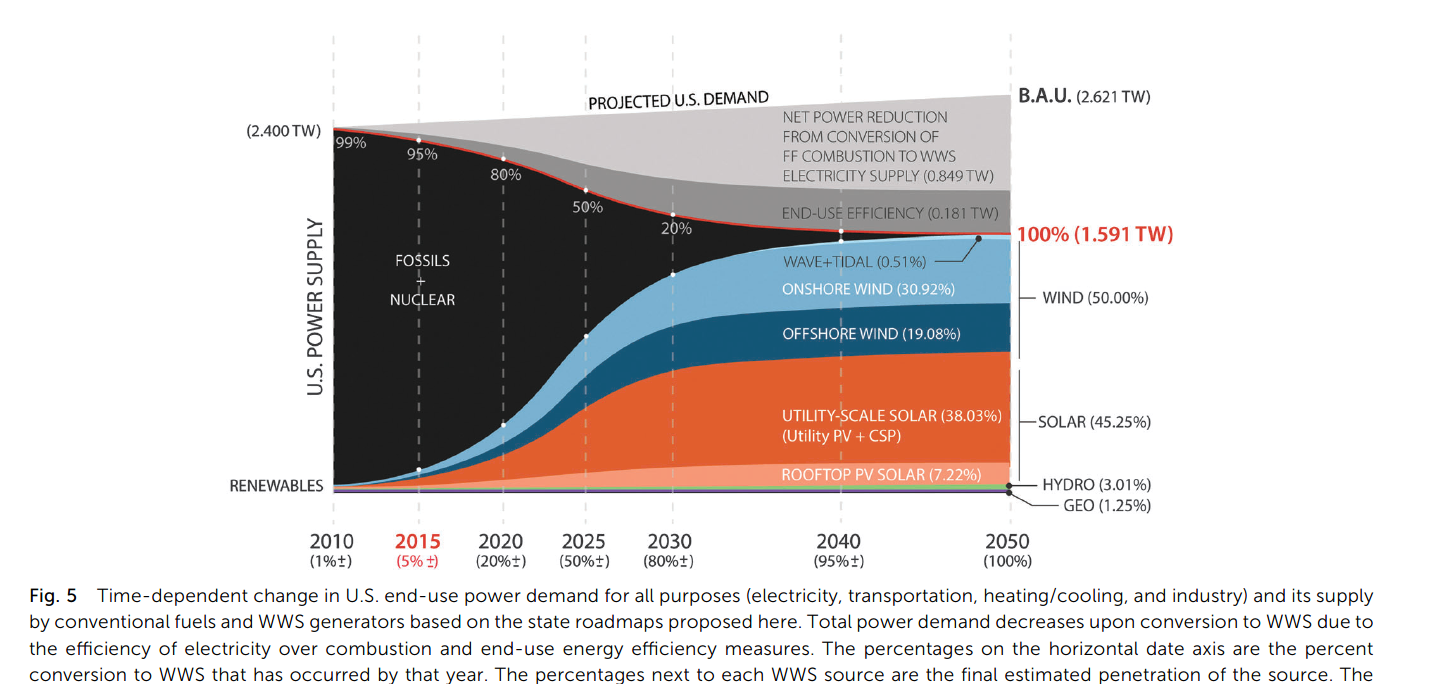
Mark Jacobson is one of the primary advocates of the potential for a rapid transition to 100% renewable energy. This graphic from 2015 illustrates his originally proposed pathway for the United States.
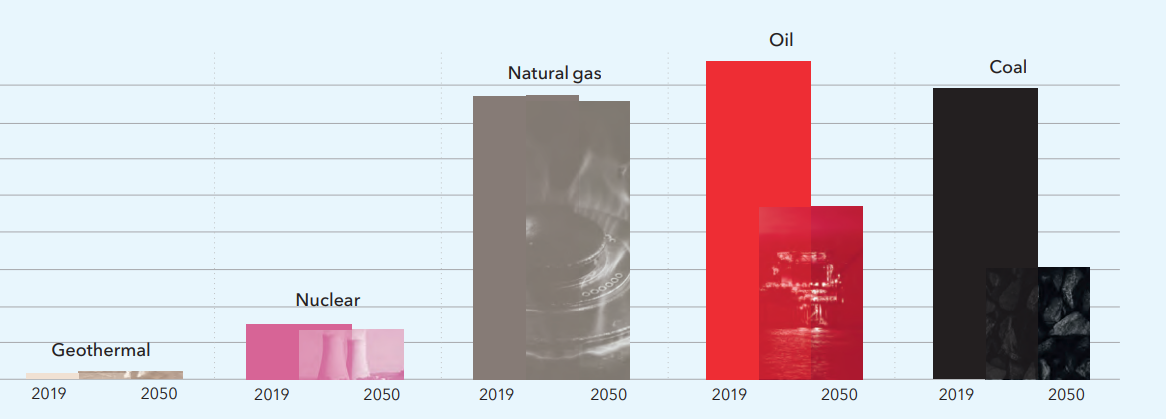
While DNV’s 2021 Energy Transition Outlook projects very large increases in global renewable energy generation, it projects that by 2050 a great deal of fossil fuel energy will still be required.
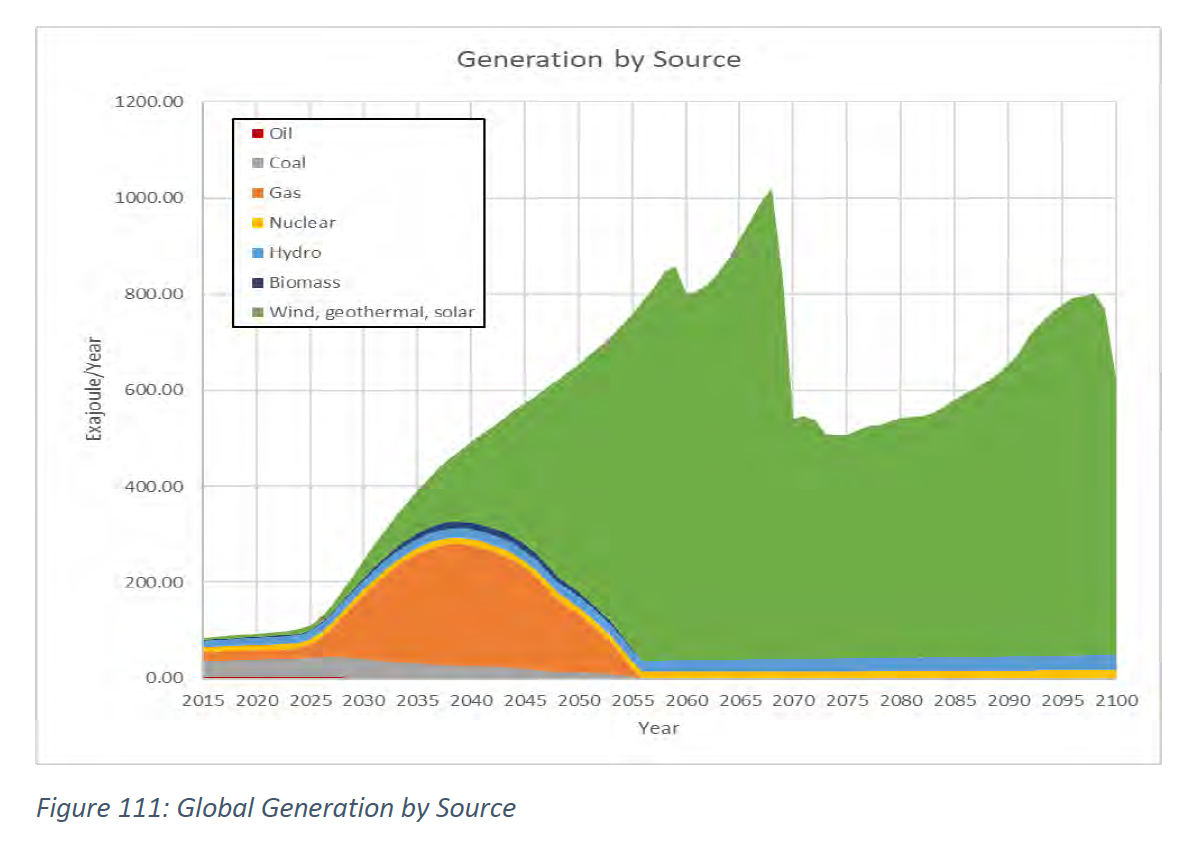
Using a simulation model, Backus’ 2021 Base Case includes additional energy demand created by climate change, and illustrates the magnitude of the renewable energy-to-make-more-renewable-energy challenge (own-use). Backus notes that the results may seem surprising (and acknowledges they may be somewhat exaggerated), but that the dynamics represented by the graphic are very real.