Irreducibility
Irreducibility
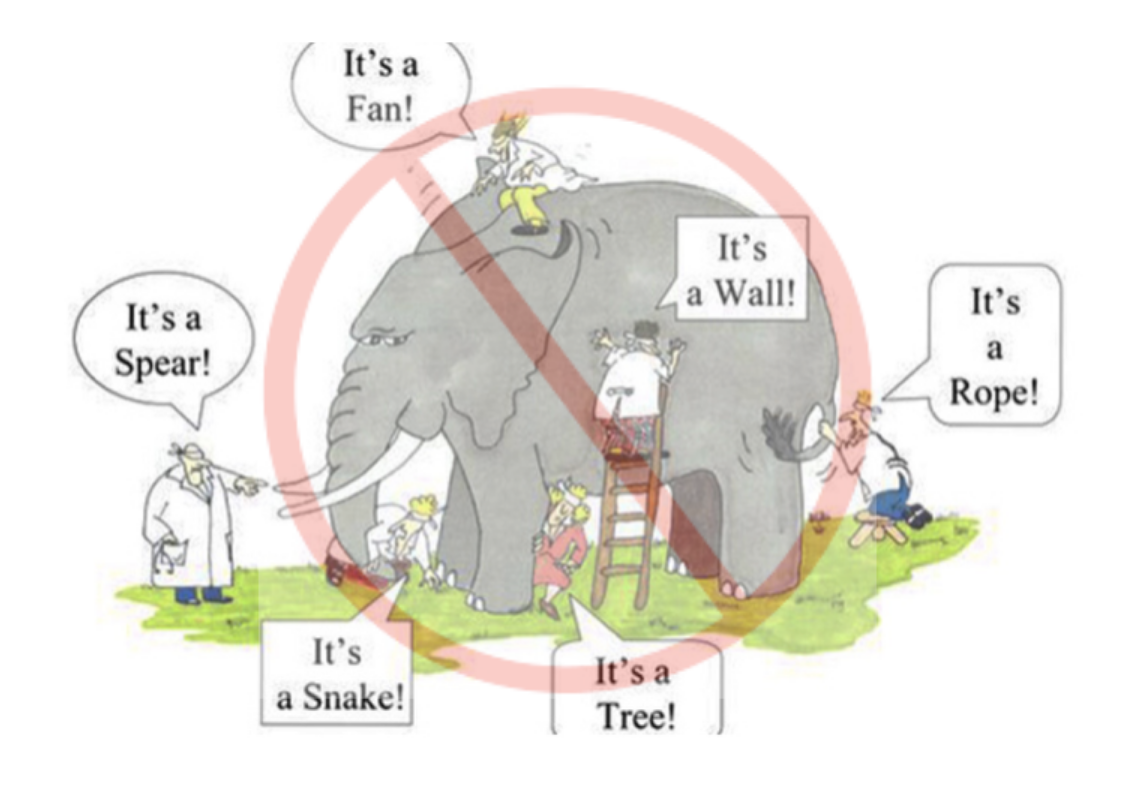
- Behaviour of a complex system cannot be predicted or understood by reducing the system to its components
- To grasp the nature of such systems, one must study context, relationships, and interactions
- Behaviour or properties of a complex system emerge from interactions among its actants
- This means looking at a complex system differently
- The whole is more than the sum of its parts
- See Thinking Holistically v Lowest Level of Coherent Granularity (LLCG)
- See Fractal engagement
Examples
- Consciousness is a complex phenomenon that cannot be explained simply by the sum of the physical processes that occur in the brain
- Consciousness is emergent, meaning that it arises from the complex interactions of these processes, but it is not reducible to them
- Social groups are more than just the sum of their individual members
- They have their own collective identities, cultures, and norms
- These properties cannot be reduced to the individual characteristics of the group members.
- Behaviour of a flock of birds cannot be explained by simply studying the individual birds
- The birds interact with each other in complex ways to produce their flocking behavior
- Immune system is a complex system that cannot be explained by simply studying the individual cells that make it up
- Cells interact with each other in complex ways to produce the immune response.
- Economy is a complex system that cannot be explained by simply studying the individual consumers and businesses that make it up
- Consumers and businesses interact with each other in complex ways to produce the economic system