Recognition-Primed Decision (RPD) model
Click here to view the ResearchGate PDF
“Rapid Decision Making on the Fire Ground | Gary Klein et al | 1986”
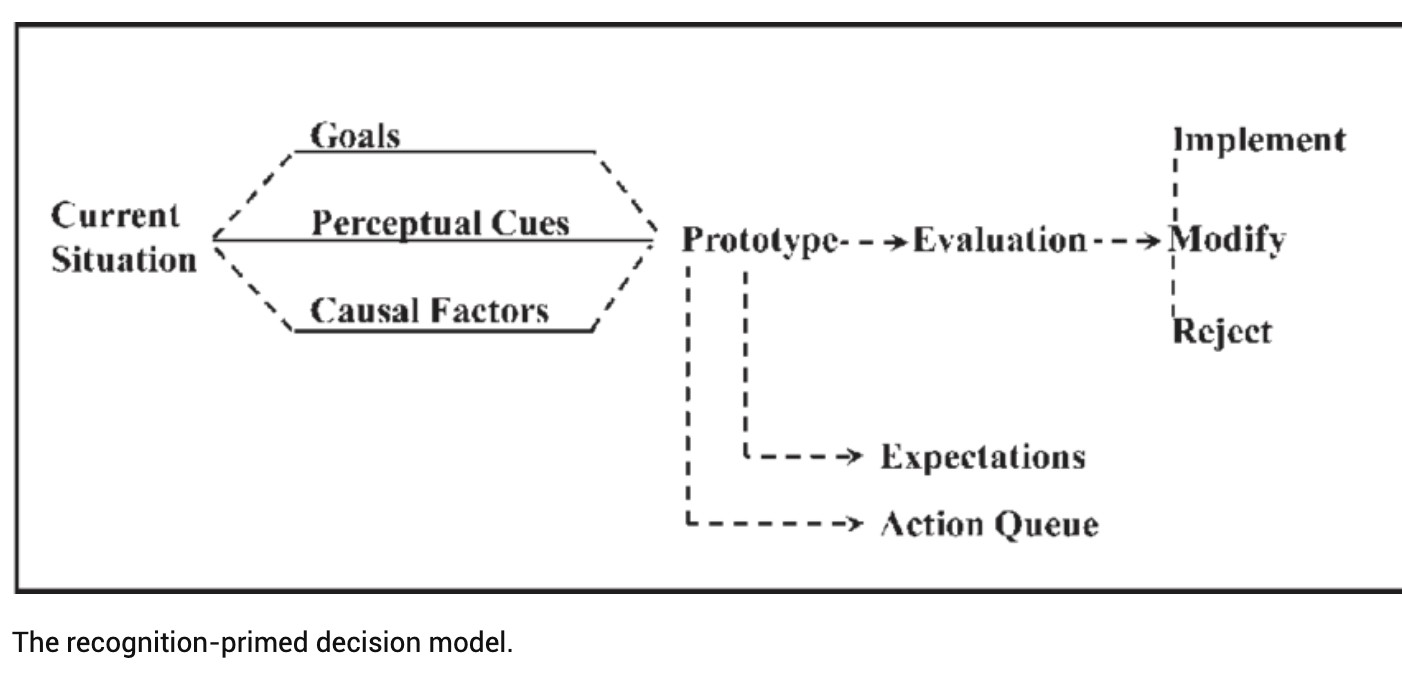
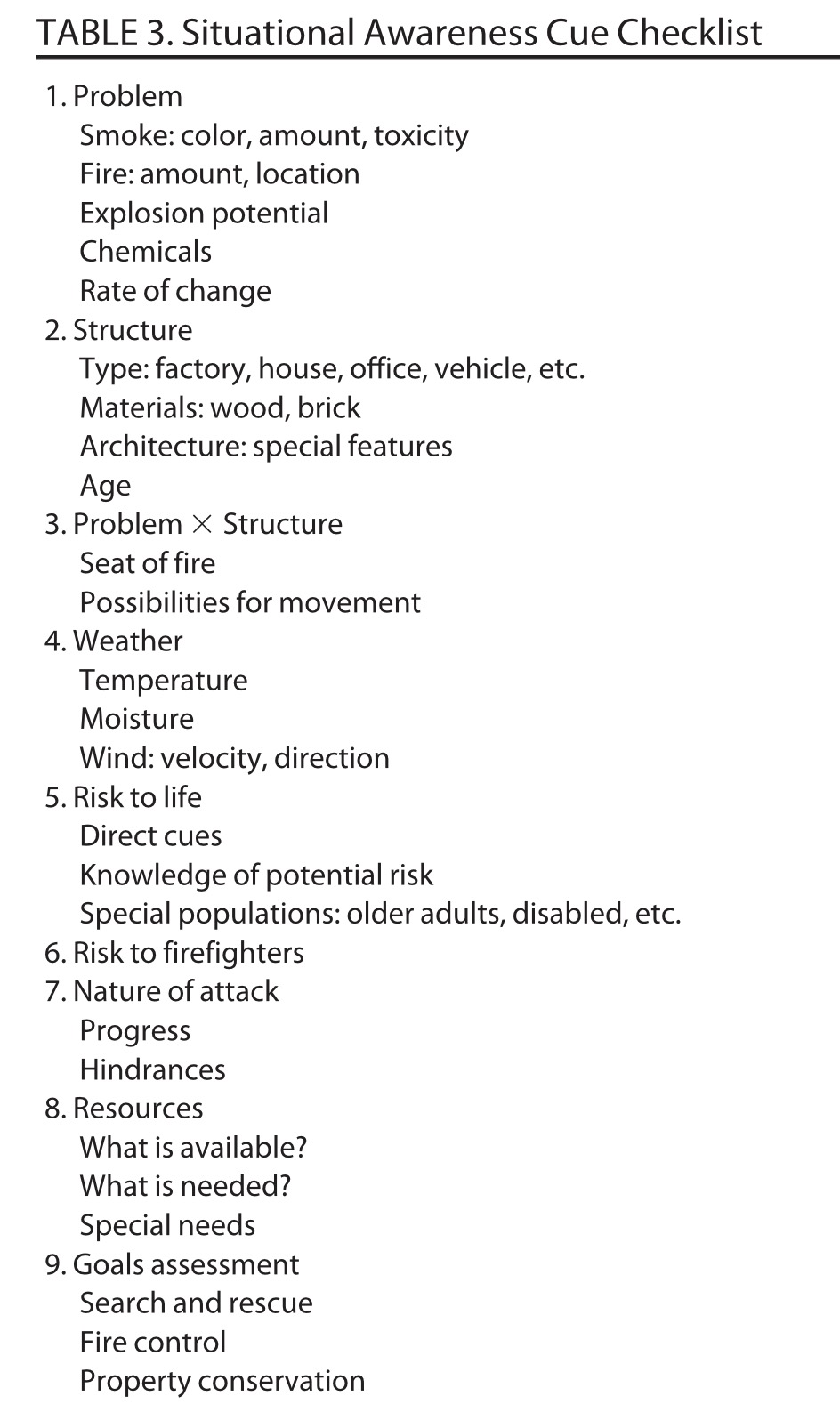
Officers rarely saw themselves as either generating or selecting from a set of alter-natives. We had to probe to identify options that did exist at each decision point.The FGCs experienced themselves as acting in a manner prescribed by their knowledge, perceptual cues, and goals at that moment. Thus, it was important to try to elucidate the knowledge, perspective, and cues (which we have termed “situational awareness”) as they were operating and shifting throughout the incident.
The complete analysis of the decision points attempted to document the nature and chronology of the officer’s situational awareness and each nontrivial decision point obtained from the incident account. Each decision point was characterized along a number of dimensions.
- What other options were actually (or hypothetically) available to the decision maker?
- How was the chosen option selected? Was it a deliberated choice? Could a selection rule be articulated or inferred?
- How much time was taken in making the decision?
- How much time pressure was involved in making the decision?
- What level of experience was required to make the decision? How much expe-rience was required to interpret the cues or know which cues to look for? Was there a rule that could be implemented by a less experienced officer? What kinds of critical knowledge or cues were found to be missing?