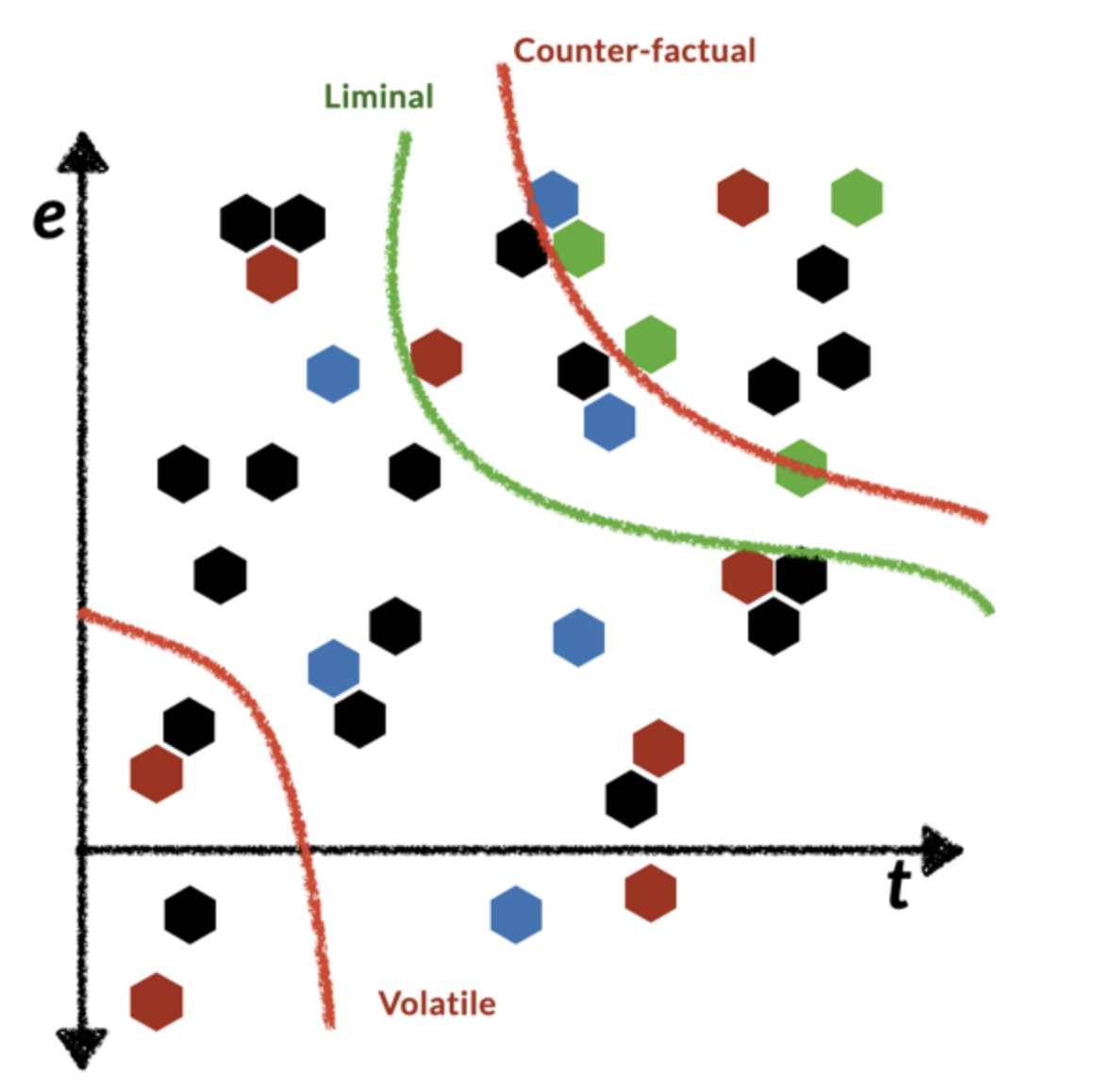
Estuarine Framework
Estuarine Mapping is the third major sense-making framework in the Cynefin ecosystem
- It is based on the idea of an estuary (but not a delta), with the metaphor emphasizing the complex and multiple flows of possibility in the system
- In an estuary the water flows in and flows out, so there might be things you can do only at the turn of the tide
- Some elements might be stable, like a granite cliff, which only need to be checked rarely, while others, like sandbanks, could shift daily
- As the water flows in and out, some elements might be covered or visible
- The typology of estuaries can provide an associated typology of metaphors for the framework
- Developed as a counter to traditional approaches to strategy that are fixed in nature
- Break the pattern of a reductionist approach to creating predictability
- Intent is to offer an alternative Porter’s Five Competitive Forces as a strategy
The framework is founded on three key aspects of working with complex adaptive systems:
- Working with micro-nudges, lots of small projects rather than one big project so that success and failure are both (non-ironically) opportunities
- Understanding where we are, and starting journeys with a sense of direction rather than abstract goals
- Understanding, and working with propensities and dispositions, managing both so that the things you want have a lower energy cost than the things you don’t
Ideally Estuarine Mapping would be continuous to help define problem spaces as they emerge. That’s the intent. Getting started with a problem space ‘broadly construed’ would make sense.
Estuarine Framework is the Energy/Time grid while Estuarine Mapping is the process to create the E/T grid.
2024-03-01
- The basic Estuarine Framework has not changed significantly since last year’s 2023-03-01 publication
- The Vulnerable zone has been renamed Volatile to remove any value judgement