If we go back to the early days of knowledge management it is very much seen as a line in space, an asset that can be codified and catalogued and represented on the balance sheet
Now, with the considerable benefits of hindsight, I think the idea of intellectual capital may have caused more problems than it solved
The whole tacit-to-explicit movement was just wrong from the get-go
Focus was on the thing (i.e., content)
Example is a performance target to enter x number of “scrubbed” knowledge objects into the company KM database
Assumed others could access and make some use of the thing
Failed because we didn’t realize that the nature of knowledge is always contextual
Cynefin® KM
Natural way to capture context is via storytelling
Humans like to share narratives and are good at it
Cynefin with its emphasis on informal networks to connect silos can map knowledge in the context of its use
People tend to be much more willing to share metadata with people outside their silos
The shared metadata can spark new ideas on the part of the people who receive that metadata
In workshops ASHEN typology enables the asking of meaningful questions about narratives, especially when some sort of decision was made
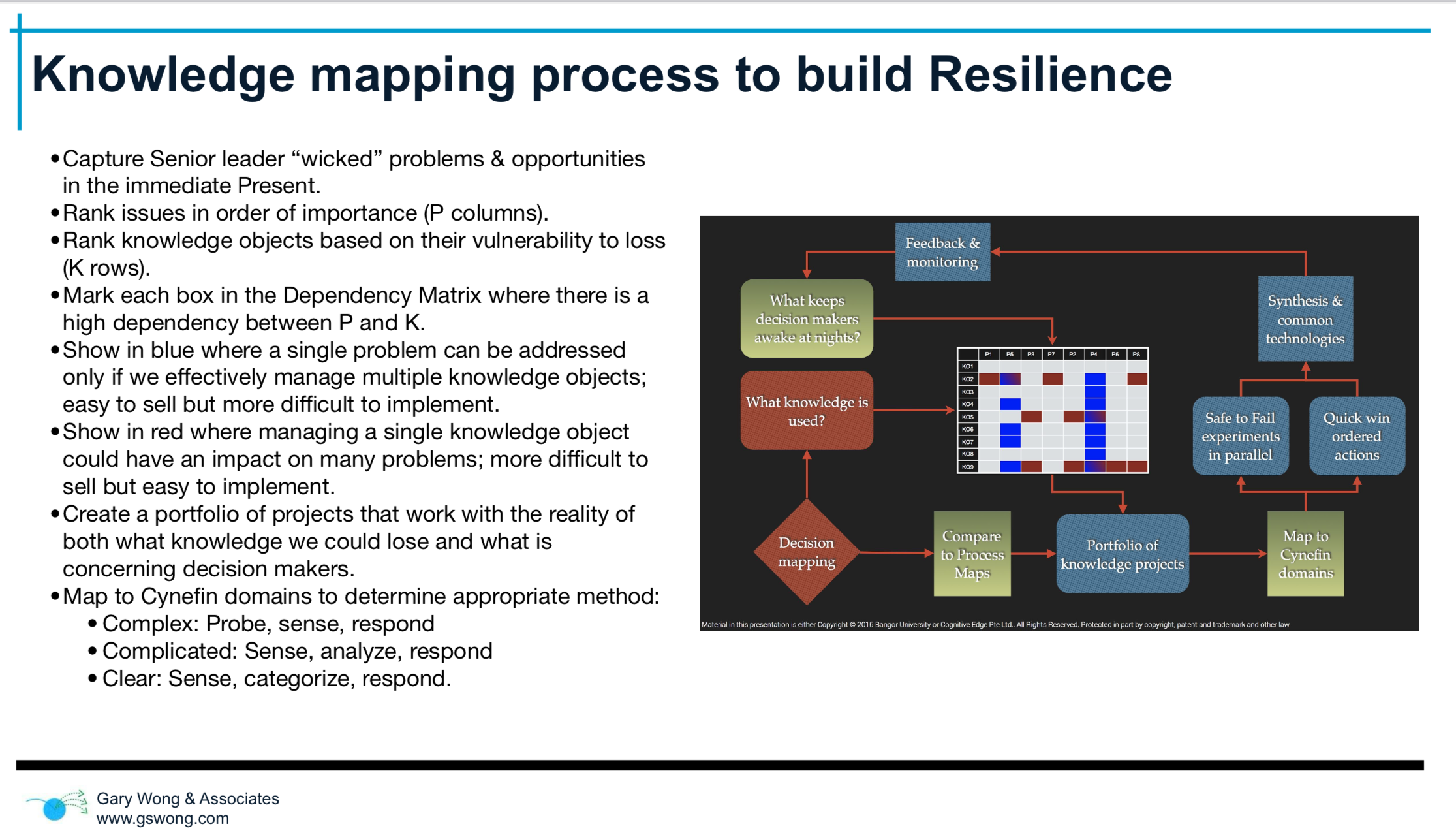
Knowledge objects are created by combining ASHEN material to form decision clusters, coherent enough to be managed
They could also be assessed based on the consequences of knowledge loss
Key knowledge towards the EN end of ASHEN was a strategic issue
If towards the AS end far less so
Another key benefit is understanding how knowledge is actually used
WHO
In a KM program pay more attention to middle managers, not senior managers
They have real problems, are less given to platitudes and are cynical in all the right ways.
They also have far more influence on if your KM programme is seen as useful or simply a nice to have, or worst still a pet initiative of a C-level Executive – you really don’t want to be there.
WHAT
Gathering those, clustering them and ranking them will allow looking at how the more effective management of knowledge could have both a strategic and operational impact
HOW
A simple portfolio of micro-projects
No dedicated KM technology requiring a KM officer and squad to manage