Knowledge Mapping with SenseMaker®
Click here or on image below to view the presentation
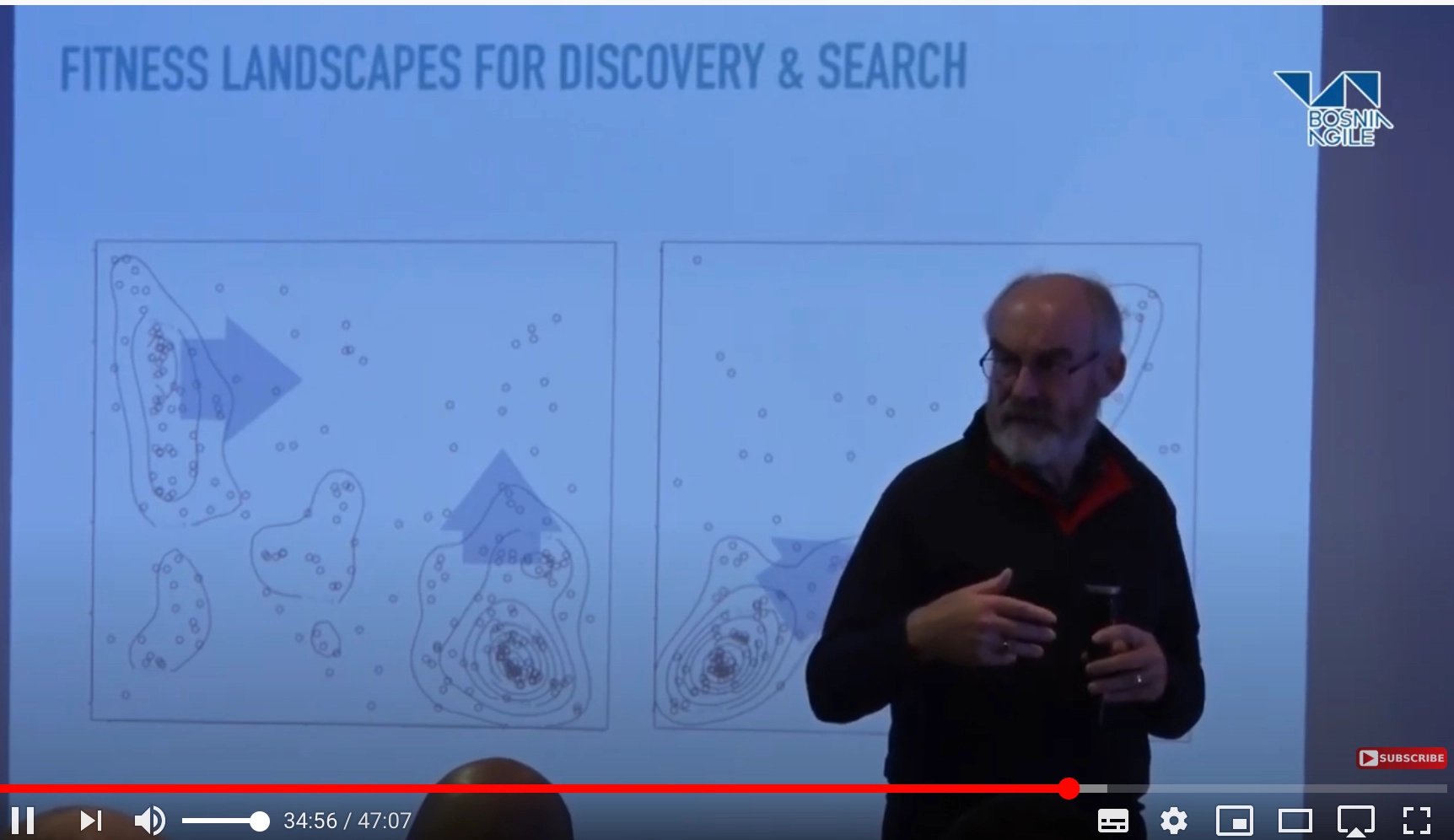
- A map is highly abstract using various symbols and conventions to convey essential information about the ground you are navigating.
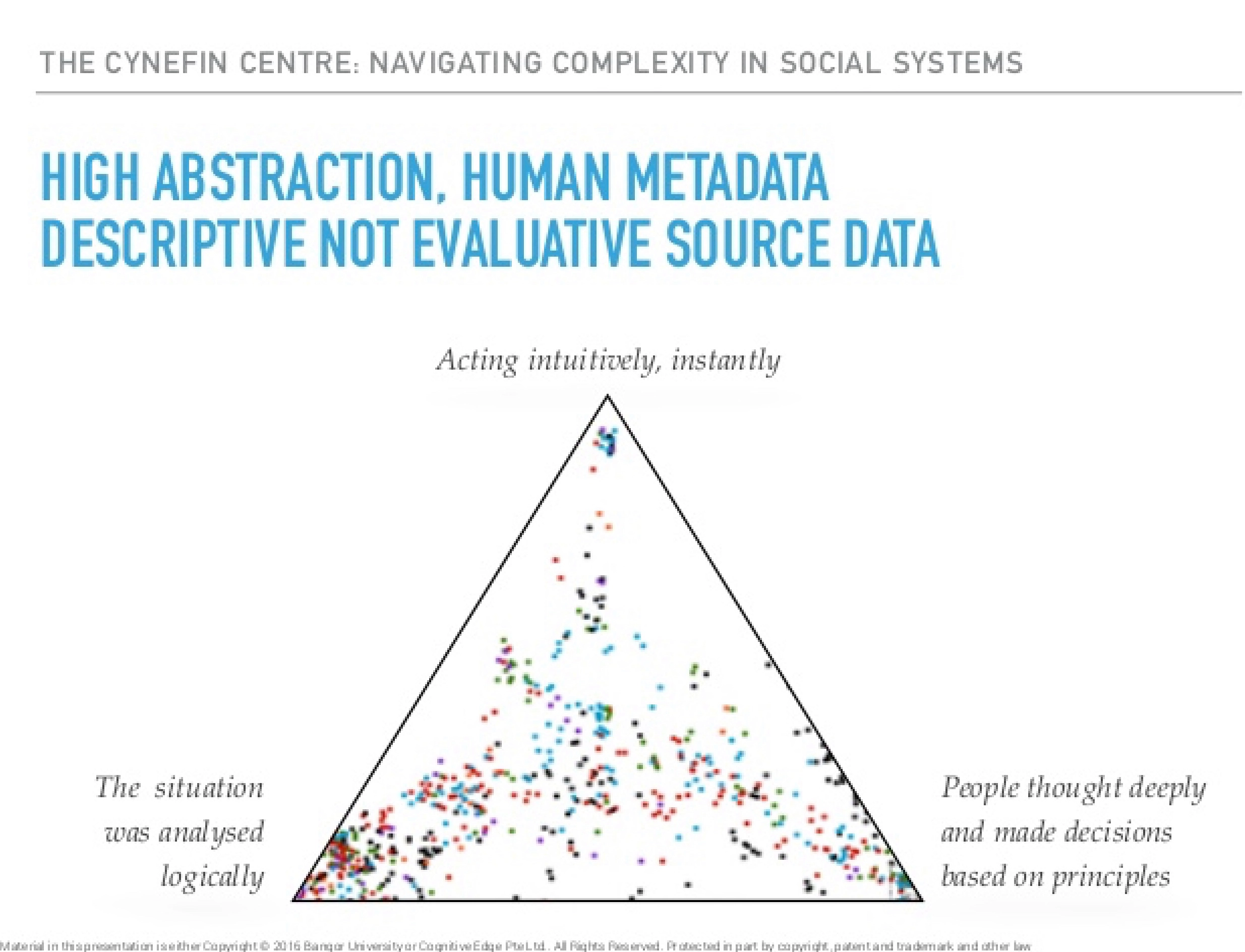
- Culture map of decision-making in an organization
- Good analysis, weaker ethically, not strong in a crisis
- Goal is balance and diversity
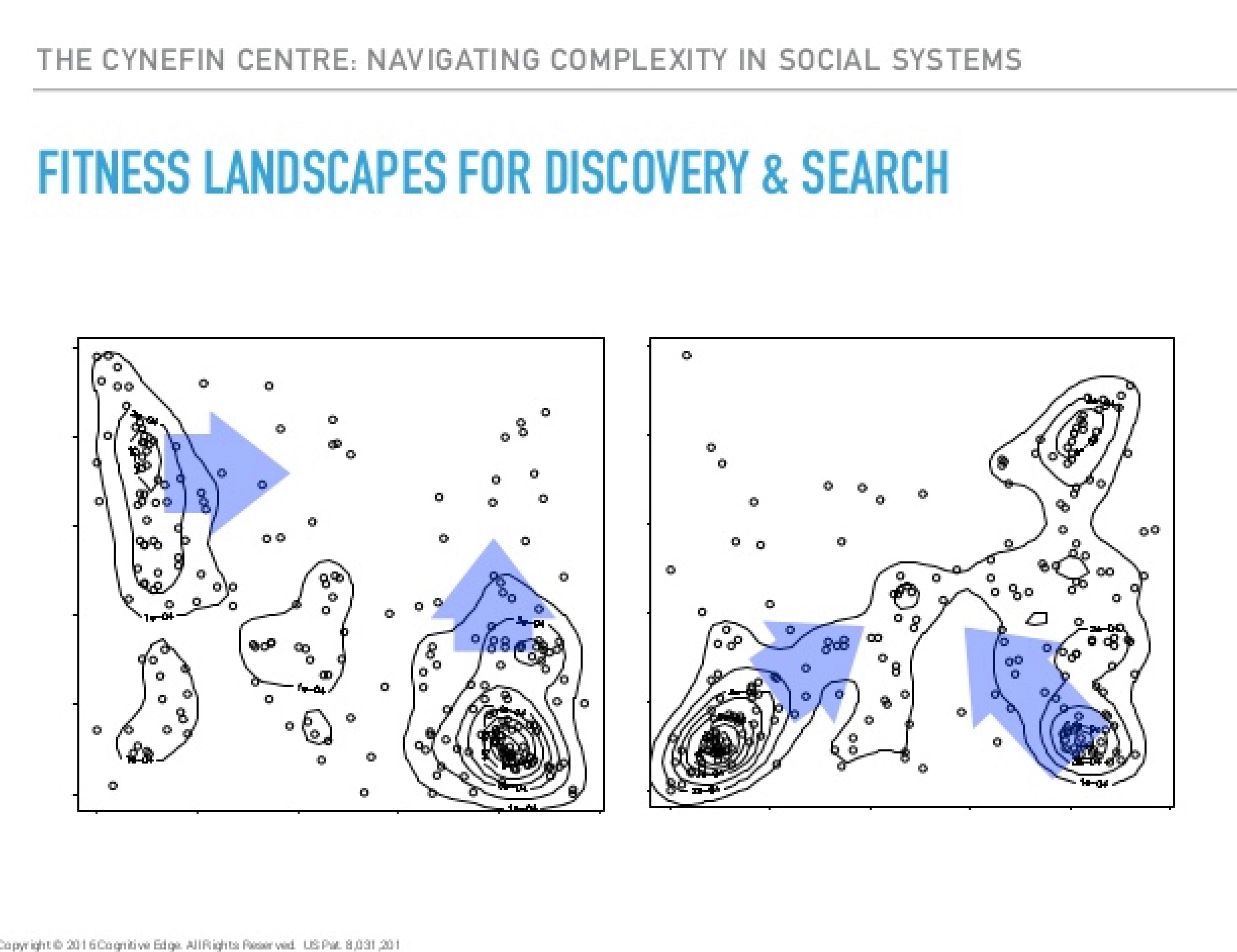
- Dispositional map measuring attitudes
- Based on engineer observations - not surveys, not focus groups
- engineers continuously capturing their experiences and noting micro anomalies over an extended period of time
- Left is civilian manufacture, the right is military manufacture
- Vertical dimension is rule compliance
- Horizontal dimension is job completion
- In civilian manufacture there are two mutually incompatible states
- In military this looks more attractive
- nuclear weapons testing creates a context of rule compliance and job completion because of imminent danger
- Also get a theory of change because actually this in complexity is called an adjacent possible
- a potential attractor base and close to where we are in the right direction of trouble
- What I now do is I click on that and they say what can we do tomorrow to create more like these and fewer like that
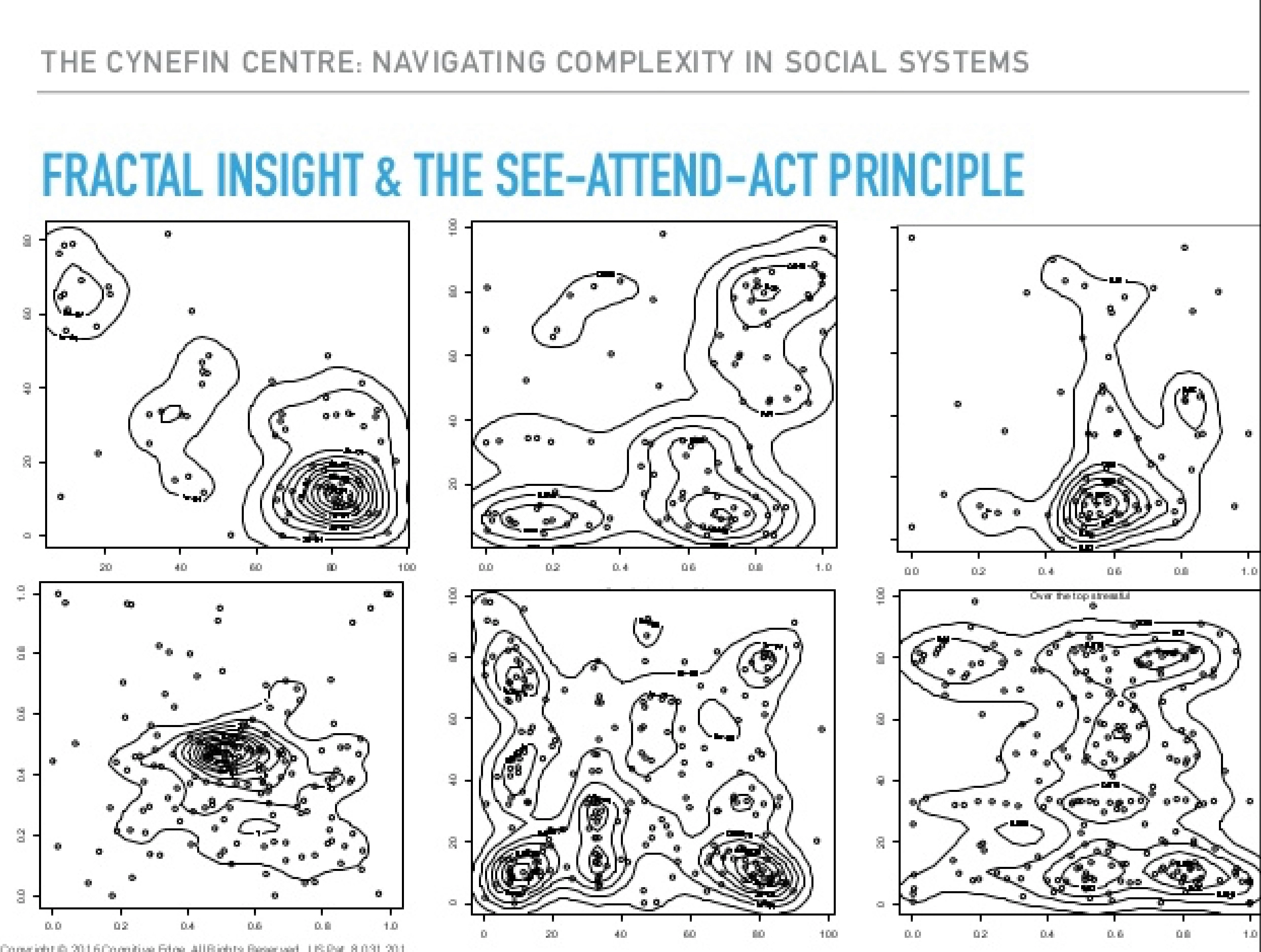
- That's the board level representation
- remember I talked about fractality so the board now say what can we do tomorrow to create more like this and fewer like that within every factory that's got their own representation based on the source data because of it
- Each Factory the situation is different
- you haven't got a culture as a company
- Individual teams have cultures in specific contexts
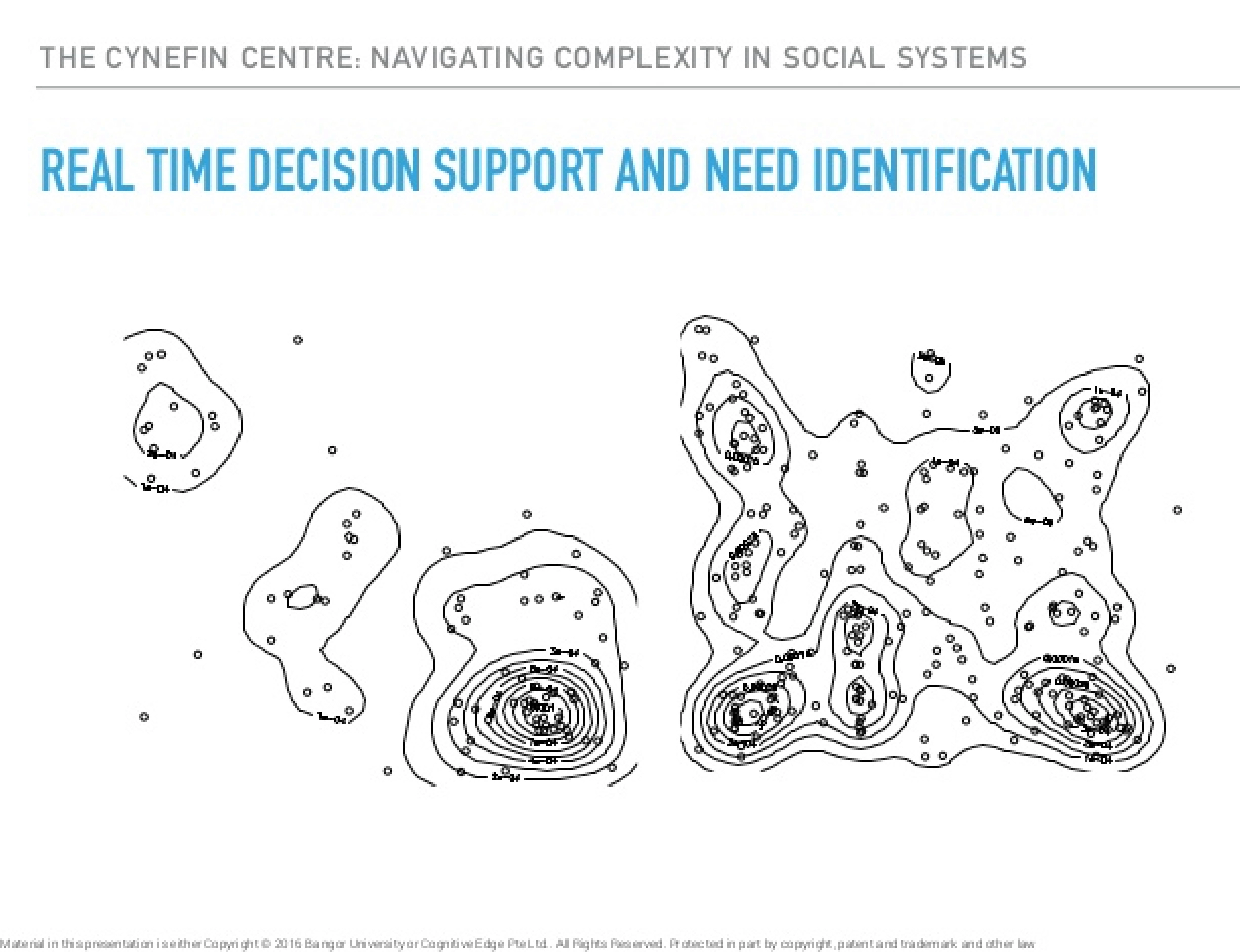
- Use users as a sensor network to ask questions in real time and to present options to them which they can interpret
- So we can see minority and majority options
- Once you've set it up there is zero cost to running it where is actually with traditional requirements capture they're always always a massive cost to going and asking more questions