Fractals: Nature's patterns
A fractal is ‘an entity with characteristics simultaneously apparent across multiple scales of focus’.
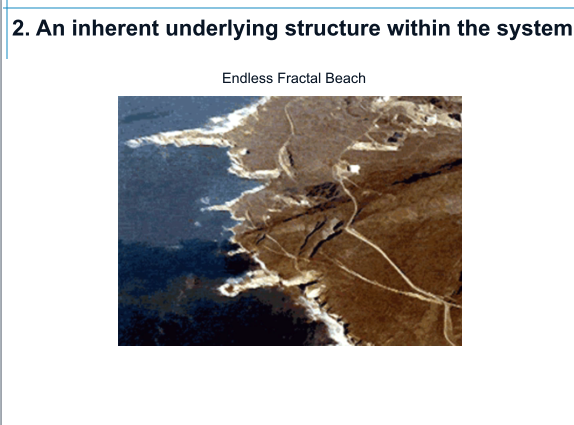
Nature’s patterns can be found everywhere:
- Snowflakes: The intricate and symmetrical patterns of snowflakes are an example of fractals. As you zoom in on a snowflake, you will see that it is made up of smaller, self-replicating patterns.
- Trees: The branching patterns of trees, such as the branches, twigs, and leaves, form fractal structures. Each branch resembles the overall shape of the tree, and the pattern repeats at different scales.
- Coastlines: The jagged and irregular shapes of coastlines also exhibit fractal properties. When you zoom in on a small section of a coastline, you will find similar shapes and patterns repeating at larger scales.
- Clouds: Cloud formations can also display fractal patterns, with individual cloud elements resembling the overall structure of the cloud system.
- Mountains: The contour lines and shapes of mountains and mountain ranges are often fractal in nature. The patterns of peaks and valleys are self-similar at different scales.
- River Networks: The branching patterns of river networks, from large rivers to their tributaries and streams, exhibit fractal characteristics.
- Ferns: The intricate patterns of fern leaves display self-similarity, with smaller leaflets resembling the overall shape of the fern frond.
- Lightning: The branching patterns of lightning strikes and electrical discharges can also be considered fractal in nature.
- Coral Reefs: The intricate and self-replicating structures of coral reefs exhibit fractal-like patterns.
- Romanesco Broccoli: The spiraled and repeating patterns of Romanesco broccoli make it a famous example of a naturally occurring fractal in the plant kingdom.