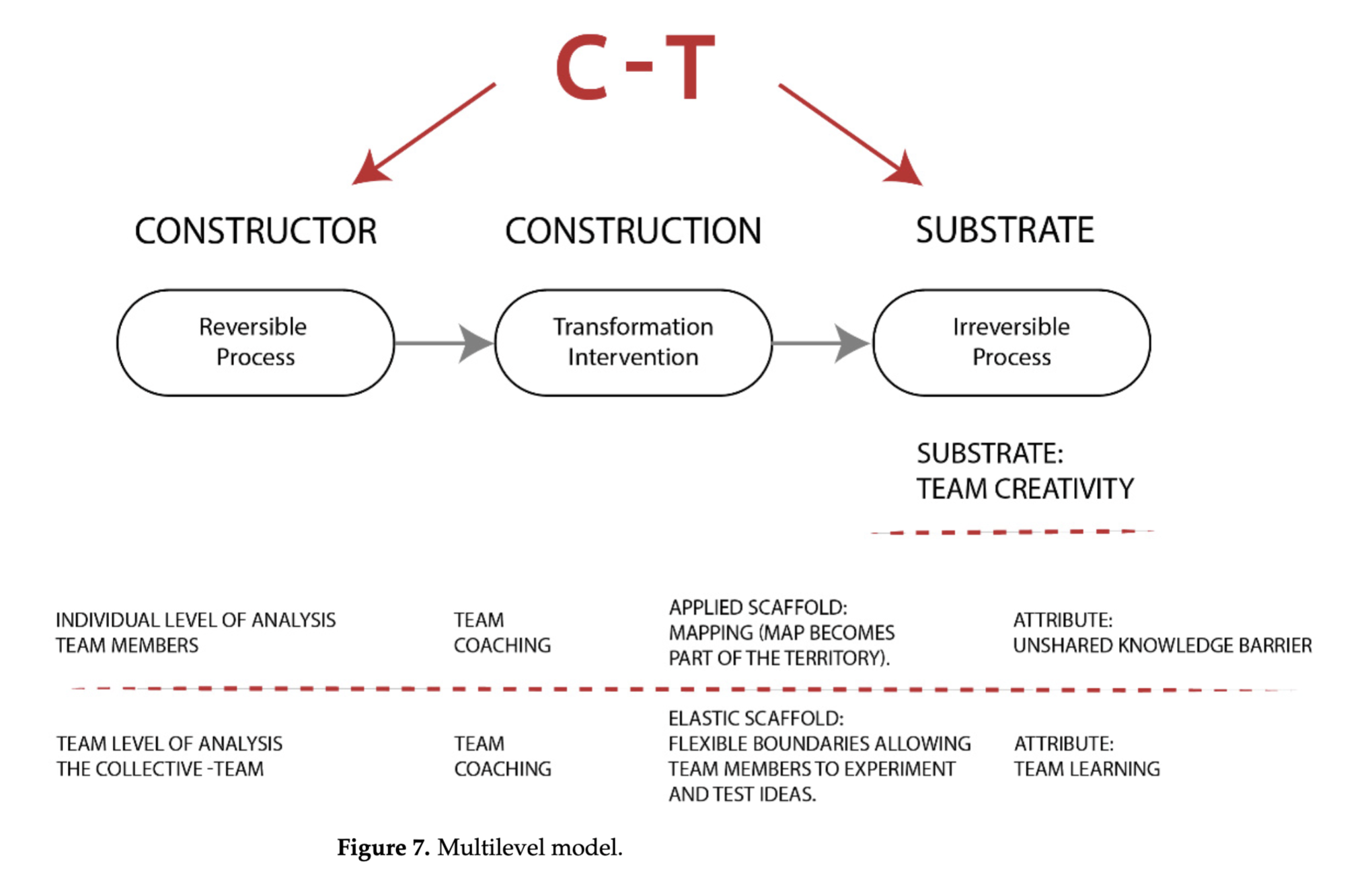
The Substrate-Independence Theory: Advancing Constructor Theory to Scaffold Substrate Attributes for the Recursive Interaction between Knowledge and Information
[Dave Snowden]
At its heart that article builds on a body of work I have been developing for over a decade and from a method perspective involves three simple things:
- Counterfactuals – what can’t happen, or can only change over time and with effort (energy)
- Constructors – things that produce replicable outcomes (rituals and habits are good examples here)
- Expressing Intent – how do we communicate a sense of direction without determining outcomes
Click here to access article.
Substrate definition (Oxford English Dictionary):
- That forms the substratum or base of something
- That lies below or at the bottom of something; underlying. Cf. substratal adj., substrative adj.
Scholars have called for techniques to help advance sense-making research in the areas of strategic change, as this is one area that has been underdeveloped.
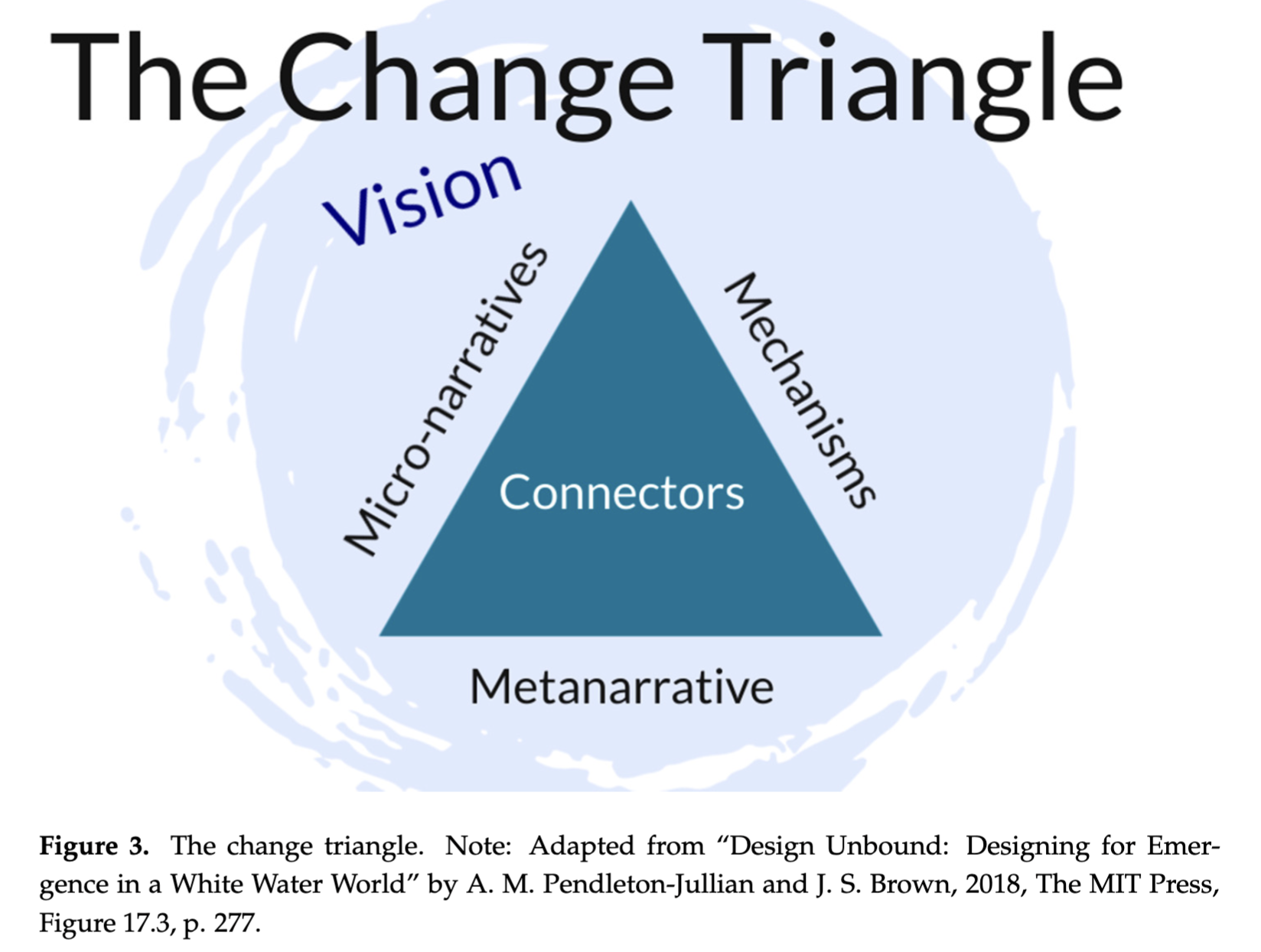
The substrate-independence theory provides substantive methods that leaders and practitioners can easily implement to begin any strategic change intervention.
The substrate-independence theory advances the current literature on sense-making because it extends current sense-making techniques from being viewed primarily as a cognitive or discursive process to one that is inherent within any organizational change process.
Scaffolds are cognitive abstractions of constraints that relate to information within a system. The substrate-independence theory concentrates on the flow of information as the underlying property of the host system.
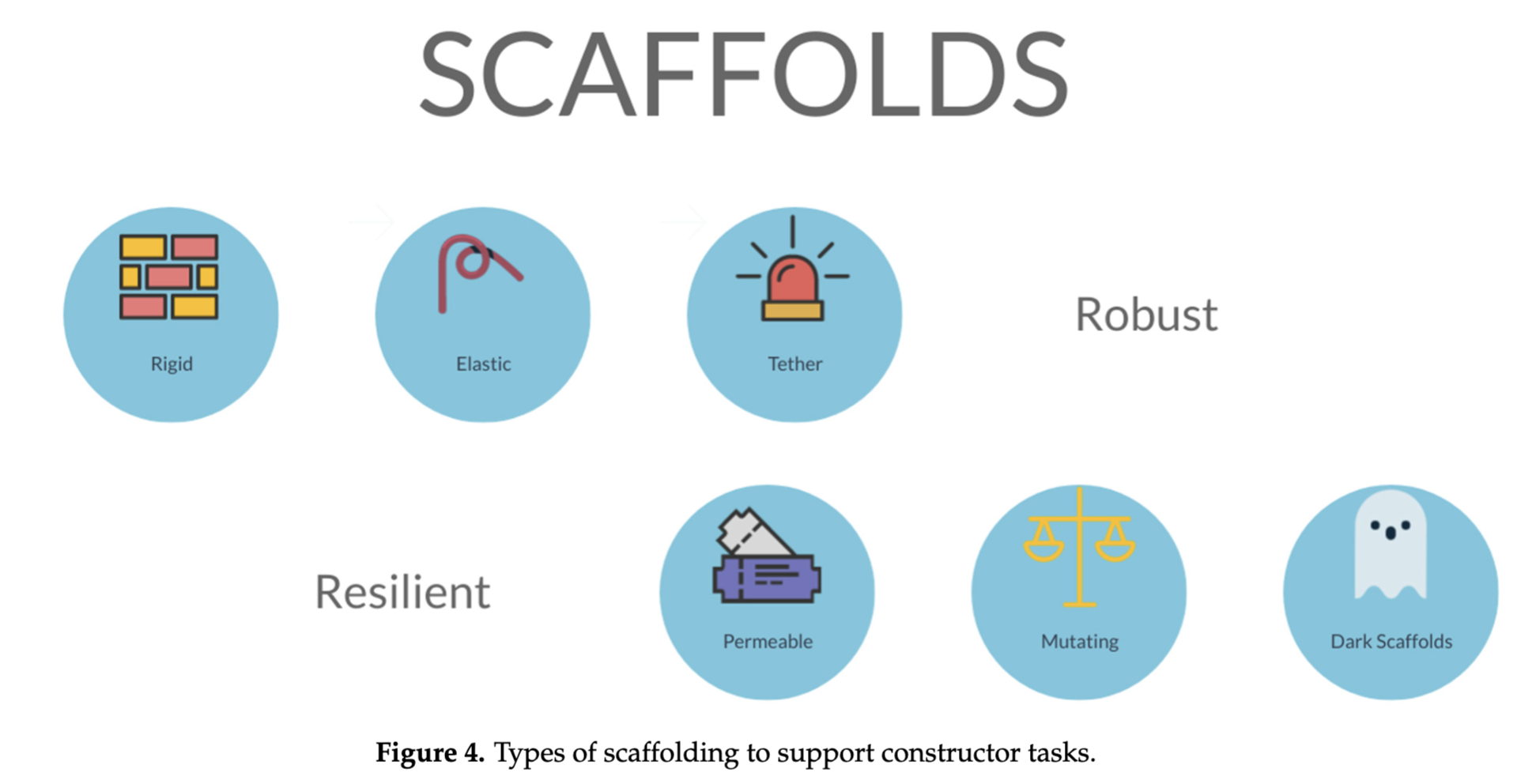
The substrate-independence theory utilizes sensemaking techniques to provide cognitively based scaffolds that guide and structure learning.
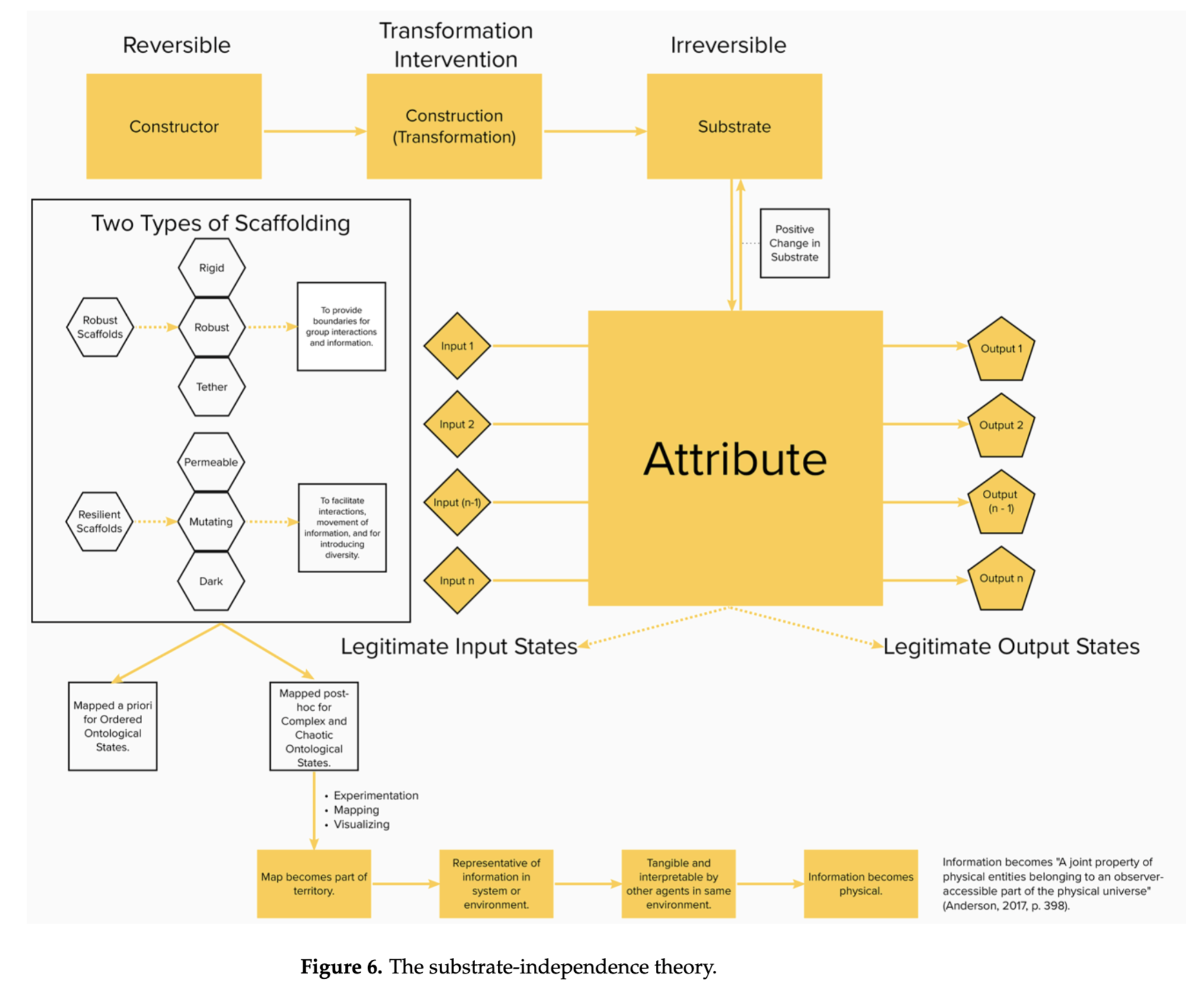
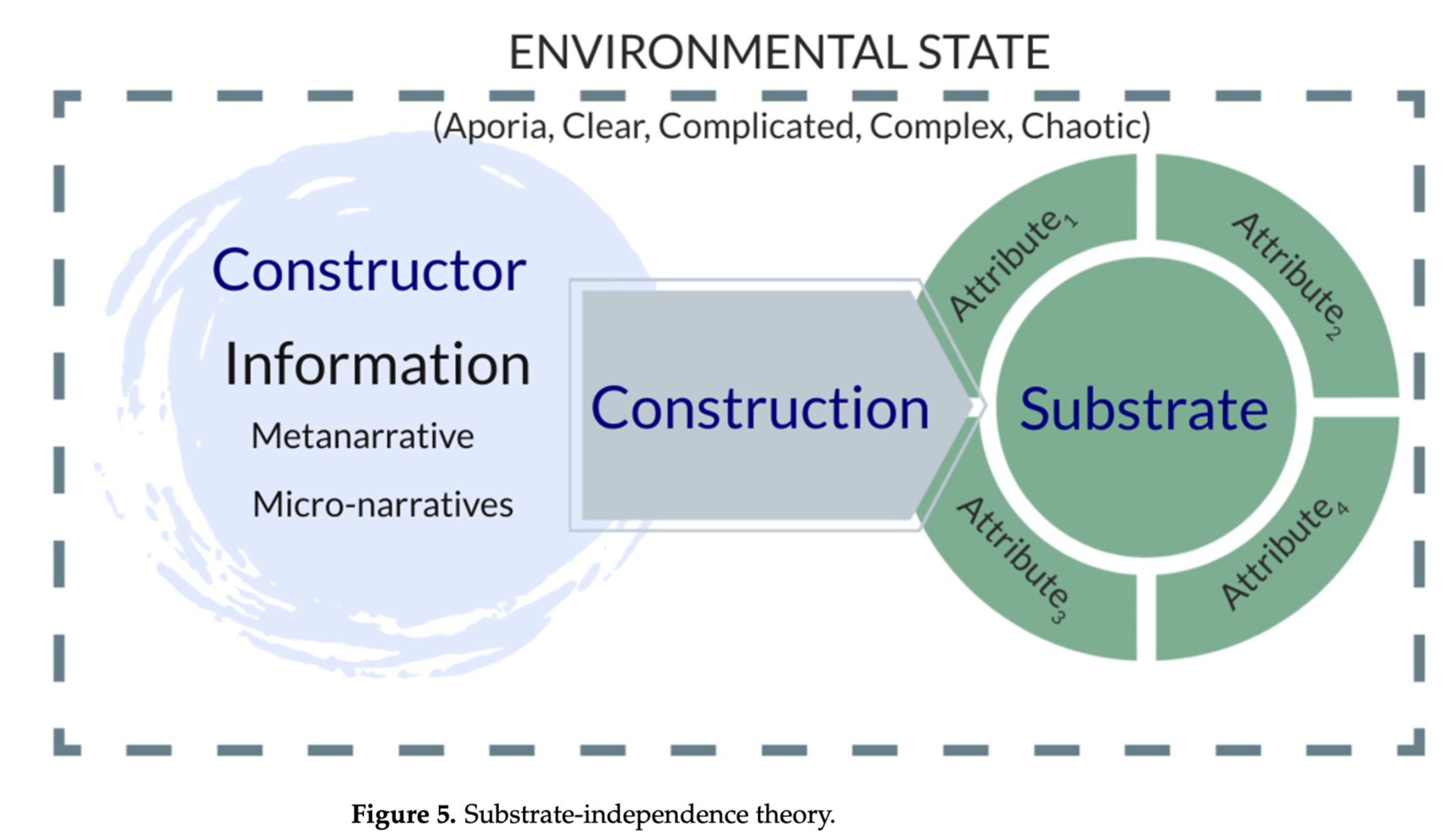
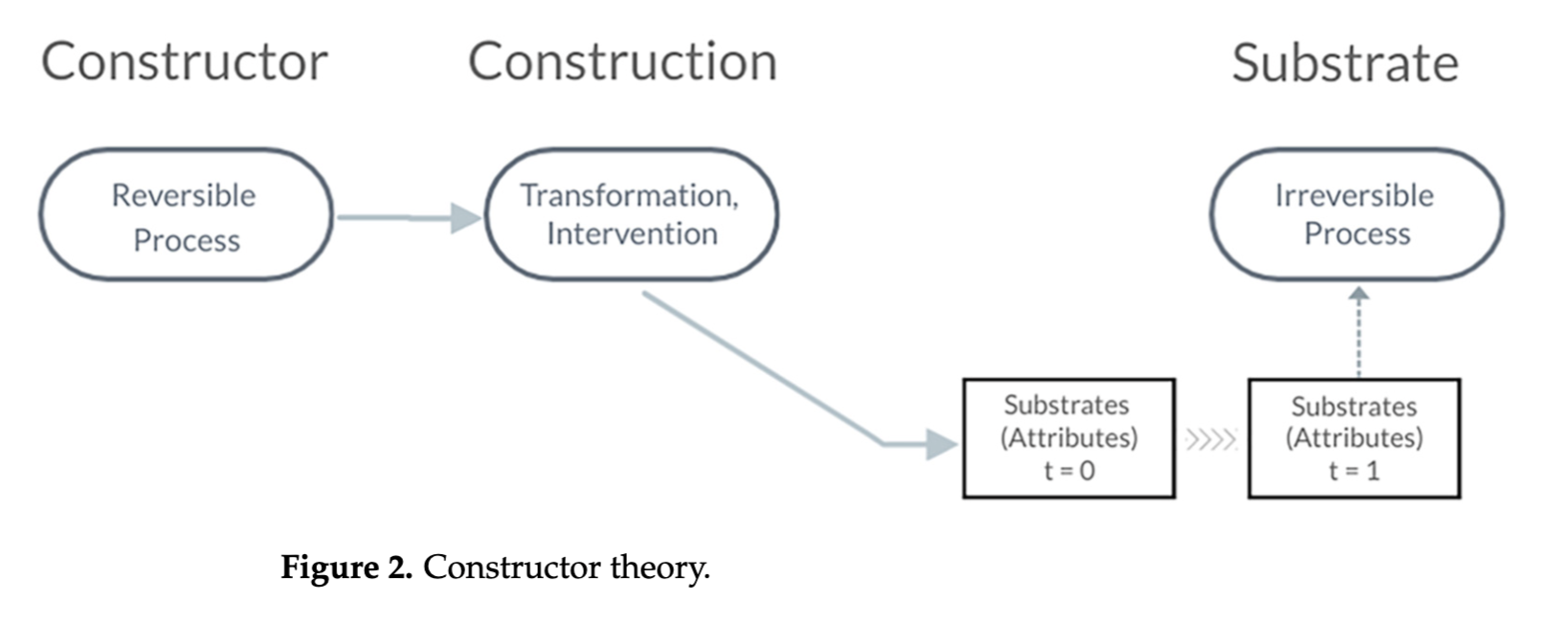
The substrate-independence theory views social systems as complex adaptive systems capable of repurposing their structure to combat external threats by utilizing constructors and substrates.
Constructor theory is used to identify potential construction tasks, the legitimate input and output states that are possible, to map the desired change in the substrate’s attributes. Construction tasks can be mapped in advance for ordered and known environments.
Construction tasks may also be mapped in either real-time or post hoc for unordered and complex environments using current sensemaking techniques. Mapping of the construction tasks in real-time becomes part of the landscape, and scaffolds are implemented to aid in achieving the desired state or move to a more manageable environment (e.g., from complex to complicated).
More importantly, the advancement of the substrate-independence theory that includes multidimensional and multilevel scaffolding techniques expands the literature and answers additional calls from researchers who are asking for tools for leaders so that they are better able to influence their employees’ sense-making capabilities during change implementation.