Operation Highjump

Robert Johnson testimony
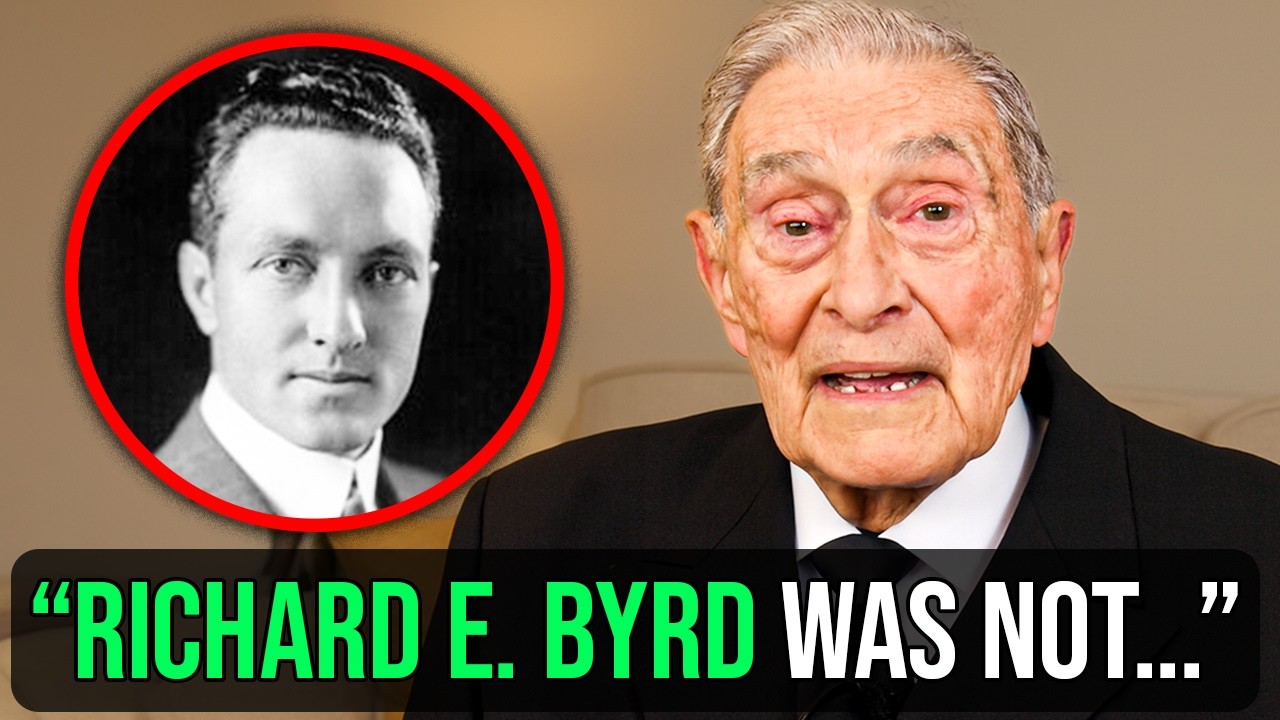
For decades, the story of Admiral Byrd’s Antarctic expeditions has been wrapped in patriotism, half-truths, and silence. But the last survivor, Robert Johnson, broke that silence at 99 years old. What he revealed about what lies under the ice is disturbing.
Johnson was there and he remembered orders delivered face to face, no written records. Flights missing from logs and teams vanishing with cover stories that didn’t add up. Talks of “engagements” were never explained.
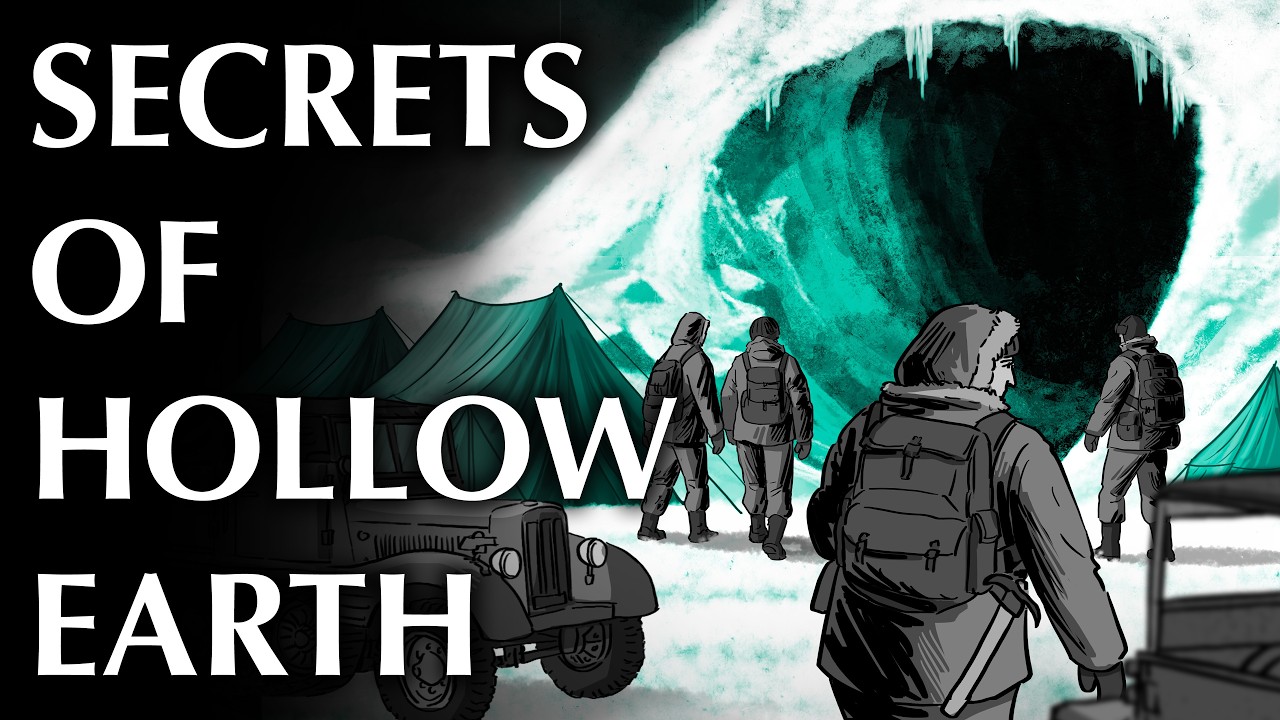
Deep in the interior they found a crack in the ice, warm air rising, mist curling out. Inside weren’t jagged walls of ice, they were smooth, curved and almost metallic in sheen. Something ancient and out of place.
An officer clipped in and went down. Minutes passed, and then the rope went slack. He never came back out. Another followed, tied tight and the line shook violently. They hauled him up alive but blank eyed, staring into nothing. He never spoke another word.
The team was ordered out. No samples were collected and no notes taken. Days later, the site was bombed, wiped off the map. But Johnson never forgot the low hum in the ground beneath his boots. Like machinery buried deep under the ice. Sound familiar?
That wasn’t the only anomaly. Johnson described mountains of bare black rock in subzero cold, like something had pushed up from below. He saw geometric patterns in snowmelt. Staircases of concrete descending into glaciers. Structures that weren’t supposed to exist.
Even Byrd himself changed. One night he stopped Johnson in a corridor, face pale, voice low: “You were there. You know what we saw. Never forget it.” Later, Byrd warned publicly of “a new enemy that can fly pole to pole at incredible speeds.” The press predictably buried it.
When Highjump ended months early, logs, photos, and reports vanished. Whole teams were erased from rosters. Recon photos of massive shapes under the ice were labeled classified and then disappeared. Then came the Antarctic Treaty of 1959.
On paper, the treaty was about peace and science. In reality, Johnson believed it was a lock on the door. A pact to keep everyone else from looking too closely. He used to say: “They didn’t sign that to protect the penguins. They signed it to keep people out.”
For 78 years, Johnson kept silent. But near the end of his life, he spoke. He described guarding staircases carved into ice, concrete steps descending into blackness. He described sites erased overnight by bombs. And he left one final warning...
“Maybe we didn’t build it. Maybe we just found it. But it wasn’t natural, and it wasn’t ours.” Antarctica isn’t just ice. It’s a frozen archive of ancient builders, lost technology, or something non human entirely. Operation Highjump scratched the surface. The real secrets are still buried below.
Official Report
Operation Highjump, officially titled "The United States Navy Antarctic Developments Program, 1946–1947," was a significant military expedition to Antarctica. Conducted by the United States Navy, it was one of the largest Antarctic expeditions ever organized. The operation was led by Rear Admiral Richard E. Byrd and was primarily aimed at establishing the Antarctic research base Little America IV.
Objectives of Operation Highjump
The primary objectives of Operation Highjump were multifaceted and ambitious:
- Training Personnel: The operation aimed to train personnel and test equipment in frigid conditions, which were considered analogous to potential Arctic warfare scenarios during the early Cold War period.
- Establishing a Base: A key goal was to establish the Little America IV base, which would serve as a research and logistics hub for future operations in Antarctica.
- Scientific Research: The expedition sought to conduct extensive scientific research, including geological, meteorological, and electromagnetic studies, to better understand the Antarctic environment.
- Mapping and Reconnaissance: Another critical objective was to map and photograph as much of the Antarctic coastline as possible, using both ships and aircraft.
- Testing Equipment: The operation provided an opportunity to test new equipment and techniques for cold-weather operations, which could be applicable in other polar regions.
Composition of the Expedition
Operation Highjump was a massive undertaking, involving over 4,700 personnel, 13 ships, and 33 aircraft. The fleet included an aircraft carrier, destroyers, tankers, and support vessels. The operation was divided into three task forces:
- Eastern Group: Tasked with exploring the eastern part of the Ross Sea.
- Western Group: Focused on the western Ross Sea and the Amundsen Sea.
- Central Group: Responsible for establishing the base at Little America IV and conducting operations in the central Ross Sea.
Achievements and Discoveries
Operation Highjump achieved several significant milestones:
- Extensive Mapping: The operation successfully mapped and photographed large portions of the Antarctic coastline, contributing valuable data to the understanding of the continent's geography.
- Scientific Contributions: The scientific research conducted during the expedition provided insights into the Antarctic climate, geology, and electromagnetic conditions.
- Technological Advancements: The operation tested and validated new equipment and techniques for cold-weather operations, which were later used in Arctic and Antarctic missions.
Challenges and Controversies
Despite its successes, Operation Highjump faced numerous challenges and controversies:
- Harsh Conditions: The extreme weather conditions in Antarctica posed significant challenges to the personnel and equipment, leading to several accidents and the loss of aircraft.
- Logistical Difficulties: The vast distances and remote location of Antarctica made logistics a complex and demanding task.
Legacy of Operation Highjump
Operation Highjump left a lasting legacy in the field of polar exploration and research:
- Foundation for Future Expeditions: The operation laid the groundwork for future Antarctic expeditions, both by the United States and other nations, by establishing logistical and operational frameworks.
- Increased Interest in Antarctica: The expedition heightened global interest in Antarctica, leading to increased scientific research and international cooperation in the region.
- Influence on Cold War Strategy: The operation's focus on cold-weather training and equipment testing influenced military strategies during the early Cold War, particularly in the Arctic.