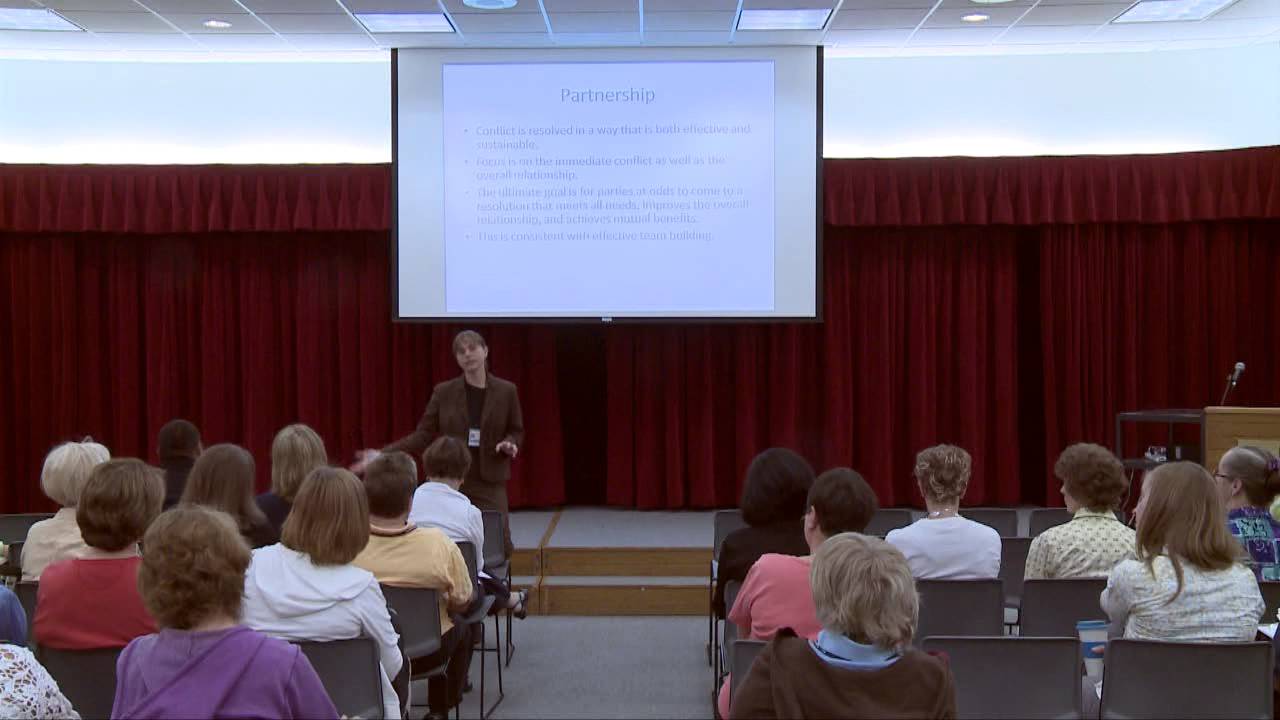
Conflict Resolution
Members, especially leaders, of the General Jural Assembly are encouraged to learn conflict management skills to safeguard and strengthen our assemblies.
It isn’t possible to do away with conflict. People will always have differences in values, goals, principles, and tactics that lead to conflict. The key becomes how they deal with these differences. When emotions get the best of people, they often use fight-or-flight types of responses that inflame and prolong conflict. For many people, their first instinct causes them to behave in counterproductive ways. It is as though many of our gut-level responses to conflict no longer serve us well in organizational settings. There are other approaches.
When conflict arises, left alone, the situation will not change. If you try to avoid conflict, it will not go away; it will just fester. If you do not systematically address the way in which your organization deals with conflict, it will continue to endure the ongoing costs of conflict or even experience a crisis (dissolution of an assembly ) precipitated by the buildup of unresolved conflict.
In order for this to change, leaders must engage in improving their own conflict awareness and skills as well as those of their assembly. In other words, they need to become conflict-competent leaders. They cannot afford to wait for others to raise the issue. Instead, they must show the way. Above you’ll find a pdf of a popular book called Becoming a Conflict Competent Leader.
Videos

Conflict Resolution Training: